Introduction
In the past few years, the understanding of plastic waste in the environment has moved from an “eye-sore” of garbage to the realization that plastics that are not recycled and end up in the environment can profoundly affect public health. As the use of single-use plastics in the health care setting increases, there is growing literature being published in the waste and environmental arena describing increasing health risks due to plastics in the environment. However, in the hospital and public health literature, especially since the pandemic, there is a paucity of published discussions and research regarding hospital waste and its downstream effects.
Before the most recent pandemic in 2019, hospitals in the USA generated over 5 million tons of non-hazardous waste/year, with plastic comprising up to 25%.Reference Green1‒Reference Huang and Linn3 During COVID-19, that amount spiked to 2.5 million tons/month of nonhazardous waste.Reference Ilyas, Srivastava and Kim4, Reference Janik-Karpinska, Brancaleoni, Niemcewicz, Wojtas, Foco, Podogrocki and Waste-5 The jump is multifactorial, but 1 commonality was due to the increased use of single-use plastic-based personal protective equipment (PPE). Most hospital waste is considered (85%) non-hazardous, which means it does not need special treatment before being sent to landfills, incinerators, or out to sea via ship and barge.Reference Voudrias6‒9 This paper presents the quantified waste production and its management at a USA acute health care institution during COVID-19, with attention to PPE supplies purchased, used, discarded, and sent to a landfill with the goal of enhancing the awareness of the prevalence of plastics in the health care arena and its impact on public health.
Methods
This retrospective study was conducted at a 411-bed level II trauma center in the state of Maine, USA which has signed the US Department of Health and Human Services health sector climate pledge to reduce emissions by 50% by the year 2030. Pre-pandemic, the emergency department (ED) had an average annual visit of 35 000, with an average daily hospital inpatient census of 377. The study dates queried were from January 1, 2018-December 31, 2021. Study personnel collected de-identified data from recorded hospital daily safety meetings (daily census in emergency department, hospital, and number of COVID patients), waste tonnage from environmental services, and the amount of personal protective equipment (PPE) supplies from the purchasing department. Data were collected and analyzed for statistical significance in SPSS, v26. This study (IRB #2021-047) was not considered human subjects research and, therefore, deemed exempt by the hospital’s Institutional Review Board.
Results
Infection Control Policy Changes
During the study period, nine hospital infection control policy changes were made. The major changes included all nonessential personnel (billing, purchasing, fundraising, office staff, etc.) working from home (March 2020-August 2021), upon recommendations from the CDC and public health, and the cancellation of all non-essential and non-life-saving elective surgeries. Additionally, the visitation policy was changed to not allow extraneous patient visitors (March 2020-June 2021). Other changes fluctuated based upon PPE supply chain issues and CDC recommendations. These included N95 masking, which was initially deemed as single-use, followed by the use of that mask for the shift only. This was followed by use until soiled. Eventually, when the resupply timelines were unclear, N95 masks that were not visibly stained were placed in bins for sterilization and reuse.
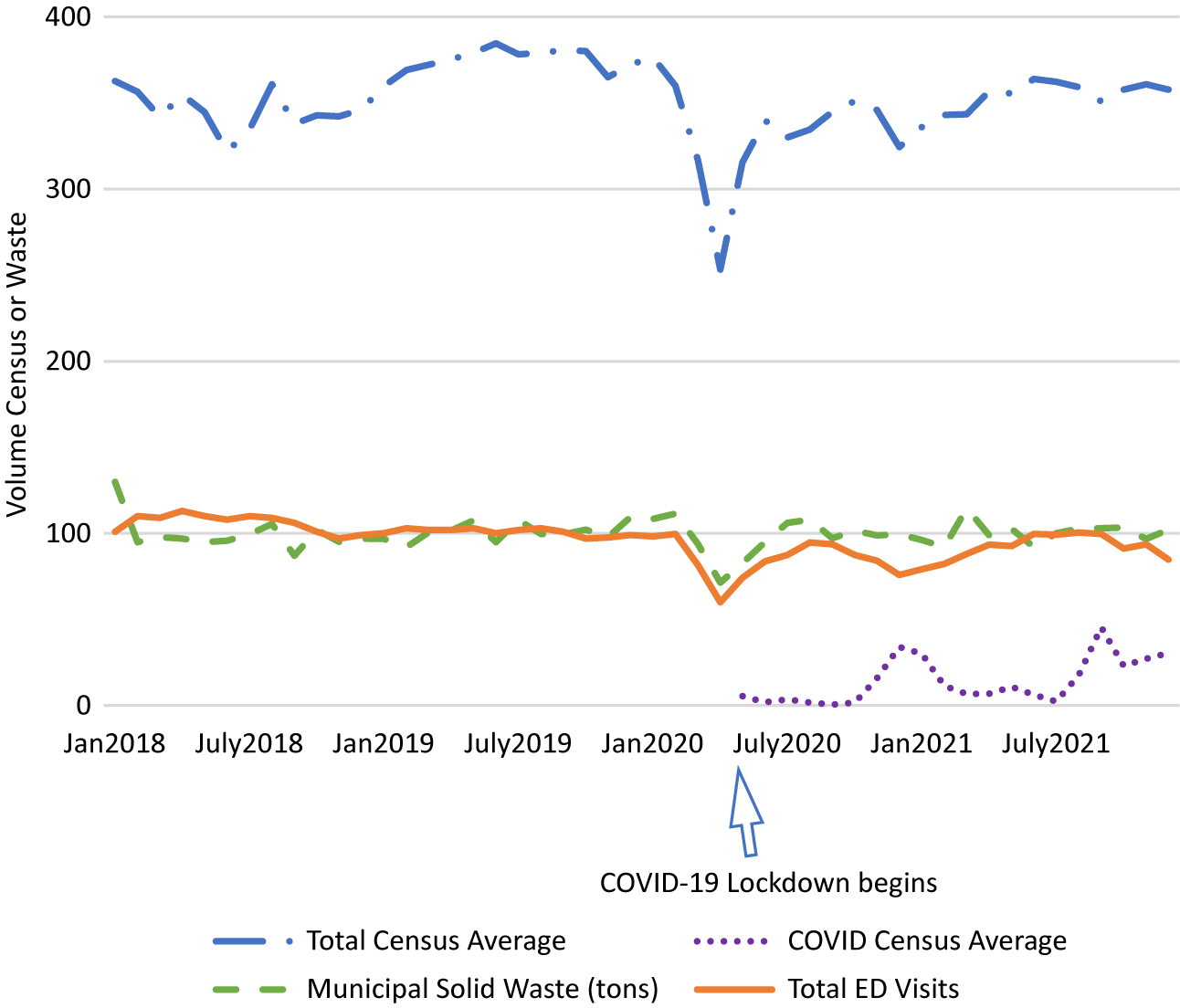
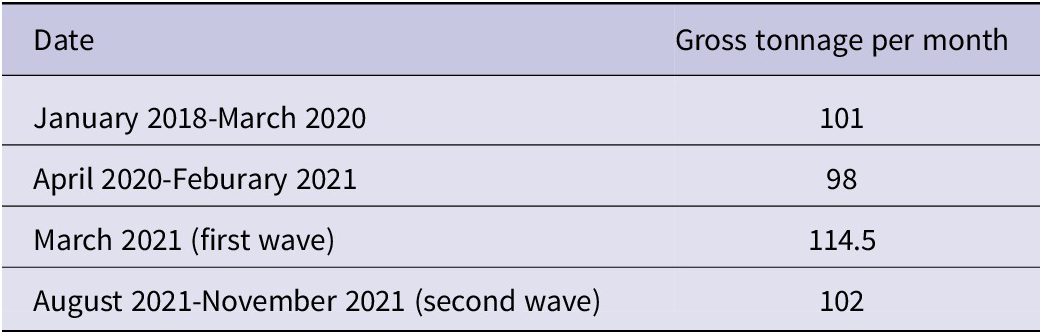
Non-hazardous Waste Generation (Table 3 and Figure 1)
The analysis that compared the amount of hospital waste generated at monthly and yearly intervals before and during the pandemic found fluctuations from month to month during the COVID -19 spikes, but over time, there were no statistically significant differences.
Hospital census and municipal solid waste: January 2018-December 2021.

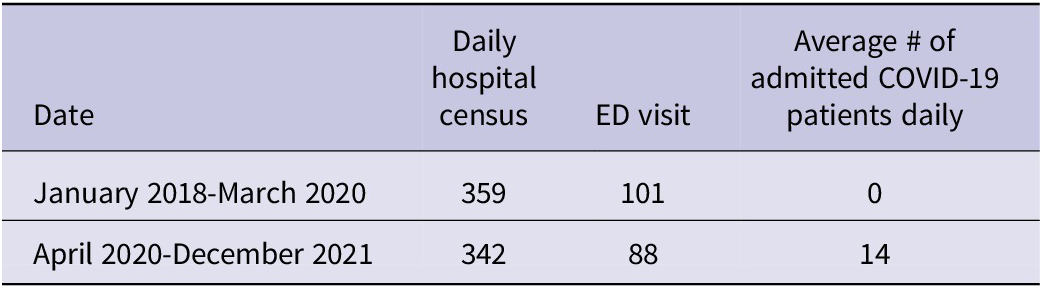
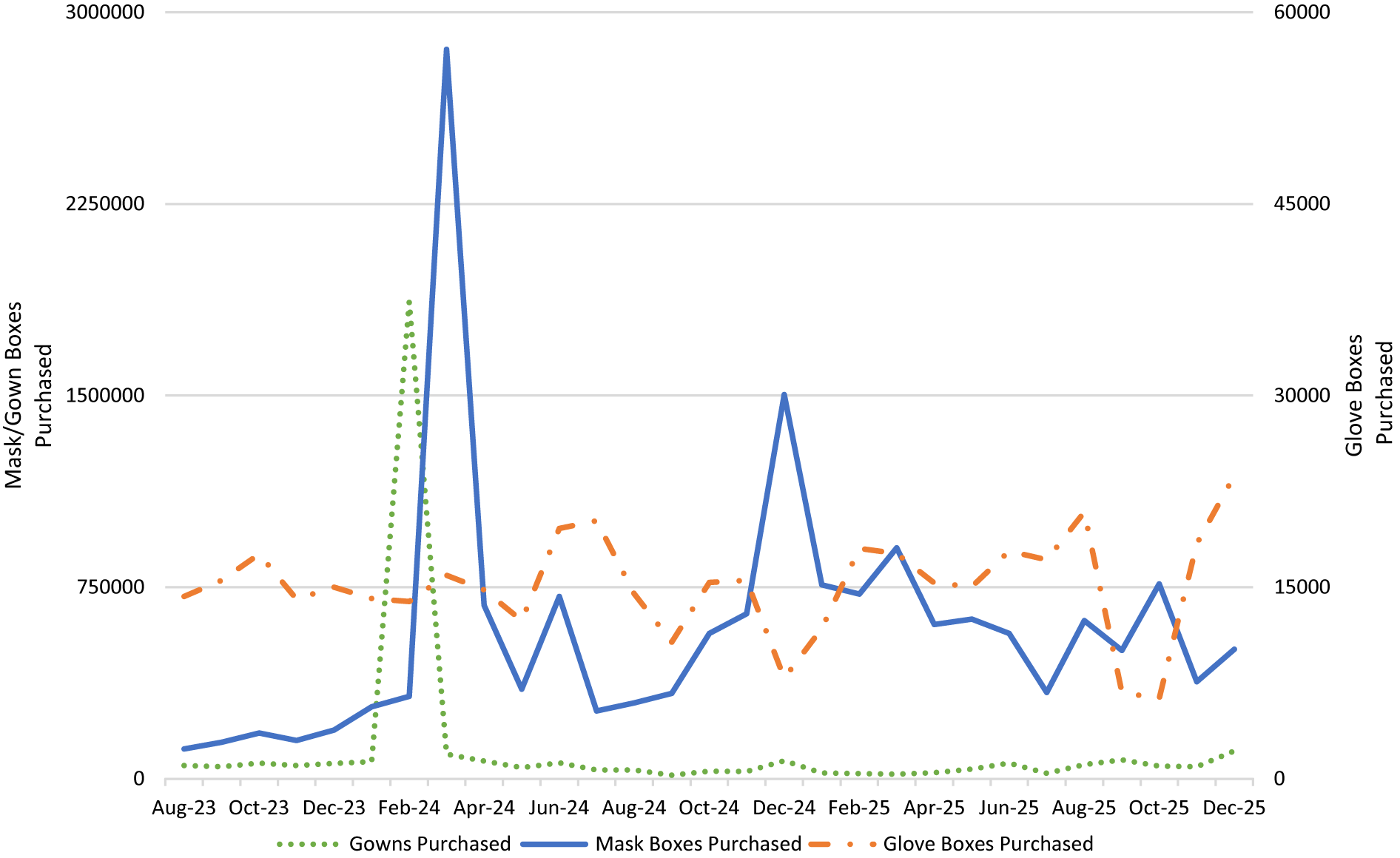
PPE supplies varied depending on the supply chain, public health recommendations, and what was already in inventory. Table 1 shows hospital census and COVID numbers. Table 2 describes different aspects of PPE and, like the hospital census, is broken down into the same date groupings. Interestingly, although gloves purchases stayed relatively stable (as they are normally worn by providers), mask purchases, both surgical and N-95, increased dramatically Interestingly.
Hospital census average per day

Personal protective equipment purchases

Non-hazardous waste generation

Limitations
Our data were collected from 1 mid-sized USA hospital and may not be generalizable to other urban or more populated demographic areas. We could not get accurate pre-August 2019 numbers of purchases for comparison due to transitions in software and personnel within the purchasing department. Due to human resource limitations, we could not quantify the number of hospital employees who worked from home, but it was estimated to be between 35-45% of the 4000 of those employed by the hospital. This, of course, would impact the number of single-use masks and eye protection worn by employees.
Discussion
In 2018, the USA generated 292.4 million tons of municipal solid waste, of which 18% was plastic.10 Pre-COVID-19, USA hospitals comprised 2% of that amount and produced over 5 million tons of waste, of which at least 20% were plastics.Reference Janik-Karpinska, Brancaleoni, Niemcewicz, Wojtas, Foco, Podogrocki and Waste-5, 7, Reference Dehghani, Ahrami, Nabizadeh, Heidarinejad and Zarei11, Reference McGain, Clark, Williams and Wardlaw12 It is interesting to note that during the COVID-19 pandemic, single-use plastics, along with cement and steel, became the most widely manufactured substance in the world.Reference Williams and Rangel-Buitrago13 The global medical plastics market size in 2023 was estimated at 52.9 billion USD, with the expected growth at a compound annual rate of 7.4% from 2024-2030, with a revenue forecast in 2030 of 87.58 billion USD annually.14 Considering that plastics are becoming a bigger part of health care trash and US Environmental Protection Agency (EPA) and other government numbers, it is suggested that, in the USA, 1.7 million tons of plastics are part of the 5.9 million tons of nonhazardous medical waste transported to landfills, incinerators, or transferred by ship to other countries.Reference Voudrias6, 8, 9, 15
Today, plastics are ubiquitous in our health care system, from packaging of all supplies to operating room instruments (either plastic originally, or as sterilization protection), procedure labs, and daily protection of employees as single-use PPE. Waste generated by health care facilities has become increasingly recognized as a consequential source of environmental pollution, particularly due to the widespread use of single-use plastic PPE whose components are not recycled. Barriers to recycling hospital plastic waste include the risk of further spreading of infectious diseases and a lack of knowledge regarding appropriate recycling.Reference McGain, Clark, Williams and Wardlaw12, Reference Azous, Boyll, Swanson, Castel, Maffi and Rebeca16 In 1 published study, a hospital’s catheterization lab was projected to accumulate 2600 kg of recyclable medical material in a year, which the authors extrapolated for the USA to be 1.36 million kg of recyclable waste, the majority of which is plastic and would be generated annually from catheterization labs alone.17, Reference Doshi, Savage and Ruggiero18
As plastics enter the environment as waste, many public health threats are becoming more evident. When discarded, these items are exposed to elements including ultraviolet (UV) radiation and are degraded into microplastics and micro-fibers.Reference Khan, Shah and Hossain19 These minute plastic beads have been detected in a variety of human tissues and marine and terrestrial wildlife, supporting speculation that the same anatomical and physiological issues affecting marine and terrestrial wildlife are affecting humans as well.Reference Ragusa, Svelato and Santacroce20‒Reference Leslie, Van Velzen, Brandsma, Vethaak, Garcia-Vallejo and Lamoree23 Initially, as plastic breaks down, it degrades through mechanical tumbling forces and exposure to ultraviolet radiation; these pieces move through the marine and terrestrial environment, where there are unintended consequences. These include hormonal dysregulation, which may result in low birth rates and birth defects; ingestion, causing physical obstruction of the gastrointestinal system, as well as causing a decrease in nutrient absorption because of the microplastics deposits; and increased free-radicals, which are known to increase cancer risk.Reference Ragusa, Svelato and Santacroce20, Reference Rahman, Sarkar, Yadav, Achari and Slobodnik24 Other health risks include reproductive or endocrine disruption and behavioral abnormalities in animals, including humans, due to plastic softening additives such as Bisphenol A and Di-2-ethylhexylphthalate during its manufacturing and breakdown.Reference North and Halden25 The negative impacts of plastic waste on health are calculated to affect humans by 314 disability-adjusted life years (DALYs) (1 DALY represents the loss of the equivalent of 1 year of full health) and an overall global effect of a loss of species per year of 0.67.Reference Islam, Safiq, Bodrud-Doza and Mamun26, Reference Rizan, Reed and Bhutta27 Overall, the impacts of plastics through manufacturing and breakdown on the world are ubiquitous. Effects include water usage and pollution, energy consumption (oil and electricity), greenhouse gas emissions, solid waste burden, and dioxins and heavy metal release through incineration.15, Reference Hong, Zhan, Yu, Hong and Qi28
In our retrospective review of waste in our hospital during COVID-19, it was originally hypothesized that we would have a noticeable increase in the gross tonnage of non-hazardous waste due to the increased use of PPE (masks, gowns, gloves, and eye protection) by hospital employees. However, during the study period, the average amount sent to the landfill was 100 gross tons/month, which was just shy of pre-pandemic numbers (Figure 2). As we investigated further, it made no sense that gross tonnage would stay about the same even though the amounts of PPE, which included gloves, gowns, and masks purchased, had increased. It could be surmised that because there was both a decrease in patient census in the hospital as well as a decrease in employees working at the hospital, the nonhazardous waste gross tonnage would have been markedly increased if the hospital was operating at full capacity.
Volume of gloves, masks, and gowns purchased from August 2019-December 2021.

The key is the creation of a hospital economy in which plastic packaging is reduced initially and resource utilization is maximized through purchasing items that may be reused as well as the promotion and implementation of safe recycling practices.Reference Voudrias6, Reference Rizan, Reed and Bhutta27 Hospitals have a great opportunity to be at the forefront of promoting and improving public health as well as embarking on cost savings measures, some of which are as easy as promoting awareness to increase compliance. Examples include an article in the American Journal of Surgery where operating room staff was unaware that the plastics could be recycled and did not know to put clean plastics in recycling containers that were available in the operating room,Reference Azous, Boyll, Swanson, Castel, Maffi and Rebeca16 as well as another article which revealed that 90% of “red bag-hazard” hospital waste does not meet the criteria for hazardous waste and is actually nonhazardous plastic waste which does not need special handling and could go into regular trash or into recycling.
As hospitals are more fiscally aware and leery of spending money, one of the other barriers to plastic recycling is a myth that it is not financially beneficial. However, a study examining data from hospitals that have implemented programs to reduce energy use and waste shows that savings could exceed $15 billion USD over 10 years, including recycling and reprocessing of single use plastic devices.Reference Wu and Cerceo30 Additionally, there is a growing research movement and project development exploring biodegradable PPE and the creation of PPE gowns that can withstand laundering 75-100 times in contrast to single-use plastic gowns.Reference Baker, Bromley-Dulfano and Chan31, Reference Klemeš, Fan, Tan and Jiang32 Other papers have discussed repurposing surgical masks to create sound-dampening material.Reference Maderuelo-Sanz, Acedo-Fuentes, García-Cobos and Sánchez-Delgado33 Currently, there are already reusable hoods on the market with battery packs that power personal air filters whose face and head covering may be cleaned and even sterilized for continued safe use in the operating room. The key is the creation of a circular economy in which the use of plastics is principally reduced, and resource utilization is maximized through reuse or ensuring safe recycling practices.Reference Voudrias6, Reference Rizan, Reed and Bhutta27
Conclusion
The amount of plastic waste placed into the environment through health care use is significant and growing and has downstream implications for both public health and environmental sustainability. However, PPE is incredibly important to protect health care workers and their families from contagious diseases and must be utilized. This has spurred further research into developing biodegradable PPE, reusable equipment, and innovations in recycling. This paper examined the quantified health care waste production and management at 1 acute health care institution before and during the COVID-19 pandemic. The results of this paper revealed that even with a decrease in patient census and hospital staffing, the waste tonnage, of which most is plastic, did not change from pre-COVID volumes. Understanding the full effect of the pandemic on hospital waste production is critically important as health care institutions focus on strategies to decrease their carbon footprint and increase positive impacts on public health and the environment.
Acknowledgments
The lead author would like to thank Tiffany Browning DNP and Martha Villada MS for supporting the initial concept development and final proofreading.
Author contribution
Klein: Original concept, research implementation, interpretation of data, and writing the final version of the manuscript. Trumbo: Concept development, research implementation, data collection, statistical analysis, and final version of the manuscript Saber: Concept development, data collection, and original submission author. Kakkad: Interpretation of data and the final version of the manuscript.