




Introduction
Healthcare-associated infections (HAIs) remain a major challenge for patients, healthcare service providers, and facilities [Reference Gonçalves and Carmo1]. They expose patients to a twofold to threefold increase in mortality and more than threefold increase in the length of stay [Reference Rosenthal2]. Additionally, the diagnosis of HAI is associated with more than a twofold increase in healthcare expenses [Reference Osme3]. The increase in healthcare cost is even augmented in HAI caused by pathogens resistant to common antimicrobials [Reference Iskandar4, Reference Jia5]. Traditional HAI surveillance primarily focuses on device-associated infections and surgical site infections (SSIs) [6]. Therefore, a point prevalence survey (PPS) is considered the practical tool to provide a comprehensive estimate of the burden of HAIs, including both traditionally and non-traditionally surveyed types of HAI [7]. Additionally, conducting repeated PPSs is essential for monitoring HAI trends, identifying areas of improvement, and assessing the effectiveness of currently implemented preventive measures [8].
The estimated burden of HAI, as assessed by PPS, varies significantly across different geographic regions. HAI has been estimated between 3% and 7% in American and European hospitals, respectively [9, Reference Magill10]. On the other hand, the prevalence of HAI was much higher in low-resource countries, ranging between 9% and 32% [Reference Raoofi11–Reference Ling, Apisarnthanarak and Madriaga13]. The Gulf Cooperation Council (GCC) region is conventionally regarded as a high-resource region [Reference Tok14]. Nevertheless, the infection rates of individual device-associated HAIs were intermediate between high-resource and low-resource countries [Reference Balkhy15, Reference El-Saed16]. Only a few studies used PPS to estimate the overall burden of HAIs in GCC member states [Reference Alothman17–Reference Al Matar20], while most of the studies covered one country [Reference Alshamrani18–Reference Al Matar20]. There are insufficient studies addressing all GCC member states or analysing risk factors associated with HAIs. Improved understanding of the true burden of HAIs in GCC member states will enable the Gulf Centre for Disease Control and Prevention (CDC) and policymakers to set targets for preventive interventions and optimize resource utilization. Furthermore, such data would be important in updating surveillance plans across the hospitals in the region. The objective of this study was to assess the prevalence of HAIs and associated pathogens in tertiary care hospitals in six GCC countries.
Methods
Setting
This study was carried out at 18 tertiary care hospitals located in six GCC countries. These included ten hospitals in Saudi Arabia, three in the United Arab Emirates, two in Oman, and one hospital each in Bahrain, Kuwait, and Qatar. Included hospitals have bed capacities ranging from 200 beds to 1 200 beds, with a total bed capacity of more than 12 000 beds. The Gulf CDC served as the coordinating centre for the study, overseeing the study protocol, data entry, and data validation processes. The Gulf-CDC-IPC Expert Hub, based at the Infection Prevention and Control Programme at King Abdulaziz Medical City (KAMC), Ministry of National Guard Health Affairs in Riyadh, was responsible for training infection control professionals who carried out the actual data collection. Furthermore, the Expert Hub was responsible for overall data management, analysis, and interpretation.
Design
This study was designed as a cross-sectional PPS conducted on 20 May 2024. The protocol followed established frameworks developed by the European Centre for Disease Prevention and Control (ECDC) [7] and the American National Healthcare Safety Network (NHSN) [21].
Study population
This study included patients of all ages who had been admitted on the day of the PPS to any eligible unit in the participating hospitals. Non-eligible units were units that do not accept overnight admission, such as outpatient clinics including outpatient dialysis, emergency department, and same-day surgery units. Patient inclusion criteria were further divided into numerator and denominator criteria. The numerator criteria included patients with an active HAI and/or receiving antimicrobial therapy on the day of PPS. The denominator criteria included patients admitted to a ward/unit before or at 8 a.m. and not discharged from the ward/unit during the PPS day. They also included those who were temporarily off the unit for diagnostic investigations or procedures.
Sample size
Previous studies done in GCC countries estimated the HAI point prevalence between 7% and 11% [Reference Alothman17, Reference Alshamrani18]. Assuming a prevalence of 9% and a confidence limit of 1%, at least 3137 hospital beds would be required to detect the assumed prevalence at a 95% significance level. The required sample size was distributed between countries according to expected capacity and population size; 50% for Saudi Arabia and 10% for each of the other five countries. As the hospitals were the first recruitment unit, minor variation in such allocation was allowed. The sample size was calculated using the OpenEpi application [Reference Dean, Sullivan and Soe22].
Sampling technique
Hospitals were chosen conveniently from each country. Hospitals were tertiary care hospitals, had more than 100 beds, had electronic patient chart systems, and had a well-established infection control department. Sampling technique of beds (patients) was not applicable; all eligible patients from the selected tertiary care hospitals were included.
Data collection
Data were collected using the REDCap program [Reference Harris23]. Specialized data collection forms were created: a unit form and a patient form. The unit form was filled out for each unit included. The form specified the country, hospital name, and unit name and listed the age and gender of all admitted patients. In case of neonatal Intensive care units (ICUs), birth weight was additionally recorded. The patient form was filled out only in the presence of active HAI and/or receiving antimicrobial therapy. It included data such as country, hospital name, unit name, and HAI-related information – age, gender, comorbidity, date of infection, type of infection, possible source of infection, presence of device, culture results, type of specimen, and associated pathogens.
Training
Prior to the study, data collectors at the participating hospitals underwent training on the study protocol, including the study design, eligibility criteria, algorithms for case identification, standards for infection triggers, definitions of HAIs, procedures for data validation, and using the data collection application (REDCap). The training consisted of several interactive sessions in addition to access to consultation with an epidemiologist before, during, and after the PPS day. Although the study was conducted in one day, resolving issues related to the diagnosis of infection and completing data entry took up to four weeks after the PPS day.
Case finding algorithm
On the PPS day, the start date and time of the survey were recorded, data on unit speciality and number of beds were gathered, a patient list for each unit was obtained, patients admitted after 8:00 a.m. were excluded, and denominator data (unit form) from all patients in the units before 8:00 a.m. were collected. For each patient, the presence of infection was initially checked using the triggers suggesting the presence of infection. They included fever (>38 °C), receiving antimicrobials (antibiotics or antifungals), leucopenia or leucocytosis (<4 k/μL or ≥ 12 k/μL), hypotension (SBP < 90 mmHg), tachypnoea (>20/min), altered mental status (Glasgow Coma Scale <15), invasive device (central line, urinary catheters, mechanical ventilator), and recent surgery (within the last 30/90 days). The final determination of infection and the completion of all other required information were finalized in the following few days after the PPS day.
Outcome definition
The primary outcome of the study was the presence of an active infection, which occurred more than two days from the admission date. Active HAIs were defined as infections that met NHSN surveillance definition criteria, with other signs or symptoms of infection present on the PPS day or ongoing antimicrobial treatment for an HAI on the PPS day.
Validation
Data were validated at multiple levels to ensure accuracy and consistency. Adjudication of preliminary diagnosis was performed by reviewing information among data collectors and experts at participating hospitals. Challenging scenarios were verified with an epidemiologist before, during, and after the PPS day. Data entry restrictions were set by the REDCap program, and final validation was completed before data analysis by resolving discrepancies and missing information.
Statistical analysis
Collected data were entered in a pre-prepared REDCap project. Data were exported to the Statistical Package for the Social Sciences software (SPSS Version 29.0. Armonk, NY: IBM Corp) before data management, including verification, completeness, cleaning, and transformation. The categorical variables were presented as frequency and percentage. For the continuous variables, they were initially tested for normality distribution and presented using mean and standard deviation (SD) if normally distributed or median and interquartile range (IQR) if not. The prevalence of HAIs was calculated by dividing the identified HAI events by the total number of patients reviewed. The prevalence rates were then stratified by age, gender, hospital, and unit. Differences in the prevalence of HAIs in different groups were examined using a chi-squared test or Fisher’s exact test as appropriate. All P-values were two-tailed. A P-value <0.05 was considered significant. SPSS was used for all statistical analyses.
Results
During the PPS day, 651 HAI events were detected among 580 patients after reviewing the information of 6 826 patients. The largest proportion of reviewed patients was from Saudi Arabia (n = 3 595, 52.7%), followed by Oman (n = 843, 12.3%), the UAE (n = 740, 10.8%), Qatar (n = 696, 10.2%), Bahrain (n = 583, 8.5%), and Kuwait (n = 369, 5.4%). The median (IQR) duration between admission and the development of infection was 11 (2–37) days. The characteristics of patients with infection are shown in Table 1. The mean age (±SD) was 46.4 ± 28.1 years, with 12.9% of the patients being one year or less and 33.1% of the patients being above 65 years. Approximately 57.8% of the patients were males and 42.2% were females. The most frequent location of admission was wards (52.4%), followed by ICUs (30.3%), speciality care areas such as oncology, haematology, and organ transplantation units (10.7%), and neonatal ICU (5.2%). In neonatal ICU, the median (IQR) birth weight was 1 850 (965–2 615) g. The most frequent birth weight groups were ≤1 000 g (36.7%), >2 500 g (30.0%), and 1 501–2 500 g (23.3%). The most frequent comorbidities were diabetes (31.9%), hypertension (31.6%), heart disease (27.4%), respiratory disease (17.8%), malignancy (14.5%), and neurologic disease (13.4%).
Characteristics of patients with healthcare-associated infections during the point prevalence survey in GCC countries, May 2024 (N = 580)

Table 1 Long description
The mean age (±SD) was 46.4 ± 28.1 years, with 12.9% of the patients were one year or less, and 33.1% of the patients were above 65 years. Approximately 57.8% of the patients were males and 42.2% were females. The most frequent location of admission was wards (52.4%), followed by ICUs (30.3%), speciality care areas such as oncology, haematology, and organ transplantation units (10.7%), and neonatal ICU (5.2%). In neonatal ICU, the median (IQR) birth weight was 1850 (965–2,615) g. The most frequent birth weight groups were ≤ 1,000 g (36.7%), >2,500 g (30.0%), and 1,501–2,500 g (23.3%). The most frequent comorbidities were diabetes (31.9%), hypertension (31.6%), heart disease (27.4%), respiratory disease (17.8%), malignancy (14.5%), and neurologic disease (13.4%).
Data were presented as number and percentage, unless mentioned otherwise. SD, standard deviation; IQR, interquartile range. Birth weight groups were collected only in neonatal intensive care units.
As shown in Table 2, the prevalence of patients with at least one HAI event was 8.5% (95% CI 7.8%–9.2%). On the other hand, the prevalence of HAI events (considering all events in case a patient has multiple HAIs) was 9.5 events (8.8–10.2) per 100 patients. The prevalence of patients with at least one HAI event was significantly higher in older (>65 years) patients (11.8%, 95% CI 10.2%–13.4%), in patients admitted to ICU (24.6%, 95% CI 21.5%–27.8%), and in patients admitted to speciality care areas (12.7%, 95% CI 9.8%–15.7%). The prevalence was non-significantly higher in males than females (9.3% versus 7.6%). In neonatal ICUs, the prevalence was highest in those weighted ≤1 000 g (9.9%) and lowest in those weighted 1 001–1 500 g (5.7%). Country-wise, the prevalence was significantly higher in Oman, Saudi Arabia, and the United Arab Emirates (10.9%, 9.5%, and 9.2%, respectively) than in Bahrain and Qatar (3.8% and 4.2%, respectively).
Infection rates (95% CI) during the point prevalence survey in GCC countries, 20 May 2024

Table 2 Long description
The prevalence of patients with at least one HAI event was 8.5% (95% CI 7.8%–9.2%). On the other hand, the prevalence of HAI events (considering all events in case a patient has multiple HAIs) was 9.5 events (8.8–10.2) per 100 patients. The prevalence of patients with at least one HAI event was significantly higher in older (>65 years) patients (11.8%, 95% CI 10.2%–13.4%), in patients admitted to ICU (24.6%, 95% CI 21.5%–27.8%), and in patients admitted to speciality care areas (12.7%, 95% CI 9.8%–15.7%). The prevalence was non-significantly higher in males than females (9.3% versus 7.6%). In neonatal ICUs, the prevalence was highest in those weighted ≤1,000 g (9.9%) and lowest in those weighted 1,001–1,500 g (5.7%). Country wise, the prevalence was significantly higher in Oman, Saudi Arabia, and United Arab Emeritus (10.9%, 9.5%, and 9.2%, respectively) than Bahrain and Qatar (3.8% and 4.2%, respectively).
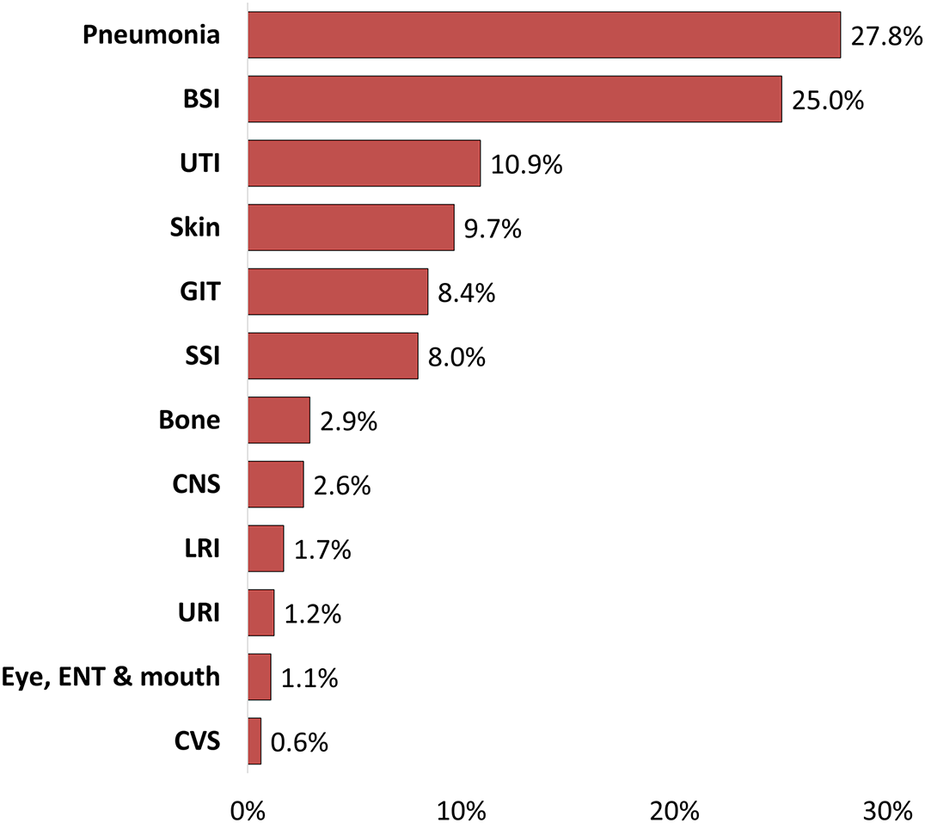
As shown in Figure 1, the most frequent type of HAI was pneumonia (27.8%), followed by bloodstream infection (BSI, 25.0%), urinary tract infection (UTI, 10.9%), skin and soft tissue infection (9.7%), and gastrointestinal infection (GIT, 8.4%). Table 3 shows the breakdown of these infections by hospital locations and patient groups. Pneumonia and BSI were the two most common infections (>50%) in all patient groups. They were more common in ICUs than wards (68.7% versus 43.2%, P < 0.001) but not different by patient groups (P = 0.0825). UTI, skin and soft tissue infection, GIT, and SSI together were more common in adult and paediatric patients compared with neonatal patients (40.1% and 29.3% versus 9.7%, respectively, P < 0.001). They were also more common in wards than ICUs (46.9% versus 20.7%, P < 0.001).
Frequency of types of infection diagnosed during the point prevalence survey in GCC countries, 20 May 2024 (N = 666). Abbreviations: BSI, bloodstream infection; UTI, urinary tract infection; Skin, skin and soft tissue infection; GIT, gastrointestinal infection; SSI, surgical site infection; CNS, central nervous system infection; LRI, lower respiratory infection; URL, upper respiratory infection; ENT, ear, nose, and throat infection; CVS, cardiovascular infection.

Figure 1 Long description
As shown in Figure 1, the most frequent type of HAI was pneumonia (27.8%), followed by bloodstream infection (BSI, 25.0%), urinary tract infection (UTI, 10.9%), skin and soft tissue infection (9.7%), and gastrointestinal infection (GIT, 8.4%).
Frequency of types of infection by location and patient groups examined during the point prevalence survey in GCC countries, 20 May 2024 (N = 651)

Table 3 Long description
Pneumonia and BSI were the most common two infections (>50%) in all patient groups. They were more common in ICUs than wards (68.7% versus 43.2%, p < 0.001) but not different by patient groups (p = 0.0825). UTI, skin and soft tissue infection, GIT, and SSI together were more common in adult and pediatric patients compared with neonatal patients (40.1% and 29.3% versus 9.7%, respectively, p < 0.001). They were also more common in wards than ICUs (46.9% versus 20.7%, p < 0.001).
Abbreviations: BSI, bloodstream infection; UTI, urinary tract infection; Skin, skin and soft tissue infection; GIT, gastrointestinal infection; SSI, surgical site infection; CNS, central nervous system infection; LRI, lower respiratory infection; URL, upper respiratory infection; ENT, ear, nose, and throat infection; CVS, cardiovascular infection.
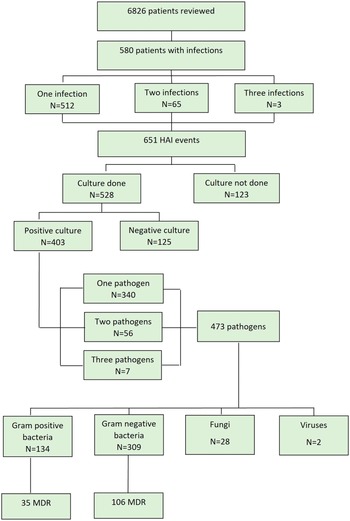
Table 4 highlights the characteristics of HAI events diagnosed during the PPS day. Additionally, the flow chart (Figure 2) details the numbers for events, cultures, pathogens, and multidrug-resistant (MDR) pathogens. The majority of HAI diagnoses were identified as a single infection per patient (78.6%). The source of the majority of HAI events was believed to be the current hospital (88.6%). Approximately 15.4% of the HAI events were device-associated; mainly ventilator-associated pneumonia (VAP) (45.0%) and central line-associated bloodstream infection (CLABSI) (37.0%), and to a lesser extent catheter-associated urinary tract infection (CAUTI) (18.0%). Cultures were performed for the majority of HAI events (81.1%). The most common type of specimen was blood (36.5%), followed by respiratory specimens (19.6%), urine (15.1%), and wound (13.8%). Approximately 76.3% of the cultures were positive. Most of the cultures had one pathogen (82.9%), while 14.7% and 2.4% of the cultures had two or three pathogens, respectively. Multiple pathogens (mainly two) per culture were frequently seen in wound (25.4%) and respiratory (19.8%) specimens but were lacking in rectal specimens. Approximately 61.9% of HAIs were microbiologically confirmed. Out of them, 65.3% were caused by Gram-negative bacteria and 28.3% were caused by Gram-positive bacteria. Approximately 31.8% of HAIs were caused by MDR pathogens, with higher rates of MDR contribution to skin and soft tissue infections (54.2%), bone infections (43.8%), and UTIs (36.4%). As shown in Figure 2, the most frequent pathogens reported were Klebsiella spp. (19.2%), Pseudomonas spp. (17.1%), Staphylococcus aureus (11.0%), and Escherichia coli (10.6%). These four pathogens represented more than half (57.9%) of all pathogens reported.
Characteristics of infections diagnosed (N = 651) during the point-prevalence survey in GCC countries, 20 May 2024

Table 4 Long description
The majority of HAI diagnoses were identified as a single infection per patient (78.6%). The source of the majority of HAI events was believed to be the current hospital (88.6%). Approximately 15.4% of the HAI events were device-associated; mainly VAP (45.0%) and CLABSI (37.0%), and to a lesser extent CAUTI (18.0%). Cultures were performed for the majority of HAI events (81.1%). The most common type of specimen was blood (36.5%), followed by respiratory specimens (19.6%), urine (15.1%) and wound (13.8%). Approximately, 76.3% of the cultures were positive. Most of the cultures had one pathogen (82.9%), while 14.7% and 2.4% of the cultures had two or three pathogens (respectively). Multiple pathogens (mainly two) per culture were frequently seen in wound (25.4%) and respiratory (19.8%) specimens but were lacking in rectal specimens. Approximately 61.9% of HAIs were microbiologically confirmed. Out of them, 65.3% were caused by Gram-negative bacteria and 28.3% were caused by Gram-positive bacteria. Approximately 31.8% of HAIs were caused by MDR pathogens, with higher rates of MDR contribution to skin and soft tissue infections (54.2%), bone infections (43.8%), and UTIs (36.4%).
Flow chart of the HAI events and associated cultures, pathogens, and MDR pathogens.

Figure 2 Long description
The flow chart details the number for events, cultures, pathogens, and MDR pathogens. During the PPS day, 651 HAI events were detected among 580 patients after reviewing the information of 6,826 patients. Out of the 651 events, 403 were microbiologically confirmed. Out of them, 309 were caused by Gram-negative bacteria and 141 were caused by multidrug-resistant pathogens.
Frequency of pathogens associated with infections (N = 500) diagnosed during the point prevalence survey at GCC countries, 20 May 2024. Abbreviations: MSSA, methicillin-susceptible Staphylococcus aureus; MRSA, methicillin-resistant Staphylococcus aureus.

Figure 3 Long description
The most frequent pathogens reported were Klebsiella spp. (19.2%), Pseudomonas spp. (17.1%), Staphylococcus aereus (11.0%), and Escherichia coli (10.6%). These four pathogens represented more than half (57.9%) of all pathogens reported.
Discussion
The current study examined the burden of HAIs in 18 tertiary care hospitals located in six GCC countries. The prevalence of patients with at least one HAI event was 8.5% while the prevalence of HAI events (considering multiple events in the same patient) was 9.5%. The current figures were within the range of the findings of the few multicentre studies done previously in the GCC region, ranging between 6.5% and 11.8%. For example, a PPS study done in 11 secondary and tertiary care hospitals in five GCC countries, in addition to Egypt and Lebanon, estimated that the prevalence of patients with at least one HAI event was 11.8% [Reference Alothman17]. Another study done in six National Guard hospitals across Saudi Arabia estimated a prevalence of 6.5% for patients with at least one HAI event and 6.8% for the prevalence of HAI events overall [Reference Alshamrani18]. Obviously, the above two studies were either dependent on or heavily driven by data from Saudi Arabia, which represented 40% of the included patients.
Interestingly, the prevalence of HAI in the GCC region is considered higher than that of high-resource countries [9, Reference Magill10, Reference Morioka24] but lower than global figures and those of low-resource countries [Reference Raoofi11–Reference Ling, Apisarnthanarak and Madriaga13]. This is likely reflecting the investment in healthcare systems and the maturation of infection control programmes [Reference El-Saed25, Reference Tannous26]. For example, large PPS studies in high-resource countries estimated the prevalence of HAI at 7% in >1 300 hospitals in 28 European countries [9], 3.2% in ~200 hospitals in the USA [Reference Magill10], and 7.7% in four hospitals in Japan [Reference Morioka24]. Additionally, the prevalence of HAI in reviews and meta-analysis studies based on data from low-resource countries was estimated between 12.8% and 27.0% in African countries [Reference Raoofi11, Reference Abubakar, Amir and Rodríguez-Baño12] and between 9.0% and 12.7% in Southeastern Asian countries [Reference Raoofi11, Reference Ling, Apisarnthanarak and Madriaga13]. It should be noted that the global prevalence of HAI in a large meta-analysis was estimated at 14.1% (12.7% to 15.6%) [Reference Raoofi11].
As expected, pneumonia was the most frequent type of HAI, followed by BSI, UTI, skin infection, and GIT infections. Interestingly, these five types of HAIs represented more than 80% of all HAI diagnoses in the current study. Pneumonia has been invariably shown as the primary HAI infection in previous studies done in high-resource countries [9, Reference Magill10] and GCC countries [Reference Alothman17, Reference Alshamrani18], while SSI has been shown as the primary HAI infection in low-resource countries [Reference Abubakar, Amir and Rodríguez-Baño12]. In all settings, the above five types of HAIs were among the most frequent types of HAI [9, Reference Magill10, Reference Abubakar, Amir and Rodríguez-Baño12, Reference Alothman17, Reference Alshamrani18]. Additionally, pneumonia and BSI were more common in ICUs, while UTI, skin and soft tissue infection, GIT, and SSI were more common in wards [8]. This is probably reflecting the distribution of patients’ age and gender, disease severity, length of stay, and the use of devices [8].
Device-associated HAIs represented 15% of the HAI events detected in the current study, with VAP, CLABSI, and CAUTI as the main types. Previous studies showed that device-associated HAIs represent between 19% and 28% of all HAIs, with CAUTI, CLABSI, and VAP identified as the main types [9, Reference Magill10, Reference Alshamrani18, Reference Coello27]. However, studies were variable regarding the relative frequency of the three types of infections. For example, CAUTI [9, Reference Alshamrani18], VAP [Reference Ling, Apisarnthanarak and Madriaga13, Reference Coello27], or both [Reference Magill10] were all reported as the most frequent device-associated HAIs. Since ventilators and central lines are largely used in ICUs and urinary catheters are more utilized in wards [Reference Coello27], the relative frequency of different types of device-associated HAIs is likely influenced by the percentage of ICU patients included in the PPS. The higher VAP and CLABSI in the current study may be related to the high percentage of ICU patients in the current study (15.8%) compared with many previous studies (4% to 15%) [9, Reference Magill10, Reference Alshamrani18, Reference Coello27]. The current findings underscore the importance of regular PPS to monitor non-device infections, which represent the majority of HAIs but are not covered by routine surveillance [8].
Several characteristics and risk factors of HAI events in the current study were similar to previous evidence. For example, the risk of developing HAI events in the current study was significantly higher with admission to ICU or speciality care area and in patients with old age. This finding is consistent with earlier studies that linked HAI occurrence with admission to ICU or haematology wards, older age > 65 years, presence of devices, especially mechanical ventilators, and antimicrobial consumption [Reference Teymourzadeh28–Reference Rodríguez-Acelas30]. The average hospital stay before the development of infection in the current study was 11 days, which was very close to what has been reported by the European (12 days) and American (13 days) hospitals [9, Reference Magill10].
More than 60% of HAI events in the current study were microbiologically confirmed. The frequency of microbiologically confirmed HAIs was similar to those reported in Europe (61%) and the US (70%) [9, Reference Magill10]. The frequency of laboratory-confirmed HAIs was very variable between different types of infection [9, Reference Magill10]. For example, less than 50% of pneumonia cases are laboratory-confirmed, while 100% of BSI are laboratory-confirmed in American hospitals [Reference Magill10]. Two-thirds of the pathogens in the current study were Gram-negative bacteria, with the most frequent pathogens being Klebsiella spp., Pseudomonas spp., and E. coli. This was very close to studies done in the GCC region, where 60% or more of HAI events are caused by Gram-negative bacteria, especially the above three pathogens [Reference El-Saed31–Reference Alsaedi33]. Internationally, studies show significant variability in the prevalence of pathogens, with some reporting higher levels of E. coli or Acinetobacter than those observed in this research [9–Reference Raoofi11, Reference Ling, Apisarnthanarak and Madriaga13]. Differences in the predominant pathogens are probably related to the relative frequency of different types of infection. The MDR pathogens in the current study were responsible for more than 30% of microbiologically confirmed HAI events. This was very close to studies done in the GCC region, where between 20% and 34% of HAI events were caused by MDR pathogens [Reference El-Saed31–Reference Alsaedi33]. European hospitals reported 40% resistance in pathogens causing HAI events, with generally higher Gram-positive resistance in Western studies [9, Reference Magill10].
The current study is considered the largest HAI PPS study from the GCC region. The study was preceded by training on the study protocol, and a scientific hub was assigned to address queries or resolve potential issues before and during the study. Data were collected using a standardized electronic system and were validated and analysed centrally. Nevertheless, the participating hospitals were considered large elite tertiary care hospitals, which may limit the generalization of the findings to smaller or non-tertiary care hospitals in the region.
Conclusions
The prevalence of patients with at least one HAI event was 8.5% in a sample of tertiary care hospitals in GCC countries. Pneumonia was the most frequent type of HAI, followed by BSI, UTI, skin infection, and GIT infections. Device-associated HAIs represented 15% of the HAI events, with VAP, CLABSI, and CAUTI being the main types. Two-thirds of HAI events were microbiologically confirmed, with more than 30% of them caused by MDR pathogens. The findings indicate that the burden of HAIs in GCC hospitals is higher than in high-resource countries but lower than in lower/middle-resource countries. These results can help in setting surveillance priorities, with more focus on wards and common HAIs not covered by regular surveillance. Additionally, these data can establish a baseline for future PPS studies aiming to monitor the effectiveness of the infection control practices in the region.
Data availability statement
The datasets used and analysed during the current study are available from the corresponding author on reasonable request and after approval of the IRB.
Acknowledgements
All doctors and Infection control practitioners (ICPs) shared in HAI diagnosis and data collection in different hospitals (arranged as per the amount of data contribution).
Prince Sultan Military Medical City, Riyadh, Saudi Arabia: Dr. Yaqoub Mutaen Khormi, Dr. Aisha Hassan Alshehri, Dr. Kiran Kalam, Dr. Haider Ali Nasser Alnofaily, Dr. Sahar Khogaly Mohammed Alamin Ahmed, Dr. Lubna Abdulrahman Mohammed Elshaib, Dr. Wafa Ahmed Alfahad, Dr.Najah Faleh Alshammary, Dr.Deena Saleh Alharbi, Dr. Nabiha Ahmed Bouafia, Dr. Amal Bin Akresh, Dr. Naoufel Mohamed Kaabia, Dr. Faizah Amer Alnahdi, Dr. Yasin Akhtar, Dr.Abdelkarim Bahloul, Dr. Nazik Eltayeb Mohamed, Aysha Taher Orabay, Eman Abdullah Alabuod, Reham Salem Shuwaykan, Khalaf Hashim Alshammari, Nesreen Rukuan Al Anazi, Rinad Ali Alamri, Iyas Khalil Arishi, Abdullah Mohsen Alhazmi, Maechel Joy Santiago, Sahar Abdullah Alamro, Fadwa Fahad Alkuraisi, Afnan Ahmed Alshumaymiri, Khulod Mohammed Alssaf, Mohammed Saeed Alqahtani, and Basmah Adel Almubarak.
Hamad Medical corporation, Doha, Qatar: Ubaid Ummer, Farah Zahrah, Jenalyn Castro, Masood Ahmad, Bonnie George, Omar Alhasanat, Mary Amirthabai George, Gerardo Caparas, Reeba George, and Elavarasi Velusamy.
Salmanyia Medical Complex, Manama, Bahrain: Harold Cabanalan, Zainab Saif, Fatima Akbar, Athraa Sayed Hadi, and Zainab Khamdan.
King Abdulaziz Medical City, Riyadh, Saudi Arabia: Hisham Eid, Bassem Abukhzam, Noelle Francesca Bambilla, Doris Abagguey, Azzam Mohammed, Kassem Abu Yassin, Kholod AlAmeer, Ohaila Slim, Nawaf AlShammari, Soad AlMutairi, and Tala AlMasri.
King Fahad Medical City, Riyadh, Saudi Arabia: Ahmed Alanazi, Khalid Alwadi, and Fares Aljohani.
Royal hospital, Muscat, Oman: Amal Al Tai biography.
King Saud University Medical City, Riyadh, Saudi Arabia: Lulwah ibrahim alabdan, Jaser S. Alharbi, Marytonia Valiyaveettil Antony, Jesammal Santiago, Jocelyn Cordova Caparoso, Grisha Myrnelli Narvaez, Abba Amsami Elgujja, and Khalid Waleed Faqihi.
Sheik Shakhbout Medical City, Abu Dhabi, United Arab Emirates: Abdulla Aqil, Mustafa Mohamed Aljanahi, Abdulrahman Altamimi, Ahmed Hussain Almessabi, Amna Almansoori, Hasan Mohamed Alzaabi, Hamad Al Hammadi, Lamia Al Hammadi, Mai Al Yazji, Marah Ahmad Sawaftah,Maryam Alhammadi, Mohamad Adli Abdelaziz Dehelia, Mohamed Ibrahim Ibrahim, Noor Mohammad Abdul Haqu, Noha Abou Khater, Omar Talal Khaddam, Omnia Belal Ali, Raghad al shabebi, Rahma Albreiki, Rowdha Almarri, Salma Mohamed Yousef El Shawish, Sara Sulaiman Alhebsi, Sofia Shaabani, Wajdan Alzadjali, Yumen Adnan Alhussein,Zahra Duwari, Joselita Ladline Rego, Jancy Varghese, Prameela Maniamma,Sheena Kabeer, Jennifer Calapan Dequito, Abeer Elmahi Bilal Abdelsalam, Ahmed Adel Shaban Sadeq, Ammar Oday Abdaljalil, Danyah Musbah, Ghulam Mustafa Ahmed, Islam Samir Mohamed, Shawky Elkonaissi, Jinan Shamseddine, Laila Abbasi, Lamia Omer Yahya, Maitha Mohammed Tannaf, Maysaa Abdulatif Espil, Mohamed Elamin Hussein Hassan, Mohamed Elhassan, Mohamed Khidir Abd Alhakam, Rami Tag Elsir Saad Ahmed, Wissal Salah Arbab.
Khoula Hospital, Muscat, Oman: Massara Al Mahrezi, Hind Al Ruzaiqi, Shamsa Al Mahrouqi.
King Abdulaziz Medical City, Jeddah, Saudi Arabia: Juniarah Mohialdeen, Elma Tana, Alyaa Eisa, Aisha Asiri, Nawarah Shebr, Allan Catu, Areej Qudsi, Ola Deyab, Dr. John Ossenkopp, Dr. Nader Damfo, Dr. Ashwaq Alqurashi, Dr. Hussein Alqarni, and Dr. Abdulaziz Alkhateeb.
King Abdullah Specialized Children’s Hospital, Riyadh, Saudi Arabia: Ayham Albadawi, Yehya Albakhyt, Latifa Alshammari, Doaa AlAnsari, Wafa AlDihan, and Mada Balghaith.
Al Qassimi Hospital, Sharjah, United Arab Emirates: Ayman Ahmad Chkhis, Joseph Boutros Tannous, Ahmad Subhi, Ajish Thankachan, Ritty Shoby, Aulin Vitus Vitus, Pramod Chhabrani, Husna Nazar.
Imam Abdulrahman Bin Faisal Hospital, Dammam, Saudi Arabia: Yasmeen Al Faris, Almaha Al Huthail, and Nouf Al Khaldi.
Specialized Hospital for Women’s Health, Riyadh, Saudi Arabia: Khawla Salman and Hedaiah AlOtaibi.
King Abdulaziz Hospital, Al Ahsa, Saudi Arabia: Dr. Saleh Mekhloof, Riyadhelle Saymo, Milwida Domingo, and Layla Al Meer.
Mediclinic City Hospital, Dubai, United Arab Emirates: Asif Iqbal, Jeenu Xavier, Rena Raju, Jinky Rivera.
Prince Mohammed Bin Abdulaziz Hospital, Al Madinah, Saudi Arabia: Yesser Alabweeni, Basmah AlJehani, Ghadeer AlBadrani, and Yazan Mahafdhah.
Author contribution
Idea, concepts, training, data analysis and interpretation, and final review: M.M.A., A.E.-S., F.M.F., M.Al., M.Ab., S.A. (Members of Gulf-CDC IPC Expert Hub). Data collection and critical review: N.A., A.M.M., A.M., N.A.K., J.A.A.A., K.S., R.H.A., H.A., F.A., Z.O.E.B., N.A., M.A., K.A.S., A.S., W.A.N., A.A.A., S.N., and M.B. Idea, coordination, logistics, and critical review: A.A., N.A., S.A., R.A., S.A., P.P. (members of Gulf-CDC).
Funding statement
Funding was received from the Gulf Centre for Disease Control and Prevention (Gulf CDC).
Competing interests
Nothing to declare.
Ethical standards
This project received the required approvals from the Research Ethics Committee of King Abdullah International Medical Research Center in Riyadh, Saudi Arabia (protocol reference number NRC21R-440-10). Additionally, all hospitals in GCC Member States obtained local IRB approvals before collecting data.






 Open access

