





Acute behavioural disturbance (ABD), sometimes termed ‘excited delirium’, is a contested clinical presentation characterised by agitation, paranoia, constant physical activity and hyperthermia, 1,2 which can rapidly progress to metabolic collapse and sudden death. Reference McGuinness and Lipsedge3,Reference Ruttenber, Lawler-Heavner, Yin, Wetli, Hearn and Mash4 Although ABD is recognised by emergency clinicians, psychiatrists and law enforcement, there is no universally accepted definition. Reference Lipsedge5 Within the UK, the Royal College of Emergency Medicine (RCEM) and the Faculty of Forensic & Legal Medicine (FFLM) of the Royal College of Physicians publish diagnostic criteria, 1,2 but these differ, and this may have an impact on the consistency of case recognition and reporting. The terminology is also contested, with critics arguing that it has been applied disproportionately to deaths in custody, may divert attention from contributory environmental or social factors, and has perpetuated racist tropes. Reference McGuinness and Lipsedge3,Reference Lipsedge5–Reference Paquette7 Concerns about racialisation are supported by recent evidence that ABD was documented twice as frequently in psychiatric records for patients from Black ethnic groups compared with White patients within a large UK mental health provider. Reference Polling, Das, Ariyo, Creary and Smith8 Others argue that ABD remains a useful shorthand for identification of a medical emergency requiring urgent intervention. Reference Humphries, Kelly, Sadik, Walker and Smith9
Several studies have examined ABD deaths in custody Reference McGuinness and Lipsedge3,Reference Martín-Ayuso, Pajuelo Castro, Santiago-Sáez, Herreros and Pinto Pastor10,Reference Grant, Southall, Mealey, Scott and Fowler11 and emergency settings involving highly agitated individuals, where restraint is common and frequently followed by sudden collapse. Reference Humphries and Walker12–Reference Lovett, Hiles, Calver, Pallas, Thomson Bowe and Downes14 Restraint-related positional asphyxia, hyperthermia and catecholamine surges have all been proposed as potential contributors to death. Reference Weedn, Steinberg and Speth15,Reference Steinberg16 Substance use is a consistent theme, with stimulant drugs such as cocaine, amphetamines and synthetic cathinones often implicated. Reference McGuinness and Lipsedge3,Reference Ruttenber, Lawler-Heavner, Yin, Wetli, Hearn and Mash4,Reference Penders, Gestring and Vilensky17,Reference Gerdtz, Yap, Daniel, Knott, Kelly and Braitberg18 Indeed, ABD was first described in a small case series of stimulant-related deaths in the 1980s. Reference Wetli and Fishbain19,Reference Fishbain and Wetli20 However, fatal ABD in the context of substance use has not been systematically characterised using a national mortality database. This knowledge gap is particularly important because ABD is absent from the DSM-5 and ICD-11, its use has been questioned by coroners Reference Lynch21,Reference Uncles22 and its citation as a cause of death has been discouraged by the Royal College of Psychiatrists. 23,24 In this study, we analysed cases reported to the National Programme on Substance Use Mortality (NPSUM) in which ABD was cited as a cause of death by the coroner, as well as deaths for which narratives described symptoms consistent with RCEM and/or FFLM criteria. We aimed to characterise fatal ABD cases following substance use by evaluating the symptom profile, circumstances and demographics of affected decedents to inform its clinical treatment and forensic interpretation and appropriate policy responses to its management.
Method
National Programme on Substance Use Mortality
The NPSUM (previously the National Programme on Substance Abuse Deaths) was established in 1997 to collate coroner reports on deaths related to psychoactive drug use. Coroners in England, Wales and Northern Ireland voluntarily report a death to NPSUM if psychoactive drugs were detected and/or implicated in causing the death or if the decedent had a known substance use disorder. Coroners investigate deaths resulting from a range of causes deemed to be unnatural; these includes violent and sudden deaths, unexplained deaths, deaths that occur before a patient comes out of anaesthetic, and deaths caused by industrial disease or poisoning. Toxicology tests are requested dependent upon individual case circumstances and at the discretion of the coroner and/or consulting pathologist.
Coroners collate information from a variety of sources when carrying out their investigations, including statements from witnesses, family and friends; reports from first responders such as police and paramedics; the results of post-mortem and toxicology investigations; and healthcare records pertaining to the deceased individual from general practitioners, hospitals, and drug and alcohol services. Coroners submit summary reports to the NPSUM; these are then transposed into a database with structured fields including age, sex, ethnicity, usual address, date of death, cause(s) of death, drugs detected post-mortem, narratives regarding the circumstances of death and past medical history.
The King’s College London Biomedical and Health Sciences, Dentistry, Medicine and Natural and Mathematical Sciences Research Ethics Sub-Committee reconfirmed in August 2025 that research involving NPSUM does not require research ethics committee review as all individuals are deceased.
Case identification
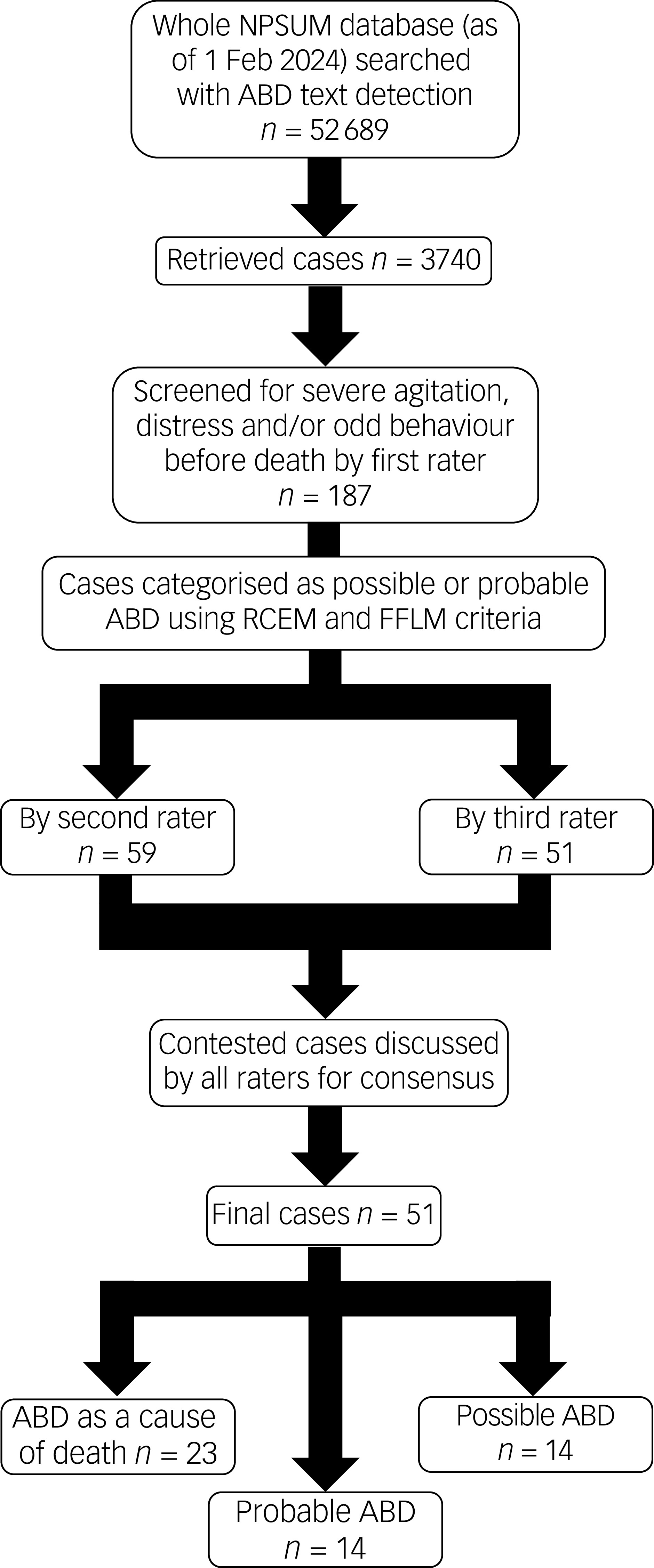
We identified relevant deaths following the process shown in Fig. 1. All NPSUM cases received by 1 February 2024 were searched for the following text strings in the causes of death fields and circumstances of death field: ‘abd’, ‘aggress*’, ‘agitat*’, ‘angry’, ‘asphyx*’, ‘bizarre’, ‘deliri*’, ‘detain*’, ‘disturb*’, ‘erratic’, ‘excit*’, ‘force’, ‘hypertherm’, ‘police’, ‘position*’, ‘restrain*’, ‘strange*’ ‘struggl*’, ‘sweat*’. These text strings were chosen on the basis of RCEM and FFLM ABD criteria keywords. The 3740 cases identified with these text strings were screened by M.K., and 187 cases were flagged as featuring possible ABD if death or clinical deterioration seemed to be immediately preceded by severe agitation, distress and/or odd behaviour, or if ABD or excited delirium was named as a cause of death. These 187 cases were then reviewed by C.S.C. and N.J.K. using the RCEM and FFLM criteria on ABD as guidance: RCEM requires one or more signs to be present for a case to be regarded as ABD, whereas FFLM requires at least one of three core signs to be present either alone or in combination with other core or non-core signs (Table 1). C.S.C. identified 59 cases (25 with possible ABD, 11 with probable ABD and 23 in which ABD was cited as a cause of death), and N.J.K. identified 51 cases (11 with possible ABD, 17 with probable ABD and 23 in which ABD was cited as a cause of death). Twenty cases were rated differently by C.S.C. and N.J.K.; however there was 95.7% overall agreement, indicating high interrater reliability (Cohen’s kappa = 0.90). A meeting was held among all three raters to resolve the 20 contested cases. This discussion was aided by inspection of the original documents submitted by the coroner. This led to a final consensus of 51 cases (14 with possible ABD, 14 with probable ABD and 23 in which ABD was cited as a cause of death). Probable cases were defined as those in which multiple signs of ABD were clearly described, and possible cases as those in which only agitation with or without aggression was described.
Flowchart of ABD case identification from the NPSUM. NPSUM, National Programme on Substance Use Mortality; ABD, acute behavioural disturbance; RCEM, Royal College of Emergency Medicine; FFLM, Faculty of Forensic & Legal Medicine.

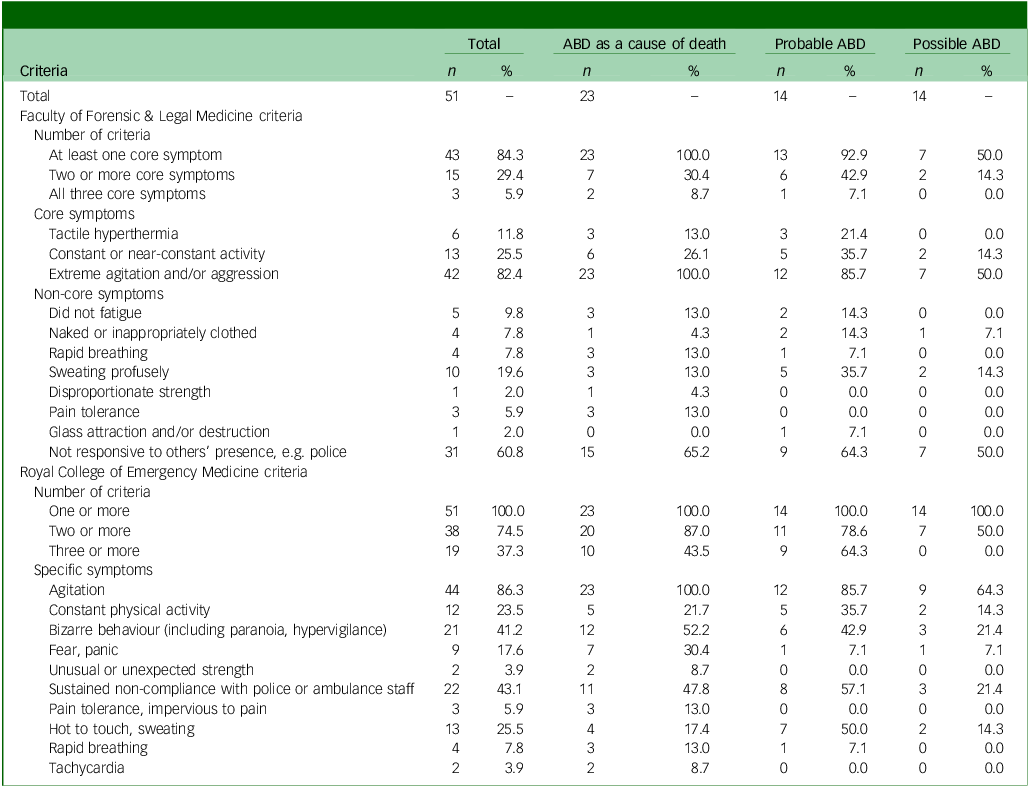
Criteria for identification of ABD in the UK according to the Faculty of Forensic & Legal Medicine and the Royal College of Emergency Medicine

Table 1 Long description
A table with 51 rows and 12 columns comparing criteria for identifying ABD according to the Faculty of Forensic & Legal Medicine and the Royal College of Emergency Medicine. The table is divided into sections for total cases, number of criteria, core symptoms, and non-core symptoms. Column headers include Total, ABD as a cause of death, Probable ABD, and Possible ABD, with sub-columns for n and %. Row labels include criteria such as Faculty of Forensic & Legal Medicine criteria and Royal College of Emergency Medicine criteria. Notable trends include the percentage of cases meeting different criteria and the distribution of core and non-core symptoms across different categories.
ABD, acute behavioural disturbance.
Analytical methods
Toxicology reports for qualifying cases were produced by one of 15 toxicology laboratories (Supplementary Table 1 available at https://doi.org/10.1192/bjo.2026.12121), of which 14 were accredited by the UK Accreditation Service (UKAS) and one by both the American National Standards Institute National Accreditation Board and College of American Pathologists (these are the US accreditation bodies for forensic and post-mortem toxicology testing, respectively, and are internationally recognised as equivalents to UKAS).
Case analysis
IBM® SPSS software (version 29 for Windows; IBM Corp., Armonk, New York, USA; https://www.ibm.com/support/pages/downloading-ibm-spss-statistics-29) and Microsoft Excel 365 for Windows (Microsoft Corporation, Redmond, Washington, USA; https://www.microsoft.com/en-gb/microsoft-365/download-office) were used for case extraction, quantitative analysis and statistical tests.
Drugs administered as part of healthcare treatment were not included as drugs detected in the post-mortem analysis, nor was alcohol in cases in which its presence was attributed to post-mortem production by the pathologist (≤10 mg/dL). For the ethnicity analysis, cases were grouped according to Office for National Statistics ethnic group classification 6a. Deprivation deciles (decile 1, most deprived; decile 10, least deprived) were determined by postcode matching of the usual addresses of decedents with the English, Welsh and Northern Irish Indices of Deprivation calculators.
Spearman’s rank coefficients (ρ) were calculated to determine whether there were any significant correlations with numbers of ABD deaths over time. A value of ρ ≥ 0.70 was considered to indicate a very strong relationship between the two variables, 0.40–0.69 a strong relationship, 0.30–0.39 a moderate relationship and 0.20–0.29 a weak relationship, with values of 0.01–0.19 indicating no or negligible relationship. Chi-squared tests were used to determine whether associations between two categorical variables were significantly different (e.g. proportion of males versus females in ABD and all NPSUM cases), and independent two-sample Student’s t-tests were performed to compare cocaine concentrations and mean ages in ABD cases versus all NPSUM cases. The significance threshold for all tests was set to P < 0.05.
Results
A total of 51 cases of fatal ABD were identified for analysis. In 23 of these cases, either ABD (n = 15) or excited delirium (n = 8) was cited by the coroner as a cause of death. The term ‘excited delirium’ was largely used in earlier cases, with only two cases citing the term post-2011; both of these occurred in 2019. A further 28 cases were classified by the authors as exhibiting probable (n = 14) or possible (n = 14) ABD on the basis of the case narratives and criteria set by the FFLM and/or RCEM. Application of these scoring frameworks indicated that 84.3% of total cases (43/51) met the threshold for ABD using FFLM criteria, whereas all cases met the threshold under RCEM criteria (Table 1).
Trends in deaths
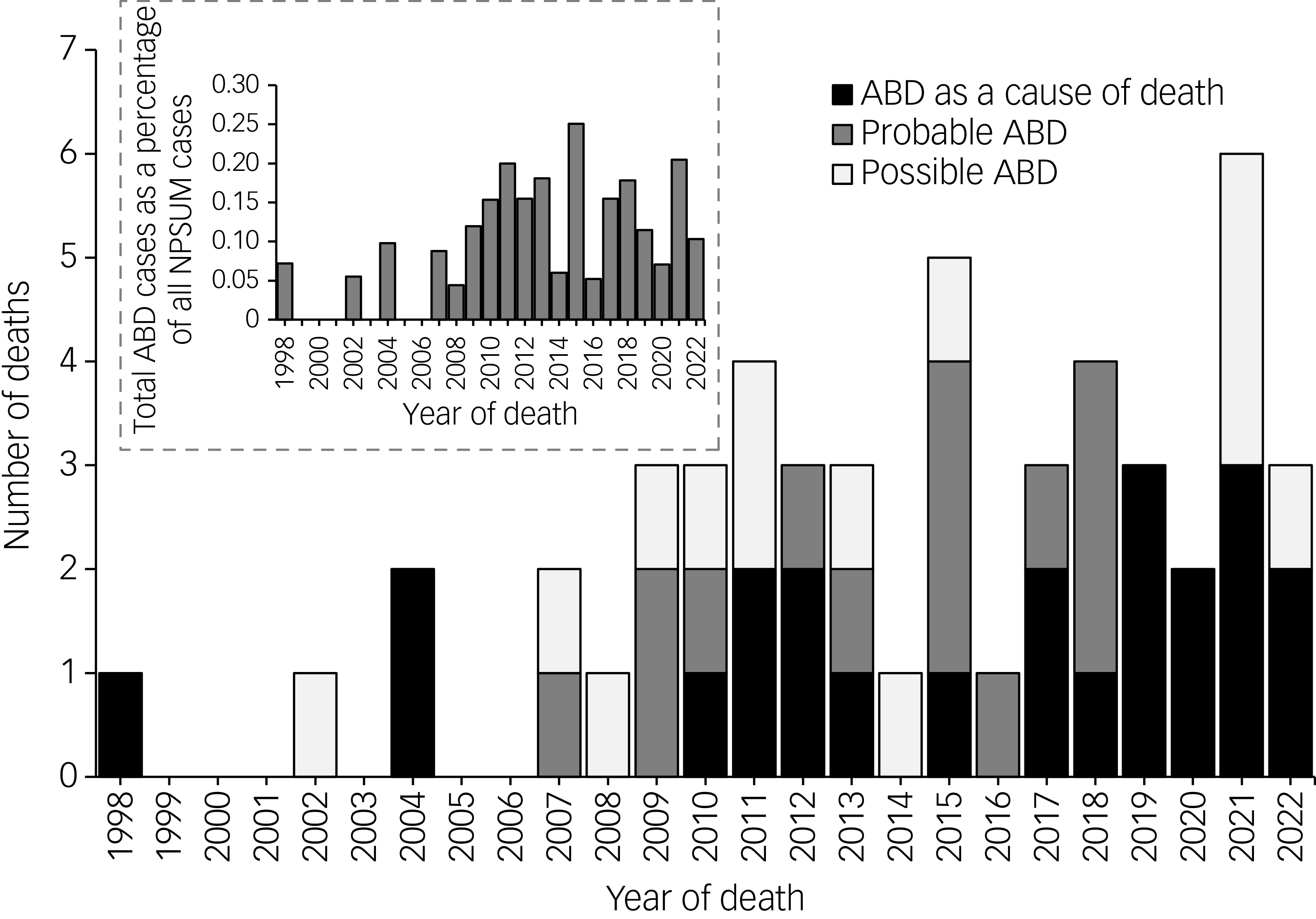
The frequency of cases increased over the 25-year study period, in terms of both total identified ABD cases (ρ = 0.72) and those specifically citing ABD (or ‘excited delirium’) as a cause of death (ρ = 0.68), with 18 of the total 51 cases (35.3%) and 11 of the 23 ABD cause-of-death cases (47.8%) occurring in the final 5 years of the study period (Fig. 2). When these results were normalised against all NPSUM reporting over time, this apparent increase in ABD cases remained (ρ = 0.63; Fig. 2, inset).
Annual reports of deaths with ABD characteristics to the NPSUM. Inset shows total reported ABD cases as a proportion of all cases reported to the NPSUM over the same time period. The correlation between increasing number of deaths over time remained strong (ρ = 0.63) following correction for changes in the number of cases reported to NPSUM. ABD, acute behavioural disturbance; NPSUM, National Programme on Substance Use Mortality.

Signs and symptoms of ABD according to FFLM and RCEM criteria
Agitation and extreme agitation/aggression, as defined by RCEM and FFLM criteria, respectively, were the most frequently observed symptoms across all cases (Table 1). Additional features that were commonly reported included constant or near-constant physical activity, and non-responsiveness or non-compliance with instructions – particularly those issued by emergency workers – as well as tactile hyperthermia and profuse sweating (Table 1). These symptoms were identified consistently across both RCEM and FFLM scoring systems and across case types (ABD as a cause of death, probable ABD cases and possible ABD cases). Bizarre behaviour, which is defined under RCEM criteria but not included in the FFLM framework, also appeared frequently in case narratives across all case types (Table 1).
Location of deaths
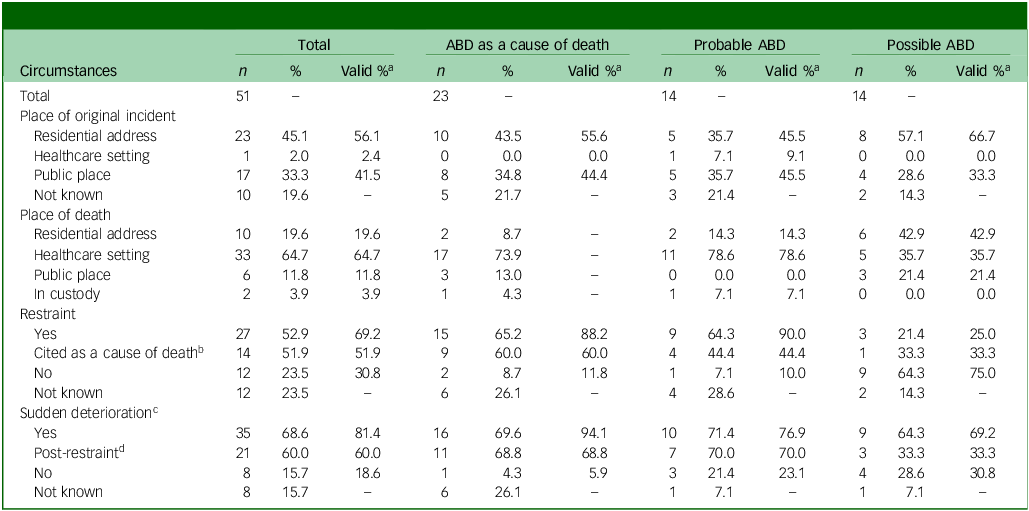
Information on the location of the individual at onset of ABD was available for 80.4% of cases (41 of 51; Table 2). In the majority of these cases, ABD symptoms were first observed at a residential address (56.1%, n = 23 of 41) or in a public setting (41.5%, n = 17 of 41). Despite this, the most common place of death was a hospital setting (64.7% of cases, n = 33 of 51). Hospital admission before death was more frequently documented among those cases in which ABD was cited as a cause of death (73.9% of cases, n = 17 of 23) or identified as probable ABD (78.6% of cases, n = 11 of 14) than in cases identified as possible ABD (35.7% of cases, n = 5 of 14).
Circumstances of deaths

Table 2 Long description
A table with 51 rows and 12 columns detailing circumstances of deaths related to ABD. The table includes columns for total cases, ABD as a cause of death, probable ABD, and possible ABD. Row labels include place of original incident, place of death, restraint, and sudden deterioration. Each row provides counts and percentages for each category. Notable trends include a higher percentage of deaths in healthcare settings and a significant number of cases involving restraint and sudden deterioration.
ABD, acute behavioural disturbance.
a. Percentage of cases with known status.
b. Percentage of cases with restraint.
c. Partial to full loss of consciousness with or without abnormal breathing and/ or cardiac arrest that came on suddenly and unexpectedly.
d. Percentage of cases with sudden deterioration.
Incidence of restraint
Information on restraint was available in 76.4% of cases (n = 39 of 51), with physical restraint described in 69.2% of these cases (n = 27 of 39). Restraint was more commonly reported in cases in which ABD was formally cited as a cause of death or cases classified as probable ABD. Among the 27 restrained cases, restraint was directly implicated as a contributory factor in 51.9% of cases (n = 14 of 27). Information on sudden deterioration was available in 84.3% of cases (n = 43 of 51), with 81.4% (n = 35 of 43) of these describing a sudden collapse. Sudden deterioration was identified from case narratives in which partial to complete loss of consciousness was described, with or without abnormal breathing or cardiac arrest, occurring abruptly and without warning. Of cases in which sudden deterioration was documented, in 60.0% (n = 21 of 35), this followed a period of physical restraint.
Post-mortem toxicology findings
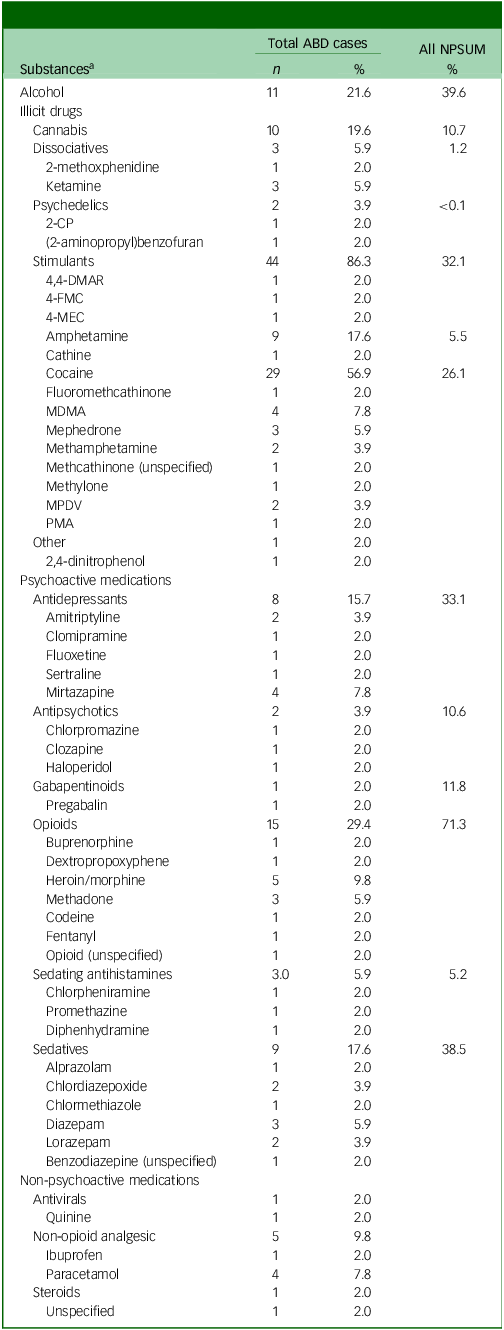
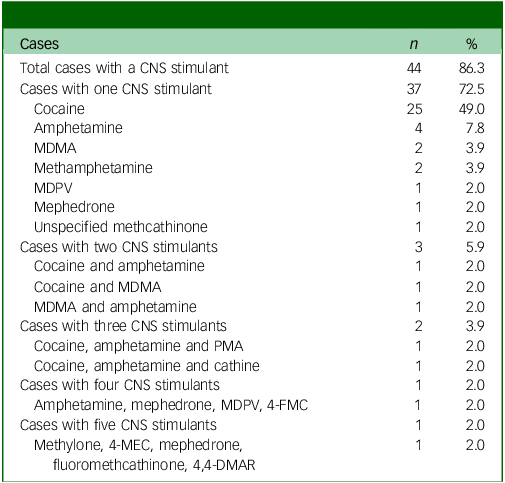
In toxicological analyses, the most commonly detected class of substance was stimulants; these were detected in in 86.3% of cases (n = 44 of 51) and were predominantly cocaine and amphetamines (Tables 3 and 4). This prevalence was nearly threefold higher than the stimulant detection rate observed in the all-NPSUM sample (32.1%; Table 3), with multi-stimulant use evident in 13.7% of cases (n = 7 of 51; Table 4). The presence of alcohol in ABD case post-mortem samples was observed at approximately half the rate of that found in the NPSUM cohort (Table 3). Prescribed psychoactive medications, including antidepressants, antipsychotics, anxiolytics, sedatives, gabapentinoids and opioids, were also less commonly detected among ABD cases than in the broader NPSUM population (Table 3). By contrast, use of illicit substances such as cannabis, dissociatives and psychedelics was more prevalent in ABD cases (Table 3).
Drugs detected at post-mortem

Table 3 Long description
A table listing substances detected in post-mortem toxicological analyses. The table has 2 columns and 60 rows. The columns are labeled ‘Substances’ and ‘Total ABD cases’. The ‘Total ABD cases’ column is further divided into ‘n’ and ‘%’ sub-columns. The ‘Substances’ column lists various drugs and medications, including alcohol, illicit drugs, psychoactive medications, and non-psychoactive medications. The ‘Total ABD cases’ column provides the number of cases (n) and the percentage (%) for each substance. Notable substances include stimulants detected in 86.3% of cases (n=44), opioids in 29.4% of cases (n=15), and alcohol in 21.6% of cases (n=11).
ABD, acute behavioural disturbance; NPSUM, National Programme on Substance Use Mortality; 2-CP, 2,5-dimethoxy-4-propylphenethylamine; 4,4-DMAR, 4,4’-dimethylaminorex; 4-FMC, 4-fluoromethacathinone; 4-MEC, 4-methylethcathonone; MDMA, 3,4-methylenedioxymethamphetamine; MPDV, methylenedioxypyrovalerone; PMA, para-methoxyamphetamine.
a. All drugs detected in ABD cases are listed, except for those administered as part of healthcare treatment. Selected drug class and type prevalence in all NPSUM cases are displayed for comparator purposes.
Incidence of polysubstance use in ABD cases

Table 4 Long description
The table presents data on the incidence of polysubstance use in ABD cases, specifically focusing on CNS stimulants. It has 12 rows and 3 columns. The columns are labeled ‘Cases’, ‘n’, and ‘%’. The table details the number and percentage of cases involving various CNS stimulants. Row 1: Total cases with a CNS stimulant, n 44, 86.3 percent. Row 2: Cases with one CNS stimulant, n 37, 72.5 percent. Row 3: Cocaine, n 25, 49.0 percent. Row 4: Amphetamine, n 4, 7.8 percent. Row 5: MDMA, n 2, 3.9 percent. Row 6: Methamphetamine, n 2, 3.9 percent. Row 7: MDPV, n 1, 2.0 percent. Row 8: Mephedrone, n 1, 2.0 percent. Row 9: Unspecified methcathinone, n 1, 2.0 percent. Row 10: Cases with two CNS stimulants, n 3, 5.9 percent. Row 11: Cases with three CNS stimulants, n 2, 3.9 percent. Row 12: Cases with four CNS stimulants, n 1, 2.0 percent. Row 13: Cases with five CNS stimulants, n 1, 2.0 percent.
ABD, acute behavioural disturbance; CNS, central nervous system; MDMA, 3,4-methylenedioxymethamphetamine; MPDV, methylenedioxypyrovalerone; PMA, para-methoxyamphetamine; 4-FMC, 4-fluoromethacathinone; 4-MEC, 4-methylethcathonone; 4,4-DMAR, 4,4’-dimethylaminorex.
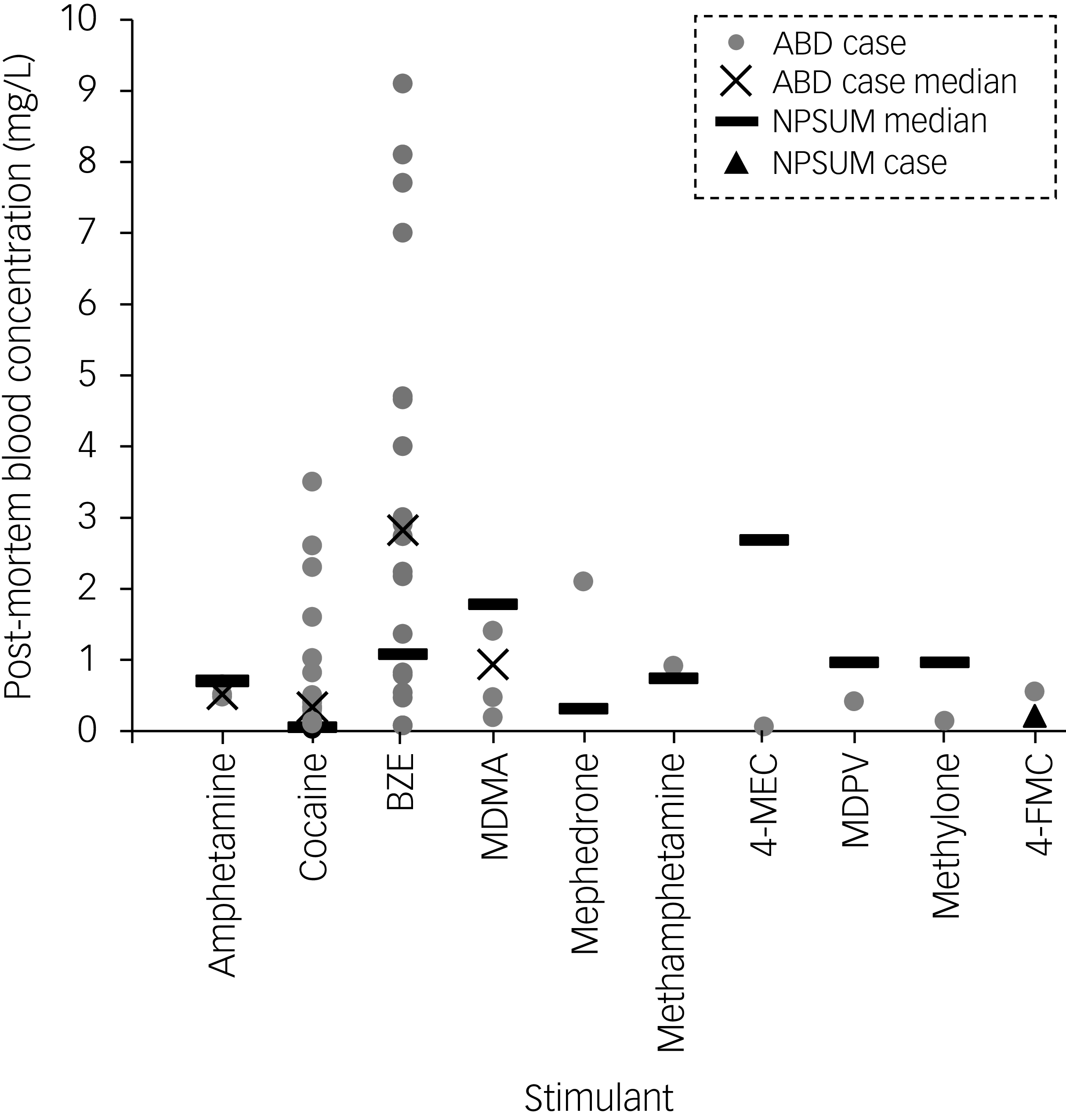
With respect to examination of post-mortem concentrations of stimulants detected in ABD cases, quantifications were performed in 17 cases with cocaine detection (and in 20 cases with detection of benzoylecgonine (BZE), a major metabolite of cocaine), four cases with 3,4-methylenedioxymethamphetamine (MDMA) detection, three cases with amphetamine detection, and one case each for mephedrone, methamphetamine, 4-methylethcathonone, methylenedioxypyrovalerone, methylone and 4-fluoromethacathinone. Although the median concentration of cocaine in ABD cases with quantification (0.848 mg/L) was eight-fold that of the median concentration of all NPSUM cases with cocaine quantifications (0.105 mg/L, n = 2501 cases), and the median BZE concentration (2.815 mg/L) was 2.6-fold that of the median concentration of all NPSUM cases with BZE quantifications (1.076 mg/L, n = 3143 cases), neither difference was deemed to be statistically significant (Student’s t-test P > 0.05 for both; Fig. 3). Low numbers of quantifications for other stimulant drug types made comparisons between ABD and all NPSUM cases difficult to interpret (Fig. 3).
Median blood concentrations of stimulants in ABD cases and in all NPSUM cases in which the stimulant was implicated in causing death. There was only one other case in the NPSUM with a reported concentration of 4-FMC. ABD, acute behavioural disturbance; NPSUM, National Programme on Substance Use Mortality; BZE, benzoylecgonine; MDMA, 3,4-methylenedioxymethamphetamine; 4-MEC, 4-methylethcathonone; MDPV, methylenedioxypyrovalerone; 4-FMC, 4-fluoromethacathinone.

Demographics
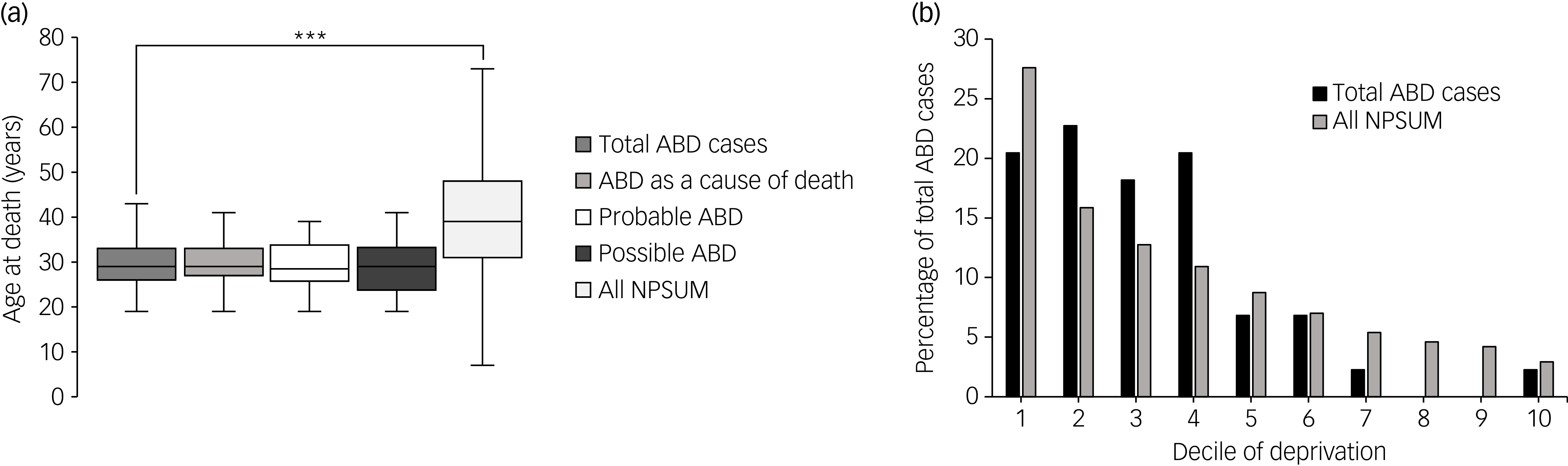
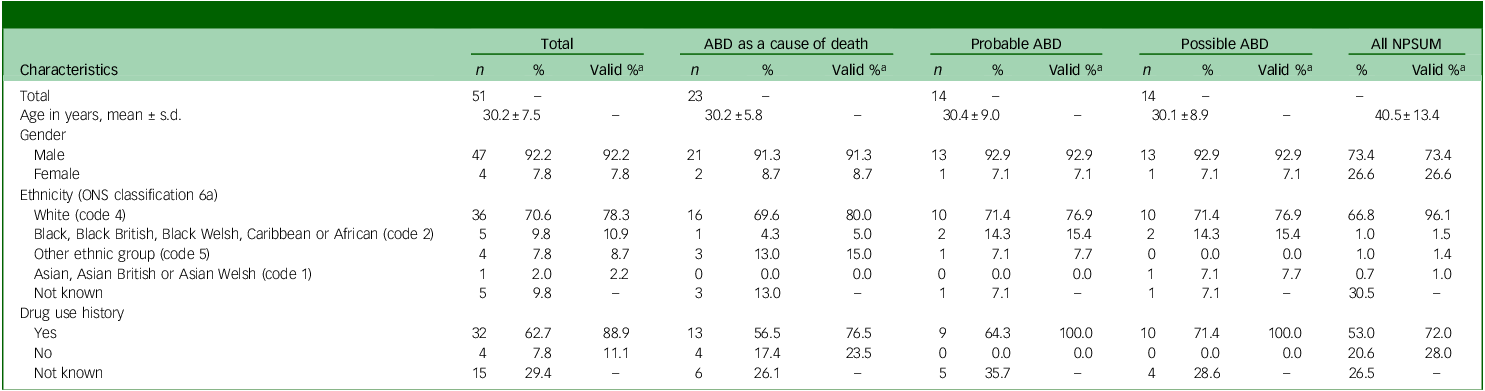
Decedents in the identified ABD cases were, on average, significantly younger than those in the total NPSUM sample (mean age: 30.2 ± 7.5 years v. 40.5 ± 13.4 years; Student’s t-test P < 0.01; Table 5, Fig. 4(a)). A higher proportion resided in the most deprived areas, with 87.0% of individuals in ABD cases having lived in neighbourhoods ranked in the bottom five deprivation deciles, compared with 75.9% in the NPSUM cohort (chi-squared P < 0.05) (Fig. 4(b)). ABD decedents were predominantly male (92.2 v. 73.4%, chi-squared P < 0.01), more likely to have a history of drug use (88.9 v. 72.0%, chi-squared p < 0.05) and were from more ethnically diverse backgrounds (Table 5). The proportion of White decedents was significantly lower among ABD cases (78.3 v. 96.1%, chi-squared P < 0.01), whereas individuals of Black ethnicity (10.9 v. 1.5%) and those from other ethnic groups (8.7 v. 1.4%) were significantly overrepresented (both comparisons P < 0.01) (Table 5). Among the ‘other’ ethnic group category, all four ABD cases were of Arabic descent; however, it was not possible to generate comparable subgroup data from the NPSUM sample owing to the larger aggregate size (>16 500 cases).
(a) Age at death for ABD cases (total and delineated by case type) and all NPSUM cases. ***P < 0.01. (b) Deciles of deprivation of decedents’ usual address. Cases for which full postcodes were unavailable were not included in this analysis. For total ABD cases, this comprised persons of no fixed abode (n = 1), those whose usual address was outside the mainland UK (n = 1), and cases in which the postcode had been redacted by the reporting coroner (n = 5). ABD, acute behavioural disturbance; NPSUM, National Programme on Substance Use Mortality.

Fig. 4 Long description
Panel A: A box plot shows the age at death for different types of acute behavioral disturbance (ABD) cases and all National Programme on Substance Use Mortality (NPSUM) cases. The x-axis categorizes the cases into total ABD, ABD as a cause of death, probable ABD, possible ABD, and all NPSUM. The y-axis measures age at death in years. The box plot indicates the median, interquartile range, and outliers for each category. A significant difference is noted between total ABD cases and all NPSUM cases, marked by three asterisks. Panel B: A bar graph displays the percentage of total ABD cases and all NPSUM cases across deciles of deprivation. The x-axis represents deciles of deprivation from 1 to 10, while the y-axis shows the percentage of total ABD cases. The graph uses black bars for total ABD cases and gray bars for all NPSUM cases, revealing variations in the distribution of ABD cases across different levels of deprivation.
Decedent demographics and drug use history

Table 5 Long description
The table presents data on decedent demographics and drug use history, focusing on total cases, ABD as a cause of death, probable ABD, possible ABD, and all NPSUM. It includes characteristics such as age, gender, ethnicity, and drug use history. The table has 51 rows and 14 columns, with column headers including Total, ABD as a cause of death, Probable ABD, Possible ABD, and All NPSUM. Each column further breaks down into sub-columns for count (n), percentage (%), and valid percentage (Valid %). Row labels include categories like gender (Male, Female), ethnicity (White, Black, Other ethnic group, Asian, Not known), and drug use history (Yes, No, Not known). Notable trends include a higher proportion of males and individuals with a history of drug use in ABD cases compared to the total NPSUM sample. Ethnic diversity is also more pronounced in ABD cases.
ABD, acute behavioural disturbance; NPSUM, National Programme on Substance Use Mortality; ONS, Office for National Statistics.
a. Percentage of cases with known status.
Past medical history was available in 27.5% of ABD cases (14 of 51); of these, 64.3% (9 of 14) included a documented mental health diagnosis. The recorded mental health history included depression (n = 3), psychosis, anxiety, schizophrenia and personality disorder (each n = 1), as well as one case of comorbid anxiety and depression. In one further case, paranoia was described as a reported psychiatric symptom rather than a formal diagnosis. Two additional cases listed an unspecified mental health condition.
Discussion
In this study, we analysed 51 deaths for which ABD in the context of substance use was either cited as a cause of death or identified as present using RCEM and FFLM scoring criteria. The cases varied widely in terms of which criteria were present, making case definition challenging. Nevertheless, the findings highlight key epidemiological, clinical, toxicological, demographic and systemic factors associated with fatal ABD.
Epidemiological trends and terminology shifts
We observed an increase in deaths over time across the ABD case classification thresholds. Use of the term ‘excited delirium’ was more frequent at the beginning of the study and declined in use particularly after 2011. Although neither term is universally accepted, this shift corresponds to general preference for the term ABD over ‘excited delirium’. Reference McGuinness and Lipsedge3 The increased citation of ABD as a cause of death in the latter period of the study is in contradiction to guidance issued in 2020 by the Forensic Science Regulator advising coroners to move away from use of either term as a stand-alone cause of death and to instead use these terms to reflect psychological and physiological disturbance alongside a more definitive cause of death (e.g. ‘amphetamine intoxication with acute behavioural disturbance’). 24
Although classification of ABD cases using FFLM and RCEM frameworks represented a more standardised method for identification of the clinical signs and symptoms of ABD, the finding that all cases in this study met RCEM criteria indicates that there is limited specificity within this framework. Appropriate professional guidance could therefore be to use the term ABD only in cases in which two or more FFLM core symptoms are present, as proposed by a recent Delphi process. Reference Humphries, Kelly, Sadik, Walker and Smith9 Application of this higher threshold would be likely to improve diagnostic consistency and overapplication of the term; indeed, in this study, only around one-third of cases met these diagnostic criteria, which demonstrates a need for clearer criteria in both clinical and forensic contexts.
Clinical features of ABD
Whereas the clinical presentation of cases (e.g. agitation, physical overactivity, non-compliance with law enforcement, autonomic dysregulation) was highly consistent with the diagnostic frameworks used, the method used was in part self-fulfilling, as cases in which ABD was not cited as a cause of death were identified in on the basis of the described symptomatology’s matching the diagnostic criteria. However, the prevalence of the different symptoms was similar across the different case types, indicating validity of the method used. Furthermore, the consistency in the described symptomatology across the ABD classification thresholds used supported the hypothesis that ABD may represent a distinct and recognisable clinical syndrome, albeit one with considerable diagnostic overlap and subjectivity. However, the frequent description of ‘bizarre’ behaviour – a symptom according to RCEM but not FFLM scoring criteria – suggests that a review of the current diagnostic tools may be needed for suitability and completeness.
Toxicological profile of ABD cases
The toxicological profile of ABD cases was strikingly different from that of cases from the wider NPSUM database. Stimulants were present in the majority of cases, with cannabis and dissociative drugs also more commonly detected in these cases compared with the overall cohort. By contrast, alcohol, opioids, sedatives and psychiatric medications were less frequently identified. These findings are consistent with those of previous case series and studies linking stimulant use to the development of ABD symptomatology Reference McGuinness and Lipsedge3,Reference Ruttenber, Lawler-Heavner, Yin, Wetli, Hearn and Mash4,Reference Penders, Gestring and Vilensky17–Reference Fishbain and Wetli20 and further reinforce the role of multi-stimulant and illicit substance use in destabilising behavioural and physiological regulation. Reference Kaye and Darke25–Reference Zawilska27
Earlier work suggesting that cocaine concentrations in ABD deaths were lower than in other cocaine-related deaths Reference Stevenson and Tracy28 has been used to argue that environmental factors such as restraint may be more important in the mechanism of death than drug toxicity. Reference McGuinness and Lipsedge3 By contrast, we found that median cocaine and BZE concentrations were higher in ABD cases compared with all NPSUM deaths involving cocaine. However, interpretation of post-mortem cocaine concentrations is fraught with difficulty, as there is no consistent difference in concentrations between deaths in which cocaine was deemed causative and those in which its detection was deemed an incidental finding. Reference Rooney, Sobiecka, Rock and Copeland29 Although detection of drugs may be useful in characterising cases of ABD, concentration data are unlikely to enable determination of individual toxicity thresholds.
Restraint as a mechanism of death
In agreement with previous studies on ABD, Reference Martín-Ayuso, Pajuelo Castro, Santiago-Sáez, Herreros and Pinto Pastor10–Reference Humphries and Walker12,Reference Weedn, Steinberg and Speth15,Reference Vilke, DeBard, Chan, Ho, Dawes and Hall30 physical restraint prominently featured in the presented cases and was directly implicated as a factor contributing to death in more than half of the incidences in which it was used. The high proportion of cases in which ‘sudden collapse’ was described, particularly among cases in which restraint was used, provides support to theories that ABD is associated with a hyperadrenergic state that can lead to cardiovascular collapse Reference Weedn, Steinberg and Speth15,Reference Steinberg16 – a state that would only be exacerbated by stimulant use. Reference Coffin and Suen31,Reference Lange and Hillis32
In many of the presented cases, ABD began at home or in public. Not all cases in which ABD was listed as a cause of death occurred in hospital, despite the clinical utility of the term being to signal urgently for emergency healthcare intervention. Reference Humphries, Kelly, Sadik, Walker and Smith9 In many cases, there was failed community management or law enforcement involvement – often including restraint – before the delayed but eventual engagement with emergency services.
These findings further highlight previously voiced concerns regarding the use of restraint in suspected ABD cases Reference McGuinness and Lipsedge3 and the need for alternative de-escalation strategies and immediate engagement with emergency healthcare, as has already been recommended in national clinical guidance. 33,34 When ABD is suspected, earlier transfer to healthcare-led management pathways, including rapid tranquilisation, temperature control and cardiorespiratory monitoring, may reduce reliance on prolonged restraint and improve outcomes. It is prudent to reflect on whether inclusion of criteria such as ‘sustained non-compliance with police or healthcare staff’ by the RCEM – a scenario which often precedes restraint – risks defining ABD cases partly by the presence of restraint itself.
Demographic risk factors and health inequities
In comparison with the broader NPSUM cohort, decedents were younger and more likely to be male and living in areas of higher socioeconomic deprivation, and more likely to have a recorded minority ethnic background, although interpretation of ethnicity comparisons was limited by the high proportion of unknown ethnicity in the wider NPSUM cohort. Notably, ethnicity seemed to be recorded more frequently in ABD cases than in the wider comparator cohort, which may itself reflect differences in how these cases were perceived, described or documented. The overrepresentation of Black and Arabic individuals among cases with recorded ethnicity – a finding consistent with recent research using electronic health records, in which Black individuals were more likely to be described as having presented with ABD Reference Polling, Das, Ariyo, Creary and Smith8 – is of particularly concern, as these findings do not reflect the ethnic make-up of the UK population, nor do they align with population-level patterns of drug use, in which stimulants are reportedly more commonly used by White people. Reference Nutt, King and Phillips35,36 However, given the extent of missing ethnicity data, these findings should be considered exploratory. They suggest differences in the recognition, documentation and management of ABD and warrant further investigation using data-sets with more complete ethnicity recording.
Although data on mental health history were limited, the majority of those with available records had pre-existing psychiatric conditions, supporting calls for improved dual diagnosis care and early intervention strategies. 34,37
Limitations
There are several limitations to this work that must be acknowledged. First, the NPSUM receives reports voluntarily from coroners. Therefore, not all deaths that met the described ABD classification thresholds from England, Wales and Northern Ireland may have been reported. Furthermore, we were only able to identify further ABD cases in which case narratives describing the behaviour of the deceased before death were provided. The total number of ABD cases is therefore likely to have been underestimated. Although the trends identified in this study are probably reflective of the true overall trends in ABD cases, it is possible that further themes and differing trends would emerge from cases that were not reported to the NPSUM, or from those reported with little detail.
Second, toxicological analyses were conducted in multiple UK toxicology laboratories with varying methods, extraction techniques and calibration ranges – assay details that are not routinely reported in NPSUM submissions. Therefore, although all laboratories were accredited by UKAS (or international equivalents), interlaboratory variability (e.g. in use of screening libraries and protocols) cannot be excluded.
Third, deprivation was measured using area-level Indices of Multiple Deprivation derived from the postcode of the decedent’s usual residence, rather than individual-level socioeconomic circumstances. Residence in a more deprived area does not necessarily mean that a person was themselves socioeconomically deprived, nor does residence in a less deprived area preclude individual disadvantage. Rather, this measure should be interpreted as a proxy for the broader social and environmental context in which individuals lived, including greater potential exposure to structural inequalities, poorer health outcomes and other deprivation-associated risk factors.
Finally, fatal ABD has been reported to occur in the absence of drug use. Reference Kennedy and Savard38,Reference Pollanen, Chiasson, Cairns and Young39 In this study, however, it was only possible to identify fatal ABD cases from those reported to the NPSUM, which by definition require the decedent to have died in a context associated with psychoactive drug use.
Implications for future guidance
This study adds to the growing body of literature identifying ABD as a high-risk clinical presentation frequently associated with stimulant use, physical restraint and sociodemographic disadvantage. Although there remains a need for clearer diagnostic thresholds – such as requiring multiple FFLM criteria to ensure consistent application of the term ABD in forensic contexts – the consistent symptomatology and patterns of fatality evident in the cases presented here suggest a recognisable clinical syndrome with plausible shared pathophysiological mechanisms. The increase in ABD deaths over time and the overrepresentation of young and deprived ethnic minorities indicates a need for critical, equity-informed approaches to recognition and treatment of ABD. The frequent use of physical restraint and its contributions to sudden death warrant urgent reconsideration of current emergency response protocols. Rather than functioning as a stand-alone cause of death, ABD may be most useful as a time-critical clinical descriptor signalling severe agitation with physiological compromise that requires urgent medical assessment, rapid sedation where appropriate, active cooling, cardiovascular monitoring and minimisation of prolonged physical restraint through early healthcare-led de-escalation strategies. Future guidance should therefore focus on standardised recognition pathways and evidence-based emergency management rather than diagnostic labelling alone.
Supplementary material
The supplementary material is available online at https://doi.org/10.1192/bjo.2026.12121
Data availability
Although the Data Protection Act does not apply to identifiable data that relate to a person once they have died, owing to the sensitivity of the data used in this study, the raw data will only be available upon reasonable request to the corresponding author.
Acknowledgements
No generative artificial intelligence (AI) tools were used in the writing, editing, or preparation of this manuscript.
Author contributions
M.K. analysed the data and reviewed the final version of the manuscript. N.J.K. conceived the research and reviewed the final version of the manuscript. C.S.C. conceived the research, supported data collection, analysed the data, wrote the manuscript and reviewed the final version of the manuscript.
Funding
This research did not receive any specific grant from funding agencies in the public, commercial, or not-for-profit sector.
Declaration of interest
None.


 Open access


eLetters
No eLetters have been published for this article.