Introduction
At the present time, six species are recognized within the genus Skrjabinolecithum Belous, 1954 (Waretrematinae, Srivastava, 1937): Skrjabinolecithum indicum (Zhukov, 1972), Skrjabinolecithum bengalensis (Madhavi, 1979), Skrjabinolecithum vitellosum (Martin, 1973), Skrjabinolecithum lobolecithum (Martin, 1973), Skrjabinolecithum spasskii (Belous, 1954) and Skrjabinolecithum pyriforme (Besprozvannykh et al., 2016). Skrjabinolecithum indicum and S. bengalensis were detected in cichlid fish from the Arabian Sea, and mugilid fish from the Bay of Bengal, respectively (Zhukov, Reference Zhukov1972; Madhavi, Reference Madhavi1979). Other species were detected in mullet fish from the western coastal waters of the Pacific Ocean: S. vitellosum and S. lobolecithum from Queensland, Australia, S. spasskii and S. pyriforme from southern Russian Far East and northern coastal waters of Vietnam (Belous, Reference Belous1954; Martin, Reference Martin1973a; Besprozvannykh et al., Reference Besprozvannykh, Atopkin, Ngo, Beloded, Ermolenko, Ha and Tang2015, Reference Besprozvannykh, Atopkin, Ermolenko and Beloded2017). The validity of the species S. spasskii and S. pyriforme have been confirmed by morphological and molecular analyses. Other species of the genus Skrjabinolecithum have been validated with morphological data only. The representatives of Unissacus (Haploporinae, Nicol, 1973) are known from Australian mullet fish: Unissacus sprenti (Martin, 1973), Unissacus spinosus (Martin, 1973) and Unissacus brisbanensis (Martin, 1973); and Indian mullet: Unissacus mugilis (Rekharani & Madhavi, 1985), Unissacus overstreeti (Ahmad, 1987) and Unissacus martini Ahmad, 1986 (Martin, Reference Martin1973b, Reference Martinc; Rekharani & Madhavi, Reference Rekharani and Madhavi1985; Ahmad Reference Ahmad1986, Reference Ahmad1987; Blasco-Costa et al., Reference Blasco-Costa, Montero, Gibson, Balbuena, Raga and Kostadinova2009). Identification of these species was based on general morphology. In the present study, morphometric and molecular data are presented of two digeneans: Skrjabinolecithum spinosum n. sp. from Mugil cephalus (Linnaeus, 1758) of the southern Russian Far East and Unisaccus tonkini n. sp. from Moolgarda cunnesius (Valenciennes, 1836) and Moolgarda seheli (Forsskål) of Vietnam.
Materials and methods
Collection of trematodes
Adult Skrjabinolecithum were found in the intestine of M. cephalus from estuaries of the Kievka River (42°52′N, 133°39′E) in the Primorsky Region, Russia. Specimens of adult Unisaccus were found in the intestine of M. cunnesius and M. seheli from coastal waters of Cat Ba Island, northern Vietnam (20°84′N, 106°59′E). Worms were rinsed in distilled water for a very short time, killed in hot distilled water and preserved in 70% ethanol for morphological study with light microscopy. Whole-mounts for adult descriptions were made by staining the specimens with aluminium carmine, dehydrating the worms in a graded ethanol series and clearing in xylene, followed by mounting in Canada balsam under a coverslip on a slide. All measurements are given in millimetres (mm).
DNA extraction, amplification and sequencing
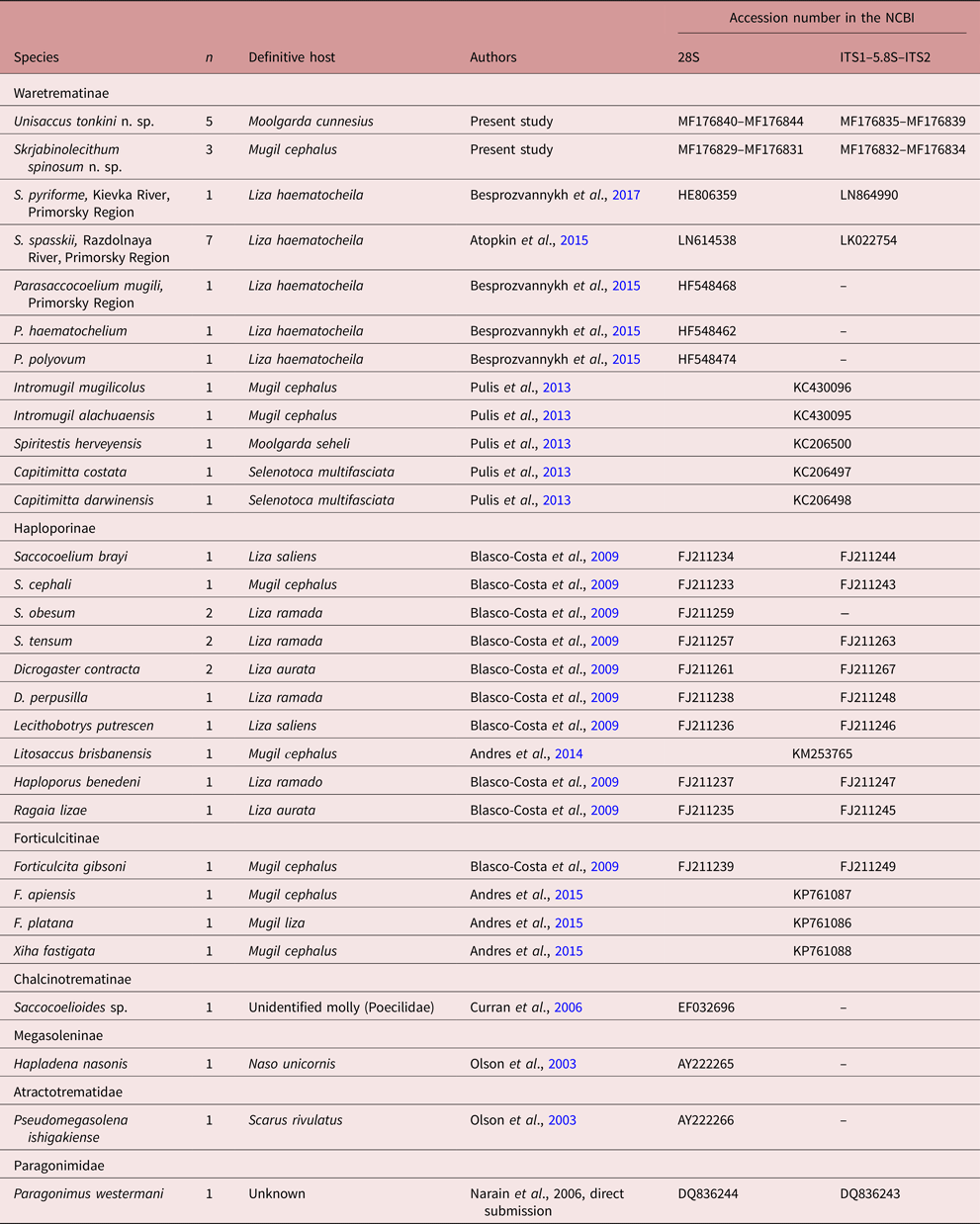
Adult worms of both S. spinosum n. sp. and U. tonkini n. sp. were fixed in 96% ethanol. Three adult specimens of S. spinosum n. sp. and five specimens of U. tonkini n. sp. were used for molecular analysis (table 1). Total DNA was extracted from flukes using a ‘hot shot’ technique (Truett, Reference Truett and Kieleczawa2006).
List of taxa used for molecular analysis.

n, number of sequences.
28S ribosomal DNA (rDNA) was amplified with the primers DIG12 (5′-AAG CAT ATC ACT AAG CGG-3′) and 1500R (5′-GCT ATC CTG AGG GAA ACT TCG-3′) (Tkach et al., Reference Tkach, Littlewood, Olson, Kinsella and Swiderski2003) with an annealing temperature of 55°C. A ribosomal ITS1–5.8S–ITS2 fragment was amplified with primers BD1 (5′-GTC GTA ACA AGG TTT CCG TA-3′) and BD2 (5′-TAT GCT TAA ATT CAG CGG GT-3′) (Luton et al., Reference Luton, Walker and Blair1992) with an annealing temperature of 54°C. Negative and positive controls using both primer pairs were included.
Polymerase chain reaction (PCR) products were directly sequenced using an ABI Big Dye Terminator v.3.1 Cycle Sequencing Kit (Applied Biosystems, Waltham, Massachusetts, USA), as recommended by the manufacturer, with the internal sequencing primers described by Tkach et al. (Reference Tkach, Littlewood, Olson, Kinsella and Swiderski2003) for 28S rDNA and Luton et al. (Reference Luton, Walker and Blair1992) for internal transcribed spacers (ITS). PCR product sequences were analysed using an ABI 3130 genetic analyser (Applied Biosystems) at the Federal Scientific Center of the East Asia Terrestrial Biodiversity, Far East Branch of the Russian Academy of Sciences. Sequences were submitted to the GenBank database (National Center for Biotechnology Information; NCBI).
Alignments and phylogenetic analysis
Ribosomal DNA sequences were assembled with SeqScape v.2.6 software, provided by Applied Biosystems. Alignments and estimations of the number of variable sites and sequence differences were performed using MEGA 6.0 software (Tamura et al., Reference Tamura, Stecher, Peterson, Filipski and Kumar2013). The values of genetic p-distances were calculated for the 28S ribosomal DNA fragment. Phylogenetic relationships were obtained using a concatenated dataset of partial sequences of the 28S rRNA gene and ITS2 rDNA. Phylogenetic analysis was performed using the Bayesian algorithm with the MrBayes v. 3.1.2 software (Huelsenbeck et al., Reference Huelsenbeck, Ronquist, Nielsen and Bollback2001). The best nucleotide substitution model, the general time reversible (Tavare, Reference Tavare1986) with estimates of invariant sites and gamma-distributed among-site variation (GTR + I + G) were estimated with jModeltest v. 2.1.5 software (Darriba et al., Reference Darriba, Taboada, Doallo and Posada2012). Bayesian analysis was performed using 10,000,000 generations with two independent runs. Summary parameters and the phylogenetic tree were calculated with a burn-in of 3,000,000 generations. The significance of the phylogenetic relationships was estimated using posterior probabilities (Huelsenbeck et al., Reference Huelsenbeck, Ronquist, Nielsen and Bollback2001). Combined molecular data for phylogenetic reconstructions contained only ITS2 rDNA sequences, which allowed us to use the maximal amount of species. Paragonimus westermani was used as outgroup, authors of these data and accession numbers are given in table 1.
Results
Skrjabinolecithum spinosum n. sp.
Taxonomic summary
Host. Mugil cephalus L.
Locality. Kievka River (43°52′N, 133°39′E), Primorsky Region (southern Far East, Russia).
Site. Intestine.
Type deposition. Type No. 84-Tr, paratype No. 85-93-Tr. This material is held in the collection of the Zoological Museum (Federal Scientific Center of the East Asia Terrestrial Biodiversity, Far East Branch of the Russian Academy of Sciences, Vladivostok, Russia); e-mail: petrova@ibss.dvo.ru. Deposited 25 October 2016.
Etymology. The specific name refers to the spines on the hermaphroditic duct.
Material examined. Ten specimens.
Description
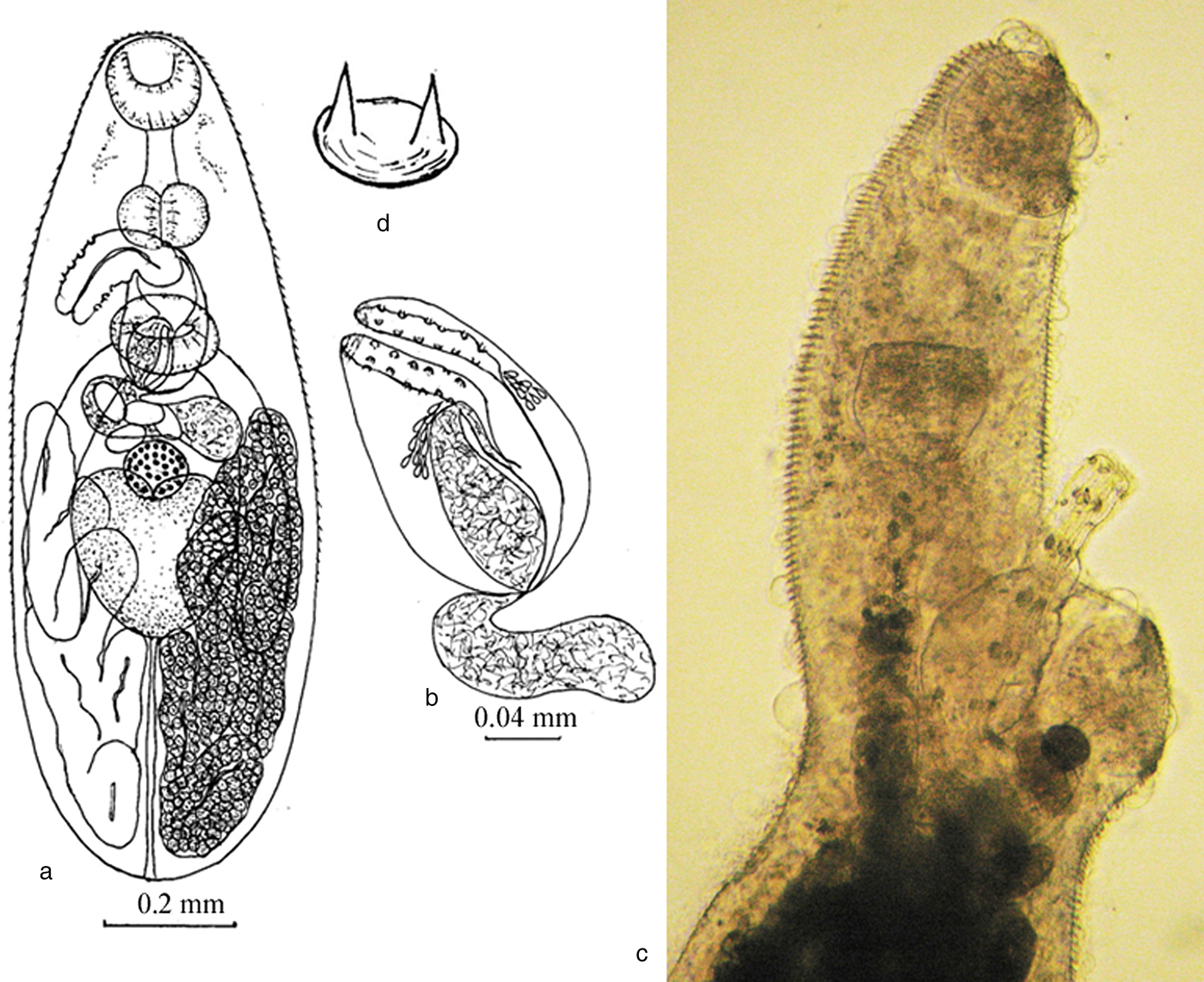
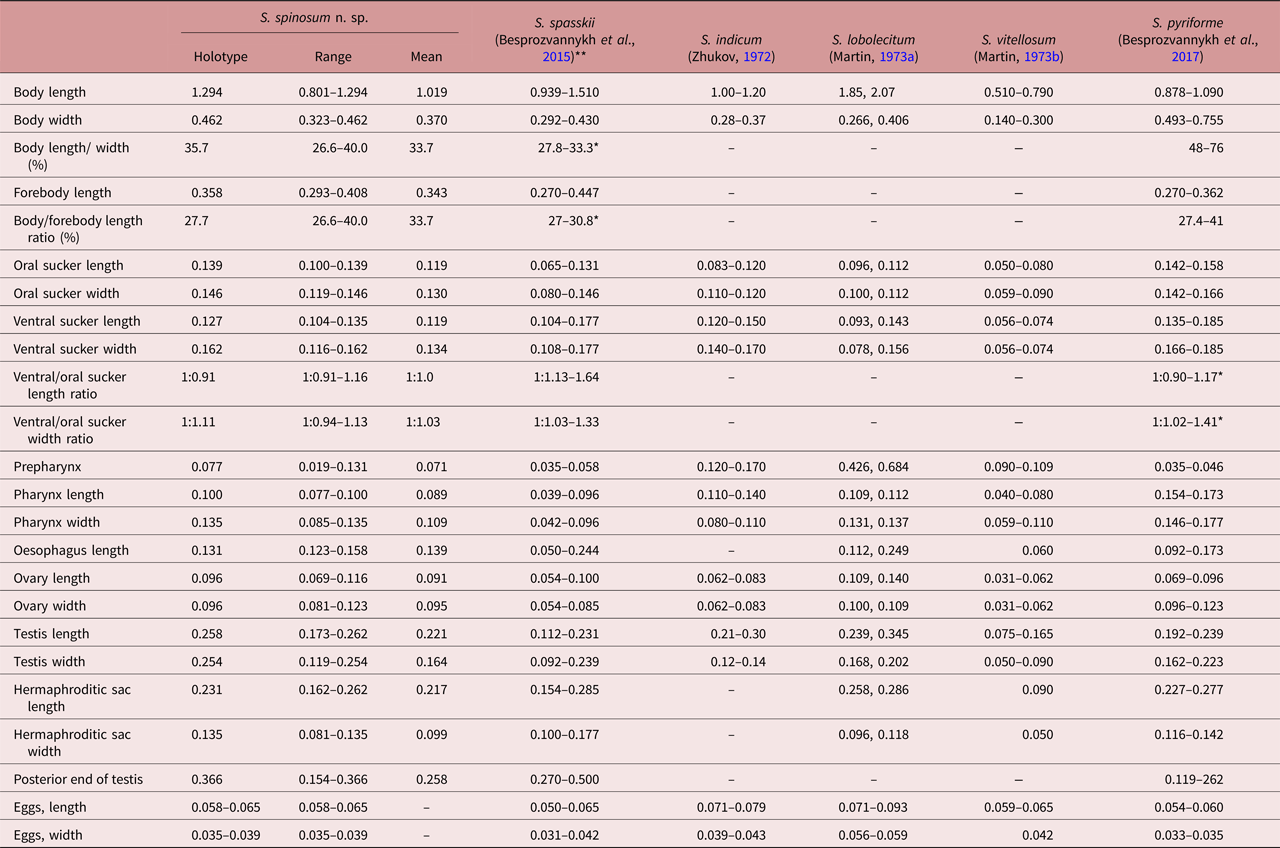
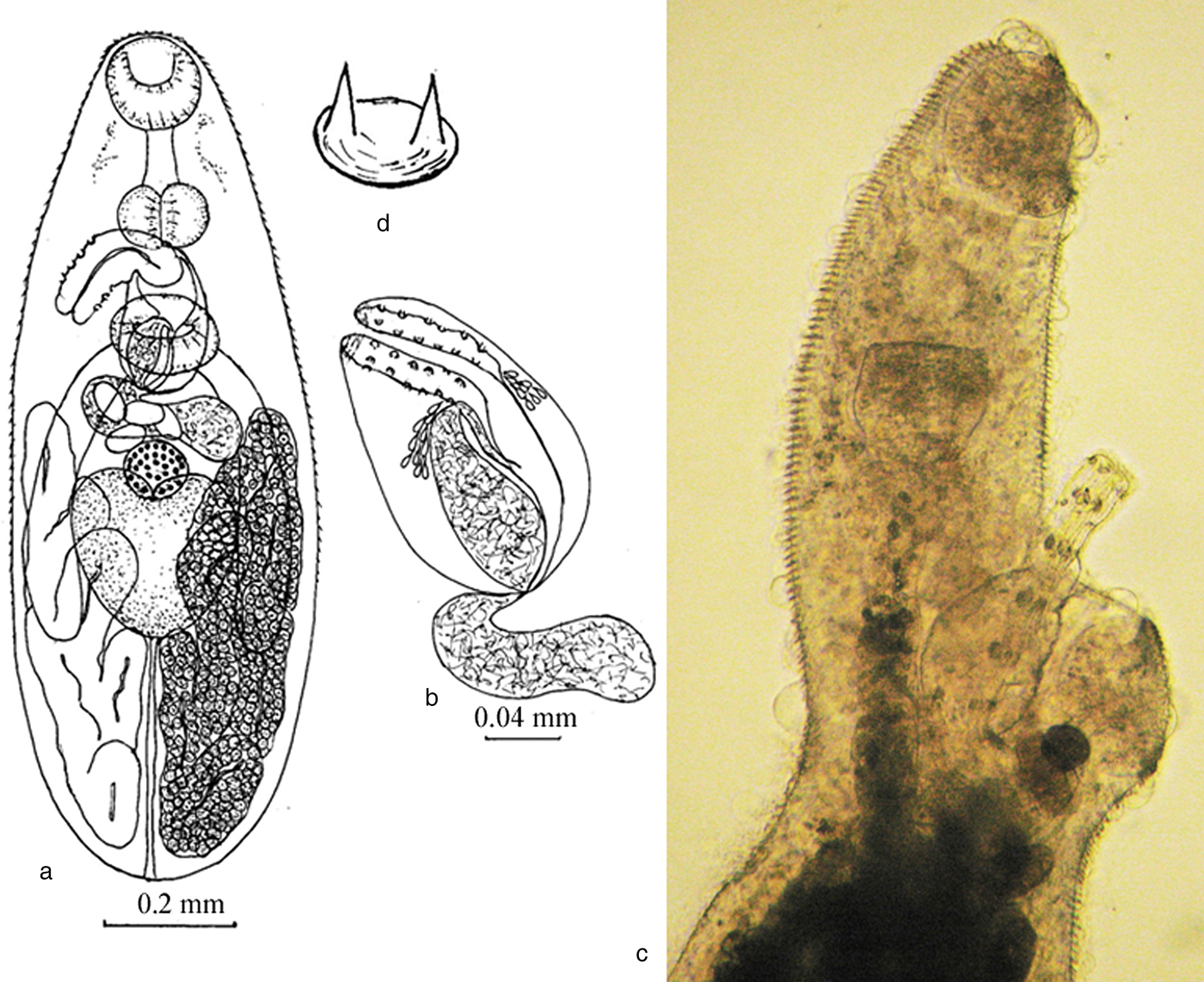
Adult worm. Shown in fig. 1 and described in table 2. Body elongate, spined from the anterior end to back third. Eye-spot diffuse, placed at the anterior third of the body. Oral sucker subterminal. Prepharynx short, pharynx transversely oval. Oesophagus longer in comparison with prepharynx. Caeca are wide, reach posterior margin of the testis. Ventral sucker size equal to the oral sucker, placed on the border of the anterior and middle third of the body. Testis single, V-shaped, usually at the end of the middle third of the body. External seminal vesicle is sac-shaped or another form, depending on the quality of sperm stored. Most specimens possess a vesicle that reaches the level of the ovary or anterior margin of the testis. Hermaphroditic sac oval or sac-shaped, located dorsally from the ventral sucker. Posterior end of hermaphroditic sac crosses the border of the posterior margin of the ventral sucker. Internal seminal vesicle size is smaller than the external seminal vesicle. Internal seminal vesicle sizes depend on the quality of sperm stored. Internal seminal vesicle duct is placed in the posterior third of the hermaphroditic duct. Prostatic cells are located around the middle part of the hermaphroditic duct. The hermaphroditic duct is muscular with six spirally arranged rows of pads, with 6–8 pads per row. Each pad has two spines on a reticular sclerotized base. Distal part of the hermaphroditic duct is eversible. Genital opening is on the midline of the body immediately before the ventral sucker. Metraterm is short and thin-walled. Vitellarium extends from the middle level of the ventral sucker or middle part of the body length up to the posterior end of the body, has the form of a tape and consists of small, round follicles closely adjacent to each other. Both lateral fields are connected on the midline of the body and cover the ovary, testis and caeca. Ovary round or transversely oval, adjacent to anterior margin of the testis left from the midline of the body. Uterus is short, placed between the hermaphroditic sac and anterior margin of the testis, and contains unembryonated eggs. Eggs are white–yellow, operculated. Excretory bladder is I-shaped.
Fig. 1.Skrjabinolecithum spinosum n. sp.: (a) adult worm, (b) hermaphroditic sac, (c) hermaphroditic duct with pads, (d) spines on a reticular sclerotized base.
 Table 2.
Measurements (mm) of adult worms of Skrjabinolecithum.
*From type location, ** additional data to earlier studies (Besprozvannykh et al., Reference Besprozvannykh, Atopkin, Ngo, Beloded, Ermolenko, Ha and Tang2015, Reference Besprozvannykh, Atopkin, Ermolenko and Beloded2017).

Molecular data
For S. spinosum n. sp., there were 1311 and 1184 alignable characters available for analysis in the 28S rRNA gene and ITS1–5.8S–ITS2 rDNA fragment datasets, respectively. Intraspecific variation of ribosomal DNA fragments of S. spinosum n. sp. extremely low. The 28S rRNA gene fragment was conservative, and only one variable site was detected for the ITS1–5.8S–ITS2 rDNA fragment. The sequences were submitted to the NCBI database with accession numbers MF176829–MF176834.
Unissacus tonkini n. sp.
Taxonomic summary
Type host. Moolgarda cunnesius.
Other host. Moolgarda seheli.
Type-locality. Coastal water of Cat Ba Island, Tonkin Bay, northern Vietnam (20°84′N, 106°59′E).
Site. Intestine.
Type deposition. Type No. 94-Tr, paratype No. 95-103-Tr. This material is held in the collection of the Zoological Museum (Federal Scientific Center of the East Asia Terrestrial Biodiversity, Far East Branch of the Russian Academy of Sciences, Vladivostok, Russia); e-mail: petrova@ibss.dvo.ru. Deposited 29 July 2015.
Etymology. The specific name refers to Tonkin Bay.
Material investigated. Ten flukes.
Description
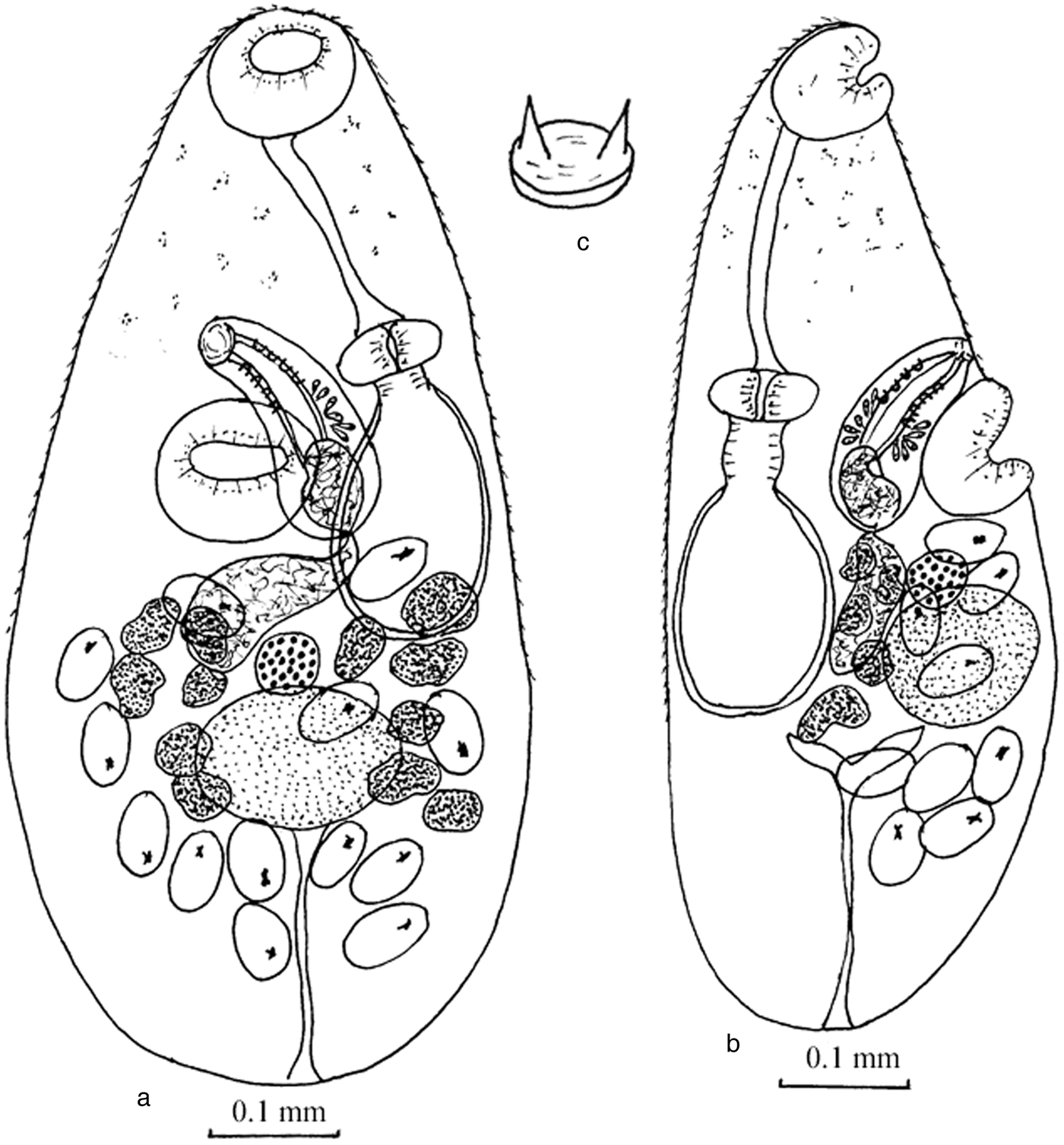
Adult worm. Shown in fig. 2 and described in table 3. Body is saccular, with the cuticle spinous near to the posterior end. Eye-spot pigment is dispersed at the forebody. Oral sucker is subterminal. Prepharynx is long, extending to level with the genital pore. Pharynx is transversely oval, oesophagus short, caeca single, saccular, situated equatorially. Acetabulum is pre-equatorial. A single testis is transversely oval, in the posterior one-third of the body. External seminal vesicle is saccular. Hermaphroditic sac is saccular, dorsal to ventral sucker. Posterior end of the hermaphroditic sac does not cross the posterior margin of the ventral sucker. Internal seminal vesicle is oval, and its size depends on the fullness of the sexual products. Prostatic cells are few. Hermaphroditic duct is with pads, each pad with two spines on a reticular sclerotized base. Genital pore is on the midline of the body, immediately before the ventral sucker. Ovary is spherical, adjacent to testis at the midline of the body. Receptaculum seminis was not observed. Uterus is from near the posterior end of the body to the acetabulum. Metraterm is short with muscular walls. Vitellarium in two distinct lateral groups of follicles, at the level of the ovary/testis. Eggs are large, operculate, embryonated, miracidia with two fused eye-spots. Excretory vesicle is Y-shaped.
Fig. 2.Adult worm Unissacus tonkini n. sp.: (a) ventrally, (b) laterally, (c) spines on a reticular sclerotized base.
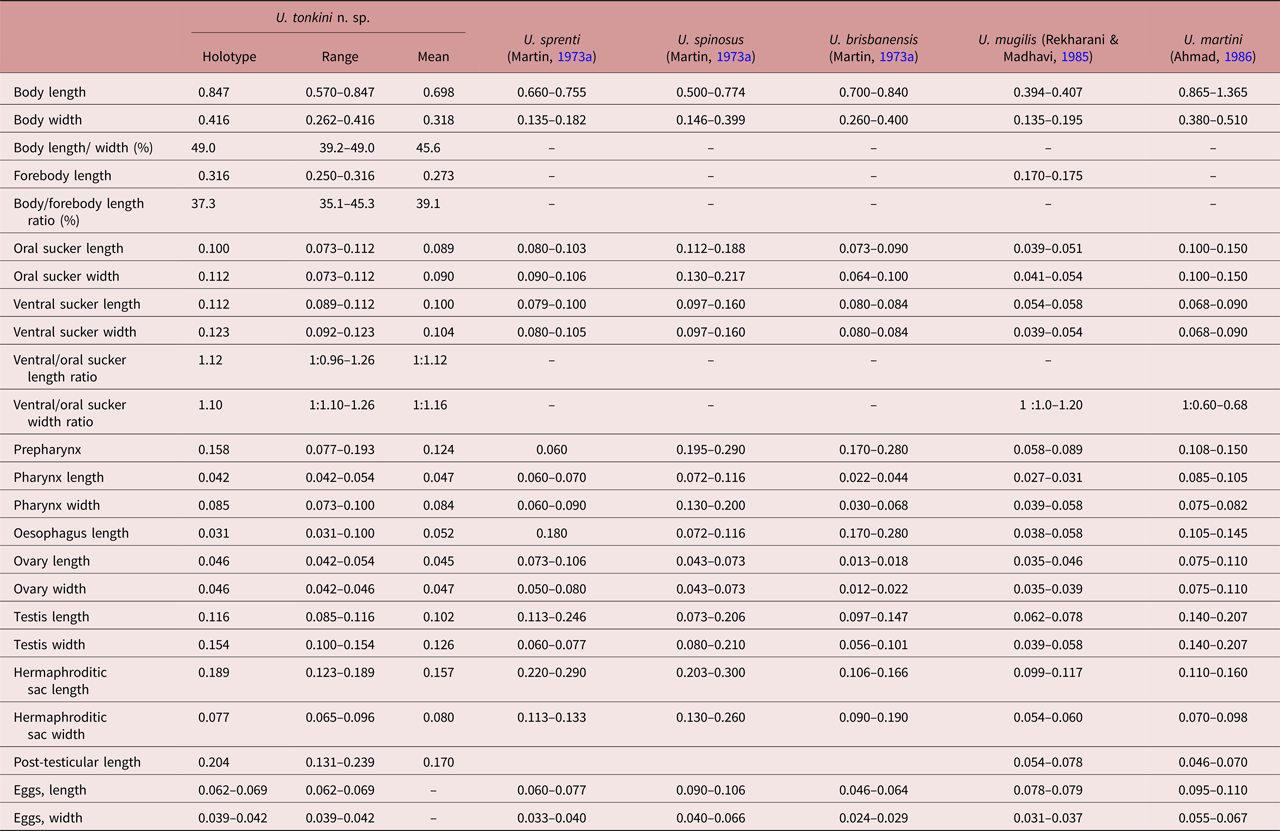
Table 3.Measurements (mm) of adult worms of Unisaccus.


Molecular data
For U. tonkini n. sp. there were 1007 and 1287 alignable characters available for analysis in the 28S rRNA gene and ITS1–5.8S–ITS2 rDNA fragment datasets, respectively. Within U. tonkini n. sp., four variable sites were detected for the 28S rRNA gene fragment and four variable sites were detected for the ITS1–5.8S–ITS2 rDNA fragment. The sequences were submitted to the NCBI database with accession numbers MF176835–MF176844.
Remarks
Morphological characteristics, including vitellaria, testes and organ rearrangement, indicate that the investigated trematodes from Russian mullet belong to the genus Skrjabinolecithum (Overstreet & Curran, Reference Overstreet, Curran, Gibson, Jones and Bray2005, Besprozvannykh et al., Reference Besprozvannykh, Atopkin, Ngo, Beloded, Ermolenko, Ha and Tang2015). In terms of metric parameters, specimens of S. spinosum n. sp. collected from M. cephalus in southern Far-East Russia have a larger body size, ventral and oral suckers size in comparison with S. vitellosum; a smaller pharynx size and body length/width ratio in comparison with S. pyriforme; smaller body length and prepharynx length in comparison with S. lobolecitum; and smaller pharynx length and egg size in comparison with S. indicum and S. lobolecitum (table 2). According to testis localization and form, specimens of S. spinosum n. sp. differ from S. indicum, S. vitellosum and S. lobolecitum. The testis has a V-shaped localization in the middle part of the body of S. spinosum n. sp. and is spherical to elongate at the posterior end of the body of S. indicum, S. vitellosum and S. lobolecitum. Moreover, S. spinosum n. sp. possesses a two-branched intestine, whereas S. vitellosum, and S. lobolecitum are characterized by the presence of one intestinal branch. In terms of metric parameters (table 2), arrangement and form of organs, S. spinosum n. sp. is similar to S. spasskii. However, S. spinosum n. sp., unlike S. spasskii, has an armed hermaphroditic duct. This single morphological character allows us to distinguish between these two species. Skrjabinolecithum spinosum n. sp. is a second species within the genus Skrjabinolecithum to possess an armed hermaphrodite duct. The presence of a denticulate pad was noted for S. lobolecitum (Martin, Reference Martin1973a). Nevertheless, these worms are different valid species based on other morphometric characters, as mentioned above.
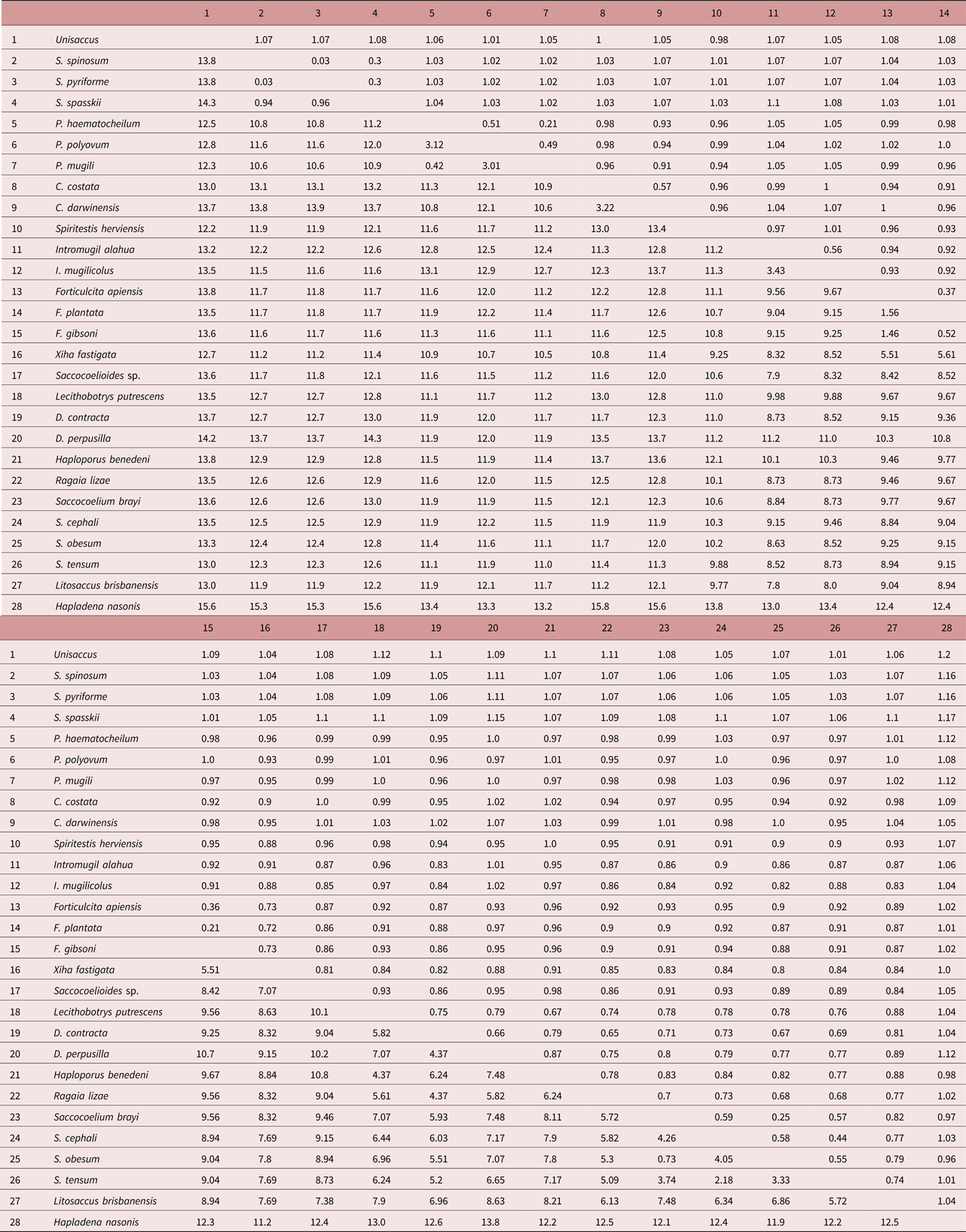
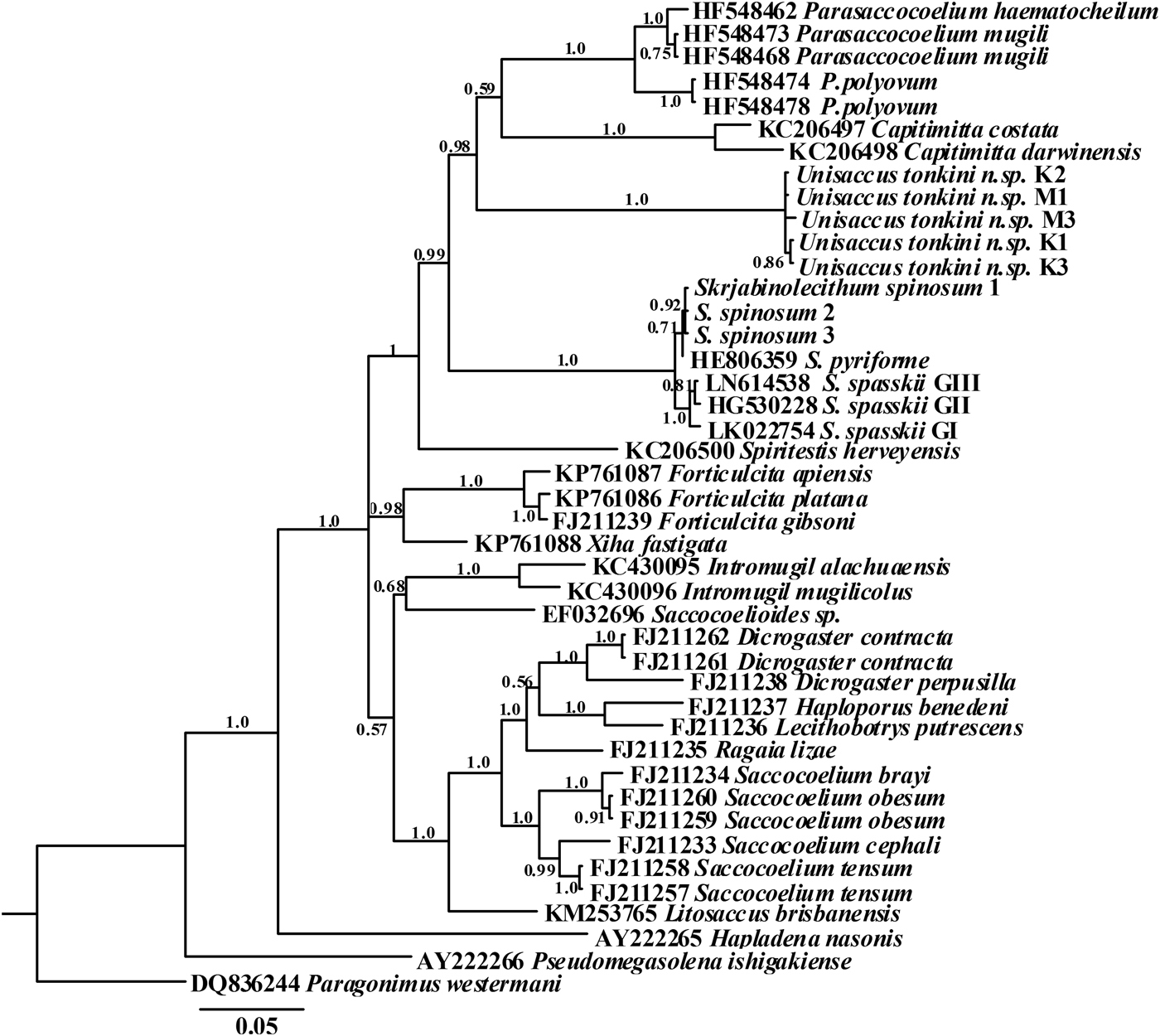
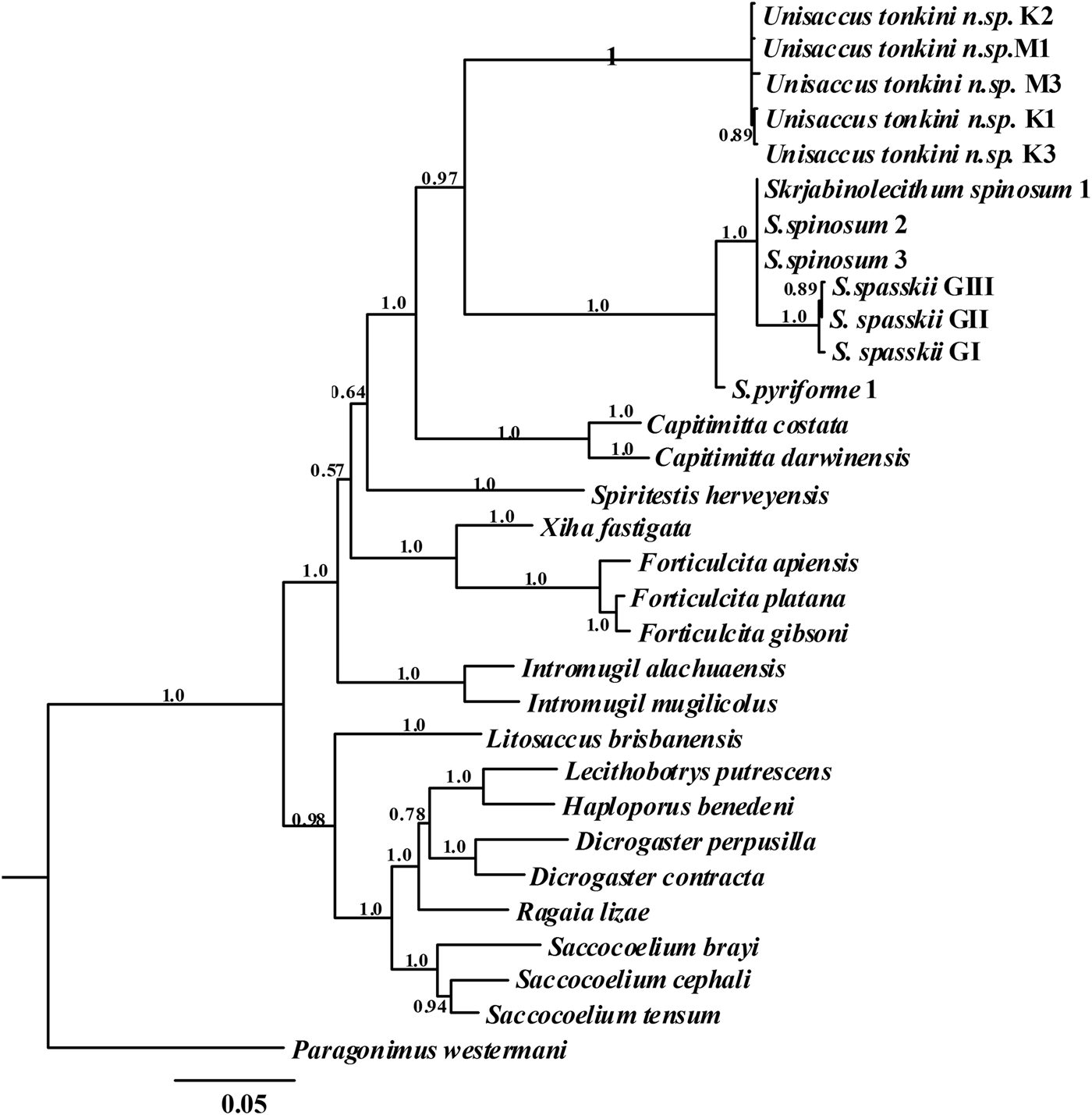
Molecular data confirmed membership of the studied trematodes in the genus Skrjabinolecithum. Bayesian phylogenetic analysis based on both partial 28S rRNA gene and ITS2 + 28S rDNA sequence data show that the new species is nested within the genus Skrjabinolecithum with high nodal support. Within this clade, S. spinosum n. sp. was closely related to S. pyriforme by 28S rRNA gene sequence and to S. spasskii by ITS2 + 28S rDNA sequence. Three variants (genotypes) of rDNA S. spasskii, reported earlier (Atopkin et al., Reference Atopkin, Beloded and Ngo2015), were included in the phylogenetic analyses. These sequences were more closely related to each other than to the new species. Genetic p-distance values for S. spinosum n. sp. were 0.03% and 0.94 ± 0.3% with S. pyriforme and S. spasskii, respectively, by the partial 28S rRNA gene fragment (table 4), and 0.4 ± 0.02% and 3.3 ± 0.6% with S. spasskii and S. pyriforme, respectively, by the ITS rDNA fragment. Our results indicate that species of Skrjabinolecithum form a reciprocally monophyletic group, highly supported through molecular phylogenetic analysis. Nothing more can be said yet on the real process of divergence occurring at the molecular level until all congeneric species are sequenced and included in the analysis.
Genetic p-distances between Haploporidae species based on partial 28S rRNA gene sequences. Below diagonal, p-distance values (%); above diagonal, standard error values (%).

Mature worms detected in mullet fish from Vietnam agreed with morphological characteristics of Unisaccus. These worms possess the same organ localizations, single testis, saccular caeca and armed hermaphroditic duct, among other traits (Overstreet & Curran, Reference Overstreet, Curran, Gibson, Jones and Bray2005). Vietnamese trematodes are close to U. spinosus, U. brisbanensis and U. overstreeti by body size (table 3). However, Vietnamese trematodes differ from U. spinosus and U. mugilis by sizes of oral sucker and pharynx; from U. brisbanensis, U. mugilis and U. overstreeti by size of the ventral sucker; from Unisaccus species by ovary size, with the exception of U. spinosus and U. mugilis for which values of ovary length overlap; from U. sprenti, U. spinosus and U. mugilis by hermaphroditic duct size; from U. mugilis, U martini and U. overstreeti by post-testicular length; from Unisaccus species by egg size, with the exception of U. sprenti and U. brisbanensis; and from U. martini by values of oral sucker/ventral sucker rate ratio (table 3).
Based on these morphometric data we assume that mature worms of the genus Unisaccus collected from Vietnamese mullet fish are representatives of a new species, U. tonkini n. sp. Molecular results indicate the validity of the genus Unisaccus (figs 3 and 4; table 4). Genetic p-distances calculated by 28S rDNA sequence data between Unisaccus and other genera of different subfamilies ranged from 12.2 ± 0.98% (Spiritestis herveyensis, Waretrematinae) to 14.3 ± 1.1% (S. spasskii, Waretrematinae). Mean values of genetic p-distances between Unisaccus and different subfamilies of the Haploporidae ranged from 13.5 ± 1.003% (Forticulcitinae) to 13.8 ± 0.932% (Chalcinotrematinae), within standard error. Genetic differentiation using ITS2 rDNA sequence data between Unisaccus and other genera of Haploporidae ranged from 13.4 ± 1.7% (Spiritestis and Intromugil, Waretrematinae) to 19.6 ± 2.1% (Lecithobotrys, Haploporinae). Mean values of genetic p-distances between Unisaccus and different subfamilies of the Haploporidae ranged from 14.1 ± 1.7 (Waretrematinae) to 19.3 ± 2.04% (Haploporinae). These data show genetic closeness of Unisaccus to the Waretrematinae better than the 28S rDNA data. These values correspond to divergence level, calculated for different subfamilies of Haploporidae (table 5): 8.3 ± 0.8% to 12.2 ± 0.78% and 15.7 ± 1.45% to 18.5 ± 1.65% by 28S and ITS2 rDNA sequence data, respectively. Phylogenetic tree topologies based on partial 28S rRNA gene sequence data and ITS2 + 28S rDNA sequence data showed that trematodes of Unisaccus are closer to representatives of Waretrematinae, except the genus Intromugil, which clustered with Saccocoelioides sp. by 28S rDNA (fig. 3) and formed a highly distant single branch by ITS2 + 28S rDNA sequence data (fig. 4).
Phylogenetic relationships of the family Haploporidae obtained by Bayesian algorithm based on partial 28S rRNA gene sequences. Nodal numbers are posterior probabilities that indicate statistical support of phylogenetic relationships.

Phylogenetic relationships of the family Haploporidae obtained by Bayesian algorithm based on a concatenated nucleotide sequence dataset of ITS2 rDNA and partial 28S rRNA gene sequence. Nodal numbers are posterior probabilities that indicate statistical support of phylogenetic relationships.

Genetic p-distances between Unisaccus tonkini n. sp. and Haploporidae subfamilies based on 28S rDNA sequences. Below diagonal, p-distance values (%); above diagonal, standard error values (%).

Genetic p-distance values and phylogenetic reconstructions show that Unisaccus belongs to a large heterogeneous group that includes different representatives of Waretrematinae. Other subfamilies included in our analysis, Haploporinae and Forticulcitinae, represent more compact distinct clusters with a relatively bounded range of p-distance values. Thus our molecular data can be interpreted at least in two ways. The genus Unisaccus can be considered as a member of the Waretrematinae subfamily, as long as polyphyly of this trematode group, mentioned previously (Atopkin et al., Reference Atopkin, Beloded and Ngo2015), has been resolved. However, in consideration of the high molecular differentiation of Unisaccus and other haploporids, we can't exclude the possibility that the genus Unisaccus belongs to a distinct subfamily. Final conclusions will be possible with additional morphological and molecular data on closely related species of Unisaccus.
Financial support
This study was supported by grant from the Russian Foundation for Basic Research (no. 16-34-00222).
Conflict of interest
None.