Introduction
While migration by children for work is common in West AfricaFootnote 1 and was the foundation for employment in child labour intensive industries in the carpet belt of Uttar Pradesh,Footnote 2 sociological, anthropological and economic studies of child labour migration remain relatively few.Footnote 3 In addition, most historical accounts have addressed the philanthropic movement of orphans and others to new settlements in colonized territories in America and Australia.Footnote 4 In this paper, we take advantage of a data-set comprising the work-life historiesFootnote 5 of 90 individuals who left rural Coastal and Central Karnataka some time between 1935 and 2005.Footnote 6 These migrants, whose guardians or parents remained in their villages, were all below the age of 15 at the time of leaving home. They moved to take up or find employment in Bombay (hereafter Mumbai), Bangalore and other cities and small towns. As far as we know, the data-set is the first of its kind and the extensive time-period covered presents a unique opportunity to study persistence, change and spatial variation in relation to many hitherto unexplored aspects of labour migration involving children.
Rather than imposing a narrow thematic focus,Footnote 7 doing justice to the material at our disposal does, we feel, require us to stretch out and engage with a broader thematic canvas. Specifically, we document periodic and spatial variation in the incidence, causes and motives behind child labour migration, in the intrahousehold agreement and dissent that preceded these migration events, and in the workplace experiences and other outcomes awaiting these unusually young migrants.Footnote 8 Much of what follows will also nuance and lend empirical support to the idea of the child as an agent.Footnote 9 Our paper also sheds new light on the preludes to, and aftermaths of, runaway migration, which is interpreted as young assertiveness finding new and often dramatic expressions: such episodes are spatially clustered, mostly recent, and often traumatic for those left behind.
Turning to migration outcomes, the 90 narratives uncover the hardships as well as the joys associated with work and careers in small, South-Indian eating places,Footnote 10 in domestic service, among helpers and soon to be mechanics in car repair garages, in agricultural plantations and fields, and in other working-class occupations and jobs. Evidence of ill-treatment, of health hazards and of whether promotions were based on merit or nepotism is interspersed with candid reminders about the pride and confidence associated with learning and with acquiring a variety of new skills. One, perhaps surprising, finding is the linguistic proficiency displayed by many informants.
The data-set also offers a rare chance to study migration's transformative potential.Footnote 11 While existing debates tend to be informed by ethnographies based on a single location or industry,Footnote 12 we illustrate the variation in migration's transformative scope across individual attributes (e.g. gender), time, workplaces and destinations. The destination environment turns out to be crucial for attitudinal change and for ‘reinventions of the self's place within the social order’Footnote 13; the contrasts between agricultural labourers from Coastal Karnataka, whose social interactions in nearby Shimoga district often were confined to caste-fellows from their native areas, and migrants to most other destinations, are startling. Transformative potential is at the same time gendered; girls working as maid-servants are typically restricted to the domestic realm and to interactions with members of the employer household.
Adding to this transformative promise, but with distinct variation across sectors of work, destinations and time of migration, work-hour and workday reductions did, over the course of the period covered, contribute to make leisure a reality. This is most apparent when comparing early and late arrivals to Mumbai where hotel work, partly as a result of intense union activism during the early 1960s, presently proximates formal sector employment in several important respects.Footnote 14
Furthermore, and soon after the Government of India introduced a blanket ban on child labour, we register that many child migrants who were working in small, South-Indian eating places in Mumbai were able to attend Kannada Night Schools.Footnote 15 Apparently motivated by the prospect of uplifting disadvantaged children from Tulu-speaking areas of the Coastal belt, philanthropic hoteliers made it possible for child employees to switch work for education a couple of hours each evening. This observation of child labour migration improving educational opportunities and prospects is particular to Mumbai and to a specific era: the demand for Kannada Night School education is currently in decline and, in contrast to many of their predecessors, contemporary child labour migrants often leave home because of their lack of interest in schooling.
The rest of this paper is laid out as follows. After placing the extensive period covered in a brief historical perspective, we describe our methodological approach and present summaries of source area backgrounds. Combining primary and secondary data, this section also documents trends and changes in the scale, gender composition, sectors of work and destinations of child labour migration from our eight study villages. Next we consider spatial and periodic variation in causes and in the intergenerational bargaining and negotiations preceding child labour migration, before presenting in-depth accounts of the preludes to, and aftermaths of, runaway migration. Focus then shifts towards dynamic changes in working conditions and their effects on the welfare of young workers, to changes in employer–employee relationships, and to the transformative effects of child labour migration. As well as concluding remarks, the final section presents a synthesis of some theoretical implications of our findings.
History and background
As a historical backdrop to the extensive time-period covered, it is instructive to put down a few introductory markers. During their working careers, the most senior among our informants (who were in their early eighties in 2004–2005) lived through the final days of the Raj as well as the turmoil of partition. Prime Ministers from Nehru to Vajpayee came and went, and the first arrivals to Mumbai (1935) moved to a city with 1.6 million residents.Footnote 16 By the turn of the century, this figure had increased more than tenfold. They also witnessed the decline of the textile industry and the city's transformation from an industrial to a financial hub. Many of our interviewees interpret the periods of industrial unrest in the early 1960s, often spearheaded by a young Mangalorean named George Fernandes,Footnote 17 as decisive for the subsequent improvements in working conditions of the city's hotel workers. Their recollections of backlashes against migrants (mostly South-Indians, Gujaratis and natives of UP-Bihar) who were not sons of Maharashtra's soil are inevitably less fond.Footnote 18 In 1935, the two source areas under study belonged to different administrative entities. South Canara (Dakshin Kannada) district was part of Madras Presidency up to 1956 and Udupi district came into being after a split from Dakshin Kannada in 1997, about the same time that the Konkan Railway, long considered an engineering impossibility, transported its first passengers from Mangalore to Mumbai. In contrast, Mandya district was part of the erstwhile Mysore state which was renamed Karnataka in 1973.
Our informants’ testimonies bring to light the practical implications of the slowly evolving transport revolution alluded to above and resonate with accounts of ‘new technologies of travel’Footnote 19 which in this case culminated in the completion of the Konkan Railway. In the mid-1930s, a migrant's journey from Udupi to Mumbai would be by coastal steamer or overland; the latter would be arduous, involve many river crossings and take about three days to complete.
Less visibly, and often with considerable contributions from the local Mutts (Mathas)Footnote 20, Dakshin Kannada district developed the most robust educational institutions and records in Karnataka outside the city of Bangalore. Although standards of living steadily improved, the high out-migration that had become a prominent feature of everyday Coastal life persisted, but found new expressions and forms.Footnote 22 A broad sense of these Coastal belt migration trajectories may be gauged from Figure 1 which depicts female/male ratios in Udupi and Kundapura taluks between 1931 and 2001, a period that roughly coincides with that of our study. While the female/male ratios remained unusually high throughout, migration appears to have peaked in Udupi as early as 1961 and then gradually declined. In Kundapura, in contrast, the sex ratio has been cyclical—while as high as 1.15 in 1931, there are two notable peaks, the first in 1961, the second in 1991–2001. Judging by these high female/male ratios, out-migration from both Udupi and Kundapura taluks appears to have been persistent and high at least from 1931 onwards.Footnote 23
Rural female/male ratios in Udupi and Kundapura taluks 1931–2001.Footnote 21

Located about 120km to the east of Nagamangala, the dry-land taluk of northern Mandya district studied by Vegard Iversen in 1998, Bangalore lacks Mumbai's industrial past and distinguished history of union activism.Footnote 24 While Bangalore's recent growth has outpaced that of Mumbai, the main destination sector for child labour migrants from Mandya, Bangalore's hotel industry, remained ‘informalised’ in 1998. While an easy entry point for newly arrived migrants, hotel work in Bangalore, in contrast to Mumbai and partly mirroring this formal/informal dichotomy, has failed to attain the status of being an end in itself. One informant, with ownership experience from both cities, described employment in Bangalore's hotel sector as ‘floating’, in contrast to the workforce stability typical of many Mumbai hotels.
The earliest episodes of child labour migration documented by our study involved children from Udupi taluk who migrated to jobs in South-Indian and Irani eating places and as domestic servants in Mumbai.Footnote 25 While Bangalore's first vegetarian hotel with Coastal belt owners opened its doors in 1904,Footnote 26 conflicting accounts surround the precise timing of the opening of Mumbai's first South-Indian food joint.Footnote 27 The early prominence of Shivalli (or Udupi) Brahmins in the Mumbai branch of the industry has been attributed to refined cooking skills which evolved from combining a traditional upbringing with regular mass-meal preparations in local temples and the Coastal belt's locational disadvantage, whereby inhabitants ‘stood little chance of competing with the Tamil Brahmins who almost held a service monopoly in the Presidency (Madras) as a whole’.Footnote 28 While many of Bangalore's present-day eateries are owned by Kota Brahmins from Kundapur taluk just to the north of Udupi town, the Bunt community, the non-vegetarian peasant and landowner caste of the Coastal belt has gradually established a firm grip on ownership of Mumbai's vegetarian South-Indian hotels, often after takeovers of Irani hotels.Footnote 29 Whereas Bangalore's first such eating places catered exclusively for Brahmins, the modern manifestations of caste within the industry are less straightforward. While some present day signboards in Udupi town retain explicit references to Brahmin ownership, the fishing port of Malpe, a few kilometres to the west, has a Brahmin-run hotel with a Muslim name that observes some traditional purity and pollution ideals—e.g. only Brahmin cooks are considered employable.Footnote 30 The question of whether, and if so precisely how, the caste identity of child employees mattered, or continues to matter within the industry remains important and is addressed below.
The spatial concentration of hotel ownership and the density of backward linkages from urban Udupi hotels in Bangalore and Mumbai to Coastal belt villages could have facilitated largescale movement also of children. Recent development progress, rising parental educational aspirations and a relative erosion of the social status of hotel work in the Coastal belt would, however, militate against conjecturing a recent surge in child labour migration. In addition, Udupi had less poverty and higher female (74.02% versus 51.62%) and male (86.59% versus 70.71%) literacy than Mandya in 2001 and both districts underwent demographic transition between the 1991 and 2001 Census rounds.Footnote 31 A recent decline in child labour migration from both areas might therefore be expected. Stated differently, child labour migration, especially from the Coastal belt, may have peaked some time back. The village data, to which we now turn, reveal a more complex reality.
Methods for data collection and an overview of migration patterns
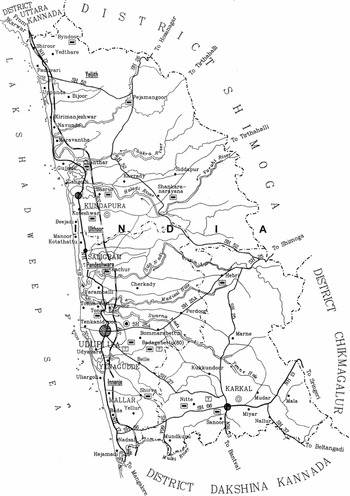
Two villages in Kundapura and two in Udupi taluk were purposively selected to capture the geographical and socio-economic diversity of the Coastal belt. Figure 2 provides a map of Udupi district with taluk boundaries and study village names added and underlined.
Udupi district showing taluk boundaries and study-village names.

Compared with Northern Mandya district, coastal villages are more populous and have more dispersed settlements with residential housing adjacent to a household's paddy fields. In the more developed Udupi taluk, Innanje, an interior village in the south with good educational institutions, a population dominated by Bunts and Billavas Footnote 32 and a considerable minority of Roman Catholics, was chosen to capture a rural setting in transition. In Innanje, it is now customary for young women and men to have BA degrees. The second village, Pandeshwara, is on the coast and has local factories producing coir, desiccated coconut and cashew that provide off-farm employment opportunities, mainly for women. Billavas are the numerically dominant caste, followed by Brahmins and Mogaveeras. In Innanje and Pandeshwara, sub-contracted beedi rolling is a popular income-generating activity among local women. In Kundapura, where literacy and educational levels are lower, and development lagging compared with its southern neighbour, Yeljith, an interior, socially heterogeneous and mainly agricultural village to the north and Ulthoor, a village a few kilometres inland from the coast, were selected. Ulthoor is predominantly agricultural, but with increasingly important off–farm links. Based on 2001 census data, Table 1 illustrates the variation in the main occupations of women and men across these four Coastal belt villages.
Occupational composition in four study villages, Udupi and Kundapura taluk

Source: Census of India 2001; Primary Census Abstract, Andhra Pradesh, Karnataka, Lakshadweep.
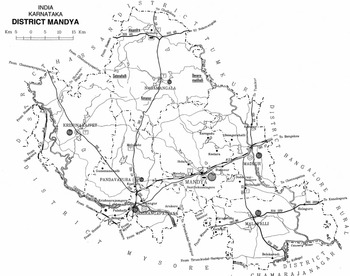
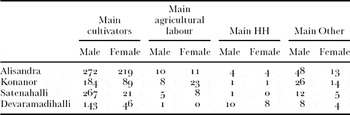
Sticking to the Census categories and to main economic activities, Table 1 covers four broad occupational groups (cultivators, agricultural labour, Household (HH)-based income (e.g. sub-contracting, artisans etc), and a residual ‘other’ category) disaggregated by gender. Innanje remains mainly agricultural but with a significant number of men working outside farming. In Pandeshwara, agricultural labour is as important as cultivation, while most men are engaged in other activities. Yeljith is the only Coastal-belt study village where agriculture is still the main employer; Ulthoor falls somewhere in between, since agriculture and agricultural labour dominate female employment while accounting for roughly the same number of male jobs as the ‘other’ category. This declining role of agriculture is in notable contrast to the four villages in northern Mandya district, which all featured in Iversen's 1998 study, and were revisited for the present research. Figure 3 contains a map of Mandya district including taluk boundaries and with study village names added and underlined.
Map of Mandya district, showing taluk boundaries and study village names.

The occupational structure in Nagamangala taluk is more homogenous and a large majority of people have farming-based livelihoods (Table 2).
Occupational composition in four study villages, Nagamangala taluk

Source: Census of India 2001; Primary Census Abstract, Andhra Pradesh, Karnataka, Lakshadweep.
This greater occupational homogeneity conceals notable intra-village contrasts. In Alisandra, a well-developed village one kilometre north of the Bangalore-Mangalore highway, many have invested in private bore-wells, and cultivate coconut and paddy as the main irrigated crops. In and around Satenahalli, in Western Nagamangala, coconut and sugarcane dominate, while vegetable cultivation is exclusive to Konanor. The principal dry-land crop, red millet or ragi, is the local staple and the key ingredient in ragi roti and in the omnipresent ragi-mudde (ball).
The Vokkaligas, the peasant caste of Southern Karnataka,Footnote 34 numerically dominate our Mandya study villages. There are also Lingayats and a spectrum of artisan castes—washer-men, barbers, potters, fishermen, and blacksmiths. Devaramadihalli is distinct for its comparatively numerous Scheduled Caste (Dalit) population. There is also notable inter-village variation in access to quality education. While Alisandra and Satenahalli have good quality village schools and Konanor is favourably located for attending the local private school run by the Adi Chunchanagiri Mutt, the 1–4th standard primary school in Devaramadihalli is regarded as very poor (see below).
Within each of these eight villages a simple, random sampling procedure was adopted for selecting households. For the larger villages, one out of three households were randomly selected, while 50% of households in the smaller villages were covered. A simple survey instrument was administered to conduct brief household interviews and for identifying cases of child labour migration.Footnote 35 In the Coastal belt, the identification of recent and more sensitive cases of child labour migrationFootnote 36 was carefully triangulated through extensive discussions with ward-wise key informants with whom, over time, excellent rapports were established.Footnote 37 In Mandya, contacts from the 1998 research were re-established and relied upon for similar triangulation.
In a study of the Izhava (also occasionally referred to as traditional ‘toddy-tappers’) community in Kerala, a number of migrant respondents gave vague or wrong answers to survey questions in order to conceal the low status of their true occupations and workplaces.Footnote 38 During our data collection, few problems of this kind were encountered and in the couple of cases where achievements were inflated, this was easy to detect. Many interviews were conducted only after informants had been visited in their workplace or in their often modest urban residence, and the latter, combined with familiarity with the terms of employment and working conditions in relevant pockets of the labour market, made comparisons and triangulation of migration outcomes across individual work-life histories relatively straightforward.
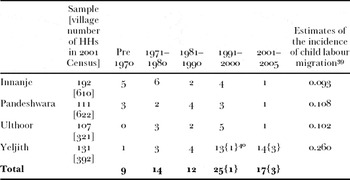
Turning to our data, the Coastal belt villages display remarkable contrasts in the timing and incidence of child labour migration. For instance, while the average age of the 18 individuals with a history of child labour migration in the Innanje sample was 42.1 years, the corresponding figures for Ulthoor and Yeljith were 29.7 and 22.1 years, respectively. Hence, whereas the scaling up of child labour migration in Yeljith is recent, the average person with a history of child labour migration from Innanje was a mature (middle-aged) adult in 2004–2005. Even within a relatively limited geographical area, the dynamics of child labour migration displays startling variation.
Table 3 suggests that child labour migration from Innanje, Ulthoor and Pandeshwara, over the years, has been a reasonably stable phenomenon. We can be confident about the validity of this conclusion, at least from the 1970s onwards.Footnote 41 In Yeljith, in contrast, and alongside a surge in adult migration over the last 15 years or so, there has been a dramatic hike in child labour migration. The overall increase in child labour migration from the Coastal belt is thus attributable to Yeljith alone. What accounts for this dramatic change?
Child labour migration from four study villages, Udupi district

Source: Authors’ household sample surveys.
In Yeljith, early child labour migration episodes involved the Gowda community's seasonal and other agricultural labour migration to plantations in Sirsi and Ghatta in neighbouring Shimoga-district. After 1990, these flows have been outnumbered by other social groups migrating primarily into hotel jobs in Bangalore, Hyderabad, Mumbai, and other destinations. The four observations of girls in the Coastal belt are all recent, from Yeljith and, with one exception, for work as domestic servants within Udupi district itself. Despite Bangalore's closer proximity, the early episodes of child labour (and other) migration from Innanje (and Pandeshwara) were towards Mumbai, a reflection of the city's pre-eminence and development during the first half of the twentieth century.Footnote 42
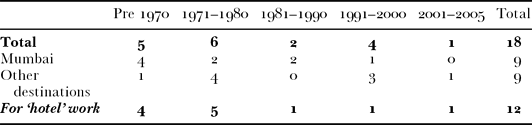
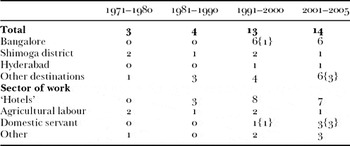
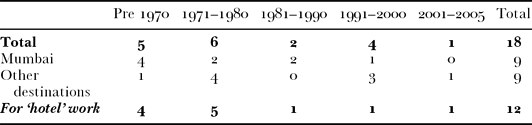
While conclusions need to be qualified by the small number of observations, Table 4 suggests that, with the passage of time, child labour migration from Innanje spread out across sectors and to more destinations. The picture in Yeljith (Table 5) is remarkably dissimilar:
First destinations (and sector of work) for child labour migrants from Innanje, Udupi
Source: Authors’ household sample surveys.
First destinations (and sector of work): child labour migrants from Yeljith, Kundapur taluk

Source: Authors’ household sample surveys.
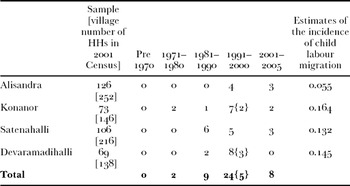
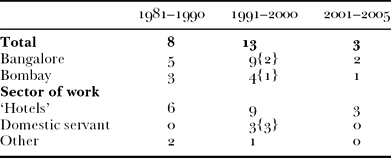
Although Yeljith is north of Udupi, and closer to Mumbai, Bangalore is the main child labour migration destination post-1990. Furthermore, the few recorded episodes in the 1970s involved one carpenter and two cases of agricultural labour migration to Shimoga district. We discuss the causes behind this dramatic rise in child labour migration from Yeljith below. For comparison, Table 6 reports information from the four study villages in northern Mandya.
Child labour migration from four study villages, Nagamangala taluk, Mandya district

Source: Own household sample surveys.
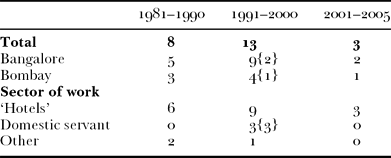
The average age of individuals with a history of child labour migration was 25.6 years in Satenahalli, 24.7 years in Devaramadihalli, 24.9 years in Konanor and 18.1 years in Alisandra. This supports the general hypothesis and the figures in Table 4 suggesting that, compared with the Coastal belt, child labour migration from Mandya is a more recent phenomenon. Table 3 and Table 6 suggest that while Yeljith has the highest incidence of child labour migration among the eight study villages, the Mandya villages and illustrated in Table 7, with Alisandra being the only exception, have a higher overall incidence of child labour migration than the remaining Coastal belt villages.
First destinations (and sectors of work): child labour migrants from Devaramadihalli and Satenahalli
Source: Authors’ household sample surveys.
Satenahalli, unusual among the Mandya-villages, has significant migration to Mumbai, but otherwise Bangalore is by far the most common destination. Furthermore, with the exception of girls working as domestic servants, there is a strong concentration of hotel workers among the boy child migrants from Nagamangala.
‘Between the devil and the deep sea’: migration causes, motives and the changing interface with education
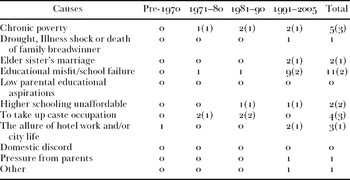
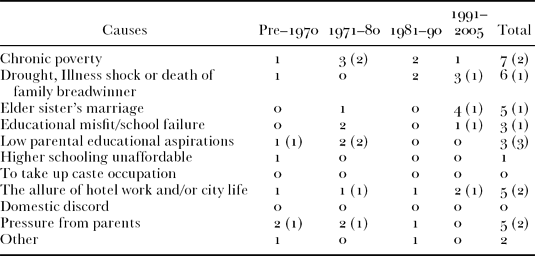
The Coastal belt villages display notable contrasts in migration motives and in the interface between migration and education. In Yeljith, recent migration episodes often involve male educational ‘misfits’, where the migration initiative was usually the migrant's, and often met with parental resistance. In Yeljith's earlier migration episodes, which are fewer in number, this sharp interface with education was missing. Instead, as Table 8 suggests, a combination of economic hardship, parents’ low educational aspirations and taking up caste occupations in agricultural labour and carpentry featured more prominently. A radical, recent shift in parental educational aspirations, also among poorer households, has increased the pressure on children to perform in school and the ensuing intergenerational tension is a recurring theme in recent Coastal belt narratives.

The parents of Sreenivas, now aged 45 and a native of Ulthoor, struggled to feed the family and he received no educational support. He never attended school and spent his younger days playing at home. Now, he observes, ‘even families who struggle are keen to educate their children’. While chronic poverty has remained more important than illness or other shocks as a catalyst for child labour migration, failing examinations or lacking a basic interest in education are the most prevalent recent migration causes.
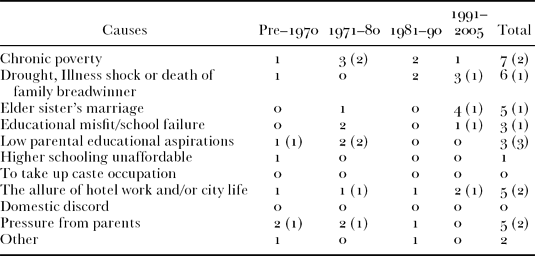
While chronic poverty has persisted as a migration cause in Yeljith over the years it is, in aggregate, a much less important cause than being an educational misfit. As Table 9 suggests, there are notable contrasts and some parallels in migration causes in the other three Coastal belt villages. First, the sharp intersection with schooling is distinct to Yeljith, as explicated below. Another contrast to Yeljith is that deprivation is the main cause of child labour migration, with chronic poverty and illness shocks being of roughly equal importance. Note that indebtedness due to dowry payments incurred for marrying off elder sisters has proliferated as a recent cause of financial distress and child labour migration in other Coastal belt villages. One account also unveils how regular teasing by other students instilled a stubborn determination to leave school in a high-caste boy suffering from a hearing impairment. A similar defiance was evident in the, at the time of our interview, 80-year-old Vasu whose uncle's controlling behaviour was intolerable and became decisive for his choice to leave for Mumbai back in 1935. Note that over the years the allure of hotel work and city life have continued to inspire young boys to migrate in the other Coastal belt villages.
Child labour migration causes: Innanje, Ulthoor and Pandeshwara
Source: Migrant interviews.
While rich in details about child agency and its multiple facets, the runaway episodes reported from Mandya in 1998 are rare in the Coastal belt.Footnote 44 In the 1998 Mandya-evidence, domestic conflicts and quarrels prompted young boys to leave home either to take up a prearranged job or to embark on a search for work in one of Bangalore's many South-Indian eating places.Footnote 45 Temporary deteriorations in father-son relationships were often at the heart of such conflicts. The evidence from Yeljith, in contrast, suggests that while young boys stop short of running away, they do not hesitate to enter into tough bargaining with their parents. There is also a time dimension to the content of such parental-child conflicts and disagreements which is more apparent in recent migration episodes in the Coastal belt. We use Manju's case to illustrate the singular determination of an educational ‘misfit’.Footnote 46 After failing his 4th standard, Manju openly expressed his disinterest in further studies. His cousin-brother (mother's elder sister's son), a 22-year-old kitchen assistant in a vegetarian restaurant in Peddapalli,Footnote 47 was visiting the village during his leave and approached Manju at the behest of his employer. Manju decided to accept the job offer and informed his mother who initially opposed the idea, insisting that he should, instead, continue his education. His father backed the mother's stance and Manju bluntly told his parents that if they would not endorse his plan, he would stay back in the village, refuse to attend school and stroll around and work as a labourer. His parents then sought the assistance of their neighbour, the local postman (well-educated and 26–27 years of age) who did his best to persuade Manju to stay on in school, arguing that this would be in the boy's own best interest. Manju, however, refused to yield and eventually left his parents with no other option but to give in. In another case, Ramesh left school at the age of 12 after finding himself at the receiving end of repeated beatings from both parents and teachers.Footnote 48 Like Manju, he lacked a basic interest in education: schooling was simply not ‘his cup of tea’. His teachers would beat him for not completing homeworkFootnote 49 and, to avoid further punishments, he would shirk classes for days and play and roam with similarly-minded friends and classmates. His mother and elder maternal uncle would punish his regular absenteeism and Ramesh was forced to choose between ‘the devil and the deep sea’. His father was eager that Ramesh, who was not only a first generation learner but also the eldest son, should pursue further education and, on hearing of his wife's complaints, would advise Ramesh to attend school or beat him more. During the summer break and before the start of the new academic year, Ramesh approached his father's younger brother, the owner of a paan-beedi stallFootnote 50 in Chamrajpet, Bangalore, who had come to the village on vacation. Ramesh asked whether his uncle could find him a job in Bangalore. The uncle agreed but only if Ramesh's father endorsed the plan. Ramesh was left with the responsibility for obtaining paternal consent and his father initially disapproved and attempted to persuade his son to persevere with his studies. However, Ramesh persistently refused to consider more education an option, eventually forcing his father to give in. Ramesh's case illustrates how beatings, at school and in the home, may not only fuel a desire to leave the village, but also raise a stubborn determination that parents eventually find hard to resist.
Emerging, and often very strong, parental educational aspirations, a recent phenomenon transcending social layers, are at the heart of rising intergenerational tensions in these archetypal Coastal belt cases. Another example of such negotiations, where the father but not the mother initially opposed the move, involved Raghu, now a 45-year-old Brahmin, who left home for Udupi town aged 13. A partial hearing impairment augmented Raghu's learning difficulties and made the task of learning mathematics, science and English arduous. He completed 5th standard with much difficulty and classmates would often tease him about his handicap. Raghu shared these experiences with his parents and told his father of his determination to leave school. After first disapproving, his father gave in when Raghu's mother sided with their son.
Notice that once negotiations are brought to a close and a ‘settlement’ has been agreed, parents may return to being constructive in order to secure a final outcome that is protective of the child and attuned to the interests of the sending household. High priority is attached to securing a proper job in a suitable work environment; in Raghu's case his father's reconciliatory next step was to suggest that instead of sitting idle at home, a hotel job would present his son with an alternative avenue for learning. Raghu agreed and his father brought him to his nephew, a dosa cook in Dwareka hotel in Udupi town. The nephew spoke to his employer, a Brahmin from Udupi, who agreed to hire Raghu as an assistant to the cook.
The next few examples illustrate how educational dreams and other aspirations may be shattered by misfortune such as the illness or death of a breadwinner, confronting young boys with sudden and towering new responsibilities. Sreenath was a school regular with parents insisting on his pursuit of further education with a government job as the ultimate goal. His father, the family's breadwinner, was keen that Sreenath should become a first generation graduate and break the family cycle of poverty and illiteracy. During Sreenath's 7th standard studies, his father lost his right leg after an accident. Having to look after his father in the hospital, Sreenath was unable to attend classes and had to permanently drop out once his father was discharged. While mother and sisters took turns during the father's recovery, the responsibility for earning fell on Sreenath's young shoulders. Ready to accept this challenge, Sreenath informed his father that he would not be able to earn enough as a local agricultural labourer and would instead look for a job elsewhere. While supportive, his parents insisted that Mumbai was too far away. Besides, his father had a good friend in a Billava co-villager running a small Coffee Day outlet on Bangalore's MG Road. When contacted over the phone, this friend asked Sreenath to call back three days later and promised to find Sreenath a job, a promise that he kept.
In Pandeswhara and Ulthoor, Sreenath's circumstances are not uncommon and leave the oldest son with little real choice—these young boys are well-acquainted with where the breadwinner responsibility next falls. Accepting this responsibility with dignity and determination, is suggestive of early maturity. Adversity appears to evoke a sense of filial responsibility and pride associated with being able to assist the family in a time of urgent need—the latter may or may not be coupled with some disappointment and resentment at the hard diktats of fate.
As already hinted, financial distress may also have other triggers. In particular, the younger siblings of daughters who are approaching or have reached marital age may be asked, leaned upon or feel compelled to make substantive sacrifices. During his 5th standard, the elder sister of Mahesh Gowda, a boy keenly interested in schooling, got married and Mahesh's father borrowed Rs. 40,000 to cover the extra expenses incurred. Mahesh realized his responsibilities and quit school to help repay the loan.
Similarly, Anurag Poojari was confronted by the burden of outstanding debt used for financing his sisters’ weddings. Aware of his elder brother's (who was already working hard in Mumbai) struggle to repay this loan, Anurag was eager to assist and asked his brother's advice about how to best help the family. His brother suggested that Anuraag join him in a paan-beedi stall in Mumbai, which Anurag agreed to do after persuading his initially reluctant parents.
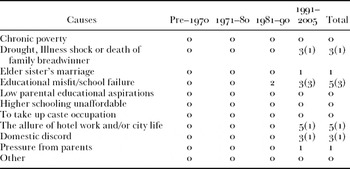
How do these Coastal belt accounts compare with northern Mandya district? Table 10 presents figures for Alisandra and Satenahalli, the two more well-developed among the four study villages in Nagamangala taluk.
Child labour migration causes: Alisandra and Satenahalli

Source: Migrant interviews.
We first consider poverty-induced child labour migration, the interface with schooling and parallels and contrasts to Udupi. Rather than chronic poverty, it is illness and other shocks that matter in these two better-off villages. Furthermore, as for Yeljith, child labour migration has surged in recent years. There are other similarities to Yeljith, since being an educational misfit or a school failure resurfaces as migration cause. However, in contrast to the Coastal belt and consistent with earlier observations,Footnote 51 the intra-household tensions that poor educational performance give rise to are not amicably resolved within Mandya households. Instead these become a source of domestic distress and discord that may culminate in young boys taking off on their own without notifying anyone at home about their plans or intentions. The seven Alisandra cases are all recent and include two runaways and two pairs of brothers. The first runaway, Harish, felt that his sister received preferential treatment in the allocation of household chores and was beaten up by his father for refusing to put up with this perceived injustice. The second runaway case resonates with the Yeljith narratives up to the point where, after being beaten by his father for refusing to re-sit his failed 8th standard examination, Venkatesh decided to depart.
The first pair of brothers started working in the same bar and restaurant and although there were financial problems at home, these were not of a serious nature. The account given by the second pair of brothers, sent to Ooty by their parents, is quite similar but with more parental pressure on the first migrant—the elder brother—they were despatched for work after completing their 4th and 5th standard without there being any known financial imperative. The final case, where household financial distress did come into play, was anchored in the need to marry off the migrant's three elder sisters. However, Krishna did not perceive this to require a personal sacrifice since he, in any case, preferred work to education.
In Satenahalli, where eight child labour migrants were interviewed, the picture is more mixed, complex and also involved three Dalits. Financial distress was an important migration trigger in two cases. There were also two runaway migrants and a couple of educational misfits. During Ganesh's 6th standard studies in 1994, his father fell ill with malaria and was bed-ridden for three months. Because of a chronic intestinal disorder, his mother was no longer working and the burden of providing for the family now fell on Ganesh. Similarly and following poor rains that decimated the ragi crop, reduced local wage labour opportunities and made payment for more education harder, Shankar, a 13-year-old who had just completed his 7th standard, was told by his father that he had to shift to Bangalore and work in a hotel. This was in 2002 and Shankar was not unhappy with this decision since he had already developed a passion for hotel work.
Satenahalli's educational misfits include Shankare Gowda who ran away to Bangalore in 1984. After passing his 7th standard examination, he informed his mother that he would move to Bangalore to become a driver; however, his father, at the time a migrant based in Badravati, and his mother, were both adamant that their son should continue his studies. Shankare hatched a conspiracy with his classmate Raghavendra and ran away after stealing money from his father who was visiting the village on leave from his work.
Swami, who lacked an interest in schooling from the start but had continued out of fear of his father's beatings, failed his 6th standard examination and refused to re-sit, citing ‘shame’ and embarrassment as reasons. His father told Swami that if his refusal to re-sit persisted, he would be thrown out of the house. Swami retaliated by saying that he would then run away. His father responded by hitting him in the face. After stealing money from his father's pocket, Swami ran away the next morning. After initially heading towards Mumbai, a conversation with a fellow passenger made Swami realise that he lacked the means to complete this journey. He changed his mind and travelled to Bangalore instead.
Mutthaya, a 10-year-old Dalit, firmly believed that schooling was not in his faith and after overhearing his parents discussing their difficulties with raising money to marry off their daughters hinted that, since his schooling was not progressing too well, a hotel job would be an attractive alternative—he had visited his uncle's workplace, Kamat Hotel near Majestic in Bangalore, and would happily work there.
Owing to poor skills in science, mathematics and English, Manju Gowda failed his 7th standard (in 2004). In spite of parental insistence, he refused to re-sit. His father had borrowed money to treat his mother for her chronic stomach-aches after the Caesarean section birth of their second son and did not object to Manju's migration plan.
Anand, a Dalit, left for Bangalore aged 14 in 1984. There were no educational aspirations in his family and he never went to school—he recollects being envious of upper-caste children wearing nice uniforms and attending the village school. His brother instilled in him that this was not their destiny. Unlike others with similar addictions, his father, while a drunkard, was not a nuisance. There was no pressure on Anand to migrate but his brother agreed that migration would be a good idea and sought and obtained the necessary assistance from their paternal uncle.
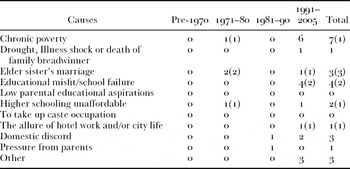
The child labour migration causes in the two remaining and poorer villages in northern Mandya are summarized in Table 11:
Child labour migration causes: Konanor and Devaramadihalli

Source: Migrant interviews.
As in the other Mandya villages, child labour migration has become more common of late, although the causes here are more in tune with expectationsFootnote 52—chronic poverty is the most prevalent cause. Notice that ‘educational misfits/school failures’ has been replaced with ‘school dropouts’ and that costs of higher schooling and three observations in the ‘other’ category pick up school discontinuation prompted by financial constraints and, in the case of Devaramadihalli and distinct from other study villages, the abysmal quality of the local primary school.
From the 1st to the 4th standard Prasanna studied in Devaramadihalli but did not learn much. He picked up reading and writing only when attending the Upper Primary School in the neighbouring village—primary school teachers in Devaramadihalli had little knowledge to divulge and students failing to complete their homework would be at the receiving end of a rich repertoire of punishments that might include beatings, ear squeezing, sit ups, or standing on a bench.
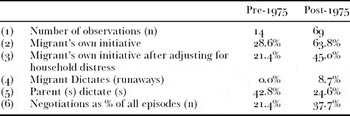
In summary, migration causes and the contents of intergenerational negotiations display considerable spatial and periodic variation. Opposition to recent migration ventures is often parental although there are also, as noted, instances where parents disagree amongst themselves. Occasionally, others are drawn into these negotiations—as strategic allies by childrenFootnote 53 or by increasingly desperate parents eager to sway a recalcitrant son. Elder brothers, themselves often migrants, frequently side with their younger siblings during such stand-offs. Table 12 presents a synthesis of the intrahousehold dynamics preceding the migration of boys before and after 1975, a somewhat arbitrary cut-off point. The focus on boys is easy to defend: girls’ resistance to parental decisions, or expressed or actively pursued desire to migrate, did not surface as an issue during our interviews. Kavita's (at the time aged 12) account is not atypical: She was simply told that she would now work in Bangalore. Her approval was not sought and, according to Kavita, parents have every right to decide what children should do; ‘what parents decide is right’.Footnote 54
The process of intra-household migration decision-making—boys

Note: Row 2 and Row 5 could in principle add up to 100%: If so, the residual and unreported category, ‘on parental initiative’ would have to be equal to zero. Note that the numbers in Rows (3) and (4) are included in Row (2).
Source: Migrant interviews.
Rows (2)–(4) contain cases where migrants either initiate the migration process (2) or run away from home (4). Row (3) represents (2) after adjusting for observations such as Sreenath's decision to step forward in response to a household illness shock. Row (2) thus includes cases where a young migrant in practice may have little real choice but to accept new breadwinner responsibilities. In contrast, Row (3) represents observations where real alternatives exist and choice therefore is genuine. Row (5) reports cases where a parent, usually the father, unilaterally decides and then informs the migrant that he has to leave home. Row (6) reports the percentage of cases proceeding to a negotiation stage. While caution is necessary (the number of cases prior to 1975 is only 14), the figures are suggestive of a growing assertiveness and right to a say among young potential migrants and of a decrease in the extent to which child labour migration decisions are unilaterally imposed by either or both parents. There are also, post-1975, indications of a growing prevalence of an intrahousehold negotiation phase preceding child labour migration.
There are no runaway cases prior to 1975, and five of the six runaways are observed in Mandya district thus suggesting a spatial as well as a time dimension to this behavioural change.Footnote 55 A further break down of the figures in Table 12 post-1975 is feasible and shows that among the cases reported in Row (2) (and where mothers were consulted), about 45% instantly approved of their son's initiative. The corresponding figure for fathers was 54%. As illustrated in the above accounts, the recent migration of boys is subject to initial intergenerational conflicts and to paternal and maternal resistance, with mothers being more frequently opposed to their son's initiative than fathers. It is also interesting to note that children ally with third parties as a bargaining strategy more often than parents do—these allies are usually their elder brothers, themselves often migrants and keen to secure ‘sibling company’ in their workplace.
Finally, a brief reminder that young age and affective ties make these migration events especially emotive: Manju's very close relationship to his mother made the decision to migrate hard, but he agreed to shift to Belgaum. Before leaving, his mother offered moral guidance and advice: (a) take a good name (behave properly); (b) provide no scope for your employer to complain about your behaviour; (c) be loyal to your employer; (d) don't quarrel with your colleagues; (e) be careful while moving in the kitchen—especially avoid boiling oil and slippery floors; (f) report everything to your employer; (g) if a customer forgets or leaves something behind, make sure he gets it back. Mother and son both wept on the day of his departure.
Running away: preludes, reactions and aftermaths
In the 1998 data from Northern Mandya, conflicts between fathers and increasingly assertive sons were often catalysts for runaway migration. For instance, Kumara ran away to Bangalore along with his friend to escape hard agricultural work and cattle herding, often accompanied by beatings from his parents. A persistent, unacceptable situation prompted his move. Decisions to run away could also be less premeditated. Pramod ran away as a 13-year-old after his father scolded him for failing the 8th standard examination. Similarly, Manjunath, who lived with his grandparents, ran away to Bangalore after being beaten up by his grandfather who had accused him of stealing Rs. 200. Only later was it discovered that the money had been misplaced. Although the present data-set has fewer runaway observations, the incidence is much higher in Mandya district. Out of the altogether 30 child labour migration episodes involving boys (five were girls) in Mandya district, 5 (or roughly 16.7%) were runaway cases where the migrant left home without informing parents or guardians of his intentions or plans.Footnote 56 The work-life histories allow us to expound these runaway episodes, including parental reactions and responses as well as the experiences of the runaway migrants themselves.Footnote 57
While his sister would enjoy her leisure, fetching groceries and water were among Harish's domestic responsibilities (he interprets this as a parental strategy for keeping their mature daughter at home). Arguments with sister and mother over trivial issues were common and so were Harish's runaway threats. These threats were routinely snubbed by his parents whose retaliatory response would be that if he was ever to implement such a threat, he would not be welcome back. One day, after refusing to fetch groceries, Harish was scolded by his mother and beaten up by his father. His sister intervened and attempted to stop the fight but in vain. Eager to put an end to this humiliation, Harish decided to run away. His relative and father's cousin-sister's son, Narayan, worked as a supplierFootnote 58 in a bar and restaurant in J. C. Nagar in Bangalore and Harish had, in the company of his father, visited this bar and restaurant on a few occasions. He knew the area well. He lifted cash from his mother's ‘bank’—a vessel containing mustard seeds (a place where women would often keep their money) and boarded a bus to Bangalore where he linked up with Narayan the same evening. Narayan was debriefed, consoled Harish and spoke to his employer, Rame Gowda, also a native of Mandya. Harish was offered a cleaner's job for a monthly salary of Rs. 900. Since Harish's threats had explicitly mentioned linking up with Narayan in Bangalore, Harish's father came searching for his son the next day. Despite repeated requests and the occasional paternal threat, Harish refused to return to the village thereby forcing his father to head home empty-handed after Narayan had not only persuaded the father to let Harish continue in his new job but also by assuring that he, Narayan, would act as Harish's local guardian.
In another case parents mobilized close relatives in search parties after their son Raju absconded. While one such party, led by Raju's father, headed for the taluk headquarter, Nagamangala, a second party travelled to Mandya (the district headquarter) and from there onwards to Mysore. Raju's brother-in-law, an operator in a garment factory in Bangalore, was given the task of searching for Raju in the city. Carrying a photograph of Raju, he made enquiries in numerous hotels from Peenya and up to the Majestic area and in and around Bangalore Railway station. The search eventually ended on a happy note when the brother-in-law visited Raghavendra Krupa where the employer summoned Raju and offered to let him go. Raju, however, refused to return to the village citing a fear of beatings and humiliation. This was two months after he had disappeared.
A third case, Chandra, was keen to continue schooling but financial constraints made it difficult to support his further education. He attended school regularly and was occasionally punished for not doing homework, which included learning mathematical tables, solving sums, copy-writing and taking dictations. He completed his 4th standard in the village school and 8th standard in a local school run by the Adi Chunchanagiri Mutt.
Chandra was good at sports, especially running, long-jump, high-jump and throwing the shot-put and had even won certificates at district-level athletic games for students. During the summer break, after his 8th standard examinations, he was caught stealing fruits from a mango grove—this was a favourite pastime and the guard abused him verbally and gave him moral instruction. His father was also summoned and issued a strict warning. His father brought Chandra home and used harsh words, but stopped short of beating. A week or so after this incident Chandra went swimming in the local stream without permission—hearing of this from a co-villager cum-friend, his elder brother, Swami, rushed to the spot and beat Chandra on the head with a small piece of wood, causing bleeding and injury. Swami brought Chandra home and informed their parents. Their mother scolded both sons and gave Chandra money, instructing him to see a doctor in Nagamangala. Chandra, however, had other plans and travelled by lorry to Mysore where he sheltered in a park next to the Mysore Palace for a few days. He worried about his future course of action since his cash dried up quickly. He was reluctant to approach local hotels since his brothers might come searching and easily locate him. He made enquiries with a couple of lorry owners having breakfast in a nearby hotel, but they refused to hire him, advising him instead to return home. Chandra prevailed and was eventually offered a cleaner's job by Abdul, a Muslim lorry driver from Mysore. While the job was unpaid, food, clothing and shelter were taken care of by Abdul. The lorry operated on the Mysore–Madras route, via Bangalore. After about eight months, Chandra received his first lessons in the art of lorry driving. One day he ran into Venkatesha, a Besta and co-villager who was working as a supplier in Rajbhavan hotel in Mysore. Soon after, Swami came searching for his younger sibling. This was one and a half years after Chandra absconded. Swami promised that Chandra was welcome to return if he so wished and reminded Chandra of his duty to keep in touch. By this time, even Chandra was homesick and desperate to see his family. After obtaining Abdul's permission, he returned to Konanor on a month's vacation. Abdul paid him Rs. 2,000. He returned to Mysore as agreed and carried on as a cleaner—he had planned to ask Abdul to fix a salary after a month or so, but fate had other plans. The lorry met with an accident in the Satyamangalam forest area and Abdul died on the spot. Chandra jumped out of the lorry and escaped with only minor injuries.
Work-hours, workplace conditions and welfare
Mumbai's labour unions have had a strong influence on industrial relations and the city's workplace environments. The volatility of industrial relations during the 1930s have been interpreted as decisive for the independent course that labour legislation in Mumbai subsequently took.Footnote 59 Following a famous agitation in May 1962, the Chief Minister agreed to appoint a Minimum Wage Committee with hotel employees, union leaders and government representatives as its members.Footnote 60 The Committee's report paved the way for the introduction of minimum wages in the hotel industry. The proximate formalization of working conditions in Mumbai hotels following these landmark events contrasts with the informal nature of hotel sector work elsewhere and also with what early migrants to the city had to endure. After arriving in Mumbai in 1935, Vasu Shetty's first hotel job involved 14–16 hours of work a day (5 a.m. to 11 p.m.) for seven days a week. He describes the work, which earned him a monthly salary of Rs. 2 along with free shelter, free meals and healthcare, as highly intensive. In his second job, also in a hotel, work-hours were down to 12–14 hours a day, but work intensity and weekly workdays were similar. He left this job after two years, upset by beatings from his employer (for failing to get up at the scheduled time and for not fulfilling performance expectations). Such beatings, when given in front of customers, occasionally prompted customers to slap him, too. When the then 12 year old Ganesh Poojari reached Mumbai around 20 years later, the working conditions in his first workplace, Hotel Shanti Bhavan, were remarkably similar to those reported by Vasu Shetty; the official work hours were from 5 a.m. to 11 p.m., seven days a week and with a one hour mid-day break. His initial salary was Rs. 2 per month and free shelter, free meals and free health care were the perks. In spite of such long hours, many Mumbai hotel owners would extend child workers the opportunity to attend local Night Schools.
Those arriving in the city from the 1970s onwards had fewer work-hours and often a weekly day off. While working conditions have improved also within larger enterprises in Bangalore, the situation in other destinations, industries and types of work is more mixed and continues to involve long work-hours and often at most a Sunday afternoon break. Nevertheless, and as Figure 4 shows, the work-hours in the first job of the child labour migrants in our sample typically declined after 1970.
Hours per workday in first job by time of migration.

What about other dimensions of work? Satish Shetty, who during the 1970s first migrated to Hubli and thereafter to Mumbai, reflected on a number of workplace-related issues. The employer in Satish's first and second workplaces would kick the hips, splash a bucket of water on the face and pour hot water on hands to penalize workers reluctant to get up early. In his first job as a cleaner in a Hubli eating place he also recounts injuries and ailments; continuous contact with water would result in serious skin problems, specifically cracks on palms and feet. Medical facilities at the workplace were scant and there was limited space for sleep. Problems with organising a regular bath accentuated such health and hygiene concerns. After his promotion to work in the kitchen, he would be exposed to the intense heat from the oven.
Cracked heels and palms followed by whitening due to extensive contact with water is a common hotel industry ailment with treatment usually based on simple home remedies like coconut oil. In some cases skin injuries took a turn for the worse. While working in a Mandya hotel, Prakash Kamath suffered severe skin damage because of overexposure to water and the absence of proper and timely medical care. With wounds not healing naturally and in the process of further decaying he was eventually forced to quit his job.
Unwritten ‘contracts’ within the hotel industry place the onus for covering medical expenses, at least for minor ailments and illnesses, on employers. Uday Battala recounts falling sick and his employer accompanying him to the doctor. Ramesh Gowda similarly remembers his employer organising hospitalization and covering all treatment-related expenses during an illness episode. Other employers were more reluctant to pay for treatment costs. Sudesh Shetty, who migrated to Sircilla (AP) aged 11 and worked as a cleaner in a hotel, was entitled to free healthcare for minor ailments. For illnesses serious enough to require hospitalization, the employer would give an advance to be repaid through salary reductions later on. For others, such as Anurag Marati, free healthcare was never forthcoming. Instead the employer would pay a salary advance to cover medical expenses at the time of need. While working in Belgaum, Shivaram had a small bicycle accident and his employer, a hotelier, paid for his medical care. After moving to Hyderabad, he developed a tumour which compelled him to quit his job and seek treatment without receiving any help or assistance from his employer. After taking up another job in Pune, the tumour re-appeared and he returned to his native village for surgery.
The more recent migrant accounts bring to light more intricate and contradictory facets of employer–employee relationships. Kavita, a domestic servant, had no fixed work hours—between 6.30 a.m. and 8.30 a.m. she would assist the employer's wife by sweeping and wiping the kitchen floor, cutting vegetables, cleaning vessels and serving coffee and tea. At 9.30 a.m. she would wash and dry clothes and from 10.30 a.m. onwards she would assist with lunch preparation. In the evening she would water the garden plants, serve coffee and tea to everyone and help with dinner preparation. The main hall of the house, which also housed the TV, was her sleeping area. Her employer had two children and Kavita developed close relationships with the Madam and her daughter, a high school student. Others also treated her well. The employer addressed her as Kavitamma (a mark of respect and affection). She had no idea about the salary arrangements, but knew that her father was saving parts of her earnings with the employer. The employer eventually donated Rs. 30,000 for her wedding and also sponsored the marriage silk sari and a Mangalasutra (a gold pendant symbolising marital status).
Gowramma's summary observations resonate with the above:
Food, shelter, good emotional relationships. Learning domestic work and tailoring and patience. The goodwill of the employer. Earnings. Being able to support family. Good health. Medical treatment to mother when she fell sick with jaundice. City life. I have picked up some readings. Manners. Marriage arranged—negotiated by the employer. A feeling that I didn't burden my father for my marriage. Disadvantages: I missed my mother very badly initially, but the Madam's influence was such that I started missing her during visits to my village.
Suresh Gowda's work-hours at SLV Garage were from 9 a.m. to 7.30 p.m. with a 30-minute lunch break. Apart from a monthly salary and a Dussehra bonus, he was given a set of blue work uniforms. The workplace offered shelter and cooking facilities. He would assist senior mechanics by supplying tools and would learn tasks such as oiling, greasing, removing and tightening screws and became familiar with a variety of tools and their purposes. His informal apprenticeship combined hands-on experience with learning by observing others. Any mistake, such as supplying the wrong tools or a failure to immediately respond to a request, would be punished with beatings using tools, tools being hurled at him and verbal abuse. While initially disturbed by these practices, he gradually realized that this was the culture of the profession. He faced the threat of being sacked if he opposed or overreacted since these punishments had the employer's approval. Nevertheless, he benefited from his guardian and protector, Chellavaraju, who had introduced him to the workplace and whose presence would shelter him from abuse. Some senior mechanics responded to Chellevaraju's protective interventions: ‘If he has no fears, how can he learn?’—‘How long should he work as a helper? Should he not pick up the tricks of the trade?’ Some of his seniors claimed that they would face the employer's wrath if they failed to provide proper training. Hands would become very hard, injuries were common and medical aid typically in short supply. Four years after Suresh joined, Chelluvaraju fell out with the employer and left. Suresh also wanted to leave but stayed on for two more years on the latter's advice. By that time, he mastered common repairs, understood vehicle mechanics (especially autos), and knew how to drive an auto.
‘Earning and learning’ and other skills
What other skills were developed? As part of his Brahmin upbringing, Raghu was accustomed to assisting his mother in the kitchen. Cooking is the only job he knows and, throughout, the kitchen has remained his only world. In his first workplace, Dwareka, he kept asking the chief cook about techniques for preparing new dishes to perfect his own culinary skills. These cooking skills gave him a new identity. His deafness also occasionally worked to his advantage, since other Brahmin boys of his age would start as water-boys, while he was appointed directly to the kitchen. In both his workplaces, kitchen colleagues and owners were kind, patient and his hearing handicap was never an issue.
Many respondents stress the valuable learning hotel work would offer and the repeated mantra of ‘earning and learning’ refers not only to cooking but also to learning how to run a business. Starting one's own enterprise and gaining independence has been an aspiration for many. Reflecting on the contrasts between hotel work and his own work as an agricultural labourer, Rajeev notes that while his line of work brings you close to nature, it is not realistic for a farmworker to dream of becoming a farm-owner; he does, however, know of many such career transformations within the hotel industry. For others, including carpenters, migration would enhance their skill repertoires. In Yeljith and its surrounding areas, carpenters mostly do roof-work, doors and windows and make agricultural tools; in contrast, in Shimoga, the range of tasks and demands were broader and would include making furniture such as tables and cupboards. In Goa, one informant picked up boat-making skills.
Gaining an employer's trust improves the odds for progress, also for agricultural labourers. Ganesh Gowda would initially do plantation work in Sirsi and Ghatta. He continued in this line of work and, with time, was given supervision responsibilities for more than 110 acres of the landlord's plantation where paddy, areca nut and coconut were cultivated. He also became a labour contractor responsible for organizing a workforce for the landlord in time for the peak season.
Ganesh's case supports this observation. One year after joining his present and to-date only workplace as a cleaner, he was promoted to kitchen assistant. His duty was to assist the cooks by cutting vegetables and by supplying necessary ingredients. He also had to take orders from suppliers and pass orders on to the cooks, get the food ready and pass on the prepared food to the suppliers. The work hours were unchanged and his salary hiked. After two more years, he was promoted to supplier and received another salary increase. Besides, generous tips would now add to his earnings. He worked as a supplier for seven years before being promoted to dosa cook. He had picked up the basics of dosa-making while a kitchen assistant but also received a day-long orientation from the chief cook.
For others, it was the change of workplace that facilitated skill development and career progress. Manjunath started as a cleaner in Sridevi hotel in Mumbai where duties included cleaning the premises, assisting at the counter and supplying water to customers. After a brief stint with a steel company, he became a counter assistant in Shanthi Sagar hotel in Mangalore. Apart from interacting with customers, Manjunath also learnt about the outside world by delivering food to nearby offices. He was soon promoted to assistant cook, gaining familiarity with basic kitchen chores. In his next job as an assistant cook in a hospital, he learnt how to prepare dosas. When he eventually left this job he had enough confidence and knowledge to start his own business.
Similarly, Srinivas Rao began his career supplying water in a cafe in Madras. Thereafter, he worked as a helper in a cinema tent in Brahmavara before returning to the hotel industry in Madras. This time, he started out preparing coffee and idlis and after picking up basic Tamil, he would also be asked to assist at the counter. He later relocated to Calcutta where he worked in a sweetshop, helping to prepare sweets like ubattu, Mysore Pak and laddoo. After marriage, he moved to Bannoor (near Mysore) where he and his wife opened their own eating place. She would prepare idlis, dosas, chutney and sambhar while he was responsible for other aspects of the business. After this venture failed to take off, he worked as a Line Manager in Swekar Hotel in Bangalore. Finally, and after going though a proper interview, he worked as a supplier at Woodland's restaurant in Bangalore from where he eventually retired with much satisfaction.
Having started off as a cleaner, Gundappa Gowda realised that apart from not being of much interest, hotel work also involved too much hardship and damage to health. He shifted to the painting industry where he was trained in painting and paint-mixing. Currently, as an ‘in-charge’, he supervises five to six painters and two to three helpers and is responsible for maintaining quality and for meeting deadlines. His responsibilities include making unannounced visits, taking orders, finishing estimates and staff supervision.
Individual orientation and attitude may crucially affect the acquisition of new skills. Nagesh Poojari attributes his rise and growth over the course of his migrant career, which started at the age of 12, to his ability to absorb and quickly adapt. While disinterested in formal schooling back home, he was an acute observer in his workplace. Once promoted to table-manager, greater exposure and a chance to intently observe and interact with customers ensued and enabled him to pick up elementary English, Tamil and Telugu, in addition to Kannada and Tulu which he already knew.
Lakshman Poojari who had spent the last ten years assisting his employer at the latter's paan-beedi stall was pleasantly surprised when his employer gave him the stall before winding up and returning to his native village for retirement. Lakshman sees this as a token of appreciation of his loyalty and of the extra initiative he took in helping the employer in his business over the years.
Language skills, as many writers note, are crucial for a young migrant to adapt and integrate into the new (destination) and workplace environment, to form friendships and for accessing information.Footnote 61 In reflecting on the advantages (and disadvantages) of migration, Rajeev highlights learning essential aspects of running a hotel, being able to facilitate his elder and younger brothers get a job at the same workplace, earnings, better food, general knowledge, being able to become talkative, awareness about the outside world, learning Telugu and contacts with customers, as examples of advantages and how migration contributed to his personal and professional growth.
Philanthropist hoteliers and Mumbai's Kannada Night Schools
One important finding relates to how work in small South-Indian eating places in Mumbai, from an early date, was commensurate with the pursuit of further education. The city's first Kannada Night School, Mother India, was established by the Mogaveera Society in 1918. By 1950, four more Kannada Night Schools were up and running in and around the area known as Fort Bombay. Before considering our informants’ often positive accounts and experiences of Night School attendance, it is instructive to cite and report passages from the Government of Bombay's own educational review.Footnote 62
Official experiments with Night Schools predate those targeting Kannada speakers and in 1872–1873 a total of 3,000 students were enrolled in such schools in Mumbai. These schools ‘were meant for “adults and boys who are occupied during the day” and for “Hindus of the mixed castes, Mussalmans, cultivators and such like”’.Footnote 63 In spite of attempted expansion, this experiment was officially described as a failure. Between 1881 and 1921–1922, the number of students fluctuated, attaining a peak of 7,600 in 1891–1892, declining to 2,380 in 1901–1902 and then increasing to around 5,000 in 1921–1922. In 1884–1885 the Educational Inspector noted that:
It is, however, but quite natural that after a day's hard physical labour the mind should repel an attempt calculated to lay a heavy strain upon it at night. The schoolwork, therefore, is interesting only in the beginning.Footnote 64
In 1901–1902, the Director reported that ‘there is no chance that they [the Night Schools] will prosper. . . . In many cases the schools serve no purpose but to enable the master to draw his extra allowance’.Footnote 65 In other words, the Kannada Night Schools that some of our informants attended had predecessors that were not particularly well regarded, at least in official circles.
Our informants’ experiences are more positive. According to Ganesh, the Kannada Night Schools were started on initiative of Coastal belt natives, including philanthropist hoteliers. Many hotel owners were keen to promote education among child workers from their native region and facilitated Night School attendance by organizing shift arrangements and time off during evening work hours. From his Night School classes, Ganesh recalls that workers from other parts of Karnataka also attended, but that most students were natives of the former Dakshina Kannada district. Ganesh himself attended Gaov Devi Kannada Night High School. His employer extended flexible work hours to employees attending and would schedule early morning work to compensate for the loss of evening work hours. Classes were for two hours (from 7 p.m. to 9 p.m.) every evening. Homework would involve solving mathematical problems, copy-writing and learning mathematical tables by heart. The teachers were liberal and would not overburden students with homework and punishments were not strict. There were only final examinations and no monthly tests. Ganesh's school covered 1st to 8th standard and each class had around 50 students aged between 10 and 30.
In Ranga Shetty's first workplace, Night School attendance was mandatory for all workers (Young Men's Night School—quite far away). Throughout his two years in this workplace and much to his elder brother's (himself a serious student) dismay, Ranga remained an irregular Night School student. Apart from learning, the Night Schools were sites for exchanging information about job opportunities where students could assist each other with arranging new jobs. Many employers would also use those attending Night Schools to recruit new workers in the event of labour shortage. After returning from his village, Ranga used his Night School friendship networks to find a new job. Several classmates and Night School friends worked at the Mumbai Municipality canteen and, through one of these, Ranga approached the owner of this canteen, a Bunt (from Udupi region), and was offered a supplier job.
At the time of our fieldwork, Ranga was the manager of a catering operation holding the franchise for several public sector canteens in Mumbai and was extending similar educational opportunities to his workforce. In spite of a heterogeneous workforce, in terms of caste and place of origin, this educational opportunity was primarily taken up by Coastal belt natives. Among nine staff members who either were or had been availing of this opportunity, eight were natives of Udupi district.
Migration's transformative scope (and limitations): new friends, new attitudes?
Before the 1962 industrial action, Mumbai hotel workers often had no weekly days off. This would tend to restrict friendships to fellow workers and to regulars among customers. While common native language made communication easy, language could also act as a powerful barrier to interaction with customers and colleagues and for friendship formation. The first Coastal belt migrants arriving in Madras were surrounded by people speaking a ‘foreign’ language.Footnote 66 The same can be said about Kannadigas in Mumbai where Hindi and Marathi are the dominant languages. A move to Bangalore, in contrast, offered a short-term linguistic advantage.Footnote 67 Many of our informants picked up English, Hindi, Marathi or Gujarati during their Mumbai years. Migrants to Bangalore, in addition to English, often understand Telugu or Tamil. There is, however, one notable exception to this pattern. While female migrants may enjoy more leisure during the day (time off from household chores) their mobility and recreational options activities are limited; girls and young women are rarely, if at all, allowed outside the house on their own and end up watching TV and chit-chatting with offspring and other members of the employer household. A simple comparison of the language skills of female and male migrants highlights this contrast. With the exception of one additional language in a single case, the six other female child labour migrants, all starting as domestic servants, only speak and understand Kannada.
The following examples illustrate the importance of language for social life. One difference between social interactions in Shimoga and Goa, according to a carpenter from Yeljith, was that interactions were more frequent in Shimoga where Kannada facilitated more diverse friendship links and where his best friend was a Lingayat, selling milk. In Goa, in contrast, interactions were limited to people from the same region because of the dominance of the Marathi language: his best friend there was another carpenter (a Vishwakarma) from Aloor, near Yeljith.
As noted, agricultural labourers from Yeljith's Gowda community have migrated to Sirsi and other destinations in neighbouring Shimoga district for an extensive period of time. Anand of Yeljith, a contractor for farm workers in Sirsi, describes his social life at his destination place as follows: ‘Friendships are mainly confined to people from Yeljith and surrounding villages and mostly from the Gowda-community.’ At the time of our interview, Anand shared accommodation with five friends, all Gowdas from his native place.
The extent to which work duties limit opportunities for social interactions varies historically and with destination. In Mumbai, following the 1962 industrial action, shorter work-hours and fewer working days enable workers to enjoy and diversify their leisure activities. Elsewhere, workplace conditions and leisure prospects are more mixed. In Belgaum, Ganesh's outside work-hours activities included watching Kannada and Hindi movies on the staffroom TV in the company of his colleagues, playing snakes and ladders and playing cricket with colleagues in the morning, evening and during vacations. In Bangalore, his major activities were cooking and watching Kannada movies in the Uma theatre. Most of the customers in the club he worked for in Bangalore and the bar in Belgaum were regulars. They gave generous tips and treated him well.
Another migrant to Belgaum had a different experience. In Shivaram's case, workplace responsibilities compelled workers to forge ties with colleagues at their own level. While cooks and suppliers would go out together after work, the cleaners would have additional responsibilities (cleaning the floor and vessels used by staff for the evening meal) to attend to and little time and energy for outings even after the shutters had come down. On Sundays, the cooks and suppliers would collect cash from the owner, go for a movie and have a non-vegetarian meal. The employer was less generous with the cleaners, often compelling them to stay indoors or borrow from their senior colleagues.
Karunatha describes after work-hours discussions as centring on domestic affairs, childhood experiences, Yakshagana Footnote 68, day-to-day workplace events, cinema and drama.Footnote 69 There were occasions when Karunatha and his colleagues would hire bicycles after work and watch plays in locations 15km–20km away. In contrast, Uday from Ulthoor experienced work pressures as intense. Moreover, caste was never an important matter in workplace discussions which would instead evolve around day-to-day experiences of the workplace and life back home. Many a day, workers would also not find time to chat.
Even after the hotel had closed for the evening, Uday and other cleaners would clean and wipe the floor, tables and the counter in preparation for the next day. He would then have a bath, eat the meal that had been freshly prepared and go to bed. The work pressures the following day would occupy most of his thoughts.
While many were open to friendships and had better friends at their workplaces than back home, some had reservations. Raghu from Yeljith states that he is in the city as a migrant to earn his livelihood and not to make friends. He does not keep in regular touch with other migrants from his native place. ‘You migrate in search of a good future and you should always keep that in mind: friendships may even be counterproductive at workplaces.’
Similarly, Satish Shetty's regular contacts in Mumbai are restricted mostly to migrants from his family; beyond this he has no close friends. Close relations are maintained only with brothers and other kin. He keeps a distance from others in the workplace and is of the opinion that friends who become too close may engage in backstabbing.
Much depends on the facilitator or door-opener, who often would exercise considerable control over the migrant for whom a job had been arranged. If a close relative-cum-colleague, he could occupy a significant part of the worker's private space. In Hyderabad, Shivanand's father completely occupied his son's space.Footnote 70 Whenever his father visited Yeljith, Shivanand would go to the movies, mostly alone and only occasionally with friends from the same hotel, and chat about movies, life back in the native place and share workplace experiences. For Krishna, from Innanje, his elder brother took him along to Mumbai and looked after him as a close friend and literally occupied his private space entirely. Their relationship was so intense that Krishna finds it hard to come to terms with the fact that his brother is no more, six years after he succumbed to a massive heart attack. Kittu, of Innanje, contends that his uncle, who was his facilitator-cum-employer, remained his guardian and guide.
Working in a bar and restaurant could involve temptations that the presence of an elder sibling might help to curtail. Anand mentions that some of the suppliers would drink leftover liquor—even though he himself was eager to taste, his elder brother's presence acted as a deterrent and he never tasted alcohol even after his brother left. He considers this an achievement.
Exposure to city life has changed the outlook of many of our interviewees, towards life in general and to caste in particular. Shivaram describes his close friendship to a local Dalit in Yeljith. They play chess and cricket together and local women tell Shivaram to avoid such company. Shivaram might have heeded their advice had he not seen more of the world. Shankar's best friends include a 25 year-old Dev-Adiga (local middle caste) from Uppunda, working as a head cook in Sandesh hotel, a 19-year-old Mogaveera who is a boat-driver-cum-fisherman and a daily customer at his present workplace. Shankar's best friend is Manjunath, a 23-year-old Dalit from Kirimanjeshvara, a local construction worker and a very regular customer in the canteen.
While some openly challenge traditional ideas about pollution and purity, both in their workplace and during visits back home, others prefer to conceal the caste identities of colleagues during joint visits to their native homes. The Mumbai-based friends of V. Poojari from Pandeshwara included Nagesh, a Dalit from Beejadi near Kundapur, of the same age, and Gopala Poojari from Kundapur, three years older than him. Both were fellow waiters in V. Poojari's workplace Prasad hotel. Nagesh, Gopala and V. Poojari were close and would visit their native homes together. They would spend two days at each other's places, then part ways and ‘reassemble’ in Kundapur before returning to Mumbai. V. Poojari mentions that while Nagesh's caste was never an issue in their friendship they would deliberately hide his caste from their families and always present him as a fellow Billava. Srinivas of Ulthoor says that he hails from an upper caste (Bunt) and there were no restrictions from the employers’ side—he mingled with colleagues from different castes, but had some reservations about socially interacting with Dalit colleagues.
The latter brings up the issue of age and untouchability in the workplace. In other words, would a Dalit child be treated in a similar way as a Dalit adult? Eating places are appropriate arenas for addressing such questions because of the intimate link between the preparation and serving of food and traditional purity and pollution ideals.Footnote 71 The case of Uday, and other Dalit child migrants, illustrates how young age, in spite of the many positive transformative effects of migration alluded to above, may not suffice to guard a child migrant against the caste biases of colleagues:
The owner (a Bunt) agreed to take (the 10-year-old) Uday along and Uday observes that the employer was extremely kind and looked after him well. . . . NP, a 29-year-old Billava from Hebri was the manager-cum-coffee/tea cook and Uday's best friend and guardian in the hotel. There were altogether seven workers: two cooks, two suppliers and three cleaners. Uday was aware of the caste background of his colleagues and knew that he was the only Dalit in the workforce. However, apart from NP, his other colleagues had no clue about Uday's caste. The owner concealed Uday's caste identity and told Uday to say that he was a Dev-Adiga if anyone asked.Footnote 72
Conclusion with remarks on theoretical implications
Using narratives covering a period of more than half a century, we have uncovered both persistence and shifts in the motivations behind and the causes of child labour migration. The latter increasingly reflects the tension between shortcomings in young people's encounters with schooling and spiralling parental aspirations, albeit with a notable spatial contrast. While our sample is limited in size, poverty, destitution and the allure of city life have persisted as child labour migration causes, whereas dowry and wedding expenses for elder sisters appear to increasingly and adversely affect their younger siblings.
The evidence also provides hints of fundamental shifts in the dynamics preceding and in the perceptions of child labour migration within sending households. The accounts of runaway migration document assertiveness and a readiness to opt for dramatic solutions to the challenges confronting young boys at home and in school, once more with spatial and periodic contrasts; the type of intra-household conflicts that fuel runaway behaviour in northern Mandya are typically resolved within coastal Karnataka households.
The narratives also contain grim descriptions of workplace conditions, where long hours, health hazards and harsh working environments have affected young children's growth and development prospects, especially among those who left during the first part of the period covered. Such evidence of hardship is, however, interspersed with expressions of joy and with felt achievement. The change in working conditions, in particular shorter work-hours, has facilitated the pursuit of more diverse leisure activities and friendship links and is suggestive of considerable progress, especially in Mumbai.
A perhaps surprising finding (and a useful corrective to the portrayal of child labour and employers in most international discourses) is that, long before education was recognized as fundamental for a child's development, philanthropists among Mumbai's South-Indian hoteliers offered many child labour migrants from Karnataka's Coastal belt the opportunity to improve their education by regularly attending local Kannada Night Schools.
Our findings speak to the theoretical literature on youth transitions and interdependencies,Footnote 73 to efforts at linking child labour migration to ideas about intergenerational contracts within sociology and anthropologyFootnote 74 and to discourses on migration and its transformative effects. There are, we propose, fundamental lessons also for the economic literature on child labour which almost uniformly places the responsibility for children entering the labour force on parents and/or misfortune. In addition, it is necessary to nuance interpretations of migration as cooperative household ventures.
While migration may be interpreted as projects of intended (or unintended) transformation at the individual, group or state level,Footnote 75 our focus has been on the former. The most compelling transformations illustrated above are perhaps most accurately described as accidental (as opposed to premeditated) by-products of young migrants’ encounters with cosmopolitan environments. In addition to a variety of productive work-related skills, the interpersonal and social skills acquired and valued and the sense of accomplishments include the ability and confidence to tackle city life, to assist the native household in time of need and to question (and often abandon) instilled practices that relate to caste and community discrimination/distinction.
Our paper informs debates on youth transitions and interdependencies, ‘whereby young people negotiate and renegotiate their interdependencies with their parents and siblings throughout their life course.’Footnote 76 Such negotiations are part of the process through which Bolivian youths become migrants. Our evidence points towards somewhat different and sharper conclusions. First, we show that de facto negotiations were part of the intrahousehold process preceding migration in a minority of the 90 cases under scrutiny (cf. Table 12). This is partly a reflection of us seeing initial disagreement as a prerequisite for de facto negotiations to unfold. Our findings, which are not robust in a statistical sense, also suggest that such negotiations may have gained in importance with the passage of time. In other words, the migration of children for work appears to have become increasingly contested within the sending households. Even so, both in the early and more recent migration episodes, it is more common for a migration initiative to be unilateral and uncontested, the implication being that the other ‘party’ simply agrees to the initiative taken or the decision made.Footnote 77 Hence, when initiated by the migrant child, parents may be consulted and their endorsement sought and received, rendering negotiations unnecessary.
One important feature of the earlier migration episodes was that such unilateralism often was parental, with child labour migration decisions being made by the father, and leaving little or no room for discussion (cf. the ‘Parents dictate’ Row in Table 12). For the children in these early episodes negotiations, or ‘the right to contest or disagree’, were simply not on the agenda. In more recent episodes we note that after controlling for misfortune, migration is increasingly and perhaps to a surprisingly large extent initiated by the migrant child, with a subset of these episodes involving runaways. Furthermore, the increase in domestic contestation and the negotiations that this gives rise to is typically anchored in parental, more often maternal opposition to a son's migration initiative. Coupled with the reported decline in migration dictated by fathers, this growing significance of the migrant's own agency with runaway behaviour as its ultimate manifestation, is suggestive of a shift in the intergenerational balance of power.
Another insight has bearings for the interpretation of migration as a cooperative household venture, which remains in vogue among economists. As seen here, the cases with negotiations may involve a period with ‘open’ conflict that could stretch out and occasionally pull others into the bargaining: there is, we have suggested, a remarkable spatial and periodic contrast in how such standoffs have been resolved. In the Coastal belt, opposition to a son's expressed desire may fuel tensions and involve beatings but eventually be resolved within the household and by the parties reaching an agreement or settling for a compromise—note that these young boys frequently stick to their initial positions and are ready to strike tough bargains with either or both of their parents. This is consistent with the idea of migration eventually taking the form of a cooperative venture since parents, once the dust has settled, may return to playing a constructive role. But such ‘cooperative’ ventures, like those reported in the ‘Parents dictate’ Row are distinctly one-sided—the latter and ‘historically’ based on the bulldozing of the wishes or preferences of the child migrants, the former and more recent, superseding parental preferences. This shift in one-sidedness provides another hint of a change in the intergenerational balance of power. In Mandya district and in contrast, similar conflicts over schooling and other issues are often not amicably resolved and may prompt a young boy to take off on his own and stay away for an extensive period of time before being tracked down or voluntarily revealing his whereabouts. While it is tempting to speculate about and prioritize among the many possible explanations for this spatial contrast, we shall resist this temptation. In these cases, cooperation is suspended, often for a considerable period of time.