





Impact statement
The framework establishes a transferrable methodology for low-energy retrofit strategies, enabling designers to operationalise moisture dynamics, airflow behaviour and material responsiveness within an integrated design workflow, while demonstrating Searamica as a practical pathway for prototyping and scaling bio-based materials. Beyond mould mitigation, it positions bio-integrated materials as active environmental moderators with broader applications for enhancing indoor climate resilience in architecture.
Introduction
Indoor mould growth is a pervasive public health challenge globally, and in the United Kingdom, an estimated 6.5 million households are affected (UK Government 2024). Exposure to mould increases the risk of respiratory problems, airway infections and allergic responses, with vulnerable populations – including children, the elderly and individuals with compromised immune systems – facing disproportionate health burdens (Adan and Samson Reference Adan and Samson2011). Beyond human health, mould degrades building materials, compromising structural longevity and aesthetic quality (Adan and Samson Reference Adan and Samson2011). In an increasingly urbanised world where people spend most of their time indoors (Crook and Burton Reference Crook and Burton2010), minimising mould growth is essential to ensure healthy living environments and building longevity.
Environmental drivers of indoor mould growth
Mould growth is governed by the combined effects of moisture availability, relative humidity (RH), temperature and substrate nutrients over time. Growth typically occurs when temperature ranges between 20–30°C and RH remains within 70–80% for sustained periods (Adan and Samson Reference Adan and Samson2011; Nath et al. Reference Nath, Dewsbury, Künzel and Watson2022). Under these conditions, airborne spores germinate and reproduce rapidly, colonising surfaces and eventually releasing additional spores into indoor air (McGinnis Reference McGinnis2007). While mould may result from envelope defects such as thermal bridges or moisture ingress, it frequently arises in buildings without structural faults due to indoor environmental dynamics (Brambilla et al. Reference Brambilla, Candido and Gocer2022). Occupant activities can generate significant moisture loads, while reduced ventilation and low air exchange rates – particularly in airtight buildings – promote localised RH accumulation and surface condensation (Zhang et al. Reference Zhang, Zhang, Arens, Jin, He, Zhou, Zhou and Hu2024). Climatic factors such as warm and humid periods, prolonged rainfall and extreme weather further intensify indoor moisture conditions (Kempton et al. Reference Kempton, Kokogiannakis and Cooper2021). Material properties and surface characteristics also influence mould formation as they can affect surface RH (Viitanen and Ojanen Reference Viitanen and Ojanen2007). The interaction between environmental conditions and material properties therefore determines the rate and extent of colonisation, making both environmental control and material selection critical to effective mitigation.
Limitations of current mitigation strategies
Current mould mitigation strategies can be broadly categorised as reactive or proactive. Reactive approaches, including surface cleaning, repainting and chemical biocides, address visible mould but do not resolve the underlying environmental conditions that enable growth (Adan and Samson Reference Adan and Samson2011). As a result, these interventions are often temporary and require repeated application, increasing maintenance costs and prolonging occupant exposure (Brambilla and Sangiorgio Reference Brambilla and Sangiorgio2020).
Proactive solutions, such as mechanical dehumidification and heating, ventilation and air conditioning (HVAC) systems, regulate indoor RH and temperature more effectively. However, these systems are energy-intensive, with dehumidification alone accounting for up to 40% of air-conditioning energy consumption (Woods et al. Reference Woods, James, Kozubal, Bonnema, Brief, Voeller and Rivest2022). In response, and under growing pressure to reduce operational carbon, there has been growing interest in passive strategies that regulate indoor RH through material behaviour. Hygroscopic materials can absorb and release moisture in response to ambient RH fluctuations, quantified by their moisture buffering value (MBV). Materials with high MBVs have been shown to effectively regulate indoor RH (Guihéneuf et al. Reference Guihéneuf, Goullieux, Rangeard and Collet2020; Posani et al. Reference Posani, Voney, Odaglia, Du, Komkova, Brumaud, Dillenburger and Habert2025). In addition, geometric design strategies, such as gyroid structures, can further enhance moisture buffering behaviour by increasing the exposed surface-area-to-volume ratio, referred to in this study as MBV3D (Posani et al. Reference Posani, Voney, Odaglia, Du, Komkova, Brumaud, Dillenburger and Habert2025). Bio-based materials such as hemp concrete and cellular concrete have been shown to demonstrate superior hygroscopic performance compared to conventional materials such as gypsum board (Khaled et al. Reference Khaled, Benmahiddine, Belarbi and Lahmar2023; Poupard et al. Reference Poupard, Chabannes, Garcia-Diaz and Clerc2023). However, these materials and geometries are typically applied uniformly across interior surfaces. This overlooks spatial variability in environmental conditions, where thermal gradients, airflow patterns and moisture accumulation can vary within a single space, leading to localised mould-risk zones.
Seaweed-based materials (SBM) as a potential response
Seaweeds are among the most rapidly renewable marine biomass resources, with growth rates exceeding those of most terrestrial plants and without requiring freshwater, arable land, or fertilisers (Kraan Reference Kraan2013; Radulovich et al. Reference Radulovich, Neori, Valderrama, Reddy, Cronin, Forster, Seckbach and Chapman2015). Brown seaweeds (Phaeophyceae) are particularly notable for their production of phlorotannins – polyphenolic secondary metabolites that serve ecological roles in chemical defence against microbial colonisation and herbivory (Khan et al. Reference Khan, Jeong, Ahmad Khan, Tabassum and Kim2022; Lemesheva et al. Reference Lemesheva, Islamova, Stepchenkova, Shenfeld and Birkemeyer2023). These compounds exhibit broad-spectrum antimicrobial activity and have demonstrated antifungal efficacy against various pathogenic species, including Aspergillus, Penicillium and Fusarium, with documented anti-quorum-sensing properties that disrupt biofilm formation (Kumar et al. Reference Kumar, Paul, Anas, Tejpal and Chatterjee2022; Lemesheva et al. Reference Lemesheva, Islamova, Stepchenkova, Shenfeld and Birkemeyer2023; Tang et al. Reference Tang, Wang and Chu2020).
In addition to their bioactive properties, seaweeds are inherently hygroscopic due to their polysaccharide-rich cell walls, composed primarily of alginates, fucoidans and laminarins, which readily absorb and release water vapour in response to ambient RH fluctuations (Vujnovic Reference Vujnovic2025). This dual functionality – hygroscopic behaviour and antifungal potential – positions SBM as promising candidates for bio-integrated building materials designed to passively regulate indoor humidity whilst resisting mould colonisation.
Despite this potential, seaweed has primarily been investigated for carbon sequestration, biofuel production and bioresource applications (Khan et al. Reference Khan, Jeong, Ahmad Khan, Tabassum and Kim2022; Radulovich et al. Reference Radulovich, Neori, Valderrama, Reddy, Cronin, Forster, Seckbach and Chapman2015; Scardifield et al. Reference Scardifield, McLean, Kuzhiumparambil, Ralph, Neveux, Isaac and Schork2024), with limited exploration of its role as a functional architectural system for mould mitigation or its deployment in response to spatially variable environmental conditions (Kirthika et al. Reference Kirthika, Goel, Matthews and Goel2023).
Computational prediction and limitations
Computational models for predicting mould growth have advanced significantly, with tools such as the Isopleth system, Biohygrothermal model, ESP-r and the Valtion teknillinen tutkimuskeskus (VTT) model providing quantitative predictions based on surface temperature, RH, material sensitivity and exposure duration (Johansson et al. Reference Johansson, Lång and Capener2021). Among these, the VTT model is widely adopted, calculating a mould growth index (MGI) ranging from 0 (no growth) to 6 (visible growth), which indicates the extent of predicted mould growth in a given location (Hukka and Viitanen Reference Hukka and Viitanen1999; Nath et al. Reference Nath, Dewsbury, Künzel and Watson2022).
While these models have been validated against laboratory and field data, their application remains primarily diagnostic, identifying areas at risk without informing design responses (Adan and Samson Reference Adan and Samson2011; Johansson et al. Reference Johansson, Lång and Capener2021). Similarly, computational fluid dynamics (CFD) enables detailed analysis of airflow and RH distributions but is rarely coupled with mould prediction to inform architectural decision-making. One notable exception demonstrated that CFD-coupled mould predictions showed discrepancies of less than 10% compared to real-world observations (Oladokun et al. Reference Oladokun, Odesola and Adewoyin2017), suggesting that such integrated approaches can provide actionable insights for design. However, few studies translate these computational insights into context-specific, fabricable architectural interventions.
Bio-integrated design and architectural workflows
Biodesign is an emerging field that integrates design, science and engineering through transdisciplinary approaches to address complex contemporary challenges. It promotes shared methods and frameworks that connect design thinking with scientific reasoning (Marseglia et al. Reference Marseglia, Cantini, Celli, Brunelli and Lotti2025). Within this context, biodesign does not simply refer to the use of nature-inspired form-making, but to a way of working in which biological processes, material systems and design decisions are developed through continuous interaction across disciplines (Marseglia et al. Reference Marseglia, Cantini, Celli, Brunelli and Lotti2025; Pollini Reference Pollini2024).
A key characteristic of this field is its emphasis on iterative and experiment-driven methodologies. Approaches such as material tinkering and Transdisciplinary Material BioTinkering (TMBT) position material development as an exploratory process, where outcomes are not fully predefined but evolve through cycles of testing, feedback and refinement between material behaviour, scientific analysis and design intent (Marseglia et al. Reference Marseglia, Cantini, Celli, Brunelli and Lotti2025). In this sense, material systems are treated as active and responsive components within the design process, rather than passive inputs optimised through linear workflows.
Within architecture, biodesign is increasingly influencing the development of bio-based materials, biofabricated components and digitally enabled fabrication systems, indicating a shift from form-driven design towards materially and environmentally informed processes (Cruz and Hvejsel Reference Cruz and Hvejsel2022; Goidea et al. Reference Goidea, Floudas and Andréen2022; Piórecka et al. Reference Piórecka, Scully, Salmane, Parker and Cruz2023). Bio-integrated design further articulates this shift as an approach concerned with embedding biological processes into both material and conceptual practice, synthesising contributions from multiple disciplines into a unified design framework (Parker and Cruz Reference Parker and Cruz2022). However, while these developments demonstrate significant progress in material innovation and fabrication technologies, the architectural perspective remains comparatively underdeveloped. Less attention has been given to how bio-based systems can inform spatial organisation, environmental responsiveness and design decision-making within architectural practice (Durgut and Selçuk Reference Durgut and Selçuk2026).
Research gap, question and case study overview
Research gap
Despite advances in moisture buffering materials, mould prediction models and biomaterial development, these approaches are typically investigated in isolation. Hygroscopic materials are often evaluated through material performance metrics without consideration of spatial environmental variability, while computational models such as CFD and the VTT mould-growth model are primarily used as diagnostic tools rather than informing design interventions. SBM – despite its potential inherent hygroscopic behaviour and bioactive compounds with antifungal property – has rarely been investigated as a functional architectural system for mould mitigation. As a result, there is a lack of integrated frameworks that connect material behaviour, environmental simulation, mould risk prediction and geometric design. This disconnect limits the ability to develop performance-driven, passive strategies for controlling indoor RH and reducing mould risk. Such frameworks are becoming increasingly important as climate change intensifies, highlighting the need for low-energy and low-carbon solutions.
Research question
How can performance-driven design strategies, informed by environmental simulation, optimise the deployment of hygroscopic and antifungal seaweed-based material (SBM) to passively regulate indoor RH and reduce mould growth risk?
Case study objectives
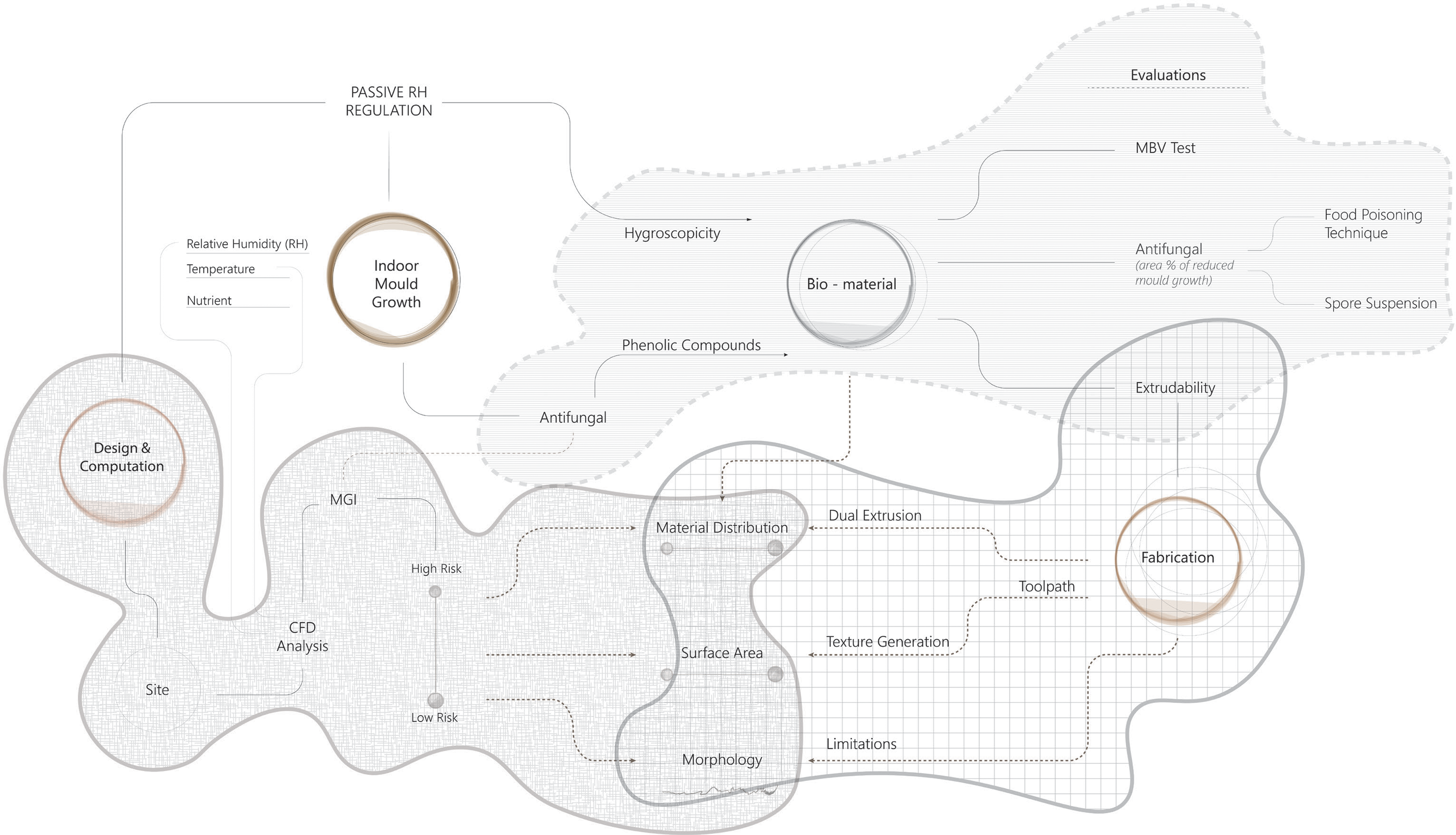
This study addresses the research question through the development of Searamica, a 3D-printed bio-integrated architectural wall system composed of an antifungal and hygroscopic SBM. It draws on the disciplines of architecture, material science, microbiology and digital fabrication. A bio-integrated design approach is adopted, in which biomaterial development, environmental simulation, computational design and digital fabrication are treated as interdependent components within a unified transdisciplinary workflow, co-evolving through iterative feedback (Figure 1). Through this integration, the system functions as a passive RH regulator, moderating transient moisture fluctuations through reversible sorption processes while limiting conditions conducive to mould growth.
Transdisciplinary workflow of the Searamica case study.

Figure 1 Long description
A diagram of the transdisciplinary workflow of the Searamica case study. The diagram represents a process aimed at mitigating indoor mould growth and its associated risks. The overall structure includes several interconnected components and steps that illustrate the flow from identifying mould growth factors to fabricating solutions. Key components include Indoor Mould Growth, Bio-material, Design & Computation, and Fabrication. Indoor Mould Growth is influenced by relative humidity, temperature, and nutrients. Passive relative humidity regulation and hygroscopicity are linked to Bio-material, which undergoes evaluations such as the MBV test and antifungal techniques. Design & Computation involves site analysis, CFD analysis, and identifying high and low-risk areas. Fabrication includes material distribution, dual extrusion, toolpath, texture generation, and considering limitations and morphology. Arrows and lines indicate the flow and relationships between these components, showing how data and materials move through the process to mitigate mould growth.
Methodology
The methodology follows a sequential analytical pipeline linking material development, environmental simulation, architectural translation and robotic fabrication. First, SBM was developed and tested for extrusion compatibility, hygroscopic behaviour and antifungal performance. Next, a representative site was selected, and environmental conditions were modelled using CFD to capture spatial distributions of airflow, temperature and RH. These outputs were coupled with a modified VTT model to predict spatial MGI values. Finally, simulation results were translated into geometric and material distribution rules, which informed the fabrication of a 1:1 proof-of-concept prototype (Figure 1).
Seaweed biomaterial development and characterisation
Seaweed biomass processing
The selection of brown seaweed was motivated by its documented phlorotannin content, rapid renewability and abundant availability along UK coastlines (Khan et al. Reference Khan, Jeong, Ahmad Khan, Tabassum and Kim2022; Lemesheva et al. Reference Lemesheva, Islamova, Stepchenkova, Shenfeld and Birkemeyer2023). Brown seaweed (Fucus spp.) was harvested from Kent, UK and further processed in the lab. The harvested material was washed, air dried, ground and sieved to fine particles (<1 mm) to ensure homogeneity and facilitate integration into the final material composition.
Phenolic compound extraction
Phenolic compounds (PC) were extracted from the ground seaweed biomass following a solid-liquid extraction method and further quantified using the Folin-Ciocalteu assay using phloroglucinol as standard (Gholami et al. Reference Gholami, Chadorshabi, Shamloo, Sharifian and Mahmoudzadeh2025). Prior to addition to the material the dried PC were resuspended in 25 ml of distilled water, filtered through Whatman and 0.22 µm membrane filter and adjusted back to a final volume of 25 ml PC extract solution. Detailed chemical extraction procedures and characterisation of PC for this experiment are reported in (Chai et al. Reference Chai, Salmane, Parker and Altamirano2025); the present study focuses on aspects relevant to architectural integration and biodesign application.
Antifungal activity assessment
Antifungal activity of SBM was evaluated using established microbiological methods, including the poisoned food technique and minimum inhibitory concentration (MIC) assays, according to the protocols described by (Chai et al. Reference Chai, Salmane, Parker and Altamirano2025; Gholami et al. Reference Gholami, Chadorshabi, Shamloo, Sharifian and Mahmoudzadeh2025; Toledo et al. Reference Toledo, Félix, Vicente, Augusto, Félix, Toledo, Silva, Trindade, Raimundo and Lemos2023). To assess performance across scales relevant to architectural deployment, SBM samples with concentration and without PC were evaluated under high-humidity conditions at both laboratory and fabricated scales. In both scenarios, samples were inoculated with 10 µL of Aspergillus niger spore suspension (1 × 10⁶ spores/mL) using the three-point inoculation method. Petri-dish tests (n = 3) were monitored over eight days to evaluate fungal growth inhibition, whilst 3D-printed modules were observed over three weeks to evaluate colonisation behaviour on fabricated surfaces. Mould growth inhibition was calculated using the following formula: inhibition (%) = (dc – dt)/dc × 100, where dc – control mycelial diameter, dt – treatment mycelial diameter. These experiments evaluated the translation of biological activity from laboratory samples to fabricated architectural prototypes, an important consideration within biodesign research.
Hygroscopic behaviour assessment
Hygroscopic behaviour of the SBM was quantified using the NORDTEST protocol (Rode et al. Reference Rode, Peuhkuri, Hansen, Time, Svennberg, Arfvidsson and Ojanen2005), which measures MBV as an indicator of moisture exchange capacity. Samples were conditioned at 23°C and subjected to cyclic humidity exposure consisting of 8 hours at 75% RH followed by 16 hours at 33% RH until steady-state moisture exchange was achieved.
Seaweed-based material (SBM) formulation
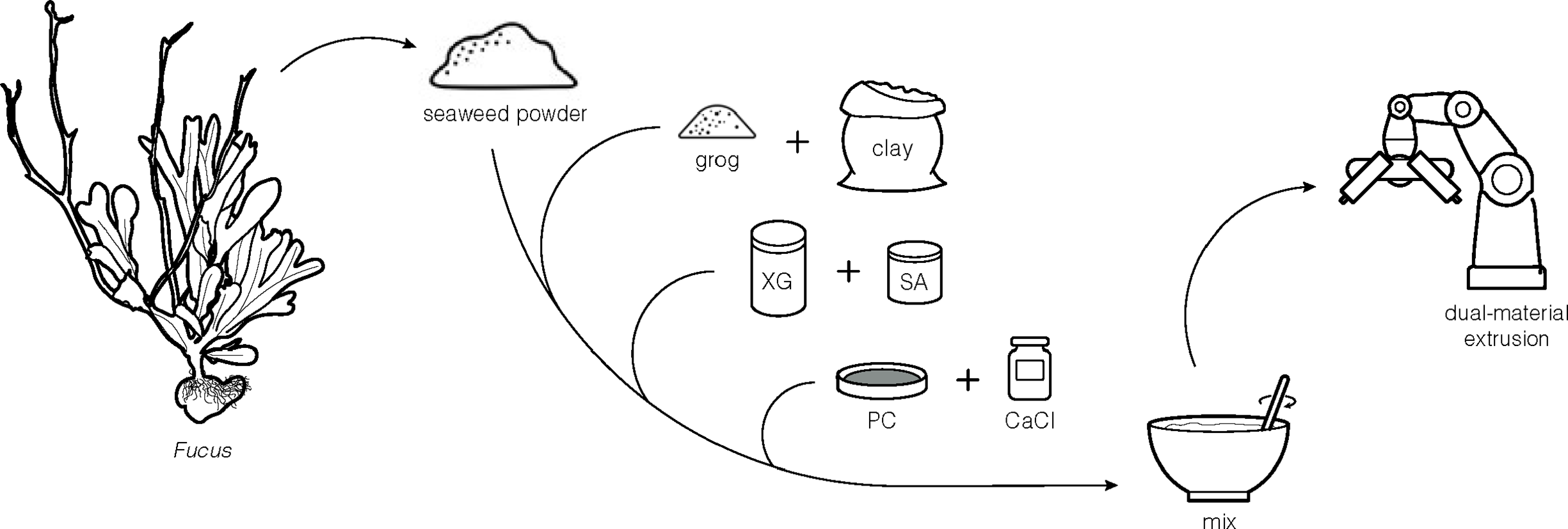
Material development followed a non-linear and concurrent workflow. Different functional requirements were tested and resolved at different stages of the study, depending on experimental feasibility, fabrication readiness and available material processing pathways. It focused on formulating SBM to combine moisture buffering behaviour with antifungal performance for passive mould mitigation. The formulation was adjusted to achieve rheological properties suitable for extrusion-based fabrication, balancing viscosity and yield stress to enable stable deposition, layer adhesion and geometric fidelity during printing. Through iterative testing, the proportions of biomass, binder, fibres and liquid phase were adjusted to ensure printability and structural stability, resulting in an initial SBM composition of 22 wt% clay, 22 wt% grog, 8 wt% seaweed powder, 3 wt% xanthan gum, 1 wt% sodium alginate and 44 wt% PC solution (Figure 2).
Initial SBM composition and processing procedure (XG – xanthan gum, SA – sodium alginate, PC – phenolic compound extract in water).

Preliminary fabrication testing identified limitations in extrusion stability, leading to the introduction of a secondary clay-based support material, Prai 3D clay (SIO-2®, Spain), which is mechanically compatible with SBM and exhibits adjustable hygroscopic behaviour. In its unfired state, it retains moderate moisture buffering capacity. After firing, its MBV reduces to approximately 0 g·m−2·%RH−1, allowing it to function as a moisture-inert material within the system. In addition, initial SBM formulations exhibited limited moisture buffering performance, which led to the introduction of CaCl2 as a hygroscopic modifier to improve MBV. In this study, SBM refers to the composite system incorporating seaweed biomass, PC solution, CaCl2 and a clay-based extrusion matrix. The resulting material palette consisted of SBM, unfired clay and fired clay, each exhibiting distinct hygroscopic behaviours that informed subsequent computational design and material distribution strategies.
Site context
The case study was conducted within a 1970s residential household in London, selected as representative of common urban housing conditions characterised by limited mechanical ventilation and reliance on conventional heating systems, with no active cooling provision. The intervention focused on a combined kitchen–living space where activities such as cooking, indoor drying of laundry and occupancy generate elevated moisture loads, increasing the risk of mould growth. This typology represents a scenario in which indoor environmental conditions, rather than envelope failure, are primary drivers of mould risk, providing an appropriate context to evaluate passive RH regulation strategies.
Environmental simulations
CFD simulation set up and results
CFD simulations were conducted using ANSYS Fluent to evaluate the influence of airflow on temperature and RH distributions across interior wall surfaces. The simulation domain comprised a three-dimensional representation of the room geometry, incorporating openings and ventilation pathways. Boundary conditions were defined with inlet airflow velocities (VEL) of 0.5 m/s at 21°C and 60% RH and an outlet pressure of 0 Pa. Initial indoor conditions were set to 27°C and 85% RH to represent a typical high RH summer condition. As RH cannot be directly specified in ANSYS Fluent, psychrometric relationships were used to convert RH values into water vapour mass fractions.
Simulations were conducted over a 1.5-month period (approximately 1,095 hours), providing sufficient temporal resolution to capture environmental dynamics relevant to mould growth and to guide subsequent design decisions within the project timeframe. Results indicated that low-airflow regions, such as corners, maintained elevated RH levels, whereas areas near ventilation inlets exhibited reduced RH due to increased air movement. The resulting spatial distributions of temperature and RH were subsequently used as inputs for the VTT mould-growth model.
Modified VTT model and results
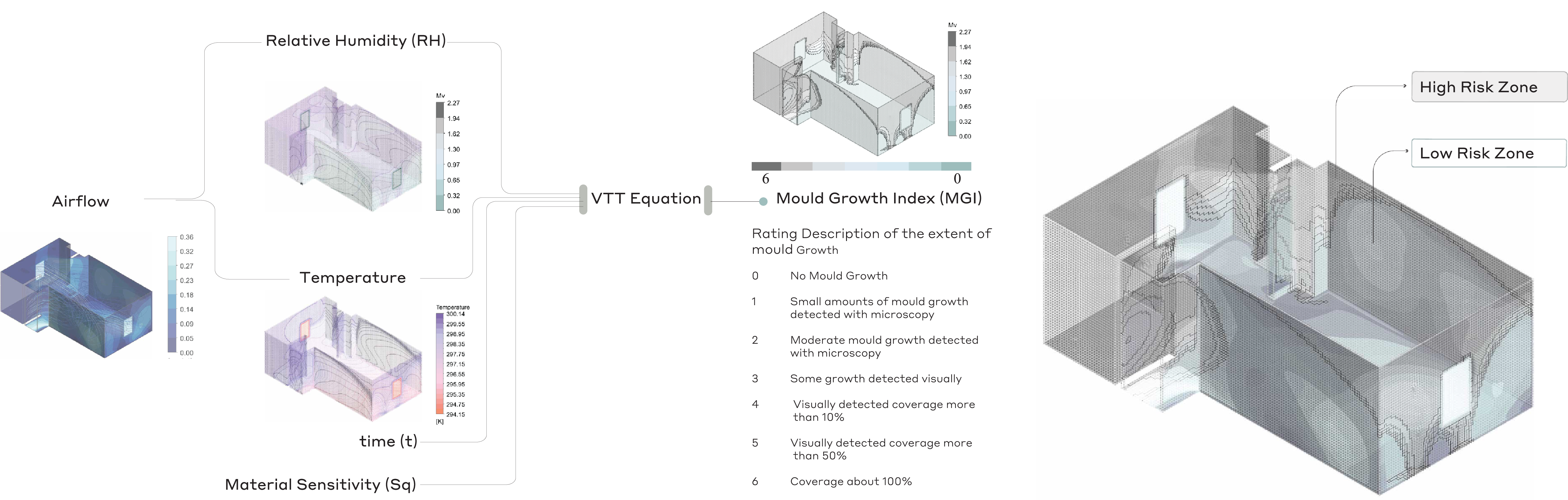
The VTT model calculates a MGI as a function of surface temperature, RH, material sensitivity and exposure time. It has a growth and decay branch. The growth branch is expressed as:
 $$\eqalign{ dM/dt =\ & k1 \times (1 + k2 \times exp (pT \times T) \cr& \hskip -2pt\times \,exp(pRH \times (RH - RH\_crit))/M\_max) \cr}$$
where dM/dt represents the MGI (0–6), T is temperature (°C), RH is relative humidity (%), RH_crit is the critical RH threshold, k1 and k2 are material-dependent coefficients, pT and pRH are temperature and humidity sensitivity parameters and M_max represents the maximum MGI for the material.
For this study, RH_crit was set to 75%, lower than the conventional range of 80–85%, to better reflect indoor mould-growth conditions (Johansson et al. Reference Johansson, Lång and Capener2021; Kopecký et al. Reference Kopecký, Staněk, Ryparová, Richter and Tywoniak2023; Menneer et al. Reference Menneer, Mueller, Sharpe and Townley2022). This adjustment ensured that RH exceeded RH_crit throughout the simulation period, allowing the model to focus on positive growth rates while omitting the decay branch. SBM was classified as highly sensitive due to its nutrient content, and the closest available proxy within the VTT model was spruce wood with kiln-dried quality classification. Material coefficients were therefore defined with M_max = 1.0, k1 = 0.68, k2 = 13.9, pT = 0.68, pRH = 13.9 and pC = 66.02.
Model equations were implemented within ANSYS as field variables, enabling each surface cell to accumulate MGI values over time. The simulation identified high-risk zones (MGI > 1) and low-risk zones (MGI ≤ 1), with surfaces experiencing sustained high temperature and RH – particularly corners and areas with limited airflow – accumulating MGI more rapidly, while well-ventilated regions exhibited slower mould development. Although the model does not capture all real-world factors, such as dust accumulation that may provide additional nutrients, the results demonstrate that mould growth risk is spatially heterogeneous and strongly linked to local environmental conditions (Figure 3).
Overall CFD – VTT simulation workflow showing mapping of all parameters, showing high-and low-risk zones of mould growth.

Computational design
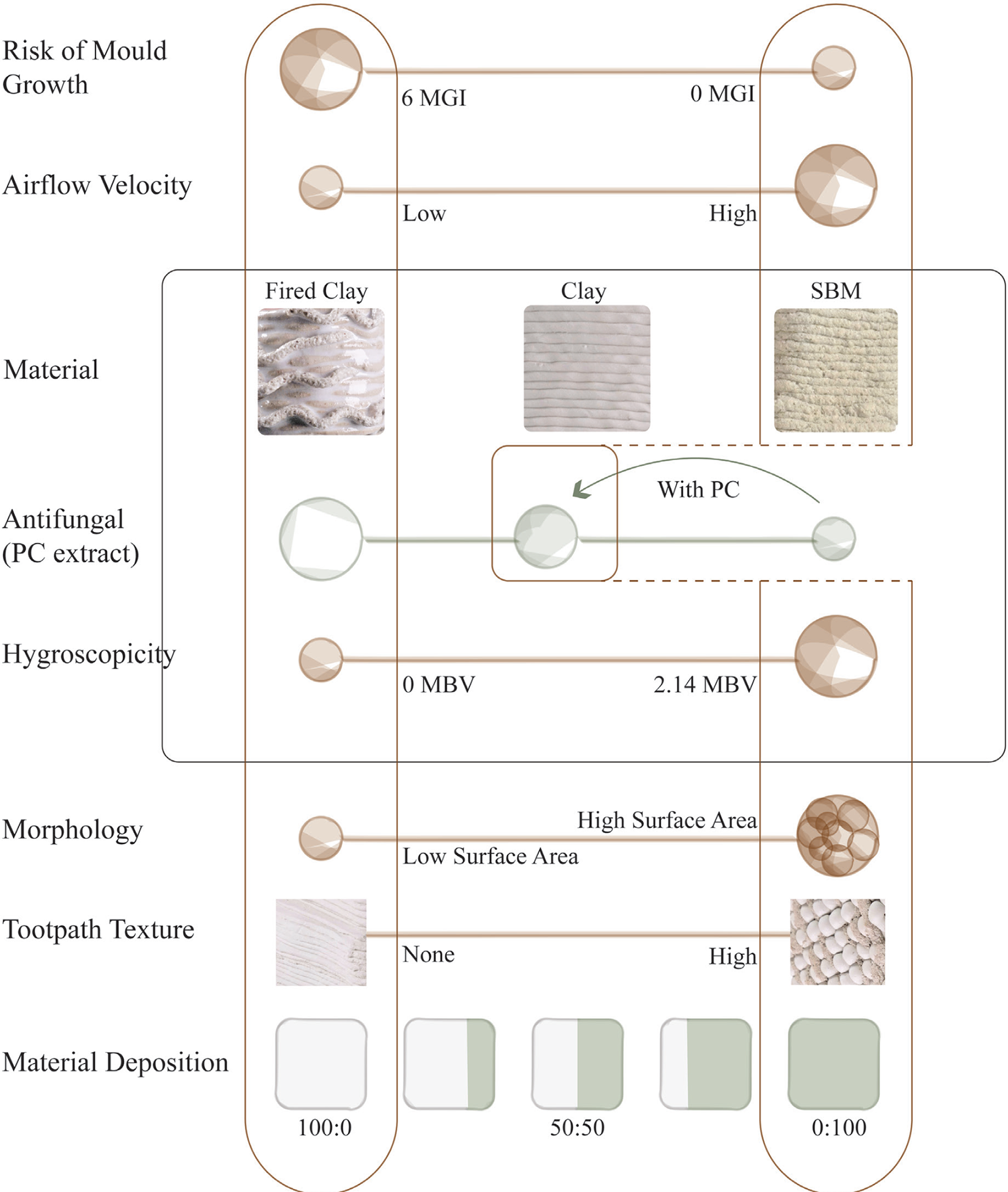
The computational design framework operates as a rule-based system that links environmental simulation outputs with material behaviour to drive spatial and fabrication decisions. Simulation results are first analysed to map mould growth risk using the MGI and airflow velocity (VEL), classifying the space into high-and low-risk zones (Figure 3). High-risk zones correspond to stagnant airflow and elevated mould potential, while low-risk zones are associated with higher airflow and reduced risk. In high-risk zones, non-moisture-buffering materials are assigned to suppress mould growth. In low-risk zones, hygroscopic materials are applied, with increased surface area enhancing moisture buffering performance (Posani et al. Reference Posani, Voney, Odaglia, Du, Komkova, Brumaud, Dillenburger and Habert2025; Figure 4).
A set of complex correlations organised into an informative design logic.

Figure 4 Long description
A diagram representing the factors influencing mould growth and their interactions. The diagram includes various parameters such as risk of mould growth, airflow velocity, material, antifungal properties, hygroscopicity, morphology, toothpath texture, and material deposition. The risk of mould growth is shown on a scale from 0 MGI to 6 MGI, with airflow velocity ranging from low to high. Different materials like fired clay, clay, and SBM are depicted, along with their properties. Antifungal properties are indicated with and without PC extract. Hygroscopicity is shown on a scale from 0 MBV to 2.14 MBV. Morphology is represented by surface area, ranging from low to high. Toothpath texture is depicted from none to high, and material deposition is shown in varying ratios. The diagram illustrates how these factors interact to influence mould growth.
This rule-based mapping of environmental conditions to material and geometric responses is implemented through three computational phases: Data Synthesis, Morphological Generation and Fabrication Encoding. The resulting geometry is not autonomously optimised but developed through a negotiated process between designer input and computational logic, where environmental data acts as a guiding driver within a designer-led morphological framework.
Data synthesis
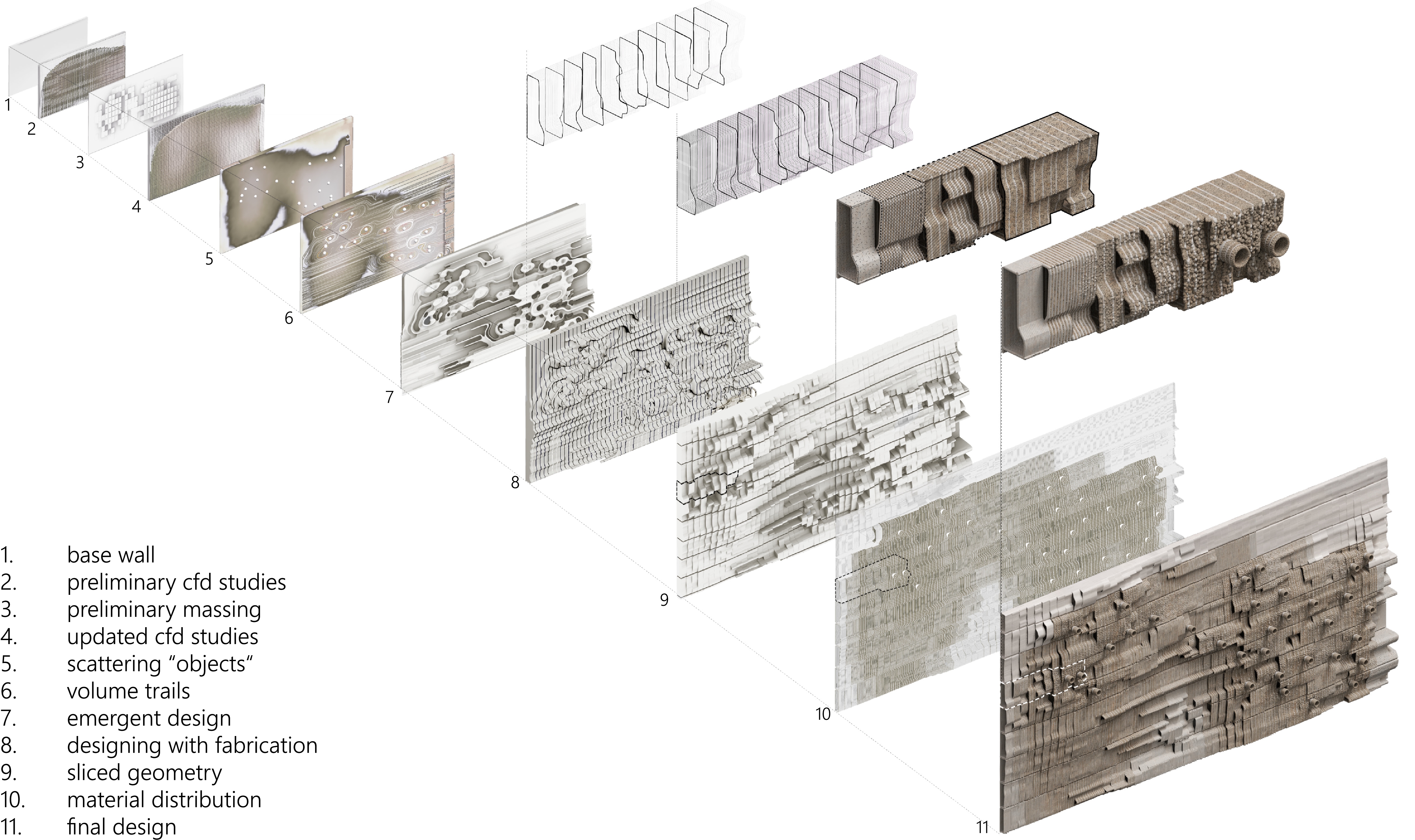
The computational workflow begins by importing the base room geometry from Rhino into Houdini (Figure 5.1). This provides the spatial framework onto which environmental data is mapped. CFD simulation datasets from ANSYS – including MGI, RH, temperature and VEL are then imported into Houdini and projected onto the base geometry (Figure 5.2), establishing the environmental field conditions across the surface.
Step by step design process following the performance driven logic from material understanding and simulation analysis.

A preliminary massing is generated in response to these fields, where surfaces in low-risk zones (MGI < 1) are extruded according to remapped VEL values. This operation increases exposed surface area in regions of favourable airflow, thereby amplifying the potential for moisture exchange (Figure 5.3).
The resulting geometry is then re-evaluated through CFD simulation to capture how the morphological adjustments alter local airflow behaviour and environmental conditions (Figure 5.4). This feedback produces an updated dataset that informs the next stage of the design workflow.
Morphological generation
To reflect airflow trajectories and establish a hierarchy of spatial complexity, discrete geometric attractors, referred to as “objects,” are introduced in regions where VEL exceeds 0.35 m/s. Through random seed selection, the designer controls the density and spatial distribution of these attractors across the environmental dataset. These objects subsequently operate as spatial anchors that guide texture intensity, geometric articulation and material gradients (Figure 5.5).
Around these anchors, volume trails emerge to express airflow trajectories as spatial behaviour rather than static lines. As they develop, linear paths gradually curve and accumulate around attractor fields, increasing spatial density and reinforcing a hierarchy of geometric intensity in high-airflow regions (Figure 5.6). This accumulation is then consolidated through massing operations, where dispersed environmental data is resolved into a continuous morphological system (Figure 5.7).
As morphology stabilises, it is adapted into a fabricable configuration. The complexity generated by volume trails introduces undercuts that exceed the constraints of extrusion-based 3D printing with SBM, requiring a geometric translation rather than direct fabrication. The form is therefore re-projected onto the wall surface as a continuous extrusion, preserving spatial hierarchy while resolving fabrication limitations (Figure 5.8).
The resulting surface is subdivided into printable modules (7 × 20 cm), where section profiles are extracted at 7 cm intervals and re-extruded straight across the wall surface. Rather than simplifying the system, this pixelation method preserves the legibility of the environmental hierarchy at a manufacturable resolution. While SBM technically allows larger spans, the inclusion of Prai 3D clay enables this modular scale to maintain morphological fidelity; increasing the interval would reduce resolution and weaken the translation of environmental data into form. The slicing strategy therefore mediates between material behaviour, design decision and fabrication constraints (Figure 5.9).
Toolpath and material gradient encoding
Toolpath variation is introduced to increase the theoretical moisture-exchange potential represented by MBV3D through modulation of surface articulation. MBV3D is defined in this study as a geometry-derived proxy of experimentally measured MBV, based on variations in exposed surface area produced through geometric articulation. It does not correspond to full-scale 3D NORDTEST testing and therefore does not represent a directly measured material property of the fabricated system.
The variation is achieved through controlled displacement of the print head away from the base toolpath, producing a draping effect that increases total surface area. Toolpath texture is governed by proximity to attractor objects, where regions closer to attractors receive more surface articulation, while regions further away remain smoother. This spatial differentiation is defined through a masking strategy derived from the attractor fields, enabling continuous transitions in surface roughness across the wall surface.
Material distribution is structured to suppress mould growth in high-risk zones and support moisture-buffering behaviour in low-risk zones. Three materials – fired clay, unfired clay and SBM – are assigned based on their material properties. In high-risk zones, fired clay is used due to its low moisture content, which limits surface water availability and reduces conditions for mould growth in stagnant environments. In low-risk conditions, SBM is used as the primary moisture-buffering material, enabling reversible moisture exchange in response to fluctuations in indoor RH. The presence of PC within SBM, together with high airflow, promotes rapid surface drying and reduces conditions conducive to mould growth (Zhang et al. 2024). In intermediate conditions, unfired clay provides structural continuity while moderating moisture behaviour across transitional regions (Figure 4).
This material logic is implemented through remapping the wall into five zones based on MGI and airflow velocity, which are translated into a layer-wise fabrication strategy. Zones range from 0 (highest risk) to 4 (lowest risk). Zone 0 is composed entirely of fired clay. Zone 1 uses unfired clay as the base material, with SBM introduced every fifth layer. Zone 2 is evenly divided between unfired clay and SBM, alternating across layers. Zone 3 is primarily SBM, with unfired clay introduced every second layer. Zone 4 is composed entirely of SBM.
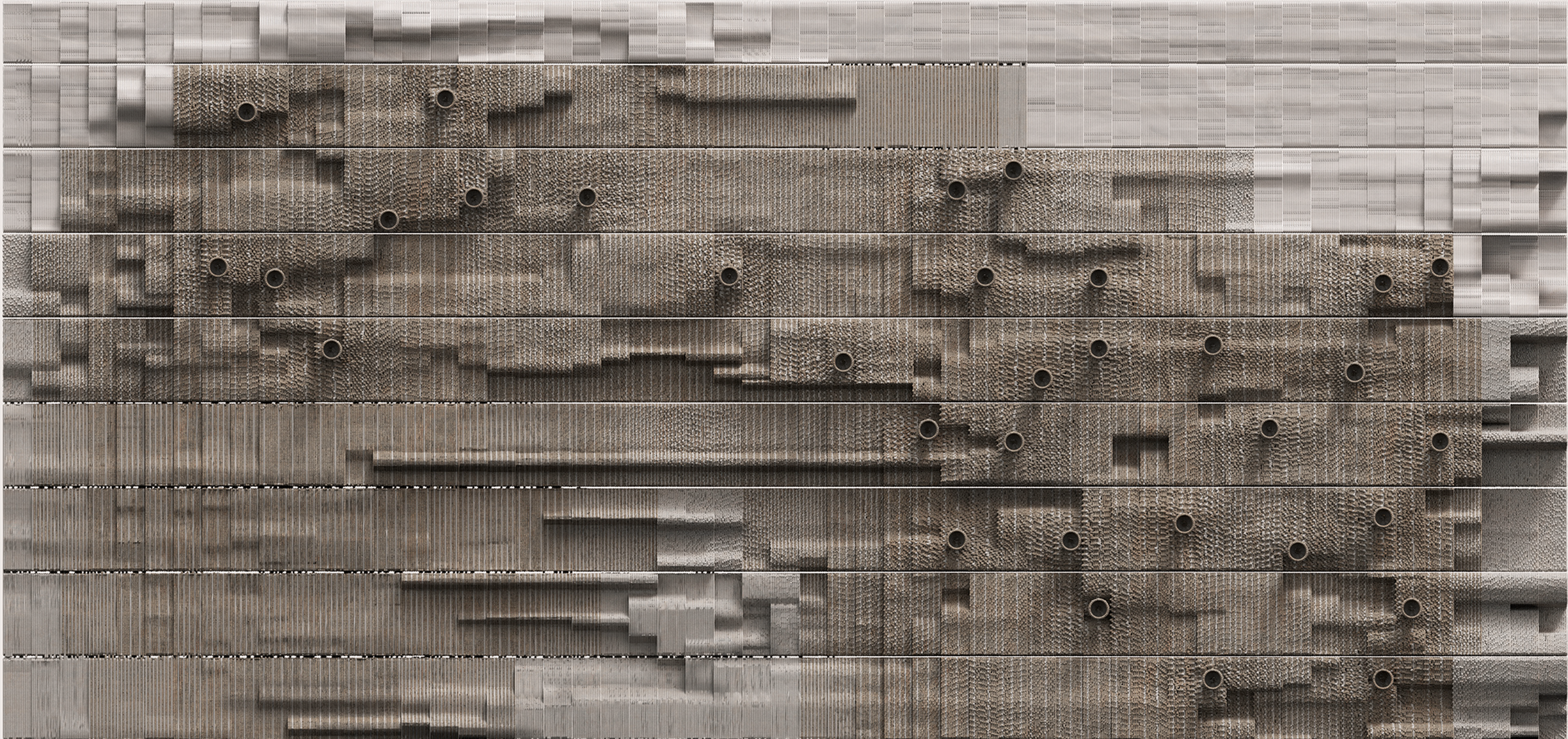
Through this multi-scalar encoding process, toolpath textures, infill strategies and layer-wise material assignments are encoded within a unified computational system, concentrating higher SBM-to-clay ratios and intensified surface articulation around attractor-defined regions. As a result, the bespoke modules formed an architectural system with continuous gradients of geometry, texture and material composition that regulate moisture behaviour and mitigate mould growth (Figure 6).
Final wall design with variation of toolpath and material gradient guided by the “objects” distributed based on airflow.

Figure 6 Long description
A cross-sectional view of a wall design featuring variations in toolpath and material gradient guided by distributed objects based on airflow. The wall is composed of multiple horizontal layers, each with distinct textures and patterns. The layers vary in thickness and material composition, creating a gradient effect from top to bottom. Circular objects are embedded within the layers at various intervals, likely representing distributed elements influenced by airflow. The overall design showcases a blend of digital fabrication techniques and bio-inspired material gradients.
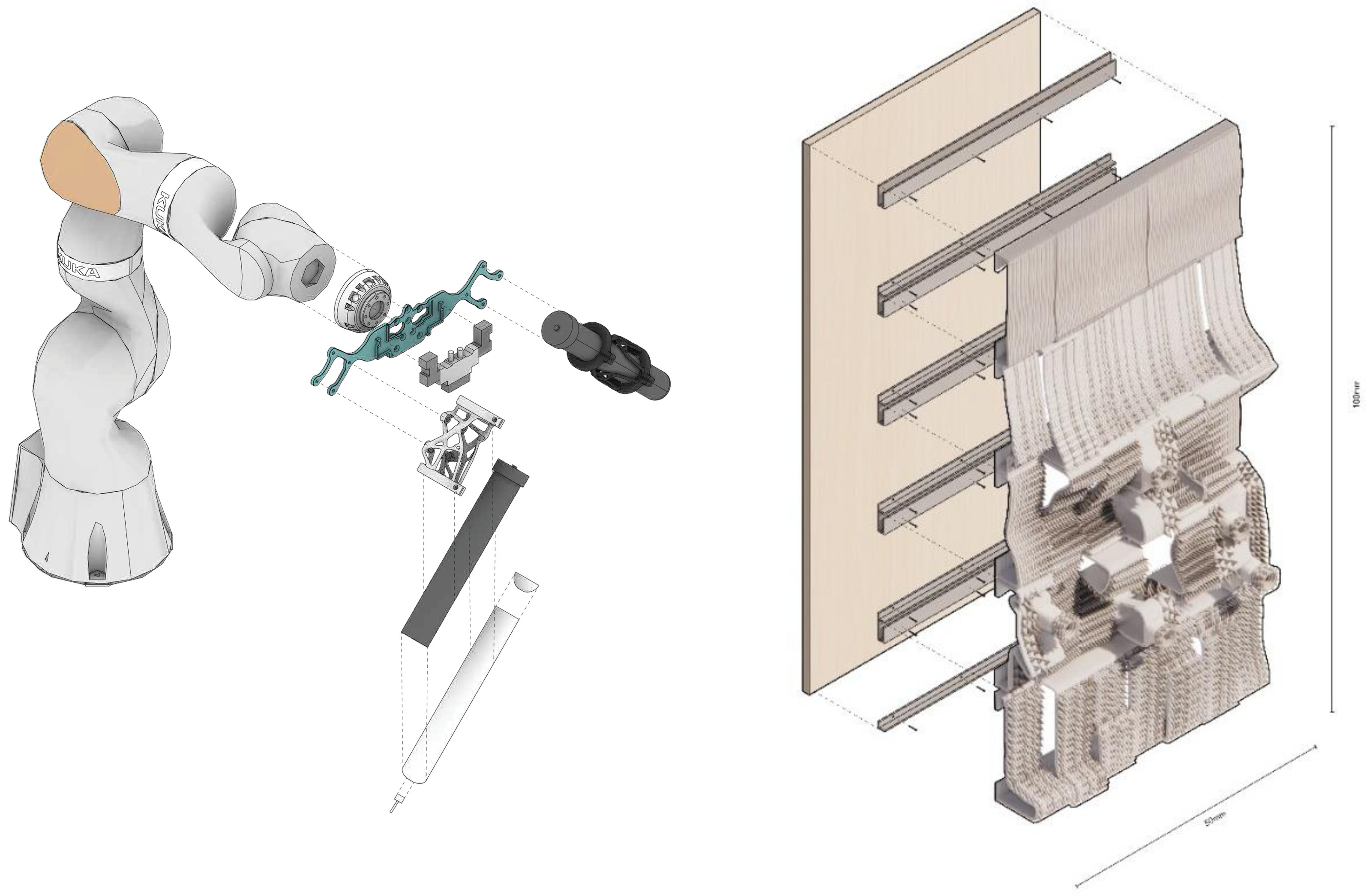
(Left) Robotic arm set up with custom made end-effector for dual extrusion; (right) joinery system from modular to the wall.

Robotic fabrication
Fabrication strategy
Robotic extrusion was selected as the fabrication method due to the bespoke nature of the modules and the requirement for continuous gradients in both material composition and geometric complexity. Additive manufacturing enables precise dual-material deposition while allowing surface articulation to be encoded directly within the toolpath, ensuring that environmental performance logic derived from simulation can be translated accurately into physical form. This approach also eliminates the need for custom moulds, which would be impractical given the variability between modules and allows fabrication constraints to be integrated directly within the design workflow. The final prototype was fabricated using the SBM formulation without PC solution due to constraints in material preparation.
Dual-material printing setup
Fabrication was carried out using a custom dual-material extrusion end-effector mounted on a KUKA iiwa LBR14 R820 robotic arm (Figure 9). Toolpaths were generated using a parametric workflow developed in Grasshopper, where a custom script translated three-dimensional geometry into layered deposition sequences and assigned material distribution according to the performance-driven design logic. Within this process, the script generated structural infill and embedded joinery features for modular assembly. Compatibility between the parametric environment and robotic control was ensured using the KUKA|prc interface.
During fabrication, the end-effector rotated to alternate between depositing SBM at an extrusion pressure of 0.40MPa and Prai 3D clay at 0.30MPa, enabling precise and continuous dual-material extrusion. This controlled switching allowed material gradients and surface textures to be realised directly during printing, preserving the functional hierarchy defined in the computational workflow.
Prototype assembly
The final prototype measures 50 cm × 100 cm and consists of modular components comprising landscape modules and object modules, each exhibiting varying degrees of surface articulation and material composition (Figure 8). Embedded joinery enables the modules to be attached directly to existing interior surfaces using steel brackets, allowing for installation without requiring additional fixings (Figure 7). The combination of increased surface area and functionally graded material distribution enhances the system’s capacity to absorb and release moisture, demonstrating the feasibility of translating the computational and material framework into a constructible architectural installation.
Final prototype 0.5m × 1m at 1:1 ratio showing the gradient of material and toolpath difference.

Results
Evaluation framework
System performance was evaluated across three scales to capture the multi-scalar behaviour of the Searamica framework: material-scale, module-scale and room-scale. Material-scale evaluation assessed antifungal resistance and MBV, while module-scale evaluation examined the antifungal performance of printed modules fabricated using the initial SBM formulation and the influence of geometric articulation through MBV3D analysis. Room-scale evaluation assessed simulated indoor humidity regulation under transient moisture-loading conditions.
Antifungal performance
At the material scale, SBM containing PC demonstrated significant antifungal efficacy compared to control samples without PC. On day 8, the Petri-dish experiments showed an average of 84% reduction in mould growth, indicating strong inhibition of fungal colonisation under controlled laboratory conditions (Chai et al. Reference Chai, Salmane, Parker and Altamirano2025).
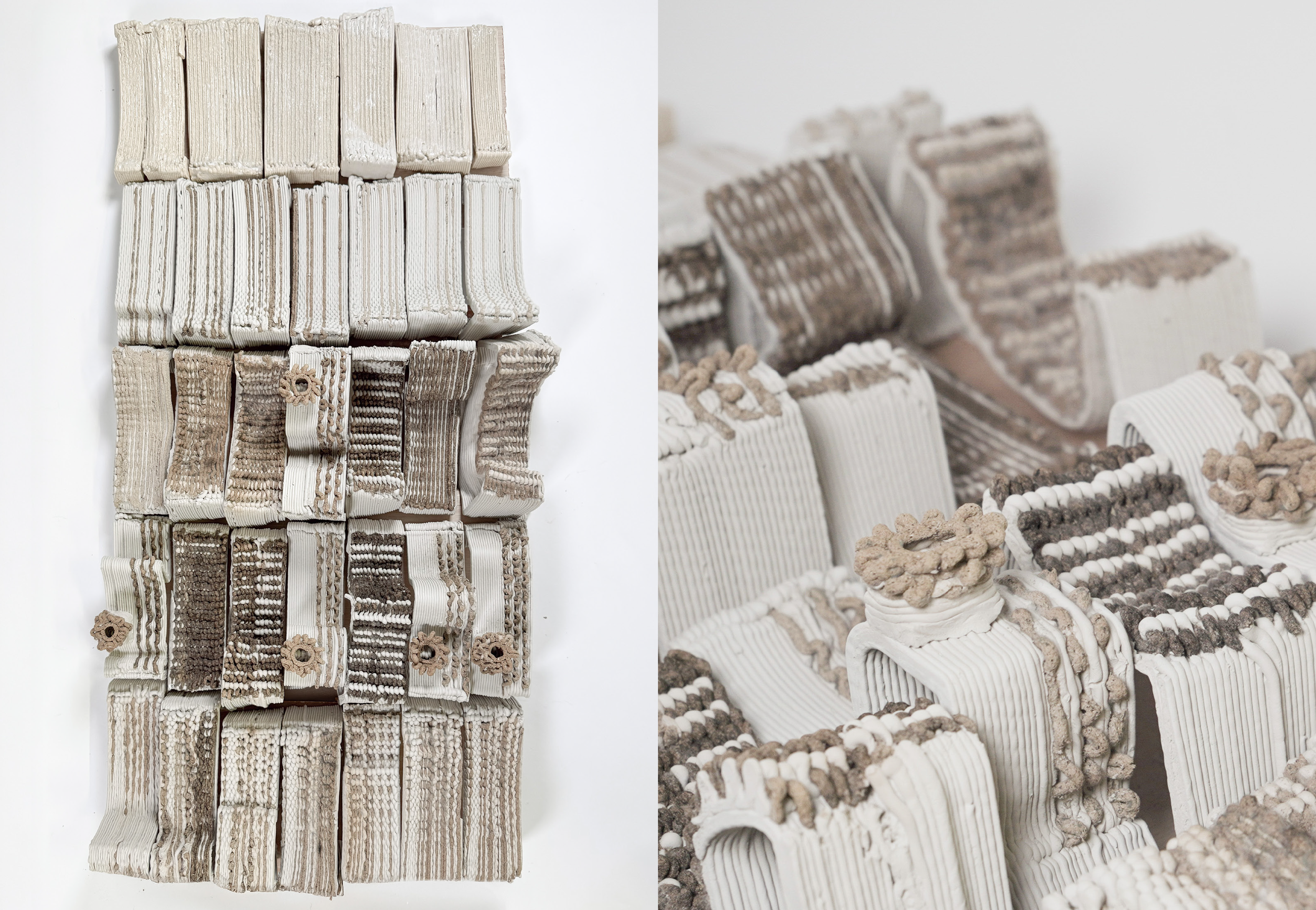
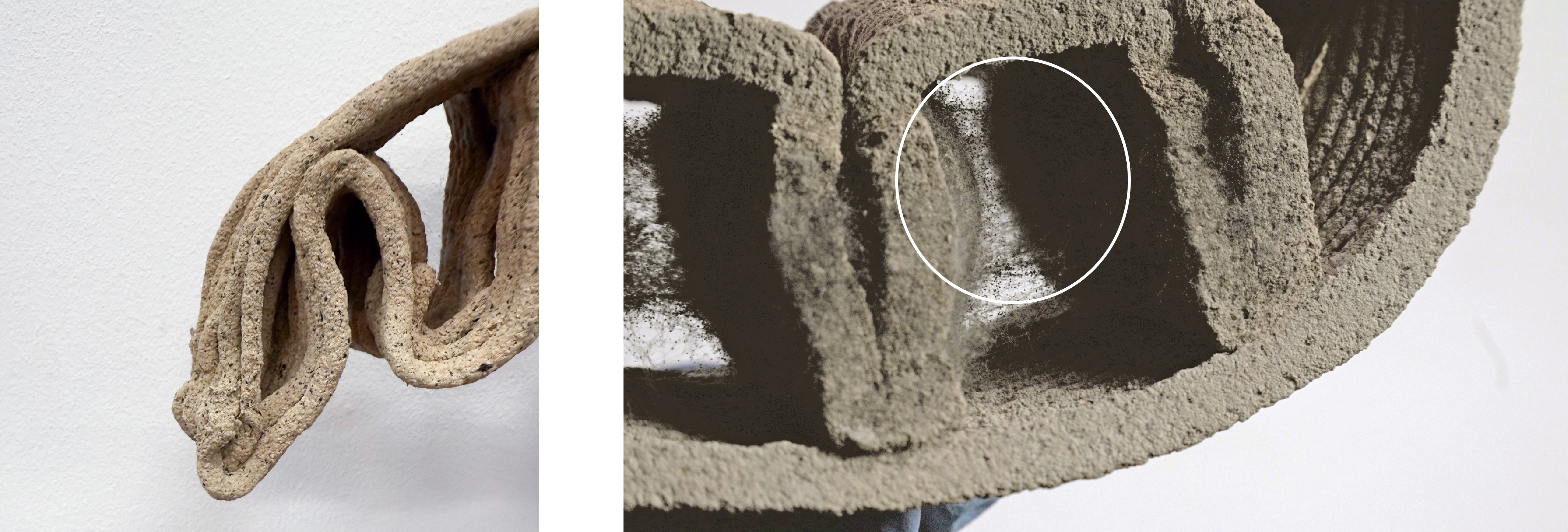
At the module scale, the results were assessed qualitatively due to the module geometry complicating accurate mould growth surface area documentation. Observations closely matched those of the Petri-dish study, with 3D-printed samples incorporating PC exhibiting negligible mould growth even after three weeks of exposure to room conditions, whereas samples without PC displaying substantial colonisation (Figure 9). These results confirm that PC derived from brown seaweed provide robust antifungal protection and remain effective when translated from laboratory samples to fabricated architectural elements.
Result for module scale, left is printed with PC while right side is printed without PC.

Hygroscopic performance
Material-scale moisture buffering
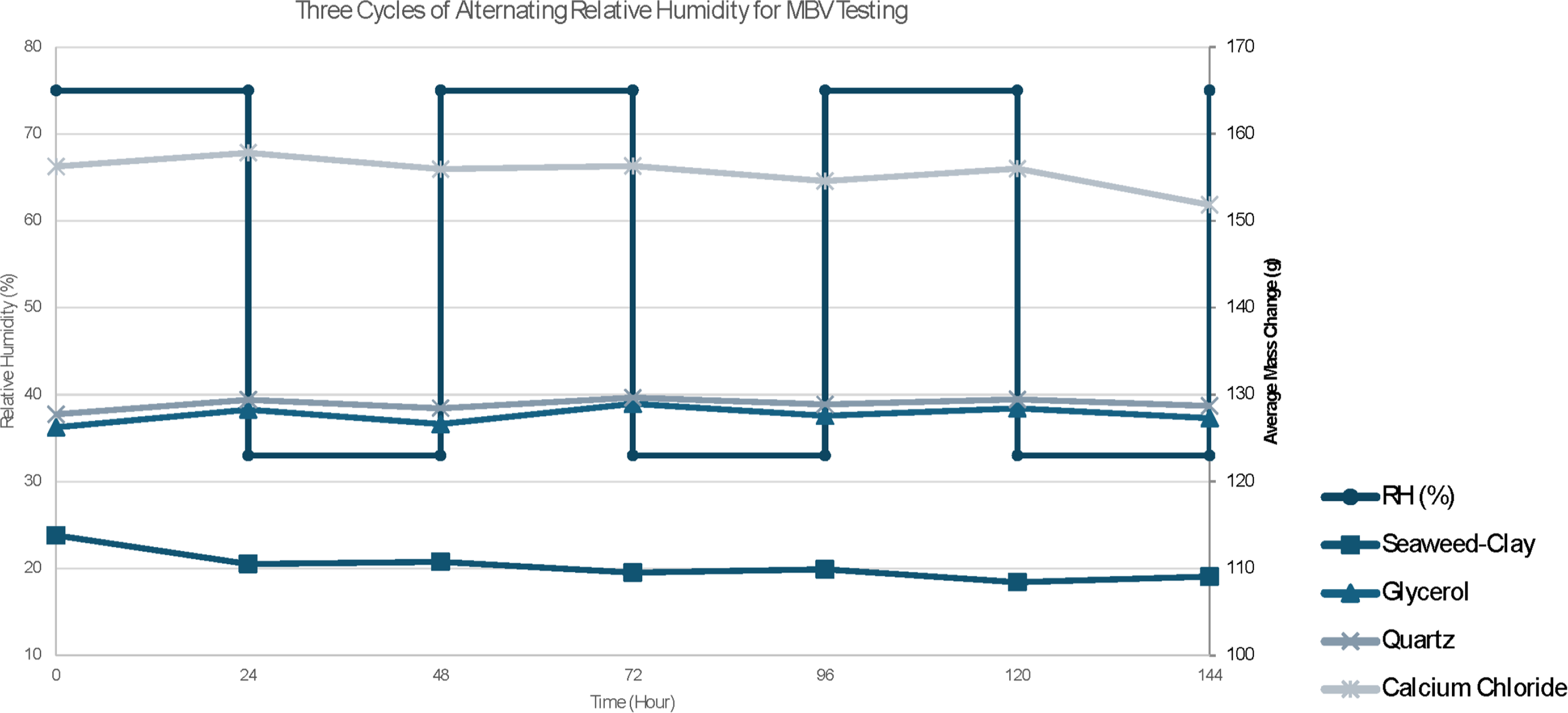
The initial SBM achieved a low MBV of about 1.0 g·m−2·%RH−1. However, by adding Calcium Chloride, SBM’s MBV was improved to 2.14 g·m−2·%RH−1, classified as “excellent” according to the NORDTEST protocol (Figure 10). This performance exceeds several conventional interior materials, including gypsum board (1.0 g·m−2·%RH−1), cellular concrete (1.5 g·m−2·%RH−1) and concrete (0.38 g·m−2·%RH−1), demonstrating the strong hygroscopic capacity of SBM and its suitability for passive humidity regulation (Rode et al. Reference Rode, Peuhkuri, Hansen, Time, Svennberg, Arfvidsson and Ojanen2005).
MBV test cycle and results of SBM + Calcium Chloride part of the material composition.

Figure 10 Long description
A line graph titled Three Cycles of Alternating Relative Humidity for MBV Testing. The horizontal axis represents Time in hours, ranging from 0 to 144. The left vertical axis represents Relative Humidity in percent, ranging from 10 to 80. The right vertical axis represents Average Mass Change in grams, ranging from 100 to 170. The graph includes five data lines: RH, Seaweed-Clay, Glycerol, Quartz, and Calcium Chloride. RH fluctuates between 30 and 70 percent in a cyclical pattern. Seaweed-Clay, Glycerol, Quartz, and Calcium Chloride show varying trends in average mass change over time. Seaweed-Clay and Glycerol exhibit slight increases and decreases, while Quartz and Calcium Chloride show relatively stable trends with minor fluctuations.
Module-scale moisture buffering enhancement
At the module scale, the influence of geometric complexity on hygroscopic behaviour was quantified through MBV3D. Toolpath-generated surface textures increased the net exposed surface area from 2.4 m2 to 13.0 m2, resulting in an increase in MBV3D from 5.14 g·m−2·%RH−1 to 27.82 g·m−2·%RH−1. This increase reflects the theoretical moisture exchange potential arising from enhanced surface area efficiency, rather than changes in intrinsic material performance.
Room-scale humidity regulation
At the room-scale simulation, the performance of the Searamica system was evaluated under a standardised moisture-loading scenario representing cyclic indoor humidity conditions. A sealed room environment maintained at 23°C was subjected to a moisture load of 100g per hour for eight hours (Rode et al. Reference Rode, Peuhkuri, Svennberg, Ojanen, Mukhopadhyaya, Kumaran and Dean2007), allowing comparison between different wall assemblies. Without moisture-buffering cladding, RH increased by 86.3%, indicating significant moisture accumulation. Gypsum board cladding reduced this increase to 37%, demonstrating moderate buffering capacity. In contrast, the Searamica system limited RH increase to only 3.75%, representing approximately an order-of-magnitude improvement compared to gypsum. These results demonstrate the combined effectiveness of biomaterial properties and geometric differentiation in moderating transient humidity peaks, highlighting the system’s potential to reduce conditions conducive to mould growth while improving indoor environmental stability.
Discussion
The results demonstrate the potential of integrating bioactive compounds within bespoke material systems, environmental simulation and computational design to support passive mould mitigation. However, several limitations and trade-offs highlight areas requiring further investigation to validate the framework under real-world conditions.
The role of prototyping
At module scale, MBV3D is used to describe the influence of geometry on theoretical moisture exchange capacity. While increased surface articulation significantly increases exposed area, this does not directly translate into realised moisture buffering performance, which remains dependent on material thickness and moisture penetration depth (Rode et al. Reference Rode, Peuhkuri, Hansen, Time, Svennberg, Arfvidsson and Ojanen2005). Consequently, MBV3D in this case study primarily reflects a calculation based on exposed area-to-volume ratio and not the actual material performance. This distinction underscores the importance of physical prototyping and experimentations when translating computational geometry into functional architectural systems.
Material temporality and non-living bioactive behaviour
Although SBM is biologically derived, its functionality is not sustained through biological activity but through extracted PC. This positions SBM as a non-living functional material system, in which performance depends on the persistence of bioactive agents rather than self-regenerating biological processes. This raises concerns because PC are bioactive molecules whose antifungal efficacy may diminish over time due to oxidation, leaching, or photodegradation (Kumar et al. Reference Kumar, Paul, Anas, Tejpal and Chatterjee2022). Strategies such as microencapsulation, chemical stabilisation, or periodic post-application treatments (e.g., spray-based reactivation or replenishment) could extend the functional lifespan for architectural applications. The proof of concept demonstrated in this work opens the possibility of revisiting and simplifying the PC purification workflow, as the degree of purification currently employed may not be strictly necessary to achieve effective antifungal performance. A further inherent question lies in the variability of PC yields across harvesting batches. This is a key challenge characteristic of working with biological systems and their natural heterogeneity.
Iterative material development
While the system integrates antifungal, hygroscopic and geometric performance logics, these were developed and validated through separate material configurations due to experimental and fabrication constraints. The 1:1 prototype was fabricated using a baseline SBM formulation without PC, while antifungal performance was assessed using modular samples incorporating SBM with PC. In parallel, hygroscopic performance (MBV) was tested using SBM modified with calcium chloride as a hygroscopic additive. As a result, each functional pathway was experimentally validated, but their full integration within a single optimised material formulation was not achieved within the scope of this study.
However, the development of SBM also reflects the iterative and experimental nature of biodesign practice. Initial assumptions that seaweed-based mixtures would inherently exhibit sufficient hygroscopic performance were not fully supported during early material testing, as preliminary formulations demonstrated relatively low MBV values. Rather than treating this as a failure condition, the material system was continuously reformulated in response to environmental performance requirements, leading to the incorporation of calcium chloride as a hygroscopic modifier. Similarly, fabrication constraints and extrusion behaviour prompted the introduction of clay as a secondary support material, a spatially graded material system informed by CFD outputs. These iterative adjustments reflect a process of material tinkering, where material behaviour, environmental simulation and fabrication constraints continuously informed one another throughout the design process, rather than following a fixed linear workflow.
Other system limitations and future directions
At microscale level, increased surface articulation introduces additional uncertainty. While it enhances exposed surface area, it may also generate localised moisture retention zones that could support microbial growth under certain conditions (Viitanen and Ojanen Reference Viitanen and Ojanen2007). At the system scale, the relationship between hygroscopicity and mould resistance remains complex. Materials with high moisture buffering capacity may inadvertently increase surface water activity and promote mould growth (Viitanen and Ojanen Reference Viitanen and Ojanen2007). Although the inclusion of PC mitigates this risk by inhibiting fungal colonisation, the durability of this antifungal performance under prolonged environmental cycling remains uncertain. Future research should therefore evaluate both material stability and antifungal persistence under long-term exposure conditions.
Structural limitations further constrain system performance. The unfired SBM exhibits limited mechanical strength, necessitating the use of clay as a secondary structural component. While this supports fabrication feasibility, improving intrinsic material stability would reduce dependency on hybrid assemblies.
From a modelling perspective, the CFD–VTT workflow functions as a decision-support system rather than a fully predictive model. While effective in identifying relative spatial distributions of mould risk, it requires further calibration to improve quantitative accuracy under real environmental conditions.
As a case study, Searamica primarily demonstrates the feasibility of an integrated framework rather than a fully optimised system. Each component – biomaterial development, environmental modelling, computational design and fabrication – could be further refined independently. Deeper material characterisation, higher-resolution environmental modelling and expanded geometric optimisation could significantly enhance system performance. Nevertheless, the framework establishes a transferable methodology adaptable to other architectural typologies.
Long-term field testing represents an essential next step. Monitoring prototypes within occupied environments would enable evaluation under variable occupancy patterns, seasonal climatic fluctuations and material ageing. Such studies would provide critical insight into durability, maintenance requirements and real-world mould mitigation performance.
Conclusion
Searamica presents a novel, bio-integrated framework for addressing indoor mould in existing buildings. By harnessing the natural antifungal properties of brown seaweed, the framework offers a passive, low-energy alternative to conventional mechanical systems. CFD simulations coupled with the VTT mould growth model identify spatial mould-risk zones, which inform the design generation and fabrication of adaptive wall systems that deploy biomaterials strategically. Rather than functioning as isolated components, materials and geometries are deployed as a coordinated system in which environmental risk conditions determine spatial behaviour. This establishes a shift from uniform material application towards environment-driven architectural differentiation.
Beyond performance optimisation, the project positions biodesign as an iterative and transdisciplinary mode of architectural practice, where material development, biological behaviour, environmental simulation and fabrication continuously inform one another through processes of experimentation and material tinkering. Within this framework, biomaterials are treated not as passive construction inputs, but as active environmental moderators whose behaviour participates in shaping architectural form, performance and spatial organisation.
Laboratory and module-scale testing demonstrate that seaweed biomaterial containing PC reduced mould growth by 84% and achieves an MBV of 2.14 g·m−2·%RH−1, classified as “excellent.” At the room scale simulation, SBM cladding limits RH increases to only 3.75%, approximately ten times lower than gypsum board. Toolpath-driven surface texturing enhances MBV3D from 5.14 to 27.82 g·m−2·%RH−1, demonstrating the critical role of geometry in amplifying the theoretical moisture exchange potential.
By integrating material development, environmental simulation and computational design, Searamica demonstrates a transferable and scalable framework for site-specific, fabricable building interventions supporting healthier and more resilient indoor environments. Future research should focus on long-term field validation, material durability and strategies to extend the functional lifespan of bioactive compounds, thereby strengthening the evidence base for bio-integrated architectural systems.
Data availability statement
All relevant data and references were included within the submission. Data sharing is not applicable to this article.
Acknowledgements
We are grateful for the assistance of Marcos Cruz, Brenda Parker Andreas Körner, Javier Ruiz Rodriguez, Tony Le and Anete Krista Salmane for their academic guidance. We would also like to acknowledge Jingyuan Meng, Pradeep Devadass, Guillem Peruxtet Olesti, Harrison Costa, Hamish Veitch, Claudia Toma and Adam Meyrick for their technical support. We also had the pleasure of collaborating with Pin Hsi Sung, Junpeng Liang and Polina Papazova towards the conclusion of our project. Lastly, we would like to acknowledge our thesis supervisors Sean Hanna, Jingyuan Meng and Hector Altamirano.
Author contributions
Conceptualisation: Y.Y. Methodology: Y.Y.; Y.L; S.C. Investigation: S.C. Visualisation: Y.Y.; Y.L.; S.C. SUPERVISION: A.K.; A.S.; J.M. Writing original draft: Y.Y;. All authors approved the final submitted draft.”
Financial support
This research received no specific grant from any funding agency, commercial or not-for-profit sectors.
Competing interests
None.
Ethical standards
The research meets all ethical guidelines, including adherence to the legal requirements of the study country. This journal follows the COPE guidelines regarding ethics and as such requires that you include an Ethics Statement detailing relevant approvals such as IRB, the ethical treatment of human and animal research participants and informed consent as appropriate to the study. Further details can be found on our Publishing Ethics Page.

 Open access

