Transport of critically ill neonates between facilities is a crucial component in the continuum of neonatal care and is well known to impact clinical outcomes.Reference Teasdale and Hamilton1–Reference Lupton and Pendray7 A number of studies from high-income nations have focused their attention on this subject and developed objective tools for risk assessment and protocols for management.Reference Gould, Danielsen, Bollman, Hackel and Murphy8–Reference Heermann and Thompson14 Regionalised systems of transport have been developed and established in many of these environments with appropriate investments in resources, training of personnel, and systems, with increasing focus on early identification and planned delivery of high-risk babies in advanced medical facilities, minimising the need for inter-facility transfers.Reference Greene15–Reference Shenoy and DiLorenzo18
The situation is strikingly different in low–medium-income countries where the overwhelming majority of the world’s children are born.Reference Hoffman19 Inter-facility transport usually involves road transport over large distances to the few specialised neonatal facilities, in poorly equipped ambulances, often without appropriately trained medical personnel.Reference Duke20–Reference Aggarwal, Gupta, Sharma, Sehgal and Roy23 Systems for effective communication or in-transit monitoring or management are poorly developed. Few studies have systematically evaluated these issues from the low- and middle-income countries’ environment.Reference Narang, Kaushik, Sharma and Faridi22–Reference Goldsmit, Rabasa and Rodríguez24 Regional networking of health centres is largely absent and disease-specific protocols that blend evidence and local resources are conspicuously absent.
Among seriously ill neonates, those with critical CHD are particularly at risk of destabilisation during transport owing to the complex interplay of haemodynamic factors with general neonatal risk factors.Reference Gupta, Leven and Stewart17,Reference Shenoy and DiLorenzo18,Reference Ramnarayan, Intikhab, Spenceley, Iliopoulos, Duff and Millar21 Objective means for assessing “clinical status at arrival after transport” as well as data regarding its impact on final clinical outcomes among neonates with CHD – are both critical, yet lacking.
We have previously studied the impact of pre-operative determinants on post-operative outcomes in a cohort of 1028 consecutive infant heart surgeries and identified neonatal status and pre-operative condition as predictors of adverse postoperative outcomes.Reference Reddy, Kappanayil and Balachandran25 Newborn heart surgeries are among the most challenging of all cardiac interventions, and a substantial proportion of these procedures is conducted on babies with critical heart disease received after emergency transport.Reference Gupta, Leven and Stewart17,Reference Woods, Browning Carmo, Wall and Berry26–Reference Bakshi, Vaidyanathan and Sundaram28 Altered presentation at surgical enrollment seriously compromises outcomes and substantially increases resource demands through prolonged intensive care. The role of “safe and optimal transport” in this context is critical, but has received very little attention thus far.
This study seeks to prospectively examine the clinical status at arrival after transport of neonates with CHD in a low- and middle-income country setting and studies its impact on in-hospital clinical outcomes.
Methods
Setting
This was a prospective observational study conducted at a tertiary paediatric cardiac centre in Kerala, South India between January, 2016 and June, 2017. Consecutive neonates who underwent emergency transport and admission to the paediatric cardiac ICU at our centre were included. Details on the population served and paediatric heart programmes in the region can be found in a recent publication.Reference Reddy, Kappanayil and Balachandran25
Data recorded in a structured database included patient demographics, clinical information at referral, details of transport logistics, events during transport, clinical status at arrival, and clinical course in hospital. Pre-transport clinical details that included birth-weight, gestational maturity, suspected cardiac diagnosis, vitals, and ongoing medications were obtained from referral documents or through telephonic communication with referring physician. Transport-related data included distance and time taken for transport, nature of transport (institutional or outside ambulances, other means of transport), presence/absence of medical personnel accompanying transport, and any events during transport (severe destabilisation, accidental extubation, and need for resuscitation). This information was obtained through interview of transport personnel and/or from transport logs.
Clinical condition of the patient on arrival to emergency room or ICU was assessed and recorded – including vital parameters (heart rate, temperature, systolic and mean blood pressure, respiratory status,), SO2, blood sugar (with glucometer), and neurological status.
We chose to use California modification of TRIPS Score (Ca-TRIPS) at end of transport as an objective measure of physiological status at arrival after transport.Reference Gould, Danielsen, Bollman, Hackel and Murphy8,Reference Lee, Zupancic and Pendray12 Ca-TRIPS is a clinically validated, physiology-based, risk-weighted score that comprises following measurements/observations: temperature, blood pressure, respiratory status, response to noxious stimuli, ionotrope usage, and FiO2.Reference Gould, Danielsen, Bollman, Hackel and Murphy8 The score is simple to administer and is relevant to the cardiovascular context. The score was calculated and documented for each neonate immediately after receiving the baby in emergency room or ICU, by the on-duty paediatric cardiologist.
Blood was drawn for relevant blood investigations within the first hour of arrival and included blood counts, liver function test, renal function test, C-reactive protein, blood culture-sensitivity, and blood/serum lactate. Anatomical diagnosis and cardiac function were assessed by on-duty paediatric cardiologist within the first hour of arrival through a comprehensive echocardiogram.
In the absence of validated objective tools specifically tailored for assessment of “clinical status after transport” of neonates with CHD, we chose to use a novel combination of Ca-TRIPS score, evidence of end-organ injury, and evidence of metabolic insult. End-organ injury was defined as presence of injury in one or more of the following organs. Hepatic injury was defined as serum glutamic pyruvic transaminase >58 IU/L (>95th centile),Reference England, Thorne, Pembrey, Tovo and Newell29 renal injury was defined as serum creatinine >0.9 mg% (>97th centile)Reference Boer, de Rijke, Hop, Cransberg and Dorresteijn30 and echocardiographic evidence of ventricular dysfunction. Metabolic insult was defined as presence of hypoglycemia (random blood sugar <45 mg%)31 or lactic acidosis (pH < 7.3 with blood lactate >4 mmmol/L)Reference Ganetzky and Cuddapah32 or both.
Clinical course of all patients during the hospitalisation was tracked, and the following information was recorded – cardiac intervention (surgical or transcatheter), duration of pre- and post-intervention ICU stay and mechanical ventilation, occurrence of culture-proven bloodstream sepsis, both pre- and post-intervention, and final outcome – mortality or discharge. ICU stay of >48 hours during pre-operative stabilisation and >7 days during post-procedural recovery were categorised as “prolonged ICU stay”. Duration of mechanical ventilation was categorised as “prolonged” if it extended beyond 48 hours during either of the stages of care.
The study was approved by the institutional ethics committee.
Statistical analysis
Statistical analysis was used to identify factors that impacted clinical status at arrival after transport in our patient cohort. Age, gestational maturity, birth weight, cardiac lesion (patent ductus arteriosus-dependency), duration and type of transport (institutional ambulance versus other means), and transport team lead personnel (doctor versus nurse versus paramedic) were considered for their impact on clinical status at arrival after transport. Further on, the impact of clinical status at arrival after transport on the clinical outcomes was studied – outcome measures being mortality, bloodstream sepsis, length of ICU stay, and duration of mechanical ventilation – both before and after any surgical or catheter intervention.
Chi square test was used to compare between the categorical variables. Mann–Whitney U-test was used to study the correlation between Ca-TRIPS score and pre-operative and post-operative outcomes. Kruskal–Wallis test was used to study correlation between Ca-TRIPS score and transport duration and transporting lead personnel. A forward conditional binary logistic regression analysis was used to find the final predictors and estimate the Odds ratio with 95% confidence limits. The analysis was performed using software IBM SPSS Statistics for Windows, Version 20.0. Armonk, NY, IBM Corp.
Results
A total of 138 neonates (male: female ratio 1.5:1) were transported to our unit with suspected heart disease during the study period, 11.5% (n = 16) of whom were born premature (<36 weeks gestation); 60% (n = 83) were less than 7 days old when transported. Birth weights ranged from 1.2 kg to 4.5 kg (median 2.84 kg); 29% (n = 40) had low birth weight (<2.5 kg), and 16.6% (n = 23) were small for gestational age. A definitive diagnosis of CHD prior to transport was made in 83% (n = 114), while 17% (n = 24) were shifted with clinical suspicion of heart disease. Thirty-five percent (n = 48) babies had traversed more than one hospital before reaching our centre.
Geographical data
Eighty percent (n = 111) were transported from hospitals within the state of Kerala, and 11% (n = 15) from neighbouring states; 8.7% (n = 12) were transported from neighbouring country of Maldives, involving 1–2 hours of air transport followed by 6-8 hours of road transport.
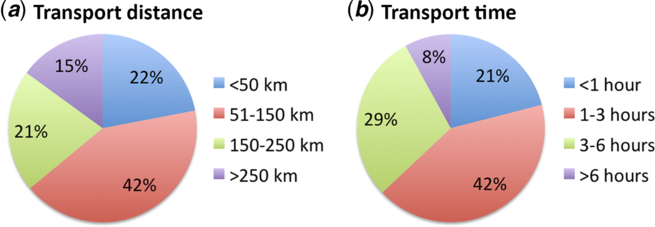
Ambulances were used in 134 of 138 neonatal transports. Four neonates were transported by the family in private (non-ambulance) vehicles. The median road transport distance was 130 km (5–425 km) and median duration was 3 hours (0.5–9 hours) (Fig 1). The transport of remaining four patients executed in civilian commercial planes.
The transport distances and duration for the neonates in the cohort. (a) The range of distances travelled. (b) The time taken for transport.

Transport logistics
Our institutional ambulance was used for 21% of the transports (n = 29). Remaining transports were conducted by ambulances from referring hospitals or third-party service-providers. Six percent were brought to our emergency room without prior intimation. Physician led transportation teams in 35% cases (n = 48) while nurses or paramedics led 54% (n = 75). No medical attendants were available in 11% (n = 15) of the transports including four neonates transported by parents or caregivers in private (non-ambulance) vehicles.
Clinical spectrum
Critical CHD was confirmed in 78% of transported neonates. These included d-Transposition of Great Arteries (33, 24%), Total Anomalous Pulmonary Venous Connections (17, 12%), Duct-Dependent Pulmonary Circulation (29, 21%), and Duct-Dependent Systemic Circulation (n = 29, 21%). Twenty-two (16%) had milder forms of CHD; 9 (6%) were structurally normal and referred for arrhythmia management. Fifty-one (37%) were mechanically ventilated for transport, 35 (25.4%) neonates were on inotropes, and 23.2%were transported with both.
Duct-dependent circulation was the commonest physiological diagnosis (58, 42%), but 60% of these patients (n = 34) were transported without Prostaglandin E1 – including 64.2% (n = 18) of patients with Duct-Dependent Systemic Circulation and 58% (n = 16) with Duct-Dependent Pulmonary Circulation.
Clinical status on arrival after transport
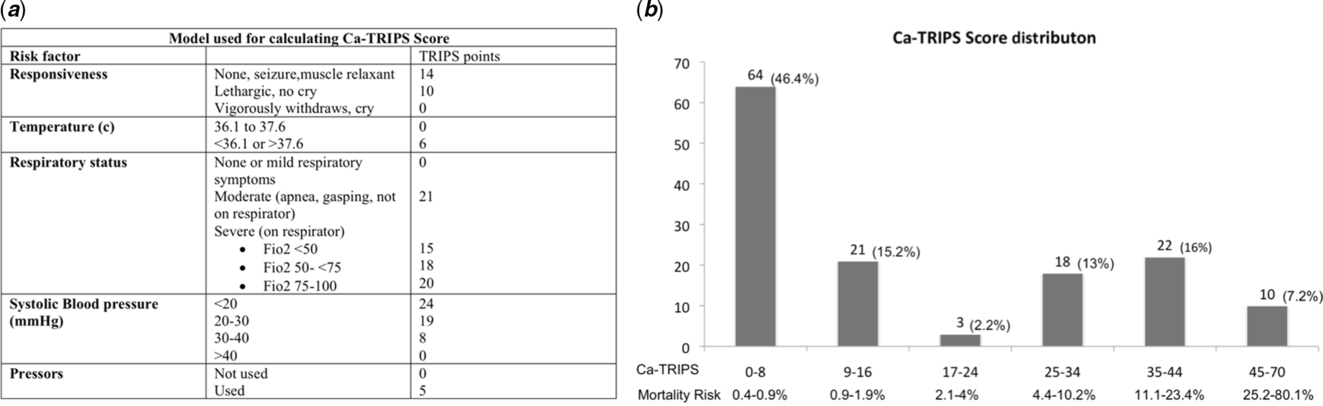
Ca-TRIPS score: Ca-TRIPS score was >25 in 35.2% patients, representing a high-risk subgroup. Figure 2 shows the distribution of the patients among six categories based on their Ca-TRIPS Scores and predicted mortality risk.Reference Gould, Danielsen, Bollman, Hackel and Murphy8
End-organ injury was noted in 42% patients (n = 58) – renal derangement in 37% patients (n = 51), hepatic injury in 12.3% (n = 17/138), and ventricular dysfunction in 5% patients (n = 7); 7.9% patients (n = 11) had both renal and hepatic derangement, two of whom had ventricular dysfunction as well.
Metabolic insult was observed in 24% patients (33); 7.9% patients (n = 11) were hypoglycemic, and 20.2% (n = 28) had lactic acidosis; 4% (n = 6) had both hypoglycemia and lactic acidosis.
(a) The model used for calculating Ca-TRIPS Score as proposed by Gould et alReference Gould, Danielsen, Bollman, Hackel and Murphy8. (b) The distribution of the neonates in the cohort according to their calculated Ca-TRIPS Score at the end of transport. The “predicted risk of death within 7 days of transport” for each group is also shown.

Ten patients suffered destabilising events during transport (hypoglycemia, hypothermia, endotracheal tube obstruction/displacement); 15 neonates required cardiorespiratory resuscitation and intubation within 1 hour of arrival.
Influence of pre-transport variables on clinical status at arrival after transport (univariable analysis)
Ca-TRIPS Score
Duct-dependent circulation and nature of transport team were significantly associated with Ca-TRIPS Score. Patients with Duct-Dependent Systemic Circulation had higher median Ca-TRIPS Score (21 versus 6, p = 0.001); patients with Duct-Dependent Pulmonary Circulation had significantly lower median Ca-TRIPS Score (0 versus 15) as compared to others (p = 0.001). Patients transported by our institution’s ambulance teams had higher median Ca-TRIPS score (34 versus 10) as compared to those transported by others (p = 0.028). Similarly, physician-led transports were associated with higher median Ca-TRIPS score as compared to others (34 versus 0, p < 0.001).
End-organ injury
Duct-dependent circulation and younger age had significant association with end-organ injury; 52% patients with Duct-dependent circulation had end-organ injury as compared to 35% of non-Duct-dependent circulation patients (p = 0.049; OR 1.99, 95% CI 1.0–3.97). Patients with end-organ injury had lower median age of 3 days (1–30 days), as compared to those without end-organ injury (median: 7 days, range: 1–30 days) (p = 0.009).
Metabolic insult
Overall 33% of patients with Duct-dependent circulation had metabolic insult as compared to 17.5% of those with other diagnoses (p = 0.038, OR 2.3, 95% CI 1.04–5.09). While 41.4% of patients with Duct-Dependent Systemic Circulation had metabolic insult as compared to 19.3% of those with other diagnoses (p = 0.013, OR 2.96), patients with Duct-Dependent Pulmonary Circulation were not at significantly higher risk.
Younger age emerged as a risk factor for metabolic insult – median age of neonates with metabolic derangement being 3 days (range 1–30 days) as compared to those without it (median: 6 days, range: 1–30 days) (p = 0.043). Mean birth weight was lower in patients who had metabolic insult (2.6 versus 2.9 kg, p = 0.006).
Incidence of metabolic insult was highest among neonates transported without any medical personnel (53.3%), followed by those transported by physician-led teams (27.1%) and those transported by nurse/paramedic-led teams (16%) – p = 0.007.
Distance travelled, duration of transport, and gestational age of the patients did not have any significant association with clinical status at arrival after transport.
Impact of clinical status at arrival after transport on pre-procedural clinical outcomes
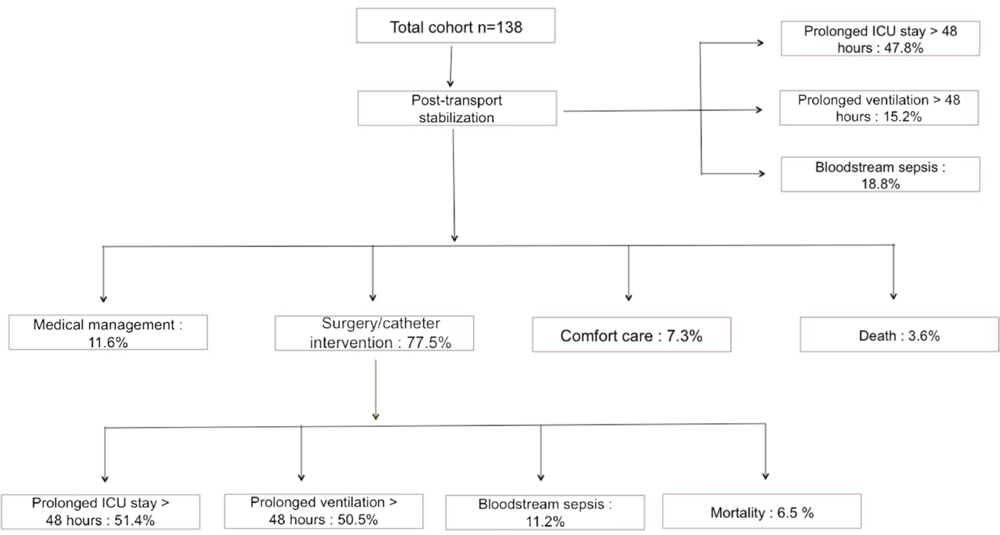
Long ICU stay (>48 hours)for stabilisation in 66 patients (47.8%), ventilation beyond 48 hours in 21 patients (15.2%), and culture-proven blood stream infection in 26 patients (18.8%) were noted during the initial phase of care prior to any surgical/catheter intervention. Five patients (3.6%) died during this phase.
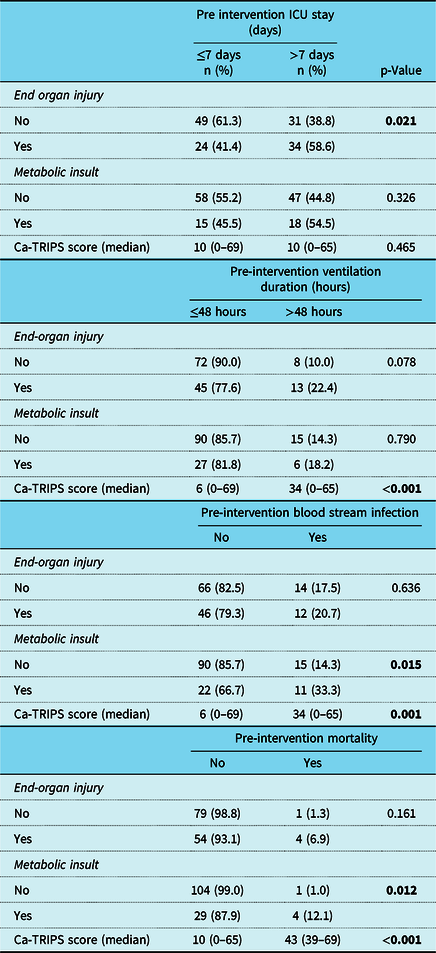
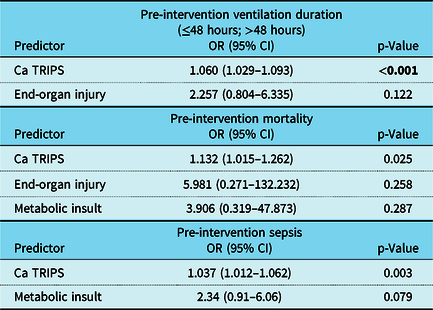
Table 1 summarises the association of clinical status at arrival after transport with the four pre-intervention outcome measures on univariate analysis. On multivariate analysis (Table 2), Ca-TRIPS Score emerged as the only variable significantly associated with pre-procedural outcomes – prolonged ventilation (p < 0.001, OR 1.06, 95% CI 1.029–1.093), blood stream infection (p = 0.003, OR 1.04, 95% CI 1.012–1.062), and mortality (p = 0.025, OR 1.132, 95% CI 1.015–1.262).
Association of clinical status after transport with pre-intervention outcome measures (univariable analysis)

Multivariable analysis of association of clinical status after transport variables with pre-procedural outcomes

Impact of clinical status at arrival after transport on final clinical outcomes
One hundred and seven neonates (77%) eventually underwent interventions – 83 surgical and 24 transcatheter. Sixteen patients were medically managed (see Fig 3). Parents chose “comfort care” in 10 cases due to a combination of factors that included surgical complexity, unfavourable natural history, and financial challenges. Severe end-organ injury and moribund clinical status forced comfort-care decision in three cases.
A summary of the post-transport outcomes of the 138 neonates in the study.

Post-intervention: Seven patients (6.5%) died (four post-surgery, three post-catheter intervention). Two of these (one surgical, one transcatheter) were due to procedural complications. Fifty-five (51.4%) had prolonged ICU stay (>7 days), 54 (50.5%) had prolonged mechanical ventilation (>48 hours) and blood stream infection occurred in 11.2% (n = 12/107).
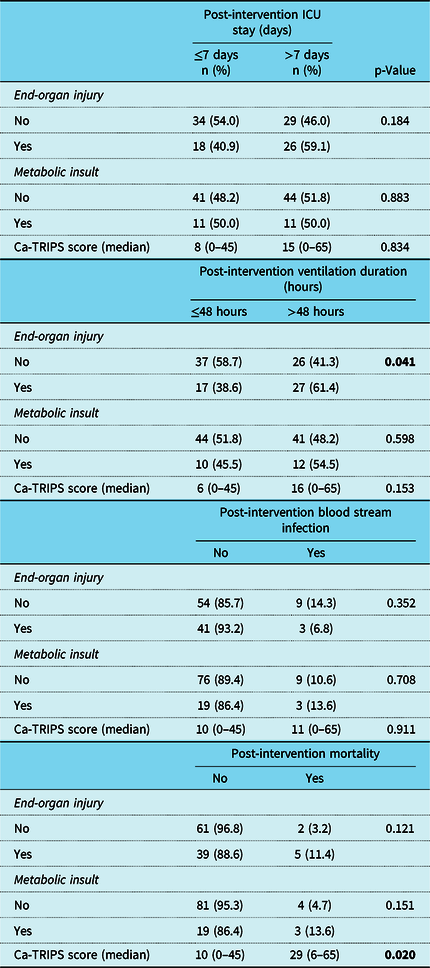
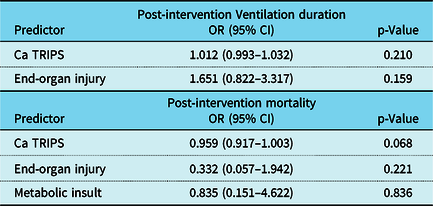
Table 3 summarises the association of clinical status at arrival after transport with post-intervention outcomes on univariate analysis. Post-transport end-organ injury was associated with need for prolonged ventilation, and Ca-TRIPS Score was associated with post-procedural mortality. Metabolic insult did not have association with any of the final outcome measures. On multivariate analysis (Table 4), none of the clinical status at arrival after transport variables had statistically significant association with final post-procedural outcomes.
Association of clinical status after transport with post-intervention outcome measures (univariable analysis)

Multivariable analysis of association of clinical status after transport variables with post-procedural outcomes

Discussion
This study was undertaken with the objective of understanding the challenges in transporting neonates with heart disease and to determine the impact of transport on clinical outcomes at a paediatric cardiac referral centre in a low- and middle-income country environment.
We found that suboptimal clinical status on arrival was frequent among newborns, as suggested by high Ca-TRIPS score of >25 in 35.2% patients and frequent occurrence of end-organ injury (42%) and metabolic insult (25%). Shortcomings in homeostasis-management and monitoring during transport, in the absence of established systems, could have contributed to this situation. Patients with duct-dependent circulations, especially, those with duct-dependent systemic circulation, were particularly vulnerable since almost 60% of them were transported without prostaglandin E1. Additionally, delays in diagnosis and inadequate pre-transport stabilisation at the referring institution could have also contributed. Despite wide availability of prostaglandin E1 in many hospitals, there was a disappointingly low use of this vital medication during transport. Our study was not designed to identify the exact reasons for this. We can speculate that multiple factors that include unfamiliarity with its use, fear of apnea, and absence of a precise diagnosis of CHD may have contributed. Additionally, there are challenges with availability of the medication in some primary healthcare settings. Surprisingly, patients transported by physician-led teams and by specialised home-institution ambulances had higher median Ca-TRIPS Score than those transported through other means. Incidence of metabolic insult was also higher in neonates transported by physician-led teams as compared to those transported by nurses/paramedics. These findings may be attributed to the utilisation of the best resources and medical personnel for the sickest patients.
Suboptimal status on arrival was associated with adverse pre-operative outcomes. Ca-TRIPS Score was significantly associated with prolonged ventilation, occurrence of blood stream infections, and death prior to surgery or catheter intervention. Severe end-organ injury resulted in decision to not do the definitive procedure in three babies.
Pre-operative stabilisation and transport are vital but neglected components of comprehensive paediatric cardiac care. Indeed, despite the large volume of work on neonatal transport, in general, specific issues pertaining to transportation of neonates with cardiac emergencies have received limited attention even in high-income nations.Reference Gupta, Leven and Stewart17,Reference Ramnarayan, Intikhab, Spenceley, Iliopoulos, Duff and Millar21,Reference Woods, Browning Carmo, Wall and Berry26,Reference Shivananda, Kirsh, Whyte, Muthalally and McNamara27
The vast majority of babies with CHD are born in low- and middle-income countries and, most die without access to definitive treatment.Reference Hoffman19 Antenatal diagnosis of CHD is generally not available.Reference Vaidyanathan, Kumar, Sudhakar and Kumar33,34 The vast majority of babies are born in facilities with severe limitations of resources and personnel, making universal post-natal screening for CHD difficult and impractical.Reference Kumar35 Poorly organised transport adds substantially to these challenges. While there are no studies specifically looking at transport of newborns with CHD from these environments, previous studies from northern India on general neonatal transport highlight system deficiencies – only 10–30% were in actual ambulances, 12–15% were accompanied by medical personnel, and vast majority without prior intimation or sufficient documentation.Reference Narang, Kaushik, Sharma and Faridi22,Reference Aggarwal, Gupta, Sharma, Sehgal and Roy23 The incidence of in-transit complications (hypothermia and hypoglycemia) was high, and duration of transport (>1 hour) was associated with mortality. In a study from Argentina on 160 neonates (29% with cardiovascular illness) “clinical deterioration” (increase in TRIPS Score during transport), hypoglycemia, hypothermia, and need for emergent cardiorespiratory support were common; clinical deterioration during transport was associated with higher mortality.Reference Goldsmit, Rabasa and Rodríguez24
There is a strongly felt need to develop paediatric heart programmes in many of these low- and middle-income countries, especially those that have shown improving human development indices and declining infant mortality. This is because CHD is increasingly being recognised as one of the leading causes of infant mortality in these regions.Reference Zimmerman, Smith and Sable36 While it is important to establish new programmes in these environments, our study clearly underscores the need to establish robust essential health systems, in parallel, to enable early diagnosis, prompt referral, and safe transportation of babies with CHD. Creating awareness regarding the use of prostaglandin E1 and ensuring its availability during pre-transport stabilisation and transport of duct-dependent neonates are of vital importance.
We previously identified pre-operative condition (neonatal age, pre-operative blood stream infection, and need for pre-operative intensive care and ventilation) as a major determinant of post-operative outcome.Reference Reddy, Kappanayil and Balachandran25 This study identifies “clinical status at arrival” as a significant determinant of pre-operative morbidity and mortality (3.6%). The absence of significant association between clinical status at arrival after transport and the final post-operative outcomes in the cohort can probably be explained by the mitigating effect of supportive care during the period of stabilisation after transport at the tertiary centre.
Limitations
This is a single-centre experience. In the absence of pre-transport values for Ca-TRIPS score, end-organ, and metabolic injury, it is not possible to quantify the deterioration during transport. Pre-transport factors including late diagnosis and sub-optimal stabilisation, which may have contributed to the suboptimal status on arrival, are not specifically addressed in this study. The study does not also identify specific elements in stabilisation and transportation that need maximal attention.
Future directions
Disruptive technology and innovations have potential in overcoming communication barriers. Preliminary data from the study was used to develop a mobile phone application that is currently being tested – which connects referring team, receiving team and the transport team through clinical checklists, seamless communication interfaces, real-time multi-parameter monitoring of clinical status of patient in-transit, built-in Ca-TRIPS score calculator, and location data.
Conclusions
Suboptimal transport is a significant part of the health system challenges faced by newborns with CHD in low- and middle-income country environments. This may contribute to suboptimal clinical status on arrival at tertiary referral institutions with adverse clinical outcomes in the form of pre-operative mortality and morbidity. Robust transport systems need to be integrated in plans to develop newborn and infant heart surgery in low- and middle-income countries.
What is already known on this topic
Transport is a critical component in the care continuum of the critically ill neonate.
Neonates with critical CHD are especially prone to destabilisation during transport.
The newborn is especially vulnerable in low–medium-income country environments where resource constraints and health system deficiencies are common.
What this study adds
Newborns with heart disease are likely to reach referral hospitals in low–medium income countries in a compromised condition with end-organ injury and metabolic insult
The poor condition on arrival contributes significantly to mortality and morbidity prior to surgery or catheter intervention.
The outcomes after cardiac surgery or catheter interventions were not significantly impacted by the condition on arrival.
Financial support
This research received no specific grant from any funding agency, commercial or not-for-profit sectors.
Conflicts of interest
None.
Ethical standards
The study has ethical approval from Amrita institute of medical sciences Ethics Committee (DM/MCh/2015/20).