Introduction
Psychotropic medications are a recommended treatment for a number of mental disorders, with their use appearing to be on the increase (Olfson et al. Reference Olfson, Marcus, Druss, Elinson, Tanielian and Pincus2002; Paulose-Ram et al. Reference Paulose-Ram, Safran, Jonas, Gu and Orwig2007; Grandfils & Sermet, Reference Grandfils and Sermet2009; Stephenson et al. Reference Stephenson, Karanges and McGregor2013). Information on rates of psychotropic medication use is important as it facilitates the monitoring of treatments for mental disorders (Beck et al. Reference Beck, Williams, Wang, Kassam, El-Guebaly, Currie, Maxwell and Patten2005) and adherence to guidelines. Studies which have examined use suggest varying rates: 7.2% in Canada (Beck et al. Reference Beck, Williams, Wang, Kassam, El-Guebaly, Currie, Maxwell and Patten2005), 10.6% in Southern Australia (Goldney & Bain, Reference Goldney and Bain2006) and 11.1% in the USA (Paulose-Ram et al. Reference Paulose-Ram, Safran, Jonas, Gu and Orwig2007). Meanwhile, cross-national studies have reported overall rates of 6.4 and 12.3% for current and 12-month use of any psychotropic medication in Europe (Ohayon & Lader, Reference Ohayon and Lader2002; Alonso et al. Reference Alonso, Angermeyer, Bernert, Bruffaerts, Brugha, Bryson, de Girolamo, Graaf, Demyttenaere, Gasquet, Haro, Katz, Kessler, Kovess, Lépine, Ormel, Polidori, Russo, Vilagut, Almansa, Arbabzadeh-Bouchez, Autonell, Bernal, Buist-Bouwman, Codony, Domingo-Salvany, Ferrer, Joo, Martínez-Alonso, Matschinger, Mazzi, Morgan, Morosini, Palacín, Romera, Taub and Vollebergh2004).
Previous studies in Northern Ireland (NI) have provided some information on psychotropic medication use. In 2010/2011, the 12-month prevalence rate was 11% for sedatives/tranquilisers and 12% for antidepressants (National Advisory Committee on Drugs, 2012). Higher rates of antidepressant and anxiolytic prescribing have also been found in areas of high segregation (O'Reilly, Reference O'Reilly2011). Government datasets are another source of prescribing information. The NI Neighbourhood Information Service reports that 11.5% of the population received medication for mood and anxiety disorders in 2008 (Northern Ireland Statistics and Research Agency, 2008). Meanwhile, more recent data from the Central Services Agency (Northern Ireland) shows that the total number of psychotropic prescriptions issued in 2011 totalled over 4.7 million (Health and Social Care Business Services Organisation, 2011).
Although these studies and datasets provide information on psychotropic medication, they have at least one of the following problems. First, they use data on prescriptions issued, from which one cannot assume consumption. Second, they only look at some psychotropic medication classes. Third, they do not consider the context of use, that is, the rates of use among those with mental health disorders. It is also important to examine psychotropic medication use in NI at this point in time as the country has entered a period of relative peace. Evidence is now emerging regarding the impact of years of conflict on the health of the population and it is therefore important to examine the use of medication in relation to experience of this conflict (Ferry et al. Reference Ferry, Bolton, Bunting, Devine, McCann and Murphy2008; Bunting et al. Reference Bunting, Ferry, Murphy, O'Neill and Bolton2013b ).
Aims of the study
The first aim of this study was to examine the patterns of psychotropic medication use in individuals meeting the criteria for various mental disorders and those affected by the NI conflict. The second aim of the study was to identify predictors of psychotropic medication use in the general population.
Material and methods
Sample
The Northern Ireland Study of Health and Stress (NISHS) is a representative household survey, carried out in NI between 2004 and 2008 with English speakers aged 18 years and older. The survey is part of the World Mental Health (WMH) Survey Initiative. Conducted in 28 countries worldwide, these studies used validated and consistent measures in interviews with respondents. Interviews were undertaken by trained interviewers across 3223 households, giving a total of 4340 respondents. Households were selected through multi-stage, clustered and area probability sampling. Individuals in care facilities such as hospitals and residential homes and those in prisons were excluded. The response rate was 68.4%. WMH survey protocols and quality control procedures were implemented (Pennell et al. Reference Pennell, Mneimneh, Bowers, Chardoul, Wells, Viana, Dinkelmann, Gebler, Florescu, He, Huang, Tomov, Saiz, Kessler and Üstün2008).
The interview was divided into two parts. Part 1 was completed by all participants (n = 4340) and contained preliminary questions on core mental disorders and treatment contact, including use of prescription psychotropic medication. Part 2 contained the detailed diagnostic questions for core mental disorders and experience of traumatic events. This part was completed by those with possible signs of a mental disorder following part 1 which asked about mood, wellbeing and experiences, and 50% of those with subthreshold disorders and 25% of respondents selected randomly (n = 1986).
Measures
Assessment of disorders
DSM-IV mental disorders (American Psychiatric Association, 1994) were assessed using the World Health Organization's Composite International Diagnostic Interview (WHO CIDI) version 3.0 (Kessler & Üstün, Reference Kessler, Üstün, Kessler and Üstün2008). The NISHS assessed anxiety disorders, mood disorders, impulse control disorders and substance use disorders.
Experience of conflict-related traumatic events
Participants were questioned regarding their experience of a series of traumatic events. A trauma outcome variable was calculated using data on the age at which the event was experienced, the knowledge that the troubles began in 1968, and events associated with the conflict. Individuals were classified into three mutually exclusive categories: no traumatic experiences, any non-conflict-related trauma only, or conflict-related trauma (including individuals with a non-conflict-related trauma) (Bunting et al. Reference Bunting, Ferry, Murphy, O'Neill and Bolton2013b ).
Sociodemographics
Participants were asked about age, gender, marital status and education. Income was calculated by totalling all sources of pre-tax income for the previous month. The household per-capita income was then divided by the median income of the country to give four categories: low, a ratio of 0.5 or less; low-average, a ratio of 0.5–1.0; high-average, 1.0–2.0; and high, greater than 2.0.
Pharmacoepidemiology
Participants were asked ‘In the past 12 months did you take any of the following types of prescription medications under the supervision of a doctor, for your emotions, substance use, energy, concentration, sleep or ability to cope with stress?’. Those who endorsed this item were probed for the medication name(s). Participants were provided with an inventory of psychotropic medications to aid recall and were instructed to consult medication packaging if necessary. The medications were coded according to the World Health Organization's Anatomical Therapeutical Chemical classification system (WHO ATC) (World Health Organization, 2012). For this study, psychotropics are divided into six categories: antidepressant, anxiolytic, antipsychotic, hypnotic/sedative, psychostimulant and mood stabiliser. See the online appendix for details of all medications coded in the study.
Statistical analysis
Sample weights were calculated to account for probability of selection, non-response, post-stratification variables such as age and sex and part 1/part 2 differential selections. Numbers reported are unweighted while percentages are weighted proportions.
Psychotropic medication classes (any, antidepressant, anxiolytic, hypnotic/sedative) were used as outcome variables in several logistic regression analyses (Hosmer & Lemeshow, Reference Hosmer and Lemeshow1989) to explore the factors likely to influence use. A series of dichotomous variables (0 = no, 1 = yes) were entered together as predictors to produce adjusted odds ratios. These predictor variables were: male, female, age 18–34, age 35–49, age 50–64, age 65+ , married, never married, separated/widowed/divorced, low income, low-average income, high-average income, high income, primary education, secondary education, A-level education, tertiary education, no trauma, non-conflict-related trauma only, conflicted related trauma and any 12-month disorder. Taylor-linearized estimation was used as the variance estimator (Wolter, Reference Wolter2007) and analysis was implemented using Stata v12 (StataCorp, 2011) to account for the complex survey design.
Results
Sociodemographic characteristics and rates of psychotropic medication use
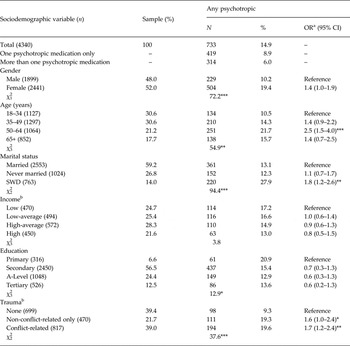
Table 1 shows the characteristics of the study sample along with prevalence rates for consumption of any psychotropic medication in the previous 12 months. Males comprised 48% of the sample, while the mean age was 45.6 years. Those who were married represented 59.2% of the sample, and just over 50% were educated to the secondary level.
Sociodemographic characteristics and odds ratios for use of any psychotropic medication in the previous 12 months

OR, odds ratios; CI, confidence interval; SWD, separated/widowed/divorced.
Raw numbers and weighted proportions reported throughout.
*p < 0.05; **p < 0.01; ***p < 0.001.
aAdjusted odds ratios (controlling for all other variables in the model and any 12-month disorder).
bOnly assessed in participants who completed part 2 of the interview.
The overall use of any psychotropic medication for the previous 12 months in the population was 14.9%. This comprised 8.9% who had taken one medication only and 6% who had taken more than one. In total, just over half (57.2%) of those who had taken a psychotropic medication had used only one medication.
Overall use was higher in females than males (OR = 1.4, 95% CI = 1.0–1.9) and the adjusted odds for use was two and a half times higher for those aged 50–64 years old than for the youngest age group (OR = 2.5, 95% CI = 1.5–4.0). Individuals who were separated, widowed or divorced were almost twice as likely as married individuals to have taken any psychotropic medication (OR = 1.8, 95% CI = 1.2–2.6). Higher adjusted odds ratios were also found with regards to traumatic events, with those who had experienced both non-conflict-related traumatic events (OR = 1.6, 95% CI = 1.0–2.4) and conflict-related traumatic events (OR = 1.7, 95% CI = 1.2–2.4) more likely than those who had experienced no lifetime traumatic events to have taken any psychotropic.
Rates of use by type of psychotropic medication
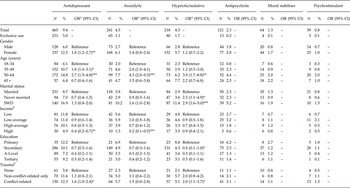
Table 2 displays the weighted prevalence rates for the psychotropic medication categories in the study. Antidepressants were the most common type of psychotropic medication taken, used by almost one in ten individuals in the population (9.4%) in the previous 12 months. Antidepressants were also the medication most likely to be used exclusively, with 5.0% of the population having taken at least one alongside no other class of psychotropic medication, equivalent to 49.7% of all antidepressant users. Anxiolytics were used by 4.5%, with hypnotics and sedatives used by 4.3%. Psychostimulants were the medication least likely to be used, consumed by 0.8%.
12-month prevalence rates and odds ratios by type of psychotropic medication

OR, odds ratios; CI, confidence interval; SWD, separated/widowed/divorced.
Raw numbers and weighted proportions reported throughout.
Odds ratios not calculated for antipsychotic, mood stabiliser or psychostimulant due to low counts.
*p < 0.05; **p < 0.01; ***p < 0.001.
aAdjusted odds ratios (controlling for all other variables in the model and any 12-month disorder).
bOnly assessed in participants who completed part 2 of the interview.
The adjusted odds of taking antidepressants for females was almost two times that for males (OR = 1.8, 95% CI = 1.2–2.7). There were also age differences for each of the various medication types. Those aged 50–64 years old were the age group with the greatest odds ratios of consuming the three most common types of psychotropic medication, when compared with the youngest age group (antidepressants OR = 2.7, 95% CI = 1.5–4.8; anxiolytics OR = 4.3, 95% CI = 2.0–9.3; hypnotics/sedatives OR = 3.9, 95% CI = 1.7–8.8). The odds for taking hypnotics/sedatives (OR = 2.9, 95% CI = 1.6–5.0) were also significantly higher for those previously married than for those who were married. Those in the high-income group were significantly less likely than those with low-income to have taken both antidepressants (OR = 0.4, 95% CI = 0.2–0.7) and anxiolytics (OR = 0.2, 95% CI = 0.1–0.5). In terms of trauma, odds ratios unadjusted by mental disorders showed both non-conflict and conflict-related groups were more likely than those who had experienced no traumatic lifetime events to have taken antidepressants or hypnotics/sedatives. After controlling for mental disorders, results showed odds ratios were significant only for those who had experienced a conflict-related traumatic event in their lifetime: antidepressants (OR = 1.6, 95% CI = 1.0–2.4), hypnotics/sedatives (OR = 2.0, 95% CI = 1.1–3.7).
Rates of use by mental disorder
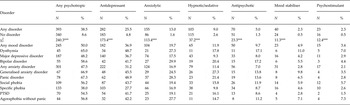
Table 3 presents data for the use of psychotropic medication in the previous 12 months by 12-month DSM-IV mental health disorder. Almost two-fifths (38.5%) of those who met the criteria for a 12-month disorder had taken at least one psychotropic medication. Antidepressants were the most common type of medication taken by those with any mental health disorder (25.5%). Mood stabilisers and psychostimulants were least likely to be taken by those with any disorder (2.3%).
12-month prevalence rates for each type of psychotropic medication by 12-month mental disorder

PTSD, posttraumatic stress disorder.
Raw numbers and weighted proportions reported throughout.
*p < 0.05; **p < 0.01; ***p < 0.001.
With regards to those who met the criteria for a 12-month mood disorder, half (50%) had taken at least one psychotropic medication. Antidepressants were the most common form of medication taken, used by over one-third (36.9%) of this group in the previous 12 months. For those assessed as having an anxiety disorder, almost half (47.5%) indicated they had taken a psychotropic. Again, antidepressants were the most common form of psychotropic medication taken (31.2%).
In terms of any individual disorders, those with panic disorder were most likely to have taken any psychotropic medication (67.3%), whereas those with specific phobia were least likely to have done so (38%). Of those assessed as having major depressive disorder, 48.2% had taken a psychotropic medication, whereas this figure was 66.9% for those with generalised anxiety disorder.
Overall, 8.6% indicated they had taken a psychotropic medication in the previous 12 months despite not meeting the criteria for any mental disorder. Further analysis including those with subthreshold disorders decreased this figure to 8%.
Discussion
The present study is the first in the country to consider psychotropic medication use in the context of mental disorders. The rate of 14.9% for 12-month use of any psychotropic medication in the general population is at the higher end of reported rates from other countries. NI has the third highest utilisation rate of the participating WMH survey countries, ranking behind France (19.2%) and Spain (15.5%). The consumption rate is also higher than the European average of 12.3% reported in the European Study of the Epidemiology of Mental Disorders (ESEMeD; Alonso et al. Reference Alonso, Angermeyer, Bernert, Bruffaerts, Brugha, Bryson, de Girolamo, Graaf, Demyttenaere, Gasquet, Haro, Katz, Kessler, Kovess, Lépine, Ormel, Polidori, Russo, Vilagut, Almansa, Arbabzadeh-Bouchez, Autonell, Bernal, Buist-Bouwman, Codony, Domingo-Salvany, Ferrer, Joo, Martínez-Alonso, Matschinger, Mazzi, Morgan, Morosini, Palacín, Romera, Taub and Vollebergh2004). However, it is important to consider the difference in the years of studies. Our study was conducted between 2004 and 2008, with the ESEMeD conducted between 2001 and 2003. Given that several studies suggest an increase in the use of these medications over the years, this may account for our higher rate. Then again analysis of our earliest data suggests a rate of 16.5%, higher than five of the six countries in the ESEMeD. In addition, the NI 12-month prevalence rate for any mental health disorder is one of the highest worldwide (Bunting et al. Reference Bunting, Murphy, O'Neill and Ferry2013a ), so it is perhaps not surprising that psychotropic consumption is equally high. Legislation surrounding prescription charges is an obvious potential explanation for differences between countries. Health care in NI is delivered by the UK National Health Service and consultations are free at point of delivery. The majority of prescriptions issued in the province at the time of the study were without charge. The results need to be considered in light of this context. As might be expected, a meta-analysis by Gibson et al. (Reference Gibson, Ozminkowski and Goetzel2005) found a negative relationship between charges and consumption. Other explanations as to the varying rates between countries include provision and use of treatment, awareness of disorders and cultural beliefs (McManus et al. Reference McManus, Mant, Mitchell, Montgomery, Marley and Auland2000; Alonso et al. Reference Alonso, Angermeyer, Bernert, Bruffaerts, Brugha, Bryson, de Girolamo, Graaf, Demyttenaere, Gasquet, Haro, Katz, Kessler, Kovess, Lépine, Ormel, Polidori, Russo, Vilagut, Almansa, Arbabzadeh-Bouchez, Autonell, Bernal, Buist-Bouwman, Codony, Domingo-Salvany, Ferrer, Joo, Martínez-Alonso, Matschinger, Mazzi, Morgan, Morosini, Palacín, Romera, Taub and Vollebergh2004).
Over one-third (38.5%) of respondents who met the criteria for a 12-month disorder had taken any psychotropic medication. This is higher than the other rates (19.6% in Israel (Grinshpoon et al. Reference Grinshpoon, Marom, Weizman and Ponizovsky2007); and 32.6% in Europe (Alonso et al. Reference Alonso, Angermeyer, Bernert, Bruffaerts, Brugha, Bryson, de Girolamo, Graaf, Demyttenaere, Gasquet, Haro, Katz, Kessler, Kovess, Lépine, Ormel, Polidori, Russo, Vilagut, Almansa, Arbabzadeh-Bouchez, Autonell, Bernal, Buist-Bouwman, Codony, Domingo-Salvany, Ferrer, Joo, Martínez-Alonso, Matschinger, Mazzi, Morgan, Morosini, Palacín, Romera, Taub and Vollebergh2004)). NI also has a higher proportion of individuals who met the criteria for any mood disorder in the previous 12 months who had taken any psychotropic medication (50 v. 21.1% in Israel) (Grinshpoon et al. Reference Grinshpoon, Marom, Weizman and Ponizovsky2007), although this is in line with the European rate of 45.6% (Alonso et al. Reference Alonso, Angermeyer, Bernert, Bruffaerts, Brugha, Bryson, de Girolamo, Graaf, Demyttenaere, Gasquet, Haro, Katz, Kessler, Kovess, Lépine, Ormel, Polidori, Russo, Vilagut, Almansa, Arbabzadeh-Bouchez, Autonell, Bernal, Buist-Bouwman, Codony, Domingo-Salvany, Ferrer, Joo, Martínez-Alonso, Matschinger, Mazzi, Morgan, Morosini, Palacín, Romera, Taub and Vollebergh2004). These trends may represent a greater preference for the use of psychotropic medications in NI by those with a mental health disorder and/or doctors. Nevertheless, these figures still suggest possible under treatment. Almost two-thirds (61.5%) received no psychotropic medication in the past 12 months despite meeting the criteria for a disorder in the same period. Half of those with a mood disorder received no medication. While some of these individuals may be availing of treatments other than medication, Bunting et al. (Reference Bunting, Murphy, O'Neill and Ferry2013a ) reported that just 40% of individuals meeting the criteria for a mental disorder in the past 12 months received any treatment. Rates of medication use for other disorders, however, were higher. Of those who met the criteria for any anxiety disorder in the previous 12 months, 47.5% had taken any psychotropic compared with 25% in Israel (Grinshpoon et al. Reference Grinshpoon, Marom, Weizman and Ponizovsky2007) and 32.4% in Europe (Alonso et al. Reference Alonso, Angermeyer, Bernert, Bruffaerts, Brugha, Bryson, de Girolamo, Graaf, Demyttenaere, Gasquet, Haro, Katz, Kessler, Kovess, Lépine, Ormel, Polidori, Russo, Vilagut, Almansa, Arbabzadeh-Bouchez, Autonell, Bernal, Buist-Bouwman, Codony, Domingo-Salvany, Ferrer, Joo, Martínez-Alonso, Matschinger, Mazzi, Morgan, Morosini, Palacín, Romera, Taub and Vollebergh2004). In addition, 66.9% of those who met the criteria for 12-month Generalised Anxiety Disorder had taken any psychotropic compared with 18.6% in Israel (Grinshpoon et al. Reference Grinshpoon, Marom, Weizman and Ponizovsky2007) and 25.5% in Europe (Alonso et al. Reference Alonso, Angermeyer, Bernert, Bruffaerts, Brugha, Bryson, de Girolamo, Graaf, Demyttenaere, Gasquet, Haro, Katz, Kessler, Kovess, Lépine, Ormel, Polidori, Russo, Vilagut, Almansa, Arbabzadeh-Bouchez, Autonell, Bernal, Buist-Bouwman, Codony, Domingo-Salvany, Ferrer, Joo, Martínez-Alonso, Matschinger, Mazzi, Morgan, Morosini, Palacín, Romera, Taub and Vollebergh2004).
The rate of 9.4% for 12-month use of antidepressants is one of the highest, if not the highest, rate of consumption among the WMH survey countries. Another study carried out in the USA in the years similar to the present study found a rate of 10.8% (Pratt et al. Reference Pratt, Brody and Gu2011), however this includes those aged 12 and over (the present study interviewed those 18 and over), and used past month prevalence as opposed to our 12-month prevalence. The rate of 9.4% in the present study corroborates the rates of 9.1% found in NI in 2006/2007 and 12% in 2010/2011 (National Advisory Committee on Drugs, 2012). The high rate found in the present study is perhaps not surprising given the 9.6% 12-month prevalence rate for mood disorders in the country, second only to the USA rate of 9.7% (Bunting et al. Reference Bunting, Murphy, O'Neill and Ferry2013a ). It should also be noted, however, that one in 20 (4.8%) of those with no disorder in the general population had consumed an antidepressant in the previous 12 months. Moreover, almost one in ten (8.6%) of those who had not met the criteria for any 12-month disorder indicated they had consumed any psychotropic medication. Some disorders (such as sleep disorders) were not assessed in the current study. In addition, those who were subthreshold cases were not included in this figure of 8.6%. Both of these factors may have contributed to an overestimate of unneeded use. Nevertheless, inclusion of those with subthreshold disorders led to a decrease of less than one percentage point to 8%. Therefore it is possible these results correspond to true unneeded use of medication, such as individuals continuing to take medication despite their state improving. Alternatively, health professionals may be providing medication to individuals not meeting the criteria for relevant disorders. Future research should attempt to ascertain whether it is patients' preferences for medication or doctors' inclinations to prescribe them that are influencing these rates.
The discovery that those previously married are more likely than married individuals to take psychotropics has been previously reported (Alonso et al. Reference Alonso, Angermeyer, Bernert, Bruffaerts, Brugha, Bryson, de Girolamo, Graaf, Demyttenaere, Gasquet, Haro, Katz, Kessler, Kovess, Lépine, Ormel, Polidori, Russo, Vilagut, Almansa, Arbabzadeh-Bouchez, Autonell, Bernal, Buist-Bouwman, Codony, Domingo-Salvany, Ferrer, Joo, Martínez-Alonso, Matschinger, Mazzi, Morgan, Morosini, Palacín, Romera, Taub and Vollebergh2004; Grinshpoon et al. Reference Grinshpoon, Marom, Weizman and Ponizovsky2007). Possible explanations for this include higher odds ratios of mental disorders among this group and factors relating to social support (Lindström & Rosvall, Reference Lindström and Rosvall2012). A positive association between age and psychotropic use has also been consistently found worldwide (Cooperstock & Parnell, Reference Cooperstock and Parnell1982). In the present study, however, it was those aged 50–64 years old, rather than the oldest group of participants (65+), who were more likely to have consumed psychotropic medication. The fact that those in care homes were not interviewed may have led to an underestimation of usage in the oldest age group, and higher odds ratios in those aged 50–64 years old, particularly given that recent evidence suggests a higher rate of psychotropic prescribing among this over 65 age group in NI care homes (Maguire et al. Reference Maguire, Hughes, Cardwell and O'Reilly2013). Results by Bunting et al. (Reference Bunting, Murphy, O'Neill and Ferry2013a ) also show that those aged 50–64 years old in the province have the highest proportion of any 12-month anxiety disorder and second highest proportion of any 12-month mood disorder. Another predictor of use was trauma – those who had experienced conflict-related traumatic events, as well as those who had experienced non-conflict-related events, were more likely than individuals who had experienced no traumatic events to have taken psychotropic medication. Almost one in five (19.6%) of those who had experienced conflict-related events had used a psychotropic medication in the past 12 months. The fact that 60.6% of the population have experienced a traumatic event and 39% have experienced a conflict-related traumatic event (Bunting et al. Reference Bunting, Ferry, Murphy, O'Neill and Bolton2013b ), further highlights the importance of providing treatments for those who have experienced mental health difficulties as a consequence of trauma. Policy makers should also ensure that those affected by the conflict are offered appropriate mental health treatments. Even after controlling for presence of a mental disorder, those who had experienced conflict-related trauma were over 1.5 times more likely than those who had experienced no trauma to use antidepressants. This supports the contention by Tomlinson (Reference Tomlinson2012) that some of those most affected by the conflict may use antidepressants as a means of dealing with the transition from conflict to peace. While there was a significant association between use of any medication and gender, when the other variables were accounted for using logistic regression analysis, the odds ratios were non-significant. However, females were almost two times more likely than males to have taken antidepressants, and this finding was significant. The greater likelihood of females to consume psychotropics is a longstanding and established international finding (Cooperstock, Reference Cooperstock1976; Paulose-Ram et al. Reference Paulose-Ram, Jonas, Orwig and Safran2004; Rodrigues et al. Reference Rodrigues, Facchini and Lima2006; Chien et al. Reference Chien, Bih, Lin, Chou, Lee, Lee and Chou2011). Possible explanations include the greater likelihood of females to disclose mental health problems and be prescribed psychotropic medication (Women's Health Council, 2005; Tedstone Doherty & Kartalova-O'Doherty, Reference Tedstone Doherty and Kartalova-O'Doherty2010), and the historical role of women as the family caregiver and healer and the stress arising from their various other roles (Ingram Fogel & Fugate Woods, Reference Ingram Fogel and Fugate Woods2008).
A number of limitations of the research should be considered. The prevalence rates may be an underestimation of true use for a number of reasons. Firstly, the NISHS did not survey individuals in institutions such as prisons, hospitals or care homes. These settings have been previously found to have higher rates of prescribing and/or use than the general population for certain classes of psychotropics (Elger et al. Reference Elger, Geohring, Revaz and Morabia2002; Gasquet et al. Reference Gasquet, Medioni, Lellouch and Guelfi2002; Maguire et al. Reference Maguire, Hughes, Cardwell and O'Reilly2013). While survey weights were calculated and applied to account for response bias, some non-response bias may still remain. However, the response rate of 68.4% is similar to that of other psychotropic medication surveys (Alonso et al. Reference Alonso, Angermeyer, Bernert, Bruffaerts, Brugha, Bryson, de Girolamo, Graaf, Demyttenaere, Gasquet, Haro, Katz, Kessler, Kovess, Lépine, Ormel, Polidori, Russo, Vilagut, Almansa, Arbabzadeh-Bouchez, Autonell, Bernal, Buist-Bouwman, Codony, Domingo-Salvany, Ferrer, Joo, Martínez-Alonso, Matschinger, Mazzi, Morgan, Morosini, Palacín, Romera, Taub and Vollebergh2004; Goldney & Bain, Reference Goldney and Bain2006; Grinshpoon et al. Reference Grinshpoon, Marom, Weizman and Ponizovsky2007). A further limitation of the study was that participants were not asked detailed questions about their medication such as duration of use, dosage and reasons for use. As such, where medications may have had a variety of uses they were classified according to their typical use rather than their actual use for each individual. This is particularly important given the high amount of ‘off-label’ use of these medications (Baldwin & Kosky, Reference Baldwin and Kosky2007). Where medications had a psychoactive use (e.g., sedative) and another use (e.g., antihistamine), it was assumed that respondents understood from the question wording that we were asking about the psychoactive use(s) of the medications and not their alternative use(s). This lack of information also means that conclusions cannot be drawn about the appropriateness or efficacy of these medications. Furthermore, this study did not consider over-the-counter medications. Another drawback of the study was the use of self-report data. While it may be thought to be more accurate with regards to actual use than prescription data, an objective measure of consumption was not included in the study. While the use of a 12-month recall period may also be viewed as a disadvantage of this study, memory bias was minimised using techniques which have been previously suggested to aid recall such as a showcard/booklet and asking participants to examine their medication inventories (Strom, Reference Strom2006). Another strength of the study was that it was part of the WMH Survey Initiative meaning that studies in other countries used the same methods and therefore cross-national comparisons were available.
As previously mentioned, the present study is the first to examine the rate of psychotropic medication use, in those with and without mental health disorders, in the NI population. The rate of general psychotropic medication consumption and particularly antidepressants appears to be among the highest worldwide. While some of this prevalence may be accounted for by time elapsed between studies, comparison with more recent studies still remains high. More detailed analysis shows that use among those with mental disorders is low, with the majority having not received psychotropic medication. In addition, there is a sizeable minority identified as having no disorder who consumed medication, particularly antidepressants. These findings have implications for prescribing practice. It is recommended that prescribing policies promote the need for prescribers to adopt more detailed diagnostic assessment to ensure that those who meet the criteria for a disorder are offered appropriate medication. Individuals who request psychotropic medication should also be carefully assessed to prevent inappropriate prescribing. Future research should examine the doctor–patient relationship in more detail to pinpoint potential causes of under treatment or inappropriate prescribing.
Acknowledgements
None.
Financial Support
The corresponding author was supported by a PhD studentship through a Department for Employment and Learning Northern Ireland (DELNI) award. The NI Study of Health and Stress, including salary of S.M. and S.O'N. was supported by a grant from the Research and Development (R&D) Division in NI. The survey was carried out in conjunction with the World Health Organization WMH Survey Initiative, which is supported by the National Institute of Mental Health (NIMH; R01 MH070884), the John D. and Catherine T. MacArthur Foundation, the Pfizer Foundation, the US Public Health Service (R13-MH066849, R01-MH069864 and R01 DA016558), the Fogarty International Center (FIRCA R03-TW006481), the Pan American Health Organization, Eli Lilly and Company, Ortho-McNeil Pharmaceutical GlaxoSmithKline and Bristol-Myers Squibb. None of the funders had any role in the data collection, analysis, interpretation of results, preparation of this paper or the decision to submit the paper for publication.
Conflict of Interest
None.
Ethical Standard
The authors assert that all procedures contributing to this work comply with the ethical standards of the relevant national and institutional committees on human experimentation and with the Helsinki Declaration of 1975, as revised in 2008.
Appendix. Medication coding used in the study