Introduction
South America is home to the second highest number of non-avian reptile species in the world (Uetz et al., Reference Uetz, Freed and Hošek2019), and with 842 species, Brazil ranks third among countries (Costa & Bèrnils, Reference Costa and Bèrnils2018; Uetz et al., Reference Uetz, Freed and Hošek2019). South American reptiles are infected by more than 140 species of digeneans (Fernandes and Kohn, Reference Fernandes and Kohn2014), but the life cycles of these parasites are poorly understood. In fact, studies of the life cycles of trematodes from reptiles are scarce worldwide (Yamaguti, Reference Yamaguti1975), and in South America, only one is completely elucidated (Acanthostomum brauni Garzón & Gil, 1961; Ostrowski de Núñez, Reference Ostrowski de Núñez1987). Most trematodes that infect reptiles are adults acquired in trophic interactions with infected second intermediate hosts. These second intermediate hosts likely include larval and adult anurans infected with metacercariae of Opisthogonimidae, Plagiorchiidae, Proterodiplostomidae and Reniferidae (Kehr and Hamann, Reference Kehr and Hamann2003; Hamann et al., Reference Hamann, Kehr and González2006; Schaefer et al., Reference Schaefer, Hamann, Kehr, González and Duré2006; Hamann and González, Reference Hamann and González2009; Pinto & Melo, Reference Pinto and Melo2012). Although these reports suggest the involvement of amphibians in the transmission of trematodes to reptiles, empirical support for such life cycles is lacking for species in South America.
Members of the family Proterodiplostomidae Dubois, Reference Dubois1936 are flukes that mature exclusively in reptiles, unlike other families of the Diplostomoidea, in which definitive hosts are mainly birds and mammals. The body of adult proterodiplostomids is divided into a flat anterior segment bearing a distinctive, sometimes papillose holdfast organ and a cylindrical or conical posterior segment containing reproductive organs including a paraprostate. The structure of the holdfast organ and the paraprostate are autapomorphies for the Proterodiplostomidae (Niewiadomska, Reference Niewiadomska, Gibson, Jones and Bray2002; Hernández-Mena et al., Reference Hernández-Mena, García-Varela and Pérez-Ponce de León2017). More than 15 species of this family are reported from reptiles in South America (Fernandes & Kohn, Reference Fernandes and Kohn2014). No complete proterodiplostomid life cycle is known, but fish and amphibians have been implicated as second intermediate host of species of Crocodilicola, Cystodiplostomum, Herpetodiplostomum and Heterodiplostomum (Szidat, Reference Szidat1969; Mañé-Garzón & Alonso, Reference Mañé-Garzón and Alonso1979; Abdallah et al., Reference Abdallah, Azevedo and Luque2006; Hamann et al., Reference Hamann, Kehr and González2006; Tavares-Dias et al., Reference Tavares-Dias, Neves and Fernandes2011; Hernández-Mena et al., Reference Hernández-Mena, García-Varela and Pérez-Ponce de León2017).
Here, we report naturally occurring metacercariae of Heterodiplostomum lanceolatum Dubois, Reference Dubois1936 from the pointedbelly frog, Leptodactylus podicipinus Cope, 1862 from the central-west region of Brazil. We used morphological, molecular and ecological methods to study these parasites, which have not been recorded since the 1980s. Our results provide the first evidence of the involvement of L. podicipinus in a proterodiplostomid life cycle and new insights into the epizootiology of this parasite.
Materials and methods
Study area and sample collection
Frogs were collected from a temporary marsh pond located near a riparian forest in Véstia Stream (20°23′43.57″S, 51°23′39.28″W), municipality of Selvíria, state of Mato Grosso do Sul, central-west region of Brazil, between March and December 2017 (four samples) and January and May 2018 (six samples). The pond contains water about ten months of the year, has a maximum depth of 1.6 m, perimeter of 314 m and surface area of 5000 m2. Mean temperature in 2017 was 25°C with 74% relative humidity (Unesp, 2018). Anurans were collected by a single individual using the scan searching method (Halliday, Reference Halliday and Sutherland2006), with effort of 1 h. The animals were placed individually in plastic bags and transported to the Ecology Laboratory of Parasitism, Unesp, Ilha Solteira. Sampling was conducted under permit SISBIO 58746-4 from the Brazilian Institute of the Environment and Renewable Natural Resources.
Recovery of parasites
In the laboratory, frogs were identified according to Provete et al. (Reference Provete, Garey, Silva and Rossa-feres2011), sexed and length was measured. After euthanasia with a sodium thiopental solution (Thiopentax®, Itapira, SP, Brazil) administrated intraperitoneally and macroscopic inspection, viscera were removed and transferred to Petri dishes containing physiological solution (0.9% NaCl) and examined under a stereomicroscope. Metacercariae were mechanically freed from cysts, when present, and representatives were either compressed between glass slides and fixed in 10% formalin, fixed in 2.5% glutaraldehyde solution diluted in buffer solution of pH 7.4 for electron microscopy (adapted from Amato et al., Reference Amato, Boeger and Amato1991) or preserved in 95% ethanol for molecular analysis.
Morphological study
A subsample of metacercariae were stained with haematoxylin, serially dehydrated in ethanol solutions, clarified in methyl salicylate and mounted on permanent slides with Canada Balsam (adapted from Amato et al., Reference Amato, Boeger and Amato1991). Stained parasites were studied under a Leica DM 2500 optical microscope with differential phase contrast system and photographed with a camera coupled to the microscope. Measurements were made with an ocular micrometre. Details of the excretory system were not evaluated.
For scanning electron microscopy, glutaraldehyde-fixed trematodes were passed through increasingly concentrated acetone, which was later removed in critical point drying in a Leica Microsystems model CPD300. Samples were then metallized on a Quorum model Q150TE and photographed with a Zeiss microscope model EVO-LS15 using SmartSEM (Carl Zeiss Microscopy, Cambridge, UK). The trematodes were identified based on morphology (Dubois, Reference Dubois1936; Travassos et al., Reference Travassos, Freitas and Kohn1969, Niewiadomska, Reference Niewiadomska, Gibson, Jones and Bray2002, Fernandes & Kohn, Reference Fernandes and Kohn2014). Quantitative descriptors of infection levels followed Bush et al. (Reference Bush, Lafferty, Lotz and Shostak1997). Samples were deposited in the collection of trematodes of Universidade Federal de Minas Gerais (UFMG-TRE 114) and Coleção Zoológica – ZUFMS (AMP07454–7479).
Molecular analyses
Extraction of DNA from ethanol-fixed metacercariae was performed using the QIAamp DNA micro kit (Qiagen Ltd., Crawley, UK). Partial sequences of the 28S rDNA were obtained by polymerase chain reaction (PCR). We used the forward primer digl2 (5′- AAGCATATCACTAAGCGG -3′) and reverse primer 1500R (5′- GCTATCCTGAGGGAAACTTCg -3′) and PCR conditions described by Tkach et al. (Reference Tkach, Littlewood, Olson, Kinsella and Swiderski2003). Sequencing was performed in both directions by capillary electrophoresis using the BigDye Terminator Cycle Sequencing Ready Reaction Kit (Applied Biosystems, Inc., Foster City, CA), using the same primers used in PCR. The sequences obtained were edited in ChromasPro (Technelysium Pty Ltd, Australia) and the contig was aligned with data from other species of Diplostomoidea available in GenBank (table 1) using MEGA version 7.0 (Kumar et al., Reference Kumar, Stecher and Tamura2016). The final, trimmed alignment was 1062 bp in length. The best nucleotide substitution model (GTR + G) was determined based on Bayesian Information Criterion in MEGA 7.0 (Kumar et al., Reference Kumar, Stecher and Tamura2016). A species of Clinostomidae (Clinostomum tataxumui – MF398321) was selected as the outgroup based on phylogenies published by Olson et al. (Reference Olson, Cribb, Tkach, Bray and Littlewood2003) and Pérez-Ponce de León & Hernández-Mena (Reference Pérez-Ponce de León and Hernández-Mena2019). Phylogenetic analyses were performed using Maximum Likelihood (ML) and Bayesian inference (BI) methods. An ML tree was computed in MEGA version 7.0 and nodal support was estimated from 1000 bootstrap pseudoreplicates. The BI analyses were performed in MrBayes version 3.2.6 (Ronquist et al., Reference Ronquist, Teslenko and Van der Mark2012) using Markov chain Monte Carlo searches on two simultaneous runs of four chains for 1,000,000 generations and sampling every 100 generation. The first 25% of the sampled BI trees were discarded as ‘burn-in’. Phylogenetic trees and data files were visualized in FigTree version 1.4.3 (Rambaut, Reference Rambaut2016). The new sequence obtained in the present study was deposited in GenBank (accession number MN149353).
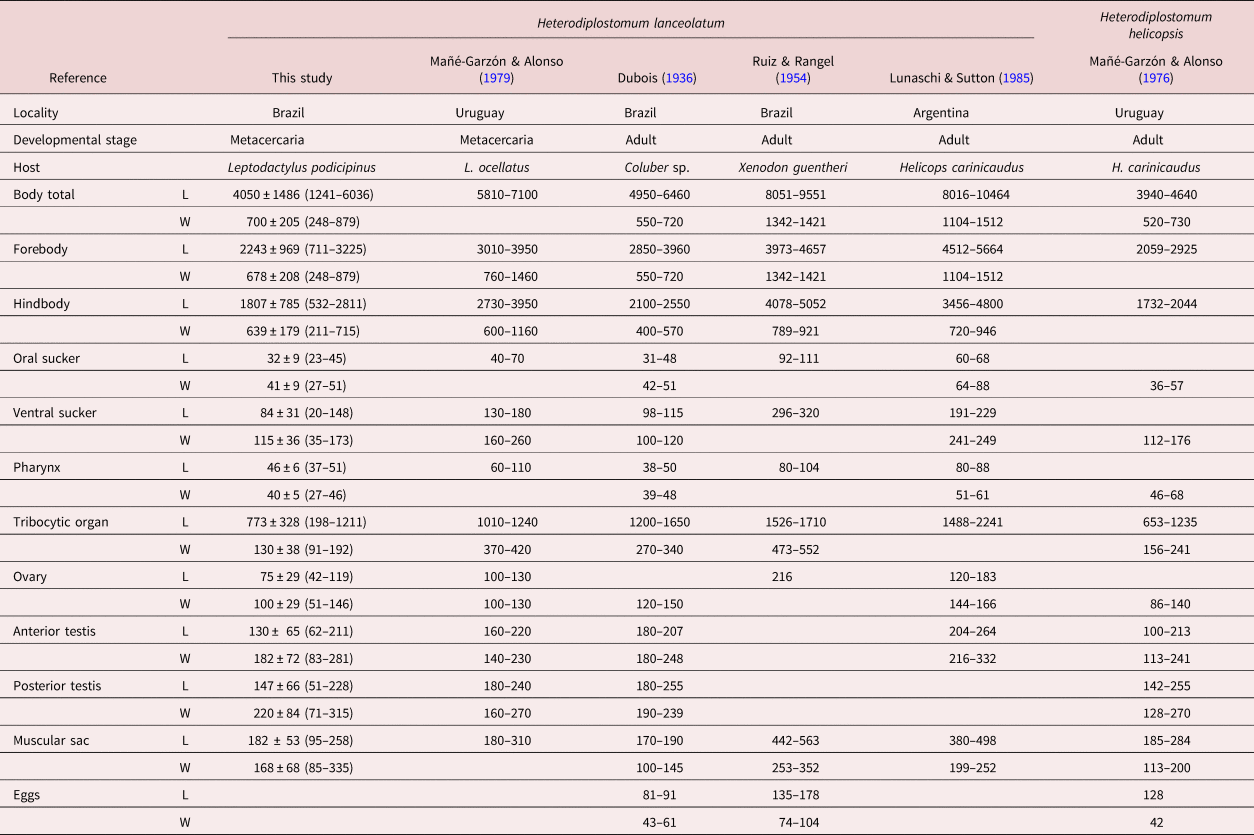
Morphometric data of metacercariae of Heterodiplostomum lanceolatum found in Leptodactylus podicipinus from Brazil (mean in micrometres followed by standard deviation and range between parenthesis) and H. lanceolatum (metacercariae and adults) and H. helicopsis (adults) found in snakes in South America (maximum and minimum measurements in micrometres).

L, length; W, width.
Ecological analysis
Bartlett homogeneity and Shapiro–Wilk normality tests were applied to verify the premises necessary for parametric tests. We used Student's t-test to determine whether frog size (snout vent length, SVL) differs in infected and uninfected anurans, and simple linear regression to test for a relationship between SVL and intensity of infection. Because data did not meet the assumptions for parametric tests, we used Kruskal–Wallis tests to determine if infection intensity differs in three different sites (cavity, musculature and hindlimb muscles). The foregoing statistical tests were performed with Bioestat 5.30 (Ayres et al., Reference Ayres, Ayres Júnior, Ayres and Santos2007).
Results
We found 172 proterodiplostomid metacercariae encysted in the abdominal and hindlimb muscle or free in the body cavity of 29 out 86 (32.6%) L. podicipinus (mean size 18 mm, range 10–25 mm) collected in 2017 and 2018 from a temporary pond in Selvíria, Mato Grosso do Sul, Brazil. Metacercariae were found free in the abdominal cavity as well as encysted in the limb and abdominal musculature in one host (3.4%). Metacercariae occurred in both limbs and free in the cavity in 11 hosts (37.9%), in both the limbs and the abdominal musculature in two (6.8%) and only in limb musculature in six hosts (20.7%). Nine hosts (31.0%) had only free metacercariae in the abdominal cavity. Metacercariae were recovered from frogs collected in six of ten sampling events. Prevalence of infection ranged from 25% (1/4 frogs infected in March 2018) to 100% (9/9 in January 2018). As described in the following, the worms were identified as H. lanceolatum.
Systematics
Superfamily: Diplostomoidea Poirier, 1886
Family: Proterodiplostomidae Dubois, 1936
Genus: Heterodiplostomum Dubois, 1936
Heterodiplostomum lanceolatum Dubois, Reference Dubois1936 (metacercariae)
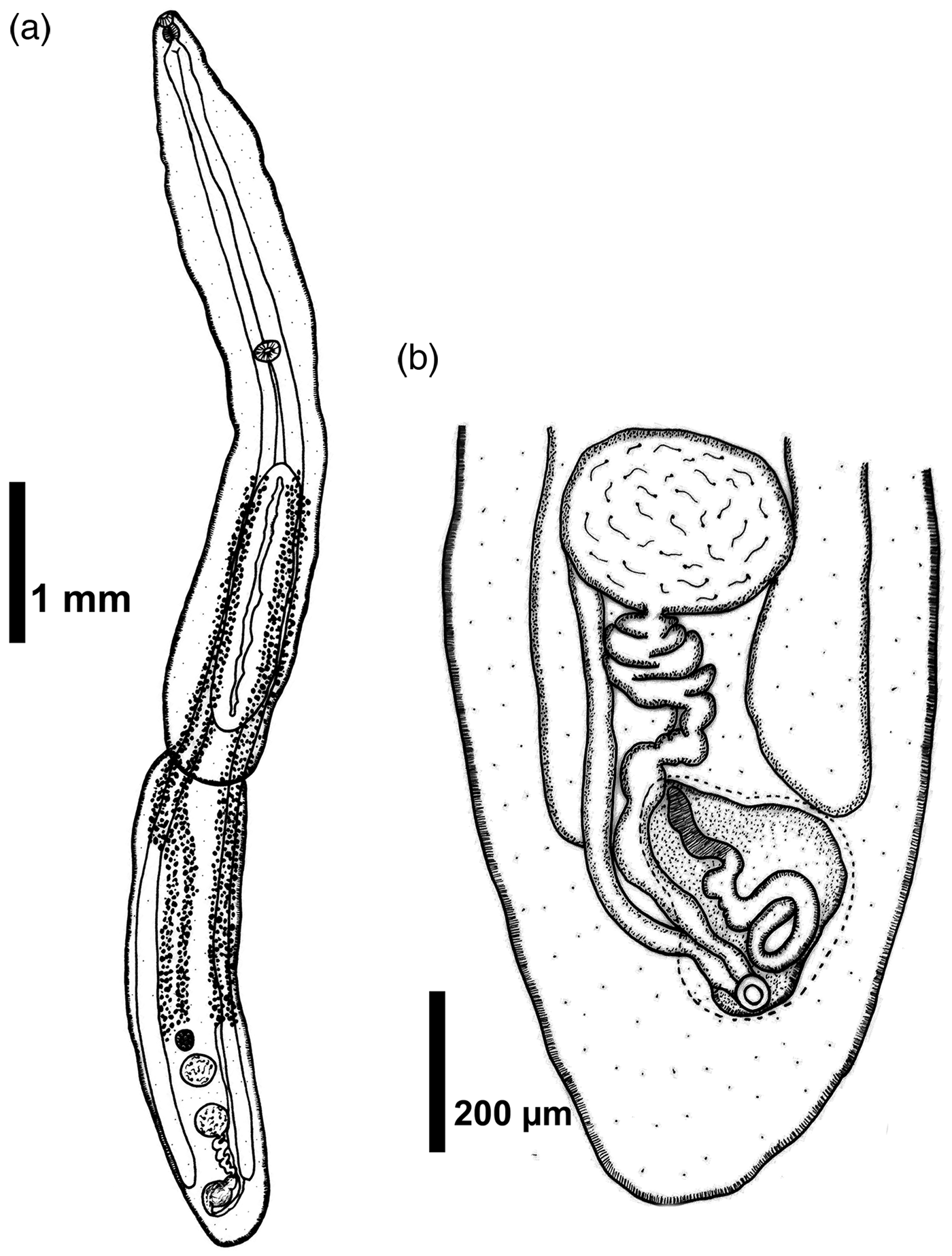
Metacercariae of Heterodiplostomum lanceolatum. (a) Whole view of a parasite in advanced stage of development. Note the presence of vitellaria extending to anterior margin of the holdfast organ, characteristic of this species. (b) Details of terminal genitalia.

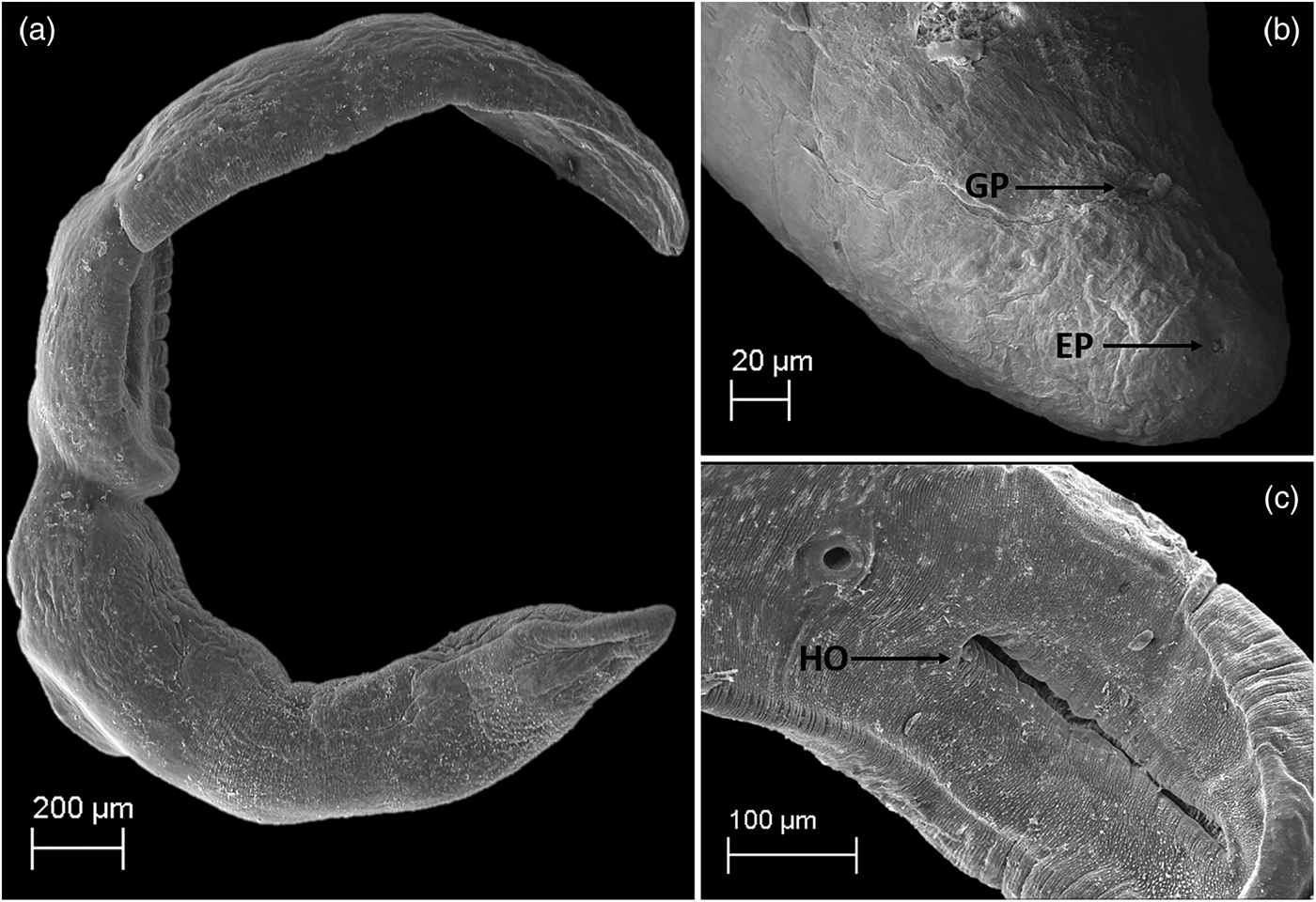
Scanning electron microscopy of metacercariae of Heterodiplostomum lanceolatum found in Leptodactylus podicipinus from Brazil: (a) lateral view; (b) dorsal view of hindbody extremity, showing excretory (EP) and genital (GP) pores; (c) holdfast organ (HO) lacking papillae.

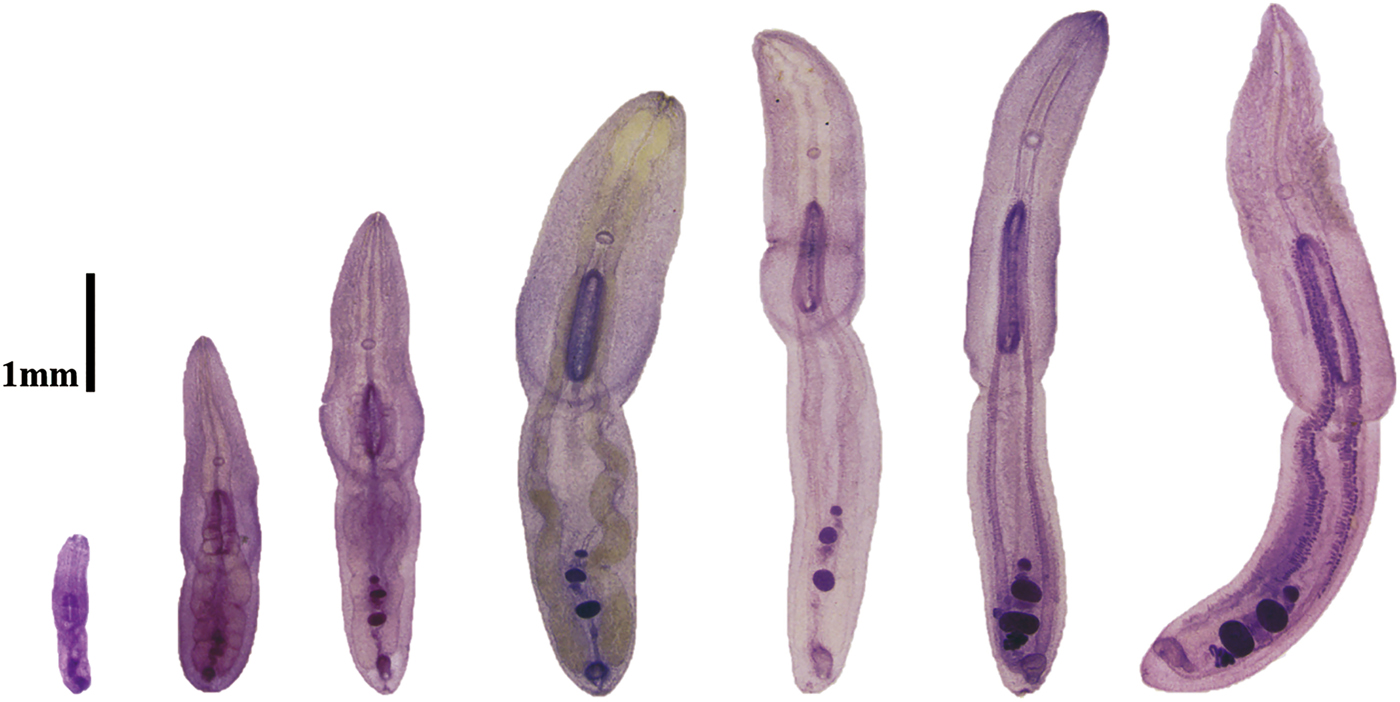
Metacercariae of Heterodiplostomum lanceolatum found in Leptodactylus podicipinus from Brazil at different stages of development.

Description
General. Based on 16 excysted metacercariae. Body bi-segmented, with hindbody connected dorsally with forebody. Forebody flattened, spatulate. Oral sucker subterminal, pharynx globular, larger than oral sucker. Oesophagus very small, bifurcating in anterior region of forebody into long intestinal caeca extending laterally into posterior region of hindbody, terminating anterior to copulatory bursa. Ventral sucker oval-shaped, located in middle region of forebody, anterior to holdfast organ. Holdfast organ prominent, elongate, located in posterior portion of forebody. Hindbody cylindrical, smaller than forebody, containing well-developed sexual organs in most specimens. Ovary oval, subspherical, located anteriorly to testes. Two subspherical testes, tandem, transversely elongate, entire. Copulatory bursa ovoid, eversible paraprostate duct inside a muscular sac similar to a cirrus-sac. Paraprostate tubular with ejaculatory duct and uterus each opening separately into copulatory bursa. Excretory pore terminal. Genital pore opening dorsally in hindbody. In some specimens, primordial vitelline glands surrounding holdfast organ and extending in two rows to ovary region (fig. 1).
Remarks
Despite marked variation in size (total length 1.23–6.06 mm) and development, metacercariae of H. lanceolatum examined here varied little in body shape, position of oral and ventral suckers, shape and disposition of holdfast and reproductive organs, the proportions among these organs and among organs relative to body size (fig. 3). Some metacercariae were found free in the host's abdominal cavity, but their morphology was similar to encysted forms. These specimens may have been pre-cystic stages or they may have been accidentally excysted during necropsy.
The morphology and measures of the parasites obtained here are similar to those of metacercariae identified as H. lanceolatum found in Leptodactylus ocellatus in Uruguay by Mañé-Garzón and Alonso (Reference Mañé-Garzón and Alonso1979). These authors also found metacercariae encysted in the abdominal muscle and limbs. Unlike us, they did not report free metacercariae in the corporal cavity, which may be due the small number of animals necropsied (three hosts).
Several metacercariae we obtained from L. podicipinus were advanced in development and morphometrically similar to the type specimens (adults) of H. lanceolatum described by Dubois (Reference Dubois1936) from Coluber sp. collected in Brazil, especially in the total length, fore- and hindbody widths, and the dimensions of suckers, holdfast organ, sexual organs and copulatory bursa. The only differences with the adult types of H. lanceolatum are in the maturity of the sexual organs and absence of eggs. Ruiz and Rangel (Reference Ruiz and Rangel1954) reported large adults of H. lanceolatum from Xenodon coluber (total worm length 8.05–9.39 mm vs. 4.95–6.46 mm in Dubois (Reference Dubois1936), cf. up to 6.04 mm in our specimens) and attributed this to differences in specimen preservation. Metacercariae we collected differed from adult stages of Heterodiplostomum helicopsis Mañé-Garzón & Alonso 1976, the only other species of Heterodiplostomum, in the extent of the intestinal caeca and vitelline glands. In H. helicopsis, the intestinal caeca extend to the distal extremity of the hindbody, surpassing the region of the copulatory bursa, and the vitellaria extend anteriorly to the bifurcation of oesophagus. In metacercariae of H. lanceolatum, the caecae terminate anterior to copulatory bursa and the vitellaria do not surpass the holdfast organ. Scanning electron microscopy revealed a smooth, non-papillose surface on the holdfast organ and the genital and excretory pores dorsal and terminal in the posterior hindbody (fig. 2).
We consider that the morphology of the metacercariae, particularly those advanced in development and with morphology similar to that described for adults, amply supports our identification of H. lanceolatum. Mañé-Garzón and Alonso (Reference Mañé-Garzón and Alonso1979) identified metacercariae of H. lanceolatum based on similar reasoning. Future molecular studies of adult parasites recovered in naturally infected snakes will be helpful for unequivocal linkage of the developmental stages of H. lanceolatum. Experimental infections to obtain adults is a less viable method of pursuing this linkage, as the snake definitive hosts of H. lanceolatum present significant challenges for permitting and maintenance in laboratory settings.
Taxonomic summary
Type host. Leptodactylus podicipinus Cope, 1862.
Site of infection. Abdominal and hindlimb muscles (encysted) and abdominal cavity (unencysted).
Prevalence of infection. 33.7% (29/86).
Mean intensity of infection. 5.9 ± 6.5.
Mean abundance of infection. 2.0 ± 4.7.
Molecular characterization and genetic comparison
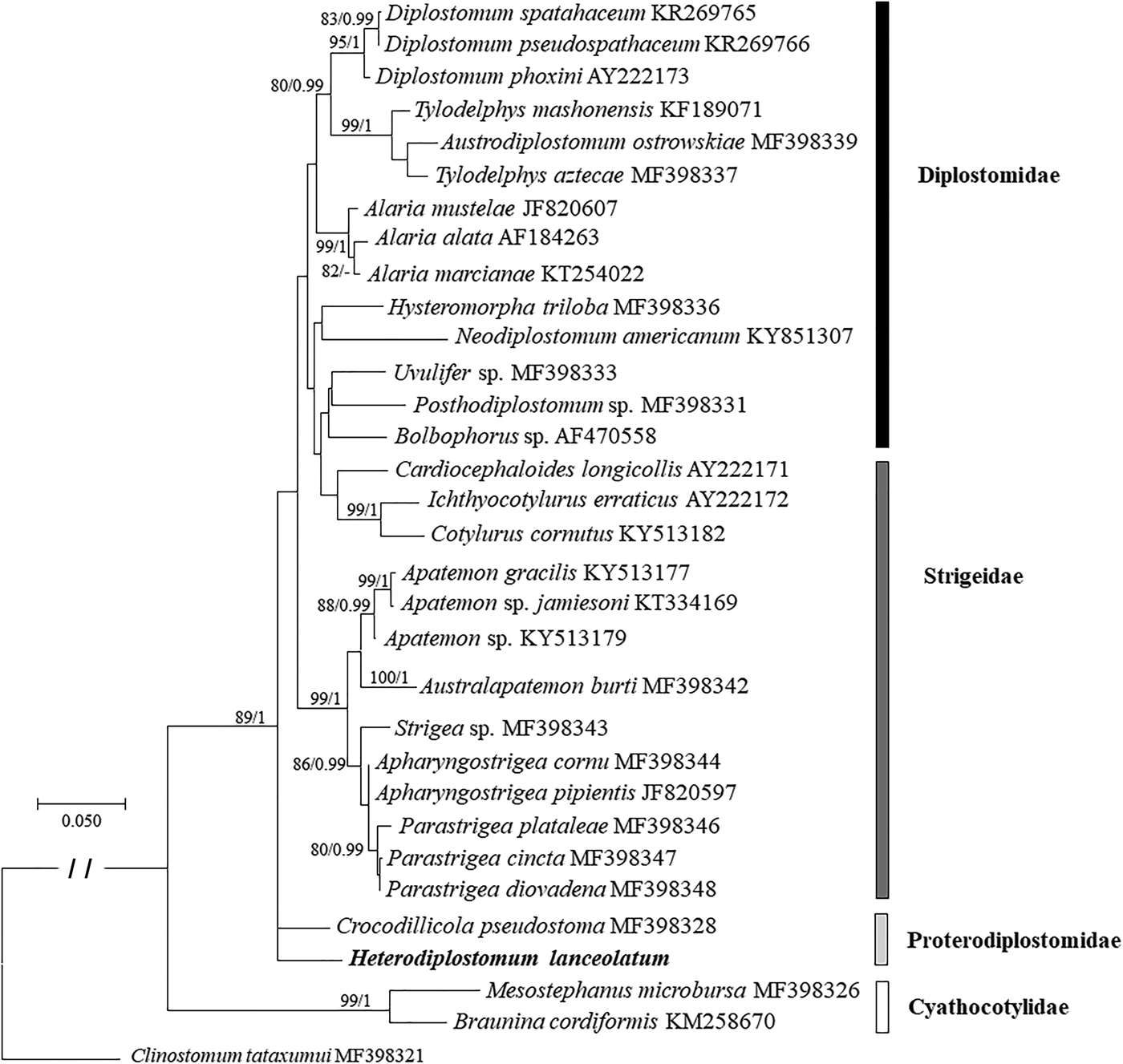
The 1146-bp 28S sequence of H. lanceolatum from L. podicipinus did not match any others deposited in GenBank. The most similar sequences were from Crocodilicola pseudostoma Willemoes-Suhm, 1870, the only proterodiplostomid with comparable data in GenBank, from which three 28S sequences diverge by at least 4.1% from our data. The 28S sequence of H. lanceolatum differed by 5.3–6.5% from those of the Diplostomidae, by 5.4–6.7% from the Strigeidae, by 13.0% from the Brauninidae and by 13.9% from the Cyathocotylidae. In phylogenetic analysis of a 1062-bp alignment, H. lanceolatum fell within a strongly supported clade containing the proterodiplostomid C. pseudostoma and a clade of Strigeidae + Diplostomidae, but the relationship among these three lineages was not resolved (fig. 4).
Phylogenetic relationships of Heterodiplostomum lanceolatum (in bold) with selected members of the superfamily Diplostomoidea as inferred from analysis of partial sequences of 28S rDNA with the GTR + G model analysed by Bayesian Inference (BI) and Maximum Likelihood (ML) methods. Nodal support is indicated as ML/BI; values <0.95 (BI) and <70 (ML) are not shown.

Ecological analysis
Infected frogs (SVL = 16.2 ± 3.7) were smaller than uninfected frogs (18.5 ± 3.2, P < 0.005), but SVL was unrelated to intensity of infection (R 2 = 0.018, P > 0.05). Infection intensity was greater in the hindlimb muscles (4.95 ± 4.05) and in the body cavity (2.57 ± 2.08) than in the abdominal muscles (range 2–10, n = 3) (P = 0.0002). Infected frogs were collected only in part of the pond (prevalence in north-west margin = 49%, prevalence in south-east margin = 0%).
Discussion
Like other members of the subfamily Ophiodiplostominae Dubois, Reference Dubois1936, species of the genus Heterodiplostomum mature exclusively in snakes and possess a large, non-papillose holdfast organ and vitellaria in both the fore- and hindbody (Niewiadomska, Reference Niewiadomska, Gibson, Jones and Bray2002). In Heterodiplostomum, the holdfast organ occupies about 40% of the length of the forebody and the vitellaria extend in two rows from the anterior holdfast organ to the testes, and the ejaculatory duct and uterus open separately inside the copulatory bursa, without a hermaphroditic duct (Niewiadomska, Reference Niewiadomska, Gibson, Jones and Bray2002). These characteristics are described only for reproductively active adults from naturally infected snakes (Dubois, Reference Dubois1936; Ruiz & Rangel, Reference Ruiz and Rangel1954; Lunaschi & Sutton, Reference Lunaschi and Sutton1985), but we observed similar features in metacercariae in L. podicipinus, which possess remarkably developed reproductive organs. Adults identified as H. lanceolatum by Ruiz & Rangel (Reference Ruiz and Rangel1954) and Lunaschi & Sutton (Reference Lunaschi and Sutton1985) are much larger than the type specimens described by Dubois (Reference Dubois1936), which are similar in size to the metacercariae we encountered. A previous report of metacercariae of Heterodiplostomum sp. in Leptodactylus chaquensis in Argentina (Hamann et al., Reference Hamann, Kehr and González2006) did not include morphological data, whereas our identification of H. lanceolatum is based on light and scanning electron microscopy, as well as molecular phylogenetic analysis. The advanced development of the gonads in metacercariae of H. lanceolatum suggests the production of eggs probably starts shortly after infection of the snake definitive host. Progenetic metacercariae have also been reported in another proterodiplostomid, C. pseudostoma (Willemoes-Suhm, 1870), which infects fish and matures in crocodilians (Pérez-Ponce de León et al., Reference Pérez-Ponce de León, Osorio-Sarabia and García-Prieto1992; Guidelli et al., Reference Guidelli, Isaac, Takemoto and Pavanelli2003).
Two species of Heterodiplostomum are known, both restricted to South America. Heterodiplostomum lanceolatum, the only species reported in Brazil, was described by Dubois (Reference Dubois1936) from a snake identified as Coluber sp. collected by Natterer and deposited at Helminthological Collection of the Natural History Museum of Vienna. Later, H. lanceolatum was recorded in Mastigodryas bifossatus and Xenodon guentheri from Brazil (Ruiz & Rangel, Reference Ruiz and Rangel1954; Fernandes & Kohn, Reference Fernandes and Kohn2014), in M. bifossatus, Hydrodynastes gigas and Liophis poecilogyrus reticulatus in Paraguay (Dubois, Reference Dubois1986, Reference Dubois1988), Bothrops alternata, Helicops infrataeniatus, Helicops leopardinus and Hydrodynastes gigas in Argentina (Lunaschi & Sutton, Reference Lunaschi and Sutton1985; Lunaschi & Drago, Reference Lunaschi and Drago2010). Heterodiplostomum helicopsis Mañé-Garzón & Alonso 1976 was described from Helicops carinicaudus from Uruguay.
The only other published DNA sequences of proterodiplostomids are from C. pseudostoma (Hernández-Mena et al., Reference Hernández-Mena, García-Varela and Pérez-Ponce de León2017), a member of the subfamily Polycotylinae Monticelli, 1888, which mature in chelonians and crocodilians. In phylogenetic analysis, C. pseudostoma was as an early divergent member of a clade containing the Diplostomidae and Strigeidae (Hernández-Mena et al., Reference Hernández-Mena, García-Varela and Pérez-Ponce de León2017), which is consistent with our analysis of 28S from H. lanceolatum (fig. 4). However, the relationship between this clade, H. lanceolatum and C. pseudostoma was unresolved, which was unexpected given that both proterodiplostomids are parasites of reptiles and share the unusual morphological characters unique to the family (Niewiadomska, Reference Niewiadomska, Gibson, Jones and Bray2002). Considering that C. pseudostoma and H. lanceolatum belong to different subfamilies, we expect new clades to emerge among the proterodiplostomids as more members of this family are sequenced. However, it remains to be seen whether commonly sequenced nuclear ribosomal and mitochondrial markers will provide sufficient resolution at suprageneric levels (Locke et al., Reference Locke, Van Dam, Caffara, Pinto, López-Hernández and Blanar2018).
Given the logistical difficulties of maintaining the reptilian hosts of proterodiplostomids in the laboratory, molecular data will be critical to understanding life cycles in this enigmatic group. Despite the high diversity of species of Proterodiplostomidae from South America, metacercariae of only four genera are known, all from fish and amphibians (Cystodiplostomum, Crocodilicola, Heterodiplostomum, Herpetodiplostomum) (Szidat, Reference Szidat1969; Mañé-Garzón & Alonso, Reference Mañé-Garzón and Alonso1979; Hamann et al., Reference Hamann, Kehr and González2006; Ferrari-Hoeinghaus et al., Reference Ferrari-Hoeinghaus, Takemoto and Pavanelli2007; Tavares-Dias et al., Reference Tavares-Dias, Neves and Fernandes2011; Hernández-Mena et al., Reference Hernández-Mena, García-Varela and Pérez-Ponce de León2017). While metacercariae of Heterodiplostomum sp. were reported in L. chaquensis in Argentina (Hamann et al., Reference Hamann, Kehr and González2006), and of H. lanceolatum in L. ocellatus (L.) in Uruguay (Mañé-Garzón and Alonso, Reference Mañé-Garzón and Alonso1979), ours is the first record of metacercariae of Heterodiplostomum infecting anurans in Brazil.
Future molecular connections among proterodiplostomid developmental stages can test what seems to emerge from the fragmentary information currently available. In known life cycles, proterodiplostomids that mature in crocodiles encyst as metacercariae in fish, while those maturing in snakes encyst in anurans, reflecting trophic relationships in the transmission of larval forms to definitive hosts. Molecular data will also be critical for illuminating the first intermediate hosts of proterodiplostomids, which are entirely unknown (Blasco-Costa & Locke, Reference Blasco-Costa and Locke2017) and which may include any of the dozens of distinct, unidentified diplostomoid cercariae known in South America (Pinto & Melo, Reference Pinto and Melo2013; Fernandez & Hamann, Reference Fernandez and Hamann2017; López-Hernández et al., Reference López-Hernández, Locke, Melo, Rabelo and Pinto2018).
Almost half the frogs collected in the present study were infected with H. lanceolatum. The smaller size of infected frogs could reflect high transmission rates, such that smaller frogs have greater risks of both infection and snake predation. The smaller size of infected frogs may also be of pathogenic origin, as these the worms were substantial in size compared to their host. Infection intensity was concentrated in the hindlimb muscles (4.95 ± 4.05) and in the abdominal cavity (2.57 ± 2.08). Infected frogs were collected only in one margin of the pond, which we suspect to be related to differences in aquatic vegetation that provides habitat for definitive or first intermediate hosts, but verifying this will require additional study.
We have provided the first DNA sequence of a proterodiplostomid in Brazil and a new morphological data from a larval stage of H. lanceolatum. These data will contribute to better understanding of the life cycles, diversity and evolutionary relationships in the poorly studied Proterodiplostomidae, and are of value in a geographic region where molecular sampling has lagged. The variations in infection levels and host size we observed also suggest directions for future research on the transmission and pathology of this parasite.
Acknowledgement
We are grateful to Douglas Ribeiro for his help in field collections.
Supplementary material
To view supplementary material for this article, please visit https://doi.org/10.1017/S0022149X19000646
Financial support
We thank the National Council for the Improvement of Higher Education (CAPES) (student scholarship to D.L.H.) and the National Council for Scientific and Technological Development (CNPq) (research scholarship to L.A.A. and H.A.P.). S.A.L. was supported by the National Science Foundation (award 1845021).
Conflicts of interest
None.
Ethical standards
All activities were authorized by the local committee for ethics in experimental biology (CEUA-FEIS/UNESP 06/2017).