The presence of antimicrobial residues in milk supplies may have public health implications, such as the development of allergic reactions, interference in the intestinal flora and the development of antibiotic resistance (Alanis, Reference Alanis2005; Demoly & Romano, Reference Demoly and Romano2005). Moreover, it can interfere with the manufacture of dairy products (Babu et al. Reference Babu, Singh and Chander1989; Berruga et al. Reference Berruga, Molina, Noves, Roman and Molina2007).
To prevent these problems, the European Union (Regulation, 853/2004/EC) specified that raw milk intended for human consumption must not contain antimicrobial residues exceeding the Maximum Residue Limits (MRLs) as established by Regulation (2010/37/EC).
Different microbial inhibitor tests have been developed for the detection of these residues in milk. The principle of these methods is based on the inhibition of the growth of the Geobacillus stearothermophilus subsp. calidolactis spore. This inhibition of growth is demonstrable as the colour of the culture medium remains unchanged. In inhibitor-free milk, the test microorganism grows and a colour change in the indicator takes place. These tests are widely utilised for the screening of inhibitors in milk, as they are quick, easy to use and economical (Toldrá & Reig, Reference Toldrá and Reig2006; IDF, 2010). In addition, they have the sensitivity to detect β-lactams and sulphonamides, but they are not sensitive enough to detect many other antibiotics such as tetracyclines, quinolones, macrolides and aminoglycosides (Le Breton et al. Reference Le Breton, Savoy-Perroud and Diserens2007; Kantiani et al. Reference Kantiani, Farré and Barcelo2009; Navrátilova, Reference Navrátilova2009; Perme et al. Reference Perme, Bizjak, Gacnik and Kirbis2010).
Moreover, accuracy in milk inhibitor analysis is very important to most dairy farmers and to the dairy industry. Many factors can affect the response of these tests, such as milk composition, somatic cell count and total bacteria count (Althaus et al. Reference Althaus, Molina, Peris, Torres and Fernández2003; Kang et al. Reference Kang, Jin and Kondo2005; Comunian et al. Reference Comunian, Paba, Dupre, Daga and Scintu2010). Also, other important factors can affect the results namely adequate milk sampling as well as storage before analysis in control laboratories.
In this sense, the AOAC (Reference Horwitz2000) and the International Dairy Federation (IDF, 1995) laid down requirements for the milk sampling process, storage and the transport of samples. For this purpose, storage of the samples should be such that the state of the sample at the time of sampling is not adversely affected to any considerable extent. During transport, precautions should be taken to prevent exposure to odours, direct sunlight and other adverse conditions. The storage temperature for raw milk should be between 0−4 °C, which should be reached as quickly as possible. Also, samples must be dispatched immediately after sampling to the testing laboratory.
Furthermore, some authors suggest a possible decrease in concentration and/or the loss of antimicrobial activity in some molecules during the storage of milk samples in refrigeration, for example, as in the case of penicillin G, ampicillin, amoxicillin (Schenck & Friedman, Reference Schenck and Friedman2000) and oxytetracycline (Himanish et al. Reference Himanish, Mahadeva, Jayaraman and Bawa2008; Roca et al. Reference Roca, Molina, Villegas, Gabirondo and Althaus2008). Therefore, the storage time of milk samples at low temperatures may influence the results of microbial inhibitor tests.
Also, the AOAC and IDF have established the possibility of using preservatives in milk samples (for example, bronopol or azidiol) to prevent spoilage during transport from the producer to the laboratory, so long as their nature does not interfere with subsequent analyses. Some authors have studied the effects of the use of preservatives on the different characteristics of milk such as composition (Sánchez et al. Reference Sánchez, Sierra, Luengo, Corrales, Morales, Contreras and Gonzalo2005; Butler & Stergiadis, Reference Butler and Stergiadis2011), somatic cell (Martínez et al. Reference Martínez, Gonzalo, Carriedo and San Primitivo2003; Sánchez et al. Reference Sánchez, Sierra, Luengo, Corrales, Morales, Contreras and Gonzalo2005) and total bacteria count (Elizondo et al. Reference Elizondo, Aldunate, Ezcurra, Gallego, Saigos, Ulayar and Izco2007; Sierra et al. Reference Sierra, Sánchez, Contreras, Luengo, Corrales, de la Fe, Guirao, Morales and Gonzalo2009a)
In recent years, the use of azidiol has become compulsory in all milk-testing laboratories in Spain. This preservative contains a mixture of chloramphenicol, sodium azide, bromophenol blue and sodium citrate. Chloramphenicol is a bacteriostatic antibiotic that can affect microbial inhibitor tests, as these tests are based on the inhibition of microbial growth of specific microorganisms, giving ‘false positive’ results (Molina et al. Reference Molina, Althaus, Balasch, Torres, Peris and Fernandez2003; Stead et al. Reference Stead, Ashwin, Richmond, Sharman, Langeveld, Barendse, Stark and Keely2008).
The objective of this study was to evaluate the effect of storage time at 4 °C and the use of azidiol in milk samples on the results of microbial inhibitor tests used in milk-testing laboratories.
Material and methods
Preparation of milk samples
The antimicrobial-free milk samples (‘negative milk’) used were obtained according to ISO/FDIS 13969 (IDF, 2002); requirements. The animals received no pharmacological treatment throughout the sampling period. The cows were in mid-lactation (between 60 and 200 d after calving). The clinical and subclinical health status of the animals was good, with fewer than 150 000 somatic cells/ml, and the total viable count was below 104 cfu/ml in milk. The milk of seven cows was combined to overcome individual variations in milk composition to prepare a pool sample (1000 ml). Sixteen negative milk samples were used for the analysis of each antibiotic.
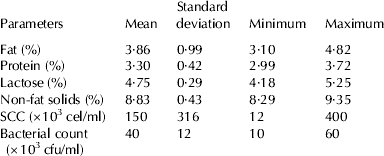
Gross composition (MilkoScan FT-120. Foss, Hillerød, Denmark), somatic cell count (Fossomatic 5000. Foss, Hillerød, Denmark) and bacteriological count (BactoScan FC. Foss, Hillerød, Denmark) were analysed. Table 1 presents the mean values of the composition, somatic cell counts and bacteriological counts of the milk samples.
Quality parameters of cow's milk samples (n=16)

SCC: Somatic Cell Count
The 16 milk pool samples were divided into two aliquots (n=32) to analyse the effect of the preservative (16 preservative-free and 16 with azidiol). To prepare the azidiol solution and its dosage, the rules laid down by Spanish regulations (BOE, 1728/2007) were followed. The azidiol composition was 0·75 g chloramphenicol, 10 ml ethanol (96%), 18 g sodium azide, 45 g trisodium citrate and 0·35 g bromophenol blue, mixed in 1000 ml of distilled water. The dose was chosen to reach a final concentration of 3·3 ml/l milk.
Antibiotics and spiked milk samples
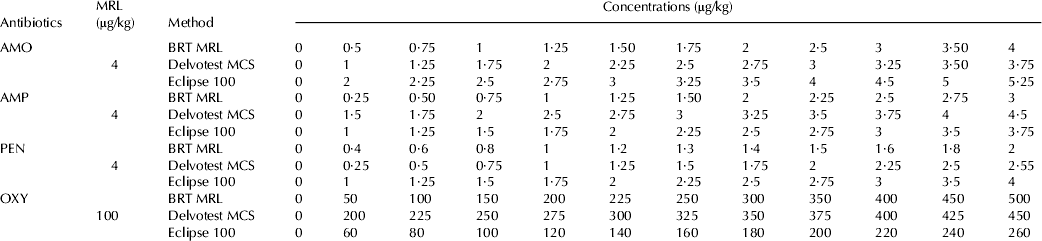
In order to calculate the dose-response curve (IDF, 2002), each of the 32 aliquots of milk (16 preservative-free and 16 with azidiol) were divided in 12 aliquot milk samples, for fortification with 12 different antibiotic concentrations which in turn, were analysed 8 times by the screening methods.
The antibiotics selected for this study are widely used in the veterinary treatment of cattle and were supplied by Sigma-Aldrich (Madrid, Spain): amoxicillin (AMO, A-8523), ampicillin (AMP, A-9518), penicillin G (PEN, Pen-Na) and oxytetracycline (OXY, O-5750). The concentrations of antibiotics varied according to the drug and method, shown in Table 2.
Antibiotic concentrations used for the different microbial inhibitor tests

AMO: amoxicillin; AMP: ampicillin; PEN: penicillin G; OXY: oxytetracyclin; MRL: Maximum Residue Limit
The drugs used to prepare antimicrobial solutions were handled according to the manufacturers’ instructions. To avoid possible instability, all the dilutions were prepared in 10 ml volumetric flasks when analyses were carried out. Spiked milk samples were prepared from the respective stock solution in a single step (IDF, 2010).
Immediately after preparation, the spiked milk samples were divided into 4 aliquots (10 ml) to evaluate the effect of storage time at 4 °C (0, 24, 48 and 72 h).
Microbial inhibitor test
The microbial inhibitor tests used were Brilliant Black Reduction Test MRL (BRT MRL, AiM Analytik in Milch Produktions-und Vertriebs-GmbH, Munich, Germany), Delvotest MCS Accelerator (Delvotest MCS, DSM Food Specialties, Delft, the Netherlands) and Eclipse 100 (Eclipse, Zeu-Inmunotec, Zaragoza, Spain), according to each manufacturers’ instructions. For the ‘positive control’, milk samples were spiked with 4 μg/kg of penicillin G. Afterwards, the BRT MRL and Delvotest MCS tests were incubated in a water bath at 64±1 °C for approximately 3 and 2 h 30 min, respectively. Eclipse 100 was used with a 1-h diffusion time at room temperature and was then incubated for approximately 2 h 30 min in a water bath at 64±1 °C. Visual interpretation was carried out by three trained technicians and was evaluated as ‘negative’ (yellow) or ‘positive’ (blue).
Statistical analysis
To evaluate the effects of storage time (ST), the preservative (P) and their interaction (ST×P) on the responses of the microbial inhibitor tests, the logistic regression model used was:
 $${\rm L}_{{\rm ijkl}} = \log it[{\rm P}_{{\rm ijkl}} ] = {\rm \beta} _0 + {\rm \beta} _1 {\rm C}_{\rm i} + {\rm \beta} _2 {\rm ST}_j + {\rm \beta} _3 {\rm P}_{\rm k} + {\rm \beta} _{23} {\rm ST}_{\rm j} \times {\rm P}_{\rm k} + {\rm \varepsilon} _{{\rm ijkl}} $$
where: Lijkl: logit model; [Pijkl]: probability for the response category (positive or negative); β0: intercept; β1, β2 and β3: the parameters estimated for the model; Ci: effect of concentration (n=12); STj: effect of storage time (n=4); Pk: effect of preservative, on the dummy variable (A=1 no azidiol; A=0 azidiol); STj×Pk: effect of interaction storage time×preservative and εijk: residual error.
From the equation obtained with the logistic regression for each method and antibiotic, a detection limit (DL) was determined, using preservative-free milk samples and immediately after preparation (0 h). The DL was calculated as the concentration that produces 95% positive results (ISO/FDIS 13969:2002).
Furthermore, by using this equation at a concentration equivalent to the DL and MRL, the positive results of microbial inhibitor tests at different storage times (0, 24, 48 and 72 h) were calculated.
Results and discussion
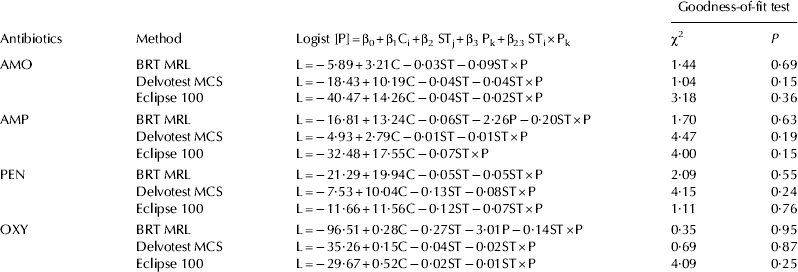
Table 3 shows the equations used to predict the positive results of the microbial inhibitor tests and the significant parameters in the statistical analysis (P<0·05). An increase in the β1 coefficient value indicates that higher antibiotic concentrations increase the frequency of the positive results of the methods. The β2 coefficient related to storage time having a negative sign, indicates that the positive results decrease when the storage time is prolonged. Parameter β3 stands for the effect of the preservative on the dose-response curve. This coefficient is only significant (P<0·05) for the results of the BRT MRL method with ampicillin and oxytetracycline. Thus, the results of this test differ when azidiol has been added to milk samples with ampicillin and oxytetracycline, when compared with preservative-free milk samples.
Logistic equation of antibiotics dose-response curves in milk analysed by microbial inhibitor tests
AMO: amoxicillin; AMP: ampicillin; PEN: penicillin G; OXY: oxytetracycline; L: ln (Probability (+)/1-Probability (+); C: concentration; β0, β1, β2, β3, β23: coefficients; ST: storage time (0, 24, 48 or 72 h); P: preservative (no preservative=1 and azidiol=0)
Moreover, the interaction between storage time and preservative (ST×P) was significant for all the molecules and methods used. The negative sign of the coefficient (β23) of the interaction (ST×P) indicates that milk samples stored with azidiol behave in a different manner from preservative-free samples. The highest positive results with the storage time are obtained if milk samples contain azidiol.
For all the analyses, the goodness-of-fit test shows that the experimental values are similar to those estimated by the logistic model, suggesting the suitable adjustment obtained using this model.
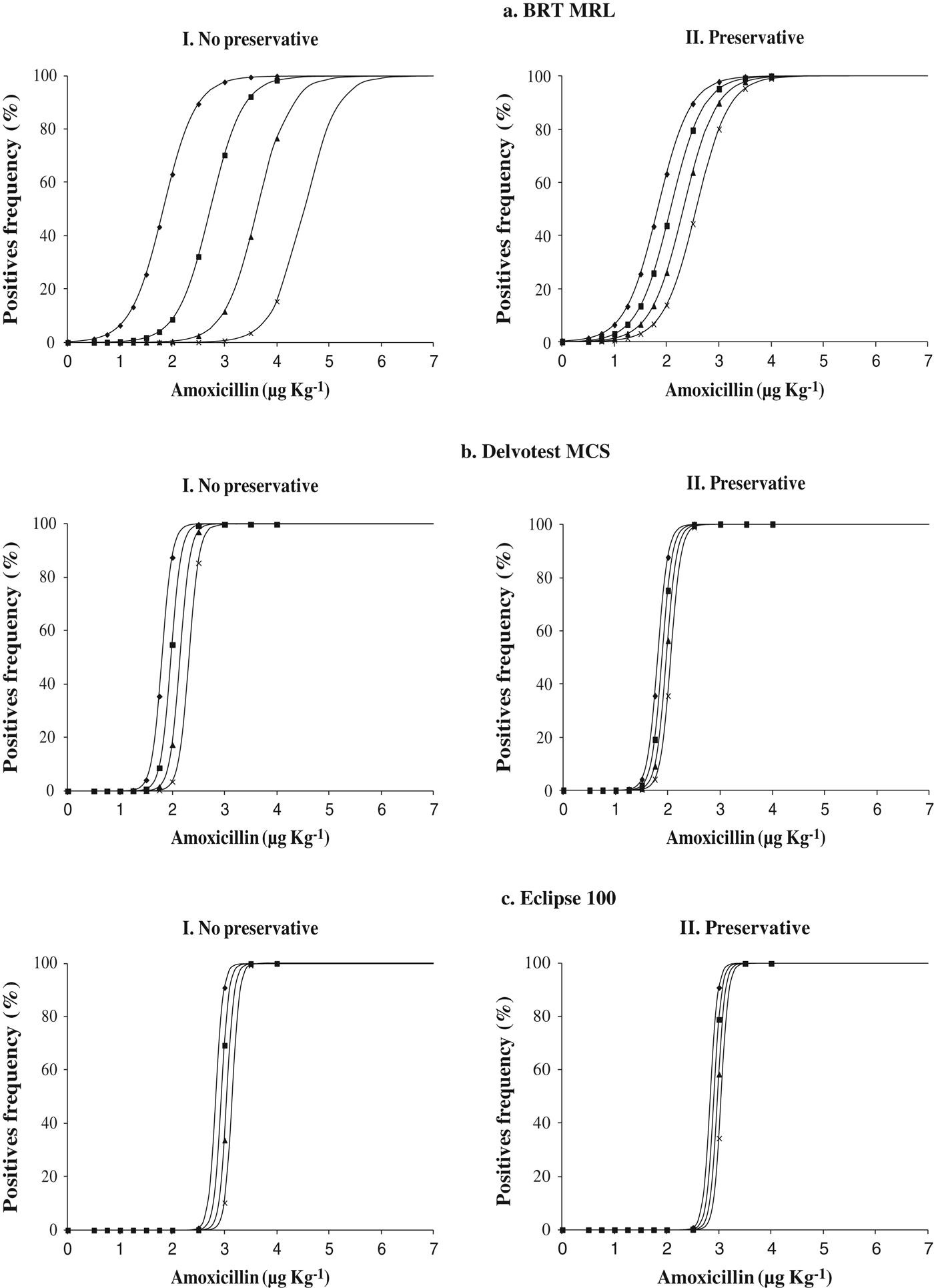
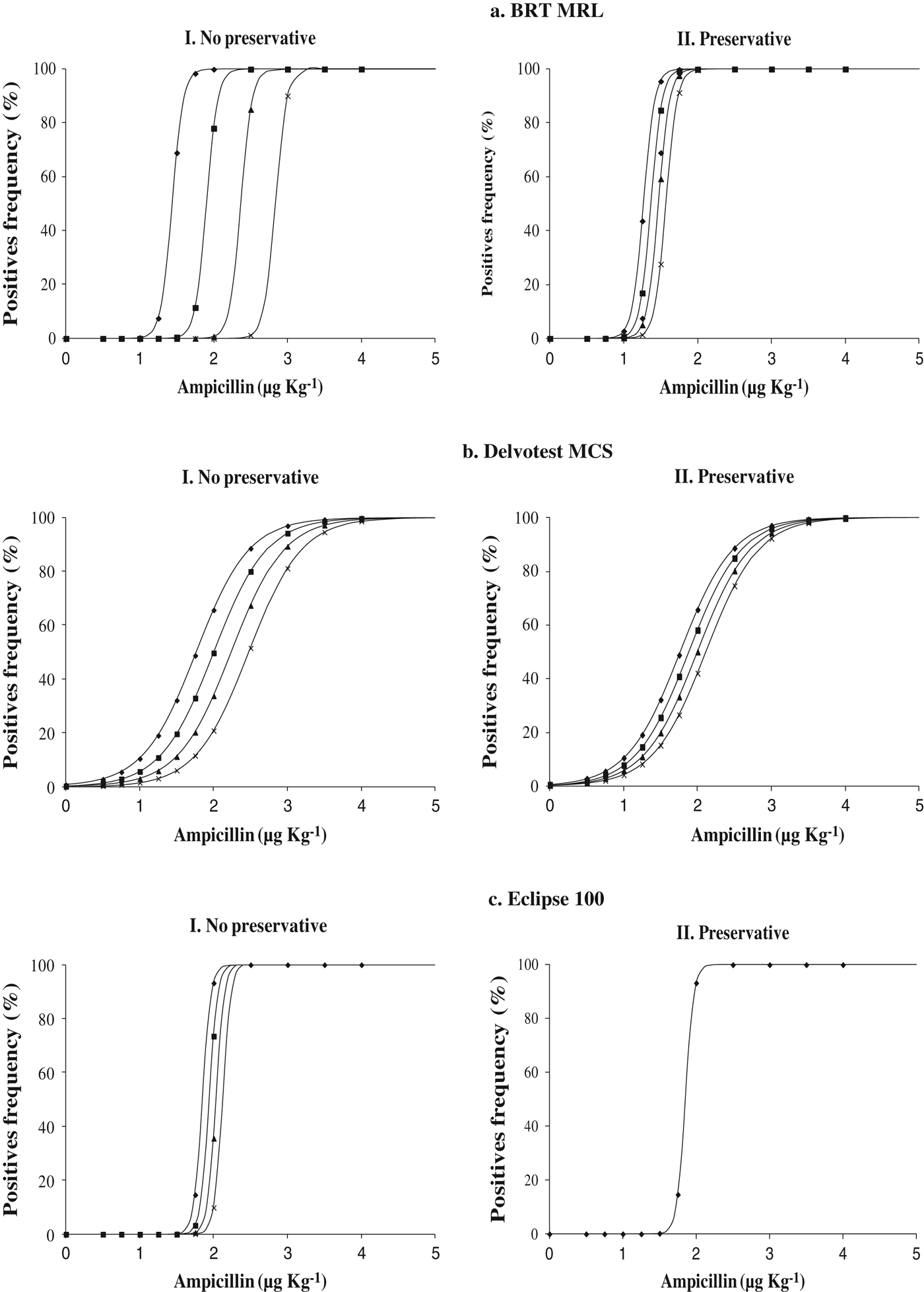
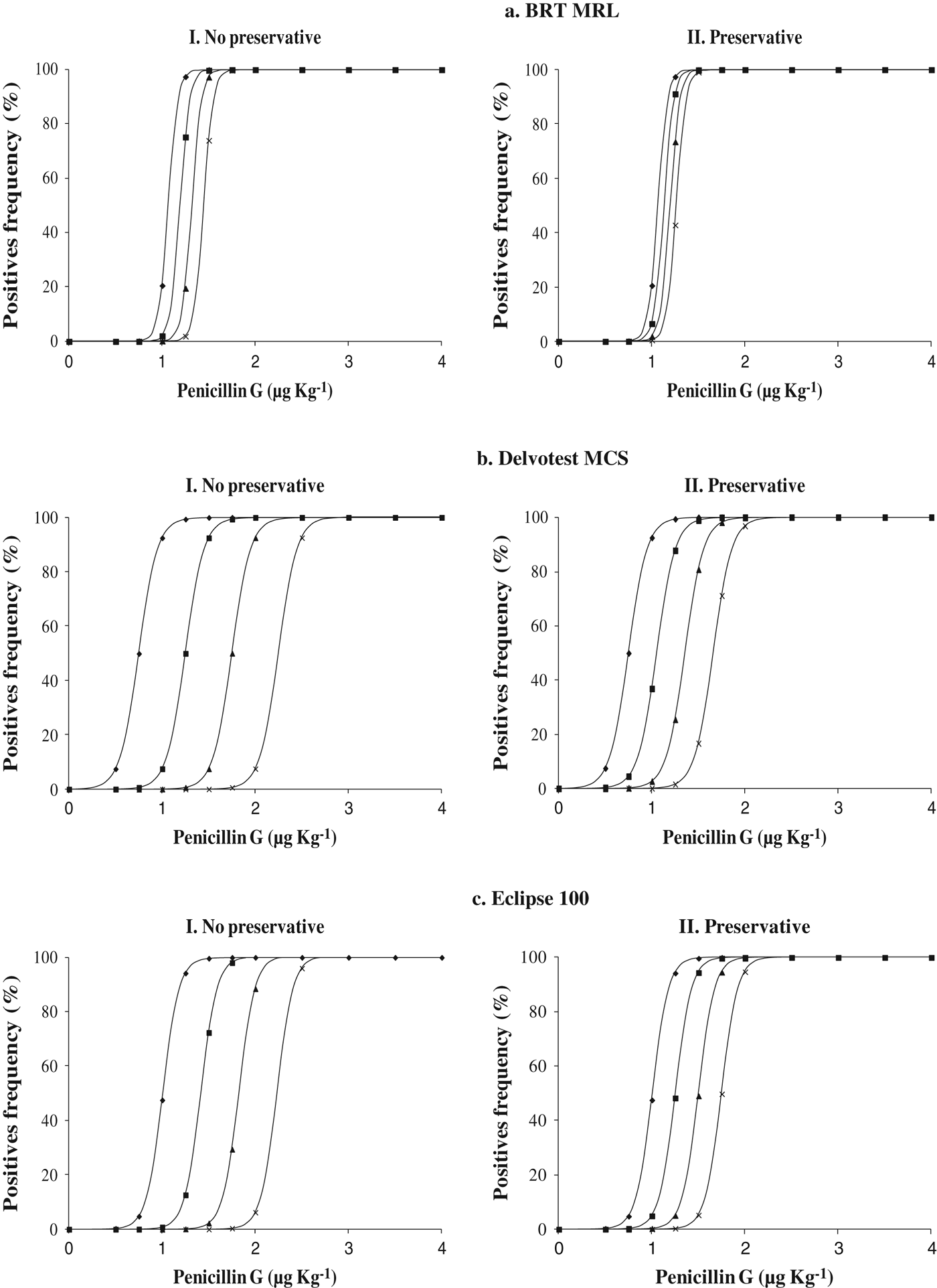
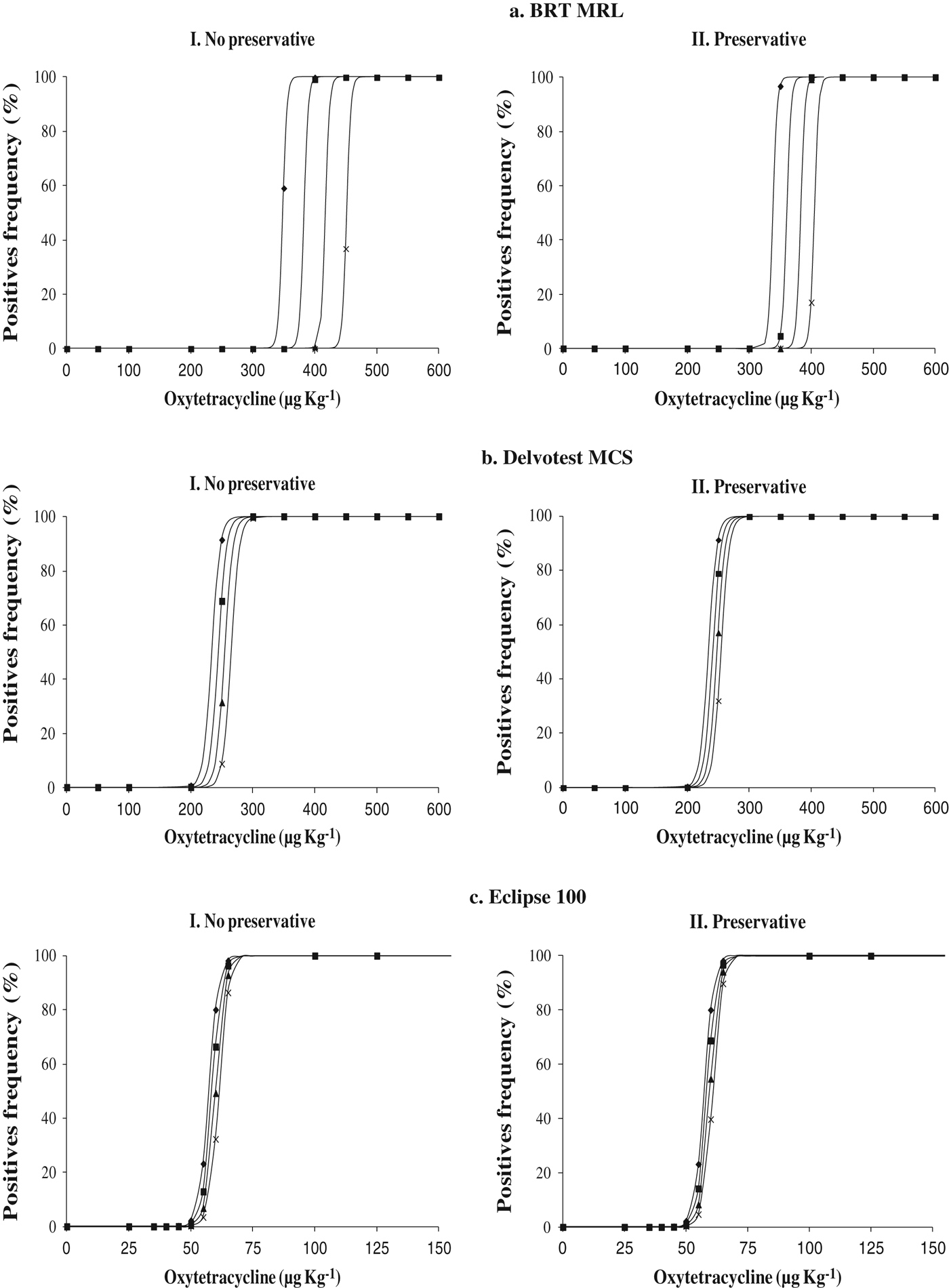
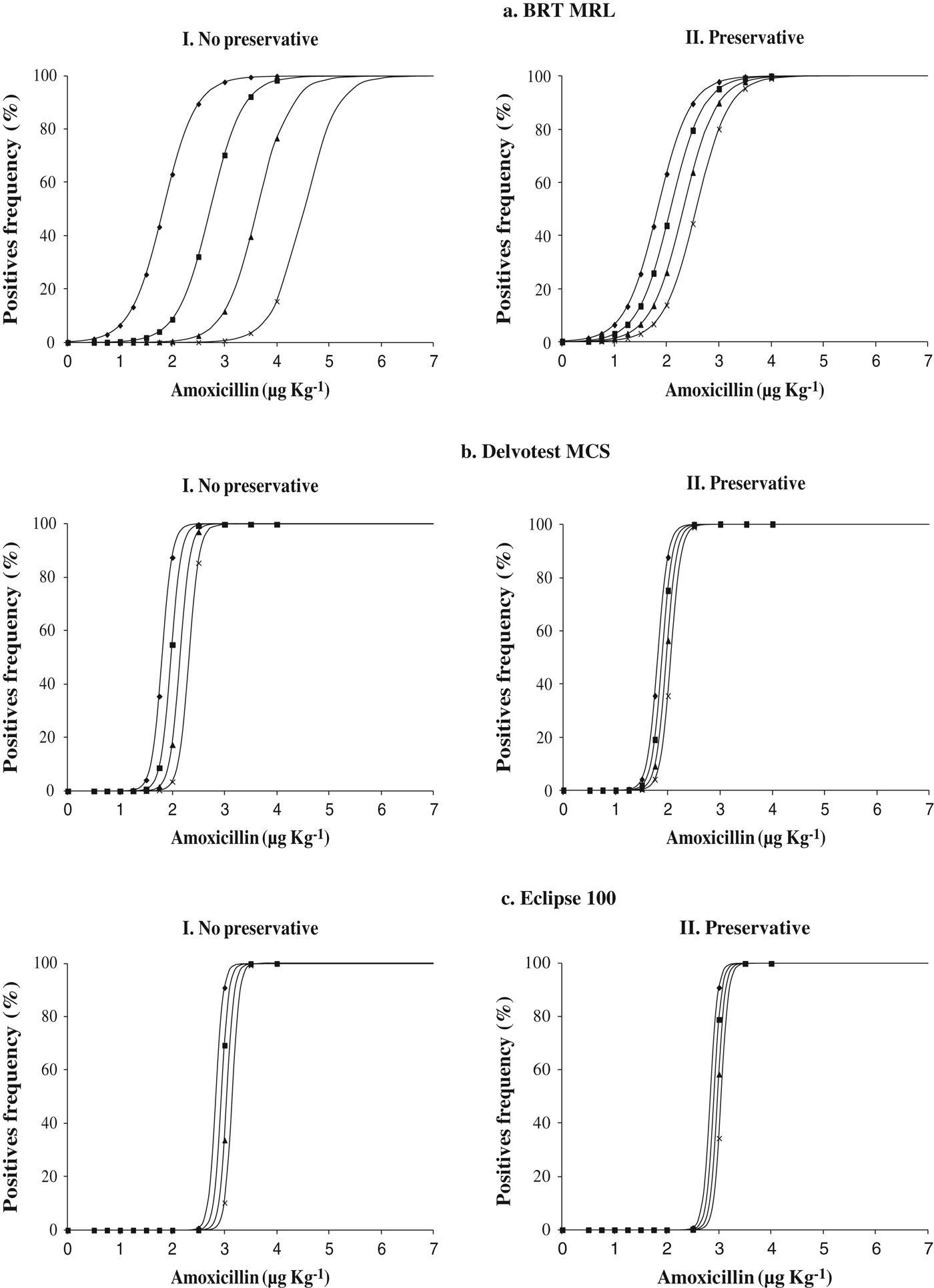
For significant effects (P<0·05), the dose-response curves are displayed in Fig. 1 (amoxicillin), Fig. 2 (ampicillin), Fig. 3 (penicillin G) and Fig. 4 (oxytetracycline) for preservative-free samples and with azidiol.
Effect of storage time and azidiol as preservative of the milk samples on the dose-response curves of amoxicillin using microbial inhibitor tests (Storage time: ◆ 0 h, ■ 24 h, ▲ 48 h and × 72 h). (a) BRT MRL. (b) Delvotest MCS. (c) Eclipse 100.
Effect of storage time and azidiol as preservative of the milk samples on the dose-response curves of ampicillin using microbial inhibitor tests (Storage time: ◆0 h, ■ 24 h, ▲ 48 h and × 72 h). (a) BRT MRL. (b) Delvotest MCS. (c) Eclipse 100.
Effect of storage time and azidiol as preservative of the milk samples on the dose-response curves of penicillin G using microbial inhibitor tests (Storage time: ◆ 0 h, ■ 24 h, ▲ 48 h and ×72 h). (a) BRT MRL. (b) Delvotest MCS. (c) Eclipse 100.
Effect of storage time and azidiol as preservative of the milk samples on the dose-response curves of oxytetracycline using microbial inhibitor tests (Storage time: ◆ 0 h, ■ 24 h, ▲ 48 h and ×72 h). (a) BRT MRL. (b) Delvotest MCS. (c) Eclipse 100.
As can be appreciated, the increase in storage time of the milk samples produces a lower frequency of positive results for all methods and antibiotics employed, if the coefficient β2 is negative (Table 3).
Regarding the effect of azidiol, the dose-response curves of milk samples with azidiol (II) for each antibiotic are closer to each other if compared with the curves of the preservative-free samples (I). In the case of milk samples with azidiol and ampicillin analysed with the Eclipse 100, the refrigeration time did not cause any effect, and thus only a dose-response curve can be appreciated in Fig. 2c. This indicates the better conservation of the antibiotic molecules in those milk samples stored with azidiol, except for penicillin G, analysed by the Delvotest MCS and Eclipse 100 methods (Fig. 4b, c).
The detection limits (DL) for amoxicillin (BRT MRL: 3 μg/kg; Delvotest MCS: 2 μg/kg; Eclipse 100: 3 μg/kg), ampicillin (BRT MRL: 1·5 μg/kg; Delvotest MCS: 3 μg/kg; Eclipse 100: 2 μg/kg), penicillin G (BRT MRL: 1·2 μg/kg; Delvotest MCS: 1 μg/kg; Eclipse 100: 1 μg/kg) are below the MRL. The DL for oxytetracycline in the BRT MRL and Delvotest MCS methods (359 and 253 μg/kg, respectively) is much higher than the MRL (100 μg/kg), but lower (62 μg/kg) for Eclipse 100.
In recent studies, Le Breton et al. (Reference Le Breton, Savoy-Perroud and Diserens2007) and Stead et al. (Reference Stead, Ashwin, Richmond, Sharman, Langeveld, Barendse, Stark and Keely2008) validated the use of the Delvotest SP-NT in cow's milk, calculating detection limits below or equal to the MRL for penicillin, amoxicillin and ampicillin as well as detection limits above the MRL for oxytetracycline. In case of the BRT test, Sierra et al. (Reference Sierra, Sánchez, Contreras, Luengo, Corrales, Morales, De la Fe, Guirao and Gonzalo2009b) calculated detection limits below the MRL for six of the ten β-lactams antibiotics tested in goat's milk; penicillin, amoxicillin and ampicillin. The same authors also calculated the DL for the Eclipse 100 test obtaining limits below the MRL for penicillin, but above the MRLs for amoxicillin and ampicillin.
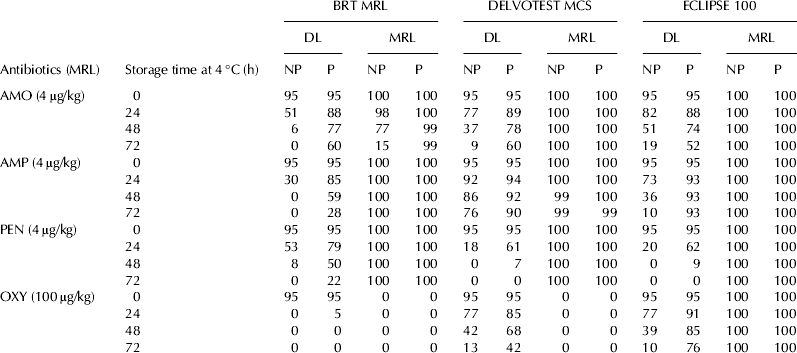
To evaluate the effect of storage time of milk samples spiked with antibiotics on the positive results of the microbial inhibitor tests, different concentrations (DL: detection limit and MRL: Maximum Residue Limit) and storage times at 4±1 °C (0, 24, 48 and 72 h) were utilised. Table 4 presents these results for each antibiotic and microbial inhibitor test.
Effect of storage time and preservative on the positive results (%) of microbial inhibitor tests in milk samples for different antibiotics
AMO: amoxicillin; AMP: ampicillin; PEN: penicillin G; OXY; oxytetracycline; NP: no preservative; P: preservative (azidiol); DL: detection limit; MRL: Maximum Residue Limit
At an equivalent concentration to the DL for each antibiotic and method, it can be seen that the longer the storage time (24, 48 and 72 h) at 4±1 °C, the lower the positive results become for preservative-free milk samples and for those stored with azidiol. But these results remain more constant in all cases if samples are refrigerated with azidiol. This demonstrates that it is advisable to use this preservative when the analysis of inhibitors by means of microbial inhibitor tests cannot be carried out on the same day as collection takes place.
Moreover, it is worth emphasising that the positive results in the samples refrigerated with amoxicillin and ampicillin, obtained by analysis with the Delvotest MCS and Eclipse 100 methods, are more stable than when analysed by BRT MRL. Conversely, BRT MRL presents a larger number of positive results for penicillin G if compared with the other two methods.
Similarly, in the case of oxytetracycline, the Delvotest MCS and Eclipse 100 methods present a better stability of the positive results than BRT MRL (0% preservative-free and 5% with azidiol) when the milk samples were stored for 24 h. After 48 h however, the percentage of the positive results lowers substantially in the Delvotest MCS and Eclipse 100, in the case of preservative-free milk samples.
Of all the tested penicillins, ampicillin is the molecule in which positive results were maintained during storage time. For penicillin G however, the positive results lowered considerably for all three methods when a 48 h storage time was used.
This decrease in the positive results may be due to degradation or loss of activity in the antibiotic molecules when storing the milk samples. This fact has been observed by some authors with techniques that permit the quantification of the antibiotic concentration that milk presents. Roca et al. (unpublished data) employed the MS-MS HPLC technique and obtained degradation percentages for amoxicillin (12·2, 18·2 and 23·9%), ampicillin (6·1, 10·4 and 14·5%) and penicillin G (14·4, 18·0 and 21·4%) when milk samples were stored at 4 °C for 24, 48 and 72 h, respectively. These authors calculated lower degradation percentages for ampicillin, but higher for penicillin G, indicating that this antibiotic is more unstable when storage takes place at 4 °C. Instability for penicillin G was also indicated by Haagsma (Reference Haagsma, Haagsma, Ruiter, Czedik-Eysenberg and Veldhoven1993), who reported concentration losses of over 60% when samples were refrigerated for 48 h at 2 °C. This degradation in concentration may give rise to a lower percentage of positive results if the microbial inhibitor tests in penicillin G are employed, since a greater instability of this antibiotic is observed when stored at 4 °C.
In the case of oxytetracycline, some authors have calculated degradation percentages of between 6–18% (Himanish et al. Reference Himanish, Mahadeva, Jayaraman and Bawa2008) and 3·3–10·4% (Roca et al. Reference Roca, Molina, Villegas, Gabirondo and Althaus2008) at 24 and 48 h of refrigeration with the UV-HPLC and DAD-HPLC techniques, respectively. This lower degradation in the oxytetracycline concentration is reflected in the responses of the Delvotest MCS and Eclipse 100 methods which, at an equivalent concentration to the DL, give positive results at 24 h refrigeration, which at 85 and 91% are still rather high.
Concerning MRL in general, in the β-lactams tested at an equivalent concentration to the MRL, positive results did not decrease when milk sample storage time was prolonged (Table 4), except for the BRT MRL method for milk samples with amoxicillin stored preservative-free. Therefore, if milk samples contain a concentration equivalent to the MRL, microbial inhibitor tests will still be able to detect these substances for up to 72 h when stored at 4 °C.
Employing the BRT MRL and Delvotest MCS methods for oxytetracycline, calculated detection limits (359 and 253 μg/kg, respectively) are above MRL (100 μg/kg). Thus, no positive results were obtained (Table 4) when analysing concentrations equal to MRL. For Eclipse 100, the DL is lower than the MRL, therefore positive outcomes are 100% during the 3 d of storage for an antibiotic concentration equivalent to the MRL.
Conclusions
The results of the microbiological tests for the detection of antibiotics are reproducible in milk samples stored at 4 °C for 72 h when antibiotic concentrations are equivalent to MRLs. However, if the concentration of the β-lactams antibiotics or oxitetracycline is below or near the detection limits of the test, the results may show discrepancies due to the storage period, in particular in preservative-free milk samples.
Microbial inhibitor tests present a dichotomist response (negative or positive) and are unable to identify and quantify the antibiotic present in the milk sample. Hence, from a practical point of view, it would thus be convenient for milk quality laboratories to add azidiol to milk samples and not exceed a storage period of 48 h at 4 °C when microbial screening tests are applied to detect antibiotics in milk.
This study was funded by Ministerio de Agricultura, Pesca y Alimentación (Study 31.08) and Generalitat Valenciana (A-08/08).