1 Introduction
Health policy is one of the policy areas in the European Union (EU) firmly held in the hands of national governments. The EU has nevertheless gained competence in many health-related policies, e.g., food safety, mutual recognition of health personnel’s qualifications and regulation of pharmaceuticals and medical devices (European Commission, 2017). However, it is up to national governments to organise health care (Mossialos et al., Reference Mossialos, Permanand, Baeten and Hervey2010; European Commission, 2017) and the EU’s role is to complement national policies. Since the 1990s, EU rules on patient mobility and cross-border care have gone through a substantial development, especially by adopting the Directive on the application of patients’ rights in cross-border health care (the ‘Patients’ Rights Directive’) in 2011. This Directive affects health systems in all EU countries, as well as certain non-EU members, such as Norway, through the Agreement on the European Economic Area (EEA Agreement) (EFTA, 2016). The Directive explicitly regulates health care provision for patients in areas where member states’ competence has been extensive (European Parliament and the European Council, 2011).
This article sets out to explore the implementation of the Patients’ rights directive in Germany and Norway, analysing its possible effects on the two counties’ health systems. The basic research questions are: How has the Directive been transposed into German and Norwegian law? What factors may explain similarities and differences in implementation? To what extent has the Directive contributed to convergence between these two health systems and the EU’s common legal and policy framework?
Since the German and Norwegian health systems differ, we expect divergent implementation of EU rules. If we nevertheless find converging effects, we can likely substantiate a causal link to common processes of Europeanisation.
This article proceeds as follows: first, we provide an overview of the methods and data used. Second, the analytical framework gives the theoretical basis for further analysis. The article then presents EU rules on patient mobility and cross-border care, followed by an analysis of the implementation and transposition of the Patients’ Rights Directive in Germany and Norway. Finally, we present a summary of our findings and conclusions.
2 Methods and data
Data collection was conducted through review of relevant studies, 12 semi-structured expert interviews and six email discussions with key experts. The snowball sampling method, i.e., where existing study objects recruit future subjects from among their peers, was used to identify relevant data sources. We contacted key informants who provided guidance to identify other informants and experts with insider knowledge (Crossman, 2016).
Public documents and press releases were used as supplementary data. The choice of Germany and Norway as study cases reflects a ‘most-different systems’ strategy. These two countries have different political and constitutional structures (federal vs unitary state, respectively), as well as different health system models (Social Health Insurance model vs National Health Service model). In the German Social Health Insurance model individuals usually choose among different insurance companies/sickness funds. In practice, a person’s profession or place of employment decides the choice of insurance company. The insurance companies can choose among different health care providers where private ones dominate (Böhm et al., 2013). The National Health Service model in Norway, however, is characterised by tax-financed universal coverage and predominantly public health care providers (Van den Noord et al., Reference Van den Noord, Hagen and Iversen1998).
3 The convergence hypothesis in EU studies
This article has two aims: (1) to show how EU rules on patients’ rights are implemented at the national level; and (2) to identify relevant factors that may explain how the health systems of Germany and Norway adapt to the EU rules (Pollitt, Reference Pollitt2001; Holzinger and Knill, Reference Holzinger and Knill2005; Jordan, Reference Jordan2005; Knill, Reference Knill2005; Lenschow et al., Reference Lenschow, Liefferink and Veenman2005; Mossialos et al., Reference Mossialos, Permanand, Baeten and Hervey2010). Our focus is on the EU’s Patients’ Rights’ Directive from 2011 (European Parliament and the European Council, 2011). Strong EU competencies in the field of health policy were not anticipated by the member states (Greer, Reference Greer2006; Mossialos et al., Reference Mossialos, Permanand, Baeten and Hervey2010). Moreover, health policy is a political field traditionally kept by sovereign nation states in Europe (Mossialos et al., Reference Mossialos, Permanand, Baeten and Hervey2010). Thus, the developments in EU health policy and law have attracted much attention among academics as well as practitioners in Europe (Greer, Reference Greer2006, Reference Greer2008, Reference Greer2013; Martinsen and Vrangbæk, Reference Martinsen and Vrangbæk2008; Martinsen and Blomqvist, Reference Martinsen and Blomqvist2009; Martinsen, Reference Martinsen2009, Reference Martinsen2011; Mossialos et al., Reference Mossialos, Permanand, Baeten and Hervey2010; Pennings, Reference Pennings2011; Baeten, Reference Baeten2014; Vollaard and Martinsen, Reference Vollaard and Martinsen2014; Vollaard et al., Reference Vollaard, van de Bovenkamp and Martinsen2016).
The basic research question is whether the EU’s Patients’ Rights Directive triggers domestic adaptions, thereby eventually making European health systems more similar? Thus, the article enters into the debate on the domestic impact of European integration and the relevance of the convergence hypothesis in EU studies (Cucic, Reference Cucic2000; Pollitt, Reference Pollitt2001; Olsen, Reference Olsen2003; Knill, Reference Knill2005; Lenschow et al., Reference Lenschow, Liefferink and Veenman2005; Ladrech, Reference Ladrech2010; Mossialos et al., Reference Mossialos, Permanand, Baeten and Hervey2010). In the context of EU research, the convergence hypothesis states that over time, the EU competencies increase and the adoption of new EU rules and policies will lead to convergence in policies and rules among those countries taking part in EU cooperation (Cucic, Reference Cucic2000; Pollitt, Reference Pollitt2001; Olsen, Reference Olsen2003; Knill, Reference Knill2005; Lenschow et al., Reference Lenschow, Liefferink and Veenman2005; Ladrech, Reference Ladrech2010; Mossialos et al., Reference Mossialos, Permanand, Baeten and Hervey2010). Moreover, the institutional set-up of nation states may also converge towards a common model as a result of Europeanisation responding to similar challenges given by the policy cycle in the EU (Wessels, Reference Wessels1996; Knill and Lehmkuhl, Reference Knill and Lehmkuhl2002; Olsen, Reference Olsen2002; Radaelli, Reference Radaelli2003; Mastenbroek and Kaeding, Reference Mastenbroek and Kaeding2006; Ladrech, Reference Ladrech2010; Mossialos et al., Reference Mossialos, Permanand, Baeten and Hervey2010; Kelemen, Reference Kelemen2011). Subsequently, existing differences between policies and institutions in European states may be reduced. An important question in this research is thus whether, and if so, why similar policies and institutions are developed in Europe (Wessels, Reference Wessels1996; Knill and Lehmkuhl, Reference Knill and Lehmkuhl2002; Olsen, Reference Olsen2002; Radaelli, Reference Radaelli2003; Mastenbroek and Kaeding, Reference Mastenbroek and Kaeding2006; Ladrech, Reference Ladrech2010; Mossialos et al., Reference Mossialos, Permanand, Baeten and Hervey2010; Kelemen, Reference Kelemen2011). Other studies challenge the convergence hypothesis by focusing on differences in national institutions and opportunity structures where policy developments among European countries result in divergence (Heichel et al., Reference Heichel, Pape and Sommerer2005). The impact of the EU on nation-states is often over-stated and the capacity of nation-states to resist external pressure is underestimated. We argue that EU pressure varies between policy areas and needs to be studied on a case-to-case basis.
The concept of convergence relates to Europeanisation both as bottom-up approaches focussing on how actors shape EU policies and institutions, and top-down approaches focussing on how the EU penetrates national systems of governance (Knill and Lehmkuhl, Reference Knill and Lehmkuhl2002; Olsen, Reference Olsen2002, Reference Olsen2003; Radaelli, Reference Radaelli2003: 88–89; Ladrech, Reference Ladrech2010: 33–36). We primarily use a top-down approach to Europeanisation, emphasising how EU pressures, through policies, legislative acts and court decisions, affect national health systems and lead to adaptations to EU law and policy. Therefore, it is an empirical question whether EU pressure necessarily leads to convergence between political and administrative systems in Europe (Olsen, Reference Olsen2003).
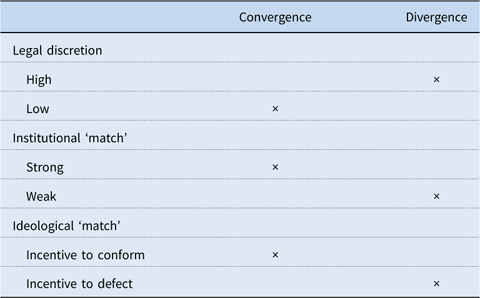
We thus apply an analytical framework where insights from studies of Europeanisation are combined. Consequently, we focus on the coercive and normative aspects of common EU policies and rules as well as on the institutions and opportunity structures enabling or constraining adjustments by national governments in the implementation processes (Olsen, Reference Olsen2003). In the coercive aspect of EU legal rules and norms, we analyse the degree of legal discretion (i.e. the exact wording of legislative measures) and the role of the EU bodies, especially the European Court of Justice (ECJ), in interpreting and enforcing the rules. Then we target national institutional set-ups, identifying a match – or goodness of fit – between the EU rules and the national institutions (Mastenbroek and Kaeding, Reference Mastenbroek and Kaeding2006). Finally, we focus on the aspect of domestic opportunity structures, or the ideological match, i.e., whether EU rules challenge or conform with the political agenda of national governments (Mastenbroek and Kaeding, Reference Mastenbroek and Kaeding2006). If EU rules match national governments’ agendas, they represent a window of opportunity for implementing desired policy changes and EU adaptions. If the rules challenge the political agenda, they may stir up domestic tension and create an incentive for national governments to set up obstacles for EU rules to have any substantive impact. The analytical framework is illustrated in Table 1.
Factors assumed to cause either convergence or divergence

In EU law, regulations are binding legislative acts applicable in their entirety across the EU. Directives are legislative acts specifying the goals that all EU countries must achieve, though leaving the decision on how to reach these goals to the individual countries (European Commission, 2016). Irrespectively of whether legislative acts are issued as regulations or directives, however, the important question is: how much room for alternative ways of compliance does the wording of the legal texts allow for? EU rules on cross-border care follow the logic of free movement of services, goods, people and capital within the internal market. The health systems of Germany and Norway differ as to what extent market logics are included in the institutional set-up, e.g., the role of private actors (insurance organisations, private health enterprises), competition and market mechanisms (patients’ freedom to choose among insurers and health-service providers). Thus, the assumption is that the degree of institutional match between EU rules and German and Norwegian health systems differ. Finally, the role of the state and the willingness to promote market mechanisms in the health sector is assumed to differ in both countries depending on the power of right-wing or left-wing parties – the former should be more ‘market friendly’ than the latter. Consequently, within the constraints caused by the degree of legal discretion, we expect the degree of ‘institutional match’ and ‘ideological match’ to affect the implementation of EU rules – the less legal discretion there is and the better the institutional and ideological match is, the stronger the push for convergence. European integration processes take place through both politics and law, but are at the same time constrained by institutional factors at both the EU level and national levels (Scharpf, Reference Scharpf2010; Ladrech, Reference Ladrech2010: 33–36). Thus, as illustrated above, the article differentiates between legal harmonisation on one side and empirical convergence on the other. One basic assumption is that the implementation of common EU rules does not necessarily lead to substantial normative or material changes in national health systems. The actual effect of legal harmonisation thus depends on several ideological and institutional factors at the national level, as well as the degree of fit between the EU system and individual nation-states.
4 EU rules on patient mobility and cross-border care
4.1 The origins: social policy and the ‘the Social Security Regulation’
The Social Security Regulation from 1971 was developed on the principle of free movement of workers in parallel with the development of the internal market (Mossialos et al., Reference Mossialos, Permanand, Baeten and Hervey2010), as specified in the Treaty (Treaty of Rome of 1958) provisions on Social Policy and free movement of workers (Article 51). The Social Security Regulation gives EU citizens the right to emergency treatment when staying in another EU member state on the same conditions as citizens of that state. Moreover, the regulation gives people who work in another EU country the right to the same social benefits, including health care, as those provided to the nationals of that country (Mossialos et al., Reference Mossialos, Permanand, Baeten and Hervey2010). In 2004, the Social Security Regulation (EEC No. 1408/71) was replaced by a new regulation (EC) No 883/2004 to simplify and clarify the Community rules on the coordination of Member States’ social security systems.
Since the late 1990s, EU rules on patient mobility have been challenged – mostly due to a series of ECJ, (1998) rulings where the Kohll and Decker rulings take a prominent role.Footnote 1,Footnote 2 The Court rulings implied that national rules, specifying a limit to national citizens’ freedom to choose health-service providers in other member states, were deemed as barriers to the free movement of services and people. Before these Court rulings, the responsibilities for organising and delivering health services and medical care were exclusively within the competence of the member states.
4.2 Codifying and modifying EU competence on cross-border care: ‘The Patients’ Rights Directive’
The Social Security Regulation established the right to health care in another EU member state: treatment of people in acute need while temporarily abroad, those working in another EU state and those who received prior authorisation from a relevant authority (e.g. sickness funds in Germany and the Norwegian Health Economics Administration (HELFO) in Norway). However, the legislation did not avoid complaints from patients who took their grievances to the ECJ (Legido-Quigley et al., Reference Legido-Quigley, Passarani, Knai, Busse, Palm, Wismar and McKee2011; Hervey and McHale, Reference Hervey and McHale2015: 196–198). Consequently, the Court decided that health services are subject to internal market law, thus raising questions about the conditions to demand prior authorisation for patients seeking treatment abroad (Greer, Reference Greer2008).
EU member states initially reacted to the ECJ decisions with contained compliance, interpreting them narrowly and avoiding policy changes for as long time as possible (Greer, Reference Greer2008). Most member states argued that the Kohll and Decker decisions applied only to those cases. However, the Kohll and Decker rulings also caused increased uncertainty in member states due to effects of the internal market law on health systems.Footnote 3,Footnote 4 Health authorities from major EU countries such as the United Kingdom, France and Germany were alarmed by results from their in-house impact analysis (Greer, Reference Greer2011), because ECJ case law possibly could require major structural reforms in the health sector. This situation created the need to call for the development of a new legislative proposal on cross-border health care clarifying the issues at stake (Greer, Reference Greer2006, Reference Greer2013).
One result of the ECJ rulings, as well as national courts’ rulings on related issues, was that the European Commission began drafting a new directive (Mossialos and Palm, Reference Mossialos and Palm2003; Palm and Glinos, Reference Palm and Glinos2010) clarifying patient mobility rules, complementing the existing Social Security Regulation and establishing a clear legal EU framework on cross-border care (Wismar et al., Reference Wismar, Palm, Figueras, Ernst and Van Ginneken2011; Greer, Reference Greer2013). The first draft of the Patients’ Rights Directive was presented in July 2008 (Legido-Quigley et al., Reference Legido-Quigley, Passarani, Knai, Busse, Palm, Wismar and McKee2011; Sauter, Reference Sauter2011; Greer, Reference Greer2013). Subsequently, the further drafting of the Directive became part of a political process where several EU members made much effort in modifying and even departing from the potential impact of ECJ jurisprudence on cross-border care (Hervey and McHale, Reference Hervey and McHale2015: 196–198; Martinsen, Reference Martinsen2015: 133–184). Thus, EU member states contributed to modify and make EU rules on cross-border care much ‘slimmer’ than what a ‘full codification’ of ECJ jurisprudence would have implied (Hervey and McHale, Reference Hervey and McHale2015; Martinsen, Reference Martinsen2015). These modifications even applied to core elements such as criteria for reimbursement and prior authorisation. Even Norway, as a non-EU member, made efforts to influence the EU political process by submitting comments intended to limit the scope of the Directive as far as possible within the frame of the rules on free movement of services (Norwegian Ministry of Health and Care Services, 2009). After considerable debates among the EU member states, the final Directive was finally adopted 9 March 2011 (European Parliament and the European Council, 2011), coming into force 25 October 2013 for EU member states and 1 August 2015 for the EFTA countries (European Commission, 2015b). The Directive has arguably contributed to important modifications of ECJ jurisprudence on cross-border care. However, the Directive has also contributed to improving certain aspects of patients’ rights and the freedom of choice in Europe, while at the same time putting constraints on the available instruments for national governments’ regulation of cross-border care (Martinsen and Vrangbæk, Reference Martinsen and Vrangbæk2008; Mossialos et al., Reference Mossialos, Permanand, Baeten and Hervey2010; Greer, Reference Greer2013; Santuari, Reference Santuari2013).
This article addresses three elements of the Patients’ Rights Directive: (1) information, including the requirement to set-up National Contact Points (NCPs); (2) reimbursement of costs of treatment; and (3) the rules on prior authorisation. Article 6 of the Directive states that, ‘each Member State shall designate one or more national contact points for cross-border healthcare’ (paragraph 1). However, the Directive also states the following: ‘The Member States should decide on the form and number of their national contact points. Such national contact points may also be incorporated in, or build on, activities of existing information centres provided that it is clearly indicated that they are also national contact points for cross-border healthcare’ (paragraph 49 of the preamble). The NCPs are required to provide patients with the information they need to make use of their rights to cross-border health care: ‘(…) national contact points (…) shall provide them with information concerning healthcare providers, including, on request, information on a specific provider’s right to provide services or any restrictions on its practice (…), as well as information on patients’ rights, complaints procedures and mechanisms for seeking remedies’ (Article 6). NCPs are moreover required to provide information about legislation, legal and administrative options available to settle disputes, including in the event of harm arising from cross-border health care. The Directive’s rules on NCPs and information provision put a lot of responsibility on the Member states to enable patients to make use of their rights to cross-border health care.
Article 7 (paragraph 1) sets out the general principles for reimbursement of costs: ‘(…) The Member State of affiliation shall ensure the costs incurred by an insured person who receives cross-border healthcare are reimbursed, if the healthcare in question is among the benefits to which the insured person is entitled in the Member State of affiliation’. Paragraph 3 states that: ‘It is for the Member State of affiliation to determine, whether at local, regional or national level, the healthcare for which an insured person is entitled to assumption of costs and the level of assumption of those costs, regardless of where the healthcare is provided’.
Article 8 includes provisions on health care treatment that may be subject to prior authorisation. Paragraph 1 states: ‘The Member State of affiliation may provide for a system of prior authorisation for reimbursement of costs of cross-border health care, in accordance with this Article and Article 9. The system of prior authorisation, including the criteria and the application of those criteria, and individual decisions of refusal to grant prior authorisation, shall be restricted to what is necessary and proportionate to the objective to be achieved, and may not constitute a means of arbitrary discrimination or an unjustified obstacle to the free movement of patients.’ Paragraph 6 of Article 8 includes details on the criteria for deciding on prior authorisation.
As illustrated above, the Directive includes mandatory requirements leading to harmonisation of certain elements of national health systems, such as setting up NCPs and providing sufficient information for patients to make use of their right to cross-border care – even without prior authorisation. However, national authorities retain a leeway in their choice of action as regarding prior authorisation for inpatient care, and treatment involving specialised and cost-intensive medical infrastructure or medical equipment. Thus, the Directive allows legal discretion in fulfilling the obligations of the Directive.Footnote 5 The question then, is how Germany and Norway have transposed EU rules into national law.
5 Implementation of the patients’ rights directive in Germany
5.1 Political background and context
In the German health care system, decision-making powers are traditionally shared between national (federal) and sixteen state (Länder) levels, each with its own state constitution and each largely autonomous regarding internal political organisation. Whereas the Länder have much autonomy, health policies are relatively similar across the country. The German health system provides universal coverage with a wide range of benefits. Statutory health insurance provided by 132 sickness funds covers 70 million people, representing 85% of the population (data from early 2014). Substitutive private health insurance covers another 11% and sector-specific governmental schemes cover 4% (e.g. for the military). The system includes free choice of providers (including private non-profit and for-profit providers) and unrestricted access to primary and secondary care (ECJ, 1998). The largest challenges of the German health care system are the quality of care and the division between statutory and private health insurance. Market mechanisms increasingly govern health, with the state pursuing re-regulation to achieve politically defined goals of competition (Gerlinger and Schmucker, Reference Gerlinger and Schmucker2009).
Even if the political structure and the health system in Germany are rather complex, no broad political debate on the Directive’s implementation took place (Goscinska, Reference Goscinska2014). Only limited need to change German legislation was required and the German Ministry of Health did not see any big controversies evolving from the Patients’ Rights Directive transposition.Footnote 6 The Directive’s basic content was introduced into German federal legislation as early as in 2004 as a reaction to the prior rulings of the ECJ on patient mobility and cross-border care by passing the Statutory Health Insurance Modernisation Act of 2004 (Deutscher Bundestag, 2003). Obermaier (Reference Obermaier2009: 118–120) argues that the Ministry of Health and the insurance funds feared that the implementation of the ECJ jurisprudence would create considerable political and legal pressure for an opening of the German health care system based on in-kind benefits for foreign cases, and that this disruption would affect the entire system (administratively and financially). Second, domestic political parties’ preferences played a significant role, where consent of the Christian Democratic Union of Germany (CDU)/Christian Social Union of Bavaria (CSU) was required to pass the Statutory Health Insurance Modernization Act. The first draft of this law was not satisfactory enough for the CDU/CSU, putting political priority on patient sovereignty and patient choice. The second draft assured agreement between the CDU/CSU and the red-green government, specifically the extension of cash reimbursement to all insured persons and to health care received abroad.
The Directive was implemented individually by different Länder.Footnote 7 In the State of Bremen, the Directive was transposed into ‘Bremen Patients Mobility implementing law’Footnote 8 (European Commission, 2015a), regulating the definitions of Article 3 (‘Definitions’), Article 4 (2d – ‘Responsibilities of the Member State of treatment’) and Article 6 (3 – ‘National contact points for cross-border healthcare’) of the Directive (Bremische Burgerschaft, 2013). The State of Brandenburg adopted a legal act on the implementation of EU law regulating the definitions of Article 3, Article 4(2) (b), (d) and Article 6 of the Directive. The new law in Bremen entered into force on 1 April 2014 and the one in Brandenburg on 11 July 2014Footnote 9 (European Commission, 2015a). In principle, these two Länder did not differ in transposition of the EU rules into Länder law. In the Länder, implementation has been more a matter of formality than substance. One of the reasons for this is that the key actors in the application of the Patients’ Rights Directive are the sickness funds who mostly operate at the state level. Thus, arguably the sickness funds, more than the Länder, challenge the potential for uniform application of the Directive.Footnote 10
6 Implementing EU rules on NCPs and information
An important step in the implementation of the Patients’ Rights Directive was the establishment of a NCP on 25 October 2013. In Germany, the NCP is an organisational unit within the German Liaison Agency Health Insurance – International (DVKA) combined with the existing German Liaison Office for Sickness Insurance-Abroad (Goscinska, Reference Goscinska2014). The NCP is a non-competitive platform providing information to patients and health care providers funded by the National Association of Statutory Health Insurance Funds, the German Hospital Federation, the National Association of Statutory Health Insurance Physicians, and the National Association of Statutory Health Insurance Dentists, as well as the private health insurance funds (German National Contact Point for Cross-Border Healthcare, 2016). The objective of the NCP is to improve the quality of information provided to patients when taking up cross-border health care services. Germany has set up only one formalised NCP. However, patients can contact liaison offices in different parts of Germany, such as ‘EUREGIO Countries Germany – Netherlands’ in North Rhine-Westphalia or ‘Task Force Countries France – Germany – Luxembourg’ in Saarland to provide specific information about cross-border care in border regions (German National Contact Point for Cross-Border Healthcare, 2016).
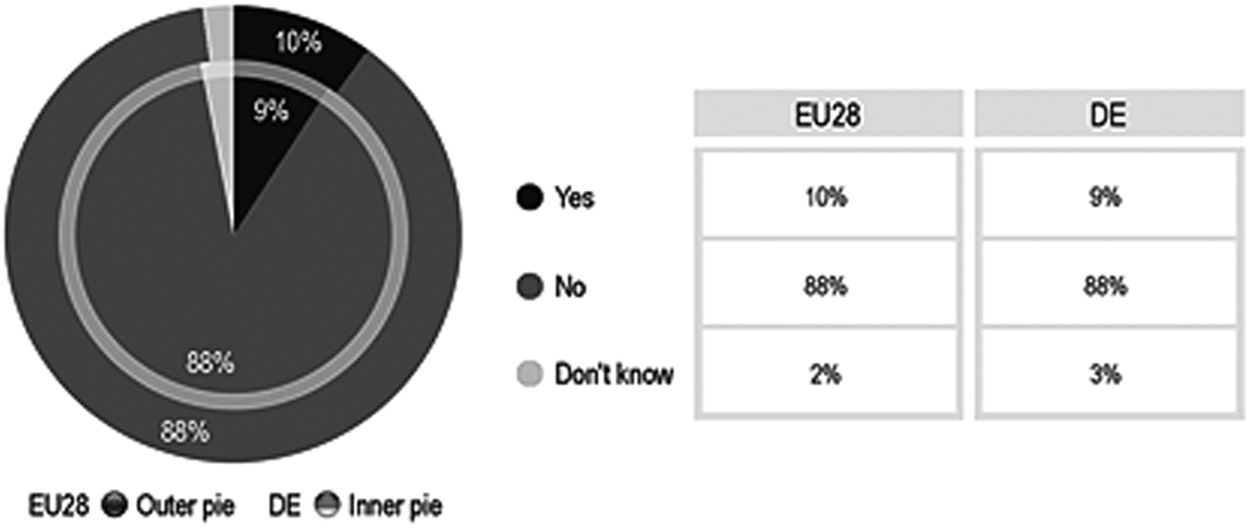
Patients’ lack of awareness about their rights under the Patients’ Rights Directive to use health care services abroad is probably one of the reasons why cross-border health care is not so commonly used. Transparency and information availability are two basic issues here. The Eurobarometer from May 2015 (European Commission, 2015c) actually showed low awareness of European patients about the possibilities to use cross-border health care. As illustrated (Figure 1), only 9% of respondents in Germany knew about the existence of the NCP in comparison to the average of 10% in the EU28.
Question: in each EU Member State, there is a National Contact Point that provides information about cross-border health care inside the EU. Did you know that it existed? (Germany) (European Commission, 2015c).

Even though relatively few people in Germany were aware of the NCP, the German NCP was nevertheless among those NCPs (together with the NCPs in Luxembourg and Sweden) that received the highest number of requests for information in 2014Footnote 11 (European Commission, 2015c).
7 Implementing EU rules on prior authorisation and reimbursement
In practice, the Patients’ Rights Directive should complement the existing Social Security Regulation. Following the Directive’s rules, German sickness funds only reimburse costs of the planned cross-border treatment that correspond to the maximum reimbursable costs of a comparable treatment in Germany less deduction for administration. The Social Security Regulation stipulates that cross-border patients obtain health care in the country they visit or work in on the same conditions as if they had been insured in that country. If this coverage is more generous than in Germany, German sickness funds must reimburse it. Contrary, if additional co-payments or other out-of-pocket-payments apply to patients in that country, the patients have to pay these themselves – as if they had been residents of the country (Kifmann and Wagner, Reference Kifmann and Wagner2014). Patients can choose between reimbursement according to rules related to the Directive or the Regulation depending on which of these reimbursement schemes are more favourable. Such practice can likely cause administrative and legal glitches. In application of both laws, the patients going for in-patient care still need to enquire the relevant sickness fund for information about the conditions for reimbursement for planned treatment abroad (German National Contact Point for Cross-Border Healthcare, 2016). In practice, the application of prior authorisation and procedures for reimbursement in Germany depends on the conditions of the health insurance.
8 The implementation of the patients’ rights directive in Norway
8.1 Political background and institutional context
The health care system in Norway is inspired by the Beveridge model, i.e., a national health service system where health care services are benefits in kind, more or less free of charge and financed through public and universal taxes. The system is moreover characterised by far-reaching public regulation and a predominantly public supply of health care services (Magnussen et al., Reference Magnussen, Vrangbæk, Saltman and Martinussen2009). Responsibilities for specialised health care provision are firmly placed in the hands of the central government. However, there are also decentralising elements, such as the municipalities’ responsibilities for primary health care, as well as the organisation of hospitals according to an enterprise model (Magnussen et al., Reference Magnussen, Vrangbæk, Saltman and Martinussen2009).
The EEA Agreement obliges Norway to implement and comply with EU rules on patients’ rights and cross-border care. Norway’s compliance with these obligations has been under scrutiny by EFTA governing bodies. After receiving several complaints regarding the access to in-patient treatment in other EEA States, the ESA decided in 2014 to assess the relevant Norwegian rules and procedures concerning cross-border care (ESA, 2014). ESA found that certain provisions in the Norwegian legislation were not in line with the EEA Agreement (and thus not in line with EU rules) and consequently sent a Letter of Formal Notice to the Norwegian government in which several concerns about Norwegian legislation were raised (ESA, 2016). ESA concluded that Norwegian legislation did not meet the obligations required under the EEA Agreement and noted that – depending on the reactions and actions from the Norwegian authorities – further steps could be taken by ESA, such as referring the case to the EFTA Court. The critical comments from ESA, including adminstrative and procedural insufficiencies, were made even though Norway previously had revised its laws and regulations on patients’ rights to adapt these to EU rules on cross-border care (Norwegian Parliament, 2013). The Directive was not yet part of the EEA Agreement when ESA made its case, but Norway was nevertheless bound by the EU/EEA rules concerning patient mobility and cross-border care, including Article 20 of Regulation 883/2004 on social security coordination and the EEA Agreement’s Article 36 on the free movement of services. If anything, the complaints from ESA raised the question about the necessesity to make changes in national law to comply with the EEA Agreement.
On 9 July 2014 the EEA Committee (representatives of the EU Commission and the governments of the EFTA partners) decided to incorporate the EU’s Patients’ Rights Directive into the EEA Agreement. In order to transpose this supplement to the EEA Agreement into Norwegian law, Norway’s minority right-wing government prepared a legal proposal to the Norwegian Parliament (Norwegian Ministry of Foreign Affairs, 2014). After the first discussion, the Standing committee on health issued its recommendation on 4 December 2014 (Norwegian Parliament, 2014). A deal struck between the government and representatives of two right-wing/centre opposition parties ensured a majority in favour of the recommendation. On 16 December 2014 the Parliament approved the recommendation and thus supported the government’s decision not to adopt a system of prior authorisation for (inpatient) treatment abroad under the rules of the Directive. Thus, the Parliament allowed for the incorporation of the Directive into the EEA Agreement and subsequently accepted a system where patients do not need prior authorisation for inpatient treatment abroad. Traditionally, the majority of the Parliament has been sceptical towards measures challenging or even undermining the (public) national health service.Footnote 12 However, fuelled by recent tendencies in Norwegian politics emphasising patients’ free choice, as well as by the positions of the right-wing government, the Parliament decided to implement rules on patient mobility more liberally than required by the Directive. Regarding outpatient treatment, Norwegian rules had been adapted to EEA/EU rules already in 2013, thus giving to Norwegian patients the right to choose freely among outpatient treatment centres abroad without the prior authorisation requirement. Politically, however, the decision in 2014 not to use prior authorisation for inpatient treatment was more controversial and challenging for the Norwegian health system.
9 Implementing EU rules on NCPs and information
In effect, the Patients’ Rights Directive has empowered Norwegian patients to take their rights to health care with them to the EEA area. To enable patients to exercise their right to treatment abroad, the Patients’ Rights Directive requires setting up one or more contact points with the task of providing patients with appropriate information on all essential aspects of cross-border health care. In Norway, HELFO is the NCP for health care. HELFO is a centralised state agency directly linked to the Norwegian Directorate of Health. Its core tasks are providing information about rules regarding health care outside of Norway and informing on behalf of other countries’ NCPs (in Norwegian). Moreover, HELFO administers reimbursements and (voluntary) prior authorisations.Footnote 13 As the Norwegian rules require referrals for specialised health services such as in-patient hospital care, important responsibilities for informing the patients are also given to health personnel (primarily GPs) making the referrals. The provision of sufficient and adequate information about the right under Norwegian law to seek treatment abroad is a challenge for the Norwegian health system, and has resulted in complaints made by ESA (2014).Footnote 14,Footnote 15 Transparency of administrative procedures in national health administrations and availability of sufficient information to the patients regarding application of their right to treatment abroad is also a challenge in the rest of Europe.Footnote 16,Footnote 17
9.1 Implementing EU rules on prior authorisation and reimbursement
As a result of the deal struck in Parliament between the right-wing government parties’ representatives and the representatives from the opposition parties, the government adopted a regulation without any requirement for prior authorisation for seeking treatment abroad – a requirement which under certain conditions is allowed under the EU’s Patients’ Rights Directive.Footnote 18 The Norwegian regulation came into effect on 1 March 2015. The decision to exclude a requirement for prior authorisation led to strong opposition from the left-wing minority in Parliament (Norwegian Parliament, 2013, 2014). The new rules gave Norwegian patients the right to seek treatment in EEA countries and be reimbursed for it, but they have to pay for the treatment out of pocket before reimbursement. Moreover, travel costs are not fully covered – only the costs equivalent to the costs of travelling to the closest available health service provider in Norway. If the necessary conditions are met, including the requirement that the treatment is equivalent to the treatment they are entitled to receive from the Norwegian health system, patients are eligible for subsequent reimbursement. If the patients do not wish to risk not being granted reimbursement in retrospect, they can voluntarily apply for an approval equivalent to prior authorisation (Norwegian Ministry of Foreign Affairs, 2014).
Surprisingly, the Norwegian government chose to transpose the EU’s Patients’ Rights’ Directive less strictly than required (i.e., no prior authorisation for inpatient treatment) – thus lowering the threshold for competition with the state-run national health system more than required. Notably, according to the new rules on cross-border care, citizens of Norway can freely choose – without the need for prior authorisation – among public and private health care service providers in other EU/EEA countries and be reimbursed for the treatment by the Norwegian state. Moreover, this applies to both inpatient and outpatient treatment. According to Norwegian law, such a right to choose freely among private service-providers does not apply within the Norwegian borders, where patients can only choose among Norwegian public hospitals (or publicly contracted private hospitals) and a limited number of designated private health-service providers. Still, EU rules have clearly enhanced the potential for (foreign) private health service providers to play a more prominent role in Norwegian health governance.
The unwillingness of the Norwegian government to apply mandatory prior authorisation was based on a political-normative argument and an efficiency argument. The political-normative argument refers to the right-wing parties’ emphasis on free choice and was in line with the Government’s introduction of a right to choose among, not only public hospitals, both gradually also among more and more private treatment centres. The efficiency argument refers to the Government’s wish to reduce administrative costs in the health care services. In this respect, the Government also referred to statistics from Sweden indicating that the extent of cross-border health care use will be too small to justify the bureaucracy needed to implement a system of prior authorisation (Norwegian Ministry of Health and Care Services, 2014).Footnote 19
9.2 Analysing the implementation of the patients’ rights directive: convergence or divergence?
In the preamble to the Treaty of Rome of 1958, the signatory countries agreed to ‘lay the foundations of an ever-closer union among the peoples of Europe’. The development of EU rules on patient mobility and cross-border care belongs to this integration project. However, the question remains whether the adoption of new EU rules on patients’ rights in practice has led to convergence among health systems. Has the EU’s Patients’ Rights’ Directive triggered similar adaptions in Germany and Norway? Do these two health systems converge against a common EU health governance model? Alternatively, do political, ideological and institutional differences, as well as differences in implementation, prevent convergence or even lead to divergence?
9.3 The coercive power of the EU: the room for legal discretion and political choice
The convergent effect of EU regulations is enhanced by their direct applicability. Directives, however, give more room for legal discretion and freedom of choice regarding their implementation. Nevertheless, the wording of legislative acts may cause variation in interpretation, implementation and compliance. Several observers have noted that the final version of the Patients’ Rights Directive includes a number of ambiguous formulations creating potentially differentiated implementation and compliance among EU member states.Footnote 20,Footnote 21,Footnote 22 These ambiguities have contributed to a situation where the European Commission has prepared cases against several member states based on what the Commission considers incorrect implementation of the Directive.Footnote 23,Footnote 24 Thus, both ambiguities in wording and legal discretion undermine convergence. Consequently, the fact that EU harmonisation is taking place through the adoption of common rules does not guarantee that the implementation and application of these common rules result in similar outcomes in different countries.
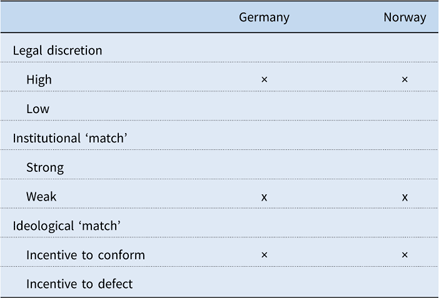
Evidence shows that both Germany and Norway transposed and adapted the Patients’ Rights Directive according to their respective specific national legislative processes and political and institutional structures. Such distinct ‘implementation paths’ are further enhanced by the legal discretion of the Patients’ Rights Directive. The question then, is to what extent these implementation processes have disrupted or enabled convergence. We use the assumptions presented in Table 2 to analyse the degree of ideological and institutional match between Germany/Norway and the EU.
Convergence or divergence in Germany and Norway

9.4 The ideological match between EU rules and national health policies
There is a poor match between Norwegian health policies aimed at preserving a state-run ‘public healthcare service monopoly’ and EU rules on cross-border care using the principles of free movement (of patients, health care services, medicines and medical equipment). In contrast to the internal market logic, Norwegian health policies and law have traditionally not allowed market mechanisms, free competition and consumer choice to play a significant role. However, political developments since the late 1990s have partly changed the situation. ‘Quasi-market’ mechanisms have been introduced, allowing for competition between public hospitals. Patients’ rights have been emphasised by waiting-list guarantees and the expanded right to choose among public treatment centres and, to an increasing degree, among private treatment centres. Thus, over time, the ideological match between Norwegian health policies and the internal market logic of free movement and competition has improved, mainly since the right-wing government came to power in 2013. This government committed itself to decreasing the number of patients on waiting lists while introducing the right to choose between private and public health-service providers. Left-wing political parties have generally expressed scepticism to such measures as is illustrated by the comments made 6 July 2009 by the Norwegian Ministry of Health and Care Services to the EU draft proposal on a Patients’ Rights Directive (Norwegian Ministry of Health and Care Services, 2009). Among the comments made were that the scope of the Directive should be limited to ‘providers contracted to the public health service or health insurance or otherwise defined public system’ (Norwegian Ministry of Health and Care Services, 2009). Moreover, the (left-wing/centre) Norwegian government pointed to the ‘risk that reimbursement of healthcare provided by private healthcare providers might counteract national priorities within the Member States’ healthcare system’ (Norwegian Ministry of Health and Care Services, 2009). The pro-EU Norwegian Labour Party, which traditionally has been the largest left-wing party in Norway, moreover emphasised that liberalisation of the right to choose between private and public health-service providers can undermine the National Health Service, including fundamental principles of universal and equal access to health services. Thus, in this article ideology primarily refers to the difference between left-wing and right-wing parties on the question of marketisation and the role of the state. Such differences were evident in the process of transposing the Patients’ Rights Directive into Norwegian law: a majority in Parliament represented by liberal and right-wing parties chose to adopt rules without including mandatory prior authorisation for inpatient treatment – contrary to the dominant position of the left-wing parties. Right-wing parties saw an opportunity to reduce waiting lists in Norwegian hospitals by facilitating health treatments abroad in accordance with EU rules. This move towards empowering market-oriented health services has taken place despite opposition from left-wing parties and the health service bureaucracy (Norwegian Ministry of Health and Care Services, 2009; Norwegian Parliament, 2014). Negotiations between liberal and right-wing parties played a more important role than the coercive effect of EU rules. Thus, even though there is a clear gap between the EU’s internal market principles and the traditional Norwegian health system principles, this gap has been reduced in recent years. Consequently, a better ideological match between the EU and Norwegian right-wing parties has enabled convergence between the market logic of the EU and certain elements of the Norwegian health system (in particular, regarding the free choice between public and private service-providers).
In Germany, implementation of the Directive did not generate a broad public debate, partly due to the limited need for change in German legislation (Goscinska, Reference Goscinska2014). However, ideological factors played a significant role when the Statutory Health Modernisation Act was under vote. In giving reasons for the bill, the Parliament made it clear that the changes were aimed at implementing the ECJ jurisprudence (Obermaier, Reference Obermaier2009: 119). The red-green coalition in power at the time needed consent from the right-wing parties, CDU/CSU. CDU/CSU criticised the draft bill and required that all policyholders should be able to choose cash benefits and obtain outpatient health care in the EU/EEA with the right of reimbursement for the costs incurred (Obermaier, Reference Obermaier2009: 119). Following this political decision, there was a relatively good ideological match between EU rules and German health policies. In other words, Germany was well prepared for the implementation of the Patients’ Rights Directive.
9.5 Institutional match between EU rules and National Health Systems
Arguably, based on the use of market mechanisms, the German health system matches the EU’s principles of free movement better than the Norwegian health system does. The German system includes private and public health service providers on equal footing. Moreover, the system has a mix of public regulation, social solidarity and universal coverage, the right for citizens to choose among public and private health service providers, and the responsibility for providing benefit packages to the population is assigned to both public and private sickness funds (Busse and Blümel, Reference Busse and Blümel2014). Thus, even before the adoption of the Directive in 2011, certain elements of the German health system and the EU rules matched. However, the political–constitutional structure of Germany complicated the adaption to EU rules. Responsibilities for health service provision in Germany are shared between the federal level and 16 Länder. The federal system may thus contribute to a fragmented application of the rules on cross-border care and subsequently undermine uniformity and convergence. The role of the sickness funds in the German health system may also cause divergent patterns of application. The sickness funds have different procedures for prior authorisation and use various criteria for the type of treatments accepted for reimbursement. Thus, even though the German health system matches the principles of the internal market better than what is the case for the Norwegian health system, the institutional structure and allocation of responsibilities and competencies create opportunities for uneven application of the rules on cross-border care.
The institutional match between the Norwegian health system and EU rules on cross-border care is not good. The logic of the internal market does not match the publicly financed and state-run health system in Norway. Therefore, the institutional barriers against convergence are substantial. EU rules on cross-border care are implemented, administered and applied by governmental agencies, public health enterprises, and, primarily, state-run hospitals. The Norwegian health system, by using more private operators, market mechanisms and competition, could be more susceptible to influence from EU law and policies. This relates to the observation in literature on health systems governance in Europe, that the more EU member states choose to liberalise the provision of health care, the more they are susceptible to EU competition law and EU principles of free movement (Martinsen and Vrangbæk, Reference Martinsen and Vrangbæk2008; Mossialos et al., Reference Mossialos, Permanand, Baeten and Hervey2010; Sauter, Reference Sauter2011). The current institutional structure of the health system, as well as the overwhelming support for the state-run public health system from the population as well as from the political parties, reduces the potential for radical change or convergence. However, notable changes have nevertheless taken place. In Norway, the exclusion of a system for prior authorisation for inpatient treatment has in practice enhanced the role of private (foreign) health service providers in Norwegian health governance. The right-wing coalition government’s initiative to introduce rules giving patients the right to choose freely among private and public treatment centres, was in fact enhanced by the Patients’ Rights Directive. The Directive has practically extended this right to apply across national borders. Ironically, in 2017 the right to choose among public and private health service providers was more far-reaching regarding treatment abroad than treatment in Norway. Institutionally, however, the Norwegian public health system is not ready for competition, market principles and private operators to play a significant role. The fundamentals of a National Health Service system thus prevail.
The Norwegian health system has nevertheless been made more compatible with EU laws and market principles. Norwegian patients now have the right to receive treatment abroad and be reimbursed by the Norwegian state, creating an opportunity for Norwegian private health care providers to establish treatment centres across the border in vicinity of more populated areas (e.g., in Sweden, but close to Oslo). They can then attract patients who choose to use their right to cross-border care. Such a situation may not only lead to inequality caused by adverse selection (only well-informed patients fit to travel abroad can make use of the new rights), but also financial unsustainability for the public health system.Footnote 25
10 Conclusions
The story about the development of EU rules on cross-border care is a story about unexpected Europeanisation. The EU members were taken by surprise by the ECJ rulings in the late 1990s and early 2000s, which revealed the potential impact of the EU principles of free movement on national health governance. As noted by Mossialos et al. ‘the decisions were an unanticipated “endogenous shock”, surprising many people, and policy-makers in particular’ (Reference Mossialos, Permanand, Baeten and Hervey2010: 28). The EU members tried to regain control over the regulation of cross-border care by contributing to the drafting and adoption of the Patients’ Rights Directive in 2011. The aim was to provide stable and predictable conditions for patient mobility and to establish rules that would converge and harmonise patients’ rights to cross-border care in Europe. Wessels (Reference Wessels1996: 36) claim there is a causal link between Europeanisation and convergence, but also between nationalisation and divergence. Our findings show that EU rules have indeed harmonised certain rules for cross-border care and have penetrated national law, and thus contributed to Europeanisation and convergence of the legal frameworks for health governance in Europe. Examples are information systems (such as setting up NCPs), extending patients’ rights across national borders, and introducing free choice of private health-service providers in European countries. Thus, both the Norwegian and the German health systems have, by law, in fact moved closer to EU’s principles of free movement and competition. However, both legal discretion and the need to filter EU rules through national political institutions and cultures contribute to divergence. We find different systems for prior authorisation and reimbursement in the two countries. In Germany, the various sickness funds have their own procedures regarding authorisation and reimbursement. In Norway, a centralised state agency is not only given the task of being the NCP responsible for advisory services regarding cross-border care, but also administers prior authorisation and reimbursement. The German NCP, on the other hand, is an organisational unit placed within the DVKA. It provides mostly advisory services and is funded by several stakeholders, such as insurance funds and hospital federations. Thus, even though patients in the two countries have the same basic right to cross-border care, the exact content of this right (e.g. which treatments are reimbursed, the criteria for prior authorisation, etc.), as well as the actual administration of the right (e.g. centralised vs decentralised, sickness funds vs state agency, etc.) varies. Thus, the Patients’ Rights Directive has had only limited convergent effects on the actual ‘workings’ of the health systems of Germany and Norway.
The German health system arguably resembles more the internal market logic of the EU than the state-run national health system of Norway. Nevertheless, both countries show a clear mismatch between their respective health systems and the EU rules. The possibility under the Directive to reimburse legitimate costs for health services carried out in private hospitals abroad represents a challenge to both countries’ public health systems. The coexistence of one logic that relies on expenditure control mechanisms and implicit rationing (c.f. the logic of both the German and Norwegian health systems) and an alternative logic that relies on reimbursed fee-for-service – public as well as private services (c.f. the logic of the Patients’ Rights Directive) – is conflicting (Kifmann and Wagner, Reference Kifmann and Wagner2014). Thus, the traditional expenditure-controlled sector (national/public) is under pressure. EU rules also give rise to equity challenges, especially when applied in a system relying on private health insurance companies, where problems of adverse selection and cream-skimming are enhanced (Colombo and Tapay, Reference Colombo and Tapay2004). Even when applied in a national health-service system such as Norway, the right to cross-border care primarily seems attractive for well-resourced patients.Footnote 26,Footnote 27 Therefore, to ensure access to cross-border care for high-risk groups, possible market failures need to be addressed (Colombo and Tapay, Reference Colombo and Tapay2004).Footnote 28
The implementation of the Patients’ Rights Directive shows both convergent and divergent effects. Convergence reflects the basic principles rooted in the logic of the EU’s internal market, moving from a focus on ‘the patient as a receiver of health services as a national citizen’, towards the ‘patient as a consumer in a common European market’. Convergence also includes harmonisation and strengthening of the patients’ right to choose treatment all over Europe. However, patients’ actual use of the right depends on a variety of contextual factors, such as the specific transposition of EU rules into national law, national culture, and the resources and knowledge held by patients. Thus, even though patients’ rights have been harmonised under EU rules, these same rules may lead to divergent patters of application and even increased inequalities between countries, as well as between different patient groups. Well-resourced patients are more likely to gain from the right to cross-border care than patients with less resources. Moreover, the variety of challenges the new rules raise, depending on the type of health system in which they are applied, illustrates the barriers against convergence in health governance that exist in Europe.
Acknowledgements
Foremost, the authors would like to express sincere gratitude to experts who shared their knowledge on the subject. The authors are most grateful for their help and availability. Our sincere thanks also go to members of the Nordic Network for Health Policy, Health Management and Health Services Research and the European Association of Health Law for their valuable comments. Last but not least, the authors would also like to thank two anonymous referees.List of interviews and email messages
1. Representative of DG Santé, the European Commission, Brussels, 27 November 2014.
2. Representative of the German National Contact Point for Patients Mobility, email message to author, 10 March 2015.
3. Representative of the Norwegian Ministry of Health, Oslo, 10 April 2015.
4. Representative of DG Santé, the European Commission and a representative of the Norwegian Ministry of Health, Brussels, 24 April 2015.
5. Contracted expert of the European Commission, Skype interview, 20 April 2015.
6. Representative of the Oslo University Hospital, Oslo, 29 April 2015.
7. Professor with competence on patients’ rights and cross-border care in Germany, University of Hamburg, Oslo, 1 October 2015.
8. Representative of the Norwegian Directorate of Health, Oslo, 7 October 2015.
9. Representative of the Norwegian Ministry of Health, email message to author, 3 February 2016.
10. Representative of the German National Contact Point for Patients Mobility, email message to author, 3 February 2016.
11. Professor with competence on patients’ rights and cross-border care in Germany, University of Hamburg, email message to author, 25 May 2016.
12. Representative of the Norwegian Directorate of Health and representative of HELFO, Oslo, 16 June 2016.
13. Representative of DG Santé, the European Commission and a representative of the Norwegian Ministry of Health, 14 April 2017.
14. Representative of the Norwegian Directorate of Health, Oslo, 19 June 2017.
15. Representative of DG Santé, the European Commission and a representative of the Norwegian Ministry of Health, 22 June 2017.
16. Representative of Internal Market Affairs Directorate, EFTA Surveillance Authority, 17 July 2017.
17. Representative of the German National Contact Point for Patients Mobility, email message to author, 11 August 2017.
18. Representative of the German National Contact Point for Patients Mobility, email message to author, 1 September 2017.