Introduction
It is a truism to remark on the complexity of work in the child and family welfare field. Despite this, richer and more complete description of several dimensions is needed if the field is to achieve optimal outcomes for the children and families with whom it works. Description of the character and degree of complexity, what practitioners do in the face of particular complexity, and the gaps and barriers that remain even after their best efforts are all central requirements for practice and programme improvement and development of appropriate policy.
This article focuses on disability as a component of complexity among children in child and family welfare services. It will present research findings, from a cohort of 475 children, about the extent and nature of disability in children across a range of services. It will explore ramifications of the findings at programme and policy levels. Further, the findings and resultant discussion with programme staff have prompted a tentative conceptualisation of pathways into disability, disorder and delay (Pitman, Martin, & Mitchell, Reference Pitman, Martin and Mitchell2013). Understanding these pathways highlights areas for programme development and policy change to address the differential needs of particular groups of children and their families.
The research project explored disability among children in a range of services in OzChild, a child and family welfare agency in the state of Victoria, Australia. OzChild is a non-government agency providing services in metropolitan and rural regions of Victoria. The OzChild programmes with which this research engaged were Home Based Care, Kinship Care, Family Services, Disability Services (an out-of-home care service for children with a disability, and individual support packages for individuals with disability through state government Disability Services funding), and two educational services. These included a Community Victorian Certificate of Applied Learning (CVCAL) programme, an alternative to the more academically oriented Victorian Certificate of Education, and Certificates I and II in General Education for Adults (CGEA) taught within OzChild's Registered Training Organisation (RTO). CVCAL is for young people still at school and interested in applied learning, while the CGEA caters for young people no longer in the secondary school system and who are looking to pursue an education outside of it.
Literature review
A literature review was conducted, using the PsycINFO database. Searches were made among additional journal titles of relevance, such as Child Welfare, Australian Social Work and Children Australia; and Australian websites of the Centre for Excellence in Child and Family Welfare, the Association of Children's Welfare Agencies, the Australian Institute of Family Studies (including the National Child Protection Clearing House and Child, Family and Community sites), the Australian Institute of Health and Welfare, and the Australian Bureau of Statistics for the period 2000 to 2013. More than 40 articles and reports were perused.
The review highlighted the problem, not limited to Australia, of definition. Baker (Reference Baker2011) notes that, because of such difficulties, the number of disabled, ‘looked after’ children in the UK is unknown. In the Australian context, Bath (Reference Bath2008), the Create Foundation (2012) and Mendes, Snow and Broadly (Reference Mendes, Snow and Broadley2013) raise definitional problems and argue the need for clarification of definitions generally. Bath (Reference Bath2008) and Mendes et al. (Reference Mendes, Snow and Broadley2013) discuss the question of inclusion or exclusion of mental illness. Mendes et al. (Reference Mendes, Snow and Broadley2013) note that the Disability Services Act in Victoria does not formally include mental illness, while considerable discussion of out-of-home care includes mental illness as the main disability facing children in care. Some articles do not provide details of the definition they are using (Leslie et al., Reference Leslie, Hurlburt, Landsverk, Rolls, Wood and Kelleher2003; Lightfoot, Hill, & LaLiberte, Reference Lightfoot, Hill and LaLiberte2011). Some use the term ‘disability’ with precision, using definitions given in legislation that govern provision of services for those with a disability, while also noting that many children have a disability, yet do not receive services (Casanueva, Cross, & Ringeisen, Reference Casanueva, Cross and Ringeisen2008). In short, there are significant definitional issues which inform the definition articulated in the methods section below and used throughout this paper.
A further definitional question relates to a term often used in health, mental health and disability literature – that of ‘functional impairment’ (Üstün & Kennedy, Reference Üstün and Kennedy2009). Although Üstün and Kennedy argue for further work to define and measure functional impairment, it is used in many settings to distinguish between diagnoses of different levels of seriousness, and the limitations in various spheres of life that the individual experiences as a result of illness or disability. The term is used in this sense throughout this paper.
Analysis of the literature revealed that, while there is a considerable body of research about children and disability in the child and family welfare field, there are also gaps. First, we found nothing that addressed the extent and nature of disability across a number of programme areas. The majority of the literature we accessed focused only on a particular part of the service system. For example, Casanueva et al. (Reference Casanueva, Cross and Ringeisen2008) reported on children in the US child protection system, but we could not find an Australian equivalent to this study. Many articles, both Australian and international, were concerned solely with children in out-of-home care (Bath, Reference Bath2008; Chambers, Reference Chambers2010; Delfabbro, Osborn, & Barber, Reference Delfabbro, Osborn and Barber2005; Hillen, Gafson, Drage, & Conlan, Reference Hillen, Gafson, Drage and Conlan2012; Leslie et al., Reference Leslie, Gordon, Meneken, Premji, Michelmore and Ganger2005; Mendes et al., Reference Mendes, Snow and Broadley2013). Some studies were located within particular sub-sets of out-of-home care, such as home based care (Kerker & Dore, Reference Kerker and Dore2006), foster or kinship care (Dunne & Kettler, Reference Dunne and Kettler2006; Tarren-Sweeney & Hazell, Reference Tarren-Sweeney and Hazell2006) or residential care (Bath, Reference Bath2008). There were exceptions. In the UK, ‘looked-after children’ are sometimes considered as a group (Baker, Reference Baker2011; Hillen et al., Reference Hillen, Gafson, Drage and Conlan2012). There is some research in the USA on children with disabilities and substantiated cases of child abuse (Lightfoot et al., Reference Lightfoot, Hill and LaLiberte2011). However, we found no Australian exception to the sub-system focus, that is, nothing that researched disability across the whole child and family field.
Additionally, some research explores a particular disability, such as mental illness (Burge, Reference Burge2007; Kerker & Dore, Reference Kerker and Dore2006), mental illness and developmental disorders (Hillen et al., Reference Hillen, Gafson, Drage and Conlan2012), intellectual disability (Slayter & Springer, Reference Slayter and Springer2011) or learning disabilities (Taggart, Cousins, & Milner, Reference Taggart, Cousins and Milner2007), rather than the whole spectrum of disability as in the present study.
The existing literature demonstrates considerable levels of disability in child welfare services, but reported levels vary considerably. For example, Casanueva's large study in the USA found that 35.2 per cent of children under 3 years of age in the child protection system had a disability according to definitions of the Individuals With Disabilities Education Act, but that only 12.7 per cent of these actually received services under the Act (Casanueva et al., Reference Casanueva, Cross and Ringeisen2008, p. 253). A number of similar children might be expected to be found in Victorian Family Services to which many families with ‘unsubstantiated notifications’ (one of Casanueva's research groups) are referred. Using a much looser definition, a US study found that ‘Nearly half (47.9%) of the youths aged 2 to 14 years (N = 3,803) with completed child welfare investigations had clinically significant emotional or behavioral problems’ (Burns et al., Reference Burns, Phillips, Wagner, Barth, Kolko, Campbell and Landsverk2004, p. 960). Burge's study found that 31.7 per cent of permanent wards without access to their biological parents in Ontario had a mental illness (Burge, Reference Burge2007). The literature survey by Dunn & Kettler (Reference Dunne and Kettler2006) reported one UK study where 67 per cent of out-of-home care youths had psychiatric disorders, a US study where 34 per cent of children had significant behavioural problems and a third study where 57 per cent of children entering foster care had developmental problems. One Australian study found that 61 per cent of children in foster care had mental health or behavioural difficulties (Sawyer, Carbone, Searle, & Robinson, Reference Sawyer, Carbone, Searle and Robinson2007). The Create Foundation literature review also commented on the variability between studies (Create Foundation, 2012). This variation suggests the need for further research to establish whether variations are solely definitional in nature or whether there are fluctuating numbers of children with disability in child and family welfare services, the causes of any fluctuation, and what changes might be needed at practice, programme and policy levels, in the face of resultant findings. Another gap is the absence of literature that discusses the role of generalist workers (in foster care, kinship care or family services, or teachers) in programmes where there are children with a range of disabilities. There is no exploration of the outcomes that workers are able to achieve, or what works and what does not work in these situations. It is to these particular gaps and limitations that this article is, in part, directed.
For the purposes of this article, the Australian Bureau of Statistics report on national prevalence of disability in 2009 was used as the baseline for comparison. The overall prevalence of disability in 2009 was 18.5 per cent, but for children under 4 years of age the rate was 3.4 per cent, rising to 6.6 per cent for those in the 15- to 24-year-old age group (Australian Bureau of Statistics, 2009).
Method
Matters of Definition
Noting definitional inconsistencies identified in the literature review, and the functional impairment associated with a number of mental illness diagnoses for children, this study adopts the World Health Organisation (WHO) definition of disability (World Health Organisation, 2012). This definition encompasses physical disabilities, including limitations to mobility, blindness, deafness, intellectual impairments and, importantly in our context, ‘people who experience difficulties in functioning due to a wide range of health conditions such as chronic diseases, severe mental disorders, multiple sclerosis and old age’ (World Health Organisation, 2012, p. 3). Thus, mental illness was included in our definition, if there were ongoing effects on the child's functioning. We also included all items in the Victorian Disability Act, 2006, which specifies ‘sensory, physical or neurological impairments or acquired brain injury’ or ‘an intellectual disability or a developmental delay’ (Victorian Government, 2006, p. 4). We did not limit our focus to only those children receiving services under that Act. Practitioner experience suggested that many children with high needs, and often with a formal diagnosis, did not qualify for services under the Act, but nonetheless required specialist assessment and intervention. We included children with a formal diagnosis of disability and those with a suspected or, as yet, undiagnosed disability. Formally diagnosed disabilities included only those children who had received a formal diagnosis by a practitioner qualified to make that diagnosis. Only disabilities included in the WHO definition or the Act were included in the suspected, but as yet undiagnosed, group. We are not able to make any direct comparison of our findings with research that either does not provide a definition of disability, or where a different definition is used. Definitional difference may account for different findings about the extent of disability in a given population of children.
The Study
The study involved mixed methods. First, data were collected about all children in the participating OzChild programmes at one point in time, in early 2012. Each worker in each programme was asked to select every child in his/her caseload known to have a formally diagnosed or undiagnosed or informally diagnosed disability, and to provide information on each of these children. Worker knowledge of the child and family or carer was relied on to identify the children in both the formally and informally diagnosed categories. Workers knew which children had received specialist assessment and intervention, and also knew the families and children well enough to identify behaviours indicative of a yet-to-be-diagnosed disability, or when carers or others involved with the child were concerned that assessment of the child was needed. Workers were asked to provide data on 42 items, including: age; gender; history of contact with OzChild services; formally and informally assessed disability, plans to gain assessment of informally assessed disabilities; name and description of disability; seriousness of disability according to diagnosis and worker assessment; effects of disability on child, carer and birth family; education-related matters, such as year level compared to age, educational achievement, effects of disability on academic achievement, peer relationships and participation in extra-curricular activities; placement- and disability-related matters, such as number of placements and number of placement breakdowns, where disability was the major factor; and history of disability in the family. Five workers were asked to trial the spreadsheet prior to dissemination to all staff, to see if the categories and accompanying notes of explanation were clear to workers. Modifications were made to both as a result of the trial. The researcher met with the direct care staff of all programmes to discuss the spreadsheet. All direct-care practitioners in all programmes – a total of 52 workers – filled in the spreadsheet. This snapshot in time captured 475 children involved with the selected programmes and, of these, 200 children had a disability.
Second, workers were asked to fill out a two-page template on the child in their caseload with the most serious disability. Workers provided data on the care plan, intervention, barriers and challenges to providing service or care for the child; what was done to overcome the barriers; gaps in case plan and intervention; gaps in the service system; and worker assessment of effectiveness of OzChild's intervention with the child. This was done for 38 children, or 19 per cent of the 200 children.
Third, five case studies, one from each programme area, provided an in-depth description of disability and intervention. The focus was on the nature and effect of the disability and what could be learnt about successful interventions and service gaps within OzChild and the service system. The selected cases were of children with a disability at the most serious end of the disability continuum according to the experience of that programme, but where staff members judged that sound assessment and intervention had been provided. Data were collected through a case discussion lasting 3 hours, facilitated by the researcher. The session had both research and practice development objectives. It was designed to facilitate articulation and conceptualisation of practice, and sharing of knowledge between staff. Each programme sent representatives, and a cross-section of staff, from caseworkers to senior managers, participated.
The data were analysed by the researcher. Excel equations were used to analyse some categories, and qualitative comments were searched for themes, commonalities and differences. Spreadsheet and care-plan templates were analysed by programme area. The rich data from the case studies were searched for themes, as well as for the individual and particular circumstances of each child in interaction with his/her family, carer and broader environment.
Finally, findings were discussed extensively with senior managers and programme staff, and further data from these meetings were analysed.
The research was approved by Anglicare Victoria's Ethics Committee, a Human Research Ethics Committee that functions in accordance with the National Health and Medical Research Council National Statement on Ethical Conduct in Human Research, 2007.
Findings
Proportion of Children with a Disability
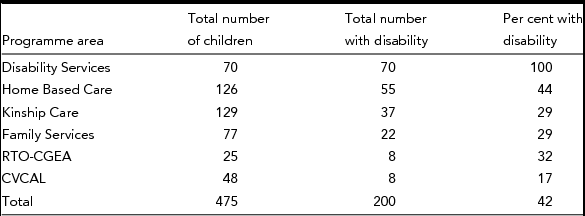
Two hundred out of the total of 475 children, or 42 per cent of children, in OzChild's services had a formally or informally diagnosed disability (Table 1).
Prevalence of children with a disability by OzChild programme area.
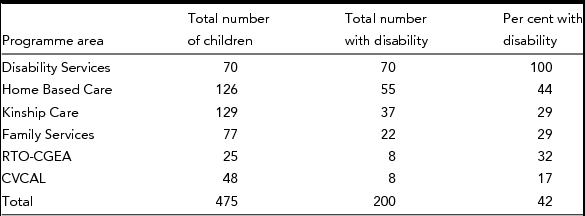
CVCAL, Community Victorian Certificate of Applied Learning; RTO-CGEA, Certificates I and II in General Education for Adults taught within OzChild's Registered Training Organisation.
These prevalence figures are much higher than those for the general population, with 3.4 per cent of children under the age of 4 years and 6.6 per cent of people aged 15–24 years having a disability (Australian Bureau of Statistics, 2009). The Bureau of Statistics may have been using a stricter definition, though this did not appear to be the case from the descriptions given. Our figures are similar to some other research findings (Casanueva et al., Reference Casanueva, Cross and Ringeisen2008) and much lower than others (Sawyer et al., Reference Sawyer, Carbone, Searle and Robinson2007). Our findings show that workers in all programme areas, often without any specialist training in disability, are working with a substantial proportion of their caseload having a disability.
Formally versus Informally Diagnosed Disability
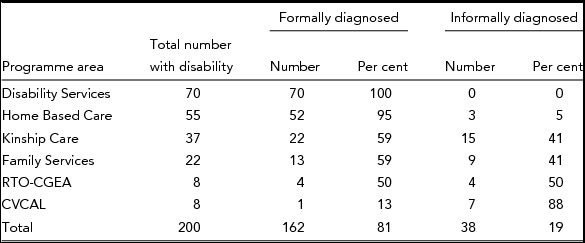
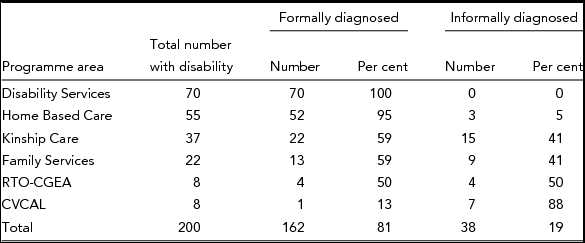
Of the 200 children with a disability, 162 (81 per cent) had a formal diagnosis. The proportion of formally diagnosed compared to informally diagnosed disability varied greatly across programmes, as shown in Table 2.
Rates of formally and informally diagnosed disability by OzChild programme area.
CVCAL, Community Victorian Certificate of Applied Learning; RTO-CGEA, Certificates I and II in General Education for Adults taught within OzChild's Registered Training Organisation.
Since formal diagnosis of a disability is a criterion for entry into OzChild's Disability Services, all children in this programme had a formal diagnosis. Home Based Care had the next highest proportion. The CVCAL programme had the lowest proportion.
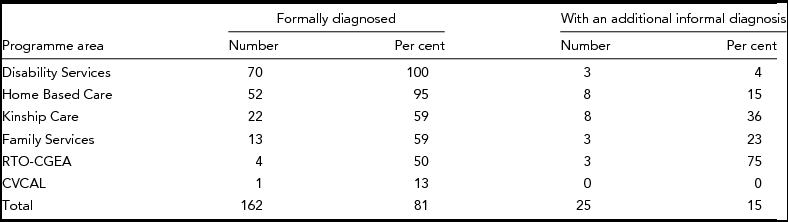
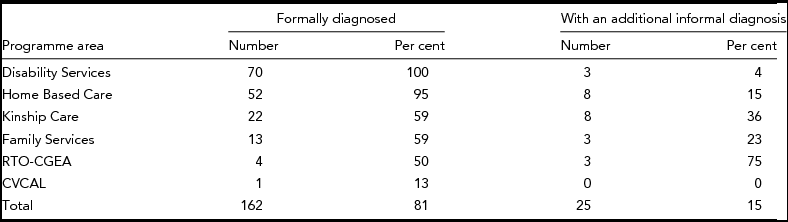
Workers were requested to report children with informal as well as formal diagnoses of disability. Inevitably, a number of children possessed both a formal and an additional informal diagnosis, as shown in Table 3.
Percentage of children with an informal diagnosis of disability in addition to their formal diagnosis, by OzChild programme area.
CVCAL, Community Victorian Certificate of Applied Learning; RTO-CGEA, Certificates I and II in General Education for Adults taught within OzChild's Registered Training Organisation.
It is noteworthy that in Table 3 three out of the four formally diagnosed students in the RTO certificate of education programme received additional informal diagnoses of disability from programme staff. Similarly, over one-third of the children in Kinship Care and nearly one-quarter of the children in the Family Services programme received an informal diagnosis in addition to their formal diagnoses of disability.
The Variety and Type of Disability
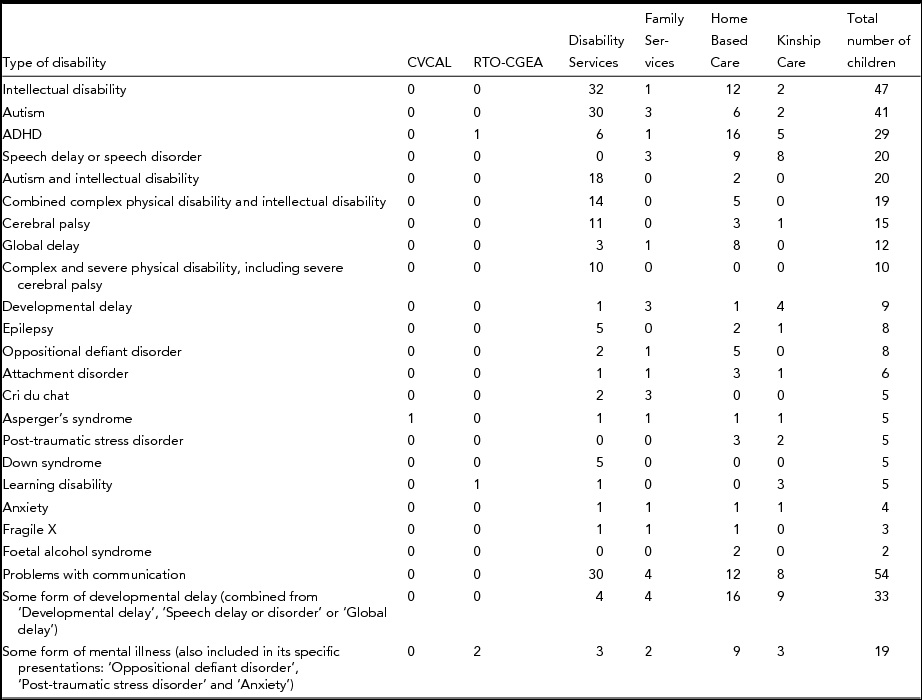
Nothing conveys more dramatically the complexity in the occurrence of disability across an agency caseload than Table 4, showing the variety and type of disability.
Type of disability and number of children, by OxChild programme area.

ADHD, Attention deficit and hyperactivity disorder; CVCAL, Community Victorian Certificate of Applied Learning; RTO-CGEA, Certificates I and II in General Education for Adults taught within OzChild's Registered Training Organisation.
This table shows the extensive array of different types of disability in descending order of frequency, with their occurrence in various programmes. The last three rows of the table contain three categories of disability combinations occurring in the data. Some disabilities feature more in Disability Services, but other programmes had a share of children with very serious and limiting disabilities.
While Table 4 provides an overall picture, workers’ descriptions conveyed what this might mean for individual children and their carers. One 16-year-old young man in Disability Services was wheelchair bound, had epilepsy, was non-verbal, incontinent, and was fed by percutaneous endoscopic gastrostomy (PEG). He had very high care needs and required a hoist for all transfers. His single mother provided and managed all his care. This was just one example of several children and young people with similar disabilities being cared for in Disability Services, either by parents or volunteer carers. Home Based Care had one child with a similar level of disability.
A 6-year-old girl presented a well-known picture for both foster and kinship care. She was diagnosed with hearing loss, attention deficit and hyperactivity disorder (ADHD), post-traumatic stress disorder (PTSD) and high levels of anxiety. She was easily precipitated into a state of hyper-arousal, had serious problems with self-regulation, was very easily upset, and difficult to calm and comfort. Her 8-year-old sister, in the same placement, had very similar disabilities and symptoms.
The Problem of Co-morbidity: Problems with Diagnosis, Knowledge or Conceptual Framework?
ADHD typically presented with a range of other disabilities. This was the case for 21 of the 29 children diagnosed with ADHD. In four children, ADHD and intellectual disability were present. Seven children had ADHD and oppositional defiant disorder, and another seven presented with ADHD and autism spectrum disorders (but two of these children also had oppositional defiant disorder and are counted in that group too). ADHD had, in reality, a very complex presentation, with 14 different combinations of diagnoses for the 21 children with co-morbid presentations of ADHD. This complexity of presentation may indicate problems with conceptualisation and diagnosis of ADHD, with ramifications for intervention.
Pathways Into, or Origins of Disability, and Disability in Families of Children with Disability
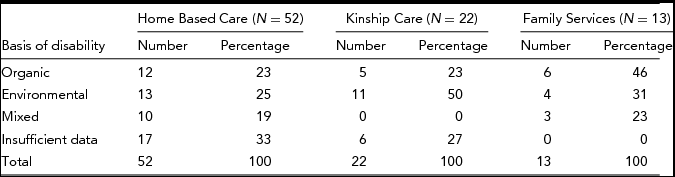
As shown earlier in Table 2, there were different proportions of formal diagnosis in different programmes. However, in three programme areas, Home Based Care, Kinship Care and Family Services, about half of the children with a formally diagnosed disability had an environmental component to their disability, as shown in Table 5. That is, the origins of the disability clearly lay in the child's cultural and socio-economic environment and parent–child or family relationships – a series of dynamics noted in research (Emerson, Reference Emerson2007; Emerson et al., Reference Emerson, Madden, Graham, Llewellyn, Hatton and Robertson2011). Such disabilities included developmental delay without organic cause; mental illness, including oppositional defiant behaviour, post-traumatic stress disorder, anxiety and attachment disorder; and learning disability. The researcher categorised disabilities as environmental or organically based according to the clinical diagnoses provided by specialists qualified to make the diagnosis, with supportive evidence from considerable qualitative description provided by OzChild direct practice staff.
Organic or environmental component of disability in three programme areas.
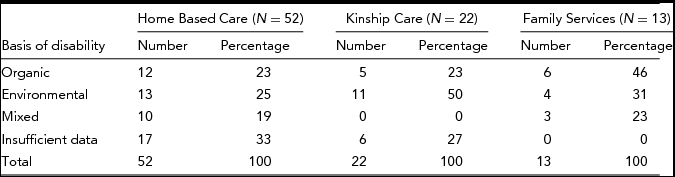
The proportion of environmentally based disability increases dramatically if informally diagnosed disability is considered. All but 9 of the 63 children with informally diagnosed disability (25 of whom also had a formally diagnosed disability) had a significant environmental component to their disability.
A large proportion of children with a disability had family members with a disability. Fifty-seven per cent, or 114, of the 200 children with a disability had family members who also had a disability. There was considerable complexity in many families:
• 32 families with 43 children had multiple disabilities in two generations of the families;
• 30 children had one parent with a disability;
• 25 families with 39 children had more than one child with a disability.
An interesting relationship emerged between disability and a particular group of Family Services clients, called excluded families (Mitchell & Campbell, Reference Mitchell and Campbell2011; Tierney, Reference Tierney1976). Excluded families are those with multiple, entrenched, intractable, chronic and serious problems across multiple generations in one family (Mitchell & Campbell, Reference Mitchell and Campbell2011, p. 427). Mitchell and Campbell provide criteria for assessment of excluded families, and these and the qualitative description provided by staff enabled the researcher to distinguish between excluded and non-excluded families in the Family Services cohort. Family Services families in this study were much more likely to have multiple family members covering two generations with a disability than the other programmes (more than half the group, or 14 of 22 families), and nine of these appeared to be excluded families. The nine excluded families had 11 children in this study, or half the family services cohort. Further, the disabilities in the excluded family group seemed to be directly related to the family's cultural and social environment, and parent–child or family relationships, referred to above as environmentally based disabilities. There was only one case where this was arguably not the case – the child had autism and intellectual disability. For all the other children in the excluded families, 10 in all, multiple diagnoses were common and included mental illness diagnoses, such as oppositional defiant disorder, anxiety, depression and effects of trauma from family violence. There was one diagnosis of serious developmental delay and one of ADHD, and the caseworker located the child's difficulties in the family-environment context in this latter case. By comparison, children in the five non-excluded families with intergenerational disability had different types of disability; for example, genetic or physical disorders.
Disability and Educational Performance
The data support previous research that shows that children with a disability face barriers to educational achievement (Australian Bureau of Statistics, 2012; National People with Disabilities and Carer Council, 2009, p. 47) and that children in out-of-home care are less likely to achieve educationally (Wise, Pollock, Mitchell, Argus, & Farquhar, Reference Wise, Pollock, Mitchell, Argus and Farquhar2010). Young people in OzChild's applied education settings also have a history of lack of educational achievement. Furthermore, data from this study, although presenting only very small numbers, suggest that children in family services families were struggling to achieve educationally.
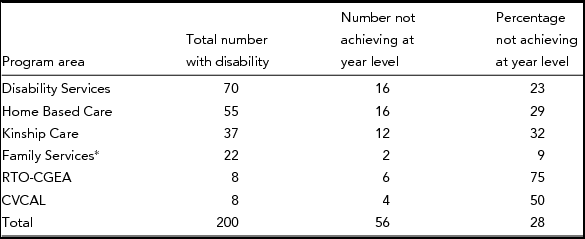
We used the measure ‘not achieving in the grade level in which they were placed’, to take account of children with disabilities that would impair their ability to achieve at their expected level for age. Even when using this measure, there were a number of children (56, or a quarter of the 200 children) who were not achieving at school, according to their caseworker's evaluation, as shown in Table 6.
School-aged children not achieving in the year level in which they were placed, by OzChild programme area.
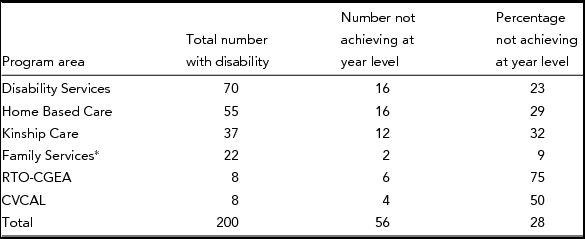
*The figure is low in family services because eight of the 22 children were of pre-school age. An additional three children were in special schools.
CVCAL, Community Victorian Certificate of Applied Learning; RTO-CGEA, Certificates I and II in General Education for Adults taught within OzChild's Registered Training Organisation.
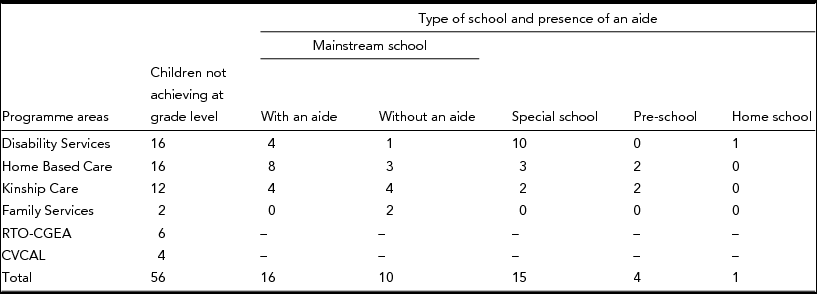
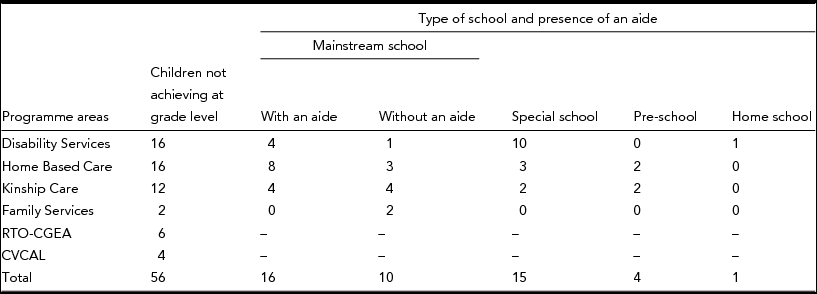
With this large proportion of non-achievement, the question of whether the children have sufficient help and support arises. Table 7 shows that there were children in every programme who were not achieving and who had no aide. This supports practitioners’ views that some children who need an aide are not able to access one. It also suggests that being allocated an aide is not a panacea and that more, or different, approaches are needed to ensure educational achievement.
Children not achieving at school by type of school and presence of an aide, in OzChild programme areas.
CVCAL, Community Victorian Certificate of Applied Learning; RTO-CGEA, Certificates I and II in General Education for Adults taught within OzChild's Registered Training Organisation.
CVCAL students are eligible for aides, but there are perceived difficulties in providing support without stigmatising the recipient students. CGEA students are not eligible for an aide. In both programmes, staffing levels may be insufficient to meet the needs of young people with the level of disability these students were described as having.
Some of the qualitative data give a richer picture: a 10-year-old boy in Kinship Care with a learning disability, attention deficit disorder and reactive attachment disorder was not achieving and had no aide. Two other young people in kinship care were 13 years old and disengaging from school, but were receiving insufficient help in the school setting.
In the CVCAL programme, 3 of the 8 young people with a disability were in informal kinship care, had serious and complex difficulties, and were in need of additional assessment and therapeutic intervention, beyond any currently planned.
Gaps and Problems in the Service System and Unmet Needs as Described in the Smaller Sample of 38 Children
Analysis of data from the sample group of 38 children revealed a range of unmet needs of the children, their families and carers, as well as a number of service system gaps and problems.
The most frequent service deficits were: inadequate funding to cover the child's needs; insufficient respite for those caring for children with high care needs; and lack of appropriate services for families with multiple and complex needs. In some Kinship Care placements these deficits were exacerbated by lower funding levels for kinship placements compared to foster care.
These findings prompted further analysis of qualitative comments on the spreadsheet for the full group of 200 children. This showed that the need for respite was identified in all of the out-of-home care programmes, with workers identifying particular placements that were at risk of breakdown because of the high care needs of the children and lack of sufficient respite for the carers. For example, 7 of the 55 placements in Home Based Care were identified as needing additional support, and 3 of 13 placements in Disability Services were noted as being at risk, because of the high care needs of the children.
Other gaps emerged from the sample of 38, but each gap related to only one or two cases and this causes difficulties in arguing for resources. The combined result, however, was difficulty in achieving optimal development for children with a variety of disabilities. The listed gaps included:
• Lack of outreach or in-service social work and psychologist services for children and young people.
• Inadequate early intervention services for families.
• Shortage of specialist/trained carers for children needing very high care.
• Poor public transport.
• Geographical isolation/lack of services in rural areas.
• Inadequate funding for permanent carers of disabled children.
• Complexity of funding between different systems and eligibility issues.
• Insufficient financial and housing support for very poor carers.
Further, 25 instances of service system difficulties were identified, with 11 of these relating to case-plan failures of some sort. These tended to occur in Kinship Care and Disability Services. This is an area of practice at the intersection of systems that could clearly be improved.
Finally, other major difficulties were identified: (1) insufficient time (given existing caseloads) to meet the needs of children and carers; (2) service systems that failed to meet the particular needs of specific children and families; and (3) the inability of school, cultural and recreational activities to cope with children with disabilities. This third issue was evident from the spreadsheet data, which showed that 18 of 55 children in Home Based Care, alone, needed additional help to participate in any extracurricular activity. The need was high, too, in Disability Services out-of-home care and for birth families caring for severely disabled children receiving services through Disability Services.
Achievements Despite Challenges
The data from the full group of 200 children and from the sample of 38 showed that carers, birth families, and OzChild staff and programmes were often able to meet the needs of children with disability within existing funding arrangements and programme models. Across the six programme areas, staff rated the effectiveness of their intervention as highly or moderately effective in 34 of the 38 cases. Barriers and challenges were consistently addressed through persistent casework and case management processes, although they were not always overcome. About half of Home Based Care, Disability Services out-of-home care and Kinship Care placements met the needs of children with very high needs at a level that resulted in a reduction in challenging behaviours and other effects of disability. The children were achieving at school, and participating well in the family and in cultural and recreational activities, despite a number of them having had experiences of trauma, with resultant complex and challenging behaviours.
Discussion and Conclusions from the Data
While some of the findings from this research will not surprise those working in the field, they present some challenges for practice, programme design and policy. Discussion and recommendations apply to the context of Victoria, Australia. Readers must judge the relevance for their own jurisdictions. We limit ourselves to six areas of discussion.
The High Proportion of Children with Disability in our Services and the Extensive Variety of Disabilities in Children in all Programme Areas
On the one hand, policy makers and service system designers acknowledge that disability requires specialist knowledge and expertise, with specific services established for those with disabilities. Yet data from this study show that generalist practitioners in a variety of programme areas – foster care, kinship care, family services and educational services – are dealing with children with a huge variety of disabilities, across the spectrum of seriousness. Generalist staff do not necessarily have disability-specific knowledge. Programme and practice models are needed that allow them to access specialist knowledge and information swiftly, both about the particular disability and its effects, and about the services that are available for each child. Staff require time to acquire this knowledge. One size will not fit all, and systems must be established to address the situation that workers actually face when a child with a particular disability is added to their caseload. The case study component of the research found that staff in different programme areas had programme-specific knowledge, which, when shared with those in other programme areas, resulted in a much deeper understanding of the child and his/her situation. Consequently, there were expanded possibilities for intervention. Yet opportunities for sharing case and service-system knowledge are limited, with one of the major constraints being lack of time as a result of high caseloads. If children with disabilities are to receive maximal care, programme models need to allow staff the time for these tasks and activities.
Staff also need to be able to spend additional time with children, and their families or carers, to both assess and address the additional needs of those with disabilities and those caring for them.
The findings suggest that current programme models and service-system responses do not cater adequately for the extensive variety of disability and levels of seriousness identified in this study. These require particularised, flexible and responsive practice models, programmes and service systems tailored to the needs of each child and his/her family/carer, and to the challenges each particular disability presents to both the child and the carers.
Thus, the sheer number of children with disability in this sample, combined with the spread of children with a disability across the staff of all programmes, make it difficult to avoid the conclusion that additional funding is needed: for development of programme and practice models of greater flexibility; and for time release and backfill for knowledge and skill transfer for all staff.
Conclusions About the ADHD Co-morbidity Data
The complexity of ADHD presentations, with such a high level of co-morbidity, suggests that a better understanding of ADHD and its relationship to trauma, attachment and the causes of other learning and behavioural difficulties is needed. The findings suggest the need for continuing multidisciplinary theoretical, conceptual and research efforts in relation to ADHD. In the meantime, practitioners need support to view ADHD through multiple lenses, to acknowledge the range of interventions that might be helpful, and to be confident in the knowledge that professionally based trial-and-error learning is a professional responsibility in such a situation.
Conceptualisation and Origins of, and Pathways into, Disability
The data about the contribution of the child's environment to disability and the specific data about excluded families call for greater thought within the sector about:
• a definition of disability in terms of functional impairment, rather than diagnosis;
• pathways into, or origins of, disability for a substantial number of children; and
• particular early interventions that would prevent a substantial proportion of disabilities in children in child and family welfare services.
Functional impairment should be the central descriptor of all disabilities, delays and disorders, because diagnostic terms are only significant to the extent that they reflect the child's functioning. Deciding to intervene, help and support the child should be dependent on an understanding of that particular functional impairment in each case. If the child's behaviour is the same, whether the diagnosis is autism (currently eligible for disability services) or reactive attachment disorder (currently ineligible), the child and his/her parent or carer need help and support (Pitman et al., Reference Pitman, Martin and Mitchell2013).
The findings of this study highlight the multiple causes of disability in this particular cohort of children. Some disabilities are genetic. Some are caused by particular physical illnesses and biological processes for which we currently have no cure or ability to prevent. However, some disabilities are the result of processes that are, at least theoretically, preventable.
Accordingly, questions of prevention must be addressed. If cerebral palsy is caused, in some cases, by birth trauma, effort must be devoted to minimising the number of births where that kind of trauma occurs. Similarly, if developmental delay, learning problems and some childhood mental illnesses are caused by child abuse and neglect (which, in turn, may have their causes in a number of interrelated dynamics at the intra- and interpersonal, family and societal levels), then strong efforts must be devoted to addressing these causes. Many efforts in Australia and elsewhere are, of course, devoted to just such prevention. The findings from this study merely underscore the fact that more needs to be done.
We highlight a sub-set of families – excluded families – for whom disabilities are environmentally based. Mitchell and Campbell (Reference Mitchell and Campbell2011) argue that excluded families represent a significant sub-group of families in the child and family welfare system that present the field with major challenges in achieving positive outcomes for either the parents or the children. They, and many others, identify the contribution of forces well outside the control of any family in creating and maintaining exclusion (Sen, Reference Sen2001; Spencer & Baldwin, Reference Spencer, Baldwin, Taylor and Daniel2005; Taket, Crisp, Nevill, Graham, & Barter-Godfrey, Reference Taket, Crisp, Nevill, Graham and Barter-Godfrey2009; Tierney, Reference Tierney1976). These forces include poverty, educational disadvantage, racism, marginalisation, chronic structural unemployment, lack of affordable housing, and intergenerational abuse and trauma. In this study, all but one child from excluded families in Family Services had disabilities that were environmentally based. We assume that many children in Home Based Care with environmentally based disabilities came into care from excluded families.
If we are to reduce the number of children in care, and the number of children with these particular disabilities, there is an obvious need to address the causative factors of exclusion at a societal level, so that we intervene effectively in the cycles that create excluded families and which place their children in environments that, in turn and over time, create disability in children. In part, this will mean addressing those societal factors that contribute to exclusion. Concurrently, it will require more effective intensive intervention with families who are identified as excluded, for greater lengths of time, to address the effects of those causative and destructive societal forces on individual and family development.
That is, there are at least two relevant levels of prevention: the level that addresses the societal factors that contribute to and help maintain exclusion; and the level that helps families and individuals embedded in exclusion to move out of it. This will, of necessity, involve ameliorating the destructive effects of poverty, marginalisation, homelessness, violence, substance abuse and mental illness on individuals and families, and on their developmental pathways.
Educational Achievement
This study supports the findings of other research that too many children in child and family welfare services continue to fail at school, and will continue to do so unless we find better ways of helping them. The findings suggest that teachers and caseworkers need more knowledge about and skill in dealing with particular disabilities and their effects on learning and participation. Given the number of children with an aide, or already in a special school setting, who achieve well below the accepted standard of their placed grade level, exploration of additional interventions and programmes, and subsequent evaluation of these, to build a bank of effective interventions when children are not achieving at school, are essential. While some innovation, as well as knowledge and skill sharing and development, are possible within existing funding arrangements, additional funding would foster the development of alternative educational programmes within existing and alternative educational settings. Additional support programmes that occur outside of the educational setting, either in the home or the community, were also indicated for some children.
Inability to Participate in Social, Cultural and Recreational Activities
Barriers to participation emerged as a big issue for a large sub-group of the children. It was very clear that some children need additional help or different activities if they are ever to participate in their community, whether in extra-curricular activities at school or in their community more broadly. Given the variety of disabilities and resultant variety of barriers to participation, there is a need for some diverse, targeted and pilot programmes to explore a range of effective interventions to connect children with a disability in child and family welfare services to their communities.
Funding Inequalities
There were some children with highly complex needs in Kinship Care, a programme in which it is difficult to access resources needed by the children and their carers because of the inflexible and limited funding levels for such care. There is a need for the range of funding levels available to placements of children with higher needs in foster care to be available within Kinship Care too.
Conclusions
We acknowledge that effective intervention occurs within existing funding arrangements and programme and practice models for children with a disability. However, the findings from this research suggest that more is needed to promote improved outcomes for children with a disability in child and family welfare services in Victoria:
• Functional impairment, regardless of aetiology, needs to be included in the definition of disability and in eligibility criteria for disability services.
• Macro-level prevention strategies to reduce environmental factors that contribute to the development of disabilities are required.
• At the family level, families with multiple and complex needs require a more targeted approach.
• The additional time demands on workers from children with a disability need to be factored into the setting of caseloads and programme targets. Current expectations of what workers can achieve for these children in the context of existing caseloads are too high, and funding for programmes is too low.
• Resources need to be devoted to professional development in the area of disability for staff in child and family services and alternative education settings.
• Greater attention must be given to improving educational achievement of this specific group of children.
• Intervention is needed to ensure that children with disabilities are helped to participate within their communities, either through helping children access existing recreational and cultural activities, or through development of more suitable activities for them, within their community.
• Additional respite services are needed for some carers of children with disability and very high care needs.
• The inequities in funding between foster care and kinship care need to be eradicated.
These changes, sufficiently developed and evaluated, would provide the foundation for achievement of better outcomes for children with a disability in child and family welfare services.
Acknowledgements
I am profoundly grateful to the staff of OzChild – the direct practitioners, team-leaders, assistant managers, senior managers and the CEO; to members of the research project Reference Group for their strong support of this research; and to Professor Bruce Lagay, University of Melbourne, who gave helpful advice on drafts of the paper.