Malnutrition is associated with a variety of adverse effects in children.Reference Chen, Chowdhury and Huffman 1 , Reference Mehta, Corkins and Lyman 2 Nutritional status is often described in terms of anthropometric indices comparing weight and height with population norms. In general, “wasting”, which represents low weight-for-height ratio, is thought to be associated with acute malnutrition, whereas “stunting”, which represents low height-for-age ratio, represents a chronically malnourished state with diminished somatic growth.Reference Victora 3 In resource-limited settings, malnutrition has been correlated with an increased rate of all-cause child mortality. In hospitals of high-income countries, anthropometric indices of malnutrition are predictive of a longer duration of mechanical ventilation and ICU stay, as well as of increased resource utilisation in the ICU.Reference Pollack, Ruttimann and Wiley 4 – Reference Mitting, Marino, Macrae, Shastri, Meyer and Pathan 6
Children with CHD are at an increased risk for both acute and chronic malnutrition due to increased metabolic demands and diminished energy intake.Reference Radman, Mack and Barnoya 7 – Reference Burch, Ravishankar and Newburger 10 They often have a normal birth weight but fail to thrive because of growth retardation, muscle wasting, and reduction of subcutaneous fat.Reference Jackson and Poskitt 11 , Reference Blasquez, Clouzeau and Fayon 12 In a cohort of hospitalised children with heart disease in the United States of America, 33% had acute malnutrition and 64% had chronic malnutrition.Reference Cameron, Rosenthal and Olson 13 In developing countries, the incidence may be even higher.Reference Hassan, Albanna and Morsy 14 Malnutrition is most pronounced in children with pulmonary hypertension, particularly when associated with cyanosis and/or congestive heart failure.Reference Blasquez, Clouzeau and Fayon 12 , Reference Cameron, Rosenthal and Olson 13 , Reference Varan, Tokel and Yilmaz 15 Nutritional status may improve with early correction of CHD.Reference Blasquez, Clouzeau and Fayon 12 , Reference Varan, Tokel and Yilmaz 15
Children with complex heart diseases are likely to require more than 120% of the typical recommended energy intake in order to maintain acceptable growth.Reference Jackson and Poskitt 11 , Reference Krauss and Auld 16 Unfortunately, this is rarely achieved, and the effect of poor intake is further compounded by intestinal malabsorption of fat and protein in those with elevated right-sided heart pressures, low cardiac output, and altered gastrointestinal function.Reference Barton, Hindmarsh, Scrimgeour, Rennie and Preece 17 – Reference Sondheimer and Hamilton 21 Surgical stress and inflammation, particularly post-cardiopulmonary bypass, cause postoperative endocrine dysfunction, increased metabolic demands, and further exacerbation of malnutrition.Reference Milne, Elliott, Pearson, Holden, Orskov and Alberti 22 Postoperative delays in initiation and optimisation of nutrition, and the interruption of feeding for carrying out procedures, compound the adverse effects of increased energy requirements during this period.Reference Hong, Moffett, Payne, Rich, Ocampo and Petit 23 – Reference Schwalbe-Terilli, Hartman and Nagle 25
Several studies on patients with CHD clearly demonstrate the adverse effects of malnutrition. A low weight-for-age z-score is associated with an increased duration of mechanical ventilation and with mortality in neonates undergoing surgery for CHD.Reference Mitting, Marino, Macrae, Shastri, Meyer and Pathan 6 A lower weight-for-age z-score is associated with an increased length of hospital stay after the bidirectional Glenn procedure, as well as with an increased risk for infection, increased in-hospital mortality, and an increased length of stay after the Fontan procedure.Reference Anderson, Beekman and Border 26 – Reference Wallace, Jaggers and Li 28 Lower body fat – measured using the triceps skinfold site – has been found to be associated with a longer duration of ICU stay, longer duration of mechanical ventilation, and a longer duration of inotropic support in children undergoing surgery for CHD.Reference Radman, Mack and Barnoya 7 Patients with a low caloric intake have a longer duration of mechanical ventilation, parenteral nutrition, and ICU stay after open-heart surgery.Reference Larsen, Goonewardene and Field 29 Furthermore, a declining weight-for-age z-score after surgery is associated with increased late mortality.Reference Eskedal, Hagemo and Seem 30
In this study, we evaluate the impact of malnutrition on outcomes after paediatric cardiac surgery in a large cohort of patients with diverse cardiovascular defects. Unlike most previous studies on the subject, our cohort includes a wide range of cardiovascular defects and patient ages in order to better evaluate the interplay of multiple perioperative risk factors that may lead to adverse surgical outcomes. The specific age cut-off point was chosen to include single-ventricle patients through the completion of their three-stage palliation. We hypothesised that children with malnutrition before cardiac surgery will have both increased postoperative morbidity and mortality and that this will be especially pronounced with worsening malnutrition.
Materials and methods
We conducted a retrospective analysis of all patients aged 0 to 5 years undergoing cardiac surgery at Seattle Children’s Hospital as recorded in the Society of Thoracic Surgeons database from the initiation of data collection in 2006–2015. Emergency surgeries, subsequent surgeries during hospitalisation, and surgeries without an associated complexity score were not included. A total of 2088 patients met the inclusion criteria for the study.
Preoperative anthropometric indices including height-for-age, weight-for-age, and weight-for-height z-scores were calculated for each patient using the World Health Organization growth standards (http://www.who.int/childgrowth/en/). Because the World Health Organization and Centers for Disease Control growth charts are similar in this age range, we elected to use the World Health Organization growth chart for all patients.Reference Mehta, Corkins and Lyman 2 The primary outcome was 30-day mortality. Secondary outcomes included length of ICU stay, length of hospital stay, incidence of cardiac arrest, duration of mechanical ventilation, and postoperative infection. Primary risk factors included height-for-age, weight-for-age, and weight-for-height z-scores. Additional risk factors included gender, prematurity, preoperative mechanical ventilation, cyanotic heart disease, cardiopulmonary bypass, a major non-cardiac anomaly, a defined genetic syndrome, and the complexity of surgery, defined using Risk Adjustment for Congenital Heart Surgery.Reference Jenkins 31
Cyanotic heart disease was defined as having a preoperative arterial oxygen saturation of less than 90%. Any genetic syndrome recorded in the Society of Thoracic Surgeons Database was included. Some of the more common syndromes in our study population were DiGeorge, VACTERL, CHARGE, heterotaxy, and trisomy 21. Major non-cardiac anomalies recorded in the database included craniofacial defects, tracheo-oesophageal fistula, congenital diaphragmmatic hernia, anal atresia, macro- or microcephaly, and renal anomalies. Postoperative infections included urinary tract infection, pneumonia, mediastinitis, sepsis, and sternal wound infection.
Data descriptives are presented as counts and percentages, or as medians and interquartile ranges, as appropriate. Absolute risk regression models with robust standard errors were used to model the probability of 30-day mortality, infection, and cardiac arrest. Robust regression models were used for time on mechanical ventilation and length of ICU and hospital stay endpoints in order to account for their distributions being skewed rightward with large outliers. Those who died within 30 days of surgery were excluded from the mechanical ventilation and length of ICU and hospital stay analyses, as their times for the same would be prematurely truncated. Univariate and multivariate models were fit for each of the endpoints. The multivariate models assessing the association of each endpoint with the anthropometric indices of malnutrition were adjusted for surgical complexity and age at surgery. Non-linearity of the anthropometric indices of malnutrition were assessed and illustrated using general additive models with 3 degrees of freedom, adjusting for surgical complexity and age at surgery. Because of skewed data and potentially non-linear relationships, multivariate regression spline models were used for all outcomes.
Results
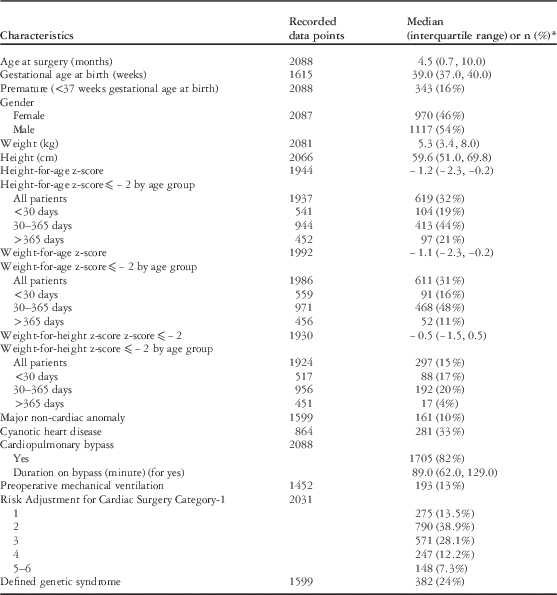
A total of 2088 patients were analysed (Table 1): 31% were underweight, defined as weight-for-age z-score ⩽−2; 32% had stunting, defined as height-for-age z-score ⩽−2; and 15% had wasting, defined as weight-for-height z-score ⩽−2. Stratifying by age group, we found that 16% of neonates (<30 days), 48% of infants (30–365 days), and 11% of children (>1 year) were underweight. Similarly, 19% of neonates, 44% of infants, and 21% of children had stunting, and 17% of neonates, 20% of infants, and 4% of children had wasting. Preoperative characteristics included cyanosis in 33% of patients, preoperative mechanical ventilation in 13%, a defined genetic syndrome in 24%, and a major non-cardiac anomaly in 10%. In all, 16% of patients were born prematurely, with gestational age at birth <37 weeks. Overall, 82% of patients underwent cardiopulmonary bypass, with a mean bypass time of 89 minutes, and the surgery was complex, with Risk Adjustment for Congenital Heart Surgery category >3 in 19%.
Patient characteristics.
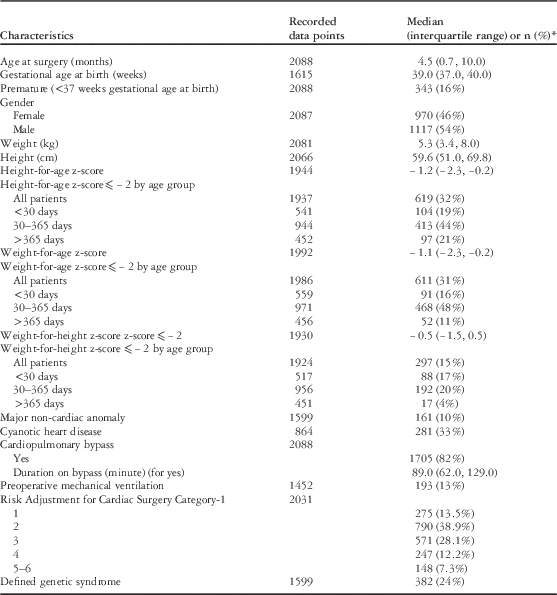
* Continuous variables are summarised with median (interquartile range) and categorical with n (%)
Mortality
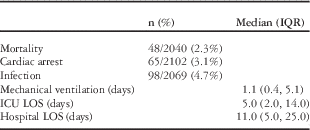
A total of 48 patients (2.3%) died within 30 days of surgery (Table 2). Using univariate absolute risk regression, we found that age, gestational age at birth, weight, height, height-for-age z-score, weight-for-age z-score, a major non-cardiac anomaly, duration of cardiopulmonary bypass, duration of preoperative mechanical ventilation, Risk Adjustment for Congenital Heart Surgery category 5–6, and a defined genetic syndrome were significantly associated with mortality. We found a 0.2% decrease in mortality for each additional month of age at surgery. Similarly, every additional week of gestational age at birth was associated with a 0.3% reduction in mortality. As expected, there was a clear relationship between weight and height and mortality, as these variables are collinear with age. The presence of a major non-cardiac anomaly increased the risk for mortality by 5.5%, and preoperative mechanical ventilation increased mortality by 6.0%. Although the use of cardiopulmonary bypass did not have a statistically significant impact on mortality, the duration of bypass did. Each additional 10 minutes on bypass increased mortality risk by 1% (Supplementary table 4).
Overall outcomes.
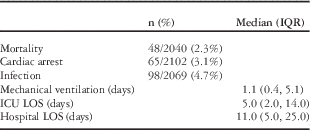
IQR=interquartile range; LOS=length of stay.
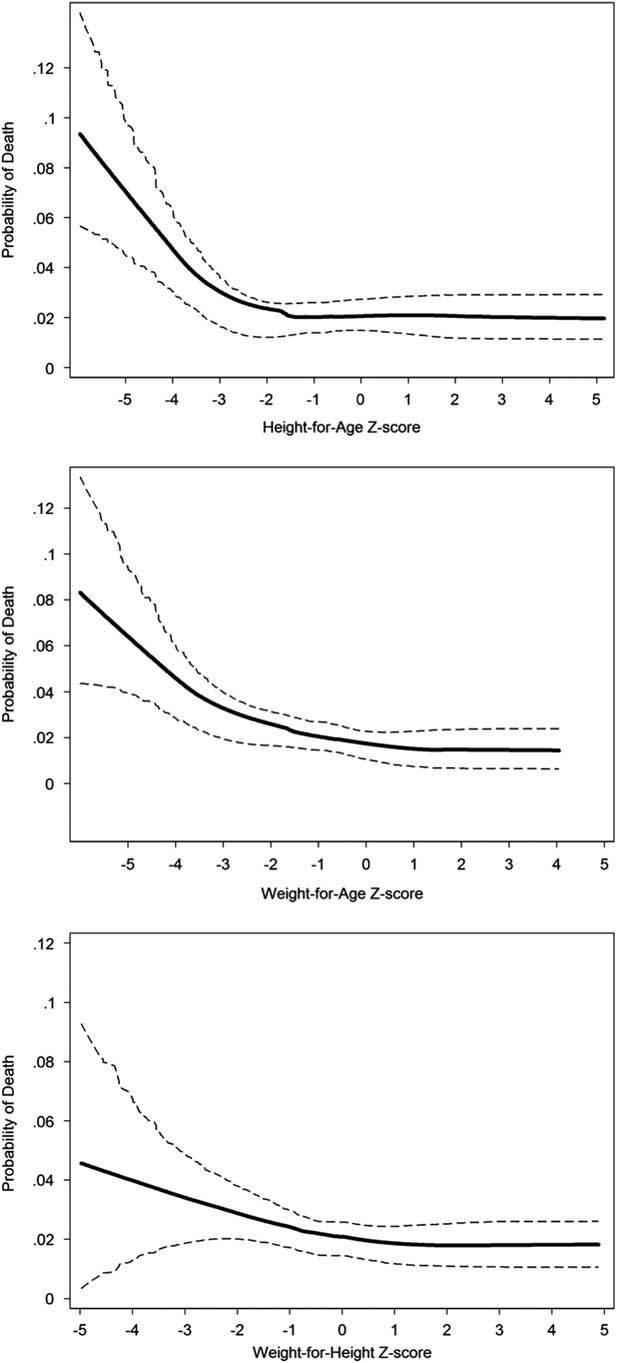
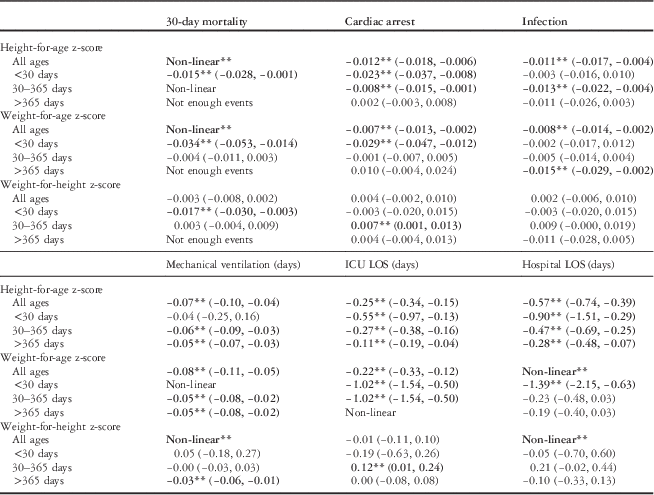
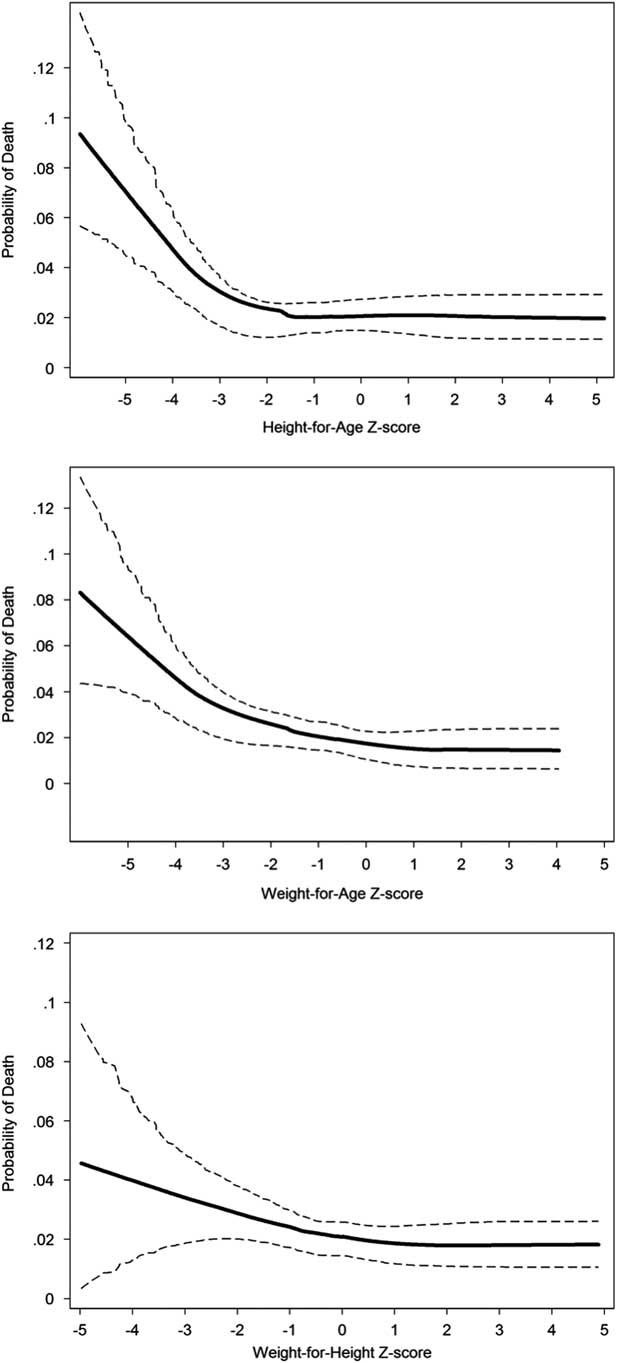
Multivariate analysis controlling for surgical complexity and age revealed a significant but non-linear relationship between height-for-age z-score and weight-for-age z-score and mortality (Table 3). The relationship between height-for-age z-score and weight-for-age z-score and mortality becomes prominent with severe malnutrition (z-score ⩽−2) (Fig 1). In the range of z-score ⩽−2, each unit decrease in height-for-age z-score is associated with a 2.9% increased risk for mortality, and each unit decrease in weight-for-age z-score is associated with a 2.1% increased risk for mortality. Note that this relationship does not hold true for z-score >−2. The relationship between weight-for-height z-score and mortality was not significant. Further breakdown of mortality (and other outcomes) by age group is shown in Table 3.
Multivariate models for 30-day mortality based on anthropometric indices. The solid line represents the multivariate regression model for probability of death based on the anthropometric index. The dotted lines represent 95% confidence intervals.
Risk for outcomesFootnote * based on nutritional status.
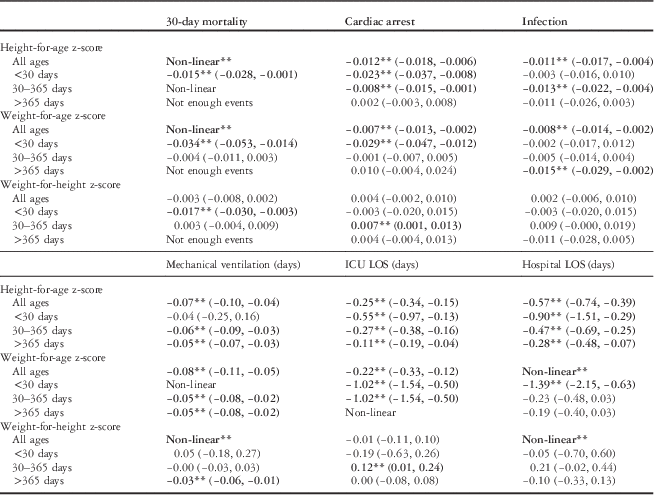
* For categorical variables, each outcome probability is reported based on a unit change in the z-score. For non-categorical variables, the value in the table represents β from robust linear regression model, or the coefficient of the linear relationship between the independent and dependent variables. The values in parentheses represent 95% confidence intervals
**Statistically significant results are shown in bold and starred
LOS = length of stay.
Cardiac arrest
Altogether, 65 patients (3.1%) had perioperative cardiac arrest. In univariate analysis, age, weight, height, height-for-age z-score, major non-cardiac anomaly, time on bypass, preoperative mechanical ventilation, Risk Adjustment for Congenital Heart Surgery category of 3 or 5–6, and a defined genetic syndrome were associated with risk for cardiac arrest. In multivariate analysis, height-for-age z-score and weight-for-age z-score were significantly associated with cardiac arrest. Each unit decrease in height-for-age z-score and weight-for-age z-score confers a 1.2 and 0.7% increased risk for cardiac arrest, respectively. The relationship between weight-for-height z-score and cardiac arrest did not reach statistical significance.
Infection
In all, 98 patients (4.7%) had a postoperative infection. In univariate analysis, age at surgery, gestational age at birth, weight, height, height-for-age z-score, height-for-age z-score ⩽−2, weight-for-age z-score, weight-for-age z-score ⩽−2, a major non-cardiac anomaly, time on cardiopulmonary bypass, preoperative mechanical ventilation, and Risk Adjustment for Congenital Heart Surgery category 5–6 were associated with the risk for infection. In the multivariate analysis, height-for-age z-score and weight-for-age z-score were significantly associated with infection. Each unit decrease in height-for-age z-score and weight-for-age z-score was associated with a 1.1 and 0.8% increased risk for infection, respectively. The relationship between weight-for-height z-score and infection was not significant.
Mechanical ventilation
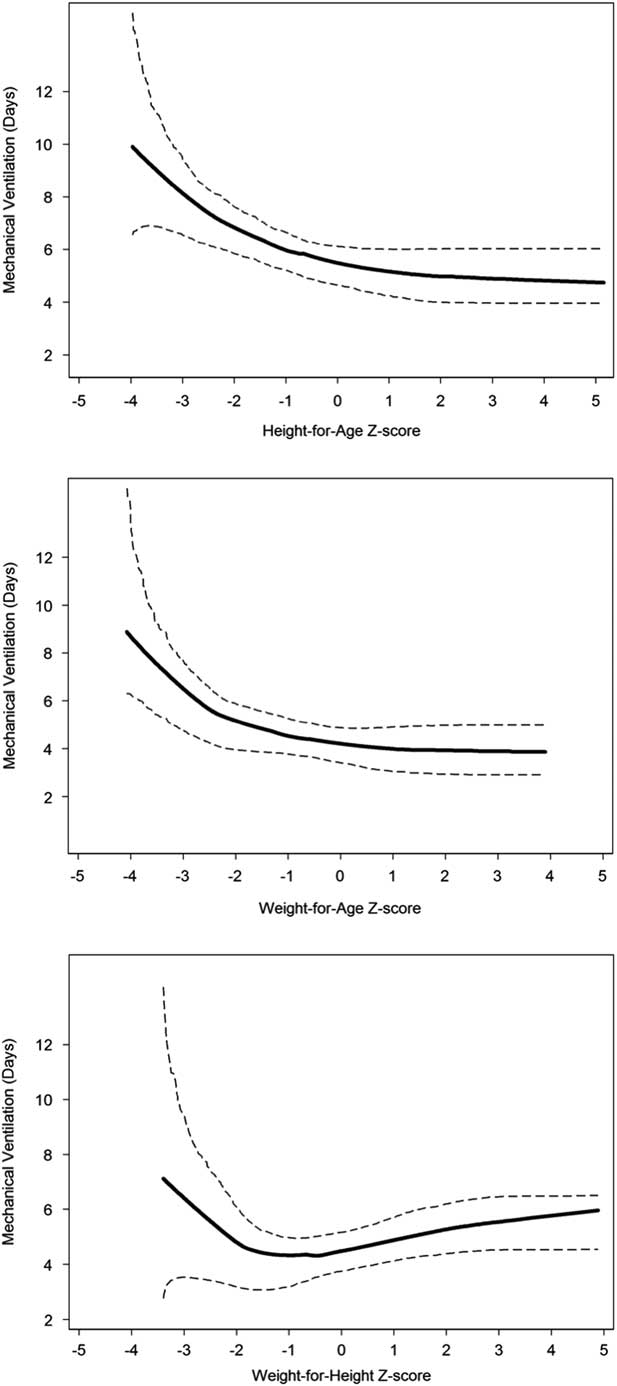
The median duration of mechanical ventilation in our cohort was 1.1 days, with an interquartile range of 0.4 to 5.1 days. Using univariate analysis, we found that age, gestational age at birth, weight, height, height-for-age z-score, height-for-age z-score ⩽−2, weight-for-age z-score, weight-for-age z-score ⩽−2, weight-for-height z-score, weight-for-height z-score ⩽−2, cyanotic heart disease, time on bypass, preoperative mechanical ventilation, and Risk Adjustment for Congenital Heart Surgery category >1 were statistically related to the duration of mechanical ventilation. In multivariate analysis, height-for-age z-score, weight-for-age z-score, and weight-for-height z-score were significantly associated with the duration of mechanical ventilation. Each unit decrease in height-for-age z-score was associated with a 0.07 day (1.7 hour) increase in mechanical ventilation time, and each unit decrease in weight-for-age z-score was associated with a 0.08 day (1.9 hour) increase in mechanical ventilation time. The relationship with weight-for-height z-score was significant but non-linear (Fig 2).
Multivariate models for duration of mechanical ventilation based on anthropometric indices. The solid line represents the multivariate regression model for mechanical ventilation based on the anthropometric index. The dotted lines represent 95% confidence intervals.

Length of stay
The median length of ICU stay was 5 days (interquartile range 2, 14). On univariate analysis, age, gestational age at birth, weight, height, cyanotic heart disease, cardiopulmonary bypass, time on bypass, preoperative mechanical ventilation, and Risk Adjustment for Congenital Heart Surgery category >2 were associated with the length of ICU stay. On multivariate analysis, height-for-age z-score and weight-for-age z-score were significantly related to length of ICU stay. Every unit decrease in height-for-age z-score was associated with a 0.25 day (6 hour) increase in length of ICU stay, and every unit decrease in weight-for-age z-score was associated with a 0.22 day (5.3 hour) increase in length of ICU stay. The relationship with weight-for-height z-score was non-linear.
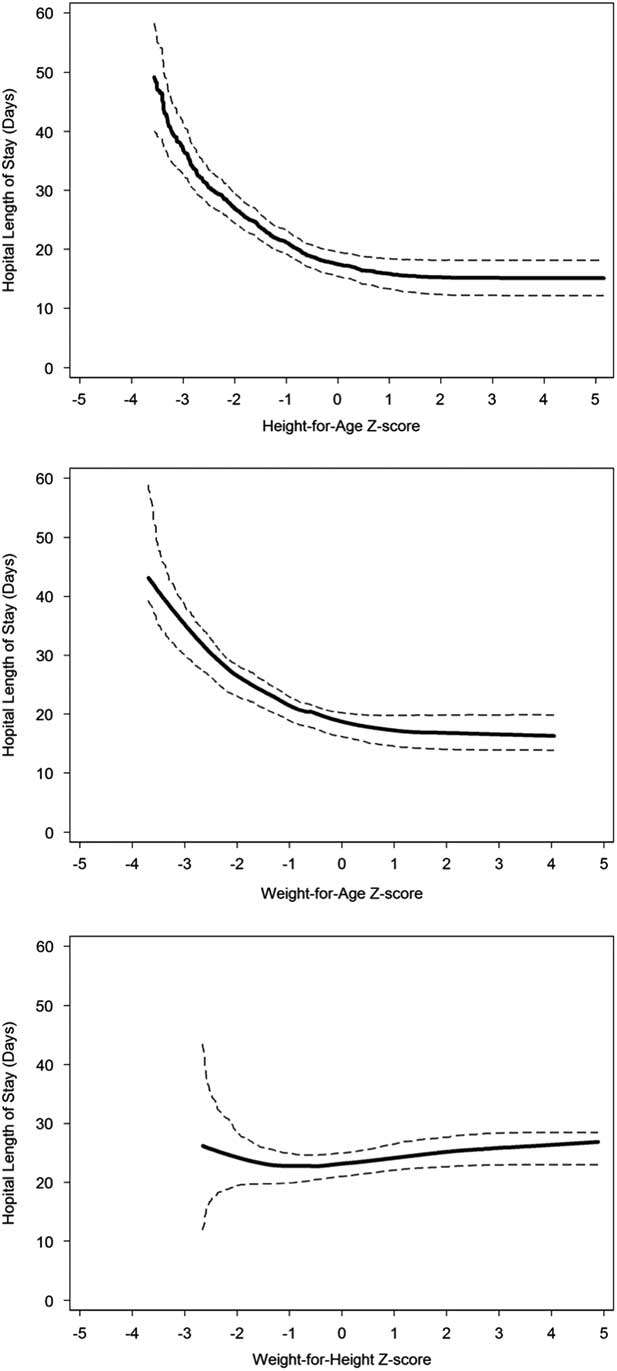
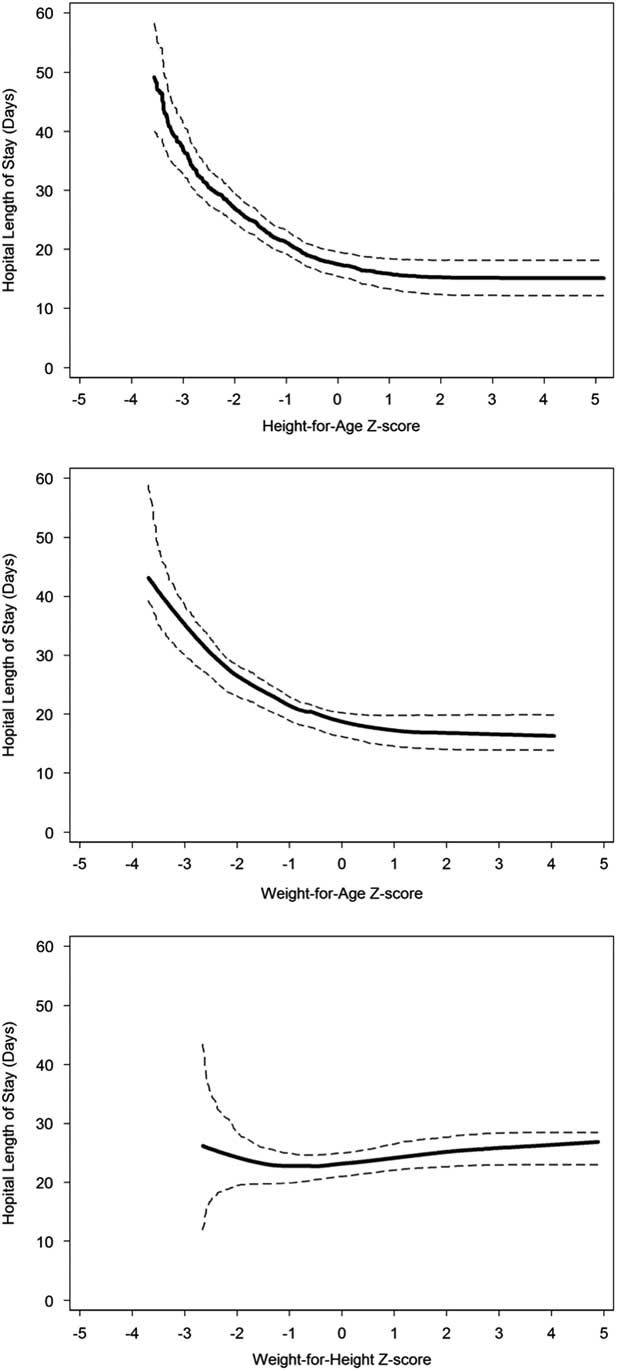
The median length of hospital stay was 11 days (interquartile range 5, 25). In univariate analysis, age, gestational age at birth, weight, height, height-for-age z-score, weight-for-height z-score, a major non-cardiac anomaly, cyanotic heart disease, time on bypass, preoperative mechanical ventilation, and Risk Adjustment for Congenital Heart Surgery category >1 were associated with the length of hospital stay. In multivariate analysis, every unit decrease in height-for-age z-score was associated with a 0.57 day (13.7 hour) longer duration of hospital stay. The relationships between weight-for-age z-score and weight-for-height z-score and the length of hospital stay were statistically significant, but non-linear (Fig 3).
Multivariate models for hospital length of stay based on anthropometric indices. The solid line represents the multivariate regression model for length of stay based on the anthropometric index. The dotted lines represent 95% confidence intervals.
Discussion
We found an incidence of malnutrition somewhat lower than in previous studies.Reference Cameron, Rosenthal and Olson 13 , Reference Hassan, Albanna and Morsy 14 This may be related to the location of our hospital in an affluent part of the United States of America, where resources are relatively abundant.Reference Radman, Mack and Barnoya 7 It may also be the case that recent efforts to improve nutrition in vulnerable patients have resulted in a lower percentage of children with acute and chronic malnutrition. In 2003, our hospital began a concerted effort to improve perioperative nutrition in cardiac patients. Targeted interventions included the development of an ICU-feeding protocol with early initiation of total parenteral nutrition in patients at risk for complications from oral feeding and dietician involvement during ICU rounds. Similar to other studies on children with CHD, stunting (height-for-age z-score ⩽−2) was twice as common as wasting (weight-for-height z-score ⩽−2).Reference Cameron, Rosenthal and Olson 13
The relationship between age, weight, and height with mortality is not surprising, given the well-known mortality risk in the youngest children undergoing cardiac surgery.Reference Jenkins 31 Patients who require intervention in infancy represent a subset of patients with complex disease and severe physiological alterations. Surgery in the neonatal period in particular may be fraught with complications related to immature organ function, immunocompromise, and the profound pathophysiological effects of cardiopulmonary bypass in patients with small circulating blood volume.
We found a statistically significant relationship between low height-for-age z-score and weight-for-age z-score and adverse outcomes including mortality, cardiac arrest, infection, longer duration on mechanical ventilation, and longer duration of ICU and hospital stay. As Figure 1 demonstrates, increased mortality is not seen until malnutrition becomes pronounced with height-for-age z-score or weight-for-age z-score ⩽−2; thus, nutritional intervention is most likely to be of benefit in this group. There appears to be no mortality benefit of maintaining greater than average anthropometric indices. Although the relationships between weight-for-height z-score and duration of mechanical ventilation and length of hospital stay were statistically significant, Figures 2 and 3 demonstrate essentially no meaningful relationship between these variables until weight-for-height z-score is ⩽−2 with wide confidence intervals in this range. Thus, it is hard to draw conclusions about this relationship on the basis of these data.
Our data demonstrate that a low height-for-age z-score has the strongest impact on mortality. This is not surprising, as a low height-for-age z-score represents a chronically malnourished state with the potential for a more significant physiological impact. A low weight-for-age z-score can similarly represent chronic malnutrition, but is more difficult to interpret as it fails to distinguish between a short child with an appropriate weight and a tall child with an inappropriately low weight. This may explain why height-for-age z-score had a stronger relationship with adverse outcomes in this study. The impact of a low weight-for-height z-score is less clear. A low weight-for-height z-score is thought to be a measure of acute malnutrition, which is difficult to interpret in a population where perioperative fluid shifts may play a large role in weight variation. Fluid shifts, capillary leakage, and oedema may also confound other weight-based anthropometric indices, such as weight-for-age z-score. Assessment of lean body mass composition could provide additional useful information and address some of the limitations associated with anthropometric assessment.Reference Mehta and Duggan 19
We found a considerably higher rate of malnutrition in infants than in neonates or older children. Although CHD is associated with an increased incidence of small-for-gestational-age at birth, we expect that malnutrition is relatively less common in neonates than in older children with cardiac disease because the intra-uterine environment with maternally provided nutrients is somewhat protective.Reference Malik, Cleves, Zhao, Correa and Hobbs 32 We did note, however, that the impact of malnutrition on the primary and secondary outcomes was generally more pronounced in neonates, which may largely reflect the lower physiological reserve in neonates with severe cardiac disease. This is consistent with previous findings that small-for-gestational-age is associated with increased mortality and adverse outcomes for neonatal cardiac surgery.Reference Sochet, Ayers and Quezada 33 Neonates undergoing cardiac surgery represent a group of patients in whom surgery generally cannot be delayed without significant consequences. Conversely, older children undergoing less urgent surgery may benefit from delay in surgery to optimise nutrition. As our data suggest that the incidence of malnutrition appears to be most pronounced in patients between 1 month and 1 year of age, we recommend focussing nutritional screening and intervention in this age group for optimal resource utilisation.
Previous studies have shown wide variation in nutritional management of these vulnerable patients, ranging from purely oral feeding to oral/tube combination feeding to purely tube feeding. Patients who are aggressively managed with enteral nutrition before and after the Norwood procedure achieve a higher weight-for-age z-score at the time of presentation for the bidirectional Glenn procedure.Reference Lambert, Pike and Medoff-Cooper 34 A higher weight-for-age z-score at the time of the bidirectional Glenn procedure is associated with shorter length of hospital stay and shorter duration of chest-tube output.Reference Anderson, Beekman and Border 26 Further, preoperative trophic feeds in single-ventricle patients awaiting the Norwood procedure – a controversial and relatively variable practice among individual clinicians and centres – are associated with decreased days to achievement of full feeding.Reference Toms, Jackson, Dabal, Reebals and Alten 35 The associations we have demonstrated between poor nutritional status and worse outcomes may further push our institution as well as other institutions to emphasise early enteral nutrition before stage 1 repair in single-ventricle patients in an effort to impact outcomes following the subsequent stages of repair. Institutions should also consider anthropometric screening at clinic appointments and at hospital admission in inter-stage patients so that vulnerable patients can be identified for nutritional intervention before and after surgery. Further studies should be undertaken to examine the impact of this strategy of targeted nutritional optimisation on outcomes.
In the current healthcare environment, the cost of care is a significant issue. Assuming a conservative estimate of average cost for ward hospitalisation of $2000 (US) per day and $3500 per day for ICU hospitalisation,Reference Edwards, Rivanis, Kun, Caughey and Keens 36 a patient with a 1 unit lower height-for-age z-score associated with an additional 0.25 days in the ICU and 0.57 days in the hospital would incur an additional cost of over $2000. The additional costs of prolonged mechanical ventilation and treatment of infectious complications would further increase the financial impact. Thus, low-cost nutritional interventions have the potential for substantial cost savings for patients and hospitals.
There are some limitations of this study that should be noted. First, consistent with many retrospective database analyses, many patients had missing values for several of the factors evaluated. Thus, we chose to analyse each outcome measure using univariate absolute risk regression analysis including only patients for whom the relevant data were available. Consequently, each analysis includes a different number of patients. Because of the low number of events and the inconsistencies in data recording, we were unable to perform multivariate analysis using all of the risk factors. In multivariate analysis, we chose to control for age at surgery and Risk Adjustment for Congenital Heart Surgery because those variables were reliably reported and are clearly potential confounders. Second, our definition of cyanosis using a saturation of <90% may be confounded by the presence of patients with significant pulmonary disease; a definition based on both saturation and lesion would be more appropriate, but was not possible because of the way the data were recorded. As primary pulmonary disease was not common in our patients, it is unlikely to significantly affect the results.
Conclusion
This study demonstrates the impact of malnutrition, indicated by a low height-for-age z-score or weight-for-age z-score, on mortality and adverse outcomes after paediatric cardiac surgery in a wide range of patient ages and cardiac pathology. We observed the strongest relationship between chronic malnutrition in the form of a low height-for-age z-score and several adverse surgical outcomes, including mortality. Validation of this result with a larger and more geographically diverse patient population would strengthen the generalisability of these results and allow for a more complete multivariate analysis to further define the highest-risk groups of patients. In the future, we hope to prospectively study the impact of targeted nutritional interventions in high-risk subgroups of paediatric cardiac patients at our centre.
Acknowledgements
The authors thank Claudia Sassano-Miguel, MS, CD, RD, for her invaluable assistance.
Financial Support
This research received no specific grant from any funding agency or from commercial or not-for-profit sectors.
Conflicts of Interest
None.
Supplementary material
To view supplementary material for this article, please visit https://doi.org/10.1017/S1047951117001068