INTRODUCTION
Delirium is a neuropsychiatric syndrome with an abrupt onset and fluctuating course of disturbances in consciousness and cognition as core domains, as well as in noncognitive domains, including disturbances in affect, motor behavior, and the sleep–wake cycle, caused by the underlying etiologies (American Psychiatric Association, 2000; Trzepacz et al., Reference Trzepacz, Breitbart and Franklin1999).
Within recent years, a milder form of delirium—considered subsyndromal—has emerged and become more apparent. This subsyndromal delirium can be either a prodromal state of delirium, a subthreshold for full-syndromal delirium, or resolving to residual delirium (Trzepacz et al., Reference Trzepacz, Franco and Meagher2012). Generally, the incidence of subsyndromal delirium varies from 0.9 to 36.5% per week, and the prevalence rates from 12.6 to 60.9%; the combined incidence was 13% and the combined prevalence 23%. Subsyndromal episodes can last up to 133 days (Cole et al., Reference Cole, Ciampi and Belzile2013). The existence and importance of this subsyndromal form of delirium—particularly with respect to its phenomenology, management, and impact on clinical outcomes—has been clearly recognized, and further research is required (Cole et al., Reference Cole, Ciampi and Belzile2013; Trzepacz et al., Reference Trzepacz, Franco and Meagher2012).
The prodromal symptoms of delirium, usually occurring one to four days prior to an episode, are characterized by disturbances in consciousness, cognition, and thinking, as well as disruptions of the sleep–wake cycle and changes in motor activity and behavior (Osse et al., Reference Osse, Tulen and Bogers2009; Trzepacz et al., Reference Trzepacz, Meagher, Leonard and Levenson2010). Compared to clinical delirium, the subthreshold type of subsyndromal delirium is characterized by a similar severity of acute onset, perceptual disturbances, motor activity changes, affective lability, and sleep–wake cycle disruptions, but it demonstrates intermediate severity in terms of most cognitive items (e.g., language, thought process, and delusions) between the delirious and nondelirious (Cole et al., Reference Cole, Ciampi and Belzile2013; Meagher et al., Reference Meagher, Adamis and Trzepacz2012; Trzepacz et al., Reference Trzepacz, Franco and Meagher2012), Its phenotype is closer to full-syndromal than to no delirium (Trzepacz et al., Reference Trzepacz, Franco and Meagher2012). Another aspect of subsyndromal delirium is that resolving delirium differed from persisting delirium in terms of lower severity of symptomatology or less impairment in attention, vigilance, and orientation (Meagher et al., Reference Meagher, Adamis and Trzepacz2012). The residual symptoms of delirium often present as mild inattention (Choi et al., Reference Choi, Lee and Chung2012).
With respect to the management of subsyndromal delirium, one study indicated that early active management with risperidone can decrease the rate of conversion to full-syndromal delirium (Hakim et al., Reference Hakim, Othman and Naoum2012).
Most studies have focused on the outcome of subsyndromal delirium. The long-term prognosis for patients with subsyndromal delirium has been found to be intermediate between those with and without delirium (Levkoff et al., Reference Levkoff, Liptzin and Cleary1996). In these patients, the hospitalizations were lengthy, cognitive and functional status were reduced, the activities of daily living were in decline, and the mortality and institutionalization rates were increased (Bourdel-Marchasson et al., Reference Bourdel-Marchasson, Vincent and Germain2004; Cole et al., Reference Cole, McCusker and Dendukuri2003; Reference Cole, Ciampi and Belzile2013; Levkoff et al., Reference Levkoff, Liptzin and Cleary1996; Marcantonio et al., Reference Marcantonio, Ta and Duthie2002). The outcome often correlates with number of subsyndromal delirium symptoms, and more symptoms have been found to lead to worse outcomes (Cole et al., Reference Cole, McCusker and Dendukuri2003). With respect to the residual type of subsyndromal delirium, recovery from delirium severity and impairment of cognition and functional status were slowed (Lam et al., Reference Lam, Tay and Chan2014).
Thus, subsyndromal delirium has been recognized as one of the important manifestations of delirium, but the number of studies remains small, and further research is required. In the following, we will evaluate the phenomenology of subsyndromal delirium with respect to the prevalence rates and severity of symptomatology in an intensive care setting, which has not been studied as of yet.
METHODS
Patients
All patients in this prospective/descriptive cohort study were recruited at the University Hospital Zurich, a level one trauma center with 39,000 annual admissions. The cardiovascular surgical patients in our study were recruited from a 12-bed intensive care unit between May of 2013 and April of 2015. The inclusion criteria were being an adult, being able to consent, and staying on the intensive care unit for more than 18 hours. The exclusion criteria were not being able to consent and a history of substance use disorder, the latter aimed at excluding delirium caused by drug withdrawal.
Procedures
All patients in our study were informed of the rationale and procedures of the study, and an initial attempt to obtain written informed consent was made. In those patients unable to provide written consent at that time (either due to more severe delirium, their medical condition, sedation, or frailty), proxy assent from next of kin or a responsible caregiver was obtained. After improvement, consent was obtained from these patients, or they were excluded ff they refused participation and consent at that time.
Assessment of delirium was performed by four raters specifically trained in the use of the DRS–R–98 (Trzepacz et al., Reference Trzepacz, Mittal and Torres2001), and interrater reliability was achieved.
The baseline assessment included several steps. First, the patient was interviewed. Next, the presence of delirium was determined according to DSM–IV criteria (American Psychiatric Association, 2000). Third, and last, the DRS–R–98 was completed. If required, the assessment was completed by obtaining collateral information from nursing or medical/surgical staff, the electronic medical record system (Klinikinformationssystem, KISIM, CisTec AG, Zurich, Switzerland), and family or caregivers.
Measurements
Diagnostic and Statistical Manual of Mental Disorders, 4th ed.,Text Revisions (DSM–IV–TR)
Diagnosis of delirium was determined by four DSM IV–TR (American Psychiatric Association, 2000) criteria: (1) disturbance of consciousness (i.e., reduced clarity of awareness of the environment) with a reduced ability to focus, sustain, or shift attention; (2) a change in cognition (such as memory deficit, orientation and language disturbances) or the development of a perceptual disturbance not better accounted for by a preexisting, established, or evolving dementia; (3) the disturbance developed over a short period of time (usually hours to days) and tended to fluctuate during the course of the day; and (4) there was evidence from the history, physical examination, and laboratory findings that: (a) the disturbance was a direct physiological consequence of a general medical condition; (b) the symptoms in criterion (a) developed during substance intoxication, or during or shortly after a withdrawal syndrome; or (c) the delirium had more than one etiology.
Delirium Rating Scale–Revised, 98 (DRS–R–98)
The DRS–R–98 (Trzepacz et al., Reference Trzepacz, Mittal and Torres2001) is a 16-item scale with 13 items describing severity, in addition to three diagnostic items, and has four possible scores: absent (0), mild (1), moderate (2), or severe impairment (3). The rating of severity is clearly specified in the description of the scale. A diagnosis of delirium requires scores of more than 15 points on the severity scale or 18 points on the severity and diagnostic scales together. The severity items include: (1) sleep–wake cycle disruptions, (2) perceptual disturbances and hallucinations, (3) delusions, (4) lability of affect, (5) language problems, (6) thought process impairments, (7) psychomotor agitation and (8) retardation, (9) orientation problems, (10) lack of attention, (11) short-term and (12) long-term memory loss, and (13) loss of visuospatial ability. The diagnostic items include (14) temporal onset of symptoms, (15) fluctuation of symptom severity, and (16) physical disorder. Motor activity is rated using items 7 (increased) and 8 (decreased motor behaviors). The hyperactive subtype requires a score ≥1 on item 7 (increased motor behavior) in the absence of hypoactivity; the hypoactive subtype requires a score ≥1 on item 8 (decreased motor behavior) in the absence of hyperactivity. The mixed subtype (both hypo- and hyperactivity) and the no-motor subtype (absence of hyper- or hypoactivity) are evidenced by the corresponding items. This rating is applicable for the preceding 24 hours.
Definition of No, Subsyndromal, and Full-Syndromal Delirium
The definition of the absence or type of delirium (no, versus subsyndromal, versus full-syndromal) was based on the DSM–IV–TR diagnosis of delirium and the DRS–R–98 score. When both the DSM–IV–TR and DRS–R–98 refuted the presence of delirium, patients were allocated to the no-delirium cohort. When the DSM–IV–TR indicated delirium and the DRS–R–98 score was <15, patients were allocated to the subsyndromal delirium cohort. Lastly, when both the DSM–IV–TR and DRS–R–98 severity scores (defined as ≥15) indicated delirium, patients were allocated to the full-syndromal delirium cohort. This approach has been implemented previously (Meagher & Trzepacz, Reference Meagher, Trzepacz and Gelder2009); however, due to the lack of a DSM–IV–TR-determined diagnosis, it is not often implemented.
Statistical Analysis
All statistical procedures were conducted using the Statistical Package for the Social Sciences (SPSS, v. 22). Descriptive statistics were implemented for characterization of the study sample (e.g., sociodemographic and clinical variables). The data were split into three groups: (1) patients without delirium, (2) those with subsyndromal delirium, and (3) those with full-syndromal delirium.
For determination of differences between patients with subsyndromal, full-syndromal, and no delirium, a post-hoc ANOVA was employed for variables on a continuous scale (e.g., age or severity scores). Since the numbers and variances were unequal, a Games–Howell procedure was conducted. For items on categorical scales (e.g., gender or the presence of items of the DRS–R–98 defined as absent or present), contingency tables were created and analyzed using a Pearson's χ2 test.
Interrater reliability was determined by its corresponding value of Fleiss' κ, with perfect agreement defined as >0.80 (DeVellis, Reference DeVellis2012).
In order to estimate the ability of the DRS–R–98 to discriminate between no delirium and subyndromal delirium, as well as between subsyndromal and full-syndromal delirium, we then calculated its sensitivity and specificity, as well as corresponding positive (PPVs) and negative predictive values (NPVs) and their 95% confidence intervals (CI 95%), determined as exact Clopper–Pearson confidence intervals. Following a discriminate analysis to establish the ability of the DRS–R–98 items to correctly distinguish between no and subsyndromal delirium, as well as between subsyndromal and full-syndromal delirium, computations were performed with the function coefficient set as unstandardized. For all implemented tests, the significance level of α was set at 0.05.
RESULTS
Interrater Reliability with Respect to DSM–IV–TR Diagnosis
With respect to the DSM–IV–TR diagnosis of delirium, the overall rating agreement between expert psychiatrists was almost perfect (Fleiss' κ = 0.89, CI 95% = 0.69–1.1, p < 0.001), and overall rating agreement with respect to the presence or absence of delirium was perfect (Fleiss' κ = 0.97, CI 95% = 0.69–1.1, p < 0.001; Cohen's κ = 0.93, CI 95% = 0.69–1.1, p < 0.001).
Characteristics of the Patient Sample
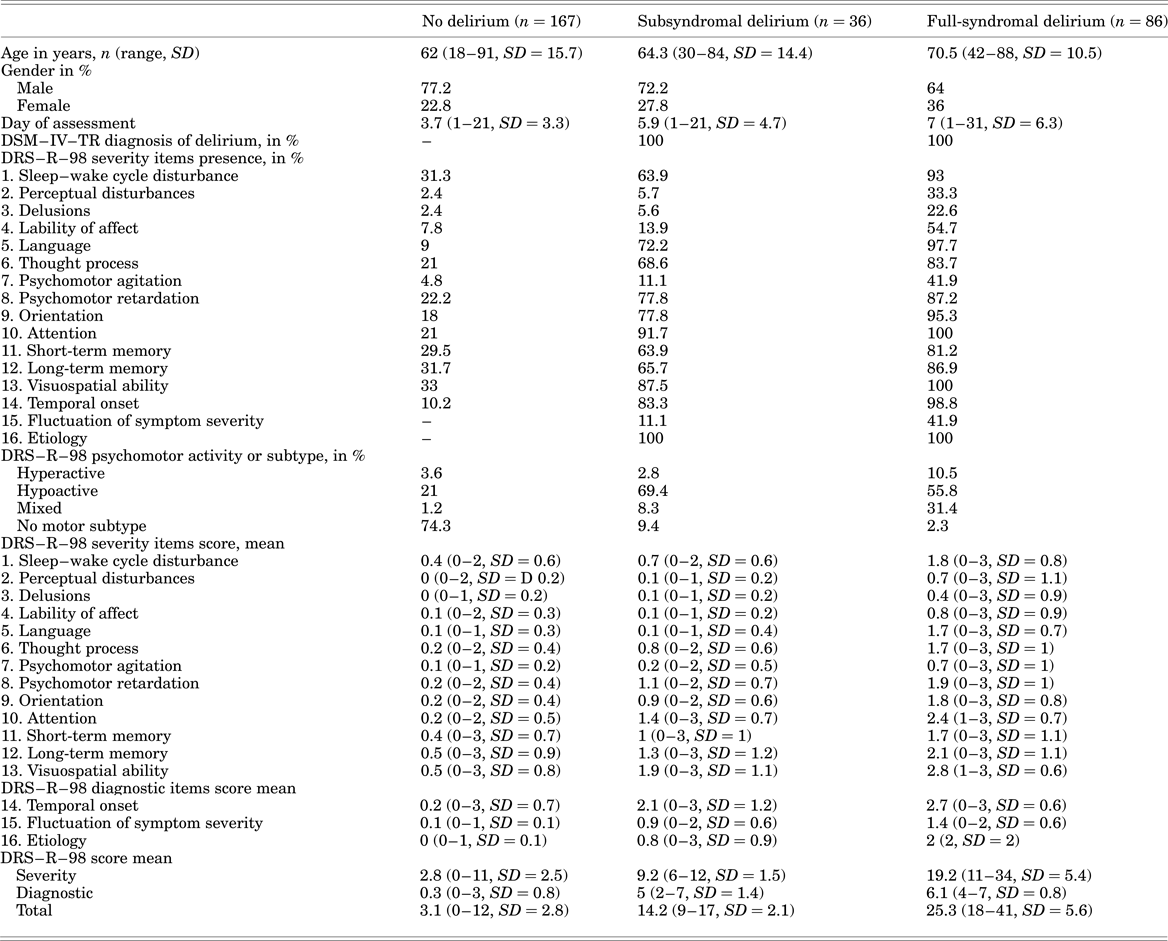
As shown in Table 1, patients were elderly and predominantly male. Out of 289 subjects, 36 (12.5%) had subsyndromal delirium, and 86 (29.8%) had full-syndromal delirium. Therefore, 122 patients (42.2 %) had either form of delirium, and the remaining 167 patients (57.8%) were without delirium.
Description of sociodemographic and psychiatric variables, including presence and severity of DRS–R–98 items, between no, subsyndromal, and full-syndromal delirium
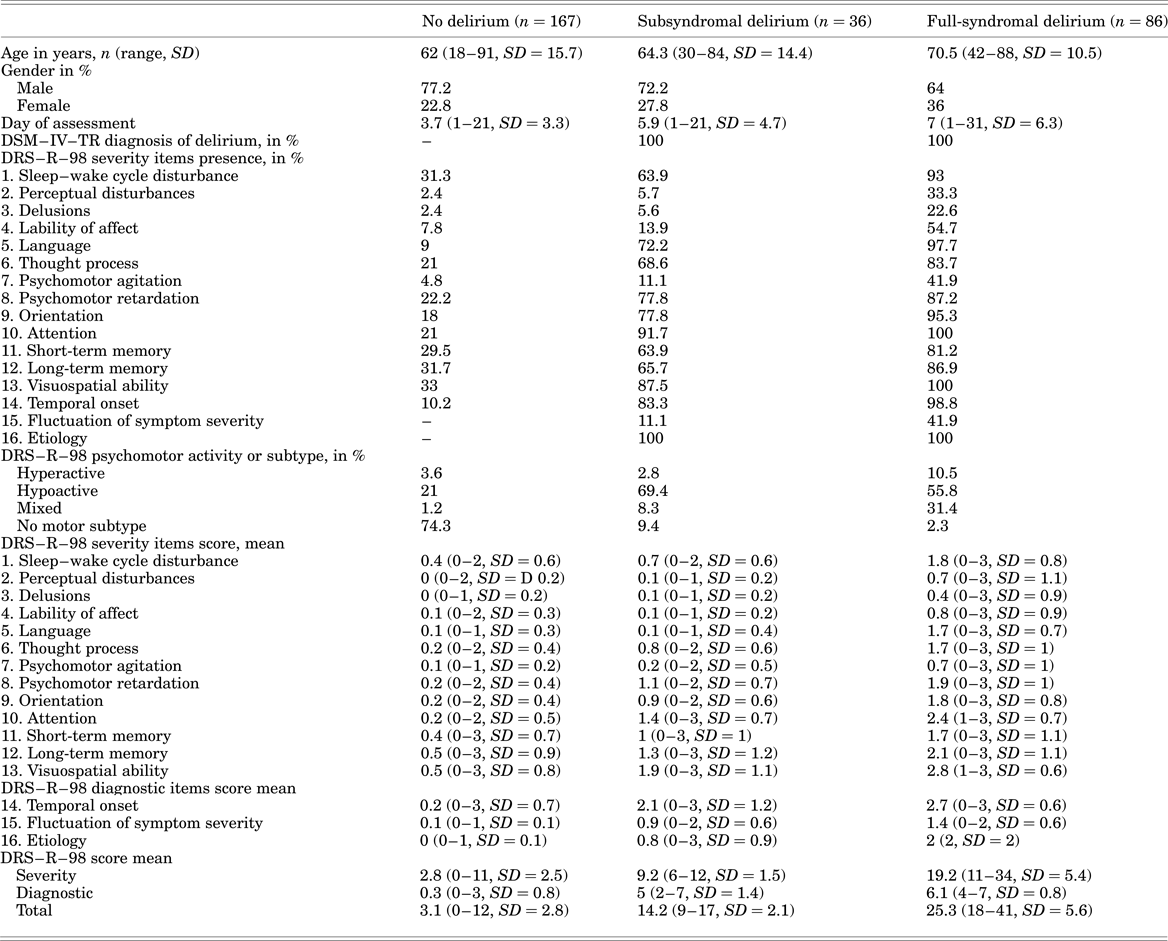
DRS–R–98 = Delirium Rating Scale–Revised, 1998; DSM–IV–TR = Diagnostic and Statistical Manual–IV, Text Revision; SD = standard deviation.
Characteristics of Patients with Subsyndromal versus Those Without Delirium
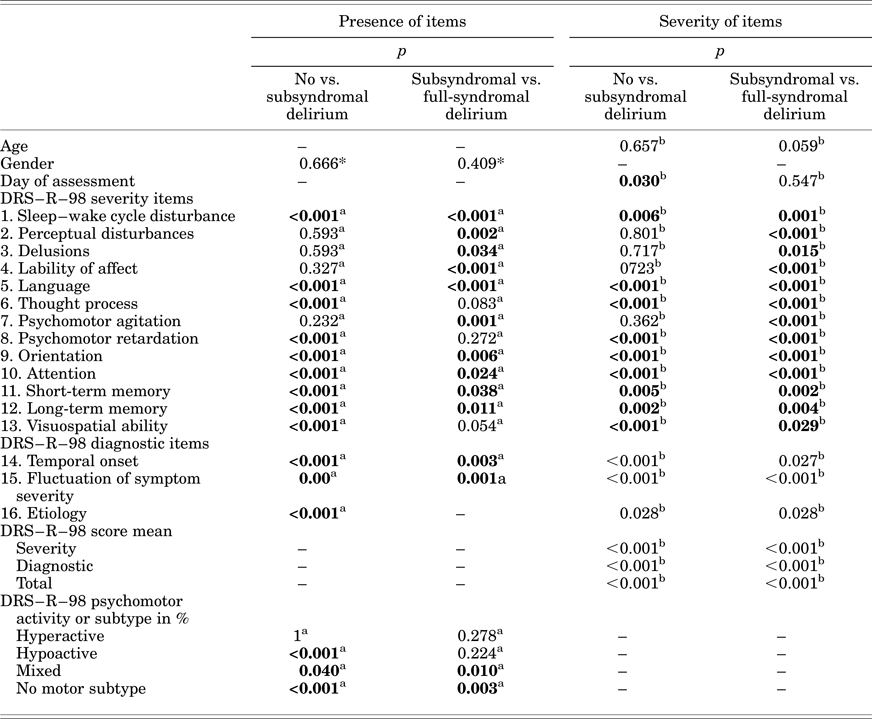
Patients with subsyndromal delirium were not different in terms of age or gender distribution (see Tables 1 and 2). However, they were assessed at a later point in the study (6th vs. 4th day). As evidenced by the presence and severity of DRS–R–98 severity scale items, those with subsyndromal delirium were more impaired with respect to the sleep–wake cycle, language, and thought process, as well as with regard to the cognitive domain (e.g., orientation, attention, short- and long-term memory, visuospatial abilities). As for the diagnostic items, both presence and severity were greater in patients with subsyndromal delirium. Further, total DRS–R–98 severity, diagnostic, and overall scores were greater in those with subsyndromal delirium, indicating a greater variety of symptomatology and severity in this type of delirium. Additionally, the allocation of delirium subtypes—hyperactive, hypoactive, mixed, or none—was different. In those without delirium, having no motor alterations was more common than in those with subsyndromal delirium (both the hypoactive and mixed subtypes).
Statistical analysis of sociodemographic and psychiatric variables, including the presence and severity of DRS–R–98 items between no versus subsyndromal and subsyndromal versus full-syndromal delirium
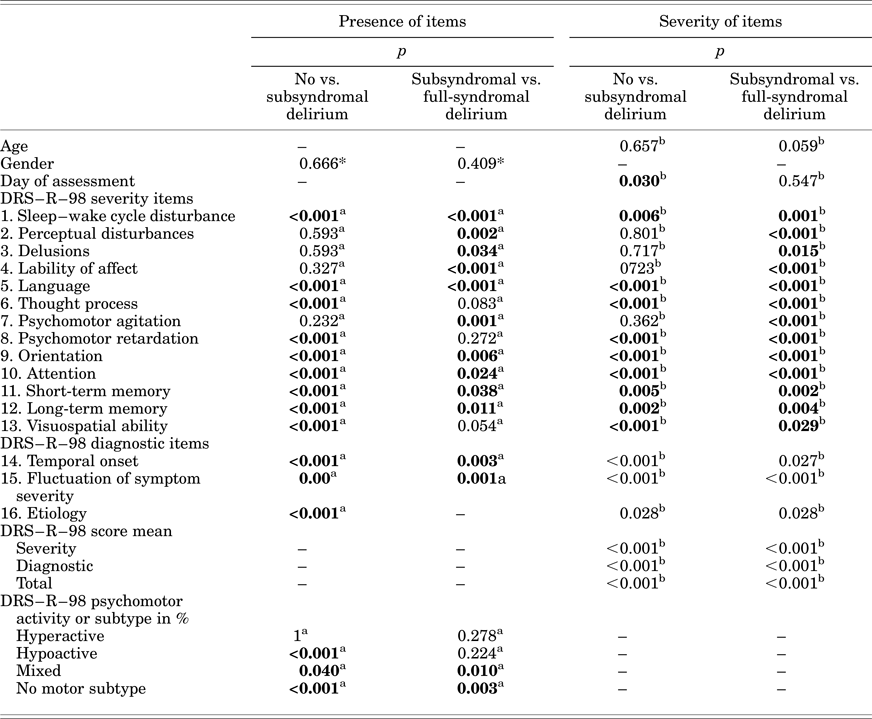
DRS–R–98 = Delirium Rating Scale–Revised, 1998.
a Pearson's χ2 test. b ANOVA = analysis of variance (Games–Howell).
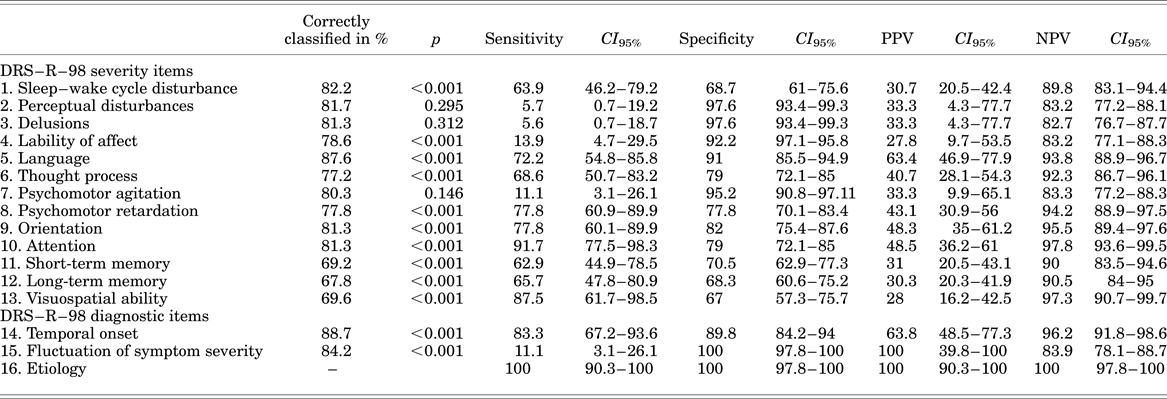
As determined by the discriminant analysis (Table 3), the same items that distinguished the prevalence and severity of symptoms allowed for correct classification of subsyndromal delirium—namely, disturbances in the sleep–wake cycle, language and thought difficulties, cognitive problems (e.g., orientation, attention, short- and long-term memory problems, and visuospatial impairments), and psychomotor retardation. Temporal onset and fluctuations were the most useful items and had the highest rates of correct classification of subsyndromal delirium.
Correct classification, sensitivities, specificities, as well as positive and negative predictive values (PPVs and NPVs) of DRS–R–98 items between no and subsyndromal delirium
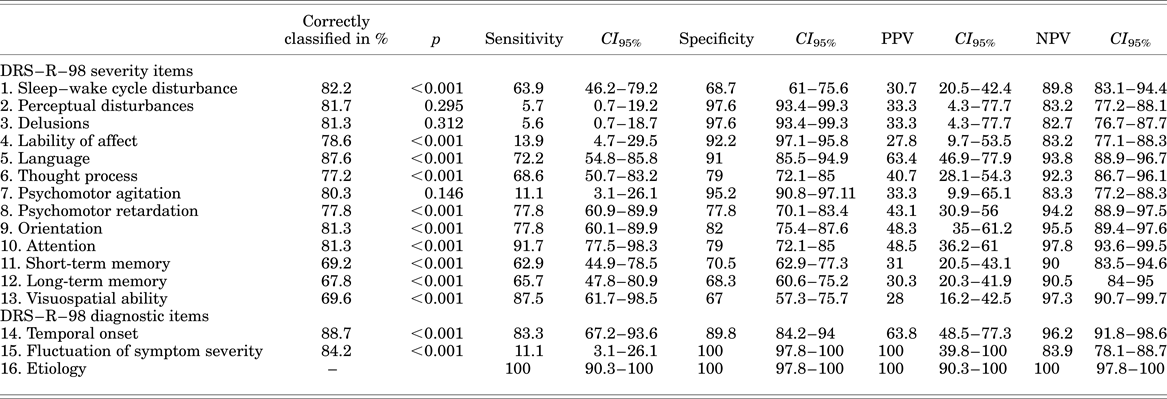
DRS–R–98 = Delirium Rating Scale–Revised, 1998; CI 95% = 95% confidence interval.
Whereas the sensitivity of individual items varied, the specificity of these items was very high. And, again, the same items achieved high levels of sensitivity, while others did not (i.e., perceptual disturbances, delusions, lability of affect, psychomotor agitation, and fluctuations in severity). With the exception of language abnormalities, none of the items achieved high PPVs, whereas the NPVs remained high throughout.
Characteristics of Patients with Full-Syndromal versus Subsyndromal Delirium
Full-syndromal and subsyndromal delirium patients were somewhat older, but not different in gender distribution or time of assessment (Tables 1 and 2). The prevalence rates and severity of individual items were substantially greater in full-syndromal delirium. With the exception of orientation and, to a lesser degree, thought process disruptions, the variety of symptoms found in full-syndromal delirium was wider. Moreover, with respect to the severity of the symptoms, full-syndromal patients had higher levels of symptom severity than those with subsyndromal delirium. As expected, delirium was more severe when full-syndromal, as evidenced by higher total, severity, and diagnostic scores. Within the motor subtypes of delirium, the no-motor subtype occurred more frequently in subsyndromal patients, whereas the mixed subtype was more common in those with full-syndromal delirium.
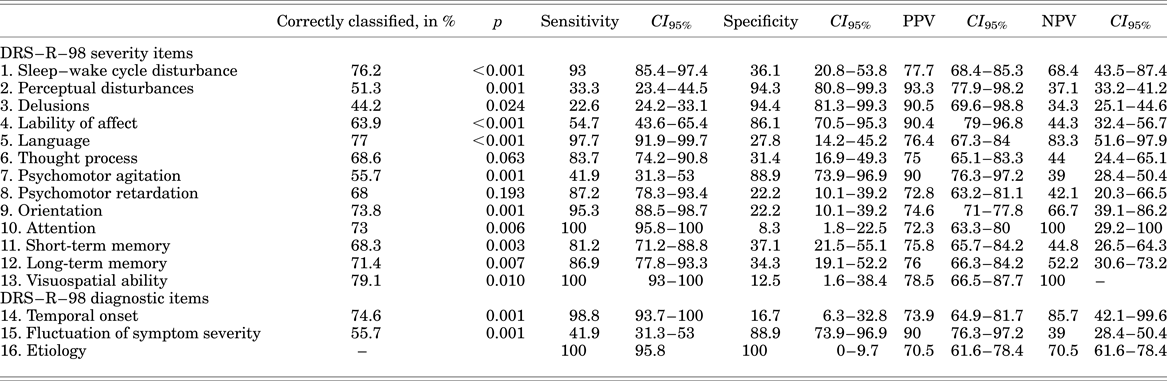
Correct classification of full-syndromal versus subsyndromal delirium varied between items and exceeded 70% for sleep–wake cycle disturbances, language, orientation, attention, and visuospatial abilities. Perceptual disturbances and delusions allowed for correct classification in half of patients, whereas the rate for the remaining items varied between 64 and 68% (Table 4).
Correct classification, sensitivities, specificities, as well as positive and negative predictive values (PPVs and NPVs) of DRS–R–98 items for full- and subsyndromal delirium

DRS–R–98 = Delirium Rating Scale–Revised, 1998; CI 95% = 95% confidence interval.
The items of the DRS–R–98 were very sensitive in distinguishing between subsyndromal and full-syndromal delirium, but they were not particularly specific. The items with lower sensitivity were perceptual disturbances, delusions, lability of affect, and psychomotor agitation. Conversely, in addition to symptom fluctuations, these items were rather specific. The PPVs remained high throughout the DRS–R–98 items, whereas NPVs were greater for language abnormalities, attention, orientation, visuospatial abilities, and temporal onset.
DISCUSSION
Summary of Main Findings
With perfect agreement on the DSM–IV–TR diagnosis in this sample, subsyndromal delirium was evaluated versus no and full-syndromal delirium based on DRS–R–98 items. In total, 13% of patients had subsyndromal delirium, 30% had full-syndromal delirium, and 58% had no delirium. Among delirium subtypes (hyperactive, hypoactive, mixed, or none), no motor alterations were found in those without delirium, in those with the subsyndromal hypoactive subtype, and in those with the mixed full-syndromal subtype.
Between no and subsyndromal delirium, delirium as evidenced by the prevalence and severity of DRS–R–98 items (including total score) was more severe. In particular, there were greater impairments in the cognitive domain in terms of attention, orientation, short- and long-term memory, visuospatial abilities, language, and thought, as well as the sleep–wake cycle. These same domains distinguished subsyndromal from no delirium, as evidenced by the discriminant analysis and respective sensitivities, specificities, and NPVs. Conversely, perceptual disturbances, delusions, lability of affect, or psychomotor agitation were not appropriate for this distinction. The PPVs was moderate throughout the items. Similarly, between full- and subsyndromal delirium, the severity of delirium was again greater for full-syndromal patients. Full-syndromal delirium was correctly classified and, with the exception of perceptual disturbances and delusions, sensitivities were high throughout the DRS–R–98 items. However, the specificities of these items were not substantial, with the exception of perceptual disturbances, delusions, affective lability, and psychomotor agitation. The PPV was generally substantial, and NPVs moderate. The moderate specificities and NPVs indicated an overlap in symptomatology and that the differentiation of subsyndromal from full-syndromal delirium was more challenging than that from no delirium, owing to the closer proximity of these subforms.
Comparison to the Existing Literature
The DRS–R–98 is one of the most commonly used delirium rating scales. The total DRS score comprises severity and diagnostic items and can distinguish delirium from dementia, schizophrenia, depression, and other medical illnesses during blind rating, with a sensitivity ranging from 91 to 100%, depending on the chosen cutoff score (Trzepacz et al., Reference Trzepacz, Mittal and Torres2001). The original English version has high sensitivity, specificity, interrater reliability, and concurrent validity compared to its predecessor, the original DRS (Trzepacz et al., Reference Trzepacz, Baker and Greenhouse1988).
The findings of our study support previous findings with respect to severity of subsyndromal delirium as intermediate between no and full-syndromal delirium (Trzepacz et al., Reference Trzepacz, Franco and Meagher2012). Further, the DRS–R–98 items were able to distinguish between these subforms of delirium and indicated that subsyndromal delirium is clearly distinct from no delirium. With growing understanding and importance of this form of delirium, the DRS–R–98 has proved to be a useful instrument in its detection. However, the current literature is not clear on the definition of subsyndromal delirium by the DRS–R–98 (Trzepacz et al., Reference Trzepacz, Franco and Meagher2012), and further research is required to enhance the ability of this scale to correctly identify subsyndromal delirium.
Distinguishing between subsyndromal and full-syndromal delirium was more challenging. As previously noted and as confirmed in our study, subsyndromal delirium is an entity closer to full-syndromal than to no delirium (Trzepacz et al., Reference Trzepacz, Franco and Meagher2012). Although full-syndromal delirium was found to be more severe than subsyndromal delirium, the DRS–R–98 items mostly correctly classified full-syndromal delirium, and these items were very sensitive. However, these items were not particularly specific in distinguishing between sub- and full-syndromal delirium. Both the PPVs and NPVs behaved in similar fashion. This lack of specificity and NPVs indicated a closer proximity in symptomatology to full-syndromal than to no delirium. Further, this could be an indication that subsyndromal delirium could be perceived as a subform or even as another subtype of delirium.
STRENGTHS AND LIMITATIONS OF THE STUDY
Our study has several strengths, but a number of limitations should be noted. Almost 300 patients were prospectively screened and rated for delirium using DRS–R–98 and DSM–IV–TR criteria. With respect to diagnosis of delirium with the DSM–IV–TR criteria, interrater agreement was perfect.
The study limitations included a high prevalence of hypoactive delirium, which was due to the critical care population studied. In addition, there was an absence of baseline cognitive recordings due to the prospective nature of our study, so that preexisting cognitive disorders could not be excluded despite screening the medical records for them. Further, this study was cross-sectional, so that further longitudinal studies exploring the subforms of subsyndromal delirium (prodromal, subthreshold, resolving, and residual) as well as the impact of unrecognized subsyndromal delirium are required. In particular, a clear definition of subsyndromal delirium with respect to the DRS–R–98 is required in order to enhance its effectiveness for recognizing this form of delirium
CONCLUSIONS
Subsyndromal delirium represents a distinct entity and is intermediate between no delirium and full-syndromal delirium. With respect to no delirium, the DRS–R–98 is a useful instrument for identification of this subform, even when interpretation of DRS–R–98 scores requires further evaluation. To a lesser degree, full-syndromal delirium was recognized correctly, but the specificity and NPV of the DRS–R–98 items in discrimination of these subforms was not sufficient, indicating that subsyndromal delirium resembles full-syndromal delirium more than no delirium and can be perceived as a subform or even another subtype of delirium.