Introduction
Arginine (Arg) is an essential amino acid for poultry and must be available in the feed in quantities sufficient to support protein synthesis, growth, feathering, and other key biological functions. The objectives of this review are to summarise the chemistry and metabolism of Arg, outline its interrelationships and antagonisms with other nutrients, and describe Arg requirements for poultry diets. Arginine also serves as a substrate for the generation of nitric oxide (NO), which serves multiple roles within the immune system and in the regulation of cardio-pulmonary blood flow and blood pressure. Accordingly we also have summarised the roles of Arg and immunity as well as Arg and pulmonary hypertension syndrome (PHS, ascites syndrome) in broilers. Current evidence indicates the requirements for Arg in poultry diets vary significantly depending on feed composition, disease challenges, and environmental conditions.
Arginine chemistry
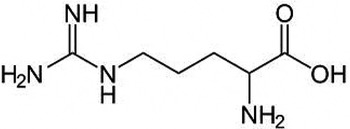
The structure of Arg consists of a 4-carbon straight chain, the distal end of which is capped by a complex guanidine group (Figure 1). pKa values of α-carboxyl, α-amino and the guanidine groups of Arg are 1.8, 9.0, and 12.48 respectively. The guanidinium of Arg exists as resonance hybrids with positive charges distributed among all three nitrogen molecules in neutral, acidic and even most basic environments, and thus imparts chemical properties to Arg.
Structure of arginine.

Arginine metabolism
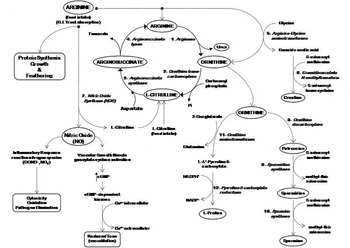
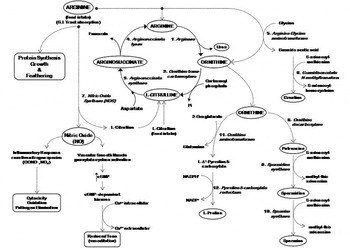
Dietary Arg is absorbed through the epithelial layer of the intestine by sodium-dependent and sodium-independent mechanisms, but the sodium-independent mechanism is more effective in transporting Arg (Rueda et al., Reference RUEDA, MICHELANGELI and GONZALEZ-MUJICA2003; Brake and Balnave, Reference BRAKE and BALNAVE1995). In ureotelic animals, such as mammals, the metabolism of Arg is related to the urea cycle. Mammals use the enzymes of their urea cycle to synthesize L-Arg from ornithine, ammonia, and the amino-nitrogen of aspartate (Figure 2). However, the chicken (a uricotelic organism) lacks the key enzyme carbamoyl phosphate synthase I (EC 6.3.5.5.) and has low activities of hepatic arginase (EC 3.5.3.1., 2) and ornithine transcarbamoylase (OTC, EC 4.4.4.17.) (Tamir and Ratner, Reference TAMIR and RATNER1963a; Sung et al., Reference SUNG, HOTCHKISS, AUSTIC and DIETERT1991).
Arginase activity in the chicken is almost entirely located in the kidney rather than the liver (Tamir and Ratner, Reference TAMIR and RATNER1963a). OTC catalyzes the transfer of the carbamoyl group of carbamoyl phosphate to ornithine, forming citrulline and orthophosphate. Since carbamoyl phosphate synthase I is necessary for ammonia fixation and OTC catalyzes the transfer of the fixed nitrogen to ornithine, an intermediate in the urea cycle, chickens are unable to synthesize Arg and are highly dependent on dietary Arg. Accordingly in the chicken Arg cannot be replaced by dietary ornithine whereas it can be replaced by dietary citrulline (Tamir and Ratner, Reference TAMIR and RATNER1963b) (Figure 2). Bedford et al. (Reference BEDFORD, SMITH and SUMMERS1988) demonstrated that α-aminoisobutyric acid reduced renal arginase activity and increased the activity of OTC in chickens.
Enzymes that catalyse the indicated reactions are designated as follow: 1. EC. 3.5.3.1.; 2. EC. 4.4.4.17; 3. EC.6.3.4.5; 4. EC. 4.3.2.1; 5. EC.2.1.4.1; 6. EC. 2.1.1.2; 7. EC. 1.14.13.39; 8. EC. 4.1.1.17; 9. EC. 2.5.1.16; 10. EC. 2.5.1.22; 11. EC. 2.6. 1.13; 12. EC. 1.5.1.2.
Arginine interrelationships
polyamines
Ornithine decarboxylase (ODC) catalyses the synthesis of putrescine from ornithine (Figure 2). Spermidine and spermine are formed by the sequential addition of aminopropyl groups derived from decarboxylated S-adenosylmethionine through the action of spermidine synthase and spermine synthase. The polyamines putrescine, spermidine and spermine have growth-promoting effects possibly because of their net positive charges. Polyamines promote anabolic functions in the body such as synthesis of DNA, RNA, and proteins, as well as the uptake of amino acids by cells (Smith, Reference SMITH1990).
creatine
Almquist et al. (Reference ALMQUIST, MECCHIANDF and KRATZER1941) presented evidence showing that creatine could spare Arg and glycine (Gly), and that glycocyamine and creatinine had a sparing action to a lesser extent (Figure 2). In chicks, therefore, creatine concentration is related to Arg intake. This sparing action of creatine has been summarised in a recent review of literature (Ball et al., Reference BALL, URSCHEL and PENCHARZ2007). Consequently, a higher requirement for Gly has been reported when Arg is deficient. The benefit from a combined supplementation of Gly and Arg was first thought to be due to the role of Gly in the excretion of excess nitrogen in the form of uric acid (Snetsinger and Scott, Reference SNETSINGER and SCOTT1961). However, Austic and Nesheim (Reference AUSTIC and NESHEIM1970) subsequently indicated that feeding Gly, α-aminoisobutyric acid, and threonine depressed the activity of kidney arginase localized in the mitochondrial matrix, and reduced urea excretion by chicks fed Arg-limiting diets, thereby improving body weight gain and efficiency of feed utilization. Subsequently, α-aminoisobutyric acid was recognized as a potent inhibitor for kidney arginase.
Fuller et al. (Reference FULLER, CHANG and POTTER1967) demonstrated that excess dietary Arg caused growth depression in chicks which could be alleviated by supplemental Met. Keshavarz and Fuller (Reference KESHAVARZ and FULLER1971a) verified the Arg-Met relationship and have presented evidence that creatine biosynthesis is at least one of the responsible mechanisms. Keshavarz and Fuller (Reference KESHAVARZ and FULLER1971b) reported that the addition of Arg (20 g/kg) to a maize-soybean-meal diet decreased the growth rate of chicks and this could be alleviated by supplementing the diet with Met (2 g/kg). They suggested that Met serves as methyl donor for the formation of creatine. It has been found that supplemented Met and Arg produced a nitrogen sparing action in chickens fed a protein-free diet (Muramatsu and Okumura, Reference MURAMATSU and OKUMURA1980). Balnave and Brake (Reference BALNAVE and BRAKE2002) reported that the performance of broilers fed 2-hydroxy-4-(methylthio) butanoic acid (HMB) was optimised at high Arg:Lys ratios (1.35) whereas broiler fed equimolar supplements of DL-Met tended to optimize performance at lower Arg:Lys ratios (1.05). They concluded that the correct source of dietary Met supplement was likely to become more important when feeding diets with low Arg:Lys ratios.
Creatine, as a precursor of creatine phosphate, has two important roles in normal muscle function; it carries high-energy phosphate from mitochondria to myosin filaments and it acts as a reservoir of high-energy phosphate that can regenerate ATP from ADP. Factors that influence creatine synthesis or creatinine excretion have the potential to make Arg less available for protein synthesis and growth. On the other hand, diets with high levels of Arg stimulate the formation of creatine in the muscles of chickens (Chamruspollert et al., Reference CHAMRUSPOLLERT, PESTI and BAKALLI2002).
proline (pro)
Austic (Reference AUSTIC1973) indicated that chicks fed a Pro-free diet converted a portion of the dietary Arg to Pro (Figure 2). Approximately 7% of the dietary Arg was converted to Pro. Ornithine produced by arginase can also serve as a precursor for synthesis of Pro (Morris, 2007).
Arginine antagonists
canavanine, indospicine and homoarginine
These non-protein amino acids naturally occur in plants, particularly in leguminous species including Canavalia ensiformis, Gliricidia sepium, and Indigofera spicata (D'Mello, Reference D'MELLO2003a). The mammalian metabolism of canavanine corresponds with that of Arg in the urea cycle. In fact, canavanine replaces Arg in the mammalian urea cycle. Hence, canavaninosuccinate can be formed instead of arginosuccinate, which subsequently is converted to canavanine and canaline. Canaline is a structural analogue of ornithine and a potent inhibitor of ODC. Ornithine decarboxylase is a key enzyme in the synthesis the polyamines putrescine, spermidine and spermine. D'Mello (Reference D'MELLO2003b) reported that the growth-retarding effect in chicks fed Jack bean (Canavalia ensiformis) was attributed to inhibition of polyamine synthesis. Since their urea cycle is not functional, birds are unable to synthesize Arg and consequently, they are more sensitive to the adverse effects of canavanine. The growth-depressing effects of canavanine is mediated through several other mechanisms such as increased kidney arginase, decreased ornithine decarboxylase, inhibition of transamidinase activity, and inhibition of L-Arg Na+-dependent transport across the enterocyte apical membrane (D'Mello, Reference D'MELLO2003b; Rueda et al., Reference RUEDA, MICHELANGELI and GONZALEZ-MUJICA2003).
lysine (Lys)
The nutritional antagonism of Arg and Lys was reported in the 1950's and 1960's. Nesheim (Reference NESHEIM1968) investigated the response of two strains of chicks that differed in their requirements for Arg and showed that chicks with a high Arg requirement were less able to tolerate dietary excesses of lysine (Lys) than chicks with a low Arg requirement. Addition of excess Lys to a basal diet marginally deficient in Arg to give Lys concentrations of 13.5, 16.0 and 18.5 g/kg progressively reduced weight gain and enhanced the amount of Arg needed to reverse these adverse effects (D'Mello and Lewis, Reference D'MELLO and LEWIS1970). The antagonism between canavanine and Arg in chicks fed Jack bean was reported to be exacerbated by dietary supplementation of Lys (D'Mello et al., Reference D'MELLO, ACAMOVIC and WALKER1989). The explanation for the antagonism was based on the fact that Arg and Lys are basic amino acids that may compete for renal tubular reabsorption (Boorman et al., Reference BOORMAN, FALCONER and LEWIS1968). Excess Lys causes an increased urinary loss of Arg and also enhances Arg degradation by stimulating increases in renal arginase activity (Austic and Calvert, Reference AUSTIC and CALVERT1981). Adverse effects of the Lys-Arg antagonism also are partly mediated through reduced feed intake (Austic and Scott, Reference AUSTIC and SCOTT1975). It has further been demonstrated that reduced growth associated with the Lys-Arg antagonism can be attributed to reduced activity of ODC, the enzyme catalyzing the synthesis of growth-promoting polyamines (Bedford et al., Reference BEDFORD, SMITH and SUMMERS1987).
A number of factors can influence the severity of the Lys-Arg antagonism. Odell and Savage (Reference ODELL and SAVAGE1966) were the first to report that the severe growth depression caused by diets with excess Lys (Lys: Arg ratio of 2.6:1) could be attenuated by supplementing the diet with sodium and potassium acetate. Calcium and magnesium salts of organic acids were slightly beneficial although not as effective as sodium and potassium salts of similar acids. On the other hand, excess chloride amplified the adverse effects of excess Lys, though alkaline salts of monovalent mineral cations reduced or eliminated the potency of this antagonism (Austic and Calvert, Reference AUSTIC and CALVERT1981; D'Mello, Reference D'MELLO2003a). Austic and Calvert (Reference AUSTIC and CALVERT1981) showed that increasing the dietary chloride content from 0.5 to 1.0% did not affect the growth of chicks fed an un-antagonized diet but reduced the growth of chicks fed antagonized diet (Lys:Arg ratio was 2.5:1). However, supplementation with Arg counteracted the retarded growth caused by excess chloride.
tryptophan (Trp)
Lewis (Reference LEWIS1966) reported that 0.2% of Arg added to a diet limiting in Trp resulted in reduced weight gains of chicks. When Trp was first-limiting a marked reduction in weight gain was observed when Arg was added (Hill and Shao, Reference HILL and SHAO1968).
Arginine requirements
Although most mature mammals can synthesize Arg to meet their requirements, chickens cannot synthesise Arg de novo and, therefore, they have absolute requirements for Arg (Tamir and Ratner, Reference TAMIR and RATNER1963a). Chickens need dietary Arg because they do not have a functional urea cycle and the situation is amplified by increasing age and improving feather coverage due to the high content of Arg in feathers (Bequette, Reference BEQUETTE2003). The Arg requirement is influenced by several factors including rates of protein synthesis and degradation, synthesis of metabolic compounds, and use of Arg for urea synthesis in ureotelic species (Ball et al., Reference BALL, URSCHEL and PENCHARZ2007). A remarkable variation can be found in the Arg requirements among different species because they have different capacities for endogenous Arg synthesis. Interspecies differences in the Arg requirements have been reviewed by Ball et al. (Reference BALL, URSCHEL and PENCHARZ2007). The Arg requirement of the chick has been of considerable interest because the magnitude of the requirement is highly variable under different dietary conditions. The requirement for Arg is influenced by the source of dietary protein. The Arg requirement varied from lower than 0.85% of the diet for practical diets to nearly 1.8% for purified diets in which casein was the source of protein (Krautmann et al., Reference KRAUTMANN, HAUGE, MERTZ and CARRICK1957). Burton and Waldroup (Reference BURTON and WALDROUP1979) reported an Arg requirement of 1.40% for chicks from 1 to 28 days old that were fed a diet containing 21% CP. This study, however, did not demonstrate a significant difference in 4-week body weights and feed conversion ratios for chicks fed 1.25 or 1.40% Arg in the diet. Cuca and Jensen (Reference CUCA and JENSEN1990) estimated the Arg requirements for optimal growth to be from 1.10 to 1.28% of the diet and for maximum feed efficiency from 0.96 to 1.28% of the diet. Kessler and Thomas (Reference KESSLER and THOMAS1976) used growth and feed efficiency as well as feather loss to estimate the requirements of 4- to 7-week-old broilers. They reported the Arg requirement of male broilers to be 1.13% of the diet. The National Research Council requirements for Arg in broilers was established at 1.25% of the diet to 3 weeks, 1.10% from 3 to 6 weeks, and 1.00% from 6 to 8 weeks of age (NRC, 1994). The NRC (1994) recommendation for the Arg: Lys ratio is 104:100. Baker (Reference BAKER2003) reported an ideal amino acid ratio of 105:100 for Arg: Lys. Labadan et al. (2001) reported Arg requirements of broiler chickens as percentages of total amino acid in the diet for maximum breast muscle growth. Arg requirements were 1.27% for 0 to 2 weeks of age and 0.97% for 3 to 6 weeks of age.
Arg requirements can be influenced by amino acid balance and ambient temperature (Chamruspollert et al., Reference CHAMRUSPOLLERT, PESTI and BAKALLI2004). Brake and Balnave (Reference BRAKE and BALNAVE1995) indicated that both sodium-dependent and sodium-independent mechanisms for uptake of Arg through the gut were depressed in broilers reared in hot weather (Ta= 31°C) compared to the birds reared in thermoneutral condition (Ta= 21°C). Brake et al. (Reference BRAKE, BALNAVE and DIBNER1998) reported that during hot weather the Arg requirements are increased, and Arg supplementation is advisable under heat stress conditions. One recent report indicated that a diet fortified with Arg and Lys increased weight gain in broilers housed under high stocking densities, but not in controls housed at normal densities, suggesting an increase in the dietary supply of these amino acids is beneficial to broilers during stressful conditions imposed by crowding (Srinongkote et al., Reference SRINONGKOTE, SMRIGA and TORIDE2004). Fernandez et al. (Reference FERNANDEZ, MURAKAMI, MARTINS, SAKAMOTO and GARCIA2009) reported that Arg supplementation at levels above the NRC recommendations during the starter phase improved muscle development in broilers. They suggested that dietary supplementation with Arg may be advisable for maximum breast yield in broiler chickens. A recent study indicated that the Arg requirements of starting broiler chicks grown in a thermoneutral condition for maximum growth performance, feed efficiency, and optimal immune functions were 101, 103 and 107% of NRC values and these were dependent on dietary protein concentration (Jahanian, Reference JAHANIAN2009).
Arginine and immunity
Moderate to severe nutritional deficiencies of essential amino acids have been shown to affect immune responses by depressing antibody titres, reducing lymphocyte populations, lowering component titres, and increasing susceptibility to infections (Dietert and Austic, Reference DIETERT and AUSTIC1994). The requirement of Arg during immunological responses has been widely studied because Arg is the substrate from which nitric oxide (NO) is generated. Recently, it has been reported that Arg levels sufficient to support maximal growth rates are not adequate for maximal NO production by avian macrophages and the pulmonary vascular epithelium (Taylor et al., Reference TAYLOR, AUSTIC and DIETERT1992; Dietert and Austic, Reference DIETERT and AUSTIC1994; Wideman et al., 1995; Wideman et al., 1996; Ruiz-Feria et al., Reference RUIZ-FERIA, KIDD and WIDEMAN2001). Nitric oxide is a paracrine mediator of certain immunological functions and is a cytotoxic product of activated avian macrophages, the form of blood monocytes that can be found in many tissues including the Kupffer cells of the liver and osteoblasts in bones (Qureshi, Reference QURESHI2003). The free radical NO is produced from the guanidine nitrogen of L-Arg by the enzyme nitric oxide synthase (NOS), with L-citrulline being generated as a by-product (Figure 2). The gene for the inducible isoform of NOS (iNOS, NOS-2) is expressed when avian macrophages are activated by factors such as bacterial lipopolysaccharide (LPS, endotoxin), an integral component of the cell wall of Gram-negative bacteria (Hussain and Qureshi, Reference HUSSAIN and QURESHI1997, Reference HUSSAIN and QURESHI1998; Dil and Qureshi, Reference DIL and QURESHI2002a,b; Janeway and Medzhitov, Reference JANEWAY and MEDZHITOV2002; Qureshi, Reference QURESHI2003). Once activated, the iNOS enzyme binds its Ca2+/calmodulin complex so tightly that copious (µM) quantities of NO are produced over a prolonged period of time (Davis and Matalon, Reference DAVIS and MATALON2001; Murakami and Traber, Reference MURAKAMI and TRABER2003). Indeed, broilers injected intravenously with LPS exhibited large increases in plasma NO concentrations that remained significantly elevated for at least 8 hours post-injection (Chapman and Wideman, 2006; Bowen et al., Reference BOWEN, ERF, CHAPMAN and WIDEMAN2007), reflecting system-wide expression and massive activation of iNOS in circulating monocytes and tissue macrophages (Hussain and Qureshi, Reference HUSSAIN and QURESHI1997; Bowen et al., Reference BOWEN, ERF, ANTHNONY and WIDEMAN2006). Inoculation of the intestinal tract with various species of coccidia increased plasma and mucosal NO levels within 6 to 7 days, reflecting iNOS activation during the broilers’ inflammatory response to these intestinal parasites. Genetic resistance to coccidial infection was weakly correlated with augmented post-infection plasma NO concentrations, whereas providing supplemental L-arginine had no impact on total plasma NO (Allen and Lillehoj, Reference ALLEN and Lillehoj1998; Allen and Fetterer, Reference ALLEN and FETTERER2000).
Evidence reviewed by Wideman et al. (2004) and Chapman and Wideman (2006) indicates that the impact of NO on the surrounding cells and tissues depends on the quantity in which NO is produced and the rate at which it is cleared from the interstitial fluids and bloodstream. NO is a simple molecule with one unpaired electron. In the presence of oxygen, NO undergoes oxidation to nitrite (NO2-) in aqueous solutions, and to nitrate (NO3-) in the blood. The oxidation of NO follows second-order kinetics, thus high levels of NO are oxidized within seconds to produce reactive nitrogen species, but relatively low levels of NO can persist without oxidation for a longer half-life. Activated macrophages generate high concentrations of NO and reactive oxygen species such as superoxide, thereby leading to the formation of large quantities of derivative reactive nitrogen species (e.g., nitrate, nitrite, peroxynitrite) that are cytostatic and cytotoxic for targeted cells and pathogens (Tomas-Cobos et al., Reference TOMAS-COBOS, MINAMBRES, RODRIGO, NAVARRO and TOMAS2008). For example, when a tumour model was used to determine the effects of supplemental Arg on immune function, birds fed supplemental Arg exhibited a marked reduction in tumour growth when compared with control birds (Taylor et al., Reference TAYLOR, AUSTIC and DIETERT1992). L-arginine has repeatedly been demonstrated to be a limiting substrate for the production of NO by avian macrophages (Taylor et al., Reference TAYLOR, AUSTIC and DIETERT1992; Dietert and Austic, Reference DIETERT and AUSTIC1994; Wideman et al., 1995; Kidd et al., Reference KIDD, PEEBLES, WHITMARSH, YEATMAN and WIDEMAN2001; Ruiz-Feria et al., Reference RUIZ-FERIA, KIDD and WIDEMAN2001; Villamor et al., Reference VILLAMOR, RUIJTENBEEK, PULGAR, DE MEY and BLANCO2002). Avian iNOS is fully functional in utilizing Arg as quantified by the accumulation of nitrite in macrophage culture supernatants as well as when iNOS activity was evaluated in macrophage cell-lysates (Hussain and Qureshi, Reference HUSSAIN and QURESHI1997; Reference HUSSAIN and QURESHI1998).
Kwak et al. (Reference KWAK, AUSTIC and DIETERT1999) suggested that Arg markedly influences lymphoid organ development, with a more pronounced effect on the thymus and spleen than on the bursa of Fabricius in broiler chicks. Lee et al. (Reference LEE, AUSTIC, NAQI, GOLEMBOSKI and DIETERT2002) demonstrated that increasing levels of dietary Arg led to significant increases in the percentage and absolute number of heterophils and the heterophil/lymphocyte ratios in peripheral blood at 1 day after injecting IB virus. Likewise, the percentage of CD8+ cells from birds fed an Arg deficient diet was lower than those from birds fed either Arg- adequate or Arg-supplemented diets. Abdukalykova et al. (Reference ABDUKALYKOVA, ZHAO and RUIZ-FERIA2008) demonstrated that high levels of dietary Arg augmented the percentage of CD8+ and CD3+cells in broiler chickens. Citrulline can partially replace Arg in supporting chicken macrophages (Su and Austic, Reference SU and AUSTIC1999). Arginase and NOS enzymes were reported to be used by myeloid suppressor cells (MSCs) to inhibit T-cell responses to antigen, either separately or in combination. Reducing the harmful activity of NOS and arginase in MSCs cells provides therapeutic potential. This has provided the development of novel isoenzymespecific inhibitors of both enzymes. L-Arg seems to be central to the control of effector lymphocytes (Bronte and Zanovello, Reference BRONTE and ZANOVELLO2005).
Kidd et al. (Reference KIDD, PEEBLES, WHITMARSH, YEATMAN and WIDEMAN2001) evaluated growth and immunity of broilers fed varying Arg levels near NRC (1994) specifications. These authors concluded that dietary Arg levels near the NRC (1994) recommendation should support proper immune system functions in healthy chicks. However, Jahanian (Reference JAHANIAN2009) suggested that the Arg requirements of starting broiler chicks for optimal immune functions were 7% higher than NRC (1994) recommendations. Deng et al. (Reference DENG, WONG and NOLAN2005) demonstrated that L-Arg supplementation had minimal effects on short-term immunological responses, but some enhancement of longer-term sheep red blood cell (SRBC) antibody responses were observed after pre-treatment with supplemental L-Arg. Ruiz-Feria and Abdukalykova (Reference RUIZ-FERIA C.A. and ABDUKALYKOVA2009) showed that diets with high Arg and high vitamin E (80 mg/kg) improved the humoral-mediated immune response of broilers to SRBC, suggesting that supplementing poultry diets with Arg and vitamin E could improve vaccination protection and resistance to diseases.
Arginine and pulmonary hypertension
Pulmonary hypertension syndrome (PHS, ascites syndrome) develops in broilers when an elevated pulmonary vascular resistance forces the right ventricle to increase the pulmonary arterial pressure (PAP) to propel the cardiac output through the lungs (Wideman and Bottje, Reference WIDEMAN and BOTTJE1993; Wideman et al., 2001; 2004; 2007). The inappropriately elevated pulmonary vascular resistance in PHS-susceptible broilers reflects an anatomically inadequate pulmonary vascular capacity combined with vasoconstriction attributable to serotonin and perhaps thromboxane and endothelin-1. The potent vasodilator NO directly reduces the pulmonary vascular resistance by causing vascular smooth muscle to relax, and NO modulates or inhibits the production and release of vasoconstrictors such as serotonin and endothelin-1 (Wideman et al., 2001; 2004; Wideman and Chapman, 2004; Wideman et al., 2007). In the vascular bed, NO is generated from L-Arg by endothelial nitric oxide synthase (eNOS, NOS-3; EC 1.14.13.39) located primarily in the caveolae (invaginations of the plasma membrane) on the endothelial cells that line blood vessels throughout the body. The eNOS normally is ‘constitutively’ (constantly) expressed in an inactive form bound to caveolin, a resident coat protein. Appropriate stimuli such as increases in shear stress exerted on the endothelial cells by the force of flowing blood, or by exposure to hypoxia (a low partial pressure of O2 in atmospheric air) and hypoxemia (under-saturation of arterial blood with O2) activate constitutive eNOS and increase the levels of eNOS gene expression. These stimuli elicit transient Ca2+ entry into endothelial cells, resulting in the formation of Ca2+/calmodulin complexes that bind to and activate eNOS. Accordingly, eNOS typically produces NO transiently in short bursts and in low (ηM) quantities that rapidly dissipate and are quickly cleared from the bloodstream (Chapman and Wideman, 2006; Bowen et al., Reference BOWEN, ERF, CHAPMAN and WIDEMAN2007). Because increased intracellular Ca2+ is one of the major mechanisms that activates eNOS, calcium ionophores are potent pharmacological activators of eNOS (Arnal et al.,1999).
The endothelium produces NO to modulate the vascular ‘tone’ (the state of contracture of vascular smooth muscle) in both the systemic and pulmonary circulations (Dominiczak and Bohr, Reference DOMINICZAK and BOHR1995). A portion of the NO produced by eNOS diffuses into adjacent vascular smooth muscle cells where it activates soluble guanylate cyclase to produce cyclic 3'5’-guanosine monophospate (cGMP). Increased levels of cGMP cause the vascular smooth muscle cells to relax by triggering reductions in intracellular Ca2+ concentrations and by down-regulating the contractile apparatus. These actions are mostly mediated by cGMP-dependent protein kinase I (Hampl and Herget, Reference HAMPL and HERGET2000). Studies demonstrating systemic hypertension in animals lacking eNOS provide evidence for a sustained role of NO in reducing the resistance to blood flow by dilating (reducing the tone of) the peripheral arterioles (Huang et al., Reference HUANG, HUANG, MASHIMO, BLOCH, MOSKOWITZ and BEVAN1995). Pharmacological evidence supporting this contention is provided by the observation that N-nitro L-arginine methyl ester (L-NAME) competitively inhibits all isoforms of NOS and, when infused intravenously, L-NAME acutely increases the systemic blood pressure in mammals and chronically causes systemic arterial hypertension (Gokce, Reference GOKCE2004). A significant role for NO in modulating pulmonary haemodynamics and in the pathogenesis of various pulmonary diseases also has been documented in humans and other mammals (Ricciardolo et al., Reference RICCIARDOLO, STERK, GASTON and GERTFOLKERTS2004; Ghofrani et al., Reference GHOFRANI, SEEGER and GRIMMINGER2008).
An important role for L-Arg and NO in attenuating the onset of PHS was first demonstrated by Wideman et al. (1995), who used supplemental dietary L-Arg to reduce the incidence of PHS in fast growing broilers that were challenged with exposure to cool environmental temperatures. Supplemental dietary L-Arg also improved flow-dependent vasodilation, lowered the pulmonary vascular resistance and attenuated flow-dependent increases in PAP in broilers (Wideman et al., 1996; Martinez-Lemus et al., Reference MARTINEZ-LEMUS, HESTER, BECKER, RAMIREZ and ODOM2003). Subsequent studies demonstrated that NO is synthesised in broiler lungs by eNOS expressed in the pulmonary vascular endothelium (Moreno de Sandino and Hernandez, Reference MORENO de SANDINO and HERNANDEZ2003; Reference MORENO de SANDINO and HERNANDEZ2006; Teshfam et al., Reference TESHFAM, BRUJENI and HASSANPOUR2006; Wideman et al., 2006; Hamal et al., Reference HAMAL, WIDEMAN, ANTHONY and ERF2008; Reference HAMAL, WIDEMAN, ANTHONY and ERF2010). The competitive inhibitor L-NAME blocks NO synthesis in broilers, causes pulmonary arterial vasoconstriction, increases the baseline pulmonary vascular resistance and PAP, and doubles the pulmonary hypertensive response and mortality caused by partial occlusion of the pulmonary vasculature (Ruiz-Feria et al., Reference RUIZ-FERIA, KIDD and WIDEMAN2001; Wideman et al., 2001; Villamor et al., Reference VILLAMOR, RUIJTENBEEK, PULGAR, DE MEY and BLANCO2002; Wang et al., Reference WANG, WANG, XIANG and SUN2002; Weidong et al., Reference WEIDONG, XIAOLONG, JINYONG and RUIPING2002; Odom et al., Reference ODOM, MARTINEZ-LEMUS, HESTER, BECKER, JEFFREY, MEININGER and RAMIREZ2004; Wideman and Chapman, 2004; Wideman et al., 2005; 2006; 2007). Tan et al. (Reference TAN, HU and WANG2007) in a review article evaluated PAP and plasma NO at 0, 1, 2 and 4 hours following an intravenous injection of L-NAME. Within the first 2 hours following the L-NAME injection, the plasma NO concentration was reduced whereas the PAP increased. By 4 hours post-injection both plasma NO and the PAP returned to the baseline (pre-injection) levels. The increases in PAP triggered by administering L-NAME to broilers can be counteracted by injecting a NOS-independent NO donor (Weidong et al., Reference WEIDONG, XIAOLONG, JINYONG and RUIPING2002; Chapman and Wideman, 2006).
Differences in gene expression patterns for eNOS and iNOS within the lungs of PHS-resistant and PHS-susceptible broilers remain to be clarified. Partially occluding the pulmonary microvasculature with intravenously injected microparticles elicited greater eNOS and iNOS expression in the lungs of broilers from a PHS-resistant genetic line when compared with the lungs of broilers from a PHS-susceptible line (Hamal et al., Reference HAMAL, WIDEMAN, ANTHONY and ERF2008; Hamal et al., Reference HAMAL, WIDEMAN, ANTHONY and ERF2010). Evidence that eNOS expression was reduced in the pulmonary arterioles of broilers that developed PHS during chronic exposure to hypobaric hypoxia (Moreno de Sandino and Hernandez, Reference MORENO de SANDINO and HERNANDEZ2003; Reference MORENO de SANDINO and HERNANDEZ2006) and that both eNOS and iNOS expression were highest in broilers from a PHS-resistant line during microvascular occlusion (Hamal et al., Reference HAMAL, WIDEMAN, ANTHONY and ERF2008; Reference HAMAL, WIDEMAN, ANTHONY and ERF2010) supports the key role of NO as a modulator of pulmonary hypertension and PHS.
Dietary supplementation with L-Arg can elevate plasma NO levels, attenuate pulmonary arteriole muscularisation, facilitate flow-dependent vasodilation, and reduce mortality attributable to PHS in broilers (Wideman et al., 1995; 1996; Tan et al., Reference TAN, PAN, LI, LIU, SUN and WANG2005; Reference TAN, SUN, HU, LI, PAN, WANG and WANG2006). Tan et al. (Reference TAN, PAN, LI, LIU, SUN and WANG2005) demonstrated that supplemental L-Arg markedly increased the NO production and reduced the PAP in broilers exposed to cold environmental temperatures. This indicates that an increase in endogenous NO synthesis may relax the tone of the resistance arterioles in the lungs of broilers, thereby permitting metabolically-induced increases in cardiac output to flow through the pulmonary vasculature at a lower PAP. In a recent study, supplementing a broiler diet with 1% arginine plus vitamin E and vitamin C resulted in increased NO production and reduced pulmonary hypertension (Ruiz-Feria, Reference RUIZ-FERIA2009). The practical importance of Arg deficiency in broiler chickens and its correlation with pulmonary hypertension also have been addressed recently (Izadinia et al., Reference IZADINIA, NOBAKHT, KHAJALI, FARAJI, ZAMANI, QUJEQ and KARIMI2010; Khajali and Izadinia, Reference KHAJALI and IZADINIA2010). Replacing canola meal for soybean meal resulted in decreased plasma NO concentrations with concomitant increases in mortality due to PHS. The Arg content of canola meal is approximately two-thirds that of soybean meal (2.08 vs. 3.14% according to NRC, 1994). Likewise, Arg digestibility is much lower in canola meal than in soybean meal. Therefore, substituting canola meal protein at the expense of soybean meal protein in poultry diets reduces the dietary Arg level below its requirements and may cause pulmonary hypertension. This possibility particularly applies to broilers being reared in high altitude regions where the generally cooler ambient temperatures (increased metabolic rates) and relative hypobaric hypoxia (reduced oxygenation of arterial blood) force the heart to increase the cardiac output in order to supply sufficient O2 to rapidly growing tissues.
Additional biological processes related to arginine
NO has been shown to be powerful mediator of multiple biological processes, including the release of several hormones, collagen synthesis during wound healing, anti-tumour activity, and immune cell responses. Wu et al. (Reference WU, FLYNN, FLYNN, JOLLY and DAVIS1999) supplemented Arg in rat diets and reported increased plasma levels of Arg and NO as well as increased activity of eNOS in various tissues. They concluded that impaired NO synthesis resulted in immunodeficiency and cardiopulmonary dysfunction. Arginine also promotes profound secretagogue actions since it induces the release of somatotropin and prolactin from the hypophysis and promotes the pancreatic release of insulin. In addition, the production of insulin-like-growth-factor (IGF) and the release of anti-insulinemic hormones like glucagon, somatostatin, pancreatic polypeptides and catecholamines are enhanced by Arg (Barbul, Reference BARBUL1986). Moreover, Arg is the precursor of growth factors like putrescine, spermine and spermidine. Via the formation of glutamate, Arg can yield increased amounts of proline and hydroxyproline, which are required for the synthesis of connective tissue (Popovic et al., Reference POPOVIC, ZEH and OCHOA2007). Clinical studies evaluating the effects of enteral delivery of supplemental Arg have demonstrated net nitrogen retention, increased protein synthesis and improved wound healing (Suchner et al., Reference SUCHNER, HEYLAND and PETER2002).
Conclusions
Dietary requirements presented by the NRC (1994) provide minimal requirements that have been established under thermoneutral conditions in regions where the existing altitudes do not limit the availability of atmospheric O2. Dietary arginine requirements for broilers advocated by NRC may not be adequate to support maximal growth and immune function and to avoid pulmonary hypertension at high altitudes and cold environmental conditions. Pulmonary hypertension syndrome is a common problem in broiler flocks reared at high altitudes. Arginine as a precursor of NO; a key potent vasodilator, must be sufficiently included in broiler diets to avoid pulmonary hypertension. Nitric oxide also is a modulator of certain immune functions. In addition, arginine is the precursor of several growth factors including putrescine, spermine and spermidine. Via the formation of glutamate, Arg can yield increased amounts of proline and hydroxyproline, which are required for the synthesis of connective tissue. Special attention needs to be considered for dietary composition and in particular the arginine levels for broilers in extreme environmental, disease challenge, and management conditions.
Acknowledgements
F. Khajali prepared this manuscript while on sabbatical leave at the Center of Excellence for Poultry Science, University of Arkansas, Fayetteville AR 72703. Supported in part by NIH/National Heart Lung Blood Institute Grant number: 1R15HL092517-01.