


Introduction
Several models of post-traumatic stress disorder (PTSD) suggest that cognitive changes in PTSD are partially the result of poor integration and elaboration of the trauma memory into existing cognitive architecture (Brewin et al., Reference Brewin, Dalgleish and Joseph1996; Ehlers and Clark, Reference Ehlers and Clark2000; Power and Dalgleish, Reference Power and Dalgleish1997). These theories suggest that a lack of integration leads to cognitive difficulties in freely accessing the memory as well as the involuntary activation of the memory, often triggered by sensory cues, causing a current appraisal of threat. Due to the highly perceptual way that trauma memories are encoded and stored, consciously accessing them becomes difficult, but trauma-congruent stimuli results in cue-driven memory prompts, which often lead to involuntary flashbacks (Brewin et al., Reference Brewin, Dalgleish and Joseph1996).
The mechanism behind memory integration in PTSD can be somewhat explained by an alteration in information processing. Theoretically, an increase in data-driven processing (DDP) and a reduction in conceptual processing (Roediger, Reference Roediger1990) at the time of a trauma is responsible for a breakdown in the meaning of the event and leads to stronger perceptual priming of traumatic material (Ehlers and Clark, Reference Ehlers and Clark2000). This mechanism has been empirically supported by research showing disjointedness effects in memory after trauma (Kleim et al., Reference Kleim, Wallott and Ehlers2008) and its involvement in PTSD symptoms (Mayou et al., Reference Mayou, Bryant and Ehlers2001). The use of experimental designs in non-clinical samples have also demonstrated how memory processes are interrupted through dissociative processing styles (Brewin et al., Reference Brewin, Ma and Colson2013; Halligan et al., Reference Halligan, Clark and Ehlers2002). Furthermore, a blurred object identification task showed that higher levels of dissociation and DDP resulted in higher perceptual priming for stimuli in trauma stories, and that this predicted intrusive memories (Sündermann et al., Reference Sündermann, Hauschildt and Ehlers2013).
The findings of increased priming for trauma material may then suggest an attention bias to threat after trauma exposure, possibly attributed to the ongoing reactivation of fear networks (Foa and Kozak, Reference Foa and Kozak1986). This may perpetuate the maintained sense of current threat seen in PTSD. The proclivity for perceived threat has been attributed to heightened initial attention capture (known as vigilance), and also a difficulty shifting attention away from (delayed disengagement) or over-fixating (maintenance) on threat. For example, through using an eye-tracking methodology, research has shown an increased number of initial eye fixations and increased dwell time on trauma images (Kimble et al., Reference Kimble, Fleming, Bandy, Kim and Zambetti2010), as well as increased attention capture and difficulties disengaging with threat stimuli among samples of veterans with PTSD (Olatunji et al., Reference Olatunji, Armstrong, McHugo and Zald2013). This attention to threat bias has also been shown to have a generalised effect (Acheson et al., Reference Acheson, Geyer, Baker, Nievergelt, Yurgil and Risbrough2015; Steiger et al., Reference Steiger, Nees, Wicking, Lang and Flor2015; Thome et al., Reference Thome, Hauschild, Koppe, Liebke, Rausch, Herzog, Müller Engelmann, Steil, Priebe, Hermans and Schmahl2017). Crucially, however, the research on DDP has focused primarily on disturbance of memory, given that memory changes are consistently found in PTSD (Johnsen & Asbjørnsen, Reference Johnsen and Asbjørnsen2008). It therefore remains unknown as to how DDP or memory integration influences attention bias.
Whilst the aforementioned studies have produced insightful findings, there remains a range of methodological and theoretical shortcomings that have created several gaps in the knowledge base. Some of the experimental paradigms employed may not be salient enough to induce significant levels of DDP, particularly in non-clinical samples, suggesting a need for an emotionally salient paradigm which capitalises on optimal emotional salience to induce mechanisms such as DDP. Secondly, the causal nature of trait emotions on processing style has not been fully explored, which is problematic when such a relationship is important in highlighting cognitive vulnerabilities towards PTSD (Thrasher and Dalgleish, Reference Thrasher, Dalgleish and In1999). Thirdly, whilst there are studies addressing information processing in memory integration, processing styles have not been studied in connection with attention bias, even though attention priming for threat is a theoretical mechanism in the maintenance of PTSD (Power and Dalgleish, Reference Power and Dalgleish1997).
Understanding DDP and its relationship to predisposing influences, attention and memory has important clinical implications. A higher amount of therapy drop-out has been found in psychological interventions for PTSD compared with present-centred controls (Imel et al., Reference Imel, Laska, Jakupcak and Simpson2013), and evidence-based exposure therapies may have limitations in efficacy due to uncertainty over the mechanism of action (Abramowitz et al., Reference Abramowitz, Blakey, Reuman and Buchholz2018). Therefore, there is clinical relevance in exploring the role of DDP to inform trauma interventions, given that the underlying causal processes are central to clinical outcomes (Craig et al., Reference Craig, Dieppe, Macintyre, Michie, Nazareth and Petticrew2008).
Currently only a minimal number of studies have considered trait predictors to DDP (Michael and Ehlers, Reference Michael and Ehlers2007). Also, no research has sought to explore how DDP influences attentional changes. Studies have also not been able to utilise immersive analogue traumas, relying heavily on trauma film or story paradigms, and so the use of immersive virtual reality (VR) is a promising platform to simulate an analogue trauma. Investigating trait predictors and how DDP impacts both memory and attention through technologically appropriate means offers clarification on the theoretical models on which clinical practice is based. For the current study, an experimental design was employed using virtual reality (VR) to deliver an immersive video and measure cognitive changes. The study aimed to measure if DDP as a peri-traumatic processing style had predisposing trait variables. It then aimed to investigate if there was an attention bias towards threat-related images after exposure to a trauma through measuring eye gaze. A further aim was then to measure if this attention bias to threat was caused by DDP and other factors. Finally, the study aimed to measure if the ability to recall the traumatic event after exposure was influenced by DDP.
Method
Participants
The study utilised a non-clinical population, obtained via opportunity and snowball sampling in a university setting. Inclusion criteria were: aged 18 years of age or above, and normal or corrected to normal vision. Exclusion criteria were: if a participant had been involved in a road traffic collision, which was asked specifically at the screening stage, and if a participant met diagnostic threshold for PTSD. In total, 72 individuals volunteered for the study; however, 16 potential participants were ineligible based on selection criteria. Fifty-six participants (13 males, 43 females) aged 18–28 years participated in the study (mean 19.74 years; SD = 3.22). The sample was composed of university students (n = 48, 86%) and the general population (n = 8, 14%). All participants were either in higher education or had completed higher education. The study received ethical approval from the School of Psychology, Queens University Belfast.
Materials/apparatus
Post-Traumatic Stress Diagnostic Scale (PDS; Foa, Reference Foa1995)
This is a 49-item self-report measure, assessing PTSD symptom severity and diagnostic threshold, relating to self-disclosed traumatic life experiences. The measure first provides a short checklist of potentially traumatic experiences and measures PTSD severity in the areas of intrusive thoughts, avoidance and arousal as they pertain to the DSM-IV diagnostic categories for PTSD. The PDS is reported to have high internal consistency, and high convergent validity has also been found with other trauma measures (Cronbach’s alpha = 0.92; Foa et al., Reference Foa, Cashman, Jaycox and Perry1997).
State Trait Anxiety Inventory (STAI; Spielberger et al., Reference Spielberger, Gorsuch and Lushene1970)
The STAI is a 40-item self-report measure used to distinguish between situational state anxiety (items 1–20) and trait anxiety (items 21–40). The items are scored between 1 (not at all) and 4 (very much so) and are a measure of frequency. High internal consistency has also been found in a student sample (Cronbach’s alpha = 0.93; Fonseca-Pedrero et al., Reference Fonseca-Pedrero, Paino, Santarén-Rosell, Lemos-Giráldez and Muñiz2012). The STAI has also shown convergent validity in demonstrating significant correlations with other anxiety measures (Grös et al., Reference Grös, Antony, Simms and McCabe2007).
Dissociative Experiences Scale II (DES II; Carlson and Putnam, Reference Carlson and Putnam1993)
This 28-item self-report measure is designed to assess trait dissociation in both clinical and non-clinical samples in clinical and research settings. The scale measures the frequency of dissociative experiences, asking a participant to rate how often they experience a certain event between 0 and 100%, with increments of 10. It is a measure of trait dissociation, rather than a measure of states. The DES-II is reported to have high internal consistency in a student sample (Cronbach’s alpha = 0.92; Zingrone and Alvarado, Reference Zingrone and Alvarado2001). In studies investigating convergent validity, the DES correlates significantly with measures of dissociative states (Frischholz et al., Reference Frischholz, Braun, Sachs, Schwartz, Lewis, Shaeffer, Westergaard and Pasquotto1992).
Data Driven Processing Scale (DDPS; Ehlers, Reference Ehlers1998)
This 8-item self-report scale is used to measure perceptual levels of processing. It measures the extent to which the participant processed the event in a perceptual and sensory form. It is reported to have satisfactory internal consistency in a student sample who were part of an analogue trauma study (Cronbach’s alpha = 0.69; Halligan et al., Reference Halligan, Clark and Ehlers2002), and has shown high internal consistency in other research (Cronbach’s alpha = 0.88; Halligan et al., Reference Halligan, Michael, Clark and Ehlers2003). It has also been shown to predict disorganised recall of events in survivors of road traffic collisions (Murray et al., Reference Murray, Ehlers and Mayou2002), and predictive of PTSD symptoms in participants of analogue trauma studies (Halligan et al., Reference Halligan, Clark and Ehlers2002).
Personal Relevance Scale (PRS)
Consistent with other research which has used road traffic collision footage in analogue trauma, a measurement of personal relevance was included, as this may influence the way in which a participant processes the event (Bourne et al., Reference Bourne, Frasquilho, Roth and Holmes2010). Participants were asked to rate their experience from 0 to 100 in terms of the films personal relevance to them (0 = no relevance, 100 = very relevant).
Virtual reality film
As the method of analogue trauma exposure, a 360-degree immersive film was delivered via VR technology and developed by a UK fire and rescue service to encourage safer driving behaviour in young adults. Therefore, it has been used to elicit a certain level of response and promote positive behaviour changes in non-clinical samples, but not to the detriment of a person’s psychological wellbeing. The immersive format used a VR headset to play the footage. The footage was approximately 6 minutes in duration and observed from a first-person view. The viewer observed in first person a car journey and road traffic collision. Several passengers are injured requiring ambulance and fire crews to attend to them (http://www.leicestershire-fire.gov.uk/your-safety/road-safety/vf4-360/).
Memory task
The memory task employed was adapted from Halligan et al. (Reference Halligan, Clark and Ehlers2002), which used an incidental free recall task that was audio-recorded for scoring. Participants were given instructions to recall the events in the virtual reality film, starting at the beginning. Events in the video were then scored on a scoring index for amount of information correctly recalled (event content score) and whether it was recalled in the correct order (event order score). These two items added together formed an overall memory score. In order to validate the scoring indices, five independent volunteers watched the video and piloted the memory task. The research team then listened to the recordings and concurred if the detail accurately matched the indices.
Attention stimuli
Four types of image were developed and labelled based on the content of the video footage to create areas of interest. First, 20 images of road traffic collisions (trauma aversive images), 20 images of generally aversive images (general aversive images), 20 images of neutral traffic related images (trauma neutral images) and 20 non-specific neutral images (general neutral images) were compiled. These images were gathered through online searches, researcher photographs from a road safety event, as well as from the International Affective Picture System database (IAPS) (Lang et al., Reference Lang, Bradley and Cuthbert1997), a database of standardised images for the study of emotion and attention. In order to ensure the trauma-aversive images met a certain threshold, five independent judges rated the images for averseness and anxiety provocation on a 1–5 Likert scale. Only those images rated 3 or above were included. Images were then paired in sets of two, creating 40 slides. Twenty contained trauma-neutral images matched with general neutral images and 20 slides contained trauma-aversive images matched with general aversive images. Paired images were matched for complexity, were alternated between the right and left sides of the slide, and slides were ordered randomly. A central fixation cross was presented in between each slide to re-orientate the viewer’s gaze back to a baseline position.
Eye tracking equipment
Video-based combined pupil and corneal reflection technique was used to assess eye movement with the iView X Remote Eye Tracking Device (RED250) from SensoMotoric Instruments (SMI). This methodology allows measurement of attention bias through examining eye fixations. These fixations are then interpreted as a vigilance, delayed-disengagement, or a maintenance bias, depending on the type of fixation that occurred.
Measures of attention bias
In order to examine the nature of the attention bias, four fixation types were examined for three forms of attention bias, as outlined in a previous methodology (Bradley et al., Reference Bradley, Hanna, Wilson, Scott, Quinn and Dyer2016):
(1) Measures of vigilance were the direction of the first fixation and the frequency of first fixation on each area of interest.
(2) Measure of a delayed disengagement was the duration of the first fixation on each area of interest.
(3) Measure of maintenance was the total fixation time on the area of interest.
Procedure
Potential participants were initially screened using the PDS and a screening question, asking if they had been involved in a road traffic collision. Individuals meeting selection criteria were invited back to take part in the experiment. Each participant completed the STAI (trait) and the DES-II initially. A 9-point calibration was carried out with the participants on the eye-tracking equipment in order to ensure gaze accuracy. Participants were then given a brief instruction to view the images presented to them in whatever way they liked but to return their gaze to the fixation cross after each slide. The slides were presented over approximately 4 min, with each slide being presented for 2000 ms, and eye movements were recorded (pre-measure). Once the pre-measure was complete, participants were then exposed to the VR film. Participants then completed a battery of assessments (i.e. DDPS, PRS and memory task) followed by a second exposure to the images via the eye-tracking procedure (post-measure).
Results
Descriptive statistics
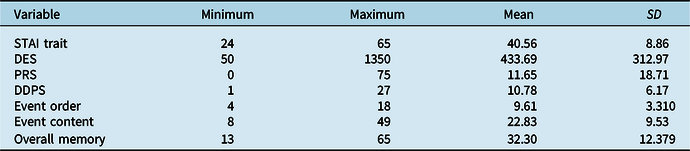
Table 1 shows the descriptive statistics for each of the questionnaire-based variables based on the sample who completed the study (n = 54). Minimum and maximum scores on each measure are provided along with the mean scores and standard deviations.
Descriptive statistics for questionnaire-based variables

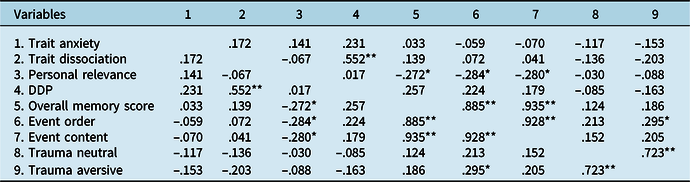
Table 2 shows the correlation between the variables.
Inter-correlations of variables included in the study

*p < 0.05, **p < 0.01.
Analysis
Backwards stepwise regression was used to identify if there were trait predictors of DDP as a dependent variable, namely trait anxiety and trait dissociation as independent variables. In order to determine if an attention bias to threat developed, one-way MANOVAs were conducted to analyse the differences from the pre to post time point as a dependent variable for each orienting biases (vigilance, delayed disengagement and maintenance). The two areas of interest (trauma-aversive and trauma-neutral images) were then taken as independent variables. Where the difference from pre to post showed a statistically significant increase in time difference on a given area of interest, backwards stepwise regression was used to identify predictors of that particular bias. Backwards stepwise regression was then used to analyse which independent variables predicted overall memory score as a dependent variable. The backwards stepwise method was used due to the high number of variables and exploratory nature of the design. For each regression the assumptions were checked and deemed to be satisfactory. Finally, in order to determine whether the overall memory scoring system (added total of the event content and event order scores) was comparable with scoring methods from other studies that used the proportion of items recalled (event order divided by event content) (Halligan et al., Reference Halligan, Clark and Ehlers2002; Wegner et al., Reference Wegner, Quillian and Houston1996), a sub-calculation of memory scores using the same divisional method as the other studies was completed. This was then compared with the current overall memory score using a one-way ANOVA. A non-significant result would tentatively point to a commensurate scoring method with those established in other studies.
Trait predictors of DDP
Variables entered into the regression to identify trait predictors of DDP were trait dissociation and trait anxiety. The final regression model was significant [F (1,53) = 22.80, p < .001], with trait dissociation the only significant predictor of DDP [β =.55, t (4.78), p < .001] explaining 29.1% of the variance of the DDP criterion. Backward selection removed trait anxiety from the final model.
Attention changes between pre and post time points
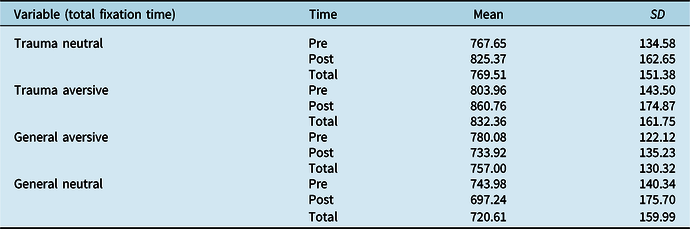
When measuring direction of the first fixation, the frequency of first fixation and duration of first fixation, MANOVAs were used to identify vigilance and delayed disengagement biases between pre and post time points for each area of interest. No statistically significant model was found, and so no further analyses were completed for these biases. The MANOVA analysing total fixation time revealed that there was a statistically significant change between pre and post time points, based on Pillai’s Trace [F (1,4) = 4.49, p < .005, ηp2 = .26], indicating a maintenance bias. Changes in total fixation time from pre to post were statistically significant indicating an increase in total fixation time for trauma neutral (F (1,53) = 7.94, p < .05, ηp2 = .13) and trauma aversive images [F (1,53) = 7.42, p < .05, ηp2 = .12], and a decrease in total fixation time for general aversive [F (1,53) = 9.74, p < .05, ηp2 = .15] and general neutral images [F (1,53) = 8.53, p < .05, ηp2 = .14]. This increase of total fixation time on trauma images and decrease of total fixation on general images time can be seen in the descriptive statistics in Table 3.
Mean total fixation times and standard deviations at pre and post time points

Predictors of attention bias
As the study aim was to measure predictors of attention bias to threat, regression analysis was used to identify predictors of the difference in total fixation time for trauma-neutral and trauma-aversive images only (Table 4). Variables entered were trait anxiety, trait dissociation, DDP, event content score, event order score and personal relevance. No statistically significant regression model was found for predicting total fixation time for trauma-neutral images.
Multiple linear regression with backward elimination for predictors of total fixation time on trauma aversive images

The analysis determining predictors of total fixation time on trauma-aversive images revealed a statistically significant final model [F (2,53) = 4.22, p < .05]. The backward selection eliminated trait anxiety, trait dissociation, event content score and personal relevance. Table 4 shows that DDP remained as a substantial predictor of orienting bias in the final model but was not statistically significant [β = .24, t (1.80), p = .07]. The inability to recall the event in the correct order was a statistically significant predictor [β = –.35, t (–2.62), p < .05]. Remaining predictors explained 10.8% of the variance in the difference in total fixation time for trauma-neutral and trauma-aversive images.
Predictors of free recall
Variables entered to identify predictors of overall memory score (event content plus event order) were trait anxiety, trait dissociation, DDP and personal relevance. The analysis revealed a final model which was statistically significant [F (2,53) = 4.22, p < .05], with the adjusted R 2 indicating that the model explained 10.8% of the variance. Table 5 shows that remaining significant predictors of increased overall memory score were a reduced personal relevance of the video [β = –.28, t (–2.12), p < .05] and increased DDP [β = 0.26, t (2.01), p < .05]. Variables eliminated were trait anxiety and trait dissociation.
Final model for multiple linear regression with backward elimination for predictors of overall memory score

Test of memory scoring method consistency
The one-way ANOVA comparing the overall memory score with the divisional method used in previous studies revealed no significant differences in the two scoring methods, F (18,35) = 1.79, p = .069.
Discussion
This study showed that DDP is strongly predicted by trait dissociation, rather than trait anxiety, and that this peri-traumatic processing style along with the inability to recall events in their temporal order, is predictive of an increase in overall fixation time on threat images after exposure to a VR trauma. This would indicate a maintenance bias towards threat, rather than vigilance or delayed disengagement. Contrary to previous studies evidencing that increased DDP reduces the ability to recall events, the current findings revealed that higher levels of DDP resulted in a higher level of recall.
In terms of trait predictors, trait dissociation significantly predicted DDP in the present study. Additionally, the findings distinguished between trait dissociation and trait anxiety, indicating that dissociation is predictive of this peri-traumatic information processing method, as opposed to anxiety. This implies that a dissociative mechanism is operating whereby an increase in peri-traumatic DDP leads to the cognitive processing difficulties seen in PTSD. Such a finding concurs with previous results indicting that trait dissociation predicted higher levels of state dissociation and perceptual priming (Michael and Ehlers, Reference Michael and Ehlers2007). Dissociation has also been found to play a key role in post-traumatic memory formation (Brewin et al., Reference Brewin, Ma and Colson2013) as well as symptom development in survivors of road traffic collisions and other traumata (Murray et al., Reference Murray, Ehlers and Mayou2002; Ozer et al., Reference Ozer, Best, Lipsey and Weiss2003). Therefore, trait dissociation seems to represent a critical factor in trauma cognition and subsequent post-traumatic stress symptomatology. It must be acknowledged, however, that the role of state dissociation in DDP still remains unclear.
The current study found an attention bias towards direct threat represented by trauma-aversive images, in the form of an increase in total fixation time, demonstrating a maintenance bias. This suggests that a person is primed for maintained attention through increased sustained fixations to threat-related images in the environment after trauma exposure. This concurs with previous research findings of increased fixation times on threat images in PTSD (Kimble et al., Reference Kimble, Fleming, Bandy, Kim and Zambetti2010; Olatunji et al., Reference Olatunji, Armstrong, McHugo and Zald2013), and in other anxiety disorder presentations (Bradley et al., Reference Bradley, Hanna, Wilson, Scott, Quinn and Dyer2016). Evidence of a further generalised attention bias to general trauma congruent images (represented by trauma neutral images) was also obtained, suggesting associative learning in trauma exposure and the presence of strong S-S associations (Ehlers and Clark, Reference Ehlers and Clark2000). The implication of a generalised attention bias is consistent with findings which have shown generalisations of fear responses in PTSD populations (Acheson et al., Reference Acheson, Geyer, Baker, Nievergelt, Yurgil and Risbrough2015; Steiger et al., Reference Steiger, Nees, Wicking, Lang and Flor2015; Thome et al., Reference Thome, Hauschild, Koppe, Liebke, Rausch, Herzog, Müller Engelmann, Steil, Priebe, Hermans and Schmahl2017). Moreover, the finding of biased processing for trauma-related stimuli has also been suggested as the involuntary trigger to flashback memories (Kleim et al., Reference Kleim, Ehring and Ehlers2012), thus enhancing the clinical relevance of the current findings. However, it is also noteworthy that the recurrent exposure to road traffic collision-related stimuli may have produced an induced demand effect, whereby participants’ attention attenuated towards those images which were most relevant to the experiment, thereby creating an attention priming effect. This may be something which is inherent within the nature of the analogue trauma paradigm and needs to be considered when drawing conclusions.
In terms of predictors of attention bias, none of the variables predicted the generalised threat bias, which may be attributed to trauma-neutral images being less emotionally salient, although other cognitive processes may have been involved here. Whilst DDP was not a statistically significant predictor of fixation on trauma-aversive images, it remained a substantial predictor within the overall significant model. Moreover, the inability to recall the event in the correct order was a significant predictor of the attention bias towards the trauma-aversive images. This implies that the nature of the poor memory integration, i.e. a temporal deficit, decreases the threshold for the perception of threat, concurring with theoretical discourse (Brewin et al., Reference Brewin, Dalgleish and Joseph1996; Ehlers and Clark, Reference Ehlers and Clark2000). The processing of the temporal order of events has also been shown as important in how well a memory is recalled (Kleim et al., Reference Kleim, Wallott and Ehlers2008; Wegner et al., Reference Wegner, Quillian and Houston1996), and therefore it is tentatively suggested that limited temporal integration of memory could partially predict threat priming in trauma presentations.
This study used a different way of measuring memory than those utilised in previous studies (Halligan et al., Reference Halligan, Clark and Ehlers2002; Wegner et al., Reference Wegner, Quillian and Houston1996). However, upon comparison of the two scores there were no statistically significant differences found, which may suggest that this scoring method is somewhat comparable to previous studies. It is suggested that further research is needed for a clear rationale and standardised method of scoring free recall tasks in trauma memory studies. In relation to interpreting the memory findings, although verbal memory impairment has been consistently found in adults with PTSD (Johnsen and Asbjørnsen, Reference Johnsen and Asbjørnsen2008), this study found that higher levels of DDP after exposure did not predict deficits in free recall. These contradictory findings may be explained theoretically. It could be suggested that in cases of processing trauma, higher DDP as well as higher conceptual-driven processing occurs, and therefore an increase in both processing styles occurs. However, in those people who develop post-trauma cognitive changes and symptoms, it is the ratio of DDP to conceptual-driven processing that is central, i.e. an increase in DDP but a decrease in conceptual-driven processing. This would be in keeping with trauma theory, suggesting that it is also the lack of narrative that produces memory disorganisation, rather than simply an increase in DDP. Given that less personal relevance of the video also predicted higher scores on free recall, may also have meant that the participant was better able to attend to the images, and process them conceptually, rather than engage in a processing style which may impact the ability to integrate the memory. On the other hand, a higher level of personal relevance may represent a more personal meaning of the experience, making it more distressing, and so a reduced ability to process the information conceptually, integrate and recall it coherently.
Whilst this study focused more on information processing, attention and memory, other cognitive factors that are pertinent to predominant cognitive models should be considered alongside the current findings. In particular, negative trauma-related appraisals have recently shown to be a relevant predictor of persistent post-traumatic stress difficulties (Beierl et al., Reference Beierl, Böllinghaus, Clark, Glucksman and Ehlers2019). These findings suggest that trauma-related appraisals may be another key factor in the development of PTSD and should be integrated into further attentional bias research.
This study provided further understanding of trauma mechanisms in a number of key ways. Firstly, through showing clearly that trait dissociation plays a causal role in the induction of DDP, it has become clear that this is a key cognitive prerequisite to the unfolding of the peri-traumatic processing which may lead to the difficulties seen in PTSD. This gives clinical indication as to the cognitive risk factors for developing PTSD. Secondly, the establishment of a maintenance bias after trauma exposure explains the hypervigilance to threat found in PTSD and shows that these difficulties are not due only to a propensity towards general aversion, but rather are threat specific. Furthermore, the finding of a generalised and specific threat bias provides an understanding that the concept of matching threat or cue-dependent retrieval in cognitive models (Brewin et al., Reference Brewin, Dalgleish and Joseph1996; Ehlers and Clark, Reference Ehlers and Clark2000) becomes activated through both specific and associative cognitive networks. Through showing that this threat bias develops when temporal memory organisation breaks down also suggests that temporal memory disorganisation is a key component in the development of proclivity to threat detection, as opposed to processing style alone. These findings support cognitive treatments in understanding environmental triggers to threat, which may re-activate fear networks (Foa and Kozak, Reference Foa and Kozak1986), giving rise to re-experiencing symptoms of unintegrated memories. Further research using experimental paradigms could investigate further the common and distinct factors influencing memory and attention in PTSD. An investigation of how trauma memories develop over time and how peri-traumatic processes influence this would also give further indications of optimal time for therapeutic intervention.
Limitations
This study had several limitations. Due to the non-clinical sample used, it is not possible to say how well these findings would translate to clinical populations. Furthermore, the distress associated with the attention and VR stimuli was not measured with subjective measures among participants, meaning that it was not possible to determine the emotional salience of the stimuli. The task also used the same images before and after exposure, creating possible habituation effects. The measures of data-driven processing and memory used were not standardised and methodologies were adapted from other studies, which limits their reliability and validity. Furthermore, as the current design measured cognitive changes immediately after exposure, it is not clear if these are PTSD-specific difficulties being measured or those of an acute stress response. Finally, additional neutral images were omitted from the analysis for reasons of parsimony. During the eye-tracking measure, these neutral images were paired with trauma images and so may have inflated the attentional bias effect. Further studies should be mindful of using control stimuli, especially when paired with salient stimuli, in case these amplify effects within attentional bias data.
Conclusions
This investigation highlighted a clear role of trait dissociation in increasing DDP after exposure to trauma stimuli under experimental conditions. DDP also emerged as a significant factor in post-traumatic attention biases. The contentious findings on DDP’s influence on recall ability highlights the need for further research in the area, considering other cognitive influences. Finally, it highlights the need to consider further how attention and memory interact, as well as the similar and distinct factors influencing their changes after exposure to trauma, and how this guides treatment.
Acknowledgements
None.
Financial support
This research received no specific grant from any funding agency, commercial or not-for-profit sectors.
Conflicts of interest
None.





Comments
No Comments have been published for this article.