


INTRODUCTION
For centuries, political economists have argued that a basic relationship exists between commerce and peace, as the potential loss of trade makes violence more costly. For example, the Baron de Montesquieu (Reference Baron de Montesquieu1748) [Book XX, p. 1] proposed that “Commerce is a cure for the most destructive prejudices; for it is almost a general rule that wherever the ways of man are gentle there is commerce; and wherever there is commerce, there the ways of men are gentle.”Footnote 1 Yet, from the ethnic Chinese in Indonesia to South Asians in East Africa to Jews in Europe, historical and contemporary examples abound of even the most commercially oriented minority groups becoming repeated targets of ethnic violence and expropriation (Benbassa and Rodrigue Reference Benbassa and Rodrigue2000; Chua Reference Chua2003; Jha Reference Jha2007; Landa Reference Landa1994). Some have argued that contemporary processes of globalization and democratization, in particular, have exacerbated ethnic conflict in the developing world.Footnote 2 What, then, are the conditions and the mechanisms through which trade can foster lasting peace in poor, ethnically diverse societies?
In this article, I draw upon a simple but robust theoretical framework to emphasize the importance of two conditions for providing the basis for peaceful co-existence over long time horizons in ethnically diverse societies: the presence of a nonreplicable and nonexpropriable source of interethnic complementarity and access to a nonviolent mechanism to redistribute or share the gains from trade between groups.Footnote 3 Satisfying these conditions further fosters the development of “institutions” that reinforce incentives for peace, which I define to be “systems of complementary norms, beliefs and organizations.”Footnote 4 In contrast, societies that violate these conditions—i.e., where ethnic groups compete, where the source of one group's complementarity can be violently seized (e.g., physical capital), easily replicated (e.g., low skilled human capital), or that lack an effective nonviolent mechanism for sharing the gains from trade (like many commercially oriented trading communities)—are likely to be more prone to ethnic conflict and less likely to develop reinforcing institutions supportive of ethnic tolerance.
I substantiate these claims by exploiting evidence drawn from Hindu-Muslim interaction in South Asia. South Asia is particularly appropriate for this exercise, not only because it houses more than a fifth of the world's population and close to half of its poor, but its Muslim population, though a minority, is still the second largest in the world, and Hindus and Muslims have engaged in 13 centuries of economic, political and, sadly too often, violent, interaction.Footnote 5
I exploit the fact that from at least the 8th century to the 17th century, due to the coordination of overseas markets through Muslim pilgrimages such as the Hajj, Muslims enjoyed exogenous complementary and nonreplicable advantages in accessing Indian Ocean trade routes. Further, and unlike many other trading communities that have often found themselves the targets of violence, such as the Chinese in Indonesia, or the South Asians in East Africa, barriers to entry into trade were relatively low. The fact that trade was coordinated primarily by pilgrimage routes rather than by clan ties meant that entry into Indian Ocean trading networks was relatively easy for any Muslim, and the resultant competition between Muslim groups provided a natural, decentralized, and large-scale mechanism to share the gains from trade.
I provide evidence that medieval overseas trading ports, which served as the geographical focuses of these exogenous Hindu-Muslim complementarities and Muslim entry into trade, were not only relatively peaceful locations for Hindu-Muslim interaction in the medieval period, they were also five times less prone to Hindu-Muslim riots and around 25 percentage points less likely than otherwise similar towns to experience any religious riot between 1850 and 1950, two centuries after Europeans disrupted Muslim advantages in overseas trade. Between 1850 and 1950, medieval port towns were around ten times less likely to experience their first outbreak of Hindu-Muslim rioting in any given year. These differences in patterns of conflict between medieval ports and other towns persist but diminish following the Partition of South Asia, in part reflecting the large-scale ethnic cleansing that occurred. Yet, between 1950 and 1995, a legacy of interethnic complementarity still diminished the incidence of ethnic rioting by more than half.
In both democratic and colonial India, this legacy effect of historical interethnic complementarities is greatest in environments where the State lacked the political incentives to protect minorities, and thus the need to rely on local institutions to support peaceful co-existence was likely greater. Medieval ports with one century less of medieval Muslim political rule—i.e., periods when Muslims were historically more likely to benefit from the protection of the State and thus relied less on local institutions of tolerance—exhibit an eight-percentage-points lowered probability of a Hindu-Muslim riot between 1850 and 1950. Similarly, in democratic India, a legacy of interethnic complementarity has its greatest effect on reducing the probability of a riot in the run-up to elections in states with weak party competition, conditions under which minority voters may be less likely to be politically pivotal and state politicians face lower incentives to protect them (Wilkinson Reference Wilkinson2004). Thus, both in democratic India and in South Asia's nondemocratic past, political incentives and local institutions appear to have acted as substitute means for supporting interethnic peace.
The article draws upon a broad range of sources, including a novel town-level dataset that combines hand-collected information from medieval traveller's narratives, a 16th century Mughal census—the Ain-i-Akbari, colonial-era indicators of demography and development, qualitative fieldwork conducted in Ahmadabad and the port towns of Surat, Somnath-Veraval, and Porbandar in 2006–07, and a 2005 urban sample of household level data on trust, conflict, and local organization (the Indian Human Development Survey Reference Desai, Dubey, Joshi, Sen, Shariff and Vanneman2009). I use these sources to rule out a number of key alternative explanations and to delineate the nature of the institutions that emerged to support interethnic tolerance.
I first provide evidence that the differences between erstwhile ports and other towns are not the result of factors, such as a more mixed ethnic composition or poverty, that are often suggested to explain ethnic violence. Instead, I show that medieval ports are more ethnically mixed and poorer than similar towns, both factors that are commonly associated with greater violence. In fact, a medieval trade legacy appears to reduce violence the most in larger towns that are more ethnically mixed, consistent with a beneficial effect for peaceful coexistence when members of a greater minority population compete with one another in providing complementary services. The effects also do not appear to come purely from differential human capital (Glaeser et al. Reference Glaeser, La Porta, Lopez-de Silanes and Shleifer2004)—as measured by the presence of medieval skilled crafts production in a town. In fact, in nonport medieval towns, where skilled artisans were more likely to compete across ethnic lines for patronage, the presence of such skills actually left a legacy of greater violence. In contrast, in medieval ports, where skilled artisans had greater incentives to maintain interethnic complementarity in the production of these crafts, the reductions in future violence are greater in those that enjoyed such skills. Thus, institutions and human capital appear to be themselves complements.
The results also do not appear to be driven by the selection of medieval ports by Muslim traders based upon unobserved pre-existing factors that might have fostered a more tolerant local population. Because of the severity of Indian Ocean storms, sheltered harbors were historically prized as locations for medieval ports. Thus access to natural indentations on the historical coastline, or “medieval natural harbors,’ provide an exogenous determinant of medieval trade, one that I find later diminished in determining the location of modern ports. Yet, those towns that became ports because of their location at medieval natural harbors exhibit similar reductions in Hindu-Muslim violence to other medieval port towns.
I then evaluate the potential mechanisms through which a legacy of medieval trade might have a lasting effect on ethnic violence over two centuries later. I confirm that the differences in violence in medieval trading ports and other towns arise specifically from overseas trade in the medieval era—where Muslims enjoyed nonreplicable nonexpropriable complementarities—rather than medieval land-based trade—where Hindus could locally replicate Muslim trading networks—or modern trade—where European intervention eroded Muslims’ overseas advantages.
Continued colonial-era trade in medieval ports also does not explain the results. Due to heavy silting of inlets and river mouths during the monsoon rains, a number of medieval ports have increasingly ceased to be accessible to shipping over time. Those medieval ports that subsequently became inactive or inaccessible to overseas shipping show a remarkably consistent legacy of reduced modern religious violence, while modern overseas ports, a useful placebo comparison, do not.
I next draw upon qualitative fieldwork conducted in Gujarat in 2006–7, historical case studies, and evidence from the nationally representative urban sample of the Indian Human Development Survey (conducted in 2005) to characterize the institutional systems that appear to facilitate peaceful exchange between Hindus and Muslims. While the specifics of these institutions that persist differ in different medieval ports, they share an economic logic and continue to deliver similar outcomes. In some communities, additional ethnic specialization in complementary occupational roles occurred during the medieval period—these communities appear to have maintained interethnic complementarity even after the decline of the original complementarity in trade. In other communities, organizations and cultural norms emerged that appear to have mitigated the incentives for ethnic violence by allowing the gains from interethnic trade to be shared more equitably between groups and by building interethnic trust. I show that the patterns evident in the case studies are not just anecdotal, they are reflected in reduced ethnic inequality, in increased trust, in occupational specialization in complementary activities, and in specific organizational membership patterns among urban Muslim and non-Muslims living in districts with medieval port headquarters even in 2005.
This article follows in a rich intellectual tradition evaluating the long-term effects of historical institutions (e.g., Acemoglu, Johnson, and Robinson Reference Acemoglu, Johnson and Robinson2001; Banerjee and Iyer Reference Banerjee and Iyer2005; Nunn and Wantchekon Reference Nunn and Wantchekon2011). By stressing the central role of interethnic complementarities in encouraging cooperation and discouraging conflict between ethnic groups, this article introduces a new dimension into an important set of studies that have sought to understand the role of ethnicity and interethnic inequalities as a determinant of civil conflict and public goods provision (e.g., Alesina and La Ferrara Reference Alesina and La Ferrara2005; Baldwin and Huber Reference Baldwin and Huber2010; Fearon and Laitin Reference Fearon and Laitin2003; Habyarimana et al. Reference Habyarimana, Humphreys, Posner and Weinstein2009; Horowitz Reference Horowitz1985; Jha and Wilkinson Reference Jha and Wilkinson2012; Miguel, Satyanath, and Sergenti Reference Miguel, Satyanath and Sergenti2004). My findings suggest that if the structure of economic incentives for exchange, mobility, and violence between ethnic groups is not considered, factors may be omitted that can dramatically alter the impact of more proximate causes such as ethnic heterogeneity and interethnic inequalities on modern indices of peace, public goods provision, and growth.Footnote 6
This article most closely builds upon important studies that have recognized the vital role of “institutions” in enhancing cooperation, influencing ethnic competition, and mitigating ethnic violence, in theory (Greif Reference Greif2005; Fearon and Laitin Reference Fearon and Laitin1996), in the United States (Olzak Reference Olzak1992), and in South Asia in particular. Based on detailed fieldwork, Brass (Reference Brass2003) finds evidence of “institutionalised riot systems”: concerted action by local elites to maintain fissures along ethnic lines, for local, sometimes electoral, gain. Wilkinson (Reference Wilkinson2004) further examines the state-level incentives for fomenting violence. He argues that when states experience greater electoral competition between parties, minority groups are more likely to be pivotal in forging majorities, reducing the incentives for political leaders to instigate ethnic riots for political gain. Varshney (Reference Varshney2002) argues instead for the importance of cross-religious social capital or “civic engagement” in defusing religious tension. “Peace committees” develop from existing cultural, political, or business groups that cross religious lines.Footnote 7
These works provide extremely valuable insights into the proximate causes of ethnic violence in contemporary South Asia and beyond. This article furthers and seeks to reconcile these studies by analyzing the exogenous historical structure of incentives that led to the contemporary “institutional” environment.Footnote 8 This article argues that contemporary interethnic civic engagement, interethnic economic competition, ethnically polarized elections, interethnic inequalities, and ethnic violence are all regularities of behavior that in part reflect the institutional legacy of close to a thousand years of the presence or absence of exogenous complementarities between ethnic groups. The article finds, consistent with Brass (Reference Brass2003) and Wilkinson (Reference Wilkinson2004), that towns experience fewer ethnic riots in years with stronger state electoral competition. And it is precisely in those environments in which State political incentives to protect minorities cannot be relied upon, such as in times of weak party competition, that local institutional arrangements, including those that Varshney (Reference Varshney2002) describes, increase their effectiveness at sustaining peace.
In the next section, I provide a theoretical framework that delineates how robust interethnic complementarities and a sharing mechanism may foster interethnic tolerance and the development of complementary institutions that support interethnic trust. I describe how these conditions were met among Hindus and Muslims in medieval ports trading to the Middle East, and provide case studies from a medieval port, Surat, and a nearby medieval city, Ahmadabad, that illustrate these institutions, along with case evidence for those that developed in other medieval ports. After describing the empirical strategy and the data, I then present the results. I begin with town-level comparisons of riots across India between 1850 and 1950, followed by evidence from the post-Independence period. I next discuss how State political incentives and local institutional legacies have interacted both before and after the advent of India's democracy. I finally provide representative survey evidence that establishes the continued differences in trust, organizations, occupational choice, and political behavior among urban Muslim households in medieval ports. I conclude by discussing how the theory may shed light on other settings around the world.
INCENTIVES FOR TRADE IN THE MEDIEVAL INDIAN OCEAN
A simple theoretical model can be used to illuminate why Hindus and Muslim traders enjoyed an enduring environment of peaceful co-existence in the Indian Ocean region when many other commercial ethnic minorities have not. It is useful to provide an intuitive sketch of the model and its relevant predictions (please see Jha (Reference Jha2009) for details of the formal theory).
The model focuses on settings where there are two types of agents: local and nonlocal. Nonlocals differ from locals only in that they have better outside options. In our motivating example, “nonlocal” traders enjoyed resources, including information and networks, that linked them to the Middle East and the rest of the Islamic world. These external resources made it less costly for Muslims to leave a particular town and go elsewhere. In contrast, the resources of “local” Hindus tended to be also concentrated locally.
In the model, individuals from either group have the following choices every period: to stay or leave town, to produce a good for exchange, and to attack any other agent that they encounter. Such violence is destructive, but violence may be useful for seizing the victim's property and to deter or punish the victim's actions.“Strong” individuals may exist who are more likely to prevail in a violent attack against weaker opponents. The model can be used to find conditions that favor “peaceful co-existence” over time: an equilibrium with a mixed population of locals and nonlocals, full production, no out-migration and no violence.
In the environment above, an important condition that favors peaceful co-existence is that nonlocals and locals produce complementary goods or services. To see this, consider first the alternative: that locals and nonlocals provide substitute goods and thus are competitors. Then, with repeated interactions, a strong local will have an incentive to attack weak nonlocals, as this allows locals not only to seize the nonlocal's property but also to encourage nonlocals to leave, reducing the future competition the local faces. In fact, nonlocal competitors provide more attractive targets of violence than weak locals, as local competitors are harder to encourage to leave due to their lower outside options. Thus rather than class violence, societies where local and nonlocal groups compete are likely to exhibit greater ethnic violence.Footnote 9
In contrast, when ethnic groups provide complementary goods or services to one another, then the incentive to attack nonlocals falls over long time horizons. If nonlocals leave if attacked, locals will face reduced supply and higher future relative prices for goods that only nonlocals provide. The more that nonlocal goods increase the value of local goods, the more valuable is the presence of nonlocal suppliers and the lower the incentives for ethnic violence.
Thus intergroup complementarity can support peaceful co-existence over time. However, even with repeated interactions, peaceful co-existence will fail if members of one group are able to cheaply replicate or violently seize the resources that make members of the other group desirable trading partners. Therefore, to maintain intergroup complementarity over time, it is necessary for the source of each group's complementarity to be costly for others to acquire. Complementarities emerging from expropriable assets such as wealth, machines, or land, or even artisanal skills and other forms of human capital that may be replicated, can therefore fail to sustain peaceful co-existence in the long term.
Furthermore, in settings where the nonlocal group is a small minority, even such “robust” complementarities may be insufficient to maintain peaceful co-existence. With few competitors, members of a minority group that provide nonreplicable complementary services can enjoy high relative prices and substantial profits. This has been a common feature in the histories of many ethnic minority trade networks. Particularly in times of resource shock or crisis, when strong locals discount the future more highly relative to the present, such high profits may result in a temptation for agents to engage in violence to seize these profits even at the cost of losing future gains from trade.Footnote 10 Thus the maintenance of peaceful co-existence over time will benefit from mechanisms that redistribute the surplus between groups and thereby reduce incentives to violently expropriate.
From the rise of Islam to the 17th century, Muslim traders involved in transoceanic commerce satisfied all the conditions outlined above for sustaining peaceful co-existence. First, there were Islam-specific advantages to trade across the Indian Ocean. Pilgrimages, particularly to Mecca, coordinated the development of the world's largest textile market during the Hajj (Lombard Reference Lombard2000). In 1503, one of the very few non-Muslim observers to visit Mecca, Ludovico di Verthema of Rome, described the intimate coordinating role of the pilgrimage and trade, particularly noting the presence of South Asian merchants from both coasts.Footnote 11 Muslims had strong preferential access to these pilgrimage routes, and the markets they induced.Footnote 12 The Hajj was supplemented by pilgrimages to other sites, such as Cairo, Kerbala, Basra, and Yemen, that all fostered regional trade.
Second, Muslim advantages in oceanic trade stemmed from preferred access to trade networks, which are difficult to steal or replicate. A key characteristic of trade networks is that they enjoy increasing returns to scale. The remarkable scale of the Hajj in particular was such that it was prohibitively costly for even a substantial number of Hindus to replicate. Since trade networks are also intangible, they were also impossible for Hindus to steal. Oceanic trade differed from land-based or riverine trade routes in this manner, as most long distance land-based trade can be divided into relays of shorter distances, each of which can be replicated by a member of the local group. Most sea trade routes, however, cannot be replicated in relays. It is therefore at towns with direct access to the Indian Ocean that Muslim advantages in Middle Eastern trade became most relevant and gains from exchange between Hindus and Muslims were most pronounced.Footnote 13
Third, Muslims had access to a natural, decentralized mechanism of redistribution of the surplus from trade to the local population: increased intra-Muslim competition due to the relative ease of entry by any Muslim into Indian Ocean trade. Unlike most kin-based trade networks that have high barriers to entry (Rauch and Casella Reference Rauch and Casella2002), entry into Islamic trade networks was relatively cheap for all Muslims. Pilgrimages provided a clear coordination device, so even nonmerchant and newly converted Muslims could enter trade. Family or community ties were not necessary to follow established pilgrimage routes, and indeed many pilgrimages were financed through trade (Ibn Battuta Reference Ibn Battuta1355; Lombard Reference Lombard2000). Though trading “communities” did emerge, members of these communities often were in economic competition either within their own communities or with other Muslim trading communities (Penrad Reference Penrad2000; Subrahmanyam Reference Subrahmanyam2000).Footnote 14 Incipient and actual entry by Muslim competitors could improve the terms of trade for the local population whenever relative prices for nonlocal goods became too high.Footnote 15
Trading ports on South Asia's coasts were thus well-favored to provide geographical loci for peaceful co-existence and trade between Hindus and Muslims, even in areas that experienced little Muslim political control (Figure 1). The connection between the robust interethnic complementarity and incentives for tolerance in these areas were not lost on contemporaries. Shaikh Zayn-ud-din al-Malibari, a Muslim cleric writing in 1528, described the process of conversion to Islam in South Indian ports and the understanding that the long, and to his eyes, “remarkable,” tolerance Muslims enjoyed was a direct consequence of interethnic complementarity and the joint surplus that Muslims had to bring. He wrote the following:
Now in all these [Malabari ports] the population became much increased and the number of buildings enlarged, by means of the trade carried on by the Mahomedans, towards whom the chieftains of those places abstained from all oppression; and, notwithstanding that these rulers and their troops were all pagans, they paid much regard to their prejudices and customs, and avoided any act of aggression on the Mahomedans, except on some extraordinary provocation; this amicable footing being the more remarkable, from the circumstance of the Mahomedans not forming a tenth part of the population . . . (al Malibari Reference al Malibari1528, 17).Footnote 16
Major Medieval Ports and Political Patronage Centres, ca. 8th century- 1707
Note: Muslims traded to ports across both coasts in the medieval period, spanning places that enjoyed long periods of Muslim political control (shaded darker) and areas where such control was fleeting (lightly shaded). Many towns were also founded as centres of Muslim political control and patronage in the medieval period, with mints established to monetize wealth.

Malabar was by no means the only region where similar phenomena were occurring. The northern coast interacted with Muslims both as traders and as invading military forces. A key event occurred in 1026, when the Afghan Mahmud of Ghazni sacked the major Hindu pilgrimage center of Somnath, killing an untold number of inhabitants. The sack of Somnath has been cited ever since as one of the most polarizing events in Hindu-Muslim relations, leading to “great hatred” of the local population for Muslims (Alberuni Reference Alberuni and Sachau1030; Thapar Reference Thapar2004).
Yet, an inscription exists that shows that in 1262, the authorities of the rebuilt Somnath temple made a large-scale land grant of temple lands to a Muslim trader, Nur-ud-din Firuz of Hormuz to settle in the adjacent trading port of Veraval, aware of the commercial taxation and prosperity that a colony of Muslims could bring (Sircar Reference Sircar1962; Thapar Reference Thapar2004, 84–85). Similar inscriptions substantiating mosque endowments by Hindu elites and rulers have been found throughout Gujarat and the west coast (Chakravarti Reference Chakravarti2000; Thapar Reference Thapar2004), as well as on the eastern coast (Bayly Reference Bayly1989; Dasgupta Reference Dasgupta2004). Tolerance towards Muslim traders operating beyond Islam's political frontiers was not unique to India but appears to have been a common feature of oceanic trade extending beyond the Indian Ocean to Indonesia and even China.Footnote 17
Muslim dominance of overseas trade continued for close to a thousand years. The Portuguese discovery of routes to the Indian Ocean in 1498 destroyed the commerce of a number of key trading ports, often via blockade. The end of Islamic trade dominance was further expedited by increased competition by the Dutch and English, and the disintegration of the Mughal empire. Mughal ports, such as Masulipatam, Surat, and Hughli, gave way to competition from Madras, Calcutta, and Bombay (Dasgupta Reference Dasgupta2004). Muslim trading networks continued to be important in trade with Southeast Asia and Zanzibar, but the expansion of colonial rule to these regions brought competition from non-Muslim traders operating under colonial protection (Bose Reference Bose2006). By the beginning of the eighteenth century, the era of Muslim trade dominance in the Indian Ocean was over, and many medieval trading ports ceased to be commercially important.
Thus, for close to a thousand years, intergroup complementarities existed between Hindus and Muslims in medieval trading ports. However, even during this period, peaceful co-existence could still be threatened by shocks. Examples include resource or political shocks that threatened the survival of strong locals, such as emerged with the increased instability of regional kingdoms and the Mughal empire, or the exogenous development of new substitutes to Muslim shipping, such as occurred with the European discovery of routes to the Indian Ocean. Thus, higher mutual incentives existed in medieval ports than other towns for residents to invest in and develop complementary mechanisms to maintain the incentives for peaceful co-existence even in the presence of such shocks. Insofar as these mechanisms, once developed, were costly to reverse by any individual agent, they can be considered part of the “institutional” environment that shape an agent's subsequent incentives for peaceful co-existence. It is these institutional systems, that I argue, have survived to this day.Footnote 18
Examples of Institutional Persistence Among Trading Communities
It is useful to fix ideas with a specific example of a long-lasting institutional system that emerged due to medieval trade and continues to affect modern interethnic relations. During the reign of Caliph al-Mustansir billah (1036–1094), the (Ismaili) Fatimid empire reached its greatest extent. It was at this time that a group of Gujarati Hindus first converted to Ismaili Shia Islam. Their historic specialization in trade was such that they became called Bohras, from the Gujarati verb vohrvun—“to trade.” With the elimination of the Fatimids in Egypt, Bohra trade and pilgrimage links shifted to Yemen, the headquarters of their spiritual leader, the da'i ul mutlaq. The organizational headquarters of the Bohras moved from Yemen to Gujarat in the 16th century. Though initially attracted to the major city, Ahmadabad, the community leadership left there around 1657 to avoid religious persecution. Revealed preference by the community leaders suggests where they found it: in 64% of the subsequent years up until World War 1, the Bohra headquarters were located in medieval ports.Footnote 19 By 1899, the Bohra population in Gujarat was estimated at 130,000 (Campbell Reference Campbell1899).
Surat was the most prominent of these organizational headquarters. Surat emerged as the major Mughal pilgrimage port to Mecca, following the silting of the nearby port of Cambay, and rapidly attracted a Bohra population. East Indian Company sources referred to one of their creditors, the Bohra merchant, Virji Vohra, as one of the richest merchants anywhere, holding a local monopoly over Arabian horses (Richards Reference Richards1996). This relative affluence seems to have continued over time; the 19th century Bombay Gazetteer (Campbell Reference Campbell1899, 29) states “especially in Surat [Bohras] are prosperous, many of them rich and the bulk well-to-do; the poor thrifty and free from debt and the unfortunate are maintained from a common fund.” In an environment of low average wealth, and in the absence of complementarity and peaceful organizational mechanisms to facilitate the sharing of this wealth with non-Bohras, such minority affluence might be expected to raise, not lower, ethnic violence.Footnote 20
However, the Bohras of Surat provided complementary services and possessed such organizational mechanisms. The Bohra headquarters shifted there in 1787, and Surat has remained a major center for the Bohra clerical hierarchy ever since. Despite the subsequent shift in headquarters to Bombay in the early 20th century, Bohras of Surti origin continue to dominate the leadership of the Bohra community (Blank Reference Blank2001, 117) and Surat remains the seat of the apex Bohra institute for training local religious administrators, the Jamea tus-Saifiya, founded in 1809.
The Bohra community numbered 212,752 in the 1931 Indian census and is believed to be around five times that worldwide today (Blank Reference Blank2001). Despite its growing size, the da'i's organization continues to wield major influence, playing a coordinating role in many aspects of life, from naming most Bohra children to determining individuals’ occupational choices.Footnote 21
Every major Bohra community coordinates its activities through a jamaatkhana, or community hall, each headed by a local amil connected with and appointed with the approval of the da'i's central administration. A notable aspect of these organizations is the role they play in orchestrating transfers, disaster relief, and charitable giving. Bohras not only have a history of endowing local public goods, particularly clinics, that benefit non-Bohras as well, but also nonaffected communities are mobilized to help Bohras and non-Bohras following natural disasters and even religious rioting (Qutbuddin Reference Qutbuddin and Daftary2011). Bohras, not surprisingly then, are relatively socially and residentially integrated with non-Muslim society, relative to other Muslim communities.Footnote 22 A legacy of Indian Ocean trade, the Bohra's institutional system of beliefs, that others will accept the authority and coordination of the da'i, norms, of adopting complementary roles in trade to the local population, and organizations, the Bohra clerical administration, appear to play complementary roles in facilitating the lasting ethnic tolerance enjoyed by Bohras in Surat, South Asia, and increasingly, elsewhere as well. Surat itself has developed a reputation as an “oasis of peace” with respect to Hindu-Muslim relations.Footnote 23
Though the Bohras and their fellow Ismailis, the followers of the Aga Khan, are arguably among the more organized of the Muslim trading communities, they are but two of the community groups that emerged and persist in Indian ports. Table 1 summarizes evidence gleaned from both fieldwork I conducted in 2006–7 and the historical record for the different institutional mechanisms that emerged in medieval ports. Medieval-era organizations appear to have fulfilled two distinct but complementary roles. One set of organizational mechanisms encouraged group specialization and raised the costs of replicating the services provided by another ethnic group. Specialization in skilled activities was encouraged through a system of apprenticeships that were often exclusively limited to members of the same ethnic group (Campbell Reference Campbell1899; Haynes Reference Haynes1991). Norms and own-group social sanctions also emerged that raised the costs of replicating another group's activities.Footnote 24
Taxonomy of Institutions in Indian Medieval Ports
Sources: 1: Mehta (Reference Mehta1991), 2: Dasgupta (2000) 3: Thapar (Reference Thapar2004), 4: Varshney (Reference Varshney2002), 5: Gazetteer of the Bombay Presidency (1899), Haynes (Reference Haynes1991), 6: Concerned Citizens Tribunal (2002), 7: personal interviews, Blank (Reference Blank2001), 8: al Malibari (Reference al Malibari1528), di Verthema (Reference di Verthema1503), Bouchon (Reference Bouchon2000), 9: Osella (2003), 10: More (1997), 11: S. Bayly (Reference Bayly1989)
A second set of mechanisms helped reduce the incentives for violence, whether by coordinating responses to crises or by sharing the gains from exchange. In Gujarat and Malabar, merchant guilds and inter-religious organizations helped organize both boycotts and joint petitions to political figures to seek redress when members of one religious group were threatened by strong individuals (al Malibari Reference al Malibari1528; di Verthema Reference di Verthema1503). Organizations also emerged to encourage repeated interactions between members of different religious groups, which encouraged trust and the formation of joint ventures (Dasgupta Reference Dasgupta1994). Muslim traders around India provided commercial taxes and explicitly endowed local public goods, including water projects and even Hindu temples (Bayly Reference Bayly1989; Risley et al. Reference Risley, Meyer, Burn and Cotton1909). Relative to other areas, conversion to Islam and immigration from the Middle East was encouraged by local populations in Malabar ports (al Malibari Reference al Malibari1528), reducing costs of entry into trade and further increasing within-Muslim competition. The sharing of the gains from trade, whether through increased intragroup competition, explicit intergroup transfers, or joint ventures between groups, are likely to have provided Hindus and Muslims in medieval ports reduced incentives for interethnic violence in times of crisis.
As Table 1 indicates, as in the Bohra example, a number of these institutional mechanisms—that coordinate ethnic complementarity and facilitate the sharing of the gains from trade—appear to have evolved and persisted through the 19th and 20th centuries, even after the decline of Muslim advantages in trade. A natural question is whether the reduction in interethnic inequality, rise in trust, and participation in organizations suggested by the Bohra case and by Table 1 are reflected in the Muslim population in medieval ports more generally. I will provide household-level survey evidence from 2005 that suggests that they are.
In direct contrast to the robust complementarities and the institutional systems visible at medieval trading ports are the incentives present in towns, like Ahmadabad, less that 140 miles from Surat, that were the centers of Muslim political authority and where Hindus and Muslims acted as substitutes for one another in competition for patronage. Ahmadabad was founded by Muslims in 1411 to be the capital of Gujarat, with its wealth based upon patronage and the demand it created for “three threads”—the weaving of silk, gold, and cotton. Muslims and Dheds, a Hindu caste, were responsible for the weaving (Gillion Reference Gillion1968, 27–8). Though not necessarily members of the royal household themselves, much of the city's population was often tied by client relations to people who were.Footnote 25
The artisanal guild structure, of which Ahmadabad had 40, was predominantly Hindu and Jain, with the Muslim guilds “a weak imitation of Hindu models” (Gillion Reference Gillion1968, 23). These supervised the maintenance of local monopolies for their members as well as serving to address intergroup disputes (Gillion Reference Gillion1968, 23). These guild structures later evolved into the trade unions present in Ahmadabad into the 20th century (Gillion Reference Gillion1968; Varshney Reference Varshney2002).
However, despite these organizations, the tension in the old city of Ahmadabad evident today finds resonance in both its architecture and the historical record. Unlike the relative integration of Surat, each Ahmadabadi caste and religious group lived separately in one of 356 pols- walled and gated enclosures, the lack of trust evident in the barring of their gates each night. Rioting both between Hindus and Muslims and among different sects of Islam took place the city in 1646 (Watson Reference Watson1886, 62), and remained an imminent threat as Mughal authority declined (Gillion Reference Gillion1968, 31). During the Gujarat riots of 2002, Ahmadabad, particularly in its medieval precincts, experienced 24 days of rioting that took the lives of more than 324 people. Despite sharing a similar proportion of Muslims to Surat (13% vs. 12.3%) and a history as Mahatma Gandhi's headquarters for nonviolent teaching, Ahmadabad has become notorious for the frequency and intensity of its ethnic conflict.
In towns like Ahmadabad, it is likely that Muslim clients, both converts and immigrants, substituted for and competed with Hindu clients for patronage. Though these towns were historically wealthy, and Hindu and Muslim artisans lived side by side, there was limited incentive for interethnic exchange between these groups and thus weaker incentives to develop reinforcing institutions to support such exchange.
EMPIRICAL STRATEGY
As described above, the “robust” complementarities between Hindus and Muslims in India's overseas ports were largely created by exogenous features, particularly the Hajj, that were inherent to Islamic doctrine. Such complementarities made medieval trading ports conducive to interethnic exchange and favorable for further investment in institutional mechanisms that bolstered such exchange.
My empirical approach uses towns that became medieval trading ports as an indicator of the “treatment” of historic incentives for interethnic trade. The ideal comparison would measure the difference in Hindu-Muslim relations between a town that enjoyed such incentives and the same town that did not. In the absence of such a counterfactual, I construct a series of control functions that mimic such a counterfactual town under two sets of assumptions.
First, I assume that the selection of locations for medieval trade was uncorrelated with subsequent religious interaction. This assumption will be violated if medieval ports had different initial conditions that might also have had an effect on religious violence, for example, through congenial geography that provided increased opportunities for subsequent wealth. Thus, I add a rich set of controls for initial conditions that might have impacted subsequent religious interactions. These include polynomial controls for longitude and latitude, propensity for natural disasters (which might lower or enhance cooperation (Wade Reference Wade1988)), proximities to navigable rivers (which may raise town wealth independently) as well as to the Ganges, which due to Hindu sacred geography is an exogenous driver of the proportion of upper castes. I also subset the data to only consider towns proximate to the modern coast. Conditional on these factors, I can estimate the average treatment effect of medieval trade on religious conflict in those towns that enjoyed medieval trade.
The experience of medieval ports can be compared not only to otherwise initially similar towns that were not medieval ports, but also to other medieval towns which were historically rich but where the theory suggests that robust complementarities should not exist. These include geographically similar towns on internal trade routes, where Hindus could locally replicate Muslim trade networks, and towns that were centers of political patronage, where Hindus and Muslims were likely competitors.Footnote 26
Looking at effects over long periods of history raises a separate challenge that deviates from a canonical experiment: even controlling for initial conditions, towns under study were subject to different external political influences both during and after the treatment that might also influence subsequent religious relations. Some component of these influences—e.g., the expansion of Muslim or European political rule—might partly result from a desire to occupy regions with active trade. To account for such political channels, I compare the effect of a medieval trading legacy both with and without a rich set of controls for these political factors, including 31 fixed effects for different native states and provinces, interacted with the timing of a district's colonial annexation. I am conservative in allowing for arbitrary correlation within these clusters.Footnote 27 As we shall see, these controls do not greatly alter the measured treatment effects.
A second potential concern with the above approach is that Muslim traders may have chosen to trade at geographically similar ports for unobservable reasons, such as having a local population with a proclivity for peace independently of trade. This historically peaceful population might continue to be inclined towards peace in modern times. To assess this hypothetical challenge to the results, I relax the assumption that the selection of medieval ports was uncorrelated with subsequent religious violence, and instead use the presence of natural harbors on the historical coastline as an instrument for medieval port location.
Given the severity of the monsoon winds, medieval ports—more so than their modern counterparts—needed to be located in naturally protected inlets. Harborages were typically located at small inlets formed by indentations in the medieval coastline (Dasgupta Reference Dasgupta2004) (see also http://dx.doi.org/10.1017/S0003055413000464 Online Appendix Figure 2). In fact, an overwhelming share—81%—of medieval ports in the sample were at locations that possessed likely medieval natural harbors (Table 2). Insofar, as seems plausible, that towns with an indentation in their medieval coastline were not any more likely than otherwise geographically similar towns to have attracted a more peaceful pre-existing population, this comparison allows us to assess the degree to which medieval traders’ selection of locations in which to trade may have biased the results. I provide evidence that suggests that medieval era coastal indentations do seem to have little effect other than to drive medieval port location, including demonstrating that these indentations are uncorrelated with the location of colonial era ports. I then exploit this exogenous determinant of medieval port location directly, providing instrumental variables estimates that compare modern religious relations in towns that became medieval ports because of their historical natural harbors and geographically similar towns that would have become medieval ports had they had such harbors.
Summary Statistics
Another natural process allows a further robustness check: the coast itself has moved over time. The massive flow of water from the hills during India's monsoon rains regularly pushes large amounts of silt to the mouths of rivers and inlets. Over time, silting has meant that towns that were at harbors in the medieval period have become increasingly inaccessible to shipping (Arasaratnam Reference Arasaratnam1994).Footnote 28 By providing natural variation in the viability of trade in towns over time, the silting process allows us to assess whether it is continued colonial era overseas trade and shipping in medieval ports or other mechanisms that explain the legacy of medieval trade.
DATA
The dataset on pre-Independence Hindu-Muslim violence, drawn from newspaper reports and official sources, is largely based upon that compiled by Wilkinson (Reference Wilkinson2004). In this dataset, a religious riot was defined as a violent confrontation by two communally identified groups. Data on historical trade in India's ports came from a number of sources. The Periplus Maris Erythraei (Casson Reference Casson1989) provided the locations of a number of pre-Muslim and early Muslim ports. I then drew on the accounts of contemporary Muslim, Christian, and Chinese observers, including Chau Jukua (Reference Jukua1225), Ibn Battuta (Reference Ibn Battuta1355), Ludovico di Verthema (Reference di Verthema1503), Duarte Barbosa (Reference Barbosa1519), and Zayn al-Din al Malibari (Reference al Malibari1528), economic historians of the region (Chakravarti Reference Chakravarti2000; Chaudhuri Reference Chaudhuri1995; Subrahmanyam Reference Subrahmanyam1990), as well as examining every town listed in the Imperial gazetteers (1907) for evidence of contemporary and medieval trade.
I identified a town as a medieval trading port if it exhibited substantive evidence of direct overseas trade, prior to the 18th century and independent of European involvement.Footnote 29 I found a total of 68 confirmed medieval trading ports in undivided India, of which 59 were distinct towns in 1901.
These medieval ports were linked to their geographical location using ArcGIS. To categorize medieval era “natural harbors,” I used the U.S. Geological Survey Digital Atlas of South Asia Reference Hearn2001 to identify water bodies that were within 10 km of the modern Indian coastline, including nonperennial ponds and streams and those without an outlet to the sea. If these water bodies intersected the coast in the medieval period, they would have produced minor inlets, or sheltered harbors. I define towns within 10 km of those water bodies as having had access to a “medieval natural harbor.” This approach identifies major irregularities and inlets that are likely to have existed in the medieval period (see Online Appendix Figure 2).
I constructed a GIS of trade routes, mints, crafts, and towns in medieval India using the Mughal census commissioned by Emperor Akbar, the Ain-i-Akbari and supplemental medieval sources documented in Habib (Reference Habib1982) (see Figure 1). I matched these towns to districts in colonial India by manually tracing and then georeferencing pre-Independence district maps. This GIS was used to link towns across district and state changes throughout history and across periods of British and Muslim rule. I was able to match all towns to their British district and native state.Footnote 30
RESULTS
Table 2 presents summary statistics comparing medieval ports to other towns that existed in 1901, and to the subset of towns at natural harbors that did not become medieval ports. Medieval ports exhibit strikingly lower incidences of religious violence compared to both these classes of other towns, as well as to towns geographically close by (Figure 2). Medieval ports experienced around five times fewer riots on average. The proportion of medieval ports experiencing at least one outbreak of religious violence between 1850 and 1950 was around 10%; close to 40% of other towns faced a riot. The intensity of the riots also appears to be lower: on average, five medieval ports together experienced a single death due to religious violence, but in other towns, religious violence claimed an average of nearly 23 lives per town. Natural harbors that did not become medieval ports also have a greater incidence of religious riots and more intense violence than medieval ports. However, as indicated by municipal income, medieval ports were on average poorer than both harbor towns and other towns. Medieval ports also have a more mixed religious population (see also Figure 2). These indicators are commonly associated with higher rather than lower incidences of ethnic violence.
Medieval Legacies: Religious Composition and Hindu-Muslim Riots
Note: The pattern of modern religious demography mimics patterns of Muslim rule, medieval trade, and political patronage. Medieval ports and major Muslim patronage centers (such as those that housed mints) continued to have greater Muslim populations relative to nearby areas in 1931. Medieval ports, however, experience fewer religious riots relative to towns nearby.
Table 2 also shows how medieval port towns compare along a range of geographical and medieval characteristics. An overwhelming share, 81% of medieval ports, were located at natural harbors. Medieval port towns are also more likely to be near the modern coast. Yet, apart from these distinctions, medieval port towns actually appear similar in their geographical and medieval-era characteristics to other towns.
The similarities between medieval ports and other towns are confirmed in Table 3, which shows the determinants of medieval port location. Along a range of initial geographical conditions (column 1) medieval-era measures of trade and human capital (column 2), restricting the data to towns within 200 and 100 km of the modern coast, and adding colonial era fixed effects for native state, province, and timing of annexation (columns 5–7), there are only two key robust determinants of medieval port location: coastal towns and medieval era natural harbors. This does not change if we do not control for natural harbors (columns 8 and 9). In contrast, colonial-era port location seems to be unrelated to the presence of medieval era natural harbors (columns 10 and 11). The F tests of the strength of the natural harbor relation with medieval ports are sufficiently strong to avoid weak instrument pathologies in most specifications.
Regression: Determinants of Medieval and Colonial Overseas Port Location
Notes: All regressions include quadratic polynomials in Longitude and Latitude. Robust standard errors (clustered at Native State × Annexation level): *significant at 10%; **5%; ***1%.
The average effect of medieval trade on the number of Hindu-Muslim riots faced by medieval ports between 1850 and 1950 is assessed in columns 1–5 of Table 4, which present incidence ratios from negative binomial regressions appropriate for count data.Footnote 31 Towns with medieval trade legacies experienced around five times fewer religious riots than similar towns between 1850 and 1950. This result is robust and remarkably consistent even after controlling for initial conditions that might shape port selection (column 1), and medieval factors influencing trade and Hindu-Muslim relations (column 2). The effect actually strengthens when we add colonial era provincial and annexation fixed effects (column 3), and select finer coastal samples (columns 4 and 5). OLS also provides consistent results (columns 6 and 7).
Regression: Hindu-Muslim Riots, 1850–1950
Notes: All regressions include quadratic polynomials in Longitude and Latitude. Robust standard errors (clustered at Native State × Annexation level): *significant at 10%; **5%; ***1%.
It may be that outlying towns that were highly riot prone are driving these results. Columns 8–11 address this by instead examining the probability that a town experienced any religious riot between 1850 and 1950. The effect is again remarkably consistent across specifications—medieval ports are around 25 percentage points less likely to experience a religious riot.
I can evaluate a number of alternative explanations and additional mechanisms. Otherwise similar coastal towns do not appear more “cosmopolitan,” and the propensity for natural disasters also does not appear to affect ethnic tolerance by fostering risk-mitigation institutions (Wade Reference Wade1988). Nor does it appear that the effect comes from simply “learning how to get along” over time or other general survivorship effects: controlling for whether a town was mentioned in the Ain-i-Akbari or other medieval sources does not affect the results, and towns with (often crowded and poor) medieval precincts actually appear somewhat more prone to violence on average.
Other useful medieval comparison groups include towns where the Mughals established mints to monetize wealth—as the theoretical framework suggests, these towns, despite being historically wealthy, arguably provided incentives for interethnic competition between Hindus and Muslims rather than complementarity. Indeed, mint towns appear close to twice as riot prone. Likewise, towns on inland trade routes, where Hindus could locally replicate Muslim networks via relays, also show increased probabilities of subsequent ethnic violence. Thus, rather than historical trade per se, it appears that it is the exogenous and nonreplicable interethnic complementarities present in medieval overseas ports that have lasting effects on ethnic tolerance.Footnote 32
An important debate exists between whether ‘institutions’– considered narrowly to be formal rules or executive constraints– or human capital are responsible for beneficial social outcomes (eg Glaeser et al. Reference Glaeser, La Porta, Lopez-de Silanes and Shleifer2004; Rodrik, Subramanian, and Trebbi Reference Rodrik, Subramanian and Trebbi2004). While executive constraints were arguably highly limited in Indian towns in the medieval period, the medieval port legacy effect might be capturing medieval individuals’ human capital rather than the community-level incentives and largely informal norms and organizations that I emphasise as forming medieval institutional systems. Table 4 assesses whether historical human capital accumulation– as measured by the medieval presence of skilled craftsmen– subsequently reduces ethnic violence. Not only is the effect of a medieval legacy robust to controlling for the presence of such skills, it appears that skilled towns are more riot-prone (Cols 2–7).
Furthermore, Table 5 shows that the legacy of medieval skills differs dramatically depending on whether they were accumulated in medieval port towns—where skills accumulation by Hindus and Muslims were more likely to be institutionally organized to maintain complementarity—and in other towns. In fact, medieval port towns that accumulated skills experienced between two and four fewer religious riots than otherwise similar towns, in contrast to nonport towns which experienced two additional riots. These effects are consistent with a more general interpretation—that the returns to human capital rise in environments where there is greater cooperation, just as investments that coordinate and support greater cooperation are cheaper when there is greater human capital available. In other words, rather than being substitutes, the evidence suggests that human capital and institutions were complements.
Regression: Interactions with Human Capital
Notes: All regressions include quadratic polynomials in Longitude and Latitude and Log. Distances from the Modern Coast, Navigable Rivers and the Ganges, Coastal Town and Natural Disasters, Medieval Town, Mughal Mint, Other Patronage Center, Inland Trade Route, Skilled Crafts in Town, Major Shi'a State, Centuries Muslim Rule. All interactions are demeaned. Robust standard errors (clustered at Native State × Annexation level): *significant at 10%; **5%; ***1%.
Placebos and Robustness
So far the location of medieval ports has been assumed to be exogenously determined. I now test and relax this assumption. First, it is possible to use the historical natural harbor instrument to test for this exogeneity assumption under the probit assumptions (Smith and Blundell Reference Smith and Blundell1986). Although natural harbors are a strong determinant of medieval port location (Table 3), I fail to reject the null hypothesis of exogeneity with close to 90% confidence (Table 4). In other words, medieval ports that were chosen for trade due to their natural harbor locations do not appear significantly different from other medieval ports in unobserved ways that might be relevant for modern religious conflict. Thus it seems reasonable to interpret the coefficient of medieval port as the average treatment effect of medieval trade on religious violence in those towns that enjoyed medieval trade.
Even though the exogeneity tests suggest that selection does not appear important in this context, for completeness, Table 6 subjects the main results to a battery of placebo checks as well as providing local average treatment comparisons. As I have argued, interethnic complementarities between Hindus and Muslims in overseas trade were largely disrupted during the colonial period. If my interpretation is true, the effect of colonial era port status on ethnic tolerance should be weaker than the effect of medieval ports. If, instead, the effect of medieval ports is coming from some unobserved characteristic of port towns that make them more tolerant, such as simply increased wealth or human capital accumulation, we should expect colonial-era overseas ports to have lower colonial-era violence. As panel A suggests, however, status as a colonial era port seems to have no relationship with the propensity for colonial-era violence.
Regression: Placebos and Robustness
Notes: Each cell represents a regression. All regressions include quadratic polynomials in Longitude and Latitude and Log. Distances from the Modern Coast, Navigable Rivers and the Ganges, Coastal Town and Natural Disasters, Medieval Town, Mughal Mint, Other Patronage Center, Inland Trade Route, Skilled Crafts in Town, Major Shi'a State, Centuries Muslim Rule. Robust standard errors (clustered at Native State × Annexation level): *significant at 10%; **5%; ***1%.
It still might be the case that medieval ports enjoy unobserved differences in wealth stemming from their location at harbors that are not captured by colonial port records, such as profits from smuggling. Panel B compares the sample of medieval ports that subsequently silted up and became inaccessible to overseas shipping. Though there are only 13 silted medieval ports, the effect of silted ports on the probability of religious violence is remarkably consistent in magnitude with that of all medieval ports. Thus, the transmission mechanism that links a medieval trading legacy to contemporary religious relations does not appear to be through unobserved modern trade.
Panel C presents instrumental variable results, comparing towns that became medieval ports because they were close to indentations on the medieval coastline to towns that would have been medieval ports had they enjoyed such proximity. This comparison yields results that are broadly consistent with the average treatment effect in magnitude and direction.Footnote 33
Persistence and Change, 1850–1995
I now examine the relationship between a medieval trade legacy and the time series variation in ethnic riots. Figure 3 compares the timing of the first failure of interethnic peace among the same sample of towns, using data on religious violence through 1995 from Varshney and Wilkinson (Reference Wilkinson2004). Notice first that most towns in the sample analyzed above experienced at least one riot over the 145-year period, including a majority of medieval trading ports. Though tragic, the latter finding adds confidence that the sample of medieval ports were also at risk for violence earlier in time as well, and not different in unobserved ways that simply made conflict impossible or unreported. However, at all times ethnic tolerance in medieval ports have enjoyed a better survival probability than nonports, with a medieval trade legacy increasing the survival of peaceful co-existence by more than 10 times prior to 1950 when controlling for geographical and historical characteristics (Online Appendix Table 3). The difference is most remarkable in such periods as the emergence of mass religious politics in the wake of the Khilafat agitations in the 1920s and the turmoil of Partition in 1947 that steadily resulted in the failure of religious tolerance in other towns.Footnote 34
Timing of the first failure of religious tolerance, 1850–1995
Note: This Kaplan-Meier curve compares the relative survival rate of towns without any religious rioting.
Table 7 uses an expanded sample of Indian towns existing in 1950 to trace the changes before and after 1950, comparing towns within modern Indian states. While medieval ports do have more riots than prior to Independence, they continue to be half as riot prone as otherwise similar towns (columns 1 and 2) and, just as before 1950, have between two and three fewer riots between 1950 and 1995 (columns 3–6). One key difference between the two periods is the forced migration of 17.9 million people, mainly minorities, during the Partition (Bharadwaj, Khwaja, and Mian Reference Bharadwaj, Khwaja and Mian2008; Jha and Wilkinson Reference Jha and Wilkinson2012). Somewhat paradoxically, towns that experienced the most ethnic cleansing and out-migration of their Muslim populations, even if this reflected ex ante worse interethnic relations, are likely to face lower ethnic violence after the Partition. Similarly, those that attracted larger inflows of Hindu and Sikh refugees for a given level of Muslim out-migration might face greater interethnic competition and ethnic violence. Though these flows are arguably endogenous, it is interesting to examine how these processes mediate our results. Columns 5 and 6 find evidence consistent with both these patterns, and reveal that medieval ports have around three fewer riots relative to other towns with similar pre-Partition populations and Partition-era population flows.
Riots in Towns of Independent India, 1850–1995
Notes: All regressions include quadratic polynomials in Longitude and Latitude and Log. Distances from the Modern Coast, Navigable Rivers and the Ganges, Coastal Town and Natural Disasters, Medieval Town, Mughal Mint, Other Patronage Center, Inland Trade Route, Skilled Crafts in Town, Major Shi'a State, Centuries Muslim Rule. All interactions are de-meaned. Robust standard errors (clustered at 1991 State Level); GR = Green Revolution, HYV = High Yielding Varieties: *significant at 10%; **5%; ***1%.
The effects above may be influenced by outlier towns with large degrees of rioting. Columns 7–9 exploit the panel variation between 1950 and 1995 explicitly, assessing the probability that a medieval port experienced any Hindu-Muslim riot in a given year, relative to otherwise similar towns in the same year and state, with and without controlling for Partition flows and pre-Independence population and demographics. We allow for arbitrary correlation across years, within states. Notice that a legacy of medieval interethnic complementarities reduces the probability of any riot in a town in any given year by around three percentage points. Once again these effects are larger in larger towns and in towns with greater Partition-era losses in their Muslim population.
India underwent key economic changes between 1950 and 1995 as well, with increased market integration in commodity and product markets, as well as to a lesser extent in the labor market (Online Appendix Figure 3). Insofar as the convergence in agricultural harvest prices to the national minimum reflects a district's access to national markets, we can examine whether differences in product market integration also alter the effects of local institutions. Similarly, towns surrounded by districts with relatively low agricultural wages in a given year—suggesting either low labor demand, high labor supply, or greater accessibility to immigrant labor in the agricultural sector—are likely to see greater in-migration, which could also undermine local institutional differences. Indian agricultural productivity was also deeply affected by the Green Revolution. As column 9 suggests, while towns in district-years that are more integrated face somewhat lower probabilities of experiencing violence, the average effect of medieval interethnic trade remains robust to accounting for variation in these factors. Furthermore, the reductions in the probability of medieval port violence appear greater relative to other towns in districts and years characterized by low agricultural wages and less diffusion of Green Revolution crop varieties. It is in hard economic times, and periods of lower development, that local institutions seem to be relatively more important.
Political Incentives as Substitutes for Local Institutions of Peace
Beyond economic conditions that might accentuate the importance of local institutions of peace, it is likely that the incentives to develop informal, local institutional systems that support tolerance between Hindus and Muslims in medieval ports would be greater in environments where the political incentives for rulers and the State to protect the minority population themselves were also weaker. In particular, we should expect that the institutional legacy should be greatest for ports where the need for them was greater—for example, where Muslim traders existed for longer under non-Muslim rule rather than in places where minority traders could rely on the backing of a minority-controlled state or on British third-party enforcement. Table 8 assesses the cross-native state and province variation in riots between 1850 and 1950, adding controls for whether a town was under a Hindu or Muslim native ruler (relative to direct British rule) between 1858 and 1947, as well as an interaction between the medieval port effect and the duration of Muslim rule prior to the fracturing of the Mughal empire (1707). Though British towns appear as likely as otherwise similar native state towns to experience any rioting, native-state-controlled towns appear less riot prone. Further, consistent with the substitute role of state enforcement and the incentives to build local institutions, having one century less of Muslim rule strengthens the medieval port legacy, lowering the probability that a medieval port will experience any riot by close to eight percentage points.
Regression: Interactions with Medieval and Colonial Political Incentives
Notes: All regressions include quadratic polynomials in Longitude and Latitude and Log. Distances from the Modern Coast, Navigable Rivers and the Ganges, Coastal Town and Natural Disasters, Medieval Town, Mughal Mint, Other Patronage Center, Inland Trade Route, Skilled Crafts in Town, Major Shi'a State, Centuries Muslim Rule. All interactions are demeaned. Robust standard errors (clustered at Native State × Annexation level): *significant at 10%; **5%; ***1%.
Similarly, in democratic India, the panel variation in the yearly probability of a riot allows us to explicitly consider whether the medieval port legacy changes in its effect depending on the electoral incentives that state-level politicians face to protect minorities, as emphasized by Brass (Reference Brass2003) and Wilkinson (Reference Wilkinson2004). In particular, Wilkinson (Reference Wilkinson2004) argues that minority vote blocks will be more likely to be pivotal in states with large degrees of party competition, reducing incentives for politicians to foment ethnic violence for electoral gain. While party fractionalization could be endogenous (and in fact, states with medieval ports have tended to have had more effective parties—see Online Appendix Figure 4), if we assume that individual towns have little impact on state-level party competition, we can examine how the medieval port effect changes in environments when politicians have lowered incentives to protect their minority populations.Footnote 35 As Table 9 suggests, consistent with Wilkinson (Reference Wilkinson2004), towns in years with a greater average number of effective parties at the state level are less likely to face a religious riot. However, controlling for these regime changes, medieval ports continue to reduce the probability of riots in any year by around three percentage points, and do so even more in the run-up to elections (columns 1–4). These results continue to hold if we include the vote shares of independents—which could be more easily influenced by a single town—in our measure of party competition (column 2). In fact, the relative reduction in violence in medieval ports closer in time to the next elections increases from 10.4 to 16.5 percentage points if we only consider towns in state-years with lower party competition (columns 3 and 4).
Regression: Interactions with Democratic Political Incentives, 1950–95
Notes: All regressions include quadratic polynomials in Longitude and Latitude and Log. Distances from the Modern Coast, Navigable Rivers and the Ganges, Coastal Town and Natural Disasters, Medieval Town, Mughal Mint, Other Patronage Center, Inland Trade Route, Skilled Crafts in Town, Major Shi'a State, Centuries Muslim Rule. All variables are day-weighted yearly averages. All regressions also include a control for the proportion of days under President's Rule. All interactions are de-meaned. Robust standard errors (clustered at 1991 State Level): *significant at 10%; **5%; ***1%.
Year fixed effects allow us to compare towns within the same year, but may also be absorbing potentially interesting political trend breaks. 1980, in particular, is sometimes seen as a watershed moment in Indian politics, as the end of the 1970s brought a confluence of exogenous and potentially endogenous political and economic changes. Indeed, as Figure 3 suggests, a number of medieval ports that had never experienced a Hindu-Muslim riot before did so following 1980. Outside the country, the OPEC oil shocks fueled a relative increase in funding by certain Gulf states for religious institutions that promote a version of Islam less adapted to domestic norms and traditions.Footnote 36 Within India, this period saw the emergence of the Hindu nationalist Bharatiya Janata Party (BJP) (Hansen Reference Hansen1999) and the playing of the “ethnic” card by Indira Gandhi (Kohli Reference Kohli2012). These factors actually coincided with a drop in party competition in states with medieval ports (Online Appendix Figure 4), increasing state incentives for riots that may have overwhelmed local institutions. Online Appendix Table 4 breaks down the riot effect over 1950–1995 into those that occurred before and after 1980. While this reduces the variation in the data—there are naturally fewer riots—the point estimates are fairly consistent before and after 1980: medieval ports continue to be half as riot prone as other towns after 1980, and experience around 1.44 fewer riots, particularly when comparing towns within the same state and with the same levels of Partition flows.Footnote 37
During the outbreak of rioting in Gujarat in February, 2002, Gujarat was also experiencing a period of low party competition and faced impending elections (Online Appendix Figure 4). In Jha (Reference Jha2013), I exploit data from the two months of religious violence in Gujarati towns following the Godhra burning. I show that while towns that were historic focuses of interethnic competition, like Ahmadabad, were marginal constituencies prior to the riots and more affected by violence during those two months, Gujarati medieval ports in general acted as “oases of peace”—these towns were 25 percentage points less likely than otherwise similar towns to experience ethnic rioting in that period. In medieval port towns, like Surat, that did experience some violence, the riots themselves were also less extensive and severe. The electoral consequences for the BJP state government, seen as complicit in the riots, were also very different in medieval ports: while the vote share for the BJP rose significantly from 43.43% in 1998 to 48.92% in the elections immediately following the 2002 riots, sufficient to win the BJP an additional 13 seats in nonmedieval port constituencies, medieval port voters reduced the BJP vote share by 6.77 percentage points compared to other towns within their own districts, enough to cause the BJP a loss of three seats, and render medieval ports the focuses of electoral competition in subsequent elections. Thus Gujarat—and democratic India more generally—appear to mimic medieval India: it is when State political agents have lower incentives to protect minorities that local institutions become most relevant.Footnote 38
Household Evidence on the Institutional Mechanisms
The theory and cases suggest two commonalities in medieval ports—that institutional systems emerged that coordinated new forms of complementary economic specialization and that supported sharing mechanisms between groups. Household level evidence can shed important light on whether the institutional differences in occupational choices, interethnic inequality, organizational structures, and interethnic trust that we noted in our case studies of medieval ports like Surat and other medieval towns like Ahmadabad are general phenomena, and to shed further light on how they interact with political incentives. The urban sample of the Indian Human Development Survey (2005) provides information on 14,820 households in 989 primary sampling units in 27 Indian states sampled from towns with probability proportionate to their population. Since the town identifiers are embargoed but district identifiers are not, I compare urban households in districts with medieval towns as their headquarters to other districts, as well as doing a “difference-in-difference” comparison of Muslim and non-Muslim urban households within medieval port and nonport districts.Footnote 39
The Duncan Occupational Segregation Index of Muslims and non-Muslim workers in medieval ports (0.243) and nonports (0.225) suggests that urban Muslims are occupationally segregated in general, and those in medieval ports are only slightly more specialized.Footnote 40 However, as Figure 4(a) reveals, urban Muslims in medieval and nonmedieval port districts specialize differently, with Muslim residents of medieval ports concentrating in a manner consistent with complementary mechanisms that continue to support trade. In fact, despite making up around 18% of the population in medieval ports, Muslims comprise close to 40% of small traders in medieval ports, and 26% of organized businesspeople. In the absence of strong legal enforcement, such professional choices can be seen as a behavioral choices that also reflect greater trust. In contrast, Muslims in other urban areas are disproportionately artisans and laborers.
Muslim Occupational Shares and Relative Wealth among Urban Households, 2005
The development and persistence of organizations and mechanisms to facilitate between-group sharing should also be reflected in reductions in between-group inequality. Figure 4(b) shows the distributions of household wealth by religion. Relative to other urban Muslims, Muslims in medieval ports show strikingly less within- and between-group inequality. Table 10 (A1–2) confirms that these relationships survive the inclusion of state and district fixed effects. Though households in medieval ports are not richer on average, and Muslims in general possess fewer assets, Muslims in medieval ports possess similar wealth to non-Muslims. It is good to reiterate that absent complementarity and sharing mechanisms, relative wealth accumulation by a weak minority group may be likely to raise, not lower ethnic violence (Mitra and Ray Reference Mitra and Ray2010). However, despite being richer, Muslim households in medieval ports were seven percentage points less likely than other urban Muslims to report “a lot of conflict” in their neighborhoods in 2005 (columns A4–6).
Wealth, Trust, Organizations, and Political Behavior, 2005
IHDS urban sample. Robust standard errors (clustered at PSU level): *significant at 10%; **5%; ***1%. All interactions are de-meaned. Columns 2–3, 5–6, 8–9 all contain district fixed effects. Panel C subsets the data between states with ≥ 3 effective parties (on average) between 1992 and 2002 (N ~ 4,159) and <3 (N ~ 10,623).
Survey measures of trust naturally face drawbacks from relying on self-reports and hypothetical scenarios. Beyond occupational choice, I examine a further behavioral measure of trust: the decision to vaccinate against polio. A surprisingly resilient meme that polio vaccinations are a vehicle for minority male sterilization appears to have led to a rise in polio deaths in India in the 2000s. In fact, Jha and Mahajan (in progress) find that deaths due to polio fall disparately on one subgroup: Muslim male infants in urban areas. Muslims were twice as likely than Hindus to cite a “lack of faith” as their reason to refuse the vaccine. However, while Muslims in other urban areas do appear less likely to vaccinate their children in our sample, Muslims in medieval ports appear as likely as non-Muslims to vaccinate their children (columns A7–9).
A further piece of the puzzle lies in whether organizations in medieval ports do in fact differ. Panel B provides household comparisons of organizational membership. Note that medieval port households are close to nine percentage points more likely to be members of business groups and trade unions, and seven percentage points more likely to join credit and savings groups. Though, Muslims in general are three to four percentage points less likely to join business groups, Muslims in medieval ports remain four percentage points more likely than nonmedieval port households to participate in these organizations (columns B1–6). Muslims in medieval ports also are around 11 percentage points more likely than non-Muslims in medieval ports—and around nine percentage points more likely than Muslims elsewhere—to participate in religious and social organizations (columns B7–9). The remarkable organization of the Bohras, born from medieval trade, does not appear to be unique to them but rather finds resonance among communities across India.
Panel C compares trust and political participation among Muslim households in 2004 in states that had experienced weaker party competition between 1992 and 2002. Note that urban Muslims were as likely to vote as Hindus in states that had sustained high party competition, but their participation is significantly lower in states with low party competition (columns C1–3). Along with voting more, Muslims in high competition states are also less likely to express “no confidence” in the state government (columns C4–6), consistent with the argument by Wilkinson (Reference Wilkinson2004) that party competition leads Muslims to be more likely to be politically pivotal and thus to gain state protection. However, despite being extremely distrustful of the state government, Muslims in medieval ports in states with low party competition continue to be more likely to take the polio vaccine (column C7–9). Once again, local institutions appear to support interethnic trust particularly when political incentives to protect minorities are weak.
DISCUSSION
This article has sought to establish that interethnic medieval trade has left a lasting legacy on violence. In the ports of the medieval Indian Ocean, Islam, by making trade accessible to all Muslims, satisfied two conditions that support peaceful co-existence over time: the provision of a nonreplicable, nonexpropriable complementary service and a means to more equitably share the surplus from trade. These conditions appear to have laid the basis for an enduring legacy of ethnic tolerance in South Asia.
The existence of robust complementarities and a sharing mechanism are not, however, unique to the Indian Ocean. Sephardic Jews benefited from valuable trading networks in the 15th and 16th centuries that rendered them welcome arrivals in Ottoman ports in the Mediterranean. Like Muslim traders in South Asia, their complementarity stemmed from nonexpropriable, nonreplicable advantages in trade—links to the emergent Atlantic economy otherwise not available to Muslims in the Ottoman empire. Their systematic expulsion from Spain meant that they also naturally satisfied the second criterion—they came in large enough numbers to foster within-group competition, with their immigration actively encouraged by local Ottoman authorities. The city of Salonica in particular attracted a large number of Jewish refugees (Mazower Reference Mazower2005). A combination of ethnic occupational specialization in complementary activities and permissive immigration that facilitated within-group competition appears to have resulted in a long history of peaceful ethnic co-existence (Benbassa and Rodrigue Reference Benbassa and Rodrigue2000). For the next four centuries, Ottoman Salonica, sometimes referred to as the “Mother of Israel” was seen as the most tolerant place for Jews in Europe, with Jews specialized in commerce (Mazower Reference Mazower2005). Complementary Jewish trading networks appear to have facilitated tolerance elsewhere as well. Consistent with and building in part on an earlier version of this article, Voigtländer and Voth (Reference Voigtländer and Voth2011) find that German overseas trading ports that were part of the Hanseatic League were also less likely to show persistent anti-Semitism.
The logic underlying peaceful coexistence between Hindus and Muslims in medieval ports and the supporting institutions that emerged can be readily applied to other historical and contemporary settings where nonlocal and local ethnic groups co-exist, both to understand why ethnic tolerance fails, and how tolerance may be fostered. The theory and evidence described here suggests that ethnic violence is more likely when ethnic groups compete, when the source of interethnic complementarity is easy for one group to expropriate or replicate, or when no mechanism exists to redistribute the gains from trade. Competition between locals and immigrant groups for jobs has often been cited as a reason for ethnic tension in the United States (Olzak Reference Olzak1992). The theory above suggests that these tensions are most likely to arise in jobs that are unspecialized and require either few or generally available skills or inputs, since these are the least costly for locals to enter. Yet, even nonlocal minorities who do not compete, but enjoy complementarities that stem from tangible assets, such as land, machines, or other forms of physical capital, may be targets of violence.
Being impossible to violently expropriate, specialized skills do provide a better basis for interethnic complementarity and tolerance, but even these can be replicated in the longer term. Minorities that have specialized skills can become increasingly attractive targets of violence if locals become able to duplicate those skills. The forced expulsion of Jews from Spain at the end of the 15th century was precipitated in part by prior conversions, both forced and voluntary, of Jews to Christianity. These “new” Christians provided the administrative skills to Spanish rulers for which they previously depended on the better-educated Jewish population (Benbassa and Rodrigue Reference Benbassa and Rodrigue2000; Botticini and Eckstein Reference Botticini and Eckstein2012). It is possible that the expansion of public education in Western Europe and the United States may also have had the unfortunate side effect of raising the likelihood of violence against educated minority incumbents in skilled jobs by rendering them more replaceable by locals.Footnote 41
In contrast to physical and human capital, however, most ethnic trading networks are both difficult to steal—being intangible—and extremely costly to replicate. Because there are network externalities—the value of a trading network increases with the size of its membership—there will be high costs for any local to invest in a set of personal exchange relationships that would attain the scale necessary to compete with an ethnic trading network. Thus, trading networks can provide the basis for sustained ethnic tolerance in mixed communities, as long as a nonviolent mechanism or organization also exists to equitably share the gains from trade with local communities.
While the trading networks of the Chinese in modern Indonesia and South Asians in modern East Africa also made them valuable to the local population, these groups have tended to lack such a sharing mechanism. Chinese and South Asian ethnic trading networks, based upon personal and community ties, were closed to competitors, and thus relatively small minority groups were able to capture much of the gains from trade (Rauch and Casella Reference Rauch and Casella2002). This arguably rendered these minorities increasingly attractive targets for ethnic violence and susceptible to expropriation by “strong” locals.
In fact, a perverse “ethnic cronyism” equilibrium may develop. Commercial minorities in Kenya and Indonesia arguably possessed incentives to buy “protection” from local rulers. These transfers not only may have potentially undermined democratic institutions and consolidated dictatorships, but also perversely provided local leaders incentives to intermittently facilitate pogroms to demonstrate the need for their protection (Jha Reference Jha2009). Yet, even in East Africa, one South Asian community stands out in the degree of ethnic tolerance it enjoys. The Ismaili trading community in East Africa, many of whose members can trace their backgrounds to Indian medieval ports, have developed organizations that foreswear political bribery and instead share the gains from trade through provision of local public goods. Long after the decline of Muslim advantages in overseas trade in the Indian Ocean, it may be that both the institutions and the ideas medieval communities developed to support ethnic tolerance may continue to yield dividends today.
Supplementary materials
To view supplementary material for this article, please visit http://dx.doi.org/10.1017/S0003055413000464


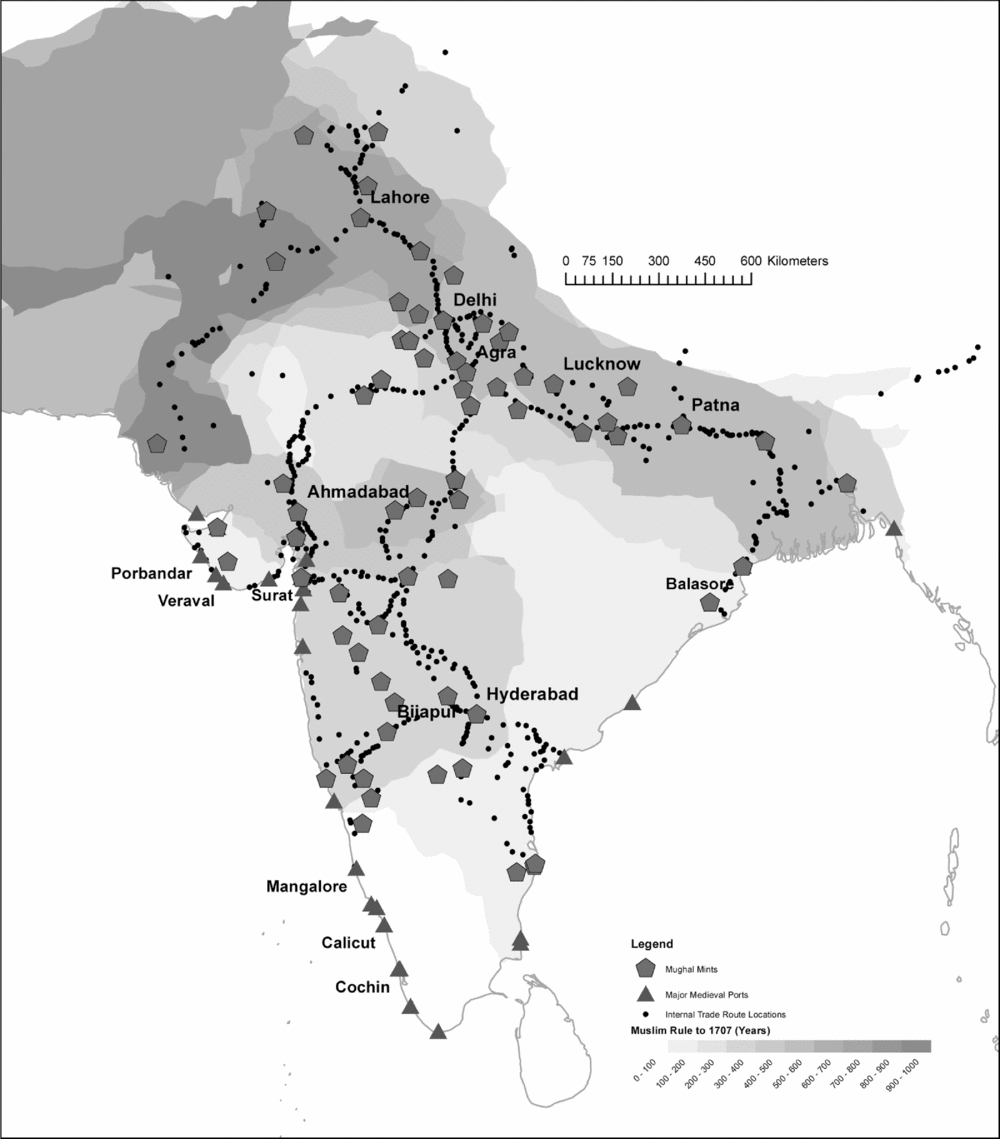
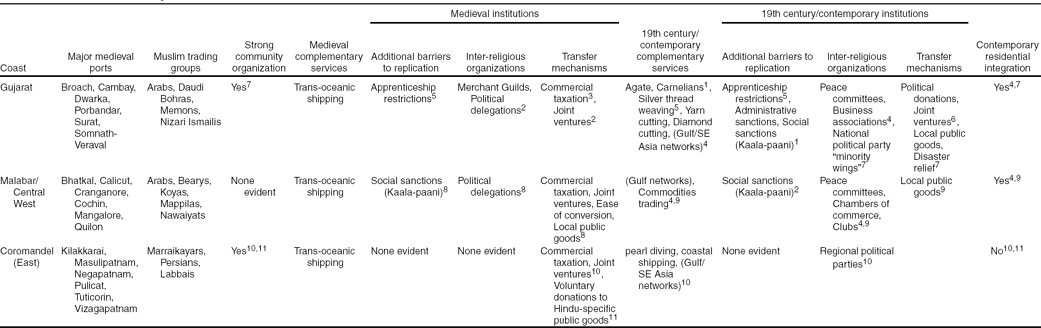
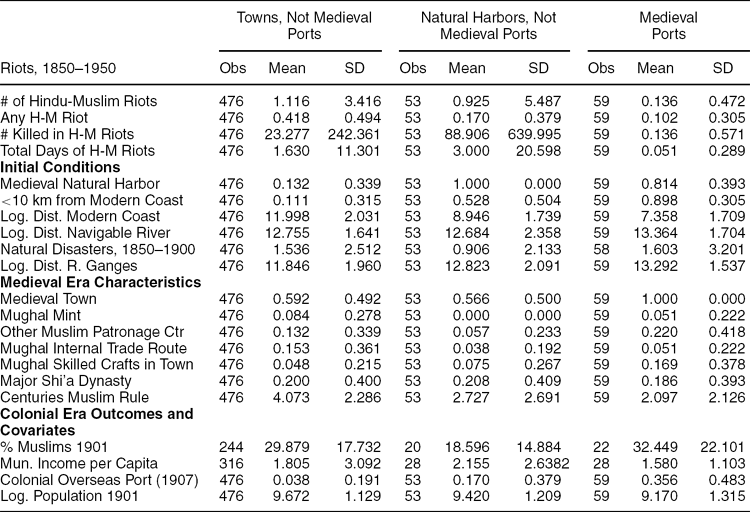
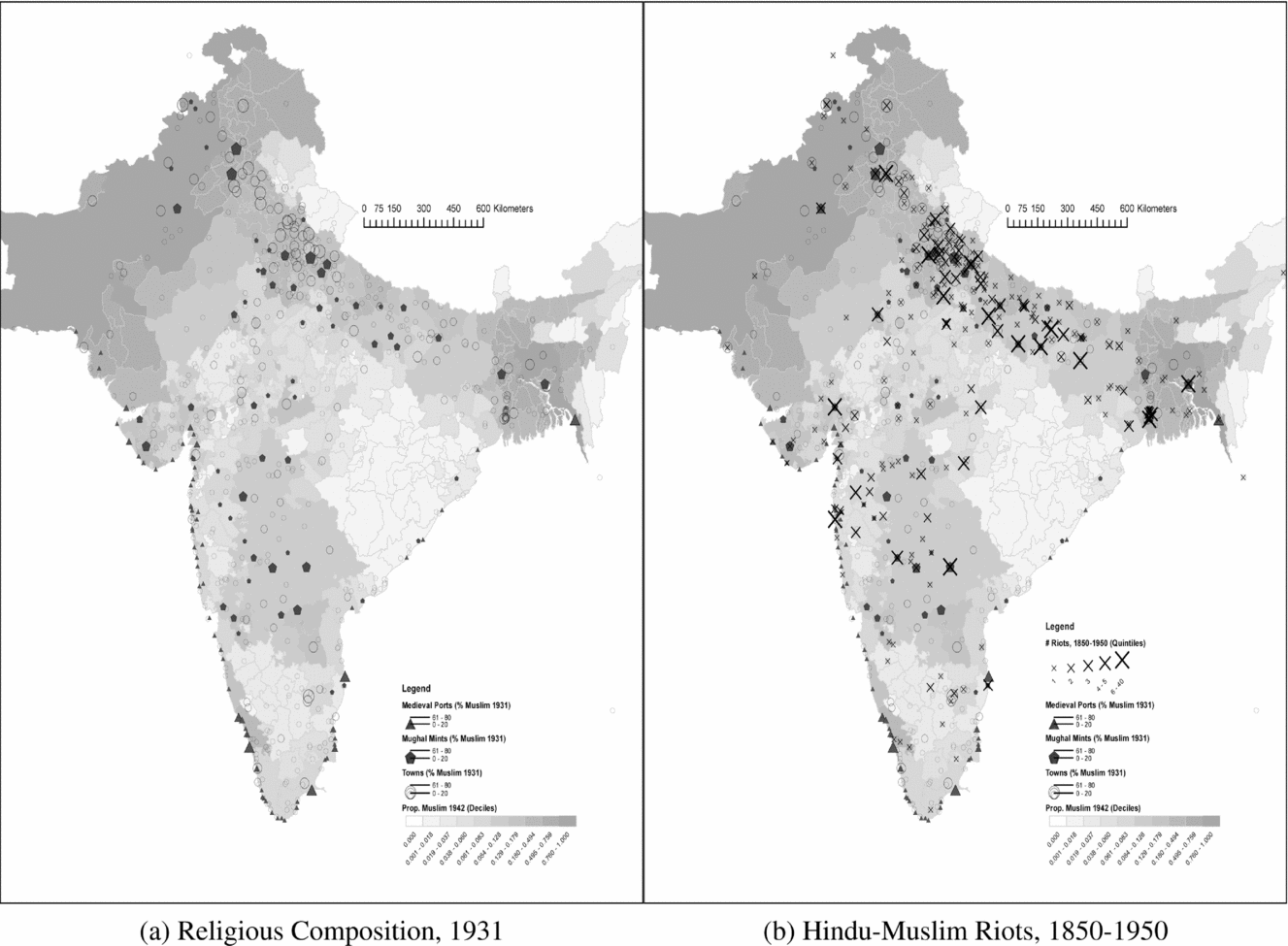
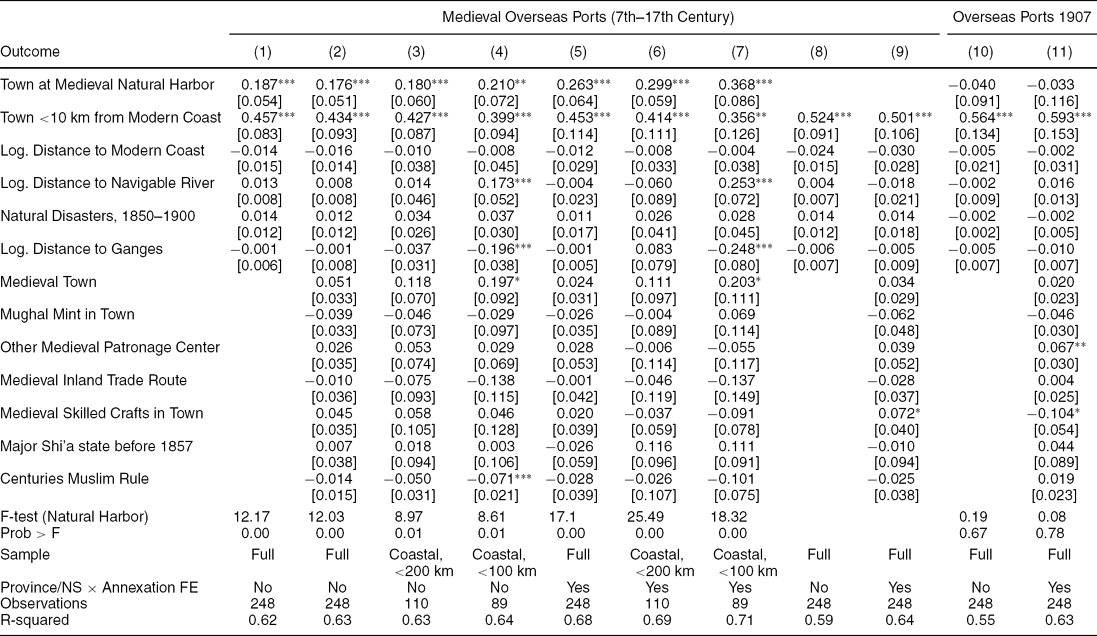
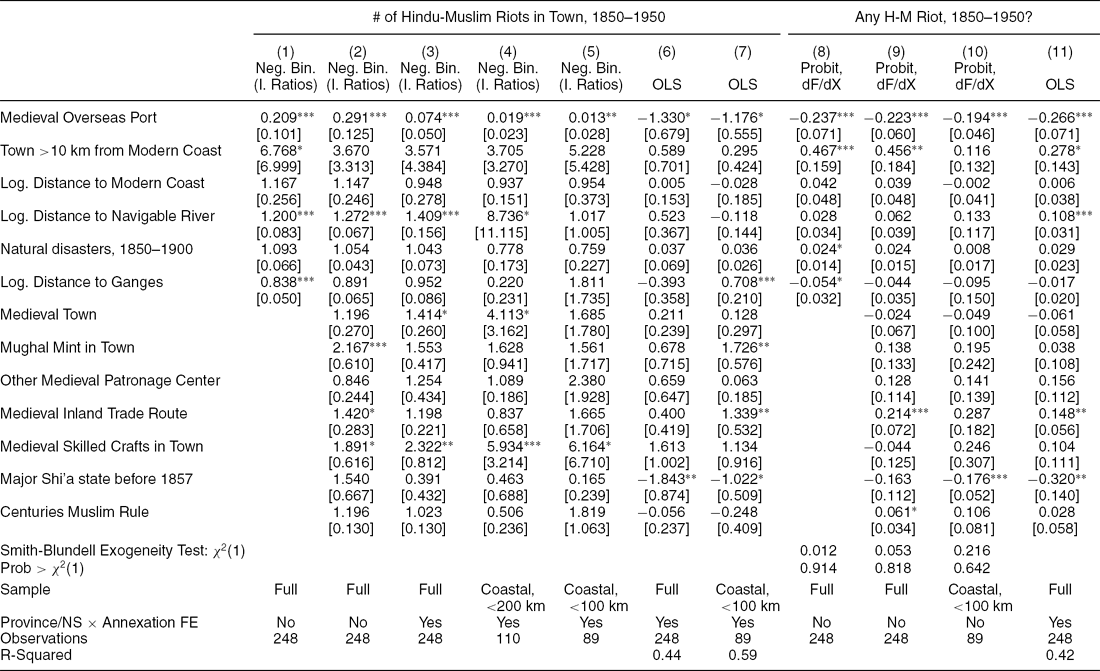
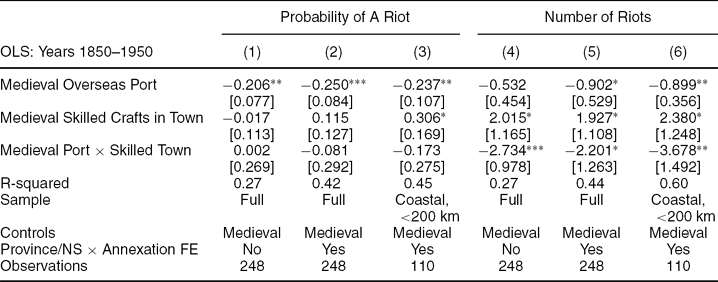
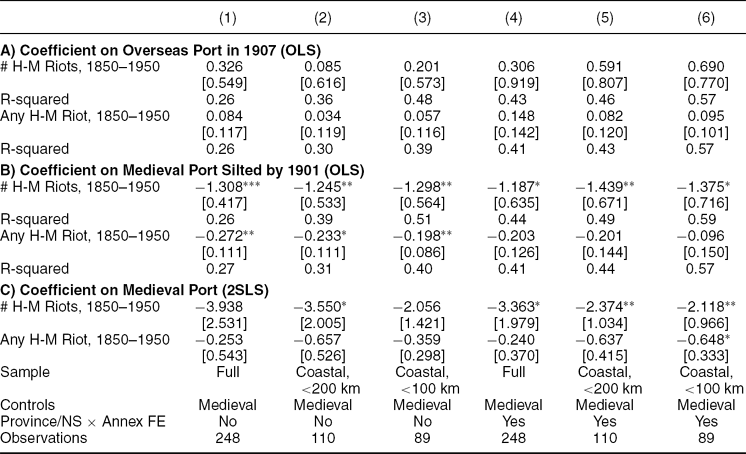
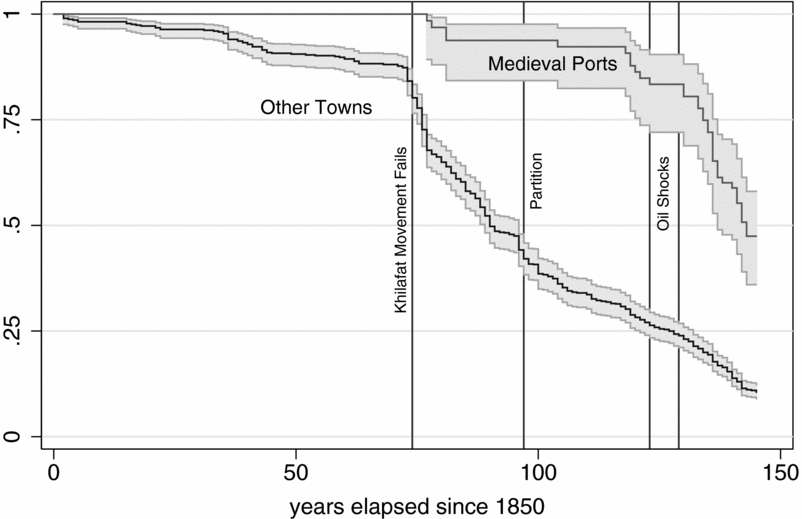
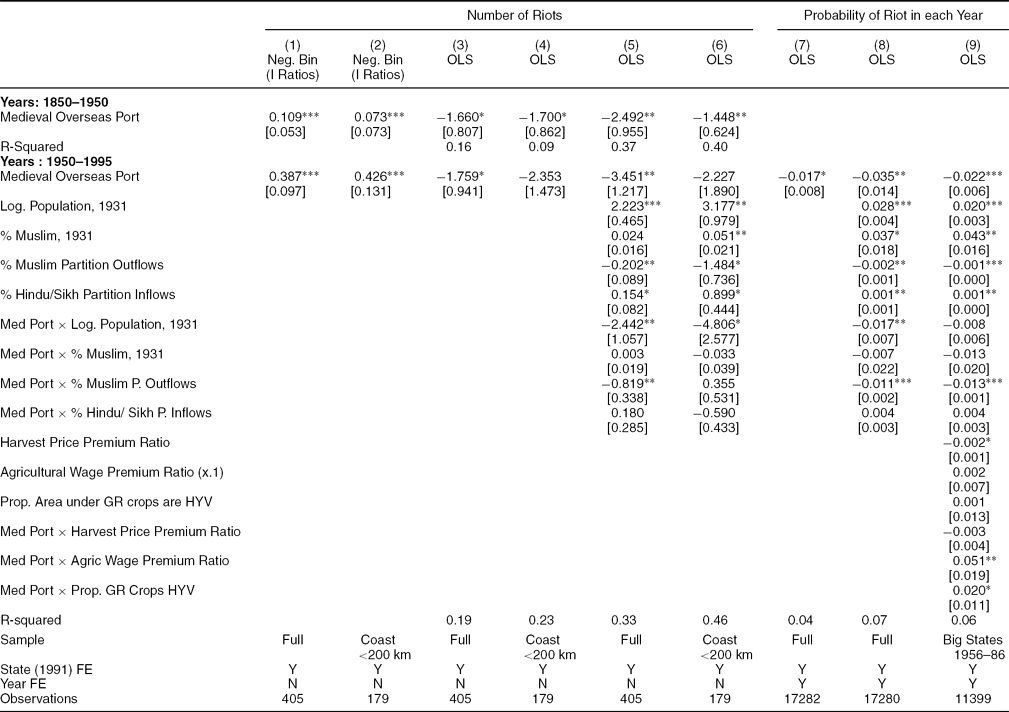
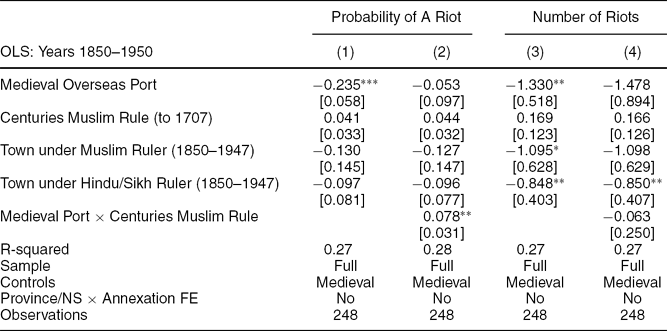
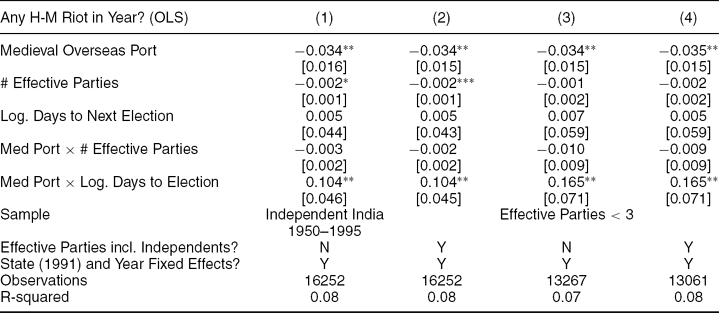
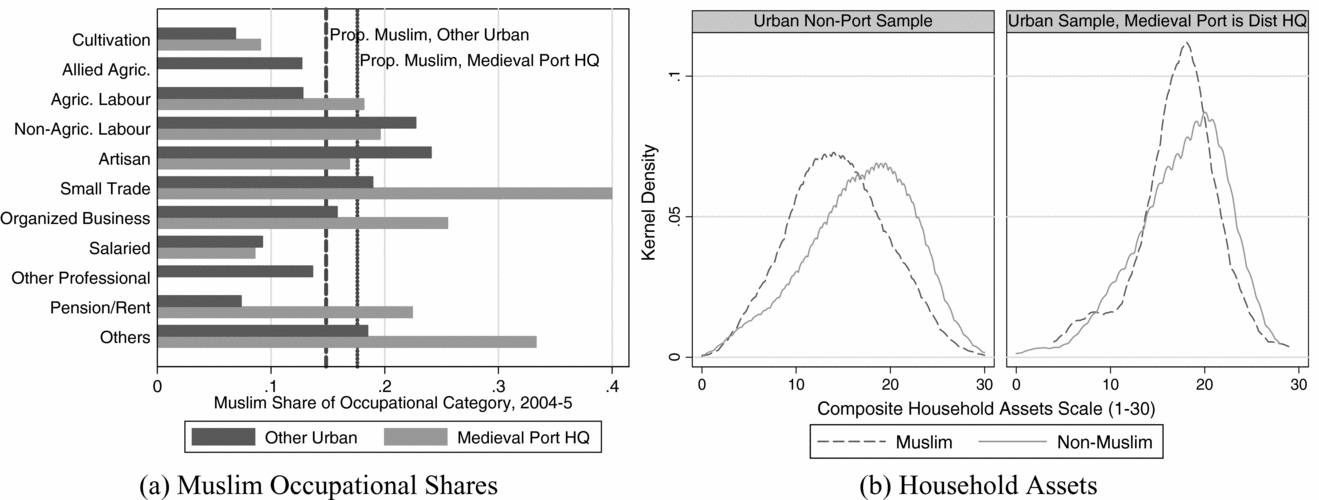
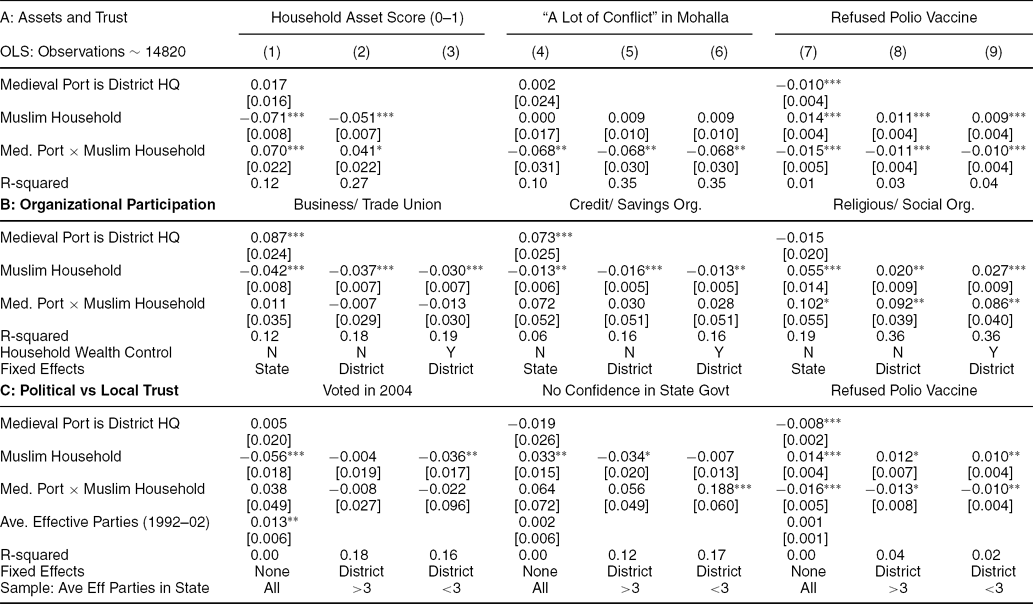




Comments
No Comments have been published for this article.