Background
South Africa has a history of deeply entrenched social and economic inequalities resulting from racist policies. Under apartheid, the population was divided into four racial categories: black (comprising 80.2% of the population in 2014), mixed race or ‘coloured’ (8.8%), white (8.4%) and Indian/Asian (2.5%) (Statistics South Africa, 2014). The racial discrimination of the apartheid era resulted in huge social, economic, educational and health inequalities (Ataguba et al. Reference Ataguba, Akazili and McIntyre2011; Tregenna & Tsela, Reference Tregenna and Tsela2012). While the end of official apartheid in 1994 brought many changes in power and civil rights, socioeconomic inequalities have persisted between and within racial groups in terms of education, employment, income and health; in some cases they have even widened (Leibbrandt et al. Reference Leibbrandt, Woolard, Finn and Argent2010, Reference Leibbrandt, Finn, Woolard, Leibbrandt, Finn and Woolard2012; Benatar, Reference Benatar2013; Mayosi & Benatar, Reference Mayosi and Benatar2014). For example, between 1993 and 2011, South Africa's GINI coefficient (a measure of income inequality) actually increased from 59.3 to 63.4 (World Bank, 2016).
Poor mental health is increasingly recognised as a major global health challenge and has been highlighted by the World Health Organization as an issue affecting development in low- and middle-income countries such as South Africa (Funk et al. Reference Funk, Drew and Knapp2012). The Global Burden of Disease Study 2013 showed that mental and substance use disorders are the leading cause of years lived with disability worldwide (Vos et al. Reference Vos, Barber, Bell, Bertozzi-Villa, Biryukov, Bolliger, Charlson, Davis, Degenhardt, Dicker and Duan2015). Although they account for relatively few deaths, they are also the fifth largest cause of disability-adjusted life years (DALYs) lost, accounting for 7.4% of DALYs globally (Whiteford et al. Reference Whiteford, Degenhardt, Rehm, Baxter, Ferrari, Erskine, Charlson, Norman, Flaxman, Johns, Burstein, Murray and Vos2013). The biggest contributor within this is depressive disorders, which account for 40.5% of DALYs lost due to mental and substance misuse disorders. In South Africa too, mental health disorders are a significant public health problem. The South African Stress and Health Study found a lifetime prevalence of 30.3% for mental or substance misuse disorders with a 12-month prevalence of 17% (Herman et al. Reference Herman, Stein, Seedat, Heeringa, Moomal and Williams2009). In line with studies elsewhere, major depressive episodes were significantly more common in women and in those with a low level of education (Patel et al. Reference Patel, Araya, De Lima, Ludermir, Todd, Centre and Porvorim1999; Lund et al. Reference Lund, Breen, Flisher, Kakuma, Corrigall, Joska, Swartz and Patel2010).
There is convincing evidence internationally that lower socioeconomic position (SEP) is associated with increased risk of mental disorders (Patel & Kleinman, Reference Patel and Kleinman2003; Lund et al. Reference Lund, De Silva, Plagerson, Cooper, Chisholm, Das, Knapp and Patel2011; Hudson et al. Reference Hudson, Neighbors, Geronimus and Jackson2012) though the mechanisms involved are much less clear (Patel et al. Reference Patel, Lund, Hatherill, Plagerson, Corrigall, Funk, Flisher, Blas and Kurup2010). Two main causal theories have been suggested. The social causation theory claims that poor socioeconomic conditions (e.g., poverty, lack of education and unemployment) cause mental ill health. The social drift (or social selection) theory claims that causality operates in the opposite direction: those with poor mental health are more likely to drift into poorer socioeconomic circumstances, for example, by becoming unemployed or spending more on health care (Hudson, Reference Hudson2005). Previous research suggests that social causation may be more important for conditions such as depression, while social selection or drift may apply more to schizophrenia and intellectual disabilities (Dohrenwend et al. Reference Dohrenwend, Levav, Shrout, Schwartz, Naveh, Link, Skodol and Stueve1992).
Studies in this field are often hampered by a lack of longitudinal data, making it difficult to determine the direction of causality (Lund et al. Reference Lund, De Silva, Plagerson, Cooper, Chisholm, Das, Knapp and Patel2011). Moreover, few studies have investigated complex causal pathways, including how effects of certain socioeconomic factors are indirectly mediated through other factors. Two distinct, though related, methodological approaches have been applied to the study of mediation within the social sciences and epidemiology. The first is based on structural equation models (SEMs) and includes path analysis (Wright, Reference Wright1934; Bollen, Reference Bollen1987). More recently, causal inference methods, which use a counterfactual approach have been developed (Pearl, Reference Pearl2001).
This study examines both social causation and social drift processes using longitudinal data from a randomised trial among South African adults with diabetes, hypertension or chronic respiratory disease. We previously found evidence for social causation and social drift showing that lower education and income, and receiving a welfare grant, independently predicted higher depression scores, and that higher depression scores independently predicted subsequent unemployment (Folb et al. Reference Folb, Lund, Fairall, Timmerman, Levitt, Steyn and Bachmann2015a). That study did not investigate the causal pathways, which link the different components of socioeconomic disadvantage. Here we use both SEM and the causal inference approaches to mediation analysis to do so.
Methods
Study design and setting
This is an observational cohort study using data from a cluster randomised controlled trial (RCT). The study uses baseline data collected in 2011 and follow-up data collected 14 months later. The RCT evaluated the effectiveness of a training programme for primary care workers (Primary Care 101) in improving the quality of care for patients with certain chronic diseases: hypertension, diabetes, chronic respiratory disease and depression (Folb et al. Reference Folb, Timmerman, Levitt, Steyn, Bachmann, Lund, Bateman, Lombard, Gaziano, Zwarenstein and Fairall2015b). The trial was conducted at 38 clinics in the Western Cape of South Africa and randomisation occurred at clinic level. The main results of the trial found no effect of the intervention on the detection of depression by primary care providers (Fairall et al. Reference Fairall, Folb, Timmerman, Lombard, Steyn, Bachmann, Bateman, Lund, Faris, Gaziano, Georgeu-Pepper, Zwarenstein and Levitt2016).
The Eden and Overberg districts of the Western Cape, where the trial was carried out, are socioeconomically deprived areas with high rates of unemployment (Statistics South Africa, 2011). In 2011, 22.5% and 17.0% of adults were unemployed in Eden and Overberg, respectively. The study was carried out in public sector primary health care clinics where care is primarily nurse-led with limited doctor support.
Study population and data collection
The study population comprised adults aged 18 years or older who attended any of the 38 clinics in the trial, and who had hypertension, diabetes or chronic respiratory disease. They were defined as having hypertension or diabetes if they reported being on medication for these conditions, and to have chronic respiratory disease if they had symptoms of chronic respiratory disease, or reported being on medication for chronic respiratory disease and had no current or recent treatment for tuberculosis. For the present study, participants with depression but without hypertension, diabetes or chronic respiratory disease were excluded because they were a small and atypical subgroup. Sampling was done by inviting consecutive participants attending each clinic until the required sample size for each clinic was reached. Data were collected through interviewer-administered electronic questionnaires offered in the three languages most widely spoken in the study area – Afrikaans, English and Xhosa.
Measures
Symptoms of depression were measured using the 10-item Center for Epidemiologic Studies Depression Scale (CESD-10) (Andresen et al. Reference Andresen, Malmgren, Carter and Patrick1994), which is a shortened version of the original 20-item scale (Radloff, Reference Radloff1977). The scale has been validated for use cross-culturally including in South Africa (Pretorius, Reference Pretorius1991; Myer et al. Reference Myer, Smit, Le Roux, Parker, Stein and Seedat2008a; Zhang et al. Reference Zhang, O'Brien, Forrest, Salters, Patterson, Montaner, Hogg and Lima2012; Baron et al. Reference Baron, Davies and Lund2017). Scores range from 0 (least depressed) to 30 (most depressed). In our analysis, where CESD-10 was used as an exposure variable, total scores were divided by 10 to show the effect of a 10-point difference in depression score on outcomes.
Language was recorded based on the language in which participants chose to conduct the questionnaire. Language is used here as a proxy for racial or ethnic category. In the 2011 census, 49% of the Western Cape province's population was ‘coloured’ or mixed race, 32% was black and 16% was white (Statistics South Africa, 2012). Assuming that the language distribution within each ethnic group was the same as in the national population then, in the Western Cape, of Xhosa speakers 100% were black; of Afrikaans speakers 50% were coloured, 40% were white and 9% were black; and of English speakers 44% were white, 31% were black and 26% were coloured.
Participants’ highest level of education was recorded and categorised into ‘secondary or more’ v. ‘less than secondary’, which included those with no schooling at all. Total monthly income was measured based on self-reports of individual income and included all income from wages and social welfare grants, including pensions. It is reported in thousands of Rand, with 1000 Rand equivalent to US$144 in 2011. Employment status was dichotomised into employed/not looking for a job and unemployed. The EuroQol 5 Dimension Scale (EQ-5D) was used as a measure of health-related quality of life (The EuroQol Group, 1990). EQ-5D measures the effect of ill health on mobility, self-care, usual activities, pain or discomfort, and mood. Official translations for all three languages were used in the trial. The validity of the EQ-5D has previously been demonstrated in the South African primary care setting (Bachmann et al. Reference Bachmann, Louwagie, Fairall, Preedy and Watson2009).
We measured and adjusted for several variables that might have confounded the associations between depression and socioeconomic indicators, as stated below. These variables included arm (i.e., whether participants were in the intervention or control arm of the study), and use of antidepressant medication (tricyclic antidepressants at antidepressant dosages or fluoxetine) (Department of Health, 2014). Data on psychiatric morbidities other than depression were not collected.
Theoretical models and statistical analysis
Statistical models were used to examine both social causation and social drift mechanisms. Generalised structural equation modelling (in the form of path analysis) was used to test the validity of theoretically informed causal models. The models are shown as Figs 1–3. These figures are directed acyclic graphs (Glymour, Reference Glymour, Oakes and Kaufman2006), but with additional confounders not shown. The temporal and causal order of language, education, employment and income, respectively, follows a logical sequence in this adult population. Language is logically the first socioeconomic indicator, being learned at an early age and, as a proxy for racial category, influencing subsequent discrimination under apartheid (90% of the sample had experienced more than 20 years of official apartheid). That discrimination then influenced educational opportunities, which went on to influence their employment, which in turn influenced income. Language and education were practically irreversible in this population. However, further down the causal pathway, it is plausible that causal relationships between depression, unemployment and income could be bidirectional.
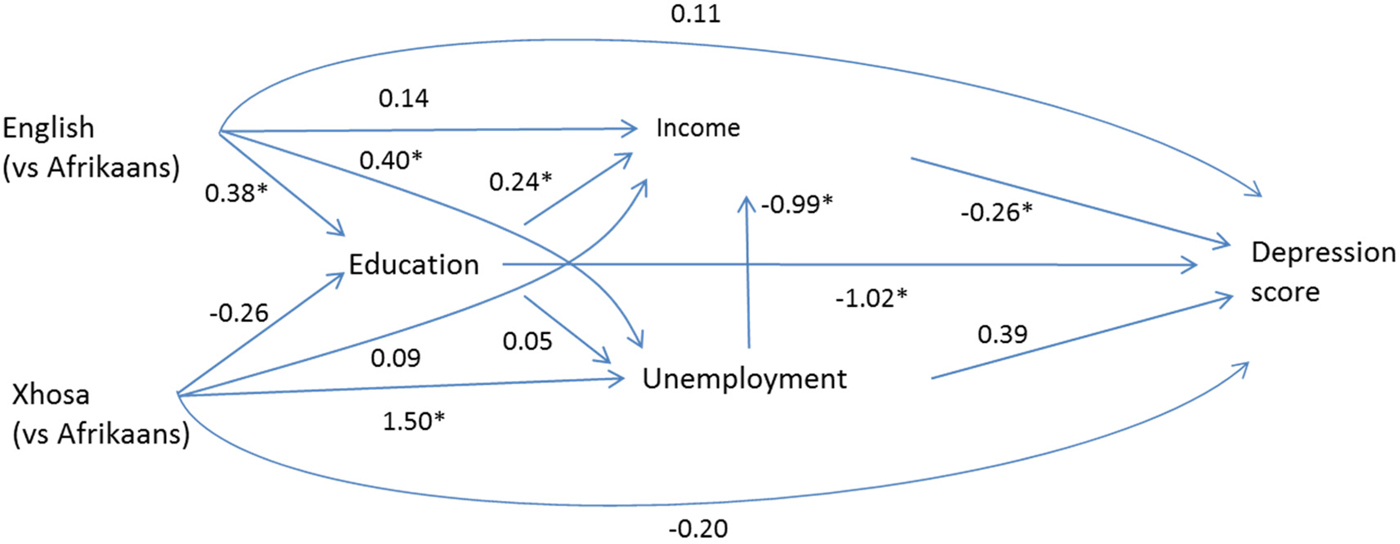
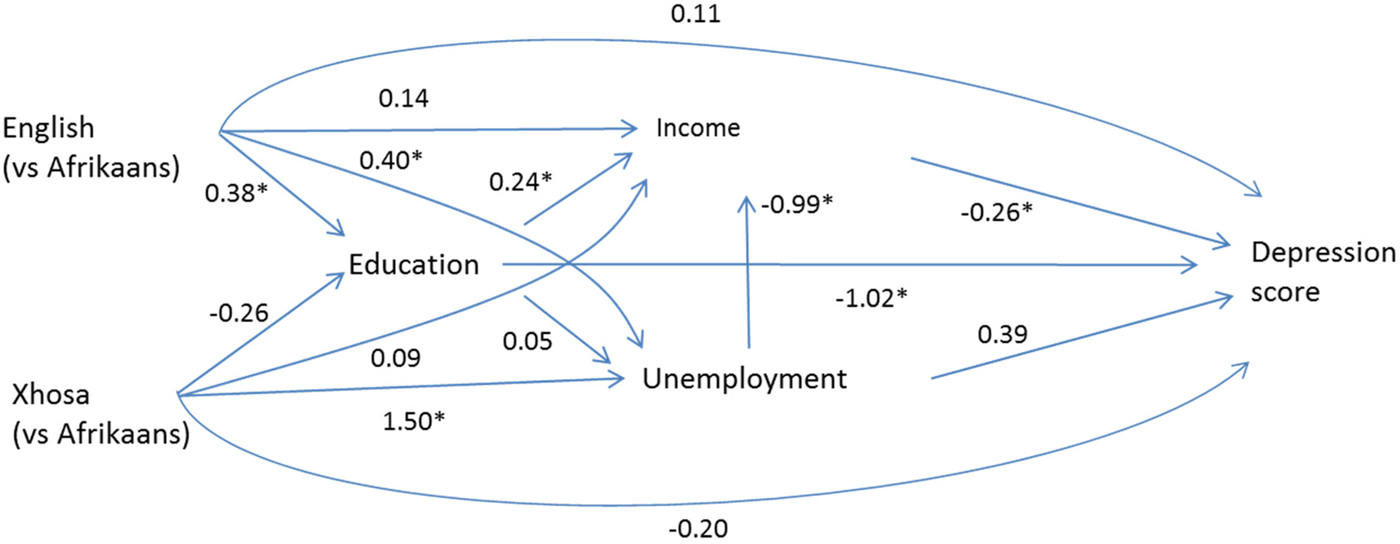
Socioeconomic pathways between language, mediators and depression score at baseline (adjusted for: age, sex, diabetes, chronic respiratory disease, hypertension, depression treatment. *P < 0.05).
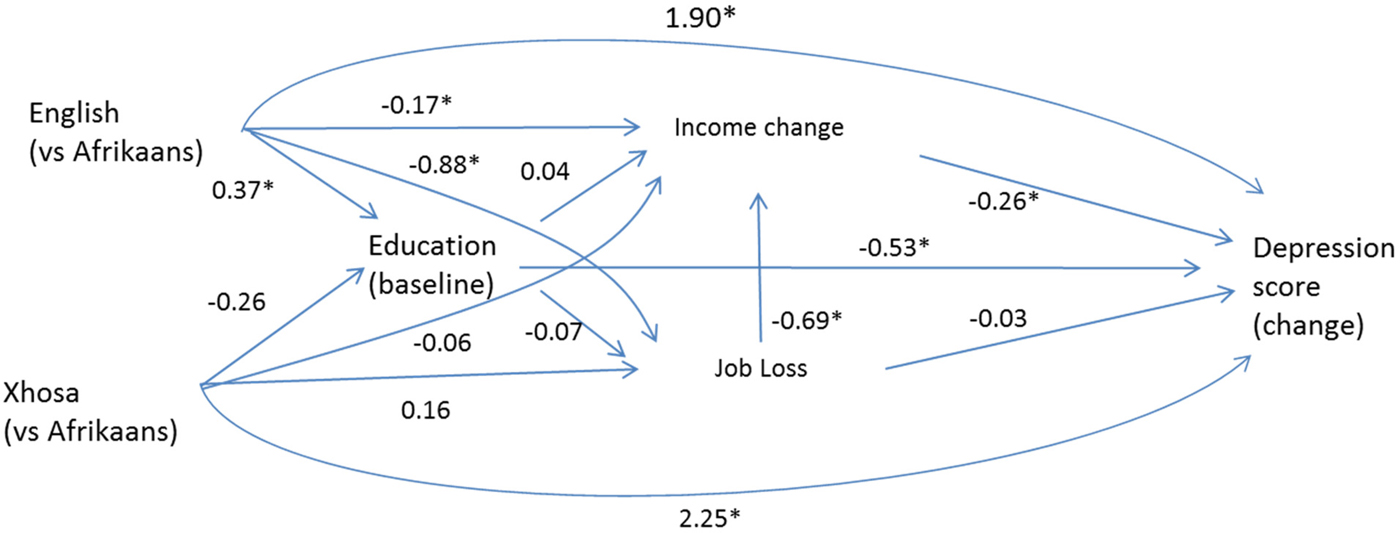
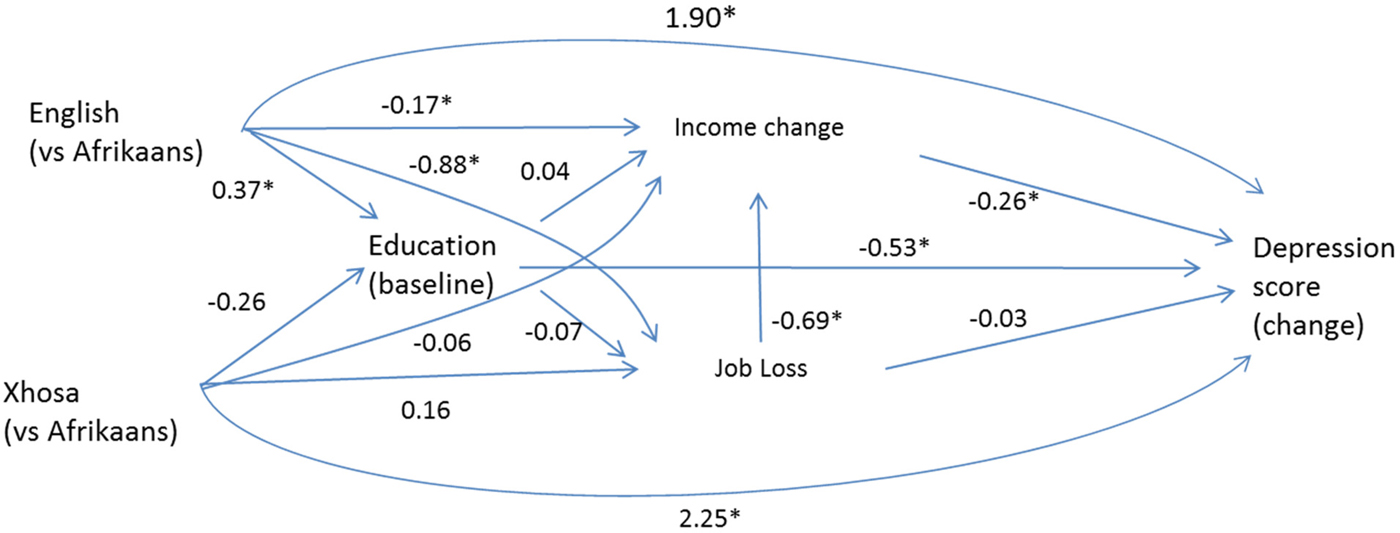
Socioeconomic pathways between language, mediators and change in depression score at follow-up (model adjusted for: age, sex, hypertension, diabetes, chronic respiratory disease, depression treatment and trial arm. *P < 0.05).
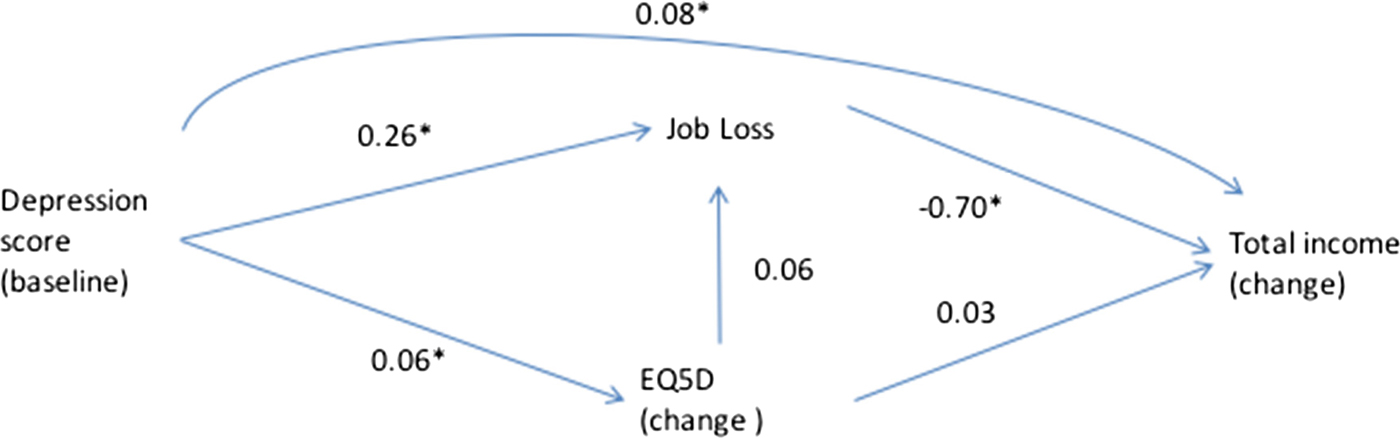
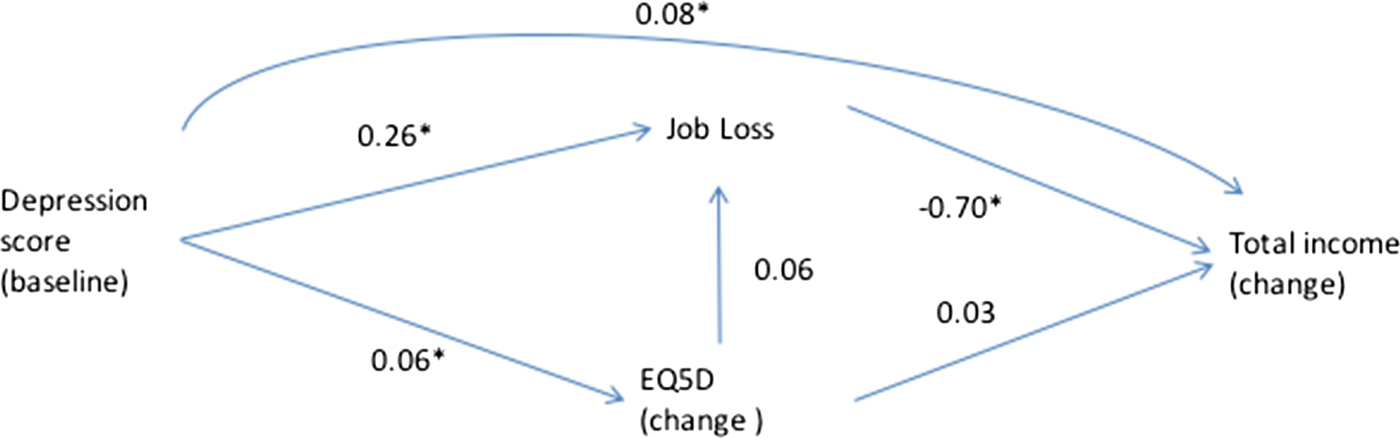
Socioecon pathways between baseline depression and change in income at follow-up (model adjusted for confounders: age, sex, Xhosa, English, hypertension, diabetes, chronic respiratory disease, depression treatment and trial arm. *P < 0.05).
We constructed three structural equation path models (SEMs) (described below), each comprising a series of multiple regression models, with linear regression models for continuous outcomes (income, CESD-10 score) and logistic regression models for binary outcomes (language, education, unemployment). Generalised SEM analysis was carried out using the ‘gsem’ command in STATA 14. While conventional SEMs can only be used with continuous outcome variables, generalised SEMs allowed the inclusion of binary mediators and outcomes. Global goodness of fit for each SEM was assessed by Akaike Information Criterion (AIC), with lower numbers indicating better fitting models (Schermelleh-Engel et al. Reference Schermelleh-Engel, Moosbrugger and Müller2003), χ 2 tests and McFadden's pseudo R 2. Each of these compared a full SEM, with all covariates, with the equivalent null model with no covariates (i.e., only estimating regression intercepts). The χ 2 P values were estimated with likelihood ratio tests. McFadden's pseudo R 2 was estimated as
 $$R^2_{{\rm McFadden}} = 1 - ({\rm ln}(L_{{\rm full}}))/({\rm ln}(L_{{\rm null}})),$$
where ln(L full) is the natural log likelihood of the full model and ln(L null) is the natural log likelihood of the null model (McFadden, Reference McFadden and Zarembka1974).
All regression models were adjusted for variables that were potential confounders, or part of the trial design and sampling method, but not of interest in the present study: age, sex, diabetes, hypertension, chronic respiratory disease, antidepressant treatment and, for longitudinal analyses, trial arm. All of these variables were included in every regression model making up each SEM. Regression coefficients and P values for these variables have been omitted from the tables and figures of results, which report only on the putative causal variables of interest.
As a sensitivity analysis, we repeated the analyses, omitting antidepressant treatment as a covariate, which made little difference to the results. We did not construct latent variables because we were interested in each of the socioeconomic factors and not in an underlying construct such as poverty.
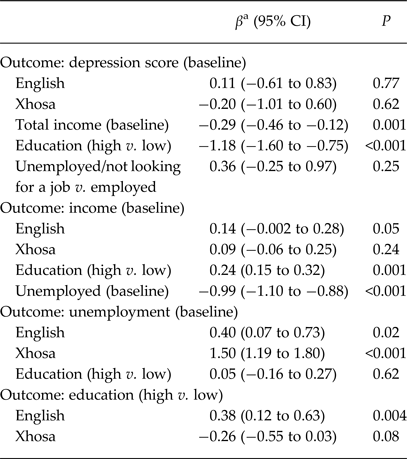
The first SEM (Fig. 1) used cross-sectional baseline data to model the sequence of socioeconomic paths leading up to the baseline CESD-10 score. These incrementally modelled the socioeconomic predictors of secondary or higher education, unemployment, income and depression, in that order. The coefficients estimate the controlled direct effects of each variable on the respective outcome, that is, effects that are not mediated through or confounded by covariates.
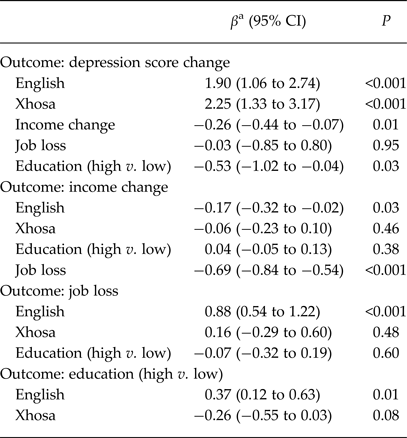
The second SEM (Fig. 2) used longitudinal data to model changes in employment, income and depression, leading up to changes in CESD-10 score. To model changes, we used change scores (i.e., follow-up minus baseline values) as outcomes and mediators, instead of using analysis of covariance with baseline adjustment of follow-up measures. This was done to avoid bias due to overadjustment for baseline values when both baseline and follow-up values are measured with error (Glymour, Reference Glymour, Oakes and Kaufman2006).
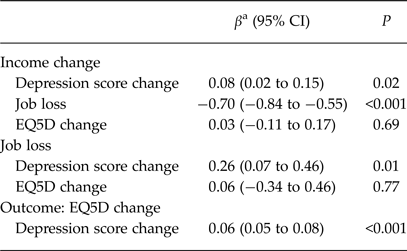
The third SEM (Fig. 3) modelled the effects of CESD-10 scores at baseline on subsequent changes in employment, health-related quality of life and income. Again, change scores were used for quality of life and income.
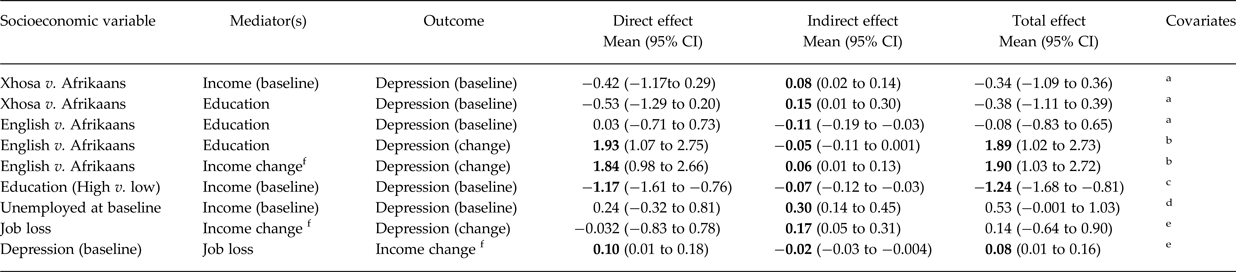
We carried out mediation analyses to disaggregate the effects of each socioeconomic variable on depression into indirect effects (mediated through other socioeconomic variables) and direct (unmediated) effects. The SEM regression coefficients for each socioeconomic variable (Figs 1–3 and Tables 2–4) are controlled direct effects, which are not mediated but are ‘controlled’ for the other covariates in each regression model. We used the Stata package ‘medeff’ (Hicks & Tingley, Reference Hicks and Tingley2011).
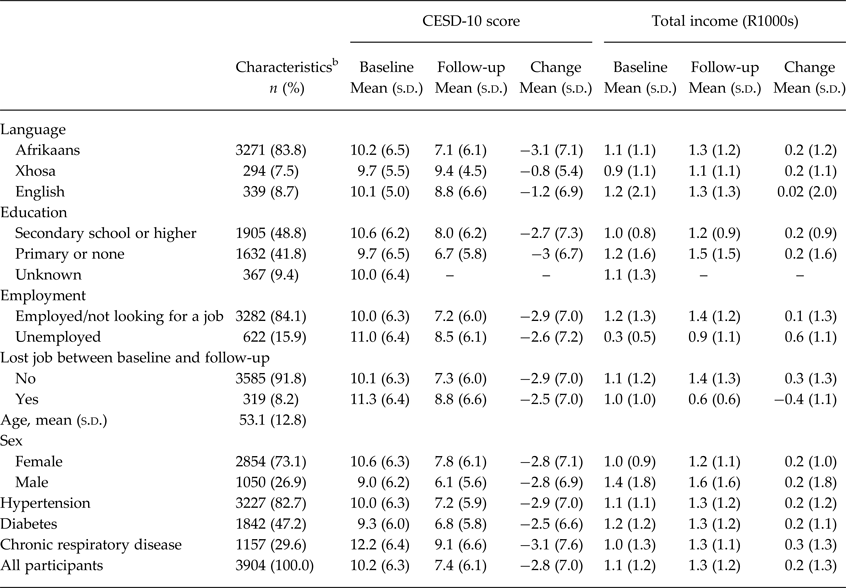
Characteristics of participants, CESD-10 scores and incomea

a For P values, refer to Folb et al. (Reference Folb, Timmerman, Levitt, Steyn, Bachmann, Lund, Bateman, Lombard, Gaziano, Zwarenstein and Fairall2015b).
b Number and percentages of column totals except for age.
Socioeconomic pathways between language, mediators and depression score at baseline: structural equation model

a Also adjusted for: age sex, hypertension, diabetes and chronic respiratory disease.
Akaike Information Criterion (AIC) for full model = 41 620 [degrees of freedom (df) = 20]; AIC for null model = 42 129 (df = 6); χ 2 P < 0.0001; pseudo R 2 = 0.013.
Socioeconomic pathways between language, mediators and change in depression score at follow-up: structural equation modela

a Model adjusted for: age, sex, hypertension, diabetes and chronic respiratory disease and trial arm.
Akaike Information Criterion (AIC) for full model = 41 442 (df = 48); AIC for null model = 42 112 (df = 6); χ2 P <0.0001; pseudo R 2 = 0.016.
Socioeconomic pathways between baseline depression and change in income at follow-up: structural equation model

a Adjusted for: age, sex, Xhosa, English, education, hypertension, diabetes, and chronic respiratory disease and trial arm.
Akaike Information Criterion (AIC) for full model = 7911 (df = 38); AIC for null model = 8088 (df = 5); χ 2 P <0.0001; pseudo R 2 = 0.022.
Figure 1 and Table 2 show results of the social causation SEM analysis using baseline data. Xhosa and English were both associated with education and higher unemployment, and English was associated with higher income independently of education and employment. Higher income and education were both independently associated with less depression but language was not. This implies that the effects of language on depression were mediated through education and income.
Results from the longitudinal SEM analysis of social causation are shown in Fig. 2 and Table 3. This includes follow-up data gathered 1 year after the baseline, providing estimates of changes in income, loss of job and changes in depression score. A similar pattern of associations as in the baseline model was evident. However, the longitudinal analysis shows direct associations between language and changes in depression score. Although depression scores fell in all language groups between baseline and follow-up (Table 1), this fall was significantly less pronounced in English and Xhosa speakers compared with Afrikaans speakers.
The final SEM (Fig. 3 and Table 4) represents social selection and shows that depression at baseline was associated with subsequent job loss and with changes in EQ-5D. Depression at baseline was also independently associated with higher total income at follow-up (i.e., the direct effect was positive). However, job loss was associated with more decrease in total income. Some of the total effect of depression on total income was thus mediated through job loss and this mediated pathway worked in the opposite direction to the direct effect, with the result that those with higher depression at baseline had lower total income at follow-up.
Results of mediation analyses which found statistically significant indirect effects are shown in Table 5. This suggests that some of the effect of language group on depression was mediated through education and income, and some of the effect of unemployment on depression was mediated through income. The association between depression at baseline and change in income at follow-up was partly mediated through job loss, suggesting that depression leads to job loss, which reduces income.
Natural direct and indirect effects of socioeconomic indicators on depression and of depression on incomea

a Adjusted for: age, sex, hypertension, diabetes, chronic respiratory disease, depression drugs at baseline (therapeutic dose).
b Adjusted for: age, sex, hypertension, diabetes, chronic respiratory disease, depression drugs at baseline (therapeutic dose), trial arm.
c Adjusted for: age, sex, hypertension, diabetes, chronic respiratory disease, depression drugs at baseline (therapeutic dose), English, Xhosa.
d Adjusted for: age, sex, hypertension, diabetes, chronic respiratory disease, depression drugs at baseline (therapeutic dose), English, Xhosa, education.
e Adjusted for: age, sex, hypertension, diabetes, chronic respiratory disease, depression drugs at baseline (therapeutic dose), English, Xhosa, education, trial arm.
f Income change between baseline and follow-up in R1000s.
Medeff employs a counterfactual approach to estimate natural direct and indirect effects (Hicks & Tingley, Reference Hicks and Tingley2011). The natural indirect effect is the change in the potential outcome, which would be expected when the value of the mediator is changed from exposed to unexposed, while holding the exposure constant. The sum of the natural direct and indirect effects of an exposure is the total effect of that exposure (Robins & Greenland, Reference Robins and Greenland1992; Pearl, Reference Pearl2001).
Results
Table 1 shows the characteristics of the cohort. Participants were mostly older adults (mean age 53.1), and female (73.1%). Of these, 82.7% had hypertension, 47.2% diabetes, 29.6% had chronic respiratory disease and 52.5% had two or more of these conditions. At baseline, 15.9% of participants were unemployed and looking for work. A total of 8.2% lost their job between baseline and follow-up. At baseline, 40.3% of participants had CESD-10 scores of 12 or more, indicating symptoms of depression (Baron et al. Reference Baron, Davies and Lund2017). Baseline depression scores and income were lower in Xhosa speakers than in English or Afrikaans speakers.
Discussion
This paper builds on previous analysis of the associations between indicators of SEP and depression in South Africa (Folb et al. Reference Folb, Lund, Fairall, Timmerman, Levitt, Steyn and Bachmann2015a) by improving understanding of some of the complex causal pathways involved. The SEMs show how the different components of SEP influence each other and go on to influence depression, and how depression also influences employment and income. The SEM results largely validated the postulated causal pathways and the mediation analysis complemented this by showing how the effects of some socioeconomic factors are mediated through others.
Previous studies have considered mediation of the association between SEP and mental health. For example, Hudson (Reference Hudson2005) used SEMs to examine pathways between SEP and mental illness in patients hospitalised for acute psychiatric illness (Hudson, Reference Hudson2005). This found some evidence, consistent with social causation, that the association between SEP and mental illness was mediated by ‘economic stress’.
Similarly, a number of studies have considered psychological factors as mediators of the relationship between SEP and mental health outcomes. For example, in a US study, Alang (Reference Alang2014) considered racial differences in the association between socioeconomic factors (income and education) and psychological distress, finding that ‘mastery’ (personal control) and self-esteem mediated the association. These results are in accord with studies from Canada (Gadalla, Reference Gadalla2009) and South Africa (Myer et al. Reference Myer, Stein, Grimsrud, Seedat and Williams2008b), which used composite measures of SEP to show that factors such as ‘mastery’ and recent traumatic events mediate the association between SEP and psychological distress.
Other studies have looked for evidence of social drift by examining the association between mental health and socioeconomic attainment at different points in the life course. For example, Slominski et al. (Reference Slominski, Sameroff, Rosenblum and Kasser2011) and Sweeting et al. (Reference Sweeting, Green, Benzeval and West2016) show that mental health in adolescence predicts SEP in adulthood in the USA and the UK, respectively. However, we could find no previous studies that examined causal pathways between SEP and depression using different components of SEP as potential mediators. This study is also original in that it examines both social causation and social drift using longitudinal data from a middle-income country with large socioeconomic disparities.
We have confirmed, in longitudinal analysis, that both social causation and social selection are likely to operate at the same time. Previously it was thought that social selection might be less important for conditions such as depression (Dohrenwend et al. Reference Dohrenwend, Levav, Shrout, Schwartz, Naveh, Link, Skodol and Stueve1992). However, we found evidence that depression was associated with reduced income, which was partly mediated though job loss, confirming the presence of social selection.
Through the use of mediation analysis, we found evidence of statistically significant indirect effects. For example, large proportions of the effects of unemployment on depression at baseline and at follow-up were mediated through effects of unemployment and job loss on income. Furthermore, some of the effect of baseline depression on change in income was mediated through job loss. The directions of all these indirect effects were as predicted, further validating the postulated social causation and social drift pathways.
Few interventions have proved to be successful in breaking the cycle of poverty and poor mental health, although there is some evidence that conditional cash transfers can be effective, and that some mental health interventions carry economic benefits for individuals and households (Lund et al. Reference Lund, De Silva, Plagerson, Cooper, Chisholm, Das, Knapp and Patel2011). This is consistent with our finding that increased income is independently associated with decreased depression. Effective mental health care could also help as we found that depression was associated with subsequent reduced income, mediated by job loss and it is likely that much mental illness is currently untreated in this population. By improving our understanding of the causal pathways that link socioeconomic deprivation and depression, it should be possible to design more effective interventions focussed on modifiable risk factors. In the short term, factors such as income and employment are modifiable, while in the long term, inequalities in education need to be addressed if socioeconomic inequalities in depression are to be fully overcome.
This study used a large sample with detailed, individual-level clinical measures. It also included longitudinal data, making inferences about the direction of causal relations more plausible. Nevertheless, there were some limitations. First, SEMs do not prove causal associations but allow us to test theoretical models to examine how well they describe observed data. For this reason, we only tested theoretically-informed models. Second, the study population is not representative of the national population in terms of age, race, SEP or general health though this does not invalidate the study of a socioeconomically heterogeneous population of adults receiving care for chronic conditions. This study is about depression in people being treated for chronic illnesses, and it cannot be assumed that these results are generalisable to other population groups in South Africa.
Third, we used language as a proxy for racial category, which would not be correct for all participants. As stated in the Methods section, there is substantial racial heterogeneity within Afrikaans and especially English speakers, although Xhosa language is specific to black people. Choice of questionnaire language may be different from participants’ home language and, in some cases, may have been determined by the interviewer's preference rather than the interviewees’. Moreover, follow-up was carried out over a relatively short period (14 months), which was not ideal for demonstrating longitudinal changes in socioeconomic conditions which often change over a period of many years. This, however, is likely to make our results conservative as stronger associations might have emerged over a longer period of follow-up.
Finally, the mediation techniques we used allowed for the assessment of indirect effects through only one intermediate variable at a time, whereas our SEMs assumed up to three linked mediators on the same causal pathways. This raises the potential for confounding of direct and indirect effects by post-exposure mediators. Statistical methods, based on the counterfactual approach, are being developed to avoid such biases (VanderWeele & Vansteelandt, Reference VanderWeele and Vansteelandt2014). However, the results of our mediation models must be interpreted with caution, bearing in mind that some of the indirect effects mediated through one variable might also have been partly mediated through others on the same pathway.
Conclusion
This study adds to existing evidence on links between SEP and mental health. We used a combination of structural equation modelling and mediation analysis, which has not been applied in this field before, to elucidate the complex causal pathways linking SEP and depression. We found evidence that both social selection and social drift may operate concurrently, through mediating factors such as employment and income. This suggests that people could get trapped in a vicious cycle in which poor socioeconomic conditions lead to depression which, in turn, can cause further damage to their economic prospects.
Studies of this kind are needed to help inform the design of future interventions to reduce socioeconomic inequalities in depression. Our results suggest that modifiable factors such as income, employment and treatable depression are suitable targets for intervention in the short to medium term. Interventions that address one or more of these underlying risk factors for depression may be more successful than those that focus on clinical treatment alone. In the longer term, reducing inequalities in education is necessary to address the deeply entrenched inequalities in South Africa, and our study suggests that this is also likely to have an impact on inequalities in mental health. This implies that multi-sectoral policy interventions are required to address the social determinants of mental health; in addition to improved mental health care, interventions to improve employment, provide a social welfare safety net and improve access to high-quality education may be important for addressing the burden of depression. Finally, it is important for primary care clinicians to be aware of the high prevalence of undiagnosed depression in their patients with chronic illness, of the importance of socioeconomic deprivation in causing it, and of their need for effective mental health care.
Acknowledgements
The authors thank the clinic nurses, doctors, clinic managers, pharmacists and pharmacy assistants at participating study facilities; the Department of Health of the Provincial Government of the Western Cape; the Eden and Overberg district management; Primary Care 101 trainers and fieldworkers; and the National Health Laboratory Service.
Financial Support
The study was funded in part with Federal funds by the United States National Heart, Lung, and Blood Institute, National Institutes of Health, Department of Health and Human Services, under Contract No. HHSN268200900030C. Funding was also received from the United Health, USA; the Department of Health of the Provincial Government of the Western Cape; the Department of Medicine, University of Cape Town, South Africa; the United Kingdom Department for International Development; and the University of Cape Town Lung Institute, South Africa. The opinions expressed in this study do not necessarily reflect the views or policies of the funders.
Conflict of Interest
None.
Ethical Standard
Not applicable.
Availability of Data and Materials
Individual patient data are not available for sharing because consent for sharing was not obtained from participants in the trial.