Introduction
Many previous studies reported that the microRNA-137 (MIR137) gene is a schizophrenia risk gene (Schizophrenia Psychiatric Genome-Wide Association Study, 2011; Ripke et al., Reference Ripke, O'Dushlaine, Chambert, Moran, Kähler, Akterin, Bergen, Collins, Crowley, Fromer, Kim, Lee, Magnusson, Sanchez, Stahl, Williams, Wray, Xia, Bettella, Børglum, Bulik-Sullivan, Cormican, Craddock, de Leeuw, Durmishi, Gill, Golimbet, Hamshere, Holmans, Hougaard, Kendler, Lin, Morris, Mors, Mortensen, Neale, O'Neill, Owen, Milovancevic, Posthuma, Powell, Richards, Riley, Ruderfer, Rujescu, Sigurdsson, Silagadze, Smit, Stefansson, Steinberg, Suvisaari, Tosato, Verhage, Walters, Bramon, Corvin, O'Donovan, Stefansson, Scolnick, Purcell, McCarroll, Sklar, Hultman and Sullivan2013, Reference Ripke, Neale, Corvin, Walters, Farh, Holmans, Lee, Bulik-Sullivan, Collier, Huang, Pers, Agartz, Agerbo, Albus, Alexander, Amin, Bacanu, Begemann, Belliveau, Bene, Bergen, Bevilacqua, Bigdeli, Black, Bruggeman, Buccola, Buckner, Byerley, Cahn, Cai, Campion, Cantor, Carr, Carrera, Catts, Chambert, Chan, Chen, Chen, Cheng, Cheung, Chong, Cloninger, Cohen, Cohen, Cormican, Craddock, Crowley, Curtis, Davidson, Davis, Degenhardt, Del Favero, Demontis, Dikeos, Dinan, Djurovic, Donohoe, Drapeau, Duan, Dudbridge, Durmishi, Eichhammer, Eriksson, Escott-Price, Essioux, Fanous, Farrell, Frank, Franke, Freedman, Freimer, Friedl, Friedman, Fromer, Genovese, Georgieva, Giegling, Giusti-Rodríguez, Godard, Goldstein, Golimbet, Gopal, Gratten, De Haan, Hammer, Hamshere, Hansen, Hansen, Haroutunian, Hartmann, Henskens, Herms, Hirschhorn, Hoffmann, Hofman, Hollegaard, Hougaard, Ikeda, Joa, Julià, Kahn, Kalaydjieva, Karachanak-Yankova, Karjalainen, Kavanagh, Keller, Kennedy, Khrunin, Kim, Klovins, Knowles, Konte, Kucinskas, Kucinskiene, Kuzelova-Ptackova, Kähler, Laurent, Keong, Lee, Legge, Lerer, Li, Li, Liang, Lieberman, Limborska, Loughland, Lubinski, Lönnqvist, Macek, Magnusson, Maher, Maier, Mallet, Marsal, Mattheisen, Mattingsdal, McCarley, McDonald, McIntosh, Meier, Meijer, Melegh, Melle, Mesholam-Gately, Metspalu, Michie, Milani, Milanova, Mokrab, Morris, Mors, Murphy, Murray, Myin-Germeys, Müller-Myhsok, Nelis, Nenadic, Nertney, Nestadt, Nicodemus, Nikitina-Zake, Nisenbaum, Nordin, Callaghan, Dushlaine, Neill, Oh, Olincy, Olsen, Os, Pantelis, Papadimitriou, Papiol, Parkhomenko, Pato, Paunio, Pejovic-Milovancevic, Perkins, Pietiläinen, Pimm, Pocklington, Powell, Price, Pulver, Purcell, Quested, Rasmussen, Reichenberg, Reimers, Richards, Roffman, Roussos, Ruderfer, Salomaa, Sanders, Schall, Schubert, Schulze, Schwab, Scolnick, Scott, Seidman, Shi, Sigurdsson, Silagadze, Silverman, Sim, Slominsky, Smoller, So, Spencer, Stahl, Stefansson, Steinberg, Stogmann, Straub, Strengman, Strohmaier, Stroup, Subramaniam, Suvisaari, Svrakic, Szatkiewicz, Söderman, Thirumalai, Toncheva, Tosato, Veijola, Waddington, Walsh, Wang, Wang, Webb, Weiser, Wildenauer, Williams, Williams, Witt, Wolen, Wong, Wormley, Xi, Zai, Zheng, Zimprich, Wray, Stefansson, Visscher, Adolfsson, Andreassen, Blackwood, Bramon, Buxbaum, Børglum, Cichon, Darvasi, Domenici, Ehrenreich, Esko, Gejman, Gill, Gurling, Hultman, Iwata, Jablensky, Jönsson, Kendler, Kirov, Knight, Lencz, Levinson, Li, Liu, Malhotra, McCarroll, McQuillin, Moran, Mortensen, Mowry, Nöthen, Ophoff, Owen, Palotie, Pato, Petryshen, Posthuma, Rietschel, Riley, Rujescu, Sham, Sklar, Clair, Weinberger, Wendland, Werge, Daly, Sullivan and Donovan2014). A schizophrenia genome-wide association study (GWAS) (Psychiatric Genomics Consortium, PGC) based on a European ancestry population reported that the single nucleotide polymorphism (SNP) rs1625579 within an intron of a putative primary transcript for MIR137 showed the most significant association with schizophrenia (Schizophrenia Psychiatric Genome-Wide Association Study, 2011). Later, a landmark schizophrenia GWAS PGC2 was conducted using more cases and revealed that another SNP rs1702294 within MIR137 was the second highest genetic variant among 108 loci that achieved genome-wide significance level (Ripke et al., Reference Ripke, Neale, Corvin, Walters, Farh, Holmans, Lee, Bulik-Sullivan, Collier, Huang, Pers, Agartz, Agerbo, Albus, Alexander, Amin, Bacanu, Begemann, Belliveau, Bene, Bergen, Bevilacqua, Bigdeli, Black, Bruggeman, Buccola, Buckner, Byerley, Cahn, Cai, Campion, Cantor, Carr, Carrera, Catts, Chambert, Chan, Chen, Chen, Cheng, Cheung, Chong, Cloninger, Cohen, Cohen, Cormican, Craddock, Crowley, Curtis, Davidson, Davis, Degenhardt, Del Favero, Demontis, Dikeos, Dinan, Djurovic, Donohoe, Drapeau, Duan, Dudbridge, Durmishi, Eichhammer, Eriksson, Escott-Price, Essioux, Fanous, Farrell, Frank, Franke, Freedman, Freimer, Friedl, Friedman, Fromer, Genovese, Georgieva, Giegling, Giusti-Rodríguez, Godard, Goldstein, Golimbet, Gopal, Gratten, De Haan, Hammer, Hamshere, Hansen, Hansen, Haroutunian, Hartmann, Henskens, Herms, Hirschhorn, Hoffmann, Hofman, Hollegaard, Hougaard, Ikeda, Joa, Julià, Kahn, Kalaydjieva, Karachanak-Yankova, Karjalainen, Kavanagh, Keller, Kennedy, Khrunin, Kim, Klovins, Knowles, Konte, Kucinskas, Kucinskiene, Kuzelova-Ptackova, Kähler, Laurent, Keong, Lee, Legge, Lerer, Li, Li, Liang, Lieberman, Limborska, Loughland, Lubinski, Lönnqvist, Macek, Magnusson, Maher, Maier, Mallet, Marsal, Mattheisen, Mattingsdal, McCarley, McDonald, McIntosh, Meier, Meijer, Melegh, Melle, Mesholam-Gately, Metspalu, Michie, Milani, Milanova, Mokrab, Morris, Mors, Murphy, Murray, Myin-Germeys, Müller-Myhsok, Nelis, Nenadic, Nertney, Nestadt, Nicodemus, Nikitina-Zake, Nisenbaum, Nordin, Callaghan, Dushlaine, Neill, Oh, Olincy, Olsen, Os, Pantelis, Papadimitriou, Papiol, Parkhomenko, Pato, Paunio, Pejovic-Milovancevic, Perkins, Pietiläinen, Pimm, Pocklington, Powell, Price, Pulver, Purcell, Quested, Rasmussen, Reichenberg, Reimers, Richards, Roffman, Roussos, Ruderfer, Salomaa, Sanders, Schall, Schubert, Schulze, Schwab, Scolnick, Scott, Seidman, Shi, Sigurdsson, Silagadze, Silverman, Sim, Slominsky, Smoller, So, Spencer, Stahl, Stefansson, Steinberg, Stogmann, Straub, Strengman, Strohmaier, Stroup, Subramaniam, Suvisaari, Svrakic, Szatkiewicz, Söderman, Thirumalai, Toncheva, Tosato, Veijola, Waddington, Walsh, Wang, Wang, Webb, Weiser, Wildenauer, Williams, Williams, Witt, Wolen, Wong, Wormley, Xi, Zai, Zheng, Zimprich, Wray, Stefansson, Visscher, Adolfsson, Andreassen, Blackwood, Bramon, Buxbaum, Børglum, Cichon, Darvasi, Domenici, Ehrenreich, Esko, Gejman, Gill, Gurling, Hultman, Iwata, Jablensky, Jönsson, Kendler, Kirov, Knight, Lencz, Levinson, Li, Liu, Malhotra, McCarroll, McQuillin, Moran, Mortensen, Mowry, Nöthen, Ophoff, Owen, Palotie, Pato, Petryshen, Posthuma, Rietschel, Riley, Rujescu, Sham, Sklar, Clair, Weinberger, Wendland, Werge, Daly, Sullivan and Donovan2014). However, a recent genome-wide meta-analysis that combined Chinese and PGC2 samples found that rs1625579 and rs1702294 had no significant association with schizophrenia, but the SNP rs1198589 in high linkage disequilibrium (LD) with MIR137 variant rs1702294 (r 2 = 0.629) met a genome-wide significance level (Li et al., Reference Li, Chen, Yu, He, Xu, Zhang, Yi, Li, Li, Shen, Song, Ji, Wang, Zhou, Chen, Liu, Wang, Wang, Yang, Wang, Feng, Liu, Sun, Li, He, Li, Wan, Xu, Li, Wen, Liu, Huang, Ji, Ripke, Yue, Sullivan, O'Donovan and Shi2017). Moreover, previous studies provided evidence that MIR137 plays a critical regulatory role in embryonic neural stem cell (NSC) proliferation and differentiation (Sun et al., Reference Sun, Ye, Murai, Lang, Li, Zhang, Li, Fu, Yin, Wang, Ma and Shi2011), adult NSC neurogenesis (Szulwach et al., Reference Szulwach, Li, Smrt, Li, Luo, Lin, Santistevan, Li, Zhao and Jin2010), neuronal maturation (Smrt et al., Reference Smrt, Szulwach, Pfeiffer, Li, Guo, Pathania, Teng, Luo, Peng, Bordey, Jin and Zhao2010), and presynaptic plasticity (Siegert et al., Reference Siegert, Seo, Kwon, Rudenko, Cho, Wang, Flood, Martorell, Ericsson, Mungenast and Tsai2015), findings which are in line with the neurodevelopmental hypothesis of schizophrenia. These findings converge to suggest that MIR137 has been implicated in the etiology of schizophrenia. In fact, MIR137 is one of many microRNAs that regulate a variety of biological processes (Mahmoudi and Cairns, Reference Mahmoudi and Cairns2017). Specifically, MIR137 can modulate the expression of other genes through the degradation of mRNA or suppression of protein synthesis (Filipowicz et al., Reference Filipowicz, Bhattacharyya and Sonenberg2008). Schizophrenia GWAS have indicated that the genes with bioinformatically predicted MIR137 target sites, such as TCF4, CACNA1C, CSMD1, ZNF804A, and C10orf26 showed significant association with schizophrenia (Schizophrenia Psychiatric Genome-Wide Association Study, 2011; Williams et al., Reference Williams, Norton, Dwyer, Moskvina, Nikolov, Carroll, Georgieva, Williams, Morris, Quinn, Giegling, Ikeda, Wood, Lencz, Hultman, Lichtenstein, Thiselton, Maher, Malhotra, Riley, Kendler, Gill, Sullivan, Sklar, Purcell, Nimgaonkar, Kirov, Holmans, Corvin, Rujescu, Craddock, Owen and O'Donovan2011). Another study performed a genome-wide assessment of transcriptional changes in human neural progenitor cells after MIR137 over-expression and inhibition and found a large set of genes affected by the up- and down-regulation of MIR137 (Hill et al., Reference Hill, Donocik, Nuamah, Mein, Sainz-Fuertes and Bray2014). These studies suggest that a gene network of interacting MIR137 targets may provide some insight into the biological processes underlying schizophrenia (Wright et al., Reference Wright, Turner, Calhoun and Perrone-Bizzozero2013; Vallès et al., Reference Vallès, Martens, De Weerd, Poelmans and Aschrafi2014). Therefore, relative to the SNPs located in the MIR137 gene, the MIR137 PRS, a score that measures the additive effects of schizophrenia-related genetic variants within MIR137-regulated genes, may better reflect the case-controlled difference in the genetic structure and may identify the association of this difference with phenotypes.
Cosgrove and his colleages have extensively investigated the association between the MIR137 PRS and cognitive performance, brain volume, and cortical measures (Cosgrove et al., Reference Cosgrove, Harold, Mothersill, Anney, Hill, Bray, Blokland, Petryshen, Richards, Mantripragada, Owen, O'Donovan, Gill, Corvin, Morris and Donohoe2017, Reference Cosgrove, Mothersill, Whitton, Harold, Kelly, Holleran, Holland, Anney, Richards, Mantripragada, Owen, O'Donovan, Gill, Corvin, Morris and Donohoe2018), but the functional phenotypes underlying the MIR137-regulated genetic structure are still largely unknown. Resting-state functional magnetic resonance imaging (rs-fMRI) has become an increasingly important technique for mapping the functional networks of the brain (Shirer et al., Reference Shirer, Jiang, Price, Ng and Greicius2015). Therefore, it has been widely used to identify the abnormal resting-state functional connectivity (FC) related to many psychiatric disorders, including schizophrenia. FC reflects the temporal dependence of neuronal activity patterns of anatomically separated brain regions (Aertsen et al., Reference Aertsen, Gerstein, Habib and Palm1989) and can provide new insights into large-scale neuronal communication in the human brain. Previous functional imaging studies revealed that MIR137 influenced the FC of many brain regions, especially the dorsolateral prefrontal cortex (DLPFC), involved in the pathogenesis of schizophrenia (Liu et al., Reference Liu, Zhang, Hou, Li, Qiu, Qin, Yu and Jiang2014; Mothersill et al., Reference Mothersill, Morris, Kelly, Rose, Fahey, O'Brien, Lyne, Reilly, Gill, Corvin and Donohoe2014; Zhang et al., Reference Zhang, Yan, Wang, Zhang, Zhao, Chen, Zhai, Chen, Du, Deng, Ji, Xiang, Wu, Song, Dong, Chen and Li2018). Several studies also reported a consistently meaningful finding that MIR137 target genes are significantly enriched for association with functional activation of the DLPFC (Potkin et al., Reference Potkin, Macciardi, Guffanti, Fallon, Wang, Turner, Lakatos, Miles, Lander, Vawter and Xie2010; Guella et al., Reference Guella, Sequeira, Rollins, Morgan, Torri, van Erp, Myers, Barchas, Schatzberg, Watson, Akil, Bunney, Potkin, Macciardi and Vawter2013). Moreover, a specific MIR137 SNP, rs1625579, has been reported to be associated with functional activation of the left DLPFC rather than the right DLPFC (Potkin et al., Reference Potkin, Van Erp, Guella, Vawter, Turner, Brown, McCarthy, Greve, Glover, Calhoun, Lim, Bustillo, Belger, Ford, Mathalon, Diaz, Preda, Nguyen and Macciardi2014). The DLPFC has been shown to play a critical modulatory and integrative role in executive functions (Su et al., Reference Su, Lan, Hsu, Biswal, Tsai, Lin and Lin2013), especially working memory (Barch et al., Reference Barch, Moore, Nee, Manoach and Luck2012). Intriguingly, both schizophrenia patients and normal controls showed greater left than right DLPFC activation in working memory conditions (Potkin et al., Reference Potkin, Turner, Brown, McCarthy, Greve, Glover, Manoach, Belger, Diaz, Wible, Ford, Mathalon, Gollub, Lauriello, O'Leary, Van Erp, Toga, Preda and Lim2009). These studies suggested that the left DLPFC might be an important region involved with the MIR137 gene and working memory. However, whether and how the left DLPFC functional connectivity is related to the gene network of interacting MIR137 targets remain unclear.
Here, we hypothesized that the FCs between the left DLPFC and some specific regions may be related to the MIR137 PRS. To test this hypothesis, we first examined whether the MIR137 PRS could capture the genetic difference between the schizophrenia patients and the normal controls in a Han Chinese population better than the SNPs located in the MIR137 gene (rs1625579, rs1702294, and rs1198589). Then we investigated the association of the MIR137 PRS with DLPFC functional connectivity in two independent, general-population samples. The MIR137 PRS was calculated based on a recent meta-analysis of Chinese GWAS samples and PGC2 GWAS samples (Li et al., Reference Li, Chen, Yu, He, Xu, Zhang, Yi, Li, Li, Shen, Song, Ji, Wang, Zhou, Chen, Liu, Wang, Wang, Yang, Wang, Feng, Liu, Sun, Li, He, Li, Wan, Xu, Li, Wen, Liu, Huang, Ji, Ripke, Yue, Sullivan, O'Donovan and Shi2017). A DLPFC functional connectivity map for each individual was obtained by taking the left DLPFC as a region of interest (ROI) to calculate the voxel-wise map. Consistent findings in two independent samples were desired to confirm the relationship between the MIR137 PRS and DLPFC functional connectivity.
Methods
Participants
The genomic data of 1164 subjects of Chinese Han ancestry (575 schizophrenia patients, SZ, and 589 normal controls, NC) were included in this study (Table 1). The diagnostic assessments of all the schizophrenia patients were made consistently by two board-certified psychiatrists according to the criteria for schizophrenia from the Diagnostic and Statistical Manual of Mental Disorders, 4th edition (DSM-IV). The included schizophrenia patients had no history of other psychiatric disorders, severe physical diseases, epilepsy, drug or alcohol abuse, electroconvulsive therapy, or suicide attempt. The normal controls were also clinically determined to be free of psychiatric disorders or family history of such disorders (including first-, second- and third-degree relatives). After receiving a complete description of the study, all the participants provided written informed consent. The project was approved by the Medical Research Ethics Committees of the local hospitals and institutes.
Demographic characteristics of the participants

Two other independent datasets with both high-quality genomic and neuroimaging data were included in this study. Target dataset 1 included 360 healthy young Chinese subjects (186 males; mean age = 19.4±1.1 years; age range = 18–24), and target dataset 2 had a total of 323 healthy young Chinese participants (157 males; mean age = 22.7±2.5 years; age range = 18–31) (see Table 1 for demographic details). None of the participants or their first-, second-, and third-degree relatives in either dataset had any history of psychiatric disorders. We also screened all of the participants to ensure that none of them had a history of psychiatric treatment, drug or alcohol abuse, traumatic brain injury, or visible brain lesions on conventional MRI. They all provided written informed consent for this study, which was also approved by the Ethics Committee of the School of Life Science and Technology at the University of Electronic Science and Technology of China and the Ethics Committee of Tianjin Medical University. Four of the target dataset 1 and nine of the target dataset 2 participants were excluded from further analysis due to genotyping quality control failure or a lack of rs-fMRI data.
Genotype processing
We collected whole blood samples and used the EZgene Blood Gdna Miniprep Kit to extract genomic DNA. Whole-genome genotyping was then performed on Illumina Human OmniZhongHua-8 BeadChips. Subsequently, we carried out genotype quality control using PLINK version 1.07 (Purcell et al., Reference Purcell, Neale, Todd-Brown, Thomas, Ferreira, Bender, Maller, Sklar, de Bakker, Daly and Sham2007). First, we excluded the subjects if their missing genotype rates were greater than 0.05. Then, we estimated the pairwise identity-by-descent (IBD) to remove the possibly related individuals. Specifically, we removed the one with the greater missing rate from each pair who had more similar genotypes than we would have expected by chance in a random sample. Next, we filtered the SNPs with missing genotype rates >0.05, a minor allele frequency <0.01, or a significant departure from Hardy – Weinberg equilibrium (p < 0.001). To control for population stratification, we performed a principal component analysis (PCA) using EIGENSTART 5.0.2 (Patterson et al., Reference Patterson, Price and Reich2006; Price et al., Reference Price, Patterson, Plenge, Weinblatt, Shadick and Reich2006) on a linkage disequilibrium (LD)-pruned set of autosomal SNPs obtained by carrying out LD pruning with PLINK (r 2 < 0.05) and removed 5 long-range LD regions with the HapMap phase 3 reference data set (Thorisson et al., Reference Thorisson, Smith, Krishnan and Stein2005). After obtaining 10 principal components, we excluded the outliers of the samples >6 s.d. Ungenotyped SNPs were imputed using SHAPEIT v2 (r790) (Delaneau et al., Reference Delaneau, Marchini and Zagury2012) and IMPUTE2 (Howie et al., Reference Howie, Donnelly and Marchini2009) with the 1000 Genomes Phase 1 reference dataset. Further analyses focused on autosomal SNPs with imputation quality scores greater than 0.8.
MIR137 PRS calculation
Hill and his colleagues investigated the effects of MIR137 over-expression and inhibition on global RNA expression in human neural progenitor cells (Hill et al., Reference Hill, Donocik, Nuamah, Mein, Sainz-Fuertes and Bray2014). They found a set of 1033 genes affected by the up-regulation of MIR137 and a set of 958 genes affected by the down-regulation of MIR137. Of these, 166 genes were detected in both situations. In total, 1825 different genes were found to be regulated by MIR137, of which 1274 genes were unambiguously mapped to autosomes (online Supplementary Data S1). Then, we used the ‘score’ utility in PLINK to calculate the MIR137 PRS. The score for each subject was computed by summing the number of risk alleles located in these 1274 genes weighted by the strength of the association of each SNP with schizophrenia. The strength of the association was obtained using a recent meta-analysis that combined Chinese GWAS samples and PGC2 GWAS samples (Li et al., Reference Li, Chen, Yu, He, Xu, Zhang, Yi, Li, Li, Shen, Song, Ji, Wang, Zhou, Chen, Liu, Wang, Wang, Yang, Wang, Feng, Liu, Sun, Li, He, Li, Wan, Xu, Li, Wen, Liu, Huang, Ji, Ripke, Yue, Sullivan, O'Donovan and Shi2017). Ten PRSs for each subject were obtained by different SNP inclusion thresholds: p < 0.5; p < 0.4; p < 0.3; p < 0.2; p < 0.1; p < 0.05; p < 0.01; p < 0.001; p < 0.0001; p < 1 × 10⁻⁵. Using these results, we could choose a PRS with an appropriate threshold for subsequent analysis. Many studies chose the threshold based on experience. However, we conducted a preliminary test that compared the PRSs between normal controls and schizophrenia cases at different thresholds to find a score that could best explain the difference in the MIR137-regulated genetic structure.
fMRI image acquisition
Resting-state functional imaging data from target dataset 1 was acquired with a 3.0 T MR750 GE Scanner using a gradient-echo echo-planar-imaging (GRE-EPI) sequence with the following parameters: repetition time (TR) = 2000 ms, echo time (TE) = 30 ms, flip angle (FA) = 90°, field of view (FOV) = 240 × 240 mm2, matrix = 64 × 64, voxel size = 3.75 × 3.75 × 4 mm3, 39 slices and 255 volumes. The resting-state functional images from target dataset 2 were, however, acquired with a 3.0 T Signa HDx GE scanner using a single-shot-gradient-echo echo-planar-imaging (SS-GRE-EPI) sequence with the following parameters: TR = 2000 ms, TE = 30 ms, FA = 90°, FOV = 240 × 240 mm2, matrix = 64 × 64, resolution of axial slice = 3.75 × 3.75, slice thickness = 4 mm, 40 slices, and 180 volumes. All the resting-state fMRI image acquisition for the two datasets was accomplished within 6 months. During the scanning, the same sequence and protocols were applied to each subject, and the hardware and systems were not upgraded. All the subjects were told to close their eyes, avoid movement, and stay awake during the scanning.
Image preprocessing
The same preprocessing steps were used for the EPI images in both datasets using the MATLAB-based pipeline toolbox BRANT (https://github.com/kbxu/brant). Specifically, eight steps were followed successively: (1) discarding the first 10 timepoints; (2) slice timing; (3) head motion correction; (4) rigid-body registration of the T1 image to the EPI mean image; (5) normalization of the EPI images to MNI standard space using the T1 image and subsequent resampling to 3 × 3 × 3 mm3; (6) removing noise from the whole brain signals, head motions, and linear trends; (7) temporal band-pass filtration (0.01–0.08 Hz); and (8) smoothing with a 6 mm full-width at half-maximum (FWHM) isotropic Gaussian kernel.
DLPFC functional connectivity analyses
Based on the results from a meta-analysis study (Rottschy et al., Reference Rottschy, Langner, Dogan, Reetz, Laird, Schulz, Fox and Eickhoff2012), we extracted a spherical region with a radius of 6 mm at the center of the MNI coordinate (−42, 33, 33) and defined this mask of the left DLPFC as a ROI. For each subject in target dataset 1 and target dataset 2, the voxel-wise left DLPFC functional connectivity map of the whole brain was calculated using the BRANT toolbox. These functional maps were obtained by computing the Pearson's correlation coefficient between the average BOLD time series in the ROI and the time series from all the voxels. The resulting correlations were then transformed to approximate a Gaussian distribution using Fisher's z transformation. Here, we obtained individual DLPFC functional connectivity maps for each subject.
Statistical analysis
To assess whether the MIR137 PRS could capture a greater genetic difference between the schizophrenia patients and the normal controls than the single MIR137 SNP, we conducted a two-sample t test to compare the MIR137 PRS between the schizophrenia patients and the normal controls in the genomic data of a Han Chinese population. As a contrast test, we investigated the odds ratios (ORs) with 95% confidence intervals (95% CIs) for three significant loci in MIR137 (rs1625579, rs1702294, and rs1198589) by case-control studies. Then, we formed a second-level multiple regression model using SPM12 (https://www.fil.ion.ucl.ac.uk/spm/) to investigate the association between the MIR137 PRS and the DLPFC FCs in two independent cohorts with healthy individuals. Age and sex were added as covariates, and the multiple comparisons were corrected by the AlphaSim method using the Resting-State fMRI Data Analysis Toolkit (REST) (http://restfmri.net/forum). Finally, we obtained the common DLPFC FCs that were significantly associated with MIR137 PRS in two independent cohorts and estimated the Pearson's correlations between the common DLPFC FCs and MIR137 PRS. Moreover, we calculated coefficient of determination (R 2) by the linear regression model to estimate the amount of variance in FCs that could be explained by MIR137 PRS.
Results
In total, 1164 Han Chinese subjects with GWAS data were included in the genetic analysis (Table 1). We first compared the MIR137 PRS between the schizophrenia patients (n = 589) and the normal controls (n = 575) under each threshold. We found that the MIR137 PRS in the schizophrenia patients was significantly higher than that in the normal controls when the threshold was larger than 0.001 (Table 2). The lowest p value was obtained for the PRS with a threshold of 0.05, which suggested that this PRS could best explain the difference in the MIR137-regulated genetic structure (the details of the SNPs with a threshold of 0.05 are included in online Supplementary Data S2). Therefore, the SNP inclusion threshold of MIR137 PRS for the individuals in target dataset 1 and target dataset 2 was selected to be 0.05. Previous GWAS studies have reported that rs1625579 (Schizophrenia Psychiatric Genome-Wide Association Study, 2011), rs1702294 (Ripke et al., Reference Ripke, Neale, Corvin, Walters, Farh, Holmans, Lee, Bulik-Sullivan, Collier, Huang, Pers, Agartz, Agerbo, Albus, Alexander, Amin, Bacanu, Begemann, Belliveau, Bene, Bergen, Bevilacqua, Bigdeli, Black, Bruggeman, Buccola, Buckner, Byerley, Cahn, Cai, Campion, Cantor, Carr, Carrera, Catts, Chambert, Chan, Chen, Chen, Cheng, Cheung, Chong, Cloninger, Cohen, Cohen, Cormican, Craddock, Crowley, Curtis, Davidson, Davis, Degenhardt, Del Favero, Demontis, Dikeos, Dinan, Djurovic, Donohoe, Drapeau, Duan, Dudbridge, Durmishi, Eichhammer, Eriksson, Escott-Price, Essioux, Fanous, Farrell, Frank, Franke, Freedman, Freimer, Friedl, Friedman, Fromer, Genovese, Georgieva, Giegling, Giusti-Rodríguez, Godard, Goldstein, Golimbet, Gopal, Gratten, De Haan, Hammer, Hamshere, Hansen, Hansen, Haroutunian, Hartmann, Henskens, Herms, Hirschhorn, Hoffmann, Hofman, Hollegaard, Hougaard, Ikeda, Joa, Julià, Kahn, Kalaydjieva, Karachanak-Yankova, Karjalainen, Kavanagh, Keller, Kennedy, Khrunin, Kim, Klovins, Knowles, Konte, Kucinskas, Kucinskiene, Kuzelova-Ptackova, Kähler, Laurent, Keong, Lee, Legge, Lerer, Li, Li, Liang, Lieberman, Limborska, Loughland, Lubinski, Lönnqvist, Macek, Magnusson, Maher, Maier, Mallet, Marsal, Mattheisen, Mattingsdal, McCarley, McDonald, McIntosh, Meier, Meijer, Melegh, Melle, Mesholam-Gately, Metspalu, Michie, Milani, Milanova, Mokrab, Morris, Mors, Murphy, Murray, Myin-Germeys, Müller-Myhsok, Nelis, Nenadic, Nertney, Nestadt, Nicodemus, Nikitina-Zake, Nisenbaum, Nordin, Callaghan, Dushlaine, Neill, Oh, Olincy, Olsen, Os, Pantelis, Papadimitriou, Papiol, Parkhomenko, Pato, Paunio, Pejovic-Milovancevic, Perkins, Pietiläinen, Pimm, Pocklington, Powell, Price, Pulver, Purcell, Quested, Rasmussen, Reichenberg, Reimers, Richards, Roffman, Roussos, Ruderfer, Salomaa, Sanders, Schall, Schubert, Schulze, Schwab, Scolnick, Scott, Seidman, Shi, Sigurdsson, Silagadze, Silverman, Sim, Slominsky, Smoller, So, Spencer, Stahl, Stefansson, Steinberg, Stogmann, Straub, Strengman, Strohmaier, Stroup, Subramaniam, Suvisaari, Svrakic, Szatkiewicz, Söderman, Thirumalai, Toncheva, Tosato, Veijola, Waddington, Walsh, Wang, Wang, Webb, Weiser, Wildenauer, Williams, Williams, Witt, Wolen, Wong, Wormley, Xi, Zai, Zheng, Zimprich, Wray, Stefansson, Visscher, Adolfsson, Andreassen, Blackwood, Bramon, Buxbaum, Børglum, Cichon, Darvasi, Domenici, Ehrenreich, Esko, Gejman, Gill, Gurling, Hultman, Iwata, Jablensky, Jönsson, Kendler, Kirov, Knight, Lencz, Levinson, Li, Liu, Malhotra, McCarroll, McQuillin, Moran, Mortensen, Mowry, Nöthen, Ophoff, Owen, Palotie, Pato, Petryshen, Posthuma, Rietschel, Riley, Rujescu, Sham, Sklar, Clair, Weinberger, Wendland, Werge, Daly, Sullivan and Donovan2014), and rs1198589 (Li et al., Reference Li, Chen, Yu, He, Xu, Zhang, Yi, Li, Li, Shen, Song, Ji, Wang, Zhou, Chen, Liu, Wang, Wang, Yang, Wang, Feng, Liu, Sun, Li, He, Li, Wan, Xu, Li, Wen, Liu, Huang, Ji, Ripke, Yue, Sullivan, O'Donovan and Shi2017) located in MIR137 were the three loci that showed the most significant association with schizophrenia. Comparing the allele and genotyping frequency of the three loci between schizophrenia patients and normal controls, we found that none of them reached significance (online Supplementary Table S1). These results suggested that only genetic information from the MIR137 gene network could capture a significant genetic case-controlled difference in our Han Chinese dataset. These findings confirmed the genetic effects of MIR137 polygenic risk on schizophrenia in the Han Chinese population.
Two sample t test of the MIR137 PRS

The bold number represents the strongest significant level for the analysis of two-sample t test.
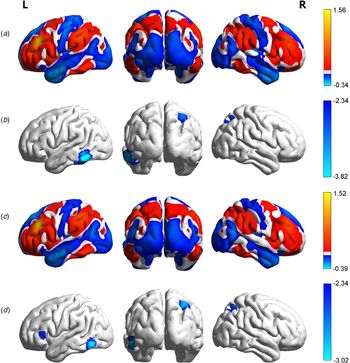
With respect to the imaging genetic analyses, the 356 samples in target dataset 1 and 314 samples in target dataset 2 that had sufficient genomic and resting-state fMRI data were included (Table 1). Similar DLPFC FC patterns in target dataset 1 and in target dataset 2 were found by comparing the mean voxel-wise FC maps (Fig. 1a, c). Specifically, the positive FCs of the DLPFC were primarily in regions of the frontoparietal network, such as the dorsolateral frontal cortex, superior parietal cortex, and inferior temporal cortex, whereas the negative FCs were in the orbitofrontal cortex, precentral/postcentral gyrus, temporal pole cortex, and occipital cortex. Further multiple regression analyses found that a higher MIR137 PRS was significantly associated with lower FC between the left DLPFC and the right superior parietal cortex (peak voxel MNI coordinate = 36, −69, 57; peak intensity = −2.986; cluster size = 32) and the left inferior temporal cortex (peak voxel MNI coordinate = −66, −54, −15, peak intensity = −3.819, cluster size = 213) in target dataset 1 (Fig. 1b). The same analyses in the independent target dataset 2 also found that lower FCs between the left DLPFC and the right superior parietal cortex (peak voxel MNI coordinate = 36, −63, 51; peak intensity = −2.804; cluster size = 31) and the left inferior temporal cortex (peak voxel MNI coordinate = −57, −63, −15, peak intensity = −2.933, cluster size = 54) were significantly associated with a higher MIR137 PRS, a finding which replicated those from target dataset 1 (Fig. 1d). We also made scatter plots to illustrate the association of the MIR137 PRS with the FCs between the left DLPFC and the two overlapping significant regions in the two independent cohorts (Fig. 2). Moreover, in both independent cohorts, the coefficients of determination (R 2) from linear regression analysis were more than 0.022, which indicated that the MIR137 PRS could explain more than 2.2% of the variance in these two FCs (Fig. 2).
Association between the MIR137 PRS (p < 0.05) and the FC of the DLPFC. (a) Mean pattern map of the FC in target dataset 1; (b) multiple regression testing the association between the MIR137 PRS and the FC of the left DLPFC in target dataset 1 with AlphaSim correction (single voxel p < 0.01, corrected threshold p < 0.05 and cluster size threshold CS > 31 voxels); (c) mean pattern map of the FC in the target dataset 2; (d) multiple regression testing the association between the MIR137 PRS and the FC of the left DLPFC in target dataset 2 with AlphaSim correction (single voxel p < 0.01, corrected threshold p < 0.05 and cluster size threshold CS > 31 voxels).

Overlapping regions in the association analysis of two independent cohorts with healthy subjects. (a) Two overlapping regions whose FCs with the DLPFC were significantly associated with the MIR137 PRS (p < 0.05) in target dataset 1 and target dataset 2; (b) scatter plots illustrating the association between the MIR137 PRS and the FC between the left DLPFC and the overlapping regions in the left inferior temporal cortex in target dataset 1 (R 2 = 0.0248); (c) scatter plots illustrating the association between the MIR137 PRS and the FC between the left DLPFC and overlapping regions in the right superior parietal cortex in target dataset 1 (R 2 = 0.0227); (d) scatter plots illustrating the association between the MIR137 PRS and the FC between the left DLPFC and overlapping regions in the left inferior temporal cortex in target dataset 2 (R 2 = 0.0226); (e) scatter plots illustrating the association between the MIR137 PRS and the FC between the left DLPFC and overlapping regions in the right superior parietal cortex in target dataset 2 (R 2 = 0.0231).

Discussion
In this study, we assessed the association between the MIR137 PRS and the risk of schizophrenia in our Han Chinese dataset and found that the MIR137 PRS, not the single gene MIR137, greatly captured the difference in the MIR137-regulated genetic structure. Then, we revealed a consistent effect of MIR137-regulated genes on the FCs between the DLPFC and the superior parietal cortex and inferior temporal cortex in two independent general population samples. A higher MIR137 PRS was significantly associated with lower FCs between the DLPFC and the superior parietal cortex and inferior temporal cortex. These results supported our hypothesis that the MIR137 PRS, as a measure of MIR137-related cumulative genetic effects, correlates with the DLPFC functional connectivity, which has been widely reported to be disrupted in schizophrenia patients. These findings could provide clues for understanding the underlying neural mechanisms of the schizophrenia risk gene, MIR137.
One of the major findings of the present study was the significantly higher MIR137 PRS of the schizophrenia patients than that of the normal controls in a Han Chinese population. Based on a large set of genes that are reported to be affected by the up- and down-regulation of MIR137 (Hill et al., Reference Hill, Donocik, Nuamah, Mein, Sainz-Fuertes and Bray2014), the MIR137 PRS for each subject was calculated by summing the additive effects of the schizophrenia-related genetic variants within the MIR137-regulated genes using a recent meta-analysis that combined Chinese GWAS samples and PGC2 GWAS samples (Li et al., Reference Li, Chen, Yu, He, Xu, Zhang, Yi, Li, Li, Shen, Song, Ji, Wang, Zhou, Chen, Liu, Wang, Wang, Yang, Wang, Feng, Liu, Sun, Li, He, Li, Wan, Xu, Li, Wen, Liu, Huang, Ji, Ripke, Yue, Sullivan, O'Donovan and Shi2017). We also found that the MIR137 PRSs were significantly higher in the schizophrenia patients than in the normal controls when the threshold was larger than 0.001 and that the most significant case-controlled difference was obtained when the threshold was equal to 0.05. This finding suggested that the MIR137 PRS (P < 0.05) best explained the difference in the MIR137-regulated genetic structure. This finding was in line with a previous GWAS study that reported that a threshold of 0.05 could maximally capture the heritability of schizophrenia (Schizophrenia Psychiatric Genome-Wide Association Study, 2011). For the three loci in MIR137, rs16255791, rs17022943, and rs1198589, that were reported as showing a greatly significant association with schizophrenia in a European GWAS (Schizophrenia Psychiatric Genome-Wide Association Study, 2011; Ripke et al., Reference Ripke, Neale, Corvin, Walters, Farh, Holmans, Lee, Bulik-Sullivan, Collier, Huang, Pers, Agartz, Agerbo, Albus, Alexander, Amin, Bacanu, Begemann, Belliveau, Bene, Bergen, Bevilacqua, Bigdeli, Black, Bruggeman, Buccola, Buckner, Byerley, Cahn, Cai, Campion, Cantor, Carr, Carrera, Catts, Chambert, Chan, Chen, Chen, Cheng, Cheung, Chong, Cloninger, Cohen, Cohen, Cormican, Craddock, Crowley, Curtis, Davidson, Davis, Degenhardt, Del Favero, Demontis, Dikeos, Dinan, Djurovic, Donohoe, Drapeau, Duan, Dudbridge, Durmishi, Eichhammer, Eriksson, Escott-Price, Essioux, Fanous, Farrell, Frank, Franke, Freedman, Freimer, Friedl, Friedman, Fromer, Genovese, Georgieva, Giegling, Giusti-Rodríguez, Godard, Goldstein, Golimbet, Gopal, Gratten, De Haan, Hammer, Hamshere, Hansen, Hansen, Haroutunian, Hartmann, Henskens, Herms, Hirschhorn, Hoffmann, Hofman, Hollegaard, Hougaard, Ikeda, Joa, Julià, Kahn, Kalaydjieva, Karachanak-Yankova, Karjalainen, Kavanagh, Keller, Kennedy, Khrunin, Kim, Klovins, Knowles, Konte, Kucinskas, Kucinskiene, Kuzelova-Ptackova, Kähler, Laurent, Keong, Lee, Legge, Lerer, Li, Li, Liang, Lieberman, Limborska, Loughland, Lubinski, Lönnqvist, Macek, Magnusson, Maher, Maier, Mallet, Marsal, Mattheisen, Mattingsdal, McCarley, McDonald, McIntosh, Meier, Meijer, Melegh, Melle, Mesholam-Gately, Metspalu, Michie, Milani, Milanova, Mokrab, Morris, Mors, Murphy, Murray, Myin-Germeys, Müller-Myhsok, Nelis, Nenadic, Nertney, Nestadt, Nicodemus, Nikitina-Zake, Nisenbaum, Nordin, Callaghan, Dushlaine, Neill, Oh, Olincy, Olsen, Os, Pantelis, Papadimitriou, Papiol, Parkhomenko, Pato, Paunio, Pejovic-Milovancevic, Perkins, Pietiläinen, Pimm, Pocklington, Powell, Price, Pulver, Purcell, Quested, Rasmussen, Reichenberg, Reimers, Richards, Roffman, Roussos, Ruderfer, Salomaa, Sanders, Schall, Schubert, Schulze, Schwab, Scolnick, Scott, Seidman, Shi, Sigurdsson, Silagadze, Silverman, Sim, Slominsky, Smoller, So, Spencer, Stahl, Stefansson, Steinberg, Stogmann, Straub, Strengman, Strohmaier, Stroup, Subramaniam, Suvisaari, Svrakic, Szatkiewicz, Söderman, Thirumalai, Toncheva, Tosato, Veijola, Waddington, Walsh, Wang, Wang, Webb, Weiser, Wildenauer, Williams, Williams, Witt, Wolen, Wong, Wormley, Xi, Zai, Zheng, Zimprich, Wray, Stefansson, Visscher, Adolfsson, Andreassen, Blackwood, Bramon, Buxbaum, Børglum, Cichon, Darvasi, Domenici, Ehrenreich, Esko, Gejman, Gill, Gurling, Hultman, Iwata, Jablensky, Jönsson, Kendler, Kirov, Knight, Lencz, Levinson, Li, Liu, Malhotra, McCarroll, McQuillin, Moran, Mortensen, Mowry, Nöthen, Ophoff, Owen, Palotie, Pato, Petryshen, Posthuma, Rietschel, Riley, Rujescu, Sham, Sklar, Clair, Weinberger, Wendland, Werge, Daly, Sullivan and Donovan2014) or a Chinese GWAS (Li et al., Reference Li, Chen, Yu, He, Xu, Zhang, Yi, Li, Li, Shen, Song, Ji, Wang, Zhou, Chen, Liu, Wang, Wang, Yang, Wang, Feng, Liu, Sun, Li, He, Li, Wan, Xu, Li, Wen, Liu, Huang, Ji, Ripke, Yue, Sullivan, O'Donovan and Shi2017), we did not find that they were associated with the risk of schizophrenia in our Han Chinese samples when we compared the patients with the controls. In fact, many studies have investigated whether the MIR137 contributes to the susceptibility to schizophrenia in samples from the Han Chinese population. Some studies also observed a significant association between MIR137 loci and schizophrenia in the Chinese population (Ma et al., Reference Ma, Yin, Fu, Luo, Zhou, Tao, Cui, Li, Lin, Zhao, Li, Lin and Li2014; Zhang et al., Reference Zhang, Bian, Liu, Tang, Pan, Hu and Tang2016), but others did not (Guan et al., Reference Guan, Zhang, Yan, Li, Liu, Li, Feng, Zhang, Liu and Li2014; Yuan et al., Reference Yuan, Cheng, Zhang, Zhou, Yu and Jin2014; Sun et al., Reference Sun, Yu, Zhu, Sun, Xu, Cao and Ge2015). The reasons for these inconsistent results may be that Chinese subjects from different geographical areas may exhibit genetic heterogeneity with respect to schizophrenia. In addition, the quite small size of our samples may lower the statistical power in our study (Hong et al., Reference Hong, Park and Size2012). Overall, our results further confirmed that MIR137 PRS may better reflect the case-controlled difference in the genetic structure than the singe genetic variant in the Chinese population.
Another major finding of the present study was the consistently significant association of a higher MIR137 PRS with lower FCs between the DLPFC and the superior parietal cortex and inferior temporal cortex in two independent cohorts with healthy individuals. Previous studies reported that the FC between the DLPFC and the superior parietal region was related to goal-relevant information in target processing (Fellrath et al., Reference Fellrath, Mottaz, Schnider, Guggisberg and Ptak2016) as well as to the organization and maintenance of information (Wendelken et al., Reference Wendelken, Bunge and Carter2008). The resting-state activities of the left DLPFC were also found to be strongly correlated with the resting-state activities of the bilateral superior parietal cortex in healthy individuals (Li et al., Reference Li, Wang, Zhang, Dou, Liu, Tong, Lei, Wang, Xu, Shi and Zhang2014). In addition, reduced FC between the DLPFC and the inferior temporal cortex was observed in schizophrenia patients under a low spatial working memory load (Kang et al., Reference Kang, Sponheim, Chafee and MacDonald2011). Moreover, both the DLPFC (D'Esposito et al., Reference D'Esposito, Postle and Rypma2000) and the inferior temporal cortex (Woloszyn and Sheinberg, Reference Woloszyn and Sheinberg2009) were found to be activated during working memory or controlled visual processing. These studies, to some extent, indicated that the FCs between the DLPFC and the superior parietal cortex and inferior temporal cortex might be important neuroimaging phenotypes of schizophrenia and may affect the cognitive performance of patients. Intriguingly, the two significant FCs of the DLPFC belonged to the frontoparietal control network. This functionally defined network spans certain portions of the DLPFC, the dorsomedial prefrontal cortex, lateral parietal cortex, and posterior temporal cortex. In addition, the intra-network functional connectivity was found to be disrupted in individuals with a psychotic illness (Baker et al., Reference Baker, Holmes, Masters, Yeo, Krienen, Buckner and Ongür2014). Moreover, schizophrenia-related studies have found that the frontoparietal network correlated with performance in episodic memory, verbal memory, processing speed, goal maintenance, and visual integration (Sheffield et al., Reference Sheffield, Repovs, Harms, Carter, Gold, MacDonald, Daniel Ragland, Silverstein, Godwin and Barch2015; Poppe et al., Reference Poppe, Barch, Carter, Gold, Ragland, Silverstein and MacDonald2016). The frontoparietal control network is located between the default and dorsal attention networks (Vincent et al., Reference Vincent, Kahn, Snyder, Raichle and Buckner2008; Spreng et al., Reference Spreng, Sepulcre, Turner, Stevens and Schacter2013) and is thought to play a critical role in mediating the dynamic balance between the default and dorsal attention networks (Spreng et al., Reference Spreng, Sepulcre, Turner, Stevens and Schacter2013). Therefore, as an important bridge, disruption of the frontoparietal control network may lead to abnormities in cortical information processing reflected across multiple brain networks. Previously, several genes, such as CPLX2 (Hass et al., Reference Hass, Walton, Kirsten, Turner, Wolthusen, Roessner, Sponheim, Holt, Gollub, Calhoun and Ehrlich2015), NPSR1 (Neufang et al., Reference Neufang, Geiger, Homola, Mahr, Akhrif, Nowak, Reif, Romanos, Deckert, Solymosi and Domschke2015), and COMT val158 met (Williams-Gray et al., Reference Williams-Gray, Hampshire, Robbins, Owen and Barker2007) were reported to be associated with neural activity in the frontoparietal network. These studies indicated that functional activities and connectivity in the frontoparietal network are genetically influenced. As a gene that showed a quite significant association with schizophrenia, the MIR137-regulated genetic structure might influence the neural activity in the frontoparietal network and thus increase schizophrenia vulnerability.
In addition, Mothersill and his colleagues also found that MIR137 gene influenced the FCs between the right amygdala and frontal regions (Mothersill et al., Reference Mothersill, Morris, Kelly, Rose, Fahey, O'Brien, Lyne, Reilly, Gill, Corvin and Donohoe2014). Moreover, previous studies consistently reported that the FCs of the right amygdala could be impaired in schizophrenia patients (Bjorkquist et al., Reference Bjorkquist, Olsen, Nelson and Herbener2016; Park et al., Reference Park, Chun, Park, Kim and Kim2018; Yue et al., Reference Yue, Li, Shi, Lin, Sun and Lu2018). Therefore, we further explored the relationship between the right amygdala FCs and MIR137 PRS in our two independent cohorts with healthy individuals. Specifically, we defined the right amygdala as the ROI using the automated anatomical labelling atlas within the Wake Forest University Pickatlas as the previous study did (Mothersill et al., Reference Mothersill, Morris, Kelly, Rose, Fahey, O'Brien, Lyne, Reilly, Gill, Corvin and Donohoe2014) and calculated the FC map of the ROI to the whole brain using the BRANT toolbox. The same statistical model and multiple comparison correction method with the analysis of the DLPFC were then used to investigate the association between the right amygdala FCs and MIR137 PRS. Although we found some significantly associated FCs in each independent dataset, however, no any overlapping in two independent cohorts was identified (online Supplementary Fig. S1). This finding might suggest that the effects of MIR137 polygenic risk on DLPFC FC could not extend to right amygdala, which is another important brain region that has impaired FC in schizophrenia and have previously been reported to be associated with MIR137.
Our study reported a consistent finding that the MIR137 PRS was correlated with the FCs between the DLPFC and the superior parietal cortex and inferior temporal cortex. However, the findings of our study should be interpreted in light of some potential limitations. First, our findings still need to be replicated in a considerably larger sample to improve the statistical power. Second, a relatively weak multiple comparison correction method was used after our imaging genetic analyses. However, the consistency in the results of the two independent cohorts further confirmed the robustness of our findings. Third, our findings were obtained using individuals of Han Chinese ancestry, so our results may need to be further compared with those derived from other ethnic populations. Finally, the participants included in the two healthy cohorts were young (means of 19.4 and 22.7 years old). Although they were clinically determined to be free of psychiatric disorders or family history of such disorders, we could not fully exclude subjects that might develop schizophrenia in the future.
In conclusion, the MIR137 PRS was significantly higher in the schizophrenia patients than in the normal controls, and a higher MIR137 PRS was found to be associated with lower FCs between the DLPFC and the superior parietal cortex and inferior temporal cortex in two independent datasets with healthy Han Chinese. These findings may help to identify one of the biological mechanisms modulated by MIR137 by studying the effects of the MIR137-regulated genetic structure on DLPFC functional connectivity. Our findings may provide important clues for understanding the specific contribution of MIR137-related genetic variants to the complex phenotypes of schizophrenia.
Supplementary material
The supplementary material for this article can be found at https://doi.org/10.1017/S0033291719001442.
Author ORCIDs
Bing Liu, 0000-0003-2029-5187.
Acknowledgements
We gratefully acknowledge the contribution of all our participants and their families, and all researchers involved in data collection.
Financial support
This work was supported by the National Key Research and Development Plan (Grant No. 2016YFC0904300), the Strategic Priority Research Program of Chinese Academy of Science (Grant No. XDBS01020200), and the Natural Science Foundation of China (Grant numbers 81771451 and 31300934).
Conflict of interest
All of the authors declare no competing interests.