Introduction
As a neuropsychiatric syndrome, delirium typically occurs in medical illness and has an acute onset and a transient, fluctuating and reversible course. Studies in developed countries document its high prevalence in geriatric populations with rates ranging from 15% to 62% among post-operative patients to 70% to 87% in intensive care unit patients (Saxena and Lawley, Reference Saxena and Lawley2009; Fong et al., Reference Fong, Tulebaev and Inouye2009). Recognized predisposing factors for delirium in the elderly (other than age) include pre-existing cognitive deficits, visual impairment, severe illness and increased blood urea nitrogen/creatinine ratio (Inouye, Reference Inouye1999), while the precipitating factors include the use of physical restraints, malnutrition, use of more than three medications, use of a bladder catheter and any iatrogenic event (Inouye and Charpentier, Reference Inouye and Charpentier1996).
Overall, the development of delirium in elderly populations is associated with poor outcomes irrespective of baseline characteristics and etiological factors in the patient (Fong et al., Reference Fong, Tulebaev and Inouye2009). Further, delirium contributes to faster cognitive decline (Fong et al., Reference Fong, Tulebaev and Inouye2009) and to increased nursing time, per-day hospital costs, length of hospital stay (Siddiqi et al., Reference Siddiqi, House and Holmes2006; Fong et al., Reference Fong, Tulebaev and Inouye2009) and institutionalization and death, independent of age, sex, comorbid illness or illness severity, and baseline dementia (Witlox et al., Reference Witlox, Eurelings, de Jonghe, Kalisvaart, Eikelenboom and van Gool2010).
Various authors have tried to understand the phenomenology of delirium in terms of the core and associated symptoms. Studies have also described various subtypes – such as hyperactive, hypoactive and mixed – which appear to differ on a number of clinical parameters. In addition, attempts have been made to understand the phenomenology of delirium using factor analysis, which reduces larger numbers of symptoms to a smaller number of symptom-based subgroups (Meagher et al., Reference Meagher2007; de Rooij et al., Reference de Rooij, Schuurmans, van der Mast and Levi2007; Gupta et al., Reference Gupta, de Jonghe, Schieveld, Leonard and Meagher2008). Only a few studies have studied the phenomenology in elderly patients using factor analysis (Trzepacz et al., Reference Trzepacz, Mulsant, Dew, Pasternak, Sweet and Zubenko1998; Camus et al., Reference Camus, Burtin, Simeone, Schwed, Gonthier and Dubos2000; Saravay et al., Reference Saravay2004; de Jonghe et al., Reference de Jonghe, Kalisvaart, Timmers, Kat and Jackson2005) and none of these has studied the phenomenology using the Delirium Rating Scale – Revised 98 (DRS-R98) (Trzepacz et al., Reference Trzepacz, Mittal, Torres, Kanary, Norton and Jimerson2001) in elderly patients. DRS-R98 is considered to be a more comprehensive instrument than the original Delirium Rating Scale (DRS) in which the item “psychomotor behavior” is assessed as one item, whereby both hypoactivity and hyperactivity are combined as one item. This limits its use for assessing motor subtypes of delirium. Further, in DRS, the cognitive deficits are assessed on only one item; in contrast, DRS-R98 has provision for assessment of various cognitive functions as different items.
In India, the population aged over 60 years has increased from 24 million (1961 census) to 77 million (2001 census), and is expected to increase to 136 million by 2021. As a percentage of the total population, the elderly population (aged over 60 years) accounted for 5.6% in 1961 and 7.5% in 2001 (Ingle and Nath, Reference Ingle and Nath2008). Despite these large and rising numbers, the available research from India on the mental health issues among the elderly population is meager.
In India, delirium is the commonest diagnosis among psychiatric referrals (30–39%), and even more so for the elderly (49%) (Grover et al., Reference Grover2009). Despite this, delirium in the elderly has not received adequate research attention (Mattoo et al., Reference Mattoo, Grover and Gupta2010). One study, which screened 100 geriatric patients admitted to general medical wards, reported the prevalence of delirium at 27% (Khurana et al., Reference Khurana, Sharma and Avasthi2002a), and identified various risk factors for development of delirium in the form of pre-existing cognitive deficits, neurological illnesses, urinary tract infections, visual impairment, hearing impairment, current pneumonia, leucocytosis, raised blood ammonia, hyponatremia and hypo/hyperkalemia (Khurana et al., Reference Khurana, Sharma and Avasthi2002b). Another study reported that 21% (17/81) of hip fracture patients developed delirium in the post-operative period; various predisposing factors were identified including the presence of underlying dementia, longer duration of surgery (>2.5 hours) and use of preoperative packed cell volume; and various precipitating causes were suggested such as postoperative infections, metabolic abnormalities and vascular events. Patients with delirium had a longer hospital stay and poor ambulation at discharge (Chrispal et al., Reference Chrispal, Mathews and Surekha2010).
The scarcity of existing data prompted the present research with the aim of studying the phenomenology (as measured by the DRS-R98), the associated etiologies and the outcome of delirium among elderly people seen by the consultation-liaison psychiatric service in India. Additionally an attempt was made to study the factor structure of symptoms using principal component analysis.
Methods
Setting
The study was carried out at the Postgraduate Institute of Medical Education and Research, Chandigarh, a multispeciality teaching hospital in north India. The Department of Psychiatry runs an around-the-clock system for providing psychiatric cover for the entire hospital including all emergency and specialty services. In the three-tier system, a Junior Resident (trainee psychiatrist) is the first person to evaluate the patient referred to the consultation-liaison (CL) service under the supervision of a Senior Resident (a qualified psychiatrist), and finally a Consultant Psychiatrist reviews the patient. The diagnoses are made according to the ICD-10 (World Health Organization, 1992). The Resident team formulates and initiates a management plan which is regularly reviewed by the consultant until the patient is discharged from the CL service or the hospital. Besides documenting the main psychiatric clinical details in the medico-surgical case-file, the CL team maintains a separate psychiatric referral file for each patient for demographic, clinical investigations and treatment details. The patients diagnosed with delirium are rated on the DRS-R98 (Trzepacz et al., Reference Trzepacz, Mulsant, Dew, Pasternak, Sweet and Zubenko1998) and the etiologies associated with delirium are recorded in the psychiatric referral files. All ratings are made by the trainee resident under the supervision of a qualified psychiatrist. At discharge, the patients are advised to attend the psychiatric outpatient clinic and are followed up by the same team to maintain continuity of care. Demographic (age, gender) and clinical data (source of referral, physical diagnosis, reason(s) for psychiatric referral, psychiatric diagnosis, management and outcome) of all patients seen by the CL team are maintained in a registry in the Department of Psychiatry, which is reviewed on a weekly basis by the consultant in-charge of the CL service. The commonest diagnostic category among all referrals received by the CL team is delirium (Grover et al., Reference Grover2009).
Assessment tools
Delirium Rating Scale-Revised-98 (DRS-R98) (Trzepacz et al., Reference Trzepacz, Mittal, Torres, Kanary, Norton and Jimerson2001). This assesses the phenomenology of delirium on a Likert scale. Of the 16 items, 13 items assess the severity and three items are of diagnostic significance. Severity scores range from 0 to 39, with higher scores indicating more severe delirium, and a cut-off score ≥15 is considered consistent with a diagnosis of delirium. Frequency of symptoms is determined by considering the symptoms present, which are rated as 1 or more. This scale has good inter-rater reliability (intra-class correlation coefficient 0.98), validity, sensitivity, and specificity for distinguishing delirium from dementia, depression, and schizophrenia.
Delirium Etiology Checklist (DEC). This is a standardized checklist designed by Trzepacz (as mentioned in Meagher et al., Reference Meagher2007) for attribution of delirium to possible etiological causes. It has 12 categories (drug intoxication, drug withdrawal, metabolic/endocrine disturbance, traumatic brain injury, seizures, infection (intracranial), infection (systemic), neoplasm (intracranial), neoplasm (systemic), cerebrovascular, organ insufficiency, other central nervous system disorder and other systemic disorder), each of which is rated on a on a 5-point scale for the degree of attribution to the delirium episode, ranging from “ruled out/not present/not relevant” to “a definite cause”.
Procedure
The psychiatric referral registry was reviewed and case records of all elderly patients (≥65 years) seen by the CL team between January and December 2010 were reviewed and the data extracted from the files of all patients diagnosed to have delirium. The extracted data included the patient's age, gender, clinical profile, ratings on DRS-R98, associated etiologies and the outcome of delirium during the inpatient stay.
During the 12-month study period (January to December 2010), 1137 CL referrals were received from various medico-surgical wards, of which 183 (16.1%) pertained to the elderly population (≥65 years). Of the 1137 cases, 487 (42.83%) were diagnosed as having delirium, including 120 cases aged ≥65 years. Thus, among elderly CL referrals, 65.6% were diagnosed to have delirium. Of these 120 cases, DRS-R98 and DEC data were available for 109 cases. The mean age of the group lacking these data (excluded group, n = 11) was 71.45 years, and one out of these 11 patients expired while in hospital (mean hospital stay = 8.55 days). There was no statistically significant difference on these parameters between those included and those excluded from the study.
Data analysis
Data were analyzed using the Statistical Package for Social Scientists (SPSS-14). Frequency, percentage, mean, and standard deviation were calculated for the descriptive data. Factor analysis of all the DRS-R98 items was carried out using principal components analysis. Various groups were compared using χ2 test, Fischer exact test for the nominal and ordinal variables, and t-test for the continuous variables.
Results
Demographic and clinical profile
The study comprised 109 patients with delirium. The typical patient was male (57.8%), with a mean age of 73.35 years (SD 7.44; range 65–95 years). The referrals came from surgical wards (41.3%), medical wards (32.11%), and intensive care units (26.6%); the majority of the last group were not intubated. The delirium was hospital emergent in 67.9% cases. The mean duration of delirium was 4.72 days (SD 6.96; range 1–60 days), and the mean duration in the hospital either after the emergence of delirium symptoms (in case of hospital-emergent delirium) or after admission to hospital (in cases where delirium was present prior to hospitalization) was 3.05 days (SD 2.62). A history of an axis–I psychiatric diagnosis other than dementia was present in three patients (2.8%, all affective disorders) and a history of dementia in another three patients (2.8%); additionally, one patient had both axis-1 psychiatric diagnosis and dementia. Haloperidol was the most commonly prescribed antipsychotic (48.6% cases) for treating delirium, followed by olanzapine (31.2%), risperidone (9.2%), quetiapine (0.9%) and lorazepam (0.9%). Eight patients were not prescribed any antipsychotic or benzodiazepine for their delirium.
Phenomenological profile
Whole sample
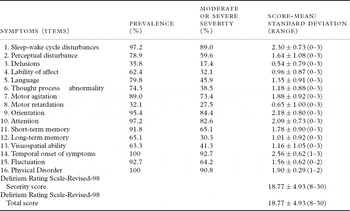
On DRS-R98 diagnostic items, all patients fulfilled the criteria of “temporal onset of symptoms” and “presence of an underlying physical disorder”. Symptoms seen in >90% of the patients included disturbances in sleep-wake cycle, attention, orientation, fluctuation of symptoms and short-term memory impairments. The least common symptoms were motor retardation and delusions (Table 1).
Symptom profile of the sample (n = 109)

The most common symptoms present at the moderate to severe level (derived using a severity cut-off score of ≥2) and the mean severity scores for each item are given in Table 1. The mean DRS-R98 severity score was 18.77 ± 4.93 (range 8–30) and mean DRS-R98 total score was 24.81 ± 5.26 (range 12–37). The severity score in 15 patients ranged 8–14, indicating subsyndromal delirium and the total DRS-R98 score in eight patients ranged from 12 to 17.
Phenomenology in ICU versus non-ICU patients
Significant differences were seen in phenomenology between ICU and non-ICU admitted patients in terms of mean scores of orientation (1.86 ± 0.99 vs 2.30 ± 0.70, t value- 2.56, p = 0.012), long-term memory (0.51 ± 0.78 vs 1.02 ± 0.96, t value- 2.53, p = 0.013) and visuospatial ability (0.65 ± 0.89 vs 1.25 ± 1.11, t value- 2.57, p = 0.011). The frequency of symptoms showed significant differences for long-term memory (11 out of 29 ICU vs 50 out of 80 non-ICU patients, χ2 value 5.21, p = 0.02) and visuospatial ability (12 out of 29 ICU vs 50 out of 80 non-ICU patients, χ2 value 3.87, p = 0.049).
Phenomenology in syndromal versus subsyndromal delirium
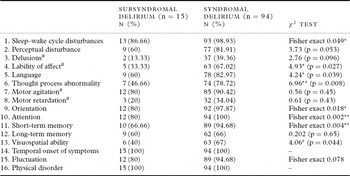
The patients with syndromal delirium more frequently exhibited lability of affect, language disturbances, thought process abnormality, disturbances in orientation, attention, short-term memory and visuospatial ability (Table 2).
Comparison of frequency of symptoms in patients with syndromal and subsyndromal delirium

# χ2 with Yate's correction.
Factor analysis of DRS-R98
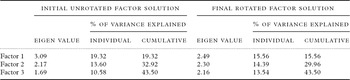
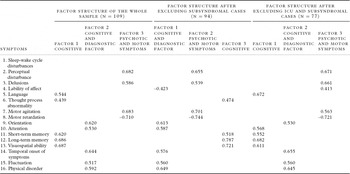
The Kaiser-Guttman rule was used to determine the optimum number of factors. Items which had a loading of ≥0.4 on a particular factor were identified as having significant loading and were included in that factor. When the variable loaded at 0.40 or above on more than one factor, it was assigned to the factor on which it had the higher loading. A scree plot was also generated. The Kaiser Meyer Olkin measure of sampling adequacy value for the whole sample was 0.604 and the Bartlett's Test of Sphericity was significant (χ2 –401.30, df = 120; p < 0.001). The initial principal component analysis yielded six factors with an eigen value of more than 1, explaining 65.8% of the total variance. Repeated factor models were generated and, based on the percentage of variance explained and tailing on the scree plot, a three-factor model was accepted. The three-factor model explained 43.5% of the total variance (Table 3). Of the 16 items of DRS-R98, 14 had significant loading on one of the three factors. The first factor (cognitive factor) included thought disturbance, short-term memory, long-term memory and visuospatial disturbance. The second factor (cognitive and diagnostic factor) included disturbance of attention and concentration and the three items of diagnostic significance, and the third factor (psychotic and motoric symptoms) included the perceptual disturbances, delusions and the motoric disturbances. The sleep-wake cycle disturbance and lability of affect did not load on any of the factors (Table 4).
Three-factor model depicting the percentage of variance explained

Factor analysis with different factor loading on Varimax rotation

Factor analysis was also carried out after removing the subsyndromal cases for the remaining 94 patients. The Kaiser Meyer Olkin measure of sampling adequacy value for the model was 0.533 and the Bartlett's Test of Sphericity was significant (χ2 ˗308.87, df = 120; p < 0.001). The initial principal components analysis yielded six factors with an eigen value of more than 1, explaining 64.3% of the total variance. The three-factor model explained 41.5% of the total variance. As with the analysis of all cases, 14 items of DRS-R98 had significant loading on one of the three factors. The sleep-wake cycle disturbance and language disturbance did not load on any of the factors (Table-4). The first factor was similar to the second factor of the analysis which included all cases and additionally loaded lability of affect. Factor 2 was similar to factor 3, which included all cases; and factor 3 was similar to factor 1, which included all cases except that it did not load language disturbances (Table 4).
In the third principal components analysis all the patients admitted to ICUs and subsyndromal cases were removed and the data for 77 patients were analyzed. The Kaiser Meyer Olkin measure of sampling adequacy value for the model was 0.567 and the Bartlett's Test of Sphericity was significant (χ2 ˗282.87, df = 120; p < 0.001). The initial principal components analysis yielded five factors with an eigen value of more than 1, explaining 59.8% of the total variance. The three-factor model explained 43.0% of the total variance. Factor structure remained more or less similar except for shifting of a few items among the various factors (Table 4).
Etiology of delirium
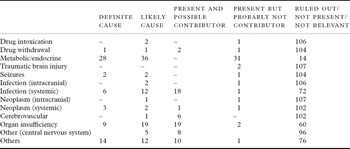
The etiological factors which could be linked to the development of delirium were classified according to the DEC (Table 5). The commonest associated etiological categories rated as “definite cause” or “likely cause” based on the DEC were endocrine/metabolic disturbance (58.7%, N = 64), followed by organ insufficiency (25.7%, N = 28) and systemic infections (16.5%, N = 18). In 67.9% (N = 74) of cases at least one DEC category was rated as “definite or likely cause”, 20.2% (N = 22) cases had two DEC categories rated as “definite or likely cause” and in 11.9% (N = 13) cases more than two DEC categories were rated as “definite or likely cause”.
Delirium etiology checklist

In terms of specific etiological factors which could be linked to the development of delirium, the mean number of etiologies per patient was 4.82 ± 1.82 (range 1–10). More than one etiological factor was present in 106 patients (97.2%), and more than four medical problems could be linked to the development of delirium in 49 patients (55%). Some of the individual etiologies associated with delirium in decreasing frequency were: anemia (N = 73; 67%), renal impairment (N = 48; 44%), worsening or detection of abnormally high blood pressure (N = 42; 38.5%), sepsis (N = 37; 33.9%), decompensated cardiac status (N = 37; 33.9%), hypoxia (N = 38; 34.9%), medication which could induce delirium (N = 34; 31.2%), hyponatremia (N = 27; 24.8%) and post-operative status (N = 22; 20.2%).
Outcome of delirium in the hospital
During the mean hospital stay of 8.89 ± 6.17 days (range 2–27 days) after the CL referral, delirium improved in 58.7% cases (N = 64), and four patients recovered completely (3.7%). The symptoms of delirium remained unchanged in 20.2% cases (N = 22), and 16.5% (N = 18) of the patients died during the hospital stay. In one case the symptoms of delirium worsened further until the last evaluation. Of the patients discharged, only eight attended the psychiatry outpatient service for follow-up.
There was no difference in the age, duration of delirium and the time taken to seek a psychiatric consultation either after admission to the hospital (for delirium present prior to admission) or after the onset of delirium (in case of hospital-emergent delirium) in those who died during the hospital stay compared to those who survived. Further, for each etiology and each DEC category compared independently, there was no difference in the type of etiologies and total number of etiologies; no difference was noted with respect to referring specialty, presence/absence or severity of delirium symptoms (except fluctuation of symptoms) as measured by DRS-R98. However, those patients who survived the hospital stay more frequently exhibited fluctuation of symptoms (87 patients alive at discharge and 14 patients who died had fluctuation of symptoms; Pearson χ2 value with Yate's correction 4.64; p = 0.031). Similarly, the severity score on the same item was less in those who died (alive group = mean 1.63 ± 0.56; deceased group 1.22 ±0.80; t-value – 2.62, p = 0.01).
Discussion
Delirium constitutes the largest diagnostic category among psychiatric referrals for elderly people (Grover et al., Reference Grover2009). The research presented here attempted to explore the phenomenology of delirium in a geriatric population referred to psychiatric consultation liaison services in a developing country setting, and to use factor analysis to study the DRS-R98 assessed phenomenology of delirium. The existing research on factor analysis of the phenomenology of delirium in elderly populations is based on the use of a variety of instruments such as the delirium symptom checklist (Camus et al., Reference Camus, Burtin, Simeone, Schwed, Gonthier and Dubos2000), Mini-Mental State Examination (MMSE), Delirium Rating Scale (DRS), Blessed Dementia Rating Scale (Saravay et al., Reference Saravay2004), Delirium-O-Meter (de Jonghe et al., Reference de Jonghe, Kalisvaart, Timmers, Kat and Jackson2005) and DRS (Trzepacz et al., Reference Trzepacz, Mulsant, Dew, Pasternak, Sweet and Zubenko1998). However, none of studies is based on the use of DRS-R98, which has emerged as a standard measure of delirium severity in recent years.
During the study period, of the 183 referrals for those aged ≥65 years, 65.6% were diagnosed with delirium. Thus, delirium emerges as the commonest psychiatric referral in this study of an elderly Indian population. This suggests the need for psychiatric trainees to be adequately sensitized and familiarized to diagnose and manage delirium.
Consistent with the findings of the existing literature (Gupta et al., Reference Gupta, de Jonghe, Schieveld, Leonard and Meagher2008; Grover et al., Reference Grover, Chakrabarti, Shah and Kumar2011), the present study found the most common symptoms to be disturbances in the sleep-wake cycle, attention, orientation, fluctuation of symptoms and short-term memory impairments, and the least common symptoms to be motor retardation and delusions. However, the present study found no significant difference in the type and severity of delirium-related symptoms in patients admitted to the general medical wards and the ICUs except for some of the cognitive domains (orientation, long-term memory and visuospatial ability).
We did not find any study in the literature which compared the symptoms of syndromal and subsyndromal delirium (i.e. of those who did or did not meet the severity score cut-off for DRS-R98). In our study patients with subsyndromal delirium exhibited the following symptoms less often: lability of affect, language disturbances, thought process abnormality, disturbances in orientation, attention, short-term memory and visuospatial ability. This finding points to a need to delineate clearly the phenomenology of these two severity subtypes. However, it is important to consider if some of the subsyndromal delirium cases may actually be in the prodromal phase of delirium (characterized by clinical features of concentration difficulties, disturbances in sleep, vivid dreams, disorientation, tiredness, irritability, restlessness, anxiety, depression and noise sensitivity) (Gupta et al., Reference Gupta, de Jonghe, Schieveld, Leonard and Meagher2008). Given that 80% of the patients in our study with subsyndromal delirium exhibited sleep-wake cycle disturbances and difficulties in attention and orientation, a consistent clinical picture of subsyndromal delirium seems to emerge.
We subjected our data to three factor analyses: in the first we included all 109 patients, in the second we excluded the patients with subsyndromal delirium, and in the third we excluded the patients admitted to ICU and the subsyndromal delirium patients.
The variance explained by these factor analyses ranged from 41.55% to 43.50% and yielded three factor models with most of the items remaining constant on a particular factor. Of the three factors obtained in all the three factor analyses, two pertained to the cognitive symptoms and one pertained to the psychotic/behavioral symptoms. These findings are broadly consistent with those of the previous studies which used the original DRS and DRS-R98 and obtained two or three factors explaining variance ranging from 44% to 64% (Trzepacz and Dew, Reference Trzepacz and Dew1995; Trzepacz et al., Reference Trzepacz, Mulsant, Dew, Pasternak, Sweet and Zubenko1998; Grassi et al., Reference Grassi2001; Saravay et al., Reference Saravay2004; Fann et al., Reference Fann, Alfano, Burington, Roth-Roemer, Katon and Syrjala2005; Franco et al., Reference Franco, Trzepacz, Mejıa and Ochoa2009; Grover et al., Reference Grover, Chakrabarti, Shah and Kumar2011a). In the existing literature as well, the cognitive factor accounts for most of the variance and consists of what are considered to be the “core” symptoms such as inattention, reduced awareness, memory impairments and other cognitive abnormalities. Besides the cognitive factor, the previous factor analyses have yielded one or more neurobehavioural factors, which consist of “associated” symptoms such as delusions, hallucinations and motor abnormalities, and account for the rest of the variance. In the present study, cognitive symptoms were divided into two factors across all three factor analyses and together explained maximum variance in the phenomenology, while the behavioral symptoms formed the third factor. Also, because most of the symptoms consistently loaded on to a particular factor with only minor difference in the loading of various symptoms on different factors in different factor analyses, this seems to suggest that the phenomenology of delirium is constant across various treatment settings.
In terms of factor structure and symptom loading the findings of the present study are very similar to two previous studies. First, our previous studies included patients who were >18 years of age, admitted to medical-surgical wards (those in ICU were excluded) and not medicated for delirium prior to assessment for phenomenology (Grover et al., Reference Grover, Chakrabarti, Shah and Kumar2011a). Second, the factor analysis of DRS and MMSE in elderly subjects showing Factor 1 with similar items of psychotic and motor factors as found in our study (Trzepacz et al., Reference Trzepacz, Mulsant, Dew, Pasternak, Sweet and Zubenko1998). However, in contrast to both these studies, the cognitive symptoms in the present study loaded on to two separate factors: the disturbance in attention and concentration loaded with diagnostic items of DRS-R98. This is an interesting finding in that it seems to suggest that these are the core cognitive disturbances.
Overall, the factor structure in the present study is consistent with the existing literature in that the psychotic and behavioral symptoms load onto one factor and the cognitive symptoms separate out onto one or more factors. Thus, the present study supports a three-factor structure of symptoms of delirium and endorses the traditional distinction between cognitive and psychotic-behavioral symptoms. The factor structure of symptoms as suggested by the existing literature and the present study have potentially important clinical and research implications. It would be worthwhile to evaluate the link between the symptom clusters and etiology of delirium and at the same time evaluate the role of various treatment measures on the outcome of these symptom clusters. Separation of symptoms into cognitive and behavioral symptoms suggests that there may be separate underlying neurobiological mechanisms for these symptoms. The cognitive symptoms possibly involve the frontal subcortical circuits and the behavioral symptoms arise due to alteration in the functions of temporal and parietal areas of the brain. It would therefore be useful to study the underlying pathophysiology of various symptom clusters to understand this complex disorder. Besides the non-pharmacological management, treatment of delirium involves use of antipsychotics. Studies have also evaluated the role of cholinesterase inhibitors in the management of delirium (Grover et al., Reference Grover, Mattoo and Gupta2011b). It would be worthwhile to evaluate the differential effect of various medications on the various symptom clusters.
The etiological category most commonly associated with delirium in the present study was endocrine/metabolic disturbance followed by organ insufficiency and systemic infections. This etiological profile is similar to that reported in one of our earlier studies with a mixed age-group population (Mattoo et al., in press).
The commonly recorded individual etiologies associated with delirium in the present study included anaemia, renal impairment, worsening or detection of abnormally high blood pressure, sepsis, decompensated cardiac status, hypoxia and use of medication which could induce delirium. The high prevalence of anemia may be a reflection of the general health status of the elderly population in our catchment area and may not indicate a sudden decompensation in all cases.
In the present study, during the mean hospital stay of 8.89 ± 6.17 days, the delirium improved in more than half of the patients and remained unchanged in about 20%. The frequency of persistent delirium at discharge in the present study is similar to that reported by the previous studies (0–78%) (Cole et al., Reference Cole, Ciampi, Belzile and Zhong2009). The mortality rate of 16.5% of the sample during the hospital stay in the present study is within the range of 9% to 34.5% reported in previous studies (Inouye et al., Reference Inouye, Rushing, Foreman, Palmer and Pompei1998; McCusker et al., Reference McCusker, Cole, Abrahamowicz, Primeau and Belzile2002).
To conclude, the present study suggests that delirium is quite prevalent in geriatric patients admitted to medico-surgical wards in a general hospital and referred to psychiatric consultation-liaison services. The type and the severity of symptoms of delirium in those admitted to general medical wards and ICUs is similar except for some of the cognitive domains (orientation, long-term memory and visuospatial ability). Compared to those with full-blown delirium, the patients with subsyndromal delirium less frequently exhibit lability of affect, language disturbances, thought process abnormality, and disturbances in orientation, attention, short-term memory and visuospatial ability. The factor analysis of DRS-R98 produced three factors, two of which include diagnostic and cognitive symptoms, and one factor which includes psychotic and motoric symptoms. The most common etiological group associated with delirium is metabolic-endocrine abnormalities.
The results of the present study must be interpreted within its limitations. These include age limited to ≥65 years, the etiologically heterogeneous sample, cross-sectional assessment (no post-hospitalization longitudinal follow-up for long-term outcome/mortality), the lack of any comparison of the phenomenology between subjects with and without dementia (very few of our subjects had comorbid dementia), the small sample of the subsyndromal group (when comparing the frequency of symptoms between subsyndromal and syndromal delirium), and the failure to study the delirium-related predisposing and precipitating factors separately. These limitations may be addressed by future research involving longitudinal post-hospitalization follow-up of etiologically homogeneous and age-wise diverse comparative samples alongside the study of the phenomenology of delirium.
Conflict of interest
None.
Description of authors’ roles
Sandeep Grover conceptualized the research, extracted the data, analyzed the data, wrote the first draft of the paper and was also involved in editing the final paper. Natasha Kate and Munish Agarwal extracted the data, analyzed the data, wrote the first draft of the paper and was also involved in the final editing of the paper. Surendra Kumar Mattoo and Ajit Avasthi conceptualized the research, and were also involved in writing and editing the paper. Savita Malhotra, Parmanand Kulhara, Subho Chakrabarti and Debasish Basu were involved in writing and editing the paper.