Introduction
Glyphosate is the most widely used herbicide in the world due to its high efficiency, low production costs, and broad weed control spectrum. It is a systemic herbicide that is initially absorbed by foliage and then translocated throughout stems, leaves, and roots (Feng et al. Reference Feng, Pratley and Bohn1999). Through the inhibition of the shikimate pathway enzyme 5-enolpyruvylshikimate acid-3-phosphate synthase, glyphosate induces intracellular accumulation of shikimate (Franz et al. Reference Franz, Mao and Sikorski1997). Shikimate accumulation following glyphosate treatment can vary among tissues, depending on the metabolic activity of each tissue and the quantity of glyphosate translocated (Pline et al. Reference Pline, Wilcut, Duke, Edmisten and Wells2002). Although the results vary depending on plant species, glyphosate applications generally cause plants to become chlorotic and die within 5 to 10 d.
Glyphosate can reach the soil during application from foliar wash-off, or spray drift (Al-Khatib and Peterson Reference Al-Khatib and Peterson1999; Ellis and Griffin Reference Ellis and Griffin2002). However, once glyphosate is adsorbed by the soil it is prone to rapid microbial degradation or inactivation by sorption to the soil matrix (Giesy et al. Reference Giesy, Dobson and Solomon2000; Piccolo et al. Reference Piccolo, Celano and Pietramellara1992). Thus, risks of glyphosate toxicity to non-target plants via soil have generally been considered marginal.
However, an increasing number of recent studies suggest that glyphosate can cause significant negative side effects on non-target plants through direct glyphosate soil application (Borggaard and Gimsing Reference Borggaard and Gimsing2008; Candela et al. Reference Candela, Caballero and Ronen2010). Several studies also suggest that the risk of glyphosate toxicity to non-target plants is due to exudation from roots or death and decomposition of treated plants (Laitinen et al. Reference Laitinen, Rämö and Siimes2007; Neumann et al. Reference Neumann, Kohls, Landsberg, Stock-Oliveira Souza, Yamada and Römheld2006; Reddy et al. Reference Reddy, Rimando and Duke2004; Tesfamariam et al. Reference Tesfamariam, Bott, Cakmak, Römheld and Neumann2009).
Therefore, this study’s objective was to investigate the influence of glyphosate residues in root tissues of glyphosate-treated weeds on crop growth and shikimate accumulation as an indicator for glyphosate toxicity. This study measured how the timing of glyphosate applications and contrasting soils with different binding properties impact wheat (Triticum aestivum L.) growth. Wheat was the non-target species and downy brome (Bromus tectorum L.) and Italian ryegrass [Lolium perenne L. ssp. multiflorum (Lam.) Husnot] were target weeds.
Materials and Methods
Conditions for Plant Growth and Glyphosate Plant Application
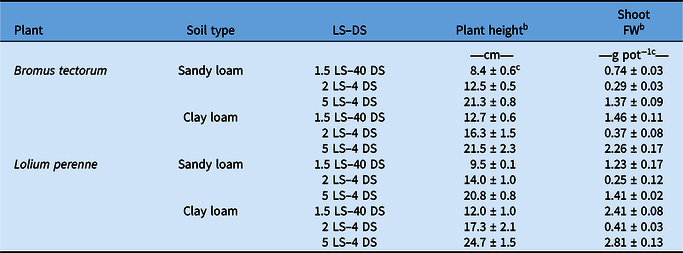
Experiments were conducted in a greenhouse, using sandy loam (an organic matter content of 2.0%, a pH of 5.5, and a CEC of 14.1) and clay loam (an organic matter content of 2.6%, a pH of 6.2, and a CEC of 16.3) soils. Soils were sieved through a 4-mm mesh screen and used to fill 72-cm2 pots. Sixty B. tectorum seeds and 60 L. perenne seeds were sown in the pots and allowed to mature until the 1.5-leaf stage (Group A), 2-leaf stage (Group B), and 5-leaf stage (Group C). The plants were then thinned to 40 seedlings in Group A and 4 seedlings in Groups B and C. Plant height and shoot fresh weight of the B. tectorum and L. perenne seedlings were measured before glyphosate application and recorded in Table 1. Plants at the 1.5-, 2-, and 5-leaf stages were sprayed with glyphosate (Roundup®, Monsanto, St Louis, MO, USA; 600 g ae ha−1) using an overhead compressed-air sprayer calibrated to deliver 187 L ha−1. At 0, 1, 3, 5, and 7 d after the glyphosate application, the aboveground plant parts were cut and removed without disturbing the soil. In control treatments without glyphosate applications, B. tectorum and L. perenne aboveground parts were cut and removed. The wheat cultivars (‘Tubbs 06’, ‘Stephens’) were selected because they are commonly used in Oregon. Six seeds of each wheat cultivar were sown into two separate pots in the existing soil. The soil was watered as needed every day during experimental periods.
Glyphosate application conditions used in this study.a

a Abbreviations: LS, leaf stage; DS, density (number of plants per pot); FW, fresh weight.
b Data represent means and standard deviations (±SD) of three independent replicates.
c Pot size was 72 cm2.
Plant height, shoot fresh weight, and shikimate were measured at 14 d after sowing (DAS). Shoots were harvested, frozen in liquid nitrogen, and stored at −20 C for shikimate analysis.
Glyphosate Soil Application
To assess the effects of glyphosate from a soil application, glyphosate was sprayed onto the soil surface at the same rate that it was applied to the target weeds. At 0, 1, 3, 5, and 7 d after soil application, Stephens wheat seeds were sown (6 seeds per pot). Other procedures were the same as those described previously for the glyphosate plant application experiments.
Shikimate Analysis
Shikimate extraction was performed according to Singh and Shaner (Reference Singh and Shaner1998) with some modifications. Shoots and roots of wheat were harvested at 7 and 14 DAS, frozen in liquid nitrogen, and stored at −20 C for shikimate analysis. Using liquid nitrogen to keep the tissue frozen, 100 mg of frozen shoots and roots were ground up and combined with 1 ml 0.25 N HCl. The samples were immediately mixed and incubated at 37 C for 45 min and centrifuged at 13,000 rpm for 10 min. After centrifugation, four 25-µl aliquots per sample were mixed with 100 µl 0.25% periodic acid/0.25% sodium (meta) periodate solution and added to separate wells of a 96-well plate. The plate was incubated at 37 C for 30 min to allow shikimate oxidation. After incubation, the samples were mixed with 100 µl 0.6 N NaOH/0.22 M Na2SO3, and the optical density was measured spectrophotometrically at 380 nm in a VERSA-maxTM microtiter plate reader (Molecular Devices, Sunnyvale, CA, USA). Shikimate in milligrams per gram fresh weight was determined based on a standard curve.
Wheat Growth and Shikimate under Saturated Soil Conditions
Several other variables—soil type (sandy loam), wheat cultivar (Stephens), weed density (40 plants at the 1.5-leaf stage per pot), and wheat seeding days (0, 1, and 3 d after glyphosate application)—were selected for further investigation. Other procedures were the same as those described previously for the plant application experiments. Shoot and root fresh weights, and shikimate in both shoots and roots were measured in wheat at 7 DAS. To investigate the effects of glyphosate residues in saturated soil conditions on non-target plants, glyphosate (600 g ae ha−1) was sprayed on L. perenne under saturated soil conditions. The treated pots were placed in trays filled one-third full with water on a bench in a greenhouse to maintain saturated soil conditions for 3 d. Control plots without glyphosate were kept in the same conditions. Other procedures were the same as those described previously for the plant application experiments.
Petri Dish Bioassay for Glyphosate Sensitivity
To determine cultivar sensitivity, two wheat cultivars (Stephens, Tubbs 06) were used for the petri dish bioassay. The bioassay used 9-cm-diameter petri dishes, containing 6 seeds, as experimental units arranged in a completely randomized design with three replications. Seeds were placed in petri dishes on one sheet of germination paper (Whatman No. 1). Nine milliliters of aqueous solution of commercially formulated glyphosate (Roundup®) at 0, 30, 50, 100, and 300 µM was applied to each petri dish. Petri dishes were incubated in the dark in a germination cabinet at 20 C. After 6 d, the shoot and root fresh weights of each seedling were measured. The experiment was repeated. Data are expressed as the percentage of the nontreated control, and dose–response curves for glyphosate were generated for both cultivars.
Statistical Analysis
The studies were a randomized complete block with three replications. Significant differences were determined using ANOVA. The following cubic equation was used to describe the response of wheat cultivars to glyphosate, where Y is predicted inhibition (%) of shoot or root, X is glyphosate dose (μM), and Y 0 is predicted percent inhibition when X is 0.
 $$Y = {Y_0} + aX + b{X_2} + c{X_3}$$
The analyses were performed using Statistical Analysis Systems (SAS 2000) software. In the cases with significant difference, means were separated using Duncan’s multiple range test at P ≤ 0.05.
Results and Discussion
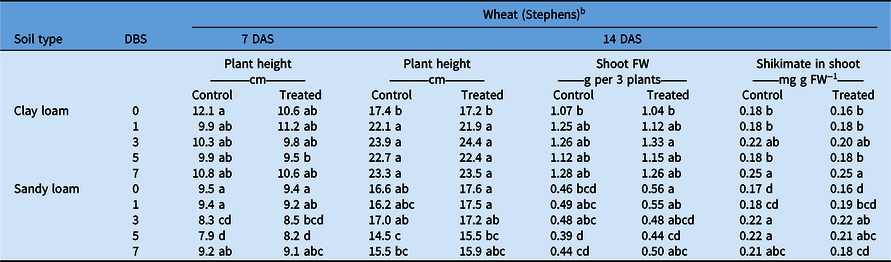
Glyphosate soil application did not result in any differences in plant height, shoot fresh weight, or shikimate levels of Stephens seedlings between the control and treated pots in either clay loam or sandy loam soil (Table 2). This result is consistent with previous research that has shown that glyphosate is degraded in soil by microorganisms and is bound strongly to soil colloids, accounting for its lack of soil activity for weed control (Giesy et al. Reference Giesy, Dobson and Solomon2000; Sprankle et al. Reference Sprankle, Meggitt and Penner1975a, Reference Sprankle, Meggitt and Penner1975b). In another study, glyphosate soil application did not inhibit sunflower (Helianthus annuus L.) seedlings (Tesfamariam et al. Reference Tesfamariam, Bott, Cakmak, Römheld and Neumann2009). Nevertheless, considerable amounts of glyphosate enter the soil by direct application, wash-off from foliage, and release from decomposing plant tissue (Borggaard and Gimsing Reference Borggaard and Gimsing2008; Doublet et al. Reference Doublet, Mamy and Barriuso2009). Soil and climate conditions affect glyphosate’s persistence in soil (Franz et al. Reference Franz, Mao and Sikorski1997; Hornsby et al. Reference Hornsby, Wauchope and Herner1996). The half-life of glyphosate in soil ranged from 20 to 100 d. In studies using glyphosate soil applications (0, 10, 25, 100, 250, and 500 mg kg−1), shoot and root biomass at 8 wk after wheat emergence progressively declined with increasing soil concentrations of glyphosate at two locations in Alberta, Canada (Blackshaw and Harker Reference Blackshaw and Harker2016).
Plant height, shoot fresh weight (FW), and shikimate of Stephens wheat seedlings grown in clay loam and sandy loam soils that received a glyphosate soil application of 600 g ae ha−1 at 0, 1, 3, 5, and 7 d before wheat sowing.a

a Abbreviations: DAS, days after sowing; DBS, glyphosate treatment days before sowing.
b Significant differences (P < 0.05) between the control and treated in each soil type are indicated with different letters according to Duncan’s multiple range test.
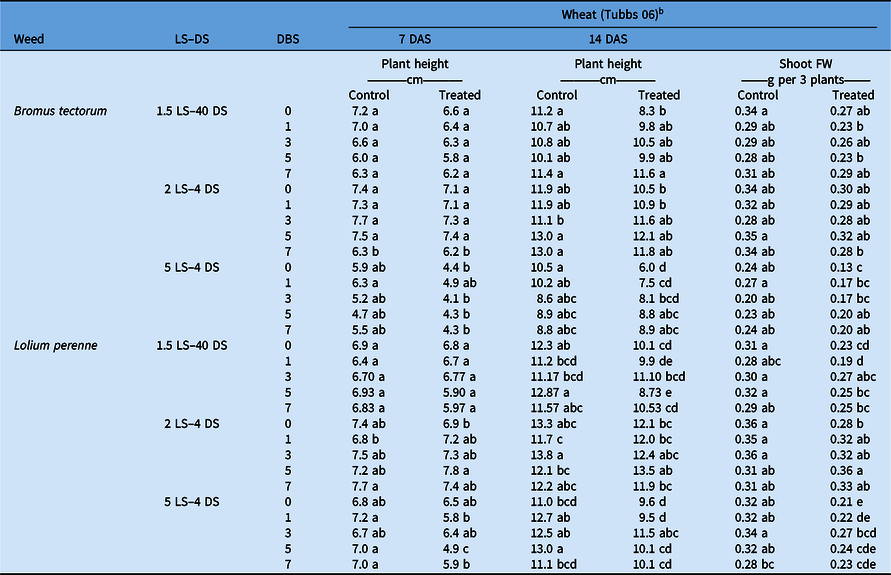
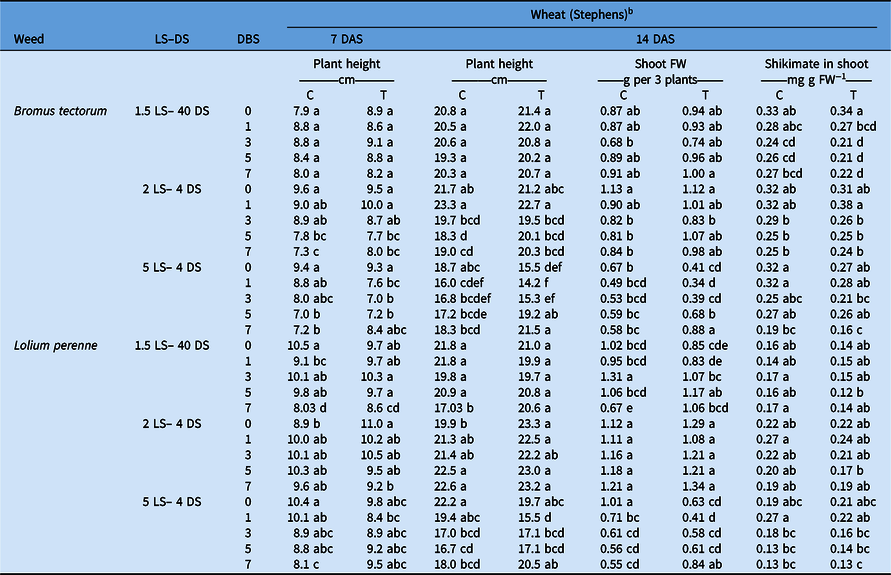
Tubbs 06 seeded 0 and 1 d after glyphosate applications to 5-leaf B. tectorum in sandy loam soil showed a plant height inhibition of 26% to 43% and a shoot fresh weight inhibition of 37% to 46% compared with the control (Table 3). Throughout this section, when increases or decreases in plant height, shoot fresh weight, or shikimate accumulation are shown, the comparison is to the control unless otherwise noted. Tubbs 06 seeded in the sandy loam soil of B. tectorum that received glyphosate applications at the 1.5- and 2-leaf stages did not show inhibition.
Plant height and shoot fresh weight (FW) of Tubbs 06 wheat grown in sandy loam soil of glyphosate foliar application (600 g ae ha−1) at 0, 1, 3, 5, and 7 d before wheat sowing.a

a Abbreviations: DAS, days after sowing; LS, leaf stage; DS, density (number of plants per pot); DBS, glyphosate treatment days before sowing.
b Significant differences (P < 0.05) between the control and treated in each leaf stage of each weed are indicated with different letters according to Duncan’s multiple range test.
Tubbs 06 seeded 0, 1, and 5 d after glyphosate applications to the L. perenne at the 1.5-leaf stage had a plant height inhibition of 12% to 32%. Seeds planted on days 1 and 5 after the glyphosate application to the L. perenne at the 5-leaf stage showed a plant height inhibition of 22% to 25%. Seeds planted in the sandy loam soil of L. perenne that received glyphosate applications at the 2-leaf stage did not have growth inhibition. Similar to plant height, shoot fresh weight of wheat Tubbs 06 was inhibited by 20% to 34% when the wheat was sown on days 0, 1, 3, and 5 after the glyphosate application to the L. perenne at the 1.5- and 5-leaf stages in sandy loam soil. However, shoot fresh weight of Tubbs 06 was 22% inhibited when the wheat was sown 0 d after the glyphosate application to the L. perenne at the 2-leaf stage in sandy loam soil.
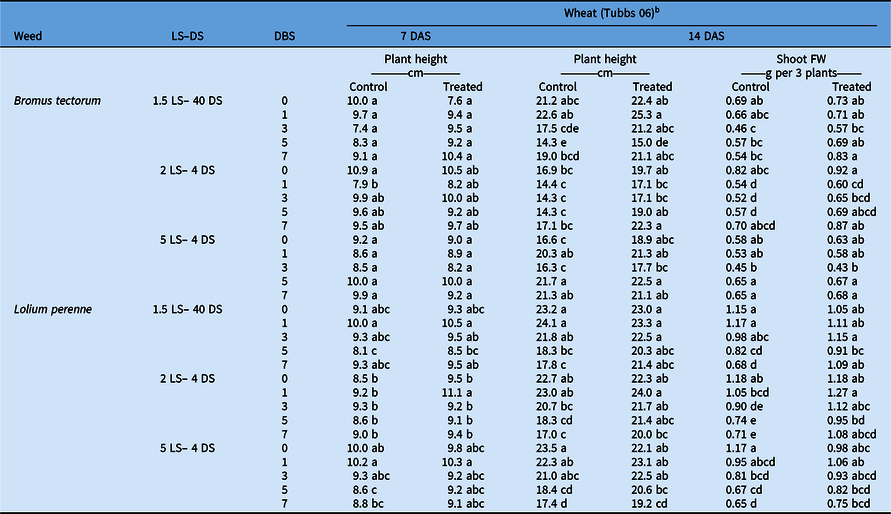
In clay loam soil, Tubbs 06 plant height at 7 or 14 DAS was not affected in both the controls and the glyphosate-treated plots where B. tectorum and L. perenne had previously grown (Table 4). However, unlike studies using sandy loam soil, increases in the shoot fresh weight of wheat plants planted in clay loam soils that previously contained both B. tectorum and L. perenne were observed. When wheat seeds were sown 7 d after glyphosate applications to B. tectorum plants at the 1.5-leaf stage, wheat shoot fresh weight was increased by 54% compared with the control. When wheat seeds were sown 1, 3, 5, and 7 d after glyphosate applications to L. perenne plants at the 2-leaf stage, seedling shoot fresh weight increased by 21% to 52%. Wheat seeds sown 7 d after glyphosate applications to L. perenne plants at the 1.5-leaf stage resulted in a shoot fresh weight increase of 60%. Given that previous studies have shown that glyphosate in low doses can stimulate plant growth (Edivaldo et al. Reference Edivaldo, Alves, Godoy, Meschede, Souza and Duke2008), this growth promotion is likely due to lower concentrations of glyphosate in clay loam soil. The present study did not determine whether or not lower concentrations of glyphosate were due to higher adsorption in clay loam soils or other factors.
Plant height and shoot fresh weight (FW) of Tubbs 06 wheat grown in clay loam soil of glyphosate foliar application (600 g ae ha−1) at 0, 1, 3, 5, and 7 d before wheat sowing.a

a Abbreviations: DAS, days after sowing; LS, leaf stage; DS, density (number of plants per pot); DBS, glyphosate treatment days before sowing.
b Significant differences (P < 0.05) between the control and treated in each leaf stage of each weed are indicated with different letters according to Duncan’s multiple range test.
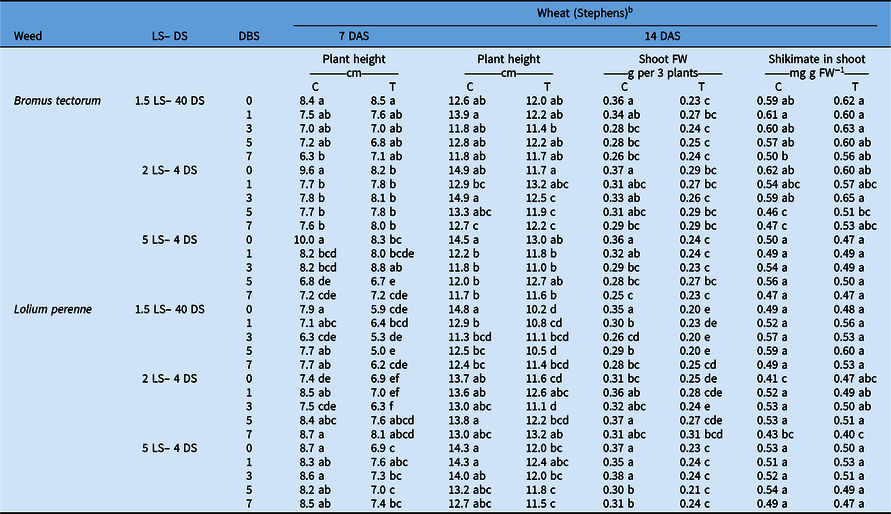
To further examine the potential negative effects of glyphosate, similar studies were conducted using a different Stephens (Table 5). Wheat shoot fresh weight was inhibited when wheat seeds were sown on day 0 in sandy loam soil that had previously grown B. tectorum that had received glyphosate applications. Growth was inhibited by 36% at the 1.5-leaf stage, 21% at the 2-leaf stage, and 33% at the 5-leaf stage. However, plant height was not inhibited.
Plant height, shoot fresh weight (FW), and shikimate of Stephens wheat grown in sandy loam soil of glyphosate foliar application (600 g ae ha−1) at 0, 1, 3, 5, and 7 d before wheat sowing.a

a Abbreviations: DAS, days after sowing; LS, leaf stage; DS, density (number of plants per pot);DBS, glyphosate treatment days before sowing; C, control; T, treated.
b Significant differences (P < 0.05) between the control and treated in each leaf stage of each weed are indicated with different letters according to Duncan’s multiple range test.
In studies using L. perenne, both wheat height and shoot fresh weight were inhibited. In studies with wheat sown into sandy loam soil 0 d after glyphosate applications to 1.5-, 2-, and 5-leaf-stage L. perenne, wheat plant height was inhibited by 15% to 31% and shoot fresh weight was inhibited by 19% to 43%. These studies used sandy loam soil for two separate phases. In the first phase, L. perenne was grown, treated with glyphosate, and had all aboveground parts cut off and discarded. In the next phase, wheat was planted either 0, 1, 3, 5, or 7 d after herbicide treatments were applied to L. perenne. Glyphosate applications were made at the 1.5-, 2-, and 5-leaf stages. In the control and treated plots for both B. tectorum and L. perenne in sandy loam soil, shikimate accumulation in the shoots did not differ. Although glyphosate application induces intracellular accumulation of shikimate, which can be used as a sensitive physiological indicator for glyphosate toxicity (Henry et al. Reference Henry, Shaner and West2007), the levels of shikimate accumulation in the shoots of the control and treated plants were not different.
Similar to the studies using Tubbs 06, some conditions in which Stephens planted in clay loam soil resulted in increased plant height and shoot fresh weight (Table 6). However, shoot fresh weight was also inhibited under certain conditions. Similar to these studies using sandy loam soil, shoot shikimate accumulation did not differ between control and treated plants.
Plant height, shoot fresh weight (FW), and shikimate of Stephens wheat grown in clay loam soil of glyphosate foliar application (600 g ae ha−1) at 0, 1, 3, 5, and 7 d before wheat sowing.a

a Abbreviations: DAS, days after sowing; LS, leaf stage; DS, density (number of plants per pot); DBS, glyphosate treatment days before sowing; C, control; T, treated.
b Significant differences (P < 0.05) between the control and treated in each leaf stage of each weed are indicated with different letters according to Duncan’s multiple range test.
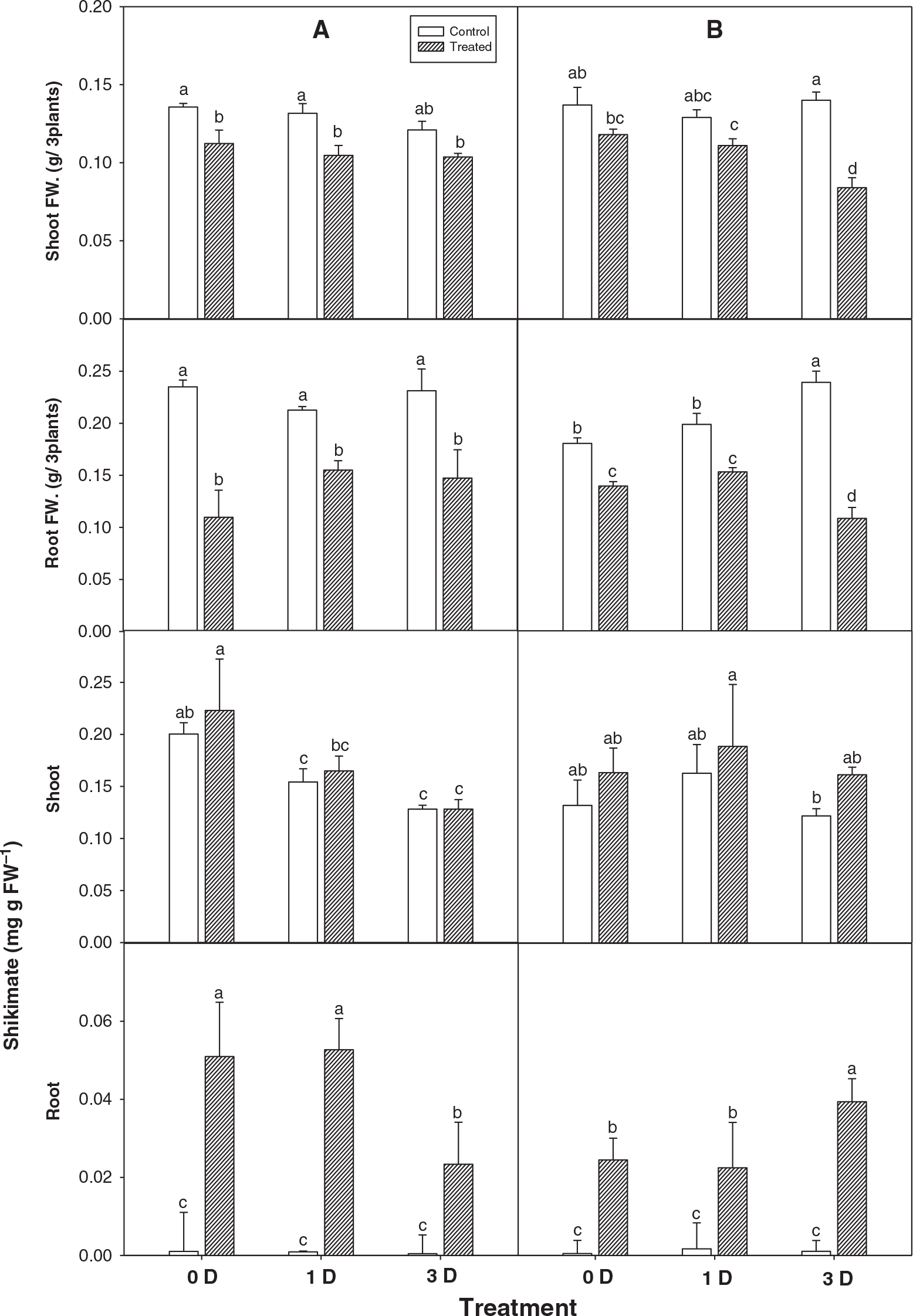
The growth inhibition of wheat crops planted in soil with glyphosate residues was also studied. Stephens shoot fresh weight was inhibited 21% to 23% when the wheat was sown on days 0 and 1 (but not on day 3) after the glyphosate application to B. tectorum at the 1.5-leaf stage in sandy loam soil (Figure 1). Stephens root fresh weight was also inhibited 24% to 54% when the wheat was sown on days 0, 1, and 3 after the glyphosate application to B. tectorum at the 1.5-leaf stage in sandy loam soil. Furthermore, shikimate accumulation in roots increased 51- to 59-fold when wheat was sown on days 0, 1, and 3 after the glyphosate application to B. tectorum at the 1.5-leaf stage in sandy loam soil, compared with control plants. In studies using L. perenne, Stephens shoot fresh weight was inhibited 43% when the wheat was sown on day 3 (but not days 0 or 1) after the glyphosate application to L. perenne at the 1.5-leaf stage in sandy loam soil. Stephens root fresh weight was inhibited 20% to 54% when the wheat was sown on days 0, 1, and 3 after the glyphosate application to L. perenne at the 1.5-leaf stage in sandy loam soil. Therefore, wheat roots were more sensitive to glyphosate residue than wheat shoots. This finding is consistent with a previous study that showed that root tissues from both glyphosate-resistant and non–glyphosate resistant cotton (Gossypium hirsutum L.) seedlings appeared to be especially sensitive to glyphosate (Pline et al. Reference Pline, Wilcut, Duke, Edmisten and Wells2002).
Shoot and root fresh weights (FW) and shikimate in shoots and roots of wheat seedlings (Stephens) grown in sandy loam soil with 600 g ae ha−1 glyphosate applied at 0, 1, and 3 d before sowing to pre-culture of Bromus tectorum (A) and Lolium perenne (B) plants (1.5-leaf stage/40 plants per pot). Parameters were measured at 7 DAS. Significant differences (P < 0.05) between the control and treated in each weed are indicated with different letters according to Duncan’s multiple range test.

Shikimate accumulation in roots increased 13- to 49-fold when wheat was sown on days 0, 1, and 3 after the glyphosate application to L. perenne at the 1.5-leaf stage in sandy loam soil, compared with control plants. However, in both the control and the treated pots of both B. tectorum and L. perenne in sandy loam soil, shikimate accumulation in the wheat shoots did not differ when wheat was sown on days 0, 1, and 3 after the glyphosate application and when shikimate accumulation was measured at 7 DAS. As mentioned previously, the shikimate accumulation in the shoots of treated pots did not differ from that of the control when measured 14 DAS. However, H. annuus seedling shikimate accumulation 14 d after glyphosate application was greater in the roots than in the shoots (Tesfamariam et al. Reference Tesfamariam, Bott, Cakmak, Römheld and Neumann2009). Shikimate accumulation can vary among tissues, depending on the metabolic activity of each tissue and the quantity of translocated glyphosate (Pline et al. Reference Pline, Wilcut, Duke, Edmisten and Wells2002). Thus, plant damage caused by glyphosate was associated with increased shikimate accumulation in the root tissue (Bott et al. Reference Bott, Tesfamariam, Kania, Eman, Aslan, Römheld and Neumann2011).
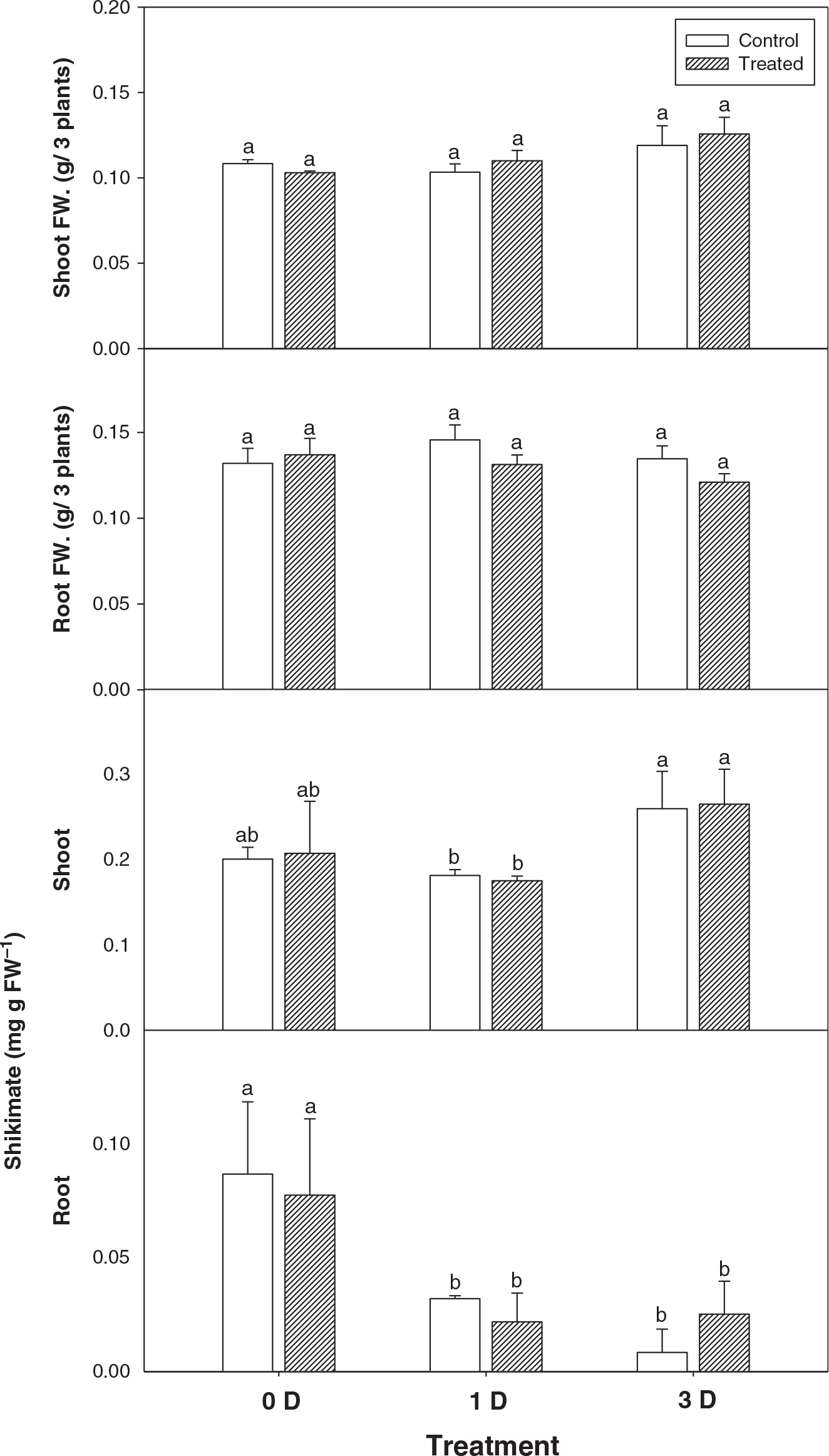
The effects of glyphosate residues in saturated soil conditions on wheat growth and shikimate accumulation were also studied (Figure 2). In both the control and treated pots for L. perenne in sandy loam soil under saturated soil conditions, there were no differences in either shoot or root fresh weight or shikimate accumulation in shoots or roots of wheat, which indicates that glyphosate is likely to leach away from the root zone.
Shoot and root fresh weights (FW) and shikimate in shoots and roots of wheat seedlings (Stephens) grown in sandy loam soil with 600 g ae ha−1 glyphosate applied under saturated soil conditions at 0, 1, and 3 d before sowing to pre-culture of Lolium perenne plants (1.5-leaf stages/40 plants per pot). Parameters were measured at 7 DAS. Significant differences (P < 0.05) between the control and treatment are indicated with different letters according to Duncan’s multiple range test.

We determined the sensitivity level to glyphosate in the two different wheat cultivars used (Table 7). Both shoot and root fresh weight in Stephens were inhibited more by glyphosate than in Tubbs 06. Thus, glyphosate residue effects may vary according to the levels of glyphosate sensitivity in wheat cultivars.
GR50 values for seed bioassay response of Stephens and Tubbs 06 wheat cultivars treated with glyphosate.

a GR50 is the glyphosate concentration that reduced shoot or root fresh weight by 50%. Both shoot and root fresh weight were measured at 7 d after treatment.
b Cultivar ratio calculated based on GR50 values of Tubbs 06 relative to Stephens.
In a similar study, glyphosate applications to Lolium resulted in nonhomogenous germination and large differences in seedling development of H. annuus (Tesfamariam et al. Reference Tesfamariam, Bott, Cakmak, Römheld and Neumann2009). Cornish (Reference Cornish1992) reported detrimental effects of a glyphosate pre-transplanting treatment on young tomato (Solanum lycopersicum L.) plants in field and pot experiments on sandy loam soils, which were still detectable 3 to 4 wk after glyphosate treatment. However, in the present study, glyphosate was applied to target weeds, and then wheat seeds were sown in the same soil. The detrimental effect of glyphosate was detected for 5 d after glyphosate treatment.
Overall, the degree to which crops are damaged by glyphosate residue is dependent on factors such as soil type, soil water conditions, crop cultivar glyphosate sensitivity, target weed species identity, and leaf stages. The results of this study underline the importance of application times as a means to avoid or at least minimize the detrimental effects on wheat.
Acknowledgments
Funding for this research was provided by the Oregon State University and Sunchon National University. No conflicts of interest have been declared.