Introduction
In recent decades, many companies have been competing on reducing the innovation cycle time in order to obtain pioneering profits in the market (Cohen et al., Reference Cohen, Eliasberg and Ho1996). To achieve this goal, these companies can utilize systematic approaches such as Theory of Inventive Problem Solving (TRIZ). The TRIZ was introduced by Genrich Altshuler. TRIZ can help reduce the time needed to achieve an inventive solution and develop a new product (Altshuller et al., Reference Altshuller, Alʹtov and Altov1996). However, this approach does not provide any means to select among the proposed solutions. Moreover, it does not offer any methods to formulate the problems. To solve these drawbacks, several frameworks have been developed by researchers. Among them, it is worth mentioning the Inventive Design Methodology (IDM). IDM is a TRIZ-based systematic approach that has been developed to complement the TRIZ body of knowledge with other theories such as graph theory (Cavallucci and Strasbourg, Reference Cavallucci and Strasbourg2009). This approach includes the following phases (Zanni-Merk et al., Reference Zanni-Merk, Cavallucci and Rousselot2011):
(1) Initial Analysis phase: This phase relates to the gathering of the expert's tacit know-how, the knowledge from patents, and other relevant documents. Subsequently, it is time to use tools such as the Problem Graph to transform the collected knowledge into a graphical model (Hanifi et al., Reference Hanifi, Chibane, Houssin and Cavallucci2019).
(2) Contradiction Formulation phase: In this phase, the designers formulate the contradictions, which are physical and technical problems in a system (Chibane et al., Reference Chibane, Dubois and De Guio2021).
(3) Solution Concept Synthesis phase: In the third phase, the TRIZ methods such as the contradiction matrix and inventive principles are applied to solve the contradictions.
(4) Solution Concept Selection phase: In the final step, the designers can use an evaluation grid to measure the impact of the concepts (Hanifi et al., Reference Hanifi, Chibane, Houssin, Cavallucci, Cavallucci, Brad and Livotov2020b).
However, one of the criticisms often leveled is that IDM is time-consuming and lacks the necessary agility (Chai et al., Reference Chai, Zhang and Tan2005; Cavallucci et al., Reference Cavallucci, Rousselot and Zanni2009; Souili and Cavallucci, Reference Souili and Cavallucci2017). This is because a complete map related to a problem situation has to be built at the beginning of the project without considering its effectiveness in solving the problem. As a result, the Inverse Problem Graph (IPG) method was introduced to formulate a problem situation.
The IPG method (Hanifi et al., Reference Hanifi, Chibane, Houssin and Cavallucci2021, Reference Hanifi, Chibane, Houssin and Cavallucci2022) was developed by several authors to formulate a problem situation in the inventive design process. This method consists of seven main steps, which are as follows: (1) Define the project goal, (2) Determine the initial problem, (3) Identify the causes of the initial problem, (4) Rank the identified causes and select the most important one, (5) Determine the type of the selected cause , (6) Extract the formulated contradiction, and (7) Allocate the appropriate parameters to the formulated contradiction. The formulation of contradictions in the IPG method contrasts with the other methods in helping to formulate problems. Indeed, by applying the IPG method, designers search for the causes of a problem at the lower level of a problem situation. In contrast, using methods such as the Problem Graph, designers look for the effect of a general problem at the upper level (Hanifi et al., Reference Hanifi, Chibane, Houssin, Cavallucci, Nyffenegger, Ríos, Rivest and Bouras2020a, Reference Hanifi, Chibane, Houssin, Cavallucci, Cavallucci, Brad and Livotov2020b). IPG could give the process of IDM the characteristics of agile methodologies, including capacity to generate flexible and rapid response to change and the capability for iterative development (Kumar and Bhatia, Reference Kumar and Bhatia2012). However, the collection of critical data such as parameters and solution concepts within the IDM framework is still done manually, reducing the agility of the process. Hence, it is necessary to integrate automatic information retrieval methods, such as the neural network doc2vec model and machine learning algorithms, into the process to increase its agility.
The doc2vec model was proposed by Le et al. (Le and Mikolov, Reference Le and Mikolov2014) (paragraph vectors) as a document-embedding method in 2014. This model is applicable in text classification and document similarity calculation (Park et al., Reference Park, Cho and Kang2019). Text classification is known as the task of classifying a given text into a set of predefined classes (Dalal and Zaveri, Reference Dalal and Zaveri2011). This can be done by applying machine learning algorithms (Sarkar, Reference Sarkar2019). The main objective of this paper is to integrate the doc2vec model and machine learning algorithms into the inventive design process. Therefore, the main contribution of this paper is to propose a method that facilitates and accelerates the extraction of essential data, helping to develop inventive solutions in the inventive design process.
The rest of the paper is organized as follows. In Section “Literature review”, we present the literature on automatic extraction methods, a review of several document-embedding techniques, a method for measuring the similarity, and a description of several machine learning algorithms. Section “Proposed method” displays the structure of the proposed method and describes the steps of this proposal. Then, we evaluate the machine learning algorithms in the section “Evaluation of the reviewed machine learning algorithms”. In Section “Application of the proposal to lattice structure case study”, a case study is presented in which the proposal is used to formulate the inventive problems related to the lattice structures and extract the solution concepts. In Section “Comparison of the proposal and the problem graph's system”, we make a comparison between our proposal and another automatic technique applied in IDM. We present the discussion in the section “Discussion”. In the last section, we report the conclusion of the paper.
Literature review
Automatic extraction methods to assist designers
In the literature, various methods have been developed to support the designers in the inventive design process by extracting the information. For example, Han et al. (Reference Han, Shi, Chen and Childs2018b) have proposed a computational tool, based on ontology and analogical reasoning, to assist designers in creative idea generation during the initial stages of inventive design. In addition, the authors in Shi et al. (Reference Shi, Chen, Han and Childs2017) developed an approach using data analytic and text mining techniques to extract design information from engineering perspective. Besides, Chen et al. (Reference Chen, Wang, Dong, Shi, Han, Guo, Childs, Xiao and Wu2019) introduced an approach using data mining and artificial intelligence techniques to bring inspiration in a visual and semantic way. Moreover, in the paper (Song et al., Reference Song, Luo and Wood2019), a data-driven method was developed to build a function co-occurrence network based on the function data in prior product designs. This method helps to detect peripheral and core functions to be included in a product platform. The authors in Siddharth and Chakrabarti (Reference Siddharth and Chakrabarti2018) introduced a web-based tool that supports designers in problem-solving by transferring concepts from the biological field to engineering domains. In the paper (Han et al., Reference Han, Shi, Chen and Childs2018a), a computational method, based on simulating aspects of human cognition in obtaining combinatorial creativity, was presented. In addition, Sarica et al. (Reference Sarica, Luo and Wood2020) have developed a method that uses NLP techniques to extract terms from patents. In the literature, there are also several automatic methods that have been proposed within the IDM framework. Our focus in this paper is on the methods related to the initial phase of IDM.
Automatic extraction tools related to the initial phase of IDM
Generally, it is possible to classify the automatic extraction tools utilized in the first phase of the IDM into two major groups:
Automatic tools to extract information from the patents
Patent documents are an important depository of technical knowledge applied to obtain competitive benefits (Li et al., Reference Li, Ming, He, Zheng and Xu2015). To extract patent information, researchers have introduced various patent analysis tools (Valverde et al., Reference Valverde, Nadeau and Scaravetti2017). Nevertheless, in this article, we only discuss those that are related to the first phase of the IDM framework. One of the approaches that automatically extracts the IDM concepts was introduced by Souili et al. (Reference Souili, Cavallucci, Rousselot and Zanni2015). However, one of the drawbacks of this approach is the extraction of partial solutions and problems from the patents without considering the requirements of designers. Hence, Berduygina and Cavallucci (Reference Berduygina, Cavallucci, Arai, Kapoor and Bhatia2020) proposed to use claims hierarchical structure to improve the final output of the IDM-related information extraction tool. This proposal could help removing the repeated information from the extraction. However, drawbacks resulting from the extraction based on the designer's requirements remain in the tool. Another weakness that can be mentioned here concerns the incapability to extract information from scientific papers.
Automatic tools to extract data from scientific papers
Scientific papers include information that their extraction could help improve the quality of human life (Nasar et al., Reference Nasar, Jaffry and Malik2018). Therefore, Nédey et al. developed a tool within the IDM framework to extract problems, partial solutions, and parameters from scientific articles by improving the IDM patent extraction methodology (Nédey et al., Reference Nédey, Souili and Cavallucci2018). Nevertheless, this proposal, as its original method, extracts information beyond the designer's requirements, making their analysis quite laborious and time-consuming.
As we have seen, the tools developed under the IDM framework ignore the main requirements of designers to extract the information. This makes analyzing their results time-consuming. For this reason, in this article, we integrate document-embedding techniques and machine learning algorithms into a graphical method inspired by the IPG method. In the next section, we will review two document-embedding techniques, and we will choose one of them to apply to our proposed method.
Document embedding and similarity computation techniques
The Bag of Words (BOW) is a simple method that represents a text as a fixed-length vector (Zhao and Mao, Reference Zhao and Mao2018). Nevertheless, this method ignores the meaning of the words, the grammar, and the order in a text (Zhang et al., Reference Zhang, Yoshida and Tang2008). Furthermore, BOW does not integrate linguistic meanings either. Therefore, the retrieved information by this method is not understandable (Li et al., Reference Li, Ming, He, Zheng and Xu2015). Moreover, extending the number of texts, using the BOW method, leads to high-dimensional and sparse representation. Hence, it is not an effective method to represent the proximity among the texts (Kim et al., Reference Kim, Kim and Cho2017).
Word2vec has been proposed by Mikolov et al. (Reference Mikolov, Sutskever, Chen, Corrado and Dean2013). This technique permits the calculation of the semantic similarity among two words and to derive similar words semantically (Mimura and Tanaka, Reference Mimura and Tanaka2018). Nevertheless, this method loses this order in a text (Zhang and Zhou, Reference Zhang and Zhou2019). Hence, to overcome this drawback of word2vec, the researchers developed doc2vec.
Doc2vec is an unsupervised method developed by Le and Mikolov (Reference Le and Mikolov2014). This method is an extension of word2vec that can express a document as a vector (Aman et al., Reference Aman, Amasaki, Yokogawa and Kawahara2018). Doc2vec provides the possibility to exploit the semantic information existing in a text. Moreover, this method applies to texts of different lengths (Hanifi et al., Reference Hanifi, Chibane, Houssin and Cavallucci2019). This method can also obtain higher accuracy term vectors by extracting the word order information in the text (Zhang and Zhou, Reference Zhang and Zhou2019). After getting the term vectors of two different texts, the similarity of the terms corresponds to the correlation between their vectors. This similarity can be calculated by a method such as Cosine Similarity (Huang, Reference Huang2008).
Cosine similarity is a method to measure the similarity among two vectors (two sentences) (Chang et al., Reference Chang, Xu, Zhou and Cao2018). This method helps to find similar sentences to a given text. As a result, we integrated it into our method. To extract the type of each sentence and its related parameters, we also need the machine learning text classification algorithms. In the next section, we will review some of these algorithms.
Text classification and machine learning algorithms
Text classification is defined as the task of classifying a given document into a set of predefined classes according to the extracted features (Dalal and Zaveri, Reference Dalal and Zaveri2011). To automate text classification, there are two main types of machine learning algorithms which include (Sarkar, Reference Sarkar2019): (1) Unsupervised learning and (2) Supervised learning. Here, we will focus only on the existing algorithms in the second group, as our proposal uses the provided prelabeled samples to build the model. In what follows, we will describe some of these algorithms.
David Cox developed the logistic regression model in 1958 (Sarkar, Reference Sarkar2019). Logistic regression (LR) is a supervised machine learning classification technique based on the probabilistic statistics of the data (Feng et al., Reference Feng, Xu, Mannor and Yan2014). Logistic regression is classified as follows (Park, Reference Park2013): (1) Binominal or binary logistic model. (2) Multinomial logistic regression model. Logistic regression is effective in predicting categorical outputs (Kowsari et al., Reference Kowsari, Jafari Meimandi, Heidarysafa, Mendu, Barnes and Brown2019).
The Multilayer Perceptron (MLP) was proposed by Rosenblatt in 1958 (Panchal et al., Reference Panchal, Ganatra, Kosta and Panchal2011). The MLP consists of multiple-layers including an input layer, an output layer, and one or more hidden layers between its input and output layers (Ramchoun et al., Reference Ramchoun, Amine, Idrissi, Ghanou and Ettaouil2016). This algorithm is applied in the various business and industrial domains to classify and predict problems (Adwan et al., Reference Adwan, Faris, Jaradat, Harfoushi and Ghatasheh2014).
Random forest (RF) is an ensemble learning classification algorithm that uses bagging to build multiple decision trees (Singh et al., Reference Singh, Halgamuge and Lakshmiganthan2017). Random forest is efficient in handling large datasets and feature sets (Rane and Kumar, Reference Rane and Kumar2018). Besides, it does not overfit on large datasets (Pandey et al., Reference Pandey, Sanyal, Hudait and Sen2017). Additionally, it is one of the most accurate algorithms (Silva et al., Reference Silva, Koga, Cugnasca and Costa2013).
The K-Nearest Neighbor (KNN) was introduced by Cover and Hart in 1968 (Mulak and Talhar, Reference Mulak and Talhar2015). This algorithm classifies the objects based on nearest training samples in the feature space (Imandoust and Bolandraftar, Reference Imandoust and Bolandraftar2013). The KNN classification algorithm is easy to implement (Pawar and Gawande, Reference Pawar and Gawande2012). Moreover, it works well even in multi-class document managements (Kowsari et al., Reference Kowsari, Jafari Meimandi, Heidarysafa, Mendu, Barnes and Brown2019). However, KNN requires more time to categorize texts when there is a large number of training samples (Pawar and Gawande, Reference Pawar and Gawande2012).
The support vector machine (SVM) was introduced by Vapnik (Vapnik, Reference Vapnik1995). SVM is a supervised learning algorithm that is based on Structural Risk Minimization (SRM) principle in the statistical learning theory (Lin et al., Reference Lin, Zhu, Zheng, Dou and Zhou2019). SVM is applied to a wide variety of classification problems including nonlinearly separable and high-dimensional problems (Soofi and Awan, Reference Soofi and Awan2017). This algorithm generally has the highest classification accuracy (Khan et al., Reference Khan, Baharudin, Lee and Khan2010). However, SVM requires more computation time (Khan et al., Reference Khan, Baharudin, Lee and Khan2010).
Proposed method
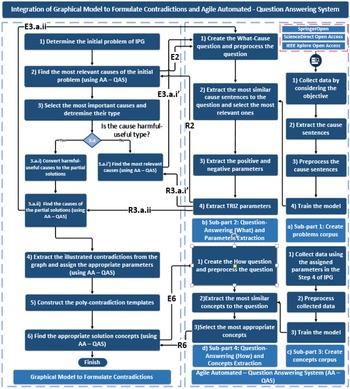
In this section, we integrated doc2vec and machine learning algorithms into a graphical method, inspired by the IPG process, to extract information from existing databases. This enabled us to introduce a new method for the Initial Analysis and Solution Concepts phases of the inventive design process. This method consists of two main parts: (1) Graphical Model to Formulate Contradictions and (2) Agile Automated – Question-Answering System (AA-QAS), which includes the creation of corpora subparts and the question-answering subparts. Figure 1 shows the different parts of this proposal. In the following, we explain these parts in detail.
Integration of modified IPG and agile automated – question-answering system.

Part 1: Graphical Model to Formulate Contradictions: We developed a graphical method, inspired by the IPG method, to link the problem formulation process to the second part.
Step 1: Determine the initial problem of IPG: In the first step of the first part, the initial problem is determined by considering the project objective.
Step 2: Find the most relevant causes of the initial problem: Next, it is time to find the most relevant causes (problems) of the initial problem by entering the Agile Automated – Question-Answering System (AA-QAS) in the second step.
Step 3: Select the most important causes and determine their type: At the beginning of the third step, the designers must select the most important causes (problems). Then, it is time to determine their type. (3.a.i) If the selected causes (problems) are harmful-useful, they must be converted into partial solutions. (3.a.ii) In what follows, the causes of the partial solutions should be determined through the application of AA-QAS. (3.a.i′) If the selected causes (problems) are not harmful-useful, the designers should determine their causes by applying AA-QAS.
Step 4: Extract the illustrated contradictions and assign the appropriate parameters: After demonstrating the contradictions on the graph, it is time to extract them from the graph at the beginning of the fourth step. Then, the parameters are allocated to the contradictions by using the extracted parameters from the corpus.
Step 5: Construct the poly-contradiction templates: In the fifth step, the allocated parameters in the previous step are used to construct the poly-contradiction templates.
Step 6: Find the appropriate solution concepts: At the end of the first part, it is time to extract the solution concepts for the formulated contradictions from the concepts corpus. To do this, it is necessary to enter (E6) subpart 4 to formulate the “How Question”. This question helps to extract the concept from the concepts corpus.
Part 2: Agile Automate – Question-Answering System (AA-QAS): This part of the system allows the designers to extract the essential data, including parameters and concepts, from the project corpora. Part 2 consists of the following parts: (a) Creation of the problems corpus, (b) Question-Answering (What) and parameters extraction, (c) Creation of the concepts corpus, and (d) Question-Answering (How) and concepts extraction.
Subpart 2.1: Creation of the problems corpus: In this subpart, the data collection to create the problems corpus and its training are performed. This subpart includes the following steps:
Step 1: Collect data by considering the objective: In the first step of this subpart, it is essential to collect a considerable amount of data considering the area and objective of the project.
Step 2: Extract the cause sentences: Next, the cause sentences are extracted from the corpus created in the first step. To do this, it is necessary to train the doc2vec model and machine learning algorithms by using the provided data samples, including cause and non-cause labels.
Step 3: Preprocess the cause sentences: In the third step, it is necessary to apply certain preprocessing techniques such as Tokenization, Stopword removal, and Lowercase conversion to remove unnecessary content from the data (Sarkar, Reference Sarkar2019).
Step 4: Train the model: At the end of this subpart, it is necessary to use doc2vec and the extracted cause sentences to train the model. To implement this training, it is possible to apply the Gensim library (Mimura, Reference Mimura2019).
Subpart 2.2: Question-Answering (What) and Parameters Extraction: The second subpart of the proposal facts as an interface between Part 1 and subpart 2.1. Indeed, this part helps to extract the essential data such as the TRIZ parameters from the problems corpus. The second subpart consists of the following steps:
-
Step 1: Create a What-Cause question and preprocess the question: At the beginning of the first step of the second subpart, the designers should formulate the question “What causes the problem?” The problem posed by the question could be a partial solution (E3.a.ii), an initial problem (E2), or any other problem (E3.a.i′) that designers require to know its causes. Then, it is essential to use some preprocessing techniques to eliminate undesirable content from the question.
-
Step 2: Extract the most similar cause sentences to the question and select the most relevant ones: In the second step, the cosine similarity is applied to find the most similar cause sentences to the question. Subsequently, the designers should evaluate them to choose those that are closest to the problem.
-
Step 3: Extract the positive and negative parameters: After selecting the cause sentences, the system extracts the positive and negative parameters existing in the cause sentences by applying a machine learning algorithm in the third step. For this purpose, the system uses our labeled data to train the machine learning algorithm used. The results of Subpart 2.2 can be used as the causes in Step 2 (R2), Step 3.a.ii (R3.a.ii), or Step 3.a.i′ (R3.a.i′) of Part 1.
-
Step 4: Extract TRIZ parameters: In the final step of this subpart, TRIZ parameters related to each cause sentence are extracted regarding the positive and negative parameters. To extract these parameters, the system also uses the provided labeled data.
Subpart 2.3: Creation of the concepts corpus: In this subpart, the collection of data to create the concepts corpus and its training are performed. It includes the following steps:
-
Step 1: Collect data using the assigned parameters in Step 4 of IPG: In the first step, it is essential to collect a considerable amount of data using the assigned parameters in the fourth step of the first part.
-
Step 2: Preprocess collected data: In the second step, it is necessary to use some preprocessing techniques such as Tokenization, Stopword removal, and Lowercase conversion to remove unnecessary content from the data (Sarkar, Reference Sarkar2019).
-
Step 3: Train the model: At the end of this subpart, it is necessary to use doc2vec to train the model.
Subpart 2.4: Question-Answering (How) and Concepts Extraction: It helps to extract the solution concepts from the concepts corpus. The steps in this subpart are as follows:
-
Step 1: Create the How question and preprocess the question: The first step begins with the formulation of the “How Questions”. To do so, it is possible to use the parameters, including TRIZ, positive, and negative parameters, as the keywords. Next, it is time to apply some preprocessing techniques to remove unwanted content from the formulated questions.
-
Step 2: Extract the most similar concepts to the question: The cosine similarity could help the designers to find the most similar concepts to the questions in the second step.
-
Step 3: Select the most appropriate concepts: Finally, the designers must evaluate the concepts in order to select the most appropriate ones. The results (R6) of Subpart 2.4 are used as the solution concepts in Step 6 of Part 1.
Evaluation of the reviewed machine learning algorithms
In this section, we evaluate the accuracy of the reviewed machine learning algorithms for the “Cause, Non-cause” and “Parameters” datasets. Furthermore, we test the ability of the algorithms with the highest precision to predict the labels of several sentences. To perform this evaluation, the system configuration was as follows: Intel Xeon (R) CPU 2.2 GHz, 13 GB RAM in Ubuntu 18.04 environment.
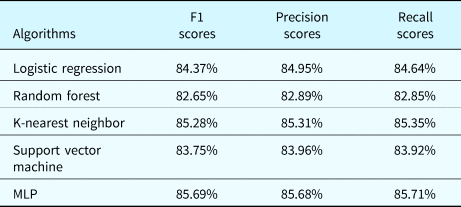
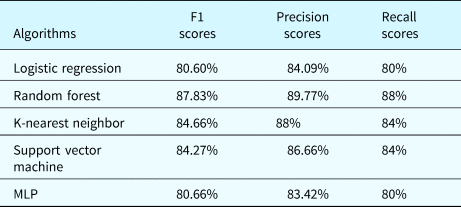
For the first evaluation, we used our “Cause, Non-cause” dataset. Our machine learning algorithm is trained by using this dataset to remove Non-cause sentences from the problem corpus. This dataset consists of 2800 sentences and two labels (61.60% Cause and 38.40% Non-cause). We perform a train-test split using the 80–20 rule where 80% of the data is used for training, and the remaining 20% is applied for testing. The machine learning algorithms reviewed in the literature were trained using the training data and tested on the test set to evaluate their accuracy. For accuracy evaluation, we consider F1, recall, and precision to evaluate the overall accuracy of the machine learning algorithms. Table 1 displays the accuracy of each machine learning algorithm related to the “Cause, Non-cause” dataset.
Accuracy of machine learning algorithms related to the “Cause, Non-cause” dataset

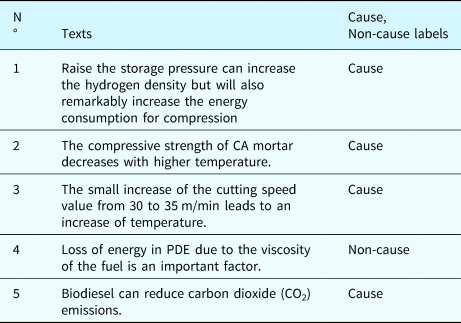
We apply MLP as the algorithm with the highest precision to predict the labels of five new sentences for the “Cause, Non-cause” dataset. Table 2 shows the result of this application. As the table shows, there is only one error in these predictions. The algorithm predicted non-cause for the sentence N° 4, while its label should be “Cause”.
Results related to the application of MLP algorithm to predict the “Cause, Non-cause” labels of five sentences

The “Parameters” dataset is used for the second evaluation of machine learning algorithms. This dataset is applied in our process to train our machine learning algorithms, helping to extract the parameters from the sentences. The parameter dataset consists of 3607 sentences and the 4 following groups of parameters: (1) The “Positive TRIZ Parameters” group includes 40 labels (39 TRIZ parameters labels + nan label); (2) The “Negative TRIZ Parameters” group consists of 40 labels (39 TRIZ parameters + nan label); (3) The “Positive Parameters” group has 78 labels; and (4) The “Negative Parameter” group includes 51 labels. To evaluate the reviewed machine learning algorithms by the parameters dataset, we first selected eight highest labels in each group of parameters as follows:
(1) “Positive TRIZ Parameters” group (469 sentences, Parameters: 15.77% Strength, 14.07% Object-generated harmful factors, 13.21% Temperature, 12.36% Use of energy by stationary object, 11.72% Loss of energy, 11.30% Speed, 10.87% Quantity of substance, 10.66% nan (nan means that there is not positive TRIZ parameter in the sentence), …).
(2) “Negative TRIZ Parameter” group (410 sentences, Parameters: 13.90% Strength, 13.41% Loss of energy, 12.92% Temperature, 12.68% Loss of substance, 12.43% Reliability, 11.95% Use of energy by stationary object, 11.46% Object-generated harmful factors, 11.21% nan (nan means there is not negative TRIZ parameter in the sentence),…).
(3) “Positive Parameters” group (327 sentences, Parameters: 13.76% Weight, 13.45% Energy consumption, 13.14% Energy efficiency, 12.84% Thermal conductivity, 12.53% CO2 emission, 11.92% Density, 11.62% Thermal stability, 10.70%, nan (nan means that there is not a positive parameter in the sentence), …).
(4) “Negative Parameters” group (230 sentences, Parameters: 7.80% Energy consumption, 7.80% Temperature, 7.80% Loss of energy, 7.56% Compressive strength, 7.56% Weight, 5.85% Energy dissipation, 5.85% Material loss, 5.85% nan (nan means that there is not a negative parameter in the sentence),…).
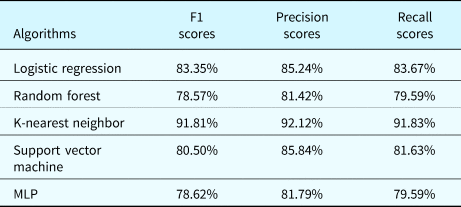
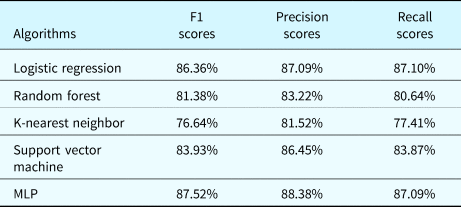
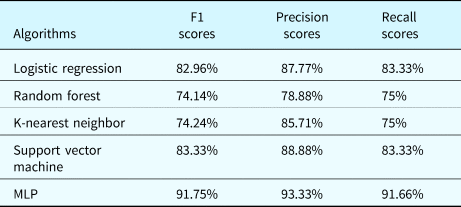
Then, we performed a train-test split using the 80–20 rule where 80% of data is used for training, and the remaining 20% is used for testing. In what followed, the reviewed machine learning algorithms in the literature were trained using the training data and tested on the test to verify their accuracy. Tables 3, 4, 5, and 6 show the accuracy for each machine learning algorithm related to the parameter dataset.
Evaluation of machine learning algorithms for the “Positive TRIZ Parameter” group

Evaluation of machine learning algorithms for the “Negative TRIZ parameter” group

Evaluation of machine learning algorithms for the “Positive Parameter” group

Evaluation of machine learning algorithms for the “Negative Parameter” group

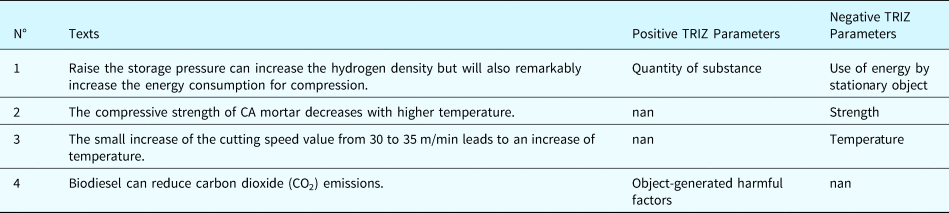
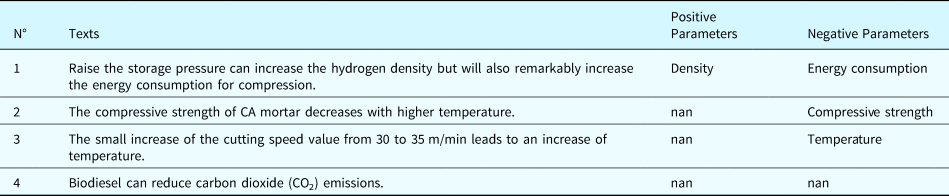
We applied the algorithms with the highest precision to predict the labels related to four groups of the parameter dataset for four sentences. Tables 7 and 8 illustrate the result of these predictions. As shown in the tables, there is one error for the “Positive Parameters” group in Table 8. The machine learning algorithm we used predicted “nan” for sentence N°4, while its label should be “CO2 emission”.
Results related to the application of the machine learning algorithms with the highest accuracy to predict the “Positive and Negative TRIZ Parameters” labels of four sentences

Results related to the application of the machine learning algorithms with the highest accuracy to predict the “Positive and Negative Parameters” labels of four sentences

Application of the proposal to the lattice structure case study
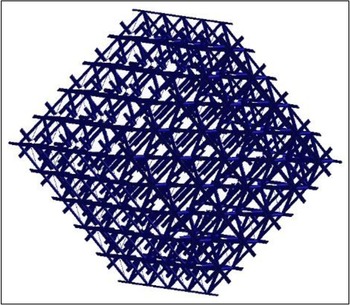
In this section, we applied the proposed method “Integration of Graphical Model to Formulate Contradictions and Agile Automated – Question-Answering System” to the Lattice Structure (LS) case study. This application helps us to evaluate its applicability. Due to the wide use of LS in energy-absorbing applications, the energy absorption of this kind of structure has always been an interesting research topic for materials scientists and engineers (Li et al., Reference Li, Liao, Dai and Xie2019; Edouard et al., Reference Edouard, Chibane and Cavallucci2021). Energy-absorbing structures are the components that convert kinetic energy into other types of energy, such as plastic strain through large deformations of the material (Fazilati and Alisadeghi, Reference Fazilati and Alisadeghi2016). Figure 2 illustrates a lattice structure. In this case study, we will identify the factors that affect the energy absorption of the lattice structure and extract the possible solution concepts. To do so, we first created the problems corpus by collecting about 7000 articles. We, then, applied the proposed method to formulate the inventive problems related to the lattice structure case and extract their possible concepts. In the following, we will explain the steps of this application.
An example of a lattice structure.

First part
In the first part of the case study, we created a problem database by following these steps: At the beginning of the first step of this part, we chose “Improvement of the energy absorption of the Lattice Structure” as the objective. Then, we downloaded about 7000 articles, including 231,360 sentences, using “Lattice Structure” as the keyword, from the ScienceDirect Open Access, SpringerOpen, and IEEE Xplore Open Access data sources. After collecting the data, we extracted the cause sentences in the second step. To do so, we first trained our doc2vec model by applying the prepared data sample, including “Cause and Non-cause” labels. Then, we used MLP as one of the evaluated machine learning algorithms to extract the cause sentences. In the third step, we used the standard Natural Language Toolkit (NLTK) python library to perform the preprocessing of the extracted cause sentences. We trained the doc2vec model by applying the extracted cause sentences in the last step of this part. This helps to use cosine similarity to extract the similar cause sentences to the question from the corpus.
Second part
In the second part of the case study, we formulated the contradictions related to the lattice structure by following the steps defined in Subpart 2.2 of the AA-QAS and Part 1:
In the first step of this part, we determined the initial problem, which was that “The energy absorption of the lattice structure is reduced”, by considering the project objective.
After defining the initial problem, we had to determine the causes of this problem in the second step. Therefore, we entered the AA-QAS to use the information in the database. For this purpose, we first formulated our question, which was “What reduces the energy absorption of the lattice structure?” Then, we preprocessed the question by lemmatization, lowercase conversion, and tokenization. In what followed, we used the most similar method to find the cause sentences nearest to our formulated question. Table 9 displays some of these sentences. We should also mention that the minimum threshold for this case study is considered to be 0.70.
Part of the similar cause sentences to the first formulated question

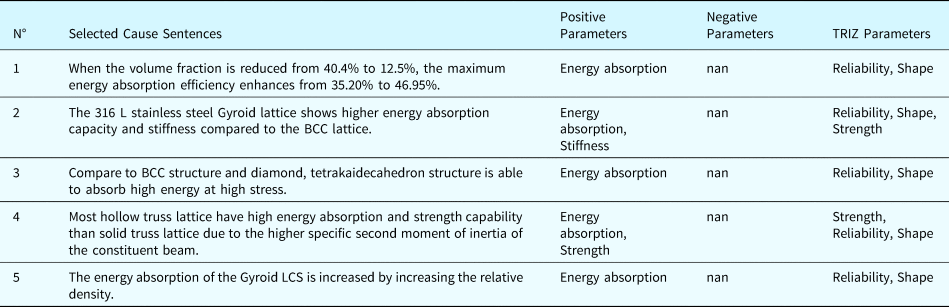
Subsequently, we analyzed the proposed cause sentences and selected the most relevant ones, as shown in Table 10, for the defined initial problem of the Inverse Problem Graph.
The selected cause sentences related to the first formulated question and their extracted parameters

We extracted the parameters, including the positive, negative, and TRIZ parameters in the third step of the second part. To do so, we first trained our machine learning algorithm. Subsequently, this algorithm allowed us to extract the parameters. Table 10 also shows the extracted parameters related to the selected causes.
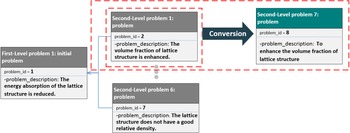
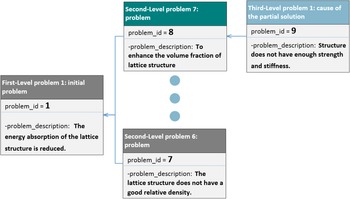
In the fourth step, we first wrote them down in an appropriate format and linked them to the initial problem, as Figure 3 illustrates. In this figure, the first cause “The volume fraction of the lattice structure is enhanced” was inspired by the first row of Table 10, which is “when the volume fraction is reduced from 40.4% to 12.5%, the maximum energy absorption efficiency enhances from 35.20% to 45.95%”. In the same way, we formulated the other causes of the initial problem based on the other rows of Table 10. Then, we should select the most important causes. Here, we selected just one cause, which is “The volume fraction of the lattice structure has been enhanced”, in order to show the application of our method. Next, we needed to determine the type of selected cause by asking the question “Is the cause harmful-useful type?”. In this case study, our selected cause “The volume fraction of the lattice structure has been increased” was a harmful-useful problem. Hence, we had to convert this problem to the partial solution “To enhance the volume fraction of the lattice structure”, which means that we converted the problem structure to the partial solution structure, as Figure 3 demonstrates.
Connection of the causes to the initial problem, selection of the most important causes, and conversion of the selected causes to the partial solution.

Once the selected cause was converted to the partial solution, we formulated the following question “What enhances the volume fraction of the lattice structure” at the beginning of the fifth step. We then preprocessed the question, and we extracted the cause sentences most similar to the question. Table 11 shows some of the extracted cause sentences from the database.
Part of the similar cause sentences to the second question

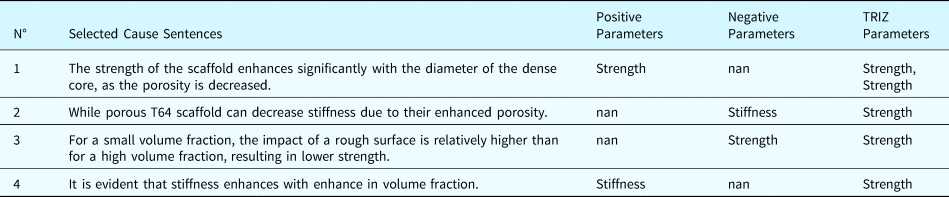
In the sixth step, we selected the most probable causes of partial solutions and extracted their parameters by applying our machine learning algorithm, as shown in Table 12. As the first row in the table shows, the system also proposed the sentences that include “porosity”, being one of the nearest words to volume fraction.
The selected causes related to the second question and their extracted parameters

We interpreted the selected causes of the partial solution to write them on the graph in the seventh step. Figure 4 illustrates the graphical model of this case study.
Graphical model of the case study.

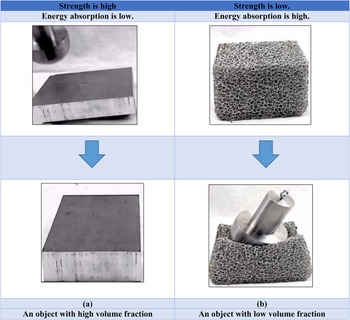
In the eighth step, we extracted the illustrated contradiction for the selected cause from the graphical model, as shown in Figure 6. The contradiction in this image is between the energy absorption of the structure and its strength. This means that attempting to enhance the strength results in reducing energy absorption. Figure 5 illustrates two different structures, one with a high energy absorption, Figure 5b, and the other with a high strength, Figure 5a. As shown in Figure 5a, the structure with a high strength and low energy absorption leads to the rebound of the object. Conversely, as shown in Figure 5b, the structure with a high energy absorption and low strength is deformed to absorb the kinetic energy.
Comparison of the strength and energy absorption of two structures with a low and high volume fraction (“Duocel® Foam Energy Absorbers”).

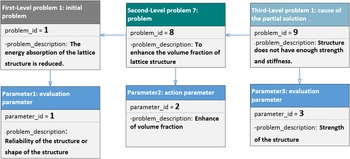
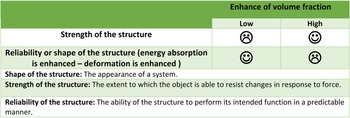
In the ninth step, we assigned the evaluation parameters to the initial problem and the cause of the partial solution, and the action parameter to the partial solution, as Figure 6 demonstrates. To do so, we used the extracted parameters by our system. These parameters help us to extract the concepts from our database. In this allocation, we allocated two parameters to the energy absorption, as Figure 6 displays. The first one is “Reliability of the structure” and the second one is “Shape of the structure”.
Allocation of parameters to the extracted contradiction.

In the final step of the second part, we should apply the assigned parameters in the previous step of the proposal to construct our poly-contradiction table, as presented in Figure 7.
Construction of poly-contradiction by applying the parameters.

Third part
In the third part of our case study, we created a concepts database by using the assigned parameters of the ninth step of the case study. This part consists of the following steps:
In the first step of the third part, we downloaded the articles from the scientific data sources by using the assigned parameters, including energy absorption and strength, in the tenth step of the second part as the keywords. We used the standard Natural Language Toolkit (NLTK) python library to implement the preprocessing of the extracted data in the second step. In the last step of the third part, we trained the model by applying doc2vec.
Fourth part
In the fourth part of the case study, we extracted the solution concepts from the created concepts database through the following steps:
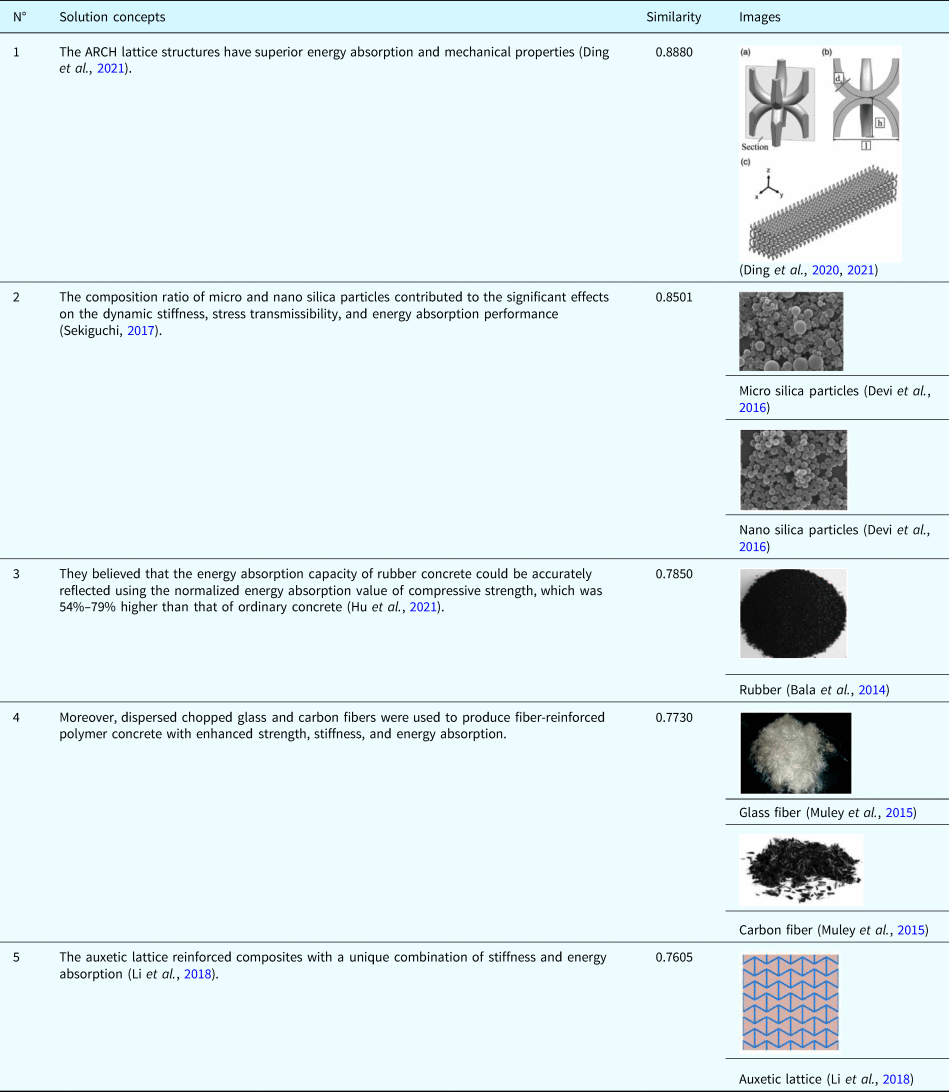
In the first step of this part, we formulated the question “How is it possible to increase the energy absorption (positive parameter) without reducing the strength (negative parameter) of the lattice structure?”. This question helped us to extract the solution concepts from the concepts database in the second step of the fourth part. In the final step, we analyzed the extracted concepts to select the most appropriate ones. Table 13 displays the extracted concepts by the system. These concepts help us to develop our solutions.
The extracted solution concepts from the concepts database for the formulated contradiction

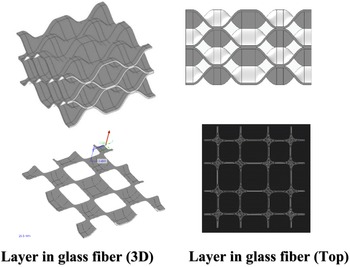
At the end of this case study, we combined the first (application of the arch geometry) and the fourth concept (application of glass fiber and carbon fiber as the material) to develop our solution. We were inspired by the first concept “The ARCH lattice structures have superior energy absorption and mechanical properties” to add arch geometry to the interior surface of our lattice structure. Besides, the fourth concept helped us to use glass fiber as the material of one of the layers of the structure. This concept also served us to apply Onyx (a mix of carbon fiber and plastic) to construct other layers. Figure 8 displays the different views of our proposed lattice structure.
The proposed solution for the lattice structure.

Comparison of the proposal and the problem graph's system
In this section, we compare our proposal with the conventional system based on the Problem Graph method.
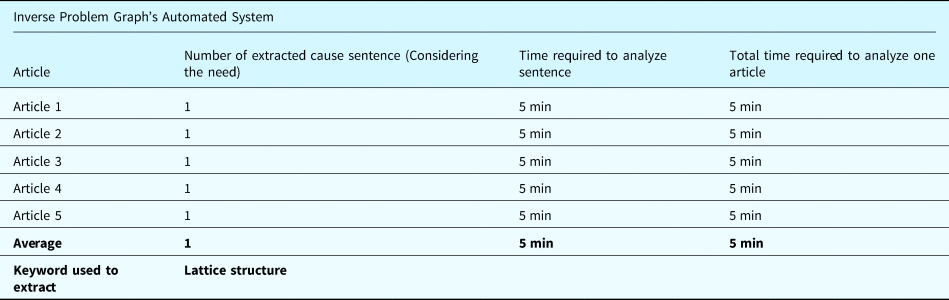
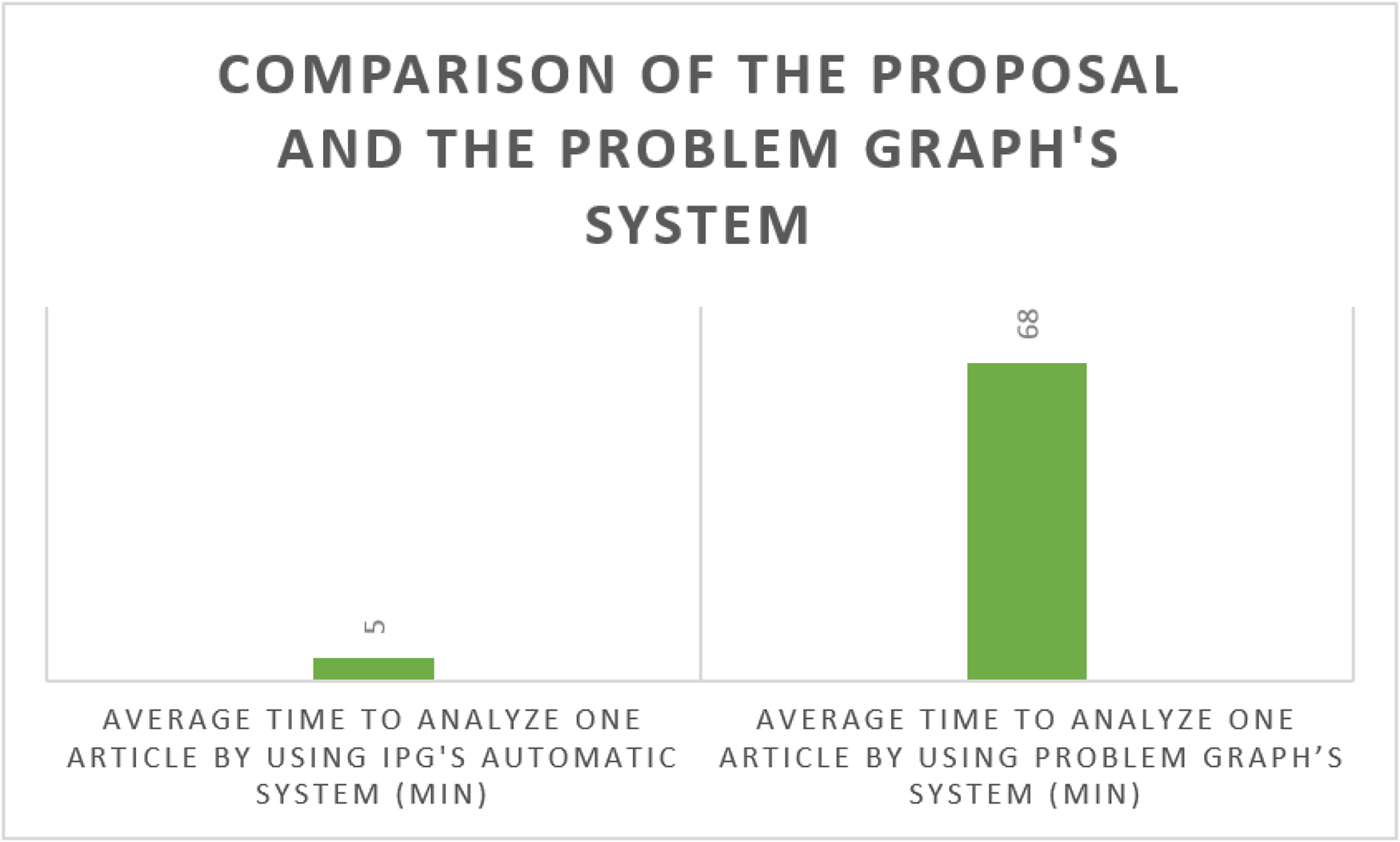
To analyze the IPG's automated system, we selected five articles related to the extracted sentences for the Lattice Structure case study. As shown in Table 14, the system extracted one cause sentence from each of the selected articles by considering the need of the designer (formulated question). Considering that the analysis of each sentence requires 5 min, the analysis of each of the articles also took 5 min (1 × 5 = 5 min). Therefore, the average time to analyze one article through the application of IPG's automated system is 5 min, as illustrated in the table.
Analysis of the IPG's automated system

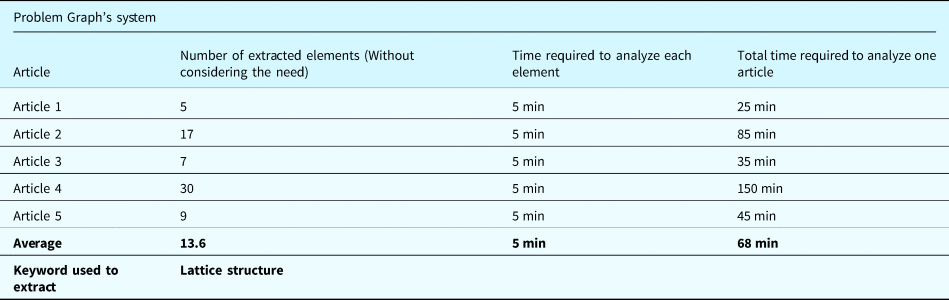
Table 15 illustrates the information about the capability of the Problem Graph's automated system in extracting the elements from the article. To construct this table, we used the same article as the one used to analyze the IPG's automated system. As shown in Table 15, the number of retrieved elements for the first article, without considering the designer's requirement, was five. Considering that the analysis of each element required 5 min, the analysis of the first article took 25 min. The automatic system retrieved 17 partial solutions and problems from the second article. Hence, the analysis of the whole article required 85 min. Table 15 shows the number of extractions for the other three articles, as well as the time required for their analysis. The table also displays the average time (68 min) required to analyze the extracted data from the conventional system.
Analysis of the conventional system based on the problem graph

Here, we compared the collected information in Tables 14 and 15. As shown in the “Number of extracted cause sentences” column in Table 14, the IPG's automated system extracted the cause sentences from the articles by using its question-answering part. This part allows the system to take into account the needs of designers in each extraction, thus reducing the total time required to analyze one item. In contrast, as the column “Number of extracted elements” in Table 15 illustrates, the conventional system extracts all the elements from the article without considering the needs of the designers. This increases the analysis time of one article in this system. Figure 9 shows a comparison between the average time to analyze one article in the IPG's automated system and the conventional system.
Comparison of the proposal and the problem graph's system in average time to analyze one article.

Discussion
In this paper, we presented an automated method to retrieve the information such as parameters and solution concepts. The contribution of this work to the inventive design process is reflected in several aspects. First, the use of similarity computation in the automated system can help to extract similar cause sentences to the formulated questions from scientific data. This capability of the system can facilitate and accelerate the collection of data by the designers in the initial analysis phase of inventive design process. As the second contribution, the system can extract the parameters, including positive, negative and TRIZ parameters, from the cause sentences by using machine learning text classification algorithms. This can significantly reduce the amount of time and effort required to formulate a problem situation in the process. As the third, the use of assigned parameters to the formulated problems enables the designers to extract the nearest concepts to the formulated problems. The existence of this capability in the process can facilitate and accelerate the development of inventive solutions for the designers. As the last contribution, we can mention that the application of our proposal helped to design a new lattice structure in the case study section of this article. This new structure can improve the energy absorption of materials, which can be used for shock absorption and cushioning applications.
Our analysis of these initial results shows some limitations that we would also like to underline. The first is that the formulation of the questions has an impact on the information retrieved by the system. Hence, if the system does not receive an appropriate question, it will not be able to propose acceptable sentences, used as the problems or the concepts. One of the solutions to this drawback could be the integration of an automatic system that proposes questions to the designers. Secondly, this system does not provide any technique to evaluate and select the extracted concepts. To solve this drawback, it is essential to integrate the method into the process that makes the evaluation and the selection of the proposed concepts possible. The third drawback is that the system uses supervised machine learning algorithms, which learn from data samples and their associated training labels. Providing a complete data sample to help the system extracts the parameters is time-consuming. In this case, using transfer learning in future works can reduce the amount of labeled data and resources needed to train new models.
Conclusion
In this study, we developed a new method for extracting essential information, including parameters and solution concepts, in the inventive design process. To propose our method, we first reviewed some of the leading document-embedding techniques to highlight their advantages and limitations. As such, we selected doc2vec, which can extract semantic and order information from text. Next, we analyzed one of the most common techniques, called cosine similarity, to measure the similarity among extracted vectors by doc2vec. In what followed, we reviewed several machine learning algorithms. In the end, we proposed to integrate doc2vec, cosine similarity, and the machine learning algorithms into a graphical method to develop a new approach. We then tested the capability of the approach to collect essential parameters and concepts by applying it to the case study of Lattice Structure. Based on this application, we realized that our proposal could facilitate and accelerate the formulation of contradictions and the extraction of concepts in the inventive design process.
Further research is necessary to appreciate our proposal. As the first one, in order to facilitate question formulation, it is possible to integrate a question/suggestion system, proposing the relevant questions to the designers through the application of the keywords related to a formulated contradiction. Secondly, another future study might be to develop a method to facilitate the evaluation of concepts for the designers.
Masih Hanifi is a Post-Doctoral Researcher at INSA of Strasbourg, Strasbourg, France. His research interests are in the fields of Industrial Engineering, Inventive Design, and Artificial Intelligence.
Hicham Chibane is an Assistant Professor at INSA of Strasbourg, Strasbourg, France. His research interests include Design Engineering and Mechanical Engineering.
Remy Houssin is a Professor at the University of Strasbourg, Strasbourg, France. His research interests include Industrial Engineering and Mechanical Engineering.
Denis Cavallucci is a Professor at INSA of Strasbourg, Strasbourg, France. His research interests include Industrial Design, Industrial Engineering, Mechanical Engineering, and Artificial Intelligence.
Naser Ghannad is a Ph.D. candidate at INSA of Strasbourg, Strasbourg, France. His research interests include Artificial Intelligence and Industrial Engineering.