Introduction
Parasitism refers to a type of relationship between two living beings, parasite and host. The parasite obtains some kind of benefit from the host, which always suffers a damage, being able to cause a disease or sometimes death.
The first parasites appeared on the earth millions of years ago (Poulin, Reference Poulin1996). Fossil ectoparasites of the Paleozoic era and numerous fossils of helminths and arthropods of the Mesozoic era have been found. The study of ancient documents shows that the Chinese, Indian, Persian, Babylonian, Egyptian, etc., cultures were already familiar with macroscopic parasites, certain parasitic diseases and remedies to combat them (Cordero del Campillo et al. Reference Cordero del Campillo, Rojo Vázquez, Martínez Fernández, Manga González and Quiroz Romero2001).
However, parasitology, understood as the science that studies parasitism or the inter-relationship between parasite and host, is a relatively modern science. For centuries, the parasites were studied in isolation from a zoological perspective. It was in the 19th century when experimental parasitology was born with the knowledge of some biological cycles of parasites; but it was in the 20th century that Parasitology underwent a major advance with achievements such as the in vitro culture of parasites, the incorporation of immunological techniques or the use of the electron microscope, allowing a detailed knowledge of parasitic protozoa (Cox, Reference Cox2002).
Since the 1980s, new molecular biology techniques have made it possible to better understand the phenomenon of parasitism and parasites. The genome has been deciphered from a large number of parasitic species as well as mutations related to drug resistance (Ersfeld, Reference Ersfeld2003; Ivics, Reference Ivics2009; Jackson, Reference Jackson2015). They have also been deciphered complicated mechanisms of adaptation of the parasites or mechanisms of evasion to the immune response of the host (Hisaeda et al. Reference Hisaeda, Yasutomo and Himeno2005; Schmid-Hempel, Reference Schmid-Hempel2009; Cressler et al. Reference Cressler, McLeod, Rozins, van Den and Day2015).
The human parasitology studies the eukaryotic parasites (protozoas, helminths and arthropods) that affect the human, being able to cause them disease. It is estimated that 20% of the world's population has at least one parasite. The best parasites, usually, do not kill their host, because their survival depends on them. Thus, the parasitosis can present high prevalence rates and morbidity but low mortality since they usually have a chronic evolution (Chagas disease, schistosomiasis).
Soil-transmitted helminths are the most widespread in the world. However, prevalence rates in many cases are not associated with morbidity rates because they depend on the number of parasites hosted by the host, duration of parasitization and multiparasity (Brooker, Reference Brooker2010; Brooker and Bundy, Reference Brooker and Bundy2013). In this group of parasites, the four most prominent nematode worm species are: Ascaris lumbricoides (roundworm), Trichuris trichiura (whipworm), Ancylostoma duodenale and Necator americanus (hookworms), with high prevalence rates in sub-Saharan Africa, East Asia, China, India and South America. The severity of these parasitosis is mainly due to the fact that they mainly affect the child population with the consequent delay in their physical and cognitive development (Drake et al. Reference Drake, Jukes, Sternberg and Bundy2000; Stephenson et al. Reference Stephenson, Latham and Ottesen2000).
For a long time, parasitic diseases have been associated with tropical countries where hygienic and sanitary conditions are deficient. However, nothing further from reality. In the last decades, the developed countries have witnessed an emergency of certain parasitosis due to diverse causes: migrations, tourism, importation of alimentary customs, internationalization of commerce, etc. To this, we must add the increase of immunocompromised people due to iatrogenic or infectious causes (HIV), which are parasitized by certain groups of parasites that act as opportunistic agents such as Pneumocystis, Blastocystis, Cryptosporidium, Toxoplasma, Isospora, Giardia spp. and all human Microsporidians (Mehlhorn, Reference Mehlhorn2001; Tzipori and Widmer, Reference Tzipori and Widmer2008).
It is difficult to know the exact extent of the parasites worldwide since in many countries it is not obligatory to notify their presence to the health authorities; and it is in these countries that parasitic diseases normally affect a large part of the population. In addition, in many cases the parasitosis can be asymptomatic or with an unspecific clinical symptomatology that makes its diagnosis difficult and therefore not registered.
In developed countries, parasitic protozoans such as Cryptosporidium and Giardia, which are transmitted through water, are primarily responsible for gastroenteritis and nutritional disorders in humans. Data collected in the last decades show the large number of outbreaks in New Zealand, Australia, USA and Europe (Baldursson et al. Reference Baldursson2011; Efstratiou et al. Reference Efstratiou, Ongerth and Karanis2017). The characteristics of these protozoa, such as the small size of oocysts and cysts or their resistance to traditional disinfection systems, favour their transmission through water (Carmena, Reference Carmena2010). The lack of surveillance systems in developing countries is the reason why there are no figures on outbreaks of these parasites, even though in these countries water is one of the main routes of disease transmission.
Other protozoan species like Entamoeba histolytica, Toxoplasma gondii, Balantidium coli, Cyclospora cayetanensis, Microsporidia, Isospora, Naegleria spp. Sarcocystis spp., B. coli, Acanthamoeba spp. and Blastocystis hominis may also be transmitted through drinking water and cause infections (Curry and Smith, Reference Curry and Smith1998; Stauffer and Ravdin, Reference Stauffer and Ravdin2003; Plutzer and Karanis, Reference Plutzer and Karanis2016). Among them, E. histolytica is the parasite with the highest prevalence worldwide and approximately 50% of the cases are recorded in the African continent. The risk of an amebiasis is greater in countries where sanitary and hygienic conditions are deficient. Rates of morbidity and mortality in developing countries are high. The number of people parasitized each year in the world is around 50 million, although only 10% develop the disease. Of these, only complications at the colon or liver level may occur in some severe cases (Chacín-Bonilla, Reference Chacín-Bonilla2013).
Food is also an important source of parasite transmission. In 2014, FAO produced a report identifying the main parasites transmitted by ingestion of fresh produce, meat or fish worldwide (FAO/WHO, 2014). This includes four protozoans: Cryptosporidium spp, E. hystolitica, T. gondii and Trypanosoma cruzi; and six helminths: Taenia solium, Echinococcus granulosus, Echinococcus multilocularis, Trichinella, Opisthorchiidae and Ascaris spp.
In 2015, WHO published the paper ‘WHO estimates of the global burden of foodborne diseases’, which highlights the importance of foodborne diseases caused by protozoa and parasitic helminths that cause high rates of morbidity and mortality in the world in certain areas of our planet (WHO, 2015). This study provides interesting data on protozoans such as Toxoplama gondii, tapeworms such as T. solium and E. multilocularis, some trematodes such as Clonorchis, and nematodes such as Trichinella spp.
The world distribution of foodborne parasites varies widely by region, but some protozoans such as T. gondii and T. solium (pork tapeworm) are present on all continents. Both are transmitted by the consumption of raw or undercooked meat. The problem with T. solium is that in developing countries, where it is endemic, there are no health surveillance controls. The problem with the identification of T. gondii is that the methodology used in food is very expensive. In fact, they are not even done in developed countries.
Toxoplasma gondii is considered as the most widespread protozoan parasite worldwide. It is estimated that approximately one-third of the world's population is parasitized by it (Montoya and Liesenfeld, Reference Montoya and Liesenfeld2004). The source of contamination may be meat containing parasite cysts or accidental ingestion of eggs removed in the feces of a cat, its definitive host. Although infection in immunocompetent persons is usually asymptomatic, the severity of this parasite is found when it affects immunosuppressed persons or pregnant women. In people with a poor immune system, the parasite can trigger a serious illness (Moorthy et al. Reference Moorthy, Smith and Rao1993; Contini, Reference Contini2008). If the infection is acquired during pregnancy, it can cause abortions or neurological malformations in the fetus (Torgerson and Mastroiacovo, Reference Torgerson and Mastroiacovo2013). In the last decades, it is important to point out that many authors try to establish a relationship between toxoplasmosis and psychiatric disorders such as schizophrenia or bipolar disorder, as well as aggressive or suicidal behaviours (Yolken et al. Reference Yolken, Bachmann, Ruslanova, Lillehoj, Ford, Torrey and Schroeder2001; Del Grande et al. Reference Del Grande, Galli, Schiavi, Dell'Osso and Bruschi2017). In Europe, T. gondii can cause up to 20% of foodborne morbidity and affects more than one million people in the region each year.
The tapeworm T. solium (pork tapeworn) is a cosmopolitan parasite with a wide distribution worldwide. In humans, taeniasis can be caused by meat intake with cysticerci (larval stage). It can also cause cysticercosis or neurocysticercosis by eating fresh products contaminated with parasite eggs or by food handling by people with tapeworms with poor hygienic habits. In countries of Latin America, Africa and Asia, the neurocysticercosis is very widespread. Phenomena such as immigration or travel to endemic areas have caused infection with the larval form and thus the development of neurocysticercosis is increasing in developed countries due to increased immigration and travel to endemic areas. In the USA, this infection has acquired great importance in recent years. It is estimated that about 2000 people are diagnosed each year with this disease, which can lead to certain neurological disorders such as epilepsy (Ndimubanzi et al. Reference Ndimubanzi, Carabin, Budke, Nguyen, Qian, Rainwater, Dickey, Reynolds and Stoner2010).
A widespread parasite worldwide is the nematode helminth Trichinella spp. This is transmitted through the consumption of raw or undercooked meat (with the cystic larvae), mainly pork meat. In Europe, horse and boar meat are also a source of infection. During the period 1986–2010, 65 818 new cases were registered in 41 countries. Of these, 87% occurred in Europe, and 50% of them in Romania (Blaga et al. Reference Blaga, Durand, Antoniu, Gherman, Cretu, Cozma and Boireau2007; Darwin Murrell and Pozio, Reference Darwin Murrell and Pozio2011). In developed countries outbreaks associated with Trichinella are normally associated with boar consumption (Rodríguez de las Parras et al. Reference Rodríguez de las Parras, Rodríguez-Ferrer, Nieto-Martínez, Ubeira and Gárate-Ormaechea2004; Holzbauer et al. Reference Holzbauer, Agger, Hall, Johnson, Schmitt, Garvey, Bishop, Rivera, De Almeida, Hill, Stromberg, Lynfield and Smith2014).
Echinococcosis is a food-borne parasitic disease and is now considered an emerging parasitic disease. This is produced by different species of taeniid cestodes of Echinoccus genus. The most widespread species are E. granulosus, cause of cystic echinococcosis, and E. multilocularis, cause of alveolar echinococcosis (Moro and Schantz, Reference Moro and Schantz2009). Humans are contaminated by eating fruits or vegetables contaminated with adult worm eggs released in the feces of the definitive host, which varies by species (dogs, foxes and other wild carnivorous animals). Echinococcus multilocularis has become very important because of its expansion from endemic areas to non-endemic areas in North America, Europe and Japan, apparently by a displacement of fox populations. In Central and Eastern Europe, alveolar echinococcosis has increased with increasing populations of foxes. There has been an increase in the number of cases in Germany, Lithuania, Slovakia, Slovenia and Switzerland (Hotez and Gurwith, Reference Hotez and Gurwith2011).
Parasitosis caused by liver flukes or trematodiasis are also considered to be emerging public health problems (Clausen et al. Reference Clausen, Madsen, Van, Dalsgaard and Murrell2015). In some Southeast Asian countries, the food-borne trematodiases (Opisthorchiasis and Clonorchiasis, Fascioliasis, Paragonimiasis and Intestinal Flukes) are endemic (Graczyk and Fried, Reference Graczyk and Fried2007) as a consequence of the ingestion of raw fish or crustaceans and certain aquatic plants (Sripa et al. Reference Sripa, Kaewkes, Intapan, Maleewong and Brindley2010). The highest prevalence rates occur in East Asia and South America. Infections caused by trematodes are usually asymptomatic except in cases where parasitism is high. However, chronic infection usually causes serious pathologies (Lim, Reference Lim2011; Xia et al. Reference Xia, Jiang and Peng2015). It is important to remember that the International Agency for Research on Cancer (IARC), the specialized cancer agency of the World Health Organization (WHO), includes the trematode parasites Opisthorchis viverrini and Clonorchis sinensis as group 1 carcinogens. That is, metazoan parasites that are carcinogenic to humans.
Trematodiasis, along with teniasis, echinococcosis and geohelminthiasis, are responsible for high rates of morbidity and mortality in developing countries. Their control is difficult for various reasons. First, many of these parasitoses are zoonosis, which requires collaboration between the human and animal health sector. On the other hand, the socio-economic conditions of these countries make it difficult to apply measures to prevent or combat these diseases. Finally, there are no effective vaccines. On the other hand, increased international travel and migration are resulting in the emergence of new cases in developed countries.
The above parasitic diseases are included by the WHO within the group of neglected tropical diseases. Among the 17 pathologies considered to be neglected by the WHO, most are parasitic diseases which affect 1000 million people in endemic areas, including 149 countries. These diseases are typical of tropical and subtropical climates, and are linked to rural populations or marginal urban neighbourhoods of extreme poverty. In this group of diseases are also included four vector-transmitted parasitosis: onchocercosis, lymphatic filariasis, trypanosomiasis and leishmaniasis. Schistosomiais y dracunculiasis either are transmitted by contaminated water.
In the last decade, WHO, in collaboration with political and social agents, has implemented various programmes to control or eradicate neglected diseases. The results obtained vary greatly depending on the parasite. Prevention is essential to prevent the spread of certain infections. An example is the case of dracunculiasis, also known as ‘Guinea worm’, a parasitic disabling disease caused by the worm nematode Dracunculus medinensis. It is transmitted through water contaminated with fleas containing the parasite. There is no treatment or vaccine against this parasite. However, with prevention, the number of cases has been greatly reduced and it is hoped that it will be eradicated next. In the 1980s, this parasite was endemic in 20 countries (17 Africans) with more than three million people affected. In 2016, only 25 cases have been reported in three countries.
Water is also the source of infection in schistosomiasis, another parasitic disease caused by different species of the Schistosoma trematode. The disease is contracted when doing agricultural, fishing, domestic activities (washing of the clothes) or, simply, bathing in contaminated waters where they live snails of freshwater containing cercariae that are released an are able go through the skin. Schistosomiasis is typical of rural communities, and is endemic in more than 50 countries. However, various factors such as environmental changes, refugee movements or migration to cities are spreading the disease to new areas. New trends in tourism, traveling to areas not explored by human, are also provoking a greater number of cases of schistosomiasis in tourists. As control measures, large-scale treatment is being applied to people living in areas at risk, in addition to implementing educational measures in the population and controlling the populations of snails.
With respect to vector-borne diseases, WHO is also working very well. Onchocerciasis or ‘river blindness’ is a disease caused by the nematode worm Onchocerca volvulus and transmitted by the bite of black flies infected with the parasite living in fast rivers and streams. Africa is the continent most affected (99% of cases) followed by Latin America. Colombia, Ecuador, Mexico and Guatemala have been declared free from onchocerciasis in recent years.
In recent years, the transmission of lymphatic filariasis, also known as elephantiasis and transmitted by the bite of different types of mosquitoes, has been greatly reduced thanks to the massive application of preventive chemotherapy and vector control. Normally, this is contracted in childhood and causes serious alterations in the lymphatic system manifesting years later as a disfiguring and disabling disease.
The protozoa Trypanosoma spp. and Leishmania spp. are responsible for different vector-borne diseases. The American trypanosomiasis or Chagas disease is produced by T. cruzi and is transmitted by bedbugs that live in the cracks or hollows of houses in rural and suburban areas of Latin America. Transmission through blood transfusions or organ donation is also common. The infection is usually contracted in childhood and does not manifest itself until many years later with severe cardiac disorders or intestinal level. It is a life-threatening disease. According to the WHO estimates, there are between six and seven million people worldwide infected by this parasite, which is spreading to different countries mainly because of the mobility of the population of Latin America to other continents. African trypanosomiasis or sleeping sickness extends to 36 countries in sub-Saharan Africa and the vector that transmits it is the tsetse fly. It is a disease typical of rural areas. Their control is hampered because domestic and wild animals are an important reservoir of the parasite. The disease can occur as an acute or chronic infection depending on the species, and can affect the CNS causing death.
Leishmaniasis can manifest at three levels: visceral (the most severe form of the disease, often known as kala-azar), cutaneous (most common) and mucocutaneous. It is produced by different species of the protozoan parasite of the Leishmania genus and the vectors are sand flies mosquitoes. Only a small part of the infected people manifests the disease that is associated with malnutrition, poor immune system and conditions of extreme poverty. It is also closely linked to certain environmental changes such as dam construction, deforestation, etc. Up to 70 species of animals can act as reservoirs of Leishmania, which makes it difficult to control the disease.
For all vector-borne parasites, the main control measure is vector control. When it comes to zoonoses, it is also important to control the definitive hosts and reservoirs. In some cases, preventive chemotherapy, in lymphatic filariasis, or the free supply of drugs, in African trypanosomiasis, is giving very good results
Different species of Plasmodium are responsible for malaria, a parasitic disease transmitted by mosquitoes of the Anopheles genus. Although affected countries are developing countries (90% of malaria cases occur in sub-Saharan Africa), malaria is not considered an unattended disease since many researchers are directing their efforts to gain a better understanding of the parasite and find an effective vaccine. The use of insecticide-treated mosquito nets has been the most effective measure in the fight against malaria. Preventive treatment is also being applied to the child population with good results. The efforts made are giving results and, for example, WHO has certified the elimination of malaria in some countries such as the United Arab Emirates (1997), Morocco (2010), Turkmenistan (2010), Armenia (2011), Maldives (2015), Sri Lanka (2016) and Kyrgyzstan (2016). However, malaria continues to be the parasitic disease that arouses more interest not only among health authorities but among the scientific community whose hopes are set for a vaccine.
The objective set out in this manuscript is the analysis of global trends in human parasitology research. To do this, the results of a search in the Scopus database can be used to highlight the new open perspectives for research in this area, and to analyse bibliometric trends. Bibliometric analysis consists of the use of tools and methodologies with the objective of analysing and evaluating the results of literary production around a research subject (Cobo et al. Reference Cobo, Martínez, Gutiérrez-Salcedo, Fujita and Herrera-Viedma2015). Thanks to these tools it is possible to draw conclusions, such as: prediction of trends in a topic; scientific idioms through the study of the evolution of literary production or identification of the most relevant researchers and institutions in a research topic (Martinez et al. Reference Martinez, Jesus Cobo, Herrera and Herrera-Viedma2015). Bibliometric analyses are being increasingly used in different scientific areas and have shown great utility (Ellegaard and Wallin, Reference Ellegaard and Wallin2015; Juliani and de Oliveira, Reference Juliani and de Oliveira2016; Garrido-Cardenas and Manzano-Agugliaro, Reference Garrido-Cardenas and Manzano-Agugliaro2017).
Methodology
In the present study, a complete search of the Elsevier Scopus database was carried out using as search query: [TITLE-ABS-KEY (parasitology) AND TITLE-ABS-KEY (human)]. With this search, more than 36 000 document results were obtained, limiting the search to the range from 1970 to 2016. It should be noted that if you enter significantly different search parameters, the results obtained will also be different. The results obtained were processed and the most important data were selected, which were represented to make it easier to analyse. The aspects studied were: number of publications per year, distribution of publications by institutions and by country, major authors, keyword and languages.
A depuration process is necessary since it is common to find key words that express the same concepts but have been written with slight variations. Therefore, it is necessary to apply refinement algorithms such as those included in the OpenRefine open-source tool (http://openrefine.org/) (van Hooland et al. Reference van Hooland, Verborgh, De Wilde, Crymble, Burns and McGregor2013; Verborgh and De Wilde, Reference Verborgh and De Wilde2013). This software applies several algorithms based on ‘Key Collision Methods’ and ‘Nearest Neighbour Methods’ to refine and integrate texts with words that express the same idea but have been written with some syntactic variations (Cavnar et al. Reference Cavnar, Trenkle and Mi1994; Baxter et al. Reference Baxter, Christen and Churches2003; Jin et al. Reference Jin, Li and Mehrotra2003). Finally, spreadsheets are used for grouping the refined information in order to identify unique values. This tool ‘is a standalone desktop application initially developed by Google for data clean-up and transformation to other formats’ (Montoya et al. Reference Montoya, García-Cruz, Montoya and Manzano-Agugliaro2016a). This methodology allowed the easy analysis of unsorted, conflictive or disorganized text, and very satisfactory results were obtained that would otherwise be nearly impossible to achieve given the large size of the database used. This methodology has been used with success in other bibliometric studies (Montoya et al. Reference Montoya, Montoya, Gómez, Manzano-Agugliaro and Alameda-Hernández2014, Reference Montoya, Baños, Meroño and Manzano-Agugliaro2016b).
Results
Evolution of scientific output
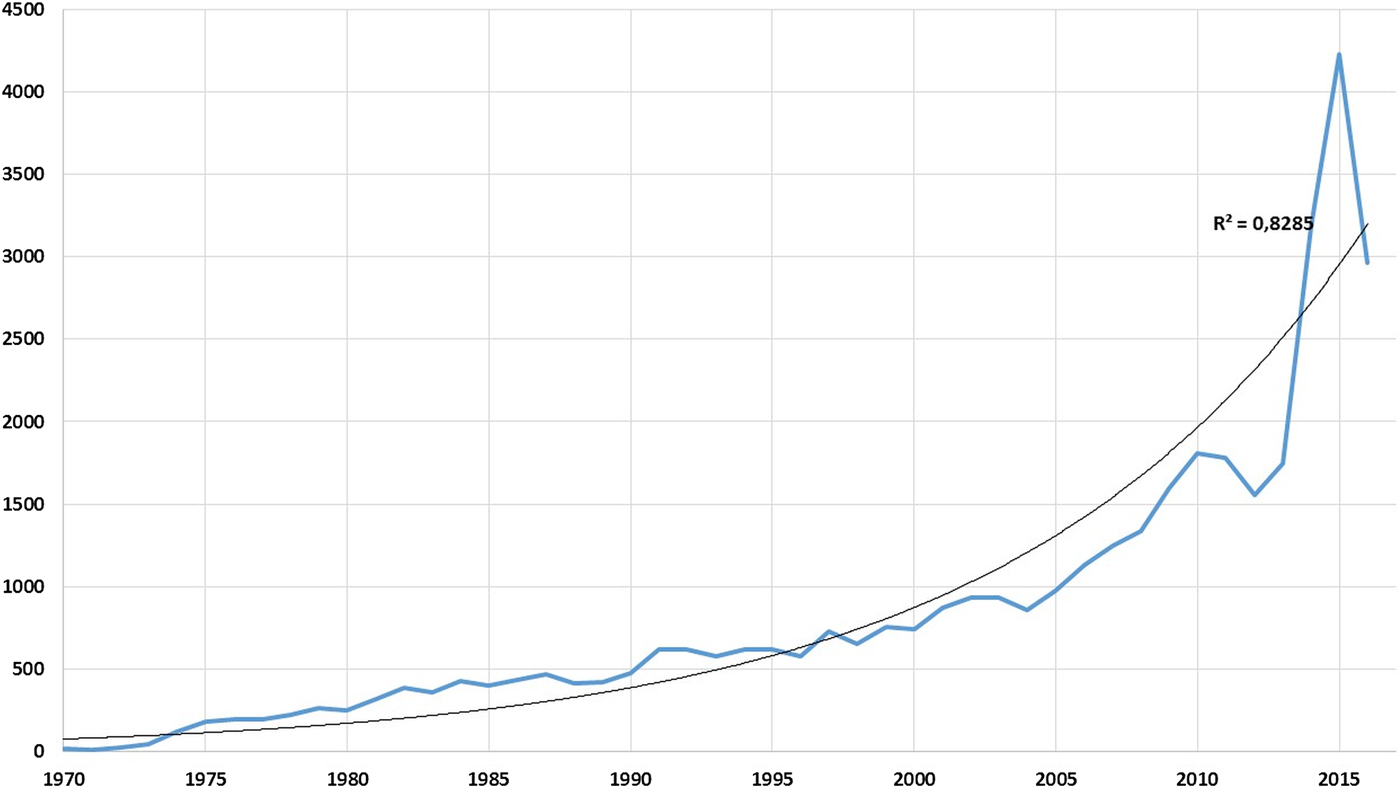
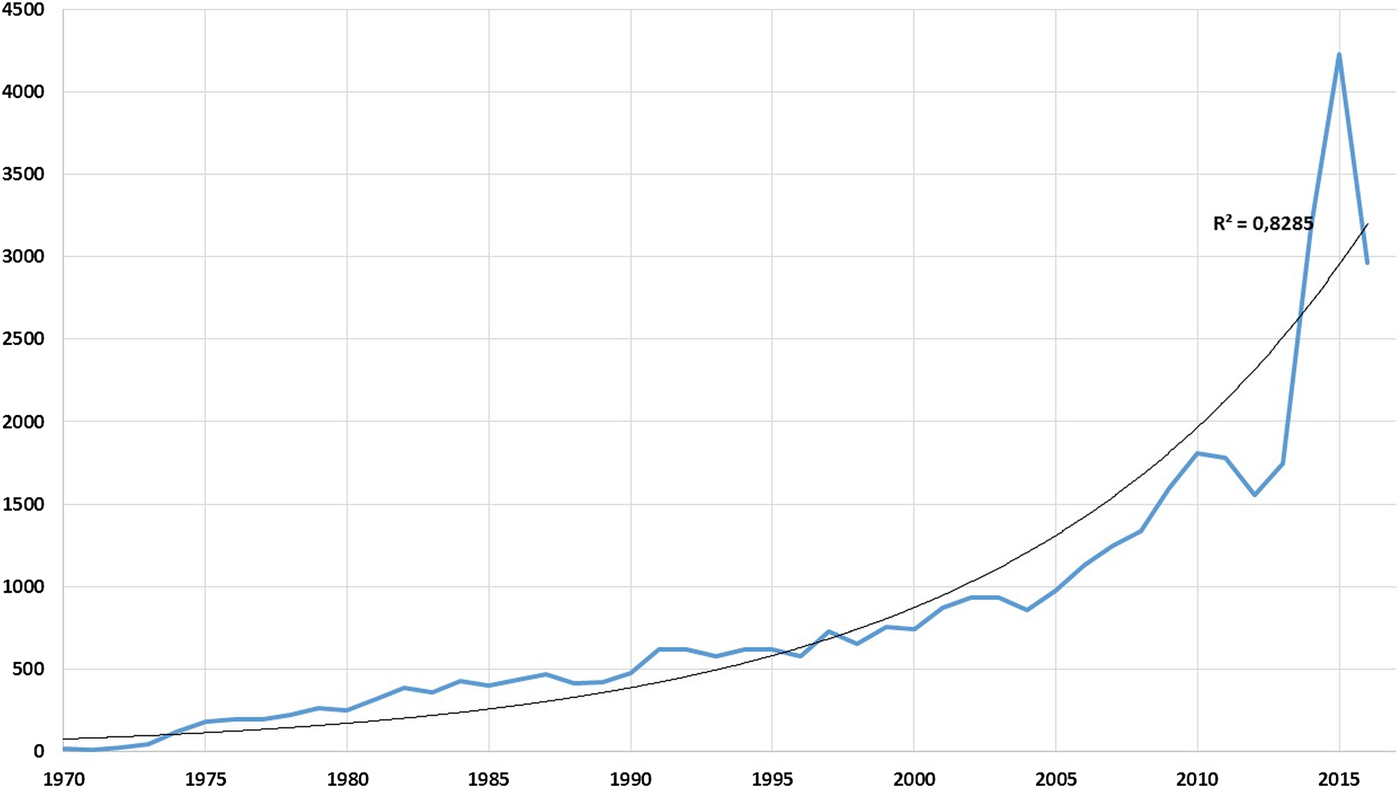
This section describes results of the long-term evolution of scientific production through the search query described before. Figure 1 shows the evolution of the number of publications from 1970 to 2016 on human parasitology. As can be seen, this evolution has grown enormously from the 1970s to the present day. The maximum number of annual publications was obtained in 2015, reaching a value of 4228. Growth is adjusted to an exponential trend line with a coefficient R 2 close to 1.
Trend of the number of publications from the years 1966 to 2016 in human parasitology.
Languages of publications
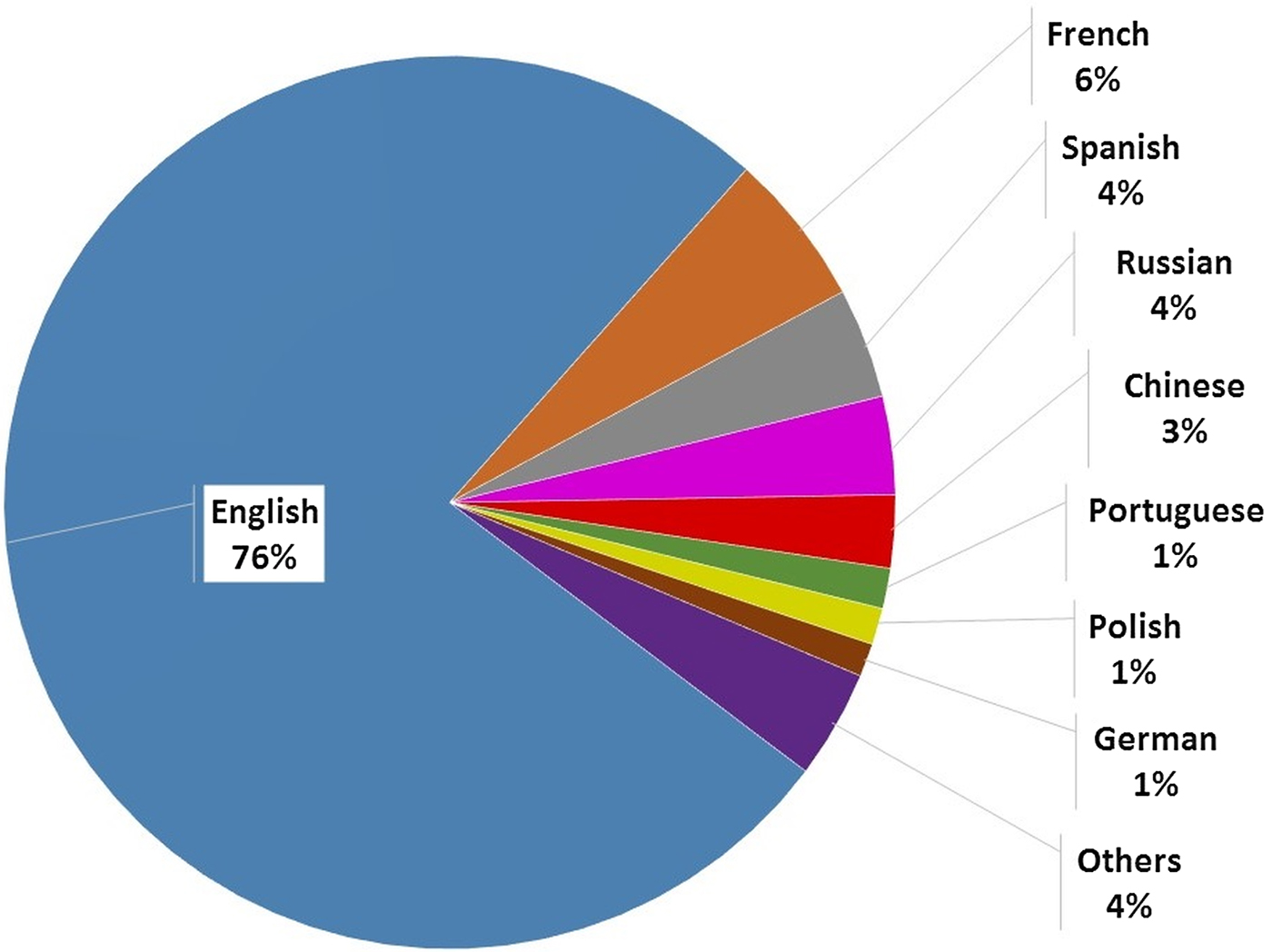
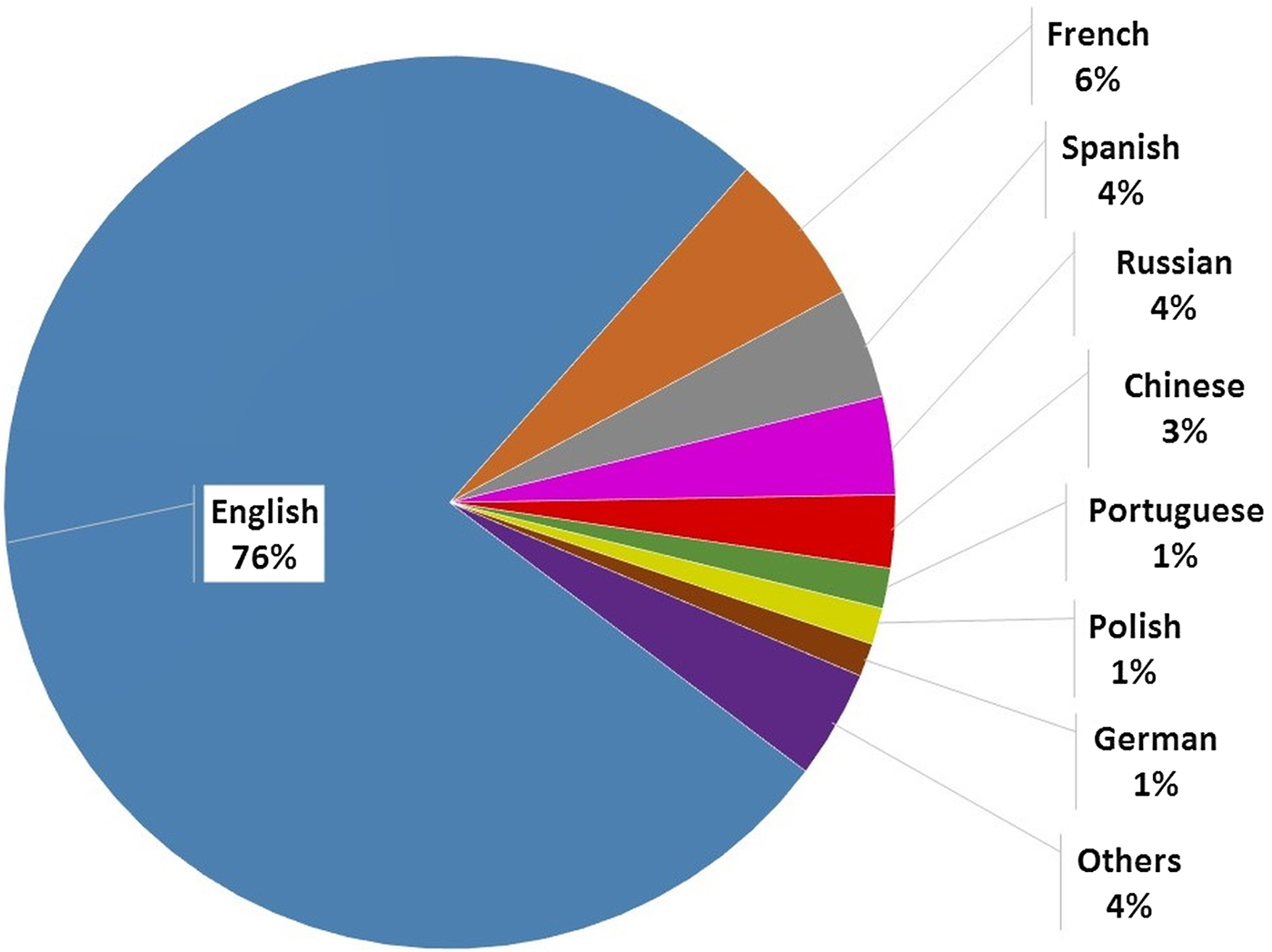
The need for a common language is not often discussed explicitly in scientific literature (Brambrink et al. Reference Brambrink, Ehrler and Dick2000). The use of English as an international language of science is by now well documented; English may be seen as a neutral lingua franca or it may be seen more insidiously as a dominating and overpowering force (Tardy, Reference Tardy2004). As in similar bibliometric reviews in different areas, most publications are written in English, the language most commonly used to publicize the results of research worldwide; but the value obtained in human parasitology is abnormally low compared with other studies (Fig. 2). It can be seen, that the percentage of publications written in English barely reaches 75%, while it is common for this value to exceed 90%. It can be observed that, in this case, articles written in seven other languages (French, Spanish, Russian, Chinese, Portuguese, Polish and German) account for almost 20% of the total. This is due to the very high number of journals indexed in Scopus and published in these languages. For example, it can be seen that articles written in French in more than 160 journals, in Spanish in more than 130 journals and in Russian in more than 80 journals. Most of these belong to subject area of medicine. It is important to note that not all articles published in French or Spanish belong to institutions of this nationality. In fact, the majority are from countries like Tunisia, Morocco, Belgium or Switzerland, for the French journals; and Chile, Argentina, Colombia or Mexico, for Spanish journals.
Principal languages.
Journals metric analysis
Another interesting point in bibliometric analysis in one specific topic is the qualitative analysis of the journals that publish in it. This can be done based on some parameters such as the impact of publications based on their impact factor (Rojas-Sola and Aguilera-Garcia, Reference Rojas-Sola and Aguilera-Garcia2014a, Reference Rojas-Sola and Aguilera-Garcia2015); h-index (Rojas-Sola and Jorda-Albinana, Reference Rojas-Sola and Jorda-Albinana2011) or item published (Rojas-Sola and Aguilera-Garcia, Reference Rojas-Sola and Aguilera-García2014b).
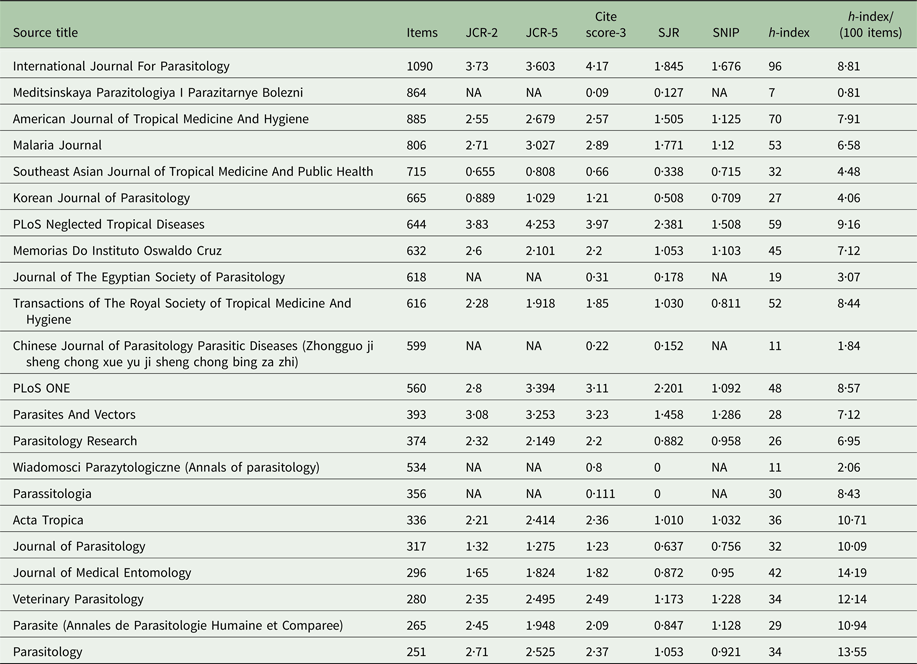
Table 1 lists the main indexes of the journals studied that have at least 250 publications related to human parasitology. The first column lists the items published, this was led by International Journal for Parasitology with more than 1000 items published followed by other three journals with more than 800 items: ‘Meditsinskaya Parazitologiya I Parazitarnye Bolezni’, ‘American Journal of Tropical Medicine And Hygiene’ and ‘Malaria Journal’.
Main indexes of journals related to human parasitology

One of the best-known metrics for analysing journals is the journal impact factor, which can be on the items published in 2 years (JCR) E.g. Citation Count in 2016 divided by items published through 2014–2015, or in 5 years (JCR-5), Citation Count in 2016 divided by items published through 2011–2015. This concept is used by Scopus database, named as CiteScore that measures the average citations received per document published in the serial, but for 3 years and including all available document types, this means serial, proceedings, book chapter, etc. E.g. Citation Count in 2016 divided by items published through 2013–2015. These metrics can be seen also in Table 1. In these three metrics, we observe how the positions are maintained without great differences between them, which is logical because they are based on the same concept. Only three journals have value above three in those three metrics: ‘International Journal For Parasitology’, ‘Plos Neglected Tropical Diseases’ and ‘Parasites And Vectors’.
Scopus database offers some other interesting metrics as: SJR (SCImago Journal Rank) measures weighted citations received by the serial, where the citation weighting depends on subject field and prestige of the citing serial, and SNIP (Source Normalized Impact per Paper) measures actual citations received relative to citations expected for the serial's subject field. As observed with these metrics, the differences between journals are no longer so great. For SJR, it was led by ‘PLoS Neglected Tropical Diseases’ followed by ‘PLoS ONE’; and for SNIP by the ‘International Journal For Parasitology’ followed by ‘PLoS Neglected Tropical Diseases’. These metrics are useful for comparing journals that are in different categories, but even so the influence of the category (or subject field) is important.
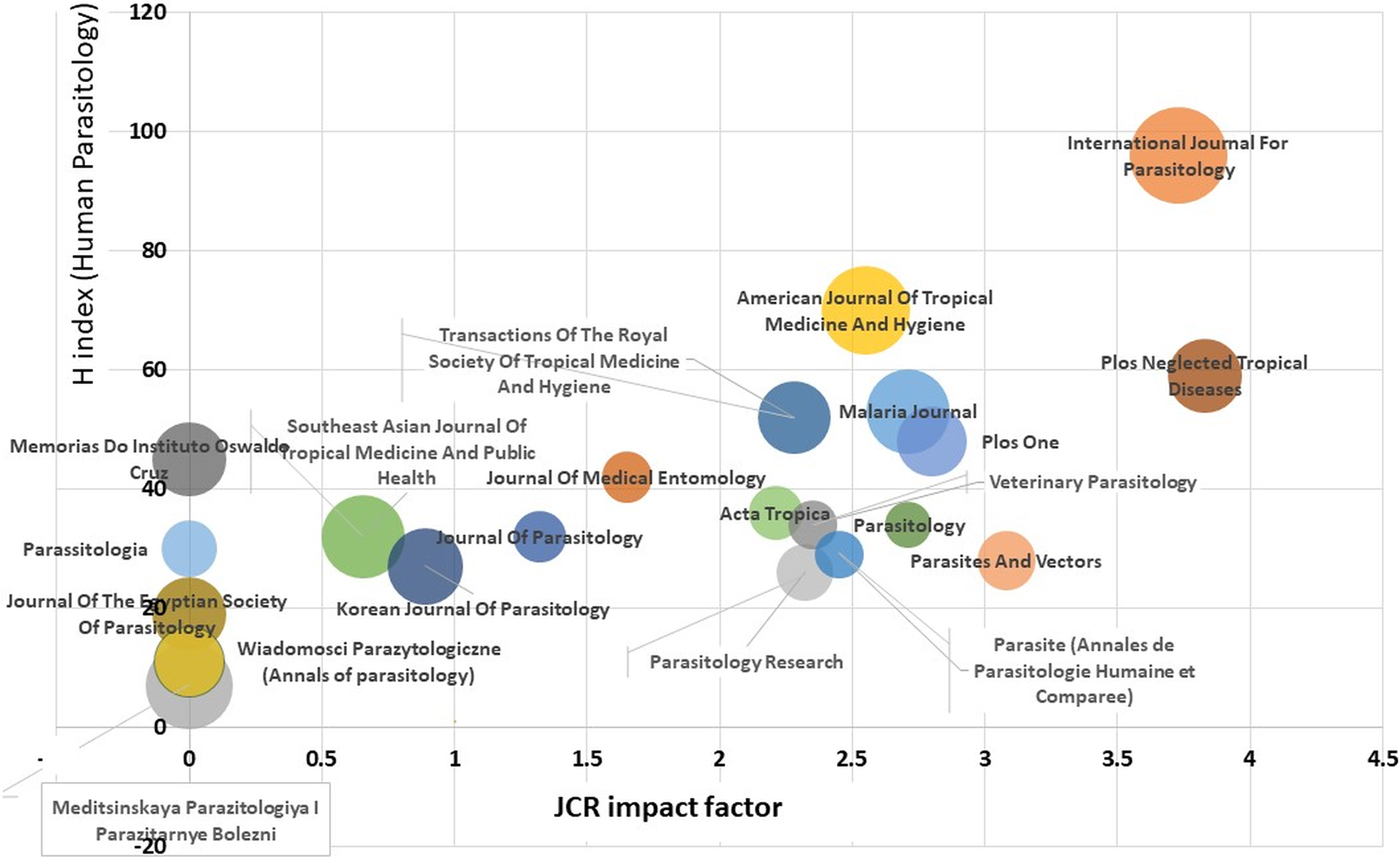
In our research of Human Parasitology, the journals are in several categories as: Infectious Diseases, Medicine, Parasitology, Public Health, Environmental and Occupational health, Microbiology (medical), Agricultural and Biological Sciences, Veterinary, Ecology, Evolution, Behavior and Systematics, or Animal Science and Zoology. Therefore, we consider it appropriate to use the concept of h-index in this specific search. The h-index is based on the highest number of papers included that have had at least the same number of citations (Hirsch, Reference Hirsch2005). For this purpose, a specific h-index has been made for the journals studied and only for publications related to the search of human parasitology, which is shown in the second last column of Table 1. To see the relationship between this h-index and the number of total publications, Fig. 3, which relates the h-index with the impact factor (JCR-2) and the number of total published items, has been made. It is seen as there are a large number of journals that have no impact factor, which are represented on the y-axis. There are a large number of these publications, which account for almost 25% of total items studied for these top journals. Then there is another group of journals, with great impact factor, >2, and large number of articles, above 500; all of them have an h-index above 40. The third group of journals are those that have between 250 and 400 items, and an impact factor between 2 and 3. Finally, the fourth group is formed by those journals that have an impact factor of <2, and a large number of published articles that could be classified as high medium, between 300 and 700.
Journals metric analysis.
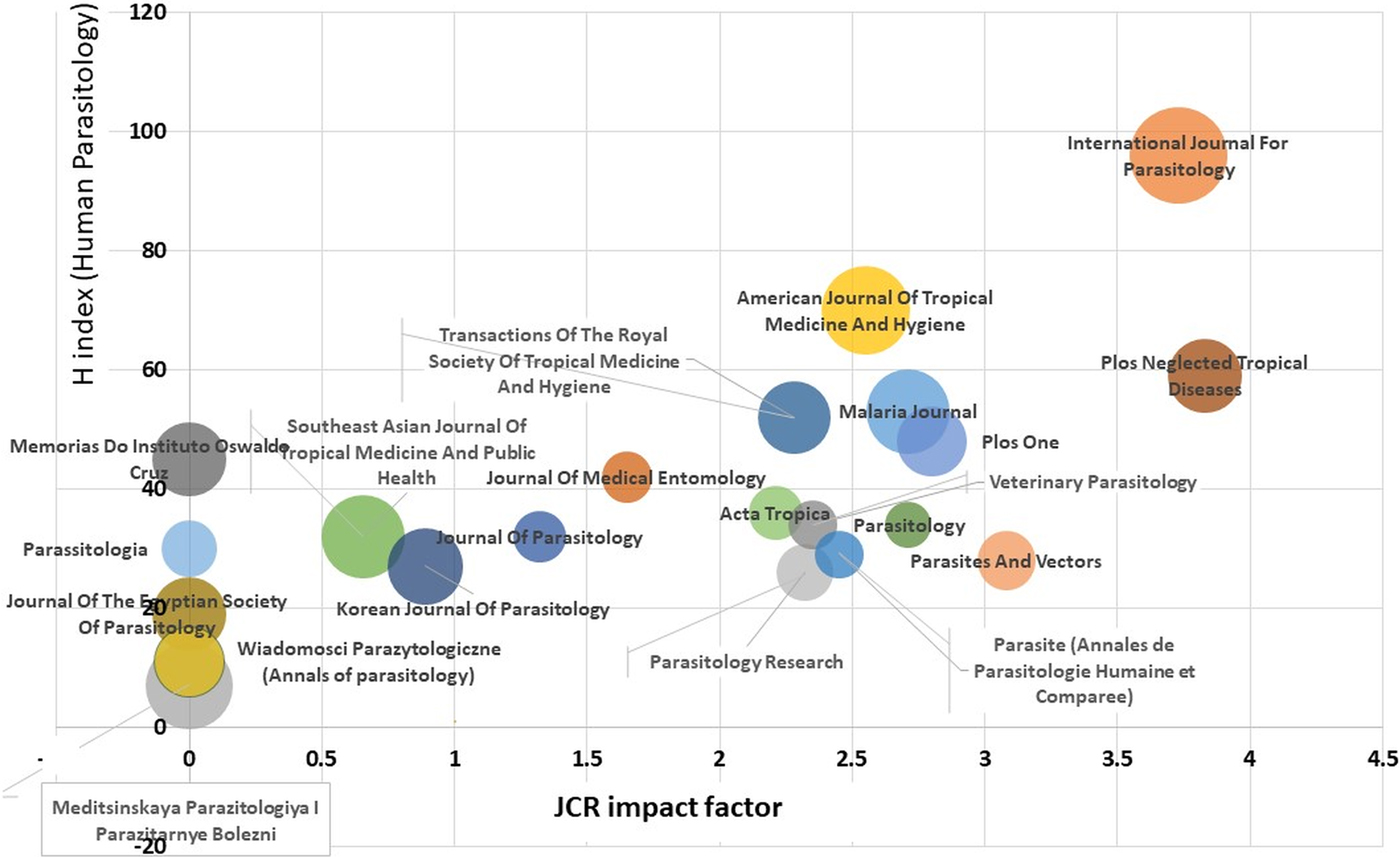
This h-index is strongly influenced by the time that the publication has been indexed and the number of items. In order to be able to compare them a specific h-index for human parasitology (h-index HP) has been made, where this h-index is divided by each 100 items. This h-index is shown in the last column of Table 1. Now the relative rank of publications related to human parasitology is led fist by ‘Journal of Medical Entomology’ (14·19) closely followed by ‘Parasitology’.
Publication distribution by countries and institutions
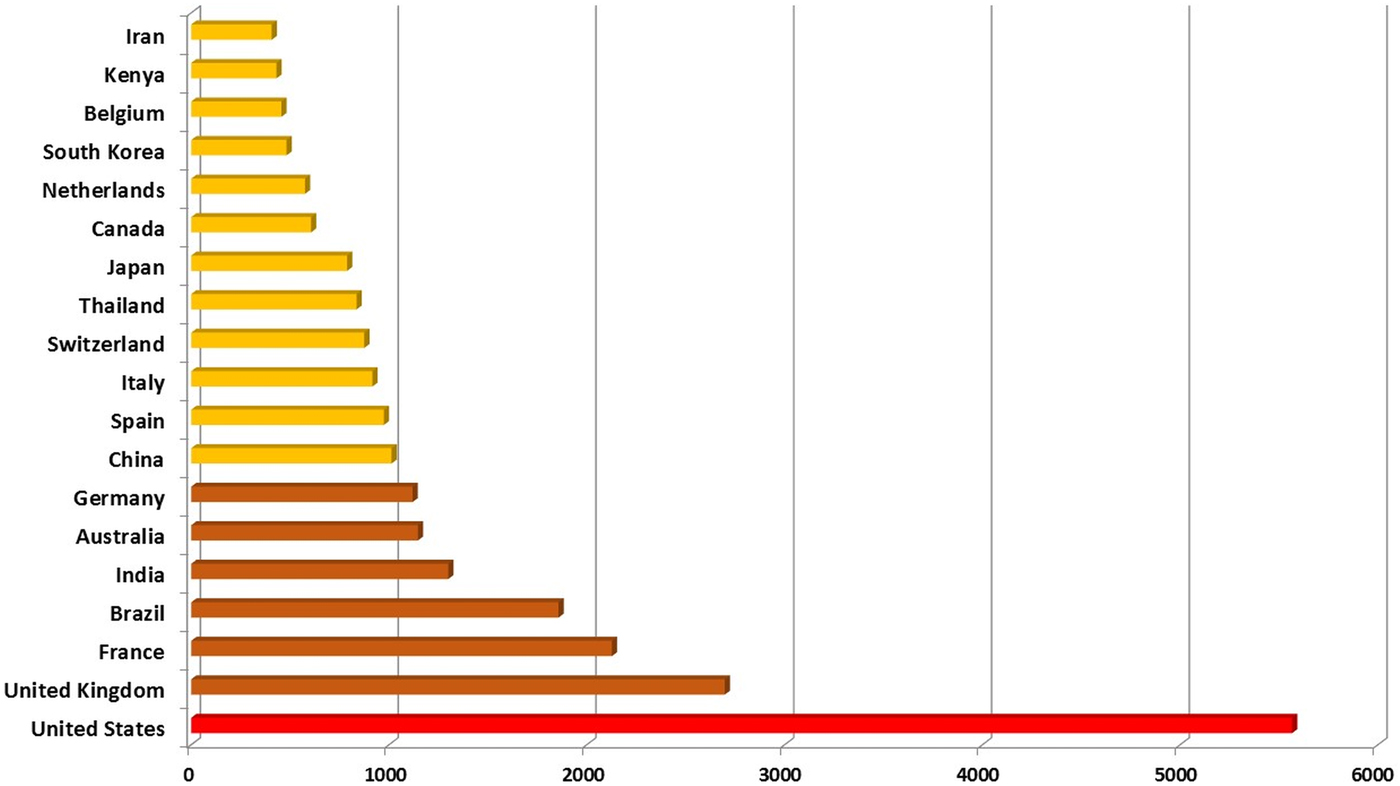
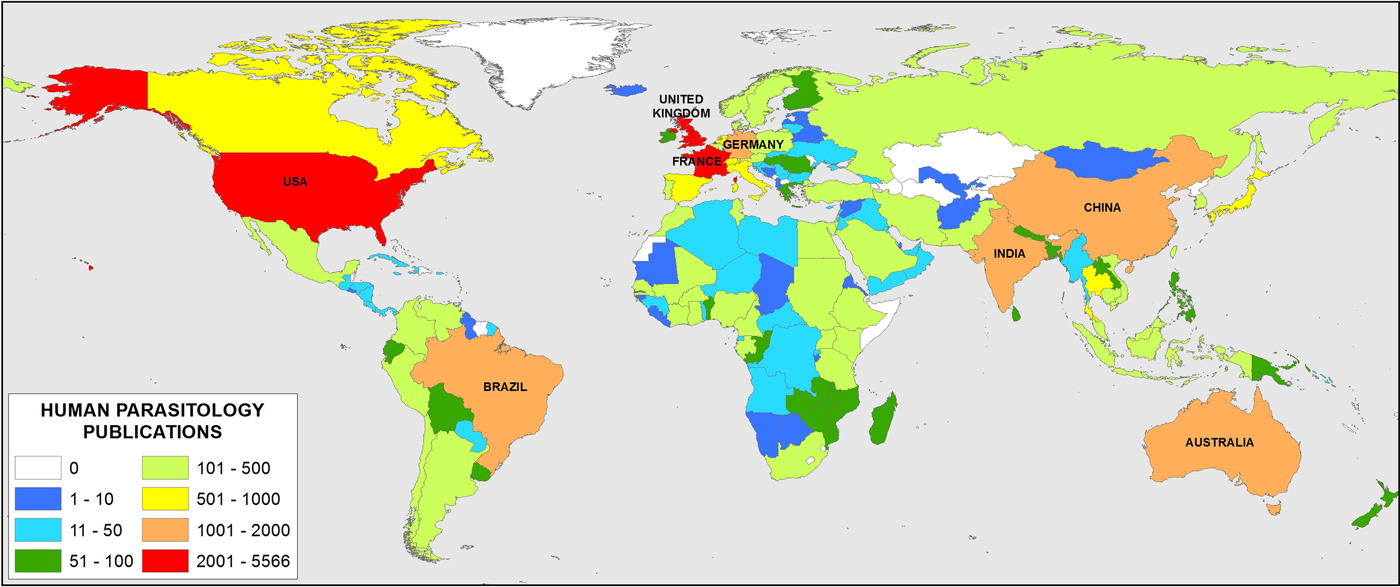
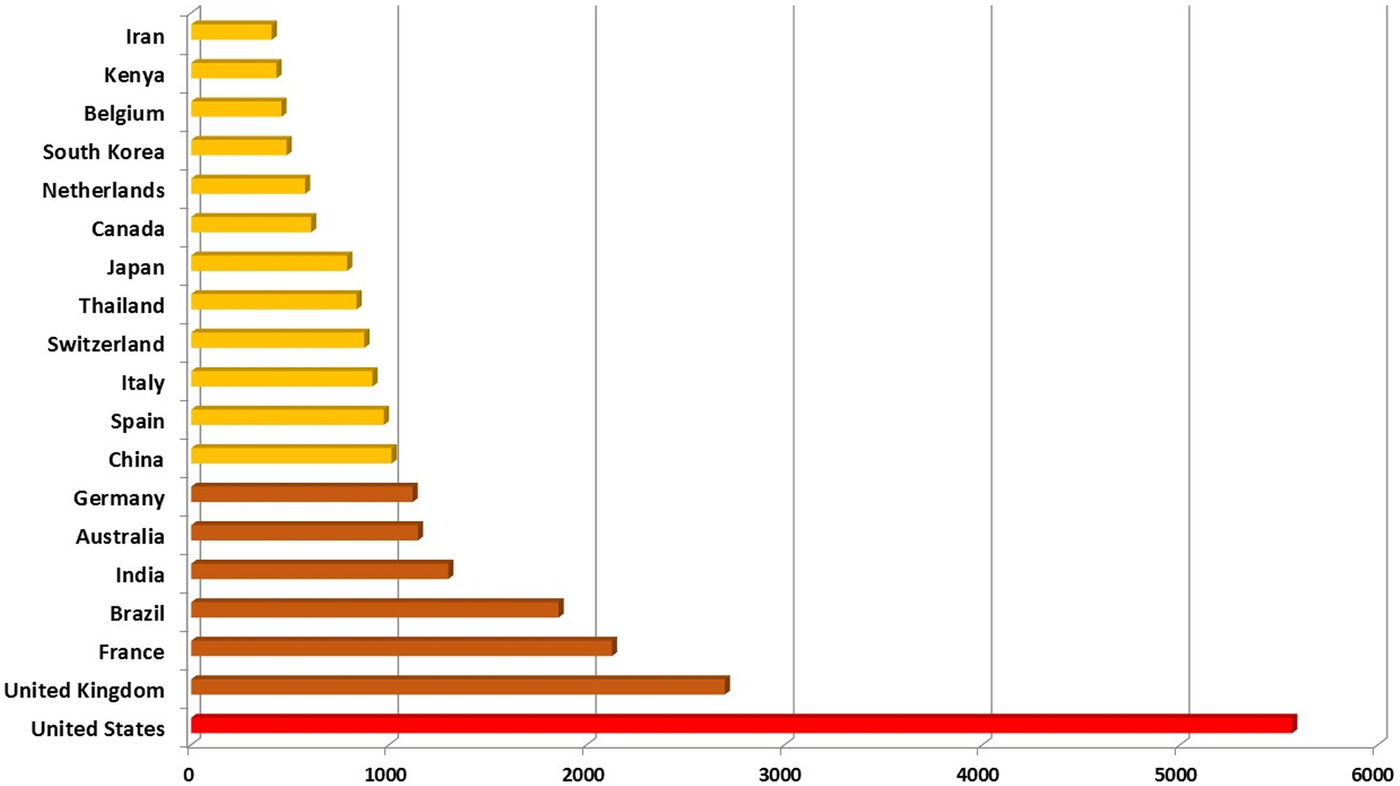
One of the most relevant aspects of worldwide research is the publication distribution by countries and institutions (Manzano-Agugliaro et al. Reference Manzano-Agugliaro, Alcayde, Montoya, Zapata-Sierra and Gil2013). Figure 4 shows the 19 countries with more than 400 publications in human parasitology, highlighting, as it is observed, USA, well above the rest. Figure 5 shows these data on a world map. The colour code identifies the number of manuscripts that are published in each country on human parasitology. It is observed that research in this field is probably more related to the pharmaceutical industry that develops solutions to these problems than to the geographic location of the onset or outbreaks of diseases. However, despite the low level of publications of African, South American or Asian countries, far from being discouraging, the data indicate at least an interest or collaboration on the part of organisms or institutions of other countries, since in other scientific or technical fields there is no publication of these parts of the world.
Countries with more than 400 publications on human parasitology.
Geographic distribution of scientific production in the field of human parasitology.
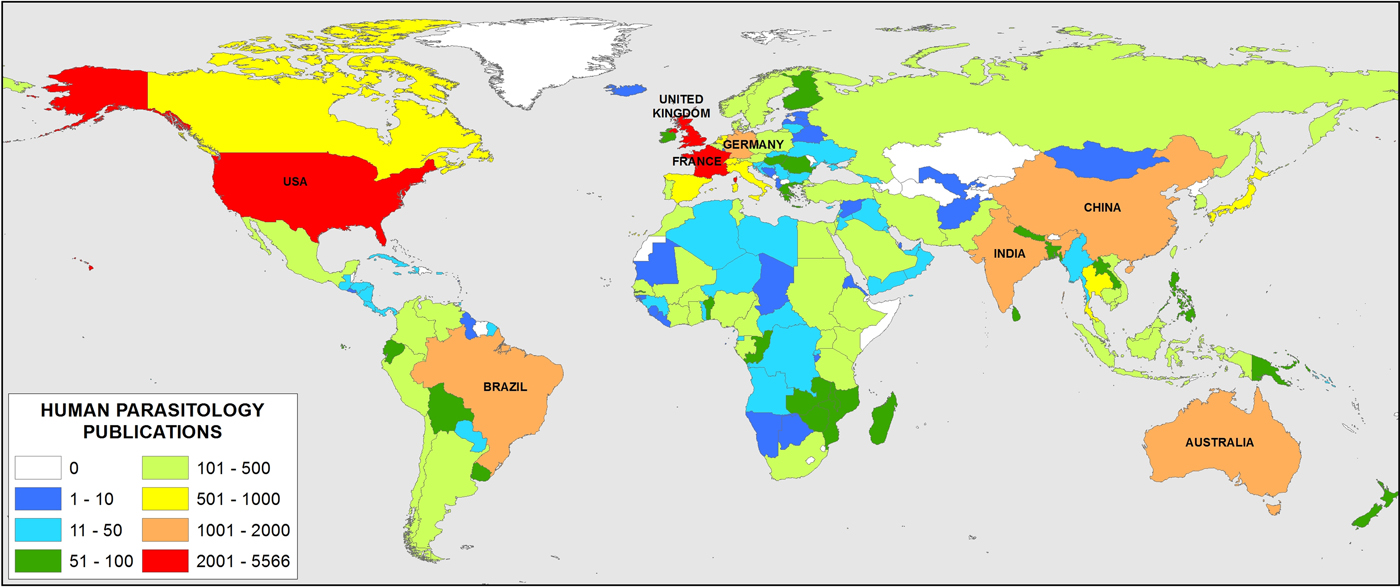
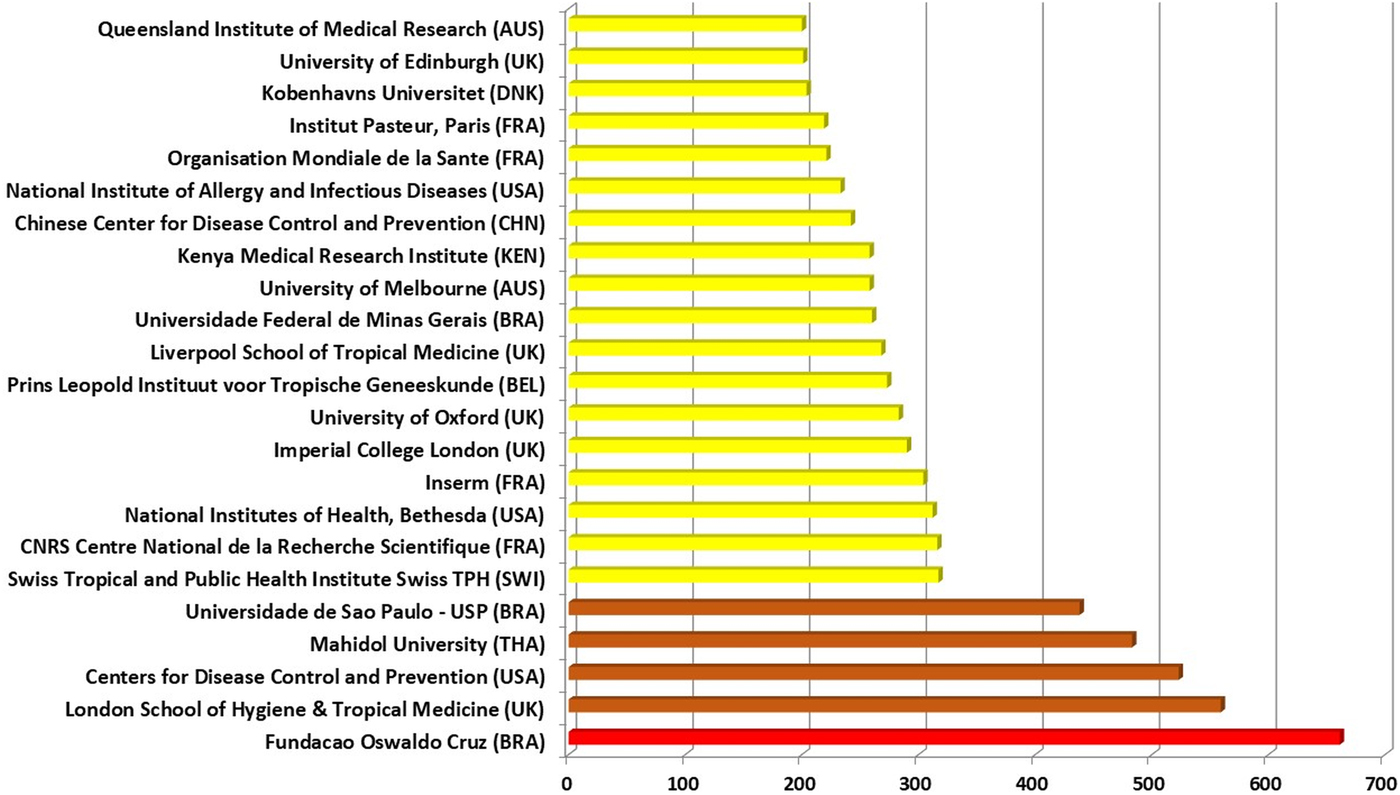
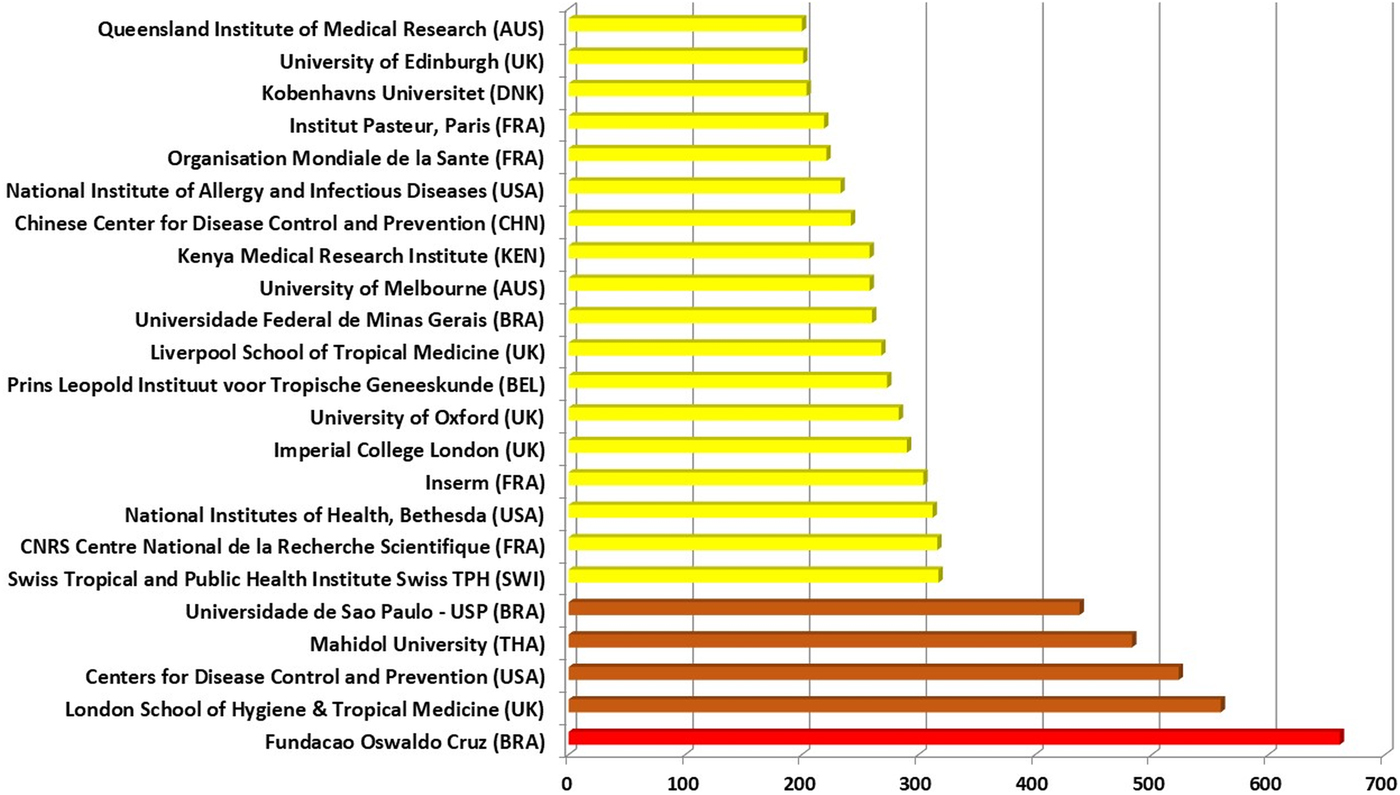
Figure 6 shows the 23 institutions with at least 200 publications, and in brackets are shown the countries to which they belong. Of these institutions, five stand out from the others, each presenting more than 400 publications. These five institutions are: the Oswaldo Cruz Foundation, the London School of Hygiene and Tropical Medicine, the Centers for Disease Control and Prevention, the Mahidol University and the University of Sao Paulo-USP. Of these five, two are Brazilian, one from the USA, one from the UK and another Thai. The comparison of Figs 4 and 6 offers two surprising data. On the one hand, it can be seen that, while in the ranking by country, France appears in the third place, the best located French institution is only in seventh place, the CNRS Center National de la Recherche Scientifique. On the other hand, it can be seen that the fourth institution of the ranking is the Mahidol University, of Thailand, while this country finds in the 12th place of the most published in the field of human parasitology. This circumstance can be explained observing that 48·7% (418 out of 859) of the articles published in Thailand are published in the Mahidol University, whereas the rest of the institutions that occupy the top five of the ranking publish on average only 16·4% of the publications of their respective countries. That is, in countries such as Brazil, the USA or Great Britain we can not only find some of the most important research centres in human parasitology, but also have an extensive network of smaller centres, but in their together, make the country acquire an important reputation in this area of research. In contrast, in Thailand we can find one of the centres that publish the most in human parasitology, but the set of institutions in the country does not have a weight as important as to occupy higher positions in the ranking.
Institutions by number of scientific publications on human parasitology.
Major authors
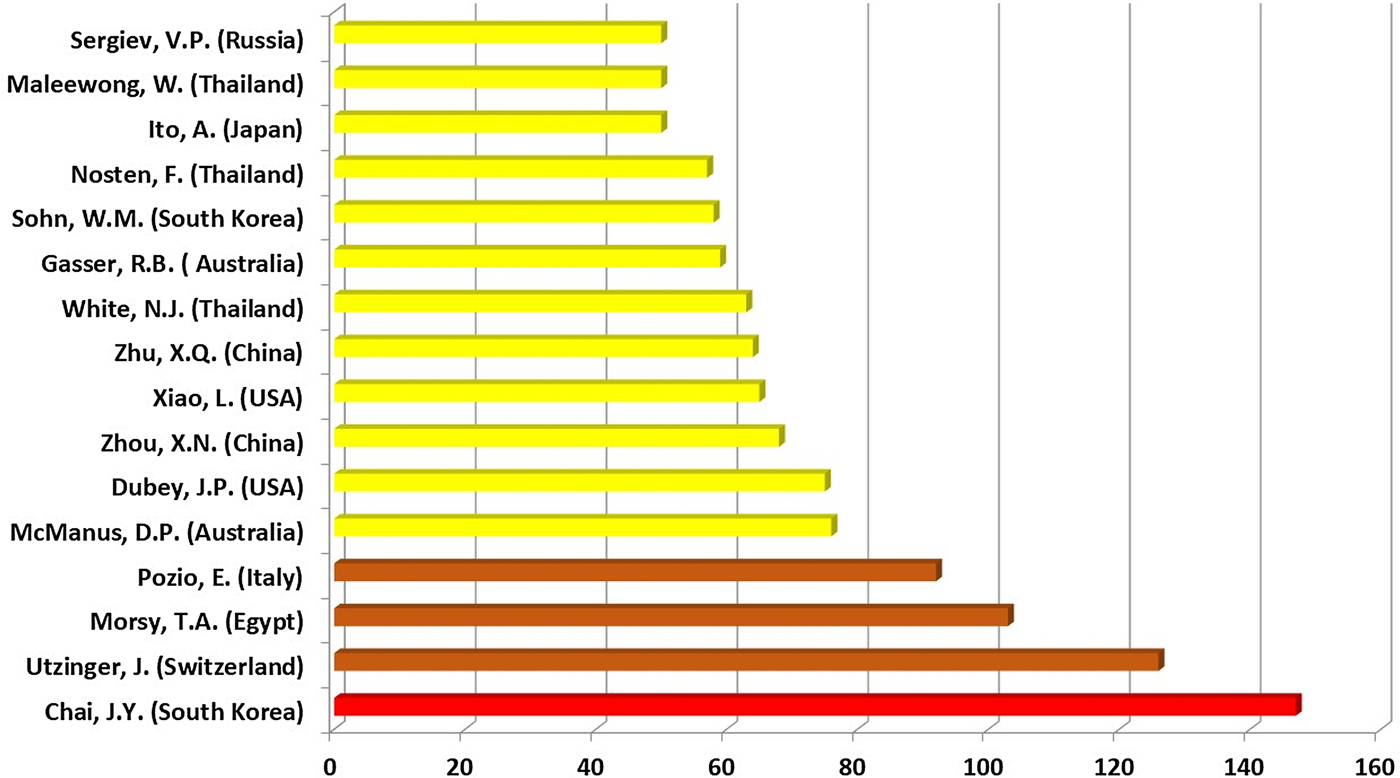
This section aims to highlight the role of major researchers in this field. Figure 7 shows the authors with at least 50 publications in human parasitology, and in brackets are shown the countries to which they belong. Of these, three authors stand out from the others, presenting more than 100 articles each: J.Y. Chai, J Utzinger and T.A. Morsy, of the Seoul National University College of Medicine (South Korea), Swiss Tropical and Public Health Institute Swiss TPH (Switzerland) and Ain Shams University (Egypt), respectively.
Most published authors.
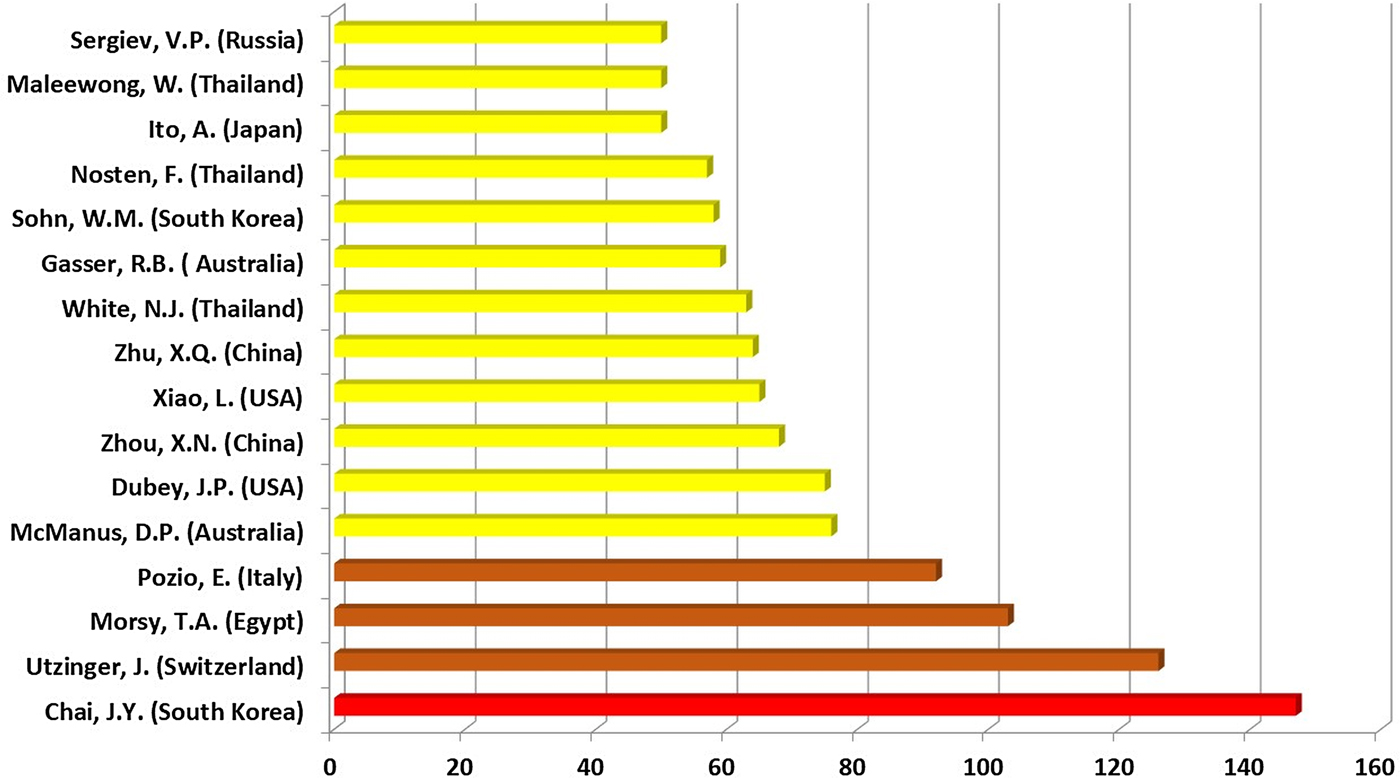
The first of them, Chai, has been publishing in human parasitology since 1990, highlighting his work in the transmission of diseases of parasitic origin. It should be noted that 81·8% of their articles (121 of 148) have been published in the Korean Journal of Parasitology. The second of these authors, Utzinger, publishes in human parasitology since 2000, and they emphasize their works on the diseases caused by helminths. The third of the researchers, Morsy, has been publishing in this area since 1982. His most prominent publications focus on the Egyptian population. It is noteworthy that 99·0% of their articles (103 out of 104) have been published in the Journal of The Egyptian Society of Parasitology.
Keyword analysis
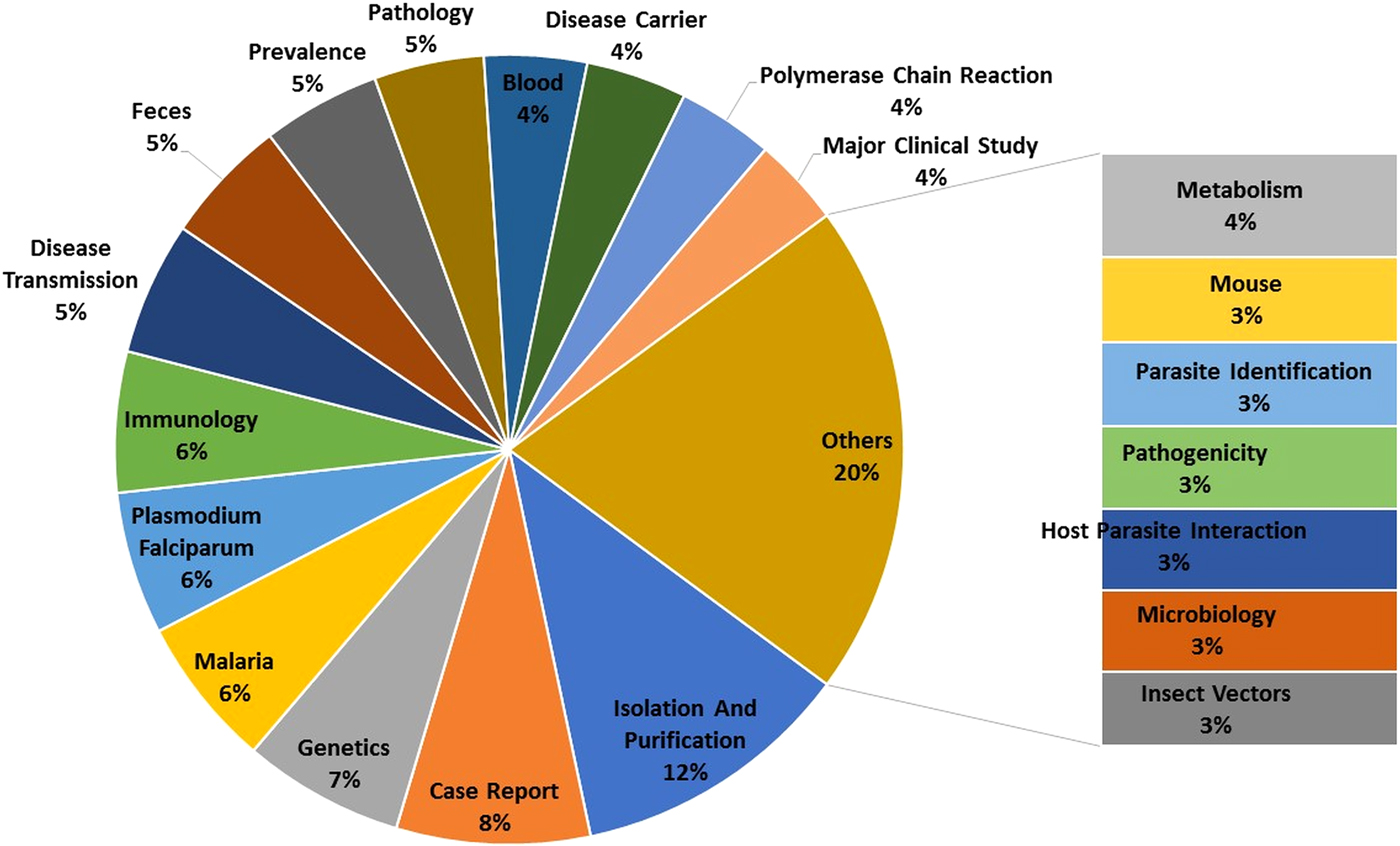
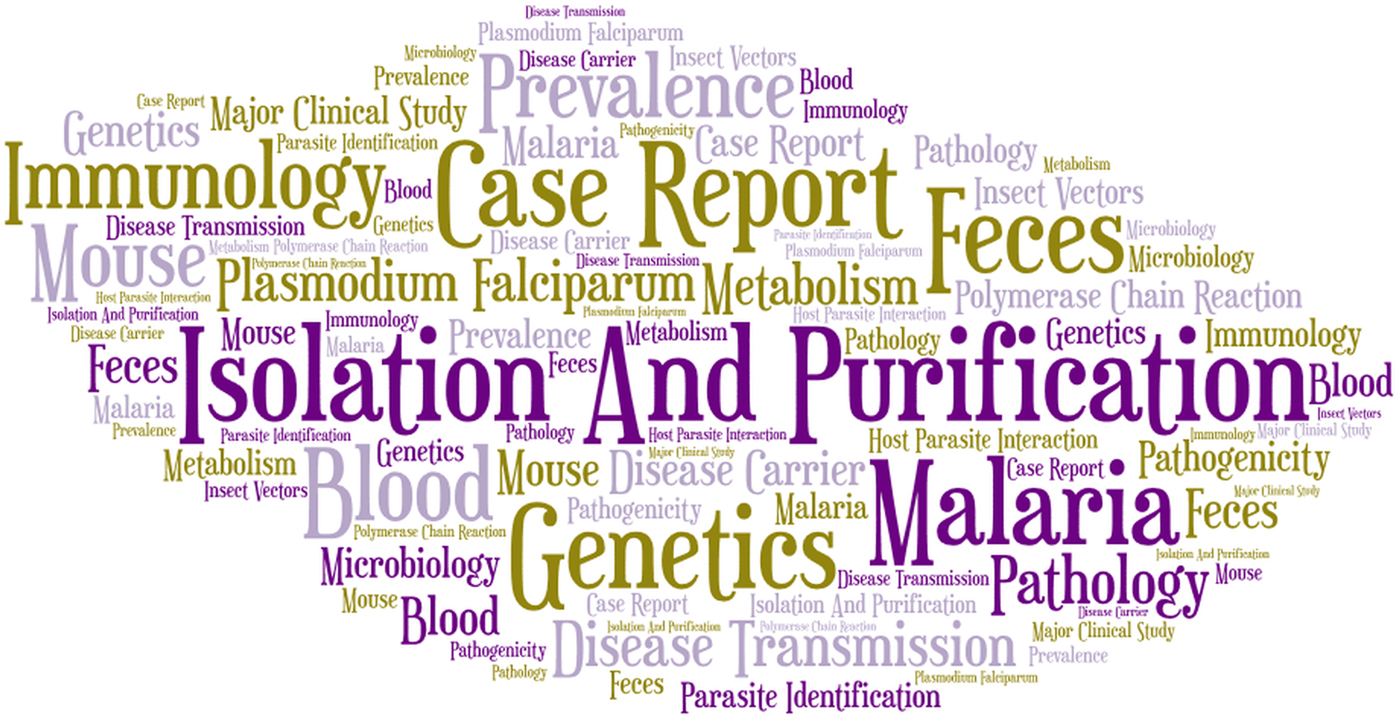
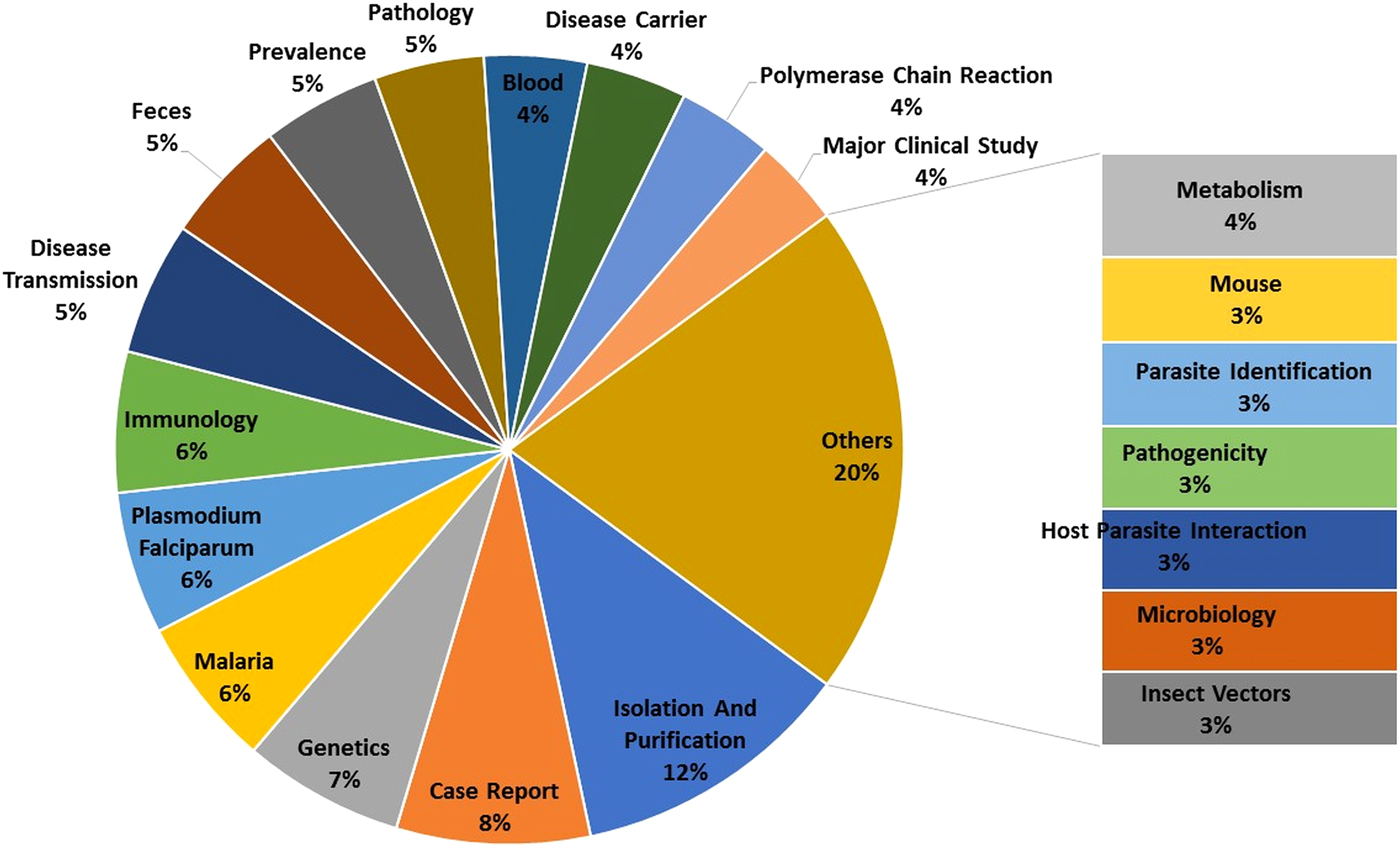
The review at hand is based on applying a keyword search (‘literature review’), from there the great importance for researchers of the keywords of their manuscripts (vom Brocke et al. Reference vom Brocke, Simons, Niehaves, Riemer, Plattfaut, Cleven, vom Brocke and Reimer2009). Keywords can define research in a field and its relationship to other sciences or techniques. For the analysis of the keywords, previously, the keywords that do not contribute anything to the analysis like ‘article’, ‘human’ or ‘male’ have been eliminated. Figure 7 shows the keywords that appear in at least 2000 articles. The first of the representations is a circular diagram showing the percentage distribution, where the keywords with <4% of occurrence have been taken out.
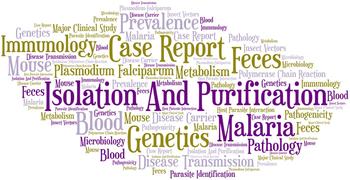
Figure 8 shows the result of Fig. 9 in a cloud-word. In both cases, it can be seen how the terms that have the most presence in the articles of human parasitology are ‘Isolation and purification’, ‘case report’, with 12 and 8% each. While there is another group of words with more than 6% they are: ‘genetics’, ‘malaria’, ‘Plasmodium falciparum’ or ‘immunology’.
Cloud word on human parasitology.
Circular representations of keywords.
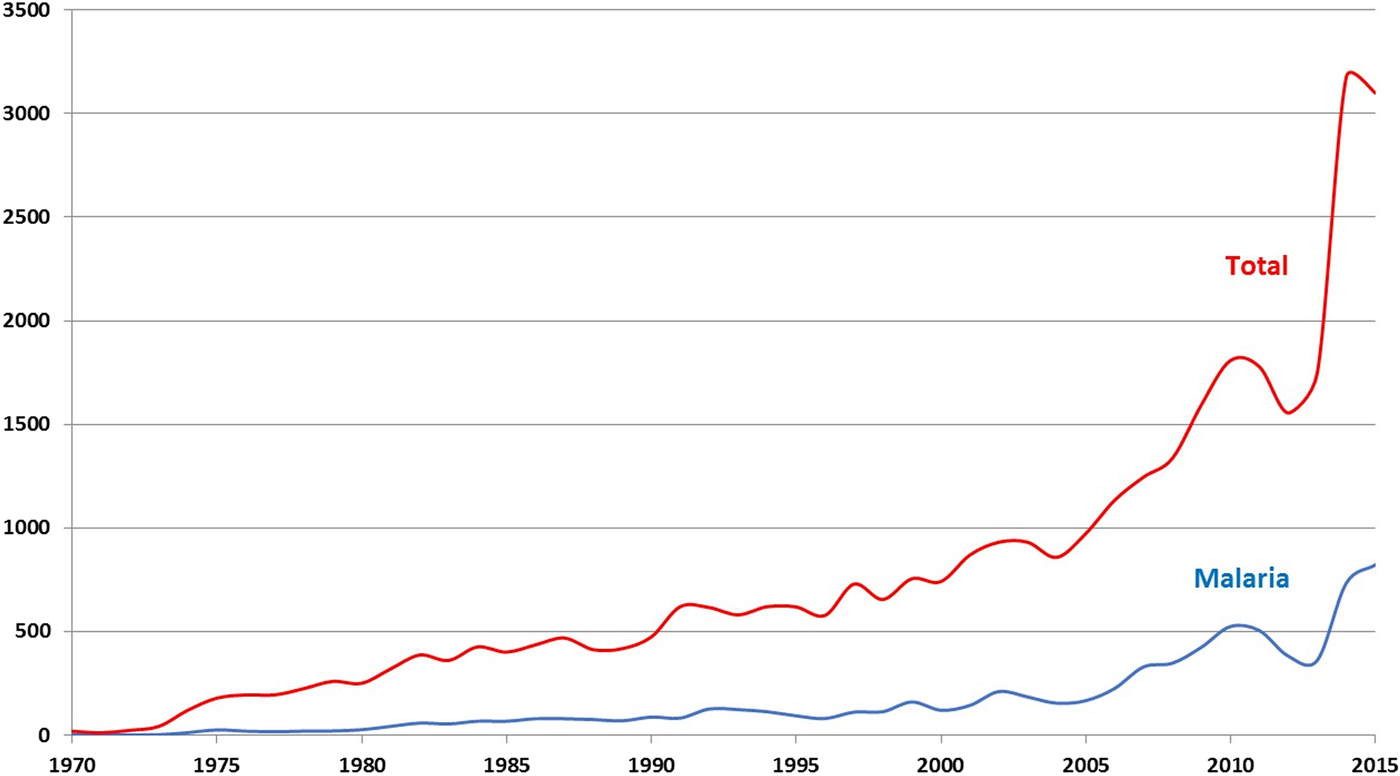
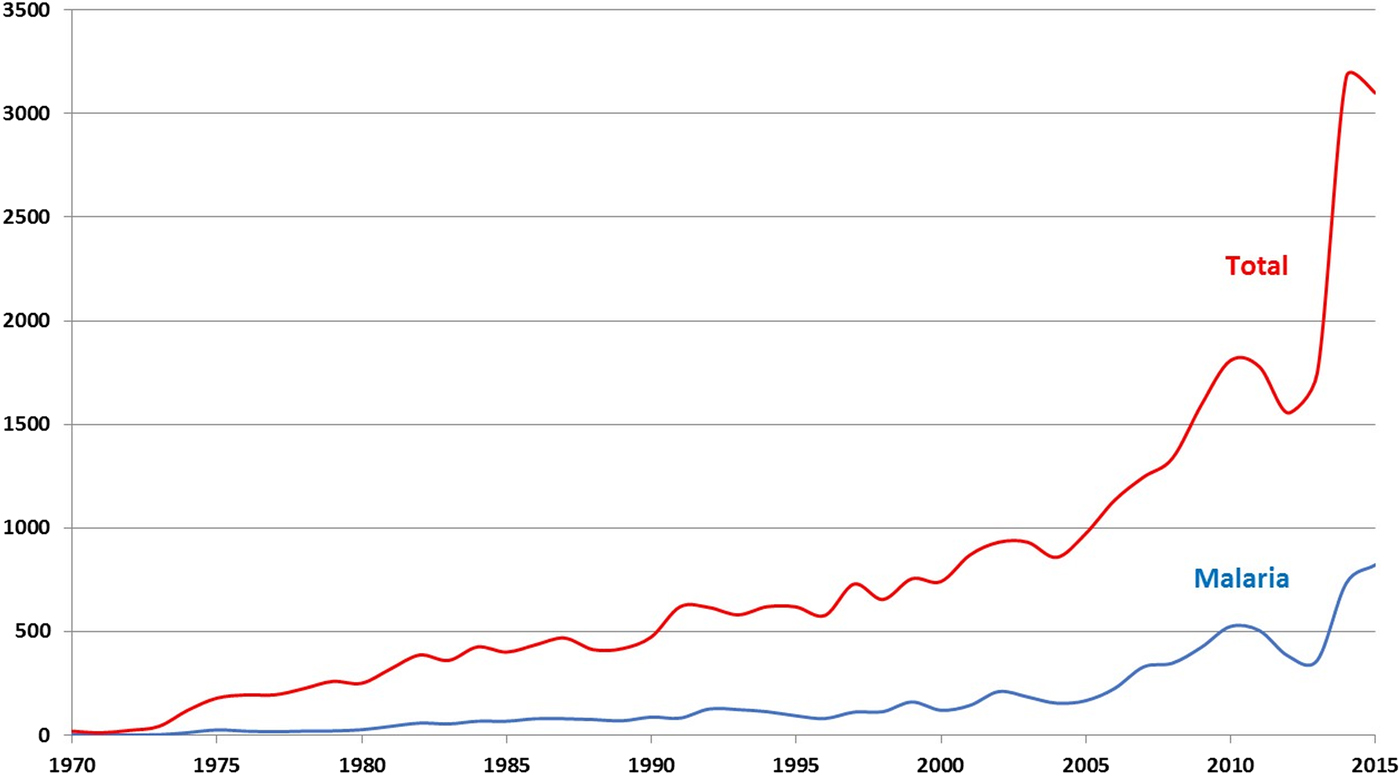
Looking at the total of the keywords, it is seen that many of them refer to a theme. Of the 120 keywords with the greatest presence in the articles, 11 refer to malaria, naming the disease itself, the microorganism that produces it, the insect that transmits it or the drugs used for its treatment. Grouping all these terms from the year 1970 to 2016, it is found that in 7698 articles appears at least one of them. That is, in 21·1% (7698 of 36 410) of the articles on human parasitology appears at least one term referring to malaria; and this percentage rises to 25·6% (4433 of 17 341) if the study is focused in the years from 2007 to 2016, which indicates that this disease, far from ceasing to be a concern for the international scientific community, is increasingly worried. Figure 10 shows the evolution of the number of articles related to malaria compared with the total number of articles published on human parasitology.
Evolution of the number of publications on malaria.
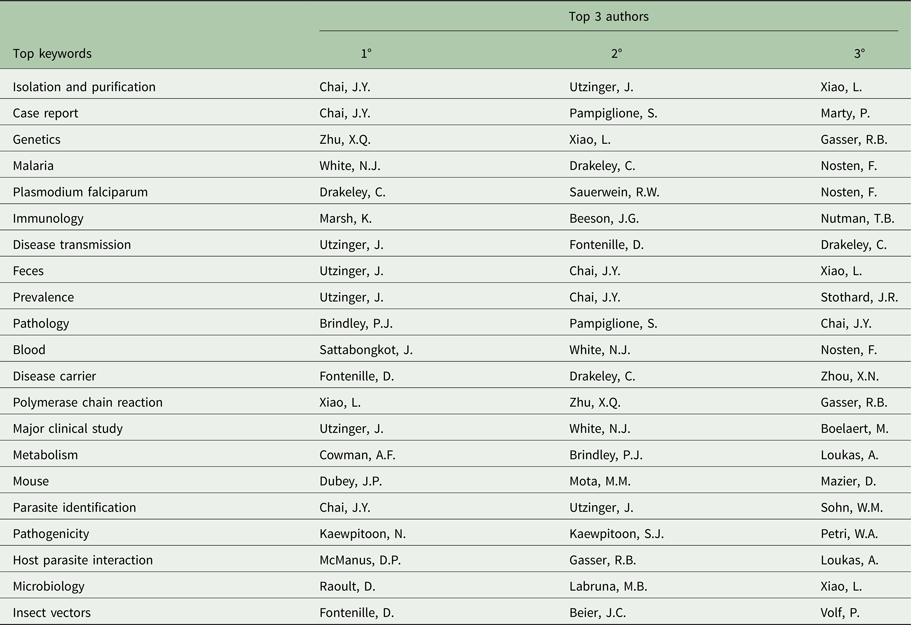
To relate the main keywords and the main authors Table 2 is presented, where for the list of main keywords (Figs 8 and 9) the three main authors in that field are shown. We can observe how some keywords are used by the same series of authors; see as an example the series of authors of ‘Isolation and Purification’, ‘Feces’ or ‘Prevalence’, and other concepts are very specific topics related to Human Parasitology as example ‘Mouse’.
Relationship between top keywords and top three authors

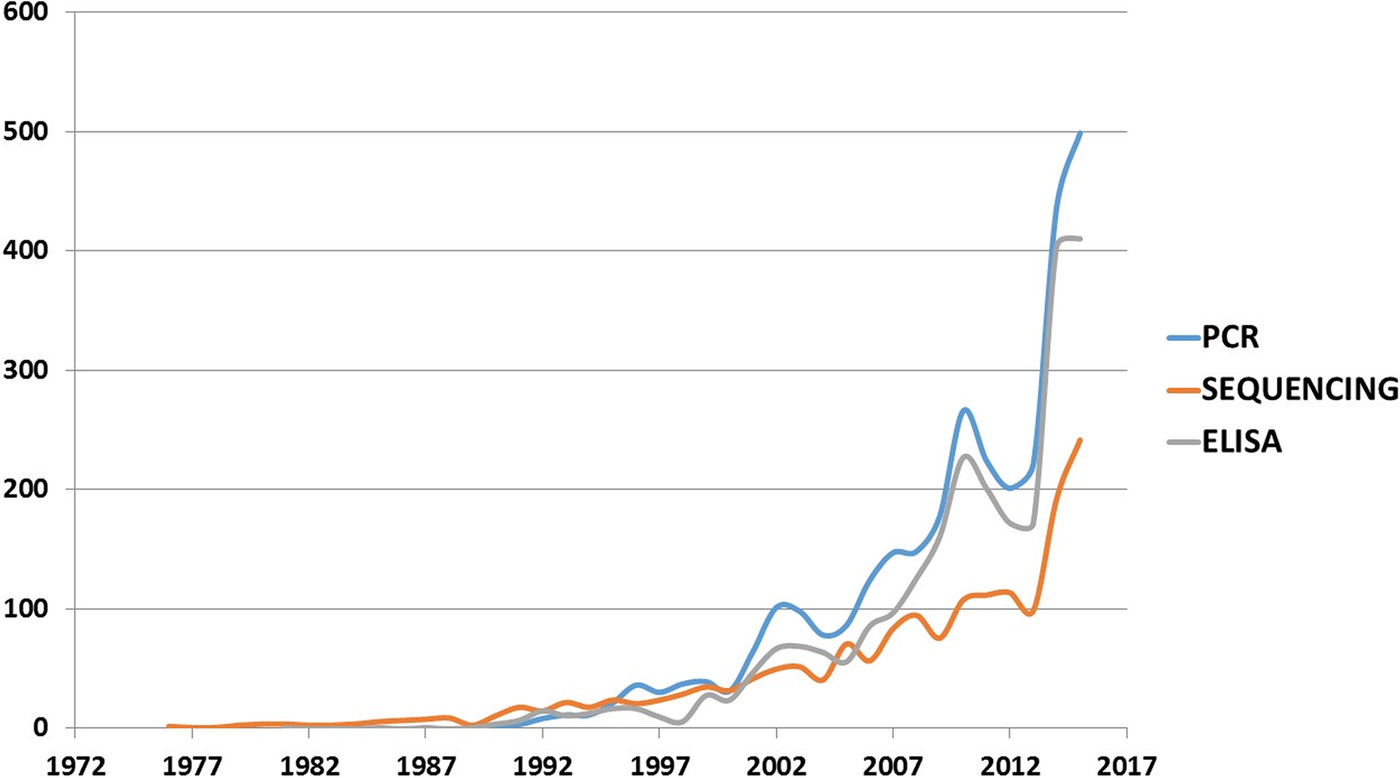
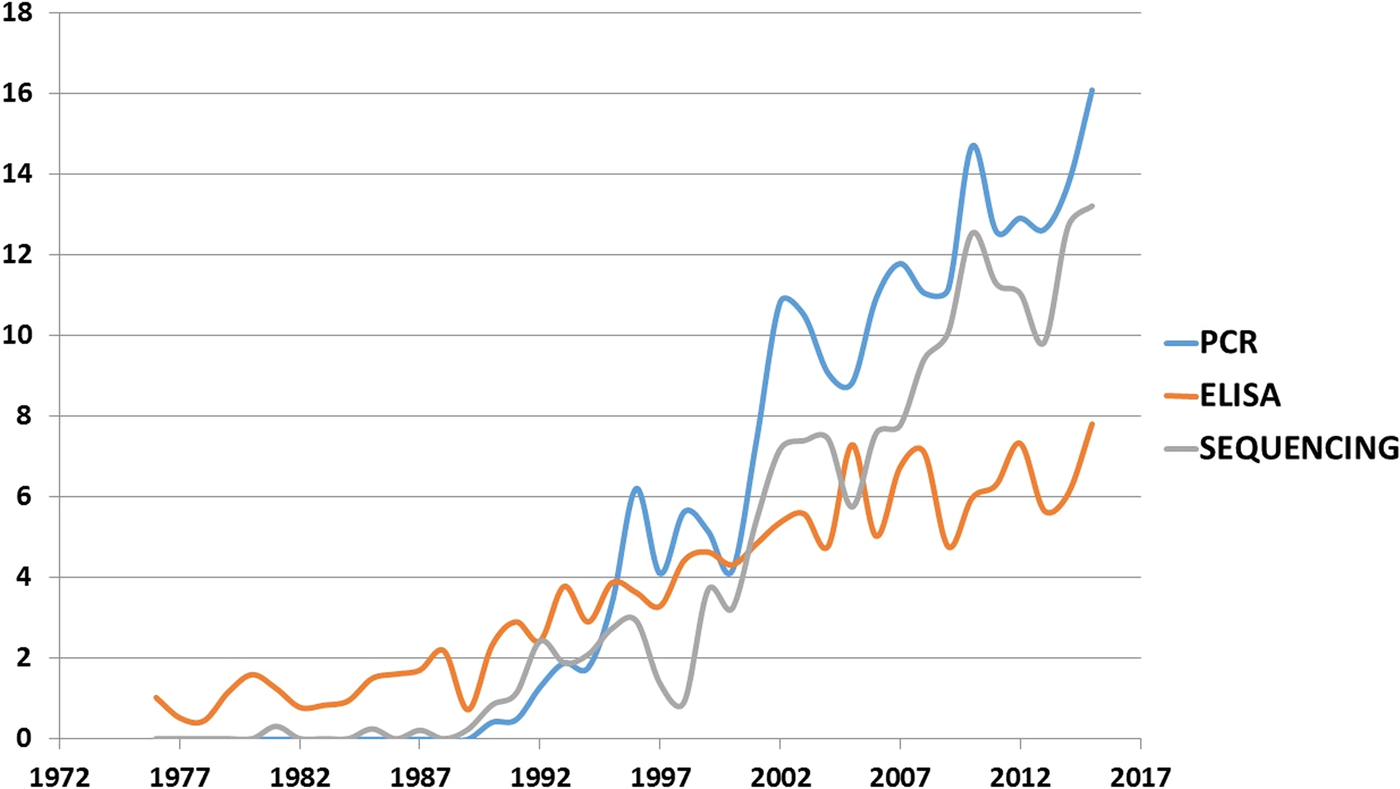
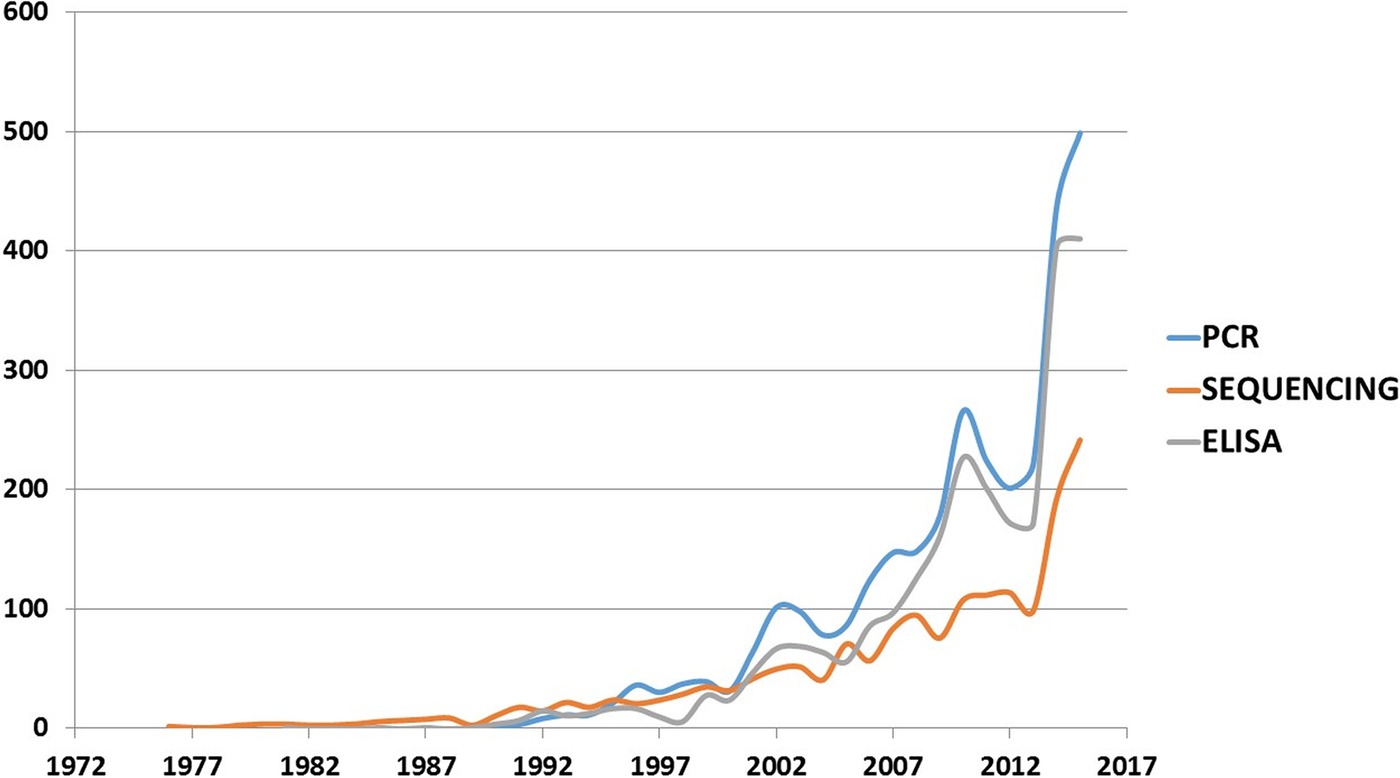
Another important point of interest of the keyword analysis is the one that refers to the molecular techniques used in the diagnosis. Among the keywords, there are three molecular techniques that are the following: enzyme-linked immunosorbent assay (ELISA), DNA sequencing and polymerase chain reaction (PCR). The allusion to these molecular techniques began in 1976, although it was not generalized until 1990. In fact, until that year, PCR did not appear among the keywords of a single article of human parasitology, while sequencing techniques of DNA appeared among the keywords of only four articles. In contrast, ELISA appears among the keywords of 58 articles. However, since 1990, there has been an increase in the presence of these techniques of analysis among the keywords of the articles of human parasitology, which was much more important as of the year 2000, as can be seen in the graph of Fig. 11. However, growth was not the same for each technique. Although ELISA continued to be the molecular technique with the greatest presence until 1995, from that moment on, both DNA sequencing and PCR gained notoriety. This fact can also be observed in Fig. 12. In this, the percentage of publications among whose keywords appears the technique of analysis studied, with respect to the total of publications of that year on human parasitology is represented.
Evolution of the number of publications on analysis techniques used to diagnose malaria.
Relative evolution of the number of publications on the techniques of analysis used to diagnose malaria.

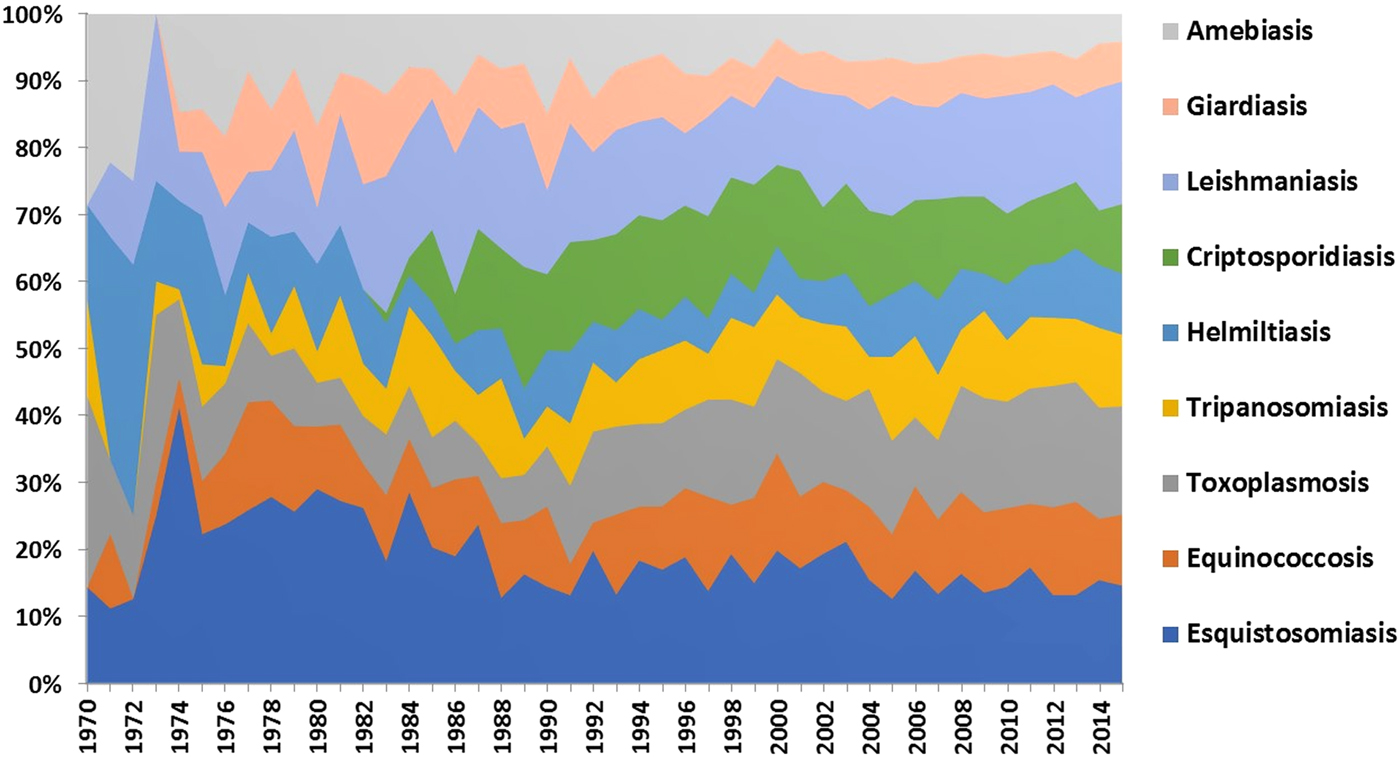
One last group of interest among the keywords that appear in the articles on human parasitology is diseases. Without regard to malaria, which has been the subject of a previous individualized study, among the 120 keywords in the articles of the study period, there are up to nine diseases caused by parasites: schistosomiasis, echinococcosis, toxoplasmosis, trypanosomiasis, helminthiasis, cliptosporidiasis, leishmaniasis, giardiasis and amebiasis.
As can be seen in Fig. 13, there is no homogeneous growth pattern in the number of articles in whose keywords these diseases appear. Every one of them has grown discontinuously over time, reaching multiple relative maximums and minimums, reaching almost all its absolute maximum in 2015, except for giardiasis and trypanosomiasis, which reached it in 2014.
Evolution of parasitic diseases from 1970 to 2016.
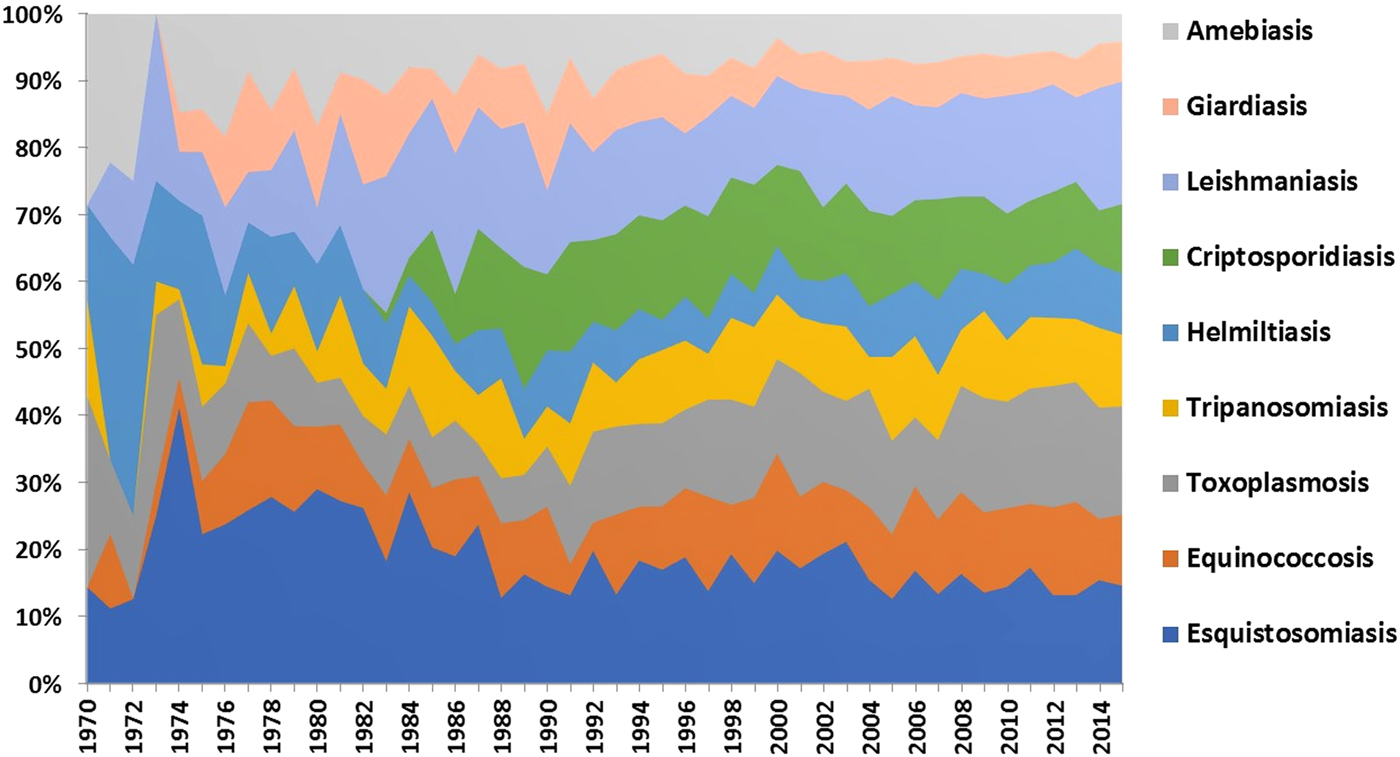
Among them, schistosomiasis is the disease that more often appears as the most cited disease of the year, doing it 24 times, especially from 1973 to 1978 (13 of 15). Following are leishmaniasis and toxoplasmosis, which appear as the most frequently cited disease in 12 and eight occasions, respectively, both of which occupy this first position in the last 5 years of the study (2012–2016).
Discussion
An analysis of the number of publications on human parasitology from 1970 to 2016 shows the exponential growth that has occurred in this period. This growth is related to the great interest that historically awakens parasitic diseases and to the growing concern that exists in by the spread of these diseases (Haddad et al. Reference Haddad, Abd El Bagi and Tamraz2008). In addition, other variables such as the language of publications, institutions and countries that publish more in human parasitology, or the main keywords present in these publications have been studied.
As with most similar studies, most articles are written in English; but in the case of human parasitology, the number of articles written in other languages is considerably high. It should be noted that centres so productive like the Chinese Center for Disease Control and Prevention or the University of Chile publish between 30 and 50% of their articles in a language other than English; and others such as the Martsinovskiy Institute of Medical Parasitology and Tropical Medicine, which is among the 100 institutions with the largest number of publications, publishes up to 95% of its articles in Russian.
However, if the study is limited to the institutions that publish the most, this trend is not observed. For example, if we focus on the 10 institutions that publish the most articles in human parasitology, among all publish about 10% of all articles, and of these, almost 96% are written in English. It can be concluded that the fact that so many articles written in non-English language appear is due to the high number of institutions and journals of national character that publish in their national language and that show a great interest in the field of human parasitology from a local point of view; but this trend is being reversed in recent years. Just have a look at the publications of the last 10 years. In this period, more than half of the articles of human parasitology have been published, of which more than 90% have done so in English.
When the journals metrics are analysed in a given scientific field, this is usually based on the metrics of the journals themselves, or of these within the scientific categories, which is useful for comparing them in general terms; but to study the metric of a journal in a specific subject, it is appropriate to generate a relative index, using the journal's h-index in that subject, and to take into account the number of publications, thus observing the relative importance of the articles published. In this research, an index has been created based on the h-index of the journal with publications related to human parasitology and divided by every 100 items.
Regarding the keywords analysis, three great conclusions can be drawn. The first is that malaria continues to focus the greater interest of the scientific community dedicated to human parasitic diseases. One out of four articles published in the study period deals with this disease; and the trend is not new, although it is more notable in recent years. The search for a vaccine, the molecular characterization of microorganisms that cause the disease or controlled studies of different antimalarial agents, are the main points of interest of the international scientific community.
The second of the conclusions that can be drawn is that the methodology used in the studies of human parasitology is changing. If during the last decades of the 20th century, ELISA have been the most used analytical tests, with the arrival of microarray technology and Next Generation Sequencing (Garrido-Cardenas et al. Reference Garrido-Cardenas, Garcia-Maroto, Alvarez-Bermejo and Manzano-Agugliaro2017), the trend has shifted. The study of the genomes of the parasites and the hosts should lead to the eradication of a large number of diseases, as well as to the improvement in the treatments of others.
Finally, it can be highlighted that the different diseases under analysis are also subject to ‘fashions’. If malaria is not considering, for earlier studies of the studied period, the most prevalent diseases in the scientific output were: schistosomiasis, helminthiasis and amoebiasis, but in recent years a visualizing changes in the epistemological orientation of papers can be underlined such as toxoplasmosis or leishmaniasis, these play the leading role in recent years. These results can be interpreted as a sign of growth of this field of research and opens new perspectives in human parasitology research.
Financial Support
This research received no specific grant from any funding agency, commercial or not-for-profit sectors.