Over the past half century or so, the Quaternary history of Scotland has probably received more attention than any other comparable area in Britain or Ireland. This is a result especially of the disciplinary specialisms of geomorphology and palaeoecology. Of course, both of these broad fields witnessed Caledonian beginnings long before this (e.g., Jamieson Reference Jamieson1862; Geikie Reference Geikie1863, 1874; Peach & Horne Reference Peach and Horne1879; Lewis Reference Lewis1905; Samuelsson Reference Samuelsson1910; Erdtman Reference Erdtman1923, Reference Erdtman1924; cf. Edwards Reference Edwards2017) and they received later fillips from book-length syntheses such as Sissons (Reference Sissons1967), Price (Reference Price1983), Gordon & Sutherland (Reference Gordon and Sutherland1993), Dickson & Dickson (Reference Dickson and Dickson2000) and Edwards & Ralston (Reference Edwards and Ralston1997, Reference Edwards and Ralston2003). The latter highlight a further dimension, that of multi- and inter-disciplinarity involving synergies between, for instance, archaeology, climate change, landforms and soil development, and vegetational and faunal history.
While much early research emphasised glaciation, palaeoecology has come to the fore in studies of environmental change during the Holocene (postglacial) epoch. These have been dominated by palynological investigations in which the examination of pollen, spores and other micro- and macroscopic entities (e.g., charcoal) are often investigated alongside lithobiostratigraphic indicators (e.g., sedimentology, chironomids, plant macrofossils, diatoms, tephra). Following Erdtman's pioneering studies, British adopters of palynology, mainly academic staff and their research students in departments of botany and geography, have been responsible for the burgeoning post-war corpus of published Holocene research on Scotland (e.g., Durno Reference Durno1957, Reference Durno1959; Nichols Reference Nichols1967; Vasari & Vasari Reference Vasari and Vasari1968; Moar Reference Moar1969; Birks Reference Birks1970, Reference Birks1975; Pennington et al. Reference Pennington, Haworth, Bonny and Lishman1972; O'Sullivan Reference O'Sullivan1974; Keatinge & Dickson Reference Keatinge and Dickson1979; Birks & Williams Reference Birks and Williams1983; Bennett et al. Reference Bennett, Fossitt, Sharp and Switsur1990, 1992; Whittington et al. Reference Whittington, Edwards and Cundill1990; Whittington & Edwards Reference Whittington, Edwards, Butlin and Roberts1995; Edwards et al. Reference Edwards, Whittington and Tipping2000, Reference Edwards, Whittington and Ritchie2005a, Reference Edwards, Whittington, Robinson and Richterb; Davies & Tipping Reference Davies and Tipping2004; Tipping Reference Tipping2010), and for which summaries are available (e.g., Edwards Reference Edwards1974, Reference Edwards and Saville2004a, Reference Edwards, Shepherd and Barclayb; Birks Reference Birks and Shotton1977, Reference Birks, Berglund, Birks, Ralska-Jasiewiczowa and Wright1996; Tipping Reference Tipping1994, 1997; Bennett et al. Reference Bennett, Bunting and Fossitt1997; Huntley et al. Reference Huntley, Daniell and Allen1997; Ramsay & Dickson Reference Ramsay and Dickson1997; Edwards & Whittington Reference Edwards, Whittington, Edwards and Ralston2003; Saville et al. Reference Saville, Wickham-Jones, Birch, Ballin, Bonsall, Edwards, Finlay, McCartan, Mithen, Pedersen, Pickard, Waddington and Warren2012).
This paper makes no pretence at comprehensiveness. Environmental change and palaeoecology are broad-spectrum terms which involve many disciplines and issues. Of late, the field has probably seen a reduction in the quantity of new datasets from Scotland, but this is counterbalanced by an increase in the critical evaluation of causal hypotheses, especially concerning areas such as climate change and human-environment interactions. Palynology is recognised as forming the backbone of environmental reconstruction during the Quaternary Period, and, as noted by one non-palynologist, it has been called ‘the single most important branch of terrestrial palaeoecology' (Roberts Reference Roberts2014, p. 33). Following a succinct consideration of major environmental, climatic and chronological topics, we highlight some key dimensions of the pollen- and vegetation-based archive for Holocene Scotland, with a focus upon woodland dynamics, blanket peat, human impacts, biodiversity and conservation. Locations of sites discussed in detail are shown on Figure 1.
Map of Scotland with places mentioned in the text.

1. Frameworks
The Holocene followed the final glacial event (GS-1, the Younger Dryas, Loch Lomond Stadial) of the Late Devensian. Occurring at a start date of 11,700 ice core years ago (based on the Greenland NGRIP chronology; Rasmussen et al. Reference Rasmussen, Andersen, Svensson, Steffensen, Vinther, Clausen, Siggaard-Andersen, Johnsen, Larsen, Dahl-Jensen, Bigler, Röthlisberger, Fischer, Goto-Azuma, Hansson and Ruth2006; Lowe et al. Reference Lowe, Rasmussen, Björck, Hoek, Steffensen, Walker and Yu2008; Walker et al. Reference Walker, Johnsen, Rasmussen, Popp, Steffensen, Gibbard, Hoek, Lowe, Andrews, Björck, Cwynar, Hughen, Kershaw, Kromer, Litt, Lowe, Nakagawa, Newnham and Schwander2009), this climatic change is found all over the North Atlantic region and is evident in Scottish pollen records (Lowe & Walker Reference Lowe, Walker, Gray and Lowe1977; Tipping Reference Tipping, Barton, Roberts and Roe1991; Edwards & Whittington Reference Edwards and Whittington2010). In Greenland, the transition to interglacial conditions likely occurred over a matter of decades, if not a few years (Alley Reference Alley2000; Steffenson et al. Reference Steffensen, Andersen, Bigler, Clausen, Dahl-Jensen, Fischer, Goto-Azuma, Hansson, Johnsen, Jouzel, Masson-Delmotte, Popp, Rasmussen, Röthlisberger, Ruth, Stauffer, Siggard-Andersen, Sveinbjörnsdóttir and White2008). Although palynological data are often seen as suffering lags and sometimes synchroneity, their sensitivity and utility are clearly enhanced with high resolution analyses (Edwards & Whittington Reference Edwards and Whittington2010; Whittington et al. Reference Whittington, Edwards, Zanchetta, Keen, Bunting, Fallick and Bryant2015).
Within the Younger Dryas, chironomid-inferred mean July temperatures varied from 8–9°C, rising to around 14°C by c.10,500 cal yr BP (Brooks et al. Reference Brooks, Matthews, Birks and Birks2012a) in western and highland areas, although estimated temperatures declined after this (cf. Brooks & Langdon Reference Brooks and Langdon2014). Measures of precipitation are not well understood from Scottish sedimentary sequences, but the Younger Dryas is inferred by some to have been relatively arid (Isarin et al. Reference Isarin, Renssen and Vandenberghe1998; Edwards et al. Reference Edwards and Whittington2000) or, variously, little different from today (Benn & Ballantyne Reference Benn and Ballantyne2005) or wetter (Chandler & Lukas Reference Chandler and Lukas2017).
Early Holocene climate warming was interspersed with a series of abrupt, hemispheric or global climatic events which have been demonstrated isotopically and, variably, palynologically (Whittington et al. Reference Whittington, Edwards, Zanchetta, Keen, Bunting, Fallick and Bryant2015). These include the Preboreal Oscillation centred upon 11,400 cal yr BP, and the 9,300 and 8,200 cal yr BP events (Björck et al. Reference Björck, Rundgren, Ingólfsson and Funder1997; Daley et al. Reference Daley, Thomas, Holmes, Street-Perrott, Chapman, Tindall, Valdes, Loader, Marshall, Wolff, Hopley, Atkinson, Barber, Fisher, Robertson, Hughes and Roberts2011). No significant climatic reversals are recorded in European proxies until c.6,000 cal yr BP, with a series of subsequent fluctuations (Mayewski et al. Reference Mayewski, Rohling, Stager, Karlén, Maasch, Meeker, Meyerson, Gasse, van Kreveld, Holmgren, Lee-Thorp, Rosqvist, Rack, Staubwasser, Schneider and Steig2004). Peat-based climate reconstructions have included such proxies as humification, plant macrofossils and testate amoebe (Chambers et al. Reference Chambers, Barber, Maddy and Brew1997; Anderson Reference Anderson1998; Anderson et al. Reference Anderson, Binney and Smith1998). A multi-proxy study from widely separated sites in Scotland (Langdon & Barber Reference Langdon and Barber2005) produced consistent wet and dry phases covering the last 5000 years and suggested regional differences in climate between northern and southern Scotland with a millennial-scale periodicity.
Climate change from early Holocene times was accompanied by soil development. Pedogenesis over most of Scotland occurred within till deposits or within their secondary manifestations (e.g., reworked deposits subject to paraglacial or periglacial activity; Ballantyne Reference Ballantyne2002), with soil evolution occurring over especially the first half of the current interglacial (Davidson & Carter Reference Davidson, Carter, Edwards and Ralston2003). Other than the spread of peat and organic soils in the humid N and W of Scotland (blanket peat covers some 23 % of the country's land area; SNH 2017), modifications to natural soil development have been in response to widespread human impacts since the spread of agriculture during the Neolithic period (from c.5800 cal yr BP). Land management practices and effects, including clearance, drainage, erosion and soil augmentation have all influenced soil types and status (McCullagh & Tipping Reference McCullagh and Tipping1998; Edwards & Whittington Reference Edwards and Whittington2001; Davidson et al. 200770; Donaldson et al. Reference Donaldson, Edwards, Meharg, Deacon and Davidson2009). Peaty gleys, peat soils and peaty podzols cover 50 % of Scotland, while brown forest soils are more extensive than humic iron podzols (13.9 % and 11.0 % respectively; Davidson & Carter Reference Davidson, Carter, Edwards and Ralston2003).
The Scottish faunal record – and especially for the vertebrate fauna – is relatively poor in relation to that from areas to the south (Kitchener Reference Kitchener and Lambert1998; McCormick & Buckland Reference McCormick, Buckland, Edwards and Ralston2003). Although Lateglacial Interstadial (Windermere Interstadial) faunas are known from as far north as Assynt (reindeer, bear horse; Lawson et al. Reference Lawson, Young, Kitchener and Birch2014), there is insufficient evidence to demonstrate a Younger Dryas faunal presence (Currant & Jacobi Reference Currant, Jacobi, Ashton, Lewis and Stringer2011). Paradoxically, however, survivors from typical Lateglacial habitats which are found in the earlier Holocene prior to extinction in Scotland include the brown bear, lynx, aurochs, wild horse, giant deer, reindeer and elk, while the red deer is first documented during the Mesolithic (Kitchener Reference Kitchener and Lambert1998; Gonzalez et al.. Reference Gonzalez, Kitchener and Lister2000; Kitchener et al. Reference Kitchener, Bonsall, Bartosiewicz and Saville2004). In comparison, much more information is available about small mammals, birds, fish, molluscs, amphibians, insects and microfauna in Scotland during the Mesolithic period (e.g., Coles Reference Coles, O'Connor and Sykes2010; Kenward & Whitehouse Reference Kenward, Whitehouse, O'Connor and Sykes2010). Aquatic faunal remains are well represented in early- to mid-Holocene shell midden deposits. At Ulva Cave (Inner Hebrides), 36 shellfish taxa were identified (Pickard & Bonsall Reference Pickard, Bonsall, Burdukiewicz, Cyrek, Dyczek and Szymczak2009), and 37 at Morton in Fife (Coles Reference Coles1971). Limpets (Patella spp.) and periwinkles (Littorina spp.) dominate the W coast midden assemblages, whereas Baltic tellin (Macoma balthica) was abundant at Morton. Detailed reports of fish bone assemblages remain scarce (though see Parks & Barrett Reference Parks, Barrett, Hardy and Wickham-Jones2009) and this may reflect sampling methodologies in the past (Saville et al. Reference Saville, Wickham-Jones, Birch, Ballin, Bonsall, Edwards, Finlay, McCartan, Mithen, Pedersen, Pickard, Waddington and Warren2012 and cf. Mellars & Wilkinson Reference Mellars and Wilkinson1980; Mellars Reference Mellars1987; Connock et al. Reference Connock, Finlayson and Mills1993). Remains of seals and cetaceans, crabs and other foraged resources including seaweeds are also to be found in archaeological contexts (Pickard & Bonsall Reference Pickard, Bonsall, Burdukiewicz, Cyrek, Dyczek and Szymczak2009; Saville et al. Reference Saville, Wickham-Jones, Birch, Ballin, Bonsall, Edwards, Finlay, McCartan, Mithen, Pedersen, Pickard, Waddington and Warren2012). This extends also to bird species and especially those that nest on sea cliffs, such as cormorant (Phalacrocorax carbo), razorbill (Alca torda) and puffin (Fratercula arctica); the flightless and now extinct great auk (Pinguinus impennis) was also easy prey (Lacaille Reference Lacaille1954; Mellars Reference Mellars1987).
Landform development and changes in relative sea-level are major topics within this volume. They are touched upon here only in so far as their attributes influence issues surrounding vegetation change. Towards the end of the Lateglacial period, an open tundra landscape existed, in which Poaceae (grasses) and Cyperaceae (sedges) had been ubiquitous, along with Artemisia (mugworts) and Rumex (sorrels). Salix herbacea (dwarf willow), Betula nana (dwarf birch) and Empetrum nigrum (crowberry) provided a shrub component to the flora, as did spore-bearing plants such as Huperzia selago (fir clubmoss) and Selaginella selaginoides (lesser clubmoss). The rapid Holocene warming, coupled with the development of organic soils, facilitated the spread of woodland across Scotland. Vegetation – with its nature and distribution closely linked to climate, soils, people and other biota – is dealt with in the remaining part of this paper.
2. Woodland development
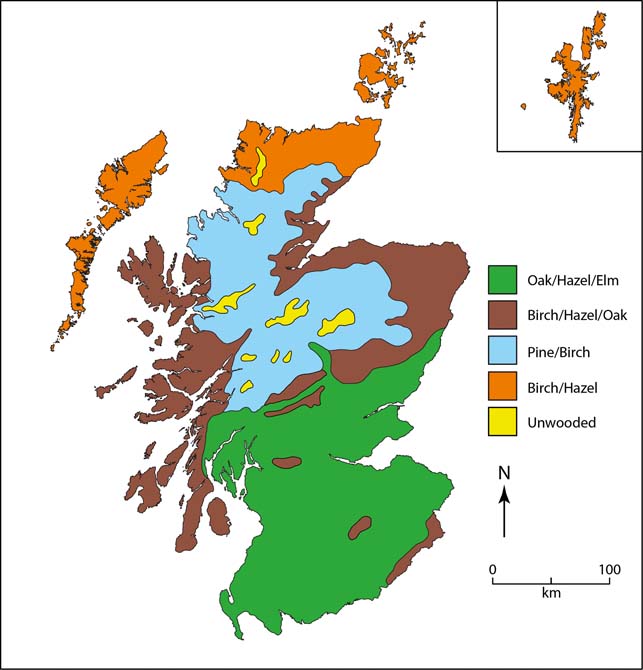
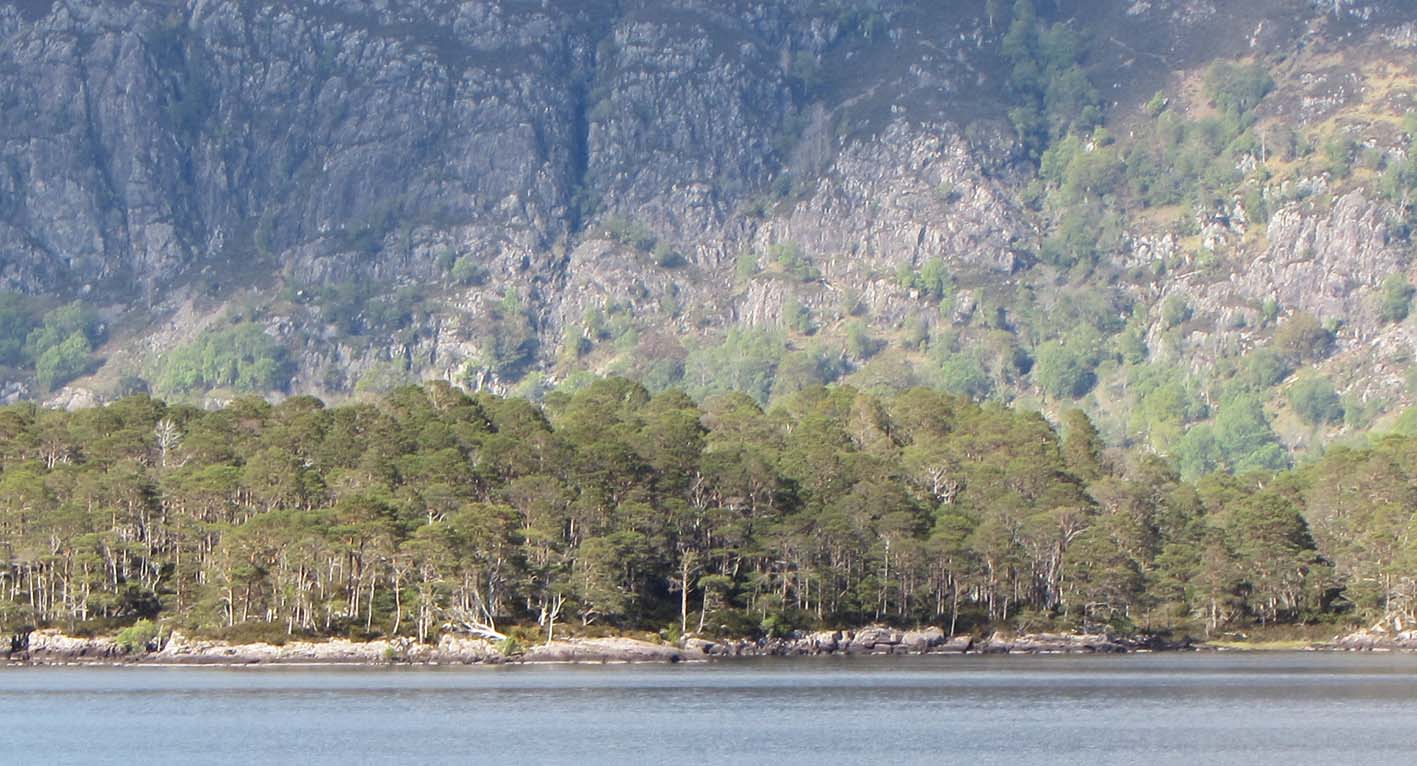
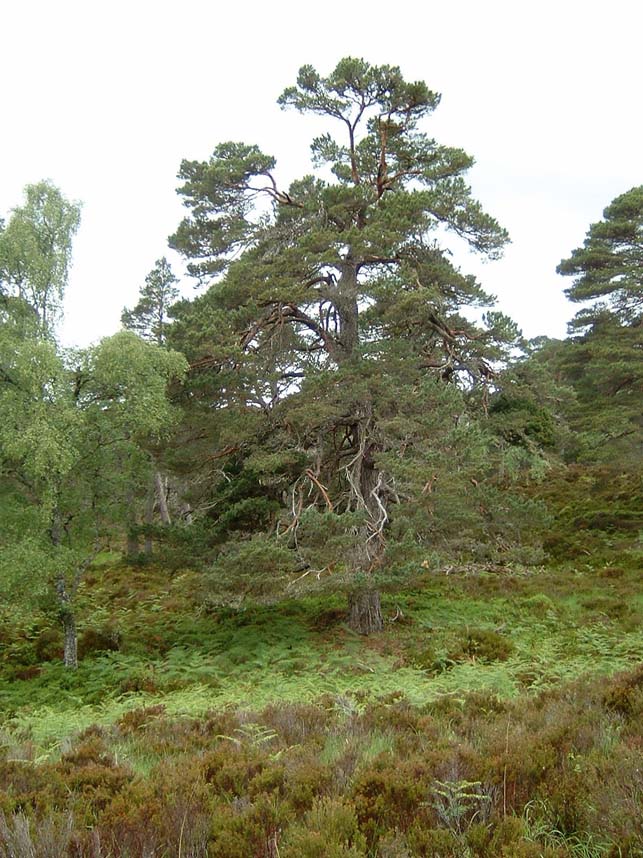
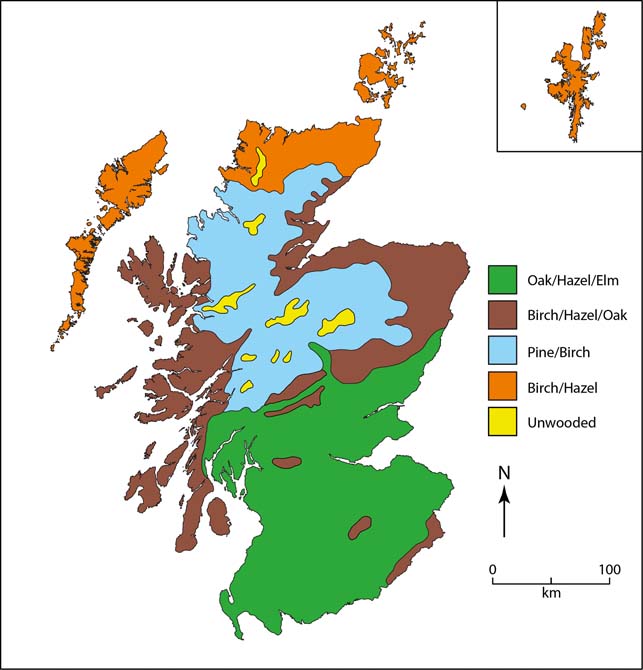
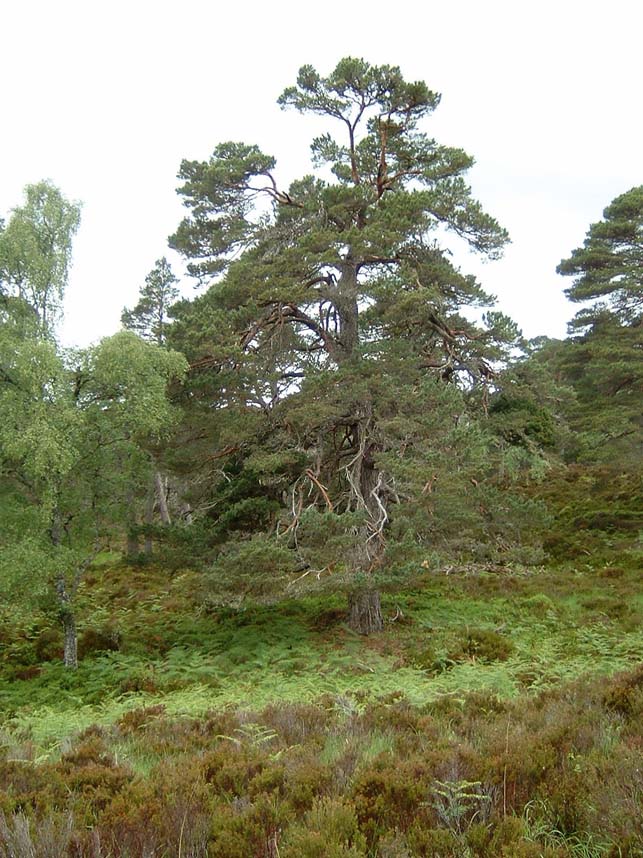
Scotland has relatively few species of woodland trees today, the principal dominants being juniper (Juniperus communis), birch (Betula), Scots pine (Pinus sylvestris) and oak (Quercus), with hazel (Corylus avellana), elm (Ulmus), ash (Fraxinus) and alder (Alnus glutinosa) also important and locally dominant. Understanding of the history of these taxa during the Holocene has been derived mostly from the study of pollen in the sediments of lakes and bogs, supplemented by dating of tree-remains preserved in peats. Radiocarbon-dating, calibrated to calendar years (e.g., Reimer et al. Reference Reimer, Bard, Bayliss, Beck, Blackwell, Ramsey, Buck, Cheng, Edwards, Friedrich, Grootes, Guilderson, Haflidason, Hajdas, Hatté, Heaton, Hoffmann, Hogg, Hughen, Kaiser, Kromer, Manning, Niu, Reimer, Richards, Scott, Southon, Staff, Turney and van der Plicht2013), has been the key to deriving a timescale for events and for understanding rates of change and the time-transgressive nature of woodland development. At the end of the last glacial period, about 11,700 cal yr BP, the vegetation would have been predominantly treeless, tundra-like in character, although it is possible that some birch and juniper existed in sheltered places and in the S. It is thus generally assumed that each of the current species spread into the region time-transgressively after 11,700 cal yr BP, principally from the S, and ultimately from the continental mainland. Juniper increased first, but was rapidly replaced by birch by about 11,200 cal yr BP and by hazel by about 9,900 cal yr BP (spreading especially rapidly along the W coast), then by elm and oak by about 9,000 cal yr BP (Birks Reference Birks1989; Huntley et al. Reference Huntley, Daniell and Allen1997). Two significant exceptions to this pattern, in relation to pine and alder, have been identified. First, the appearance of pine in the Cairngorms and Wester Ross, where it persists today (Figs 2, 3), is early relative to the timing of its spread across England and southern Scotland (Birks Reference Birks1975) and it does not appear ever to have been a forest dominant in the lowlands of southern Scotland (Hibbert & Switsur Reference Hibbert and Switsur1976; Tipping Reference Tipping1997). It has been suggested (e.g., Huntley & Birks Reference Huntley and Birks1983) that there may have been some pine on the continental shelf W of Ireland and western Scotland during the Last Glacial Maximum (LGM: ≥20,000 cal yr BP), and that these populations were ancestral to those that became established in the Cairngorms and Wester Ross before 9,000 cal yr BP. The comparatively early and sustained increase of Pinus pollen in Donegal, Northern Ireland, shows that pine was present there at about 10,500 cal yr BP (Fossitt Reference Fossitt1994), adding support to this hypothesis. Alternatively, pine might have spread through southern Scotland at low densities or by long-distance dispersal between upland areas (Bennett Reference Bennett1984). Analyses of the resin monoterpenes of modern Scottish and continental pine populations suggest that more than one Holocene origin for Scottish pine populations may be necessary to explain the observed patterns, from either elsewhere in Britain and Ireland or from adjacent continental Europe (Forrest Reference Forrest1980, Reference Forrest1982; Kinloch et al. Reference Kinloch, Westfall and Forrest1986), and analyses of mitochondrial DNA (Sinclair et al. Reference Sinclair, Morman and Ennos1998, Reference Sinclair, Morman and Ennos1999) support a complex origin for modern Scottish pine populations. Second, the overall pattern and spread of alder in Britain and Ireland is variable in time and space, indicating that it may have spread rapidly at low densities in the early Holocene, and then increased in abundance locally as habitats and weather patterns created suitable conditions for it in valleys and wetlands (Bennett & Birks Reference Bennett, Fossitt, Sharp and Switsur1990). The human dimension is mentioned below.
Map of woodland in Scotland ca.5800 cal yr BP (after Tipping Reference Tipping1994; Edwards & Whittington Reference Edwards, Whittington, Edwards and Ralston2003).
Pine woods on the islands of Loch Maree, where pine has been continuously present for 9,000 years.

It is likely that these major spatial differences and changes through time in the forests of Scotland were brought about by ecological processes of spread following climate warming at the beginning of the Holocene (see above) and by succession of each of the taxa concerned, arriving at different times because of varying rates of spread and varying distances from the nearest point of their LGM distributions (Birks Reference Birks1989). Scotland lies at the extreme limit of the land area available for spread, with a climate that approaches (in the N and W, including the Outer Isles, Orkney and Shetland) a degree of exposure, wetness and coolness that is marginal for tree growth. Those trees that arrived and expanded represent the very few European taxa that were both tolerant of the climate and able to spread the necessary distance to reach the region.
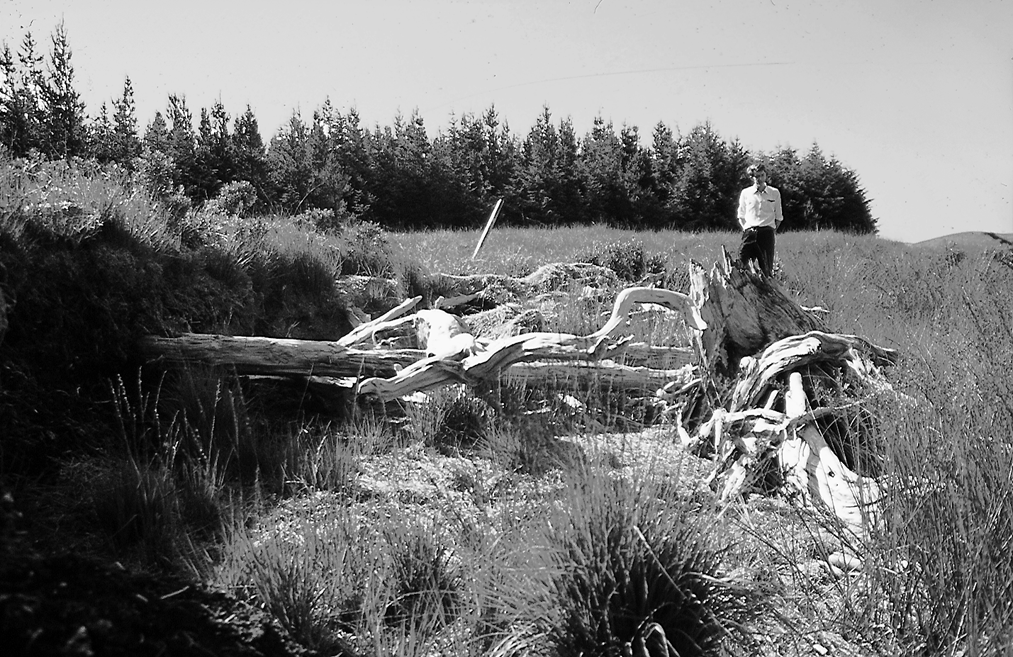
By about 6,000 cal yr BP, much of Scotland up to at least 700 m altitude is likely to have been forested, at least as far N as the lowlands of Caithness and Sutherland (Bennett Reference Bennett1989). South and E of the Great Glen, and probably also locally in the Inner Hebrides as far N as Skye, forests were probably dominated by oak in the lowlands, together with elm and hazel. There was likely alder in valley bottoms and on some wet slopes, below bands of pine and birch with increasing altitude. Pine may have been more important in the lowlands N and W of the Great Glen, as well as locally in Skye and the Western Isles, although this was not universally the case (Wilkins Reference Wilkins1984; Fossitt Reference Fossitt1996; Davies Reference Davies and Tipping2003), with birch also generally more common in these regions. Vegetation of Orkney and Shetland likely had a reduced woodland component dominated by birch and hazel (Bennett et al. Reference Bennett, Boreham, Sharp and Switsur1992; Bunting Reference Bunting1994, Reference Bunting1996; Whittington et al. Reference Whittington, Edwards, Zanchetta, Keen, Bunting, Fallick and Bryant2015). The dynamics of Holocene tree-lines, in relation to their modern distributions, have been investigated from pollen and plant macrofossil records in peat profiles and by obtaining radiocarbon age determinations for stumps of pine preserved in peat (Fig. 4). In the Cairngorms, the present tree-line is typically at about 490 m altitude, except for a section at 650 m on Creag Fhiaclach (Nagy et al. Reference Nagy, Nagy, Legg and Grace2013). Pears (Reference Pears1967, Reference Pears1968) suggests that this is artificially low, and that the present climatically-potential tree-line would be at about 680 m altitude. Peat profiles show that pine reached 930 m altitude in the Cairngorms, and 600 m in the NW Highlands (Binney Reference Binney1997), while fossil tree stumps have been found in peat at altitudes up to about 790 m (Bennett Reference Bennett1996). Former tree-lines have thus been higher than those of today, and radiocarbon-age determinations show that pine occurred at these higher altitudes several times during the Holocene, but not continuously (Pears Reference Pears1975; Dubois & Ferguson Reference Dubois and Ferguson1985, 1988; Binney Reference Binney1997). Although tree-lines have formerly been higher than they are at present, up to at least the altitudes indicated, it would at present be unsafe to assume that absence of pine stumps in the peat at any particular time or altitude necessarily reflected a downward shift of tree-line whether caused by climate or any other agent. McConnell & Legg (Reference McConnell, Legg, Thompson, Hester and Usher1995), by means of pollen analysis of peat profiles, show how study of tree-line movement might be addressed, but longer profiles and radiocarbon-age determinations are still needed to determine tree-line fluctuations at a sub-millennial scale.
Pine stumps appearing from peat, Clatteringshaws Loch, Galloway Hills.

In general, and after about 6,000 cal yr BP, woodland decreases in many areas and is replaced by blanket peat in the N and W and the spread of Neolithic agriculture in the S and E. These processes are highly variable, however, and this is evident in Orkney where blanket peat is well represented on Hoy and Rousay, but is much patchier on Mainland and largely absent from other islands (Dry Reference Dry2016). Decreases of woodland happened irregularly and locally, before becoming widespread after about 2,500 cal yr BP (Fyfe et al. Reference Fyfe, Roberts and Woodbridge2010, 2013). The decline of pine, however, seems to have been more dramatic, with a particularly abrupt period of decline at about 4,400 cal yr BP (Birks Reference Birks1975; Bennett Reference Bennett1984), for reasons that are still not completely clear (Gear & Huntley Reference Gear and Huntley1991; Blackford et al. Reference Blackford, Edwards, Dugmore, Cook and Buckland1992; Tipping Reference Tipping, Ashmore, Davies, Haggart, Moir, Newton, Sands, Skinner and Tisdall2008a; Tipping et al. Reference Tipping, Ashmore, Davies, Haggart, Moir, Newton, Sands, Skinner and Tisdall2008a; Moir et al. Reference Moir, Leroy, Brown and Collins2010; Moir Reference Moir2012). At the same time, the overall distribution of pine in Scotland contracted towards the current core areas of the Cairngorms and NW Highlands, and this tree became extinct on Skye and the Western Isles. During the mid-Holocene, it is probable that the modern overall gradient developed with western blanket bog landscapes grading towards more woodland towards the E. In the far N, the already low proportion of woodland in the vegetation of Shetland, Orkney and Caithness almost completely disappeared. Superimposed on this gradient, pollen records show local variation, probably depending on exposure, topography and intensity and timing of human impact (cf. Farrell Reference Farrell2015).
3. Blanket peat
With almost one quarter of Scotland's land area covered by blanket peat, it might at first sight seem surprising that we know relatively little of its spatial development through time. Quite apart from the complexity of its genesis, with well-trodden causes advanced for the inception and extension of blanket mires through a combination of climatic, topographic, pedogenic, hydrological, biotic or anthropogenic processes (e.g., Moore Reference Moore and Chambers1993; Stevenson & Birks Reference Stevenson, Birks, Thompson, Hester and Usher1995; Charman Reference Charman2004; Tipping Reference Tipping, Davies, McCulloch and Tisdall2008b), the dating of an entity which continues to spread from beginnings extending back millennia is fraught with methodological difficulties (Edwards & Hirons Reference Edwards and Hirons1982; Tipping Reference Tipping, Davies, McCulloch and Tisdall2008b). Leaving aside the issue of whether the blanket peat began as a paludification deposit deriving from a relatively dry land surface or spread over dry surfaces from an aquatic basin, Scottish blanket peats can be shown to have been forming from the Late Devensian period in the case of Loch Farlary, in Sutherland (which lay beyond the limits of Younger Dryas glaciers; Tipping Reference Tipping, Davies, McCulloch and Tisdall2008b), from the early Holocene at Carn Dubh, Perthshire (Tipping Reference Tipping1995), in the mid-Holocene at Callanish, Isle of Lewis (Bohncke Reference Bohncke, Birks, Birks, Kaland and Moe1988), and as late as 540–310 cal yr BP at Ness of Gruting, Shetland (Edwards Reference Edwards and Gulløv2014).
This last date is from a grazed hillside and cannot be said to date the earliest peat development at that site, as it is essentially from a location subject to direct human activity. This may be demonstrated further from West Mainland, Shetland, where relict fields and settlement systems of the Neolithic and Bronze Age are to be found. There, palaeoenvironmental evidence (palynological and lithological) from Loch of Brunatwatt suggests the spread of peat from c.5,550 cal yr BP (Edwards & Whittington Reference Edwards and Whittington1998). However, the blanket peats in close proximity to the prehistoric settlements seem to have formed long after the likely abandonment of the systems. The earliest basal dates for the fully organic ombrotrophic peat strata overlying the pervasive thin mineral soils are 2,330–2,060 cal yr BP (Brunatwatt 1 and Pinhoulland 6; Edwards Reference Edwards and Gulløv2014). Similarly, shallow blanket peats with an afforestation pollen signal in the uppermost sediments and prehistoric basal ages occur on the S side of Loch Naver (Caithness), close to historic settlements (A. L. Davies pers. comm. 2014). The assumed missing peat may well have been ‘scalped' or ‘flayed' for fuel or building construction at any stage after it formed or was perhaps used as a plaggen to enhance soils in the area (cf. Fenton Reference Fenton1978; Whittington & Edwards Reference Whittington and Edwards1993a; Donaldson et al. Reference Donaldson, Edwards, Meharg, Deacon and Davidson2009; Edwards et al. Reference Edwards, Stummann Hansen and Bjarnason2011).
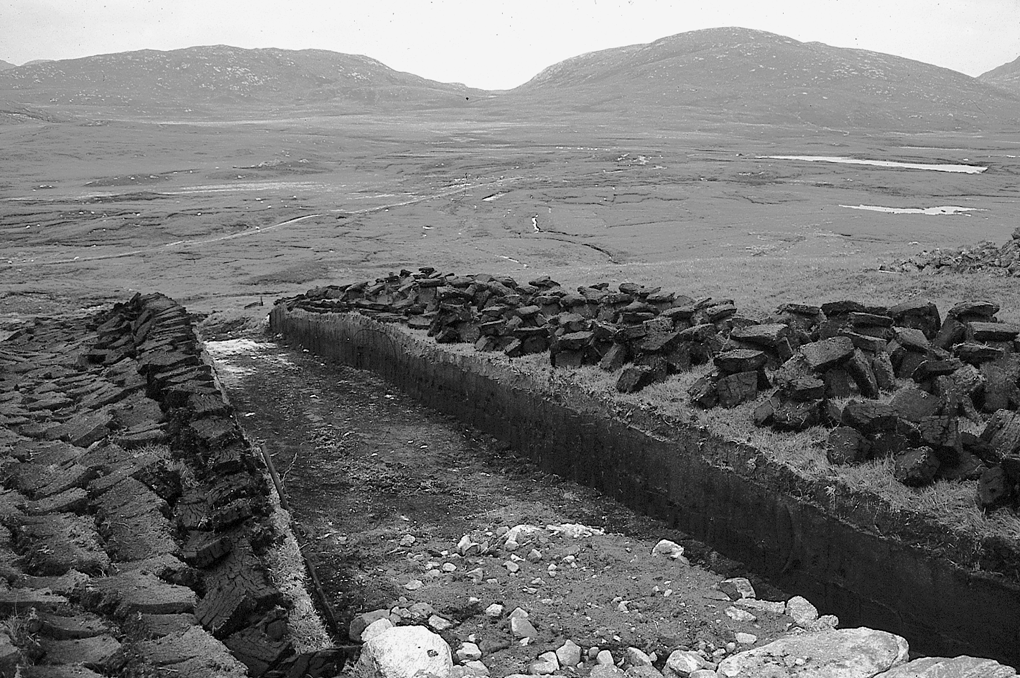
Such examples highlight the difficulties of working in areas where people have been active, although the use of loch cores, which are not without their own complications (Edwards & Whittington Reference Edwards and Whittington2001), may allow some problems to be circumvented. Irrespective of any local land-use history, detailed stratigraphic surveys of sub-peat/land surface topography and the dating of basal peat layers would represent a huge task if pursued at a national scale. Apart from dating issues and the decision as to what constitutes blanket peat, we already know from intra-site studies that topographic variation makes it difficult to determine what would equate to representative dates for an area (e.g., a slope or a larger area) as opposed to a particular site, given the time-transgressive nature of peat spread (Charman Reference Charman1992; Lawson et al. Reference Lawson, Gathorne-Hardy, Church, Newton and Edwards2007; Tipping Reference Tipping, Davies, McCulloch and Tisdall2008b). None of this alters the fact that blanket peat is a major sedimentary and visual element of the Scottish landscape, and provides an important palaeoenvironmental archive (Payne et al. Reference Payne, Ratcliffe, Andersen and Flitcroft2016). Even if the level of anthropogenic involvement with its spread remains unresolved, there is little doubt that humans used the peat, in the past as now (Fig. 5), and that it likely influenced the nature and location of settlement and husbandry, just as it affected the growth and diversity of woodland.
Peat cutting in blanket peat on the slopes of Reineval, South Uist.

4. Human impacts
The preceding discussion of Scotland's woodland presents a narrative whereby the tree cover experienced autogenic changes as a result of natural succession. Into the mix, however, and increasingly so through the course of the Holocene, it is necessary to include human influence as Homo sapiens populations grew. Much research has focused upon the anthropogenic factor in vegetational history, and the pervasiveness of woodland and its sensitivity to human manipulation and depredations have been well documented palaeoecologically. Woodland has always been subject to disease, death, windthrow and lightning strikes, which could all create openings, while grazing activities could have maintained clearings for many hundreds of years (Buckland & Edwards Reference Buckland and Edwards1984; Brown Reference Brown1997). By the same token, human communities, in using woodland resources for food and shelter, would have disturbed woodland. Also, the Holocene woodland development of Scotland showed considerable spatial and temporal variation (Edwards & Whittington Reference Edwards, Sugden, Larsson, Kindgren, Knutsson and Loeffler2003).
A common feature of Scottish pollen diagrams is the prominence of Corylus avellana representation and its maintenance from around 10,000 cal yr BP. This phenomenon is sometimes ascribed to Mesolithic hunter-gatherer impacts and possible resource manipulation (e.g., coppicing (Fig. 6) or burning to enhance woody growth and hazel nut yields, which at the same time could increase flowering and pollen production (Smith Reference Smith, Walker and West1970)). The exploitation of hazel for food and fuel may, indeed, have created areas of adventitious coppice (Bishop et al. Reference Bishop2015). However, for Scotland, the existence of high hazel values even for areas distant from likely Mesolithic activity has been noted (Edwards & Ralston Reference Edwards and Ralston1984), while a study of microscopic charcoal at a number of sites revealed no correspondence between greater fire incidence, as inferred from charcoal, and early maxima for hazel-type pollen (Edwards Reference Edwards, Vermeersch and van Peer1990). Huntley (Reference Huntley and Chambers1993) explored a series of hypotheses concerning the spread of hazel and concluded that climate was likely to be the primary underlying cause. This in no sense denies the usefulness of hazel nuts and hazel wood products to Mesolithic peoples, nor of the utilisation of hazel in a woodland management system (Waller et al. Reference Waller, Grant and Bunting2012). Indeed, one has only to consider the hundreds of thousands of charred nut shells found at the site of Staosnaig on the Isle of Colonsay (Mithen et al. Reference Mithen, Finlay, Carruthers, Carter and Ashmore2001) – and this is not unique in Britain (Howick 2017) – to appreciate the seasonal importance of hazel to prehistoric populations.
Coppiced hazel on the Isle of Mull. Coppicing may have been practised in Scotland since Mesolithic times.

Uncertainty also surrounds the role of humans in the rise and spread of Alnus glutinosa. Following observations by McVean (Reference McVean1956a, Reference McVeanb), Smith (Reference Smith1984) implicated Mesolithic people in the expansion of alder. This was held to be subsequent to fire and woodland disturbance, and based on the supposition that such activity promoted catchment runoff and waterlogging in habitats favoured by Alnus. A number of Scottish pollen profiles do display an increase in microscopic charcoal as alder expands (Edwards Reference Edwards, Vermeersch and van Peer1990; Bunting Reference Bunting1994), but not all. Like the spread of many plants, that of Alnus is likely to have a number of contributory causes of which human activity can be one (Bennett & Birks Reference Bennett, Fossitt, Sharp and Switsur1990).
Many pollen diagrams which cover the Mesolithic period display small reductions in woodland taxa, sometimes accompanied by expansions in charcoal values, and human activity is often surmised – indeed, lithic artefacts are sometimes known from the pollen sites themselves or their vicinity (e.g., Knox Reference Knox1954; Edwards et al. Reference Edwards, Hirons and Newell1991; Tipping et al. Reference Tipping, Edmonds and Sheridan1993; Edwards & Mithen Reference Edwards and Mithen1995; Paterson Reference Paterson2011). Numerous studies which demonstrate inferred impacts upon woodland come from island locations. Thus, archaeological excavations at Kinloch, Rum, produced dates on carbonised hazelnut shells extending back to 9,890–9,430 cal yr BP (2σ; Wickham-Jones Reference Wickham-Jones1990). Pollen data from a mire 300 m from the excavations reveal sharp and sustained changes in the Mesolithic age pollen of alder, hazel, grasses and willow, together with peaks in microscopic charcoal (Hirons & Edwards Reference Hirons and Edwards1990). At Loch an t-Sìl, South Uist, close sampling of Mesolithic age sediments reveals two phases of reduction in birch and hazel at c.8,900 cal yr BP and 8,690 cal yr BP, lasting 130 and 70 years respectively (Edwards Reference Edwards, Pollard and Morrison1996). These are associated with expansions in Poaceae, Calluna vulgaris (heather) and charcoal and reductions in ferns. The removal of birch and hazel may have an anthropogenic origin and the expansions in grass and heather could indicate their spread into cleared areas. Both taxa survive well after pollarding (Fig. 7) or coppicing (Fig. 6). The reduction of ferns is similar to features observed in the E Shetland pollen site of Dallican Water (Bennett et al. Reference Bennett, Boreham, Sharp and Switsur1992). There, this was taken to indicate possible grazing by red deer which may have been transported to Shetland by hunter gatherers intent on introducing a valuable resource. In southern Shetland, a double shell midden of Mesolithic and early Neolithic age has been exposed by coastal erosion at West Voe, near Sumburgh (Melton & Nicholson Reference Melton and Nicholson2004; Edwards et al. Reference Edwards, Schofield, Whittington, Melton, Finlay, McCartan, Milner and Wickham-Jones2009), and the palaeoecological record from nearby Loch of Gards shows reduced hazel and birch, with an expansion in heather and ribwort plantain (Plantago lanceolata) and increased minerogenic inputs to the loch sediments for the period covered by the middens. Contrary to the situation of only a few years ago (Edwards Reference Edwards, McCartan, Schulting, Warren and Woodman2009), the Outer Hebrides and Shetland have both now furnished archaeological evidence, arguably, for a material Mesolithic presence (Gregory et al. Reference Gregory, Murphy, Church, Edwards, Guttmann and Simpson2005; Edwards et al. Reference Edwards, McCartan, Schulting, Warren and Woodman2009), which validates the use of the palaeoecological archive as a predictor for hunter-gatherer sites. Other sites from both the Western Isles (e.g., Bohncke Reference Bohncke, Birks, Birks, Kaland and Moe1988; Bennett et al. Reference Bennett, Fossitt, Sharp and Switsur1990; Edwards et al. Reference Edwards, Whittington and Tipping2000, Reference Edwards, Langdon and Sugden2007; Sugden & Edwards Reference Sugden, Edwards and Mithen2000; Edwards & Sugden Reference Edwards, Sugden, Larsson, Kindgren, Knutsson and Loeffler2003; Green & Edwards Reference Green, Edwards, Hardy and Wickham-Jones2009) and the Northern Isles (Bennett et al. Reference Bennett, Boreham, Hill, Packman, Sharp, Switsur, Birnie, Gordon, Bennett and Hall1993; Edwards & Moss Reference Edwards, Moss, Birnie, Gordon, Bennett and Hall1993; Bunting Reference Bunting1994) may be cited similarly, together with critiques of the evidence (Tipping Reference Tipping, Pollard and Morrison1996; Edwards Reference Edwards, McCartan, Schulting, Warren and Woodman2009).
Pollarded birch in Assynt. Similar examples occur in many remnant woodlands in this region and indicate past management for wood and grazing.

Relative sea-level change was highly transgressive over time and space, with rates of isostatic uplift exceeding those of eustatic sea-level rise in the earlier Holocene (e.g., ∼9,500–8,800 cal yr BP), producing a fall in relative sea level, and the reverse during the Main Postglacial Transgression (∼8,000–6,800 cal yr BP) (Ballantyne & Dawson Reference Ballantyne, Dawson, Edwards and Ralston2003; Smith et al. Reference Smith, Barlow, Bradley, Firth, Hall, Jordan and Long2018 [this volume]). Raised shorelines attain 14 m in places as a result of isostatic uplift, as in the upper Forth Valley and southern Loch Lomond, but less than 2 m above present sea level in coastal NE Buchan. Given their spatially variable speeds of occurrence, rising Holocene sea levels and the pervasive but initially piecemeal spread of peat are unlikely to have been greatly deleterious to Mesolithic lifestyles in all areas (cf. Edwards & Sugden Reference Edwards, Sugden, Larsson, Kindgren, Knutsson and Loeffler2003; Edwards Reference Edwards and Saville2004a; Reference Edwards, McCartan, Schulting, Warren and Woodman2009; Tipping Reference Tipping, Davies, McCulloch and Tisdall2008b). Although forests and peatlands were flooded in some coastal localities, they may have brought benefits in terms of increasing the variety of habitats as new estuaries and islands formed and in the supply of peat as a fire and (albeit sub-optimal) grazing resource.
Thus, the Outer Hebrides would have seen a diminution of their land areas to the W as the submarine shelf became inundated and formed the Long Island archipelago from about 8,000 cal yr BP (Ritchie et al. Reference Ritchie, Whittington and Edwards2001). By a similar time, the southern North Sea also saw the demise of ‘Doggerland', with its land bridge to mainland Europe and with all the environmental and demographic implications that this would have had for the loss of a land area larger than that of the current United Kingdom (Coles Reference Coles1998; Gaffney et al. Reference Gaffney, Thomson and Fitch2007). The Orkney and Shetland archipelagos reached their current configurations much later, with a suggested date of 4,500 cal yr BP for Orkney (Bates et al. Reference Bates, Nayling, Bates, Dawson, Huws and Wickham-Jones2013).
Hunter-gathering gave way wholly or in part to agriculture after 6,000 cal yr BP. The Mesolithic–Neolithic transition is a movable feast and both the archaeological and the palynological records are far from certain when it comes to definitions and interpretations of what might be said to be the most important social and economic boundary in human history (Case Reference Case1969; Smith Reference Smith, Walker and West1970; Dennell Reference Dennell1983; Edwards Reference Edwards, Birks, Birks, Kaland and Moe1988; Brophy et al. Reference Brophy, Sheridan, Barber, Cummings, MacGregor, Murray, Noble, Tipping and Warren2012).
The conventional beginning of the start of agriculture is often allied to the appearance of cereal cultivation. If this is indicated by finds of macrofossil cereal grains, then for Scotland the earliest material comes from a series of archaeological sites in eastern Aberdeenshire extending back to 5,890–5,660 cal yr BP (2σ; Murray et al. Reference Murray, Murray and Fraser2009; Brophy et al. Reference Brophy, Sheridan, Barber, Cummings, MacGregor, Murray, Noble, Tipping and Warren2012). This is within the range of calibrated 14C dates for the oft-quoted ‘elm decline', the decline in Ulmus pollen, which clusters around 6,000–5,800 cal yr BP in Britain and Ireland (Parker et al. Reference Parker, Goudie, Anderson, Robinson and Bonsall2002). The elm decline is highly variable and has long attracted debate as to causation, including human impact, but with climate change, disease and pedogenesis as alternative hypotheses (Iversen Reference Iversen1941; Watts Reference Watts1961; Ten Hove Reference Ten Hove1968; Parker et al. Reference Parker, Goudie, Anderson, Robinson and Bonsall2002; Clark & Edwards Reference Clark and Edwards2004; Batchelor et al. Reference Batchelor, Branch, Allison, Austin, Bishop, Brown, Elias, Green and Young2014; Whitehouse et al. Reference Whitehouse, Schulting, McClatchie, Barratt, McLaughlin, Bogaard, Colledge, Marchant, Gaffrey and Bunting2014). Irrespective of the cause for elm's marked reduction, it should be noted that in Scotland, as elsewhere, its demise is often temporary and can be part of a series of decline and regeneration oscillations (Whittington et al. Reference Whittington, Edwards and Cundill1991; cf. Hirons & Edwards Reference Hirons and Edwards1986; Smith & Cloutman Reference Smith and Cloutman1988). In addition, reductions in pine and oak have been seen to accompany falls in elm (Brophy et al. Reference Brophy, Sheridan, Barber, Cummings, MacGregor, Murray, Noble, Tipping and Warren2012).
Prior to the reduction in elm, there are frequent finds of pre-elm decline cereal-type pollen (Edwards & Hirons Reference Edwards and Hirons1984; Innes et al. Reference Innes, Blackford and Davey2003), but their status is much disputed (Behre Reference Behre2007; Tinner et al. Reference Tinner, Nielsen and Lotter2007). There is less consideration of the phenomenon of a charcoal fall at the elm decline in Scotland, which was posited as a possible decrease in natural or domestic fires, or a lessening of burning-related hunter-gatherer or agricultural activities (Edwards Reference Edwards, Birks, Birks, Kaland and Moe1988, Reference Edwards, Vermeersch and van Peer1990; Edwards & McIntosh Reference Edwards and McIntosh1988). Charcoal analyses for this period in southern Scotland have been variously interpreted as producing ‘no conclusion' (Tipping & Milburn Reference Tipping and Milburn2000, p. 191), or as indicating that ‘the fires were natural and ceased with the change to a wetter climate' (Brophy et al. Reference Brophy, Sheridan, Barber, Cummings, MacGregor, Murray, Noble, Tipping and Warren2012, p. 59).
While the elm decline and pre-elm decline cereal pollen remain equivocal indicators of the transition to a Neolithic way of life, recent analyses demonstrate relatively rapid and widespread loss of woodland cover across Scotland around c.6,000–5,400 cal yr BP, peaking around 5,700–5,400 cal yr BP (Woodbridge et al. Reference Woodbridge, Fyfe, Roberts, Downey, Edinborough and Shennan2014). On the basis of a strong correlation with radiocarbon-dated archaeological sites, this is attributed to early Neolithic landscape impacts. The scale of landscape transformation can be seen in finer detail around the early Neolithic timber hall at Crathes in Aberdeenshire. Pollen-vegetation modelling of on-site pollen assemblages from pit-fill sediments suggests that woodland clearance and cereal cultivation covered a radius of up to 2.5 km around the hall, while Bayesian analysis of the radiocarbon chronology implies a short duration of use, estimated at 1–90 years between construction and destruction (at c.5,770–5,670 cal yr BP) (Tipping et al. Reference Tipping, Bunting, Davies, Murray, Fraser and McCulloch2009). If correct, such intensive and short-lived woodland modification would likely be invisible in pollen data from larger loch and peat sequences in the surrounding area, indicating the value of high spatial-resolution and multi-site networks for assessing the visibility, extent and variability of early farming impacts on vegetation cover (Davies & Tipping Reference Davies and Tipping2004; Bishop Reference Bishop2015).
Such studies highlight the potential complexity of human activities upon landscapes. Although it might be thought that small prehistoric populations are likely to have commensurately small impacts upon the developing or developed woodland cover, human communities would have had more far-reaching influence if the situation discussed above regarding hazel and alder is accepted. Against that, one can see that Corylus and Alnus were able to achieve dominance without the widespread assistance of people in previous interglacials (West Reference West1980), though not always to the same extent as in the Holocene. One might also instance the possible human involvement in the broad-scale development, maintenance and contraction of heathlands in Scotland (Bennett et al. Reference Bennett, Boreham, Sharp and Switsur1992; Stevenson & Thompson Reference Stevenson and Thompson1993; Edwards et al. Reference Edwards, Whittington, Hirons, Thompson, Hester and Usher1995; Edwards Reference Edwards, Pollard and Morrison1996) as elsewhere (Dimbleby Reference Dimbleby1962; Caseldine & Hatton Reference Caseldine, Hatton and Chambers1993; Simmons Reference Simmons1996) over long periods of prehistory and into the historic past. If needed, the correspondence between Neolithic and later incursions into the woodland cover, with the evidence from archaeology and proxies including sedimentology, cereals, soil erosion and burning, may be cited as demonstrating the role of humans in environmental change (Edwards & Ralston Reference Edwards and Ralston2003; Edwards & Whittington Reference Edwards, Sugden, Larsson, Kindgren, Knutsson and Loeffler2003; Bell & Walker Reference Bell and Walker2005). Scottish pollen diagrams are replete with major woodland reductions from later Neolithic times onwards, particularly in the early and middle Bronze Ages and into the Iron Age. Even in the absence of woodland, the changing abundances of cereal and grazing pollen indicators from the Bronze Age onwards suggest that farming was characterised by shifting patterns of land use through time, both within catchments and through agricultural reorganisation between neighbouring catchments in response to variable climatic and socio-economic conditions (e.g., McCullagh & Tipping Reference McCullagh and Tipping1998; Davies Reference Davies and Watson2007; Tipping et al. Reference Tipping, Davies, McCulloch and Tisdall2008b).
An exhaustively studied site is the small lake of Black Loch (Fig. 8) in the Ochil Hills of N Fife, where multiple pollen, charcoal and sedimentological profiles are available. The pollen of elm and other arboreal taxa undergoes a sequence of reductions and recoveries from the Neolithic (c.5,940 cal yr BP; Whittington et al. Reference Whittington, Edwards and Cundill1990, 1991; Fig. 9). Following a Middle Bronze Age decline, there was a regeneration lasting about half a millennium before further reductions preceded the coniferous plantations on landed estates over the last two centuries. Farming activities appear to be primarily responsible for the phases of open landscape with cereal-type pollen from Neolithic times onward along with suites of arable and pastoral indicators. A direct fire–vegetation relationship for the site was unproven (Edwards & Whittington Reference Edwards and Whittington2000), and domestic burning is inferred to be responsible for much of the microscopic charcoal record in the palynomorph catchment area, although stubble burning may have been important during the historic period. Sedimentological and geochemical indications of catchment disturbance with soil erosion are only evident from about 2,000 cal yr BP (Whittington & Edwards Reference Whittington and Edwards1993b), and this may reflect intentional or inadvertent sound land management over long periods of time (cf. Edwards & Whittington Reference Edwards and Whittington2001). Of interest is the period 1,950–1,300 cal yr BP which spans the Flavian and Severan Roman incursions. Here, the pollen suggests a regeneration of woodland and an absence of agriculture, which may reflect a punitive military presence that led to the collapse of native societies and economies (Whittington & Edwards Reference Whittington and Edwards1993b). This contrasts with sites near the Antonine Wall, in closer proximity to Roman occupation, where a switch from cereal cultivation to pastoralism is interpreted as specialisation in stock-raising to meet the needs of a new market (Tipping & Tisdall Reference Tipping and Tisdall2005). Cannabaceae pollen is present at Black Loch and that ascribed to Cannabis sativa (cannabis/hemp) is found from c.900 cal yr BP and was possibly associated with hemp retting during the medieval period (Edwards & Whittington 1990).
Black Loch, Fife. Holocene pollen profiles from this site are dominated by the pollen of woodland trees, especially oak, elm, hazel and alder.

Holocene pollen diagram from Black Loch, Fife (after Edwards et al. Reference Edwards, Whittington and Tipping2000).

A record of pollen, charcoal, magnetic susceptibilty and sediment chemistry from Loch Lang in the Western Isles (Bennett et al. Reference Bennett, Fossitt, Sharp and Switsur1990; Fig. 10) shows a contrasting pattern of change. The vegetation of eastern South Uist included areas of woodland over as much as half of the available landscape during the early Holocene. This woodland was dominated by birch and hazel, but oak, elm, alder and ash were also present. There is no evidence that pine was ever present on the Uists, and oak, elm and alder are now extinct as native trees in the Western Isles. After about 4,400 cal yr BP, woodland declined, possibly as the result of hill land being used as grazing for introduced domesticated animals. Blanket peat vegetation, which had begun to spread from about 6,000 cal yr BP, became the dominant feature of the landscape as the woodland area decreased. The physical and chemical data from the sediments in Loch Lang suggest that little erosion of soils took place until about 550 years ago, when there was a marked increase which was possibly attributable to increasing grazing pressure.
Holocene pollen diagram from Loch Lang, Western Isles, showing relative proportions of the main taxa plotted against a calendar year time scale (after Bennett et al. Reference Bennett, Fossitt, Sharp and Switsur1990).

While palynological data indicate the progressive contraction of woodland communities in Scotland since at least c 6,000 cal yrs BP, historical and dendroecological data show that by c.AD 1500 woods were nationally recognised as a scarce resource (Mills & Crone Reference Mills and Crone2012). It remains difficult, however, to evaluate from historical sources the effectiveness of regulatory measures aimed at preserving this resource. High resolution palynological-historical studies demonstrate that regulations met with varied levels of success in the face of market demand for livestock. For instance, woodland incursion near the head of Loch Awe around c.AD 1680–1760 took place during a period of rising market value for cattle, when farmers may have increased grazing activity despite measures to protect woods (Davies & Watson Reference Davies and Watson2007). Historical palynology also reveals the ecological consequences of preferential selection for high-value timber species in Atlantic woods, where timber management simplified woodland composition and structure, contributing to the modern dominance of oak in ‘ancient', semi-natural woodlands (Sansum Reference Sansum2005). The availability of improved chronological methods, such as lead-210 dating and fossil fuel-derived soot spherules (spheroidal carbonaceous particles), has allowed historical-palynological studies such as these to overcome the challenge of correlating pollen data with historical events (cf. Dumayne et al. Reference Dumayne, Stoneman, Barber and Harkness1995; Tipping Reference Tipping, Whyte and Winchester2004).
4. Biodiversity and conservation
In a global context, Scotland has comparatively low biodiversity as a result of its biogeographical position on the periphery of Europe (Bennett Reference Bennett and Aldhous1995; Mitchell & Ryan Reference Mitchell and Ryan1997; Montgomery et al. Reference Montgomery, Provan, McCabe and Yalden2014). However, on a national level, fine-grained geological and topoclimatic diversity combine with anthropogenic influences through the Holocene to create a range of distinctive communities. As a result, Scotland supports examples of 81 % of all National Vegetation Classification communities, even though it occupies only 35 % of the land area of Great Britain (Miles et al. Reference Miles, Tudor, Easton, Mackey, Fleming, Newton, Vickery and Usher1997). Many of these habitats and species are protected under national and international conservation designations, particularly in the uplands (Thompson et al. Reference Thompson, MacDonald, Marsden and Galbraith1995; Aspinall et al. Reference Aspinall, Green, Spray, Shimmield and Wilson2011). Since this is also where the majority of palynological studies have been conducted, it is not surprising that palaeoecologists have commented on conservation issues in a range of habitats, notably moorland, montane, freshwater and woodland systems.
Scottish biodiversity data show similarly worrying trends to national and international figures, with reductions in plant diversity over the last 50 years despite strong conservation efforts (RSPB 2013). To improve the ecological efficacy and economic efficiency of conservation actions, palaeoecological data can be used to test whether current conservation baselines and restoration targets are appropriate to longer-term ecosystem variability, and can help identify when modern conditions have no past analogues. For more than a century, ecologists have discussed the likely role of prolonged and intensified grazing on upland diversity (Latham Reference Latham1883; Darling Reference Darling1955). Agricultural census records were not sufficient to assess definitively whether changes in lambing could be linked to ecological shifts, such as habitat degradation (Mather Reference Mather1993), but combining palynological records with historical economic data indicates that intensified stocking densities and land abandonment have contributed to declines in upland biodiversity over the last 400 years, particularly in semi-natural grassland and moorland (Hanley et al. Reference Hanley, Davies, Angelopoulos, Hamilton, Ross, Tinch and Watson2008). This echoes findings in Scandinavia (Berglund et al. Reference Berglund, Gaillard, Björkman and Persson2008). Stocking levels were ultimately driven by market prices, implying that policy and economics have long-term impacts on biodiversity.
Similar evidence has emerged from studies on heather moorland, which is an internationally distinctive feature of the Scottish landscape (Thompson et al. Reference Thompson, MacDonald, Marsden and Galbraith1995). Over the last 200 years at least, the abundance of Calluna has declined in catchments across western Scotland, along with Ireland and Wales, often as a result of intensified grazing and subsequent afforestation (Stevenson & Thompson Reference Stevenson and Thompson1993). While the longevity of the decline highlights the extent of the challenge facing restoration, Calluna-dominated communities may not actually be a long-established feature of many moorlands: data from the Scottish Southern Uplands, from Wales and the Pennines indicate that they formed in recent centuries, also as a result of changing management practices (Tipping 1998; Chambers et al. Reference Chambers, Mauquoy and Todd1999; Davies Reference Davies2016). Heterogeneous dwarf-shrub communities comprising Calluna, other heaths and grasses may thus be a more appropriate restoration and management target on historical and biodiversity grounds.
Palaeoecological methods have also been used to evaluate competing hypotheses about freshwater acidification, while pre-industrial baselines derived from palaeolimnology underpin restoration targets in the EU Water Framework Directive (Bennion & Battarbee Reference Bennion and Battarbee2007). In combination with modern experimental studies, palaeolimnological data from relatively remote Scottish catchments helped demonstrate that atmospheric deposition of fossil fuel-derived sulphur since c.AD 1850 was the main cause of freshwater acidification (Battarbee & Allott Reference Battarbee and Allott1994). There is little evidence that changes in moorland grazing, burning or afforestation caused lake acidification, although afforestation may have exacerbated the decline in pH, and land use has contributed to more recent eutrophication through increased nutrient loading (Battarbee et al. Reference Battarbee, Stevenson, Rippey, Fletcher, Natkanski, Wik and Flower1989; Kreiser et al. Reference Kreiser, Appleby, Natkanski, Rippey and Battarbee1990). Comparison with pre-industrial assemblages derived from palaeo-archives indicates that the extent of biological recovery in modern aquatic systems often remains limited, despite reduced atmospheric deposition and the regulation of nutrient inputs. This highlights the importance of matching the goal of restoring pre-disturbance loch status with ecological feasibility and practicality (Salgado et al. Reference Salgado, Sayer, Carvalho, Davidson and Gunn2010; Battarbee et al. Reference Battarbee, Simpson, Shilland, Flower, Kreiser, Yang and Clarke2014).
Species movement and community reorganisation in response to climate change have been persistent themes throughout the history of palynology (Birks et al. Reference Birks, Birks and Ammann2016; Edwards et al. Reference Edwards, Fyfe and Jackson2017). In contrast, conservation planning for climatically-driven ecological reorganisation remains at a comparatively early stage of development (Hagerman & Satterfield Reference Hagerman and Satterfield2013; Climatexchange 2016). High-altitude montane communities are limited in the UK and face significant threats from climate change and land use (Thompson et al. Reference Thompson, Gordon, Horsfield, Gordon and Leys2001). Long-term data emphasise their vulnerability and can help establish where critical thresholds lie. The present diverse flora in parts of the Cairngorms, for example, reflects the survival from Lateglacial times of montane and arctic-alpine taxa in favourable microclimates that have remained relatively undisturbed by human impacts (Huntley Reference Huntley1981, Reference Huntley1994). A comparison between sites which retained montane floras into the Holocene with those which did not may help identify potential climate refugia, where species are more likely to survive (Maclean et al. Reference Maclean, Suggitt, Jones, Huntley, Brooks, Gillingham, Fletcher, Stewart, Thomas, Wilson and Caseldine2014); however, such refugia may prove temporary since many areas above and below the treeline are ultimately predicted to lose diversity in response to future climate warming (Birks Reference Birks, Fleming, Newton, Vickery and Usher1997; Allen & Huntley Reference Allen and Huntley1999).
Scotland has a well-established and ambitious woodland expansion and restoration programme in place (Hobbs Reference Hobbs2009). Anthropogenically-driven woodland loss is clear in central and southern Scotland (Tipping Reference Tipping1997), so palaeoecological data may be used to justify efforts to restore wooded communities on climatically suitable land. In contrast, woods in northern Scotland have been sensitive to even the relatively modest climatic fluctuations of the Holocene (Bridge et al. Reference Bridge, Haggart and Lowe1990; Gear & Huntley Reference Gear and Huntley1991; Tipping et al. Reference Tipping, Davies, McCulloch and Tisdall2008a). For instance, three studies spanning the modern climatic and vegetational gradient in Glen Affric, NW Highlands (Fig. 11), indicate that the position of the pinewood ecotone shifted in response to changes in climatic and grazing regimes, with instances of abrupt and gradual movement and of comparative stability (Froyd & Bennett Reference Froyd and Bennett2006; Shaw & Tipping Reference Shaw and Tipping2006; Tipping et al. Reference Tipping, Davies and Tisdall2006). The inconsistent relationship between the pine decline around 4,400 cal yr BP and palaeoclimate indicators of increased wetness at some sites, suggests that pine was growing near its ecohydrological limits (cf. Bennett Reference Bennett1984; Tipping Reference Tipping, Ashmore, Davies, Haggart, Moir, Newton, Sands, Skinner and Tisdall2008a). This underscores the sensitivity of these oceanic woods to growth stress. However, instances of rapid pine spread in response to drier climate (Gear & Huntley Reference Gear and Huntley1991) and of pine and birch expansion following changes in grazing pressure (Shaw & Tipping Reference Shaw and Tipping2006; Davies Reference Davies2011) indicate the capacity for expansion. Huntley et al. (Reference Huntley, Allen, Bennie, Collingham, Miller and Suggitt2018) predict that climatically suitable areas for northern pinewoods do exist, but these lie mainly outside areas designated for their protection, thus requiring more radical rethinking of conservation measures than those currently envisioned (Alagador et al. Reference Alagador, Cerdeira and Araújo2014; Pepper et al. Reference Pepper, Benton, Park, Selman, Thomson and Trench2014). Whether the colonisation of predominantly open vegetation on organic-rich soils and peatlands by pine is culturally acceptable remains to be tested (cf. Warren Reference Warren2000; Whild et al. Reference Whild, Meade and Daniels2001).
Glen Affric, NW Highlands. Scots pine and birch may have grown in mixed communities during the Holocene, rather than the single-species dominated stands in many extant ‘ancient' woodlands.
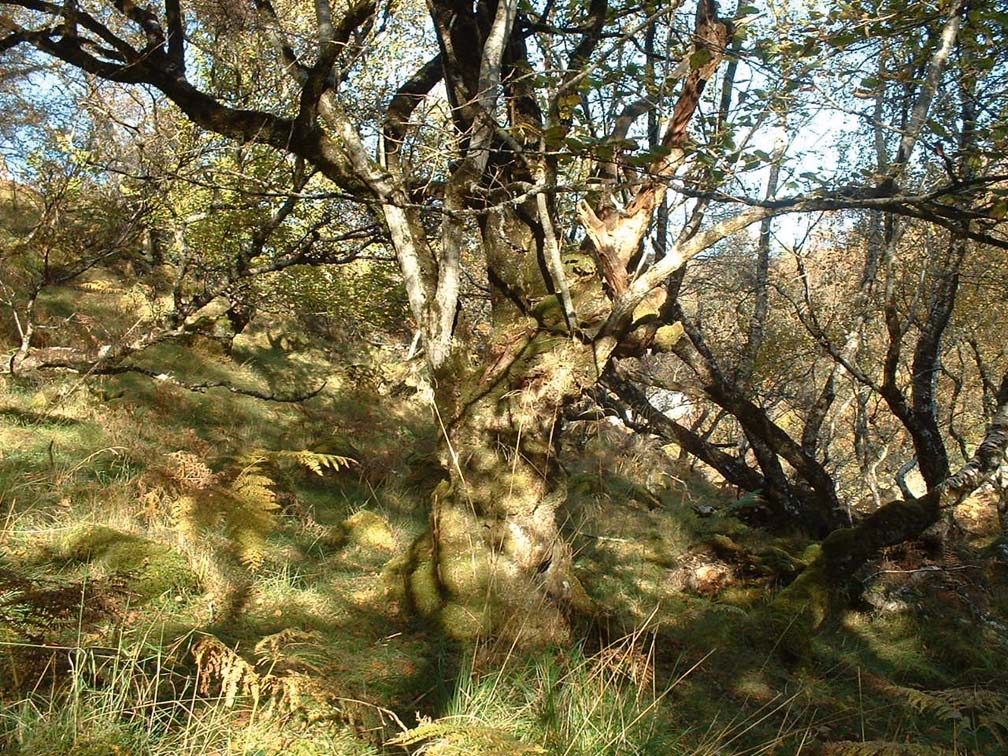
Palaeoecological evidence for species range dynamics thus raises both practical and ideological challenges for conservation. This is strongly evident at Migdale, near the fjordic coastal fringe of far NE Scotland, where Scots pine and oak woods are valued for their ancient woodland indicator species assemblages (Fig. 12) (Davies et al. Reference Davies, Smith, Froyd and McCulloch2017). Palynological evidence, though, shows that the pinewood there has existed for barely a millennium. Pine dominance emerged as a consequence of silvicultural management after c.1,060 cal BP, in woods where this species had previously been only a minor and intermittent component since 7,800 cal BP, and was previously out-competed by deciduous taxa. From an ecological perspective, this record demonstrates that in a suitably sheltered microclimate, woodland communities can survive multiple periods of climatic stress that contributed to loss of tree cover in NE Scotland, particularly where valley mires and comparatively steep hillslopes make the ground largely unsuited to agriculture. From a conservation standpoint, the pines are a comparatively recent and potentially transient community: under the present minimal management intervention strategy, the extant pines may be replaced by deciduous taxa, as occurred in the past. This outcome runs contrary to current conservation values and goals for the site.
Holocene pollen diagram from Migdale, SE Sutherland, showing the longevity of woodland cover and variability of canopy composition (after Davies et al. Reference Davies, Smith, Froyd and McCulloch2017).

There is a general absence of work on palaeo-fauna and their role in vegetation dynamics. This may be somewhat surprising given the Holocene attrition of faunal communities (particularly large mammals), the extent of debate surrounding modern wildlife management and potential reintroductions of regionally extinct taxa (Coles Reference Coles2006; Hetherington et al. Reference Hetherington, Lord and Jacobi2006; Montgomery et al. Reference Montgomery, Provan, McCabe and Yalden2014). This reflects the paucity of studies of bone assemblages and insect surveys away from archaeological sites and the limited application of coprophilous (dung) fungal spore analysis in Scottish palaeoecology (Clarke Reference Clarke1999; McCormick & Buckland Reference McCormick, Buckland, Edwards and Ralston2003; Davies Reference Davies, Lukas and Bradwell2010; cf. Whitehouse & Smith Reference Whitehouse and Smith2010; Edwards et al. Reference Edwards, Fyfe, Hunt and Schofield2015). A notable exception is the study by Brooks et al. (Reference Brooks, Jones, Telford, Appleby, Watson, McGowan and Benn2012b) at Loch Ruthven, S of Inverness. There, a combination of recent instrumental and sedimentological data established that the breeding success of horned grebes (Podiceps auritus) over the last c.40 years is positively correlated with chironomid abundance, which in turn is positively correlated with diatom-inferred total phosphorus, indicating resource-linked breeding success. This approach is currently being applied to understand what drives trends in monitoring records of scoter (Melanitta nigra) breeding success in Caithness through correlation with macroinvertebrate abundance (Hancock et al. Reference Hancock, Robson, Smith and Douse2016; Robson Reference Robson2016). Data from Ireland and northern England indicate the potential benefits of fungal spore analysis as a means of understanding the changing abundance of large herbivores and their influence on plant community dynamics and biodiversity, but similar efforts have yet to emerge in Scotland (Innes et al. Reference Innes, Blackford and Chambers2006; Feeser & O'Connell Reference Feeser and O'Connell2010; Jeffers et al. Reference Jeffers, Bonsall, Watson and Willis2012; Davies Reference Davies2016). The analysis of fungal spores has gained prominence over recent years on an international scale (Chambers et al. Reference Chambers, Booth, De Vleeschouwer, Lamentowicz, Le Roux, Mauquoy, Nichols and van Geel2012; Edwards et al. Reference Edwards, Fyfe, Hunt and Schofield2015) and the shortage of data from Scotland in part, at least, reflects the limited number of recent palaeoecological studies in the region.
5. Conclusions
A century of research has provided a robust outline of the nature of environmental change in Scotland over the period since the LGM. The landscape is more diverse than anywhere else in these islands, and the complexity of the landscape is reflected in the regional and local variations in vegetation cover. The main record is one of deglaciation followed by inward movement of plants and animals, time-transgressively, including the early appearance of modern humans. For the Holocene, palaeoecology (mainly palynology but also data from archaeology and archaeobotany) has demonstrated the pre-agricultural involvement of Mesolithic hunter-gatherers in vegetation development and the spread of people over mainland and peripheral (island) areas of the country. Molecular data are beginning to contribute to discussion of the Holocene origins of Scottish trees. Subsequent changes may be influenced to some degree by minor climatic fluctuations within the Holocene, but are dominated by increasing human activity, leading to large-scale clearance of woodland from the lowlands and some modification of all landscapes. This is epitomised by the extensive reductions in woodland from Neolithic and especially Bronze Age times onwards, with concomitant soil erosion and soil impoverishment from a management perspective. The present pattern of blanket peat uplands in the N and W follows this loss of woodland. Research has emphasised how mire landscapes reflect both natural and possibly anthropogenic pressures. Their existence provides opportunities for multi-proxy studies of environmental change, even if we are insufficiently knowledgeable about the nature and timing of blanket peat spread and the complexities of peat inception in the face of a multiplicity of possible causes acting separately or in combination (cf. Tipping Reference Tipping, Davies, McCulloch and Tisdall2008b).
Although the basic pattern is probably well-established, there are a number of uncertainties about which more investigation would be desirable. There is the nature of altitudinal zonation of vegetation in the Highlands: when did it became established, how and when was it modified to the present pattern? In particular, the former (perhaps climatically controlled) altitudinal tree-line should be determined. There is the issue of the relationship between pollen statistics and estimates of vegetational openness, as modelled scenarios (e.g., Fyfe et al. Reference Fyfe, Twiddle, Sugita, Gaillard, Barratt, Caseldine, Dodson, Edwards, Farrell, Froyd, Grant, Huckerby, Innes, Shaw and Waller2013) are leading us to question the reliability of traditional, less nuanced analyses based on percentage pollen values alone. With regard to the scale and pattern of human activity and modification of landscapes, we might ask how the distribution of the earliest inhabitants was influenced by the initial patterns of Holocene vegetation, land and sea configurations, and how the descendants of those inhabitants were affected by changes in vegetation consequent on increasing human activity, including changes brought about by introduced large grazing mammals. Finally, given the increasingly pressing need to adapt environmental management and conservation expectations to anticipate the effects of climate change, we might also ask how palaeoecological data can be better incorporated into conservation planning, to develop a more integrated approach that is simultaneously retrospective and forward-looking. This, as intimated above, requires the development of quantitative approaches that allow us to relate palaeoecological proxies to ecological and functional (e.g. ecosystem services) metrics.
6. Acknowledgements
We are very grateful to John Gordon, Mike Walker and an anonymous referee for their constructive comments on the paper.