Introduction
Cutaneous squamous cell carcinoma (SCC) is usually associated with ultraviolet (UV) light exposure and increasing age. Additionally, the immunocompromised are at increased risk. Human papillomavirus (HPV) type 16 is a high-risk mucosal HPV type usually associated with anogenital and oropharyngeal cancer. Human papillomavirus infection is associated with an increased incidence of non-melanoma skin cancer in immunocompromised patients.
Prior to this report, we found no cases of HPV16 and p16 related cutaneous SCC of the nasal tip in the literature. A recent report from Brazil described one case of ‘nose tip’ cutaneous SCC (3 mm). In situ hybridisation revealed ‘high-risk’ HPV types, but without access to polymerase chain reaction there was no subtyping.Reference Gavioli, Festa, Tyring, Silva and Oliveira1 We present two cases with HPV subtyping, in young males, without immunocompromise or excessive UV exposure.
Background
Human papillomavirus is associated with certain cancers: cervical, anogenital and now a rising incidence in oropharyngeal SCC. Prior to this report, HPV16 had not been associated with cutaneous SCC in the immunocompetent. This association is of clinical importance because the nasal tip site is associated with poor prognosis and recurrence,Reference Stanley and Olsen2 and is usually seen in older age groups. Patients with HPV16-positive oropharyngeal SCC have a more promising prognosis than those with non-HPV-related SCC;Reference Li, Thompson, O'Brien, McNeil, Scolyer and Cossart3 thus, HPV16-positive cutaneous SCC may also be a favourable prognostic factor. The presence of HPV should be considered and appropriate histopathological tests performed. The development of nasal cutaneous SCC in two young patients may be related to recent changes in sexual practices (i.e. oral sex), which have led to an increase in oropharyngeal SCC in a younger population.
There are vaccination programmes for certain subtypes of HPV. In the UK, the vaccination programme started in 2008. Prior to 2011, the bivalent vaccine Cervarix® was used to vaccinate girls between the ages of 12 and 13 years. Cervarix vaccinates against HPV types 16 and 18. A concurrent vaccination programme offered the bivalent vaccine to girls up to the age of 18 years. From 2011, the quadrivalent vaccine Gardasil® (covering HPV types 16, 18, 6 and 11; the latter two subtypes are commonly associated with genital warts) was offered.
Currently, girls and men who have sex with men are vaccinated in the UK. In the summer of 2018, the Joint Committee on Vaccination and Immunisation concluded that when the long-term impact of gender-neutral HPV vaccination was considered, it was felt to be cost-effective for the UK; however, there is no confirmed start date for the male vaccination programme.4 In the USA, Australia and New Zealand, both sexes are vaccinated against HPV. In the case of HPV-positive oropharyngeal SCC, there is a substantial male preponderance, with a male to female gender ratio as high as 4:1.Reference O'Sullivan, Huang, Su, Garden, Sturgis and Dahlstrom5
Case reports
Case one
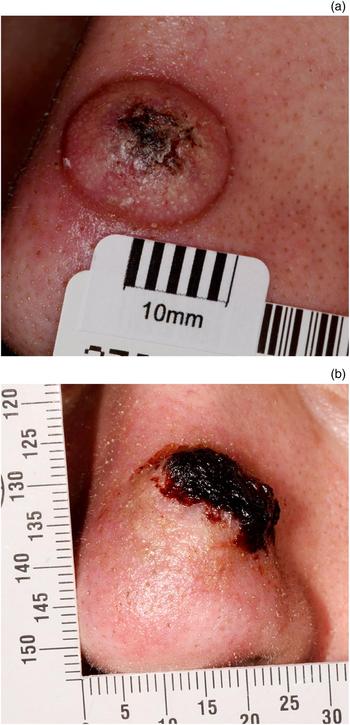
A 27-year-old, fair-skinned, heterosexual male presented to general practice with a rapidly growing, 20 mm nasal lesion (Figure 1a). He was initially referred to dermatology. The lesion continued to enlarge, prompting the general practice to expedite referral through ENT. At clinic, the lesion measured 30 × 20 mm, with central necrosis (Figure 1b). There was a history of superficial facial burns, but no other risk factors.
These photographs demonstrate the rapid growth of the cutaneous lesion in patient one over a two-week period, from general practice referral (a) to ENT out-patient clinic appointment (b).

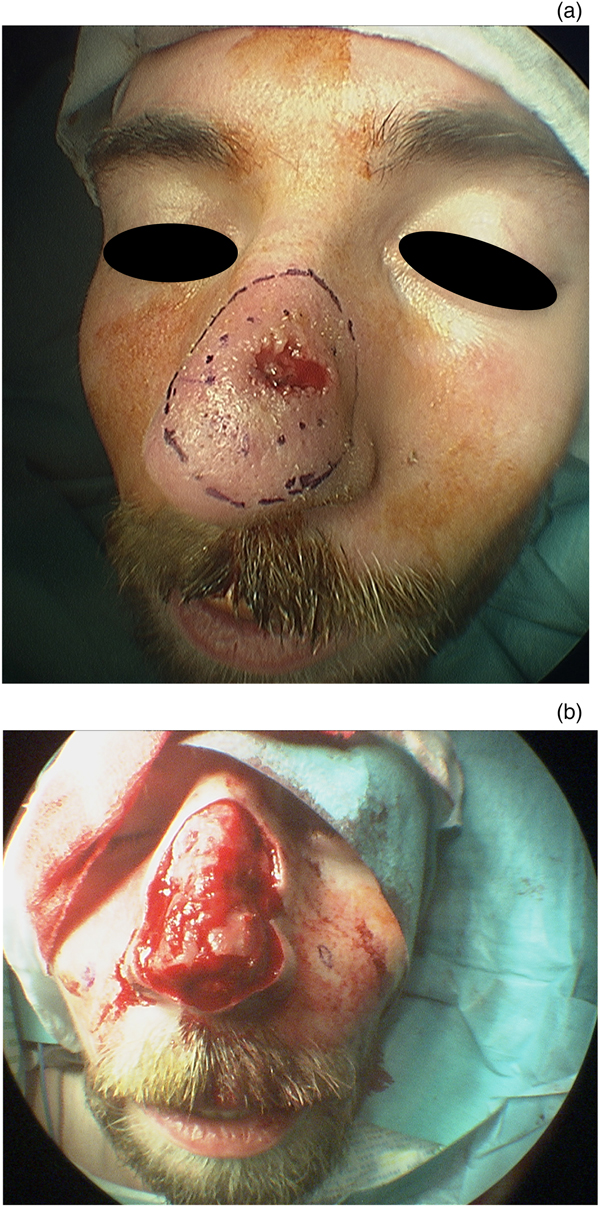
An excisional biopsy with 6 mm margins was performed, with satellite biopsies. The macroscopic size of the lesion at surgery was 22 × 30 mm (Figure 2a) (seven weeks after the lesion first appeared). Histological analysis was complex and a second opinion was sought from the regional skin cancer histopathologists. Cytokeratin 5/6 immunostaining revealed a moderate to poorly differentiated SCC. The tumour measured 21 mm in diameter, with a 5.5 mm depth of invasion. No vascular invasion was identified.
Intra-operative (a) pre-resection and (b) post-resection clinical photographs of patient one. The dotted circumference in part (a) delineates the edge of the lesion; a 6 mm margin has also been marked. Published with patient's permission.

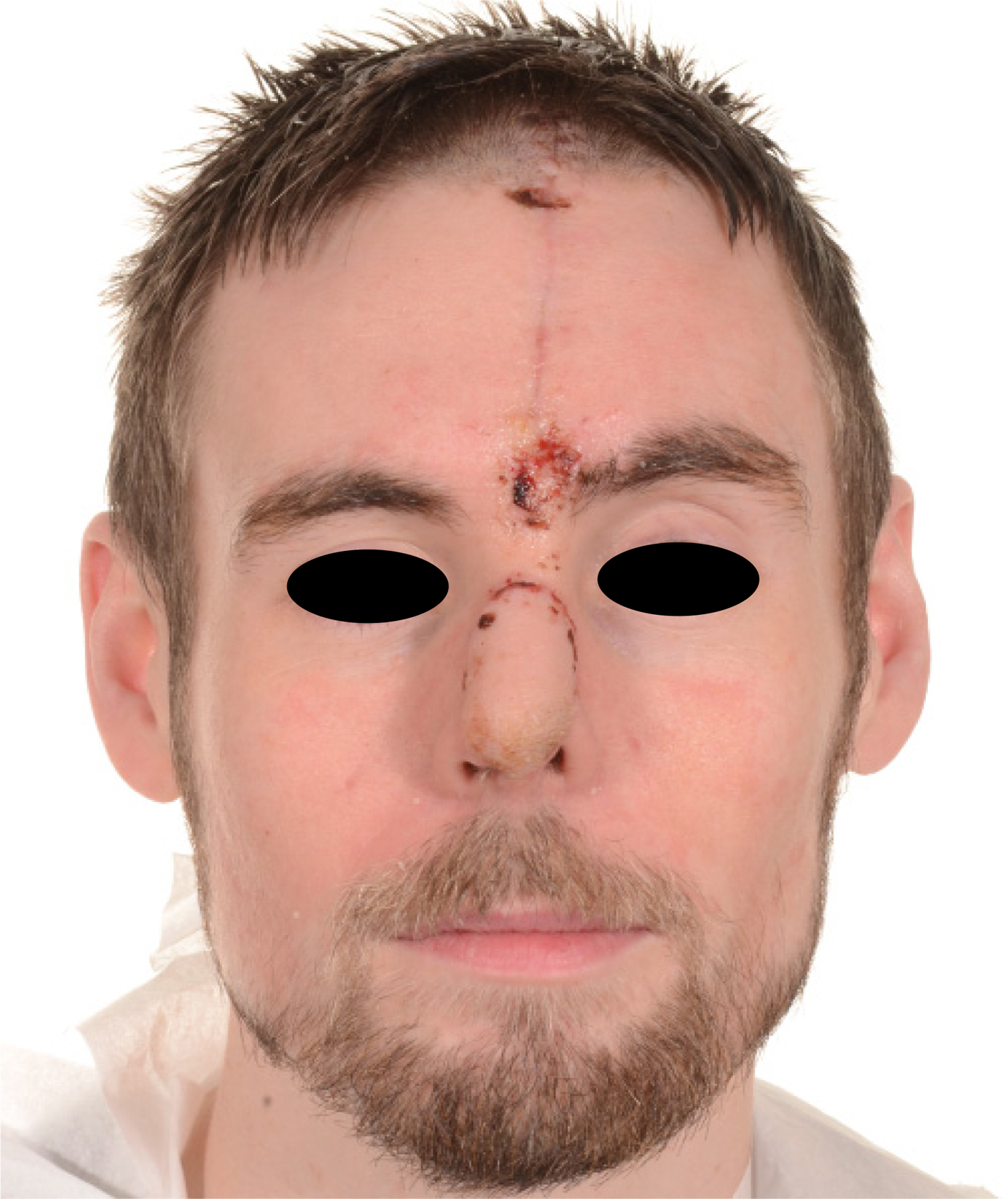
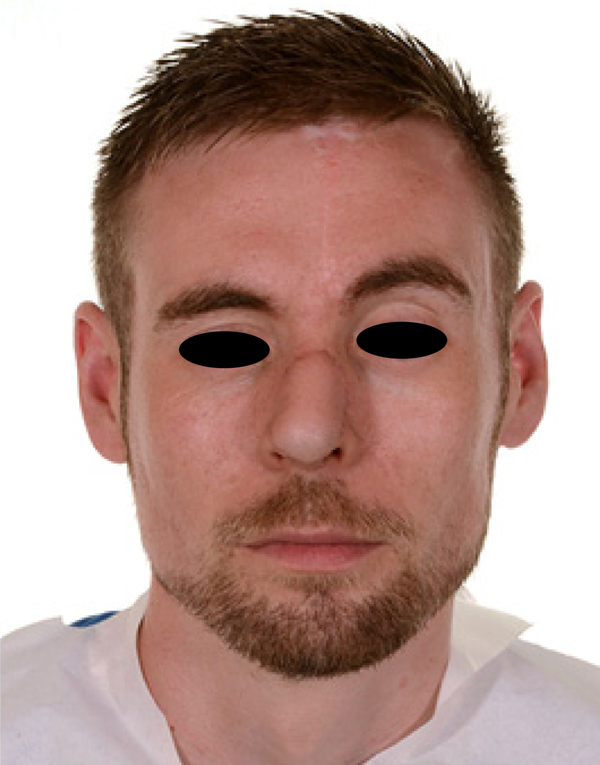
The patient underwent excision of margins, which demonstrated a focus of well-differentiated SCC (Figure 2b). Delayed reconstruction with a paramedian forehead flap and frozen sections was performed (Figure 3). Through discussions at the skin multidisciplinary team (MDT) meeting, and with cross-sectional imaging confirming no cervical lymphadenopathy, no chemotherapy or radiotherapy was recommended, because of the associated morbidity. Figure 4 shows the patient's appearance after two years’ follow up. He was recurrence-free at three years post-surgery.
Post-operative appearance of patient one, following division of the pedicle of the paramedian forehead flap. Published with patient's permission.

Photograph of patient one after two years’ follow up. Published with patient's permission.

Case two
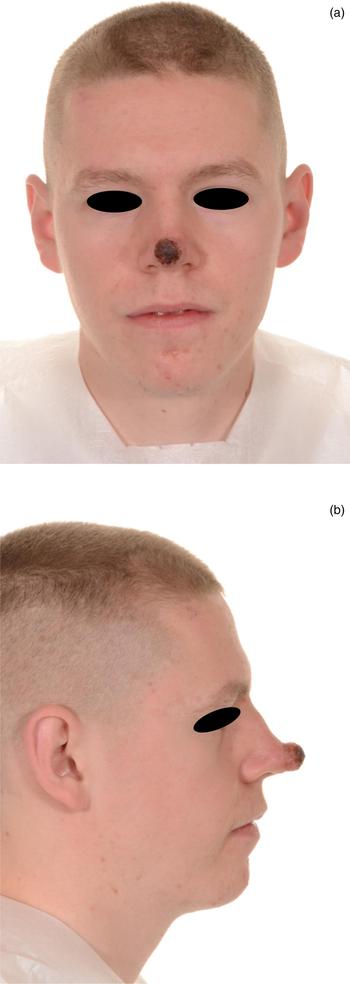
Within 6 months, a 23-year-old, fair-skinned male was referred to ENT directly (from the same practice as case one), as he had a rapidly growing nasal tip lesion, present for 2 weeks. It had measured 20 mm at the general practice (Figure 5). The patient had a background of acne and sunburn to the tip of his nose, from one year earlier. The lesion measured over 20 mm in size when he was seen in ENT; he had no cervical lymphadenopathy.
Pre-operative (a) anterior and (b) lateral views of patient two. Published with patient's permission.

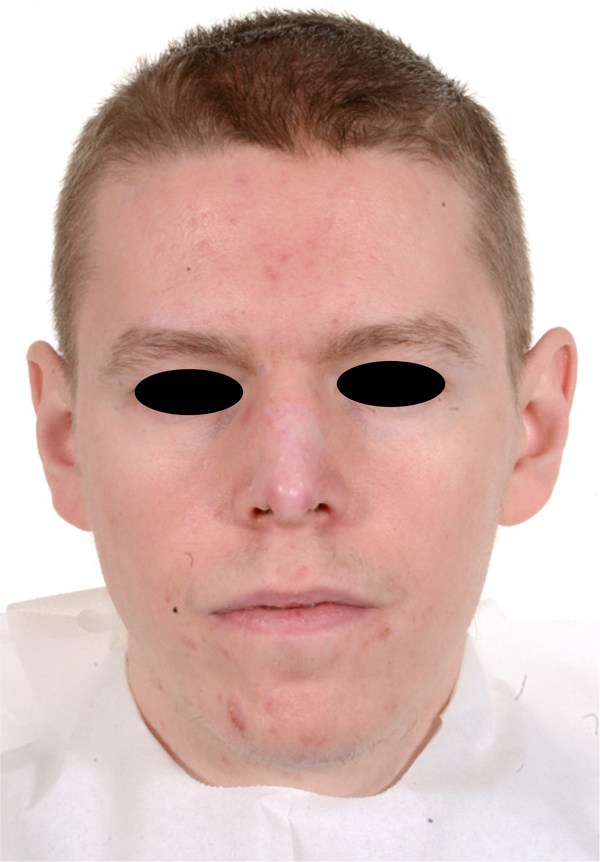
An excisional biopsy was performed within 3 days; the lesion measured 22 mm × 20 mm. Deep margins taken from the perichondrium were clear of tumour. The patient underwent excision of margins (6 mm), except at the inferior margin given the proximity to the nasal soft triangles. The defect was reconstructed with a full-thickness skin graft (Figure 6). The patient underwent cross-sectional imaging and was discussed at the skin MDT meeting. He did not require chemotherapy or radiotherapy. He had no recurrence of disease at 2.5 years.
Post-operative anterior view of patient two. Published with patient's permission.

Overview
Both tumours were positive for HPV16 (Luminex® assay) and p16 (immunocytochemistry). Both patients were offered and accepted the HPV vaccination. No occult immunocompromise was found.
Discussion
Cutaneous SCC of the nasal tip is usually associated with a poor prognosis. The largest published case series to date reported a recurrence rate of 43 per cent within a year and a mortality rate of nearly 25 per cent.Reference Stanley and Olsen2
A search of the literature showed that the evidence linking HPV as a cause of cutaneous SCC is lacking. In 1999, Harwood et al. demonstrated that the study of HPV in non-melanoma skin cancer was limited by detection methods, and although many studies had shown an association, causation was not proven.Reference Harwood, McGregor, Proby and Breuer6 Thus, in 2000, Harwood et al. studied 148 cases of immunocompromised and immunocompetent patients.Reference Harwood, Surentheran, McGregor, Spink, Leigh and Breuer7 This demonstrated that HPV was more prevalent in the immunocompromised patients’ tumours and that multiple types existed. Additionally, the spectrum of HPV did not differ in SCC, basal cell carcinoma or pre-malignancy cases. There was no specification regarding the exact site of the cutaneous malignancies. The increased incidence of non-melanoma skin cancer in the immunocompromised is also alluded to in our own multidisciplinary guidelines,Reference Newlands, Currie, Memon, Whitaker and Woolford8 where tumours are staged not only according to size, depth and site, but are also noted to be high risk in immunocompromised individuals.
Prior to the UK HPV vaccination programme in 2008, the Centers for Disease Control and Prevention published US data for 2004–2008,9 which demonstrated approximately 33 000 new cases of HPV-related malignancies annually. Common sites described were cervical, vulvar, vaginal, penile, anal and oropharyngeal. There was no mention of other head and neck or cutaneous malignancies.
The UK HPV vaccination programme is only available to girls and men who have sex with men, but heterosexual males can pay privately. The Joint Committee on Vaccination and Immunisation had maintained previously that males would be adequately protected by herd immunity if there is a high uptake by the female population.10 However, the latest statement demonstrates support for male vaccination.4
With respect to our cases, there were no specific risk factors identified from their social history. However, evidence is available surrounding current sexual practices within the UK, which could guide patient counselling. It should be noted that patients may not be willing to share the exact nature of their sexual practices, but the clinician could highlight higher risk practices. Sexual health advice is usually outside the remit of an otolaryngologist, and some may find it uncomfortable; nonetheless, risk stratification is essential for management of the patient.
Findings from the third National Surveys of Sexual Attitudes and Lifestyles were published in 2013.Reference Mercer, Tanton, Prah, Erens, Sonnenberg and Clifton11 The data showed an increase in the numbers of same sex partnerships, heterosexual repertoires and sexual practices, continuing into later life. Despite the UK having one of the best sexually transmitted infection service provisions globally, high-risk groups with sexual health inequalities still exist (men who have sex with men, young adults, and black ethnic minorities). Those at highest risk for HPV transmission are human immunodeficiency virus (HIV) positive men who have sex with men.
Human papillomavirus is the most prevalent sexually transmitted infection in the UK, with high-risk types detected in approximately 16 per cent of women and 8 per cent of men, but rates are even higher in specific groups.Reference Hughes and Field12 Hughes et al. reported that sexually transmitted infection rates have risen since 1990.Reference Hughes and Field12 This could be secondary to numerous factors, including: deprivation, a greater number of sexual partners and ‘seroadaptive behaviour’ (where men who have sex with men choose to have unprotected sex with those they believe are HIV negative).
• Human papillomavirus (HPV) in cutaneous head and neck cancers must be considered to ensure the specimens undergo correct testing
• Changes in sexual practices (i.e. oral sex) have led to an increase in HPV-positive oropharyngeal carcinoma
• There may be an increase in HPV16-positive nasal cutaneous squamous cell carcinoma in younger patients
• One should be aware of current advice regarding sexual practices and counselling, or know where to refer patients for advice
Can we use this evidence to help counsel our patients? Advice on risk reduction and encouragement to partake in the vaccination programme may help to reduce HPV transmission. Advice should be provided sensitively, being mindful of those present in the consultation, with no presumptions regarding age, sex, socioeconomic group or related sexual practices. Additionally, we must counsel all of our patients on best practice, to reduce the risks of UV damage.
Conclusion
This report describes the first two cases in the literature of HPV16-positive cutaneous SCC. Human papillomavirus associated mucosal SCC of various sites in the head and neck is becoming increasingly common, probably because of changes in sexual practices. We may see an increase in HPV16-positive nasal cutaneous SCC. Clinicians should consider the implications of HPV, ensure specimens undergo the correct histopathological testing and appropriately counsel patients.
Competing interests
None declared