Introduction
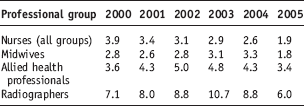
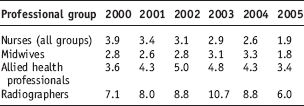
This article aims to explore the literature on job satisfaction and turnover pertinent to the radiotherapy environment, related to the findings of our phase I study to identify learning on staff retention factors. It is acknowledged that vacancy rates are generally higher for radiography staff than for most other allied health professions.1Table 1 presents the UK Department of Health (DoH) vacancy data from 2000 to 2005 for therapy radiographers, nurses, allied health professionals as a whole and midwives. This shows that despite a decline in the vacancy rate since 2003, the 2005 vacancies are still higher than for similar groups – including midwives, who made headline television news in 2005, highlighting the national shortage in this discipline (30 September 2005). Data from other sourcesReference Abraham and Jackson2 indicate that the DoH figures have greatly underestimated this problem within therapy radiography. In 2003, the annual managers surveyReference Abraham and Jackson2 identified almost an 18% vacancy rate (all vacancies) when related to the whole time equivalent staffing establishments (DoH 2003 rate 10.7%). The DoH collects data in March for posts that are being actively recruited to and have been vacant for 3 months (this figure is reduced by internal promotions, clouding the 3-month criterion, and may not include all posts). The managers collect data in September/October, just after students qualify, when fewer vacancies would be expected. However, a number of departments have recently had cuts in establishments because of UK National Health Service (NHS) financial pressures, and thus vacancy rates will now be reduced.
Department of health vacancy rates for selected professional groups (% of posts unfilled)3
Special circumstances leading to the current staffing problems in radiotherapy
Commissioners are limited by capacity to train new therapists within radiotherapy departments and cannot meet current demand; student attrition is high. Competition with other learners in the workplace and poor job satisfaction of qualified practitioners may reduce the quality of the training experience,4 ultimately affecting potential student attrition from the course. A range of other influences have had an impact on the current gaps in staffing.
Radiotherapy referrals, and hence demand for services, are increasing, in part as a result of the aging population. For example, registered breast cancer cases rose from 30,743 in 1993 (both male and female) to 36,804 in 2003, an increase of nearly 20%.5,6 Similar increases in other cancer sites and also the greater utilisation of radiotherapy for some cancers mean that resource planning must account for the greater demand for services.7
Patient-centred services that are seamless at the point of delivery have been central to NHS policy. This affects staff deployment, as a greater number of therapy radiographers (therapists) are now required in roles other than linear accelerator work. The NHS Plan identifies key changes in the health workforce required to overcome past failings,8 specifically focusing on breaking down traditional boundaries between disciplines and encouraging role extension,9 placing further demands on therapist deployment.
The additional development of consultant and assistant practitioner roles is changing the make-up of the radiotherapy workforce.10 Rapidly changing roles have the potential to influence individual job satisfaction, and blurring of professional boundaries may lead to role uncertainty or ambiguity, stress and anxiety.Reference Ruchmer and Pallis11 Against the backdrop of a rapidly advancing technological working environment and higher patient and public expectations of health care, it is little wonder there is a problem with recruitment and retention, and it appears a new breed of therapist may be emerging.
It is unclear whether workforce planning has been able to keep pace with these changes,Reference Doyal and Cameron12 or whether enough new roles have been developed to meet therapists’ development needs.
In the United States, a workforce survey in 2002 identified a shortage of radiation therapists of around 18%, representing a nationwide need for approximately 1,800 therapists.Reference Kresl and Drummond13 Postulated reasons for this were primarily economic, with factors such as salary stagnation, and a temporary oversupply of therapists in the 1990s leading to a decrease in job opportunities and consequent reductions in recruitment to the profession. The shortages of staff have been exacerbated by the increasing complexity of treatments, which has placed additional time pressures on an already stretched staff group. There has been a concurrent movement of staff into other specialties such as dosimetry and a general increase in the average age of the workforce without younger entrants to the profession, increasing the severity of the crisis.Reference Kresl and Drummond13 These latter issues have strong similarities to the current UK situation, and the themes identified by Kresl and DrummondReference Kresl and Drummond13 have highlighted in particular the flexibility of the workforce to move sideways into dosimetry, where work patterns are seen as an improvement on the highly stressful environment of the linear accelerator.
Current UK study and emerging themes
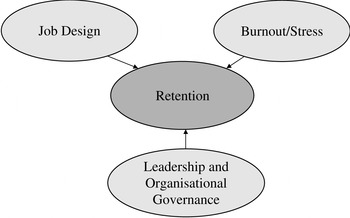
We are currently investigating the retention problem in the United Kingdom through a multi-phase multi-regional study, initially (phase I) with staff across a range of grades and experience, to identify themes to inform a larger longitudinal survey phase. This will investigate correlation between changes in job satisfaction and intention to leave with different workload patterns, levels between work complexity, policy and staff changes over time. The themes that emerged from our phase I interviews can be separated into the three broad areas identified in Figure 1.
The three main areas identified as influencing job satisfaction and intentions to leave within the phase I interviews.

Expanding knowledge on the themes
The process of identifying initial themes and testing them in further interviews involved a literature review considering the following questions:
1. Are there specific theories on occupational behaviour that could explain therapists’ current experiences?
2. What impact do high workloads have on job-related stress and consequently job satisfaction?
3. How does departmental leadership influence job satisfaction?
4. Is there anything unique about the role of radiation therapists that may lead to problems with retention?
As the literature in this field is vast, this article concentrates on the initial areas identified in the interviews and represents an integral aspect of the phase I analysis (see Box 1 for details of the literature search strategy). The following text explores findings on each theme.
Box 1. Search strategy
This search utilised MEDLINE, CINAHL and AMED, with a combination of key words:
♦ ‘Retention’ AND ‘Allied Health Professions’ with and without ‘Leadership’
♦ ‘Retention’ AND ‘Nursing’ AND ‘Leadership’
♦ ‘Retention’ AND ‘Radiographer’/ ‘radiography’
♦ ‘Staff vacancy’ OR ‘Turnover’ with or without each of ‘Leadership’ and ‘Health professions’/‘Health professionals’
♦ ‘Burnout’ AND ‘Allied Health Professions’ OR ‘Health professions’
♦ ‘Autonomy’ AND ‘Health Professions’
♦ ‘Radiation errors’ OR ‘Mistakes’/ ‘Incidents’
References listed in retrieved articles were also part of the search strategy. Books on organisational management and the management of human resources were used for information on the historical development of workplace relationships and the organisation of work. Additional texts were obtained on burnout to understand the development of this concept within service organisations.
Job design
Job dissatisfaction is considered to be a forerunner of turnover and one of the most informative pieces of data to predict employee behaviour. Job dissatisfaction is known to lead to employee withdrawal and voluntary turnover.Reference Lambert, Hogan and Barton14 Job turnover is generally considered as voluntary exit from the establishment, with the variable ‘propensity to leave’ or ‘turnover intention’ being closely linked to actual turnover.Reference Janssen, de Jonge and Bakker15
The way the roles are designed is important for employee satisfaction. Early approaches to the problem of maintaining efficient work performance were led by Frederick Taylor during the early twentieth century. His body of ideas came to be known as ‘Scientific Management’. Taylor devised a number of technical approaches to the design of work tasks to overcome what he saw as inefficient labour and incompetence of management. These approaches had substantial influence at the time. They involved the vertical division of labour, where managers constructed a basic, simple way of carrying out a task. The task was made routine by a simple step-by-step process, with no deviation allowed from the prescribed method, and focused on the matching of tasks and abilities as part of the overall drive for efficiency.Reference Rose16 An obvious flaw was the lack of motivation that fragmented work induces.
Work psychology was not well developed at this time, and later ‘humanistic’ approaches consider individual differences in addition to worker needs to be important to the design of work. Although Scientific Management fell out of favour, notwithstanding a greater understanding of human needs, it is possible that economic factors have led to the retention of some of these driving principles within the design of our radiotherapy departments. For example, restructuring of therapists’ work, with assistants undertaking many administrative and lower-order duties, may eliminate potential inefficiency in the service, but there may be a cost to the therapist in terms of the range of activities undertaken. Highly formalised protocols designed to minimise treatment errors may limit the opportunity for autonomous practice. Further streamlining of the role with the addition of nurse specialists and dieticians to advise patients about eating plans, side effects and other patient care may increase the quality of the service provided to the patient but has the potential to reduce the skill base of the therapist and reduce overall motivation and satisfaction. Operational approaches to enhance efficiency and drive down waiting lists – such as centralised appointment booking, which removes this aspect of control of the workload from those involved in the running of the linear accelerator, and the allocation of site-specific treatment machines (i.e. machines that primarily treat patients with breast cancer or patients with prostate cancer) – have an additional impact. These policies enhance efficient working but limit worker control and reduce the range of skills that can be utilised on a day- to-day basis.
Early theorists of neo-human relations such as MaslowReference Maslow17 and McGregorReference McGregor18 developed the theory of human psychological needs within the motivations to work, establishing a hypothesis for organisational development. This constituted a movement away from more controlling managerial approaches, valuing integration of the workforce over its control (McGregor’s Theory X and Theory Y) to provide job enrichment. Later, Hertzberg’s motivation theoryReference Hertzberg19 identified five factors as strong determinants of job satisfaction: achievement, recognition, the work itself, responsibility and advancement. These are clearly still relevant to today’s workforce.
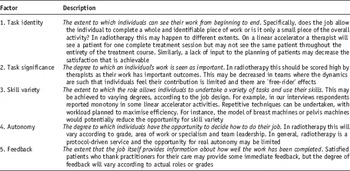
The need for challenging work was raised a number of times in the interviews conducted in our recent study. The Job Characteristics Model (JCM) proposed by Hackman and Oldham (1976) describes the role that the work environment plays in providing mentally challenging work.Reference Judge and Locke20 The JCM identifies five core characteristics that contribute to the mental challenge of work activities. Table 2 lists these factors in relation to a therapy radiographer’s role.
The factors that influence the opportunities for mental challenge according to the job characteristics model

Adapted from JudgeReference Judge and Locke20.
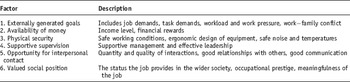
The model of job-specific well-being may also provide a basis for understanding the impact of the nature of a radiation therapist’s work.Reference Warr and Warr21 WarrReference Warr and Warr21 presents ten attributes of work that contribute to job-specific well-being. Four of these attributes have similarities to the JCM, such as the opportunity for personal control (autonomy), opportunity for skill use, opportunity for skill variety and environmental clarity (task feedback). In addition, Warr further considers the attributes identified in Table 3 as important contributors to work-related well-being.
Additional characteristics of work that may contribute to job-specific well-being

Adapted from WarrReference Warr and Warr21
All these attributes have importance for well-being, although some are more predictive of different aspects of well-being. Specifically, a high level of job demands is more strongly associated with anxiety, and control opportunity is more strongly correlated with satisfaction. The importance of skill variety and the opportunity to use professional skills has recently been supported by a review of why allied health professionals leave the NHS.Reference Arnold, Loan-Clarke, Coombs, Bosley and Caroline22 Although this study reinforces the premise that skill variety is important in the health arena, the importance of this for therapy radiographers is not currently known owing to the small number included in the sample (only 3% of the 2,025 questionnaires were from therapy radiographers).
The degree of mental challenge that practitioners experience is influenced by the design of the job and also the extent of their work responsibilities. The opportunity for career progression may increase the degree of mental challenge. Those who have been in the same position for a number of years may feel they have limited opportunity for skill expansion. A model by Janssen et al.Reference Janssen, de Jonge and Bakker15 indicates that turnover intention is primarily influenced by unmet career expectations, and to a lesser extent by the quality of job content.
The concept of a career plateau was first discussed more than two decades ago. Ference et al.Reference Ference, Stoner and Warren23 were among early researchers who defined the career plateau as ‘the point where the employee’s likelihood of additional hierarchal promotion is very low’.
An American study of career plateau examined a large sample of graduate managers (n = 7,848) to identify the relationship between perceived career plateau and intrinsic (referring to the work itself) and extrinsic (referring to factors such as pay and supervision) satisfaction.Reference Chao24 Career plateau was negatively correlated with both intrinsic and extrinsic satisfaction (r = −0.45 and r = −0.61). Furthermore, in a regression analysis, career plateau accounted for 20% of the variability in intrinsic satisfaction and 37% in extrinsic satisfaction. Although the sample has few similarities to the case of radiation therapists, no equivalent studies within the health field have been conducted for comparison. Moreover, in the current job environment, the perspective of career plateau is seen as rather narrow and presents a limited view of career mobility. Changes within the economic environment have meant that employees are now looking for their jobs to provide them with a challenge and the opportunity to learn new skills. Success at the workplace is no longer concerned only with vertical movement into progressively more senior posts. A new construct proposed by LeeReference Lee25 is one of professional plateau. Professional plateau is defined as ‘the point where employees find their jobs unchallenging and this provides few opportunities for professional development’.
Professional plateau proposed by LeeReference Lee25 refers specifically to stagnation of job content and to whether the job enables employees to master new skills, thus enhancing their employability or marketability. If we consider the case of radiation therapists, who work in a rapidly changing technological environment with increasing patient expectations, therapists need to adapt their skills to accommodate new demands. Specifically, for a treatment radiographer working on a linear accelerator where the workload predominantly comprises patients with breast cancer (where the current radiation technique is fairly simple and has not changed much during the past 10–15 years), although each patient’s treatment is individual to the patient, it will not be radically different from the preceding or subsequent case. Work in this scenario can become fairly monotonous. In addition, a lack of opportunity to utilise more complex techniques, and thus higher-order skills, may lead to therapists feeling they are getting left behind professionally, possibly losing their marketability. Professional plateau is negatively correlated with job satisfaction and positively correlated with turnover intentions;Reference Lee25 that is, those who perceived themselves as having reached a professional plateau were more likely to report lower levels of satisfaction and higher levels of turnover intention. Hence, it would be beneficial for employers to recognise employees’ career intentions, but more so the importance of professional development. Although continuing professional development (CPD) will become mandatory for registration with the Health Professions Council (HPC), should radiotherapy departments have a formal integrated CPD programme that includes the opportunity for career planning, with individualised professional development plans supported by collaboration with higher education providers?
Leadership and organisational governance
Participants in our study identified aspects of the organisation of work as influential in terms of their overall satisfaction. For example, fairness in promotion or departmental policies and strong leadership were acknowledged as influential factors in an individual’s propensity to leave.
Organisational governance is considered important in framing employee satisfaction.Reference McNeese-Smith26 Themes identified from satisfied staff in a qualitative study of nurses in the United States (n = 30) included working in a ‘wholesome’ and ‘pleasant’ environment, with dissatisfaction created by lack of fairness, politics and policies being applied inequitably.Reference McNeese-Smith26 There was a good attempt within this study to ensure the trustworthiness of the data, but the use of semi-structured rather than unstructured interviews may mean that interviewees were driven by topic areas considered important by the researchers rather than topics that were significant to the participants.
Within diagnostic radiography, Makanjee et al.Reference Makanjee, Hartzer and Uys27 reported on a multi-site descriptive correlation survey to assess the influence of perceived organisational support on an individual’s commitment to the organisation. Organisational commitment has importance in terms of an employee’s performance within the organisation but also reflects levels of job satisfaction and intention to leave.Reference Firth28 Makanjee et al.Reference Makanjee, Hartzer and Uys27 surveyed a convenience sample of 123 radiographers across private and public institutions, with a final sample of 119. The results showed that a staggering 70% of respondents felt that promotion opportunities were unfairly applied; 68% reported deficits in managers’ ability accurately to relay decisions made at higher levels, and 64% felt they had no input into decision-making. In terms of leadership, support and trust, results were more encouraging, with 55% of respondents reporting that their supervisor was trustworthy and the majority of respondents feeling that they could communicate openly with their supervisor or head of department.
Important findings of this investigation into organisational commitment were the mild but significant positive correlations identified between managerial style and all three types of commitment (affective commitment/emotional attachment to the organisation, r = 0.3; continuance commitment/the costs the employee associates with leaving the organisation, r = 0.2; and normative commitment/employees’ feelings of obligation to stay, r = 0.3; p<0.05 for all three variables).Reference Makanjee, Hartzer and Uys27 Perceived leadership ability was also positively correlated with affective commitment for both head of department and supervisor (r = 0.3 and r = 0.4, respectively; p<0.005) and normative commitment (r = 0.3 and r = 0.2, respectively; p<0.05). These results are important in understanding how satisfaction among therapy radiographers can be enhanced. However, application of the results to other health care systems may be hampered by the high proportion of private institutions within the sample, as it is unclear within the results whether findings were different between public and private employees.
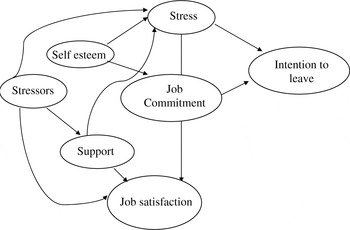
Those in leadership positions play an important part in developing a work environment that fosters trust, fairness and equality in the application of policies, as well as building confidence in first-line supervisors.29 The support that managers offer has also been demonstrated to be important in any retention strategy. In a study of sales personnel in Australia (n = 173), a significant negative correlation was identified between supervisor support and intention to leave (r = −0.33, p<0.05). Although this study is external to the health service and thus has limited value, the model developed (Figure 2) showed some important relationships between supervisor support, commitment to the organisation and job satisfaction.
A retention model as identified by Firth.Reference Firth28

This model was able to account for 52% of the variation in ‘intention to leave’. No direct relationship was identified between job stressors and leaving intentions. These appear to be mediated through supervisor support, job engagement, job satisfaction, job commitment and job stress, indicating that it is not the job demands that influence retention outcomes but how employees perceive the demands through levels of support, esteem and job engagement. Furthermore, 30% of the variability in job satisfaction reported in this study could be explained by high levels of supervisor support, low levels of job stressors and low feelings of stress. With supervisor support acting to reduce intentions to leave (β = −0.25), first-line managers clearly play an important role in any retention strategy.
Within midwifery, a large-scale study of those who had left the profession highlights the importance of supportive managers for retaining staff. Within this study, some staff even reported bullying from immediate managers. Moreover, this culture was sometimes condoned by others who feared upsetting the perpetrator, who may have been in a key clinical role.Reference Curtis, Ball and Kirkham30 However, managers often reported a lack of power to enact any changes, and insufficient establishment figures limited managers’ ability to provide the kind of service midwives themselves wanted to deliver.Reference Curtis, Ball and Kirkham31
Within nursing, the following key characteristics of leaders have been identified as effective for retaining staffReference Kleinman32:
Being visionary
Being supportive and responsive to staff
Having high performance expectations
Being highly visible to the staff group
KleinmanReference Kleinman33 investigated the impact of different leadership characteristics on staff turnover through a prospective correlational survey of staff nurses and nurse managers. Of the nurses surveyed (n = 75), 54% reported they had considered resigning from their post. Those who had not considered leaving reported higher frequencies of the following characteristics in their nurse managers:
Idealised influence
Inspirational motivation
Intellectual stimulation
Extra effort
Effectiveness
KleinmanReference Kleinman33 refers to two forms of leadership – transformational and transactional. Although good leaders possess elements of both forms, transformational characteristics are considered beneficial for retaining staff. For example, transformational leadership includes the following:
Instilling pride and motivation
Communicating a shared vision for the organisation
Providing direction for staff to achieve organisational goals
Being open to staff input and ideas
In contrast, transactional leaders may focus on day-to-day operations and utilise techniques that are constructive (reward for activity) or corrective in nature. This latter trait was the only characteristic found to be statistically significantly correlated with turnover intentions (r = 0.3, p = 0.03) in Kleinman’s study. However, this is probably because of the small sample size, which limits the ability to demonstrate significant relationships. Despite some limitations, this work is validated by similar work by nurses in Singapore, where comparable relationships were identified between leadership behaviour and job satisfaction,Reference Chiok Foong Loke34 with a total of 29% of employee satisfaction explained by leadership behaviour. Similarly, inspiring a shared vision and enabling others to act were identified as important leadership qualities that were significantly correlated with employee satisfaction.Reference Chiok Foong Loke34
Burnout and job stress
Radiation therapy is an emotionally trying profession. The combination of complex technology, patients with life-threatening diseases and the use of high-energy radiation can lead to a highly stressful work environment. The critical nature of the treatments undertaken means that small errors can have catastrophic life-threatening effects. Under these circumstances, the additional pressure of an increased workload could be anticipated to lead to a range of effects within an emotionally exhausting work environment.
The concept of emotional labour has been acknowledged since 1983, when Hockschild identified the complex nature of the work of flight attendants.Reference Zapf35 Using radiation therapists as an example of this concept, staff need to express empathy towards patients while completing complex tasks, expending mental and physical effort and managing their own emotions. Staff are required to display emotions to influence other people’s emotions, attitudes and behaviours. Where emotional displays are too frequent, employees can become overtaxed, and this can lead to alienation and exaustion.Reference Zapf35
The rules of occupational feeling may mean that practitioners are required to display sympathy while being as calm as possible so as not to be distracted from a difficult task. This deliberate dissonance acting is matched with increased levels of role conflict and ambiguity, which are predictors of burnout. Emotional dissonance is a stressor that is associated with emotional exhaustion and job disatisfaction.Reference Zapf35 In radiotherapy these situations of dissonance may happen frequently. For example, when radiation therapists are faced with patients complaining about a machine breakdown, they must show sympathy and concern for the patient’s situation; however, simultaneously, inner feelings of frustration may occur because they want to end the interaction with the patient to focus on managing necessary patient transfers to other treatment units.
Within the study by Janssen et al.,Reference Janssen, de Jonge and Bakker15 mental work overload was highly correlated with emotional exhaustion, which, in turn, correlated with turnover intention. The result of this study on nursing professionals identifies a possible link between individual workload (including possibly the influence of time pressures) and intention to leave. Within the environment of radiation therapy, with increasing technological demands on the radiation staff, it is possible that task complexity and workload may be influential in therapists’ emotional exhaustion and hence turnover intention.
There is much we do not know about the impact of complex tasks and workload on individual therapists’ satisfaction with the professional role or other outcomes such as personal health and well-being. In a longitudinal survey of medical technologists, Blau et al.Reference Blau, Tatum and Ward-Cook36 identified significant positive correlations between task load and work exhaustion (r = 0.2, p<0.05).
Burnout is an indication that practitioners may no longer be able to manage their emotions when interacting with patients and can lead to decreased performance.
Maslach and Jackson’s definition of burnout is mostly commonly used: ‘Burnout is a syndrome of emotional exhaustion, depersonalisation and reduced personal accomplishment that can occur among individuals who do “people work” of some kind.’Reference Schaufeli and Enzmann37 Generally, those suffering from burnout demonstrate elements of dysfunction (although many symptoms exist), and burnout requires intervention or a change of environment to remedy the state.
The conservation of resources theory suggests that burnout occurs when resources are either lost or inadequate to meet demands. Demands can be role ambiguity, role conflict, stressful events or high workloads, and resources include social support, job enhancement and opportunities. As a result of a loss or an incapacity in resources, some behavioural outcomes are likely, such as a reduction in organisational commitment, decrease in job satisfaction and increase in turnover intentions.Reference Lee and Ashforth38 A meta-analysis by Lee and AshfordReference Lee and Ashforth38 found variables such as workload, role stress and role conflict to be the best predictors of burnout.
Social support and control appear to be important in the stress process, acting as a resource. The opportunity to take a time-out to talk and joke with team members may have a supportive effect, but clearly the opportunity for this is reduced when workloads increase.
In 2002 Akroyd et al.Reference Akroyd, Caison and Adams39 investigated levels of burnout among a randomly selected sample of radiation therapists in the United States (n = 1,200). Utilising the Maslach burnout inventory (MBI), a tool to measure environmental stress (such as interruptions when completing a task) and the social provision scale, they identified that radiation therapists had significantly higher levels of emotional exhaustion and depersonalisation than the MBI norms and scores from nurses. For example, average emotional exhaustion levels were 27.9 among the radiation therapists compared with norms of 22 (24.5 in general practice nursing; this difference was statistically significant, p<0.008), and depersonalisation levels were 10.5 vs 8.7, respectively. Personal accomplishment levels were also lower among the radiation therapists than among nurses (42.1 versus 37.7, respectively; p<0.001).
Increased levels of burnout are associated with increased absenteeism, employee intention to leave, low job satisfaction and low levels of employee commitment.Reference Schaufeli and Enzmann37 Hence the findings from the United States are important and may account for dissatisfaction among some UK therapists. However, it is difficult to generalise directly to the UK situation as working hours and conditions differ. For example, it is common practice for US radiotherapy units to have only two members of staff, which is lower than UK target levels.
Interestingly, Akroyd et al.Reference Akroyd, Caison and Adams39 identified that increases in workload could be used to predict increases in emotional exhaustion. However, workload was measured by a single item that asked for the number of patients treated per week. We know that measuring the impact of workload is more complex than a direct correlation to numbers of patients.Reference Barbara, Jackson, Schulze, Math, Groome, Foroudi, Delaney and Mackillop40,Reference Griffiths, Delaney and Jalaludin41 Treatment complexity and individual patient characteristics such as co-morbidity or use of anaesthesia can complicate workload demands, so numbers of patients alone may underestimate an individual therapist’s work burden. Furthermore, although the MBI has high reliability, the reliability of the other tools used within this study is not known, thus limiting the validity of the results. The regression analysis did identify that predictive factors such as personal stress, environmental stress, reassurance of worth, guidance and workload were able to account for more than 50% of the variability in emotional exhaustion and depersonalisation.
In addition to the general state associated with burnout, what is the impact of stressful work events such as radiation incidents on a therapist’s job satisfaction? Currently no formal empirical data exist from radiotherapy to inform us. In nursing, an online survey identified moral distress among 50% of nurses who had experienced some form of untoward clinical event.Reference Ludwick and Cipriano Silva42 Moreover, even nurses who had witnessed untoward events by other nurses experienced some moral distress themselves. This study has many limitations, which are acknowledged by the authors. In particular, the sample was self-selected, and thus it is possible that those involved in clinical errors were more likely to respond to the survey, consequently inflating the results. Despite the limitations, the work does show in the absence of other evidence the possible consequences that clinical errors may have on the workforce.
Conclusions
The JCM provides a framework that may help to explain the variation in therapy radiographers’ job satisfaction and consequent intention to leave. In particular, the lack of opportunity to see a patient through the whole of the care process (task identity) caused by the design of work systems may be a contributory factor. Similarly, where job rotations are long and where linear accelerators are specialised for site-specific treatments (owing to either machine limitations or efficiency needs), there may be limited opportunity for radiographers to practise and update their skills (skill variety), and this may lead to monotony.
Most roles that therapy radiographers occupy have limited opportunity for autonomy, and this may further explain some elements of dissatisfaction in the workforce. The factors within the model of job-specific well-being identified by WarrReference Warr and Warr21 go some way toward explaining further areas where discontent may arise, such as heavy workloads and lack of supportive management, effective leadership or good communication.
Job satisfaction is also influenced by the amount of mental challenge within the work undertaken. A professional plateau is reached where the job ceases to be challenging, and this has a corollary effect on job satisfaction and intentions to leave. Therefore, in terms of job design, it is necessary to ensure the opportunity for skill variety through frequent job rotations and attention to the activities therapy radiographers have to undertake. Allowing sufficient time for educational and training opportunities should enhance staff opportunities for mental challenge, limiting the chances of their reaching a professional plateau.
The amount of employee commitment to the organisation is dependent upon leadership style and ability,Reference Makanjee, Hartzer and Uys27 with consequent effects on job satisfaction and intentions to leave.Reference Firth28 Managers have an important role in mediating the impact of job stressors on intentions to leave.Reference Firth28 In particular, it has been identified that leadership qualities such as being visionary, supportive and responsive and having high levels of performance expectations and high visibility are characteristics that enhance retention. Furthermore, evidence from the Why Midwives LeaveReference Curtis, Ball and Kirkham31 study corroborates the importance of good leadership and transparent communication for maintaining job satisfaction and reducing consequent turnover.
Levels of stress and burnout in the UK therapy radiographer workforce are currently unknown. Assessment of burnout in the United States has identified a worrying level of emotional exhaustion compared with other health professions and norms. These high levels of burnout may not translate to the UK population of therapists because of the different working practices. However, given the increasing technology and associated complexity in radiotherapy and the type of patients treated, emotional exhaustion may be a factor that leads to therapists leaving. Links between individual workload and intentions to leave have been identified in nursing,Reference Janssen, de Jonge and Bakker15 and further study in the radiotherapy workforce is warranted.
This review has identified some key areas associated with job design, leadership, and stress and burnout, where strong evidence exists from the wider job satisfaction literature that managers can utilise within current retention strategies. In this respect it would seem that there is nothing special about therapy radiographers; in fact, the factors that influence job satisfaction in general also pertain to therapy radiographers. However, further research among the therapy radiographer workforce is warranted to test the transferability of the evidence to this particular environment. There is currently limited evidence in the wider literature concerning the impact of clinical errors on individual job satisfaction. The role of radiation errors in terms of job satisfaction may be unique to the radiotherapy environment because of the frequency of risk and the consequences. The next phase of our research will involve testing some of these themes across therapists in the United Kingdom.