


%20--%3e%3c!DOCTYPE%20svg%20PUBLIC%20'-//W3C//DTD%20SVG%201.0//EN'%20'http://www.w3.org/TR/2001/REC-SVG-20010904/DTD/svg10.dtd'%3e%3csvg%20version='1.0'%20id='Layer_1'%20xmlns='http://www.w3.org/2000/svg'%20xmlns:xlink='http://www.w3.org/1999/xlink'%20x='0px'%20y='0px'%20width='64px'%20height='64px'%20viewBox='5.5%20-3.5%2064%2064'%20enable-background='new%205.5%20-3.5%2064%2064'%20xml:space='preserve'%3e%3cg%3e%3ccircle%20fill='%23FFFFFF'%20fill-opacity='0'%20cx='37.785'%20cy='28.501'%20r='28.836'/%3e%3cpath%20fill='%23595959'%20d='M37.441-3.5c8.951,0,16.572,3.125,22.857,9.372c3.008,3.009,5.295,6.448,6.857,10.314%20c1.561,3.867,2.344,7.971,2.344,12.314c0,4.381-0.773,8.486-2.314,12.313c-1.543,3.828-3.82,7.21-6.828,10.143%20c-3.123,3.085-6.666,5.448-10.629,7.086c-3.961,1.638-8.057,2.457-12.285,2.457s-8.276-0.808-12.143-2.429%20c-3.866-1.618-7.333-3.961-10.4-7.027c-3.067-3.066-5.4-6.524-7-10.372S5.5,32.767,5.5,28.5c0-4.229,0.809-8.295,2.428-12.2%20c1.619-3.905,3.972-7.4,7.057-10.486C21.08-0.394,28.565-3.5,37.441-3.5z%20M37.557,2.272c-7.314,0-13.467,2.553-18.458,7.657%20c-2.515,2.553-4.448,5.419-5.8,8.6c-1.354,3.181-2.029,6.505-2.029,9.972c0,3.429,0.675,6.734,2.029,9.913%20c1.353,3.183,3.285,6.021,5.8,8.516c2.514,2.496,5.351,4.399,8.515,5.715c3.161,1.314,6.476,1.971,9.943,1.971%20c3.428,0,6.75-0.665,9.973-1.999c3.219-1.335,6.121-3.257,8.713-5.771c4.99-4.876,7.484-10.99,7.484-18.344%20c0-3.543-0.648-6.895-1.943-10.057c-1.293-3.162-3.18-5.98-5.654-8.458C50.984,4.844,44.795,2.272,37.557,2.272z%20M37.156,23.187%20l-4.287,2.229c-0.458-0.951-1.019-1.619-1.685-2c-0.667-0.38-1.286-0.571-1.858-0.571c-2.856,0-4.286,1.885-4.286,5.657%20c0,1.714,0.362,3.084,1.085,4.113c0.724,1.029,1.791,1.544,3.201,1.544c1.867,0,3.181-0.915,3.944-2.743l3.942,2%20c-0.838,1.563-2,2.791-3.486,3.686c-1.484,0.896-3.123,1.343-4.914,1.343c-2.857,0-5.163-0.875-6.915-2.629%20c-1.752-1.752-2.628-4.19-2.628-7.313c0-3.048,0.886-5.466,2.657-7.257c1.771-1.79,4.009-2.686,6.715-2.686%20C32.604,18.558,35.441,20.101,37.156,23.187z%20M55.613,23.187l-4.229,2.229c-0.457-0.951-1.02-1.619-1.686-2%20c-0.668-0.38-1.307-0.571-1.914-0.571c-2.857,0-4.287,1.885-4.287,5.657c0,1.714,0.363,3.084,1.086,4.113%20c0.723,1.029,1.789,1.544,3.201,1.544c1.865,0,3.18-0.915,3.941-2.743l4,2c-0.875,1.563-2.057,2.791-3.541,3.686%20c-1.486,0.896-3.105,1.343-4.857,1.343c-2.896,0-5.209-0.875-6.941-2.629c-1.736-1.752-2.602-4.19-2.602-7.313%20c0-3.048,0.885-5.466,2.658-7.257c1.77-1.79,4.008-2.686,6.713-2.686C51.117,18.558,53.938,20.101,55.613,23.187z'/%3e%3c/g%3e%3c/svg%3e)
%20--%3e%3c!DOCTYPE%20svg%20PUBLIC%20'-//W3C//DTD%20SVG%201.0//EN'%20'http://www.w3.org/TR/2001/REC-SVG-20010904/DTD/svg10.dtd'%3e%3csvg%20version='1.0'%20id='Layer_1'%20xmlns='http://www.w3.org/2000/svg'%20xmlns:xlink='http://www.w3.org/1999/xlink'%20x='0px'%20y='0px'%20width='64px'%20height='64px'%20viewBox='5.5%20-3.5%2064%2064'%20enable-background='new%205.5%20-3.5%2064%2064'%20xml:space='preserve'%3e%3cg%3e%3ccircle%20fill='%23FFFFFF'%20fill-opacity='0'%20cx='37.637'%20cy='28.806'%20r='28.276'/%3e%3cg%3e%3cpath%20fill='%23595959'%20d='M37.443-3.5c8.988,0,16.57,3.085,22.742,9.257C66.393,11.967,69.5,19.548,69.5,28.5c0,8.991-3.049,16.476-9.145,22.456%20C53.879,57.319,46.242,60.5,37.443,60.5c-8.649,0-16.153-3.144-22.514-9.43C8.644,44.784,5.5,37.262,5.5,28.5%20c0-8.761,3.144-16.342,9.429-22.742C21.101-0.415,28.604-3.5,37.443-3.5z%20M37.557,2.272c-7.276,0-13.428,2.553-18.457,7.657%20c-5.22,5.334-7.829,11.525-7.829,18.572c0,7.086,2.59,13.22,7.77,18.398c5.181,5.182,11.352,7.771,18.514,7.771%20c7.123,0,13.334-2.607,18.629-7.828c5.029-4.838,7.543-10.952,7.543-18.343c0-7.276-2.553-13.465-7.656-18.571%20C50.967,4.824,44.795,2.272,37.557,2.272z%20M46.129,20.557v13.085h-3.656v15.542h-9.944V33.643h-3.656V20.557%20c0-0.572,0.2-1.057,0.599-1.457c0.401-0.399,0.887-0.6,1.457-0.6h13.144c0.533,0,1.01,0.2,1.428,0.6%20C45.918,19.5,46.129,19.986,46.129,20.557z%20M33.042,12.329c0-3.008,1.485-4.514,4.458-4.514s4.457,1.504,4.457,4.514%20c0,2.971-1.486,4.457-4.457,4.457S33.042,15.3,33.042,12.329z'/%3e%3c/g%3e%3c/g%3e%3c/svg%3e)
%20--%3e%3c!DOCTYPE%20svg%20PUBLIC%20'-//W3C//DTD%20SVG%201.0//EN'%20'http://www.w3.org/TR/2001/REC-SVG-20010904/DTD/svg10.dtd'%3e%3csvg%20version='1.0'%20id='Layer_1'%20xmlns='http://www.w3.org/2000/svg'%20xmlns:xlink='http://www.w3.org/1999/xlink'%20x='0px'%20y='0px'%20width='64px'%20height='64px'%20viewBox='5.5%20-3.5%2064%2064'%20enable-background='new%205.5%20-3.5%2064%2064'%20xml:space='preserve'%3e%3cg%3e%3ccircle%20fill='%23FFFFFF'%20fill-opacity='0'%20cx='36.924'%20cy='28.403'%20r='28.895'/%3e%3cpath%20fill='%23595959'%20d='M37.442-3.5c8.99,0,16.571,3.085,22.743,9.256C66.393,11.928,69.5,19.509,69.5,28.5c0,8.992-3.048,16.476-9.145,22.458%20C53.88,57.32,46.241,60.5,37.442,60.5c-8.686,0-16.19-3.162-22.513-9.485C8.644,44.728,5.5,37.225,5.5,28.5%20c0-8.762,3.144-16.343,9.429-22.743C21.1-0.414,28.604-3.5,37.442-3.5z%20M12.7,19.872c-0.952,2.628-1.429,5.505-1.429,8.629%20c0,7.086,2.59,13.22,7.77,18.4c5.219,5.144,11.391,7.715,18.514,7.715c7.201,0,13.409-2.608,18.63-7.829%20c1.867-1.79,3.332-3.657,4.398-5.602l-12.056-5.371c-0.421,2.02-1.439,3.667-3.057,4.942c-1.622,1.276-3.535,2.011-5.744,2.2%20v4.915h-3.714v-4.915c-3.543-0.036-6.782-1.312-9.714-3.827l4.4-4.457c2.094,1.942,4.476,2.913,7.143,2.913%20c1.104,0,2.048-0.246,2.83-0.743c0.78-0.494,1.172-1.312,1.172-2.457c0-0.801-0.287-1.448-0.858-1.943l-3.085-1.315l-3.771-1.715%20l-5.086-2.229L12.7,19.872z%20M37.557,2.214c-7.276,0-13.428,2.571-18.457,7.714c-1.258,1.258-2.439,2.686-3.543,4.287L27.786,19.7%20c0.533-1.676,1.542-3.019,3.029-4.028c1.484-1.009,3.218-1.571,5.2-1.686V9.071h3.715v4.915c2.934,0.153,5.6,1.143,8,2.971%20l-4.172,4.286c-1.793-1.257-3.619-1.885-5.486-1.885c-0.991,0-1.876,0.191-2.656,0.571c-0.781,0.381-1.172,1.029-1.172,1.943%20c0,0.267,0.095,0.533,0.285,0.8l4.057,1.83l2.8,1.257l5.144,2.285l16.397,7.314c0.535-2.248,0.801-4.533,0.801-6.857%20c0-7.353-2.552-13.543-7.656-18.573C51.005,4.785,44.831,2.214,37.557,2.214z'/%3e%3c/g%3e%3c/svg%3e)
%20--%3e%3c!DOCTYPE%20svg%20PUBLIC%20'-//W3C//DTD%20SVG%201.1//EN'%20'http://www.w3.org/Graphics/SVG/1.1/DTD/svg11.dtd'%3e%3csvg%20version='1.1'%20id='Layer_1'%20xmlns='http://www.w3.org/2000/svg'%20xmlns:xlink='http://www.w3.org/1999/xlink'%20x='0px'%20y='0px'%20width='64.000977px'%20height='64px'%20viewBox='0%200%2064.000977%2064'%20enable-background='new%200%200%2064.000977%2064'%20xml:space='preserve'%3e%3cg%3e%3ccircle%20fill='%23FFFFFF'%20fill-opacity='0'%20cx='32.064453'%20cy='31.788086'%20r='29.012695'/%3e%3cg%3e%3cpath%20fill='%23595959'%20d='M31.943848,0C40.896484,0,48.476562,3.105469,54.6875,9.314453C60.894531,15.486328,64.000977,23.045898,64.000977,32%20s-3.048828,16.457031-9.145508,22.513672C48.417969,60.837891,40.779297,64,31.942871,64%20c-8.648926,0-16.152832-3.142578-22.513672-9.429688C3.144043,48.286133,0,40.761719,0,32.000977%20c0-8.723633,3.144043-16.285156,9.429199-22.68457C15.640137,3.105469,23.14502,0,31.943848,0z%20M32.060547,5.771484%20c-7.275391,0-13.429688,2.570312-18.458496,7.714844C8.381836,18.783203,5.772949,24.954102,5.772949,32%20c0,7.125,2.589844,13.256836,7.77002,18.400391c5.181152,5.181641,11.352051,7.770508,18.515625,7.770508%20c7.123047,0,13.332031-2.608398,18.626953-7.828125C55.713867,45.466797,58.228516,39.353516,58.228516,32%20c0-7.3125-2.553711-13.484375-7.65625-18.513672C45.504883,8.341797,39.333984,5.771484,32.060547,5.771484z%20M44.117188,24.456055%20v5.485352H20.859863v-5.485352H44.117188z%20M44.117188,34.743164v5.481445H20.859863v-5.481445H44.117188z'/%3e%3c/g%3e%3c/g%3e%3c/svg%3e)
Introduction
As medical technology advances, patients can live longer but may experience increased comorbidities, immunosuppression, use of medical devices, and risk for infection with organisms encoding antimicrobial resistance. Healthcare-associated bloodstream infections (HCA-BSI) are an important preventable cause of sepsis in hospitalized patients and a major driver of hospital mortality. There have been numerous efforts to reduce hospital-acquired infections (HAIs) and improve sepsis-related outcomes over the last 10 years. However while the incidence of HAIs in the United States decreased by 16% between 2011 and 2015, associated mortality was unchanged. Reference Magill, O’Leary and Janell1
Frailty and increased comorbid conditions are important risk factors for mortality. Reference Dent, Martin, Bergman, Woo, Romero-Ortuno and Walston2,Reference Shamliyan, Talley, Ramakrishnan and Kane3 Frailty is a dynamic process characterized by a decline in function across multiple physiological systems. Reference Hoogendijk, Afilalo, Ensrud, Kowal, Onder and Fried4 While it can occur at any age, it is strongly associated with advancing age and increasing comorbidities. Reference Hoogendijk, Afilalo, Ensrud, Kowal, Onder and Fried4 Importantly, the COVID-19 pandemic also increased the rate of frailty. Reference König, Gollasch and Komleva5
It is important to recognize that while crude mortality is often used as an outcome measure for HAIs and sepsis, it does not distinguish between mortality attributable to the infection and mortality due to the contributions of the patients’ underlying comorbidities. Reference Vissichelli, Sima and Wenzel6 These factors are often interrelated. Frailty is associated with an increased risk for bacteremia and sepsis, increased associated mortality, and increased healthcare utility among survivors. Reference Barbash7–Reference Girard and Ely11 There are multiple possible mechanisms for this, including pathophysiologic abnormalities such as chronic inflammation, dysfunctional epithelium, and impaired immune response. Reference Mahalingam, Moore, Donnelly, Safford and Wang8 In addition, patients at higher risk for frailty are more likely to have sepsis related to bacteremia.
The Surviving Sepsis Campaign in 2004 led to greater awareness regarding the critical role of early sepsis recognition and treatment. Reference Cecconi, Evans, Levy and Rhodes12 Multiple interventions have been studied and widely implemented to prevent HAIs and improve management of sepsis and bacteremia. These include prevention measures such as hand hygiene monitoring and central line bundles, as well as electronic alert systems and sepsis care bundles to facilitate earlier recognition and treatment, and decrease sepsis-related mortality. Reference Masroor, Doll, Stevens and Bearman13–Reference Kahn, Davis and Yabes16 These strategies promoted rapid clinical response, earlier initiation of appropriate antimicrobials, and earlier resuscitation, all of which improve sepsis-related outcomes. Reference Liu, Fielding-Singh and Greene17–Reference Ferrer, Martin-Loeches and Phillips19 However, since frail patients may be less able to tolerate the systemic inflammation and organ dysfunction of sepsis, it is possible that more aggressive interventions are needed in this population. Reference Mahalingam, Moore, Donnelly, Safford and Wang8
Our tertiary academic medical center implemented numerous interventions to improve outcomes for patients developing sepsis over the study period. In 2011, our hospital established a formal and dedicated “rapid response team” to improve care for admitted patients at risk for decompensation. In 2012, a sepsis improvement team was established, and the rapid response team began proactively rounding on patients instead of reacting to activations from front-line staff when a patient was decompensating. From 2014 to 2015 electronic health record (EHR) alerts were established to indicate possible developing sepsis and refined in 2017. In addition, there are improved techniques to identify microorganisms on culture, including matrix-assisted laser desorption ionization-time of flight mass spectrometry (MALDI-TOF), which was used in 2018 and 2023 but was not available in 2010. Reference Dingle and Butler-Wu20 Our health system established sepsis recognition as a priority to improve management and decrease mortality.
These interventions all focus on reducing attributable mortality due to sepsis and HAIs. However, they do not influence the contributions of the patients’ underlying comorbidities on patient outcomes. Therefore, these initiatives may be less effective for more medically complex patients at higher risk for frailty. It is important to determine which populations benefit from interventions targeting attributable mortality versus those targeting underlying conditions, including frailty. We examined HCA-BSI rates and crude mortality in patients in 2010 (baseline), 2018 (after sepsis-focused interventions), and 2023 (after COVID-19).
Methods
Study design, participants
We conducted a retrospective observational cohort study at an 814-bed academic tertiary care center in Richmond, VA with 35,679 admissions per year. Adult inpatients ≥18 years old who developed a positive blood culture that qualified as an HCA-BSI in the years 2010, 2018, or 2023 were included. This was defined as a positive blood culture that was collected ≥48 hours after hospital admission as identified by the microbiology laboratory. Those with positive blood cultures <48 hours from admission were excluded unless they were hospitalized within the previous 30 days. For patients with positive blood cultures during multiple hospital admissions, only the first during each designated year was included.
Organisms were identified using MALDI-TOF in 2018 and 2023 and traditional biochemicals and VITEK in 2010, according to the Clinical and Laboratory Standards Institute (CLSI) guidelines. Reference Petti, Bosshard and Brandt21 Clinical information including age, sex, body mass index (BMI), insurance, vasopressors, admission to the intensive care unit (ICU), and receipt of immunosuppression were extracted. Codes from the International Classification of Diseases, 9th edition (ICD9) and 10th edition (ICD10) for years 2010, 2018, and 2023 were used to extract patient comorbidities from the EHR. Organisms identified and antimicrobial susceptibility testing (AST) were obtained from the microbiology lab. This protocol was approved by the Institutional Review Board.
Variables
The Elixhauser comorbidity index (ECI) measured medical complexity at admission and was selected because it incorporates both ICD9 and ICD10 codes from the different EHRs that used across these time periods. Reference Maron, Neifert and Raonson22–Reference Menendez, Neuhaus, van Dijk and Ring24 The ECI was calculated using von Walraven weights and ICD-9 and ICD-10 codes that were documented before admission for years 2010, 2018, and 2023 using the comorbidity package in R Core team 4.4.2 (Appendix 1). Reference van Walraven, Austin, Jennings, Quan and Forster25–Reference Team27 ECI was characterized as high (≥30) versus low (<30) to identify individuals at higher risk for frailty. Reference van Walraven, Austin, Jennings, Quan and Forster25 Additional measures used to assess frailty included age and receipt of immunosuppressive medications within one year of admission (Appendix 2). Reference van Walraven, Austin, Jennings, Quan and Forster25,Reference Canaslan, Ates Bulut, Kocyigit, Aydin and Isik28,Reference Sharma, Schwendimann, Endrich, Ausserhofer and Simon29 Age was categorized as ≥65 or <65 years old to identify patients at higher risk for frailty.
Sex, BMI, insurance type, ICU admission, days admitted prior to positive culture, identification of Staphylococcus aureus, methicillin-resistant Staphylococcus aureus (MRSA), as well as species of coagulase-negative Staphylococcus (CONS), Streptococcus, Enterococcus, Enterobacterales, Pseudomonas, Acinetobacter, and Candida were reported. Antimicrobial resistance to oxacillin, vancomycin, ceftriaxone, piperacillin/tazobactam, meropenem, levofloxacin and ciprofloxacin were reported and compared across the time periods. Resistance to the specified antibiotics only included those that were designated as “resistant” according to CLSI guidelines. 30 AST was conducted using Kirby Bauer disc-diffusion and E-tests for Gram-negative organisms and VITEK for Gram-positive organisms. Breakpoints for resistance in specimens collected in 2010, 2018, and 2023 were based on the 2006 and 2017 CLSI guidelines, respectively. All laboratory techniques were validated according to CLSI guidelines. Statistical packages dplyr and tidyr in R Core team version 4.4.2 were used for data management. Reference Team27,Reference Wickham, François, Henry, Müller and Vaughan31,Reference Wickham, Vaughan and Girlich32
Outcomes
The primary outcome was crude inpatient mortality. Readmission within 30 days was a secondary outcome. Patients who expired during the admission were excluded from the analysis evaluating readmission.
Statistical analysis
Patient characteristics were summarized using frequencies and percentages or medians and interquartile ranges (IQR) separately for each year of admission, as well as high versus low ECI score. The population-based rate of first HCA-BSI per 10,000 patient days of all hospital admissions was calculated for the three time periods.
Unadjusted and adjusted modified Poisson regressions were used to estimate the relative risk (RR) of inpatient mortality. Reference Zou33 Separate models were used for each marker of frailty: ECI, receipt of immunosuppressive medication, and age. All covariates listed above were evaluated as potential covariates except the presence of specific microorganisms and antimicrobial resistance due to small sample size or multicollinearity. Sex and time-period in addition to variables that had a P ≤ .20 on univariate analysis were included in the multivariate model. The RR of inpatient mortality associated with high ECI values was compared for each year using an interaction term. Similar interactions were used to evaluate inpatient mortality associated with high age and immunosuppression in the respective models. After applying the Bonferroni correction for applying 3 analyses, a P < .015 was considered statistically significant. A similar analysis strategy was used to estimate relationships between the study measures and 30-day readmission. Fisher’s Exact test and Wilcoxsum Rank Test were used to compare continuous and categorical variables across time periods with P < .05 considered statistically significant. All analyses were performed using SAS 9.4 [SAS Institute, Cary, NC, USA].
Results
Population characteristics
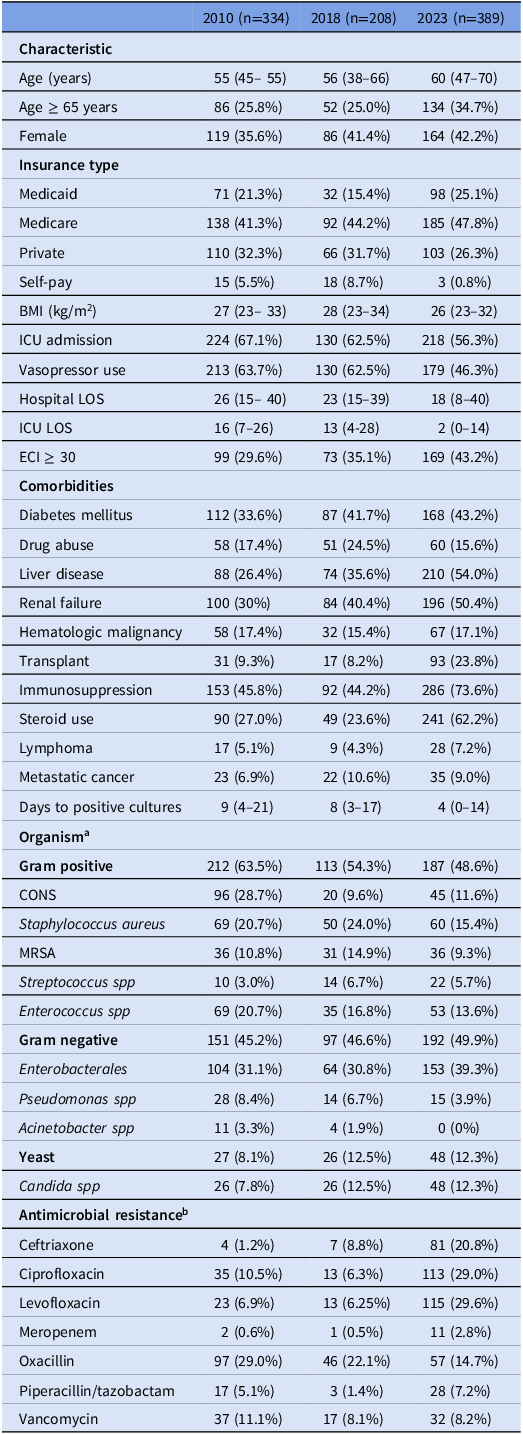
There were 931 patients included in the analysis, 334 (36%) from 2010, 208 (22%) from 2018, and 389 (42%) from 2023. The median age of patients in our three cohorts varied from 55 to 60, median BMI varied from 26 to 28 kg/m2, and 35.6–42.2% were female (Table 1). The proportion of patients who required ICU admission decreased from 67.1% (n = 224) in 2010 to 62.5% (n = 130) in 2018 and 56.3% (n = 218) in 2023. The median length of stay was 18–26 days for all years.
Summary of patient characteristics. Numerical variables summarized using median and interquartile range (IQR) and categorical variables are summarized using frequency (%) for all patients included and separated for each year
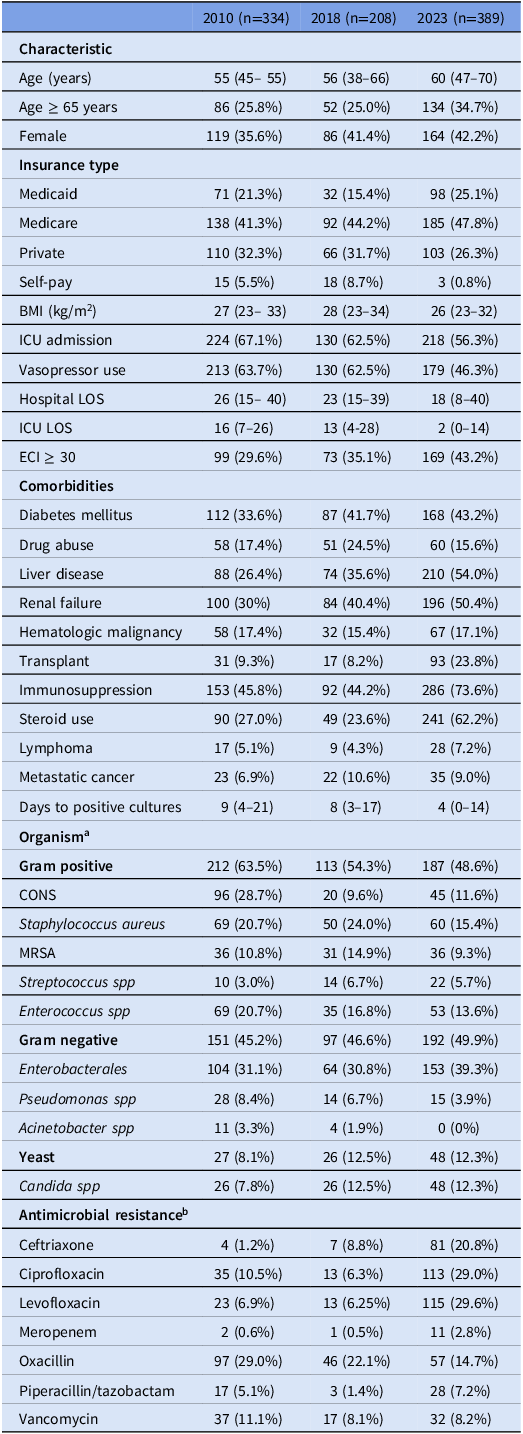
Table 1. Long description
The table presents patient characteristics for the years 2010, 2018, and 2023. It includes data on age, insurance type, BMI, ICU admission, vasopressor use, hospital and ICU length of stay, comorbidities, organism types, and antimicrobial resistance. The table has 33 rows and 10 columns. Column headers include characteristics, 2010 (n=334), 2018 (n=208), and 2023 (n=389). Row labels include age, insurance type, BMI, ICU admission, vasopressor use, hospital and ICU length of stay, comorbidities, organism types, and antimicrobial resistance. Notable trends include a decrease in ICU admission rates from 67.1% in 2010 to 56.3% in 2023, and variations in the prevalence of different comorbidities and organism types across the years.
BMI,body mass index; ICU,intensive care unit; ECI,Elixhauser comorbidity index; DM,diabetes mellitus; CONS,coagulase-negative Staphylococcus; MRSA,methicillin-resistant Staphylococcus aureus; LOS,length of stay.
a Patients can have multiple organisms on blood culture. The presence of each organism was reported.
b Antimicrobial resistance was determined based on CLSI methods. Patients may have multiple organisms on blood culture with different sensitivity patterns. Detection of resistance to the specified antibiotic on any isolate was included.
Frailty risk measures increased in 2023 compared to 2010 and 2018 (Table 1). In 2023, 34.7% (n = 134) were over age 65 compared to 25.8% (n = 86) in 2010 and 25.0% (n = 52) in 2018. In 2023, 43.2% (n = 169) had high ECI compared to 35.1% (n = 73) in 2018 and 29.6% in 2010 (n = 99). In 2023, 73.6% (n = 286) received immunosuppressive medications compared to 45.8% (n = 153) in 2010 and 44.2% (n = 92) in 2018. The proportion of transplant recipients increased to 23.8% and patients receiving steroids increased to 62.2% in 2023.
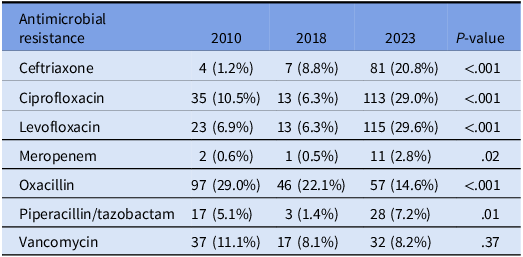
Antimicrobial resistance was more prominent in 2023 compared to 2010 and 2018 (Table 2). Resistance to ciprofloxacin, levofloxacin, ceftriaxone and piperacillin/tazobactam all increased by more than threefold in 2023 compared to 2010 and 2018 (P < .001). Meropenem resistance was rare but increased to 3% in 2023 (P = .02). Vancomycin resistance did not change across time periods. The rates of positive results for CONS, representing common skin contaminants, decreased after 2010.
Antimicrobial resistance across time periods. Percent and frequency of antimicrobial resistance detected on blood culture were reported for each period and compared using a Fisher’s exact test (P ≤ .05 determined statistical significance). Patients may have multiple organisms isolated from blood culture with different sensitivity patterns. Detection of resistance to the specified antibiotic on any isolate based on CLSI criteria was included
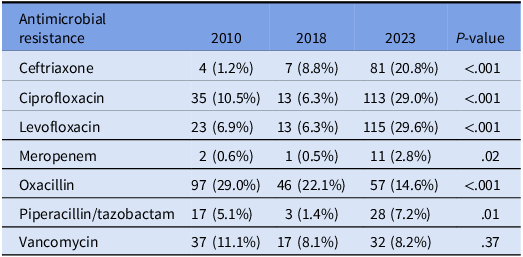
Table 2. Long description
A table titled ‘Antimicrobial resistance across time periods’ with data on antimicrobial resistance detected on blood culture for the years 2010, 2018, and 2023. The table has 8 rows and 5 columns. The columns are labeled ‘Antimicrobial resistance’, ‘2010’, ‘2018’, ‘2023’, and ‘P-value’. The rows list different antimicrobials: Ceftriaxone, Ciprofloxacin, Levofloxacin, Meropenem, Oxacillin, Piperacillin/tazobactam, and Vancomycin. Each cell contains the percent and frequency of resistance detected for each antimicrobial in the specified year. The P-value column indicates the statistical significance of the changes in resistance over time. Notable trends include increased resistance to Ceftriaxone, Ciprofloxacin, Levofloxacin, and Piperacillin/tazobactam in 2023 compared to 2010 and 2018, with P-values indicating statistical significance. Meropenem resistance was rare but increased to 3 percent in 2023. Vancomycin resistance did not change significantly across the time periods.
The patients with high ECI were older and had higher proportions of liver disease, renal failure, transplantation, immunosuppression, metastatic cancer, and lymphoma compared to those with low ECI (Supplemental Table 1). ICU admission and vasopressor use were similar. In patients with high ECI, there was a higher proportion of CONS and Enterococcus spp, as well as vancomycin resistance. Other antimicrobial resistance profiles were similar between groups.
Rates of healthcare-associated bloodstream infection
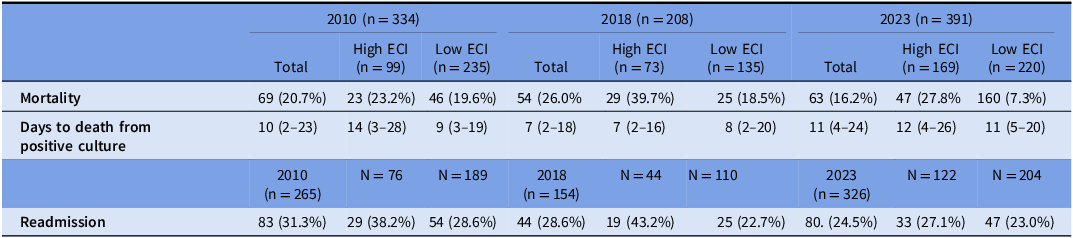
HCA-BSI occurred at a rate (number per 10,000 patient-days) of 4.2 in 2010 (334/791,615) compared to 3.2 in 2018 (208/633,740) and 13.0 in 2023 (389/299,230). In patient mortality decreased to 16.2% in 2023 compared to 2010 (20.7%) and 2018 (26.0%) (Table 3). In patients with low ECI, inpatient mortality decreased in 2023 (8.1%) compared to 2010 (19.6%) and 2018 (18.5%) (Figure 1). However, inpatient mortality increased in patients with high ECI in 2018 (39.7%) and in 2023 (27.8%) compared to 2010 (20.7%) (Figure 1). While patients with high ECI experienced higher readmission rates across all years compared to patients to low ECI, this decreased in 2023 compared to earlier years (Figure 1).
Outcomes per year for patients with HCA-BSI with high verses low Elixhauser Comorbidity Index (ECI). Inpatient mortality and readmission within 30 days were primary and secondary outcomes, respectively. The population that expired during the hospitalization were excluded from the secondary analyses.
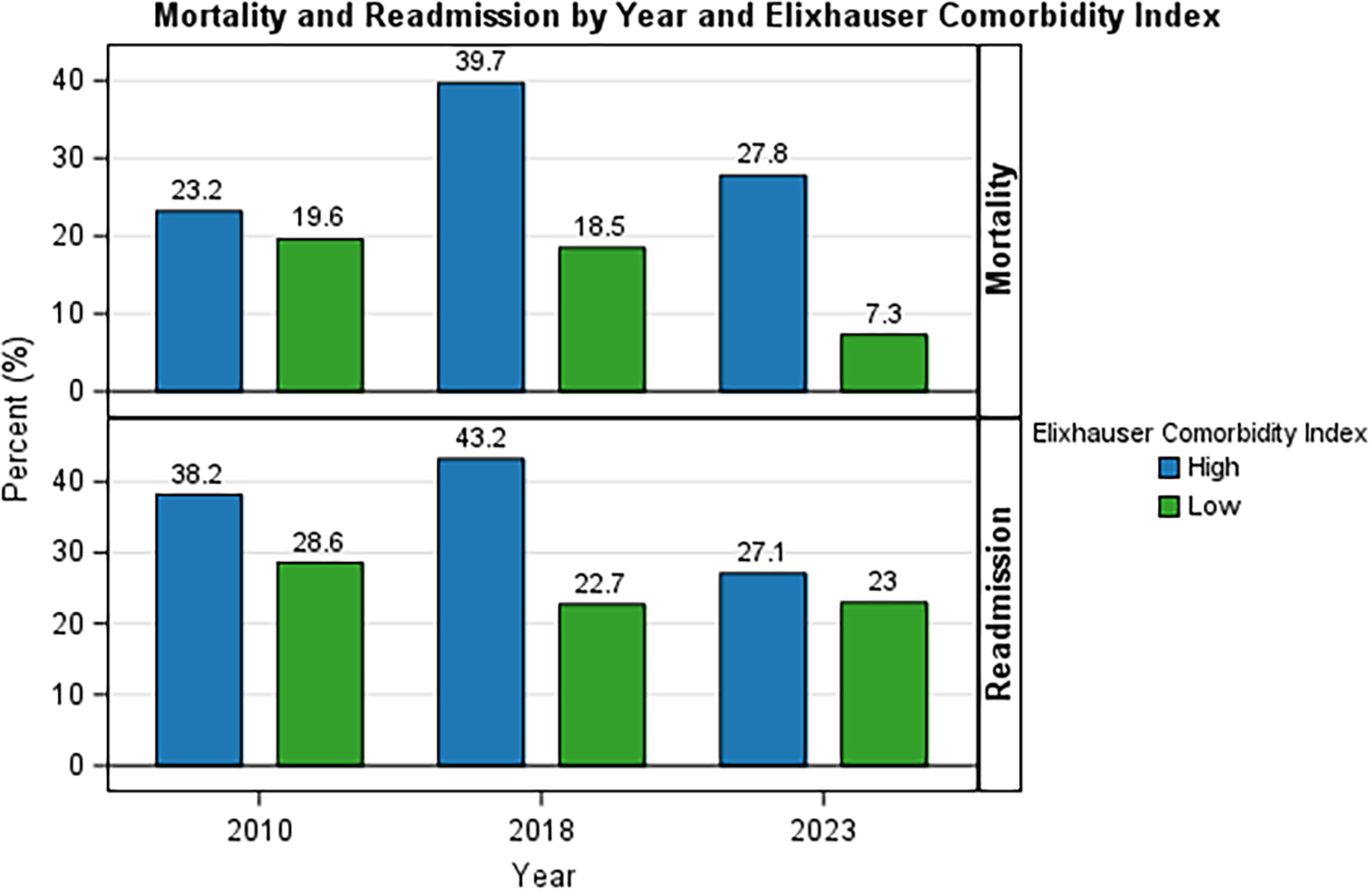
Outcomes of patients with HCA-BSI with high versus low Elixhauser Comorbidity Index (ECI). Inpatient mortality was the primary outcome. Readmission within 30 days was a secondary outcome. The population that expired during the hospitalization were excluded from the secondary analyses. Days from first positive culture to death was reported with median (interquartile range) for each year and subcategorized by ECI score
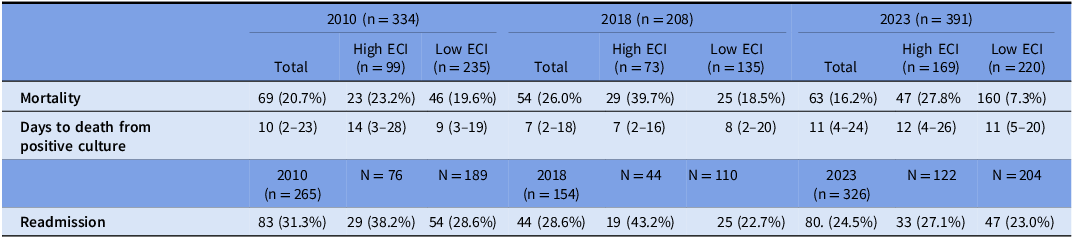
Table 3. Long description
The table presents data on patient outcomes with high versus low Elixhauser Comorbidity Index (ECI) for the years 2010, 2018, and 2023. It includes columns for total patients, high ECI patients, and low ECI patients for each year. The table is divided into sections for mortality, days to death from positive culture, and readmission rates. Row 1: Mortality. 2010 (n=334): Total 69 (20.7 percent), High ECI 23 (23.2 percent), Low ECI 46 (19.6 percent). 2018 (n=208): Total 54 (26.0 percent), High ECI 29 (39.7 percent), Low ECI 25 (18.5 percent). 2023 (n=391): Total 63 (16.2 percent), High ECI 47 (27.8 percent), Low ECI 160 (7.3 percent). Row 2: Days to death from positive culture. 2010: Total 10 (2-23), High ECI 14 (3-28), Low ECI 9 (3-19). 2018: Total 7 (2-18), High ECI 7 (2-16), Low ECI 8 (2-20). 2023: Total 11 (4-24), High ECI 12 (4-26), Low ECI 11 (5-20). Row 3: Readmission. 2010 (n=265): Total 83 (31.3 percent), High ECI 29 (38.2 percent), Low ECI 54 (28.6 percent). 2018 (n=154): Total 44 (28.6 percent), High ECI 19 (43.2 percent), Low ECI 25 (22.7 percent). 2023 (n=326): Total 80 (24.5 percent), High ECI 33 (27.1 percent), Low ECI 47 (23.0 percent).
ECI,Elixhauser comorbidity index.
Risk factors associated with inpatient mortality
After adjusting for the covariates, high ECI was associated with a 3.7 times increased mortality in 2023 (RR = 3.72, 95% CI 2.25, 6.50, P < .001), and 2.15 times increased risk in 2018 (RR = 2.15, 95% CI 1.36, 3.37, P = .001), however, it was not a significant predictor of mortality in 2010 (Supplemental Table 2). ICU admission was associated with a 4.26 times increased inpatient mortality (RR = 4.26, 95% CI: 2.74, 6.62, P < .001). Sex, days to positive culture, age, and receipt of immunosuppression were not predictors of mortality (Supplemental Tables 2,4). Days to death from first positive culture was not significantly different across ECI groups (P = .29) or years (P = .25).
Risk factors associated with 30-day readmission
High ECI was associated with a 1.91 times risk for readmission in 2018 (RR = 1.91, 95% CI: 1.17, 3.13, P = .01), but did not predict readmission for other years (Supplemental Table 5). After adjusting for covariates, ICU admission was associated with a lower risk of 30-day readmission (RR = 0.71, 95% CI: 0.56, .91, P = .01). Age over 65 and immunosuppressed status were not predictors for readmission (Supplemental Tables 6,7).
Discussion
This study highlights the importance of considering comorbidities and frailty in the management and prevention of HCA-BSI. From the 2010 baseline, the cumulative incidence of HCA-BSI decreased in 2018 but subsequently increased in 2023 by more than four times the 2010 baseline. Various studies demonstrate increased HCA-BCI during and after the COVID-19 pandemic, due to its adverse effects on the processes and practices that mitigate infection risk. Reference Sturm, Saake, Roberts, Masoudi and Fakih34,Reference Teus, Mithen, Green, Hutton and Fernandez35 Increasing medical complexity and improved diagnostics likely also contribute. The fall of mortality in 2023 was likely the result of nearly a decade of infection prevention, antimicrobial stewardship and sepsis interventions across the health system. However, mortality among patients with high ECI remained above the 2010 baseline. We are unable to distinguish the extent to which the mortality rates were attributable to sepsis as opposed to other comorbidities and frailty. However, antimicrobial resistance profiles, time to death from positive culture, ICU admission and vasopressor use were similar between ECI groups, suggesting that underlying medical complexity had a prominent role.
The increased mortality in patients with high ECI suggests a need for targeted interventions for medically complex populations. It also may indicate a need to optimize comorbidities that may have contributed to mortality regardless of whether the patients had HCA-BSI. The feasibility of this likely depends on the comorbidities. For example, medications and diet modification may achieve glycemic control in patients with uncontrolled diabetes. Medical optimization may be less feasible for other conditions such as end stage liver disease. It may also be more challenging for patients with more advanced and numerous comorbidities.
There was a reduction in mortality between the time periods studied in patients with low ECI but not in those with high ECI. ECI became a sequentially stronger predictor of mortality over time. There are several possible explanations for this. The population became progressively more medically complex. The proportion of patients with high ECI scores, older age, and receipt of immunosuppression were higher in 2023 compared to 2010 and 2018. In addition, the proportion of patients with renal failure, liver disease, and history of transplantation were higher in 2023. Therefore, it is possible that the difference in mortality risk seen in patients with high ECI scores in 2023 may be related to the combination and severity of comorbid conditions.
Antimicrobial resistance increased in 2023, but was similar across ECI groups. Despite the change in mortality, the time to death from first positive blood cultures did not significantly change over time or with high ECI scores. Vasopressor and ICU use was lower in 2023, but similar in ECI groups. These data suggest that other factors contributed to inpatient mortality besides the infection itself. When inpatient complications arise, such medically complex patients may be more likely to decline resuscitation efforts and transition to comfort measures, resulting in higher inpatient mortality.
Prior studies have shown increased mortality in hospital admissions for both SARS-CoV-2 and non-SARS-CoV-2 related diagnoses during and after the COVID-19 pandemic compared to prepandemic rates. Reference Dang, Thakker, Shuang, Hommel, Mehta and Goodwin36,Reference Di Marco, Miano and Marchisello37 While a prior study demonstrated a stable mortality in patients with HAIs despite a decreased prevalence, it did not distinguish medical complexity or frailty and occurred prior to COVID-19. Reference Magill, O’Leary and Janell1 Frailty is associated with higher risk for sepsis, possibly due to reduced tolerance of the associated systemic inflammation and organ dysfunction. Reference Mahalingam, Moore, Donnelly, Safford and Wang8 Therefore, interventions to improve sepsis recognition and management that work for patients with low ECI may not be as effective in patients with more comorbidities and higher risk for frailty.
There are several limitations for this study. First, attributable mortality was unable to be distinguished from mortality due to other comorbidities. Reference Vissichelli, Sima and Wenzel6 Therefore, the increased mortality seen in patients with high ECI compared to low ECI may be due to their comorbid conditions rather than management of the infection. Other health-system efforts to streamline goals of care documentation, advanced care planning, access to palliative care services and quality improvement effort across other service lines may impact overall mortality but are unable to be assessed. Second, ECI was used as a marker for frailty risk, but frailty itself was not measured. Next, as a single center study, it may not be generalizable across institutions with different patient populations. Finally, all patients with positive blood cultures were included regardless of the clinical syndrome. The clinical syndrome, severity of illness, extent of infection, and appropriateness of antibiotics were unable to be determined.
The main measure of frailty risk was ECI, which was shown to be a risk factor for mortality. Age, which is commonly associated with frailty, was not associated with increased risk. However, both ECI and age do not capture the functional and physiological aspects of frailty. Therefore, while ECI may be a better marker for mortality, it likely still under-identifies patients whose risk is driven by the loss of physiological reserve and functional status, rather than comorbidities. Other scoring systems, such as the Hospitality Frailty Risk score, should be used to incorporate these factors in future studies. ECI along with these scoring systems are important to guide management and discuss overall prognosis and treatment goals.
In this study, ECI, age, and receipt of immunosuppression were not predictors of 30-day readmission. This is in contrast to other studies that demonstrate ECI score is associated with readmission. Reference Cloney, Ordon, Tecle, Sprau, Kemeny and Dahdaleh38–Reference Moore, White, Washington, Coenen and Elixhauser40 ICU admission was a negative predictor for readmission. This may be due to patients who become critically ill are more likely to require postacute care. Reference Chesley, Harhay, Small, Hanish, Prescott and Mikkelsen41
Conclusion
After more than a decade of interventions to improve sepsis response and reduce HCA-BSI, mortality significantly declined in patients with HCA-BSI and low ECI scores but did not decrease in patients with high ECI scores. This population may receive less benefit from current system-level interventions. As the population ages with increasing medical complexity and antimicrobial resistance, this disparity could widen. Targeted strategies for early recognition and management of sepsis in medically complex and frail patients is imperative. Health systems with infection prevention and sepsis improvement programs should consider conducting further analyses to identify and assess populations which may not be benefiting from existing efforts and use this analysis to develop more tailored interventions. ECI score and markers of frailty can help us identify opportunities for optimization of other comorbidities and inform discussions and decision-making regarding prognosis and treatment goals.
Supplementary material
The supplementary material for this article can be found at https://doi.org/10.1017/ash.2026.10915
Acknowledgments
Data is not publicly available. This work was supported by the Virginia Commonwealth University Department of Internal Medicine and CTSA award No. UM1TR004360 from the National Center for Advancing Translational Sciences. Its contents are solely the responsibility of the authors and do not necessarily represent official views of the National Center for Advancing Translational Sciences or the National Institutes of Health.
Author contributions
Conception and study design: NV, RW, GB; Analysis of data: NV, LT; Manuscript writing: NV, RW, SB, AB, GB, MK; Critical revision of the manuscript: NV, RW, GB, SB, AB, MK
Competing interests
NV: No disclosures relevant to the creation of this manuscript. She is a consultant for Viatris and has research grant funds paid directly to the institution by Shinogi, Inc, Innoviva Specialty Therapeutics, and Merck, Sharp and Dohme, LLC. RW, SB, GB, AB, MK have no conflicts of interest to disclose.



 Open access

