Introduction
Acute respiratory infection (ARI) is a leading cause of illness and death in children under the age of five in developing countries (Rudan et al., Reference Rudan, Boschi-Pinto, Biloglav and Campbell2008; Fischer Walker et al., Reference Fischer Walker, Rudan, Liu, Nair, Heodoratou and Bhutta2013). About 19% of deaths in children under the age of five in developing countries could be attributed to ARI in 2008 (WHO, 2015b). In Afghanistan, ARI was the leading cause of under-five mortality in 2013, accounting for 20% of under-five deaths (WHO, 2015a). About 750,000 under-five children are suffering from ARI per year in Afghanistan (Afghanistan Humanitarian Country Team, 2014). Despite the United Nations Millennium Development goal to reduce child mortality [Goal-4: to reduce child mortality; Target 4.A: to ‘reduce child mortality by two thirds, between 1990 and 2015, the under-five mortality rate (United Nations, 2000)], the target was off-track and the under-five mortality rate was 97 per 1000 live births in Afghanistan in 2010 (Afghanistan Government & United Nations, 2015). According to recent estimates reported by the State of the World’s Children Report, Afghanistan’s under-five mortality rate of 91 per 1000 live births is the 16th highest in the world and was the highest in South Asia in 2015 (UNICEF, 2016). The figure is still high in Afghanistan and this is a matter of concern.
Much work has been done on the risk factors for ARI in sub-Saharan African countries, whereas in South Asian countries, and particularly Afghanistan, there has been little research at the national level. There is a general lack of nationally representative sample survey data on the indicators of child and maternal health at the individual level in Afghanistan. The first nationally representative cross-sectional Demographic and Health Survey was conducted by USAID in 2015. Existing studies are mostly based on simple logistic regressions, which do not allow neighbourhood or community effects on ARI to be assessed. In view of the heterogeneous characteristics of Afghan communities and neighbourhoods, in terms of poverty, types of cooking fuel used, regional-level policy and so on, the present study used multilevel logistic regression analysis to examine the risk factors associated with ARI among Afghan children aged under-five years and the effects of community and neighbourhood factors.
According to the WHO, about 3 billion persons are cooking and heating their living place with simple stoves and open fires, burning biomass (crop waste, wood and animal dung) and coal. More than 4 million persons die prematurely because of illness due to the air pollution arising from cooking with solid fuel. More than 50% of premature deaths as a result of respiratory disease among under-five children are caused by the material (soot) breathed in from household air pollution (WHO, 2016). Many previous studies have also documented that the smoke from polluting fuel or biomass is an influential risk factor for acute respiratory infection among under-five children in developing countries (Mishra, Reference Mishra2003; Mishra et al., Reference Mishra, Smith and Retherford2005; Wichmann & Voyi, Reference Wichmann and Voyi2006; Kilabuko & Nakai, Reference Kilabuko and Nakai2007; Sanbata et al., Reference Sanbata, Asfaw and Kumie2014; Buchner & Rehfuess, Reference Buchner and Rehfuess2015; Jean-Daniel, Reference Jean-Daniel2016; Capuno et al., Reference Capuno, Tan and Javier2018). However, most of these studies only assessed the effects of various type of cooking fuels on ARI symptoms as ‘sources of origin’ of smoke, and did not look at the effects of having or not having a separate kitchen or the location of the cooking place (i.e. ‘place of origin’ of the smoke). Thus, studies are needed to examine the effects of various type of cooking fuels, the availability of a separate kitchen and the location of the cooking place. Therefore, a specific objective of this study was to assess the effects of fuel types and place of cooking on ARI symptoms among Afghan children aged under-five years.
In addition to cooking fuel types, maternal smoking (Dahal et al., Reference Dahal, Johnson and Padmadas2009) and smoking by other household members (Adesanya & Chiao, Reference Adesanya and Chiao2016; Langbein, Reference Langbein2017) also have a positive effect on the incidence of ARI symptoms in children. A national-level study in Ethiopia found that children of lower socioeconomic status were more susceptible to ARI diseases (Tekle et al., Reference Tekle, Worku and Berhane2015). Another cross-country study in developing countries revealed that older children, male children, those with low weight at birth and with a working mother were at higher risk of ARI (Pinzón-Rondón et al., Reference Pinzón-Rondón, Aguilera-Otalvaro, Zárate-Ardila and Hoyos-Martínez2016). Several studies have shown that [low] maternal education and [poor] household wealth status are important risk factors for ARI among children (Azad, Reference Azad2009; Dahal et al., Reference Dahal, Johnson and Padmadas2009; Astale & Chenault, Reference Astale and Chenault2015; Buchner & Rehfuess, Reference Buchner and Rehfuess2015; Tekle et al., Reference Tekle, Worku and Berhane2015; Adesanya & Chiao, Reference Adesanya and Chiao2016; Pinzón-Rondón et al., Reference Pinzón-Rondón, Aguilera-Otalvaro, Zárate-Ardila and Hoyos-Martínez2016). Moreover, studies have also demonstrated that rural–urban residence (Harerimana et al., Reference Harerimana, Nyirazinyoye, Thomson and Ntaganira2016), maternal age at the child’s birth and the child’s birth order (Mishra, Reference Mishra2003) and water and sanitation facilities (Jabessa, Reference Jabessa2015) are other risk factors for child ARI symptoms.
Methods
Data
The study data were from the first round of the Afghanistan Demographic and Health Survey 2015 (AfDHS). This provides a wide range of information on household characteristics and maternal and child health care indicators. The 2015 AfDHS is the first cross-sectional, nationally representative survey to be implemented in Afghanistan under the programme of the worldwide Demographic and Health Survey (DHS) (Central Statistics Organization et al., 2015). The survey adopted a stratified two-stage sampling framework. Afghanistan was stratified into 34 provinces and rural and urban areas. In the first stage, 956 clusters or enumeration areas (EAs) were identified using the probability proportional to size (PPS) method within each stratum. An EA is a geographical region comprising a sufficient number of residential units that act as counting units in the census. A city block is an EA in urban areas, whereas a village or a group of adjacent small villages or a part of a large village is an EA in rural areas. In the second stage, households were selected using a systematic sampling technique and a fixed number of 27 households per EA were identified. Finally, 25,741 households were identified for sampling purposes and of these 24,941 were occupied at the time of field survey. Among the occupied households, 24,395 were successfully interviewed with a 97.8% response rate. In the interviewed households, 30,434 ever-married women aged between 15 and 49 years were selected for interviews and the interview were successfully accomplished with 29,461 of these women with a 96.8% response rate. More details are available in the survey report (Central Statistics Organization et al., 2015). Information on the symptoms of ARI and other child health indicators in the five years preceding the survey were asked of the mothers of 32,712 under-five children. However, the present analysis was based on the 31,063 children (30,304, weighted) who were alive along with the respondent mothers at the time of the survey.
Outcome measure
The outcome variable of this study was ‘ARI symptoms suffered by under-five children’, as defined by the DHS (DHS, 2006) and measured by the AfDHS 2015 (Central Statistics Organization et al., 2015). Mothers were asked whether their children aged under five years suffered from a cough during the 2 weeks before the survey. Those whose children were suffering from a cough were further questioned about whether their children had been suffering from short and rapid breathing accompanied by a fever. If the mothers reported that their children suffered all of these symptoms at any point in time in the 2 weeks before the survey, then it was recognized that the child had an ARI and was coded ‘1’; children not having an ARI were coded ‘0’ (Adesanya & Chiao, Reference Adesanya and Chiao2016; Adesanya et al., Reference Adesanya, Darboe, Mendez Rojas, Abiodun and Beogo2017).
Explanatory measures
Main explanatory measure
The prime explanatory variable was ‘cooking fuel and place’ calculated by combining three household characteristics: type of cooking fuel, place of cooking and whether the household had a separate room that was used as a kitchen. The DHS standard survey questions were: 1) What type of fuel does your household mainly use for cooking? 2) Is the cooking usually done in the house, in a separate building or outdoors? 3) Do you have a separate room which is used as a kitchen?’ (ICF International, 2011). For the first question, respondents reported the various types of fuel that they were using. The study categorized the households into two groups according to the fuel used for cooking: ‘polluting fuels’ (animal dung, agricultural crop, straw/shrubs/grass, wood, charcoal, coal/lignite and kerosene) and ‘clean fuels’ (electricity, LPG and biogas) (Wichmann & Voyi, Reference Wichmann and Voyi2006). The responses ‘no food cooked in house’ and ‘other’ were excluded from the analysis. The second question was categorized as ‘house’ if cooking was done inside the house and ‘outside’ if it was done outside the house. The last question was in binary form (‘yes’ or ‘no’). Finally, a variable ‘cooking fuel and place’ was produced which had six categories: Outside+Clean Fuel; House with Kitchen+Clean Fuel; House without Kitchen+Clean Fuel; Outside+Polluting Fuel; House with Kitchen+Polluting Fuel; and House without Kitchen+Polluting Fuel.
Covariates
The potential confounding factors included as explanatory variables in the analysis included child’s age in months (categorized into five groups), birth order (1, 2, 3, 4, 5+), size at birth as a proxy for birth weight (normal, small), mother’s education level (no education, primary, secondary, higher), mother’s occupation (not working, agricultural worker, manual worker, professional or clerical worker), mother’s smoking status (no, yes), number of household members (continuous), wealth index (poorest, second, middle, fourth, richest), improved drinking water and toilet facilities (yes, no), based on the WHO/UNICEF definition (WHO/UNICEF, 2006), ethnicity (Pashtun, Tajik, Hazara, Uzbek and Other), place of residence (urban, rural) and community poverty (no, yes). The wealth index, as given in the AfDHS dataset (Central Statistics Organization et al., 2015), was considered as a proxy for income; this was a composite measure of the living standard of a household based on its possession of different assets and is generally given in quintiles (Rutstein & Johnson, Reference Rutstein and Johnson2004). The variable ‘community poverty’ was created from an aggregate of the households in the first quartile of wealth index score within a given cluster (Adedini, Reference Adedini2013; Adesanya & Chiao, Reference Adesanya and Chiao2016).
Statistical analysis
The descriptive characteristics of the sample children were first described. Then random intercept logistic regression analysis was performed for the binary measure of ARI symptoms (Guo & Zhao, Reference Guo and Zhao2000) in STATA version 13.1. (StataCorp, 2013). ArcGIS 10 was used to map the ARI prevalence rates across provinces (ESRI, 2011). The AfDHS had a hierarchical structure of data where the 31,063 study children belonging to 19,344 mothers were nested within 16,712 households, nested within 956 clusters (considered as communities), and the clusters were nested within 34 provinces. Cluster or province was considered a ‘neighbourhood’ in the analysis. It was presumed that the communities and provinces themselves would also explain variation in ARI prevalence. Thus, multilevel binary logistic regression was employed to estimate the effects of random effects parameters (community level, province level) and the effects of fixed effects parameters such as individual- (child) and household-level characteristics and the community-level characteristics, on the symptoms of ARI in Models 1 and 2. The mother- and household-level effects on ARI were not estimated since the study assumed that children belonging to the same mother and the same households would experience the same indoor environment and housing condition.
Results
Descriptive statistics
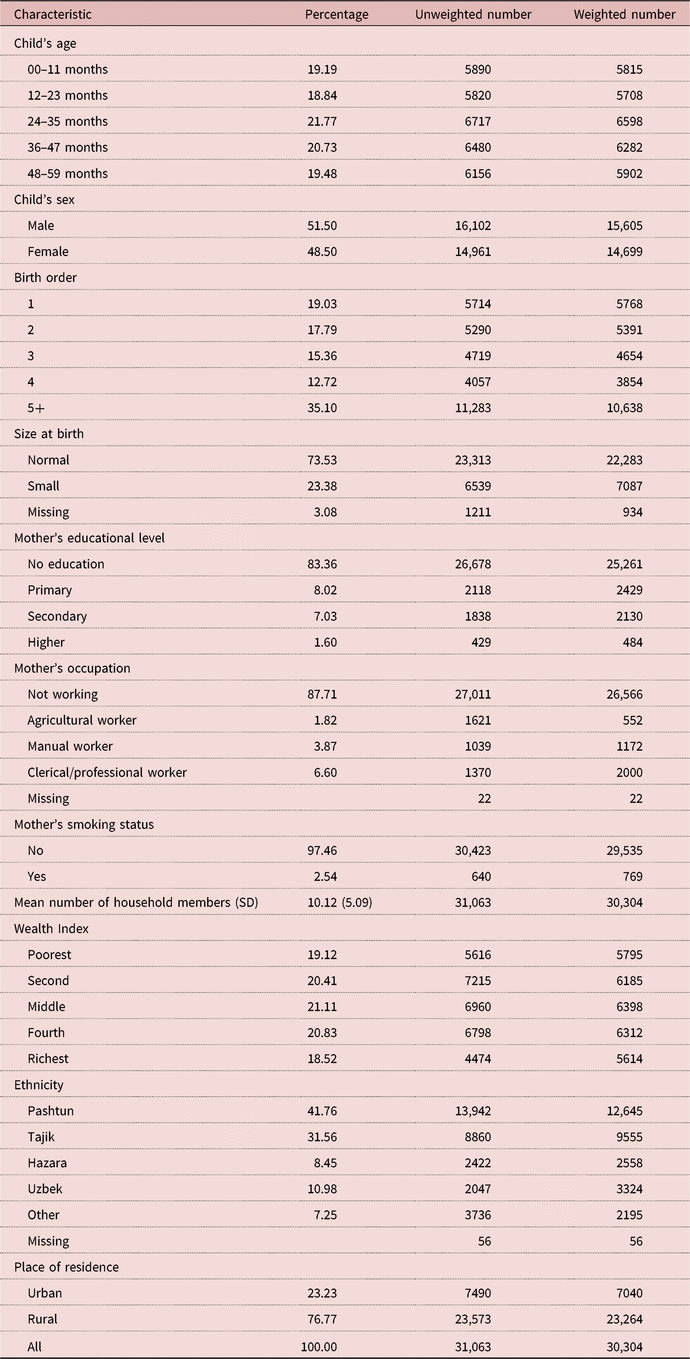
The descriptive statistics of the sampled children show that they were almost equally distributed across age groups and more than half were male (Table 1). Nearly a fifth of the children were first-borns and more than a third were fifth or more birth order. Around 23% were small in size at birth, as reported by their mothers. A large proportion of mothers (83%) did not have any formal education. About 88% were housewives or not working, and 6.6% were working as professional or clerical workers. Only 2.5% smoked. The average number of household members was quite high (mean = 10.12, SD = 5.09). The largest proportion of children (41.76%) were of Pashtun ethnicity, followed by Tajik (31.56%). Almost 77% of children lived in rural areas.
Descriptive statistics of sample under-five children, AfDHS-2015

Source: computed from the Afghanistan DHS, 2015.
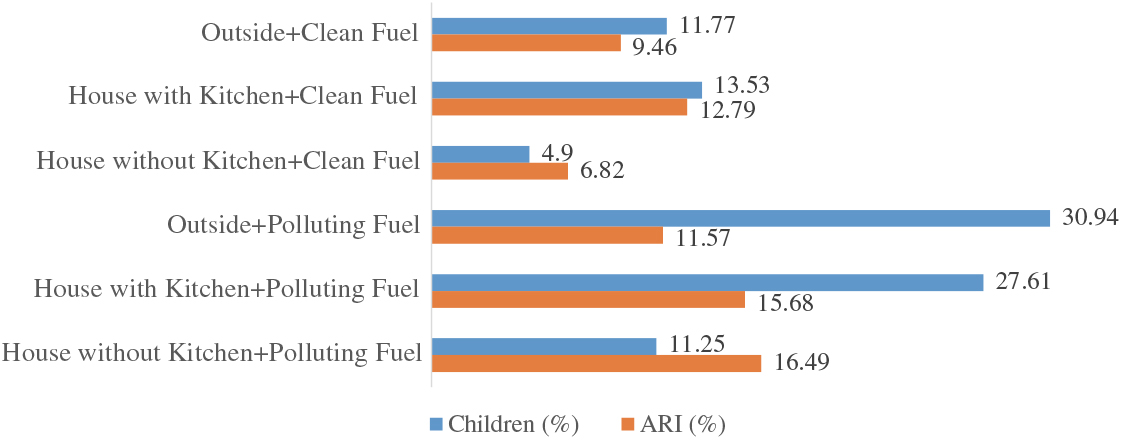
Figure 1 shows that the largest proportion of children (almost 31%) were living in households using polluting fuel for cooking in a separate building or outside of the house. This was followed by 27.61% of children living in households using polluting fuel for cooking in the house with a separate kitchen. However, the prevalence of ARI was highest (16.49%) for the children living in households using polluting fuel for cooking in the house without a separate kitchen, followed by those living in a house with a separate kitchen.
Percentage of under-five children and their ARI prevalence by types of cooking fuel and places of cooking, AfDHS-2015.

Prevalence of child ARI by province
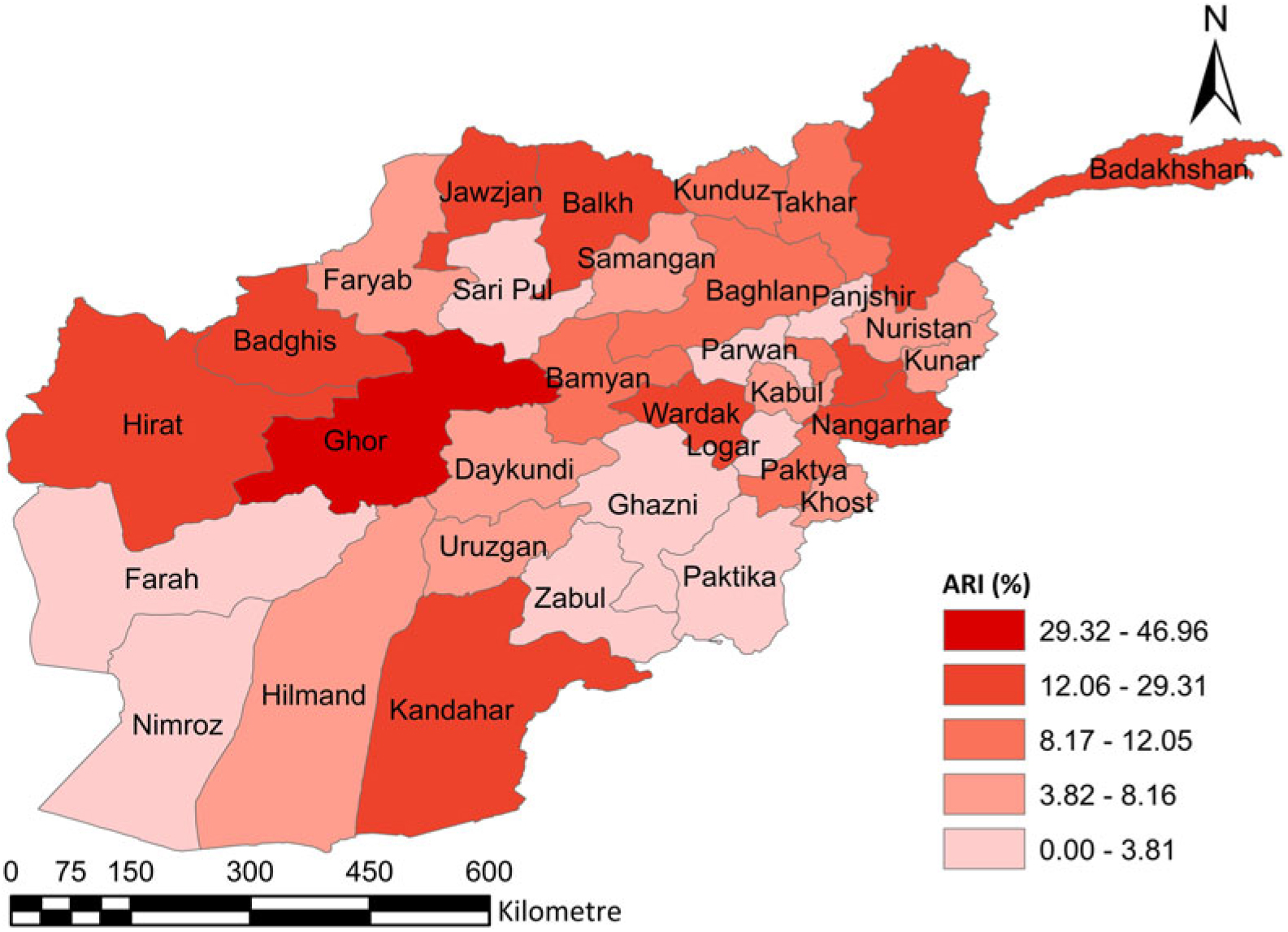
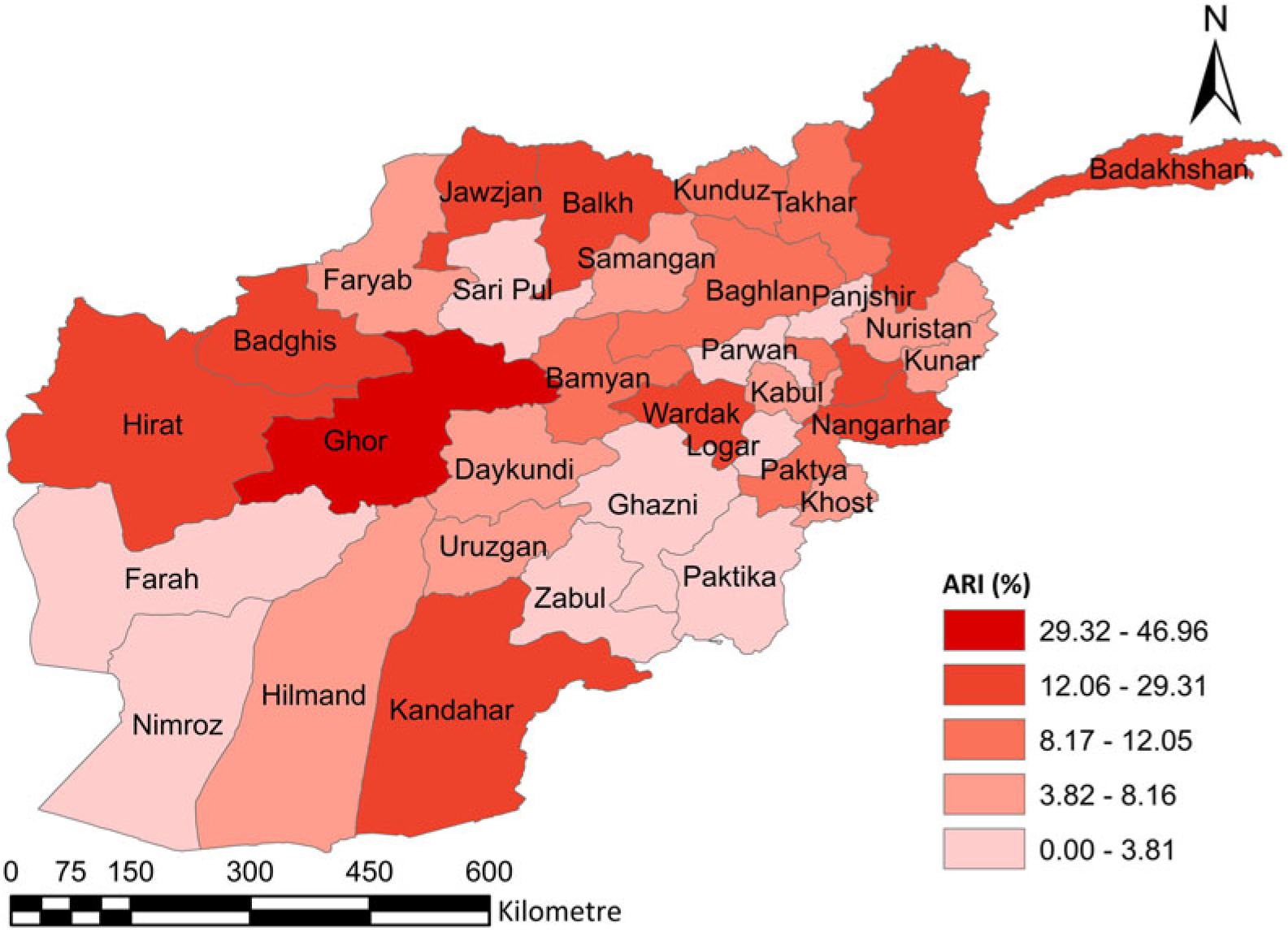
Figure 2 shows the spatial distribution of the prevalence of ARI in under-five children across the 34 provinces of Afghanistan. Overall, 13% of the sample children suffered from ARI during the 2 weeks before the survey, but this varied widely across the country. The highest prevalence was found in Ghor, where almost 47% of children were affected by ARI symptoms. The highest ARI prevalences were observed in other north-western and northern provinces. Relatively lower prevalences were observed in the south-west and southern parts of the country, with a few exceptions. Kandahar – a war-affected province – had the highest ARI prevalence in the south of the country. The provinces of Farah, Nimroz and Hilmand, which are the most war-affected areas, showed relatively lower ARI prevalences.
Prevalence of ARI among under-five children by province, AfDHS-2015.
Multilevel logistic regression results
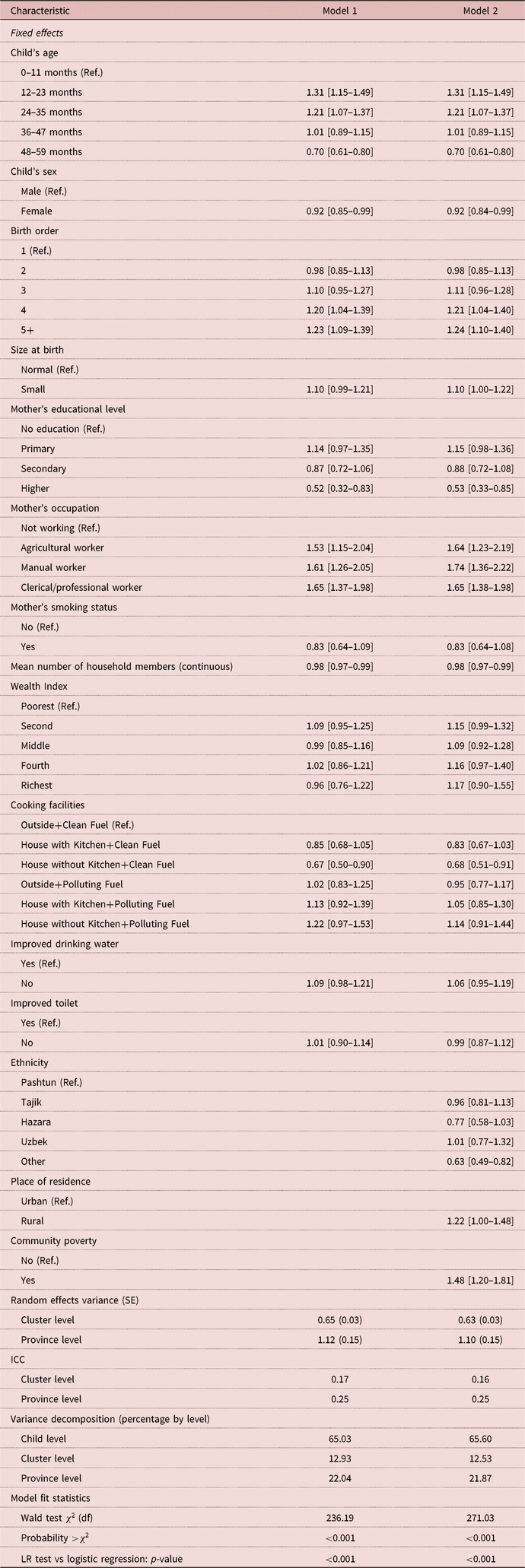
The results of the multilevel binary logistic regression are presented in Table 2. The Wald χ 2 test for the fixed effect parameters suggested that magnitude of the variance in ARI prevalence was significantly (p < 0.001) explained by the independent factors in both models (Models 1 and 2). For the random effect parameters, the Likelihood Ratio (LR) test versus logistic regression was significant (p < 0.001) for both models, suggesting that the variance in ARI prevalence differed meaningfully by individual children, community and province.
Estimated adjusted odds ratio and 95% confidence intervals [CI] for ARI symptoms in under-five children using multilevel logistic regression models

ICC: intra-class correlation coefficient; SE: standard error; LR: likelihood ratio; Ref.: reference category.
Computed from the Afghanistan DHS, 2015.
Model 1 is a conditional model comprising child- and household-level characteristics as the explanatory measures. Households using clean cooking fuel in the house with a separate kitchen and without a separate kitchen had 15% (95% confidence interval [CI] =0.68–1.05) and 33% (95% CI = 0.50–0.90), respectively, lower risk of having symptoms of ARI among under-five children than households using clean fuel for cooking in a separate building or outside. On the other hand, households using polluting cooking fuel in the house with a separate kitchen and without a separate kitchen had 13% (95% CI = 0.92–1.39) and 22% (95% CI = 0.97–1.53), respectively, higher risk of having ARI symptoms compared with households using clean fuel for cooking in a separate building or outside. Using polluting cooking fuel in a separate building or outside made no significant difference to the occurrence of ARI symptoms compared with using clean cooking fuel in a separate building or outside.
Two- and three-year-old children were more prone to have ARI symptoms – 31% (95% CI = 1.15–1.49) and 21% (95% CI = 1.07–1.37), respectively – compared with one-year-old children. In contrast, five-year-old children had a 30% lower risk (95% CI=0.61–0.80) of ARI than one-year-old children. Female children were less likely to have ARI symptoms than their male counterparts. Higher birth order children were more prone to have ARI than first-order children. Size at birth was also associated with the prevalence of ARI. Children of higher educated mothers were 48% less likely (95% CI=0.32–0.83) to be affected by ARI symptoms in comparison to the children of uneducated mothers. A higher magnitude of effect of mother’s occupational status on the symptoms of ARI was reported after controlling for other factors in Model 1. The chances of having ARI were 53% (95% CI = 1.15–2.04) greater for the children of mothers who were agricultural workers compared with the children of non-working mothers, 61% (95% CI = 1.26-2.05) for manual worker and 65% (95% CI = 1.37–1.98) for clerical or professional workers. The number of household members was negatively associated with the incidence of ARI symptoms. After decomposing the effects of random effects variance, as estimated by multilevel analysis, it was observed that a considerable proportion of the variance in ARI prevalence was due to province-level (22.04%) and cluster-level effects (12.93%). However, the largest variance in ARI prevalence was due to individual- (child) level effects (65.03%).
In Model 2, community-level characteristics (ethnicity, place of residence and community poverty) were adjusted for. It was observed that all three community variables affected ARI prevalence. In comparison to the Pashtun (as the major ethnic group), the children of other ethnic groups had a 37% (95% CI=0.49–0.82) lower chance of suffering from ARI. Children living in rural areas had a 22% (95% CI = 1.00–1.48) higher tendency to be affected by ARI symptoms. Children belonging to communities or clusters with relatively higher proportions of poverty (community poverty) had a 48% (95% CI = 1.20–1.81) higher risk of being affected by ARI than their counterparts. After controlling for community-level factors in the fixed effects parameter, the variance decomposition did not show any major change in the random effects parameter. Further, there were not so many changes in the adjusted odds ratio of the fixed effects parameter from Model 1 to Model 2, except for mother’s occupation. The chances of having ARI increased for both agricultural and manual workers by 11% and 13% points respectively from Model 1 to Model 2. In the random part of the model, the largest variation in the symptoms of ARI lay at the child level (65.60%), followed by the province level (21.87%), and the lowest variation was observed at the cluster level (12.53%).
Discussion
The study found that, in Afghanistan, about 13% of children suffered from an acute respiratory infection in the 2 weeks before the survey conducted in 2015. The percentage varied widely across provinces. Ghor had the highest prevalence with almost 47% of children being affected by ARI. Ghor is located at 2500 m above sea level in the Hindu Kush mountains and is one of the least-developed provinces in terms of child health indicators, with only 8% of children being fully immunized (World Bank, 2011). That could be a possible reason for the higher prevalence of ARI symptoms among Ghor’s children. The provinces of Kandahar, Badghis and Balkh had higher ARI prevalences than the other provinces, and their suboptimal rate of immunization coverage (<25%) (World Bank, 2011) might be responsible for this (Selvaraj et al., Reference Selvaraj, Chinnakali, Majumdar and Krishnan2014; Bawankule et al., Reference Bawankule, Singh, Kumar and Shetye2017).
The multilevel analysis showed that households’ type of cooking fuel (clean versus polluting) had an effect on the incidence of ARI symptoms among under-five children, irrespective of the place of cooking or the availability of a separate kitchen for cooking. However, the size of the effect varied with the place of cooking or the availability of a separate kitchen. For households using clean fuels (electricity, LPG or biogas), children in households that cooked inside the house, with or without a separate kitchen, were less likely to be affected by ARI symptoms than children in households that cooked in a separate building or outside. This is a surprising finding and contradicts the finding of a previous study in developing countries (Langbein, Reference Langbein2017), although that study did not control for fuel types simultaneously. The result might be due to the relatively lower quality housing conditions of households that cooked food outdoors compared with those that had indoor kitchens. This is an area for future research.
Children’s demographic characteristics were found to be important risk factors of ARI symptoms. Two- and three-year-old children were more prone to ARI symptoms than one-year-old children. However, five-year-old children had a lower risk of suffering from ARI than the one-year-old children. This finding is consistent with other studies in developing countries (Savitha et al., Reference Savitha, Nandeeshwara, Pradeep Kumar, Ul-Haque and Raju2007; Prajapati et al., Reference Prajapati, Talsania and Sonaliya2011; Tekle et al., Reference Tekle, Worku and Berhane2015). Why are children in their second or third years more susceptible to ARI, and five-year-olds less susceptible than one-year-olds? Further work is needed to address this phenomenon. A male child is more likely to have ARI symptoms than a female one. This might be due to male children being more exposed to the outside environment than female children in this conservative society. Small size at birth, as a proxy measure for low birth weight, increases the chances of having ARI symptoms. It is documented that a child born with low birth weight is at higher risk of having lung disease in later life (Walter et al., Reference Walter, Ehlenbach, Hotchkin, Chien and Koepsell2009). Higher birth order children are more likely to have ARI symptoms, which could be because such children have more siblings, resulting in them receiving less parental care and increasing the chances of disease.
Mother’s educational level was found to play a crucial role in the occurrence of ARI symptoms in their children. The children of highly educated mothers had an almost 50% lower chance of being affected by ARI symptoms than those of uneducated mothers. Previous studies had similar findings (Azad, Reference Azad2009; Sanbata et al., Reference Sanbata, Asfaw and Kumie2014; Adesanya & Chiao, Reference Adesanya and Chiao2016). In general, high-educated mothers have fewer children, and they are more aware of the health and quality of care for their children need to reduce their chances of having different kinds of childhood disease. Mother’s occupational status was the most influential factor in children’s ARI symptoms throughout the models after controlling for all the factors. The children of agricultural, manual and clerical or professional workers were more likely to have ARI symptoms by 64%, 74% and 65%, respectively, than those of non-working mothers in the Model 2. This is an unexpected result, especially for clerical and professional workers, and contradicts the results of studies conducted in Ethiopia and India (Bhat & Manjunath, Reference Bhat and Manjunath2013; Jabessa, Reference Jabessa2015; Tekle et al., Reference Tekle, Worku and Berhane2015). Perhaps the children of working women are left in the house or the women bring their children to work with them, which could lead to them receiving less care or being exposed to the outside environment during travel to, and at, the workplace, resulting in a higher ARI prevalence.
Another unexpected finding of this study was that, with an increase in the number of household members, the chances of having ARI among children decreased, contradicting the finding of a study in Kenya and one in Copenhagen, Denmark (Von Linstow et al., Reference Von Linstow, Holst, Larsen, Koch, Andersen and Høgh2008; Muthoni, Reference Muthoni2017). This might be caused by children in Afghanistan getting more attention and care from household members. Other household’s factors, such as wealth index, improved drinking water and sanitation facilities, did not have any significant effects on ARI symptoms.
The study included ethnicity, place of residence and community poverty as community-level characteristics. It was found that all three community variables affected the prevalence of ARI symptoms. Children belonging to minor ethnic communities, i.e. Turkmen, Nuristan, Baloch, Pashai and Others, were less likely to have ARI symptoms than Pashtun children. Furthermore, children belonging to communities with a higher proportion of poverty had a 48% higher risk of having ARI symptoms than their counterparts from richer communities after controlling for other factors (Model 2). It is interesting to note that an individual household’s level of income (wealth index) did not have any effect on the prevalence of ARI symptoms in the adjusted models, whereas the community’s level of income (community poverty) had a considerable effect on the prevalence of ARI symptoms. Thus, a child living in a poor household as well as in a poor community is more vulnerable to ARI than a child living in a poor household and a non-poor community.
From the random effects parameters, it was found that a substantial proportion of the variation in ARI prevalence could be explained by the communities and provinces themselves because of their homogeneous nature within the communities and provinces, and the heterogeneous nature between communities and provinces. Most of the variance (65.6%) in ARI prevalence could be explained by individual children themselves, as expected, because it is directly related to the children.
The paper has its limitations. One of the major limitations is that it was unable to establish causal effects as the analysis was based on cross-sectional data. Secondly, the outcome of interest was symptoms of ARI in under-five children during the 2 weeks before the survey as reported by the mothers based on their own observations, and this could have led to under- and over-reporting problems. Thus, there is scope for further study based on the diagnoses of ARI symptoms among children by experts. Moreover, the study was unable to control for the effects of nutritional status and immunization coverage among children because of the unavailability and higher missing information in the dataset, which might have effects on ARI. Accordingly, future research should take these factors into consideration.
The study also has its strengths. First, the data were from the AfDHS, which is a national-level, well-representative sample of high quality, conducted by the Demographic and Health Survey (DHS). Secondly, to the best of the authors’ knowledge, this is the first national-level analysis on this topic in the Afghan settings. Thirdly, to the extent of the authors’ knowledge, the study is the first to estimate the effects of cooking fuel types by location of cooking and availability a separate kitchen on ARI prevalence in children. Finally this study has measured the effect of community poverty on ARI symptoms. In conclusion, this study has used the multilevel logistic regression models over simple logistic regression models and by that it has estimated the effects of explanatory variables and the effects of communities or clusters and provinces simultaneously on the occurrences of ARI symptoms.
Conclusion and policy implications
This study found that a considerable proportion of children suffered from acute respiratory infection in Afghanistan in 2015, with prevalence varying widely across provinces. The Afghanistan health system needs to introduce preventive measures to reduce this high child ARI prevalence, which is a leading cause of child death, and emphasis should be given to the most highly affected provinces. The study further found that the type of cooking fuel used by households is not the only the issue affecting child ARI prevalence. Place of cooking (in a separate kitchen versus outside) matters too. However, these factors had a relatively lower effects on the occurrence of ARI in children than maternal characteristics, such as educational level and occupational status, and community-level factors such as community poverty and ethnicity. The government could introduce appropriate interventions to reduce ARI and thus lowering child mortality. It should encourage people to use clean cooking fuel and provide LPG at a subsidised price, and promote education and raise awareness about the consequences of using polluting cooking fuels. Special policy programmes should be formulated for specific communities. Furthermore, parents need to be advised on how to care for their children in the early years and to avoid having a large number of children.
Funding
This research did not receive any specific grant from funding agencies in the public, commercial, or not-for-profit sectors.
Conflicts of Interest
The authors have no conflicts of interest to declare.
Ethical Approval
The authors assert that all procedures contributing to this work comply with the ethical standards of the relevant national and institutional committees on human experimentation and with the Helsinki Declaration of 1975, as revised in 2008.