Introduction
Depression is a leading cause of disease burden worldwide, with no generally accepted methods of prevention (Vos, Reference Vos2016). Poor cognitive functioning adds to the disability associated with depressive illness (Roiser & Sahakian, Reference Roiser and Sahakian2013) and may be a cause of depression, rather than just a consequence. The neuropsychological processes underlying cognitive dysfunction in depression are poorly understood. One theory of depression suggests that there is reduced connectivity between neural circuits involved in executive functions (such as the prefrontal cortex) and neural circuits that respond to positive and negative emotional information (such as the ventral striatum) (Furman, Hamilton, & Gotlib, Reference Furman, Hamilton and Gotlib2011; Hamilton, Chen, Thomason, Schwartz, & Gotlib, Reference Hamilton, Chen, Thomason, Schwartz and Gotlib2011; Treadway & Pizzagalli, Reference Treadway and Pizzagalli2014). The precise mechanisms are poorly understood but may involve disrupted translation of reward sensitivity into reward seeking behaviours (Furman et al., Reference Furman, Hamilton and Gotlib2011).
This hypothesis has proved difficult to study. Neuroimaging studies often use small convenience samples, which may lack statistical power and increase the possibility of an unreliable finding (Button et al., Reference Button, Ioannidis, Mokrysz, Nosek, Flint, Robinson and Munafò2013; LeWinn, Sheridan, Keyes, Hamilton, & McLaughlin, Reference LeWinn, Sheridan, Keyes, Hamilton and McLaughlin2017). Small samples can also make findings more difficult to generalise. This is particularly true for neuroimaging studies which, even when large, have strict exclusion criteria (e.g. people with tattoos and claustrophobia). Sample composition probably introduces selection bias and contributes to the poor reproducibility of many neuroimaging findings (LeWinn et al., Reference LeWinn, Sheridan, Keyes, Hamilton and McLaughlin2017).
An alternate strategy is to investigate behavioural performance on neuropsychological tasks, which can be embedded in larger epidemiological studies that allow more robust conclusions about any cross-sectional or longitudinal associations. If performance on a task is associated with depressive symptoms, the neural mechanisms underlying the behaviour can then be investigated using neuroimaging.
Executive functions are a set of inter-related processes responsible for purposeful goal-directed behaviours and include inhibitory control (the ability to override impulsive responses by using selective attention and cognitive inhibition), working memory (holding and updating information for current processing) and cognitive flexibility (switching between information) (Geraldo, Azeredo, Pasion, Dores, & Barbosa, Reference Geraldo, Azeredo, Pasion, Dores and Barbosa2019). Inhibitory control of positive and negative information can be measured using the affective go/no-go task, which has been shown to engage several regions of the prefrontal cortex (Elliott, Rubinsztein, Sahakian, & Dolan, Reference Elliott, Rubinsztein, Sahakian and Dolan2002). Participants must respond (‘go’) to information of a target valence (positive or negative) whilst inhibiting responses (‘no-go’) to information of the other valence. The affective go/no-go task has been used in several small case-control studies of adults and adolescents, to identify abnormalities in the inhibitory control of positive and negative information that might characterise depressive illness (Erickson et al., Reference Erickson, Drevets, Clark, Cannon, Bain, Zarate and Sahakian2005; Kyte, Goodyer, & Sahakian, Reference Kyte, Goodyer and Sahakian2005; Maalouf et al., Reference Maalouf, Clark, Tavitian, Sahakian, Brent and Phillips2012; Murphy et al., Reference Murphy, Sahakian, Rubinsztein, Michael, Rogers, Robbins and Paykel1999). However, findings from these studies are very inconsistent (see online Supplementary Table S1 for details). One found no evidence of a difference between cases and controls (Murphy et al., Reference Murphy, Sahakian, Rubinsztein, Michael, Rogers, Robbins and Paykel1999) whereas others found that people with depression made more errors overall (irrespective of valence) (Maalouf et al., Reference Maalouf, Clark, Tavitian, Sahakian, Brent and Phillips2012), or more errors in response to positive (Erickson et al., Reference Erickson, Drevets, Clark, Cannon, Bain, Zarate and Sahakian2005) or negative (Kyte et al., Reference Kyte, Goodyer and Sahakian2005) words.
One limitation of case-control studies is that they are more prone to selection biases than cross-sectional or cohort studies, because it is difficult to select controls from the same population as cases (Rothman, Greenland, & Lash, Reference Rothman, Greenland and Lash2013). It is also impossible using a case-control design to confirm the direction of any association. We are only aware of two cohort studies of associations between the affective go/no-go task and depressive symptoms (Kilford et al., Reference Kilford, Foulkes, Potter, Collishaw, Thapar and Rice2015; Owens et al., Reference Owens, Goodyer, Wilkinson, Bhardwaj, Abbott, Croudace and Sahakian2012) and their findings are inconsistent (online Supplementary Table S1). One study found that poorer inhibition of incorrect responses to positive information was associated with later depression (Kilford et al., Reference Kilford, Foulkes, Potter, Collishaw, Thapar and Rice2015). The other found that poorer inhibition of negative and neutral information was associated with later depression (Owens et al., Reference Owens, Goodyer, Wilkinson, Bhardwaj, Abbott, Croudace and Sahakian2012). Both of these samples were small (less than 263 adolescents) and selected because of high-risk for depression, which may have reduced statistical power or introduced selection bias.
We aimed to build on existing studies by using a large longitudinal sample of over 2000 adolescents recruited from the English (UK) general population, to compare cross-sectional and longitudinal associations between inhibitory control of positive and negative information and depressive symptoms. Our aim was to distinguish between abnormalities in inhibitory control that result from, or are concurrent with, depressive symptoms and those that are associated with future risk. The influence of valence on the association between inhibitory control and depressive symptoms is inconclusive, so we tested whether adolescents with depressive symptoms would show worse inhibitory control in response to positive than negative information. We expected worse inhibitory control to be characterised by fewer correct responses to positive than negative information. Longitudinally, we expected worse inhibitory control of positive than negative information to be associated with future depressive symptoms.
Methods
Participants
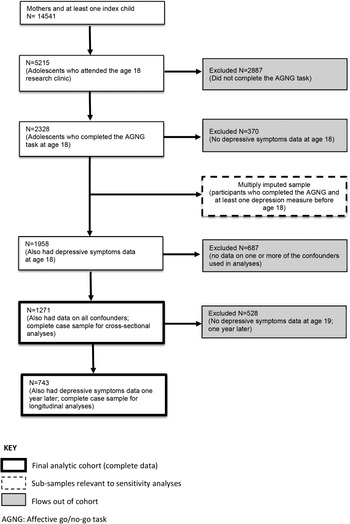
The Avon Longitudinal Study of Parents and Children (ALSPAC) is an ongoing population-based birth cohort examining a wide range of influences on health and development (Boyd et al., Reference Boyd, Golding, Macleod, Lawlor, Fraser, Henderson and Davey Smith2013; Fraser et al., Reference Fraser, Macdonald-Wallis, Tilling, Boyd, Golding, Davey Smith and Lawlor2013). All pregnant women living in the former county of Avon in Bristol, South West England (UK), with an estimated delivery date between 01 April 1991 and 31 December 1992 were invited to participate. The total sample size for analyses was 15 247 pregnancies with 15 458 foetuses. Of this total sample, 14 775 (95.6%) were live births and 14 701 infants (95.1%) were alive at 1 year of age. Mothers, fathers and offspring have regularly provided data, either through postal questionnaires or in research clinics. The core enrolled sample consisted of 14 541 women (an estimated 85–90% of those eligible). An additional 713 children were enrolled during phases 2 and 3 of the study. Further information about ALSPAC is available on the study website (https://www.bristol.ac.uk/alspac), which includes a fully searchable data dictionary (https://www.bris.ac.uk/alspac/researchers/data-access/data-dictionary). Ethical approval was obtained from the ALSPAC Ethics and Law Committee and the Local Research Ethics Committees. All participants provided written informed consent (Fig. 1).
Flowchart of participants through the study.

Measures
Depressive symptoms
We used two measures of depressive symptoms that were available at age 18, the Clinical Interview Schedule Revised (CIS-R) and the short Mood and Feelings Questionnaire (sMFQ). The sMFQ was also administered 1 year later (age 19).
The CIS-R is a self-administered computerised clinical assessment, which assesses symptoms of common mental disorder during the past week. The CIS-R can be used to generate ICD-10 diagnoses of depression, a total depression score and a total score for overall severity of common mental disorder psychopathology (Lewis, Pelosi, Araya, & Dunn, Reference Lewis, Pelosi, Araya and Dunn1992). The depression score is calculated by summing the following CIS-R items: depression, depressive ideas, fatigue, poor concentration and sleep disturbance. Possible scores range from 0 to 21, higher scores indicating more severe symptoms. Symptoms of depression and anxiety frequently co-exist and many people meet criteria for more than one common mental disorder. A total CIS-R score can also be calculated, which measures symptoms of five types of common mental disorders (depression, generalised anxiety disorder, panic disorder, phobias and obsessive compulsive disorder).
The sMFQ is a 13-item self-report measure of the severity of DSM-IV depressive symptoms in the past 2 weeks. Possible scores range from 0 to 26, higher scores indicating more severe symptoms (Turner, Joinson, Peters, Wiles, & Lewis, Reference Turner, Joinson, Peters, Wiles and Lewis2014). The recommended cut-off for approximating a clinical diagnosis is ⩾11.
The CIS-R depressive symptom score, the sMFQ and the CIS-R total score were used in our cross-sectional analyses. The sMFQ at age 19 was the outcome in our longitudinal analysis.
Affective go/no-go task
Participants completed the task at a research clinic when they were an average age of 18 years. Single words are flashed onto the centre of a computer screen, and are either positive (hopeful and serene) or negative (glum and mistake) (Murphy et al., Reference Murphy, Sahakian, Rubinsztein, Michael, Rogers, Robbins and Paykel1999). Positive and negative words were selected from a list of 180 happy, sad and neutral words. The words selected were consistently rated, by five raters blind to the purpose of the study, as being ‘very happy’ or ‘very sad’ (on a 7-point Likert scale). Positive and negative words did not differ in terms of word length or word frequency (Murphy et al., Reference Murphy, Sahakian, Rubinsztein, Michael, Rogers, Robbins and Paykel1999). Each word is displayed for 300 ms, with 900 ms intervals. The task is split into eight blocks of 18 words (nine positive and nine negative). Participants were initially instructed to press the space bar as fast as they could for positive words (‘targets’) but not negative words. After two word blocks requiring responses to positive words, the instructions change so that the space bar is to be pressed for negative words ('shift conditions’). Conditions are alternated in a PPNNPPNN pattern to create shift and nonshift response blocks.
Measures extracted from the affective go/no-go task include: (1) commission errors (how many times participants respond or ‘go’ to a non-target word, for example pressing the space bar in response to a negative word when positive words are targets) (2) omissions (how many times participants miss a target word, for example not pressing the space bar in response to a negative word when negative words are targets and (3) time taken to respond to target words (reaction times).
Potential confounders
We selected variables that might confound associations between executive functions and depressive symptoms based on existing studies and/or theoretical assumptions. We assumed that these variables were potential alternative explanations for the association between exposure and outcome, but unlikely to be on the causal pathway (mediators) between them: sex, age at time of the research clinic, intelligence quotient (IQ), maternal education and social class. IQ scores adjusted for age were calculated for each participant using the vocabulary and matrix reasoning subsections of the Wechsler Abbreviated Scale of Intelligence (Wechsler, Reference Wechslern.d.) administered at age 15. Estimated IQ and age were continuous scores. Maternal education was coded 1–5, ranging from Certificate of Secondary Education (which used to be compulsory in the UK) to university degree. Social class was measured using five categories from the 1991 classification of the UK Office of Population Censuses and Surveys. Consistent with prior studies, maternal education and social class were dichotomised into compulsory and non-compulsory education and manual and non-manual classes (Netsi et al., Reference Netsi, Pearson, Murray, Cooper, Craske and Stein2018; Tilling, Macdonald-Wallis, Lawlor, Hughes, & Howe, Reference Tilling, Macdonald-Wallis, Lawlor, Hughes and Howe2014).
Statistical analyses
Cross-sectional associations between inhibitory control of positive and negative information and depressive symptoms at age 18
There are multiple parameters from the affective go/no-go task and it is usually modelled with an ANOVA, testing whether performance on these parameters (modelled as outcomes) differs according to depression (modelled as an exposure) (Erickson et al., Reference Erickson, Drevets, Clark, Cannon, Bain, Zarate and Sahakian2005; Kilford et al., Reference Kilford, Foulkes, Potter, Collishaw, Thapar and Rice2015; Murphy et al., Reference Murphy, Sahakian, Rubinsztein, Michael, Rogers, Robbins and Paykel1999). We used a similar method (a linear multilevel regression model), with total number of errors (irrespective of type of error) as a continuous outcome and depressive symptoms, valence (positive or negative), shift condition and error type (commission or omission) as exposures. We reshaped our data file to long format and a random effect was therefore included for participant, to account for clustering of errors within individuals. Valence, shift condition and error type were estimated as fixed effects. This allowed us to test the influence of valence, shift, error type and depressive symptoms in a single model and reduced multiple testing. Errors were positively skewed and transformed using the inverse hyperbolic sine function log(yi + (yi 2 + 1)1/2) (Burbidge, Magee, & Robb, Reference Burbidge, Magee and Robb1988). This transformation retains zero values and estimates are interpreted in the same way as those from a logarithmic outcome; for example a coefficient of 0.1 reflects a 10% increase in the outcome per unit change in the exposure. We tested separate models for the sMFQ and CIS-R depressive and total scores (as exposures) and present these models before and after adjustment for confounders. In the fully adjusted model we tested whether associations differed in females compared with males, by calculating interactions between each relevant exposure and sex.
Our primary hypothesis was that, compared to those with fewer symptoms, people with more depressive symptoms would make fewer errors when the error type was a commission and the word valence was positive (cell a, online Supplementary Table S2). We also hypothesised that people with more depressive symptoms would make more errors (than those with fewer symptoms), when the error type was an omission and the word valence was positive (cell b, online Supplementary Table S2). These hypotheses were tested with a three-way interaction (between depressive symptoms, error type and valence), with the null hypothesis that regression coefficients would be similar for the association between depressive symptoms and errors across strata represented by cells in online Supplementary Table S2.
We also tested whether these associations were influenced by shift condition. In a separate model, we tested a four-way interaction between depressive symptoms, error type, valence and shift condition (cells of this interaction shown in online Supplementary Table S3).
Longitudinal associations between inhibitory control of positive and negative information at age 18 and depressive symptoms 1 year later
sMFQ scores were modelled as a continuous outcome, using traditional linear regression. As exposure variables we chose parameters from the affective go/no-go task that showed evidence of an association with depressive symptoms in cross-sectional models. First we calculated univariable associations with each exposure from the affective go/no-go task. Next we tested a multivariable model that included all affective go/no-go exposures. We then adjusted this model for potential confounders, including sMFQ scores at baseline. In the fully adjusted model we tested whether associations differed in females compared with males, by calculating interactions between each relevant exposure and sex.
Reaction times and depressive symptoms
Since some studies report associations between reaction times to respond to target words and depressive symptoms, we also explored these associations. Cross-sectionally, reaction times were modelled as a continuous outcome using linear mixed models. Depressive symptoms, valence and shift condition were exposure variables. This model was then adjusted for potential confounders. We tested a three-way interaction between depressive symptoms, valence and shift condition. Longitudinal models were examined when there was any evidence of cross-sectional associations.
Missing data
The starting point for our cohort was adolescents who had completed the affective go/no-go task at age 18 (n = 2328). We did our analyses on sub-samples of this cohort, which consisted of participants with complete data on the exposure, outcome and confounders used in each analysis. This complete case (listwise deletion) approach results in missing data, which could be associated with exposure and outcome and might cause bias. As a sensitivity analysis, we therefore replaced missing data on depressive symptoms and confounders at ages 18/19 using multiple imputation by chained equations (MICE). Depressive symptoms were assessed on multiple occasions prior to the time-points we used in our study. To improve prediction of missing depression data we required that adolescents had at least one prior measure of depressive symptoms before age 18. This left 2315 adolescents who had completed the affective go/no-go task and had at least one prior assessment of depressive symptoms.
MICE assumes that differences between missing and observed values can be explained by observed data (‘missing at random’) (Sterne et al., Reference Sterne, White, Carlin, Spratt, Royston, Kenward and Carpenter2009). The wealth of data in ALSPAC allows us to identify many variables associated with missing data, supporting the plausibility of the missing at random assumption. To predict missing data we used all variables selected for analysis models, all potential confounders (Table 1), previous measures of depressive symptoms collected from age 10 to 18, and a number of auxiliary variables such as parity, and smoking during pregnancy. We imputed missing data in the confounders and depression measures using linear, logistic and multinomial logistic regression models (as appropriate) and the ‘MI impute chained’ Stata command. We imputed 50 datasets and ran analyses across these datasets using the ‘mi estimate’ command, which fits a model to each imputed dataset and pools individual results using Rubin's combination rules.
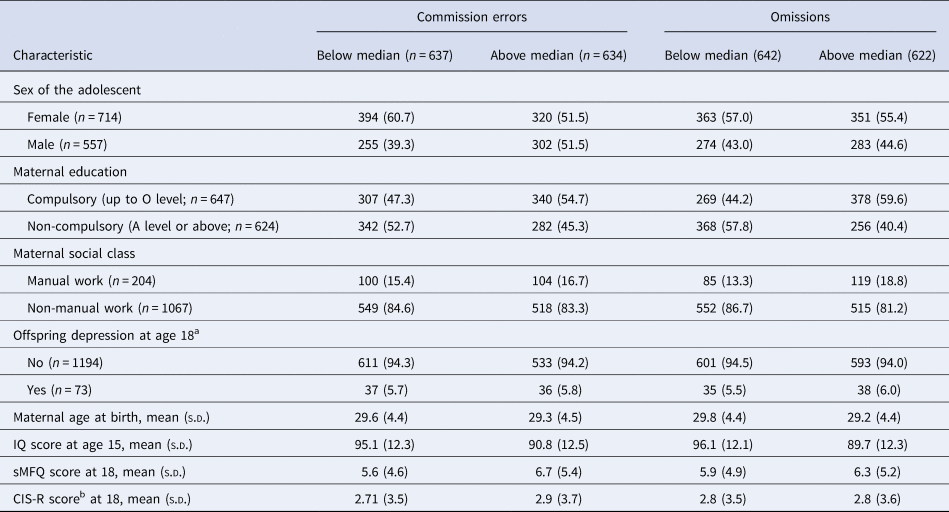
Characteristics of the sample with complete data on the affective go/no-go task, depressive symptoms (at age 18) and confounders (n = 1271), according to errors made on the task split at the median

a According to ICD-10 criteria assessed with the CIS-R. Data were missing for participants who completed the CIS-R but were not assigned a diagnosis (they have a CIS-R score so were included in our analyses).
b Represents the depressive symptoms score.
As sensitivity analyses, we adjusted our analyses for working memory, assessed with the N-Back task at age 18. We also report cross-sectional and longitudinal associations between the N-Back task and depressive symptoms (methods and results in the online Supplementary material).
Results
Descriptive statistics
The affective go/no-go task was completed by 2328 of 5215 (45%) adolescents who attended the age 18 ALSPAC clinic. Of these, 1958 (84%) also provided data on the CIS-R and sMFQ at age 18 and, of these, data on confounders were available for 1271 (54%), which was the sample used for our cross-sectional analyses. Of those included in the cross-sectional sample, 743 provided sMFQ data 1 year later, and this sample was used for longitudinal analyses.
Of those who completed the affective go/no-go task (n = 2328), 2315 had data on depressive symptoms from at least one time-point in ALSPAC, and this sample was used for our multiply imputed sensitivity analyses.
A comparison between the demographic characteristics of the sample used for analyses and the rest of the core singleton ALSPAC cohort is presented in online Supplementary Table S4. Adolescents with missing data were more likely to be male, from lower social classes, have a lower IQ, and meet diagnostic criteria for depression.
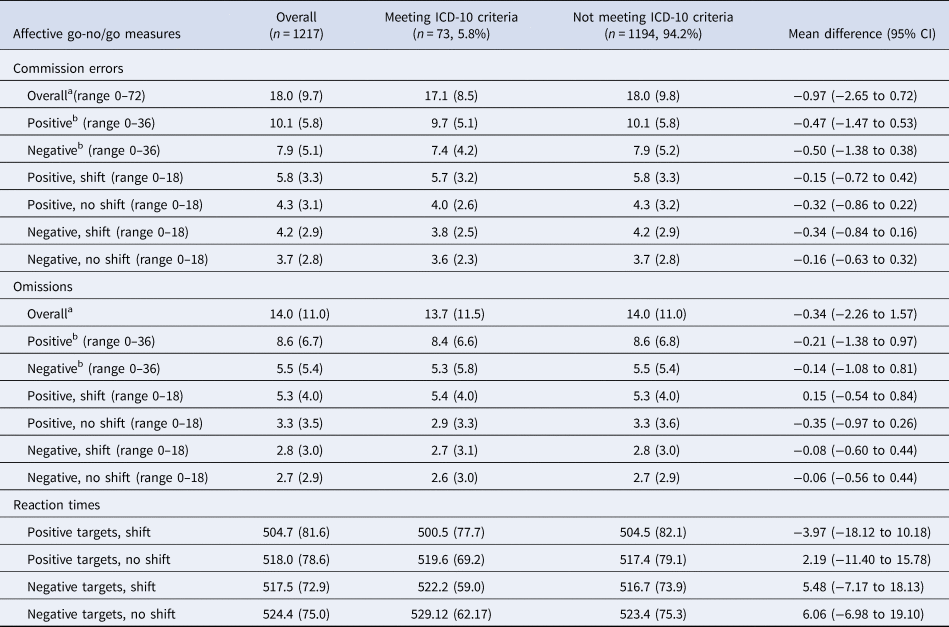
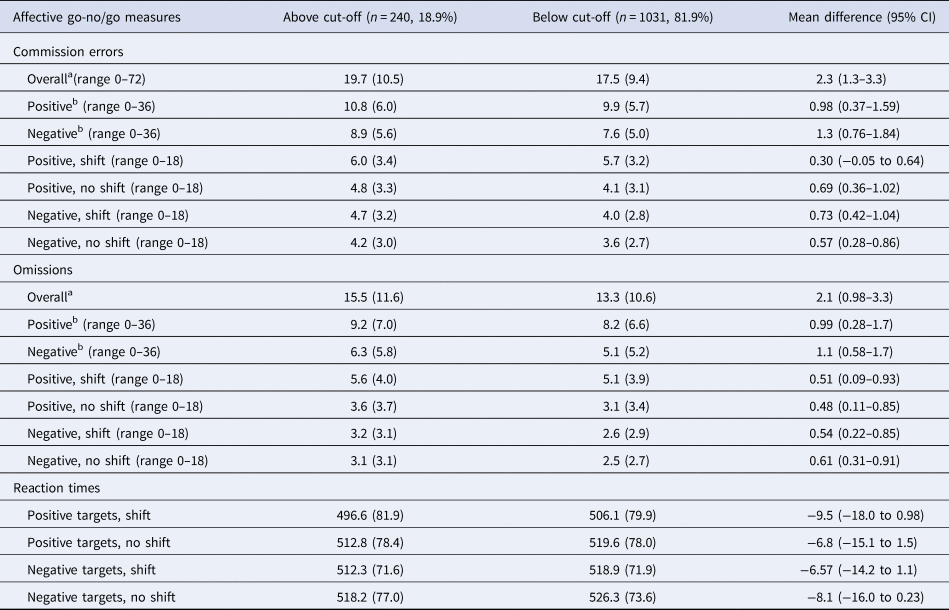
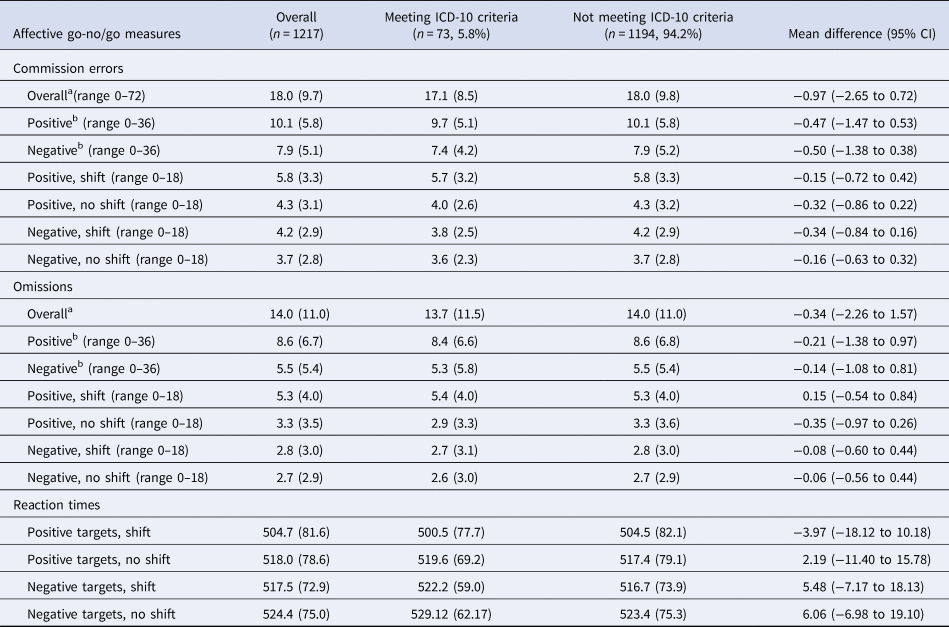
Characteristics of the sample according to errors made on the task are shown in Table 1. Descriptive data for performance on the affective go/no-go task in the analytic sample overall and according to depression diagnoses on the CIS-R are shown in Table 2, and according to the recommended cut-off on the sMFQ (Table 3). Overall, adolescents made more positive than negative commission errors (Table 2). However they also made more positive than negative omissions (Table 2). The correlation between commission errors and omissions was r = 0.20, p < 0.0001. Adolescents were also faster to respond to positive than negative target words (Table 2). No differences were observed for CIS-R depression diagnoses (Table 2). Those who exceeded the cut-off score on the sMFQ made more commission errors and omissions, in response to both positive and negative words, in both shift and non-shift conditions (Table 3). Evidence for a difference in positive omissions was weak (Table 3).
Mean (s.d.) scores for affective go-no-go measures in the analytic sample overall, and according to depression diagnosed using the CIS-R at age 18 (n = 1271)
Comparisons are between groups with and without depression.
Numbers are mean (s.d.) unless otherwise stated.
All ranges are possible rather than actual ranges.
a Commission or omission errors collapsed across valence and shift (total number of errors).
b Commission or omission errors collapsed across shift but not valence.
Mean (s.d.) scores for affective go-no-go measures, according to depression (sMFQ ⩾ 11) at age 18, in the analytic sample (n = 1271)
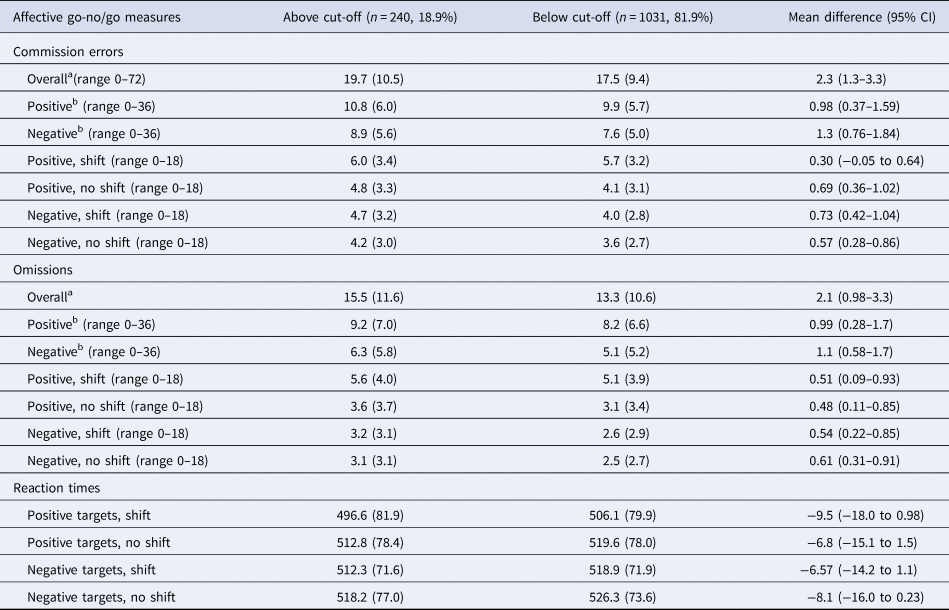
Comparisons are between groups with and without depressive symptoms.
Numbers are mean (s.d.) unless otherwise stated.
All ranges are possible rather than actual ranges.
a Commission or omission errors collapsed across valence and shift (total number of errors).
b Commission or omission errors collapsed across shift but not valence.
Cross-sectional associations between inhibitory control of positive and negative information and depressive symptoms at age 18
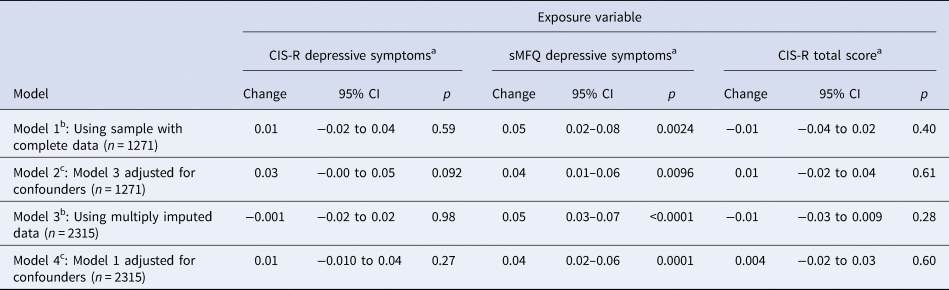
We found strong evidence for an association between depressive symptoms assessed with the sMFQ and errors on the affective go/no-go task (Table 4). For a one standard deviation (s.d.) increase in depressive symptoms assessed using the sMFQ (5-points), total errors increased by 0.05% [95% confidence interval (CI) 0.02–0.08]. This association was observed irrespective of error type, valence and shift condition, and remained after adjustment for confounders (0.04, 95% CI 0.01–0.06). However, when using the CIS-R depressive symptom score, there was no evidence of an association before (0.01 per s.d., 95% CI −0.02 to 0.04) or after (0.03, 95% CI −0.00 to 0.05) adjustment for confounders. There was also no evidence of this association when using the CIS-R total score that includes both depressive and anxiety symptoms, before (−0.01 per s.d., 95% CI −0.04 to 0.02) or after (0.01 per s.d., 95% CI −0.02 to 0.04) adjustments. There was no evidence that the association between affective symptoms and errors differed according to sex (p values for interaction terms between sex and symptoms: 0.71 on the sMFQ; 0.69 for CIS-R depressive symptoms and 0.71 for CIS-R total score). The influence of error type, valence and shift condition on the total number of errors are presented in online Supplementary Table S5. Overall, participants made fewer commission than omission errors and more positive than negative errors.
Cross-sectional associations at age 18 showing the percentage change in number of errors (95% CIs and p value), for a one s.d. change in depressive symptoms
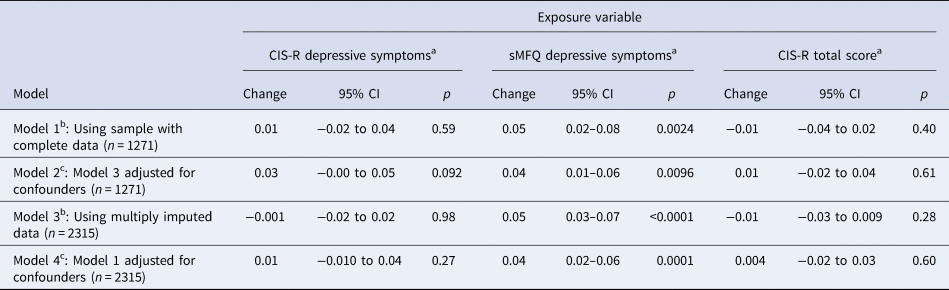
a Separate models were run for the sMFQ and CIS-R exposures because they were highly correlated and measuring the same construct.
b Model simultaneously included depressive symptoms, error type (commission or omission), valence (positive or negative) and shift condition (yes or no).
c Confounders were offspring age, gender and IQ, maternal education and social class.
We tested whether the cross-sectional associations between depressive symptoms and errors were influenced by error type, valence or shift condition using interaction tests (illustrated in online Supplementary Tables S2 and S3). We found no evidence that the association between depressive symptoms and errors differed according to error type (commission or omission) and valence (p values for the three-way interactions testing these hypotheses were 0.68 for the sMFQ and 0.63 for CIS-R depression score). We found no evidence that these associations were further influenced by shift condition (p values from the four-way interaction were 0.36 on the sMFQ and 0.57 on the CIS-R).
Longitudinal associations between inhibitory control of positive and negative information at age 18 and depressive symptoms 1 year later
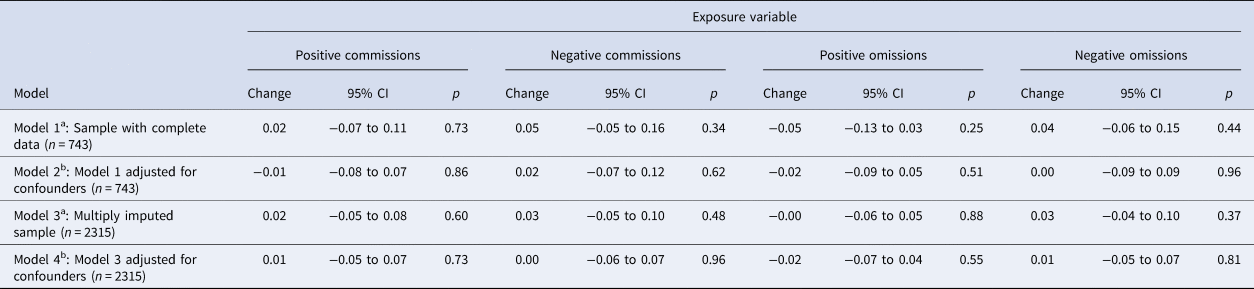
We examined commission and omission errors overall (collapsed across valence and shift), because in cross-sectional analyses we found no evidence that adjusting for valence or shift condition influenced the association between errors and depressive symptoms. However, because of the relevance of valence to our hypotheses we also present commission and omission errors separately by valence (Table 5). We found no evidence of an association between commission (adjusted coefficient: 0.01, 95% CI −0.02 to 0.03) or omission errors (adjusted coefficient: −0.01, 95% CI −0.03 to 0.02) and later depressive symptoms. These associations were similar when conducted separately by valence. There was no evidence of that associations between errors and depressive symptoms differed by sex (p values for interactions between errors and sex: 0.21 for happy commissions; 0.46 for sad commissions; 0.29 for happy omissions and 0.11 for sad omissions).
Longitudinal associations showing change in sMFQ points (unstandardised regression coefficient) at age 19 (95% CIs and p value), for a one point increase in errors at age 18
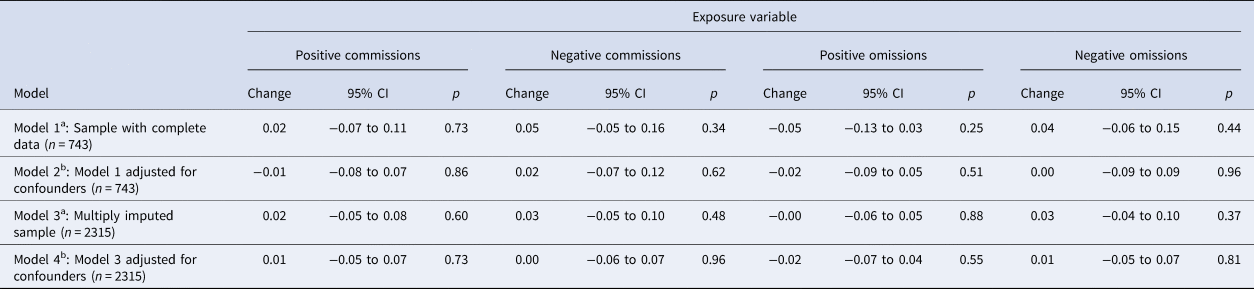
a Includes positive and negative commission errors and positive and negative omissions (collapsed across shift).
b Confounders were offspring age, gender and IQ, maternal education, social class and baseline depressive symptoms.
Cross-sectional associations between reaction times for hits and depressive symptoms at age 18
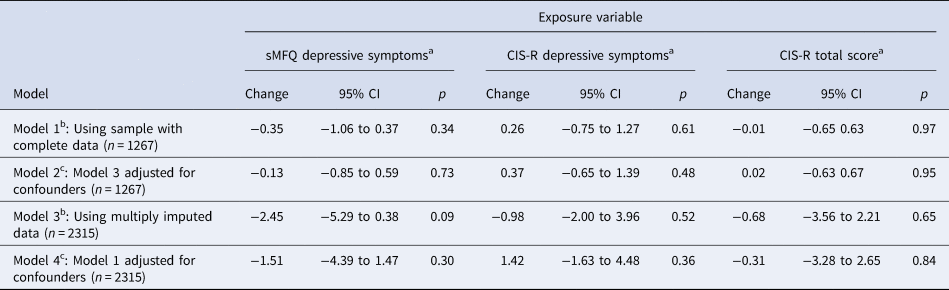
Associations are shown in Table 6. There was some evidence that adolescents with more severe depressive symptoms responded more quickly to target words (hits), but this was weak and attenuated further after adjustment for confounders. Reaction times for hits were faster in response to positive than negative targets, and in shift than non-shift conditions. There was no evidence of interaction between depressive symptoms and valence (p value for the sMFQ 0.25 and CIS-R 0.37) or depressive symptoms and shift condition (p value for the sMFQ 0.41 and CIS-R 0.84).
Cross-sectional associations at age 18 showing change in reaction times for hits (95% CIs and p value), for a 1 s.d. change in depressive symptoms
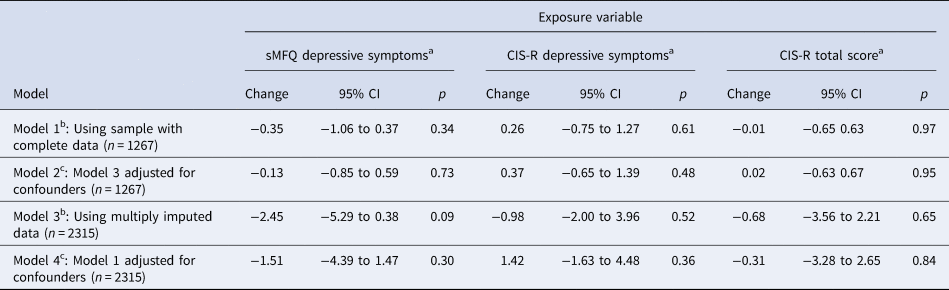
a Separate models were run for the sMFQ and CIS-R exposures because they were highly correlated and measuring the same construct.
b Model simultaneously included depressive symptoms, error type (commission or omission), valence (positive or negative) and shift condition (yes or no).
c Confounders were offspring age, gender and IQ and maternal education and social class.
Discussion
In cross-sectional analyses we found little evidence that adolescents with depressive symptoms had reduced inhibitory control of positive or negative information and no evidence that the valence of this information influenced inhibitory control. Evidence of an influence of depressive symptoms on inhibitory control was only observed for one of our depression measures (the sMFQ but not CIS-R), reducing our confidence in the finding. In our longitudinal investigation, we found no evidence that inhibitory control or sensitivity to positive or negative information was a marker of vulnerability to future depressive symptoms.
Strengths and limitations
To our knowledge, this is the largest study to examine associations between inhibitory control of positive and negative information and depressive symptoms. The integration of objective neuropsychological measures with epidemiological research methods is also a strength.
Missing data is often a limitation of cohort studies and there is substantial attrition from birth to age 19 in the ALSPAC sample. In a sensitivity analysis we used multiple imputation to increase the number of people used in our analyses. Results from our imputed sample were consistent with those from our complete case sample, suggesting that the missing data we imputed had not biased our results. However, it is important to note that we still used a subset of the larger ALSPAC birth cohort and this might have introduced selection bias. However, even when attrition is systematic, biases to within-cohort associations in ALSPAC have been found to be minimal, which may explain why our complete case and imputed analyses produced similar findings (Wolke et al., Reference Wolke, Waylen, Samara, Steer, Goodman, Ford and Lamberts2009). Our sample was also recruited from one region in the UK and findings may not generalise to other populations. Although ours is the largest study of the affective go/no-go task and depression, we may still have lacked statistical power to detect interaction effects which require very large samples. We also did not investigate mental health problems other than depressive and anxiety symptoms. It is possible that young people with comorbid attention deficit hyperactivity disorder, for example, would behave differently on the task and that is a direction for future research studies.
There are some potential limitations of the affective go/no-go task. Variability in reading ability may have influenced how adolescents responded, although we adjusted for IQ which should have partly controlled for this. Findings may not apply to more traditional (non-affective) versions of the task or to other measures of executive functioning. Although adolescents were told that they would see words that were either ‘positive’ or ‘negative’, their interpretation is likely to have been subjective and other emotional dimensions such as physiological arousal or salience may have influenced their responses.
In cross-sectional analyses, we observed an association between sMFQ scores (as the exposure) and errors on the task overall (irrespective of the valence of the words). Our hypotheses were about a relationship between depressive symptoms and valence on the affective go/no-go task, rather than a relationship with cognitive performance generally.
There was no evidence of an association with sMFQ scores as the outcome, longitudinally. What we observed on the sMFQ is likely to be a small general influence of mood on performance on the task. There is more variation in responses to the sMFQ, suggesting that it captures a more general construct of mood than the CIS-R scores, which are more positively skewed. The CIS-R therefore seems to be capturing true depressive symptoms more accurately than the sMFQ, consistent with the fact that it is derived from a standardised clinical interview for common mental health problems in the general population. Although we used the self-report version, this has been found to agree closely with the interviewer administered CIS-R.
Our inclusion of two different depression measures allowed us to internally replicate our findings, and replication is a criterion which guides causal inferences. Since we found no evidence of associations on the CIS-R, our conclusion is that there was no convincing evidence of a relationship between the affective go/no-go task and depressive symptoms.
Integration with existing findings
Findings from existing studies are inconsistent and it is difficult to draw any general patterns (summarised in online Supplementary Table S1). There are several other studies which also found no evidence of an association between depressive symptoms and omission errors (Maalouf et al., Reference Maalouf, Clark, Tavitian, Sahakian, Brent and Phillips2012; Murphy et al., Reference Murphy, Sahakian, Rubinsztein, Michael, Rogers, Robbins and Paykel1999; Owens et al., Reference Owens, Goodyer, Wilkinson, Bhardwaj, Abbott, Croudace and Sahakian2012), commission errors (Erickson et al., Reference Erickson, Drevets, Clark, Cannon, Bain, Zarate and Sahakian2005; Murphy et al., Reference Murphy, Sahakian, Rubinsztein, Michael, Rogers, Robbins and Paykel1999) and reaction times (Kyte et al., Reference Kyte, Goodyer and Sahakian2005; Owens et al., Reference Owens, Goodyer, Wilkinson, Bhardwaj, Abbott, Croudace and Sahakian2012) on the affective go/no-go task. Our finding that there was no influence of valence on the association between inhibitory control and depressive symptoms, is inconsistent with several of the previous smaller studies (Erickson et al., Reference Erickson, Drevets, Clark, Cannon, Bain, Zarate and Sahakian2005; Kilford et al., Reference Kilford, Foulkes, Potter, Collishaw, Thapar and Rice2015; Kyte et al., Reference Kyte, Goodyer and Sahakian2005; Maalouf et al., Reference Maalouf, Clark, Tavitian, Sahakian, Brent and Phillips2012; Murphy et al., Reference Murphy, Sahakian, Rubinsztein, Michael, Rogers, Robbins and Paykel1999; Owens et al., Reference Owens, Goodyer, Wilkinson, Bhardwaj, Abbott, Croudace and Sahakian2012). Two studies also found an association between depressive symptoms and errors overall (irrespective of valence), which we did not find in our study (Kilford et al., Reference Kilford, Foulkes, Potter, Collishaw, Thapar and Rice2015; Maalouf et al., Reference Maalouf, Clark, Tavitian, Sahakian, Brent and Phillips2012). For reaction times, three studies found that people with depression were faster to respond to negative than positive words (Erickson et al., Reference Erickson, Drevets, Clark, Cannon, Bain, Zarate and Sahakian2005; Maalouf et al., Reference Maalouf, Clark, Tavitian, Sahakian, Brent and Phillips2012; Murphy et al., Reference Murphy, Sahakian, Rubinsztein, Michael, Rogers, Robbins and Paykel1999) whereas one found that people with depression were slower to respond, irrespective of valence (Kilford et al., Reference Kilford, Foulkes, Potter, Collishaw, Thapar and Rice2015).
Previous results could be due to selection bias or type 1 errors. The small samples (n < 263) in previous studies might explain inconsistent findings (Button et al., Reference Button, Ioannidis, Mokrysz, Nosek, Flint, Robinson and Munafò2013). There are also several difficulties in the analysis of the affective go/no-go task, especially when sample sizes are small. There are multiple parameters, and multiple approaches to analysis, most of which rely on interaction tests that have low statistical power particularly when the interaction effect is smaller than the main effect (Brookes et al., Reference Brookes, Whitely, Egger, Smith, Mulheran and Peters2004). This analytical flexibility combined with the small sample sizes increases the probability of a type I error (Button et al., Reference Button, Ioannidis, Mokrysz, Nosek, Flint, Robinson and Munafò2013; Simmons, Nelson, & Simonsohn, Reference Simmons, Nelson and Simonsohn2011).
Our findings are inconsistent with studies reporting generic deficits in inhibitory control in adolescents with depression (Snyder, Reference Snyder2013). This could be due to the high cognitive reserve one would expect in an adolescent sample although further studies are needed to test this. Executive functions are complex and multifaceted, consisting of lower levels such as concentration and inhibition and higher levels such as reasoning, problem solving and planning (Diamond & Adele, Reference Diamond and Adele2013). In the affective go/no-go task, participants respond very quickly to stimuli they see for a very short period of time (0.3 of a second with under 1 s to respond). It is possible that the cognitive abnormalities that characterise depression are more dependent on valence when information processing is more deliberative (at the higher level of executive functioning), allowing people more time to apply underlying cognitive schemas or beliefs to information processing. This may happen quickly, and to a certain extent ‘automatically’, but may not be as rapid as the processes assessed by the affective go/no-go. It is also possible that more directly social information is more affected in depression. Executive functions encompass a range of inter-related processes and the affective go/no-go task assesses one of these (inhibitory control). Other components of executive function may show a different relationship with depressive symptoms.
Conclusions
Our evidence does not support the hypothesis that inhibitory control of positive and negative information, or even inhibitory control generally, is associated with current or future depressive symptoms in adolescents. Our evidence therefore suggests that improving inhibitory control should not be pursued as a strategy for preventing adolescent depression. Since we did not find convincing evidence of an association between the affective go/no-go task and adolescent depressive symptoms, our findings suggest that the task is not a promising candidate for future imaging studies of emotional processing biases and adolescent depressive symptoms. Other emotional processing biases could potentially be important, for example emotional memory or the processing of more socially or self-relevant information.
Supplementary material
The supplementary material for this article can be found at https://doi.org/10.1017/S0033291720002469
Acknowledgements
We are extremely grateful to all the families who took part in this study, the midwives for their help in recruiting them, and the whole ALSPAC team, which includes interviewers, computer and laboratory technicians, clerical workers, research scientists, volunteers, managers, receptionists and nurses.
Financial support
The UK Medical Research Council and Wellcome (Grant ref: 102215/2/13/2) and the University of Bristol provide core support for ALSPAC. This publication is the work of the authors and Gemma Lewis will serve as guarantors for the contents of this paper. A comprehensive list of grants funding (PDF, 459 kb) can be found on the ALSPAC website (https://www.bristol.ac.uk/alspac/external/documents/grant-acknowledgements.pdf). The age 18 assessments were funded by the Wellcome Trust (Grant ref: 084268/Z/07/Z, awarded to Prof Glyn Lewis). The age 20 assessments were funded by a Wellcome Trust and MRC grant (Grant ref: 092731, awarded to Prof George Davey-Smith). Marcus Munafò is supported by the UK Medical Research Council Integrative Epidemiology Unit at the University of Bristol (Grant ref: MC_UU_00011/7). This work was part supported by the UCLH NIHR Biomedical Research Centre. Funding sources had no role in the study design; in the collection, analysis, and interpretation of data; in the writing of the report; or in the decision to submit the article for publication. All authors declare independence from the funding sources.
Conflict of interest
We report no conflicts of interest.