Introduction
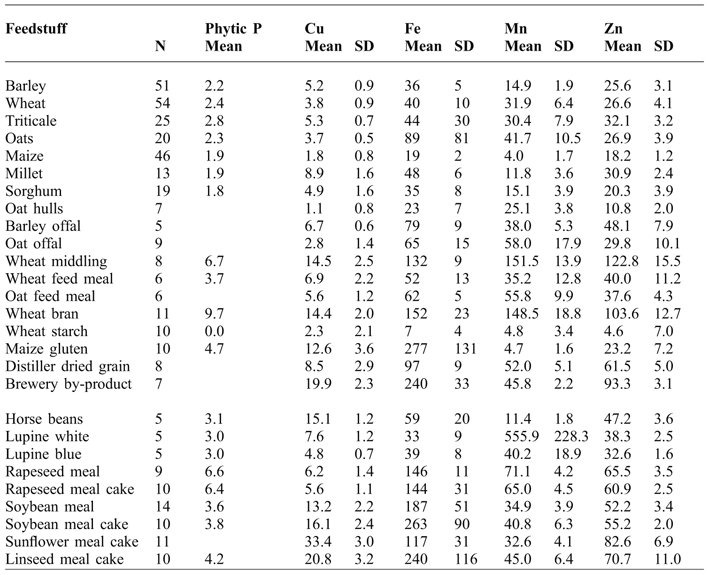
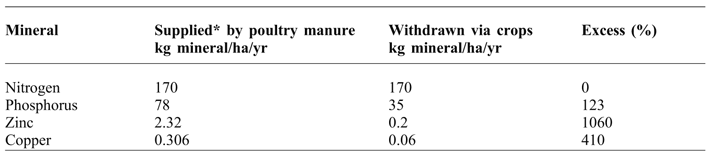
Trace minerals, such as copper (Cu), iron (Fe), manganese (Mn) and zinc (Zn), cobalt (Co), iodine (I) and selenium (Se) are essential nutrients for livestock. Feedstuffs typically do not contain a sufficient trace mineral concentration (Table 1), so they are supplemented to the diet, mainly in forms of oxides, sulphates or organic complexes. High safety margins between requirements and supplemented dietary concentrations were applied until the beginning of the years 2000 to eliminate any risk of deficiency favoured by the fact that the cost of trace mineral supplementation is relatively low, representing less than 0.2% of total feed cost. The increasing environmental concerns caused by farm animal wastes in areas of intensive production have now imposed new constraints on feed formulation (Nys et al., Reference NYS, REVY and JONDREVILLE2003; Schlegel et al., Reference SCHLEGEL, NYS and JONDREVILLE2013; Cano-Sancho et al., Reference CANO-SANCHO, ROVIRA, PERELLÓ, MARTORELL, TOUS, NADAL and DOMINGO2014). Addition of trace minerals, such as Cu and Zn in poultry diets, can contribute to their accumulation in soil and thereby cause toxicity to plants and microorganisms, and encourage unfavourable pathogens in soil and water courses (Coppenet et al., Reference COPPENET, GOLVEN, SIMON, LE CORRE and LE ROY1993). Considering the dietary supplementation used during the past 20 years (Nys et al., Reference NYS, REVY and JONDREVILLE2003), the Cu and Zn balance between poultry manure applied at 170 kg N/ha (according to European legislation) and mean soil Cu and Zn requirements for plant growth, was in excess by more than 500% (Table 2). European legislation has therefore limited the supplementation of trace minerals in feeds (Cano-Sancho et al., Reference CANO-SANCHO, ROVIRA, PERELLÓ, MARTORELL, TOUS, NADAL and DOMINGO2014) and further reduced the level to 120 mg/kg for Zn (EU, 2016: 1095) and to 25mg/kg for Cu (recommendation from EFSA; j.efsa.2016.4563).
Concentrations of Cu, Fe, Mn and Zn (mg/kg, Schlegel, unpublished) and of phytic P (g/kg, EFSA, 2014) in plant based feedstuffs.

Comparison of minerals in poultry manure when applied according to the European legislation of 170 kg/ha/yr and mean soil requirement for plants growth (Nys et al., Reference NYS, REVY and JONDREVILLE2003).

*calculated from the balance between input (food consumption and dietary mineral composition) and output (animal output and mineral body composition).
Calculated as the difference between input (food consumption and dietary mineral composition) and retention (animal body weight and mineral body composition)
This unbalance in manure composition and excesses in some elements has partially been corrected by reducing the dietary supply of trace minerals, by improving the availability of sources or by reducing the antagonism of phytate through dietary addition of microbial phytases. However, because of their low cost and the usual consideration of ‘the more the better’, trace mineral supplementation remains at relatively high levels. As recently discussed in an EFSA report in the EU, Zn concentrations in complete feeds for monogastrics, and in particular for chickens, are mostly close to the maximal authorised than to recommended levels (EFSA, 2014). Indeed, the excretion of Cu and Zn often used to exceed 95% of the dietary supply (Nys et al., Reference NYS, REVY and JONDREVILLE2003). These practices may partially still be explained by uncertainties in estimating the bird's trace mineral requirement. This is generally based on the empirical method allowing a rapid estimation of the amount required to maximise one or more tissues or performance parameters when supplying birds with increasing dietary levels of a trace mineral (dose-response). However, several factors, such as dietary ingredients and components, may modify trace mineral bioavailability, changing the defined requirements. Several of these influences still need to be quantified.
For the past 20 years, trace mineral research has focused on bioavailability enhanced with the development of new sources, mainly of organically bound origins (chelates) or for reapproval of sources. Studies have been carried out with the development of microbial phytases, which partly counteract the negative interaction with phytate, which binds minerals affecting their bioavailability and excretion rates. The first objective of this review is therefore to update information on trace mineral nutrition to underline how to optimise trace mineral nutrition in poultry taking into account environmental concerns. Zinc can be taken as a well-studied example. Another subject is the specific involvement of some trace minerals for protection against oxidative stress or for improved meat and egg quality, including their enrichment in poultry products at the benefit of human health. These subjects have caused the supplying of some trace minerals at higher levels than those recommended, to ensure growth or laying performance. The second part of this review will thus be devoted to the possibility to supply more of some trace minerals for improving health of birds or that of human consuming poultry products.
Function and requirement of trace minerals
Several trace minerals (Cu, Fe, Mn, Zn, I and Se) are considered essential because they are required to support adequate growth, reproduction and health of animals (Suttle, Reference SUTTLE2010). Others (arsenic, aluminium, boron, chromium, fluorine, lead, molybdenum, nickel, silicon, silver, rubidium, tin and vanadium) may be potentially essential when feeding animals with deficient synthetic diets, but will not be further discussed in this review because of their limited interest in practical nutrition and their potential toxicity.
Essential trace minerals play many different roles in the metabolism of birds (structural, catalytic, physiological and regulatory functions, but also immune and antioxidant systems) and any deficiency or excess degrades animal health and performance. Animals are able to react to variable environmental conditions and dietary supplies by homeostatic regulation. They mainly adapt through intestinal absorption and excretion of trace minerals, with the exception of selenium (Suttle, Reference SUTTLE2010). Selenium dietary requirement and toxicity (especially for inorganic forms) in hens are estimated to occur at 0.05-0.08 and 10 mg Se/kg diet, respectively (NRC, 1994; 2005) and the level in diets is usually between 0.1 to 0.5 mg/kg. The dietary supply of 0.5 mg Se/kg diet corresponds to the highest level allowed by the European legislation. There is no homeostatic regulation of Se, so no physiological protection in case of excess, as compared to Cu, Fe, Mn or Zn.
Trace minerals need to be solubilised in the gastro-intestinal tract before being absorbed. The low pH of the gizzard facilitates solubilisation in the gut of birds (Schlegel et al., Reference SCHLEGEL, NYS and JONDREVILLE2010) but trace minerals, especially those present in plant feedstuffs, or free ions may be chelated to molecules, which render them unavailable for absorption. This phenomenon is well established for phytic acid, which interacts with cations. Trace mineral absorption occurs mainly via an active, saturable carrier-mediated regulatory mechanism. For Zn, numerous Zn transporter (Znt) and Zn and Fe regulating proteins (Zip) contribute to its absorption. A metallothionein present in enterocytes, synthesised in proportion to dietary supply of Zn, prevents it excessive absorption through binding (Davis and Cousins, Reference DAVIS and COUSINS2000; Liuzzi and Cousins, Reference LIUZZI and COUSINS2004).
Trace mineral requirements of poultry are measured by means of a dose response approach - an empirical method based on increasing levels in feed and measuring sensitive criterion such as growth rate, tissue composition or enzymatic activity (Schlegel, Reference SCHLEGEL2010; EFSA, 2014). Factorial methods are rarely implemented because of the difficulty of differentiating between maintenance and production requirement and absorption efficiency, which is of low magnitude and affected by numerous dietary factors (composition, viscosity, trace mineral concentration, interaction between minerals and other nutrients including phytate, fibre, or vitamins) and physiological factors (age, gender, genetic). It is subjected to a high homeostatic regulation in relation to the stores in the animal or the level of dietary supply (endogenous secretions, metallothioneins). In the empirical method, the bird's requirement is considered to be fulfilled when the criteria responding to increased dietary level of the mineral plateaus.
The choice of the criteria is crucial. Performance is generally optimised at lower dietary levels than tissue contents or that needed for additional functions such as controlling oxidation or immune properties. Plasma or bone levels are used for Zn and other trace minerals, but the use of biomarkers (enzyme activity or gene expression of a particular protein) remains rather limited. The requirement for oxidative control or immune function is rather difficult to assess and is the source of some controversy between authors and criteria, as shown for example in Zn (EFSA, 2014). Zn deficiency (<10 mg/kg diet) elicited bone abnormalities and increased mortality in poultry, affecting numerous functions such as the antioxidant or immune systems (Naz et al., Reference NAZ, IDRIS, KLALIQUE, ALHIDARY, ABDELRAHMAN, KHAN, CHAND, FAROOQ and AHMAD2016). The criteria used for various species and numerous trace minerals have been described in a recent and extensive review on trace minerals bioavailability (Cano-Sancho et al., Reference CANO-SANCHO, ROVIRA, PERELLÓ, MARTORELL, TOUS, NADAL and DOMINGO2014).
Bird requirements are mainly evaluated on young animals (less than four weeks of age for broilers), mainly because of experimental costs. The data are then extrapolated to finishing periods, corresponding to the largest part of feed consumption (Nys et al., Reference NYS, REVY and JONDREVILLE2003). The official recommendations from different countries are quite variable, including old data, various response criteria, different units (e.g. daily requirement or dietary concentration without including energy concentration) and with or without safety margins. This is evidenced in the recent report on Zn requirement in animals (EFSA, 2014). It will be useful therefore to confirm experimental work or to analyse available data to improve the estimation of trace mineral requirements in birds, even if the comparison of the efficiency of novel trace mineral sources (organic or inorganic sources) has provided useful information for establishing the requirements of the main trace minerals in broilers (Cu, Mn and Zn).
Bioavailability of trace minerals
Bioavailability refers to the proportion of an ingested mineral that is absorbed and utilised. The bioavailability of trace minerals is usually expressed as a relative biological value (RBV) compared to a reference form. For the metals, the sulphate form is considered as the reference source, as sodium selenite is for Se. Calculation of RBV is based on the empirical method and generally calculates the slope ratios from multiple linear (or curvilinear) regressions of dietary levels in sub-deficient birds (response before reaching the plateau). Experimental designs should limit the supply of other mineral sources than the one studied, but keep interactive factors present under practical diet considerations. This may be challenging since, for example, the amount of phytate is highly correlated with Zn contents in feedstuffs. There is variation between authors, mainly because of the choice of the response criteria (performance, tissue composition or biochemical markers). In addition, numerous publications remain imprecise when describing the source and its properties, especially for organic bound sources. Commercial names can correspond to different source properties, as production processes may be adapted over time. However, there is now more consensus on the selection of the most appropriate biomarkers, in particular for Cu, Mn, Zn, or Se (Cano-Sancho et al., Reference CANO-SANCHO, ROVIRA, PERELLÓ, MARTORELL, TOUS, NADAL and DOMINGO2014).
Organically bound trace minerals (Cu, Mn, Zn, Se) have been widely studied during the last 20 years. These sources are highly bioavailability, but results remain controversial concerning their availability relative to soluble sulphate sources, (Ao and Pierce, Reference AO and PIERCE2013; Schlegel et al., Reference SCHLEGEL, NYS and JONDREVILLE2013; Swiatkiewicz et al., Reference SWIATKIEWICZ, ARCZEWSKA-WLOSEK and JOZEFIAK2014). It is noteworthy that no chemical or in vitro assay has yet been found to be predictive of the bioavailability of organically bound metallic forms. Solubility, structural integrity, or complexation strength seem to not be useful to hierarchise sources of organically bound metals related to their biological value in poultry. Similarly, availability of some inorganic sources can differ relative to the average result of the chemical family. Oxides are generally considered as being less bioavailable in poultry than sulphates.
A recent comparison of Zn oxides from different origins (Europe, USA or a source issued from a novel process) has demonstrated that the novel source elicited an increase (15 to 30%) in plasma Zn level and bone concentration (10 to 25%), suggesting higher bioavailability relative to the other oxides or even sulphate (Narcy et al., Reference NARCY, ROMÉO, NYS and DUROSOY2015). In case of Se, it has been demonstrated that organically bound sources are transferred with a higher efficiency than sodium selenite, which will be discussed more in details below. The evaluation of trace mineral sources usually refers to their bioavailability, but other criteria such as the concentration of the mineral, the presence of undesirable substances, physical and technological properties and finally prices, should also be considered.
Interaction phytate-trace minerals: the corrective effect of phytase
Phytate is the main storage form of phosphorus (P) in plants and is the major dietary antagonist for trace mineral bioavailability in monogastrics. Hydrolysation of phytate improves the availability of dietary trace minerals but its magnitude depends on the animal species and on the mineral involved. Phytate represents 50-70% of vegetal phosphorus and is present in the majority of feedstuffs used in poultry diets (Table 1). On average, a corn-soybean meal diet contains 2.2 to 2.5 g/kg P as phytate. Microbial phytases are frequently introduced in poultry diets and can hydrolyse up to 60 to 70% of phytate. The effect is proportional to the dietary supplementation between 200 to 500-600 phytase units (PU) but can be introduced up to 1500 PU in practical conditions. However, commercial phytases can differ in efficacy, and PU can vary accordingly, and inclusion levels should be based on dose-response data for the individual enzyme.
Antagonism between phytate and Zn was established more than 50 years ago by demonstrating a reduced broiler or pig growth performance when Na-phytate was added to semi-synthetic diets (O'Dell and Savage Reference O'DELL and SAVAGE1960; Oberleas et al., Reference OBERLEAS, MUHRER and O'DELL1962). Such antagonism was confirmed for Fe (Hunter, Reference HUNTER1981; Pallauf et al., Reference PALLAUF, PIPPIG, MOST and RIMBACH1999; Grases et al., Reference GRASES, SIMONET, PERELLÒ, COSTA-BAUZA and PRIETO2004), but not for Mn (Grases et al., Reference GRASES, SIMONET, PERELLÒ, COSTA-BAUZA and PRIETO2004) or Cu (Lee et al., Reference LEE, SCHRÖDER and GORDON1988). Cations, especially Zn2+, can replace Na+ to form insoluble complexes (Davies and Nightingale, Reference DAVIES and NIGHTINGALE1975; Akter et al., Reference AKTER, GRAHAM and IJI2015) but for other cations, such Mn2+ and Cu2+, this is limited when Zn is present (Lee et al., Reference LEE, SCHRÖDER and GORDON1988).
In grains, the characterisation of phytate and its co-localisation with trace minerals suggest that phytic acid is bound to Fe2+, Mn2+ and Zn2+ but not to Cu2+ (Rodrigues-Filho et al., Reference RODRIGUES-FILHO, VAZ, FELICISSIMO, SCARPELLINI, CARDOSO, VINHAS, LANDERS, SCHNEIDER, MC GARVEY, ANDERSEN and SKIBSTED2005; Kyriacou et al., Reference KYRIACOU, MOORE, PATERSON, DE JONGE, HOWARD, STANGOULIS, TESTER, LOMBI and JOHNSON2014). In practical diets, the phytate to mineral interaction has been explored by comparing non-supplemented trace mineral diets containing feedstuffs with various phytate levels, or genetically modified low-phytate cultivars or diets with or without the hydrolysis of phytate. Trials in mammals confirmed that plant based Cu did not interact with phytate (Bikker et al., Reference BIKKER, VAN DIEPEN, BINNENDIJK and JONGBLOED2012) while Fe absorption was improved when phytate was hydrolysed or removed (Brune et al., Reference BRUNE, ROSSANDER and HALLBERG1989; Mendoza et al., Reference MENDOZA, VITERI, LÖNNERDAL, YOUNG, RABOY and BROWN1998; Kruger et al., Reference KRUGER, TAYLOR, DU, DE MOURA, LÖNNERDAL and OELOFSE2013). In broilers, phytase addition (1200 PU/kg feed) did not improve Fe retention (Biehl et al., Reference BIEHL, EMMERT and BAKER1997) in contrast to Mn (Mohanna and Nys, Reference MOHANNA and NYS1999). Zinc bioavailability was improved in broilers fed genetically modified low-phytate cereals (Linares et al., Reference LINARES, BROOMHEAD, GUAIUME, LEDOUX, VEUM and RABOY2007), given low phytate diets (Mohanna and Nys, Reference MOHANNA and NYS1999; Schlegel et al., Reference SCHLEGEL, NYS and JONDREVILLE2010) or when microbial phytase was added (Mohanna and Nys, Reference MOHANNA and NYS1999; Jondreville et al., Reference JONDREVILLE, LESCOAT, MAGNIN, FEUERSTEIN, GRUENBERG and NYS2007; Schlegel et al., Reference SCHLEGEL, NYS and JONDREVILLE2010). However, the effect of phytase on Zn availability in broilers fed cereals is relatively low compared to pigs (in chicks addition of 500 PU liberated less than 10 mg Zn) because of the higher gastric acidity which results in a higher solubility and subsequently intestinal availability of Zn in broilers compared to pigs (Schlegel et al., Reference SCHLEGEL, NYS and JONDREVILLE2010). The same authors explored the interaction between supplemented minerals and plant phytate (Schlegel et al., Reference SCHLEGEL, NYS and JONDREVILLE2010). Their findings were double checked by carrying out a meta-analysis of the literature (Schlegel et al., Reference SCHLEGEL, NYS and JONDREVILLE2013) to finally conclude that in broilers, as well as in pigs, the increase in bone Zn deposition relative to increasing dietary Zn supplementation (ZnSO4 up to 102 mg Zn/kg) was not affected by phytate or phytase levels. This suggested an absence of interaction between plant phytate and added dietary Zn. The improvement in Zn retention in the presence of phytase resulted therefore from the native Zn being initially linked to plant phytate. In conclusion, the hydrolysis of phytate in grains releases Zn, Fe and possibly Mn from plant origin, but the low pH of the gizzard in chicken partly dissociates Zn, Fe or Mn from phytic acid, even when phytates are not hydrolysed by phytase.
Trace minerals and eggshell quality
Copper, Mn and Zn are essential for eggshell formation. Copper deficiency in hens affects the formation of lysine-derived cross-links, involved in the biochemical and mechanical properties of eggshell membranes (Chowdhury, Reference CHOWDHURY1990), resulting in egg shape abnormalities. Eggshells from hens fed on Mn deficient diets (<7 mg/kg) have thinner eggshells with translucent areas due to alterations in eggshell ultra-structure in the mammillary layer, and a decreased concentration in polysaccharide precursors of the eggshell matrix (Leach and Gross, Reference LEACH and GROSS1983). Manganese is a component of Galβ1,3-glucuronosyltransferase (GlcAT-I) which is involved in proteoglycan synthesis, and Mn supplementation increases the synthesis of glycosaminoglycan in eggshell and may influence its microstructure and breaking strength (Xiao et al., Reference XIAO, ZHANG, WU, ZHANG, YUE and QI2014; Reference XIAO, WU, ZHANG, YUE, WANG, JI and QI2015). Alternatively, Mn can interfere with the faces parallel to the ‘c’ axis of the CaCO3 crystal and favours an elongation of the calcite crystal along its ‘c’ axis (Mann et al., Reference MANN, ARCHIBALD, DIDYMUS, DOUGLAS, HEYWOOD, MELDRUM and REEVES1993). Thus, it is possible that the presence of trace minerals can alter the crystallographic texture of eggshells and, consequently, their mechanical properties.
Zinc is a component of carbonic anhydrase, a key uterine enzyme in supplying shell carbonate. Inhibition of this enzyme results in lowered bicarbonate ion secretion and greatly reduces eggshell weight (Nys et al., Reference NYS, HINCKE, ARIAS, GARCIA-RUIZ and SOLOMON1999). Zinc deficiency (<10 mg/kg diet) decreased egg production and feed consumption in hens (Naz et al., Reference NAZ, IDRIS, KLALIQUE, ALHIDARY, ABDELRAHMAN, KHAN, CHAND, FAROOQ and AHMAD2016). No negative effect was observed on hen performance or egg quality when the diet contained 28-34 mg Zn/kg (Stahl et al., Reference STAHL, COOK and SUNDE1986). A corn-soybean meal based layer diet, not supplemented with trace minerals, supplies about 30 mg Zn, 20 mg Mn and 6 mg Cu/kg. These dietary levels are higher than the deficient level but slightly lower than recommendations. In the absence of inorganic or organically bound sources of added Mn, Cu and Zn, feed intake and feed conversion were not affected, in contrast to egg weight and mass (Stefanello et al., Reference STEFANELLO, SANTOS, MURAKAMI, MARTINS and CARNEIRO2014). The main benefit was for eggshell thickness or breaking strength (Mabe et al., Reference MABE, RAPP, BAIN and NYS2003; Stefanello et al., Reference STEFANELLO, SANTOS, MURAKAMI, MARTINS and CARNEIRO2014). It is, therefore, current practise to supply hen diets with Cu, Zn, Mn from inorganic or organically bound sources for reinforcing eggshell strength. This effect on eggshell quality is largely controlled by Mn supplementation, as demonstrated by Sazzad et al. (Reference SAZZAD, BERTECHINI and NOBRE1994), when supplying 80 mg Mn /kg to a 25 mg/kg basal diet or by Xiao et al. (Reference XIAO, ZHANG, WU, ZHANG, YUE and QI2014; Reference XIAO, WU, ZHANG, YUE, WANG, JI and QI2015). Mn provided at levels higher than 70-100 mg/kg had no further effect on eggshell quality (De Faria et al., Reference DE FARIA, JUNQUEIRA and SAKOMURA1999; Xiao et al., Reference XIAO, WU, ZHANG, YUE, WANG, JI and QI2015). There is little evidence demonstrating a positive effect of Zn when provided at higher levels than the hen requirement (recommendation: 50-60 mg/kg total Zn). Eggshell quality was not improved by Cu supplementation at levels of 70-140 mg Cu supplied as CuSO4/kg diet (Christmas and Harms, Reference CHRISTMAS and HARMS1983). Copper impaired shell thickness when supplied at high level (250 and 500 mg/kg; Harms and Buresh, Reference HARMS and BURESH1986) but did not affect egg mass, and tended to improve feed conversion ratio (Kim et al., Reference KIM, KIM, SHIN and KIL2016). The negative effect on eggshell quality results partly from the use of sulphates, as it disappears when Cu acetate (250 mg Cu/kg) is used instead (Al Ankari et al., Reference AL ANKARI, NAJIB and AL HOZAB1998).
Egg enrichment from trace minerals
Most trace minerals are mainly deposited in the yolk with a lesser amount in the albumen. One of the main characteristics of the egg is the stability of its major components in contrast to its minor components, such as vitamins and trace minerals. The trace mineral content of eggs is directly influenced by the amounts ingested by the hen, as underlined by numerous reviews and feeding studies that have demonstrated the feasibility of raising in eggs the nutritional provision to human of Se, I and, at lower magnitude of Fe, Zn, F or Mn (Klasing, Reference KLASING2000; Schiavone and Barroeta, Reference SCHIAVONE and BARROETA2011). Of, these selenium is the most frequently studied trace mineral, as human deficiencies of this mineral are of major concerns globally. The average Se egg content is 150 µg/kg in the yolk and 50 µg/kg in the albumen, which makes around 5 µg Se/egg, with a wide range of variation. Selenium is generally added to diets as sodium selenite (Na2SeO3), sodium selenate (Na2SeO4), which are predominantly deposited in the yolk, or as selenomethionine (Klasing, Reference KLASING2000) and Se enriched yeast (McDonald et al., Reference MCDONALD, EDWARDS, GREENHALGH and MORGAN2002), which are mainly transferred to the albumen. Egg Se content can be increased three to six-fold (12 fold in the albumen and four-fold in the yolk). Egg content can reach 500 µg/kg (30-40 µg/egg) when hens are supplied with 0.3 to 0.5 mg/kg Se from selenomethionine or Se enriched yeast which are more efficiently transferred compared to inorganic sources (Chinrasri et al., Reference CHINRASRI, CHANTIRATIKUL, THOSAIKAM, ATIWETIN, CHUMPAWADEE, SAENTHAWEESUK and CHANTIRATIKUL2009). Such egg enrichment can supply 50-70% of the daily human requirement (Surai et al., Reference SURAI, PAPAZYNAN, SPEAKE and SPARKS2007; Fisinin et al., Reference FISININ, PAPAZYAN and SURAI2009). Adding 1, 2 or 5 mg/kg diet Se from a Se enriched yeast for four weeks to a laying diet initially containing 0.3mg Se/kg linearly increased egg Se content from 17 to 40, 74 and 175 µg/egg, respectively, without any negative effect on hen performance (Bennet and Cheng, 2010). The supply of 0.2 mg Se/kg feed as 2-hydroxy-4-methylselenobutanoic acid was more efficiently transferred into the egg than Se enriched yeast (Jlali et al., Reference JLALI, BRIENS, ROUFFINEAU, MERCERAND, GERAERT and MERCIER2013). Se-enriched eggs are a safe strategy to supply Se for humans because the daily human consumption has to be at least 25 eggs per day to reach a toxic level (10 mg; Fisinin et al., Reference FISININ, PAPAZYAN and SURAI2009).
Iodine content in the egg is typically 4-10 µg, mainly present in the yolk. Yolk contains eight times more I than albumen. Dietary I is added in inorganic forms (calcium iodate, potassium iodate or potassium iodide) which are efficiently absorbed in the form of iodide (Suttle, Reference SUTTLE2010). The I requirement for poultry is 0.3-0.4 mg/kg diet and is toxic at levels over 300 mg/kg diet (Suttle, Reference SUTTLE2010). Egg level increases with the dietary supply and can be multiplied by a factor of five to 12 when the dietary I supply is increased up to 30 mg/kg (Ishikawa et al., Reference ISHIKAWA, OGAWA and SAKAI2008). The yolk and albumen concentration are respectively increased by five and seven-fold when 20 mg/kg is supplemented as Ca iodate to hens. Dietary I supplementation of 0, 3, 6, 12 or 24 mg/kg induces levels of10, 16, 26, 46 and 78 µg I/egg, respectively (Yalçin et al., Reference YALÇIN, KAHRAMAN, YALÇIN, YALÇIN and DEDEOĞLU2004). However, the level of I should be limited to less than 12 mg/ kg diet to avoid negative effects on feed consumption and egg production (Yalçin et al., Reference YALÇIN, KAHRAMAN, YALÇIN, YALÇIN and DEDEOĞLU2004). When supplying hens with the maximum level allowed by the European legislation (10 mg/kg diet), egg I content can reach 40 µg/egg corresponding to 20% of the daily human recommendation.
Eggs contain on average 1-2 mg Fe (Underwood and Suttle, Reference UNDERWOOD and SUTTLE1999). Dietary Fe is available both in inorganic and organically bound forms and either in the ferrous (Fe2+) or ferric (Fe3+) forms. It is oxidised to the ferric form following transfer to the blood and is complexed by transferrin or integrated in vitellogenin. The magnitude of Fe enrichment in eggs is limited to 10-20% when supplied to hens at dietary level of 100, 200 and 300 mg/kg in the form of iron sulphate or iron-methionine chelate (Park et al., Reference PARK, NAMKUNG, AHN and PAIK2004). Its transfer is more efficient (up to 30%) when hens are correspondingly supplemented with Zn and Cu (80 mg Zn, 120 mg Fe and 25 mg Cu/kg diet) (Skřivan et al., Reference SKŘIVAN, SKRIVANOVÁ and MAROUNEK2005).
Egg Zn content is 10-20 mg/kg egg (Watson, Reference WATSON2002) mainly present in yolk (99%). Increasing dietary Zn from 30 to 150 mg/kg enhances by 25% the Zn level in the egg and by more than 50% when providing a large dietary excess of Zn (>1500 mg/kg; Stahl et al., Reference STAHL, COOK and GREGER1988).
Effect of trace minerals on meat quality
meat enrichment in trace minerals
Poultry meat can be enriched in trace minerals in particular for selenium. Feeding ducks until 49 days of age with increasing dietary levels of Se (0, 0.2, 0.4 and 0.6 mg/kg) stimulated the Se level from 0.05 up to 0.87 mg/kg in breast and from 0.04 to 0.64 mg/kg in thighs (Baltic et al., Reference BALTIC, STARCEVIC, BASIC, ZENUNOVIC, IVANOVIC, MARKOVIC, JANJIC and MAHMUTOVIC2015). Organically bound sources are more efficiently transferred than inorganic sources (Leeson et al., Reference LEESON, NAMKUNG, CASTON, DUROSOY and SCHLEGEL2008; Briens et al., Reference BRIENS, MERCIER, ROUFFINEAU, VACCHINA and GEARERT2013). An increased Se concentration in breast muscle was previously demonstrated in turkey poults or in breast fillets from birds fed selenomethionine instead of sodium selenite (Osman and Latshaw, Reference OSMAN and LATSHAW1976; Downs et al., Reference DOWNS, HESS and BILGILI2000).
Poultry meat can be enriched with dietary Fe. The World Health Organisation states that Fe deficiency is frequent throughout the world for children and women in particular in developing countries, and can be a problem in industrialised countries. Meat is the main Fe source and is 2.5 times more bioavailable than in vegetable or milk products, but beef contains more Fe than poultry meat. Fe deposition varies between tissues, whereby Fe level in chicken thigh is three-fold higher than chicken breast or wing (14-15 versus 46 mg/kg, Seo et al., Reference SEO, LEE, AHN and PAIK2008). Liver (430 mg/kg) contains 17 times more Fe than muscle. Dietary supply of 100 and 200 mg Fe methionine/kg increased Fe content in breast meat by 39% and in liver by 32% compared to an unsupplemented control diet. When Fe is provided as FeSO4, 200 mg/kg in feed will increase thigh content by 13% and liver content by 17% (Seo et al., Reference SEO, LEE, AHN and PAIK2008). Daily requirements have been evaluated to 9 mg/day in adult men, 16 mg in adult women and to 7 to 14 mg/day in children. Consuming 100 g of poultry meat can supply 25% of the daily Fe requirement for an adult. It is noteworthy than Fe enrichment of meat might favour oxidation of protein or lipid and might negatively affect some organoleptic properties of meat (Min et Ahn, 2005). By contrast, increasing dietary Zn levels have limited influence on Zn content in poultry meat (Bou et al., Reference BOU, GUARDIOLA, BARROETA and CODONY2005).
Effect of trace minerals on technological and organoleptic properties of meat
During the post-mortem conditions, muscles are affected by cell damages elicited by oxidation, which causes cellular water loss via damaged membranes. Providing higher levels of some dietary trace minerals has been associated with a positive impact on meat anti-oxidative properties, which influences water holding capacity. Poultry meat contains more long chain unsaturated fatty acids (PUFA) than pork or beef meat and is therefore more sensitive to oxidation. Poultry meat shows lipid oxidation related to the duration of storage at cold temperatures, in particular in thigh compared to breast meat (Igbasan et al., Reference IGBASAN, AKINSANMI, ONIBI and ADU2011). Trace minerals can change the level and profile of meat lipids and influence flavour and taste of poultry meat in particular when birds are fed PUFA, and may reduce cholesterol level.
Dietary trace minerals, particularly Se, can induce physiological changes in the muscle tissue, and can alter meat quality in poultry (Leeson et al., Reference LEESON, NAMKUNG, CASTON, DUROSOY and SCHLEGEL2008; Puvača and Stanaćev, Reference PUVAČA and STANAĆEV2011). As a component of GSH-Px, Se acts alone or in addition to vitamin E against cellular peroxide damage. Vitamin E and Se are mutually replaceable (except at low levels) acting as a sparing mechanism for the other (McDowell, Reference MCDOWELL1992). Adding 0.3 mg Se /kg in combination with vitamin E (100 IU) can reduce peroxidation of lipids and improve their stability relative to oxidation (Kim et al., Reference KIM, PARK and CHOI2010). These combined effects were more protective for dark chicken meat and less efficient in white meat, probably because of its lower fat content. In contrast, vitamin E and Se deficiencies increase the incidence of pale, soft and exudative meat (Wang et al., Reference WANG, PAN, PENG, ZHAO and ZHOU2009). Dietary substitution of sodium selenite by Se enriched yeast (0.05 to 0.3 mg Se /kg diet) reduced drip loss of poultry meat (Downs et al., Reference DOWNS, HESS and BILGILI2000). However, such an effect was not observed on breast in birds fed 0.3 to 0.5 mg Se /kg (Juniper et al., Reference JUNIPER, PHIPPS and BERTIN2011). Cooking losses from chicken breasts was reduced from 21 to 16% in broiler fed increasing levels of Se enriched yeast (0.15 to 0.60 mg/kg diet) which was much higher than seen for birds fed sodium selenite (Oliveira et al., Reference OLIVEIRA, RIVERA, MESQUITA, BRAGA, RAMOS and BERTECHINI2014).
Supplementation of Zn (40 to 80 mg/kg) improved the water holding capacity of broiler breast (66% versus 56% in control; Salim et al., Reference SALIM, LEE, JO, LEE and LEE2011). Supplying 60 to 180 mg Zn /kg reduced drip loss of broiler breast or thigh meat during storage (Liu et al., Reference LIU, LU, LI, ZHANG, XI, ZHANG and LUO2011). A Zn bearing palygorskite (an enriched Zn clay containing Mg and Fe) reduced cooking loss in the pectoralis major muscle and cooking loss in the thigh and showed antioxidant properties demonstrated by the reduction in malondialdehyde (MDA) concentration in thigh meat (Yang et al., Reference YANG, CHEN, CHENG, LI, ZHANG, WEN and ZHOU2016). Addition of an organically bound Zn source (60 to 180 mg/kg) improved thigh tenderness (Liu et al., Reference LIU, LU, LI, ZHANG, XI, ZHANG and LUO2011), possibly as a consequence of a lower meat pH.
High supplementation of Cu (175 mg/kg) reduced PUFA and cholesterol levels and increased the level of mono-unsaturated fatty acids in breast meat of broilers (Sevcikova et al., Reference SEVCIKOVA, SKRIVAN, SKRIVANOVA, TUMOVA and KOUCKY2003). Reduced levels of lipids and cholesterol in meat of broilers were observed by Skřivan et al. (Reference SKŘIVAN, ŠEVČIKOVÁ, TŮMOVÁ, SKŘIVANOVÁ and MAROUNEK2002), when supplementing 126 mg Cu /kg for a short period, during the first two weeks of rearing (35 mg/kg thereafter). The same research group observed a lower level of saturated fatty acids and increased PUFA/SFA ratio in abdominal fat and a decrease in cholesterol level in breast meat of birds supplemented with 200 mg Cu/kg combined with 5% rapeseed oil (Skřivan et al., Reference SKŘIVAN, SKŘIVANOVÁ, MAROUNEK, TŮMOVÁ and WOLF2000). This decrease probably resulted from a lower activity of 7-alpha-hydroxylase (Konjufca et al., Reference KONJUFCA, PESTI and BAKALLI1997). Supplying 150 to 200 mg/kg Cu as acetate, oxide or sulphate prevented meat oxidation via decreased MDA levels (Igbasan et al., Reference IGBASAN, AKINSANMI, ONIBI and ADU2011). In contrast, broilers fed additional 250 mg Cu /kg for 6 weeks had an increased lipid peroxidation in plasma and liver, in which catalase activities, SOD and GSH levels decreased (Ajuwon et al., Reference AJUWON, IDOWU, AFOLABI, KEHINDE, OGUNTOLA and OLATUNBOSUN2011). Withdrawal of Zn and Fe supplementation reduced oxidation in cooked broiler leg meat according to the thio-barbituric acid-reacting substances method (TBARS) (Ruiz et al., Reference RUIZ, PEREZ-VENDRELL and ESTEVE-GARCIA2000). The effects of trace minerals on meat oxidation can therefore be contradictory probably as a consequence of the complex balance between compounds favouring or preventing oxidation involved in the oxidative stability of poultry meat.
Conclusions
The dietary supplementation of trace minerals has considerably and continuously decreased during the past 30 years because of the awareness of possible contribution of trace minerals to environmental contamination and of the loss in efficiency of transfer of trace minerals when provided in large excess. New regulations have accelerated these changes. The main nutritional strategies to reduce trace mineral supply have been the adjustment of the dietary supply to bird requirements with the help of the characterisation of novel sources mainly organically bound and the characterisation and to a certain extent quantification of interactions with other nutrients. It will be useful to further explore the requirement of the finishing period, which corresponds to the largest consumption of feed as it will allow to use phase feeding of trace minerals. Phytate hydrolysis is clearly efficient in increasing Zn bioavailability, but with a lower magnitude in birds than in pigs. Phytate hydrolysis slightly affects Fe and Mn, but not Cu bioavailability. Trace minerals are involved in numerous cell functions and affect growth of animals but the interest of adding more trace minerals than the level to ensure bird performance for additional functions such as immunology remains controversial. Manganese and at a lower extent Zn and Cu affect eggshell breaking strength. Higher dietary levels of trace minerals (Cu, Fe, Zn, Se) contribute to enrich egg or meat concentration and in addition can affect the technological properties of meat. New regulation on their maximal dietary supply limits, however, the potential impact of trace minerals for improving poultry product nutritional value and technological properties of meat.