


The numerous financial crises of the nineteenth and twentieth centuries have long attracted the attention of economists and historians, but they also raise issues of contemporary interest regarding the history of the stability or, alternatively, the volatility of banking systems and stock markets. Today much attention is devoted to evaluating the effectiveness of regulatory frameworks as well as the capacity of the main economic and political actors to respond to a financial collapse. A look at past experience is useful for a deeper understanding of such events in comparative perspective. This chapter summarizes the first banking panics in the history of Latin America, including a review of the financial bubbles and their consequences in Brazil and Cuba during 1857, the domestic banking panic that broke out in Rio de Janeiro in 1864, as well as the severe commercial, banking and debt debacles of the years 1873–1878 that battered half a dozen Latin American economies.
The early panics that took place during the takeoff of banking in Latin America speak to the considerable fragility of emerging capitalism in the region. Yet it is important to note that they occurred in financial markets that were still quite small, located in the capital cities or in the main ports of different regions, raising the question of whether the bankruptcies had widespread or profound effects on national economies. Each of these crises that broke out in various Latin American cities or ports exhibited its own characteristics, but also reflected some facets that lend themselves to historical comparisons. It is particularly relevant to consider how local finance was influenced by the evolution of international trade and the price cycles of different exports, as well as by the transmission of international financial slumps. But it is also necessary to identify those cases when weakness originated in domestic imbalances, whether due to the fragility of local banks, fiscal imbalance or errors in the monetary policy adopted by a given government.
To begin with, it is worth asking how we can define a banking panic or crisis. A general answer is provided by the great expert in financial history Michael Bordo, who has argued that the anatomy of a banking debacle is often complex with many possible outcomes. In this sense, bank panics must be distinguished from other types of financial disruptions such as sovereign debt crises, stock market crashes, currency crises or mortgage collapses.Footnote 1 Yet at certain junctures these phenomena are intertwined and it is therefore appropriate to speak of combined or twin crises. More specifically, the traditional view of a banking panic is usually defined in terms of a liquidity crisis, when the public loses confidence in one or more institutions and/or the available means of payment. This can lead to considerable market instability, which, in turn, has the potential to unleash a contagious tide, with a stampede of customers rushing to withdraw their deposits from one or more banks.Footnote 2 In other cases, a stock market crash can trigger or exacerbate a banking panic. Without the intervention of the monetary authorities or the lender of last resort – through open market operations or discount lending – the entire economy can be affected and suffer great losses. But what happens when there is no lender of last resort, as was the case of Latin America in the nineteenth century?
In the first part of this chapter we focus on the consequences of the European and North American commercial and financial crisis of 1857 that triggered the outbreak of the first banking panics in Havana and Rio de Janeiro. The contagion effect can largely be explained by the fact that Brazil and Cuba had very open economies that depended heavily on international demand for their main exports – especially sugar and coffee – which were characterized by a volatile evolution of their prices. In Cuba, for example, the boom in sugar prices during the Crimean War (1854–1856) stimulated an unparalleled speculative boom in Havana that was to collapse in August 1857, even before the outbreak of other crises in September in New York and London in October of the same year. In contrast, the banking panic of 1864 in Rio de Janeiro had essentially domestic causes, being spurred by the sudden collapse of four private banking houses in Rio de Janeiro, including the large discount finance firm of Souto and Co., which dominated the commercial paper market. In this case, international factors did not play as important a role as the local and excess commitments of private bankers, who had accumulated a large volume of credits and long-term investments that they could not liquidate, leading to a panic that almost caused the downfall of the largest local bank, the Banco do Brasil.
The Transmission of the International Crisis of 1857 to Cuba and Brazil
Since the beginning of the nineteenth century numerous banking and stock market panics took place in Europe and North America, some of which had far-reaching consequences. In the case of the financial crises with international impacts, such as those of 1857, 1866 and 1873, their transmission usually spread outwards from the most important financial markets, since the suspension of payments by important firms in London, New York or Hamburg could cause a virtual freeze of mercantile credit worldwide, followed by an abrupt decline in exports and imports in many countries.Footnote 3
The financial and commercial debacles varied from country to country in terms of origins and subsequent developments. In September 1857, for example, the crisis originated not in London but in New York, causing the suspension of payments by hundreds of banks in the United States.Footnote 4 At the end of October, the panic was transmitted to the London financial market, which also began to suffer as a result of the insolvency of many mercantile firms linked to trade with the Americas, as well as of several Scottish banks engaged in this traffic, some of which went bankrupt.Footnote 5 The contraction was quickly transmitted to the great German port of Hamburg in November, and a couple of months later it was already affecting the correspondents of English and German trading houses in different ports of the Caribbean and South America.
An important witness to the crisis, Walter Bagehot (later editor of the Economist), considered inopportune the lack of action by the Bank of England since it did not act as an effective lender of last resort.Footnote 6 The impact of the crisis was so considerable that the House of Commons instituted an investigative committee in December 1857 known as the Select Committee on Bank Acts, with responsibility to determine whether the central bank was operating in accordance with the Bank Act of 1844 or whether it had contributed to the collapse.Footnote 7 The committee identified several macroeconomic factors influencing the heavy speculation in the markets that exploded in the fall of 1857. It pointed to the possible impacts of the increase in the stock of gold in Europe as a result of the discoveries of rich mineral deposits in California and Australia, causing an increase in the circulation of metallic currency worth more than 100 million pounds sterling, feeding waves of speculation. In turn, the report highlighted the large increase of deposits in commercial banks in the 1850s, a time of a veritable banking revolution. To all this must be added the effects of the end of the Crimean War in 1856, leading to intense volatility in commodity markets and subsequent commercial havoc, causing many bankruptcies.Footnote 8
The year 1857 can be considered a significant milestone in the financial history of Latin America since there then took place two of the first “banking crises” in the subcontinent, specifically in the cities of Rio de Janeiro and Havana. In the case of Cuba, a great boom in sugar production was in progress, spurring technical improvements in sugar plantations and refineries, accompanied by urban transformations and an explosion of joint-stock companies in Havana and other smaller cities of the island. The paradox is that the dynamism of the Cuban economy was based on coercive labor structures, powerfully reminiscent of the American South in these same years, when the slave economy reached its apogee, being accompanied by the creation of banks, railroads and many kinds of capitalist enterprises.Footnote 9
The boom in the formation of commercial banks and railroads in Cuba was related to the sudden upswing in the value of exports during the Crimean War (1853–1856), as sugar prices surged almost 50 percent in less than three years, between 1855 and the spring of 1857. As a result of the export boom there was a remarkable influx of foreign currency that expanded monetary circulation in the island to the tune of an estimated 27 million pesos.Footnote 10 At the same time, the bonanza of the international sugar market continued as a result of the extraordinary increase in per-capita sugar consumption in the United States, which rose between 1830 and 1850 from an average of 13.5 to 30 pounds a year, and even more in England, proving to be an enormous stimulus to the trade in this sweet commodity; at midcentury these two markets acquired almost three-quarters of Cuban sugar exports.Footnote 11
The liquidity produced by the sugar boom generated an unprecedented speculative furor. The recently created Banco Español de la Habana opted to reduce its discount rate to 2.5 percent and gave wing to cheap credit, reinforcing the optimism that was taking hold of the local market.Footnote 12 In the first six months of 1856, the Spanish administration in Cuba received applications for the incorporation of a great many new joint-stock companies and, not surprisingly, the volume of commercial paper, shares and debts in the Havana market soon contributed to the formation of a formidable financial bubble.Footnote 13
The causes of the speculation were described by the Diario de la Marina, one of Havana’s leading newspapers:
The relatively high prices that our exports obtained in the year 1856 on foreign markets resulted in a considerable profit for landowners and speculators, and a favorable balance of trade … The year of 1857 began under even more favorable auspices … everyone rushed … to take part in the profits, and then this swarm of companies arose … Havana literally became a vast stock market.Footnote 14
In May 1857, the same newspaper was already warning of an “exaggerated fecundity in the simultaneous creation of new corporations” and pointed to the great dependence of this process on the novel credit system operating on the island.Footnote 15 The authorities of the colonial administration in Havana began to show signs of fear as a result of the financial excess, and on July 7, 1857 the president of the Audiencia (the top tribunal) prohibited the listing of shares of unincorporated companies and stopped future subscription of firms that had not obtained permission from the government.Footnote 16 Possibly because of this new restriction, panic broke out in the Havana market on August 3. The discount rate shot up to between 18 and 20 percent, and a great number of mercantile houses suspended payments.Footnote 17
The Banco Español de La Habana, the largest credit and issuing bank, suffered a run by its depositors, causing a sudden drop in current accounts. The bankers had to ask the government for support, and soon enough the captain general, Gutiérrez de la Concha, governor of the island, authorized the delivery of 1 million strong pesos from the Treasury to shore up the reserves of the financial institution and prevent its bankruptcy. Even so, the value of the bank’s shares dropped by 50 percent, and it was feared that the contagion would spread to other Cuban companies. In an attempt to stem the panic, sixty of Havana’s strongest capitalists joined together to promote the issue of a 6-million-peso loan to buy government bonds to be used to back up the reserves of the Banco Español and ensure its survival.Footnote 18 Nonetheless, the issue of banknotes dropped precipitously as the crisis deepened and many firms went bankrupt (see Figure 5.1).
Fiduciary circulation in Cuba, 1857–1858 (pesos and percentages).

Figure 5.1 Long Description
The left vertical axis measures the value of banknotes in circulation in pesos, ranging from 0 to 4,000,000. The right vertical axis measures the percentage of banknotes in circulation relative to those issued, from 0 percent to 100 percent. The first line, without markers, shows banknotes in circulation rising from roughly 400,000 pesos in Jan-57 to nearly 2,000,000 by mid-1857, peaking close to 2,800,000 in Sep-57, then falling sharply to about 1,800,000 in Nov-57. It climbs again through 1858, reaching just under 3,000,000 near the end of the period. The second line, with circular markers, shows the proportion of banknotes in circulation starting around 75 percent in Jan-57, jumping to about 95 percent by Feb-57, fluctuating between roughly 85 percent and 100 percent throughout the two years, with several small peaks and dips. Month labels along the x-axis mark each interval from Jan-57 to Dec-58.
This already worrisome situation was topped off by an abrupt turn in sugar prices, which plummeted on an international scale almost at the same time as news arrived of the outbreak of banking panics in the United States in September 1857. Mercantile credit in New York and other ports retracted as the demand for sugar in the United States suffered a sharp decline in sugarcane imports, which fell from some 250,000 tons in 1857 to a mere 177,000 tons in 1858.
The international contagion thus operated through depressed demand of commodities and falling prices. The temporary credit restriction imposed a heavy burden on Cuban planters and producers since they were linked to the world’s financial centers through commercial houses that were highly dependent on European and North American credit circuits.Footnote 19 The collapse of sugar prices at the end of 1857 and the beginning of 1858 therefore caused numerous mercantile bankruptcies in Havana as well as the collapse of many sugar plantations, which were later auctioned off. One historian notes that in the first months of 1858, “all banking establishments … were the object of harsh attacks.”Footnote 20 Simultaneously, a number of popular savings institutions, the Cajas de Ahorro, suffered stampedes on the part of their account holders.Footnote 21
The crisis of 1857 was to have long-lasting consequences in Cuba. Although the worst was over by 1859, Cuba’s foreign trade suffered a sharp decline and numerous commercial firms went under, while a good number of planters’ and investors’ fortunes were affected, as well as the funds of a large number of small savers. Moreover, it should be pointed out that never again in the nineteenth century did the island experience a period of such dynamism in the founding of joint-stock companies as that of 1856 and the beginning of 1857. The pronounced fluctuations of early capitalism and the numerous bankruptcies were to leave deep scars in the Cuban economy and society (see Figure 5.2).
Value of Cuban exports and prices of molasses* (millions of dollars and cents per gallon).

Figure 5.2 Long Description
Vertical bars represent molasses prices in cents per gallon (right axis), starting around 30 cents in 1851 to 1854, dipping slightly in 1854, then rising to 32.8 cents in 1855, jumping to 46.8 cents in 1856, and peaking at 60.0 cents in 1857 before falling sharply to 34.1 cents in 1858 and rising again toward 39.3 cents by 1860. Overlaid are two lines using the left axis (millions of dollars): a dotted line for total exports and a dashed line for sugar and molasses exports. Both lines show mild fluctuations through the early 1850s, then climb sharply in 1856 and reach their highest point in 1857, mirroring the molasses price surge. After 1857, both export series drop significantly in 1858 before recovering moderately through 1859 and 1860. The horizontal axis lists each year from 1851 to 1860.
The impact of the 1857 crisis was also pronounced in Brazil due to the bankruptcy of numerous commercial houses in Rio de Janeiro. The combination of external and internal factors that led to the temporary downturn of business in the main Brazilian markets of the Empire have been the subject of some studies, although more work is needed to clarify the causes.Footnote 22 In any case, the origin of the crisis was not so closely related to the evolution of export prices as in the case of Cuba. It is a fact that the Brazilian northeast still depended heavily on sugar exports, experiencing strong fluctuations in their values, yet it is also true that the states of Rio de Janeiro, Minas Gerais and São Paulo now depended essentially on the coffee trade, which continued to enjoy a strong expansion in these years, with international prices that varied little. Nonetheless, many trading houses in Rio de Janeiro suspended payments from the end of 1857, a development that has been attributed specifically to financial factors, in particular the suspension of international credit by merchants and bankers in Hamburg, London and New York, following their respective crises.
News of the September stock exchange and banking panic in the United States arrived in Rio de Janeiro on American ships in late October of 1857, while ships from Liverpool soon brought English newspapers describing the growing unrest in the City of London. Shortly thereafter, information began to spread about the freezing of mercantile credit in Hamburg, a major buyer of Brazilian sugar and coffee. An article published by Karl Marx in the New York Daily Tribune on January 5, 1858 drew attention to the growing collapse of transatlantic trade and its impact on Brazil: “In December overdue bills of exchange which coffee firms of Rio de Janeiro had drawn on Hamburg to the value of nine million were protested, and this prompted a new panic. In January bills for Bahia and Pernambuco on sugar freights experienced a similar fate and caused a renewal of the crisis.”Footnote 23 Brazilian documentary sources allow us to explain key facets of the local crisis, in particular the official reports on the key banks and leading commercial firms at Rio. Of particular relevance is the extensive official investigation of the Brazilian parliament called the Commissão de Inquérito, which included testimonies from members of the financial and mercantile oligarchy of the Brazilian capital, an inquiry that copied some of the methods used by the British Parliament on establishing its Select Committee on Bank Acts to investigate the causes of the 1857 crisis. The Brazilian report – the first of its kind in Latin America in the nineteenth century – offered a summary view of the local panic based on the reports of the Banco do Brasil and of the Ministry of Finance, as well as interviews with twenty-eight of the most important businessmen of the Rio de Janeiro market.Footnote 24 The finance minister referred to the report of the director of the Banco do Brasil, who pointed out that, “The crisis that began in the US markets was transmitted to London and Hamburg, with which we have very close relations.”Footnote 25 He added that this had a significant impact on trade as large quantities of coffee and sugar accumulated in Brazilian ports, without traders being able to find buyers in the consumer markets.
In each of the interviews held with the largest merchants in Rio de Janeiro, the Commissão asked about the specific factors that were decisive. Most of the major merchants and merchant bankers replied that the origin of the debacle could be attributed to crisis in the New York market but that it had quickly spread to London and Hamburg, making it extremely difficult to negotiate their bills of exchange. One merchant stated that he estimated that the bankruptcies in the Brazilian capital had implied losses that could have reached a total amount of approximately 30,000 contos, an enormous sum for the size of the local market.
Researcher Andrés Villela has conducted the most detailed investigation of the crisis and argues that toward the end of January 1858, the Banco do Brasil began to use cash from its own reserves to provide emergency finance, although it also adopted complementary defensive tactics.Footnote 26 According to the testimony of the Banco do Brasil’s director, the institution lent flexibly to its best clients at high rates, but lower than its competitors.Footnote 27 This strategy actually corresponds to the cardinal principle of a central bank in times of crisis (according to Bagehot’s theories), in the sense that the main entity in the financial market should lend liberally to the most solvent houses in times of difficulties. According to one economic historian: “Sousa Franco thus became the first minister in Brazilian history to invoke the lender of last resort principle during a financial crisis.”Footnote 28
The crisis finally came to a close in Rio de Janeiro in the last quarter of 1858, but the evolution of the market continued to be delicate due to the difficulty of merchants in obtaining bills of exchange from London. The finance minister, Sousa Franco, turned to his friend, the banker Mauá, with whom he contracted a financial agreement to obtain bills of exchange on London to be delivered to the Banco do Brasil so that it could continue its discount business. This, in turn, allowed the domestic currency to strengthen and return to precrisis exchange rates. But in spite of the relative success that the liberal ministry had achieved in taming the panic as well as the recovery in the value of the currency, conservative circles continued to insist that the plurality of issues had been the major cause of the crisis.Footnote 29 Finally, political reaction led to the ratification of the law known as the Lei de dos Entraves in August 1860, which restricted the freedom to establish new joint-stock companies, limited the issue of banknotes and encouraged rigid financial regulations.Footnote 30
Despite the recovery, the consequences of the crisis were not minor. It was estimated that in 1858 some ninety merchant and financial houses went bankrupt in Brazil and that in Rio alone the losses approached 20,000 contos (equivalent to 1.7 million pounds sterling).Footnote 31 Among the financial entities that collapsed, one of the largest was the Caixa Econômica do Rio de Janeiro.Footnote 32 This financial entity had attracted the savings of clients from the elites but also from popular sectors, with more than 2,000 accounts. In this case the causes of its bankruptcy were not due to a contagion of the international crisis but rather to the competition with other banking houses in the market that offered more attractive interest rates on deposits, causing a sharp drain of clients.Footnote 33
The Bankruptcy of the Souto House and the Banking Crisis in Rio de Janeiro in 1864
While the 1857 crisis proved serious, the Banco do Brasil proved up to the task of stabilizing the local market. But the Rio market did not depend exclusively on the Banco do Brasil since a considerable variety of joint-stock banking firms were also active, as well as private merchant banking houses and a number of savings banks.Footnote 34 In response to the new restrictive regulations ratified by the government in 1860, leading to a reduction of banknotes by the Banco do Brasil, many merchants and coffee plantation owners, desperate to find funds to finance planting and harvests, turned for credit to the private banking houses in Rio, five of which accumulated liabilities to the tune of 70,000 contos by 1864.Footnote 35 According to one historian, the operations of the private banking houses of the time “resembled the shadow banking operations in which today’s investment banks engage.”Footnote 36
The Banco do Brasil rediscounted the commercial paper of the private firms, but over-committed itself in huge and risky advances granted to the powerful firm of Antonio José Alves Souto & Cia. in the years 1862 and 1863. It appears that Souto used the funds in part to expand his business in discounting coffee traders’ bills of exchange, but also in a large number of real estate deals that could not be liquidated in the short term. In other words, Souto’s house ran a kind of Ponzi game, whereby it attracted deposits from thousands of clients, paying the highest interest rates in the market, but then found itself in great difficulty in paying off its debts since a substantial part were secured by mortgages that could not be reimbursed in the short term.
The underlying fragility of the firm of Souto & Cia. was not widely known, although it was suspected by some of its major creditors. Possibly for this reason, when Viscount Souto went to the head offices of the Banco do Brasil to request a new extension of credit, he was turned down. As a result, on September 10, 1864, he had to close his banking company, and rumors soon began to circulate of the imminent bankruptcy of other private banks. An official inquiry, published in 1859, recounted the details of the panic. The document noted:
It was three o’clock in the afternoon [of September 10, 1864] when a great mass of people flooded the part of Rua Direita, opposite the Stock Exchange, where the banking houses Gomes & Filos, Montenegro, Lima & Cia., Oliveira & Bello and Fortinho and Moniz had their offices, and opposite the Post Office building, where the house of J. A. Souto & Cia. was located.Footnote 37
The bearers of the bank vouchers and promissory notes that served as collateral for their deposits showed up at once to collect them, and all the establishments (except Souto) were able to reimburse their clients for an amount that was calculated at more than 1,400 contos in a few hours. The following day, the runs on the banks and private bankers’ houses were renewed, with the result that the Banco do Brasil had to extend more abundant credit lines, operating as lender of last resort. By September 12, it had already advanced 4,285 contos to the house of Gomes & Filos and 2,344 contos to Montenegro, Lima & Cia., as well as another 1,647 contos to the firm of Bahia Irmaos. In spite of this, several of these private banks soon declared bankruptcy and closed their doors (see Figure 5.3).Footnote 38
Bills discounted by the Banco do Brasil of private banks in Rio de Janeiro* (contos de réis).
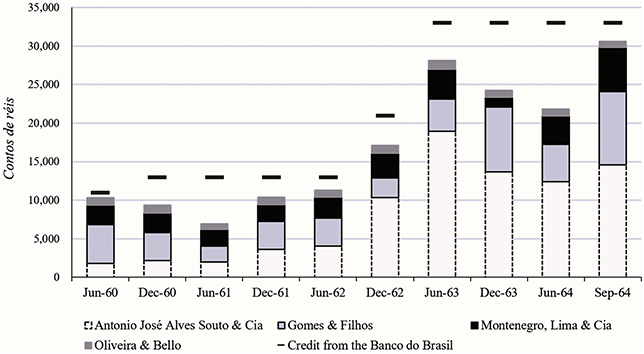
Figure 5.3 Long Description
The bills shown are: Antonio José Alves Souto and Cia, Oliveira and Bello, Gomes and Filhos, and Montenegro, Lima and Cia, from June 1860 to September 1864, measured in contos de réis. Bars rise over time from around 10,000 contos in 1860 to over 30,000 contos by 1864. A dashed horizontal line above each bar shows additional credit from the Banco do Brasil, increasing from roughly 12,000 contos in 1860 to over 33,000 contos by 1864.
To prevent a deepening of the crisis and to ensure that commercial banks could have access to credit, on September 13 the imperial government authorized the Banco do Brasil to increase its issue of banknotes up to three times its gold reserves. However, many panic-stricken depositors then went to the Banco do Brasil offices to withdraw deposits or to ask for their bank bills to be exchanged for gold. As a result, on September 14, the government declared the banknotes to be compulsory tender and ordered the suspension of payments in gold. In turn, three days later, the government declared a general suspension of payments for sixty days on the maturity of all types of bills, promissory notes and commercial paper in the Rio de Janeiro market.Footnote 39
The suspension of payments lifted the pressure on the market and, little by little, business returned to normal. However, the banking crisis had a devastating impact in the short term. According to an official report, twenty-one smaller firms linked to Souto & Cia. collapsed as well as fifty additional trading and financial houses in Rio, with total losses approaching 100,000 contos. At the same time, there were some bank runs in other regions, especially in Pernambuco and Bahia, although there is no evidence that they were as severe as in the capital. News of the panic in the capital spread with extraordinary speed everywhere, to the point that travelers passing through some nearby rural villages in the province of Rio de Janeiro reported they had heard domestic parrots that had learned to sing a popular expression: “O Souto quebrou.”Footnote 40
Some interpretations have argued that it was logical for the Banco do Brasil to support private firms in discounting bills when business was booming in the Rio market, countering legislation that limited an increase in the circulation of banknotes. The discounts facilitated the extension of loans to clients and thus expanded the credit available in the market without having to expand the issue of banknotes. However, this practice also encouraged a boom in speculative operations that could not be controlled and eventually led to a severe financial collapse (see Figure 5.4).
Deposits in the Rio de Janeiro banking system and commercial bankruptcies (contos de réis).
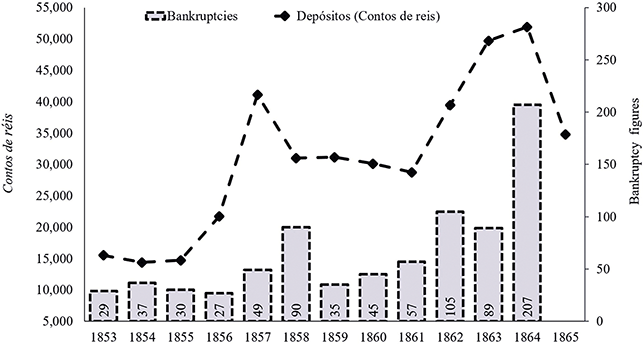
Figure 5.4 Long Description
Bars represent annual bankruptcy counts, labelled with exact numbers at the base of each bar. Bankruptcy figures fluctuate between roughly 27 and 57 until rising sharply to 105 in 1862, 89 in 1863, and peaking at 207 in 1864 before dropping in 1865. A dashed line with diamond markers represents total bank deposits in contos de réis on a left vertical axis ranging from 5,000 to 55,000. Deposits begin around 15,000 in 1853, dip slightly, then rise steeply to over 40,000 in 1857, decline to around 30,000 through 1860, rise again after 1861, and peak near 52,000 in 1864 before falling in 1865. The right vertical axis shows bankruptcy figures from 0 to 300.
Recently, historian Carlos Valencia has shed light on other important aspects concerning this early Brazilian banking panic. He has studied the characteristics of the companies or individuals who placed funds in the private houses in the years prior to the debacle in 1864. Based on research that identified 9,000 clients, Valencia has been able to show that although commercial banks were responsible for about 33 percent of the funds collected by private banking houses in Rio de Janeiro, more than 50 percent came from small and medium-sized savers.Footnote 41 This indicates that the local financial market was much broader and more complex than traditional historiography had suggested, for while the large commercial banks of the Brazilian capital were the most powerful players in this market and had close alliances with private banks, they also depended on the savings of the middle classes and popular sectors that already played an important role in the world of credit and banking in Rio de Janeiro at this early stage. In sum, recent studies suggest the importance of revisiting local financial history to understand important facets regarding the takeoff of capitalism in Brazil after the mid-nineteenth century.
The Global Crisis of 1873: Its Origins and Impacts on Latin America
Subsequent international disruptions also affected Latin American markets, in particular the financial, commercial, stock market and banking debacles that broke out in Europe in the spring of 1873 and later spread to many countries, sometimes described as the first truly global crisis.Footnote 42 The Austrian stock market crash in May was the first trigger of a sharp drop in values, provoking a contagion that was transmitted quickly to the Milan, Berlin and Frankfurt stock exchanges. Four months later, in September, there followed a collapse of the New York Stock Exchange, sparking a major banking panic in the United States. Its impact was so intense, widespread and prolonged that the crisis was eventually baptized as a great depression.Footnote 43 These debacles in the North Atlantic also had a dramatic and lasting effect on the trade and finances of several Latin American nations.
The crisis of 1873 had been preceded by a great financial boom in many markets of the world, accompanied by a marked geographical diversification of capital exports (See Figure 5.5). Portfolio issues of foreign bonds and stock on the London Stock Exchange reached a total of more than 400 million pounds sterling between 1865 and 1873: 35 percent went to continental Europe, almost 25 percent to North America, about 15 percent to Latin America and the rest to Africa, Asia and Australia.Footnote 44 By 1875 the financial volatility generated by the foreign borrowing mania led to the establishment of a Parliamentary Commission in Great Britain that attempted to explain numerous defaults.Footnote 45 For example, the indebtedness of the Ottoman Empire (especially Turkey and Egypt) led to huge bankruptcies between 1875 and 1876, while the government of Peru also succumbed to the weight of its enormous debts in 1876 when it declared suspension of payments.
Portfolio capital exports from Great Britain, 1865–1885 (millions of pounds sterling).

Figure 5.5 Long Description
Three vertical lines label major financial crises: the Crisis of 1866, the Crisis of 1873, and the Crisis of 1882. The total flow (solid line with triangles) rises sharply before each crisis and falls afterwards. North America (dotted line with squares) peaks around 1873 and 1882, while Latin America (solid line with circles) shows smaller, gradual increases with dips following each crisis.
Initially, the main transmission belt of the global crisis of 1873 – as had occurred in 1857 – was the freezing of credit for international trade transactions. News of the imminence of an international economic meltdown reached the Atlantic ports of Latin America on the arrival of mail-steamers in June and July of 1873. Within months, trade began to collapse. The main Latin American exports declined as a result of the prolonged fall in the prices of most of the primary products exported. Even more marked was the steep drop in imports, which can be explained, to a large extent, by the contraction of international credit, affecting commercial houses everywhere and limiting their activities for several years. The crisis led to the bankruptcy of numerous trading houses in Buenos Aires, Montevideo, Rio de Janeiro, Valparaiso and Callao, but also undermined several Latin American banks of recent creation.
The decline in imports caused a significant drop in customs revenues, the backbone of the income of the treasuries of all Latin American governments. Inevitably, these circumstances generated a sudden swelling of public deficits and forced the ministry of finance in each country to adopt rescue mechanisms, including recourse to extraordinary loans from domestic banks. At the same time, the crisis jeopardized the service of payments on foreign debts. The moratoriums were sequential: the governments of Honduras and Santo Domingo suspended payments in 1873, followed by Costa Rica and Paraguay in 1874, Bolivia and Guatemala in 1875, Uruguay and Peru in 1876. Beyond these defaults, the aim of the following pages is to outline the main trends in the evolution of trade and finance in three Latin American countries – Chile, Argentina and Peru – during the 1870s, with special emphasis on the specific facets that can help explain the outbreak of major banking panics in each country.
Impacts of the 1873 Crisis in Chile and the Banking Panic of 1878
In Chile, the crisis began with the abrupt fall of its foreign trade from the end of 1873, causing a large number of bankruptcies and a downturn of quotations in the local stock market, although it was not until 1878 that a real banking panic took place in Santiago and Valparaíso, followed by the abandonment of the convertibility of the national currency. The severity of impacts of the international commercial instability on the Chilean economy may be attributed to the fact that it was one of the most open economies in Latin America at the time. The collapse of the international prices of several of the most important products exported by Chile spurred the decline of the expansive cycle of copper, silver and wheat exports that had driven the Chilean economy from the middle of the nineteenth century.
Chilean government authorities adopted various policies to limit the negative impacts of external imbalances on public accounts. Between 1874 and 1877, the customs taxes suffered a 27 percent drop, forced an increase in government indebtedness and put pressure on the servicing of domestic and foreign bonds. To counteract these trends, a program of austerity in expenditures was implemented and novel fiscal reforms were ratified, including the introduction of inheritance and income taxes, something uncommon in the rest of Latin America. This did not prevent the emergence of public deficits, but the seriousness of the fiscal response raised confidence among investors, contributing to the sustenance of a fairly stable exchange rate and even facilitating the negotiation of some foreign loans at a time when international markets were depressed.Footnote 46
Despite the adjustments in public finances, the Chilean economy entered into a deep recession in the years 1876–1878 as a result of a series of additional calamities, including serious problems in agriculture, mining and construction, followed by the bankruptcy of numerous local companies. At the height of the recession, the banking panic of 1878 was triggered by problems affecting the Banco Nacional, the country’s largest financial institution. This forced the government to adopt inconvertibility, approved by Congress in a secret session, a measure that changed Chile’s banking and monetary regime for decades.Footnote 47
A few historical studies have analyzed the short- and long-term impact of the global crisis on the Chilean economy.Footnote 48 During the first three-quarters of the century Chile was the largest exporter of copper in the world and despite wild fluctuations in international copper prices from 1840 onwards, copper production increased steadily. In the last years of the expansionary phase between 1870 and 1873, there was an increase in local production that reached an unprecedented peak, reaching an annual value of over 40 million pesos in copper exports. But subsequently the Chilean copper boom entered into recession. In 1878, Chile still produced about 44 percent of the world’s output of this mineral, but by 1890 it was producing less than 10 percent of the world’s output. This was due not only to the fall in international prices caused by the crisis, but also to the difficulties experienced by the Chilean mining industry in competing with large companies that were in the process of increasing their copper production in the United States and Spain.Footnote 49
In any case, if one looks at the total values of Chilean mineral and metal exports during the 1870s, it can be seen that although the fall was substantial, from 165 million pesos for the five-year period 1870–1874 to 152 million in 1875–1879, it was not catastrophic, nor did it significantly affect the balance of payments or government finances. On the other hand, its impact was devastating for a number of heavily indebted medium-sized Chilean companies that could not survive the price fluctuations. This situation also affected many local copper smelters and refineries, a trend reflected in the sharp drop in the value of mining companies on the Valparaíso Stock Exchange.Footnote 50
The international crisis also affected silver, which was Chile’s second export product. The London financial journal The Bankers Magazine noted that the price of silver had already begun to decline in 1867, depreciating against gold by 12 percent until 1872 and by 20 percent by July 1876 as the prices of silver on the London precious metals market bottomed out.Footnote 51 This decline was attributed to various factors, especially the abandonment of silver as a circulating currency by several European nations such as Germany, Holland and the Scandinavian countries that adopted the gold standard, but also by the member countries of the Latin Monetary Union (France, Belgium, Switzerland, Italy and Greece), which had maintained a bimetallic standard but now reduced their silver purchases. In sum, the copper and silver mining crises in Chile caused the bankruptcy of numerous companies, the closure of smelters, a fall in the income of the railroads linked to ore transportation and emigration of unemployed workers from the mining north.Footnote 52
The mining crisis was reinforced by the onset of an agricultural depression in Chile that began in 1874. Droughts followed by violent floods caused a progressive fall in the production of almost all Chilean agricultural products (white wheat, yellow wheat, barley, corn, potatoes), between 1874 and 1878 and only recovering in 1879. As a result, Chilean agricultural wheat exports suffered a sharp drop of 50 percent in the same period.Footnote 53 This was due in part to the growing competition from cheaper North American wheat, which displaced Chilean wheat from markets such as Australia, California and Peru.Footnote 54 The recession of the 1870s in the agricultural sector caused a rise in food prices in the main Chilean cities, deeply affecting the working classes. It has been estimated that 300,000 people were unemployed in the Chilean cities and countryside in 1878.Footnote 55 The government was forced to import food shipments to alleviate the situation, but this in turn worsened the balance of payments.
During the years 1876–1878 a recession also began to manifest itself in other sectors of the economy, including urban construction as well as the early railroads, with income falling to the level of 1870.Footnote 56 Approximately twenty-five companies listed on the Valparaíso Stock Exchange went bankrupt, mostly mining companies, but soon the crisis spread into the financial sector. Chilean banks had benefitted from an uninterrupted boom for almost ten years. They enjoyed an increasing inflow of deposits from 1869 to early 1877, suggesting that their clients had confidence in their soundness and, at the same time, the banks steadily increased their lending. However, the Chilean banking system had already become prone to considerable risks. A revisionist interpretation has argued that there were strong reasons for concern regarding bank solvency because of the low ratio of cash reserves in relation to the sum issues of banknotes (see Figure 5.6). A close look indicates that Chilean banks were barely solvent and, therefore, subject to possible speculative attacks.Footnote 57
Banknotes in circulation and metallic reserves of banks in Chile (current pesos).

Figure 5.6 Long Description
The vertical axis on the left measures values from 0 to 12,000,000, while the horizontal axis lists dates. The banknotes in circulation line (long dashes) begins around 2 million in 1866, rises gradually through the late 1860s and early 1870s, surpasses 6 million around 1872 to73, and continues upward to nearly 12 million by early 1879. The metallic reserves line (shorter dashes) starts near 1.5 million, increases to just above 3 million around 1869 to 70, peaks close to 4 million in the early 1870s, and then declines steadily. After 1878, the reserves fall sharply below 1 million, then show a modest rise toward 2 million by 1882. A prominent vertical marker labelled Inconvertibility of 1878 appears near the centre-right of the chart, highlighting the year when convertibility was suspended.
Soon the first signs of underlying fragility appeared. In October 1877, Banco Thomas went bankrupt, and in January 1878, the Banco del Pobre, an entity that operated as a large savings bank, closed its doors, with severe impacts on popular sectors. At the same time, serious problems began to appear in the accounts of the Banco de la Unión, the Banco Agrícola and the Banco Consolidado de Chile, although eventually the Banco Nacional de Chile turned out to be the true Achilles heel of the banking system as a whole. Before 1877, there was scarcely any perception of serious danger since the Banco Nacional maintained a fairly stable level of its issue of banknotes, while other entities such as the Banco de Valparaíso and the banking houses of Matte-MacClure and Agustín Edwards increased the volume of their banknotes sharply. However, from the beginning of 1878 a loss of customer confidence in the entire banking system was observed, as deposits decreased in six months by a whopping 9 million pesos while gold reserves fell by 2.8 million pesos.Footnote 58
Despite customers’ growing distrust of the banking system, one study argues that ultimately the banking panic of 1878 was caused by the distrust of investors in the government as it appeared to be heading toward a devaluation of the Chilean peso.Footnote 59 The authorities of the Ministry of Finance were worried about the increase in the fiscal deficit, which they needed to cover with more debt. They had tried to get a new loan in London but failed, and so turned to the main banks in Santiago to arrange financial support through a large domestic loan. A contract was signed at the end of March 1878 between the government and eleven Chilean banks for a sum of 2.5 million pesos, divided among the participants, but with predominance of the Banco Nacional, scheduled to lend almost half of that sum. The negotiations were headed by the minister of finance, Augusto Matte, who was both a director of the Banco Matte and, in addition, a shareholder of the Banco Nacional. As compensation, the banks lending to the government were authorized to issue an additional amount of their own notes that could be put into circulation for private lending business. The Banco Nacional had the possibility of issuing 45 percent of the total new banknotes of this “privileged issue.”Footnote 60
In toto, the Chilean banks were authorized to increase their circulation by 12 million pesos, even though their gold and silver reserves were frankly scarce. The new business opportunity encouraged by the government was attractive but the risks were enormous, as demonstrated by the fact that in June there were large runs by customers of the Banco Nacional who rushed to withdraw their deposits, in many cases demanding payment in gold. That they considered this entity to be risky had already been demonstrated by the systematic fall in its share price from mid 1877 onwards: its shares lost 60 percent of their value in barely a year and a half, while the other banks suffered losses of no more than 30 percent.Footnote 61 Evidently, it was feared that the accounts of the Banco Nacional were contaminated because it was the entity that handled most of the public accounts, confronted by heavy deficits. The loans extended to the government reinforced this perception since the terms of the contract suggested that it was highly unlikely that Banco Nacional would be able to cover its debts in cash and that there was danger of a suspension of payments or even of a devaluation (see Figure 5.7).
Ninety-day London exchange rates and deposits at the Banco Nacional de Chile (millions of pesos fuertes and pennies per peso).

Figure 5.7 Long Description
A solid line represents deposits. It begins close to 16.5 million in early 1878 and trends steadily downward through the year, reaching around 11 million by January 1879. Deposits continue falling into mid-1879, reaching a low near 9 million, then begin rising again from late 1879 into 1880. By mid-1880, deposits climb sharply, ending around 17 million. A dashed line shows the exchange rate in London. It begins just above 16 (interpreted as 42 pennies per peso), then declines through 1878 and early 1879, reaching its lowest point around 38 to 39 pennies per peso in spring 1879. After this trough, the exchange rate rebounds, climbing to approximately 42 pennies per peso by late 1879 and early 1880, with fluctuations. It ends slightly above 41 in mid-1880.
In July 1878, the directors of the Banco Nacional pressed the government to seek an urgent solution to the problem in order to avoid the collapse of the institution. The director of the Banco Nacional, Melchor Concha y Toro, a conservative congressman, met with the president of the government, Aníbal Pinto, and informed him that there were no more than 400,000 gold pesos left in the company’s coffers and that, therefore, bankruptcy was imminent. At the same time, he asked for the Congress to approve a declaration of inconvertibility of bank bills. In fact, on July 23, in a secret session of the legislature, the forced tender of bank bills was approved.Footnote 62
Although the legislation allowed the banks to issue banknotes for another twenty years, this episode is considered to signal the definitive collapse of free banking in Chile. As of 1878, the government declared the inconvertibility of banknotes and at the same time began to intervene directly in the market, issuing treasury bills that competed with those of the banks. Ultimately, therefore, the end of the free banking era in Chile was caused by a sequence of interlocking factors that included the prolonged economic recession that had begun in 1873, combined with the problems created by the bimetallic legislation and by the banking system’s links with the government, in particular its intervention in the banking market in 1878. In turn, it should be noted that inconvertibility produced a temporary moratorium on international payments.Footnote 63
In short, the events of 1878 painted a bleak picture for both Chile’s private and public finances. If we focus our attention on the Chilean government’s responses, we can conclude that the situation created by the crisis led to policy changes that included the rescue of the banks, the abandonment of convertibility and the ratification of a series of nationalist and protectionist fiscal measures. But above all, it pushed elites to look for new ways out of the economic recession. Among possible options, the politicians chose the most aggressive strategy, which consisted in the launching of the Chilean war machine into action, with the aim of appropriating the abundant nitrate deposits in the Atacama Desert on the Pacific coast that belonged to Bolivia and Peru. The War of the Pacific (1879–1883) had negative consequences for Bolivia and was even worse for Peru, as both states lost control of the most valuable nitrate fields. In contrast, the military conflict greatly benefited Chile by consolidating its control of the nitrate mining industry, which was to produce a stream of fiscal revenues that became the backbone of government finances for the next half-century.
Argentina: Banking Crises in 1873–1876 and Recovery
In Argentina, foreign trade also weakened as a result of the international crisis, but it was the growing imbalance in public finances that proved to be the fundamental cause of several banking panics between 1874 and 1876, leading to the abandonment of currency convertibility. Almost all Argentine exports went to Europe and inevitably the international crisis of 1873 stunned local markets. Due to the drop in the prices of export goods, foreign trade became subject to a high degree of volatility that caused numerous mercantile bankruptcies. At the same time, there emerged fiscal and financial imbalances in the government’s accounts, mainly due to large military expenditures and a high level of foreign indebtedness. By 1875, this combined set of factors weakened the local financial market and provoked a sequence of banking panics, which affected several private banks, but especially the Banco Nacional and the Banco de la Provincia de Buenos Aires.
Despite its relatively short duration, the commercial and financial crisis unleashed an intense debate among Argentine politicians and intellectuals about its causes and possible remedies. Contemporary authors as diverse as Francisco Balbín, Octavio Garrigós, José Terry and Juan Bautista Alberdi devoted many pages to discussing the national economic problems, proposing several hypotheses about the origins of the Argentine crisis.Footnote 64 When the polemical Argentine intellectual Juan Bautista Alberdi sat down to write a tract on the debacle, he had the astuteness to point out that there was a multiplicity of reasons that could explain its genesis. He wrote:
If you ask a Buenos Aires rancher: what is the cause of the crisis? Without hesitation he will answer: the fall of the price of wool and leather in Europe. If the question is put to a merchant, his answer will be: the flight of gold. A press chronicler will reply that it is the suppression of exchange mechanisms and the inconvertibility of paper money. A politician of the opposition will see the crisis as a result of the actions of the presidency. A supporter of the government will say that it sprung from the revolution of September 1874. A systematic economist will see it as arising from the abuse of credit, that is to say, from exorbitant borrowing. Which of them will be right? Maybe all of them, in turn, because the truth is that the crisis arises from many causes. But each one will lack reason insofar as he believes that his explanation is the only true one.Footnote 65
In any case, while the international crisis of 1873 did cause a drop in the prices of the main Argentine livestock exports, especially wool, paradoxically the volume of products exported tended to rise. And if we turn our attention to the agricultural sector, it can also be observed that the local production of corn, wheat, potatoes, flax, sugar and wines increased steadily from 1875 to 1880.Footnote 66 These products were mainly destined for the domestic market, although a small surplus of cereals began to be exported as of 1876. In contrast to Chile, which suffered a series of agrarian crises in the years 1873–1880, this was not the case in Argentina. The incorporation of new land into production advanced rapidly, especially in the provinces of Buenos Aires, Santa Fe and Córdoba, and thus the international crisis did not seriously affect the considerable flows of European immigrants arriving to the shores of the River Plate who quickly entered local labor markets, both rural and urban.Footnote 67
This brief summary of economic trends suggests that in order to explain the nature of the Argentine crisis in the mid 1870s, the main focus should be on the fiscal, financial and banking spheres rather than on the productive sphere, since the latter did not suffer truly serious problems. It is true that the balance of trade was heavily in deficit from 1868 to 1876.Footnote 68 But, on the other hand, it is possible to argue that the balance of payments was in surplus during the years from 1868 to 1873 due to the strong inflow of foreign capital. The largest inflow of capital came from the placement of bonds of the great Public Works Loan in the London market taken by the administration of President Sarmiento in 1871 through the agency of the London merchant bank of Cristobal Murrieta & Co. This firm offered bonds on European markets for the large sum of slightly more than 6 million pounds sterling, and while it took some time for the gold to be transferred to Argentina, the first tranche for 10 million pesos was deposited by the national government in the coffers of the Banco de la Provincia de Buenos Aires in 1873.Footnote 69
Although the inflow of gold should have balanced public finances, this did not occur because government accounts experienced serious deficits between 1873 and 1876. Such circumstances generated a growing distrust of private actors in the ability of the authorities to maintain the convertibility of the Argentine peso and spurred a gradual outflow of metal reserves from the main banks, with negative consequences for local finances. Most affected were those banks closely linked to the public administration, in particular the powerful Banco de la Provincia de Buenos Aires and the brand-new Banco Nacional.
A review of the government’s expenditures during the years 1873 to 1875 explains the growing imbalance in public finances. To begin with, military expenditures absorbed large portions of the federal budget. Military expenses to repress the rebellion of the caudillo Ricardo López Jordán in Entre Ríos during 1873 reached the figure of 4.9 million pesos, a sum covered by the outgoing administration of President Sarmiento. Half a year later, when the new president, Nicolás Avellaneda, was elected, the new administration had to face another rebellion, which involved military confrontations in different sections of the country and cost more than 5.8 million pesos to crush definitively. Furthermore, between 1873 and 1875, the salaries of the regular army absorbed more than 10 million pesos, those of the navy 1 million pesos and the purchase of armored ships and armament another 3.5 million pesos.Footnote 70
Government expenditures further ballooned as a result of the more than 15 million pesos invested in the construction of state railroads (and state guarantees for private railroad companies), although they were covered largely by the Public Works Loan of 1871.Footnote 71 More worrisome was the increase in public debt service expenses, which absorbed 21 million pesos between 1873 and 1875. Given that ordinary revenues were falling, it was inevitable that there would be a sharp increase in the public deficit and hence the Ministry of Finance began to increase pressure on the banks to obtain financial support in order to avoid bankruptcy of the Treasury.
The government was confident that the creation of the Banco Nacional (in November 1872) could serve as a key fulcrum for both public and private finance. In principle, it had the function of keeping the accounts of the national government and, at the same time, operating as a commercial bank with a wide network of branches. From the beginning of the year 1874, the Banco Nacional opened offices in numerous provinces of the interior, although the bulk of its operations were carried out in the capital and in the province of Buenos Aires. Its nominal capital was set at the very considerable figure of 20 million pesos. The government undertook to provide 2 million pesos of the new company’s capital in the form of public securities to contribute to its reserves, while another 5 million pesos were provided by the major stockholders who were almost all large landowners and merchants from Buenos Aires, and constituted its first board of directors.Footnote 72
However, it was not until July 1874 that the Banco Nacional began its operations of discounting commercial paper as well as receiving both government and private deposits. With its banknote-issuing privileges, the bank was able to discount bills of exchange in all its branches, which soon included not only Buenos Aires, but also the provinces of Concordia, Corrientes, Córdoba, Salta, San Luis, Mendoza, Rioja, Catamarca, Jujuy and Santiago del Estero.Footnote 73
After September 1874, the Banco Nacional faced its first major challenge as a result of a military rebellion by the political party led by General Bartolomé Mitre, which threatened the administration of the newly elected president of Argentina, Nicolás Avellaneda. The minutes of the board of directors of the Banco Nacional record the bitter disputes that broke out among the directors, who were politically divided. On October 28, 1874, the head of the bank, Juan Anchorena, reported that he had met with President Avellaneda, who had complained that several leading bank officials were openly collaborating with the revolution and that he was not going to tolerate it. As a result, several directors (and major stockholders) who felt implicated were obliged to resign, among them Emilio Castro, Jaime Llavallol, Felix Bernal and Norberto de la Riestra. The minutes of the meeting summarized the words of Castro, who clarified that the resignations were necessary “since he understood that the President of the Republic had declared that if the Bank was not on his side, he would wage war against it, which the state could do by withdrawing his deposits. If this were to happen, it would be the ruin of the bank.”Footnote 74
As a result of the worsening financial situation, Anchorena, who remained in charge of the bank, requested support from the government, but president Avellaneda answered that he could not promise help as everything depended on the “god of battles.” On November 13, 1874, one of the directors of the Banco Nacional most sympathetic to the government, Vélez Sarsfield, wrote a letter to the minister of finance, Santiago Cortines, to indicate that due to the withdrawal of customer deposits in the bank, there would be no alternative but to “suspend new drafts on the current account of the government because the cash reserves of this establishment are running out.”Footnote 75 Nevertheless, the bank continued to make advances to the public treasury with its best commercial bills, demonstrating its willingness to collaborate, although this affected its accounts and reserves, which continued to decline.
For a long time, the national government had been accustomed to requesting large advances from the Banco de la Provincia de Buenos Aires. But in 1874 the government was forced to withdraw the major part of the funds it had deposited in the provincial bank in order to pay for the military expenses that were caused by the rebellion of the mitrista party that threatened the survival of the Avellaneda government. Historian Mariano Szafowal has argued that, “In order to meet its obligations, the National Government began to withdraw its deposits from the Banco de la Provincia, which was forced to restrict the volume of its credits.”Footnote 76 The other private banks had to follow the same course of action: real estate operations were suspended, interest rates rose, there was a shortage of cash and there was a drain of cash from the exchange bureau and from the treasury of the Banco de la Provincia.
By July 1874, only 300,000 pesos of the Public Works Loan remained in the coffers of the Banco de la Provincia de Buenos Aires. Meanwhile, the government also withdrew an additional sum of 2.5 million pesos that had been placed in the portfolio accounts of the provincial bank for safekeeping.Footnote 77 An additional blow to the Banco de la Provincia came as a result of the transfer of fiscal and judicial deposits to its new rival, the Banco Nacional. This sparked a growing tension between the two entities that reflected the vicissitudes of political strife.
The Argentine banking system had grown very rapidly in the years of prosperity that preceded the crisis, but was soon to suffer a succession of additional problems between 1874 and 1876. The weakening of the banking system took place in stages. The first symptoms appeared in 1874 when both the Banco Argentino and the Banco Belga-Alemán suspended payments. According to Chiaramonte, “the credit crunch reached its peak in early 1875” when panic broke out in the country’s money and commercial markets.Footnote 78 This coincided with a new drop in the international prices of Argentine exports. Bank managers had no alternative but to start raising interest rates and limiting credits as reserves of practically all financial entities declined sharply. The effect of these measures led to the collapse of real estate values, while commerce saw business shrink rapidly. Those who suffered most were clearly the speculators, the clients of the banks who had mortgaged their properties, the merchants who depended on bank credit and the bankers themselves.
In the city of Rosario, the Banco Argentino, an important firm with ties to the main entrepreneurs and landowners of Santa Fe and Entre Ríos, went bankrupt. At the same time, a public entity, the Banco de Provincia de Santa Fe, faced pressing problems, in part due to a battle with the branch of the Bank of London and the River Plate, which had offices in Rosario and was expanding its operations in the region.Footnote 79 By 1876, the provincial bank found itself on the verge of bankruptcy and was only saved by a series of unorthodox financial operations carried out with the support of the local government.
In the case of the Banco Nacional, which had almost miraculously survived the crisis at the end of 1874, new threats appeared in June 1875. The president of the institution informed the board of directors that despite having obtained profits of almost half a million pesos in the previous year, the bank had also suffered losses of an equivalent amount due to unpaid bills as a result of mercantile bankruptcies. Customers continued to demand cash in exchange for their Banco Nacional banknotes, and provoked an outflow of gold payments that varied daily between from 100,000 pesos to over 400,000 pesos. The fall in metallic reserves was reflected in the financial contagion already enveloping the entire banking sector, and soon was confirmed by the rise of interest rates in the market, which surged from 12 to 24 percent in June. In order to retain clients and recover reserves, the president of the Banco Nacional stated that only an interest rate hike could save them, and added: “By this means, if we fall, we will go down fighting: otherwise doubts will remain as to whether we have used sufficient means.”Footnote 80 At the end of 1875, the Banco Nacional was able to survive due to the favorable performance of the branches in the provinces that did not suffer as much from the financial crisis as the bank offices in the capital. But in the spring of 1876, circumstances became more pressing. The Ministry of Finance indicated that it could no longer cover heavy maturities outstanding with the bank, which forced the Banco Nacional to announce that it was obliged to suspend the discount of government bills.
At the same time, the Banco de la Provincia had already exhausted its cash reserves, leading the government of the province to decree on May 16 that it was “temporarily suspending convertibility and declaring as legal tender the issue of metallic bills and paper currency for the payment of cash obligations.”Footnote 81 This was a radical change in monetary policy, since from 1867 both the bank and the exchange bureau had systematically guaranteed the convertibility of paper currency for gold currency at a rate of twenty-five paper pesos for one strong (gold) peso. But this monetary regime was coming to an end, leading to the free floating of banknotes and a dramatic increase in volatility (see Figure 5.8).
Banco de la Provincia de Buenos Aires: metallic reserves and exchange rates of paper money for pesos fuertes, 1861–1882.

Figure 5.8 Long Description
The horizontal axis lists each year in sequence. Left Axis (Vertical, left side): Ranges from 0 to 160 million pesos (paper money). Represented by vertical grey bars, each corresponding to the metallic reserves for a given year. Right Axis (Vertical, right side): Measures the exchange rate of paper money for pesos fuertes. Ranges from 20 to 34. Represented by a black dotted line that runs across all years.
Worrying news about the fall in bank reserves spread immediately, and on May 18, 1876 there was a run on the Banco Nacional, which was still receiving its banknotes at the old rate and paying customers in gold or silver. The president of the bank, Juan Anchorena, authorized cash and sight payments in a single day to the tune of 600,000 pesos fuertes (in gold). The official in charge of exchange noted: “Today, since nine o’clock in the morning, people have crowded into the Bank. I believe that the metal stock is enough to continue paying today and perhaps tomorrow.” However, the situation was already pressing, and the government was informed by the late afternoon that the reserve “has been reduced to the sum of 238,000 pesos fuertes.”Footnote 82
Somewhat surprisingly, the minister of finance did not respond to the demands of the Banco Nacional to avoid its collapse. At this point, Anchorena told the board of directors: “The government having abandoned us, I have had a conference with Mr. Sarmiento, an influential member of the National Chamber of Senators.” It was proposed to him to consider a partial suspension of the convertibility of banknotes, “limiting it to three hours, from 10 am to 1 pm, instead of working until evening as was being done.”Footnote 83 However, the acceleration of dwindling reserves finally led the executive of the national government to intervene, and on May 29 the convertibility of the Banco Nacional’s circulating banknotes was effectively suspended.
At the same time, the national government faced a set of increasingly serious problems due to difficulties in covering its own deficits and even on payment of the semiannual service of the foreign debt through its bankers in London, Baring Brothers and Murrieta & Co. The economic situation was aggravated by the austerity imposed by the government.Footnote 84 In order to balance the public accounts, Avellaneda resolved to reduce all possible public expenditures, but he simultaneously requested a major loan of 10 million pesos from the Banco de la Provincia, which – despite the decline in metallic reserves – continued to have a large volume of deposits in its offices in the capital and in all the large towns of the prosperous province. As historian Mariano Szafowal argues, this might be explained by the fact that in all probability the withdrawals of deposits returned to the bank in the form of payments of credits received.Footnote 85 In a word, the volume of funds held by the bank was sufficiently high to keep reserve requirements low and, therefore, allowed credit operations to continue.
The debates in the Congress on the negotiation of the domestic loan was agitated, but finally the law was passed, allowing the government to contract the large loan of 10 million pesos with the Banco de la Provincia and, at the same time, to remit to London bankers the payment of the semiannual service of the foreign debt, with the aim of reverting the decline of prices of the external gold bonds, which had been in freefall since June. The situation was doubly difficult because the authorities of the Ministry of Finance did not have the option of placing funds in the domestic capital markets. Therefore, the only alternative was to obtain advances and term loans from the Banco Nacional or the Banco de la Provincia de Buenos Aires. It partially achieved its objectives, but at the cost of provoking an increasing depletion of the metal reserves of both banks. Nonetheless, by mid 1876 the recovery of foreign trade brought increased custom revenues and allowed the Argentine government to cover external debt payments. When the Banco de la Provincia de Buenos Aires authorized the transfer of fiscal funds to the banking house of Murrieta in London in August 1876, the mood in the City calmed down and the price of Argentine bonds rose again quickly, after having suffered dramatic declines that had initially seemed to augur a default like the one that had been announced by the Peruvian government six months before.
Peru’s Financial Meltdown in the Years 1873–1879
During the 1870s Peru experienced the most serious financial crises of all Latin America. Traditionally, the attention of historians focused on the default of the huge external debt of the Peruvian government in 1876, the most voluminous in all Latin America.Footnote 86 But it is equally relevant to analyze a sequence of local commercial bank panics in Lima during the mid 1870s that were intensified in extreme fashion by problems related to state finances.
The origins of these complex and intertwined crises merit a brief comment on antecedents. Peruvian banking had taken off during the guano era, especially during the 1860s, when there was a strong economic boom in coastal areas and in the city of Lima, the nation’s capital. The dynamism was due to the expansion of exports, which included the traditional products of the Andean highlands (i.e., silver and alpaca wool), but was driven above all by the growing shipments to Europe of a natural fertilizer, known as guano, mined on several islands on the Peruvian coast. Other export commodities included sugar and cotton cultivated in the valleys of the northern coast of Peru. The notable increase in foreign trade encouraged a strong expansion of mercantile and credit markets in Lima and Callao. As a result, more than a dozen commercial banks and a few mortgage banks were established from 1862 onwards in Lima and several provincial cities. Most of the early banks were set up by Peruvian merchant capitalists who were able to raise capital after the government began to use the windfall of guano revenues to reimburse domestic creditors on a huge backlog of domestic debts.Footnote 87
The exploitation of huge quantities of Peruvian guano was the main engine driving a relatively short but powerful export boom that lasted from the late 1840s to the 1870s.Footnote 88 The main guano deposits were located in a small archipelago, the Chincha Islands, off the Peruvian coast. The government recruited several thousand ex-convicts, Chinese coolies and other hapless laborers to mine what were literally mountains of dried bird dung and transport it to ships anchored alongside a series of rickety docks. From there the guano was transported in hundreds of ships – mostly English – to various destinations. Peruvian guano, and later nitrates, quickly became the fertilizers in greatest demand on a worldwide scale during the middle decades of the nineteenth century, with important markets in England, France, Belgium, Spain, Holland, Germany and the United States, among other countries. Peruvian guano exports rose from about 10,000 tons in 1845 to reach half a million tons in 1860, and then remained at an annual average of just over 300,000 tons from 1871 to 1878.Footnote 89
This enormous trade in fertilizers was due to the demand generated by rural transformations in European countries and in the United States that constituted an agricultural revolution. Peruvian guano was an essential ingredient to help increase the production of cereals, but also of other products such as beets, potatoes and various legumes, all essential to feed urban populations in the midst of the industrial revolution. As a result, guano prices rose during this period, as shown by the careful calculations of historian Luis Felipe Zegarra, who has pointed out that the international price of this natural fertilizer leaped from about 18 dollars per ton in 1849 to 38 dollars in 1857, and remained at an average of more than 30 dollars during the 1860s and 1870s.Footnote 90
Between 1849 and 1861, much of the international guano trade was dominated by an English firm, the British house of Antony Gibbs and Sons.Footnote 91 The accounts of this firm, as well as those of the Peruvian Ministry of Finance, show that the English company received about 30 percent of the final value of guano exports, charging for transport, shipping insurance and distribution expenses in the European markets. But the Peruvian government was the main beneficiary as it received approximately 70 percent of the value of guano sales of this fiscal monopoly. The very large annual income from guano exports made the Peruvian government the richest state in Latin America for more than twenty years.Footnote 92
Beginning in 1862, control over the guano trade passed into the hands of a group of powerful Peruvian merchant groups that became the “new dominant fraction” of the native bourgeoisie.Footnote 93 The profits they obtained from debt conversions and from the guano boom in the 1860s prompted the creation of numerous domestic banks in Peru. In the first place, the Banco de la Providencia was created in 1862 in Lima with capital of 1 million pesos. Its shares were sold among a broad group of large merchants and investors in the city. It was created on an initiative of the Belgian trader Francisco Watteau, resident in the Peruvian capital, and its first board of directors included Francisco Quiroz (a guano merchant) and Manuel Amunátegui (who had one of the largest fortunes in Lima). Since there were no laws regulating issue of paper money, this financial enterprise initially adopted a conservative policy and issued banknotes with prudence. Soon another important entity appeared, the Banco del Perú, established in 1863 with an initial capital of 800,000 pesos, although later raised to 2 million pesos in 1865. The main shareholders of this bank were mostly engaged in the guano trade, while several of the bank directors were also members of the board of the company hired by the government to place guano in the markets of Great Britain. At this time, the old Peruvian peso was replaced in these years by the new currency, the Peruvian sol.
In parallel, another series of new banking companies were established in Lima, among them the Bank of London, Mexico and South America (1863) with initial capital of 1 million pesos, the Bank of Lima (1868), with capital of 3,200,000 soles, and the National Bank of Peru (1872), with huge (but largely unrealized) nominal capital of 12 million soles. In addition, several provincial banks sprung up in Arequipa, Callao, Ica, Junín, La Libertad, Piura and Tacna.Footnote 94 In turn, the government authorized concessions for two mortgage banks, the Banco de Crédito Hipotecario, created in 1866, and the Banco de Crédito Territorial in 1870. The main shareholders of the latter two entities were reputable lenders, merchants and landowners, who benefitted from the favorable impact of guano on real estate prices (see Table 5.1).Footnote 95

Table 5.1 Long description
For each institution, the table displays its head office location, year of foundation, and year of liquidation (or status if not dissolved). The table is divided into four main sections: Issuing and Discount Banks, which is the largest section, listing thirteen banks founded between 1862 and 1873. Deposit and Discount Banks, this section lists two banks founded in 1877. Mortgage Banks: Two mortgage banks appear in this section. Both were established in the 1860s to 1870s, and both closed in 1885. Other Institutions, this final section includes one agricultural bank and two Cajas de Ahorros.
* n.d. is for no data.
A remarkable facet of Peruvian banking development, particularly of the commercial banks, was scarce regulation. For some authors, this fact bespeaks a period of free banking in Peru, even more accentuated than in other Latin American countries. It was not until 1864 that the official audits and registration of these entities was approved, establishing that banknote issues should be limited to no more than one third of the effective capital of any bank, under penalty of a fine.Footnote 96 Historian Monsalve has pointed out: “The nascent Peruvian financial system lacked an interbank clearing house, as well as a self-regulatory body, so the siphoning out of funds was very easy, especially when on more than one occasion the same person was the owner of the bank, a partner in a trading house and a high public official.”Footnote 97 Not surprisingly, the lack of adequate mechanisms for the control of the circulation and exchange of counterfeit banknotes caused considerable uncertainty, as demonstrated by a brief run suffered by the Banco de La Providencia in 1866, requiring the intervention of the government and the appointment of a new board of directors to reorganize the entity.
The creation of the early Peruvian banks positively influenced the lowering of interest rates in the credit markets and helped to boost numerous businesses that developed in Lima and various regions (especially cotton, sugar and nitrate producers) during the 1860s and early 1870s. By 1871, there were thirty-three shipping companies in Lima, including six guano and nitrate companies, ninety-four importers, six registered commercial banks, two mortgage banks, three insurance companies, four gas companies and four railroads, in addition to 2,000 trading houses, mostly in retail.Footnote 98 This urban dynamism was favored by low interest rates, which implied a great change with respect to the past. Before 1850 in Peru, it had been common for interest rates to fluctuate between 24 and 36 percent, but by 1857, interest rates fell to levels between 12 and 18 percent. In contrast, after the creation of the first joint-stock banks at the beginning of the 1860s, interest rates dropped to levels averaging 8 to 12 percent, that is, relatively similar to those in Argentina, Brazil and Chile.Footnote 99
As in other Latin American countries, during the 1860s there were intense debates in Peru about the convenience of adopting a system of monopoly of issue of banknotes or, alternatively, a model of free banks. In 1867, Manuel Pardo, businessman, director of the Bank of Peru, minister of finance (1865–1867) and future president of Peru (1872–1876), wrote a text illustrating his ideas in favor of free banking: “The banking industry, not only on principle but for the convenience of our nascent countries, must be free … because only freedom can promote competition … and with the necessary rules, the banks will provide money at low rates and each bank will restrict its paper issue, necessary to inspire the public with more confidence than its competitors.”Footnote 100
During the 1860s and 1870s, banking evolution in Peru depended not only on the conditions of the private credit markets but also on the evolution of public finances.Footnote 101 The guano cycles largely determined the trends of government revenues and, inevitably, affected the accounts of several of the largest Peruvian banks, especially those linked to the fiscal monopoly that was managed by a series of shifting alliances that alternated between domestic and foreign trading houses. However, around 1869, a radical change took place when President José Balta appointed the young Nicolás Piérola as minister of finance with the purpose of improving the state of public finances. In order to terminate the existing contracts with the national consignees who were linked to the Banco de Perú, Piérola reached an agreement in 1869 with the house of Auguste Dreyfus, a French merchant based in Lima, for control of the guano business. Dreyfus enjoyed an extensive network of mercantile and financial contacts in Europe, and with extraordinary recklessness both the minister and the merchant/banker embarked on an operation of enormous proportions, which consisted in taking control of all guano contracts and placing them in the hands of an international syndicate of allied trading and financial houses in Europe.Footnote 102
President Balta then threw the house out of the window and asked Dreyfus to take charge of launching an external loan in Europe for the enormous amount of 11.92 million pounds sterling in order to finance the construction of a set of state railroads to connect the port of Callao and Lima with the cities of La Oroya in central Peru, Arequipa in the south of the country and Puno in the Andean highlands. These ambitious projects were subcontracted with the North American entrepreneur Henry Meiggs in December 1869. The Peruvian bonds were subscribed by various groups of European investors and bankers, but were guaranteed by the guano revenues of the Peruvian state.
Encouraged by the great success in placing the funds abroad, the Peruvian government authorized a new, and even more gigantic, loan in 1872 for 22 million pounds sterling, contracted again with the Dreyfus house and the powerful French bank Société Générale, in order to build more railroads, consolidate the foreign debt and settle a wide range of outstanding government debts.Footnote 103 The contractor Meiggs proved very adept in providing Peruvian legislators with tidy sums in order to assure the railroad concessions he was negotiating. The government furnished Meiggs with a huge amount of promissory notes that served as currency for most of his business, which required hiring thousands of workers and paying for the construction of the extremely costly railroad lines that climbed from sea level to a height of more than 4,000 meters up in the Andes.Footnote 104
In the midst of this episode of extraordinary financial and commercial speculation, the Dreyfus house decided to create a banking entity in Lima that would serve as a fundamental support for its business. The project consisted in the establishment of the Banco Nacional del Perú in 1872, with huge nominal capital of 12 million soles. Although the new bank never managed to raise all the capital announced, it soon became a favorite partner of the government, which deposited a large part of its revenues in current accounts of this entity. The close connection to the government soon marked the end of the era of free banks in Peru.Footnote 105 However, the new bank came under increasing pressure from its private clientele to convert its bills to gold and by 1875 a growing panic in Lima’s financial market eventually pushed the government to take more radical measures.Footnote 106 In the midst of the banking crisis, it also became clear that the government was on the verge of bankruptcy as a result of difficulties in servicing the foreign debt. The state revenues specifically depended on the fiscal monopoly of guano, which had been in the hands of the Dreyfus house since 1869, and most of the funds raised by sales of the fertiliser were used to pay the interest on the Peruvian external debts. But the guano export boom was fast approaching its end. The difficulties faced by the government were confirmed on September 10, 1875, when the Ministry of Finance asked the banks for a large credit of 18 million soles to alleviate the deficit and cover part of the debts.Footnote 107
The greatest problem arose in 1875, when Dreyfus and his French banking allies announced that they could no longer guarantee the service of the Peruvian debt, thereby provoking complex and prolonged negotiations that ended badly. In January 1876, the suspension of payments on the foreign debt was declared. This gave rise to an endless sequence of lawsuits between the bondholders’ committees, the Dreyfus firm, the Parisian Société Générale bank and the Peruvian government, which lasted literally several decades.Footnote 108
The default of the Peruvian government on its foreign debts was not really unexpected. Already at the beginning of 1875, President Manuel Pardo had foreseen the debacle of public finances, pointing out in his message to Congress that he had inherited a poisonous legacy from his predecessor in office, General Balta, who in just two years had resolved to transform the guano-backed bonds into railroads. The enormous loans of 1870 and 1872 together exceeded 30 million pounds sterling and transformed Peru into the Latin American country with the largest foreign debt in the mid 1870s.Footnote 109 But besides being the highest railroads in the world, they were also the most difficult to build. This titanic undertaking soon bankrupted Peru. As a country with a still fairly traditional economy, the investment of huge amounts of capital in a barely productive sector represented an excessive drain of funds and effort.
However, President Pardo considered that there was a last resort that could save the guano crisis and the hardship of public finances. He believed, like other Peruvian politicians and businessmen, that the crisis could be partially counteracted by a new fiscal monopoly based on the control of nitrate mining, which, like guano, had also awakened a strong demand among European farmers. The export of nitrates reached 100,000 tons in 1866, then increased to 200,000 tons in 1872 and reached an average of 300,000 tons in the years 1873–1876.Footnote 110
The Peruvian Congress authorized the establishment of the state nitrate monopoly in July 1875, to be accompanied by the negotiation of a new loan of 7 million pounds sterling to be placed in Europe. Half of these funds were to be used by the state to buy properties from the private nitrate miners, while the rest of the monies would be destined to public works.Footnote 111 The complex operation was to be managed by the four main commercial banks of Lima – Banco de Peru, Banco de la Providencia, Banco de Lima and Banco Nacional del Perú – which were instructed to take responsibility for all aspects of running the business, including supervision of the nitrate mines, shipments abroad, collection of duties and service of the Peruvian debt. Nonetheless, it soon became evident that the loan could not be placed successfully on the European financial markets following the default of 1876, and given the steep fall of the prices of Peruvian external bonds (see Figure 5.9).

Figure 5.9 Long Description
Both Peru and Argentina experienced sharp declines in the mid-1970s. Argentina's price plummets, but then recovers, and its bond prices quickly rise again. The decline in Peruvian bond prices is consistent throughout the period between 1876 and 1880.
As a result, both the government and the banks had no other recourse but to look for a European contractor who could take charge of establishing the links with all the private nitrate companies – the largest being British and Chilean – to manage the commercialization, freight and insurance of the nitrate shipments. It was not surprising that the company chosen was the house of Gibbs, which already had large interests in the nitrate business in the district of Tarapacá.Footnote 112 In sum, the Lima banks did not prove to have a sufficiently broad mercantile and financial network to efficiently manage the complex nitrate business. After difficult negotiations, Gibbs managed to regain control of the nitrate trade in 1879 through a series of intermediaries. It was not very surprising, therefore, that when the war with Chile broke out a few months later, this firm and other British companies with interests in the nitrate deserts allied themselves with the Chilean military against the Peruvian government.
In the meantime, the situation of the Peruvian financial markets and in particular of the banks continued to worsen. In 1876, the Banco Anglo-Peruano closed its doors. In January 1878, the Banco de Lima went into liquidation. Shortly thereafter, the once dynamic Banco de Crédito Hipotecario had to reduce its capital by half, and in 1881 it suspended its operations. The same happened with the Banco Territorial Hipotecario and the Banco Mercantil del Perú and the Banco Nacional. As Camprubi points out: “In fact, by mid 1880 most of the issuing banks were already in liquidation.”Footnote 113 In sum, after barely two decades, what had become one of the most complex banking systems in Latin America had completely collapsed and would not recover for many years. The Peruvian economy, already in a critical state, was decisively weakened by the war with Chile, which led to the loss of its nitrate resources in 1880, when the Chilean armed forces seized huge strips of mineral-rich territory in the deserts of southern Peru.
Conclusions: Latin America’s First Banking Panics
The early crises of emerging capitalism in different Latin America countries suggest that financial markets in the various countries were quite fragile. The various banking panics often were caused by a variety of causes, which usually began with a decline in trade, followed by credit crunches, domestic stock market crashes and a rise in public deficits. The financial upheaval brought abrupt changes in monetary policies, with different impacts on each market and local economy. It is precisely for this reason that their analysis presents an important challenge for comparative historical analysis and may reveal singularities, but also some common or parallel elements.
A number of the crises mentioned had a close link with international mercantile and financial trends. The bank panics of 1857 in Havana and Rio de Janeiro speak of the close intertwining of the contemporary cycles in international trade with local trends of boom and bust, but future research should delve deeper in order to provide more detailed reconstruction of trade flows than those presently available. This is especially important in the case of nineteenth-century Latin America, since recent research on a world scale has reconstructed the annual price trends of a great many commodities and the volume of much international trade.Footnote 114 Similarly, more studies could clarify the specific links between the trading houses and the first banks that were beginning to emerge in various cities and ports in the Latin American region.
From a somewhat different perspective, the Brazilian banking panic of 1864 suggests the importance of further exploring the anatomy and evolution of early domestic financial markets in different periods. The study of the origins and trajectories of private banking houses as well as commercial banks within Latin America has already begun and promises interesting possibilities for future research on their role in the economic history of a good number of countries in this vast region. Similarly, the reconstruction of the birth of early savings banks offers opportunities for analyzing the participation of investors and small savers in local economies in different countries.
In the case of the debacles in Chile, Argentina and Peru, it is our contention that these chapters of Latin American financial history can be described as combined crises that included fiscal downturns, bank runs, stock market panics and, in some cases, defaults on external debts. In Chile, there is no doubt that there were several underlying causes that led to the banking crisis of 1878, but the performance of the Banco Nacional de Chile eventually turned out to be the Achilles heel of the banking system as a whole. Meanwhile, other entities such as Banco de Valparaíso and the private banking houses of Matte-MacClure, and Agustín Edwards were able to increase the volume of their credit activities for several years, although, eventually, the loss of customer confidence in the entire banking system became manifest. In sum, Chile offers an example of combined crises: a fall in international trade and a stock market crash between 1873 and 1876, followed by a serious banking and monetary crisis in 1878 that led to inconvertibility.
In the case of Argentina the banking crisis had different causes, although it also ended with the abandonment of the convertibility into gold of banknotes. Our main argument is that the international commercial crisis that broke out in 1873 was not the cause of the banking crisis of 1874–1876, but rather that attention should be focused on the complex intertwining of politics and finance, with emphasis on the impact of several civil wars and rebellions on the public financial accounts. The increase in domestic public indebtedness was decisive in undermining what was already a complex banking system, with especially severe impacts on the Banco Nacional and the Banco de la Provincia de Buenos Aires, both closely linked to the government, and both already large entities.
Finally, Peru’s financial experience was undoubtedly the most complex in the period under review in terms of the characteristics of its banking evolution and the exceptional dimensions of the collapse of its public debt. The Peruvian economy had excelled in the 1860s and 1870s as a result of a buoyant export boom that encouraged the flourishing of banks and many joint-stock companies in an early phase of capitalism in Lima and some other cities and regions of the country. According to historian Camprubi, the Peruvian banking system experienced the following evolution during the period 1860–1879: a first stage of consolidation and expansion of the financial system based on free banking without state regulation (1862–1873); a second stage of restrictions and state intervention (1873–1877); and a third phase characterized by the imposition of fiscal bills and the banking crisis in 1878, prior to the war that broke out in 1879 against Chile.Footnote 115 In conclusion, the 1870s witnessed numerous financial and banking crises in several countries, albeit each with distinctive characteristics. On the other hand, from the early 1880s there took place a dramatic change in economic trends throughout most of Latin America that drove a forceful transformation of banking in tandem with major political reforms.
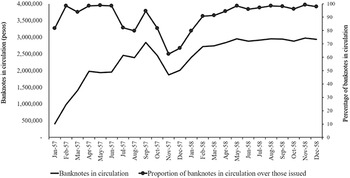
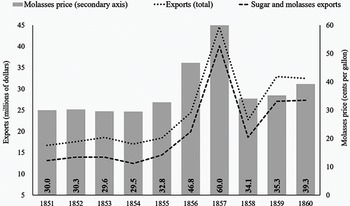
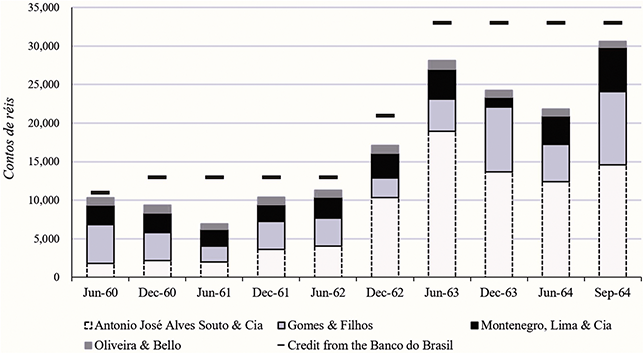
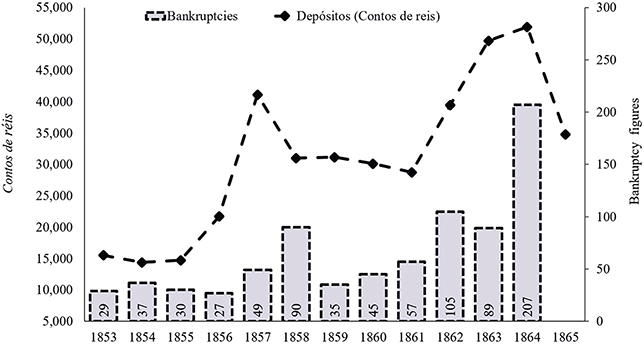
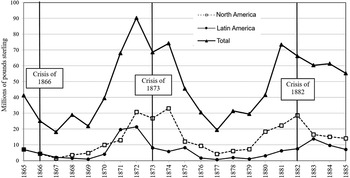
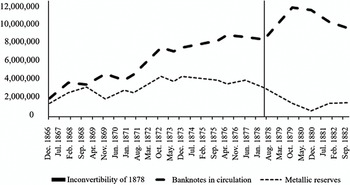
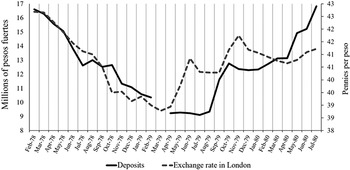
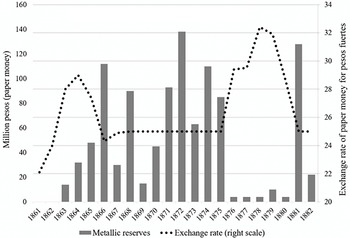
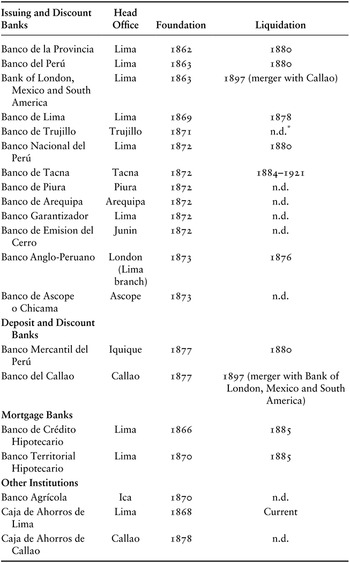
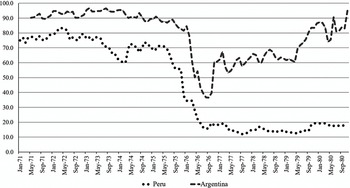

 Open access