


INTRODUCTION
Contrary to conventional assumptions about the international political order, most states do not exercise full sovereignty of government in all spaces within their territory (Börzel and Risse Reference Börzel and Risse2021; Lemke Reference Lemke2025). This is a particularly common feature of states experiencing civil war, a phenomenon “best understood as a process of competitive state building rather than simply an instance of collective action” and characterized by not just violence, but “competition in government” (Kalyvas Reference Kalyvas2006, 218–9).
Consider how one local leader from the district of Vaishali in Bihar, India, characterized how governance in their village operated during the conflict between the state and Naxalites: “government schemes used to run in our village such as digging wells and ponds; food ration distribution; government housing scheme used to run
 $ \dots $
” and yet, “Naxalites used to come and stay with important people in our village and run many things in the village such as security, jan adalats and their own village council.”Footnote
1 The Maoist Naxalites are far from unusual in this regard. 79% of armed groups in 2023 provided services or implemented governing institutions (Bamber-Zryd Reference Bamber-Zryd2023), as have approximately 64% of rebel groups since WWII (Albert Reference Albert2022). However, rebel governance often takes place where the state still has a presence. Unlike what many state-building models assume (e.g., Olson Reference Olson1993), territorial control is not a necessary precondition for governance, even by non-state actors (Grasse, Sexton, and Wright Reference Grasse, Sexton and Wright2024; Loyle et al. Reference Loyle, Cunningham, Huang and Jung2023; Uribe and van Baalen Reference Uribe and van Baalen2025; Waterman Reference Waterman2023). Rebels frequently govern in areas they seek to control (De Bruin et al. Reference De Bruin, Levy, Schubiger and Weintraub2025), not just territories they already hold, and as civil conflicts progress, the composition of local political orders can change dramatically.
The result is that governance during civil wars becomes a complex, dynamic, segmented, and multilayered mosaic across subnational space, which may or may not align with the territories that armed actors nominally control (Kalyvas Reference Kalyvas2006; Rubin Reference Rubin2020; Uribe and van Baalen Reference Uribe and van Baalen2025). Stable governance is believed to create predictable expectations about the consequences of the behaviors of the governed in turn shaping their behaviors. How, then, do civilians behave toward each other when local governance is contested between the state and an armed group? If both the state and an organized rebellion actively shape the local “modes of social coordination” or provide competing “collective goods and services” (Börzel and Risse Reference Börzel and Risse2021, 45), will civilians become more self-oriented, opportunistic, and distrustful of one another? Or will they rely more on interpersonal trust and intra-community trustworthiness in place of local institutions and become less opportunistic?
We examine the relationship between contested governance and interpersonal behavioral tendencies with a series of lab-in-the-field experimental games and three rounds of original surveys and open-ended interviews of participants, other local residents, and village leaders. Our study setting is in the state of Bihar in India, where the Government of India (GoI) has fought against the Naxalites for decades. We implement our experimental games and surveys across 26 villages in two neighboring districts—Samastipur and Vaishali—which match on geographic, demographic, political, and economic characteristics but differ in their experience with rebel governance. Whereas the Naxalites have never had a strong governance presence in Samastipur, they engaged in a variety of competing governance activities in Vaishali until 2020 despite the state’s continued presence in local governing apparatuses. We leverage this difference in our study.
Results from our trust and dictator give-and-take games reveal a consistent pattern: living under contested governance (as opposed to exclusive governance by the state) is associated with increases in prosocial tendencies like trust and trustworthiness and a decrease in opportunistic behavior. We substantiate this evidence with survey data that reveal ordinary civilians’ awareness of contested governance in their communities and reveal that most Naxalite institutions are associated with the aforementioned patterns in interpersonal behaviors at the village level. We also find little evidence that conflict-related violence affects prosocial or anti-social behavior.
We propose two (preregistered) mechanisms to explain our hypothesized patterns. Our “state substitution” mechanism posits that uncertainty about the stability of local governance and reduction of confidence in incumbent efforts to provide public good leads civilians to decouple from the state and turn toward investments in interpersonal relationships. An alternative “retaliatory fear” argument implies that we observe the hypothesized patterns because of anxieties about interpersonal harassment, retribution, or even “denunciation” from neighbors and selective violence by insurgents in the absence of a single predictable guarantor of personal security. Results from extensive analyses of our survey evidence are consistent with the former explanation: rebel efforts to govern in parallel to the state appear to increase social cohesion among the ruled to compensate for lack of reliable state provision. Across five different sets of analyses, we find very little evidence supporting the latter mechanism. Analyses of original follow-up surveys, primary and secondary data sources, and extant ethnographic research cast doubt upon a variety of potential selection effects and alternative explanations for our findings.
This research makes multiple important contributions to scholarship on political order during longstanding civil conflicts (Arjona Reference Arjona2016). Government is often viewed as an institutionally complex yet monolithic arm of the state, even if it houses polarized partisan division. During civil conflicts, however, local governance is often divided between two (possibly more) governments whose institutions are shaped by violently competing actors. This “duopoly” also distinguishes areas of contested governance from areas under consolidated rebel rule, where state institutions have no meaningful presence and rebels fully control the territory. A burgeoning literature on the consequences of rebel governance has shown that it can shape civilian attitudes toward the state (Bandiera et al. Reference Bandiera, Diaz, Himenez, Rozo and Sviatschi2023; Martin, Piccolino, and Speight Reference Martin, Piccolino and Speight2022; Uribe and van Baalen Reference Uribe and van Baalen2025) and the rebels themselves (De Bruin et al. Reference De Bruin, Levy, Schubiger and Weintraub2025), affect long-term economic development (Bandiera et al. Reference Bandiera, Diaz, Himenez, Rozo and Sviatschi2023; Ibáñez et al. Reference Ibáñez, Arteaga, Cártenas and Justino2024), and activate local civic engagement (Huang Reference Huang2016). However, most of this work categorizes territory as either government held or “rebel ruled,” or recognizes variation in the degree of rebel involvement in local governance in nominally rebel-held areas (Arjona Reference Arjona2016; Ibáñez et al. Reference Ibáñez, Arteaga, Cártenas and Justino2024). Our research is among the first to use lab-in-the-field experiments to assess the behavioral consequences of living under local political orders characterized by competing and multilayered governments, which may be different from consolidated “rebelocracies” with longer time horizons. Given that insurgents frequently govern in government-held territories, understanding these contested spaces is also practically important because they may be even more common than segmented governance in civil conflicts. It is also important because of the estimated 195 million people living under some degree of rebel rule, over two-thirds “live in areas that are contested or fluidly controlled by armed groups,” compared to those living under full armed group control (Bamber-Zryd Reference Bamber-Zryd2023).
The prevalence of contested governance worldwide means these findings also have important implications for development, counterinsurgency, reconstruction, political legitimacy, and peace-building in countries with limited state capacity. Studying interpersonal behaviors in these contexts is important because “resilient relationships in which people and groups have an incentive to cooperate, or at least coexist, without violence, form the basis for effective institutions and pathways toward sustainable peace” (World Bank and United Nations 2018, 218). Indeed, peace-building and state reconstruction efforts require hyper-local engagement and community-driven development built on personal interactions, trust, and norms of cooperation (Blair, Karim, and Morse Reference Blair, Karim and Morse2019; Blair et al. Reference Blair, Moscoso-Rojas, Castillo and Weintraub2022; Cliffe, Guggenheim, and Kostner Reference Cliffe, Guggenheim and Kostner2003). Our findings are consistent with canonical work in behavioral economics about the power of mutual trust to resolve governance problems where top-down interventions may be inefficient (Fafchamps Reference Fafchamps2006; Ostrom Reference Ostrom1990).
On the other hand, by increasing social cohesion, persistent contested governance might create real strategic challenges for both governments and insurgents that want to consolidate control of territory. Pre-existing social cohesion is intimately linked with civilian capacity to collectively mobilize against imposed rule, which shapes the degree and form of rebel governance (Arjona Reference Arjona2016; Mampilly and Stewart Reference Mampilly and Stewart2021) and territorial control (Rubin Reference Rubin2020). We suggest that social cohesion is not fixed, but dynamic, and shaped in part by institutional governance. If communities under contested governance become more empowered in their autonomy over time due to greater intra-communal trust (Börzel and Risse Reference Börzel and Risse2021), they may resist future efforts by the state or rebels to consolidate control, which could have long-run economic consequences (Bandiera et al. Reference Bandiera, Diaz, Himenez, Rozo and Sviatschi2023; Ibáñez et al. Reference Ibáñez, Arteaga, Cártenas and Justino2024), affect the strategic calculations of warring parties competing for support, and possibly the subsequent use of violence against civilians that feel greater loyalty to their neighbors than the armed actors trying to rule them.
TRUST, VIOLENCE, AND REBEL GOVERNANCE
Collective action capacity, social networks, and interpersonal relationships are the building blocks for mobilization and other war-related dynamics (e.g., Rubin Reference Rubin2020) as well as postwar reconstruction (Cliffe, Guggenheim, and Kostner Reference Cliffe, Guggenheim and Kostner2003). This is because cooperation is built upon trust (Fafchamps Reference Fafchamps2006; Ostrom Reference Ostrom1990), defined as an attitude toward others reflecting an expectation that those others will respect one’s interests (Draude, Holcke, and Stolle Reference Draude, Holcke, Stolle, Risse, Börzel and Draude2018), and trustworthiness, which is an attribute of someone that makes others believe they are worthy of a trusting relationship (Levi and Stoker Reference Levi and Stoker2000). Because they reduce transaction costs and facilitate norms of compliance, trust and trustworthiness are vital for the provision of collective goods (Ostrom Reference Ostrom1990), and at the local level, they can substitute for hierarchical governance in areas with limited state presence (Draude, Holcke, and Stolle Reference Draude, Holcke, Stolle, Risse, Börzel and Draude2018; Fafchamps Reference Fafchamps2006). Although valuable new research has found links between conflict patterns and trust in institutions (Bandiera et al. Reference Bandiera, Diaz, Himenez, Rozo and Sviatschi2023; Blair, Karim, and Morse Reference Blair, Karim and Morse2019; Blair et al. Reference Blair, Moscoso-Rojas, Castillo and Weintraub2022; De Juan and Pierskalla Reference De Juan and Pierskalla2016), we focus on particularized, person-to-person trust and related interpersonal behavioral patterns.
Empirical findings on how conflict-related violence affects interpersonal behaviors and social cohesion are mixed. Some survey and experimental evidence has shown that violence erodes trust (Kijewski and Freitag Reference Kijewski and Freitag2018) and other prosocial behaviors even among co-ethnics, particularly if war-related violence occurred primarily within communities (Cassar, Grosjean, and Whitt Reference Cassar, Grosjean and Whitt2013) or victimization patterns led to fears of suspicion among neighbors (Hager, Krakowski, and Schaub Reference Hager, Krakowski and Schaub2019). Experiencing severe violence may also lead to more vindictive, selfish, and risk-seeking behaviors (Gangadharan, Asad, and Wang Reference Gangadharan, Asad and Wang2022), reduce trust in members of the same nationality, and reinforce ethnic cleavages (Rohner, Thoenig, and Zilibotti Reference Rohner, Thoenig and Zilibotti2013) and suspicion of out-groups, though the durability of out-group mistrust may placate with time or vary based on the connection of identities with the conflict’s master cleavage (Balcells Reference Balcells2012).
Other work has shown the opposite—that victimization or exposure to conflict-related violence increases prosocial behavior, collective contributions, and political participation (Gilligan, Pasquale, and Samii Reference Gilligan, Pasquale and Samii2014; Voors et al. Reference Voors, Nillesen, Verwimp, Bulte, Lensink and Soest2012). Bauer et al. (Reference Bauer, Cassar, Chytilova and Henrich2014) suggest that experiencing violence in civil war creates sensitivities to external threats, leading to more contributions to one’s in-group. Gilligan, Pasquale, and Samii (Reference Gilligan, Pasquale and Samii2014) proffer two possible mechanisms linking violence to greater public goods contribution, reciprocation, and altruism: either less social people flee areas of violence, leaving only more social people in these areas, or those who cannot escape band together and cooperate more as they engage in “collective coping” (613). Others note that these mixed findings are due to heterogeneous or diverging effects of the type of victimization (Vélez et al. Reference Vélez, Trujillo, Moros and Forero2016) or violence, since selective targeting results from denunciations and foments distrust while indiscriminate violence may strengthen community identity through shared victimization (Krakowski Reference Krakowski2020).
Importantly, violence is only one way armed actors compete. Many organized rebel movements also “provide goods and services that improve civilians’ lives
 $ \dots $
to win over local populations – or at least dissuade them from actively collaborating with incumbents” (Arjona, Kasfir, and Mampilly Reference Arjona, Kasfir, Mampilly, Arjona, Kasfir and Mampilly2015, 3). Rebels govern in a variety of ways, such as forming local security groups (Kalyvas Reference Kalyvas2006), judicial programs and courts (Loyle and Onder Reference Loyle and Onder2024), social services like schools and health care (Stewart Reference Stewart2021), taxation schemes (Mampilly Reference Mampilly, Cosmo, Fassin and Pinaud2021), local elections and executive bodies (Mampilly and Stewart Reference Mampilly and Stewart2021), and welfare, infrastructure, or other economic development projects (Albert Reference Albert2022). The form, quality, and extent of local intervention by rebel institutions are shaped by organizational factors like ideology (Mampilly and Stewart Reference Mampilly and Stewart2021; Stewart Reference Stewart2021) and local conditions like the strength of pre-existing institutions and social cohesion (Arjona Reference Arjona2016). But broadly speaking, governance allows rebel organizations to connect with pre-existing local structures and social networks (Kasfir, Frerks, and Terpstra Reference Kasfir, Frerks and Terpstra2017; Tapscott and Urwin Reference Tapscott and Urwin2025), which can strengthen insurgent capabilities, improve relations with noncombatants, or create mechanisms to better control them (Grasse, Sexton, and Wright Reference Grasse, Sexton and Wright2024; Kalyvas Reference Kalyvas2006). Consequently, rebel governance can undermine the legitimacy of the state, especially if civilians respond positively to the rebel alternative (Bandiera et al. Reference Bandiera, Diaz, Himenez, Rozo and Sviatschi2023; Loyle and Onder Reference Loyle and Onder2024; Martin, Piccolino, and Speight Reference Martin, Piccolino and Speight2022), and strengthen the legitimacy of the rebellion in the eyes of domestic populations and international audiences (De Bruin et al. Reference De Bruin, Levy, Schubiger and Weintraub2025; Grasse, Sexton, and Wright Reference Grasse, Sexton and Wright2024; Huang Reference Huang2016; Stewart Reference Stewart2021).
In peacetime or wartime, scholars do agree that governance and civilians are inextricably linked (Dell, Lane, and Querubin Reference Dell, Lane and Querubin2018; Levi and Stoker Reference Levi and Stoker2000). Recent research has suggested that more integrated rebel governance can improve resilience to severe economic shocks (Ibáñez et al. Reference Ibáñez, Arteaga, Cártenas and Justino2024), though sustained economic growth in previously rebel-held areas tends to be slower (Bandiera et al. Reference Bandiera, Diaz, Himenez, Rozo and Sviatschi2023). Yet with few exceptions (Kubota Reference Kubota2018), little empirical work has examined how rebel governance affects the behaviors of noncombatant residents under some form of contested rule.
CONCEPTUALIZING CONTESTED GOVERNANCE
Börzel and Risse (Reference Börzel and Risse2021) define governance as “institutionalized modes of social coordination to produce and implement collectively binding rules, or to provide collective goods and services” (45). During internal conflicts, “control over territory becomes divided between different warring parties, with some areas under full control by either the government, the rebels or their auxiliaries, while in other areas control is contested, often shifting between a multiplicity of protagonists” (Kalyvas Reference Kalyvas2006; Kasfir, Frerks, and Terpstra Reference Kasfir, Frerks and Terpstra2017, 257). The current research paradigm on rebel governance, however, recognizes that governance and territorial control are not equivalent, nor is territorial control necessary for insurgents to govern (Loyle et al. Reference Loyle, Cunningham, Huang and Jung2023; Uribe and van Baalen Reference Uribe and van Baalen2025; Waterman Reference Waterman2023).
Within these “grey zones” of contested territorial control, or where one side nominally controls territory but the other is nonetheless present, governance too is often contested and/or multilayered (Kasfir, Frerks, and Terpstra Reference Kasfir, Frerks and Terpstra2017; Loyle et al. Reference Loyle, Cunningham, Huang and Jung2023). We define “contested governance” as governance by multiple, often competing armed entities in the same locality, where the modes of social coordination, rules, and provision of services are organized through some confluence or combination of efforts by these separate armed entities. The key components of this definition are that the non-state actor(s) should be armed, be an alternate source of the types of goods and services the state typically provides, and that the state should also be actively providing at least some of these goods and services. Contested governance can occur in territory where one side maintains primary control, but it is conceptually distinct from territory that is incumbent-governed and controlled or where the state is absent and rebels both govern and have consolidated control.
In areas of contested governance, civilians live under rules and institutions formulated by both states and non-state armed groups (Loyle and Onder Reference Loyle and Onder2024). In some cases, contested governance could be a strategic precursor to more transformative and consolidated rebel governance before the rebels take territory (Grasse, Sexton, and Wright Reference Grasse, Sexton and Wright2024; Uribe and van Baalen Reference Uribe and van Baalen2025). In this way, governance is a tactic rebels use to accomplish political and military goals, not simply a method for holding territory. Contested governance can also plausibly occur in territory previously under consolidated rule by rebels, but where the state is making military inroads and trying to re-assert the authority of de jure state institutions. Either way, it is most likely to occur where the state’s presence is somewhat weak, but it is trying to demonstrate some degree of local administrative capacity; the state is unresponsive to civilian needs, increasing the demand for alternative governance (Uribe and van Baalen Reference Uribe and van Baalen2025); rebels are not sufficiently able to provide a full range of services due to weak capabilities or because local communities have high capacity to resist (Arjona Reference Arjona2016); rebels have a foothold in the region but not full territorial control; and/or the rebels can co-opt, pressure, or ideologically align with local elites (Kasfir, Frerks, and Terpstra Reference Kasfir, Frerks and Terpstra2017; Loyle et al. Reference Loyle, Cunningham, Huang and Jung2023; Mampilly and Stewart Reference Mampilly and Stewart2021; Tapscott and Urwin Reference Tapscott and Urwin2025; Waterman Reference Waterman2023).
Contested governance can take different forms. In some cases, rebels might co-opt pre-existing institutions and “forge institutional partnerships of convenience
 $ \dots $
[by] leaving in place state administrative structures or forms of traditional authority” (Mampilly and Stewart Reference Mampilly and Stewart2021; Tapscott and Urwin Reference Tapscott and Urwin2025, 653). For example, in the state of Assam in India, the United Liberation Front of Asom in the 1980s “coordinated welfare provision and construction work on individual projects by coercing, co-opting and directing an assemblage of non-state and local Indian state actors” (Waterman Reference Waterman2023, 291) rather than creating its own formal service-providing institutions.
More commonly, state and rebel institutions operate in parallel, creating their own versions of the same institution within the same area and the institutions themselves become the instruments of competition between the state and other armed actors. The Kurdistan Workers Party (PKK) in Türkiye has formulated a variety of institutions to govern education, security, finance, and public relations, particularly in areas where they were most active (Loyle and Onder Reference Loyle and Onder2024). Even in cities nominally controlled by the Turkish state, the PKK operated a network of justice committees to adjudicate disputes and certain crimes that operated alongside “official” state courts. Similarly, prior to taking power, the Taliban operated their own courts with “roving judges” in contested territory, and many civilians viewed them as fairer, more accessible, faster, more pragmatic, and less corrupt than official state courts in Afghanistan (Jackson and Weigand Reference Jackson and Weigand2020). The Irish Dáil Éireann began as an underground parliament (with the Irish Republican Army as its armed wing) that “competed” with the British Local Control Board by establishing its own network of county councils for local administration and oversight (Uribe and van Baalen Reference Uribe and van Baalen2025).
The presence of competing institutions from separate, existentially opposed sets of rulers creates an environment that could incentivize “forum shopping,” where civilians have some choice about which institutions to turn to (Loyle and Onder Reference Loyle and Onder2024; Loyle et al. Reference Loyle, Cunningham, Huang and Jung2023). In rural India, for example, official state courts were sometimes perceived as corrupt and favoring upper-caste individuals (Suykens Reference Suykens2015; Singh Reference Singh2023), while the Naxalites ran their own courts that often “prosecuted” upper-caste individuals who allegedly committed crimes against lower-caste people. Rebel courts in this case are a tool used to undermine official courts by addressing their alleged injustices. From civilians’ points of view, they could shop for courts based on the bias that benefitted them. The result of contested governance more generally, as we argue below, is uncertainty with respect to the reliability, consistency, and source of governance, in a way that is different compared to “no governance.”
Scope
The scope of our argument includes contexts where the state and an armed non-state organization violently compete. Our focus is on contested governance produced by states and the rebels fighting them, but “armed organization” could include militias, organized criminal groups, and external intervening forces (De Bruin et al. Reference De Bruin, Levy, Schubiger and Weintraub2025; Kasfir, Frerks, and Terpstra Reference Kasfir, Frerks and Terpstra2017; Lessing Reference Lessing2021; Magaloni, Franco-Vivanco, and Melo Reference Magaloni, Franco-Vivanco and Melo2020) if the entities are in existential competition and seek to undermine one another. For instance, only some criminal organizations provide governance while competing violently with the state for the right to rule (Magaloni, Franco-Vivanco, and Melo Reference Magaloni, Franco-Vivanco and Melo2020), and even then these organizations often oppose the state in more subtle ways, sometimes collaborating with it to preserve a local order, rather than seeking to fully supplant it (Lessing Reference Lessing2021). Our context emphasizes the underlying uncertainty related to conflict dynamics, where at any time, one side may oust the other from a territory, the ousted side may later return, and the ebb and flow of violence and control could unpredictably affect the order that hierarchical governance is meant to impose. Moreover, while we study a specific context where rebels have made considerable gains in influence, activity, and governance, our theory could plausibly apply to a situation where rebels have consolidated their rule, but then the state begins uprooting them, just not fully.
CONTESTED GOVERNANCE AND INTERPERSONAL BEHAVIOR
Hierarchical governance in areas of consolidated control should create consistent expectations about the outcomes of behaviors, and it should improve coordination despite individual self-interests of the ruled (Börzel and Risse Reference Börzel and Risse2021). Political certainty can shape norms of behavior by establishing clear expectations among citizens, an important condition for long-term cooperation (Fafchamps Reference Fafchamps2006; Ostrom Reference Ostrom1990), but not always through increases in interpersonal trust or social cohesion. However, both the state and rebels may lack an institutional presence in some conflict-affected regions and fail to provide hierarchical governance there. In these “areas of limited statehood,” residents may be uncertain about the source and coordination of public goods and services (Börzel and Risse Reference Börzel and Risse2021). Furthermore, given the state’s absence, residents cannot rely on its coercive ability to enforce bargains. People in these spaces may still create local norms or institutions that improve coordination over common goods, but doing so requires a great deal of community cohesion and social trust in the first place (Börzel and Risse Reference Börzel and Risse2021; Ostrom Reference Ostrom1990). In some of these places, local indigenous institutions become highly entrenched and may operate autonomously from the state, but they are not explicitly opposing it (Arjona Reference Arjona2016). More importantly, the nexus of trust and local orders in these cases is due to a relative certainty that resources and coordination will not come from hierarchical governance.
Under contested governance, residents also face high levels of uncertainty, but stemming from different sources. When competing institutions like state and rebel courts operate in parallel, neither can credibly commit to effectively implement their own policies which increases uncertainty about policy outcomes. An environment of rebel–state contestation incentivizes or at least allows some degree of “forum shopping” by peers (Loyle et al. Reference Loyle, Cunningham, Huang and Jung2023) which can create concern among residents about the loyalties of neighbors. The ability of community members to appeal to different armed actors in the same space could also raise fears of retaliatory violence or social exclusion from within their communities. These in turn affect civilians’ perceptions of personal security, which can affect their cooperative tendencies and interpersonal trust (Vélez et al. Reference Vélez, Trujillo, Moros and Forero2016). This would lead us to expect that contested governance might weaken interpersonal trust, discourage cooperation, and increase antisocial, opportunistic, or selfish behaviors.
On the other hand, we would expect that the informational and political uncertainty characterizing these contested spaces could lead civilians to expect little from formal state authorities, reinforcing their perceptions about the state’s lack of legitimacy (Bandiera et al. Reference Bandiera, Diaz, Himenez, Rozo and Sviatschi2023; Martin, Piccolino, and Speight Reference Martin, Piccolino and Speight2022). While consolidated, legitimate, and reliable hierarchical governance may generate prosocial norms over the long run (Dell, Lane, and Querubin Reference Dell, Lane and Querubin2018), contested governance, especially during a long-standing civil conflict forces behavioral adaptations for short-term survival. Two dimensions of these spaces become important for shaping behavior. The “dynamic” dimension is that if the competing “governors” are violently contesting the other’s legitimacy in an effort to defeat them, not just influence them, and governance is combined with military operations that constantly reshape the political landscape through ebbs and flows of territorial control, neither side can credibly commit to governing in the long run. The “static” dimension implies considerable uncertainty in whether either governor can follow through with enforcing its rules while the other is present. The state may commit resources to a public project, for instance, but insurgents may extort those resources and reallocate them for something that better fits their goals.
Either way, rather than fomenting mistrust and gradually decreasing social capital, the lack of a single reliable authority to solve problems and provide public goods could create an environment where individuals are forced to rely more on one another than on a governing hierarchy. This may compel citizens to disengage from hierarchical governing institutions and depend on fellow community members for their material, legal, and security interests. This both requires and fosters interdependence and repeated interaction, promoting a sense of connectedness, shared fate, and community cohesion (Gneezy and Fessler Reference Gneezy and Fessler2012). Over time, these interactions and new social norms promote interpersonal trust and cooperation and discourage selfish, opportunistic behavior. This leads to our core hypotheses:
H1: Civilians living under contested governance exhibit greater interpersonal trust.
H2: Civilians living under contested governance exhibit greater interpersonal trustworthiness.
H3: Civilians living under contested governance exhibit less anti-social behavior, such as opportunism.
Theoretical Mechanisms
We propose two causal channels—state substitution and retaliatory fear—through which these hypothesized relationships may be motivated. Our substitution mechanism focuses on the dilemmas citizens face in ensuring their economic well-being in contested governance environments. As states and rebels compete through governance, they interfere with each other’s ability to implement policies, provide goods and services, and enforce their institutional writ in that region. This reduces the ability of both actors to provide economic resources to citizens or maintain regularized rules of behavior, creating uncertainty about their reliability as providers of vital development resources.
Furthermore, competition between rebels and the state incentivizes both to use the provision or withholding of public goods and services as rewards and penalties to induce loyalty among benefit recipients (Bandiera et al. Reference Bandiera, Diaz, Himenez, Rozo and Sviatschi2023; Martin, Piccolino, and Speight Reference Martin, Piccolino and Speight2022). This induces considerable uncertainty among residents about their prospects regarding future access to economic resources through either provider. Civilians in contested regions may thus harbor serious doubts about both armed actors’ willingness to be sincere agents of personal and community development. Finally, uncertainty about the durability of each actor’s power in a dynamic conflict situation makes civilians reluctant to rely upon local institutions linked to loyalty to competing actors. This “duopoly” creates uncertainty about how, when, and at what cost and risk residents can gain access to public resources important to their economic well-being. Note that these concerns are distinct from those of residents in regions where hierarchical governance is absent. In these areas, the lack of state presence creates uncertainty about procuring these goods from other sources. Behavioral outcomes may be similar, but the features of the governing environment are different.
The dilemmas citizens face due to the uncertainties of contested governance lead them to recognize that in the absence of a reliable economic development authority, their economic self-interest lies in “looking out for one another” and facilitating economic exchange and local order themselves (Fafchamps Reference Fafchamps2006; Ostrom Reference Ostrom1990). This incentivizes citizens to show trust and trustworthiness and avoid opportunism in their interactions with each other. In other words, where governance is an active arena for contestation, civilians “substitute for the state” with interpersonal relationships.
While residents of contested regions may harbor doubts about both the state’s and rebels’ performance in delivering economic resources to them, the central role of the state in providing citizens with such governance historically means that citizens’ perceptions of state performance in this context will especially affect their social behaviors. Individuals with lower levels of confidence in the state should generally be more community-oriented and reliant on others, but living under contested governance should reinforce that mindset through lived experience. We can test this mechanism by examining how living under contested governance affects prosocial behaviors among people who have varying levels of confidence in the state’s ability to provide goods and services to the community. If this mechanism is true, we should observe the following:
Proposition 1: Living under contested governance increases trust, increases trustworthiness, and decreases opportunism more among those who have less confidence in the state’s ability to provide goods and services to the community.
Alternatively, we may observe our hypothesized relationships because residents fear for their personal security when the state cannot reliably guarantee it. If individuals believe that the actor that controls a territory can reliably provide security and order, they may be more inclined to value individual gains. Social pressures to act in a more community-oriented, generous way may exist, but ignoring them will not translate into severe retaliation if the state protects its citizens from one another. This could create patterns of behavior where social pressures to be more generous and cooperative are placated by mutual expectations that individuals will focus on individual gains. Put simply, reliable governance that protects individuals from one another may create permission structures for more selfish behavior.
Conversely, contested governance could reduce residents’ confidence in the ability of the state or entity controlling the territory to protect them. Consider, for instance, this statement from a village leader in Vaishali in India referring to life under contested governance: “At that time, people used to be fearful. There were two reasons for this: Naxalites and police officials. Both used to come to the village, grab our people and take them back to try them in their own courts. They would take whoever they found, even innocent people used to be taken and tried.”Footnote 2 In these situations, civilians may be more cautious in their interpersonal interactions in order to avoid drawing negative attention to themselves and “ruffling feathers” that could lead to harassment or retaliation by other community members. In extreme cases, vengeful civilian neighbors could outsource revenge over local grievances by denouncing others as “enemy collaborators,” leading to selective violence by insurgents in territories where the state still has preponderant control (Kalyvas Reference Kalyvas2006). Although recent evidence suggests that fears of such violence reduce trust (Hager, Krakowski, and Schaub Reference Hager, Krakowski and Schaub2019; Krakowski Reference Krakowski2020), individuals who doubt the state’s protection capabilities and know that neighbors can “forum shop” for revenge may act more generously and less opportunistically instead as a method of self-preservation. Evidence consistent with this mechanism would take the following form:
Proposition 2: Living under contested governance increases trust, increases trustworthiness, and lowers opportunism more among individuals who are concerned with the lack of state control over security.
Importantly, this mechanism may explain our hypothesized relationships, but it would be inconsistent with our broader argument because it implies that risk-averse behaviors are simply manifesting as prosocial ones.
RESEARCH DESIGN AND DATA
To test our claims, we use four original sources of evidence—lab-in-the-field experimental games, a participant-level survey (PLS) conducted concurrently with the games, a village resident survey (VRS) fielded almost a year later, and a subsequent survey of village leaders—all collected from the same 26 villages from two districts in the state of Bihar, India: Vaishali, which experienced systematic contested governance starting in 2012, and Samastipur, which did not experience systematic contested governance at any time.Footnote 3
BACKGROUND
A complex web of inter-related factors, including rising class inequality, natural resource competition, inter-caste strife, corruption, and insufficient economic development, has contributed to the growth and persistence of the militant left-wing “Naxalite” movement in India since the late 1960s (Ahlawat Reference Ahlawat2024; Shapiro and Eynde Reference Shapiro and Eynde2023). This conflict waxed and waned through the 1970s, 1980s, and 1990s. In 2001, several Maoist groups merged to form the Communist Party of India–Maoist organization which subsequently became the dominant group in the movement. Naxal violence escalated substantially after this, prompting GoI to adopt more counterinsurgency efforts, including political reforms (Milliff and Stommes Reference Milliff and Stommes2023; Parashar Reference Parashar2019; Shapiro and Eynde Reference Shapiro and Eynde2023).
Like many rebel organizations, Naxalites implemented a “parallel government and systems of justice dispensation” (Shapiro et al. Reference Shapiro, Eynde, Ingram and Agaw2017, 51) that competed with or complemented the GoI’s judicial, security, and administrative apparatus in many areas (Borooah Reference Borooah2008; Kumar Reference Kumar2012). In the state of Bihar, for example, their “people’s courts” (jan adalats) adjudicated cases even as state courts continued to hold local trials (see Figure A.8 in the Supplementary Material). They also created their own village administrative committees or infiltrated official ones (Suykens Reference Suykens2015) and entrenched themselves in local economies by taxing farmers and mining and construction businesses and brokering government-funded contracts (Shapiro and Eynde Reference Shapiro and Eynde2023). Consequently, many areas across the “Red Corridor” experienced various forms of GoI–Naxalite contested governance.
Setting: State and Districts
Bihar is one of the largest states in India’s Red Corridor with approximately 11% of India’s population. GoI reports on left-wing extremist (LWE)-affected districts from the past two decades indicate that Bihar has had an “average” experience with Naxalite violence among Red Corridor states (see Figure A.1 in the Supplementary Material). We began with thorough qualitative research on when, where, and how GoI–Naxalite contested governance occurred across Bihar using scholarly books and articles, national and state government reports, parliamentary discussions, think-tank reports, preliminary citizen and site-specific surveys described below, magazine articles, and local Hindi-language newspapers (see Table A.1 in the Supplementary Material). We provide more detail on the history and nature of contested governance in Bihar and our selected districts in the Supplementary Material, but stated briefly, Naxalites began to institute “parallel government” in a few districts in southern Bihar (e.g., Gaya and Rohtas) between the 1980s and 2011 (Borooah Reference Borooah2008; Kumar Reference Kumar2012; Louis Reference Louis2002; Satyanarayana Reference Satyanarayana2023). Naxalite governance efforts spread to new areas beginning in 2012, and expanded precipitously during the 2017–22 period (Table A.2 in the Supplementary Material). Thus, the years prior to 2012 for most districts in Bihar represent the “pretreatment” period for our purposes. In the districts that subsequently experienced contested governance (see Table A.2 in the Supplementary Material), we found consistent evidence that the Naxalites established people’s courts (jan adalats), village councils (sangams), and security groups (gram rakshak dals), and collected taxes. These rebel institutions typically operated in parallel with state institutions rather than displacing them.
Our background research was further corroborated by respondents in a preliminary citizen survey we fielded in Bihar in 2022 using a stratified random sample. 61% of respondents from the districts in which we found qualitative evidence of contested governance reported that the state and Naxalites had governed concurrently in their region with respect to security and development issues. Two-thirds of the survey respondents across Bihar’s other districts reported that the state exclusively controlled local institutions and provided governance and security, while Naxalite governance was rare or absent.
To test the causal effect posited in our hypotheses, we select districts that match on a variety of features except for contested governance. As discussed briefly below and in great detail in the Supplementary Material, 2011 marks the end of the “pretreatment” period for our study. Assessments of matching (Table A.7 in the Supplementary Material), balance between treated and control sites (Table A.10 in the Supplementary Material), and the representativeness of our study districts (Table A.4 in the Supplementary Material) therefore use data for 2011 from the 2011 Indian census and other sources. Results from our matching exercises described in the Supplementary Material show that Samastipur (GoI-governed) and Vaishali (contested governance) are among the most closely matched districts in Bihar.Footnote 4
Beyond their political, economic, geographic, and social similarities, a few additional similarities among these two districts are worth highlighting here. First, the government’s jobs program called the Mahatma Gandhi National Rural Employment Guarantee Act (NREGA), which was a flagship welfare program, was implemented simultaneously in Samastipur and Vaishali in February 2006 providing similar opportunities for rent extraction. Second, the number of anti-insurgent “hardliners” (operationalized in the Supplementary Material) who may champion harsh anti-Naxalite tactics among the elected members of the state legislative assembly (MLAs) from these two districts is also similar during this period. Additionally, the number of protest events in each district, which may capture the collective action capacity of residents willing and able to resist hierarchical governance (Arjona Reference Arjona2016; Rubin Reference Rubin2020) is almost identical. The districts are also similar in terms of the frequency of indiscriminate violence by either GoI or the insurgents. They are also geographically adjacent, which may help account for other difficult-to-quantify features. The lone difference that may be consequential for our purposes is that selective violence (Kalyvas Reference Kalyvas2006) has been somewhat more frequent in Vaishali than in Samastipur. We return to the consequences of this difference below.
Despite being characteristically similar, these two districts have had distinct experiences with contested governance. Primary and secondary sources (see Table A.3 in the Supplementary Material) reveal no insurgent governance in Vaishali or Samastipur from the late 1980s to 2011, despite sporadic acts of Naxalite-perpetrated violence (Borooah Reference Borooah2008; Kumar Reference Kumar2012; Louis Reference Louis2002; Satyanarayana Reference Satyanarayana2023). However, beginning in 2012 at the earliest, this background source material, our Bihar citizen survey, and our VRS data indicate that Vaishali was exposed to contested governance through exposure to parallel Naxalite courts, administrative councils, security councils, and taxation schemes. We found little evidence that these or other rebel institutions were widespread, influential, or existed at all in most of Samastipur’s villages over the past four decades, including after Vaishali exhibited extensive contested governance. In sum, although Vaishali was systematically exposed to the “treatment” starting in 2012 at the earliest, neighboring Samastipur remained GoI-governed, and these two districts are otherwise very similar based on a multitude of characteristics measured prior to treatment.
Study Sites and Original Evidence
Village Study Sites and Participant-Level Survey
Having selected Vaishali as the “treated” case and Samastipur as the control, we used a multistage clustered random sampling approach to select 13 villages in each district for a total of 26 study sites (Figure 1). Our research team visited each of the study sites (villages) in both districts from June to September 2022 to conduct experimental games and a survey.Footnote 5 In each selected village, potential participants were first screened for eligibility (over 18 years and literate). Participants were then randomly recruited from this eligible pool. The final sample of participants across all 26 villages is 728 individuals. Power analyses reveal that this sample size is sufficient to detect accurate treatment effects. Participants played the experimental games described below and completed pre- and post-experiment surveys (PLS). Balance tests using these survey data (Table A.13 in the Supplementary Material) reveal little to no evidence of imbalance between treated and control groups based on a variety of demographic, attitudinal, and dispositional confounders at the participant level.
Study Sites and Contested Governance in Bihar

We also conduct balance tests for demographic, political, socioeconomic, and geographic variables for these 26 villages across Samastipur and Vaishali. Since the years prior to 2012 represent the pretreatment period, as rebel–GoI contested governance was negligible during this time in Vaishali, we relied primarily on village-level indicators from the 2011 census. We again found little evidence of imbalance on confounders between the villages in Samastipur and Vaishali (Table A.10 in the Supplementary Material). We repeated this exercise using available data from the 2001 and 1991 censuses and again found no concerning imbalance across our sample villages (Tables A.11 and A.12 in the Supplementary Material).
Additional Surveys: Village Residents and Village Leaders
A year later, our enumerators returned to our original study sites and fielded a follow-up Village Resident Survey (VRS). Approximately 22 respondents per village (
 $ N=579 $
), including citizens and village leaders, were sampled using a random-walk method described in the Supplementary Material. We asked respondents how frequently they had observed different forms of rebel governance in their village, about their experiences with Naxalite and state governance and conducted open-ended interviews with a subset of respondents. Since respondents could potentially display social desirability bias regarding Naxalite-era questions, we implemented a list experiment to test for it and followed recommended interview protocols. As discussed in Sections 6.1.1 and 6.2 of the Supplementary Material, we found no evidence of such bias, including among the sub-sample of village leaders that we surveyed and interviewed.
Our VRS specifically asked about four types of institutions: courts, sangams (administrative committees), security organizations, and taxation. Figures 2 and 3 show the percentage of respondents reporting each type of governance institution in each village in Samastipur and Vaishali, respectively. Very few villages in Samastipur were even remotely comparable to those in Vaishali with respect to any type of rebel governance. Some villages in Samastipur had no reports of specific types of Naxal governance, whereas every village in Vaishali had some reports of each of the four types.
Naxal Governance Observed by Respondents, by Village—Samastipur

Naxal Governance Observed by Respondents, by Village—Vaishali

Finally, we conducted an additional survey in 2025 of local elected leaders (“pradhan” or “up-pradhan”) in these villages. This survey, described in the Supplementary Material, combines open-ended and closed-list questions on a range of topics, including the local provision of public goods and services, NREGA benefits, local incidents of selective and indiscriminate violence, predictability of violence and fear of retaliation among villagers, levels of out-migration, social cohesion and collective action among villagers, and interactions between Naxalites and local community leaders.
Identification and Threats to Inference
We conduct three additional exercises (additional discussion is available in the Supplementary Material) to address threats to causal inference. We first verify that participants in the control group study sites are not influenced by informational spillovers. Our research design gives us no reason to believe such spillovers would occur, and Figure 1 and Figure A.9 in the Supplementary Material also suggest that the villages are geographically dispersed and separated by difficult rugged terrain, variable elevation, and have poor transportation and communication infrastructure, making informational spillovers unlikely. We also establish conditional unconfoundedness for the two groups of matched villages and participants. We find little statistical association between contested governance and a rationalized set of pretreatment covariates, suggesting no sign of selection into exposure to the treatment (Tables A.14 and A.15 of the Supplementary Material). Finally, the most significant threat to inference would be if Naxal commanders intentionally chose to use governance in our study sites due to some reason related to our outcome variables, such as pre-existing social cohesion and interpersonal trust (Arjona Reference Arjona2016; Rubin Reference Rubin2020). For this selection effect to occur, the levels of pre-existing social cohesion in Vaishali and Samastipur villages should have differed systematically, and the insurgents should have learned about village-level social cohesion levels before choosing villages.
Evidence from our village leader survey (VLS) and extant ethnographic and historical research suggest that neither of these outcomes is likely. Extant studies conducted in these areas emphasize that social cohesion has traditionally been low in both Vaishali and Samastipur due to inter-caste discrimination, class divisions, and social norms that limited collective action (Ahlawat Reference Ahlawat2024; Kumar Reference Kumar2017). Villagers typically lived in geographically segregated areas, socialized in mutually exclusive social circles and had poor relationships across socioeconomic and caste groups (Tarique and Ishtiaque Reference Tarique and Ishtiaque2021). This is confirmed by our leader survey data (Section 2.6.1 of the Supplementary Material). A statistically similar share of leaders from both districts reported that the degree of social capital in their villages was fairly low during the early years of the conflict, prior to Naxalite contestation. Systematic differences in social cohesion across the study sites between Vaishali and Samastipur before the Naxalites began operating there are therefore unlikely.
We also consider whether Naxalites acquired reliable information about the interpersonal behaviors of villagers in these districts before deciding where to govern. One possible way they could gather such information was through locally-recruited cadres. However, fear that local recruits would defect due to family pressures led Naxalite commanders to deploy nonlocal cadres who rarely had pre-existing knowledge of the social ties, norms, and interpersonal tendencies of the places they operated in (Mamidi Reference Mamidi2010). An overwhelming majority of the village leaders we surveyed in both districts confirmed that local recruitment was quite rare and local Naxalite activities were implemented by nonlocal cadres (Section 2.6.1 of the Supplementary Material).
Nevertheless, although systematically observing interpersonal behavioral tendencies is difficult (which is why we rely on lab-in-the-field experimental games to measure them), efforts by rebels to scout out communities’ needs, wants, and institutions have been documented elsewhere (Arjona Reference Arjona2016). We therefore asked village leaders whether Naxalites had ever approached community leaders or other residents to learn such information about their village. Almost none of the leaders in either district reported these types of interactions in their villages (Section 2.6.1 of the Supplementary Material).
None of this is perfect evidence, but all of it points in the same direction. Moreover, the Naxalite movement has been frequently characterized as being composed of decentralized, highly mobile units without much inter-unit coordination (Kumar Reference Kumar2012; Singh Reference Singh2023). Local-level decisions by individual unit commanders were often idiosyncratic (Ahlawat Reference Ahlawat2024; Parashar Reference Parashar2019). This is important for our purposes because it means that the implementation of varying governing structures by the Naxalites was relatively haphazard and unpredictable, often shifting arbitrarily from one village to another, even where state institutions were operating. Accordingly, the observed difference in exposure to contested governance for our matched set of villages and their participating residents is likely due to reasonably unpredictable processes.
Experimental Games and Dependent Variables
To measure interpersonal behaviors among participants, we conducted two experimental games in each village. We operationalize the two variables reflecting prosocial behavior—trust and trustworthiness—using the standard trust game (Berg, Dickhaut, and McCabe Reference Berg, Dickhaut and McCabe1995). Each participant in this game plays as both player 1 (sender) and player 2 (receiver) and is matched with different participants in each role. All participants receive an initial monetary endowment of Rs. 100. In stage 1, all participants are senders and can send any amount of their endowment to an anonymous receiver, knowing that the experimenter will triple this amount. In stage 2, all participants play as receivers. Each receiver decides an amount to return to the sender for all corresponding amounts the receiver may receive. The sender is only informed of the amount returned by the receiver if the game is selected for final payment. Trust is operationalized as the amount the sender sends and trustworthiness by the amount the receiver returns.
Second, we implement the dictator give-and-take game (List Reference List2007) to elicit our measure for opportunism. Each participant plays as both player 1 (dictator) and player 2 (recipient). All participants receive an initial endowment (Rs. 100). The dictator, but not the recipient, receives an additional endowment of Rs. 100. The dictator can either send this additional endowment to the other player or take the other player’s initial endowment. The recipient is only informed about whether the dictator “sends” or “takes” if the game is selected for final payment. Opportunism is coded as 1 if the dictator takes from the other players’ initial endowment and 0 otherwise. Participants were instructed not to disclose their identity or choices to others.
Statistical Methodology
We estimate the causal effect of contested governance on prosocial and antisocial behavior with the following equation:
 $ {y}_{ij}=\alpha +{\beta}_1{c}_{ij}+{\beta}_2{X}_{ij}+{\epsilon}_{ij}. $
 $ {y}_{ij} $
denotes the outcome (trust, trustworthiness, or opportunism) for participant i in village j,
 $ {c}_{ij} $
denotes the binary Contested treatment indicator,
 $ {X}_{ij} $
denotes the set of participant-level and village-level confounders,
 $ \alpha $
is the constant, and
 $ {\epsilon}_{ij} $
is the error term. We report a baseline model with Contested as the sole predictor and additional models that include individual-level confounders drawn from our participant survey questions (age, log income, education, marginalized, female, and self-reported exposure to conflict-related violence [Exp. w/Violence]), and village-level confounders drawn from secondary sources (Employment Rate, Literacy Rate, and the presence of a nearby Central Reserve Police Force [CRPF] camp). We estimate ordinary least squares regressions for our trust and trustworthiness models and logistic regressions for our opportunism models. Robust standard errors are clustered at the village level. In the Supplementary Material, we assess the robustness of our results across several specifications and matching estimators that reduce data imbalances.
RESULTS AND ANALYSIS
Table 1 provides the results of our core models. Across all specifications, we find evidence consistent with our argument: living under contested governance, as opposed to a district with mainly state control, is associated with more prosocial behavior (trust and trustworthiness) and less opportunism. All treatment effect estimates are statistically significant at the 95% confidence level except for the baseline effect estimate on Trust, which is significant at the 90% level. Specifically, we find that contested governance is associated with an average increase in money sent (trust) by about 12 Indian rupees in the baseline and 11.3 rupees in the controlled model. Respondents in Vaishali then returned (trustworthiness) about 2.5 rupees more than those living in Samastipur. Finally, holding all controls at their medians or means, we estimate that contested governance reduced the predicted probability of taking rather than giving (opportunism) by over 16%.
OLS and Logistic Coefficients

Note:
 $ {}^{*}p<0.1 $
;
 $ {}^{**}p<0.05 $
;
 $ {}^{***}p<0.01 $
; standard errors clustered by village.
Very few of the control variables are statistically significant. More highly educated participants exhibit higher trust but less trustworthiness and more opportunism, and literacy is associated with a significant reduction in trust and trustworthiness. Older individuals are less trusting, and participants in villages with a state security presence are more opportunistic. Notably, personal experience with conflict-related violence does not exert an independent and statistically significant effect on any of our outcomes.
As an extension of our main empirical tests, we also leveraged responses from our follow-up VRS to evaluate whether any association exists between specific types of rebel governance and interpersonal behaviors. Because we prioritized our respondents’ anonymity throughout the study periods given the subject matter, we could not identify subjects that participated in both the experiments and the VRS and therefore cannot match specific VRS responses to behaviors measured by the experiments. However, we can approximate village-level effects by measuring the prevalence of rebel governance by the proportion of VRS respondents that reported it in a village.Footnote 6
For each sampled village, we tallied the percentage of respondents that reported observing each type of rebel governance. We then created two binary measures for each type of governance that take values of 1 if at least 25% or at least 33% of that village’s respondents observed that type, respectively. Given the distributions of each type depicted in Figure A.14 in the Supplementary Material, we felt that these admittedly arbitrary thresholds were reasonable. We then estimated OLS and logistic regression models in the same manner as our main controlled formulations in Table 1. We discuss our results further in the Supplementary Material, but we found that most results were consistent with our main findings and in the expected direction: each separate type of rebel governance as well as a collective Any Governance indicator were positively associated with prosocial and negatively associated with antisocial behavior, though the effects of rebel courts on interpersonal trust and sangams on opportunism were statistically insignificant.
We conducted a variety of additional specification and econometric robustness tests. We re-estimated core models with additional controls capturing variation in state presence, village accessibility, and other factors and employed multiple matching estimators. None of these analyses altered our main results. Although our core research design is based on differences between two districts, we also examined whether village-level variation in rebel governance was associated with similar behavioral outcomes, particularly within Vaishali, which we broadly characterize as contested. We generated a proxy variable for rebel governance from our VRS data to evaluate the plausibility of within-district heterogeneous effects and found evidence largely consistent with our expectations: variation in reported rebel governance within the contested district is generally associated with trust, trustworthiness, and opportunism in the expected directions.
Finally, we use VRS data to examine whether respondents who believed they were living in a contested governance environment exhibited more prosocial behaviors toward other villagers. We asked VRS respondents who they believed had held more power in the last 15 years in their village—the government, the Naxalites, both, or neither and then used this question to create two dummy variables: contested state—coded 1 when respondents identified both the state and Naxalites as having power in their village, 0 otherwise, and absent state—coded 1 if respondents reported neither the state nor the Naxalites had power in their village, 0 otherwise. To proxy for prosocial behaviors, we also asked respondents how frequently they interacted with members of other castes. We find that respondents who believed they had lived in a contested governance environment were significantly more likely to interact frequently with other residents, indicating a higher level of social engagement with others (Section 6.6 of the Supplementary Material). Those who believed they had lived in an absent governance environment did not exhibit higher social engagement.
Evaluating Mechanism 1
Why does contested governance seem to increase prosocial and decrease anti-social interpersonal behaviors? We have proposed two mechanisms—state substitution and retaliatory fear—to explain these behaviors. The substitution mechanism argues that living under contested governance creates uncertainty about state capacity and reliability which makes residents feel that the state’s performance in delivering vital public resources to them is poor and unreliable. This motivates individuals to invest more in one another rather than expect anything from hierarchical government, leading them to develop more prosocial interpersonal tendencies under these conditions.
As our core test of this mechanism, we use responses to the following PLS question to generate an ordinal variable—State Delivery—that captures the extent to which participants believe they can rely on the government to help support their well-being: “How would you describe the efforts of your local and state government to deliver goods and services to people like you in your village?” Respondents could choose Government tries “very hard (1),” “makes some effort (2),” or “makes very little effort (3).” Most participants in both districts seemed underwhelmed by the government’s economic efforts, but Vaishali respondents were significantly more likely to believe that the government made “very little effort” compared to the other two options, relative to Samastipur respondents. This is consistent with the idea that rebel governance undermines attitudes toward the state (Bandiera et al. Reference Bandiera, Diaz, Himenez, Rozo and Sviatschi2023; Loyle and Onder Reference Loyle and Onder2024; Martin, Piccolino, and Speight Reference Martin, Piccolino and Speight2022), which underpins the substitution mechanism.
If contested governance operates through this channel, living under contested governance should amplify the prosocial tendencies of residents with little confidence in the state’s development efforts compared to those who share this skepticism but live in a government-controlled district. We test this mechanism by regressing trust, trustworthiness, and opportunism on the interaction of Contested and State Delivery. Figures 4a–4c show the marginal effects of Contested conditional on the three levels of citizen beliefs regarding state efforts to provide resources. We find consistent and statistically significant evidence for our state substitution mechanism: Contested increases money sent (trust) and money returned (trustworthiness) among those who believe the government exerts very little or only some effort in providing goods and services to the village. Moreover, in both cases, the marginal effect of Contested is negative and statistically insignificant for those who believe the government tried hard. For opportunism, among respondents who believed the state exerted very little developmental effort, those living in contested territory were on average 18% less likely to take rather than to give in the dictator game compared to respondents in state-governed territory.
Mechanism 1: Interactions of Contested with State Delivery
Note: Panels a and b display marginal effect estimates from OLS models with and without control variables. Panel c displays the marginal change in averaged predicted probabilities in contested vs. government-controlled territory and specified values of interacted variables. Confidence intervals estimated with robust standard errors clustered by village.

The state substitution rests on two intermediate claims—that residents recognized that they were living under contested, not absent, governance, and that the dynamics of governance competition reduced civilians’ confidence that the state would provide for them. We conducted additional analyses to assess these intermediate claims (Section 6.5 of the Supplementary Material). First, using VRS data, we show that Vaishali residents were significantly more likely to believe they had lived in a contested governance environment relative to Samastipur residents, and the belief that governance was simply absent was low in both districts. We then regress contested state and absent state on our four VRS-generated Naxalite governance variables discussed earlier. We find that observing the presence of Naxal courts, security, or taxation in their village significantly increased the probability that respondents recognized they lived in a contested governance environment but had no effect on their beliefs about living in an absent government region. Recall that these institutions were present in every sampled village in Vaishali. Thus, these results inspire more confidence that our participants’ behaviors are being shaped by contested, not absent, governance in Vaishali.
Next, we use PLS data to examine whether contested governance undermines citizens’ perceptions of state performance in delivering development resources to them. We regressed our ordinal state delivery measure on the presence of each of the reported types of Naxal institutions from the VRS. Figure 5a shows the coefficient results from these ordinal logistic regressions. We find consistent positive and mostly statistically significant associations between the various forms of rebel institutions and reduced confidence in state efforts to invest in local economic development. Collectively, all of these results provide strong support for the substitution mechanism.
Respondent-Reported Rebel Governance and Development Attitudes or Security
Note: The figure displays coefficient estimates from separate ordinal logistic (panel a) and binary logistic regressions (panel b). Confidence intervals at the 90%–95% levels estimated with robust standard errors clustered by village.

Evaluating Mechanism 2
An alternative reason we may be observing these relationships is because of strategic changes in prosocial behavior stemming from increased fears of violence or harassment by members of the community. If contested governance undermines residents’ confidence in the government’s ability to protect individuals’ physical security, including from retributive violence, then the average resident may be cautious about ruffling feathers with their interpersonal interactions and this may manifest as more prosocial behavior.
To test the fear of retaliation mechanism, we asked respondents to identify major issues facing their village from a list of options that included “Lack of government control in the area.” We created a binary variable, Law and Order, which was coded 1 for all 74% of respondents who ranked this among the top two issues for their village, 0 otherwise.Footnote 7 While not a perfect proxy, this variable effectively captures whether the participant believes that the state is ineffective at enforcing the rule of law. Although in theory, the Naxalites can also contribute to local security, particularly in an area of contested governance, we default to a measure that focuses on the role of the state because the territory of Vaishali is still nominally controlled by the state. Among individuals who believe a lack of government control over law and order is a major issue, greater measured trust and trustworthiness and less opportunism being associated with living under contested governance would be evidence consistent with this mechanism.
Unlike the first mechanism, Figures 6b and 6c reveal little evidence consistent with the retaliatory fear mechanism. Contested governance is associated with a statistically significant increase in Rupees sent (Figure 6a) among those who feel that lack of government control in the village is a major issue, but not among those who do not hold this belief. This result is consistent with the fear of retaliation mechanism, but the results for trustworthiness and opportunism are not: contested governance seems to increase trustworthiness regardless of the respondents’ beliefs about the lack of government control in the village, and if anything, the effect may be substantively stronger for those who seem less concerned about this issue. The negative effect of contested governance on opportunism follows a similar pattern.
Mechanism 2: Interactions of Contested and Law and Order
Note: Panels a and b display marginal effect estimates from OLS models with and without control variables. Panel c displays the marginal change in averaged predicted probabilities in contested vs. government-controlled territory and specified values of interacted variables. Confidence intervals estimated with robust standard errors clustered by village.

Using VRS data, we then assessed whether various forms of rebel governance at the village-level affect if civilians view the lack of state control as a relatively major issue in their community in the first place. Logit coefficients for these models are depicted in Figure 5b. We find no consistent evidence of any association between witnessed rebel governance of any type and the probability that civilians identify the lack of state control over law and order in their village as a major issue. Rebel taxation and courts may cause civilians to be more concerned about this issue but taxation observed by over 25% of the participants is the only weakly significant estimate. The consistently null results for the retaliatory fear mechanism give us more confidence that (a) our lab-in-the-field experiments reveal a psychosocial shift in the interpersonal behaviors of local residents and (b) the state substitution mechanism is a more plausible explanation for these changes.
Perhaps, however, the general sense of less day-to-day physical security too broadly captures more specific fears of conflict-related violence. Where insurgents are present and have greater influence and some control, local grievances and petty interpersonal disputes could lead to “denouncements,” whereby civilians with links to the insurgents accuse others of being government collaborators, correctly or incorrectly (Kalyvas Reference Kalyvas2006). Insurgents could then selectively target individuals, producing local violence by insurgents rather than harassment by civilians themselves.
Since our initial tests for this mechanism were largely null, we used questions from our PLS to generate three alternative measures that represent these more specific dimensions and extreme variations of Mechanism 2. All alternative measures specifically incorporate perceptions of, or experience with, Naxalite or conflict-related violence. Due to space constraints, we rationalize each measure and discuss all results in Section 6.8 of the Supplementary Material. In brief, across all of these alternative tests, most effects are still statistically insignificant or, in some cases, the opposite of what we expect to see for the retaliatory fear mechanism. We did find some evidence that contested governance increased trustworthiness (but not trust) and decreased opportunism more among respondents who believed the Naxalites regularly use retributive violence against government collaborators, but we discuss our sources of skepticism for this result in the Supplementary Material. Taken together, the bulk of our evidence does not support the fear of retaliation explanation for our core results.
Alternative Explanations
Beyond our two preregistered mechanisms, we interrogate four additional alternative explanations for our results in Section 7 of the Supplementary Material. We summarize them briefly below.
Selective and Indiscriminate Violence
Is the type of violence armed actors use across our districts affecting interpersonal behaviors? Kalyvas (Reference Kalyvas2006) contends that variation in the relative control of territory between governments and insurgents drives patterns in indiscriminate violence (which targets collective groups) and selective violence (which targets individuals considered enemy affiliates or collaborators). Krakowski (Reference Krakowski2020) demonstrates that asymmetric warfare reduces trust among civilians in conflict zones because selective violence requires that civilians denounce their neighbors to identify the “guilty,” leading to fear and suspicion within communities. Indiscriminate violence, however, does not rely upon noncombatant participation, and instead leads to greater social cohesion and collective coping (Gilligan, Pasquale, and Samii Reference Gilligan, Pasquale and Samii2014). Based on this logic, indiscriminate violence may confound our results if it occurs more in Vaishali, where we observe higher levels of prosocial behavior. Selective violence may confound our results if it occurs more frequently in Samastipur, since more denunciations would lead to greater mistrust there compared to Vaishali.
To evaluate this possibility, we first identified all Naxalite-perpetrated acts of violence against civilians occurring in Samastipur and Vaishali between 2010 and 2022 across three widely-used conflict event datasets. We then read the source material and classified each event as selective or indiscriminate violence. Both districts had a similar amount of indiscriminate violence, so we do not believe this type of violence is driving our results. Selective violence, which should reduce prosocial behavior, was more frequent in Vaishali (six events) than Samastipur (one event), where we observed more prosocial behavior. Thus, if anything, this implies that our effects are underestimated in Vaishali.
Ideological Diffusion
Individuals living in districts like Vaishali may experience greater exposure to the Naxalites’ left-wing ideology through the rebels’ involvement in local institutions, which could create a diffusion of community-oriented or collectivist values and ultimately manifest as more prosocial behavior. If there were such ideological “hangover” effects, then we should observe at least some electoral support in both districts for parties that espouse ideologies similar to that of the Naxalites. Since mainstream left-wing and Naxalite-affiliated left-wing political parties never boycotted elections and they competed in state and national elections during this period in Bihar, voters in Bihar always had the choice to vote for them. Support for these parties is not equivalent to support for the Naxalites, but it is a reasonable indicator of broader ideological values held by local residents.
To be consistent with this alternative explanation, we should see greater support for left-wing parties in Vaishali, which was more exposed to Naxalite activities, and among older individuals who had longer or more opportunities for exposure to Naxalite presence. Analyses of our VRS and PLS data as well as district-level electoral vote-share data indicate that support for left-wing parties is negligible in both districts, has declined, and is lower in contested Vaishali than state-governed Samastipur (Figures A.19–A.21 in the Supplementary Material). Results from models estimated on the PLS data further show that the participants’ age does not predict higher trust and trustworthiness or lower opportunism. We therefore find no evidence for this alternative account.
Out-Migration
Instability triggered by governance contestation could influence citizens to flee from contested regions. This could affect the composition of communities that stay behind. We build on Gilligan, Pasquale, and Samii (Reference Gilligan, Pasquale and Samii2014) to suggest that since younger and more educated residents have better “exit” options, younger and more educated individuals who can flee but opt to remain in contested areas are typically more prosocial. The positive effect of contested governance on prosocial behavior may be driven by a disproportionate concentration of younger or educated prosocial residents who remained in contested Vaishali compared to state-governed Samastipur.
Balance tests for the age and education covariates from our game participants survey data reveal no imbalance in the shares of younger or more educated participants between village study sites in the two districts. We also interact our contested indicator separately with age and education to estimate the effect of these interaction terms and their constitutive components on trust, trustworthiness, and opportunism. The results are at best inconsistent, and often insignificant, lending little support for the out-migration argument (Figure A.22 in the Supplementary Material). Census data and responses from our village leaders survey also reveal that the level of out-migration from Samastipur is marginally higher than Vaishali while its compositional pattern, driven primarily by marriage, is similar for both districts. Collectively, these analyses give us little reason to believe out-migration is driving our core results.
Government Propaganda
If residents in state-governed Samastipur were closer to government facilities that spread anti-Naxalite propaganda than residents in contested Vaishali, this could trigger variable suspicion among them, which could affect interpersonal behavior there. Proximity to government facilities that disseminate anti-Naxalite propaganda could therefore provide an alternative account for the positive effects of contested governance on prosocial behavior in Vaishali and their absence in Samastipur. Our VLS and government reports reveal that anti-Naxalite propaganda was disseminated via radio and TV through two government facilities in Bihar: All India Radio (AIR) tower and Doordarshan (DD) TV tower. We geolocate and calculate distances from our village study sites to each of these towers.
First, note that both towers are to the Southwest of Vaishali and Samastipur’s villages are all farther away from them than Vaishali villages. This means that lower prosocial behavior among residents in state-governed Samastipur cannot be attributed to their proximity to these government propaganda facilities. We next interact our contested indicator separately with AIR distance and DD distance to estimate their respective interactive effect on our three behavioral dependent variables. These marginal effects were always statistically insignificant.
Moreover, if government propaganda disproportionately affects behaviors across these two districts, then the sources of the spread of this information should look different in each district. Beyond radio transmissions, “pro-government” or “anti-Naxalite” information could be spread from local government offices, public schools, police stations, or military outposts. As discussed in the Supplementary Material, the available data on a variety of sources of information-spread reveal no significant differences between our two districts or across the villages comprising our sample. Our results are also unchanged when we control for the presence of these potential propaganda sources in our models. Thus, we find no support for this hypothesis.
CONCLUSION
Rebels use more than just violence to compete with the state during civil conflicts. They also create institutions and rules to shape or control civilian behavior, foster support among noncombatants, and undermine the legitimacy of the state thus using governance to “contest” state institutions in territories that states nominally control (Uribe and van Baalen Reference Uribe and van Baalen2025). Organizations like the World Bank and United Nations worry that such contested governance engenders mistrust, erodes social ties, and deters intra-communal cooperation (Bamber-Zryd Reference Bamber-Zryd2023; World Bank and United Nations 2018). Results from our lab-in-the-field experiments suggest the opposite: contested governance leads civilians to exhibit greater trust and trustworthiness and less opportunistic behavior toward peers. We find that the uncertainties relating to the provision of essential economic resources in contested governance environments lead civilians to invest more in one another as a substitute for the provision of resources by the state. We find little evidence that fear-driven risk-averse behavior, ideological diffusion from rebel activity, demographic changes due to out-migration or anti-Naxalite government propaganda drive the observed differences in prosocial behaviors between conflict-affected regions with and without contested governance experience.
This study is among the first to empirically examine the micro-level behavioral consequences of multilayered governance in the context of civil conflict. Although our data are hyper-local, our argument could be generalized to other contexts where an armed non-state entity provides public resources as a strategic part of existential competition with the state, ranging from the contested spaces in Afghanistan before the Taliban took over to some towns in Northern Ireland during the Troubles. It could also possibly apply to contexts of governance competition between the state and other non-state actors, such as drug cartels and organized criminal gangs who do not seek to topple governments. Future work should replicate our design in these varying contexts to verify the generalizability of our findings.
Beyond limitations in external validity, our study also does not empirically evaluate interpersonal behaviors in areas under “consolidated” rebel rule—where the state is absent and the rebels both govern and have full control of the territory. The implications of our findings for civilian behavior in these spaces are not straightforward. Our argument implies that uncertainty under contested governance leads to disillusionment with hierarchical governance more generally, leading civilians to invest more in their peers. Effective and legitimate consolidated rebel governance may reduce such skepticism toward hierarchical authority, making residents less reliant upon each other. However, uncertainty due to conflict dynamics may be worse under stable rebel rule than consolidated state rule because the former is inherently less stable (Ibáñez et al. Reference Ibáñez, Arteaga, Cártenas and Justino2024). Residents may therefore be more prosocial than under consolidated state rule but less prosocial than under contested governance. Additional complexities, such as the considerable variation in local rebel orders even across fully rebel-controlled territories (Arjona Reference Arjona2016; Ibáñez et al. Reference Ibáñez, Arteaga, Cártenas and Justino2024; Mampilly and Stewart Reference Mampilly and Stewart2021), or even non-state governed territories outside of civil war situations (e.g., Lemke Reference Lemke2025), could shape civilian beliefs and social behaviors in nuanced ways that are distinct from those under contested governance. Clearly, future research is necessary to expand upon the evidence presented here.
Nevertheless, our research contributes to broader literatures on territorial control, state-building, local governance, and conflict processes during civil conflicts. The literature on the consequences of rebel governance is still in its infancy and focuses on structural outcomes (Bandiera et al. Reference Bandiera, Diaz, Himenez, Rozo and Sviatschi2023; Ibáñez et al. Reference Ibáñez, Arteaga, Cártenas and Justino2024; Martin, Piccolino, and Speight Reference Martin, Piccolino and Speight2022). Our examination of micro-level consequences of contested governance will be important for developing more nuanced theory about how governance during wartime affects local economic development and politics. We suggest that local orders can generate changes in interpersonal dynamics rather than assuming them to be fixed. This is important because if social trust is the foundation of community-level social cohesion, then, in the long run, contested governance could have real consequences for states or insurgents that try to (re-)take control of that territory and complicates the manner in which local peace-building and economic development programs should be implemented (Bandiera et al. Reference Bandiera, Diaz, Himenez, Rozo and Sviatschi2023; Fafchamps Reference Fafchamps2006; Ibáñez et al. Reference Ibáñez, Arteaga, Cártenas and Justino2024; Ostrom Reference Ostrom1990). Future research should integrate these interpersonal dynamics to better understand how rebels leverage their relationships with local communities as part of their sub-national state-building projects (Mampilly and Stewart Reference Mampilly and Stewart2021) and how states should approach “re-governance” in areas they have reasserted authority following various experiences with rebel rule.
On the other hand, our results imply that managing local common-pool resources and reviving local markets, both vital to the well-being of local communities in conflict-affected areas, may be more feasible in contested rather than fully state-governed areas since these rely on community-level norms built upon trust and trustworthiness (Fafchamps Reference Fafchamps2006; Ostrom Reference Ostrom1990). If local reconstruction, social capital, democratic legitimacy, and peace-building are anchored in trust and trustworthiness, our findings are encouraging given the prevalence of contested governance in civil wars around the world.
SUPPLEMENTARY MATERIAL
To view supplementary material for this article, please visit https://doi.org/10.1017/S0003055426101701.
DATA AVAILABILITY STATEMENT
Research documentation and data that support the findings of this study are openly available at the American Political Science Review Dataverse: https://doi.org/10.7910/DVN/HE1NMG.
ACKNOWLEDGEMENTS
This research was funded by the College of Liberal Arts and the McCourtney Institute for Democracy at Penn State University. We would like to thank Yashashvi Singh, Nitin Rathour, Atulesh Shukla, Shailendra Kumar, Nick Dudek, Irvin Lee, and Songtao Duan for excellent research assistance. We would like to thank the editor (Laia Balcells) and two anonymous reviewers for valuable feedback which significantly improved our article. We are also grateful to Kathleen Cunningham, Chris Blair, Daniel Hirschel-Burns, Joseph Huddleston, Cyanne Loyle, Jim Piazza, Xun Cao, Doug Lemke, Burcu Savun, and participants at the Online Peace Science Colloquium, the Penn State University–University of Pittsburgh IR Workshop, and the Political Order in Rebel Governance APSA panel for their insightful comments and suggestions.
CONFLICT OF INTEREST
The authors declare no ethical issues or conflicts of interest in this research.
ETHICAL STANDARDS
The authors declare that the human subjects research protocol in this article was reviewed and approved by the Penn State University IRB Board (Study 00020529). The authors affirm that this article adheres to the principles concerning research with human participants laid out in APSA’s Principles and Guidance on Human Subject Research (2020).

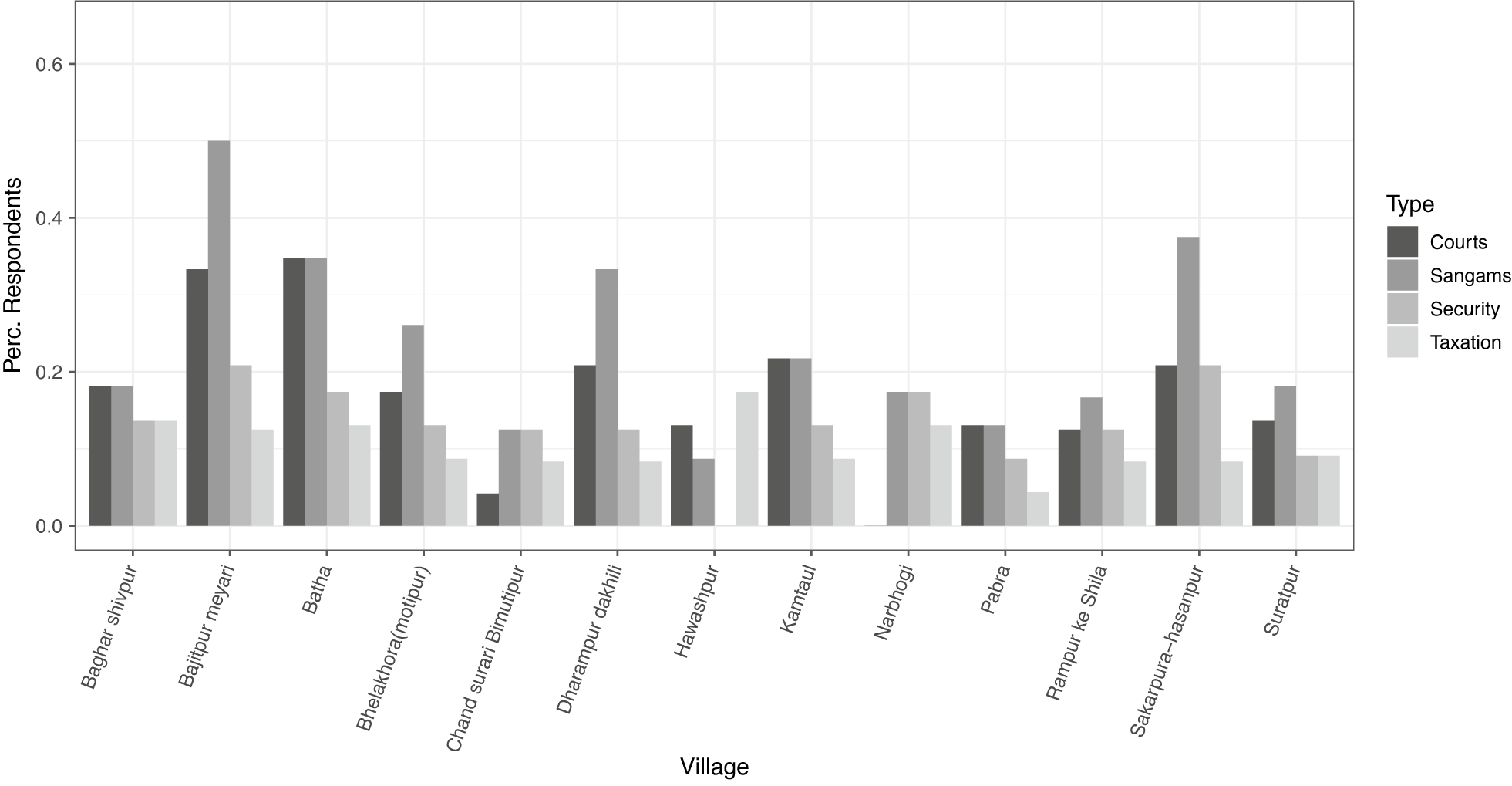
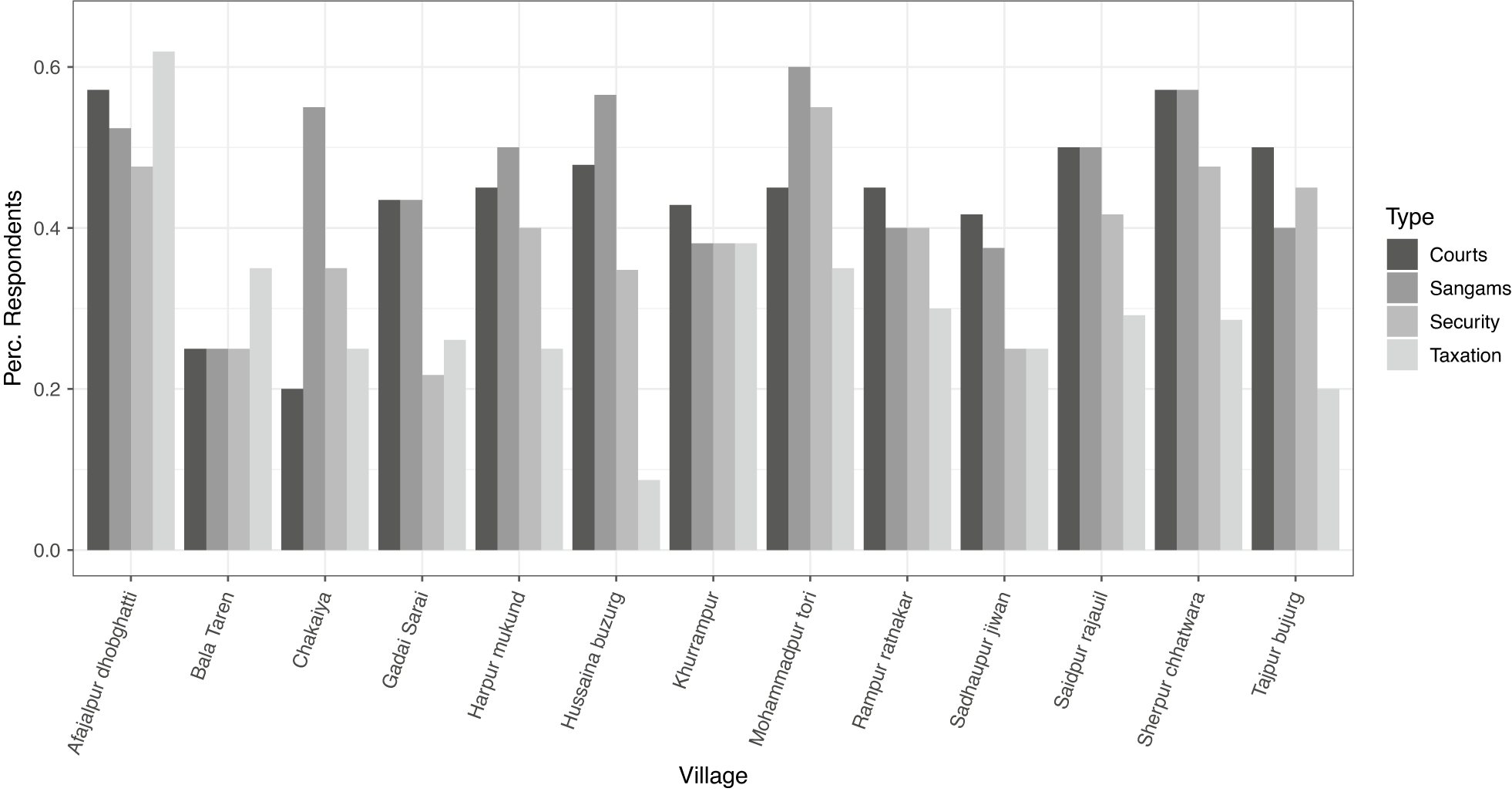

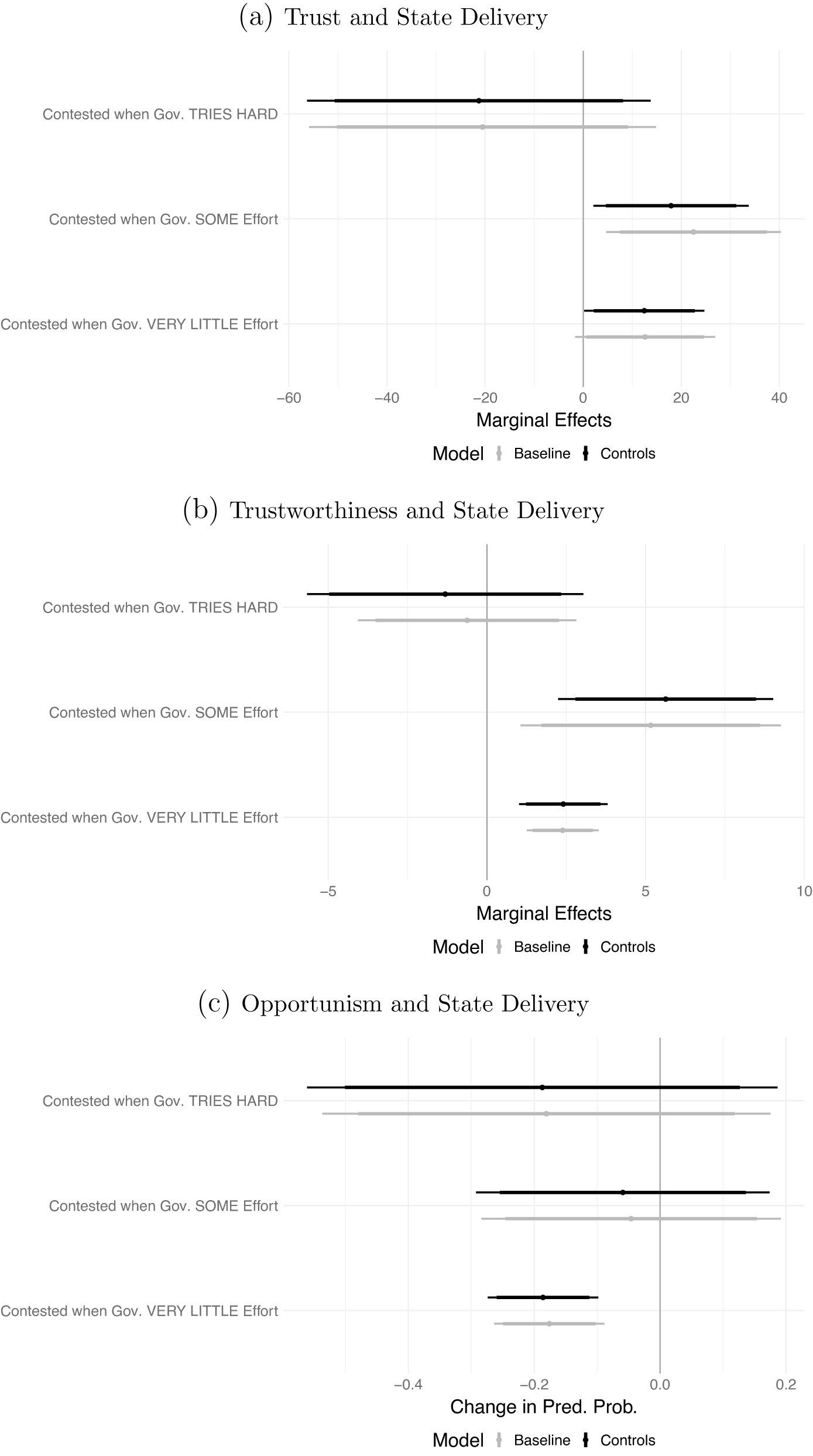
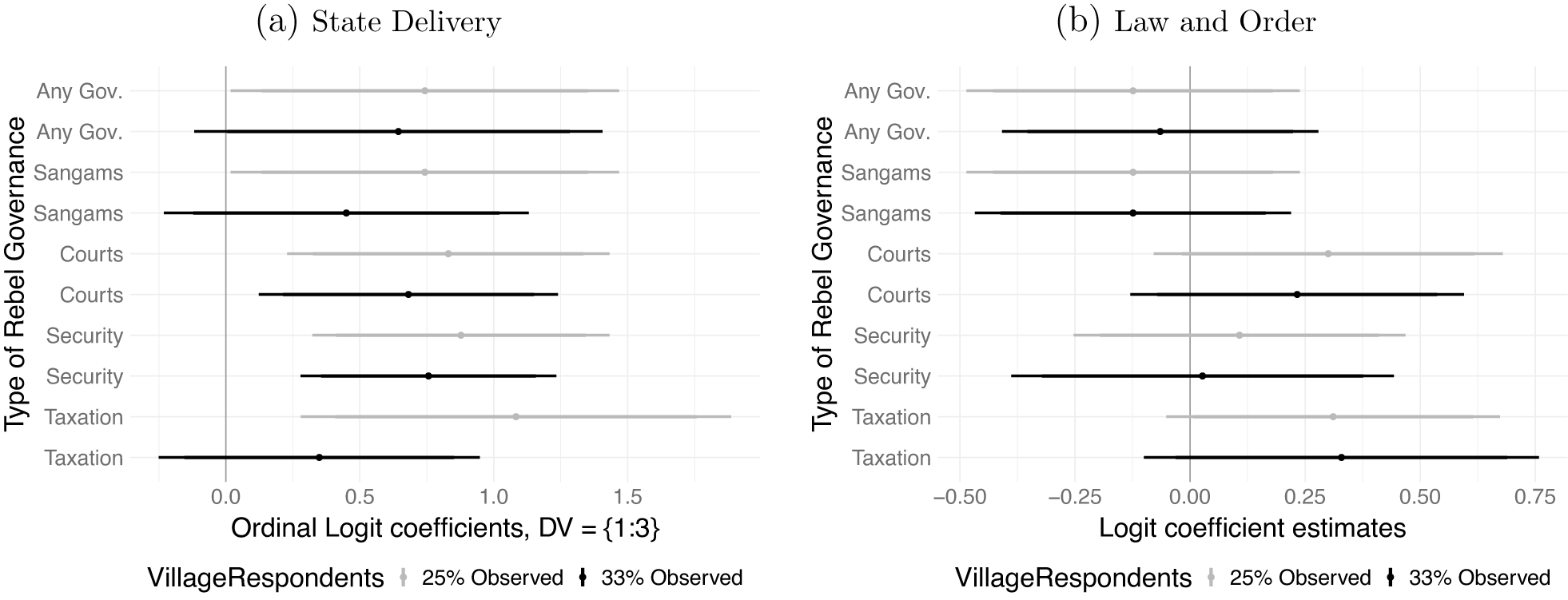
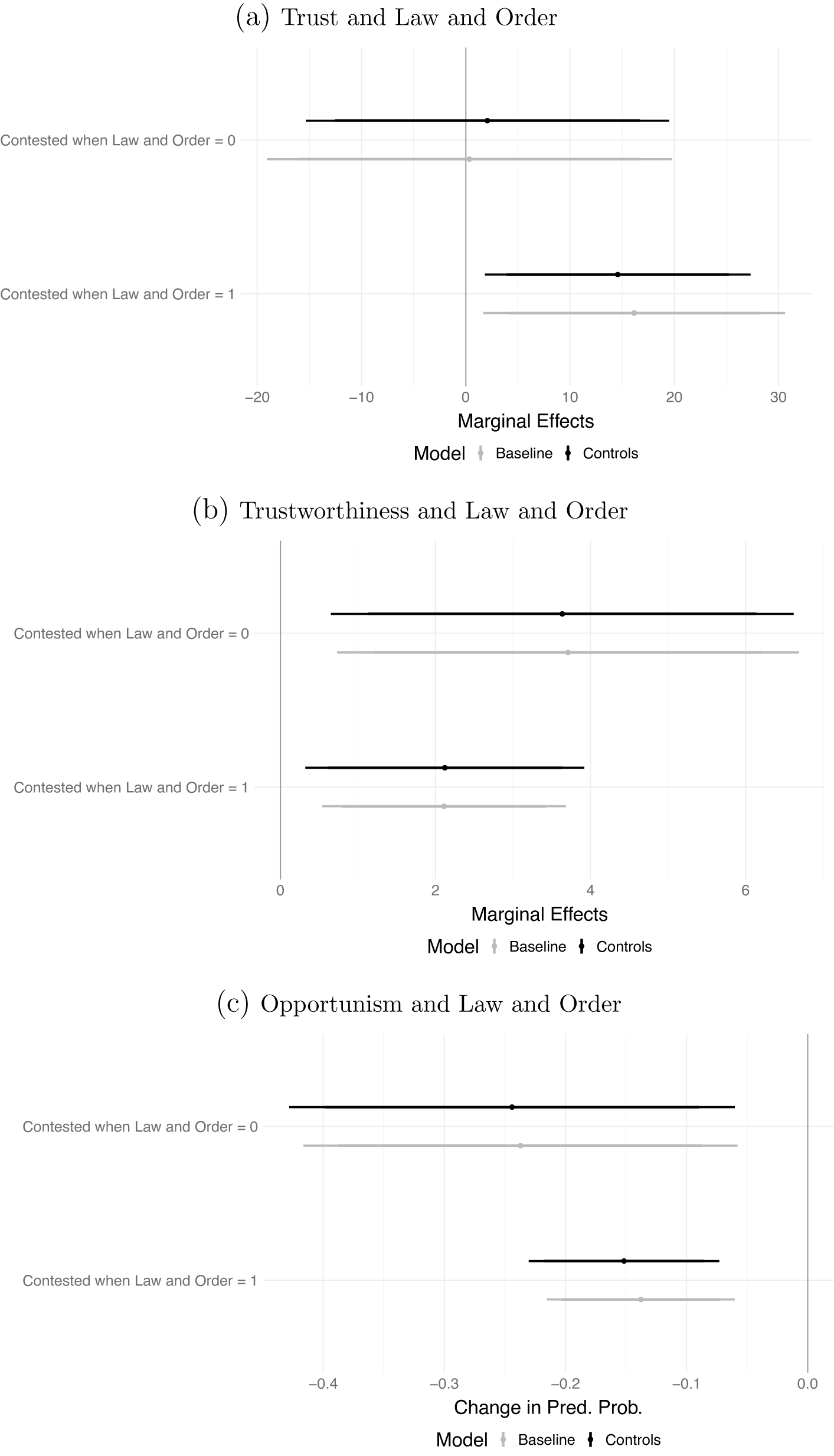


 Open access


Comments
No Comments have been published for this article.