INTRODUCTION
Lack of soil fertility restoring resources, unbalanced nutrient mining, soil erosion and unequal soil fertility management within family fields have been reported to contribute to soil fertility depletion in Sub-Saharan Africa (Bationo et al., Reference Bationo, Waswa, Kihara and Kimetu2007; Vanlauwe and Giller, Reference Vanlauwe and Giller2006). These factors continue to represent huge obstacles to securing required harvests in Africa (Bationo and Waswa, Reference Bationo, Waswa, Bationo, Waswa, Okeyo, Maina and Kihara2011; McCann, Reference McCann2005; Sanginga and Woomer, Reference Sanginga and Woomer2009).
The central highlands of Kenya cover both areas with high potential for crop production on inherently fertile Nitisols and drier areas with lower potential on lighter, fragile soils, which are prone to short-term soil degradation. The high potential areas of the central highlands (e.g. Meru South) are among the most densely populated regions in the country with an average of more than 700 persons km−2. This has led to land fragmentations where most farm sizes range between 0.5 ha and 1 ha per household (Mugwe et al., Reference Mugwe, Mugendi, Mucheru-Muna, Merckx, Chianu and Vanlauwe2009). Soil fertility in central Kenya highlands has declined over time, with an annual net nutrient depletion rate exceeding 30 kg N ha−1 (Smaling, Reference Smaling, Van Reuler and Prins1993) as a result of continuous cropping with inadequate nutrient replenishment (Mwangi et al., Reference Mwangi, Mugendi and O'Neill1998). In most of smallholder farms, these deficiencies can be replenished through the use of mineral fertilizers and cattle manure. However, few smallholder farmers in the region can afford mineral fertilizers, and those using fertilizer hardly use the recommended rates (Mugwe et al., Reference Mugwe, Mugendi, Mucheru-Muna, Merckx, Chianu and Vanlauwe2009). Moreover, the little fertilizer available when added to the soil is often utilised with poor efficiency (Vanlauwe et al., Reference Vanlauwe, Bationo, Chianu, Giller, Merckx, Mokwunye, Ohiokpehai, Pypers, Tabo, Shepherd, Smaling, Woomer and Sanginga2010a) due to environmental or soil-related factors (e.g. P fixation by sesquioxides, leaching and volatilization of N etc.) as well as management factors (e.g. poor timing or placement of fertilizer). On the other hand, the use of locally available manure is also limited by its low quality and quantity (Bationo and Waswa, Reference Bationo, Waswa, Bationo, Waswa, Okeyo, Maina and Kihara2011; Murwira et al., Reference Murwira, Mutuo, Nhamo, Marandu, Rabeson, Mwale, Palm, Vanlauwe, Diels, Sanginga and Merckx2002; Sanginga and Woomer, Reference Sanginga and Woomer2009).
In addition to using more affordable inputs, locally available soil organic inputs could be used to reverse declining soil fertility in Sub-Saharan Africa through enhancing soil carbon and soil biological properties. For instance, Kimani et al. (Reference Kimani, Macharia, Gachengo, Palm and Delve2004) reported a 92% increase in maize grain yields after applying manure compared to the control. Other studies have reported more than 50% increase in maize grain yields above the no-input treatment following application of Tithonia diversifolia in the soil compared to the control (Jama et al., Reference Jama, Palm, Buresh, Niang, Gachengo, Nziguheba and Amadalo2000; Mucheru-Muna et al., Reference Mucheru-Muna, Mugendi, Kungu, Mugwe and Bationo2007; Nziguheba and Mutuo Reference Nziguheba and Mutuo2000). Mugendi et al. (Reference Mugendi, Nair, Mugwe, O'Neill and Woomer1999) reported that the application of Calliandra calothyrsus green biomass increased maize grain yield by 32% and 48% above the control (Kimetu et al., Reference Kimetu, Mugendi, Palm, Mutuo, Gachengo, Bationo, Nandwa and Kung'u2004). Incorporating Mucuna pruriens biomass into the soil has been found to increase maize grain yields by 46% above the farmer practice in the central highlands of Kenya (Gitari et al., Reference Gitari, Karumba, Gichovi, Mwaniki and Mureithi1998), while Gachene et al. (Reference Gachene, Palm and Mureithi1999) reported 88% higher yields than the control after incorporating Mucuna pruriens.
Technologies that combine mineral fertilizers with organic nutrient sources can be considered as better options in increasing fertilizer use efficiency because they provide a more balanced supply of nutrients and other multiple agro-ecological benefits (Donovan and Casey, Reference Donovan and Casey1998). Combination of organic and mineral fertilizer nutrient sources has been shown to result into synergistic effects and improved synchronization of nutrient release and uptake by crops (Palm et al., Reference Palm, Myers, Nandwa, Buresh, Sanchez and Calhoun1997) leading to higher yields, especially when the levels of mineral fertilizers used are relatively low as is the case of most smallholder farmers in tropical farming systems (Kapkiyai et al., Reference Kapkiyai, Karanja, Woomer and Qureshi1998). Fertilizers are able to increase crop yields and additionally produce enough residues for soil fertility management, while organic sources are able to rehabilitate less responsive soils and make them responsive to fertilizers (Vanlauwe et al., Reference Vanlauwe, Kihara, Chivenge, Pypers, Coe and Six2010b). This is the key factor to improve fertilizer efficiency when mineral fertilizers are combined with organic sources. Kihanda (Reference Kihanda1996) observed that maize yields were increased with increasing rates of farmyard manure application. However, maize grain yields above 3.5 t ha−1 were only obtained when both farmyard manure and N and P fertilizers were applied. Calliandra calothyrsus biomass combined with mineral fertilizer gave higher crop yields as compared with the sole use of mineral fertilizer or Calliandra calothyrsus biomass (Mucheru-Muna et al., Reference Mucheru-Muna, Mugendi, Kungu, Mugwe and Bationo2007; Mugendi et al., Reference Mugendi, Nair, Mugwe, O'Neill and Woomer1999). Tittonell et al. (Reference Tittonell, Corbeels and van Wijk2008) also recognized the beneficial effects when mineral fertilizer was used together with manures in rehabilitating degraded soils.
Adoption of any new technology depends on farmer's perceptions of financial benefits, particularly when additional labour is required in the establishment and management of these technologies. Farmers are likely to adopt soil fertility improving technologies if they are assured of returns to investments (Kimani et al., Reference Kimani, Macharia, Gachengo, Palm and Delve2004); therefore, it is paramount to account for economic returns of introduced soil technologies.
Trials using organic and mineral fertilizer inputs were therefore established in the main maize growing areas of the central highlands of Kenya in 2004 with the main objective of addressing decline in soil fertility. The specific objectives were to determine (i) the effects of different organic sources and combinations with mineral fertilizer inputs on maize grain yield; (ii) the economic returns of various inputs and (iii) the effect of these inputs on soil chemical properties.
MATERIALS AND METHODS
The study was conducted in Meru South District in the central highlands of Kenya. In Meru South District, the experiment was conducted in Mucwa (00°18ʹ48.2ʹʹS; 37°38ʹ38.8ʹʹE), which is located in the Upper Midland 3 (UM3) agro-ecological zone with an altitude of approximately 1373 m above sea level. The soils are classified as Rhodic Nitisols (Jaetzold et al., Reference Jaetzold, Schmidt, Hornet and Shisanya2006), which are deep, well weathered with moderate to high inherent fertility.
Most of the areas in Meru South District are highly populated; for instance, Mucwa sub-location has a population density of 641 inhabitants km−2 (Jaetzold et al., Reference Jaetzold, Schmidt, Hornet and Shisanya2006). The area is characterized by rapid population growth, and low soil fertility (Government of Kenya, 2001). Crop productivity has dramatically reduced over the last three decades with maize yields declining from 3.3 t ha−1 to 0.7 t ha−1 (Jaetzold et al., Reference Jaetzold, Schmidt, Hornet and Shisanya2006). According to Jaetzold et al. (Reference Jaetzold, Schmidt, Hornet and Shisanya2006), poverty is one of the major developmental challenges facing the district with 72% of the population being considered to be in the poverty bracket, while the HIV/AIDS prevalence rate in the district is 30%.
The main staple food crop in Central Kenya is maize (Zea mays L.), which is commonly intercropped with beans (Phaseolus vulgaris L). Other food crops, including cabbages (Brassica oleracea L), Irish potatoes (Solanum tuberosum L.), bananas (Musa spp. L.), sweet potatoes (Ipomea batatas (L.) Lam), vegetables and fruits, are mainly grown for subsistence consumption. Livestock production is a major enterprise, especially improved dairy cattle breeds, sheep, goats and poultry. The main cash crops include coffee (Coffea spp), tobacco (Nicotiana tabacum L) and tea (Camellia sinensis L).
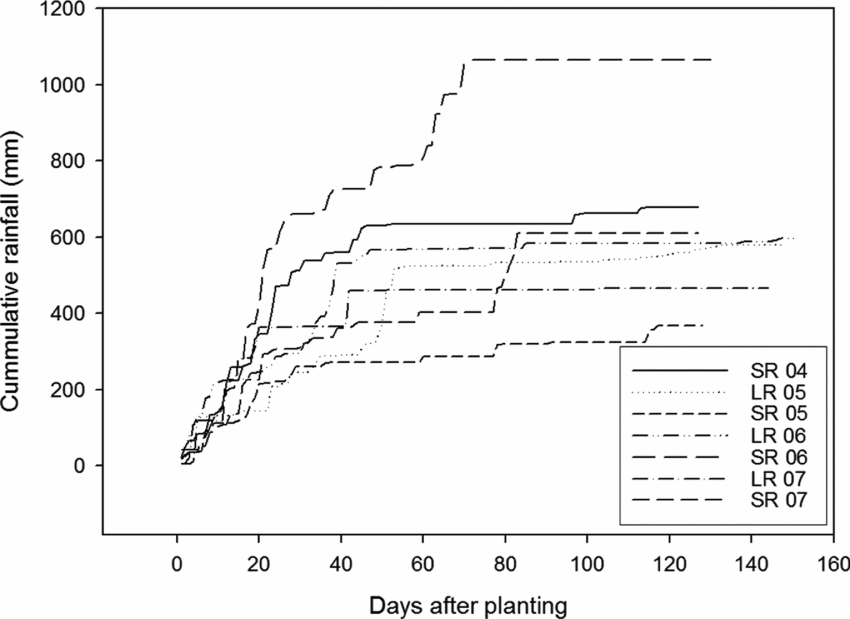
The rainfall pattern is bimodal, totaling 1400 mm in a year. The long rains (LR) last from March to June, while the short rains (SR) commence in October through December. The rainfall pattern for the seven seasons in which the experiment was conducted is presented in Figure 1.
Rainfall distribution from 2004 to 2007 in Mucwa site, Meru South District, Kenya; SR = short rains, LR = long rains.

At the beginning (October 2004) of the experiment and at the end of LR 06 (August 2006), soil samples were collected with an alderman auger at 0–15 cm. Soil augering was done at six spots per plot and bulked to make a composite sample per plot. The soil samples were analysed for soil organic carbon, total nitrogen, available P (Olsen), Ca, Mg and K, and pH using standard methods (Anderson and Ingram, Reference Anderson and Ingram1993).
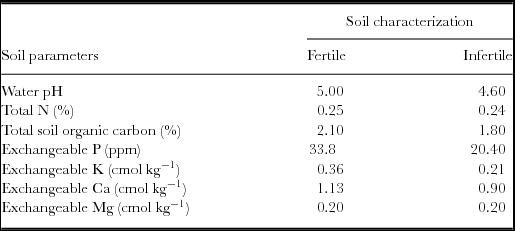
The study was conducted on two farms: one with relatively good soils (in terms of soil pH, total soil carbon and exchangeable P), and an adjacent farm with poor soils (Table 1). The farm soil types are also referred to as high fertility (good soils) and low fertility (poor soils) farms, respectively.
Soil characterization of good and poor sites in Mucwa, Meru South District, Kenya.

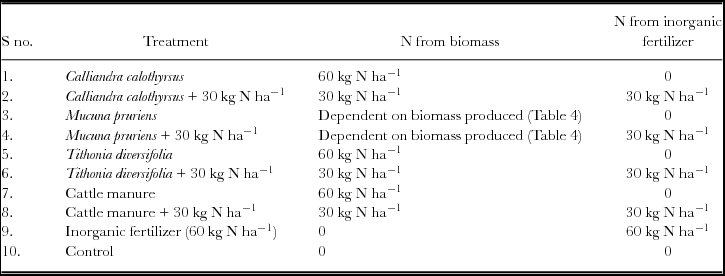
The experiments were established in good and poor sites in Mucwa and were laid out as a randomized complete block design replicated thrice with the plots measuring 6 × 4.5 m. The test crop was maize (Zea mays L, var. H513) planted at an inter- and intra-row spacing of 0.75 m and 0.5 m, respectively. Three seeds were sown per hole and thinned four weeks later to two plants giving a stand population of 53,333 plants ha−1. External nutrient inputs (Table 2) were applied to give an equivalent amount of 60 kg N ha−1 (this is the recommended rate of N to meet maize nutrient requirements for an optimum crop production in the area) (Fertilizer Use Recommendation Project (FURP), 1987) with the exception of the herbaceous legume treatment, where the amount of N was determined by the biomass harvested and incorporated in the respective treatments.
Experimental treatments in good and poor sites of Mucwa, Meru South District, Kenya.
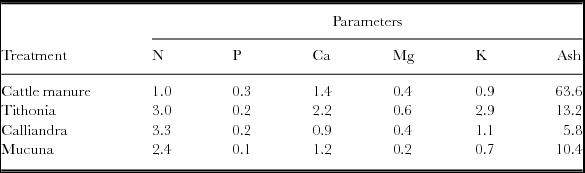
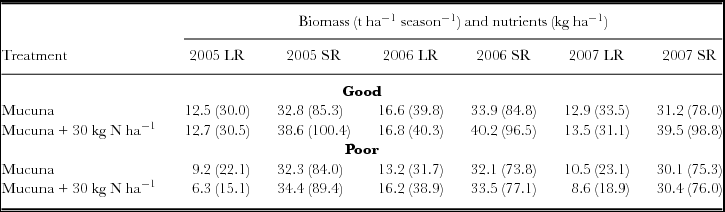
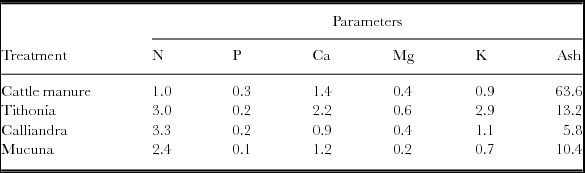
The organic materials (Tithonia diversifolia and Calliandra calothyrsus) were harvested from nearby biomass transfer plots that were established for that purpose. A sample of each organic input was taken and N content determined (Table 3); then the amount of organics to be applied, equivalent to 30 or 60 kg N, was determined (for the treatments with sole organics, an equivalent of 60 kg N ha−1 was applied and for the treatments with integration, an equivalent of 30 kg N ha−1 was applied). The weight of Mucuna pruriens biomass applied from the LR 05–SR 07 seasons are presented in Table 4.
Average nutrient composition (%) of organic materials applied in the soil during the experimental period at Mucwa, Meru South District, Kenya.
Mucuna pruriens biomass incorporated and the N equivalency during the six cropping seasons in fertile and infertile sites of Mucwa, Meru South District, Kenya.
Value in parentheses: Amount of N contributed by the biomass, calculated from the biomass in t ha−1 and N content (2.2–2.6%) in the biomass. For the treatments with additional N from inorganic fertilizer, total N added includes the amount in parentheses + 30 kg N ha−1.
All organic inputs were harvested, weighed, chopped and incorporated into the soil to a depth of 15 cm during land preparation. Calcium ammonium nitrate (CAN) was the source of mineral N, and at all application rates, one-third was applied four weeks after planting (WAP) and two-thirds were applied six weeks after planting. Phosphorus (P) was applied in all plots at the recommended rate (60 kg P ha−1) as triple superphosphate (TSP) to minimize the possibility of its confounding effects. This way it was assumed that nitrogen was the only macronutrient limiting maize yields. Land preparation was done manually, and weeds were regularly controlled using a hand hoe depending on weed intensity and characteristics. Stem borers in maize were controlled by preventive spraying of Buldock™ pesticide (beta-cyfluthrin). No diseases were observed on the maize during the experimental period.
Maize grain and stover were harvested at physiological maturity from a net area of 21 m2 (out of the total area of 27 m2) after leaving out one row on each side of the plot and the first and last maize plants on each row to minimize the edge effect. Maize grains were dried and expressed in terms of dry matter content. After harvesting, all the maize stover was removed from the experimental plots to ensure that no nutrients were returned to the plots from the stover that may confound the effects of adding a material of different quality into the experimental plots. Stover samples were oven-dried at 70° C for 72 hours to determine moisture contents, which were used to correct stover yields measured in the field to dry matter produced. Dry matter yields were extrapolated to a hectare basis using plant populations corrected for the emergence rate. Plant emergence rates were not affected by treatments.
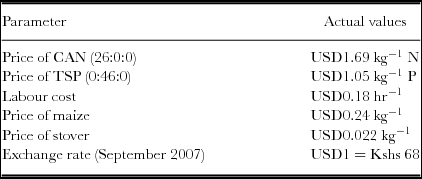
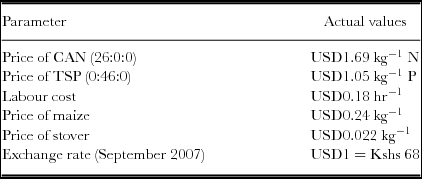
Detailed data on labour requirements were collected every season for each of the field operations (land preparation, planting, fertilizer application, thinning, weeding, pest control and harvest). The time taken to perform every activity was recorded and the labour was valued at the local wage rate of Kenya shillings (KShs) 100 (USD 1.47) per working day (8 hours). Maize stover is commonly used as cattle feed in the area (with an approximate market value of USD 22.1 t−1) and thus accounted for as an additional benefit. Other input and output prices, derived from the farm gate prices in the area, and values used in the economic analysis are presented in Table 5. The net benefit was calculated by subtracting total costs from gross benefits. The benefit cost ratio (BCR) was calculated as net benefits divided by costs (Chakravarty, Reference Chakravarty, Eatwell, Milgate and Newman1987). The return to labour was calculated as net benefit divided by labour costs. The economic analysis was performed on cumulated costs and benefits over the seven experimental seasons.
Parameters used to calculate the economic returns for different nutrient replenishment inputs.
Data on maize yield, soil properties and economic returns were subjected to analysis of variance (ANOVA) using Genstat software version 10 (Genstat, 2005). The means were separated using least significant differences of means (LSD at p < 0.05). To compare treatment effects on maize grain yield, yields were converted to relative increases compared to the control and the recommended rate of mineral fertilizer (60 kg N ha−1). To determine changes in soil chemical properties during the two-year cropping period, t-tests comparing mean values between the two sampling periods (October 2004 and August 2006) were carried out to determine whether the changes were significant at p < 0.05.
RESULTS
Rainfall pattern
Amounts of rainfall were higher in the short rainy seasons than in the long rainy seasons (Figure 1). Rainfall amounts and distribution varied largely between seasons and drought spells occurred frequently. In the LR 07 season, for example, a two-week drought occurred starting from the third week after planting. Drought spells were also common during the peak water requirement periods (flowering and tussling). In all the seasons most of the rainfall was received before 50% flowering and 50% tussling. For instance, by day 70 (50% flowering) 90% of the rainfall had already been received for most of the growing seasons.
Maize grain yield
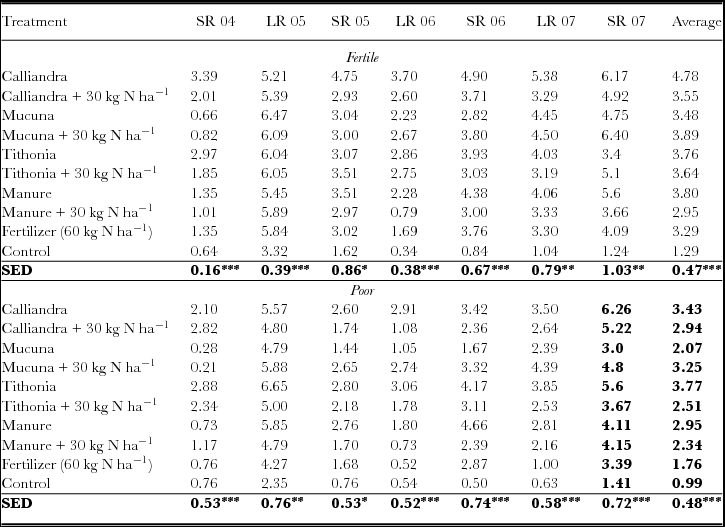
In good and poor sites, there was a significant (p < 0.001) effect of season on maize grain yield. The maize grain yields in both sites were significantly (p < 0.001) different during all the seasons (Table 6). Tithonia diversifolia recorded the highest (4.2 t ha−1) average maize grain yield in the poor site, while Calliandra calothyrsus gave the highest (4.8 t ha−1) average maize grain yield in the good site (Table 6). The control treatment recorded the lowest yields of 1.3 t ha−1 and 1.0 t ha−1 in good and poor sites, respectively.
Maize yields (t ha−1) under different treatments during seven cropping seasons at Mucwa, Meru South District, Kenya.
; SED: Standard error of differences in means.
*p < 0.05, **p < 0.01 and ***p < 0.001.
In both good and poor sites, the treatments with organics and mineral fertilizers increased maize grain yield in comparison with the control (Table 6). The treatments with sole organics and organic materials integrated with mineral fertilizers increased maize grain yield in comparison with the recommended rate of sole mineral fertilizer (60 kg N ha−1) in fertile soils. In poor fields, the treatments with sole organics performed better than the ones with an integration of organics and mineral fertilizer across the seven seasons (Table 6).
Soil chemical properties
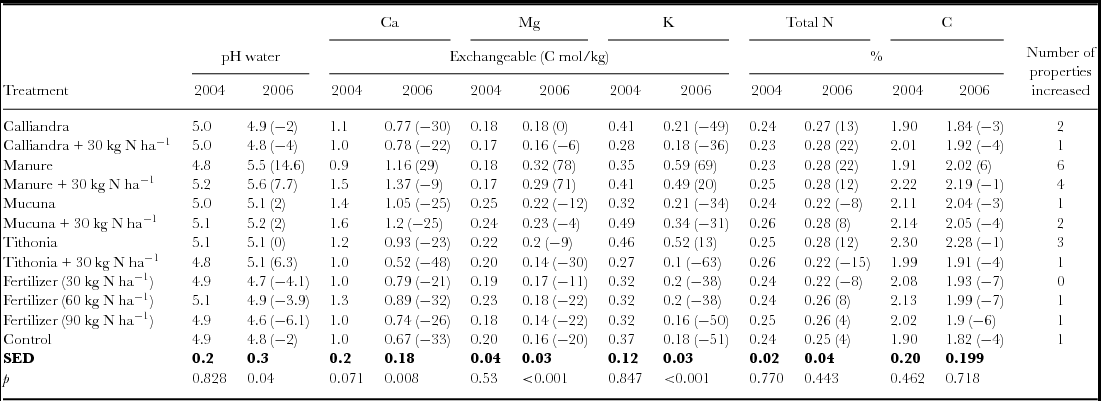
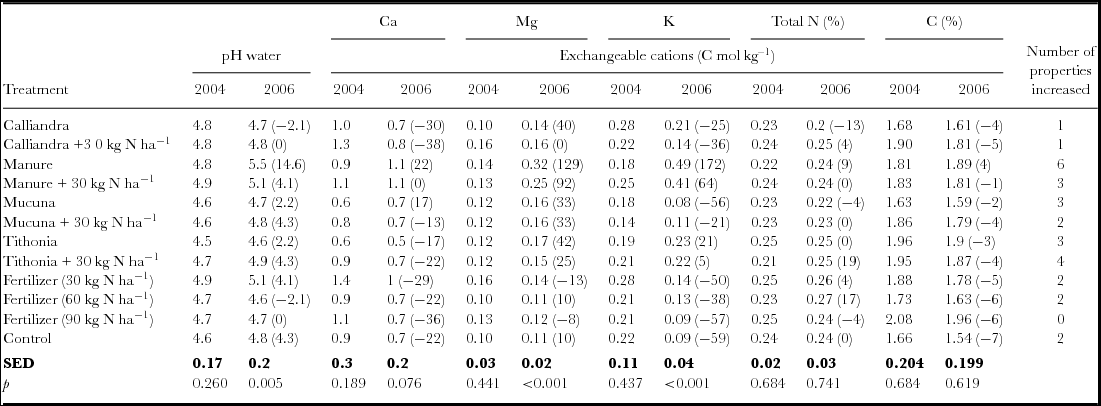
Table 7 shows the chemical composition of soils in good sites at the beginning of the experiment in October 2004 and at the end of four cropping seasons in September 2006. The soil pH, Ca, Mg and K were not statistically different (p < 0.05) between treatments in 2004; however, in 2006 these were different (Table 7). Organic carbon and total N were not significantly different (p < 0.05) between treatments during both 2004 and 2006 sampling periods (Table 7).
Soil chemical properties at the beginning of the experiment in October 2004 and at the end of the experiment in August 2006 in good site, Mucwa, Meru South District, Kenya.
Values in parentheses are percentage increases or declines in different properties during 2004–2006.
Soil pH increment was only statistically significant in the sole manure treatment (t-test, p = 0.036). The soil pH in the good site was very strongly acidic (4.5 to 5.0) in most of the treatments according to the rating done by Landon (Reference Landon1991). For the sole manure treatment, the pH rating improved from strongly acidic to less strongly acidic (4.8 to 5.5), whereas in the fertilizer (60 kg N ha−1) treatment, the pH rating declined from strongly acidic to very strongly acidic.
Calcium concentrations did not change in all treatments. The rating of calcium, however, declined in most of the treatments from medium to low (Telalign et al., Reference Telalign, Haque and Aduayi1991). Magnesium concentration only increased in the sole manure treatment (t-test, p = 0.017). The decline in soil potassium was statistically significant in the control, sole Calliandra calothyrsus and Tithonia diversifolia + 30 kg N ha−1 treatments (t-test; p = 0.022, 0.021 and 0.045, respectively). Soil total N and carbon did not change significantly during the experimental period. According to Telalign et al. (Reference Telalign, Haque and Aduayi1991), most of the treatments were in the moderate rating for organic carbon in both 2004 and 2006.
In the poor fields in 2004, soil pH, Ca, Mg, K, exchangeable P, total N and organic carbon were not significantly different (p < 0.05) between treatments, while in 2006, soil pH, Mg and K were significantly different between treatments with p = 0.005 and <0.001, respectively (Table 8). Soil pH increased in sole manure treatment only (t-test, p = 0.013). There was no change in calcium concentration across the treatments. Magnesium increased significantly in sole manure and manure + 30 kg N ha−1 treatments with t-test, p = 0.006 and 0.027, respectively. Soil potassium was only significant in the sole manure treatment (t-test, p = 0.03). Soil total N and carbon were not statistically different over the experimental period.
Soil chemical properties at the beginning of the experiment in October 2004 and at end of the experiment in August 2006 in poor site of Mucwa, Meru South District, Kenya.
Values in parentheses are percentage increases or declines in different properties during 2004–2006.
Economic returns
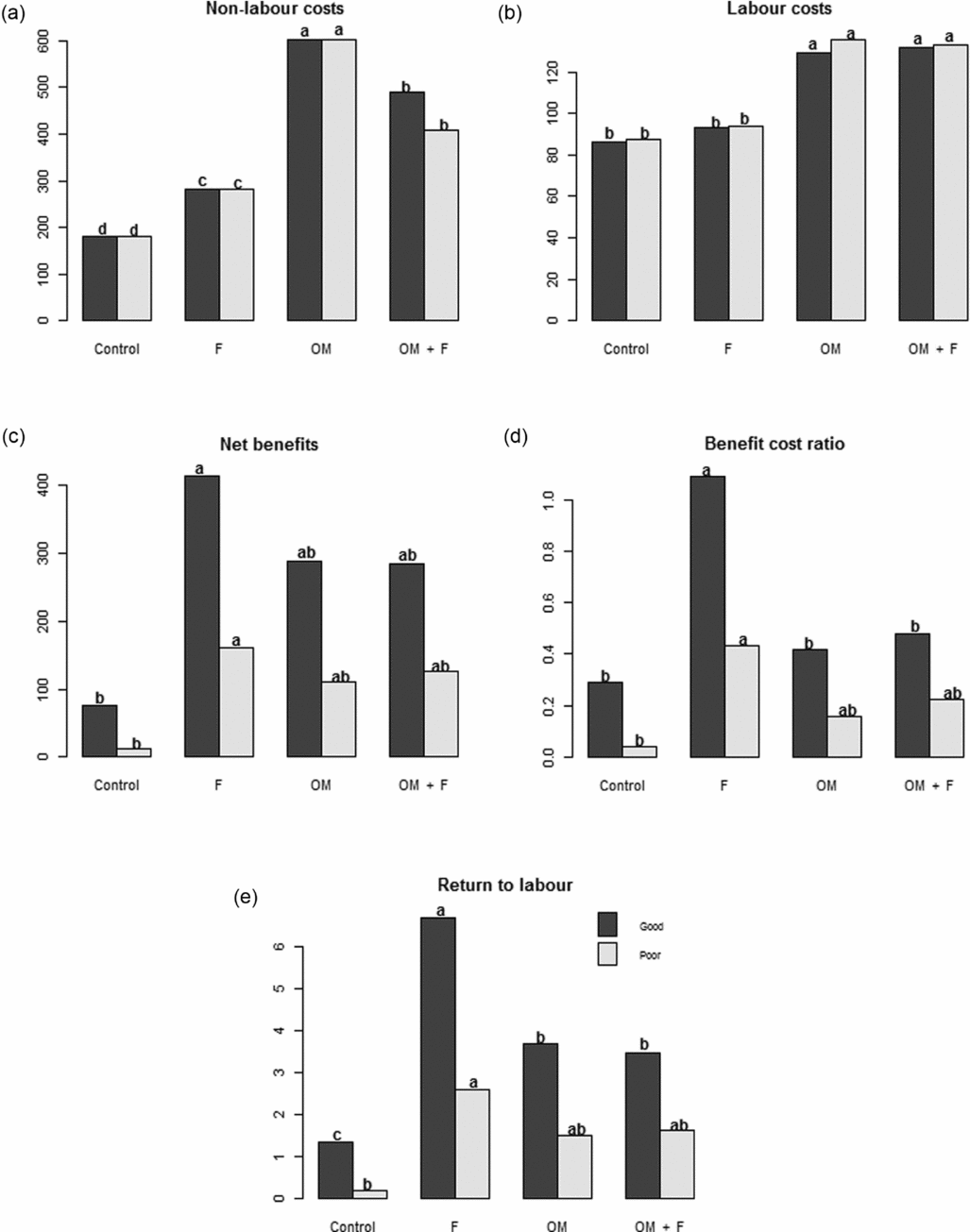
The net benefit, BCR and return to labour were significantly higher in the fertile site compared with the infertile site. The sole organic treatments recorded significantly higher non-labour costs during the seven cropping seasons (Figure 2a). The control recorded a significantly lower non-labour cost. On the other hand, the labour costs were significantly higher in organics and organics + fertilizer treatments compared with the sole fertilizer and control treatments in both sites (Figure 2b).
Costs and net benefits (USD ha−1) as affected by fertilizer and organic treatments averages for seven seasons. Non-labour costs include purchase of seed and fertilizer.
In both sites, the sole inorganic fertilizer treatments recorded the highest net benefit, although it was not significantly different from the organics and organics + fertilizer treatments (Figure 2c). The net benefit and BCR were only significant between the inorganic fertilizer treatment and the control (Figures 2c, 2d). In the fertile site, the sole inorganic fertilizer treatments recorded significantly higher BCR and return to labour, whereas in the infertile site, the sole inorganic fertilizer treatments recorded the highest BCR and return to labour, although it was not significantly higher than the sole organics and organics + fertilizer treatments (Figures 2d, e).
In good and poor sites during the SR 05 season, most of the treatments had positive net benefits, whereas during the LR 06 season most of the treatments, especially in the poor site, had negative net benefits. The higher return to labour in most of the treatments with sole organics compared with the treatments with combined organics and mineral fertilizers in good and poor sites could be the result of higher maize grain yields that were reported in the treatments with sole organics.
DISCUSSION
The erratic rainfall that was reported in the study led to poor yields recorded over the seasons. The results agree with Balarios and Edmaedes (Reference Balarios and Edmeades1993), who reported that drought stress occurs with different intensity at any plant development stage from germination to physiological maturity, and flowering is the most critical stage in maize drought stress.
The application of organics alone or in combination with mineral fertilizers led to increased maize yield compared with the control. In good sites, sole Calliandra calothyrsus recorded a yield increase of up to 988%; on the other hand, sole Tithonia diversifolia recorded an increase of 474% in infertile sites. Several authors have reported increased yields as a result of applying Tithonia diversifolia, Calliandra calothyrsus and manure inputs in other areas (Gachengo et al., Reference Gachengo, Palm, Jama and Otieno1999; Jiri and Waddington, Reference Jiri and Waddington1998; Kimetu et al., Reference Kimetu, Mugendi, Palm, Mutuo, Gachengo, Bationo, Nandwa and Kung'u2004; Mucheru-Muna et al., Reference Mucheru-Muna, Mugendi, Kungu, Mugwe and Bationo2007; Mugendi et al., Reference Mugendi, Nair, Mugwe, O'Neill and Woomer1999; Mugwe et al., Reference Mugwe, Mugendi, Mucheru, Kung'u, Namplala, Tenywa, Mwangombe, Osiru, Kawuki and Biruma2003). In western Kenya, yield increase of up to 200% was reported following application of Tithonia diversifolia biomass (Jama et al., Reference Jama, Palm, Buresh, Niang, Gachengo, Nziguheba and Amadalo2000), while in central Kenya, Mucheru-Muna et al. (Reference Mucheru-Muna, Mugendi, Kungu, Mugwe and Bationo2007) reported an increase of up to 267% following the application of sole Tithonia diversifolia biomass. Mucheru-Muna et al. (Reference Mucheru-Muna, Mugendi, Kungu, Mugwe and Bationo2007) reported an increase of 227% using Calliandra calothyrsus biomass in Kenya, while Mtambanengwe et al. (Reference Mtambanengwe, Mapfumo and Vanlauwe2006) reported an increase of 525% following manure application in Zimbabwe.
Generally maize grain yields were lower in the treatments with sole fertilizer compared with treatments with sole organics or organics combined with mineral fertilizers in both sites during the seven cropping seasons. For instance, in good sites, an increase of 151% was reported with the application of sole Calliandra calothyrsus, while in poor sites, an increase of 496% was reported with the application of sole Tithonia diversifolia. Mtambanengwe et al. (Reference Mtambanengwe, Mapfumo and Vanlauwe2006) reported a yield increase of 104% following manure application against sole fertilizer. This implies an increased nutrient recovery in the sole organics and organics plus mineral fertilizer treatments compared with the sole mineral fertilizer treatment.
Lower yields in the fertilizer treatments could be the result of poorly distributed rainfall (Figure 1) during the seasons. The timing of N application from organic treatments compared with the mineral fertilizer N could also explain difference in yields. For the organics, all the 60 kg N (sole organics) and 30 kg N (treatments with integration) was applied at planting when there was adequate rainfall, while the mineral fertilizer N was applied in splits (one-third was applied four weeks after planting, while the remaining two-thirds were applied four weeks later after which there was a long dry spell). Consequently, the growing maize crop may not have utilized this portion of the mineral N fertilizer, thus leading to low maize grain yields. Other researchers have observed higher maize grain yields as a result of applying organic inputs like Tithonia diversifolia with a combination of mineral fertilizers as compared with sole application of mineral fertilizers (Kimetu et al., Reference Kimetu, Mugendi, Palm, Mutuo, Gachengo, Bationo, Nandwa and Kung'u2004; Mucheru-Muna et al., Reference Mucheru-Muna, Mugendi, Kungu, Mugwe and Bationo2007; Mugendi et al., Reference Mugendi, Nair, Mugwe, O'Neill and Woomer1999; Mutuo et al., Reference Mutuo, Mukalama and Agunda2000; Nziguheba et al., Reference Nziguheba, Palm, Buresh and Smithson2000). Nutrients supplied in less soluble forms are less prone to loss, and more suitable than mineral fertilizers when rainfall tends to be low and then heavy (Kihanda et al., Reference Kihanda, Warren and Micheni2006) like they were in this study.
In good and poor sites, however, the manure treatment did not perform very well in comparison to other treatments. The lower rates of manure decomposition leading to low availability of nutrients to the maize crop could have led to lower yields. Although the amount of N added via all these organic inputs was the same (60 kg N ha−1), manure had a lower N concentration than all other organic inputs (Table 3) and could have released N slower due to higher carbon–nitogen ratio (Kimani et al., Reference Kimani, Macharia, Gachengo, Palm and Delve2004).
The treatments with sole organics generally, however, performed better than those with integration of mineral N fertilizer and organics with the exception of the Mucuna pruriens treatment, which did significantly better in the integration compared with sole application in fertile and infertile sites. The rainfall during the seven cropping seasons was very unevenly distributed (Figure 1) and the organic inputs could have conserved more soil moisture, hence more moisture was made available to the growing maize in the organic treatments than in the integrations, where there was less organic material (in the sole organic treatments the organic input applied was double than that applied in the integrated treatments). The higher yields from organic treatments could also be due to positive effects of organic materials on soil's physical and chemical properties (Kimetu et al., Reference Kimetu, Mugendi, Palm, Mutuo, Gachengo, Bationo, Nandwa and Kung'u2004; Murwira et al., Reference Murwira, Mutuo, Nhamo, Marandu, Rabeson, Mwale, Palm, Vanlauwe, Diels, Sanginga and Merckx2002).
Consistently high yields with sole Tithonia diversifolia biomass in the poor sites could be associated with the fast decomposition of Tithonia diversifolia, leading to a rapid release of nutrients to the crop (Gachengo et al., Reference Gachengo, Palm, Jama and Otieno1999; Nziguheba et al., Reference Nziguheba, Palm, Buresh and Smithson2000). Tithonia diversifolia contains high amounts of nutrients, especially N, and other nutrients such as phosphorus, potassium and magnesium, and may thus prevent other nutrient deficiencies such as micronutrients (Murwira et al., Reference Murwira, Mutuo, Nhamo, Marandu, Rabeson, Mwale, Palm, Vanlauwe, Diels, Sanginga and Merckx2002). In addition, P concentration in Tithonia diversifolia leaves is greater than the critical 2.5 g kg−1 threshold for net P mineralization (Palm et al., Reference Palm, Nziguheba, Gachengo, Gacheru and Rao1999), meaning that addition of Tithonia diversifolia biomass to soil results in net mineralization rather than immobilization of P (Blair and Boland, Reference Blair and Boland1978). The application of Tithonia diversifolia leaves would therefore probably result in increased P availability by both net mineralization and decreased soil sorption (George et al., Reference George, Gregory, Robinson, Buresh and Jama2001; Nziguheba et al., Reference Nziguheba, Palm, Buresh and Smithson2000).
Changes in soil properties after four cropping seasons were very variable agreeing with Drinkwater et al. (Reference Drinkwater, Letourneau, Workneh, van Bruggen and Shennan1995) and Werner (Reference Werner1997), who noted that changes in soil properties under organically and conventionally managed farming systems have been found to be more variable, perhaps due to differences in climate, crop rotation, soil type or the length of time a soil has been under a particular management.
The results on the decline of soil pH in both sites corroborates with Kang (Reference Kang1993) and Mugendi et al. (Reference Mugendi, Nair, Mugwe, O'Neill and Woomer1999), who reported a general reduction in pH after application of mineral fertilizer, Leucaena leucocephala and Calliandra calothyrsus biomass. The higher pH decrease in the combination of organics and mineral fertilizers compared with the sole application of organic inputs in the Calliandra calothyrsus and manure (good site) treatments could be the result of H+ ions, which are added on the cation exchange complex of soils from mineral fertilizers (Tisdale et al., Reference Tisdale, Nelson, Beaton and Havlin1993).
The significant pH increase in good and poor sites with manure treatment corresponds with the findings of Eghball (Reference Eghball2002) and Bayu et al. (Reference Bayu, Rethman and Hammes2005). The experiment used CAN fertilizer that contains calcium, which has a liming effect. It is well documented that OH− produced by lime raises soil pH, whereas increase in soil pH due to green manure is less obvious and open to discussion (Hunter et al., Reference Hunter, Yapa and Hue1997). It has been proposed that ligand exchange reactions between manure-derived organic anions and terminal OH sites of the soil solid phase are involved in or even responsible for such increases in pH (Hue, Reference Hue1992; Hue and Amien, Reference Hue and Amien1989). In contrast, Pocknee and Summer (Reference Pocknee and Summer1994) suggested that such increases in pH were caused by microbial degradation of organic compounds, resulting in net alkalinization. The pH increment in manure treatment could also be explained by high increment in the concentration of base-forming cations (calcium, magnesium and potassium). Any process that will encourage high levels of exchangeable base-forming cations will contribute towards reduction in soil acidity (Brady, Reference Brady1990).
Potassium declined in good and poor sites except in the farmyard manure and Tithonia diversifolia treatments. Kihanda (Reference Kihanda1996) and Hunter et al. (Reference Hunter, Yapa and Hue1997) reported increase in potassium due to farmyard manure and green manure application. Such increase in potassium could be explained by the fact that Tithonia diversifolia and manure contain high and readily decomposable potassium (Gachengo, Reference Gachengo1996; Hunter et al., Reference Hunter, Yapa and Hue1997; Jama et al., Reference Jama, Palm, Buresh, Niang, Gachengo, Nziguheba and Amadalo2000), and this was the case in the present study (Table 3). On the other hand, increase in soil cation-exchange capacity (CEC; as a result of pH increment) in the manure treatment could have allowed more potassium to be held on soil's exchangeable sites (Hunter et al., Reference Hunter, Yapa and Hue1997).
Manure exemplified increase in most of the soil nutrients in both sites. Indeed, the manure treatment was the only system that consistently showed increase in all the soil nutrients in 2006. These results corroborates with those reported by Schlegel (Reference Schlegel1992), Murwira et al. (Reference Murwira, Swift, Frost, Powell, Fernandez-Rivera, Williams and Renard1995), Probert et al. (Reference Probert, Okalebo and Jones1995), Gao and Chang (Reference Gao and Chang1996) and Eghball and Power (Reference Eghball and Power1999), who observed an increment of nutrients (organic carbon, exchangeable pH, Ca, Mg and K) after manure application over time. Manures have the advantage of supplying essential plant nutrients either directly or indirectly by alleviating aluminium toxicity or by producing organic acids which complex with aluminium, thereby increasing nutrient availability (Nziguheba et al., Reference Nziguheba, Palm, Buresh and Smithson2000).
Decline in soil properties even with continuous application of organics and mineral fertilizer inputs could be associated with the season after season cropping. Saviozzi et al. (Reference Saviozzi, Biasci, Riffaldi and Levi-Minzi1999) reported that the amount of total organic carbon in the control was more than double than that of the cultivated sites, confirming the negative effect of cultivation on total organic carbon and indicating that organic material was not sufficient to maintain the same level of organic carbon as in the undisturbed site. This happened in spite of low carbon–nitrogen ratio of the farmyard manure, which indicated that the organic matter of the manure was already humified sufficiently before incorporation into the soil, so less carbon should have been available for oxidation by soil microorganisms. Continuous cultivation has been reported to lead to a breakdown of soil aggregates, thus exposing the soil organic carbon to increased microbial attack and mineralization (Teklay, Reference Teklay2005), and this may further explain why continuous tillage leads to losses of soil organic carbon and nitrogen (Six et al., Reference Six, Elliot and Paustin2000).
There are important tradeoffs between managing nutrient provisions for crop production and managing soil organic matter contents in the long run (Giller et al., Reference Giller, Rowe, de Ridder and van Keulen2006). The study shows that the organic inputs that increased maize grain yield were not necessarily the ones that led to improved soil properties, especially soil organic matter. Organic inputs that are good for supplying nutrients to the crop are those that decompose relatively quickly (e.g. Tithonia diversifolia, Calliandra calothyrsus, Mucuna pruriens) and therefore not good for increasing soil organic matter over long term (Palm et al., Reference Palm, Gachengo, Delve, Cadish and Giller2001). On the other hand, organic inputs that are good for improving soil properties (especially organic carbon) are those that decompose slowly (e.g. manure) and therefore not good for supplying crop nutrients. This is because soil organic matter contents depend on the dynamics balance between the inputs of organic resources and their rates of decomposition (Feller and Beare, Reference Feller and Beare1997), which is a function of residue quality and environmental conditions (Mafongoya et al., Reference Mafongoya, Giller and Palm1998).
The yields in each season significantly influenced the economic returns of various treatments. These results show that the yields (output) can highly influence the economic returns achieved in an enterprise. The treatments with inorganic fertilizers recorded the highest BCR in both sites due to the low labour input required. Generally among the organic inputs, the sole manure treatment recorded higher returns in both sites across the seasons. These higher economic returns could be the result of manure being locally available in the farm, thus less costs associated with it and also due to the fact that this treatment had higher yields and was the only treatment that had improved soil properties. These results agree with Jama et al. (Reference Jama, Buresh, Ndufa and Shepherd1997), who suggested that some of the organic materials like Calliandra calothyrsus and Leucaena leucocephala could be more economically attractive when used as a protein supplement for dairy cattle and the manure returned back to the farm. The question of whether farmers should consider just the yield they get in their farms or the economic returns as well as ecological sustainability and social acceptability of their farming activities is becoming more and more relevant today. The results of this study show the importance of farmers doing some economic analysis so as to know the direction taken by their farming enterprise.
CONCLUSIONS
Generally the treatments with application of organics resulted in higher maize grain yields compared with the treatments with sole mineral fertilizer, demonstrating the superiority of organics in yield improvement due to their beneficial roles other than the addition of plant N as in the mineral fertilizer treatments. During the seven cropping seasons in which the study was carried out, rainfall was poorly distributed, and the sole organics were better options for soil productivity enhancement compared with the integration of organics with mineral fertilizer. The net benefits reported were the result of low rainfall, as inputs were applied (investment made) but were not utilized by the plants to enhance the output. The seasonal addition of organics and mineral fertilizers to the soil was not able to prevent decline in soil fertility due to continuous cultivation. Soil chemical properties declined in all treatments with the exception of manure. The treatments that had very high maize grain yields did not lead to improved soil fertility. This therefore means that there is a need of tradeoffs when selecting treatments to be applied to the soil. For instance, if a farmer's basic interest is to increase maize grain yields, then they should go for Tithonia diversifolia; on the other hand, if the principal interest is soil improvement, then they should use animal manure.
Acknowledgements
The authors wish to thank the Belgian Directorate General for Development Cooperation (DGDC), the Flemish Interuniversity Council–University Development Cooperation (VLIR-UDC; Project no. ZEIN2003PR287) and the International Foundation of Sciences (IFS) for providing financial support for field experimentation. The authors also appreciate the contribution and collaborative efforts of the Tropical Soil Biology and Fertility Institute of CIAT (TSBF-CIAT), Kenya Agricultural Research Institute (KARI) and Kenyatta University (Department of Environmental Sciences) in administering field activities.