After the Alma-Ata declaration, there was a global movement toward engaging “community health volunteers (CHV)”. 1,Reference Maru2 Although primary health care was proposed as a solution to provide equitable and quality health care, identified constraints in the human resources had remained as a major barrier for improving access to health care. Since then, health systems have looked into various opportunities to engage the alternative workforce to cover the human resource crisis. Reference Nambiar, Sheikh and Verma3,Reference Vir, Kalita and Mondal4 In line with these initiatives, the scheme of Accredited Social Health Activist (ASHA) under the National Rural Health Mission (NRHM) was implemented by the Government of India. 5
Until 2019, around 1.33 million ASHAs had been recruited all over India and were more concentrated in the states with relatively poor maternal and child health indicators. 6 Initially, ASHAs were seen as an “interface” between the health system and community as an “activist”. Later, they were used as an “extension worker” to assist auxiliary nurse midwives (ANMs) and multi-purpose health workers in community-based activities such as enumeration (listing of households with the demographic profile), antenatal care, and home care for newborns and children. Reference Bhatnagar7–Reference Shet, Sumit and Phadnis11 In some of the states, the role of ASHAs has been explored toward specific diseases such as screening for noncommunicable diseases, mental illness, and bleeding disorders. Reference Shah, Dave and Loh12–15
Approximately 30-35 outbreaks are notified every week to the central surveillance unit from India and the trend has been increasing in recent years, amounting to more than 2500 outbreaks in a year. 16,Reference Kannada and Kannada17 Acute diarrheal diseases and food-borne diseases contribute to around 46% of the disease outbreak in India. 16 Apart from this, the outbreak from emerging new infections such as the Nipah virus and the recent coronavirus disease 2019 (COVID-19) pandemic pose a major threat and drain the health system resources. The services of ASHAs need to be explored in investigating and controlling of local outbreaks.
ASHA is not only an activist or change agent she is also expected to be involved in prescribing drugs for some basic amenities and handling some point of care diagnostics. Hence, to provide assurance to community members and professional credibility to ASHAs, certificate is issued by the trainers of ASHA from accredited recognized training centers at the end of completion of induction training.
The state of Maharashtra reports the highest number of outbreaks in India, only next to Karnataka. In many peri-urban areas which are still under the rural health-care system, the outbreaks occurrences are relatively common due to environmental factors such as lack of sanitary facilities, water scarcity, and unsafe water consumption among the urban poor. Also, in most of these peri-urban areas, each ANM is serving a population of more than 9000 individuals, while they are expected to serve 5000 individuals. In this scenario, where the ANM is already occupied with traditional health-care domains, outbreaks are often under-notified or -reported when the disease transmission has reached its maximum potential.
Hepatitis E is an inflammation of the liver caused by the hepatitis E virus. The infectious virus is shed in the feces of the affected person. Contamination of this fecal matter in drinking water sources can quickly spread the virus to many people in a short period of time. Thus, wherever water is scarce or access to clean water is poor, there could be an outbreak, especially in peri-urban slums and refugee zones. Adults are commonly affected and often present with fever, loose stools, generalized body pain, passing dark-colored urine, and jaundice. Most of the infected get cured in 3-4 wk, whereas some may develop fulminant hepatitis, which is lethal especially among the pregnant women with a death rate up to 25%.
In the specified peri-urban area of Nagpur, a hepatitis E outbreak occurred during the months of March to June 2019. In this locality, there was a reported death of a man who got admitted in a local private facility on March 11, 2019, with evidence of hepatitis E positive serology. Following this, ASHAs were involved in investigating an outbreak/epidemic in this region for the first time.
In the particular study site, water scarcity and similar kinds of outbreaks are reported every year during the summer. Hence, the health system authorities decided to go for a detailed epidemiological investigation. They approached one of the academic institutes of national importance to investigate this outbreak. The study team from the academic institute was directly involved in investigating the outbreak.
The health authorities had decided to involve ASHAs in investigation and control efforts to reduce the immediate impact of the outbreak and establish resilience. The recurrence of similar infectious disease outbreaks could be averted through behavioral change and improved access to safe water. Hence, the ASHAs from the same community were involved to prevent the onset of future outbreaks as a mitigation measure.
Hence, this study aimed to describe the role of ASHAs in the process of outbreak investigation and their perception about challenges encountered during the outbreak. Documenting this process will help the health system to use the knowledge of deploying the existing Community Health Volunteer (ASHA) and effectively use their contributions in health-related activities, especially during various public health emergencies.
Methods
Study Design
This is a mixed method observational study where initially the variables for estimating quantitative indicators were extracted from various health system records followed by qualitative inquiry with Focus Group Discussion among ASHAs involved in the 2019 hepatitis E outbreak in peri-urban area of Nagpur, Maharashtra, India.
Study Setting
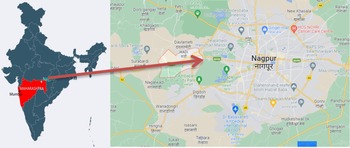
ASHAs were involved in outbreak investigation and control efforts in the outskirt of Nagpur city in Maharashtra. The peri-urban area is located 9-10 km from the main city (Figure 1). Industrial establishments are densely situated in the area and migrant occupants are relatively more than other regions of the city. Several identified slums are also present in this area. Yet, this area still falls under the rural health system of one of the Primary Health Centers (Vyahad PHC), which caters to around 65,000. Of the 65,000 population under this PHC, around 9000 people live in urban slums spread across a 2-3 km radius and functioning under one subcenter. This urban slum of 9000 people at risk of this outbreak is served through 13 ASHAs (a local female community member selected through community leaders and trained over 42 d in various health-related issues). Access to water in this peri-urban area is reportedly poor from March to July. The majority of the households rely on municipal water supply for regular use, including drinking water. Every year during the summer, similar outbreaks are reported, which was highly challenging for the health staff working under that subcenter.
Hepatitis E outbreak site from peri urban slum Nagpur 2019.

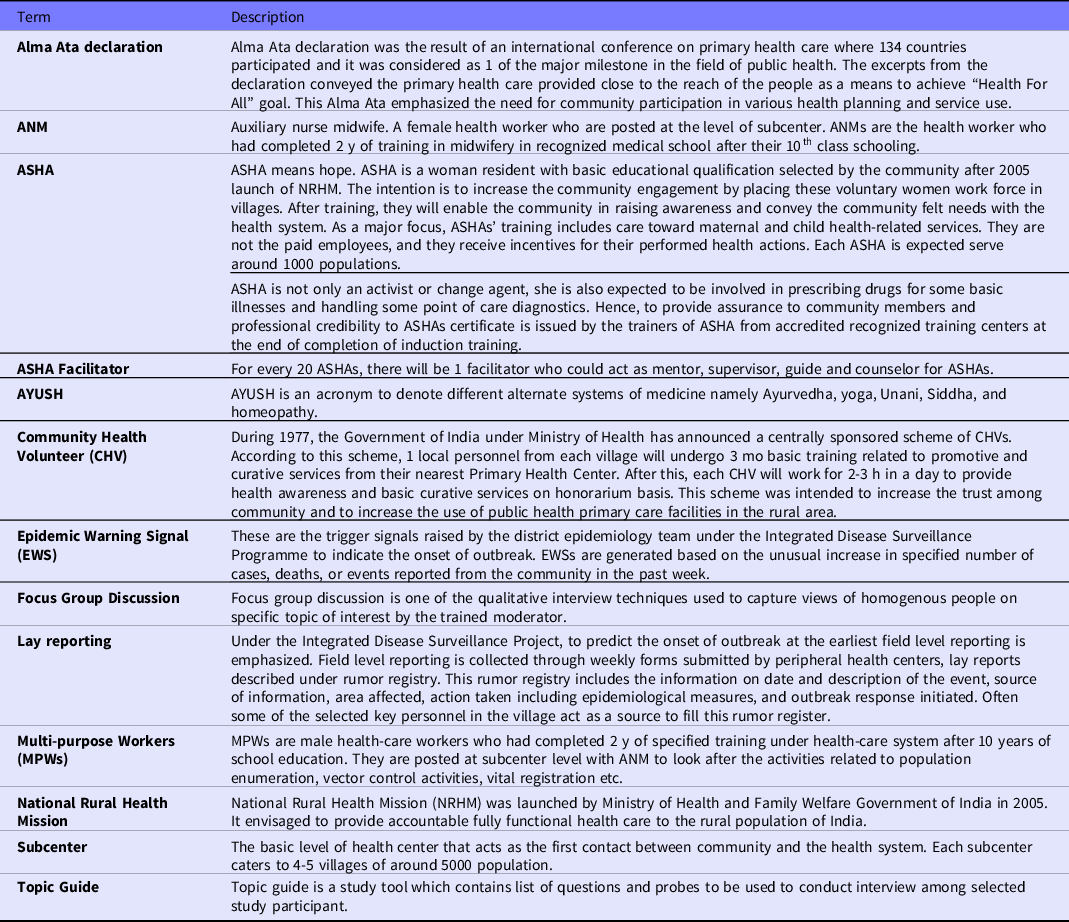
Details of various terms used in the study is explained in Table 1.
List of terms used in the study

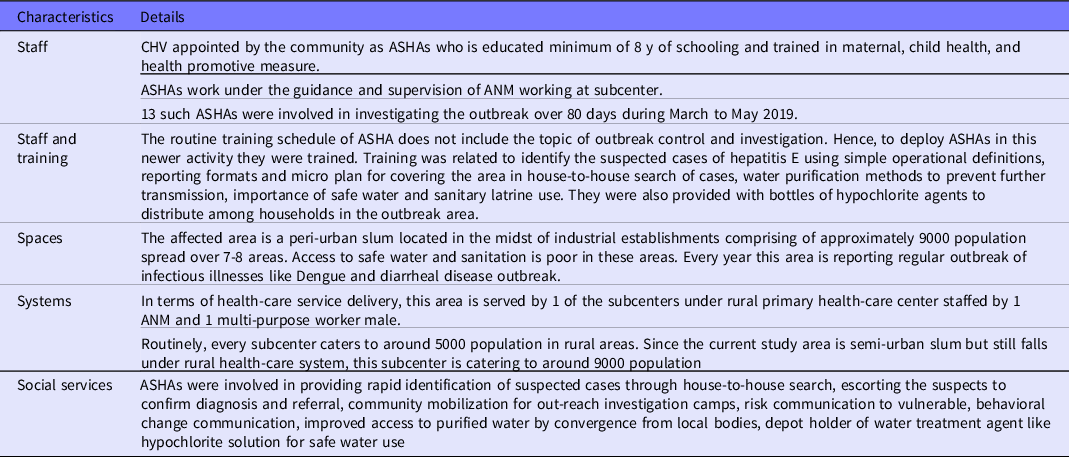
Details of study context according to Partner’s in Health Framework

Data Collection
Before the data collection, approval was obtained from the District Health Department and the in-charge medical officer. There were 13 ASHAs serving in the specified urban slum. In the specified area, a man’s death was reported on March 11, 2019, and had evidence of hepatitis E positive serology. This created the Epidemic Warning Signal (EWS) in that area. All ASHAs were sensitized regarding the active search for suspected cases through house-to-house survey and expected roles toward control of this outbreak. Data were collected from all these ASHAs regarding line listing of cases (name, age, gender, and address) reported each day from the inception of the outbreak investigation (March 13, 2019) to until March 31, 2019). In addition, the aggregated number of households visited and the number of suspected cases identified by each ASHAs were reported by the ASHA facilitator (supervisor for ASHA) daily. Apart from this line listing, ASHAs were also involved in other outbreak-related activities such as raising awareness among the public, providing water treatment agents, converging with urban local bodies to promote access to safe water and sanitation, community mobilization of vulnerable population for seeking care. Various activities contributed by ASHAs in this outbreak were captured through records namely line list from ASHA diary, daily aggregated report submitted by the ASHA facilitator, water sample testing status proforma, outreach register kept at the subcenter, lab records, lab reports shared from the regional institute, and stock records. These records were used to collect data on the contribution of ASHA in different domains of outbreak response, using a predesigned semi-structured forms.
Following the quantitative data analysis, a focus group discussion (FGD) was conducted among ASHAs involved in this hepatitis E outbreak investigation to explore the perceptions and challenges faced while investigating the outbreak. Within the premises of the subcenter, the team of experts (K.S., S.B., and K.B.) trained in qualitative research techniques conducted the FGD using a topic guide during the convenient time for ASHAs. In the FGD, apart from ASHA 1 ASHA facilitator who supervised the work of ASHA was also present.
Consent for audio recording was obtained before the FGD.
Data Management
All the relevant quantitative variables extracted from different records were entered and analyzed in Microsoft Excel. The number of days involved and the number of suspects identified were described as frequencies. Verbatims of FGD were transcribed in English on the same day by the moderator who conducted the FGD. Two independent investigators analyzed transcripts manually to identify emerging codes. Codes emerged from the transcript were negative impact on involvement in other health-related activities such as maternal and child health, screening for diabetes and hypertension, noncompliance to behavioral change measures, inadequate logistics such as water purifying agents, rare difficulty in identifying suspected cases, long duration of outbreak, and lack of adequate response from other sectors like the water and public works departments. Similar codes were combined to generate categories under the overarching theme of challenges faced during the investigation of the outbreak.
Ethics
We obtained administrative approval from district health officer to extract information from records and interview the health-care providers involved in the outbreak control, including ASHAs. The detailed activity report was submitted to the district health office. As this activity was carried out as a part of routine public health activity, we obtained a waiver for consent from the Institute Ethics Committee of All India Institute of Medical Sciences Nagpur (IEC/Pharma/358)
Results
The context in which this activity was carried out is described using Partners in Health Framework in Table 2. 18 A total of 13 ASHAs were involved in the activity of outbreak investigation. All of them completed at least a high school education (10 years of schooling) and completed a 23-d induction training period. The age of the ASHAs participated in this activity ranged from 28 to 51 y. All ASHAs are living in the same residential area where the outbreak has occurred. The population served by each ASHA varied from 726 to 1586.
Activities Performed by ASHAs in the Outbreak Investigation
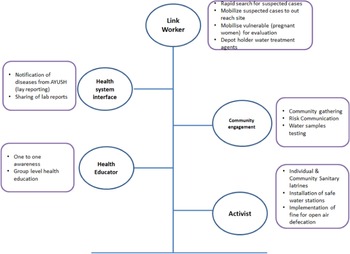
ASHAs were involved in the following activities (Figure 2).
-
1.1 House-to-house active search for cases
Flow diagram showing various contributions of ASHAs in outbreak of hepatitis E in Nagpur, Maharashtra, 2019.

ASHAs were trained initially regarding various symptoms related to viral hepatitis A and E transmitted by the feco-oral route. The training includes household enumeration, identification of suspected cases, and making a line list of all suspected cases. On an average, 100 households were visited by ASHAs in a day to identify suspected cases. Each ASHA has submitted the proforma, which contains house number, total number of household members, and number of household member with suspected cases. From March 13, 2019, to May 31, 2019, the house-to-house active search for suspected cases of hepatitis E was carried out. A total of 694 person days were contributed for this activity by ASHAs, and it amounts to an average of 8 person days of use each day. Over 2 mo, each household was visited at least 5-6 times by the ASHA of that corresponding area.
-
1.2 Reporting of suspected cases
A total of 192 cases were reported by ASHAs during the investigation period and the majority were male (64.6%). This includes 97 cases (50.5%) reported during the first week of household survey. Except for 5 cases, all (97.4%) are reported to the health center through ASHAs. The number of persons affected per 1000 population due to hepatitis E was 22. However, there was wide variation seen between wards, ranging from 7.5 to 31 per 1000 cases. Five cases that were not reported by ASHAs had developed symptoms before the active search from household surveys, and they directly reported to private or tertiary care facilities, which were later informed to PHC.
-
1.3 Escorting the suspected cases for confirmatory diagnosis
Following the EWS, in specific subcenter area outreach camps were organized to hasten the case detection. ASHAs were requested to disseminate the message regarding the camp and mobilized the suspected cases from their area to the outreach camp site. In the outreach camp site, blood samples were taken by a trained deputed laboratory technician for confirmation of diagnosis and to differentiate the condition from other tropical diseases.
-
1.4 Health education in the community
All 13 ASHAs had undergone training related to course of the disease, routes of transmission, complications, treatment, and control measures. In turn, they were requested to disseminate the message in their community. Community gatherings such as ritual gatherings (Bhajan mandals; Bhajan Mandals are places of worship where people gather for group singing events held with some lead singers and musical instruments) and observations of national leaders’ anniversaries were used as a platform to spread the messages. Posters/hoardings printed in vernacular language were installed by ASHAs in prominent places
-
1.5 Promoting sanitary latrines
In the areas affected by the outbreak, it was observed that the majority of the people were living in rented houses and were migrant occupants. Several households did not have any sanitary latrines. Community latrines in the area were exclusively used by women, and men often opted for open air defecation. After the outbreak, ASHAs from these areas raised their voices and discussed with urban local body members for building household level sanitary latrines. As a result, 3 community latrines with water facilities were built in the outbreak affected area. Also, ASHAs pushed the scheme of implementing fines for open defecation among men who indulge in such practice through urban local bodies (municipality).
-
1.6 Promoting safe water
After attending the session on control measures, ASHAs were actively involved in emphasizing the household water purification methods such as boiling, chlorination of water using commercially available chlorine drops. Also, there was also a move toward installing water stations where safe water was made available in bottles with nominal charges. Three new water automated teller machines (ATMs) (2 by urban local body and 1 by private firm), which dispense water on payment, were installed after the outbreak through ASHAs. They were also assisting the distribution of hypochlorite solution for household level chlorination of water. Around 3000 chlorine drop bottles were distributed through ASHAs in the area during the outbreak. Even though very minimal number of houses practiced any water treatment method before the outbreak, during and after the immediate outbreak period, more than 90% of households adapted at least 1 water treatment method.
-
1.7 First-hand information
Often, for diseases like jaundice, alternative systems of medicine and traditional healers were most commonly approached compared with allopaths. ASHAs acted as a first-hand informant by reporting the cases making visit to traditional healers as well. Formally, the outbreak investigation started since March 13, 2019. However, ASHAs were aware of the fact that, during January and February, more patients were visiting traditional healers for jaundice-related symptoms compared with other months. After attending the training session related to hepatitis A and E outbreaks, ASHAs notified the area ANM regarding the details of the suspected patients attending to traditional healers and private providers. In this way, ASHAs have replaced the need of lay reporting under disease surveillance.
-
1.8 Community mobilization for vulnerable group gatherings
Because the course of illness is severe among pregnant women, all of them residing in the affected area were mobilized through ASHAs to attend an awareness session related to hepatitis E. The same visit was used for active screening including blood examination to identify suspected cases among pregnant women. A total of 53 pregnant women residing in the area of outbreak were mobilized through ASHAs for testing and health education sessions.
-
1.9 Dissemination of report and referral
Laboratory investigation reports of all suspected cases were informed to the concerned patients through ASHAs. The reports shared by the nodal tertiary care testing center were sent immediately to the medical officer of the affected area. Through social networks such as Whatsapp, the reports were shared to corresponding ASHAs for further dissemination to suspected cases undergone testing. Patients who need to be managed in higher health facilities were escorted by ASHAs for further management.
-
1.10 Testing the water sample
Since the onset of outbreak, water samples were collected randomly from different sources such as public water tap, tanker lorries which supply water, over-head tanks, hand pumps, and bore wells and tested on a daily basis. ASHAs were assisting the multi-purpose workers and sanitary assistants in regular water testing, and they were also involved in follow-up water treatment based on the water quality testing reports.
Challenges Perceived by the ASHAs During the Investigation of Outbreak
Compromise in Other Health-Related Activities
Due to poor access to safe water and sanitation, the study area is facing frequent outbreaks due to Hepatitis and Dengue. Because each outbreak lasts for around 2 mo, ASHAs do not get adequate time to engage in other health-related activities such as antenatal care, immunization, participation in village health nutrition days, in-service training, etc.
Unsuccessful Efforts Toward Sustained Behavioral Change Communication
Although people were receptive to household purification of water initially, once the outbreak reaches the plateau, they do not continue to use any methods. Health education was merely seen as reflective measure of outbreak rather than the sustained preventive measure.
Inadequate Logistics
As a part of public health measure to prevent the outbreak, commercial chlorine drops were issued by the PHC for household purification of water. Each ASHA was given a pack of 25 chlorine drops bottles for household distribution in a day. Because these number of bottles are too few to cover the 100 households visited on that day, people raised concerns in this regard. There was not adequate funding to put up a poster in relevant places of public gatherings.
Other Illnesses With Similar Symptoms
Although they received training in identification of suspected cases of hepatitis, they were not confident when the household member reports symptoms like pallor as a suspected case of jaundice.
Extended Duration of Outbreak Investigation
Because the affected area is densely populated and access to basic amenities is very poor, the occurrence of outbreak is very frequent. At the same time, public health measures in place to prevent the outbreak such as periodic water testing and public health engineering measures are largely lacking. As a result, despite that the outbreak condition is recognized, it is not brought under control. Hence, multiple periodic household surveys became essential in that area. Frequent visits over a short period of time may impose loss of trust in the ability and preparedness of health system in outbreak control among the people.
However, ASHAs were positive regarding participation in the outbreak investigation due to following factors: opportunity to communicate with urban local bodies and staffs in health centers, scope to fulfil the role as an activist, new learning related to outbreak/epidemic condition such as jaundice, regular remuneration, feeling of ownership in community health care.
Discussion
ASHAs are routinely involved in maternal and child health-care–related activities and involving them in outbreak control is relatively a newer experience for the health system. Introducing ASHAs to health system had the purpose of bringing their role as activists in health-related areas. However, currently, they are merely considered to play an assistive role for the existing health staff. Hence, we aimed to find whether it is feasible to involve ASHAs in the outbreak and describe how ASHAs got an opportunity to perform their role together as an activist, community interface, and link worker when involved in outbreak control.
This health system-based research demonstrates the feasibility of involving ASHAs and captures their experiences investigating outbreaks for conditions such as hepatitis A and E. Also, this study illustrates how ASHAs could be deployed in the overburdened setting of peri-urban areas which are still under the administrative control of rural healthcare system. In the current study during the outbreak, effective house-to-house search of suspected cases required 8 working force in a day which could not have been possible if the ANMs and MPWs alone were relied upon to complete the activities. To carry out this activity, ASHAs have received the incentive at the rate of Rs125/d. Beyond this incentive, ASHA had the privilege to be a health educator for the community and was treated as a responsible citizen and health resource to the community.
ASHAs were able to identify the majority (97.4%) of the suspected cases and to notify the health system. Beyond identification of cases, they were also able to deliver concerted public health measures such as risk communication and health education and enabled the local public to adopt healthy behaviors such as hand washing, safe water, and sanitary latrines.
Despite several challenges, the opportunity for frequent community engagement, job satisfaction from delivered roles, and prospect for sustained remuneration in the outbreak activities facilitate them to get involved willingly in these kinds of activities.
Introducing the Community Health Worker scheme in the name of ASHAs has been one of the largest flagship programs in India. To date, ASHAs were mainly used in certain areas such as maternal care, institutional deliveries, immunization, and child care. Reference Bhatnagar7,9,Reference Shet, Sumit and Phadnis11,Reference Scott, George and Ved19–Reference Karol and Pattanaik24 There is an emerging perceived need to demonstrate the expanded roles of ASHAs in broader health-related domains, including social determinants and use them as a community change agent. Also, many experts have criticized and questioned in the context of gender norms and a patriarchal nature whether ASHAs have liberty and will to play a role of an Activist. Reference Mane Abhay and Sanjay10,Reference Scott, George and Ved19,Reference Scott and Shanker25–Reference Saprii, Richards and Kokho31
In the context of the rapid increase in noncommunicable diseases, emerging new infections, including the unprecedented recent COVID-19 pandemic necessitates the continuous evolving need for using the CHVs in the related activities. It is time to rethink the role of these grass-root workers: “they are merely an extra hand to fix the human resource constraints”. Reference Kane, Radkar and Gadgil26
This exercise describes various potential roles that ASHAs could play in future outbreaks. Not only in hepatitis A/E, if ASHAs were briefed appropriately regarding their roles a priori, they could also act as a valid source for notifying the disease conditions prone for the outbreak (lay reporting). This will help to reduce the delay in the notification as ASHAs are already in close liaison with alternate health-care providers (ie, traditional healers) who treat the condition in the community. Against the critique of the meager role of ASHAs as an activist, this field exercise renders a balanced platform to get involved in all expected domains (link worker, educator, Activist, health system interface, community engagement).
For the majority of the communicable enteric diseases, rigorous surveillance and improved awareness are recommended as strong measures for prevention and control. 32 As ASHAs in this outbreak can effectively deliver these interventions, routinely involving ASHAs with adequate in-service training can potentially bring a sustainable change. This will also facilitate the efficient use of other trained human resources such as auxiliary nurses and midwives (ANMs), multi-purpose workers (MPWs) and staff nurses in terms of intensive monitoring in the field and engage them in other health service delivery.
This is one of the few studies that described the role of ASHAs in newer health-related activities like an infectious disease outbreak. However, the current study has the following limitations. First, experiences are based on ASHAs working in semi-urban settings, whereas the majority of ASHAs will be working at rural areas. Second, ASHAs involved in the current study are better educated compared with other settings. Hence, a similar level of competency could not be expected in other settings.
As the observations are based on limited experience from a single epidemic investigation, the feasibility of involving ASHAs in other outbreak-related activities such as contact tracing, including the current COVID-19 could be documented in future studies. The majority of ASHAs had access to smart phones. Under the recently introduced Health and Wellness Centers scheme, provisions are also made to procure smartphones for ASHAs for population enumeration. 33 Thus, there is a scope for efficient data capture through mobile phones including geographical coordinates for detailed water and sewage distribution mapping. The location of suspected cases could also be explored in future studies.
Conclusions
It is feasible to implement the investigation of outbreaks through ASHAs. In a peri-urban setting where the health workforce and population are grossly mismatching, deploying ASHAs gave additional opportunities to fill the human resource gap. Despite several challenges experienced by the ASHAs in the field, they are willing to participate in these kinds of activities regularly as these exercises gave them a balanced platform to fulfil the role as an activist, link worker, and a community interface. If a similar demonstration is experienced in several field settings, it leaves a scope to introduce or integrate the detailed infectious disease outbreak module in routine training plan for ASHAs.
Acknowledgments
The authors gratefully acknowledge the support rendered by District Health department of Nagpur, the In Charge Medical Officer Dr. Sonali Bansod, and her team of paramedical professionals and frontline workers involved in the outbreak investigation.
Conflict of Interest
None declared.