


Background
The health status of Aboriginal and Torres Strait Islander people comes from a complex interaction of socio-economic, environmental and socio-political factors experienced as ongoing colonisation (National Aboriginal Community Controlled Health Organisation, 2019). The health and life expectancy for Aboriginal and Torres Strait Islander Australians is disparate to other Australians as indicated by higher morbidity and mortality rates (Commonwealth of Australia, 2019). Closing the health disparity gap for Aboriginal and Torres Strait Islander people is a national priority in Australia (Commonwealth of Australia, 2018). The Australian Government's Closing-the-Gap strategy aimed to improve health, housing, education and employment by the implementation of services and programmes supported by policies and partnerships (Commonwealth of Australia, 2019). However, some of the targets set in 2008 remain unmet (Australian Government, 2019). The Australian Human Rights Commission (2019) recommended the involvement of Aboriginal and Torres Strait Islander people in the design, development and delivery of health services to address the shortfalls.
An Aboriginal and Torres Strait Islander health practitioner (Practitioner) is a person registered by the Aboriginal and Torres Strait Islander Health Practice Board (Aboriginal and Torres Strait Islander Health Practice Board of Australia, 2012b). Although, their role is synonymous with the Aboriginal and Torres Strait Islander Health Worker (Kuipers et al., Reference Kuipers, Harvey, Lindeman and Stothers2014), Practitioners are educated and regulated for their role (Aboriginal and Torres Strait Islander Health Practice Board of Australia, 2012a). Reported confusion about the Practitioner/Health Worker roles prompted recognition of Practitioners as a distinct profession and Practitioner regulation commenced from 2012 onwards (Hill et al., Reference Hill, Harvey, Felton-Busch, Hoskins, Rasalam, Malouf and Knight2018). For the remainder of this paper, the Practitioner and the Health worker will be collectively referred to as Practitioners because of the ongoing similarities of their role even though they are titled differently (Leditschke and Maher, Reference Leditschke and Maher2011).
Aboriginal and Torres Strait Islander health practitioners work with people in multiple settings to facilitate and deliver health care (Aboriginal and Torres Strait Islander Health Practice Board of Australia, 2012a). Practitioners are crucial to the success of the closing-the-gap strategy because of the vital role they have in health care delivery (Rose, Reference Rose2014). To successfully fulfil their role a Practitioner requires diverse skills and knowledge in primary and secondary health care. To be licensed, the applicant must complete the Certificate IV approved qualification, identify as Aboriginal and Torres Strait Islander and be accepted by the community (Aboriginal and Torres Strait Islander Health Practice Board of Australia, 2012a). To maintain their practice license, the registrant must complete 60 h of continuing professional development (CPD) over 3 years with a minimum of 10 h education in any 1 year (Aboriginal and Torres Strait Islander Health Practice Board of Australia, 2012b). At least 45 h of the CPD must meet regulatory requirements for ‘formal CPD activities’ and does not include the first-aid certificate (Aboriginal and Torres Strait Islander Health Practice Board of Australia, 2012b).
The standards are clear that CPD is necessary for professional practice (Rose, Reference Rose2014). Preferably, the Practitioner's skills need to match the community needs to achieve the most significant benefit from their role (Health Workforce Australia, 2012). Meeting Practitioner continuing education (CE) should be factored into all processes intended to build Aboriginal and Torres Strait Islander health services capacity for closing-the-gap, particularly in regional/rural areas (Perlgut, Reference Perlgut2005). Furthermore, sustaining the health sector focus on wellness, illness prevention and primary health care requires enough educated Practitioners to be able to respond to the community's needs (Health Workforce Australia, 2011).
Despite the essential contributions that Practitioners are said to make to the health and welfare of Aboriginal and Torres Strait Islander communities their numbers are few compared to other health professionals (Leditschke and Maher, Reference Leditschke and Maher2011) and their role is not well understood (Weston, Reference Weston2011). For example, only 965 Aboriginal and Torres Strait Islander Health Practitioners and 442 nursing support workers were identified Australian-wide in the 2011 workforce data (Health Workforce Australia, 2011). Practitioners work as generalist members of primary care teams, in alcohol and drug treatment, mental health, diabetes, eye and ear health and sexual health, or as hospital liaison officers (Australian Institute of Health and Welfare, 2009). Their diverse contexts and expansive scope of practice demand sensitive, comprehensive educational responses to meet their evolving CE needs (Leditschke and Maher, Reference Leditschke and Maher2011).
Innovations in primary health services in rural and remote Australia have enhanced access, effectiveness and sustainability of healthcare delivery in ‘diverse settings where the need for care is great and existing health outcomes poor’ (Wakerman and Humphreys, Reference Wakerman and Humphreys2011, p. 119). However, there is still much to be done to address the ongoing CE needs of the Practitioners who provide the care in these changing circumstances (Community Services and Health Industry Skills Council, 2015). Vocational education providers equip Practitioners with a range of knowledge and skills (Rose, Reference Rose2014).
While regulation of a workforce assists the constituents by guiding them to engage in CE, it does not ensure access to it. For example, the education requirements of the health workforce are influenced by social and geographical determinants, such as location and community demographics (Giri et al., Reference Giri, Frankel, Tulenka, Puckett, Bailey and Ross2012). Rural and remote practitioners prefer face-to-face education, but due to their geographic area are placed at a distinct disadvantage because often the required CE is not offered in these regions (Humphreys et al., Reference Humphreys, Wakerman, Wells, Kuipers, Jones, Entwistle and Harvey2007). Furthermore, Practitioner learning can be impeded when Aboriginal and Torres Strait Islander knowledges and practices are not validated nor embedded into the educational processes and products (Martin and Mirraboopa, Reference Martin and Mirraboopa2003; Yavu-Kama-Harathunian and Tomlin, Reference Yavu-Kama-Harathunian and Tomlin2008).
Practitioners can experience education gaps as a result of the non-specific education modalities used by mainstream providers (Clapham et al., Reference Clapham, Digregorio, Dawson and Hughes1997). Therefore, innovative recruitment and education solutions are required to encourage and support Practitioners to participate and remain in their regional health services to close the workforce distribution gaps evident in rural and remote areas (Health Workforce Australia, 2011). Thus, building up the Practitioner presence and strengthening the Aboriginal and Torres Strait Islander community capacity for improved health outcomes (Kuipers et al., Reference Kuipers, Harvey, Lindeman and Stothers2014).
While the Practitioner workforce in Australia is comparatively small, their impact on the health of their Aboriginal and Torres Strait Islander community is powerful. Practitioners have a unique role and therefore, specific CE needs. Access to education and training is a significant issue in the retention of Practitioners in regional and remote health settings. The literature about CE programmes for Practitioners is limited. This study aimed to identify and explore the perspectives of Practitioners about their CE needs, its availability and how best to deliver it to produce and support effective practice.
Methodology
The study location was in a South-East Queensland region. Two Aboriginal Medical Services (AMS) were purposefully selected because they were the only AMS in the area. An invitation email was sent to the AMS administration contact. That person forwarded the email on to the Practitioners and their supervisors. The participants were provided with full details of the project in understandable language, and their consent was formally recorded in a consent form. The participants were assigned to one of two groups. The AMS practice managers were group 1, and group 2 included Practitioners.
This study was conducted according to the National Health and Medical Research Council (2018) guidelines for ‘Ethical conduct in research with Aboriginal and Torres Strait Islander Peoples and communities’. Our awareness of the colonised nature of health care reinforced the need to demonstrate culturally safe and ethical practice throughout this study (Williams, Reference Williams2001; Toombs, Reference Toombs2012). Therefore, an Aboriginal and Torres Strait Islander community advisory group was consulted on all aspects of the research. The advisory group included an Aboriginal and Torres Strait Islander Elder and health professionals from several Aboriginal and Torres Strait Islander community health organisations. The advisory group were part of the research team who designed and developed the research activities.
All research activities were reviewed to preserve and protect the Aboriginal and Torres Strait Islander knowledge and practices of the participants (Martin and Mirraboopa, Reference Martin and Mirraboopa2003; Yavu-Kama-Harathunian and Tomlin, Reference Yavu-Kama-Harathunian and Tomlin2008; Hart et al., Reference Hart, Straka and Rowe2017). Sensitivity to the unique concerns for Aboriginal and Torres Strait Islander people's health and well-being was a high priority for the advisory group so collaboratively, we established an Aboriginal Terms of Reference that guided the cultural compass of this research design to protect and promote cultural lore (Yavu-Kama-Harathunian and Tomlin, Reference Yavu-Kama-Harathunian and Tomlin2008; Toombs, Reference Toombs2012; Sherwood and Kendall, Reference Sherwood and Kendall2013). In keeping with the conceptual framework of this study, the participants were assured that this was their story and that they were considered the experts when discussing their CE needs and their practice (Reid and Taylor, Reference Reid and Taylor2012). Thus, the knowledge generated from the study remains with its community (Yavu-Kama-Harathunian and Tomlin, Reference Yavu-Kama-Harathunian and Tomlin2008).
The methods included combinations of yarning and deep listening to explore the participants culturally grounded ways of knowing (Martin and Mirraboopa, Reference Martin and Mirraboopa2003; Yavu-Kama-Harathunian and Tomlin, Reference Yavu-Kama-Harathunian and Tomlin2008; Hart et al., Reference Hart, Straka and Rowe2017). It was paramount in this Western qualitative study to practice in ways that enabled ‘deep learning and knowledge co-creation’ (Hart et al., Reference Hart, Straka and Rowe2017, p. 332). Endorsement from the advisory group members ensured that the Aboriginal and Torres Strait Islander ways of knowing were informing the participatory action research (PAR) processes as was intended by the research design (Yavu-Kama-Harathunian and Tomlin, Reference Yavu-Kama-Harathunian and Tomlin2008).
A PAR design and appreciative inquiry (AI) methods were used in this multi-staged project because these collaborative methods respect the knowledge of Aboriginal and Torres Strait Islander people and are appropriate in community-based collaborative research designs (Clapham, Digregorio, Dawson, and Hughes, Reference Clapham, Digregorio, Dawson and Hughes1997; Yavu-Kama-Harathunian and Tomlin, Reference Yavu-Kama-Harathunian and Tomlin2008; Toombs, Reference Toombs2012; Hart et al., Reference Hart, Straka and Rowe2017). PAR empowered the participants in the decision-making of the research process and AI intentionally sought-out what worked well for these participants. The AI approach enables participants to focus on their aspirations and positive aspects of their experiences (Knibbs et al., Reference Knibbs, Underwood, Macdonald, Schoenfeld, Lavoie-Tremblay, Crea-Arsenio, Meagher-Stewart, Blythe and Ehrlich2012). Before engagement with the participants commenced, the research design was endorsed by the hosting AMS directors and approved by a university ethics committee (HREC approval no. A/16/827). Staged data collection began with invitations to the Practitioners to participate in focus groups and for their supervisors to participate in separate individual interviews. The established but unknown workplace relationships of the participants may have influenced their narratives and is, therefore a limitation of this study.
Group 1 managers were asked about their perceptions of the education needs of group 2 during individual semi-structured interviews. The discussion included the supervisor's suggestions of how best to meet the needs of group 2. Group 2 involved nine Practitioners in focus groups. Being consistent with the principles of AI, a visioning activity was conducted. In this activity, the participants were asked to imagine the best Practitioner and describe the knowledge, skills and attributes that the imaginary Practitioner possessed. The focus group questions explored the CE needs of the participants focussing on what was needed to be the best Practitioner. The focus group discussions were like the interviews and included exploration of CE topics, delivery modes and providers. Additionally, group 2 participants were encouraged to discuss career aspirations and envisage their CE pathways.
Stage 2 of this study was a questionnaire that included a table of the CE topics identified by both groups. The questionnaire enabled the participants to prioritise the CE. The CE topics were categorised according to their association or similarity. For example, ‘documentation’ was listed with ‘time management’ and ‘research skills’ because the participants related ‘documentation’ to being organised to meet client and organisational requirements.
The language of the questionnaire was reviewed by a representative from group 1 for its suitability to the Practitioners. Once the questionnaire was endorsed, it was distributed to all Practitioners employed at the two AMS's by a non-participant administration assistant. The questionnaire included instructions about prioritising the CE listed and another plain language consent statement. Completion of the questionnaire was voluntary, and all responses were anonymous. Space was available on the questionnaire for the participants to explain their reasons for prioritising educational topics. Finally, the questionnaire participants were asked to provide details of education providers that they knew of, who could meet their identified needs and include any other information that they wanted to contribute to the study (Appendix 1). The data generated from the questionnaire were combined as a descriptive analysis of the CE priorities and used to create the CE programme framework (Appendix 2).
This study was funded by the Central Queensland, Wide Bay, Sunshine Coast PHN and endorsed by the Advisory group and the Aboriginal and Torres Strait Islander leaders and management of the AMS.
Findings
Contexts of practice
Four AMS managers consented to be interviewed, representing 40% of the senior staff. Nine Practitioners representing 75% of the workforce consented to attend focus groups held in venues of the participants’ choice.
Both AMS's used a Multidisciplinary Care Team (MDCT) model. The model involved case-management for delivering various health services to clients with chronic diseases. The Practitioners broad scope of practice included undertaking health assessments and healthy ears screenings and conducting a range of Health Promotion activities such as nutritional screening, immunisation, physical, maternal, social and emotional wellbeing. Sometimes Practitioners were required to attend appointments with the client at other community organisations. They partnered with schools and other healthcare services to complete health screening and education.
Findings from the manager interviews
Group 1 participants were all RN's except for one who was an operations manager. Group 1 was unanimous in their praise of the Practitioners described as, ‘ensuring smooth delivery of health and wellbeing services to the client and responding to the communities’ diverse needs', being the client advocate and enabling client engagement. Collectively, group 1 participants described Practitioners as ‘the ones who motivate the client to attend to their health needs’. The Practitioners were seen as ‘ordinary people’, with a ‘willingness to learn’ who were ‘privy to local knowledge, lore and culture’ and ‘knowing everything about the client’.
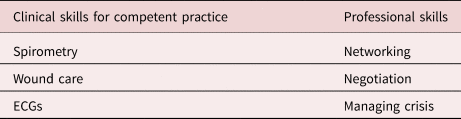
Table 1 includes a list of practical, clinical and professional knowledge and skills identified by group 1 as expectations of the Practitioner in practice.
Knowledge and skills for Practitioner practice

However, group 1 participants expressed concern about the lack of access to appropriate CE for the Practitioners to gain and develop the expected knowledge and skills to provide safe and effective health care to clients. Despite legislative requirements and the expanding scope of Practitioner practices CE in this region was traditionally clinically focussed and, in this region, directed at Doctors, Nurses and Allied Health professionals excluding Practitioners.
Findings from the Practitioner focus groups
Group 2 imagined the attributes of the best Practitioner after being given an overview of AI and an explanation of prospective visioning. The visioning activity triggered discussion about professional values and career aspirations. The findings are thematically presented using participant phrases to contextualise each theme.
Career aspirations—‘I really want to do it’, ‘It's the time and the finances’, ‘I just feel shamed’.
Some participants were enrolled at university as student nurses, and they shared experiences by describing it as ‘Too much’ because of family, personal and work commitments. One participant said:
‘For me, it's knowing where to go and who to talk to. It's so overwhelming’.
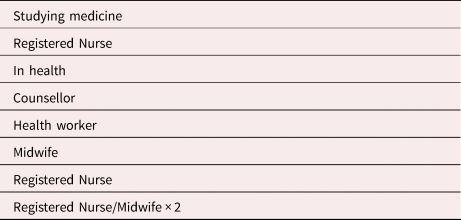
Table 2 includes the roles that these participants aspired to fulfil. Other health professions were mentioned, but the participants had no experience of them, and no discussion about them unfolded.
Career aspirations of Practitioners

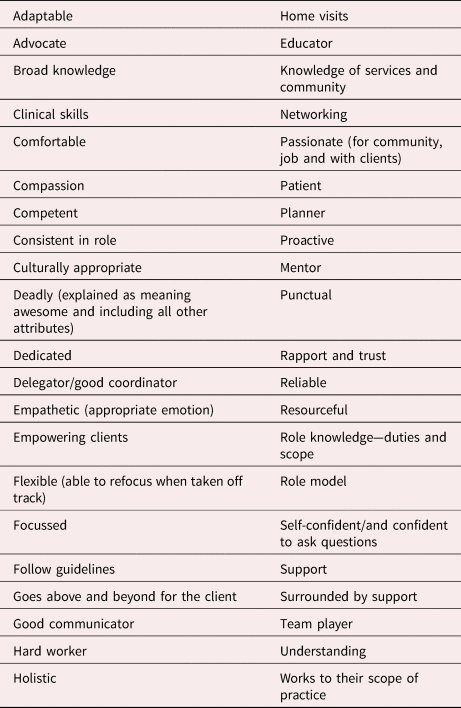
The characteristics of the best Practitioner were described as all culminating in the notion of the ‘Deadly’ Practitioner. Probing questions about ‘What is it that makes them the best?’ and ‘What is it that they are doing well?’ invoked a positive atmosphere.
In brief, the participants reinforced that a ‘Deadly’ Practitioner had all the attributes identified in Table 3. The further discussion identified the education needed to gain all the knowledge, skills and attributes of the ‘Deadly’ Practitioner.
Attributes of the best Aboriginal and Torres Strait Islander health worker/practitioner

Group 2 talked about the Certificate III and Certificate IV education qualification as the foundational skills set required for their role. However, they identified gaps, with the consensus that:
‘We don't have enough knowledge about chronic diseases to be able to educate the patients. Like patient condition's, interventions and how to assess for risk factors. We don't go in-depth into diabetes, cardiac, respiratory and renal disease’.
Collectively, group 2 were concerned that significant client health issues were being missed because of the limitations of their knowledge. Furthermore, reflecting on their practitioner course, they described the pressure of study as:
‘It can get overwhelming. There's a big stack of books, and we don't know where to start’.
To manage the study load while working fulltime and with family and personal commitments, one suggestion was:
‘Life would be easier if we had someone to talk to about our studies’.
The scope of their foundational education was discussed as being varied from limited to adequate and sometimes more than required. The next theme explores the scope of practice as it relates to educational needs.
When asked about their scope and what they needed to do their job well, one said: ‘A change in Government. A refresher course’. This participant explained the comments by:
‘We've done our certificate, but we can't use it because of the State Government is not letting us assist with medications and if you don't use it. You lose it’.
This conversation was about the Medications Assist course included in the Certificate IV programme. State of Queensland The Health (Drugs and Poisons) Regulation 1996, (2020) restricts these participants from handling medications. For example, they were not permitted to assist with medications unless employed in an isolated practice zone (State of Queensland, 2018).
Conversely, the Practitioners have a broad scope of practice encompassing a diverse range of activities which requires clinical competency. Daily tasks such as:
• ‘ECG's’,
• ‘spirometry’
• ‘hearing tests’ and
• ‘wound management’.
In addition to technical competence, personal skills such as ‘communication’, ‘networking’ and ‘time management’ emerged. Furthermore, professional skills identified were ‘advocacy’, ‘motivational interviewing’, ‘confidentiality’ and ‘patient education’.
Communication was discussed in-depth as a core skill that the best Practitioner would use to empower patients. For example,
‘The best health worker would be able to communicate with the patient in a way that they could come up with their own solutions’.
When asked to explain the aspects of communication that were important, group 2 raised ‘internal communication skills’ as a learning need. ‘We get nervous to ask hard questions of other health staff’, and they relied on each other to help raise questions with GP's.
When group 2 mentioned a ‘Knowledge of services and community’, ‘fishing for information about other services’ was a common activity. For example, ‘You see a client with needs, and you go looking for ways to fix it’.
The lack of CE targeting these participants was the most significant finding in this study. Moreover, frequent exclusion of them from available clinical education that related to their practice was disturbing.
There's a lot of education that is relevant to us, but you apply and get knocked back because it's for nurses.
Moving on from the topics of CE the group 2 participants described the types of CE that would suit their needs in this region.
These participants highly prioritised educational interaction with others, and face-to-face delivery being their most preferred educational model. For example, ‘The block sessions of the certificate were perfect for getting the work done and not having to bring it home’. Conversely, though, ‘the pre-reading was too much’ for one participant. While another said:
‘I struggled with the big pile of books, and I thought, I'm not gonna get through this. Until my supervisor arranged for one book at a time’.
Other suggestions for the best modes of delivery included:
• group-based activities,
• on-site training, online learning with tutor support,
• workshops,
• mentoring programmes and
• side-by-side assessments of clinical skills.
Time away from clinical responsibilities was deemed necessary. One innovative suggestion involved tutor appraisal of a pre-recorded video of the Practitioner on task. This participant reflected: ‘I love constructive criticism’. Others in this focus group agreed with ‘Yeah so do I’ and ‘yeah because we're not all perfect’.
Learning from constructive criticism and translation of learning to practice was recommended as requiring a
A supportive culture that builds our confidence and helps with our competence.
Clearly these participants were not opposed to CE. On the contrary, they were willing and wanted to embrace it. They suggested ‘Once I'm studying; I really enjoy it. It's just the getting there that is the problem’.
Summary of stage 1 findings
Group 2 participants described the skills and attributes of the best Practitioner as caring, compassionate, committed with excellent interpersonal communication. The notion of the ‘Deadly Practitioner’ represented in Table 3, while not raised by group 1, did confirm the attributes that they had listed in Table 1. Both groups discussed preliminary education as providing foundational knowledge and skills but said that gaps such as ‘chronic disease prevention’, ‘patient education’ and ‘child development’ existed. Furthermore, they acknowledged that the delivery mode of the preliminary education did not suit everyone. Finally, and significantly both groups identified that there were no specific Practitioner CE programmes delivered in this region. The available CE was exclusive to other health professionals, even though the content matched the needs of these participants.
Findings from stage 2
Ranking the education topics
An 88% response rate was achieved from nine questionnaires distributed. Some participants could not prioritise all topics using conventional numbering. For example, some ranked more than one topic as number 1, 2 or 3. One respondent explained:
‘I found it real hard to put in order of what was more important’.
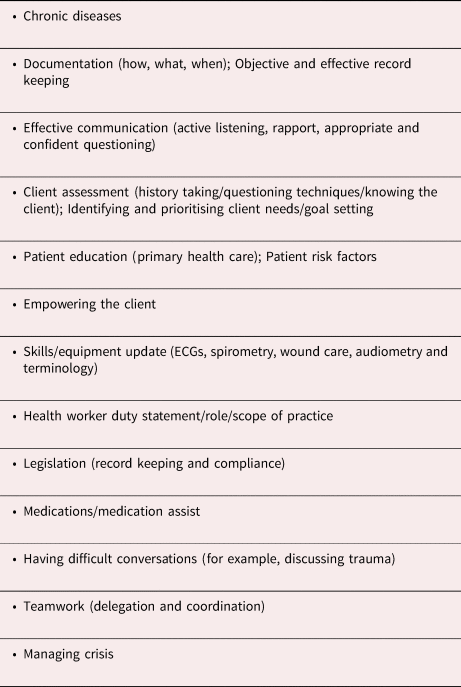
There were some definite preferences for topics. The participants highly ranked topics like ‘Chronic disease’, ‘Patient education’ and ‘communication’. For example, ‘Patient education empowers the patient and allows them to make informed decisions’. One questionnaire included ‘Without effective communication and empowering the client; I don't believe you can successfully carry out your duties to help the client’.
Table 4 is a summary of the topics that were identified and the order in which they were prioritised.
Prioritised CE topics

Availability of education
Knowledge of local Practitioner CE was limited. For example,
‘None’, ‘I don't know of any—however, training does get forwarded from time-to-time via email, but they are sometimes not available for us. More for nurses’.
Two participants had looked for relevant education providers in the local area for relevant topics and advised that ‘There is only one that I know of locally’ and ‘I've researched this, and there is nothing for us’.
Summary of stage 2 findings
The participants prioritised several of the CE topics in the questionnaire, which made it challenging to rank each topic separately. However, some topics were rated highly, and they are listed in Table 3. These topics were ranked by the participants as those that would meet their CE needs. However, the written questionnaire responses indicated a disproportion of CE providers in this region. Therefore, the participants’ CE needs were not addressed adequately.
Discussion
The comprehensive range of primary health services (Albany, Reference Albany2010; Commonwealth of Australia, 2018) provided by the AMS in this study meant that Practitioners have a broad overview of the health and well-being of their community (Albany, Reference Albany2010; Kuipers et al., Reference Kuipers, Harvey, Lindeman and Stothers2014). Contributing to the notion that Practitioners bridge the gap between Western and Traditional health practices this study highlights the significant advocacy role Practitioners have in enabling client engagement with health services (Hill et al., Reference Hill, Harvey, Felton-Busch, Hoskins, Rasalam, Malouf and Knight2018). The Practitioner's scope of practice was broad but unique to their context, community demographics and is a testament to the breadth of their CE needs. These findings contribute to the current understanding of Practitioners roles in regional Australia.
Isolation, discrimination and lack of support for Aboriginal and Torres Strait Islander people in accessing CE programmes was a common theme for the Practitioners in this study and adds to the literature in this area as an ongoing issue (Best and Stuart, Reference Best and Stuart2014; Stuart and Gorman, Reference Stuart and Gorman2015). Toombs (Reference Toombs2011) recommended teaching resilience to enable self-motivation by strengthening positive attitudes and deal with stress. However, resilience would not resolve the exclusion of these Practitioners from CE because their inclusion was beyond their control. Toombs (Reference Toombs2011, p. 26) made the poignant comment that ‘our students have the right to thrive, to reach their full potential and to have positive impacts on others’. Proactively engaging Practitioners in CE will develop those ‘Deadly Practitioner’ skills and help to gain qualifications that could potentially enhance the career paths and improve lifestyles (Toombs, Reference Toombs2011).
Building Practitioner capacity is needed in Australia's dynamic healthcare environment (Humphreys et al., Reference Humphreys, Wakerman, Wells, Kuipers, Jones, Entwistle and Harvey2007; Kuipers et al., Reference Kuipers, Harvey, Lindeman and Stothers2014). The characteristics of the best ‘Deadly Practitioners’ identified in this study highlighted a range of personal attributes and clinical skills used to provide comprehensive primary health care within a unique community-controlled model of care that is desirable in an AMS (Rose, Reference Rose2014). Regionally-based Practitioners, like those participating in this study, with their knowledges and skills are crucial to any strategy that intends to design, develop and implement health services in partnership with community members and the AMS (Australian Government, 2019).
Enhancing educational experiences to develop such a Practitioner workforce is recommended by National Aboriginal and Torres Strait Islander Health Worker Association (2014). Formalised learning opportunities exist for other health care workers such as nurses and midwives (Queensland Government, 2015) and doctors (The Royal Australian College of General Practitioners (RACGP), 2016). But for many other health workers, including these participants CE is limited (Community Services and Health Industry Skills Council, 2015). Additionally, for CE to be effective it needs to be relevant to Practitioner practice, based on their needs, have provision for reinforcement in practice and be linked to a reliable education provider to create a seamless progression (Wakerman and Humphreys, Reference Wakerman and Humphreys2011; Giri et al., Reference Giri, Frankel, Tulenka, Puckett, Bailey and Ross2012; Queensland Government, 2015). The Practitioners in this study identified gaps in their pre-registration and CE yet they strived to provide holistic, client-centred care. Furthermore, their education needs were contextually grounded to respond to the changing community demographics, service capabilities and the scope of practice. Additionally, these Practitioners described what they needed to be ‘Deadly’ and like others were dissatisfied by restrictions on their practice and educational opportunities (Health Workforce Australia, 2011; Queensland Government, 2013, 2015; Rose, Reference Rose2014). Enabling Practitioners to fully function in supportive environments would improve experiences for client and clinician. For example, task forces and strategies for other professionals have enabled them to practice to their full scope (Queensland Government, 2015).
Regionally-based education providers are perfectly positioned to support the CE of their healthcare workforce (Martyn, Reference Martyn2016). Formal CE that focusses on enhancing Practitioner clinical knowledge and skills can be delivered by regional universities and vocational training organisations (Giri et al., Reference Giri, Frankel, Tulenka, Puckett, Bailey and Ross2012; Hill et al., Reference Hill, Harvey, Felton-Busch, Hoskins, Rasalam, Malouf and Knight2018). However, this study confirms that even when providers are available, Practitioners encounter inequity because the CE is not tailored to their needs or they are excluded. Barriers to CE can be demotivating and disenfranchising (Rose and Glass, Reference Rose and Glass2008; Weston, Reference Weston2011; National Aboriginal and Torres Strait Islander Health Worker Association, 2014; Queensland Government, 2015).
Given the unique and essential nature of the Practitioner role, the lack of attention to their CE could be contributing to a widening of the inter-professional education (IPE) gap with their health industry counterparts (Weston, Reference Weston2011). IPE is recommended to help members of the health workforce to learn from and about each other (Hendrick et al., Reference Hendrick, Britton, Hoffman and Kickett2014). The advantages of IPE include collaborative learning, shared understanding and inter-disciplinary communication leading to appreciation and respect of each-other's role (Martyn et al., Reference Martyn, Scott, van der Westhuyzen, Spanhake, Zanella, Martin and Newby2019). Integrating Practitioner CE IPE programmes would strengthen professional relationships and promote Practitioner access to CE (Weston, Reference Weston2011; Martyn et al., Reference Martyn, Scott, van der Westhuyzen, Spanhake, Zanella, Martin and Newby2019). Moreover, the Practitioner is in the best position to determine their educational needs because their diverse roles and if IPE were available they could self-select appropriate CE. Work-based IPE can be systematically achieved through designing participant-centred curricula (Weston, Reference Weston2011).
Recommendations
Practitioners are at the forefront of AMS's and their CE requires attention. Sensitive and authentic engagement between local health and education stakeholders to develop collaborative CE pathways is vital to increasing recruitment and retention of Aboriginal and Torres Strait Islander peoples in health education programmes (Bond, Reference Bond2010; Best and Stuart, Reference Best and Stuart2014). Additionally, realising the cultural construct of health by acknowledging the pivotal role of the Practitioner is crucial to address Australia's close-the-gap objective (Queensland Health, 2010). Furthermore, once the CE pathways are developed, increased representation of Aboriginal and Torres Strait people in healthcare roles is highly likely; thus, strengthening the health workforce to respond to the burden of disease and ‘close-the-gap’ (Commonwealth of Australia, 2008; Leditschke and Maher, Reference Leditschke and Maher2011; Health Workforce Australia, 2012).
Involving Practitioners in curriculum development enables self-determination and puts Aboriginal and Torres Strait Islander people in ‘control of the solutions’ that are meaningful to their communities (Graham, Reference Graham2011, p. 15). Therefore, developing on-country CE programmes that use Indigenous methodologies and terms of reference are recommended from these findings. Furthermore, employment strategies are recommended for the success and sustainability of CE programmes. Time-out to learn and cooperative face-to-face learning through deep listening and yarning programmes can facilitate practice-based discussions, formulate supportive systems and, strengthen connections with the community. These CE programmes should engage in a range of culturally grounded pedagogical approaches such as yarning, cooperative learning, deep listening and use established online platforms (Weston, Reference Weston2011; Yunkaporta and Kirby, Reference Yunkaporta, Kirby, Purdie, Milgate and Bell2011). That way, Practitioners can share knowledge with peers in a culturally safe environment using educational processes and spaces to engage in culturally collaborative ways (Clapham et al., Reference Clapham, Digregorio, Dawson and Hughes1997; Burgess and Cavanagh, Reference Burgess and Cavanagh2015; Heckenberg, Reference Heckenberg2015; Hart et al., Reference Hart, Straka and Rowe2017). Furthermore, learning objectives linked to performance indicators that have contextual, cultural, educational and health service significance will strengthen the usefulness of Practitioner CE and make the outcomes meaningful.
Finally, but importantly, one point of difference and a strength of this study was combining PAR with AI and having an advisory group to culturally guide the process. This authentic study was designed, developed and implemented with the involvement of the Aboriginal and Torres Strait Islander health community (Clapham et al., Reference Clapham, Digregorio, Dawson and Hughes1997; Williams, Reference Williams2001). The participants were positioned as experts in determining the best ways to develop and sustain educational solutions (Bushe, Reference Bushe, Boje, Burnes and Hassard2011; Toombs, Reference Toombs2012). PAR is a Western methodology that is recognised by Aboriginal and Torres Strait Islander researchers as aligning with supportive, culturally safe practices and Aboriginal terms of reference (Williams, Reference Williams2001; Yavu-Kama-Harathunian and Tomlin, Reference Yavu-Kama-Harathunian and Tomlin2008). Combining PAR with AI, enabled exploration of the most valued and valuable aspects of the Practitioner role and their CE needs from the participants' perspective.
Further use of these research methods is warranted to enhance opportunities for reciprocity and self-determination (Toombs, Reference Toombs2012). Similarly, it is recommended that developing education that is specific and accessible to the Practitioners enables communities to grow their health workforce (National Aboriginal and Torres Strait Islander Health Council, 2003; Rose, Reference Rose2014). As well, training local people enhances social capital by building their capacity to respond to identified needs (Toombs, Reference Toombs2011; Giri et al., Reference Giri, Frankel, Tulenka, Puckett, Bailey and Ross2012; Sherwood and Kendall, Reference Sherwood and Kendall2013; Best and Stuart, Reference Best and Stuart2014; Godinho et al., Reference Godinho, Woolley, Webb and Winkel2015).
Implications for practice
Sharing the construction of CE with regional Practitioners can enhance culturally derived knowledge and skills leading to increased social capital and better health outcomes (Sherwood and Kendall, Reference Sherwood and Kendall2013; Godinho et al., Reference Godinho, Woolley, Webb and Winkel2015). However, this approach requires health and education providers to acknowledge the vital role that practitioners have in maintaining and improving the health status of Aboriginal and Torres Strait Islander communities. Closing the gap on health disparities for Aboriginal and Torres Strait Islander Australians is a priority health funders, educators and policymakers should pay more attention to meeting Practitioner's CE needs to support their role in achieving the priority's objectives.
Limitations
Notably, the AI approach taken in this study influenced the narratives of the participants. Therefore the findings are representative of these participants even though they may resonate with others. Additionally, the cultural nuances of this study setting contextualise these findings to this region. Similarly, the Practitioner is not a homogeneous category of health professional, and the number of potential participants was limited in this region, so although the research process can be replicated, the findings cannot be duplicated (Hendrick et al., Reference Hendrick, Britton, Hoffman and Kickett2014). Furthermore, the AI approach acknowledges problems, but the problems are not the area of interest. Therefore, the process that identified the characteristics of the ‘Deadly Practitioner’ was intentionally affirming.
Conclusion
CE opportunities in regional areas of Australia are limited for most health professionals. However, due to exclusion from CE Practitioners experience further disadvantages. Practitioners have a broad scope of practice and diverse CE needs that if explored through IPE, would help others to understand the Practitioner role. Additionally, Practitioners would benefit from CE that uses Indigenous ways of knowing, being and doing to honour their culture and build their capacity. Regional education providers are ideally suited to address these needs. This study contends that Practitioners are a crucial for enhancing the health of Aboriginal and Torres Strait Islander people in Australia. However, inadequate provision of services for their educational development is devaluing their role. Therefore, future research should focus on the Practitioner role and CE needs.
Appendix 1: Education needs survey
By completing this survey, I agree to participate in the research project, advancing and enhancing health worker education in the Wide Bay region—an appreciative inquiry into the continuing education needs of health workers in Indigenous health services and I give consent for data about my participation to be used in a confidential manner for the purposes of this research project, and in future research projects by this research team and related to continuing education needs of healthcare staff.
(1) Please number the priority of topics from the list below that you believe are the most valuable to your job. Number 1 indicates the most valuable topic.
(2) Please explain why you have made this selection in the reason column. For example, ‘Advocacy is rated number 1 because it's important and I want to learn more about it’.

(3) What education do you know of that is available locally to meet the needs you have prioritised?

(4) Please add any further information that you would like to provide.

Please return your survey into the sealed envelope labelled ‘Education needs survey’ located at reception to receive a chocolate treat.
Appendix 2

Julie-Anne Martyn is a Senior Lecturer with The University of The Sunshine Coast who completed her PhD with The University of New England in 2015. Julie's PhD thesis is the untold story of the medication administration experiences of 20 registered nurses in a regional Australian hospital. Julie's point of difference in her study is the use of an appreciative inquiry approach rather than the commonly used deficits approach to exploring medication administration practices of nurses. Since then, Julie has applied the appreciative inquiry framework to research designs working in partnership with local Aboriginal and Torres Strait Islander communities.
Ann Woolcock is a strong, empowered and proud Gooreng Gooreng woman from the Bundaberg region, with family connections in Innisfail, Townsville and Mt Isa. Ann is a Registered Nurse with experience in a rural setting and is currently the Health Services Manager of Galangoor Duwalami Primary Healthcare Service located in Hervey Bay and Maryborough. Ann has managed the service to the Aboriginal and Torres Strait Islander communities across the Fraser Coast since 2014. Ann has a Masters in Health Service Management. Her other achievements include being in the first cohort of Rural and Isolated Endorsed Practice Registered Nurse (RIPERN), Immunisation Practice Nurse and Certificate IV in Training and Assessment.