Introduction
Antipsychotic medications have been widely used for a broad range of behavioral and mental health disorders. Although children and adolescents are less frequently prescribed antipsychotics compared to adults,Reference Olfson, Blanco and Liu 1 several studies showed the same trend of increasing use in this age group across the world. Between 2005 and 2012, the prevalence of antipsychotic prescribing in children and young people was increased from 0.78% to 1.03% in the Netherlands, from 0.26% to 0.48% in Denmark, from 0.23% to 0.32% in Germany, and from 0.1% to 0.14% in the United Kingdom (UK).Reference Kalverdijk, Bachmann and Aagaard 2 The only country where this trend did not seem to hold was the United States of America (USA), where the use of antipsychotics, already relatively high, was reduced from 0.94% to 0.79% during the same period.Reference Kalverdijk, Bachmann and Aagaard 2 In Australia, prescriptions of antipsychotics in children and young people between 2009 and 2012 were also increased by 22.7%.Reference Karanges, Stephenson and McGregor 3 Atypical antipsychotics have increasingly been used off label to treat aggressive impulsive disorders, with most of the prescriptions possibly being provided by doctors who are not child and adolescent psychiatrists.Reference Bachmann, Lempp and Glaeske 4
Unfortunately, most studies on antipsychotic treatment are short-term, lasting for up to 8 weeks. Although these have showed significant benefits of treatment in pediatric populations, 5 - Reference Matsumoto, Ishigooka and Ono 10 there is less evidence on the effects of long-term antipsychotic use. This equally applies to additional symptomatic relief, ongoing functional improvement and effective relapse prevention, and to potential side effects including metabolic, cardiovascular, and neurological abnormalities. 5 , Reference Sporn, Vermani and Greenstein 11 - Reference Wei, Liu and Rao 15 In addition, most studies on long-term efficacy and safety of antipsychotic medication in children and young people are open-label or cohort studies,Reference Anderson, Scahill and McCracken 13 , Reference Zuddas, Di Martino and Muglia 16 - Reference Canitano 28 which has limitations in drawing firm conclusions about these issues.
The current systematic review and meta-analysis aimed to evaluate all double-blind randomized control trials (RCTs) regarding the efficacy and tolerability of long-term use of antipsychotic medication for children and adolescents across different mental health and neurodevelopmental conditions. When antipsychotic treatment is considered in the longer term, it is important to characterize the efficacy and side effects both from the beginning of treatment and during the maintenance phase, that is, from when children’s and young people’s clinical presentations have been stabilized with antipsychotics. It was hoped that its findings would inform and guide clinicians in making decisions regarding ongoing antipsychotic treatment in this age group and also identify gaps in the evidence base to inform further research.
Methods
This review and meta-analysis followed methodological and reporting guidelines from the Cochrane Handbook for Systematic Reviews of Interventions.Reference Higgins and Green 29 The full review protocol is available from https://www.crd.york.ac.uk/prospero/display_record.php?RecordID=96847. 30
Eligibility criteria
Types of trials
RCTs with either parallel-group or crossover design for 12 weeks or longer were included. The duration criterion applied to studies evaluating outcomes from the beginning of the intervention to the end of the study and to studies focusing on the evaluation of the maintenance phase of antipsychotic treatment. Quasi-randomized controlled trials and open-label trials were excluded from this review.
Types of participants
Children and young people up to the age of 18 years
-
- with any mental health diagnoses or neurodevelopmental condition(s) according to the ICD 10, DSM III, DSM III-R, DSM IV, DSM IV-TR, or DSM V classifications,
-
- recruited from primary, secondary, or tertiary care settings,
-
- of any ethnicity or sociodemographic characteristics,
were included in this review.
Studies that did not allow extraction of information on subjects under 18 years of age were excluded.
Types of interventions
Any antipsychotic medication in any dose or formulation, with or without any other medications, was included. Antipsychotic medications were identified from the World Health Organization (WHO) Anatomical Therapeutic Chemical code index.
Outcomes of interest
Primary efficacy outcomes
Symptom reduction and relapse were the primary efficacy outcomes. Primary safety outcomes were the adverse events including metabolic, cardiovascular, and neurological abnormalities and study discontinuation due to adverse events.
Secondary outcomes
The secondary outcomes were global functioning, quality of life (patient and family functional status, health-related quality of life, and well-being of the patients), caregiver burden/strain, cognitive and emotional development and functioning, medication adherence, school performance, and attendance.
Depending on the type of study, outcomes were evaluated from the beginning to the end of the study (long-term studies) or for the maintenance phase only (maintenance studies), and were reported separately, using the assessment tools employed in each study. If similar assessment tools were used in more than one study, we intended to carry out a meta-analysis. Relapse was defined as in each study. If similar standardized scales were used to measure relapse in more than one study, we intended to combine these in a meta-analysis, separately for the type of studies (long-term or maintenance studies).
Search strategy
Electronic databases including Embase, Medline, PsycINFO, Cochrane Central Register of Controlled Trials, UK Clinical Trials Gateway, EU Clinical Trials Register, ISRCTN Registry (primary clinical trial registry recognized by WHO and International Committee of Medical Journal Editors that accepts all clinical research studies—whether proposed, ongoing, or completed), WHO International Clinical Trials Registry Platform, Australian New Zealand Clinical Trials Registry, and Latin American and Caribbean Health Science Literature were searched from their inception until January 2021. We searched for unpublished evidence using clinicaltrials.gov database. Additional searches included a hand search of study reference lists and review articles.
Cochrane highly sensitive search strategy for RCTs was used for Medline (sensitivity maximizing version—2008 revision; PubMed Format). The full details of this search strategy can be found in Supplement 1. For other databases/trial registers, recommended syntax and controlled terms of each database were used in search strategy. Only the English language publications were included in this systematic review and meta-analysis. Conference abstracts and dissertations were excluded.
Studies were screened for eligibility by the first author (PS), and the citations identified were classified as “included,” “exclude,” or “further evaluate.” The full text of all articles classified as “included/further evaluate” were then reviewed by the first and last authors (PS and MK) to determine whether they fulfilled inclusion criteria. On occasions where consensus could not be reached between PS and MK, the second author (ESB) was consulted to determine inclusion. Studies were excluded if they were ongoing trials. In cases where some, but not all, of a study’s participants were eligible for the review, the subset of participants meeting inclusion criteria were included.
Data extraction and management
Data were extracted into a structured form by the first author (PS) and assessed for accuracy by the last author (MK). The structured form captured information about participants’ characteristics (number of participants, age distribution, sex, mental health, or neurodevelopmental conditions based on diagnostic criteria), interventions’ characteristics (type of intervention, duration of maintenance treatment, dosages and details on flexible or fixed prescribing, and mode of delivery), time to relapse, dropout rate, outcome data (scores of standardized scales), and adverse events (breakdown by type of adverse events). We extracted data from the primary source first and then added outcome data from any associated publications where indicated.
Statistical analysis
Data were analyzed with random-effects meta-analysis using the Review Manager software. 31 The use of random-effects models for meta-analysis reflects the assumption of unexplained heterogeneity in findings. The risk ratio (RR) was used as the measure of adverse events, and studies were analyzed with the Mantel–Haenszel method.Reference Higgins and Green 32 The RR indicates the multiplication of the risk of an outcome in one group compared to another. We did not plan to combine trials with different outcome measures. When we were not able to perform meta-analysis, we described trial data with respect to their primary and secondary outcomes.
Statistical heterogeneity was assessed with the I 2 (an approximate quantity that describes the proportion of variation in point estimates that is due to heterogeneity of studies rather than to sampling error) and Tau2 (an estimate of between-study variability) and by visual inspection of forest plots. A P-value of less than .10 or an I 2 value of 40% or higher was taken to indicate significant statistical heterogeneity.
Intent-to-treat was the preferred method used to deal with the missing data. For continuous data, the last observations were carried forward, and for dichotomous data, intention-to-treat principle was used imputing best and worst case scenarios. Attempts were made to contact the study authors for any missing data, and the dropout rates were reported in each study.
According to our study design, we planned to take all measurements from intervention periods and all measurements from control periods, and to analyze these as if the trial was a parallel-group trial, acknowledging that there might be unit of analysis errors that could underestimate the precision of the estimate of the treatment effect.Reference Higgins and Green 33 No crossover trials were identified in this review.
Risk of bias and quality of assessment
We used The Cochrane Collaboration Risk of Bias ToolReference Findling, Correll and Nyilas 34 to assess the quality of each study. Risk of bias was rated as low, high, or unclear for each of the following domains: sequence generation, allocation concealment, blinding, incomplete outcome data, selective outcome reporting; and other bias. Authors were contacted to request any missing information pertaining to risk of bias assessments. We did not exclude any studies from the meta-analysis on the basis of the risk of bias assessment. A study was considered of having high risk of bias, if one or more domains were at “high” risk. The study was considered low risk of bias if all the domains were at “low” risk.
We carried out a sensitivity analysis for the adverse events based on the dose of the antipsychotics (aripiprazole ≤15 mg/d vs placebo), and the duration of treatment (≥6 months). We considered the clinical importance of the observed degree of inconsistency across studies, its potential impact on the conclusion of the meta-analysis, and the appropriateness of carrying out a meta-analysis.
Results
Results of the search
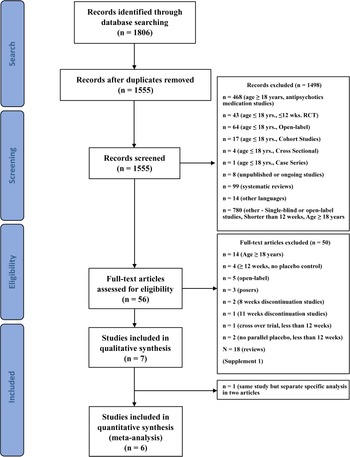
The search process identified 1806 records for screening. From these, seven RCTs (one sample reported in two studies) were eligible for review. Figure 1 depicts a flow diagram of the selection process. We found study protocols of nine studies in four trial registers (NCT03448575, NCT01119014, ISRCTN80567433, ISRCTN95429815, ISRCTN95609637, ISRCTN21681959, EudraCT 2012–004546-15, EudraCT 2011–000567-26, and NL3070), and either these trials were ongoing, or the results were not available (Supplement 2).
PRISMA flow chart depicting selection of studies.

Study characteristics
Eligible studies ranged in date from 2006 to 2017 and included a total of 939 participants aged 5 to 17 years with diagnoses of autism spectrum disorders, conduct disorders, disruptive behavior disorders, bipolar disorders (including diagnosed in very young children in the USA), attention deficit hyperactivity disorder (ADHD), and schizophrenia. Of the seven RCTs identified, two were classified as long-term (12 weeks or longer from the phase 1 randomization to the end of the trialsReference Findling, Correll and Nyilas 34 , Reference Findling, Townsend and Bown 35 ); and five as maintenance (12 weeks or longer from the beginning to the end of the randomized maintenance phase).Reference Findling, Youngstrom and McNamara 36 - Reference Pandina, Zhu and Cornblatt 40 The study by Pandina et al (2009) analyzed a subset of the study by Reyes et al (2006) in terms of cognitive outcomes. Some studies provided sufficient data for meta-analysis of adverse effects, which are presented separately for long-term and maintenance studies. There were no sufficient data to do a meta-analysis of efficacy outcomes, so these are presented narratively.
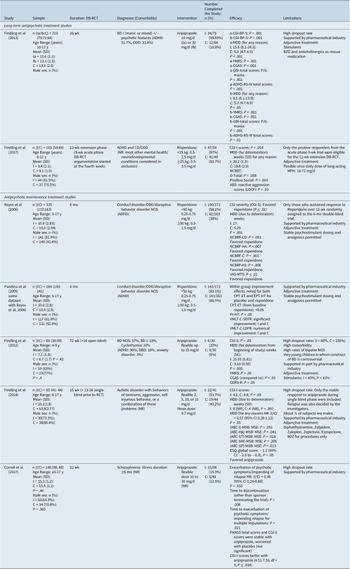
Four studies were from the USA,Reference Findling, Correll and Nyilas 34 - Reference Findling, Mankoski and Timko 37 two were conducted across Belgium, Germany, Great Britain, Israel, Poland, South Africa, Spain, and the NetherlandsReference Reyes, Buitelaar and Toren 39 , Reference Pandina, Zhu and Cornblatt 40 , and the other one was conducted across India, Malaysia, Philippines, Romania, Russian Federation, Taiwan, and the USA.Reference Correll, Kohegyi and Zhao 38 RisperidoneReference Findling, Townsend and Bown 35 , Reference Reyes, Buitelaar and Toren 39 , Reference Pandina, Zhu and Cornblatt 40 and aripiprazoleReference Findling, Correll and Nyilas 34 , Reference Findling, Youngstrom and McNamara 36 - Reference Correll, Kohegyi and Zhao 38 were the only medications evaluated in these seven studies. Three of the aripiprazole studies used flexible dosesReference Findling, Youngstrom and McNamara 36 - Reference Correll, Kohegyi and Zhao 38 ranging from 2-mg to 30-mg daily dose. Studies with risperidone used fixed dosages (ranging either from 0.25 to 1.5 mg/d or 0.5 to 3.5 mg/d) based on the body weight of the subjects. Duration of treatment ranged from 12 weeks to 72 weeks, and the mean age of participants was 11 years (ranged 7-15 years). There was a total of 152 (21%) female participants in the six studies which reported on sex (Pandina was not counted as it was conducted in a subset of Reyes). Findling et al did not report on sex distribution for those who took part in the maintenance phase of the study. All studies measured outcomes immediately following the end of treatment. No data were available for caregiver burden/strain, medication adherence, school performance, and attendance. Only one study evaluated the impact on cognitive function,Reference Pandina, Zhu and Cornblatt 40 and only two studies evaluated the impact on quality of life.Reference Findling, Mankoski and Timko 37 , Reference Correll, Kohegyi and Zhao 38 Investigators reported on global functioning, or the symptoms reduction, but raw data were not available for us to carry out meta-analysis on efficacy outcomes. The characteristics of included studies are detailed in Table 1.
Study Characteristics and Efficacy

Abbreviations: ABC-I, Aberrant Behavior Checklist-Irritability subscale(Aman et al, 1985); ABC-HA, Aberrant Behavior Checklist-Hyperactivity subscale; ABC-ST, Aberrant Behavior Checklist-Stereotypy subscale; ABC-SW, Aberrant Behavior Checklist-Social Withdrawal subscale; ABC-IS, Aberrant Behavior Checklist-Inappropriate Speech subscale; ABS, Antisocial Behavior Scale; ADHD, attention deficit hyperactivity disorder; ADHD composite, Hyperactivity and Inattention subscales in NCBRF; ADHD-RS-IV total score, Attention Deficit Hyperactivity Rating Scale IV; BD, bipolar disorder; BDZ, benzodiazepines; C, control; CD, conduct disorder; CDRS-R, Children’s Depression Rating Scale-Revised (negative changes signifies improvement); CGAS, Children’s Global Assessment Scale(Shaffer et al, 1983); CGI-BP-S, Clinical Global Impression for Bipolar–Severity (negative changes signifies improvement); CGI-BP-D, Clinical Global Impression for Bipolar–Depression (negative changes signifies improvement); CGI-I, Clinical Global Impression–Improvement(Guy et al, 1976); CGI-S, Clinical Global Impression–Severity(Guy et al, 1976); CI, confidence interval; CPT-ET, Continuous Performance–Easy Test; CPT-HT, Continuous Performance–Hard Test; CSQ global score, Caregiver Strain Questionnaire global score; DBD, disruptive behavior disorder; DB-RCT, double-blind randomized controlled trial; D-Total, conduct problems and oppositional subscales in NCBRF; GBI-TS: P/G-mania, General Behavior Inventory total score: parents/guardian (mania); HR, hazard ratio; I, intervention; Ia, aripiprazole 10 mg/d; Ib, aripiprazole 30 mg/d; IED, intermittent explosive disorder; LOCF, last observation carried forward; MD, mean duration; MDD, mean duration before discontinuation; MSB: MSE, mean score at baseline: and end of study; n, number; NCBRF-CD, Nisonger Child Behavior Rating Form Conduct Disorder Subscale scores(Aman et al, 1996; Tasse et al, 1996); NCBRF-HA, Nisonger Child Behavior Rating Form Hyperactivity Subscale scores; NCBRF-C, Nisonger Child Behavior Rating Form Compliant/Calm Subscale scores; NCBRF-AS, Nisonger Child Behavior Rating Form Adaptive Social Subscale scores; NOS, not otherwise specified; NR, not reported; OCD, obsessive compulsive disorder; ODD, oppositional defiant disorder; P, placebo; PANSS, Positive and Negative Syndrome Scale; PDD, pervasive developmental disorder not otherwise specified; Pr, probability of correct discrimination (calculated as: proportion of hit rate–proportion of false alarm rate); Pr-ET, probability of correct discrimination–easy test; Pr-HT, probability of correct discrimination–hard test; RCT, randomized control trial; SIB, self-injurious behavior; VAS-MTS, visual analogue scale rating of the most troublesome symptom (aggression or oppositional defiant behavior); VMLT-C, Verbal Learning Test-Children’s Version(Delis et al, 1987); VMLT-C-SDFR, short-delay free recall; VMLT-C-LDFR, long-delay free recall; YMRS, Young Mania Rating Scale.
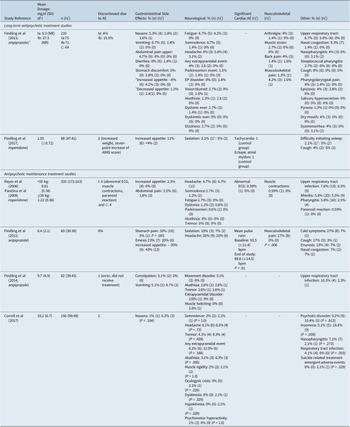
Post Randomization Neurological, Cardiovascular and Other Adverse Clinical Events (LOCF)

Abbreviations: AE, adverse event; bpm, beats per minute; C, placebo; EP, extrapyramidal; Findling 2013, adverse events occurred in >5% of subjects during double-blind extension treatment; Findling 2014, ≥5% adverse events during the double-blind randomized phase; Findling 2017, adverse effects in two or more participants in any group at week 21; I, intervention; Ia, intervention-aripiprazole 10 mg/d; Ib, intervention-aripiprazole 30 mg/d; LOCF, last observation carried forward; NR, not reported; Reyes 2006, ≥ 5% adverse events during double-blind randomized phase; SD, standard deviation.
a Aripiprazole 10 mg/d (Ia) or 30 mg/d (Ib).
b S/E from fifth week (not from 12th week).
c Side effect was reported if experienced by two or more subjects—worst case scenario assumption of one subject with the adverse event in the absence of reporting in the treatment group.
Risk of bias for included studies
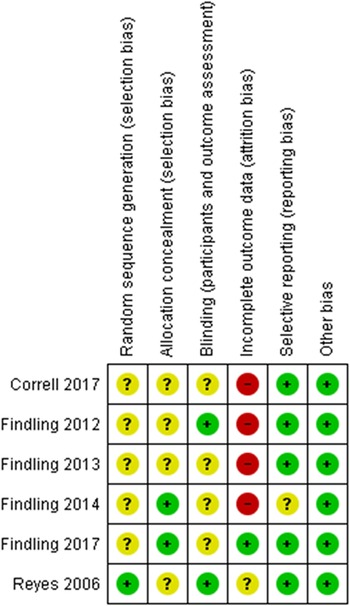
Figure 2 and Supplement 5 provide an overview of the risk of bias assessment for the included studies. Randomization procedures were adequate only in one study and unclear in five studies. There was a low risk of bias for allocation concealment in two of the studies, and concealment was unclear for the four remaining studies. For four studies, blinding was unclear, and risk of bias was low for the remaining two studies. Risk of bias for incomplete outcomes was high in four of the studies, and only one study was at low risk. All studies were at low risk of bias for other reasons. We rated the quality of the studies as moderate because of unclear risk of bias for randomization, concealed allocation, and high risk of attrition bias. We are not aware of any biases in the review process.
Risk of bias summary for included studies.

Efficacy and safety outcomes by medication
Aripiprazole
Aripiprazole was evaluated in four studies. In these studies, diagnosed bipolar disorders in very young children in the USA,Reference Findling, Youngstrom and McNamara 36 bipolar disorder I (manic or mixed) with/without psychotic symptoms,Reference Higgins and Green 33 autistic disorder with behaviors of tantrum/aggression/self-injurious behavior or combinations,Reference Findling, Mankoski and Timko 37 and schizophreniaReference Correll, Kohegyi and Zhao 38 were the conditions treated. One study was classified as long-term studyReference Findling, Correll and Nyilas 34 and the other three as maintenance studies.Reference Findling, Youngstrom and McNamara 36 - Reference Correll, Kohegyi and Zhao 38
Efficacy outcomes
Symptoms reduction
In the only long-term study by Findling et al, the aripiprazole group demonstrated statistically greater improvement in the Young Mania Rating Scale (YMRS) total scores compared with placebo from week 1 to week 30 (aripiprazole 10 mg/d, mean difference = −14.1, P < .001; aripiprazole 30 mg/d, mean difference = −14.9, P < .001) vs placebo. Both aripiprazole doses (aripiprazole 10 and 30 mg/d) also resulted in significantly greater improvement in mania symptoms in the General Behavior Inventory (GBI) parent/guardian mania scores (mean differences −4.87 [P ≤ .001] and −4.54 [P ≤ .001], respectively), and the Attention Deficit Hyperactivity Disorder Rating Scale IV (ADHD-RS-IV) scores (aripiprazole 10 mg/d, mean difference = −6.65, P ≤ .001; aripiprazole 30 mg/d, mean difference = −14.9, P ≤ .01), but no significant improvement in depressive symptoms according to the Children’s Depression Rating Scale-Revised (CDRS-R) was scored (aripiprazole 10 mg/d, mean difference = −1.49, P > .05; aripiprazole 30 mg/d, mean difference = −0.10, P > .05) compared to placebo.
In the 2014 study by Findling et al with 85 participants, symptom reduction in challenging behavior in autism was assessed using the Aberrant Behavior Checklist (ABC; Supplement 3). Aripiprazole was found to be superior to placebo in terms of reducing the severity of hyperactivity, stereotypy, and speech and language difficulties scores at endpoint (mean differences −5.2 [P = .041], −2.0 [P = .018], and −1.5 [P = .013], respectively). However, there were no difference in irritability or social withdrawal mean scores at the end of the study between the two groups (P = .051 and .205, respectively). Specifically evaluating the maintenance phase, the 2012 study by Findling et al did not identify a significant improvement in YMRS and CDRS-R scores with aripiprazole compared to placebo treatment. In the study by Correll et al, the mean Positive and Negative Syndrome Scale (PANSS) total score remained stable at week 52 with aripiprazole group compared to the modest increase (worsening) in the placebo group. PANSS positive and negative subscale scores also remained relatively stable, and treatment difference scores at week 52 were −2.18, P = .021 for the positive subscale and −0.70, P = .376 for negative subscale.
Relapse
In the long-term study on aripiprazole,Reference Findling, Correll and Nyilas 34 lack of efficacy was the most common reason to leave the study in the placebo group (n = 31, 48.4%) and the low dose aripiprazole (10 mg/d) group (n = 17, 22.7%), whereas in the high-dose aripiprazole group, only 14.1% (n = 10) left the study due to lack of efficacy. It also showed a longer mean time before discontinuation due to lack of efficacy for the aripiprazole 10 mg/d group which was 15.6 weeks (CI: 8.1-24.3) and the aripiprazole 30 mg/d group which was 9.5 weeks (CI: 6.1-13.9; P < .001 and .05, respectively) compared to placebo which was 5.3 weeks (CI: 4.7-6.9).
In the 2014 maintenance study by Findling et al, there was no significant difference in relapse rate with aripiprazole compared to placebo (35% vs 52%, hazard ratio [HR] = 0.57, P = .097) at week 16, although among white patients, a significant difference was reported with aripiprazole compared to placebo (25.8% vs 60.7%, HR = 0.33, P = .011). This study also reported a higher proportion of participants in the placebo group leaving the study (23/44, 52.3%) compared to 31.7% in the aripiprazole group due to lack of efficacy. In the 2012 study by Findling et al, the time for discontinuation as a result of deterioration of mood was longer with aripiprazole (mean 25.93 weeks, SE ± 5.81) compared to placebo (3.10 weeks, SE ± 0.58), which reached statistical significance (P = .005). In addition, more subjects left the study due to lack of efficacy with placebo (22/30, 97%) compared to aripiprazole (22/30, 73%) by 72 weeks, although the dropout rates were relatively high in both groups. In the study by Correll et al, treatment with aripiprazole was associated with a significant longer time for exacerbation of psychotic symptoms/impending relapse compared with placebo (HR = 0.46; 95% CI 0.24-0.88; P = .016). More subjects had left the study due to lack of efficacy with placebo (18/48, 37.5%) compared to aripiprazole (19/98, 19.4%) at week 52.
Global functioning
Findling et al (2013) identified significant improvement in Clinical Global Impression (CGI) severity scores for mania compared to baseline at week 30 with mean differences −0.78 (P ≤ .001) and −1.03 (P ≤ .001) for aripiprazole 10 and 30 mg/d, respectively.
The three maintenance studies provided information on the effect of aripiprazole on participants’ global functioning, with variable results. Correll et al showed significant improvement in CGI scores with P ≤ .034 (range = 4.51-7.59) for Clinical Global Impression – Improvement (CGI-I). However, the other two studies by Findling et al (2012, 2014) did not show a significant difference in CGI scores (CGI-S of P > .05 and CGI-I of P = .09, respectively).
Quality of life
Children who received aripiprazole were significant improved compared to placebo in managing aggression, self-injurious behavior, and tantrums in autistic disorder in the 2014 maintenance study by Findling et al, based on the scores of the Caregiver Strain Questionnaire (CSQ; treatment difference = −1.2, 95% CI −2.0 to −0.3, P < .05). In the same study, the Pediatric Quality of Life Inventor (PedQL) did not show a significant difference between the two groups (the mean treatment difference at week 16 of 6.3 points, CI −0.63 to 13.22, P > .05). In the maintenance study by Correll et al (2017), the Pediatric Quality-of-Life Enjoyment and Satisfaction Questionnaire (P-QLES-Q) total scores remained stable in the aripiprazole group, and decreased (worsened) in the placebo group, with no significant difference between the groups. The studies by Findling et al (2012, 2013) did not use any quality-of-life outcome measures.
Cognitive and emotional development and functioning
None of the aripiprazole studies measured cognitive and emotional development and functioning outcomes.
Safety outcomes
Side effects
Neurological/cardiovascular adverse events (Supplement 4)
Aripiprazole was not associated with a significant difference in sedation, somnolence, headache, fatigue, dizziness, or blurred vision compared to placebo,Reference Findling, Youngstrom and McNamara 36 - Reference Correll, Kohegyi and Zhao 38 and no significant difference in extrapyramidal events were found with aripiprazole compared to placeboReference Findling, Youngstrom and McNamara 36 - Reference Correll, Kohegyi and Zhao 38 (RR = 0.91, CI 0.13-6.62, P = 0.93, df = 1, Tau2 = 1.60) in the maintenance studies. Findling et al (2013) did not comment on the significance of sedation, somnolence, headache, fatigue, dizziness, or blurred vision compared to placebo, but reported that mean change from baseline to study endpoint in Extrapyramidal Side effects rating scale scores were not significantly different between either aripiprazole 10 or 30 mg/d and placebo, with the exception of mean change from baseline to endpoint in Simpson-Angus Scale (SAS) between aripiprazole 30 mg/d and placebo (P < .005).
Other than a small nonsignificant decrease in pulse rate in the aripiprazole group, no other cardiovascular adverse events were reportedReference Findling, Youngstrom and McNamara 36 , Reference Correll, Kohegyi and Zhao 38 in the maintenance studies. Cardiovascular adverse events were not reported by Findling et al (2013).
Metabolic adverse events
In the only long-term study on aripiprazole, Findling et al (2013) identified, at week 30, a greater mean weight gain with aripiprazole 10 mg/d (6.5 kg) and aripiprazole 30 mg/d (6.6 kg), compared to placebo (3.0 kg, both P < .05). The number of subjects who gained weight with aripiprazole compared to placebo during the maintenance phase of the related studies (Correll and Findling, 2012; Findling, 2014) was not statistically significant (P = .91, RR = 0.95, 95% CI 0.540-2.28, Tau2 = 0.00, I 2 = 0%). However, Findling et al (2014) reported that adjusted mean change from baseline of maintenance phase to week 16 in weight z score was statistically significantly greater in the aripiprazole group (0.1 kg, last observation carried forward [LOCF] = 0.2 kg, observed cases) than in the placebo group (−0.0 kg, LOCF = −0.1 kg, observed cases). Similarly, in the study by Findling et al (2012), the mean weigh gain from the baseline of the maintenance phase to the end of the study was 2.61 kg (SD = 3.88 kg) with aripiprazole compared to 0.42 kg with placebo (SD = 1.26 kg, P = .06).
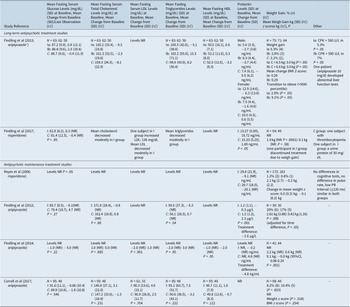
The only long-term study on aripiprazoleReference Findling, Correll and Nyilas 34 did not identify any clinically significant changes in fasting glucose or lipids. Differences in fasting glucose and lipids in aripiprazole compared to placebo did not reach statistical significance in any of the maintenance studiesReference Findling, Youngstrom and McNamara 36 - Reference Correll, Kohegyi and Zhao 38 (Table 2b). No adequate laboratory data were available to conduct a meta-analysis.
Post Randomization Metabolic Adverse Events (LOCF)

Abbreviations: C, control; HDL, high-density lipoprotein cholesterol; I, intervention; Ia, intervention-aripiprazole 10 mg/d; Ib, intervention-aripiprazole 30 mg/d; LDL, low-density lipoproteins; LOCF, last observation carried forward; NR, not reported; SD, standard deviation.
a Aripiprazole 10 mg/d (Ia) or 30 mg/d (Ib).
Other adverse events
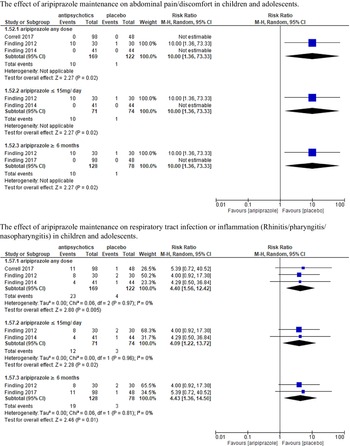
Out of the 47 symptom-related adverse events reported in the included studies, statistical significance between aripiprazole and placebo was noted only for abdominal pain/discomfort (P = .02), and respiratory tract infection/inflammation (rhinitis/pharyngitis/nasopharyngitis; P = .005; Figure 3)—only forest plots for statistically significant findings were included in this paper. However, these symptoms were reported as mild, and no participant left the study due to these adverse events.
Forest plots. The effect of aripiprazole maintenance on abdominal pain/discomfort in children and adolescents. The effect of aripiprazole maintenance on respiratory tract infection or inflammation (rhinitis/pharyngitis/nasopharyngitis) in children and adolescents.

Findling et al (2013) reported a decrease in plasma prolactin levels compared to baseline in the long-term aripiprazole study for both aripiprazole groups (10 and 30 mg/d; 42.7% and 47.9%) compared to placebo (1.6%), and Finding et al (2012) reported a statistically significant reduction of mean plasma prolactin levels with aripiprazole compared to placebo in the maintenance phase (P < .001). No difference in sexual maturation was reported between aripiprazole and placebo groups in the 2014 maintenance study by Findling et al (2014), as expected compared with published norms.Reference Tanner and Whitehouse 41 - Reference Marshall and Tanner 43
Study discontinuation due to adverse events
In the 2013 long-term study by Findling et al, 4% (3/75) in the aripiprazole 10 mg/d group and 15.5% (11/71) in the aripiprazole 30 mg/d group left the study due to adverse events compared to none (0/64) in the placebo group. Adverse events leading to study discontinuation in more than one subjects included fatigue (n = 2) and somnolence (n = 3) with aripiprazole 30 mg/d and none with aripiprazole 10 mg/d. Discontinuation due to extrapyramidal symptom-related events were reported in two subjects (one with dystonia in the aripiprazole 10 mg/d group and another one with extrapyramidal disorder in the aripiprazole 30 mg/d group). One subject in each aripiprazole group left the study due to weight gain.
In the 2014 maintenance study by Findling et al, no subjects in the aripiprazole arm left the study due to adverse events compared to 2.7% who left the placebo arm due to an adverse event. None of the participants in the 2012 maintenance study by Findling et al left the study due to an adverse event either. Similarly, in the study by Correll et al (2017), one subject in the aripiprazole group (n = 98) and one in the placebo group (n = 48) left the study due to adverse events, corresponding to a lower rate of discontinuation due to adverse events with aripiprazole (P = .014).
Risperidone
Risperidone was evaluated in three studies. Conduct disorder/oppositional defiant disorder/disruptive behavior disorder-not otherwise specifiedReference Reyes, Buitelaar and Toren 39 , Reference Pandina, Zhu and Cornblatt 40 and ADHD in addition to stimulant medication and parent trainingReference Findling, Townsend and Bown 35 were the conditions treated with risperidone in these studies. One study was long-term,Reference Findling, Townsend and Bown 35 and the other two were maintenance,Reference Reyes, Buitelaar and Toren 39 , Reference Pandina, Zhu and Cornblatt 40 with Pandina et al evaluating a subset of the sample included in the study by Reyes et al (2006).
Efficacy outcomes
Symptoms reduction
In the long-term study by Findling et al (2017), the Nisonger Child Behavior Rating Form (NCBRF)-Disruptive behavior total scores were marginally better with risperidone (mean scores: placebo = 20.5 [SD = 4.6], risperidone = 16.0 [SD = 13.1], P = .06) compared to placebo, and Positive Social scores were significantly better (mean scores: placebo = 15.1 [SD = 6.6], risperidone = 18.0 [SD = 6.7], P = .005) compared to placebo. This study also reported a significant improvement in reactive aggression scores in the Antisocial Behavior Scale (ABS) with risperidone group compared to the placebo group (mean scores: placebo = 12.7 [SD = 3.2], risperidone = 11.7 [SD = 2.7], P = .03).
In the maintenance study by Reyes et al (2006), the NCBRF mean scores increased in both risperidone and placebo groups for conduct problems (mean change from the beginning to the end of maintenance phase for risperidone 5.0 (SD = 9.5) and for placebo 8.8 (SD = 11.2), and for hyperactivity (mean change from the beginning to the end of maintenance phase for risperidone 0.8 (SD = 4.4) and for placebo 2.4 (SD = 5.4), but deterioration at endpoint was significantly higher in the placebo group (P < .001 and .007 consecutively). Similarly, a deterioration endpoint was noted for Compliant/calm (mean change from the beginning to the end of maintenance phase for risperidone −1.5 (SD = 3.8) and for placebo −2.8 (SD = 4.4), and for Adaptive social (mean change from the beginning to the end of maintenance phase for risperidone −0.9 (SD = 2.5) and for placebo −1.7 (SD = 2.9), but the deterioration was significantly higher in the placebo group (P < .001 and .006, respectively).
Relapse
Findling et al (2017) identified that, in long-term treatment, half of the discontinuations in the placebo arm (4/8) were due to inadequate efficacy, whereas in the risperidone arm, subjects left the study due to other reasons (participants moving out of area, family too busy, and parents withdrew consent).
During maintenance, Reyes et al (2006) showed a significant increase in symptom recurrence with placebo at 6 months (42.3%, n = 69) compared to risperidone (27.3%, n = 47, χ2 = 10.04, df = 1, P = .002). Furthermore, the time to symptom recurrence was significantly shorter with placebo (37 days) compared with risperidone (119 days; χ2 = 18.45, df = 1, P < .001).
Global functioning
The difference between the active and placebo arms in CGI-I score was not significant in the long-term study by Findling et al (2017; at the endpoint, 42% of the participants in the placebo group and 58% of the participants in the risperidone group scored 1 or 2, P = .054). Although the CGI-S and CGAS scores showed deterioration at the endpoint, this was significantly higher in the placebo group (mean change from the beginning to the end of maintenance phase for risperidone 0.6 [SD = 1.2] and for placebo 1.2 [SD = 1.4], P < .001), and CGAS scores (mean change from the beginning to the end of maintenance phase for risperidone −3.5 [SD = 12.4] and for placebo −10.2 [SD = 14.5], P < .001) at 6 months with risperidone compared to placebo in the study by Reyes et al (2006).
Cognitive and emotional development and functioning
In the study by Pandina et al (2009), cognitive functioning during the maintenance phase was explored with Modified versions of a Verbal Learning Test (MVLT-15 and MVLT-10) and the Continuous Performance Test (CPT), and the scores were not significantly different between the placebo and risperidone groups.
Quality of life
Neither Findling et al (2017) nor Reyes et al (2006) used any quality-of-life outcome measures.
Safety outcomes
Side effects
Extrapyramidal events
In the study by Finding et al (2017), one subject in the risperidone group scored seven-point increase in the Abnormal Involuntary Movement Scale (AIMS) score at week 13. Two participants in the risperidone group, had a two-point increase in the Barnes Akathisia Scale from week 9 baseline to the end of their study participation at weeks 13 and 21. On SAS, six subjects in the risperidone group and one in the placebo group had a two-point increase from extension baseline to endpoint. One participant in the risperidone group had a dystonic reaction at week 13.
In the study by Reyes et al (2006), only three extrapyramidal symptoms were reported with risperidone in the maintenance phase compared to one subject in the placebo group. There were no reports of tardive dyskinesia, akathisia, or tremor during the maintenance phase.
Cardiovascular adverse event
In the study by Findling et al (2017), two participants from the placebo group developed “tachycardia” at 13 and 17 weeks (82 and 98 bpm, respectively). Two participants in the placebo group were found to have an ectopic atrial rhythm on their electrocardiograms (one at week 13 and the other at week 17). Reyes et al (2006) reported one subject in the risperidone group developing abnormal ECG and had to leave the study. No other cardinal adverse events were reported.
Metabolic adverse events
In the study by Findling et al (2017), subjects in the risperidone group gained on average 1.9 kg (P = .0001), which was not observed in the placebo group where mean weight gain was 0.1 kg (P = .58) in the course of treatment. During the maintenance phase of the study by Reyes et al (2006), no further weight gain beyond natural growth was observed (mean in weight z score from maintenance baseline mean = 0.0, SD = 0.3).
Other adverse events
In the study by Findling et al (2017), cough was the only adverse event reported in two participants in the risperidone group at week 21, and enuresis, fever, and bronchopulmonary congestion were the only events reported in two or more subjects at week 17. No statistically significant differences in adverse events were found between the groups. In the study by Reyes et al (2006), although mean level of prolactin decreased in both risperidone and placebo groups during the maintenance phase, three male subjects developed gynecomastia, one female subject developed amenorrhea, and another female subject developed breast discharge. This study also showed similar increase in Tanner stages in both risperidone and placebo groups. Rhinitis, upper respiratory tract infection, pharyngitis, and abdominal pain were reported in ≥5% of participants with risperidone during the maintenance phase, but the differences between the groups were not statistically significant.
Study discontinuation due to adverse events
In the study by Findling et al (2017), two participants in the risperidone group left due to side effects; one due to excessive weight gain and the other, a seven-point increase in AIMS score at week 13. No participants from the placebo group left the study due to adverse events.
In the study by Reyes et al (2006), 1.7% with risperidone and 0.6% with placebo left the study due to adverse events during the maintenance phase. In the treatment arm, abnormal ECG, involuntary muscle contraction, paranoid reaction, and weight gain (each of these side effects in four different patients) were given as the reasons to leave the study. One patient receiving placebo discontinued because of a reported implantation complication related to treatment for a different condition.
Efficacy outcomes by disorder
Bipolar affective disorder
In the study by Findling et al (2013), the aripiprazole group demonstrated statistically greater improvement in the YMRS total scores compared with placebo from week 1 to week 30 (aripiprazole 10 mg/d, mean difference = −14.1, P < .001; aripiprazole 30 mg/d, mean difference = −14.9, P < .001) vs placebo (Table 1). Both aripiprazole doses (aripiprazole 10 and 30 mg/d) also resulted in significantly greater improvement in mania symptoms in the GBI parent/guardian mania scores (mean differences −4.87 [P ≤ .001] and −4.54 [P ≤ .001], respectively; Table 1). The same study identified significant improvement in CGI severity scores for mania compared to baseline at week 30 with mean differences −0.78 (P ≤ .001) and −1.03 (P ≤ .001) for aripiprazole 10 and 30 mg/d, respectively (Table 1). However, in the study by Findling et al (2012), specifically evaluating the maintenance phase did not identify a significant improvement in YMRS and CDRS-R scores with aripiprazole compared to placebo treatment for Bipolar Disorder I, Bipolar Disorder NOS, and Cyclothymia (Table 1).
Attention deficit hyperactivity disorder and oppositional defiant disorder/conduct disorder
In the long-term study by Findling et al (2017), the NCBRF-Disruptive behavior total scores were marginally better with risperidone (P = .06) compared to placebo, and Positive Social scores were significantly better (P = .005) compared to placebo (Table 1). This study also reported a significant improvement in reactive aggression scores in the ABS with risperidone group compared to the placebo group (P = .03). In the maintenance study by Reyes et al (2006), the NCBRF mean scores increased in both risperidone and placebo groups, but deterioration at endpoint was significantly higher in the placebo group (P < .001 and .007 consecutively). Similarly, deterioration an endpoint was noted for Compliant/calm, and for Adaptive social, but the deterioration was significantly higher in the placebo group (P < .001 and .006, respectively) (Table 1).
Autism with behaviors of tantrums, aggression, and self-injurious behavior (or combinations of these difficulties)
According to the 2014 study by Findling et al, aripiprazole was found to be superior to placebo in terms of reducing the severity of hyperactivity, stereotypy, and speech and language difficulties scores at endpoint in the ABC scale (mean differences −5.2 [P = .041], −2.0 [P = .018], and −1.5 [P = .013], respectively; Table 1). However, in the same study, there was no significant difference in relapse rate with aripiprazole compared to placebo (35% vs 52%, HR = 0.57, P = .097) at week 16, although among white patients, a significant difference was reported with aripiprazole compared to placebo (25.8% vs 60.7%, HR = 0.33, P = .011). This study also reported a higher proportion of participants in the placebo group leaving the study (23/44, 52.3%) compared to 31.7% in the aripiprazole group due to lack of efficacy. Based on the scores of the CSQ (treatment difference = −1.2, 95% CI −2.0 to −0.3, P < .05), this study also showed that the children who received aripiprazole were significantly improved compared to placebo in managing aggression, self-injurious behavior, and tantrums in autistic disorder (Table 1).
Schizophrenia
In the study by Correll et al (2017), the mean PANSS total score remained stable at week 52 weeks with aripiprazole group compared to the modest increase (worsening) in the placebo group. PANSS positive and negative subscale scores also remained relatively stable, and treatment difference scores at week 52 were −2.18, P = .021 for the positive subscale and −0.70, P = .376 for negative subscale. This study also showed that aripiprazole was associated with a significant longer time for exacerbation of psychotic symptoms/impending relapse compared with placebo (HR = 0.46; 95% CI 0.24-0.88; P = .016) (Table 1). More subjects left the study due to lack of efficacy with placebo (18/48, 37.5%) compared to aripiprazole (19/98, 19.4%) at week 52. A significant improvement in global functioning was also reported for aripiprazole compared to placebo with CGI-I scores (P ≤ .034, range = 4.51-7.59; Table 1). In the same study, the P-QLES-Q total scores remained stable in the aripiprazole group, and decreased (worsened) in the placebo group, with no significant difference between the groups.
Discussion
Main findings
This systematic review and meta-analysis suggests that aripiprazole and risperidone may be effective in maintaining functional improvement and symptom reduction in a range of mental health and neurodevelopmental conditions including autism spectrum disorder, ADHD, conduct disorders, bipolar disorders, and schizophrenia following treatment for 12 weeks or longer. In three of the seven studies included in this review, statistically significant improvements in CGI-I scores were reported. Aripiprazole and risperidone were associated with symptom reduction or significant more time before discontinuation or both, compared to placebo during long-term or maintenance treatment. However, it is of note that schizophrenia and BD I were represented in just one study each, therefore limiting the evidence available to draw firm conclusions. In addition, the high percentage of children with BD NOS in the study by Findling et al (2012) conducted in the USA does not allow for generalizable conclusions across all countries in relation to this construct, given the controversies around the pediatric bipolar diagnosis (James et al, 2014) and the overall trends in diagnosing less clearly defined mood disorders following the introduction of DSM V.Reference Le, Feygin and Creel 44 This may also be related to the young age of the study participants and the high comorbidity of diagnosed bipolar disorders with ADHD in that study (Table 1).
Our review also highlighted that risperidone and aripiprazole were associated with relatively more side effects in the pediatric population with long-term or maintenance treatment. Mean weight gain has emerged as a significant side effect in most studies both in long-termReference Findling, Correll and Nyilas 34 , Reference Findling, Townsend and Bown 35 and in the maintenance phase of treatment with antipsychotics.Reference Findling, Youngstrom and McNamara 36 , Reference Findling, Mankoski and Timko 37 Furthermore, in the study by Findling et al (2017), one subject left the study due to weight gain. Neither aripiprazole maintenance studies nor the risperidone maintenance studyReference Reyes, Buitelaar and Toren 39 showed a significant difference in the number of subjects gaining weight with these medications compared to placebo during the maintenance phase. However, it should be noted that Reyes et al (2006) used risperidone in addition to stimulant medication which may also have had an opposite effect on weight. It is possible that although for the majority of subjects, there may not be a significant weight gain during the maintenance phase of treatment with aripiprazole or risperidone, a small proportion may gain clinically significant weight. For this group, increase body weight and the development of metabolic syndrome may be of particular concern.
During the maintenance phase, no statistically significant differences in fasting glucose or lipid profile at the end of the studies compared to baseline were shown in with aripiprazole (Table 2b) compared to placebo. Similarly, no statistically significant difference with fasting glucose, or clinically meaningful difference in fasting lipid profile, was noted with risperidone, during the maintenance phase. However, this issue remains inconclusive; a recent comparison study that explored this in more detail with aripiprazole, olanzapine, and risperidone showed changes in adiposity and insulin sensitivity during 12 weeks of antipsychotic treatment, which may be associated with risk for premature cardiometabolic morbidity.Reference Nicol, Yingling and Flavin 45
Significant increase in serum prolactin levels were noted with risperidone in the long-term study, whereas in maintenance studies, levels numerically seemed to have decreased from the baseline with both aripiprazole and risperidone. However, this reduction in prolactin levels seemed to be more extensive in the placebo group of the risperidone study. Furthermore, although mean level of prolactin decreased in both risperidone and placebo groups during the maintenance phase, three male subjects developed gynecomastia, one female subject developed amenorrhea, and another female subject developed breast discharge. Therefore, it appears that for a small proportion of children and young people who continue on risperidone beyond 12 weeks, clinically significant hyperprolactinemia may emerge. Elevated prolactin can adversely affect long-term physical and sexual development in children and young people, and can lead to amenorrhea, erectile dysfunction, and osteoporosis.Reference Kleinberg, Davis and De Coster 46 , Reference Kishimoto, Watanabe and Shimada 47
Somnolence, extrapyramidal symptoms, and cardiovascular adverse events have been reported in previous studiesReference Aman, De Smedt and Derivan 48 , Reference Marcus, Owen and Kamen 49 with risperidone and aripiprazole. In the current review, we attempted a direct comparison of these adverse events during the maintenance phase of treatment with aripiprazole compared to placebo, and did not identify statistically significant differences in cardiac or neurological events (sedation, somnolence, headache, fatigue, dizziness, blurred vision, insomnia, anxiety, tremor, and extrapyramidal symptoms). This could be due to few additional such symptoms being experienced by children and young people on medication in the maintenance phase of treatment. Out of the other 47 types of adverse symptoms reported in the studies, abdominal pain/discomfort and respiratory tract infections/inflammation (rhinitis/pharyngitis/nasopharyngitis) were more commonly reported with aripiprazole compared to placebo, but seemed to be overall mild and tolerable. Musculoskeletal pain was significant (n = 8, P = .005) for the aripiprazole group compared to placebo in the study by Findling et al (2012). However, the two other (Findling et al 2014 and Correll et al 2017) studies did not have valid data (none in the aripiprazole or the placebo group had this side effect) for us to carry out the meta-analysis for this side effect.
These events did not seem to be more frequent in the case of risperidone compared to placebo.
Strengths and limitations of the review
This systematic review and meta-analysis included all published RCTs on antipsychotic treatment in children and young people for 12 weeks or longer across all mental health and neurodevelopmental conditions. Notably, the duration of five out of the seven of the included studies was for 6 months or longer. Nevertheless, our results need to be interpreted with a lot of caution as outcomes were based on a small number of moderate quality studies, and with the exception of behavioral disorders, other conditions were not represented in more than one study. Study quality was compromised by inadequate reporting of methods of blinding, randomization, and allocation concealment by the authors of the selected studies, while several studies have high dropout rates. Medication co-prescribed with antipsychotics in the majority of the included studies is another limitation of this review. In addition, with one exception,Reference Findling, Townsend and Bown 35 all studies were supported by the pharmaceutical industry. Finally, only the studies on aripiprazole and risperidone fulfilled inclusion criteria of this review. Studies on other antipsychotics also used for 12 weeks or longer in children and young people which may have differences in efficacy, and side effect profiles are urgently needed.
Clinical Significance
Available evidence suggests that long-term/maintenance treatment with aripiprazole and risperidone may be effective in mental health and behavioral disorders in children and young people, but may be associated with additional side effects compared to short-term treatment. Findings of this review need to be interpreted with a lot of caution, and clinicians should carefully consider the benefits and risks of antipsychotic medication treatment used for 12 weeks or longer in pediatric populations. Further research utilizing randomized controlled designs is needed to determine the efficacy and tolerability of a wider range of antipsychotic medications in mental health and neurodevelopmental conditions in comparison to or in combination with psychosocial interventions. Longitudinal follow-up of participants can also shed further light on issues of safety, especially given that such treatments may be used over extended periods of time.
Supplementary Materials
To view supplementary material for this article, please visit http://doi.org/10.1017/S1092852921000523.
Acknowledgment
None.
Disclosures
In the last 3 years, Edmund Sonuga-Barke has received speaker fees and conference attendance support from Shire Pharma and consultancy fees from Neurotech Solutions. Pushpika Singappuli and Marinos Kyriakopoulos report no conflicts of interest in relation to this study. In the last 3 years, Marinos Kyriakopoulos has received funding from the National Institute of Health Research, United Kingdom.