Introduction
Assisted living (AL) is an increasingly important residential care option for older adults in North America (Canadian Centre for Elder Law, 2008; Golant, Reference Golant2004). In response to escalating long-term care (LTC) costs and seniors’ preferences to receive care in a home-like setting, several Canadian provinces have rapidly expanded the AL sector in recent years (Alberta Health & Wellness, 2008; Canadian Centre for Elder Law). This expansion has largely occurred in the absence of federal (and at times provincial) standards or regulations for the AL sector and has resulted in significant variation across and within provinces in the definition, size, admission/discharge criteria, staffing, services, and integration of AL facilities (Canadian Centre for Elder Law; Social Data Research, 2005). Although AL facilities may provide a wide array of services in a variety of settings, they generally aim to provide secure housing, personal support, and some health care, all while promoting autonomy, privacy, and independence (Government of Alberta, 2012). Although the AL model of care may promote functional independence and satisfaction among residents, several clinical and quality-of-care issues remain unanswered.
At the core of the continued uncertainty surrounding AL is the stated (or more often implied) role of these settings in the continuum of care for vulnerable seniors. Often, the vision of AL implies that older adults with disabilities will age in place; however, the admission and discharge criteria used by facilities vary significantly. In some regions, AL may be viewed as a replacement for LTC (Canadian Centre for Elder Law, 2008; Phillips et al., Reference Phillips, Munoz, Sherman, Rose, Spector and Hawes2003), yet the care philosophy and approach (including staffing mix) differ from the traditional nursing home. Concern has been expressed that lower levels of staffing and oversight by licensed practitioners in AL may result in poorer detection and management of emerging health issues, and ultimately in poorer outcomes and increased health service utilization and costs (Phillips et al., Reference Phillips, Munoz, Sherman, Rose, Spector and Hawes2003; Zimmerman et al., Reference Zimmerman, Sloane, Eckert, Gruber-Baldini, Morgan and Hebel2005). The high prevalence of dementia, mental illness, and other chronic conditions observed in AL settings (McNabney et al., Reference McNabney, Samus, Lyketsos, Brandt, Onyike and Baker2008; Rosenblatt et al., Reference Rosenblatt, Samus, Steele, Baker, Harper and Brandt2004; Watson et al., Reference Watson, Lehmann, Mayer, Samus, Baker and Brandt2006) raises further questions about AL facilities’ ability to provide effective and safe care to vulnerable residents with substantial and often unstable medical or nursing needs (Dobbs, Hayes, Chapin, & Oslund, Reference Dobbs, Hayes, Chapin and Oslund2006; Sloane et al., Reference Sloane, Gruber-Baldini, Zimmerman, Roth, Watson and Boustani2004, Reference Sloane, Zimmerman, Gruber-Baldini, Hebel, Magaziner and Konrad2005; Stearns et al., Reference Stearns, Park, Zimmerman, Gruber-Baldini, Konrad and Sloane2007).
The province of Alberta has witnessed a particularly rapid expansion of the AL sector in recent years with regional differences in facility type, staffing, and services. Alberta’s continuing care reform strategy has embraced the view that AL may substitute for lower intensity LTC and allow residents to age in place (Alberta Health & Wellness, 2008). However, the definition of AL and its role in meeting the care needs of more vulnerable older adults vary significantly within the province (Strain, Maxwell, Wanless, & Gilbart, Reference Strain, Maxwell, Wanless and Gilbart2011). Conversely, other provinces (e.g., British Columbia and Ontario) have largely viewed the AL or supportive housing sector as a care option that is intermediate between home and long-term care. That is, in these provinces, AL is not primarily designed or resourced for those with significant physical or cognitive impairment (Cohen, Murphy, Nutland, & Ostry, Reference Cohen, Murphy, Nutland and Ostry2005; Jutan, Reference Jutan2010; Ontario Seniors’ Secretariat, 2010).
Despite the proliferation of AL facilities, empirical data on the health and service needs, quality of care, and outcomes of older AL residents within Canada are lacking. Our current understanding of AL, including the relevance of variations in organizational features on resident care and outcomes, is largely derived from American studies (Dobbs et al., Reference Dobbs, Hayes, Chapin and Oslund2006; Golant, Reference Golant2004; McNabney et al., Reference McNabney, Samus, Lyketsos, Brandt, Onyike and Baker2008; Phillips et al., Reference Phillips, Munoz, Sherman, Rose, Spector and Hawes2003; Rosenblatt et al., Reference Rosenblatt, Samus, Steele, Baker, Harper and Brandt2004; Sloane et al., Reference Sloane, Gruber-Baldini, Zimmerman, Roth, Watson and Boustani2004, Reference Sloane, Zimmerman, Gruber-Baldini, Hebel, Magaziner and Konrad2005; Stearns et al., Reference Stearns, Park, Zimmerman, Gruber-Baldini, Konrad and Sloane2007; Watson et al., Reference Watson, Lehmann, Mayer, Samus, Baker and Brandt2006; Zimmerman et al., Reference Zimmerman, Sloane, Eckert, Gruber-Baldini, Morgan and Hebel2005). Whether similar issues and quality-of-care concerns persist across AL settings elsewhere is unknown.
One outcome of particular interest is the transition to a higher level of care. Those residents within AL have already made an initial move from the community to a residential care setting. The likelihood and associated predictors of a further transition are fundamental questions relevant to the philosophy of AL and the identification of potentially modifiable components of care important to residents’ quality of life and outcomes (Zimmerman et al., Reference Zimmerman, Sloane, Eckert, Gruber-Baldini, Morgan and Hebel2005). Whether the core risk factors for LTC placement observed for community-dwelling older adults apply to the AL population in Canada is open to speculation. These factors include older age, the availability of social support, and health status, particularly cognitive and activities of daily living (ADL) impairment (Agüero-Torres, von Strauss, Viitanen, Winblad, & Fratiglioni, Reference Agüero-Torres, von Strauss, Viitanen, Winblad and Fratiglioni2001; Gaugler, Duval, Anderson, & Kane, Reference Gaugler, Duval, Anderson and Kane2007; Gaugler, Yu, Krichbaum, & Wyman, Reference Gaugler, Yu, Krichbaum and Wyman2009; Hébert, Dubois, Wolfson, Chambers, & Cohen, Reference Hébert, Dubois, Wolfson, Chambers and Cohen2001; Luppa et al., Reference Luppa, Luck, Weyerer, König, Brähler and Riedel-Heller2010; Luppa, Luck, Brähler, Konig, & Riedel-Heller, Reference Luppa, Luck, Brähler, Konig and Riedel-Heller2008; Mustard, Finlayson, Derksen, & Berthelot, Reference Mustard, Finlayson, Derksen and Berthelot1999). Findings have been relatively less consistent for gender, socioeconomic status, incontinence, and depression (Luppa et al., Reference Luppa, Luck, Weyerer, König, Brähler and Riedel-Heller2010).
Research from the United States suggests that many of the same factors are strong predictors of the transition to LTC from AL (Phillips et al., Reference Phillips, Munoz, Sherman, Rose, Spector and Hawes2003; Tighe et al., Reference Tighe, Leoutsakos, Carlson, Onyike, Samus and Baker2008; Zimmerman et al., Reference Zimmerman, Sloane, Eckert, Gruber-Baldini, Morgan and Hebel2005). Other health indicators, including depression, dementia, medical instability, recent falls (or balance issues), and hospitalization have been identified as relevant predictors of institutionalization among U.S. AL residents (Aud & Rantz, Reference Aud and Rantz2005; Dobbs et al., Reference Dobbs, Hayes, Chapin and Oslund2006; Kenny et al., Reference Kenny, Bellantonio, Fortinsky, Dauser, Kleppinger and Robison2008; Lyketsos et al., Reference Lyketsos, Samus, Baker, McNabney, Onyike and Mayer2007; Sloane et al., Reference Sloane, Zimmerman, Gruber-Baldini, Hebel, Magaziner and Konrad2005; Watson, Garrett, Sloane, Gruber-Baldini, & Zimmerman, Reference Watson, Garrett, Sloane, Gruber-Baldini and Zimmerman2003). Also, preliminary evidence supports the importance of social and/or activity participation in potentially delaying LTC admission from AL (Tighe et al., Reference Tighe, Leoutsakos, Carlson, Onyike, Samus and Baker2008). Variation in the relative importance of some resident-level factors has been observed across studies likely reflecting differences in AL sample size and characteristics (e.g., proportion with dementia) and in study measures (Gaugler et al., Reference Gaugler, Yu, Krichbaum and Wyman2009; Luppa et al., Reference Luppa, Luck, Weyerer, König, Brähler and Riedel-Heller2010). A few studies have examined the role of AL facility characteristics (e.g., size, type, ownership, and staffing) as risk factors for LTC placement (Dobbs et al., Reference Dobbs, Hayes, Chapin and Oslund2006; Hedrick, Guihan, Chapko, Sullivan, & Zhou, Reference Hedrick, Guihan, Chapko, Sullivan and Zhou2009; Phillips et al., Reference Phillips, Munoz, Sherman, Rose, Spector and Hawes2003; Stearns et al. Reference Stearns, Park, Zimmerman, Gruber-Baldini, Konrad and Sloane2007; Zimmerman et al., Reference Zimmerman, Sloane, Eckert, Gruber-Baldini, Morgan and Hebel2005) although findings remain unclear. A more comprehensive understanding of the role of such factors (beyond resident-level risk) is essential for ensuring empirically based decision making regarding AL practice and policy, particularly with regard to future regulations regarding staffing levels and mix (Polivka & Salmon, Reference Polivka, Salmon, Golant and Hyde2008; Stearns et al., Reference Stearns, Park, Zimmerman, Gruber-Baldini, Konrad and Sloane2007).
Given existing knowledge and policy gaps surrounding AL in Canada, in conjunction with AL’s increasing importance in continuing care, we examined data from a large AL cohort in Alberta in order (1) to provide a comprehensive profile of the psychosocial, health, and functional characteristics of older AL residents in the province; (2) to estimate the incidence of LTC admission within one year among this cohort; and (3) to identify resident and facility characteristics associated with LTC placement.
Methods
Study Design
Data were derived from the Alberta Continuing Care Epidemiological Studies (ACCES) cohort, a longitudinal study of health and quality-of-care issues in AL and LTC facilities in the province of Alberta, Canada. Specifically, the ACCES-DAL cohort included older residents of designated (publicly funded) assisted living and supportive housing (DAL) facilities across five former health regions: two urban (representing about 67% of the provincial population) and three rural. Included were public, private for-profit, and non-profit facilities. These five regions captured over 80 per cent of the total provincial bed capacity. Further description of the DAL settings is provided in Supplementary Appendix 1.
A facility was deemed eligible to be included in the study if it had been in operation for at least six months, did not primarily serve residents with mental illness or developmental disabilities, and housed a minimum number of DAL residents aged 65 and older (≥ 4 for small and ≥ 10 for large facilities). All 60 DAL facilities in the five regions meeting these criteria were approached, and 59 agreed to participate (see Supplementary Appendix 2).
All eligible DAL residents within these facilities were approached for participation. Residents were excluded if they were younger than age 65, recently admitted (< 21 days), receiving palliative care (with an expected survival < 6 months), and/or their participation was otherwise deemed inappropriate by staff or family. All 1,510 residents who met the eligibility criteria were invited to participate in our study. Documented informed consent was obtained from all study participants (except in cases of severe impairment or lack of capacity for decision making where a designated legal surrogate decision-maker was required to provide written informed consent). A total of 1,089 participants were enrolled and assessed (72.1% response rate), 339 refused (22.5%), and 82 (5.4%) were not enrolled because their designated surrogate could not be reached. Age and sex data were available for 364/421 (86.5%) of non-participants and showed a similar distribution (mean age 84.4 ± 7.1, 74% women) to that of participants (mean age 84.4 ± 7.3, 77% women). Among the 1,089 participants, 1,086 were included in our analyses (three subjects had unknown outcomes).
Ethics approval was obtained from the University of Calgary Conjoint Health Research Ethics Board, the University of Alberta Health Research Ethics Board, and the University of Lethbridge Human Subject Research Committee. Administrative approvals from the health regions and/or facilities were also obtained.
Resident-Level Characteristics
Trained research nurses administered the Resident Assessment Instrument for Assisted Living (interRAI-AL) at baseline (2006–2007) and at one-year follow-up. The interRAI-AL tool provides a comprehensive, standardized assessment of residents’ socio-demographic characteristics, physical and cognitive status, health conditions, behavioural problems, and use of medications and services. It is one of a suite of related instruments with established reliability and validity (Hirdes et al., Reference Hirdes, Ljunggren, Morris, Frijters, Finne-Soveri and Gray2008; Poss et al., Reference Poss, Jutan, Hirdes, Fries, Morris and Teare2008).
Baseline characteristics assessed as potential predictors of LTC placement included age, sex, length of stay, marital status, hours of informal (family/friends) care, level of social engagement, cognitive and functional status, depressive symptoms, health instability, aggressive behaviours, number of chronic diseases, recent falls and hospitalization/emergency department (ED) visits, and bladder and/or bowel incontinence. Also included were validated scales derived from items on the interRAI-AL tool: the Cognitive Performance Scale (CPS) (Hartmaier et al., Reference Hartmaier, Sloane, Guess, Koch, Mitchell and Phillips1995); Activities of Daily Living (ADL) Self-Performance Hierarchy Scale (Morris, Fries, & Morris, Reference Morris, Fries and Morris1999); Depression Rating Scale (DRS) (Burrows, Morris, Simon, Hirdes, & Phillips, Reference Burrows, Morris, Simon, Hirdes and Phillips2000); Changes in Health, End-stage disease and Symptoms and Signs (CHESS) Scale for health instability (Hirdes, Frijters, & Teare Reference Hirdes, Frijters and Teare2003); and, the Aggressive Behaviour Scale (ABS) (Perlman & Hirdes, Reference Perlman and Hirdes2008). Higher scores on all scales indicated more-severe impairment.
The CPS includes four items (short-term memory, cognitive skills for daily decision making, expressive communication, and eating self-performance). Scores range from 0 (intact) to 6 (very severe impairment). The CPS has been validated against the Mini-Mental State Examination (MMSE) (Hartmaier et al., Reference Hartmaier, Sloane, Guess, Koch, Mitchell and Phillips1995). The ADL Self-Performance Hierarchy Scale is a measure of ADL performance based on the resident’s eating, locomotion, toileting, and personal hygiene abilities (Morris et al., Reference Morris, Fries and Morris1999). The scale is scored 0 to 6 with higher scores indicating a greater degree of dependence. For the DRS (range 0–14), a cut-off point of 3+ has been shown to indicate at least mild/moderate depressive symptoms (Burrows et al., Reference Burrows, Morris, Simon, Hirdes and Phillips2000). The CHESS scale ranges from 0 (stable health) to 5 (unstable health) and combines symptoms (vomiting, dehydration, decline in food/fluid intake, weight loss, shortness of breath, and edema) with items on recent declines in cognitive and ADL function and end-stage disease. A higher score has been shown to predict mortality, institutionalization, and hospitalization among seniors (Hirdes et al., Reference Hirdes, Frijters and Teare2003, Hogan et al., Reference Hogan, Freiheit, Strain, Patten, Schmaltz and Rolfson2012).
The Aggressive Behaviour Scale (ABS) (range 0–12) captures the severity of four behaviours (verbal abuse, physical abuse, socially inappropriate behavior, and resisting care) and has been validated against the Cohen-Mansfield Agitation Inventory (Perlman & Hirdes, Reference Perlman and Hirdes2008). Co-morbidity was measured by the sum of recorded diagnoses on the interRAI-AL tool. Social engagement was assessed by two measures calculated from items on the tool: (1) strength of social relationships (whether resident was close to someone in the facility, had a strong/supportive relationship with family, participated in social activities of longstanding interest, and had visits/other interactions with longstanding social relation/family member); and (2) average time the resident was involved in activities when awake and not receiving treatments or ADL care.
Facility-Level Characteristics
Facility surveys with an administrator, manager, or director of care who was familiar with the facility and had direct knowledge about residents were conducted by trained interviewers at approximately mid-point during follow-up. Facility-level characteristics assessed and examined included (1) location (health region, community size); (2) ownership (for-profit vs. not, whether part of a chain); (3) year DAL spaces opened; (4) availability of other levels of care on-site including LTC and acute care beds; (5) type and size of facility (number of DAL spaces and total facility spaces); (6) staffing levels and oversight (24 hour/7 day availability of licensed practical and/or registered nurses [LPNs/RNs] on-site; and physician involvement/affiliation with site).
During the study period, public health and continuing care services within Alberta were administered and delivered by the separate health regions (i.e., regional health authorities) within the province. Although some similarities existed across the regions (e.g., comparable single point of access to home and long-term care), there were differences in target populations for DAL spaces, staffing, and services (Strain, Maxwell, Wanless, & Gilbart, Reference Strain, Maxwell, Wanless and Gilbart2011). Additionally, regions one and four encompassed large urban centres whereas regions two, three, and five represented more-rural areas.
Outcome Measures
Our primary outcome was LTC placement within one year from study enrollment. Transition dates were obtained from facility discharge tracking forms (provided at the time of transfer or death), discharge/decedent interviews conducted with family caregivers (around the time of transfer or death), and family caregiver interviews at the one-year follow-up (assessing all moves occurring since baseline). Included were items on the location transferred to and reason(s) for discharge.
Further details on the ACCES study design and methodology are available elsewhere (Strain et al., Reference Strain, Maxwell, Wanless and Gilbart2011; Wanless, Strain, & Maxwell, Reference Wanless, Strain and Maxwell2011).
Analysis
Analyses were conducted using SAS version 9.2 (SAS Institute, Inc., Cary, NC) and R version 2.2-2 software (Berry, Ngo, Samelson, & Kiel, Reference Berry, Ngo, Samelson and Kiel2010; Gray, Reference Gray2011). Descriptive analyses examined the distribution of resident and facility characteristics overall and by outcome status. Incidence of LTC admission was derived accounting for the occurrence of death as a competing risk using a Cumulative Incidence Competing Risk (CICR) curve (Berry et al., Reference Berry, Ngo, Samelson and Kiel2010).
Cause-specific analyses with multivariable Cox proportional hazards models (Berry et al., Reference Berry, Ngo, Samelson and Kiel2010; Murphy et al., Reference Murphy, Han, Allore, Peduzzi, Gill and Lin2011), adjusted for clustering of residents within facilities, were used to examine the relative importance of resident and facility characteristics as predictors of time to LTC admission and death. Residents were classified into discrete outcome groups according to the date of their first event (i.e., LTC admission, death without prior LTC placement, other transitions without prior LTC placement, or no event/remained in DAL). In the LTC model, deaths and other transitions were censored at their relevant dates; in the mortality model, LTC admissions and other transitions were censored at their relevant dates. Those remaining in DAL were censored at their actual (or expected) one-year follow-up assessment date. We compared estimates obtained from our Cox regression model with those derived from a proportional sub-distribution hazards regression model (Berry et al., Reference Berry, Ngo, Samelson and Kiel2010; Fine & Gray, Reference Fine and Gray1999) as an alternative approach to a competing risk analysis.
In developing our multivariable models, we selected covariates with specific relevance for the primary outcome of interest (i.e., transition to LTC). Included were measures of residents’ characteristics previously identified as potential determinants of LTC placement as well as measures capturing regional and facility factors of particular relevance to AL residents’ outcomes (Dobbs et al., Reference Dobbs, Hayes, Chapin and Oslund2006; Phillips et al., Reference Phillips, Munoz, Sherman, Rose, Spector and Hawes2003; Sloane et al., Reference Sloane, Zimmerman, Gruber-Baldini, Hebel, Magaziner and Konrad2005; Stearns et al., Reference Stearns, Park, Zimmerman, Gruber-Baldini, Konrad and Sloane2007; Tighe et al., Reference Tighe, Leoutsakos, Carlson, Onyike, Samus and Baker2008; Zimmerman et al., Reference Zimmerman, Sloane, Eckert, Gruber-Baldini, Morgan and Hebel2005). Resident-level variables found to be significant (p < .05) in age- and sex-adjusted analyses were entered one at a time and retained if they remained significant predictors (p < .10) in the full model. We then incorporated health region (fixed effect) and tested the significance of each of the facility-level variables entered separately. Because of relatively high correlations among facility characteristics, we examined separate models testing the effect of each facility variable adjusting for resident characteristics (Zimmerman et al., Reference Zimmerman, Sloane, Eckert, Gruber-Baldini, Morgan and Hebel2005).
Results
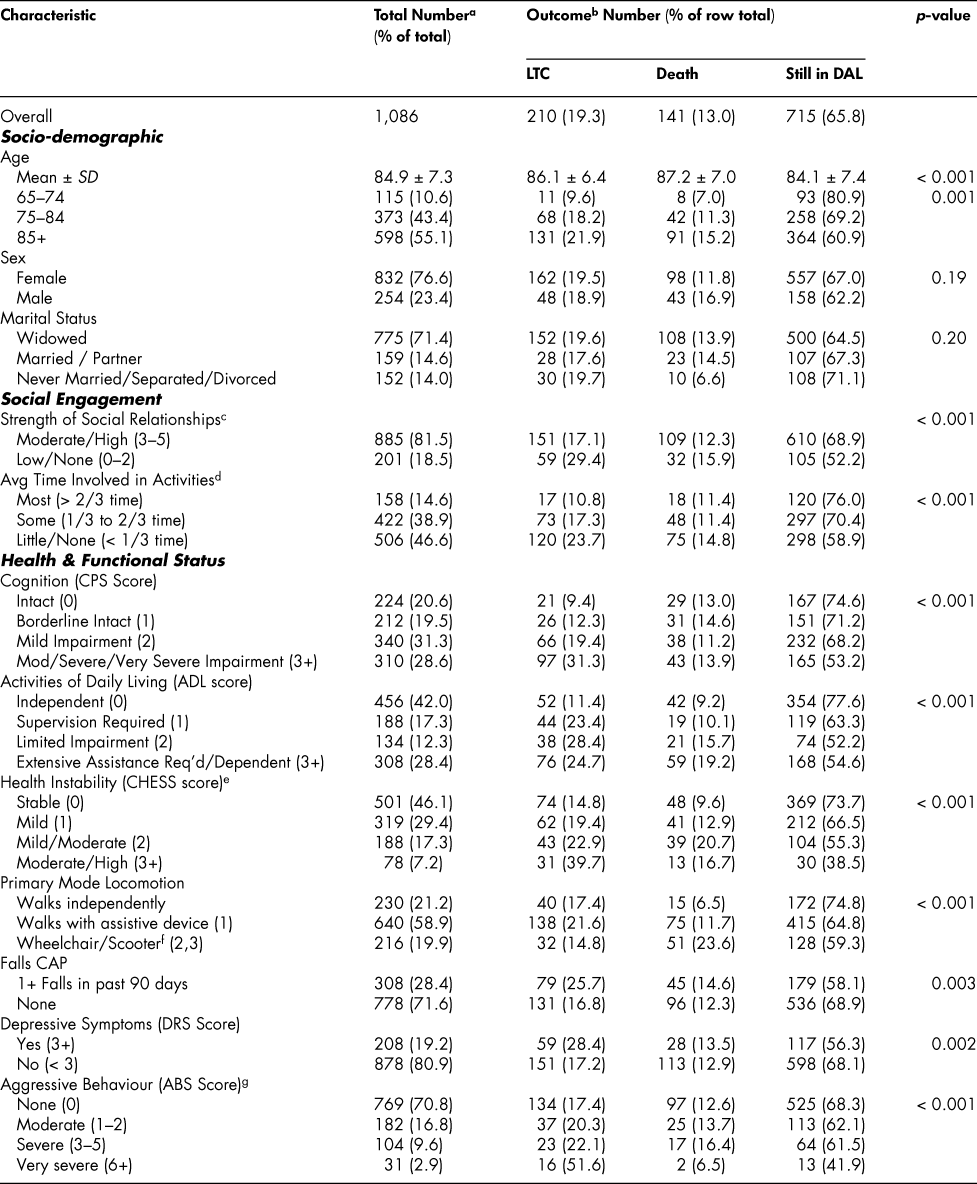
The cohort was predominantly female (76.6%), widowed (71.4%), and had a mean age of 84.9 ± 7.3 years (see Table 1). About 19 per cent had poor or no social relationships, and 47 per cent showed little involvement in activities. The prevalence of clinically significant depressive symptoms was 19 per cent. Residents were generally less impaired in physical as compared with cognitive functioning (e.g., 42% were independent in ADLs whereas 21% were cognitively intact). Significant aggression was exhibited by 29 per cent of residents. Slightly more than half (54%) showed health instability. Only 21 per cent walked independently. Most were continent of bowel (72%) with fewer continent of bladder (41%). In the previous three months, 28 per cent had experienced a fall and 23 per cent a hospitalization/ED visit. Residents had a mean of 4.6 ± 2.0 (range: 0–14) diagnoses. The five most common were as follows: Alzheimer’s disease and related dementias (58%), hypertension (56%), arthritis (54%), depression (34%), and osteoporosis (32%).
Baseline characteristics of residents by outcome event during 1-year follow-up, ACCES-DAL cohort (n = 1,086)

ABS = Aggressive Behaviour Scale
ACCES = Alberta Continuing Care Epidemiological Studies
AL = assisted living
CPS = Cognitive Performance Scale
DAL = designated assisted living and supportive housing
DRS = Depression Rating Scale
LTC = long-term care
RHA = Regional health authority
SD = standard deviation
a Sample excludes three residents with unknown outcome who discontinued study
b 20 (1.8%) residents with other outcomes (censored at date of first discharge from DAL) omitted from comparisons; 34 residents who transferred to LTC subsequently died before end of follow-up (only included in LTC column)
c Social relationships based on summary score of items assessing whether resident is close to someone in the facility, has a strong/supportive relationship with family, participates in social activities of longstanding interest and visits/has other interactions with longstanding social relation/family member (in past week)
d Activity involvement reflects when awake and not receiving treatments or ADL care
e Two items (insufficient fluid, noticeable decline in food/fluid) used to calculate CHESS are not included on interRAI-AL tool
f Includes one resident who was bedbound
g ABS is a summary scale of four behaviours (verbal abuse, physical abuse, socially inappropriate or disruptive, resists care) with higher scores indicating a greater number and frequency of behavioural issues
h Equivalent level of care (private AL, residential, respite (not in LTC), community support and transition beds); lower level of care (independent living, lodge, condo); higher level of care (LTC (including respite), acute care)
During follow-up, 210 (19.3%) residents were admitted to a LTC facility (34 subsequently died within the year); 141 (13.0%) died without LTC admission; 20 (1.8%) were discharged to another setting (at follow-up, 8 were in an acute-care hospital; 5, private residence; 2, hospice; 1, transition bed; 1, rehabilitation facility; and 3, a non-study health region); and 715 (65.8%) remained alive and in DAL (685 in the same facility as at baseline). Several resident and facility characteristics showed significant bivariate associations with one-year outcomes (see Table 1).
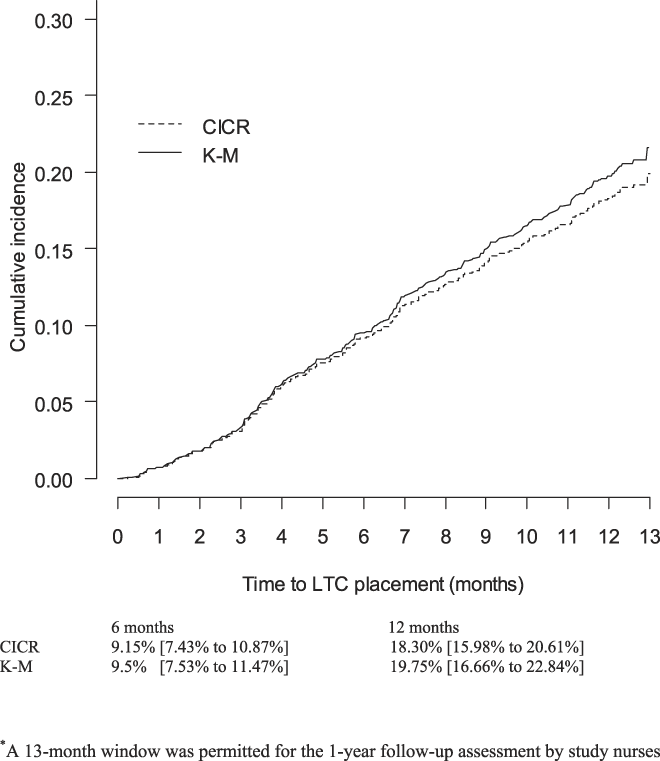
The rate of admission to LTC was 22.3 per 100 person-years. The cumulative incidence of LTC admission was 9.15 per cent (95% CI = 7.43–10.87%) by six months and 18.3 per cent (15.98–20.61%) by 12 months (see Figure 1).
Cumulative incidence of LTC placement during 1 year follow-up,* ACCES-DAL Cohort (n = 1086)
CICR = Cumulative Incidence Competing Risk
K-M = Kaplan-Meier
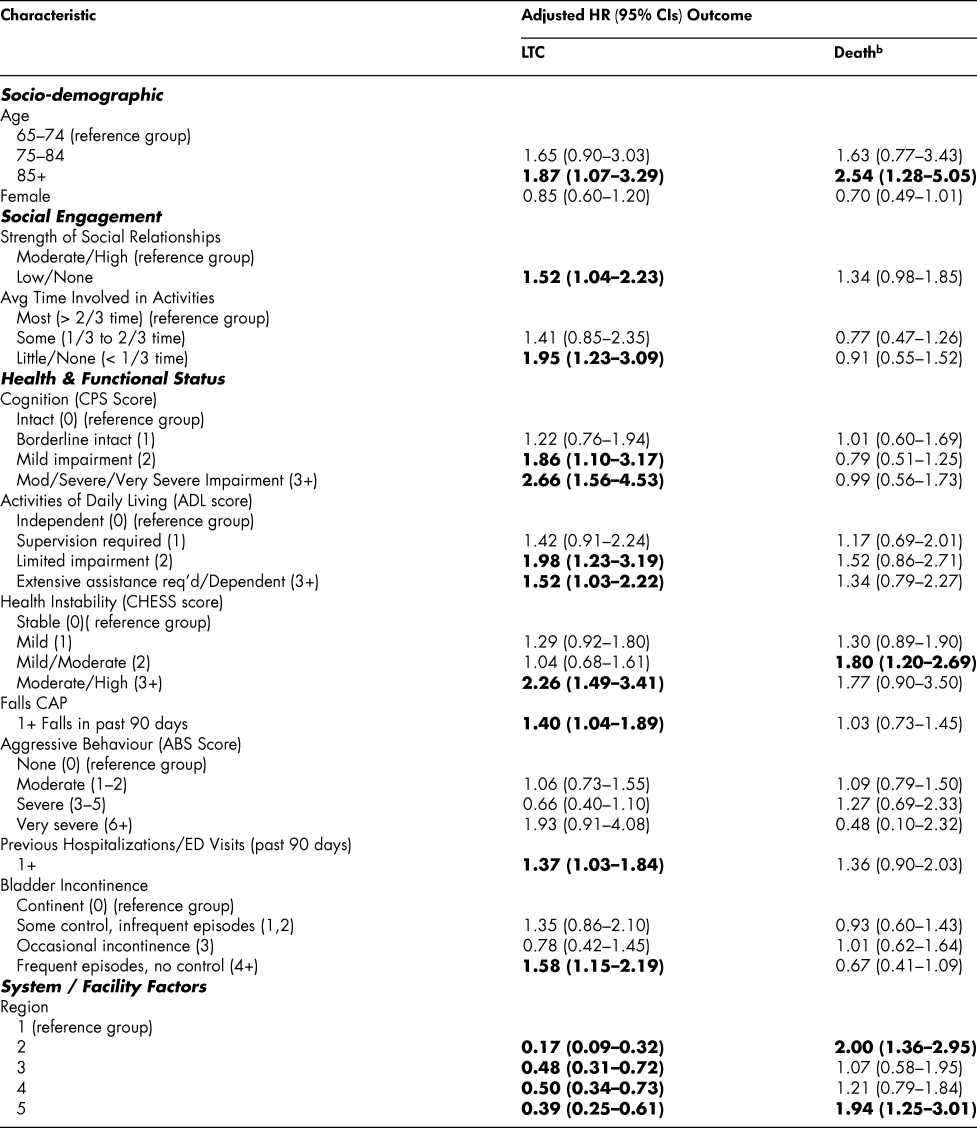
In adjusted analyses, a significantly increased risk for LTC placement was observed for older residents (i.e., age 85+) and those with poor social relationships, little involvement in activities, mild and more severe cognitive impairment (or a diagnosis of dementia, data not shown), limited and more extensive ADL impairments, moderate to high health instability, recent falls or hospitalizations/ED visits, and frequent bladder incontinence or no control (see Table 2). Residents with very severe aggressive behaviours showed a marginally increased risk for placement in adjusted analyses. All other resident characteristics (including hours of informal care) were not predictive of LTC placement in adjusted analyses. We found the presence of depressive symptoms to be significantly associated with placement in age- and sex-adjusted analyses (hazard ratio [HR] 1.82 [95% CI = 1.36–2.45]) but it was not retained in the final model (reflecting the presence of strong correlations with other significant predictors of placement including social engagement, cognitive and functional impairment, and health instability).
Adjusted hazard ratiosa (95% CIs) for LTC placement and death during 1-year follow-up, ACCES-DAL cohort (n = 1,086)
ABS = Aggressive Behaviour Scale
ACCES = Alberta Continuing Care Epidemiological Studies
AL = assisted living
CAP = Clinical Assessment Protocol
CI = confidence interval
a Derived from cause-specific Cox proportional hazards regression models, also adjusted for clustering by facility; sample excludes three residents with unknown outcome who discontinued study.
b For mortality, model also adjusted for #chronic conditions, bowel incontinence and impaired mobility which were significant predictors of death (but not LTC placement), specifically, there was an increased mortality risk for residents with 6+ comorbid conditions (HR 1.78 [95% CI 1.15–2.74], p = 0.0099), with frequent episodes of bowel incontinence or no control (HR 2.03 [1.15–3.60], p = 0.0150) and who required a wheelchair/scooter (HR 2.57 [1.39–4.74]).
For death (modeled as the first event), significant predictors included older age (i.e., age 85+), mild to moderate health instability, use of a wheelchair or scooter, the presence of six or more co-morbid conditions (HR 1.78, 95% CI = 1.15–2.74, p = .0099) and frequent bowel incontinence or no control (HR 2.03, 95% CI = 1.15–3.60, p = .0150). The latter three variables were not associated with LTC placement and were excluded from the LTC analyses to yield a parsimonious model.
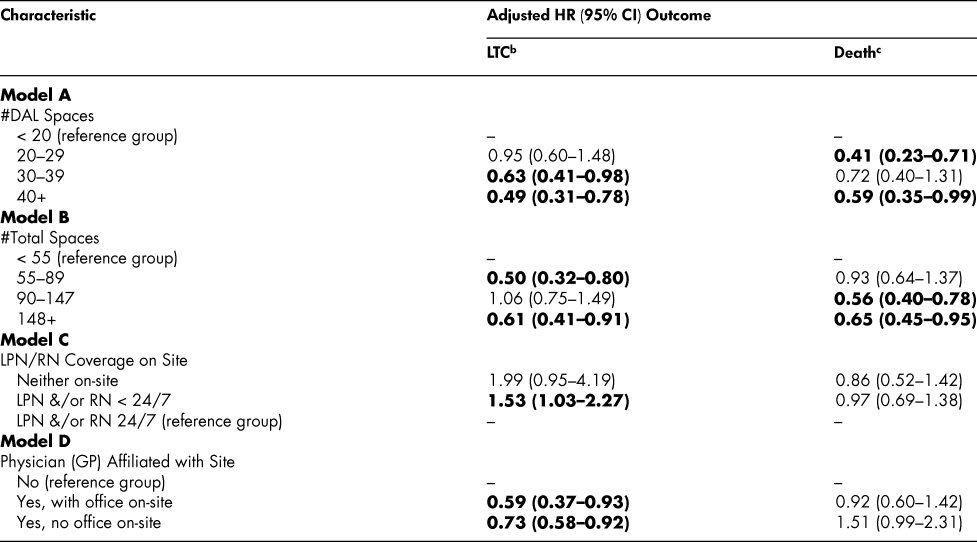
In models adjusted for resident characteristics and region, a significantly lower risk of LTC placement was observed for residents from facilities with a larger number of DAL spaces (30+), a larger number of total spaces (with one exception), an LPN and/or RN on-site 24/7 (vs. < 24/7), and a primary care physician affiliated with the site (see Table 3). Residents from facilities with a larger number of DAL spaces (20+) or total spaces (90+) generally showed a significantly lower risk for mortality. Facility-level factors we examined that were not significant predictors of LTC admission included (a) ownership (for-profit vs. not; and whether facility was part of a chain [AL and/or LTC]); (b) year DAL spaces opened; and (c) level of care available on-site (equivalent/lower vs. higher such as acute and LTC). Community size was highly correlated with region and was not retained in the models. Health region showed a significant association with both LTC placement (with residents from regions two–five showing a reduced risk for placement compared with region one) and mortality (with residents from regions two and five showing an increased risk relative to region one).
Adjusted hazard ratiosa (95% CIs) for LTC placement and death during 1-year follow-up associated with selected facility factors, ACCES-DAL cohort (n = 1086)
ACCES = Alberta Continuing Care Epidemiological Studies
AL = assisted living
CI = confidence interval
HR = hazard ratio
LTC = long-term care
a Sample excludes three residents with unknown outcome who discontinued study; models also adjusted for clustering by facility
b For LTC placement, Models A–D are adjusted for all socio-demographic, social, health, and functional characteristics (as listed in Table 2) and region.
c For mortality, Models A–D are adjusted for all socio-demographic, social, health, and functional characteristics (as listed in Table 2), region, and comorbidity, bowel incontinence, and impaired mobility.
Analyses based on a proportional sub-distribution hazards regression model resulted in essentially identical estimates and conclusions regarding predictors of LTC placement.
Discussion
This study represents the first attempt within Canada to examine AL resident and facility characteristics and their relative impact on the risk of admission to LTC. The expansion and variability of AL across Canada (similar to trends witnessed in the U.S.) (Alberta Health & Wellness, 2008; Canadian Centre for Elder Law, 2008; Golant, Reference Golant2004), coupled with the heterogeneity in the psychosocial and health needs of residents, makes it an important area for research.
Among older DAL residents in Alberta, the rate of admission to LTC was 22.3 per 100 person-years with a cumulative incidence of 18.3 per cent (15.98–20.61%) by 12 months. Overall, 16.1 per cent died during follow-up (including deaths in LTC). Our estimates are comparable to those observed in the U.S. Collaborative Studies of Long-Term Care (CS-LTC), which reported annual nursing home transfer and mortality rates of 21.3 per cent and 14.4 per cent respectively (Zimmerman et al., Reference Zimmerman, Sloane, Eckert, Gruber-Baldini, Morgan and Hebel2005). Our institutionalization rate is considerably higher than rates observed for community-dwelling older adults (Luppa et al., Reference Luppa, Luck, Weyerer, König, Brähler and Riedel-Heller2010), but similar to findings reported for community-dwelling persons with dementia (about 20% over 1 year) (Luppa et al., Reference Luppa, Luck, Brähler, Konig and Riedel-Heller2008). Determining what is an appropriate rate of transfer to LTC from AL within one year is not answered by our study. To the extent that AL is perceived as providing a viable substitute for LTC, our findings would raise concerns particularly given the risks associated with care transitions for frail seniors (Coleman, Reference Coleman2003).
Several previously reported risk factors for institutionalization (Aud & Rantz, Reference Aud and Rantz2005; Gaugler et al., Reference Gaugler, Duval, Anderson and Kane2007; Luppa et al., Reference Luppa, Luck, Weyerer, König, Brähler and Riedel-Heller2010; Phillips et al., Reference Phillips, Munoz, Sherman, Rose, Spector and Hawes2003; Tighe et al., Reference Tighe, Leoutsakos, Carlson, Onyike, Samus and Baker2008) emerged as relatively strong predictors of LTC placement during follow-up. Interestingly, those requiring only limited assistance with ADLs (a population expected to be well served by AL) showed an approximate twofold increased risk of placement over one year. An increased risk of LTC admission was also observed for residents with recent falls or hospitalizations/ED visits. Few studies have commented on such factors (Dobbs et al., Reference Dobbs, Hayes, Chapin and Oslund2006; Phillips et al., Reference Phillips, Munoz, Sherman, Rose, Spector and Hawes2003) although one noted an increased risk of LTC placement for those with poor balance (Kenny et al., Reference Kenny, Bellantonio, Fortinsky, Dauser, Kleppinger and Robison2008). Overall, the increased risk of placement associated with bladder incontinence and limited impairment in ADL is noteworthy given that some reported admission and retention criteria would appear to permit ongoing care for such residents (Strain et al., Reference Strain, Maxwell, Wanless and Gilbart2011).
As observed in the United States (Aud & Rantz, Reference Aud and Rantz2005; Rosenblatt et al., Reference Rosenblatt, Samus, Steele, Baker, Harper and Brandt2004; Watson et al., Reference Watson, Lehmann, Mayer, Samus, Baker and Brandt2006), mental health conditions were common among DAL residents in Alberta (e.g., 58% had dementia and 34% a diagnosis of depression). These residents present significant challenges to formal and family caregivers. Although their initial care needs may be effectively met upon admission, they are at risk for deterioration, transfer to higher levels of care, and other adverse health outcomes (Dobbs et al., Reference Dobbs, Hayes, Chapin and Oslund2006; Lyketsos et al., Reference Lyketsos, Samus, Baker, McNabney, Onyike and Mayer2007; Sloane et al., Reference Sloane, Zimmerman, Gruber-Baldini, Hebel, Magaziner and Konrad2005). When substituted for CPS score, a diagnosis of dementia was a significant predictor of LTC placement in our study, a finding consistent with research involving community-dwelling older adults (Agüero-Torres et al., Reference Agüero-Torres, von Strauss, Viitanen, Winblad and Fratiglioni2001). The lack of statistical significance for severe aggression (a characteristic expected to result in discharge from AL) likely reflects its relatively low prevalence and strong association with cognitive/functional impairment. Furthermore, while depression was not a significant predictor in the final model, it is noteworthy that we observed strong correlations between depressive symptoms and other resident-level predictors of LTC placement (including cognitive and functional impairment). As depressive symptoms may precipitate and/or exacerbate cognitive and functional decline (Kenny et al., Reference Kenny, Bellantonio, Fortinsky, Dauser, Kleppinger and Robison2008), further longitudinal investigations of the impact of mood disorders (and their potential under-treatment) on care and outcomes among AL residents are warranted (Watson et al., Reference Watson, Lehmann, Mayer, Samus, Baker and Brandt2006, Reference Watson, Garrett, Sloane, Gruber-Baldini and Zimmerman2003). Our findings raise further concerns regarding the complexity of mental health issues among older AL residents and the need for increased training and resources to allow for better detection and treatment of mood and other psychiatric disorders in the AL sector.
An important and unexpected finding given the social philosophy of the AL model of care was the prevalence of low social and physical engagement (e.g., almost 1 in 5 residents had poor or no social relationships, and close to half showed little or no involvement in activities). Both measures were significantly associated with LTC placement after adjusting for other resident characteristics. Findings from the Maryland Assisted Living Study (Tighe et al., Reference Tighe, Leoutsakos, Carlson, Onyike, Samus and Baker2008) suggest that higher levels of participation (in group and/or solitary activities) may be associated with a longer time to discharge from AL. Although the underlying mechanisms remain to be defined, engagement in activities and social relationships may postpone functional and/or cognitive decline (James, Boyle, Buchman, & Bennett, Reference James, Boyle, Buchman and Bennett2011; Vercambre, Grodstein, Manson, Stampfer, & Kang, Reference Vercambre, Grodstein, Manson, Stampfer and Kang2011). The process of social engagement in AL is complex with a number of potential barriers (e.g., policies and regulations) as well as facilitators (e.g., availability of social/recreational activities, opportunities for interactions with staff) that are at least partially under the control of the facility (Park, Zimmerman, Kinslow, Shin, & Roff, Reference Park, Zimmerman, Kinslow, Shin and Roff2012). Our findings point to a need for educating AL staff to better detect social vulnerability (Zimmerman et al., Reference Zimmerman, Sloane, Eckert, Gruber-Baldini, Morgan and Hebel2005; Resnick, Galik, Gruber-Baldini, & Zimmerman, Reference Resnick, Galik, Gruber-Baldini and Zimmerman2010) and developing interventions to promote resident engagement and activity (Stefanacci, Reference Stefanacci2010). The potential for these interventions to delay LTC transfers and adverse outcomes among AL residents is an important priority for future research.
Regarding facility-level predictors of placement, our findings are similar to previous U.S. studies (Dobbs et al., Reference Dobbs, Hayes, Chapin and Oslund2006; Hedrick et al., Reference Hedrick, Guihan, Chapko, Sullivan and Zhou2009; Phillips et al., Reference Phillips, Munoz, Sherman, Rose, Spector and Hawes2003; Zimmerman et al., Reference Zimmerman, Sloane, Eckert, Gruber-Baldini, Morgan and Hebel2005) in that only a few facility characteristics were associated with LTC placement. Specifically, residents receiving care in facilities with larger numbers of spaces (i.e., > 30 DAL or > 148 total), LPN and/or RN coverage on-site 24/7, and/or an affiliated primary care physician showed a significantly reduced risk of LTC placement over one year. Findings regarding the importance of facility type, size, and age remain unclear (Dobbs et al., Reference Dobbs, Hayes, Chapin and Oslund2006; Hedrick et al., Reference Hedrick, Guihan, Chapko, Sullivan and Zhou2009; Zimmerman et al., Reference Zimmerman, Sloane, Eckert, Gruber-Baldini, Morgan and Hebel2005). None of these factors were associated with AL residents’ outcomes (including nursing home transfer) in the CS-LTC (Zimmerman et al., Reference Zimmerman, Sloane, Eckert, Gruber-Baldini, Morgan and Hebel2005). Our findings suggest residents from DAL settings with larger bed/space numbers may have a lower risk of transfer to LTC, although this was less consistent for total facility size. Larger size may provide opportunities for more skilled staffing or a greater array of services (Stearns et al., Reference Stearns, Park, Zimmerman, Gruber-Baldini, Konrad and Sloane2007) and, consequently, enhanced treatment and quality of care (Watson et al., Reference Watson, Lehmann, Mayer, Samus, Baker and Brandt2006).
Findings regarding the availability of an RN and risk of nursing home placement have been inconsistent with one study showing a reduced risk similar to ours (Phillips et al., Reference Phillips, Munoz, Sherman, Rose, Spector and Hawes2003); another, an increased risk (Zimmerman et al., Reference Zimmerman, Sloane, Eckert, Gruber-Baldini, Morgan and Hebel2005); and others, no association (Dobbs et al., Reference Dobbs, Hayes, Chapin and Oslund2006; Hedrick et al., Reference Hedrick, Guihan, Chapko, Sullivan and Zhou2009). This inconsistency may reflect the importance of staffing intensity and skill mix (e.g., proportion of total direct-care hours provided by licensed staff) rather than simply the presence or absence of an RN (Stearns et al., Reference Stearns, Park, Zimmerman, Gruber-Baldini, Konrad and Sloane2007). Although not associated with a reduced risk of LTC admission, a higher proportion of licensed staff hours (whether by an RN or LPN) and more hours of RN staff time per resident were associated with a reduced hospitalization risk in the CS-LTC (Stearns et al., Reference Stearns, Park, Zimmerman, Gruber-Baldini, Konrad and Sloane2007; Zimmerman et al., Reference Zimmerman, Sloane, Eckert, Gruber-Baldini, Morgan and Hebel2005).
We are unaware of other studies indicating that a facility-affiliated physician led to improved outcomes in AL settings although this issue has received some attention (Schumacher, Reference Schumacher2006; Sloane et al., Reference Sloane, Zimmerman, Perez, Reed, Harris-Wallace and Khandelwal2011). Given the correlations among our facility variables, it is difficult to tease out the relative importance or underlying mechanisms associated with these facility characteristics. All three (larger size, LPN and/or RN coverage on-site 24/7, and the active involvement of a physician within the facility) may contribute to opportunities for enhanced clinical oversight, more timely identification of problems, and greater ability to provide effective care.
Despite some evidence for higher staffing skill mix and improved quality of care in non-profit as compared with for-profit AL and LTC facilities (Hillmer, Wodchis, Gill, Anderson, & Rochon, Reference Hillmer, Wodchis, Gill, Anderson and Rochon2005; Stearns et al., Reference Stearns, Park, Zimmerman, Gruber-Baldini, Konrad and Sloane2007), ownership status was not a significant predictor of LTC admission or death in our DAL cohort or in the CS-LTC (Stearns et al., Reference Stearns, Park, Zimmerman, Gruber-Baldini, Konrad and Sloane2007). It has been suggested that the stronger the non-profit sector in a given jurisdiction, the more likely it is that all care facilities (including for-profit ones) will provide better quality of care (Grabowski & Hirth, Reference Grabowski and Hirth2003). Sixty-four per cent of our DAL facilities were non-profit. Contrary to U.S. research (Dobbs et al., Reference Dobbs, Hayes, Chapin and Oslund2006; Zimmerman et al., Reference Zimmerman, Sloane, Eckert, Gruber-Baldini, Morgan and Hebel2005), the availability of higher levels of care on-site (e.g., acute and LTC beds) was not a significant predictor of LTC placement in our cohort. This may reflect differences across health systems and AL facilities in policies, practice and/or system capacity (e.g., LTC bed supply and wait list policies).
The significantly lower risk of placement (and in some cases higher risk of mortality) shown for residents from selected health regions is of interest and suggests the relative importance of variation in other health system and/or policy factors. Although caution is required in the interpretation of findings for health region given its association with various facility (and other unmeasured) characteristics, these associations may reflect regional differences in strategic direction and LTC bed availability at the time of the study. Important considerations would include regional differences in LTC bed capacity and care options, admission/discharge criteria, degree of support for the AL model as a substitute for LTC, and urban/rural influences on care transitions (Polivka & Salmon, Reference Polivka, Salmon, Golant and Hyde2008). Given the relative absence of data in this area, further research is needed across regions and provinces to explore the potential influence of health system and/or policy factors to care transitions among AL residents.
Our study has several strengths including the large sample, relatively high response rate, examination of a diverse range of relevant resident and facility characteristics, and comprehensive follow-up with prospective data collection. Some limitations also warrant consideration. Approximately 28 per cent of eligible residents were not enrolled. Although their age and sex distribution was comparable to our enrolled cohort, this may limit the generalizability of our findings. We restricted eligibility to residents of publicly subsidized (or designated) AL spaces because these settings are subject to provincial health services standards and accessed via a single point of entry. As such, our findings may not apply to residents in private-pay AL settings across Canada.
Conclusion
The strategic shift to DAL settings in Alberta was supported as an innovative and flexible approach to meeting the care needs of vulnerable older adults (including those with dementia) (Alberta Health & Wellness, 2008; Government of Alberta, 2012). Many disabled residents with considerable co-morbidity were able to remain in DAL during the study period. The functional and quality of life outcomes experienced by these residents (and associated determinants) remain to be investigated.
At the same time, our findings illustrate that this new model of care provision did not necessarily promote aging in place. Importantly, several of the observed resident and facility predictors of placement are potentially modifiable, including low social engagement and activity, falls, incontinence, and the intensity and mix of AL staffing and services. These observed predictors represent priority areas for policy and practice interventions to promote aging in place (Aud & Rantz, Reference Aud and Rantz2005; Polivka & Salmon, Reference Polivka, Salmon, Golant and Hyde2008). Given the growth and dynamic nature of AL across Canada, it will be important to implement ongoing evaluations of the impact of recent policy and practice changes on residents’ quality of care and health outcomes. In the past, continuing care reforms have often prompted action in the absence of data (Berta, Laporte, Zarnett, Valdmanis, & Anderson, Reference Berta, Laporte, Zarnett, Valdmanis and Anderson2006). We hope that our empirical study will inform future decisions regarding the housing and care of vulnerable older adults.
Supplementary Material
To view supplementary material for this article, please visit http://dx.doi.org/10.1017/S0714980813000469