Tobacco use is the leading preventable cause of morbidity and mortality globally. In 2002 over 37, 000 deaths were attributable to smoking in Canada accounting for 16.6% of all Canadian deaths, with an estimated $2.5 billion in costs associated with acute care hospitalisations (Public Health Agency of Canada, 2007). Smoking is not only a well-known modifiable risk factor for cardiac diseases, it also worsens the natural history of these conditions (U.S. Department of Health and Human Services, 2010).
Due to the challenging nature of tobacco addiction, individuals with cardiac conditions often continue to smoke at high rates (up to 62%), even after experiencing life-threatening events (Colivicchi et al., Reference Colivicchi, Mocini, Tubaro, Aiello, Clavario and Santini2011; Rea et al., Reference Rea, Heckbert, Kaplan, Smith, Lemaitre and Psaty2002). Moreover, such patients are likely to live with current smokers and have regular exposure to secondhand tobacco smoke (SHS) (Hevey, Slack, Cahill, Newton, & Horgan, Reference Hevey, Slack, Cahill, Newton and Horgan2002). Continued smoking among patients with existing cardiac disorders or prior cardiac events is associated with increased risk for subsequent fatal cardiac events (Gerber, Rosen, Goldbourt, Benyamini, & Drory, Reference Gerber, Rosen, Goldbourt, Benyamini and Drory2009; Kinjo et al., Reference Kinjo, Sato, Sakata, Nakatani, Mizuno and Shimizu2005). Hence treating tobacco dependence in these patient populations can significantly reduce the excess mortality currently observed (Mohiuddin et al., Reference Mohiuddin, Mooss, Hunter, Grollmes, Cloutier and Hilleman2007).
Smoking cessation is one of the most important factors in reducing premature death among cardiac patients (Godtfredsen, Osler, Vestbo, Andersen, & Prescott, Reference Godtfredsen, Osler, Vestbo, Andersen and Prescott2003; Wilson, Gibson, Willan, & Cook, Reference Wilson, Gibson, Willan and Cook2000). Recent studies suggest that even smoking reduction may have some benefit in delaying premature death among cardiac patients (Gerber et al., Reference Gerber, Rosen, Goldbourt, Benyamini and Drory2009) although this is not supported by prior studies in the general population (Godtfredsen et al., Reference Godtfredsen, Osler, Vestbo, Andersen and Prescott2003; Tverdal & Bjartveit, Reference Tverdal and Bjartveit2006). Despite the known benefits of smoking cessation, important risk factors are known to predict continued smoking after a cardiac event. Particularly, younger age, long duration and high intensity of pre-cardiac event smoking, low education level, poor family income, and short hospital stay at the time of the original cardiac event (Gerber et al., Reference Gerber, Koren-Morag, Myers, Benyamini, Goldbourt and Drory2011). It has also been noted that cardiologists and internists are less likely to offer counselling than family physicians (Van Spall, Chong, & Tu, Reference Van Spall, Chong and Tu2007).
Fortunately, evidence suggests that smoking cessation interventions are associated with reducing rates of premature death among cardiac patients (Van Berkel, Boersma, Roos-Hesselink, Erdman, & Simoons, Reference Van Berkel, Boersma, Roos-Hesselink, Erdman and Simoons1999). In a retrospective study of 3511 current smokers with acute myocardial infarction (AMI) attending hospitals in Ontario, only 52% were offered smoking cessation counselling (Van Spall et al., Reference Van Spall, Chong and Tu2007). Moreover, the group of patients receiving smoking cessation counselling was significantly less likely to experience mortality in the year following hospitalisation compared to those not receiving counselling. In another study, Mohiuddin and colleagues (Reference Mohiuddin, Mooss, Hunter, Grollmes, Cloutier and Hilleman2007) conducted a randomised controlled trial of an intensive smoking cessation programme (incorporating 12 weeks of hour-long behavioural modification therapy sessions and individualised pharmacotherapy) in contrast to usual care (a single inpatient counselling session with the addition of support materials). This study found a significantly higher two-year continuous abstinence rate in the intensive smoking cessation group versus the usual care group (33% vs. 9%). Moreover, mortality rate (all causes) was 2.8% in the intensive smoking cessation group versus 12.0% in the usual care group over the two-year follow up period.
Based on the reviewed studies, intensive tobacco dependence treatment for cardiac patients can be successful in supporting smoking abstinence, and ultimately reducing premature death. With the challenges and barriers facing such patients in smoking cessation, it is important to provide accessible and individualized tobacco treatment for these patients at point of contact with healthcare services. However, few studies in Canada have examined smoking cessation outcomes among cardiac patients in outpatient clinic settings. Hence, the purpose of our study is to report the pilot smoking cessation outcomes of an innovative tobacco dependence treatment approach in a specialist outpatient cardiology clinic setting in Vancouver, Canada. Specifically, among participants in a smoking cessation programme within cardiology services, we aim to:
1. Examine smoking cessation and reduction outcomes based on sources of referral (i.e., cardiology, respirology, or other sources) and,
2. Examine predictors of smoking cessation among participants
Methods
Setting and Participants
This current retrospective data analysis aims to assess tobacco treatment outcomes within an ongoing evaluation study of a novel tobacco treatment programme situated in a hospital setting. The purpose of the parent project is to provide a comprehensive programme evaluation of the processes, impacts, and effects of a ‘longitudinal approach’ to tobacco treatment on tobacco cessation outcomes, re-hospitalisations, mortality, and quality of life among individuals with co-morbid chronic disorders accessing tobacco treatment. As such, the Smoking Cessation Clinic (SCC) currently provides individualised tobacco treatment within cardiology services at the Vancouver General Hospital (VGH), in Vancouver, British Columbia (BC), Canada.
At its inception (September 2010), the SCC took referrals exclusively from cardiology, but has subsequently expanded in scope to allow referrals from other services within the hospital. All referrals from cardiology services were for outpatients who were clinically stable. Patients are referred to the clinic through an electronic referral system upon identification of smoking status by the healthcare provider. To be eligible for the SCC, individuals must be: a) an existing client of VGH, b) 19 years or older and c) tobacco dependent. For the purposes of this pilot evaluation, electronic chart reviews of patient data commenced in July 2012 and captured a time frame of 1 year and 8 months since the inception of the SCC programme.
Intervention
The SCC programme takes a longitudinal approach to tobacco treatment, a process which has no set end-point. This model of treatment is in recognition of tobacco dependence as a chronic, relapsing medical condition (Fiore et al., Reference Fiore, Jaén, Baker, Bailey, Benowitz, Curry and Leitzke2008), whereby smoking cessation is considered ‘a process and not an event’. The clinic now runs three full days a week and is staffed by a team of specialists in tobacco dependence treatment comprising of two nurses and a physician. In general, participants were provided with pharmacotherapy and individual counselling (i.e., brief, strategic advice employing the principles of motivational interviewing) at each clinic visit. In addition, all participants are given information for referral to a province-wide telephone ‘quit line’ and other community resources for tobacco dependence treatment.
Pharmacotherapy
A recommendation for the use of pharmacotherapy is provided to all participants. Options include NRT (i.e., nicotine gum, patch, lozenge, inhaler or oral spray), varenicline or buproprion SR. Combinations of these products are frequently utilised. A medication protocol was established for the SCC programme based on existing treatment algorithms for the use of pharmacotherapy in clinics and outpatient settings (Bader, McDonald, & Selby, Reference Bader, McDonald and Selby2009). Decisions regarding the amount and type of pharmacotherapy used were guided by several factors determined at initial assessment. These included baseline values on the Fagerstrom Test for Nicotine Dependence (FTND) (Heatherton, Kozlowski, Frecker, & Fagerstrom, Reference Heatherton, Kozlowski, Frecker and Fagerstrom1991), patient prior experience with pharmacotherapy and, most importantly, patient preference. Hence, in all cases, the choice of pharmacotherapy is individualised and tailored, taking into account multiple factors.
Programme Completion and Follow-up
Treatment is ongoing until there is mutual agreement between the participant and the provider that treatment is completed, whether the participant achieved cessation or not. After the initial visit, participants are provided with pharmacotherapy (by either prescription or referral to the BC Smoking Cessation Programme, a provincial government initiative allowing 12 weeks free NRT to all BC residents) to last them till the next scheduled visit. This visit is scheduled at an interval which reflects the needs of the patients, as determined by the care provider, within the context of a treatment plan. Typically, visits may be scheduled within a range of one to four weeks. At each scheduled visit, smoking history in the previous 7 days is obtained from each participant by self-report and verified with expired CO monitoring. If participants fail to attend their scheduled clinic visit, a follow-up call is made by an SCC nurse at which time smoking status is obtained (although not verified by expired CO). When participants fail to attend two scheduled visits in a row (or are lost to contact) they are discharged from the programme, whether they achieved cessation at their last clinic visit or not.
Measures
Information from each referred participant who attended an initial clinic appointment was obtained using standardised client assessment forms that are part of the treatment process in the SCC. These client assessment forms were completed by SCC staff in the form of semi-structured interviews with patients. Information on patient progress was also obtained by SCC staff at each subsequent clinic appointment using standardised assessment forms. Baseline demographic data including sex (female vs. male), age (in years), and source of income (disability benefits, Canadian Pension Plan, earned income/paid work, social assistance/welfare, Family Support, other) were collected. For ease of analysis, income source was re-categorised into three categories: (1) disability benefits/social assistance/Family Support/other, vs. (2) Canadian Pension Plan vs. (3) earned income/paid work. Tobacco use and cessation history questions included smoking cessation stage of change (pre-contemplative vs. contemplative vs. preparation vs. action) (DiClemente et al., Reference DiClemente, Prochaska, Fairhurst, Velicer, Velasquez and Rossi1991), previous use of evidence-based modalities (i.e., either pharmacotherapy and/or behavioural counselling) to quit smoking (yes vs. no), length of time successfully quit at the last quit attempt (less than 1 week, 1 week to less than 1 month, less than 1 year, greater than 1 year), age at smoking initiation (in years), average number of cigarettes smoked per day (Average CPD), Fagerström Test for Nicotine Dependence (FTND) scores (Heatherton et al., Reference Heatherton, Kozlowski, Frecker and Fagerstrom1991), and motivation to quit smoking (i.e., importance and confidence to quit smoking scores, each on a scale of ‘1’ low to ‘10’ high) (Kahler et al., Reference Kahler, LaChance, Strong, Ramsey, Monti and Brown2007; Marlatt, Curry, & Gordon, Reference Marlatt, Curry and Gordon1988). In addition, information on history of past or current other substance abuse (yes vs. no), past or current psychiatric disorder diagnoses (based on participant self-report and review of current and past medications for mental illness, yes vs. no), expired carbon monoxide (expired CO) level (Middleton & Morice, Reference Middleton and Morice2000), type of pharmacotherapy begun at initial visit (single nicotine replacement product only vs. combination nicotine replacement products vs. oral medication only vs. combination oral meds and nicotine replacement), and total number of visits to the programme, and the length of time spent in the programme (i.e., duration from first assessment visit to time of chart review, in weeks) was obtained from participant charts.
All outcomes for this study were based on data extraction from the charts during the specified chart-review period. The primary outcome measure for this study was smoking status at the time of chart review (i.e., all programme attendants who had engaged in the programme ‒ by attending at least one follow-up visit beyond the initial visit ‒ From September 2010 to August, 2012) based on 7-day point-prevalence of smoking abstinence (at clinic visit or follow-up phone call), which was determined by participant self-report with biochemical validation of expired CO ≤ 8 parts per million (ppm) when available (Hughes, Carpenter, & Naud, Reference Hughes, Carpenter and Naud2010; West, Hajek, Stead, & Stapleton, Reference West, Hajek, Stead and Stapleton2005). A secondary outcome was smoking reduction, defined as consuming 50% (or less) of the baseline number cigarettes in the past week. In addition, we obtained the length of time for which those who achieved cessation had remained abstinent (in weeks and months) at the time of data collection.
Data analysis
All electronic-chart records of participants attending the VGH SCC from 16 September 2010 to 24 May 2012 were obtained and reviewed. After Ethical Review Board approval, de-identified electronic information of specified variables relevant to this current study was transferred into an SPSS spread sheet. Only information from individuals who had attended a baseline assessment and one or more follow up visits to the clinic was obtained.
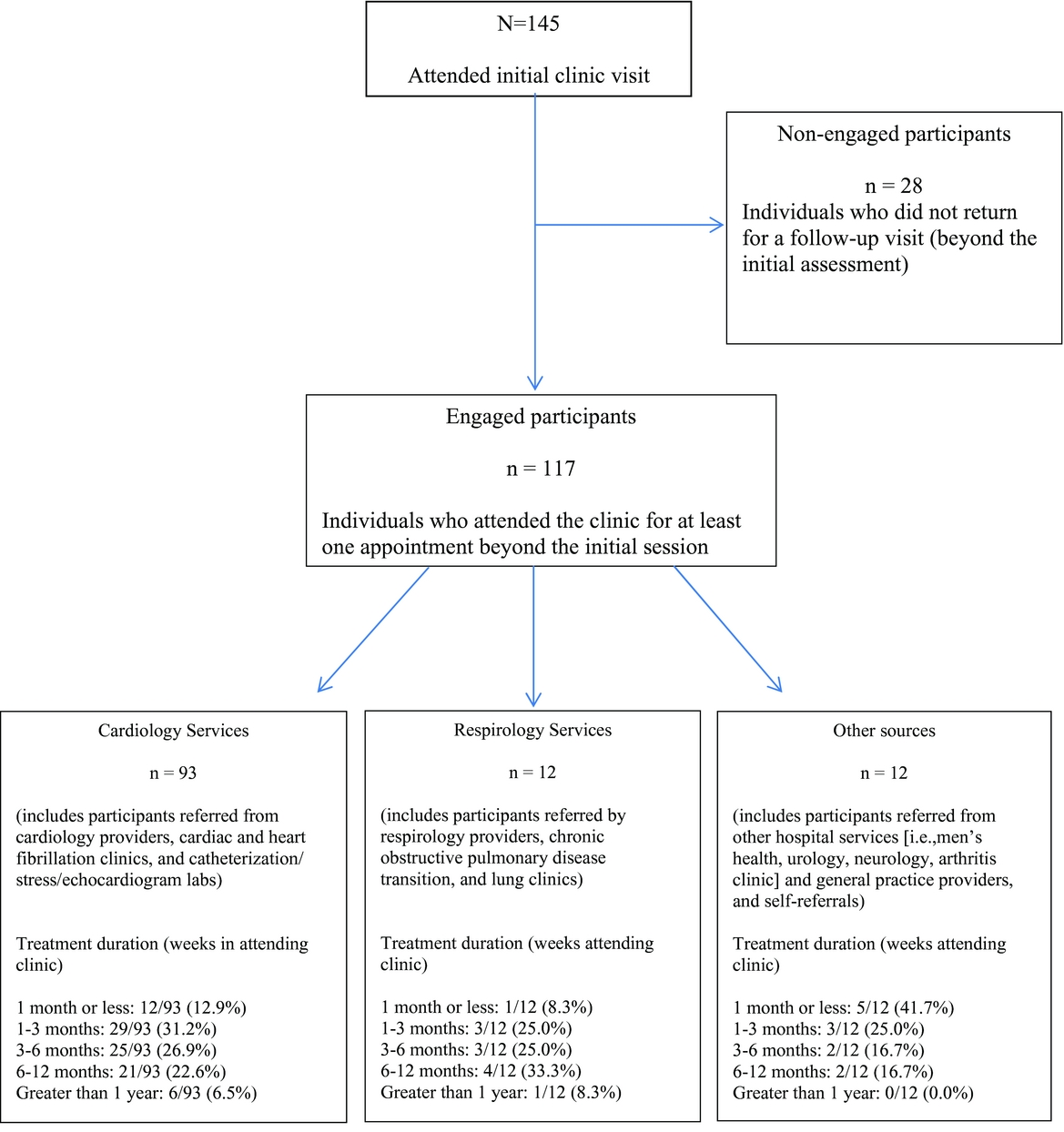
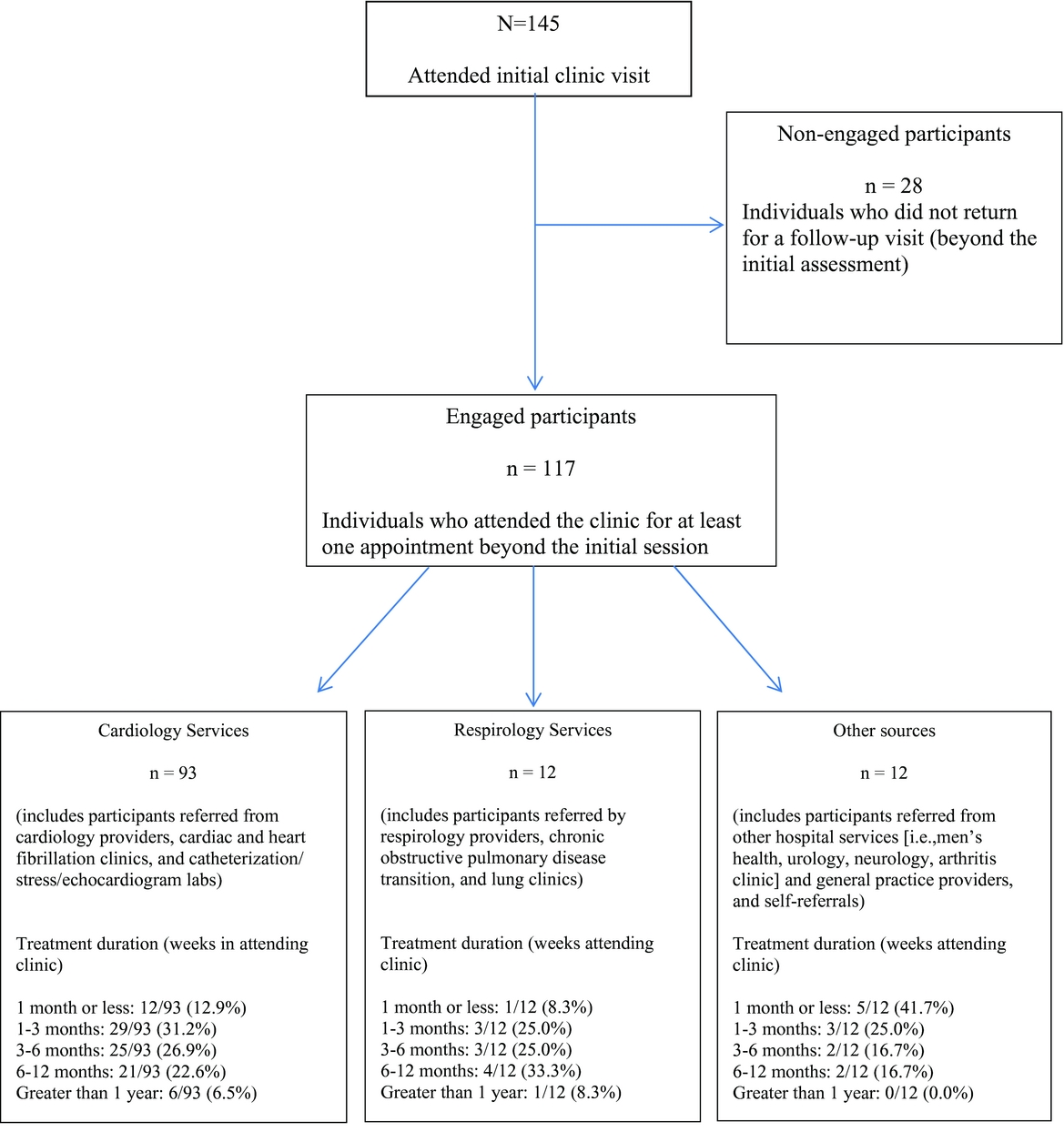
A total of 145 cigarette users attended an initial visit of the VGH SCC. Nineteen per cent (28/145) did not return for a follow-up visit (beyond the initial assessment) and were considered ‘non-engagers’. There was only one participant that did not specify their gender and one participant did not specify their income source. Compared to those who engaged, non-engagers were significantly more likely to be male (89.3% vs. 66.4%, χ2 = 5.7 [df = 1], p = .017), be in the precontemplation stage of change (19.2% vs. 3.4%, χ2 = 12.1 [df = 3], p = .007), younger (mean = 49.8 years vs. mean = 58.5 years, t = 2.7 [df = 32.5], p = .011), have lower expired CO levels at baseline (mean = 11.7ppm vs. mean = 15.8ppm, t = 2.0 [df = 138], p = .053), and have fewer medical co-morbidities (mean = 2.0 vs. mean = 2.8, t = 2.9 [df = 143], p = .005); however, they were less likely to have used an evidence-based method to try quitting in the past (53.6% vs. 78.6%, χ2 = 7.3 [df = 1], p = .007). Thus the analysis is based on the records of 117 ‘engagers’ (i.e., 81% of those referred) in the programme (see Figure 1).
Flow diagram of participation in the Smoking Cessation Clinic.
We described the sample using frequencies and means (M) with standard deviations (SD). To determine differences between groups by source of referral (i.e., cardiology, respirology, and other), chi-square analyses were used for categorical and ordered categorical variables and Analysis of Variance (ANOVA) tests with Levine's Test for equality of variance were employed for continuous variables. We tested the linear trend of association between smoking cessation and length of time in treatment using the Mantel-Hanzel linear-by-linear chi-square test of association. In addition, to determine salient predictors of smoking cessation we employed a two-step model building procedure (Hosmer & Lemeshow, Reference Hosmer and Lemeshow2000) to decide variables to include in logistic models (n = 117). For this procedure, initial univariate logistic regression analyses were used to determine the unadjusted associations between study variables and smoking cessation; then only variables that were associated with smoking cessation at alpha ≤ .05 in the first step were included in a final multivariate model. The Hosmer-Lemeshow goodness-of-fit test was used to assess the fit of the final model in which higher p-values represent a better fitting model. All tests were two-sided. All analyses were performed using the PASW Statistics 20.0 (SPSS, Inc., 2009, Chicago, IL, USA www.spss.com). This study was approved by the Vancouver Coastal Health Research Institute and the University of British Columbia Behavioural Ethics Board
Results
Sample Characteristics
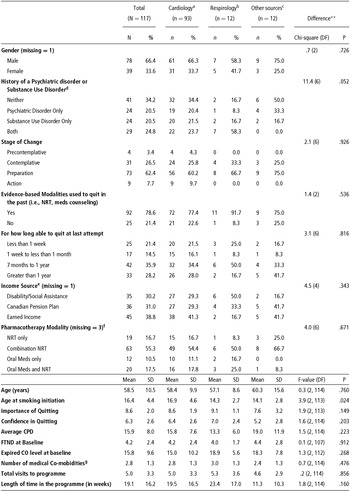
Participants were primarily male (66.4%) and on average were 58.5 years (SD = 10.5) of age. Participants had significant medical co-morbidities: hypertension (55.6%), high-cholesterol (66.7%), diabetes (15.4%), cardiovascular disease (75.2%), asthma (10.3%), chronic obstructive pulmonary disease (23.1%), and cancer (11.1%). More than a third of participants earned their own income (39%). About a quarter of participants had a current or past history of both a substance use disorder and mental illness and on average participants had three medical comorbidities. Participants were moderate smokers consuming 15.9 cpd (SD = 8.0) and had initiated smoking around 16.4 years (SD = 4.4) of age. The sample had moderate nicotine dependence scores of 4.2 (SD = 2.4). However, the majority (70.1%) were motivated to quit by being in the preparation or action stage of change, with high ratings on importance of quitting (mean = 8.6, SD = 2.0) but lower ratings on their confidence to quit (mean = 6.3, SD = 2.6). Moreover, more than three-quarters had used an evidence based method for smoking cessation in the past and more than half had been successful in smoking cessation for greater than 7 months in their last quit attempt. More than half (54.4%) of participants were treated with combination NRT; and 14.5% used varenicline alone or in combination with other medications. Moreover, on average, participants had a total of 5 (SD = 3.3) visits to the clinic (ranging from 2 to 16 visits, for a total of 585 clinic visits) with a mean length of 19.1 (SD = 16.2) weeks in the programme. There were significant baseline differences between referral groups with individuals from respirology having a greater proportion of individuals with both a history of substance use disorder and mental illness (58.3%) and individuals in the cardiology group initiating smoking at a later age than those in the respirology and ‘Other’ referral source groups (p = .024). There were no further baseline differences between referral groups (see Table 1).
Sample characteristics of participants attending a smoking cessation programme in cardiology services by referral source

DF = Degrees of Freedom
a. The ‘cardiology’ group included participants referred from cardiology providers, cardiac and heart fibrillation clinics, and catheterization/stress/echocardiogram labs
b. The ‘respirology’ group included participants referred by respirology providers and from chronic obstructive pulmonary disease transition and lung clinics
c. The ‘other sources’ group included participants referred from other hospital services such as men's health, urology, neurology, arthritis clinic, general practice providers, and self-referrals.
d. The Psychiatric disorders included major depression, Anxiety disorders, post-traumatic stress disorder, and psychotic disorders (Schizophrenia or Schizoaffective disorder). This category also included one individual with Attention Deficit Hyperactivity Disorder. The Substance disorders included primarily Alcohol Abuse, Cocaine, Opiates (including heroine), LSD and Metamphetamine.
e.The Disability/Social Assistance category includes individuals on disability benefits (n = 36), Social assistance/Welfare (n = 2), Family support (n = 1), and ‘other’ (n = 6).
f. Pharmacotherapy in initial treatment plan includes 17 individuals who received varenicline and 2 individuals who received bupropion in addition to NRT.
g. Medical Co-morbidites included hypertension, high-cholesterol, diabetes, cardiovascular disease, COPD, eating disorder, seizure disorder, obesity, kidney disease, asthma, HIV, HCV, and cancer. Total values ranged from 0 to 6.
** Differences are calculated using chi-square analyses for categorical and ordered categorical values (with Fisher's exact test for cells with lower than expected cell count), and using Analysis of Variance (ANOVA) test (with Levine's equality of variance test) for continuous variables.
Smoking Cessation outcomes
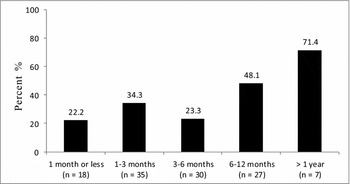
Over the review period, a total of 43.5% (51/117) achieved smoking cessation; however 19.6% (10/51) relapsed. By the time of data analysis, 35.0% (41/117) of participants who engaged in the programme were successfully abstinent, and 42.1% (32/76) of individuals who were not abstinent successfully reduced their smoking to less than 50% (or lower) of their baseline consumption. Moreover, 29.3%, 22.0%, 12.2%, and 36.6% of participants achieving cessation (n = 41) had maintained abstinence for one-month or less, 1‒3months, 3‒5months, and 6 months, respectively. Smoking cessation outcomes did not differ by history of specific medical comorbidity; however 52.9% (9/17) of those who used varenicline (either alone or in combination with other medications) were able to achieve abstinence, albeit not significantly different from those who did not use varenicline (χ2 = 2.8 [df = 1], p = .094). Although the proportion of individuals in the cardiology group who achieved cessation was greater than in the other two groups, these group differences were not statistically significant (cardiology = 36.6%, respirology = 33.3%, other source = 25.0%, p = .785). In a similar fashion, there were no significant group differences based on achieving 50% smoking reduction (cardiology = 42.4%, respirology = 50.0%, other source = 33.3%, p = .781). There was a significant linear trend towards greater smoking cessation outcomes with greater length of time in the programme (χ2 = 5.2 [df = 1], p = .023, see Figure 2).
Successful smoking cessation outcomes by length of time in programme.

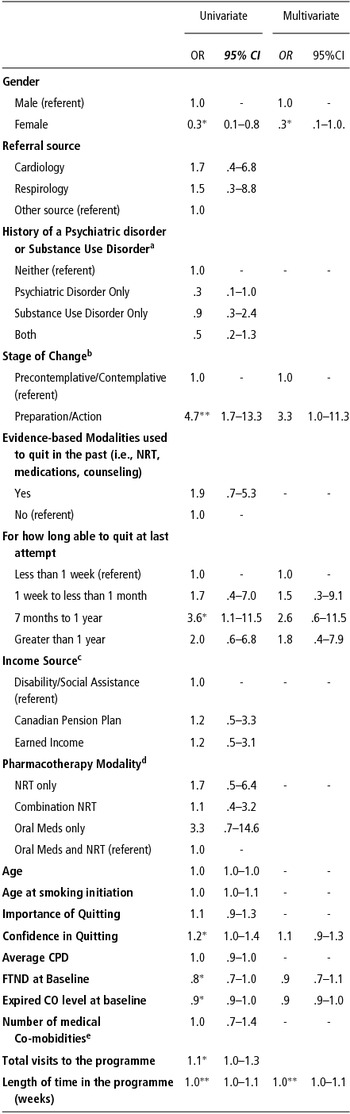
In bivariate logisitic regression analysis, the variables that were significantly associated with smoking cessation were: gender, stage of change, length of time abstinent at the last attempt, confidence in quitting, FTND scores, expired CO level, total visit to the programme, and the length of time in the programme (in weeks). Due to the high correlation between the total visits to the programme and the length of time in the programme (rs = .78, p <.0001), only the length of time in the programme was included in the final multivariate analysis. In multivariate analyses we obtained a well-fitting model (Hosmer and Lemeshow goodness-of-fit test χ2 = 3.2 [df = 8], p = .923) with being male (OR = 3.2, 95% CI = 1.0–10.0) and a greater length of time (in weeks) in the programme (OR = 1.0, 95% CI = 1.0–1.1) as significant predictors of successful smoking cessation at the end of treatment (see Table 2).
Predictors of smoking cessation among individuals engaging in a smoking cessation programme offered through cardiology clinic Services (N = 117)

OR = Odds Ratio, 95%CI = 95% Confidence Intervals
a. The Psychiatric disorders included major depression, Anxiety disorders, post-traumatic stress disorder, and psychotic disorders (Schizophrenia or Schizoaffective disorder). This category also included one individual with Attention Deficit Hyperactivity Disorder. The Substance disorders included primarily Alcohol Abuse, Cocaine, Opiates (including heroine), LSD, and Methamphetamine.
b. Stage of change categorization was collapsed for ease of analysis to pre-contemplative (n = 4)/contemplative (n = 31) vs. Preparation (n = 74)/Action (n = 9).
c. The Disability/Social Assistance category includes individuals on disability benefits (n = 36), Social assistance/Welfare (n = 2), Family support (n = 1), and ‘other’ (n = 6).
d. Pharmacotherapy in initial treatment plan (among engagers) includes 17 individuals who received varenicline and 2 individuals who received bupropion in addition to NRT.
e. Medical Co-morbidities included hypertension, high-cholesterol, diabetes, cardiovascular disease, COPD, eating disorder, seizure disorder, obesity, kidney disease, asthma, HIV, HCV, and cancer. Total values ranged from 0 to 6.
* p≤ .05, **p≤ .01, ***p≤ .001
Discussion
The purpose of this study was to examine the pilot smoking cessation outcomes of an outpatient tobacco treatment clinic set within cardiology services. Smoking cessation was achieved by 35.0% of participants and smoking reduction was achieved by 42.1% of those unable to achieve cessation. Further, the smoking cessation outcomes did not differ significantly between those from cardiology and other hospital services; however this non-significant finding is attenuated by low sample size among other hospital services. The overall smoking rates in our study are comparable to a recent observational study of smoking cessation and reduction outcomes in a cardiac setting in which smoking cessation at a 6-month follow-up period was 24% and smoking reduction among individuals who had not achieved cessation was 53% (Samaan, Nowacki, Schulze, Magloire, & Anand, Reference Samaan, Nowacki, Schulze, Magloire and Anand2012). Our findings are also similar to the 12-month abstinence rates found in a recent randomised controlled trial of smoking cessation among 1860 Chinese cardiac patients that found a 26.5% abstinence rate in the intervention group versus 25.5% in the control group (Chan et al., Reference Chan, Leung, Wong, Lau, Wong and Lam2012). In our current study, we found that 24.8% of the total participants (n = 117) had maintained smoking abstinence for greater than 1 month, and 12.8% had maintained their abstinence for at least 6 months at the time of data collection.
In addition, in our bivariate logistic regression analyses, we found that being male, being in the preparation/action stage of change, having a lower nicotine dependence score, having a lower expired CO level, having greater confidence in quitting, and a greater number of visits and weeks attending the programme were significantly associated with successful smoking cessation. The study by Samaan et al. (Reference Samaan, Nowacki, Schulze, Magloire and Anand2012) in a cardiac population found that having a lower nicotine dependence at baseline and being male (although this failed to reach significance, p = .067) were predictive of successful smoking cessation/reduction; however length of time engaged in the treatment process was not. This is contrary to our findings that length of weeks in the programme was strongly associated with the achievement of smoking cessation, as has been observed in other studies in non-cardiac populations (Khara & Okoli, Reference Khara and Okoli2011; Selby, Voci, Zawertailo, George, & Brands, Reference Selby, Voci, Zawertailo, George and Brands2010). It may be that future studies with larger sample sizes may also better understand the relationship between time receiving treatment and smoking cessation in cardiac populations. However, our findings are attenuated by the small sample sizes among women (n = 39) and in different sources of referral (i.e., individuals in the respirology and other sources groups only had 12 participants in each group) which may have overestimated the effect of gender and limited the adequate effect of smoking cessation based on referral groupings.
It is also important to note that there were no differences in smoking cessation outcomes based on the type of smoking cessation pharmacotherapy that participants were prescribed at the initial clinic visit. Although brief behavioural intervention (based on motivational interviewing) was consistently used for each participant at each visit, their pharmacotherapy was tailored to their specific needs during the programme. For example, participants who may have started out with only the nicotine patch may have received an adjunct of the gum or the lozenge (in addition to the patch) as treatment progressed. Hence the lack of significant differences in treatment outcome based on the initial pharmacotherapy treatment plan may be a reflection of changing treatment modalities as the programme progressed. The use of such combination products and tailored approaches is endorsed by several expert panels and guidelines (Bader et al., Reference Bader, McDonald and Selby2009; Fiore et al., Reference Fiore, Jaén, Baker, Bailey, Benowitz, Curry and Leitzke2008).
A few other limitations of our current study are important to consider in interpreting the results. First, the observational nature of this study limits the generalisability of this study to other cardiac settings and populations. Moreover, as this study is a retrospective analysis of chart data, we are limited to the variables reported, inherent biases and confounders due to no randomisation, and restricted only to the variables that were collected in participant charts. Second, although smoking cessation was verified using exp CO monitoring, the follow-up telephone calls to verify sustained abstinence were based on self-report. Moreover, our smoking cessation rates may be an underestimate of true cessation outcomes since we considered all those who did not return for a follow-up visit (or were lost to contact) as a treatment failure, even though such individuals may not have returned because they had successfully quit. Third, although the use of 7-day point-prevalence abstinence is an accepted methodology in verifying smoking cessation (West et al., Reference West, Hajek, Stead and Stapleton2005), it does not necessarily reflect long-term cessation. However, studies have shown that measures of prolonged smoking abstinence are highly correlated with point-prevalence of abstinence and that an important strength of point prevalence of abstinence is that it can be verified biochemically (because of the relatively short half-life of cotinine or nicotine biomarkers, which cannot easily determine prolonged abstinence without repeated measures) (Hughes et al., Reference Hughes, Carpenter and Naud2010). Fourth, as an observational study in a real world setting, we are limited by the measures available in participant's charts. There are other variables which could have influenced smoking cessation outcomes (such as education level) which were not available for analysis. Fifth, our analysis may be restricted by the low (n = 117) sample size, particularly in the logistic regression analysis. This low sample size may have affected the significance of variables (e.g., stage of change, length of time successfully abstinent at last quit attempt, confidence in quitting, nicotine dependence) which were associated with smoking cessation in the bivariate analysis, but were no longer significantly associated in the multiple logistic regression. Nonetheless, the final multivariate analyses produced a well-fitting model. Finally, participants in our study were highly motivated to engage in smoking cessation, which presents a self-selection bias as to the effectiveness of our intervention. However, that said, the SCC programme is designed specifically for motivated smokers in a hard-to-treat population.
Conclusions
The main findings of this pilot outcome evaluation of the SCC include the modest smoking cessation and reduction rates seen in this treatment population. The findings have important implications for policy, practice and research. First, given the significant morbidity and mortality related to smoking, it is crucial that hospitals provide tobacco treatment interventions/services at point-of-care. The provision of such treatment programmes within hospitals can greatly reduce access barriers that many smokers face in their efforts to stop smoking while providing important cost savings for hospitals (Feenstra, Hamberg-van Reenen, Hoogenveen, & Rutten-van Mölken, Reference Feenstra, Hamberg-van Reenen, Hoogenveen and Rutten-van Mölken2005).
Second, the provision of tobacco treatment services should also be accompanied with adequate training and support for care providers. On the one hand, based on clinical guidelines all healthcare providers should be trained on the provision of brief interventions that identify and provide direct treatment for smokers (Fiore et al., Reference Fiore, Jaén, Baker, Bailey, Benowitz, Curry and Leitzke2008). On the other hand, it is recommended that specialised tobacco treatment services be provided within healthcare facilities (including hospitals) (Raw, Regan, Rigotti, & McNeill, Reference Raw, Regan, Rigotti and McNeill2009), particularly for hard-to-treat smokers. A specialty tobacco treatment service such as our SCC, can provide a model of tobacco treatment within cardiology and other hospital service settings.
Third, since tobacco dependence is increasingly understood as a chronic, relapsing medical condition, it is important to consider a longitudinal approach to tobacco treatment (Fiore et al., Reference Fiore, Jaén, Baker, Bailey, Benowitz, Curry and Leitzke2008). This approach, consistent with a ‘chronic disease care model’(Glasgow, Tracy Orleans, Wagner, Curry, & Solberg, Reference Glasgow, Tracy Orleans, Wagner, Curry and Solberg2001) would necessitate a shift in current tobacco treatment models which have the expectation of total abstinence with no relapses. Rather, by taking a patient-centered, tailored, approach, tobacco treatment would potentially involve multiple interventions and the use of smoking cessation medications which are individualised to a participant's particular needs. Lapses or relapses would be expected in the process of treatment and addressed as needed. Adopting such a longitudinal tobacco treatment model will require careful programme planning, buy-in from hospital administration, and a thought for the cost implications.
Finally, the findings that males were more likely to achieve cessation than females calls for future sex and gender-based exploration and considerations in the design and provision of tobacco treatment in such settings. For instance it may be necessary to explore the effect of sex-based differences in nicotine dependence or differential treatment response to pharmacotherapy that may affect smoking cessation outcomes of males and females in cardiology settings; while understanding some of the gendered-factors (such as gender roles, identity) that may hinder or enhance participation in tobacco treatment among men and women with histories of cardiac disease/events. Such intervention programmes may aid in reducing the burden of disease among cardiac and other patients with medical co-morbidities related to and worsened by tobacco use.
Acknowledgements
We would also like to acknowledge the contributions of Catherine Hanley, RN, Deann Chan, RN and Faisal Aziz, MHA who contributed to the data collection in this study.
Financial Support
None.
Conflict of Interests
Dr Milan Khara has received unrestricted research funding, speaker's honoraria, consultation fees or product from the following organisations/companies: Health Canada, Interior Health Authority, Provincial Health Services Authority, Northern Health Authority, Ottawa Heart Institute, TEACH (Centre for Addiction and Mental Health), Pfizer, Johnsons and Johnson, College of Physicians and Surgeons of British Columbia, Quitnow Services, Canadian Mental Health Association.
Chizimuzo Okoli has received consultation fees from Vancouver General Hospital Smoking Cessation Services for the study. In addition, he has received consultation fees from Pfizer, a maker of smoking cessation medications, in the past three years.
Ethical Standards
The authors assert that all procedures contributing to this work comply with the ethical standards of the relevant national and institutional committees on human experimentation and with the Helsinki Declaration of 1975, as revised in 2008.