

It is a great honour for us to present, for induction in the Paediatric Cardiology Hall of Fame,1–7 the internationally known paediatric cardiac surgeon, Aldo R. Castañeda (Fig. 1). The life and work of Aldo, including his many outstanding contributions to paediatric cardiac surgery, to surgical education, research and teaching, serve as an example and great inspiration for past and new generations in our speciality. Aldo was a pioneer in paediatric cardiac surgery; and his contribution to the surgical treatment of congenital cardiac disease in particular has proved to be of historic importance. We shall offer a short analysis of his life, a gentlemen citizen of the world, who, after his retirement from the surgical leadership of the Children's Hospital of Boston and Harvard Medical School, returned to Guatemala to continue his mission by developing the first and the only programme for paediatric cardiac surgery in Central America.

Figure 1. Aldo R. Castañeda.
Early life and education
Aldo Castañeda was born in Nervi, close to Genoa, Italy, on July 17, 1930. His mother, Isabel Heuberger, was from Nicaragua, and his father, Ricardo Castañeda Palacios, from Guatemala. In 1935, the family moved to Munich, where his father studied medicine. Aldo started primary school in Munich in 1936. When the second World War began in 1939, the state of the family as Guatemalan citizens made them aliens and foreign enemies, so they were not allowed to leave Germany. In 1944, their home was completely destroyed during an air raid. The difficult war years, especially living under the totalitarian rule of Nazism, impacted profoundly Aldo's subsequent vision of life. He spent one more year at the Landschulheim in Schoendorf, a school in Bavaria widely recognized for its academic excellence. Then, after a brief first visit to Guatemala in early 1948, he returned to Europe to attend the Institut auf dem Rosenberg in St. Gallen, Switzerland, where he completed his collegiate requirements. He graduated in 1950, obtaining also obtained the Oxford School Certificate.
The risk of a possible third world war convinced his family to leave Europe. In 1951, therefore, Aldo returned to Guatemala, where he studied medicine at the University of San Carlos, the only school of medicine in the country at that time. From his second year of medical school until he graduated, he was named the best medical student each year. In January of 1958, after receiving his medical degree, he was also awarded the Justo Rufino Barrios Prize as the most outstanding student of the University.
His life as a surgeon
It was in 1954 that surgeons at the University of Minnesota first performed open-heart surgery using controlled cross-circulation and, shortly thereafter, in 1956, began the clinical use of artificial oxygenators of their own design. During 1956 and 1957, while still a medical student, Aldo carried out a series of experimental studies, under the guidance of Eduardo Lizarralde, a professor of surgery and chief of the experimental surgical laboratories of the medical school at San Carlos. The experiments essentially consisted of placing dogs on a cardiopulmonary bypass, using a sigma-motor pump and a bubble oxygenator. At first, he used the DeWall helix bubble oxygenator, and later the Gott two-dimensional, disposable, polyvinyl bubble bag oxygenator, both developed at the University of Minnesota. Several dogs survived the procedure. This study became the subject of his graduation thesis. Considering the years in which these studies were performed, these studies on open-heart surgery revealed remarkably foresight for one working in a Central American medical school.
After his internship in Guatemala, Aldo applied to the University of Minnesota for a general and cardiothoracic surgery residency. It was here that C. Walton Lillehei and Richard Varco had established the first academic training programme in the new field of open-heart surgery. Aldo was initially accepted for a trial period of one year. Within six months, however, he was offered a position for the duration of the academic programme. At the end of the first year of residency, the chairman of the department, Owen H. Wangensteen, invited Aldo to work in his experimental laboratory, offering a rare opportunity to be initiated into scientific research in one of the leading surgical research laboratories anywhere in the World. In 1963, he completed his studies for the award of Master in Biochemistry, and in 1964 he became a Doctor of Philosophy in physiology and experimental surgery. That same year, he completed his surgical training, and, after passing the examinations of both the American Board of Surgery and the American Board of Thoracic Surgery, he was appointed instructor in the Department of Surgery at the University of Minnesota. During the following years, due to his outstanding abilities as a surgeon, researcher and teacher, his brilliant academic career advanced rapidly, and he was appointed full professor of surgery at the University of Minnesota in 1970.
Robert Gross was a giant among American surgeons, and was a founder of the field of paediatric cardiac surgery. When he retired as head of the cardiovascular surgery programme at the Children's Hospital of Boston, Aldo was chosen to succeed him from an international group of distinguished candidates. Thus, in October 1972, he became professor of surgery at Harvard Medical School, and Cardiac Surgeon-in-Chief at the Children's Hospital. In 1975, he became the William E. Ladd Professor of Child Surgery at Harvard Medical School, and in 1981 he became Surgeon-in-Chief of the Children's Hospital. He served in these positions until 1994, when he retired after 38 years of worldwide prominence in paediatric cardiac surgery.
Contributions to cardiac surgery
Aldo's contributions to paediatric cardiac surgery are remarkable, and are well documented in his more than 400 scientific articles and two books. Since his first experiments in 1956, his research progressively focused more on cardiovascular issues. The general belief in the 1960s was that the formed elements of blood of young children could not withstand the damaging effects of cardiopulmonary bypass. Despite these forebodings, Aldo devoted a large portion of his early research at the University of Minnesota to exploring, first, the effects of cardiopulmonary bypass on the physiological and functional properties of red and white blood cells,8–13 and second, the effects of polybasic substances on the electrical surface charge of red blood cells.14–17 His studies demonstrated that 2 hours of cardiopulmonary bypass had the same effects on puppies weighing 2 kilograms as on adult animals.18, 19 Exploration of pulmonary function in these animals yielded similar results.
These findings moved his interests toward early correction of congenital cardiac malformations in children.20–25 While still at the University of Minnesota, he investigated combined heart-lung transplantation,26–30 motivated by the sad end to the many children who had developed advanced and irreversible pulmonary vascular disease consequent to untreated congenital cardiac defects. The few clinical attempts of heart–lung transplantation had failed, and some surgeons believed that bilaterally denervated lungs were incompatible with survival. Aldo and his team, however, realized that dogs were poor subjects for experiments in heart–lung transplantation, because they are heavily dependent on Hering-Breuer reflexes, much more so than humans. Using baboons for autologous bilateral heart–lung transplants,26–30 they showed that long-term survival is possible with acutely denervated lungs, provided that both phrenic nerves were preserved. This work contributed substantially to later successful heart and lung transplantation in humans.
After he moved to Boston in 1972, Aldo and his many collaborators made substantial contributions to research on deep hypothermic circulatory arrest for the correction of complex cardiac malformations in infants.31–37 Based on these experiences, he moved his cardiovascular programme toward early correction of progressively more complex cardiac malformations in infants and newborns.38–62 These efforts culminated in the successful repair in neonates of transposition, with or without a ventricular septal defect,63–68 giving great impetus to the emergence of the modern era of neonatal cardiac surgery.69–90
The return to Guatemala
After his retirement from the Children's Hospital, Aldo spent nearly three years in Genolier, Switzerland, seeking to develop a clinic for paediatric cardiac surgery. Subsequently, in 1997, at the age of 67, he returned with his wife, Arcely Rey-Rosa, to live in Guatemala (Fig. 2). Guatemala is a Central American country with approximately 13 million inhabitants, of which nine-tenths are Mayans and Ladinos. These people have Spanish as their primary language, and their practiced culture is Hispanic, The group includes both mestizos and assimilated Amerindians, with extremely limited resources for healthcare, and serious geographic and language barriers. For example, in addition to Spanish, 23 different native languages are spoken by the indigenous population.
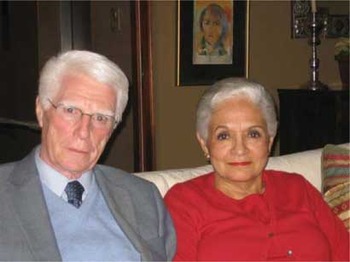
Figure 2. Aldo, with his wife Arcely, in their home in Guatemala.
At that time, the only unit practising cardiac surgery unit was in Guatemala City, the capital, and was limited to adults with acquired cardiac diseases. Several attempts to treat children, beyond those with atrial septal defects, had mostly failed. Children with congenital cardiac malformations could be treated only by travelling abroad, an opportunity limited to fewer than 3 percent of the Guatemalan population. In fact, over three-fifths of the Guatemalan population lives on less than 2 American dollars daily. In view of these devastating statistics, Aldo felt that the only way children with cardiac malformations from poor families could find adequate treatment would be through a viable local programme for paediatric cardiovascular surgery aimed primarily at this majority segment of the population.
Drawing on his broad experience and expertise as an administrator and a surgeon, he began his mission to build such a programme by developing three main objectives for the programme. The first was its clinical viability, the second the training of the necessary team, and, eventually, the third aim was research. He was provided limited space in the unit catering for adults, specifically 1 operating room, 2 beds in intensive care, and 6 beds on the general ward. Under these limited conditions, over 1000 operations were accomplished. A major impediment to growth of the programme was lack of financial resources. In 1998, to complement the insufficient subsidies of the government, he established the Aldo Castañeda Foundation as a fund-raising instrument.
At the start of the programme, Aldo was able to bring together the only 3 paediatric cardiologists practising in Guatemala. This group has now grown to 8 cardiologists, with expertise in fetal echocardiography, interventional catheterization, and diagnostic and interventional electrophysiology. He has also promoted the professional training of anaesthesiologists, nurses, and other technical staff. At the beginning, he was the only paediatric cardiac surgeon, and he worked pro bono to save these children. In the last few years, he has trained three young surgeons from Guatemala. With the help of the Aldo Castañeda Foundation, and without governmental assistance, the Paediatric Cardiac Surgical Unit of Guatemala has expanded to 2 exclusive operating rooms, an intensive care unit with 6 beds, a 4-bed step-down unit, and an 18-bed general ward. In addition, he has provided the infrastructure for a new laboratory for cardiac catheterization, and 2 laboratories for echocardiography. Recently, a genetic laboratory was inaugurated.
Since 1997, the staff working in the outpatient clinic has seen more than 20,000 patients, and the surgeons have performed operations on about 2000 children with congenital cardiac disease. Today, the Paediatric Cardiac Surgical Unit of Guatemala (Fig. 3) has also become a referral centre for children with congenital cardiac disease from El Salvador, Honduras, Nicaragua, Belize, Dominican Republic and Haiti. Clinical research activities have begun, with most of the clinical studies undertaken subsequently published in prestigious international scientific journals.91–102 Aldo has also trained three young foreign surgeons (Figs 4 and 5), in addition to the three members of his permanent surgical staff. These surgeons came from Venezuela, El Salvador, and one of us (VLV) from Italy.

Figure 3. The Paediatric Cardiac Surgical Unit of Guatemala.

Figure 4. Aldo during a teaching section in the operating room performing a Konno operation.

Figure 5. The surgical team in Guatemala. From right to left: Juan Leon-Wyss, Oscar Veras, Aldo R. Castañeda, Vladimiro L. Vida, and Ivan Vides.
The teacher and the man
Aldo Castañeda (Fig. 6) has profoundly influenced the careers of many young paediatric cardiac surgeons. His balanced interest in the science and the art of surgery, in addition to his pursuit of clinical excellence, proved the motivating factors for his outstanding career. His exceptional surgical accomplishments resulted from his gentle, yet purposeful surgical technique, merged with a superior sense of aesthetic perfection. To watch Aldo operating is to watch an artist at work, an experience enjoyed by the hundreds of surgeons who have seen him in action at the operating table.
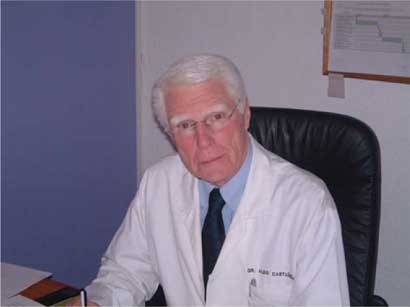
Figure 6. Aldo in his office at the Paediatric Cardiac Surgical Unit of Guatemala.
As a teacher, he has trained nearly one hundred paediatric cardiac surgeons, 44 of whom have become heads of programmes for paediatric cardiac surgery around the world. Long after his retirement from the surgical leadership of Harvard Medical School and the Children's Hospital, where he created one of the leading programmes for paediatric cardiovascular surgery in the world, he still continues to train new generations of cardiac surgeons. His teachings continue to be a spiritual guide for us, his trainees, in our surgical careers. Because of his teaching, we clearly understand the importance of maintaining collegial relationships with all those with whom we work, and, especially, the importance of treating our patients and their families with humanity and with the understanding that all our actions must be directed, first and foremost, to the relief of human suffering. His teachings are touchstones in our everyday work. They have enriched our clinical practices, and all aspects of our professional lives. The values he transmitted to us are the most important gift we have received from this brilliant man and revered mentor.
The authors of this tribute to Aldo were his first chief resident in cardiovascular surgery at the Children's Hospital of Boston over the period 1972 through 1973 (RMS), his senior resident in cardiovascular surgery at the Children's Hospital through 1979 and 1980 (GS), and his fellow for two years at his unit in Guatemala (VLV). It was, for each of us, a true privilege to observe and learn from our mentor in the operating room, on the wards, and in the intensive care unit. His profound knowledge of paediatric cardiac surgery, his wisdom, his consistent example of collegiality with all his co-workers, and his manifest humanity have made him a fountainhead of inspiration for our professional lives. His gentlemanly attitude and warm behaviour toward all have led to admiration and love for him by everyone associated with him and his work.
His principles are summarised in the following words taken from his presidential address to the American Association for Thoracic Surgery, given in New York in 1994:
“Clearly our specialty is not merely an applied science of technical discipline. It also includes an important aesthetic component, juxtaposing art and science, and demanding, in addition, honesty, courage, judgment, vision, erudition, compassion, and a consuming commitment to the pursuit of excellence and of high ethical standards. Surgery is an eminently moral act, and, by living with human suffering, we learn to appreciate man's moral nature.”
Other honours
Aldo is a member of 42 international and scientific societies, in 20 of which he is an honorary member. His academic career has been distinguished by many awards for his scientific contributions. In addition, the Guatemalan Government has awarded him the prestigious Order of the Quetzal twice, and also honoured him with the Order of Atanacio Tzul for his devotion, untiring work, and successful development of a viable programme for paediatric cardiovascular medicine in Guatemala. In 2004, he also received the World Heart Foundation Humanitarian Award.
Conclusions
Aldo's many contributions to paediatric cardiac surgery, in particular the surgical correction of congenital cardiac disease in the neonate, justify the honorifics of pioneer, revered leader, and great innovator. His reputation as a surgical teacher, and his dedication to his trainees, ensures the continuity of his work and philosophy. His influence as a master surgeon, great scholar, and outstanding human being will endure through future generations of his professional descendants. His life-long dedication to treating children with congenital heart disease, even after his so-called “retirement” in Guatemala, his full-time pro bono work, his perseverance, adaptability, tolerance, and humanity, are all qualities that contributed to the development and success of his excellent programme for cardiac surgery established in Guatemala, which may not represent the pinnacle of his achievements, but surely stands as one of the most humane contributions of this great man.



