Introduction
While it is widely recognized that cardiovascular medications cause syncope, the data showing that they cause falls are poor.Reference Leipzig, Cumming and Tinetti1–Reference Woolcott, Richardson, Wiens, Patel, Marin, Khan and Marra3 Distinguishing between syncopal and non-syncopal falls is difficult, and any falls clinic population contains some patients whose falls have been due to syncope or pre-syncope. Cardiovascular drugs must therefore play some part in causing falls, and the issue is the magnitude of the effect, and the evidence that drug withdrawal is safe and beneficial.
Guidelines on the management of fallsReference Feder, Cryer, Donovan and Carter4 contain a recommendation that there should be a drug review looking at the indication and dosing of each medication, with the withdrawal of redundant drugs, together with a review of dosages, aiming to reduce the drug burden.
The evidence to inform this practice is limited. There is a great deal of evidence showing that the use of drugs acting on the brain is associated with an increased risk of falling in older populations.Reference Darowski, Chambers and Chambers5 There is one randomized controlled trial showing that stopping psychotropic medication dramatically reduces the risk of falls.Reference Campbell, Robertson, Gardner, Norton and Buchner6
For cardiovascular drugs there is a smaller volume of data. Population studies showing an association have found this to be weak. There are two observational studies, but no randomized trials, of the effect of cardiovascular drug withdrawal on the incidence of falls.Reference Alsop and MacMahon7–Reference Van Der Velde, Van Den Meiracker, Pols, Stricker and Van Der Cammen9
The causes of falls can be divided into four main groups: accidents, illness, gait and balance derangements, and paroxysmal events.Reference Darowski10 Cardiovascular medications have the potential to increase falls in all groups.
By causing unsteadiness and lightheadedness, they can increase the likelihood of an accidental stumble becoming a fall, or worsen existing gait and balance problems. By accumulating at times of illness, they may cause hypotension, causing a fall. They may lead to changes in cerebral vasoreactivity, which have been shown to correlate with gait speed and may lead to falls.Reference Sorond, Galica, Serrador, Kiely, Iloputaife, Cupples and Lipsitz11 Cardiovascular drugs may also cause syncope and pre-syncope.
Search methods
This review is based on a search of PubMed up until March 2010, using the following key terms: ‘cardiovascular medication’ AND ‘falls’, ‘drugs’ AND ‘falls’, ‘drugs’ AND ‘syncope’. Other synonyms both for cardiovascular drugs and for falls were also used. Key papers were read and reviewed by the authors, as were those papers that had cited them. Other papers were identified by hand searches of the reference lists from the papers retrieved.
There are three principal sources from which we have reviewed the data on cardiovascular drugs and their association with falls: (a) in the original studies generating the evidence for their use, (b) in population studies looking for an association between falls and drug usage, and (c) in studies of cardiovascular drug withdrawal.
Changes in drug handling with increasing age
Increasing age brings an increase in drug usage, increasing the opportunity of adverse drug reactions and drug interactions. In addition, physical reserves decrease with age. Changes in pharmacokinetics and pharmacodynamics make older people more susceptible to adverse drug reactions.Reference Turnheim12, Reference Mannesse and Van Der Cammen13 Consequently an adverse drug reaction (for example, a fall) can occur without any recent changes in the drug regimen.Reference Van Der Velde, Ziere and Van Der Cammen8, Reference Mannesse and Van Der Cammen13–Reference Van Der Velde, Ziere and Van Der Cammen16
With regard to pharmacokinetic changes, a decline in liver volume and blood flow, and a reduction of in vitro and in vivo metabolic capacity in older people has been demonstrated. Reduced hepatic drug clearance in this age group causes a lower first-pass effect, and slower biotransformation.Reference Zeeh and Platt17
Body composition changes with age, with a higher percentage of fat and a lower percentage of body water and muscle mass. The half-life of lipophilic drugs is increased, and hydrophilic drugs need a lower loading dose. As renal clearance is often diminished in older people, renal elimination of drugs is slower.Reference Jansen18, Reference Gral and Young19
Pharmacodynamic changes with ageing are due to target organ changes, which can be caused by illness, diminished spare capacity of target organs, or a change in receptor function of the target organ. These changes result in a higher sensitivity of the target organ at a given drug plasma level.Reference Jansen20
These changes are clinically relevant in that sudden changes in renal or hepatic function, due to sepsis, dehydration, vomiting or diarrhoea, are likely to have profound effects on the ability to eliminate drugs. This may result in hypotension or bradycardia, which may contribute to falls becoming the presenting feature of that illness.
The population that falls
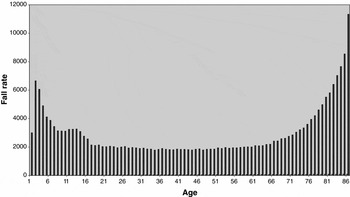
The rate of non-fatal fall-related injury in the United States peaks in childhood at the age of one year, and falls gradually to the age of 16. It then remains stable to the age of 65 years, when it starts to rise exponentially, doubling by the age of 75 years, and doubling again by 85 years (Figure 1).21
Rate of non-fatal fall-related injuries by age in USA (falls per 100,000 population)21

In later life the causes and the consequences of falls change. The same accidents occur, although the opportunity for them might diminish with reducing activity. Falls start to occur in situations where previously they would not, for reasons that tend not to afflict younger people, and with more severe consequences.
The rate of fall-related injury (per 100,000 people) increases by a factor of 1.5 from an adult (age 21–60 years) mean of 1.9 per year, to 2.8 per year by the age of 70. The mean age in a typical falls clinic is around 83 years, by which age the falls rate has quadrupled to 7.7. Although the fall injury rate has increased by the age of 70, the effects of any factors that might increase falls risk will become more significant in older populations that are more prone to falling. The age of patients in studies is critical to understanding their relevance to falls in clinical practice.
The evidence base for the use of cardiovascular drugs in older people
Patients usually take cardiovascular drugs for hypertension, angina, cardiac failure and arrhythmias. There is a significant volume of data on the value of treating hypertension in older people, but less for the treatment of cardiac failure. Class 1 evidence-based guidelines are available for these conditions for use in the populations studied, which is not the population we are discussing and for which there is little data. The limitations of evidence-based medicine in older people have been well described.Reference Grimley Evans22
Hypertension
The prevalence of hypertension in people aged over 80 years is 73%.Reference Aguado, López, Miravet, Oriol, Fuentes, Henares, Badia, Esteve and Peligro23 There is good evidence of the benefit of treatment, with several studies including patients in this age group. The mean age of patients enrolled in eight studies of hypertension in older people was 70 years,Reference Staessen, Gasowski, Wang, Thijs, Den Hond, Boissel, Coope, Ekbom, Gueyffier, Liu, Kerlikowske, Pocock and Fagard24 with only the Swedish Trial of Hypertension in Older Patients (STOP) containing significant numbers of truly older people, with an average of 76 years (SD 4 years), and including patients up to the age of 84. STOP did not report falls or fractures.Reference Dahlöf, Lindholm, Hansson, Scherstén, Ekbom and Wester25
The Systolic Hypertension in the Elderly Program (SHEP),26 with a mean age of 72 and 4.5 years of follow-up, reported a prevalence of falls of 10.4% of subjects on placebo, and 12.8% in the treatment arm, both rates a fraction of what is expected at this age. SHEP reported a fracture prevalence of 2% in the placebo group and 2.4% in the treatment arm, which is about the annual incidence expected at this age.Reference Cooper and Melton27 The 20% increase in fractures in the treatment arm was not statistically significant in a small sub-group. Mortality from accidents was reported as the same in both groups.
STOP, Systolic Hypertension in Europe,Reference Staessen, Fagard, Thijs, Celis, Arabidze, Birkenhäger, Bulpitt, de Leeuw, Dollery, Fletcher, Forette, Leonetti, Nachev, O'Brien, Rosenfeld, Rodicio, Tuomilehto and Zanchetti28 Systolic Hypertension in China,Reference Liu, Wang, Gong, Liu and Staessen29 European Working Party on Hypertension in the Elderly,Reference Staessen, Bulpitt and Clement30 Hypertension in Elderly PatientsReference Coope and Warrender31 and the Medial Research Council study32 do not mention falls or fractures.
The Hypertension in the Very Elderly (HYVET) studyReference Bulpitt, Peters, Staessen, Thijs, de Vernejoul, Fletcher and Beckett33, Reference Beckett, Peters, Fletcher, Staessen, Liu, Dumitrascu, Stoyanovsky, Antikainen, Nikitin, Anderson, Belhani, Forette, Rajkumar, Thijs, Banya and Bulpitt34 asked subjects about falls, but on the basis of their recollection at three-monthly interviews, rather than diary cards. The patients had a mean age of 83.6 years, and took indapamide, with perindopril as a second agent. The report of the falls sub-study is awaited.
Cardiac failure
The evidence base for the use of treatments for hypertension and heart failure does not inform us about the potential harm caused by falls, because the populations studied were much younger, and had a lower risk of falling.
A review of 59 studies of heart failure up to 2000, containing over 45,000 patients, reported a mean age of 61.4 (SD 6.4) years.Reference Heiat, Gross and Krumholz35 The relevance of this large evidence base to the elderly population is limited. The Euro Heart Failure survey II reviewed the data on treatment of heart failure in the elderly (median age 83.7 years) and compared it with younger patients (median 68.4 years).Reference Komajda, Hanon, Hochadel, Lopez-Sendon, Follath, Ponikowski, Harjola, Drexler, Dickstein, Tavazzi and Nieminen36 Studies of heart failure treatments in older people with preserved left ventricular function show more disappointing treatment outcomes. The number of such studies is small, and data on falls are not provided.Reference Cleland, Tendera, Adamus, Freemantle, Polonski and Taylor37
Syncope and pre-syncope
Syncope is common amongst older people, and becomes increasingly common with increasing age. In the Framingham study,Reference Soteriades, Evans, Larson, Chen, Chen, Benjamin and Levy38 the 10-year cumulative incidence of syncope was 11% for both men and women aged 70–79 years, and 17 and 19% for men and women, respectively, aged 80 or over. The incidence of syncope in an elderly institutionalized population was 6% per year, with a 10-year prevalence of 23% and a recurrence rate of 30%.Reference Lipsitz, Pluchino and Wei39
Many older people cannot recall whether they had syncope or not.Reference Shaw and Kenny40 In some cases, this may be because of cognitive impairment. Others may not be aware of the fact they lost consciousness, which has been reported in 50% of older people with witnessed syncope. As a result, up to 25% of syncopal episodes present as unexplained falls.Reference Nevitt, Cummings and Kidd41, Reference McIntosh, da Costa and Kenny42
When patients fall, the reason may not be obvious, and it is usual for there to be several contributory factors. They may have things wrong with them that have the potential to cause a fall, but were not causative on that particular occasion. One study looked at older patients presenting to an Emergency Department with unexplained or recurrent falls, and found that 77% of them had an underlying cardiovascular abnormality that had the potential to cause a fall.Reference Davies and Kenny43
The incidence of syncope in a study or clinic population will reflect the setting in which data were gathered. Patients with obvious cardiovascular conditions receive immediate treatment, while those with a cardiac history or a story suggesting syncope would in many areas be referred to cardiology, rather than a falls clinic. Despite this, falls clinics are referred a significant number of patients with syncopal falls.
An audit of 90 consecutive patients attending a falls clinic and seen by experienced specialist nurses, found that after taking a history and examining the patient, they considered syncope to have been a possible contributory factor in 24% of cases. This is similar to the 19% of patients in a falls clinic with symptoms related to syncope or pre-syncope reported by Alsop.Reference Alsop and MacMahon7
Mechanisms of cardiovascular drug-related falls
Irrespective of the precise underlying cause of syncope, a sudden cessation of cerebral blood flow for 6–8 s and/or a decrease in systolic blood pressure to 60 mmHg has been shown to be sufficient to cause complete loss of consciousness. A drop of 20% in cerebral oxygen delivery is sufficient to cause loss of consciousness.Reference Brignole, Alboni, Benditt, Bergfeldt, Blanc, Bloch Thomsen, van Dijk, Fitzpatrick, Hohnloser, Janousek, Kapoor, Kenny, Kulakowski, Masotti, Moya, Raviele, Sutton, Theodorakis, Ungar and Wieling44
Syncope and pre-syncope may be due to hypotension, but can occur through several mechanisms, independent of clinic blood pressures. Paroxysmal hypotension may result from orthostatic hypotension, vasovagal syndrome, vasodepressor carotid sinus hypersensitivity and arrhythmia. These conditions commonly co-exist as part of a wider dysautonomia, and it is unrealistic always to ascribe syncope to a solitary cause. They can all cause falls and can all be caused or made worse by drugs.Reference Van Der Velde, Van Den Meiracker, Pols, Stricker and Van Der Cammen9, Reference Carey and Potter45 Frequently the drop in blood pressure is insufficient to cause loss of consciousness, but causes a feeling of faintness or unsteadiness sufficient to make a susceptible person fall.
One study reported that a third of individuals over 65 years were taking three or more prescribed medications, which could cause or contribute to syncope. Their withdrawal reduces the recurrence of syncope and falls.Reference Van Der Velde, Van Den Meiracker, Pols, Stricker and Van Der Cammen9
Drug-related hypotension
Lower standing systolic blood pressure, even within the normotensive range, is an independent risk factor for falls.Reference Darowski70
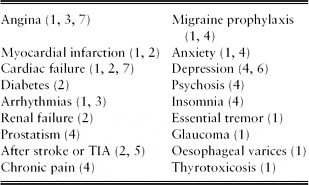
A low blood pressure, at a level that does not cause syncope or pre-syncope, is desirable to minimize end organ damage, particularly in the heart, brain and kidney. There are at least 18 conditions in which someone with a normal or low blood pressure is likely to be given a treatment that will reduce their blood pressure further, either because reducing the blood pressure is seen to be therapeutic, or because the usual medication also happens to affect the circulation (Table 1).
Conditions when medications (in parentheses) that can cause hypotension or bradycardia are given to patients with normal or low blood pressureReference Darowski10

1, beta-blockers; 2, ACE inhibitors/AII blockers; 3, calcium antagonists; 4, alpha-blockers (tricyclic antidepressants, antipsychotics); 5, diuretics; 6, MAOI, SNRI antidepressants; 7, nitrates.
The main use of blood pressure-reducing agents is for hypertension. Such drugs are continued for life, and rarely stopped, although hypertension does not necessarily continue in later life. In some studies anti-hypertensive medications have been withdrawn successfully, without a subsequent return of hypertension.Reference Iyer, Naganathan, McLachlan and Le Couteur46 Some patients with hypertension develop a normal or low blood pressure on going into atrial fibrillation, or after developing myocardial damage or cardiac failure. They may consequently become hypotensive unless their previous medication is stopped. The result is a significant population of patients whose blood pressure is being reduced by medication further than anyone would consider desirable.
Orthostatic hypotension
Orthostatic hypotension is thought to contribute to between 5 and 32% of falls.Reference Davies and Kenny43, Reference Poon and Braun47–Reference Kenny, Kalaria and Ballard48 Symptoms are due to impaired oxygen delivery to brain tissue. This is dependent upon cerebral blood flow, which in turn depends upon blood pressure. Neither of these relationships is linear and, over a wide range of blood pressure, moderate changes in blood pressure should not affect cerebral blood flow (autoregulation of cerebral blood flow).Reference Novak, Novak, Spies and Low49
Many drugs cause or exacerbate orthostatic hypotension, and this is a common mechanism for drug-related syncope.Reference Parry and Tan50 The odds ratio for recurrent falls increases with an increasing systolic postural drop.Reference Graafmans, Ooms, Hofstee, Bezemer, Bouter and Lips51
Arrhythmias
Cardiac arrhythmias account for 20–30% of syncope amongst older patients.Reference Seifer and Kenny52, Reference Moya, Sutton and Ammirati53 The frequency with which a significant arrhythmia is diagnosed has increased with the use of loop recorders.Reference Parry and Matthews54 Any cardiac rhythm that reduces cardiac output can result in syncope. This may be due to the pulse either being too slow, causing periods of asystole, or being too fast to allow adequate ventricular filling. Alternatively it may occur by producing an ineffective ventricular contraction. The most common drug-induced rhythm problems encountered in clinical practice are bradycardias caused by beta-blockers, digoxin, and less commonly, other anti-arrhythmics.Reference Alsop and MacMahon7
Patients with atrioventricular block, sick sinus syndrome and carotid sinus hypersensitivity may have falls, and the number of falls can be reduced by pacing.Reference Kenny, Richardson, Steen, Bexton, Shaw and Bond55
Carotid sinus hypersensitivity
Carotid sinus hypersensitivity is an important cause of unexplained falls, and has been found to occur in 22% of patients with a history of syncope, in 17% of those with unexplained falls but no clear history of syncope, and in 6% of patients with giddiness.Reference Kumar, Thomas, Mudd, Morris and Masud56
Cardioinhibitory carotid sinus syndrome can be provoked by beta-blockers and other anti-arrhythmics, and vasodepressor syndrome can be made worse by anti-hypertensives.Reference Kenny, McIntosh and Kenny57 Stopping these medications can prevent such syncopal events.Reference Van Der Velde, Van Den Meiracker, Pols, Stricker and Van Der Cammen9
Neurally mediated syncope
Fainting is common in normal people, with about 40% having experienced a faint.Reference Parry and Tan50 In older people, approximately 50% is attributable to medications acting on the cardiovascular system.Reference Alboni, Brignole, Menozzi, Raviele, Del Rosso, Dinelli, Bettiol, Bottoni and Solano58
Population studies of cardiovascular medication and falls
A systematic review of the literature on cardiovascular medications and falls concluded that drugs that lower blood pressure are weakly associated with falls. They found three population studies reporting an association between medications that reduce blood pressure and falls, and nine studies reporting no association.Reference Hartikainen, Lonnroos and Louhivuori2
Of the positive studies, one found that the use of antihypertensives increased the risk of injurious falls, with an odds ratio of 2.4 (95% CI 1.1–6.5).Reference Bergland and Wyller59 For recurrent falls, beta-blocker usage had an odds ratio of 2.2 (95% CI 1.2–4.0)Reference Rozenfeld, Camacho and Veras60 and peripheral vasodilators 3.8 (95% CI 1.4–10.2).Reference Graafmans, Ooms, Hofstee, Bezemer, Bouter and Lips51 The odds ratio for any falls with nitrates was 2.2 (95% CI 1.1–6.5).
An attempt was made at a meta-analysis of the data using Bayesian methodsReference Woolcott, Richardson, Wiens, Patel, Marin, Khan and Marra3 based upon previous data from a meta-analysis in 1999.Reference Leipzig, Cumming and Tinetti1 They found insufficient data on cardiovascular medication to apply this technique. They included one further population study.Reference Chu, Chi and Chiu61
The main contributors to these reviews and meta-analysis were six large studies.Reference Graafmans, Ooms, Hofstee, Bezemer, Bouter and Lips51, Reference Bergland and Wyller59–Reference Kelly, Pickett, Yiannakoulias, Rowe, Schopflocher, Svenson and Voaklander63 Lawlor et al.Reference Lawlor, Patel and Ebrahim62 conducted a cross-sectional survey of women aged 60–79 years. The mean age of the 685 with falls was 70.1 years, with a 95% CI of 69.7–70.5 years, implying few subjects over the age of 72 years.
They found that 40.9% (95% CI 39.3–42.6) of non-fallers and 50.4% (46.7–54.2) of fallers were taking some cardiovascular medication, giving an odds ratio of 1.1 (1.0–1.2) for any falls, and also found an odds ratio of 1.2 (1.1–1.3) for two or more falls. These findings became non-significant when the results were corrected by logistic regression analysis for the presence of cardiovascular disease, although most cardiovascular medications are used for hypertension, which is not recognized as a risk factor for falls.Reference Graafmans, Ooms, Hofstee, Bezemer, Bouter and Lips51, Reference Kelly, Pickett, Yiannakoulias, Rowe, Schopflocher, Svenson and Voaklander63, Reference Lee, Kwok, Leung and Woo64
A cross-sectional study of 634 women living independently at home in Brazil looked at drug usage and falls.Reference Rozenfeld, Camacho and Veras60 All were aged over 60 years, with a mean age of 69.3 years. Only 4% of the sample was aged >80 years. 37.4% reported at least one fall in the previous year. The women were recruited from the University of the Third Age, and thought to be representative of urban middle class populations rather than the population as a whole. Approximately 30% were taking antihypertensive medication. They found a relationship between beta-blocker usage and recurrent falls (odds ratio 2.2, 95% CI 1.2–4.0), but not between antihypertensive medications and falls.
Kelly et al. (2003) published a case control study of community-dwelling people aged 66 years and over, looking at injurious falls resulting in hospital attendance.Reference Kelly, Pickett, Yiannakoulias, Rowe, Schopflocher, Svenson and Voaklander63 The mean age was 78.5 years (SD 7.7). Only 13% of the study population was taking antihypertensive medication, and the unadjusted odds ratio for falls and antihypertensive medication was 1.4 (1.2–1.6). When corrected for the presence of cardiovascular disease this dropped to 1.0.
Bergland and Wyller (2004) published a prospective study primarily looking at balance function in 307 women >75 years, with a mean age of 81 years.Reference Bergland and Wyller59 Only 13% (40 subjects) were taking antihypertensive medication, with an odds ratio for injurious falls of 2.4 (1.1–6.5) and for fracture of 2.0 (0.8–4.7). They reported a very high annual fracture rate of 13%, compared with the expected 5%.Reference Cooper and Melton27 The effects of medication were peripheral to the main goal of this study, and few details were reported. The number of subjects on medication was small, but their effect on both falls and fractures reached significance.
Mustard and Mayer (1997) reported an analysis of a Canadian database comparing nursing home residents who were admitted to hospital following an injurious fall, with controls.Reference Mustard and Mayer65 This was an elderly subject group, with a third aged 90 years or over. Drug data were adjusted for indication, and after this no correlation was found between antihypertensive medication and falls. Only 5.6% of subjects were taking antihypertensive medication.
Chu et al. reported falls among 1517 Chinese with a mean age of 73 years (SD 6.3) and found a significantly increased rate of antihypertensive drug use among fallers compared with non-fallers.Reference Chu, Chi and Chiu61 The rate of antihypertensive drug use was 41% among single fallers.
Lee et al. studied 4000 people in Hong Kong with a mean age of 72 years (SD 5 years) with 67% below the age of 75. There were 45% taking no medications.Reference Lee, Kwok, Leung and Woo64 The annual reported falls rate was 20%, which is low for this age group. They found no association between antihypertensive medication and falls.
Comparison of study and clinic populations
A review of 176 consecutive patients seen by the Oxfordshire Falls Prevention Service showed a mean age of 82.6 years (SD 8.6, range 56–101). 81% of patients were taking a cardiovascular or CNS medication (antihypertensive, anti-anginal, diuretic, antidepressant, antipsychotic, anti-epileptic, opiate or tranquiliser). 51% were taking two or more such medications, and 9% were taking four or more. 65% were taking a cardiovascular medication, with 40% taking two or more such drugs. 49% were taking a CNS active drug.
A comparison of this patient population with that in the studies shows distinct differences. Only Mustard studied a population of a similar age spectrum.Reference Mustard and Mayer65 The others looked at younger, fitter people who might be able to tolerate drug side-effects better. All of the studies had much lower levels of drug burden in their populations. Little information is given about the overall drug burden in those populations.
The issue of age is important, as the rate of non-fatal fall-related injury is increased by a factor of 1.5 by the age of 70 compared with young adults, but by the age of 83 it has increased 2.7 times compared with age 70, and is four times higher than in young adults.21 The relative youth of the populations in these studies is likely to have diminished the magnitude of the effect of cardiovascular medications on fall rates.
The nature of such research dictates that subjects are generally able and willing to attend clinics, and that they are cognitively intact. This pre-selects a fitter patient population than those attending a falls clinic, with no dementia, fewer co-morbidities, and a smaller consequent drug burden.
The studies were mostly carried out approximately 10 years ago. In that time the management of hypertension in older people has changed dramatically. The cardiovascular drug burden (predominantly for hypertension) in clinic patients is very much higher (65 vs. 6–41%) than in the study subjects, with more of them taking multiple medications, making it more probable that drug effects are in reality greater than those reported.
We conclude that it is inappropriate to use these data to draw conclusions as to the magnitude of the effect of cardiovascular medications on falls in an older population when prescribed according to modern usage. There are currently no published studies in populations representative of clinic patients, either in terms of age or drug burden, which look at the association between drugs that lower blood pressure and falls.
Intervention studies
There are a limited number of studies demonstrating the benefits of withdrawing medication in a falls clinic. For psychotropic medication, a randomized controlled trial of 93 patients showed that the relative hazard of falling over 44 weeks was reduced by 66% in those whose drugs were stopped.Reference Campbell, Robertson, Gardner, Norton and Buchner6
Although several studies have looked at the safety and tolerability of withdrawal of different types of diuretics, antihypertensives and anti-anginals, they do not report the effect on falls.Reference Iyer, Naganathan, McLachlan and Le Couteur46, Reference Burr, King, Davies and Pathy66–Reference Walma, Hoes, van Dooren, Prins and Van Der Does69
A study of cardiovascular medication withdrawal in a falls clinic, in a sub-group of 65 patients with symptoms possibly attributable to their medication, found that the symptoms got better in 78% and disappeared in 47% when their medication was stopped. At follow-up, only 30% required some medication to be given in place of what had been stopped. They concluded that cardiovascular medication withdrawal is safe and effective as an intervention in those who may have syncope or pre-syncope contributing to their falls. This group of symptomatic patients formed 19% of the patients entered into the study, and their mean age was 80 years (range 63–94).Reference Alsop and MacMahon7
Van der Velde et al. found that among 139 patients in a falls clinic, there were 75 in whom medication that might contribute to falls could be stopped (in 67 patients) or reduced (in 8 patients).Reference Van Der Velde, Ziere and Van Der Cammen8, Reference Van Der Velde, Van Den Meiracker, Pols, Stricker and Van Der Cammen9 This cohort was studied in terms of their future falls risk, gait and balance assessments and tilt-table testing before and after drug withdrawal.
A one month period was spent making the changes, and the patients were then followed up for two months. They found that the subjects had a significant reduction in their risk of falls during follow-up, with a hazard ratio of 0.5 (95% CI 0.2–1.0) for overall drug withdrawal. The hazard ratio for withdrawal of cardiovascular drugs was 0.4 (95% CI 0.2–0.8), and for psychotropic drugs 0.6 (95% CI 0.2–1.4). At baseline, the patients in the drug withdrawal group had experienced more falls, were frailer, were taking more medications, and had a higher total number of co-morbid conditions, suggesting that the true effect might be even greater.
Cardiovascular drugs were withdrawn in 40 patients. On tilt-testing in this group, there was a significantly lower prevalence of orthostatic hypotension (adjusted odds ratio 0.4, 95% CI 0.2–1.0) and carotid sinus hypersensitivity (adjusted odds ratio 0.1, 95% CI 0.0–0.6). The reduction in vasovagal collapse (adjusted odds ratio 0.2, 95% CI 0.0–1.5) did not reach significance in this small sample. This study demonstrates some of the mechanisms by which cardiovascular medications contribute to falls, and shows why their withdrawal reduces falls risk.
There was a significant improvement in the timed get-up-and-go test (odds ratio of test improvement 0.2, 95% CI 0.0–0.9) and in the timed 10 m walk (odds ratio 0.1, 95% CI 0.0–0.6) for those who had psychotropic or cardiovascular drugs withdrawn. Improvements in other tests did not reach statistical significance (0.5 (95% CI 0.1–1.5) for the Functional Reach, 0.5 (95% CI 0.1–1.5) for Quadriceps Strength, and 0.5 (95% CI 0.2–1.6) for Body Sway).
Conclusions
Studies reporting a weak or negative relationship between cardiovascular drugs and falls are contrary to experience in falls clinics and to the body of expert opinion, and we have set out to try and explain why this has arisen. We have found several reasons. Drug-related falls are a significant minority, and the effect is diluted by the larger numbers of non-syncopal falls in the studies. The studies have looked at younger, fitter populations taking far fewer drugs than in a falls clinic, and their patients would have a much lower falls risk, and be likely to tolerate their medications better.
There is a need for randomized controlled trials of cardiovascular drug withdrawal to confirm its efficacy and safety as a strategy for falls reduction in selected patients. The two observational studies suggest that this may be a significant intervention. A significant minority of patients presenting with unexplained falls have syncope or pre-syncope, and clinicians must be open to the possibility that cardiovascular medications are a potential cause.
Conflicts of interest
The authors have declared no conflicts of interest.