Introduction
Makkah (Mecca) is a holy city for all Muslims around the world. The city is located in the western province of Saudi Arabia, with an estimated population of 1.7 million in 2010.Reference Al-Shareef, Alsulimani, Bojan, Masri, Grimes, Molloy and Ciottone 1 Millions of pilgrims visit the city every year to perform Umrah, a sacred journey to the Holy Mosque. In 2012, an estimated six million Muslims visited Makkah to perform Umrah from the nearest airport alone. 2 The Saudi government has spent significant sums of money risk-proofing the area surrounding the Holy Mosque from an emergency management perspective.
The influx of such a large number of people poses significant logistical challenges and increases risk associated with various types of hazards, specifically mass gatherings. Although significant emergency preparedness efforts have been made to serve Makkah’s citizens and visitors in the best way possible, disasters have occurred which strained the health care system. In March 2002, a fire at a girls’ school caused 15 deaths and more than 50 injuries. 3 Another disaster occurred in 2006 when a hotel collapsed, resulting in more than 130 casualties (76 deaths). 4 In September 2015, a crane collapsed in the Holy Mosque resulting in a tragedy with 107 deaths and more than 230 injured. 5 Although stampede-related events occurred during Hajj seasons in previous years, 6 these events could potentially happen during Umrah season. The most recent stampede-related event occurred in 2015.
The spread of infectious diseases in such overcrowded, confined spaces is a different concern. The novel MERS-CoV was first discovered in Saudi Arabia, a few miles from Makkah.Reference Alamri 7 This causes a considerable challenge for the Ministry of Health (MoH; Riyadh, Saudi Arabia) in Saudi Arabia, forcing them to take proactive preventive measures against the spread of such a fatal virus.Reference Lu, Liu, Du and Jiang 8 Potential travelers from Ebola endemic areas are another recent concern. The Saudi authorities have taken firm action in preventing access to Saudi Arabia to travelers from an endemic area to prevent a possible dangerous outbreak from something such as Ebola at Makkah.Reference Al-Tawfiq and Memish 9
This vulnerability to hazards underpins the need to improve all hazard disaster preparedness of health care institutions. Hospital disaster preparedness planning is an essential and fundamental part of any emergency management system requiring collaboration between multiple external agencies. Such planning should be written with a comprehensive, all-hazards approach to cover all possible crises. Such plans should be exercised as a part of regional preparedness in order to test the hospitals connectivity and the ability of the region to function as a unified system during regional disasters.Reference Memish, Venkatesh and Ahmed 10
Hospitals create their own disaster plans which should fulfil the safety requirements set by the Civil Defense (Ministry of Interior; Kingdom of Saudi Arabia). The Emergency and Medical Services Section of the MOH, which includes representatives from the Civil Defense in the Makkah region, is responsible for the supervision of disaster plans and their compliance with Civil Defense requirements. These requirements focus on safety measures, particularly against fire, and are not considered comprehensive standards covering an all-hazards approach.
In addition, hospitals require disaster preparedness plans be accredited either by The Joint Commission (TJC; Oakbrook Terrace, Illinois USA) or The Saudi Central Board for Accreditation of Healthcare Institutions (CBAHI; Jeddah, Saudi Arabia). As a result, there is no local unifying standard, as hospitals may be accredited internationally with one standard and locally with a different standard, while at the same time being in compliance with the Civil Defense safety standard which focuses on specific elements of disaster preparedness only.
A literature review was done, primarily utilizing the MEDLINE (Medline Industries, Inc.; Mundelein, Illinois USA) database through the National Library of Medicine (Bethesda, Maryland USA) interface, Google Scholar (Google Inc.; Mountain View, California USA), and an extended citation review of potential suggested relevant articles and conference abstracts using keywords “Makkah” (“Mecca”) and: disaster, plan, preparedness, hazard, emergency, and mass-causality incident. There was no scientific study describing hospital preparedness plans in the city of Makkah. This study was intended to cover preparedness plans for Umrah season (throughout the year), except Hajj season, which has special preparedness and resources.
As a result of the region’s hazard risks of natural and/or man-made disasters, crowding, and large population fluxes, the authors developed and implemented a survey to evaluate the current hospitals’ preparedness plans in the holy city of Makkah.
Method
Study Design
This was a cross-sectional study to assess disaster preparedness plans of hospitals in the city of Makkah. The survey was conducted in the period from July through September 2014; manuscript writing started March 2015. A paper-based questionnaire was addressed to the most responsible person for disaster planning in each hospital, either a director of disaster planning or someone with an equivalent role. For the purposes of this study, hospitals were classified according to their response category as: primary (handling casualties initially); secondary (functioning as a backup for primary hospitals); and tertiary (working as a referral hospital for casualties with specialized needs) response hospitals. The selected hospitals cover the region surrounding Makkah city. A focused list of hospitals for inclusion was determined in conjunction with Makkah Emergency and Disaster Administration (Mecca, Saudi Arabia). This survey targeted a total of 17 governmental and private hospitals with admission capabilities. The International Review Board of King Abdullah International Medical Research Center (KAIMRC; Jeddah, Saudi Arabia) approved the study questionnaire and its consent form (Reference number: RJ13/034/J).
Survey Tool
The authors of this study reviewed relevant studies and collected a series of questions commonly administered to evaluate hospital disaster plans. The questionnaire developed for this study consisted of four main sections with a total of 46 items (Appendix; available online only). A pilot draft of the questionnaire was reviewed for clarity and validity by two experts in the field (Bojan H. from the MOH and Baroum H. from the National Guard Hospital in Jeddah). The four main sections of the survey were: (1) hospital characteristics (including the type of hospital if private or governmental; hospital bed capacity; hospital classification, if primary, secondary, or tertiary; distance from the Holy Mosque; if the hospital is a trauma receiving center; response category; and if there is a written disaster plan); (2) general evaluation of the Emergency Operations Plan (including plan review frequency; frequency of drills; presence of a hazard vulnerability analysis [HVA]; HVA updating frequency; use of an all-hazards approach; presence of a disaster planning committee with their representatives; presence of Hospital Incident Command System [HICS]; coordination capabilities with Regional Incident Management; triage protocols; protocols to access extra supplies; and presence of a debriefing mechanism); (3) surge capabilities (including communication methods and availability of backup electrical generators; N95 masks; nerve agent medications; antiviral medications; cyanide antidotes; personal protective equipment [PPE]; decontamination areas; a surge discharge plan and surge tents; the ability to retain contaminated fluids; increased bed capacity, including the number of intensive care unit [ICU] beds and isolation rooms; containment facilities for dead bodies; and a mechanism to call for extra personnel); and (4) health care workers’ knowledge and training (including presence of training programs; targeted groups for training; training methods; existence of drill exercise briefings; presence of post-drill briefings; incentives for employees; care of families; and contingency planning).
Data Collection
A paper-based questionnaire was administered to the director of the disaster committee or his/her representative. An hour-long interview was arranged via telephone, fax, or email contact. Participants granted consent with signatures for review. Subjects were shown a copy of the approval letter from the health directorate of Makkah.
The director provided a copy of the Emergency Operations Plan, if available, and the study’s principal investigator (or his designee) read the plan while the director was filling out the questionnaire. If there was any discrepancy noticed by the interviewer between the answers provided and the written plan during the meeting, the director was asked further questions to resolve the incongruity and provided another questionnaire, if needed. Directors could ask for more clarification of the questions if needed and, if necessary, they could take time to review their plan.
The questionnaire was to be completed within the allotted time (approximately one hour) for the interview. Questionnaires from all sites were to be completed and collected within two months. They were reviewed after collection independently for completeness of answers. For those that were incomplete, the reviewer called the responsible director and asked that he/she complete where needed.
Data Analysis
The data were codified and entered into a Microsoft Excel 2003 spreadsheet (Microsoft Corporation; Redmond, Washington USA) and sent for analysis to the Biostatistics and Research Services of the Biostatistics and Modeling Section (BMS) in KAIMARC (project number: BMS 1418). The study authors processed the raw data in accordance with BMS best practices for raw data management to identify any inaccuracies or incompletion in advance of the statistical analysis.
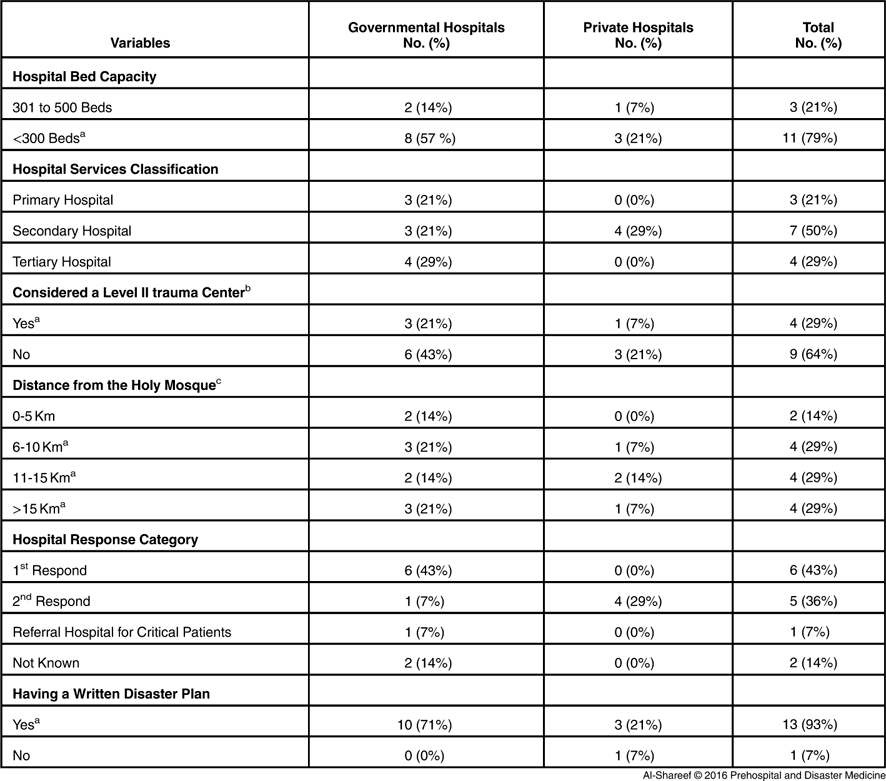
The raw data of the key study variables were inspected for any missing values to identify the extent of omission and the pattern of the missing data prior to any statistical analyses. In order to accomplish this task, all key variables were checked and their frequencies and percentage of missing values were summarized. Categorical variables are summarized and reported in the table as proportion n (%) across governmental and private hospitals (Table 1).
Hospitals Characteristics

a The percentages in this row do not sum to that which is in the final column due to individually rounding to the nearest percentage; for each column, the percentages were calculated separately instead of summing the column values.
b One governmental hospital didn’t respond to this question.
c Percentages do not sum to 100% due to accurate rounding to the nearest whole number.
Results
Fourteen hospitals responded out of 17 targeted hospitals in the area of Makkah, yielding a response rate of 82%. Among these, only one private hospital did not have a written disaster plan. The responses from the remaining 13 hospitals were almost complete with only minimal omitted responses. The whole data set (including number of responses to each question) is represented in the tables (Tables 1-8) provided with this study.
General Evaluation of the Disaster Plan

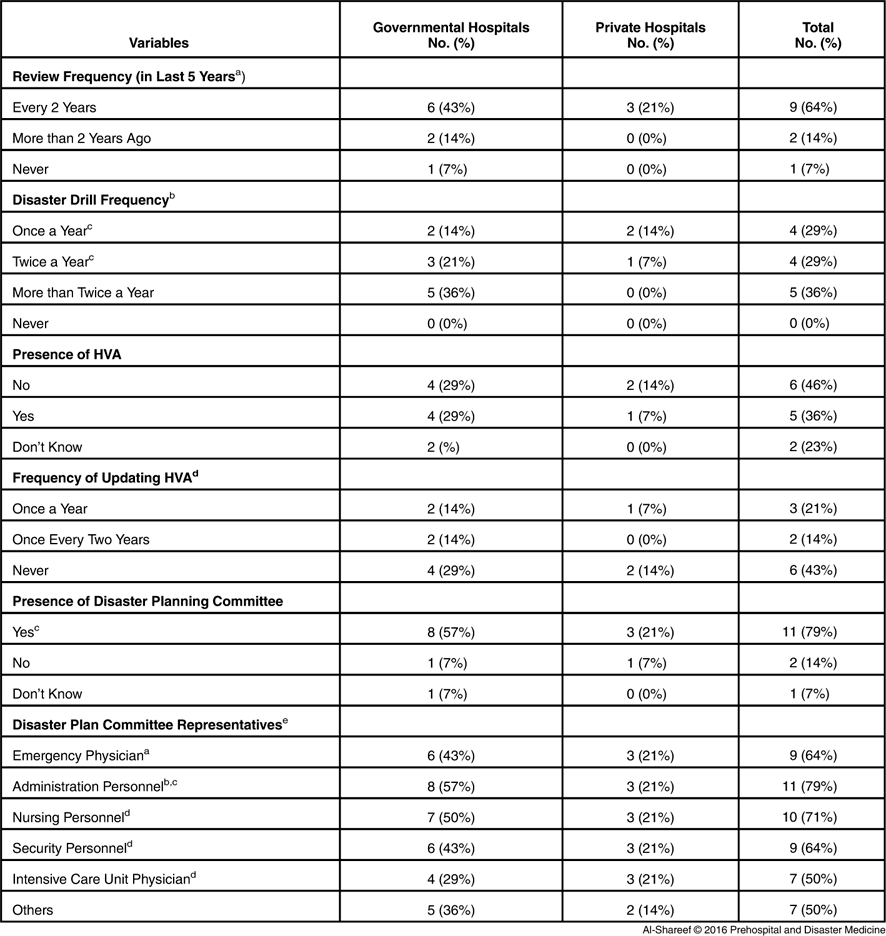
Abbreviation: HVA, hazard vulnerability analysis.
a 12 out of 14 hospitals responded to this question.
b 13 out of 14 hospitals responded to this question.
c The percentages in this row do not sum to that which is in the final column due to individually rounding to the nearest percentage; for each column, the percentages were calculated separately instead of summing the column values.
d 11 out of 14 hospitals responded to this question.
e This question allows multiple answers for each respondent.
More General Evaluation of the Disaster Plan

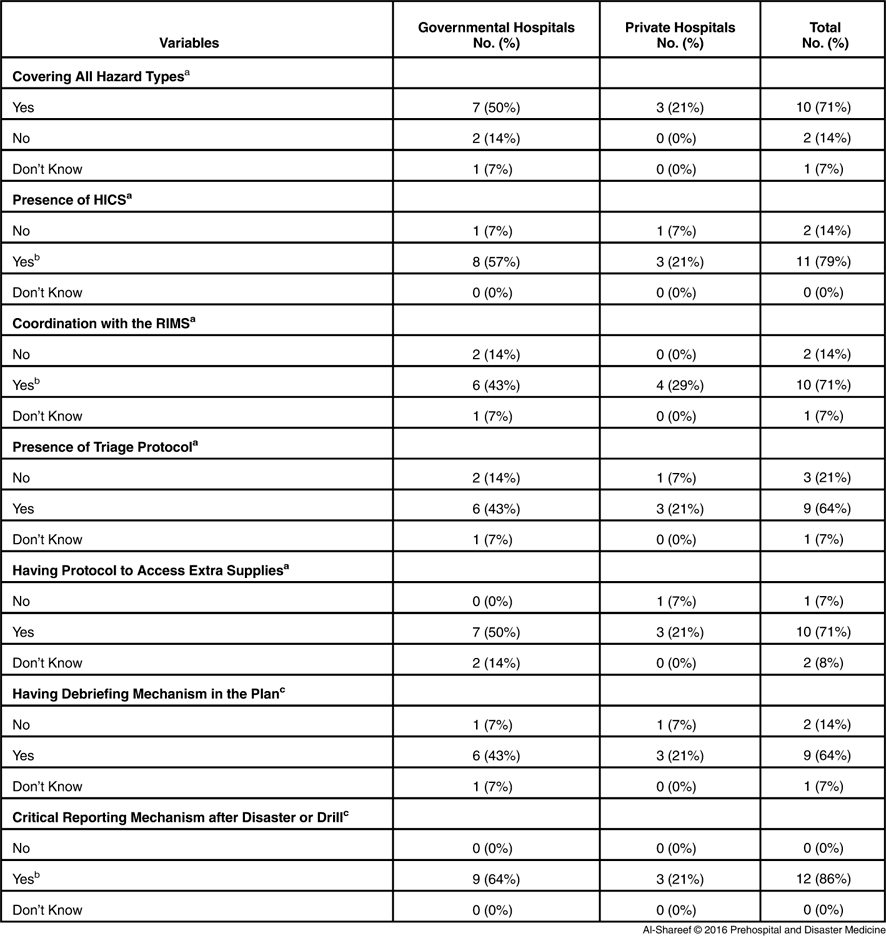
Abbreviations: HICS, Hospital Incident Command System; RIMS, Regional Incident Management System.
a 13 out of 14 hospitals responded to this question.
b The percentages in this row do not sum to that which is in the final column due to individually rounding to the nearest percentage; for each column, the percentages were calculated separately instead of summing the column values.
c 12 out of 14 hospitals responded to this question.
Surge Capabilities of the Hospitals

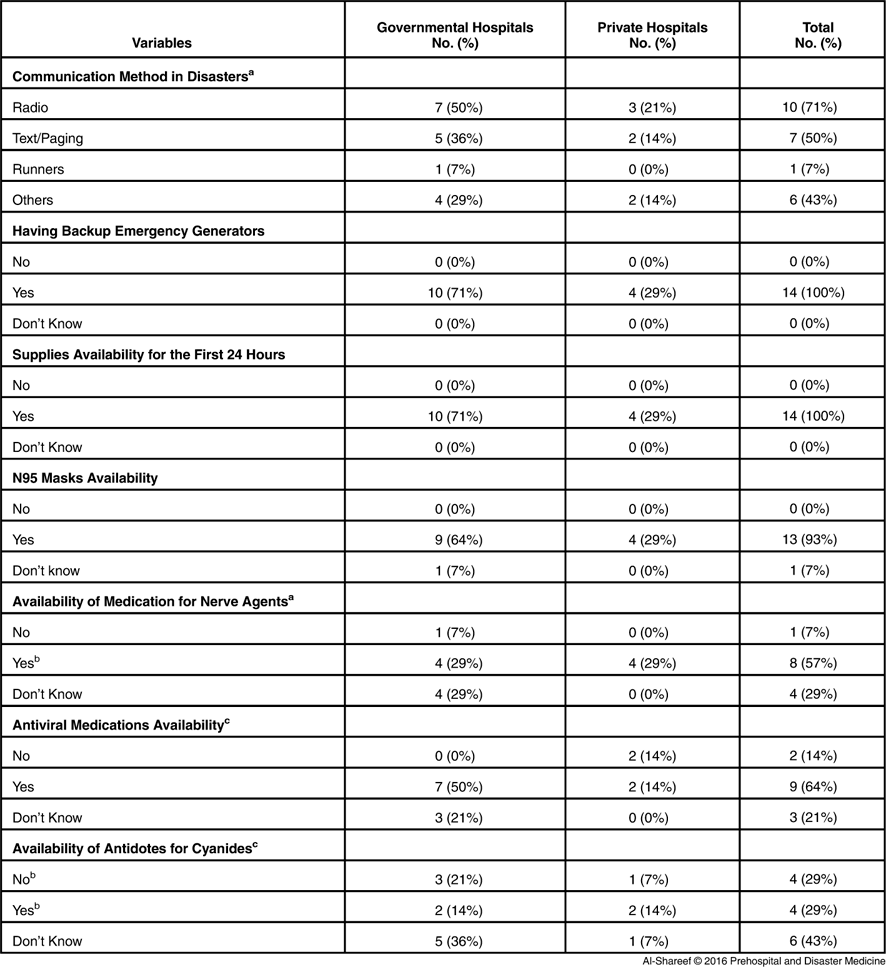
a 13 out of 14 hospitals responded to this question.
b The percentages in this row do not sum to that which is in the final column due to individually rounding to the nearest percentage; for each column, the percentages were calculated separately instead of summing the column values.
c Percentages do not sum to 100% due to accurate rounding to the nearest whole number.
More Surge Capabilities of the Hospitals

Abbreviations: ED, emergency department; PPE, personal protective equipment.
a 13 out of 14 hospitals responded to this question.
b The percentages in this row do not sum to that which is in the final column due to individually rounding to the nearest percentage; for each column, the percentages were calculated separately instead of summing the column values.
c Percentages do not sum to 100% due to accurate rounding to the nearest whole number (eg, 11 out of 14 hospitals responded to this question.
d Only five hospitals answered this question.
Even More Surge Capabilities of the Hospitals

Abbreviation: ICU, intensive care unit.
a The percentages in this row do not sum to that which is in the final column due to individually rounding to the nearest percentage; for each column, the percentages were calculated separately instead of summing the column values.
Health Worker Knowledge and Training

Abbreviation: ICU, intensive care unit.
a Percentages do not sum to 100% due to accurate rounding to the nearest whole number.
b The percentages in this row do not sum to that which is in the final column due to individually rounding to the nearest percentage; for each column, the percentages were calculated separately instead of summing the column values.
More Health Worker Knowledge and Training

a The percentages in this row do not sum to that which is in the final column due to individually rounding to the nearest percentage; for each column, the percentages were calculated separately instead of summing the column values.
Hospitals’ Characteristics for All Surveyed Hospitals
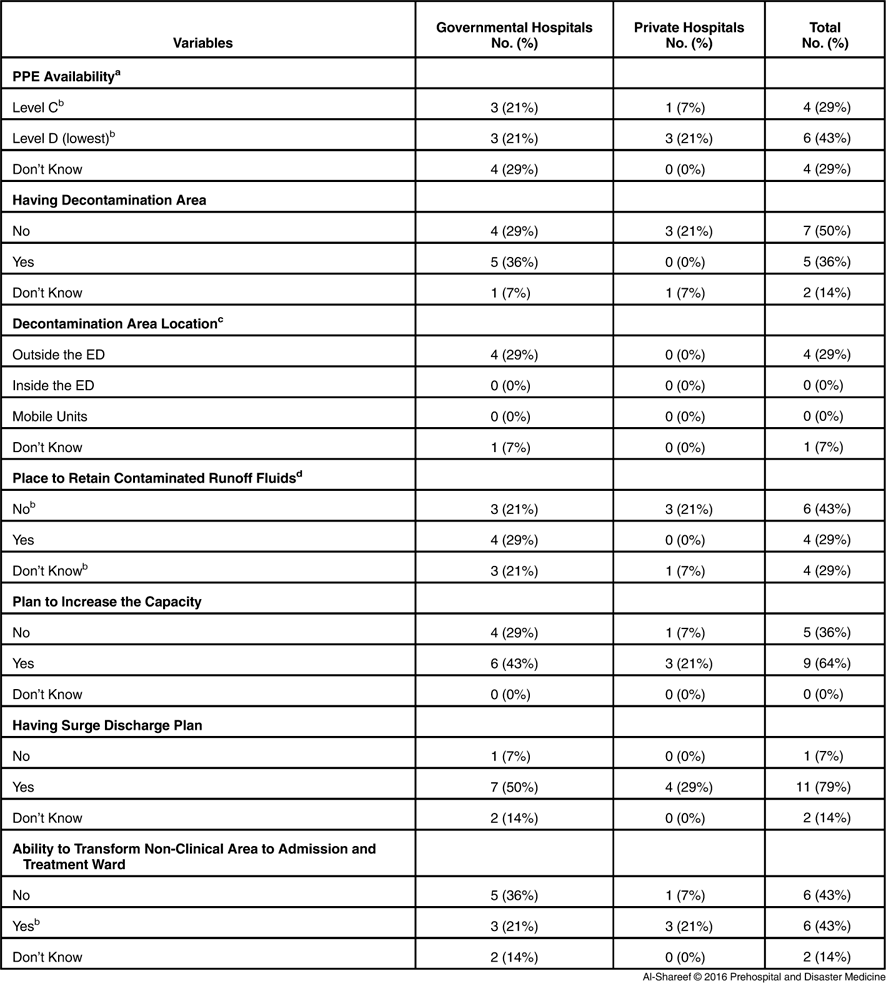
Of the 14 hospitals included, 10 (71%) were governmental hospitals and four (29%) were private institutions. Only three (21%) of the hospitals had a capacity of 301 to 499 beds, the remaining had a capacity of less than 300 beds each. No respondent had a capacity of more than 500 beds at the time of the survey. Of the included hospitals, three (21%) were primary response hospitals, seven (50%) were secondary response hospitals, and four (29%) were tertiary response hospitals. Four of the 14 (29%) claimed to be Level II Trauma Centers, as per the criteria of American College of Surgeons (ACS; Chicago, Illinois USA). Two (14%) hospitals were within a distance of 0-5km from the Holy Mosque. The remaining ranges of distance are demonstrated in Table 1. Of note, two respondents indicated they did not know their hospitals response category.
General Evaluation of Disaster Plan
The 13 hospitals that had written disaster plans available in the hospitals were asked how frequently they reviewed their plans in the last five years. Nine (64%) hospitals had completed a review within the preceding two years, but two (14%) other hospitals conducted their last review more than two years previously. One hospital had not reviewed its plan in more than five years. Hospitals also demonstrated variance in frequency of disaster drills: four (29%) hospitals reported that they conduct drills once a year; four (29%) hospitals implemented them twice a year; whereas five (36%) hospitals conducted drills more than twice a year. Overall, nine out of 14 respondents conducted a drill at least twice a year or more frequently.
An HVA was a component of the disaster plan for five (36%) hospitals, but eight (57%) hospitals did not demonstrate evidence of an HVA in their plans. When questioned if the disaster plan included a comprehensive, all-hazards approach, 10 (71%) hospitals indicated a positive response and three (21%) hospitals a negative response. Eleven (79%) hospitals had a disaster planning committee, which consisted of experts from a number of different groups of health care workers (Table 2). Eleven (79%) hospitals mentioned the presence of HICS in their plan (Table 3). A triage protocol to report index cases for chemical, biologic, radiation, nuclear, or explosion (CBRNE) events was present in the plans of nine (64%) hospitals. Ten (71%) hospitals had a protocol to access extra supplies in the event of a disaster. Nine (64%) hospitals’ disaster plans included a post-disaster debriefing mechanism.
Surge Capacities of the Hospitals:
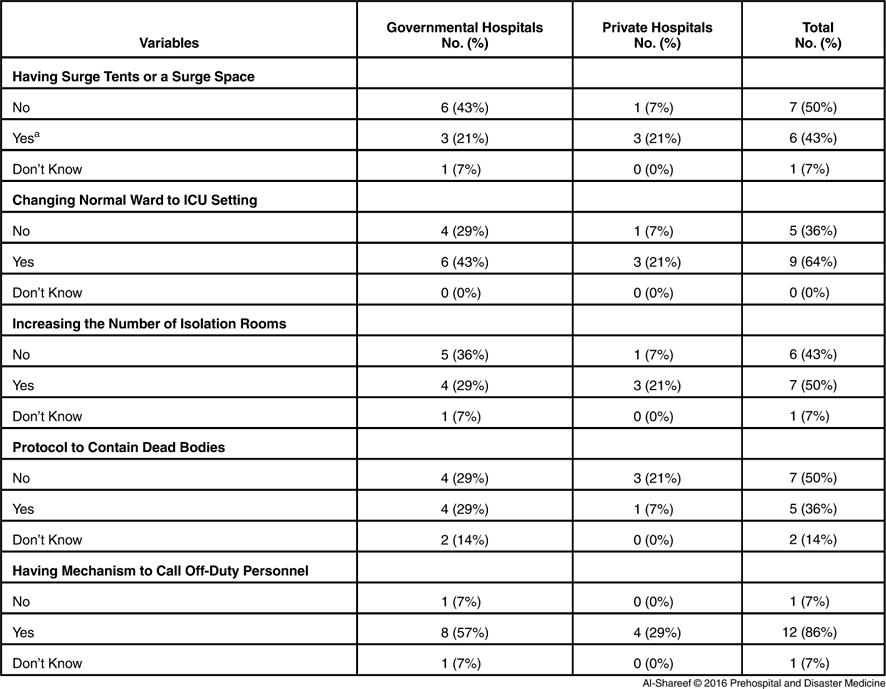
In the case of a disaster, communication methods varied among hospitals (Table 4). All hospitals had backup electrical generators that would be available for use during a disaster. They also had certain types of supplies required for the first 24 hours of a disaster. Conversely, no hospital had PPE of Level A or B (the highest-protection level suits, each with a self-contained breathing apparatus that is either fully encapsulated [Level A] or externally worn [Level B]), four (29%) hospitals had Level C PPE (lower protection than B, with air purification but not used in oxygen-deficient areas), and six (43%) hospitals had Level D PPE (barrier protection). It was unclear which level PPE that the remaining four hospitals had (Table 5). Only five hospitals (36%) had the presence of decontamination areas in their disaster plans. In four hospitals (29%), the decontamination areas were located outside the emergency department; one hospital did not have a clear location in the plan. Four hospitals (29%) indicated that they had a system to retain contaminated runoff fluids. Nine (64%) hospitals had a plan to increase their overall hospital surge capacity. A surge discharge plan was present in 11 (79%) hospitals. Six (43%) hospitals had the ability to transform non-clinical areas into admission and treatment wards. Six hospitals (43%) responded that they had surge space and tents available to be used for building temporary wards (Table 6). Nine (64%) hospitals indicated their ability to change a normal ward into an ICU setting. Seven (50%) hospitals had a protocol for increasing the number of isolation rooms, if required.
A protocol to contain dead bodies in a mass-mortality disaster was present in the plan of five (36%) hospitals. There was a mechanism to call back off-duty personnel in the plan of 12 (86%) hospitals, whereas two (14%) hospitals did not demonstrably have such a mechanism.
Staff Knowledge and Training
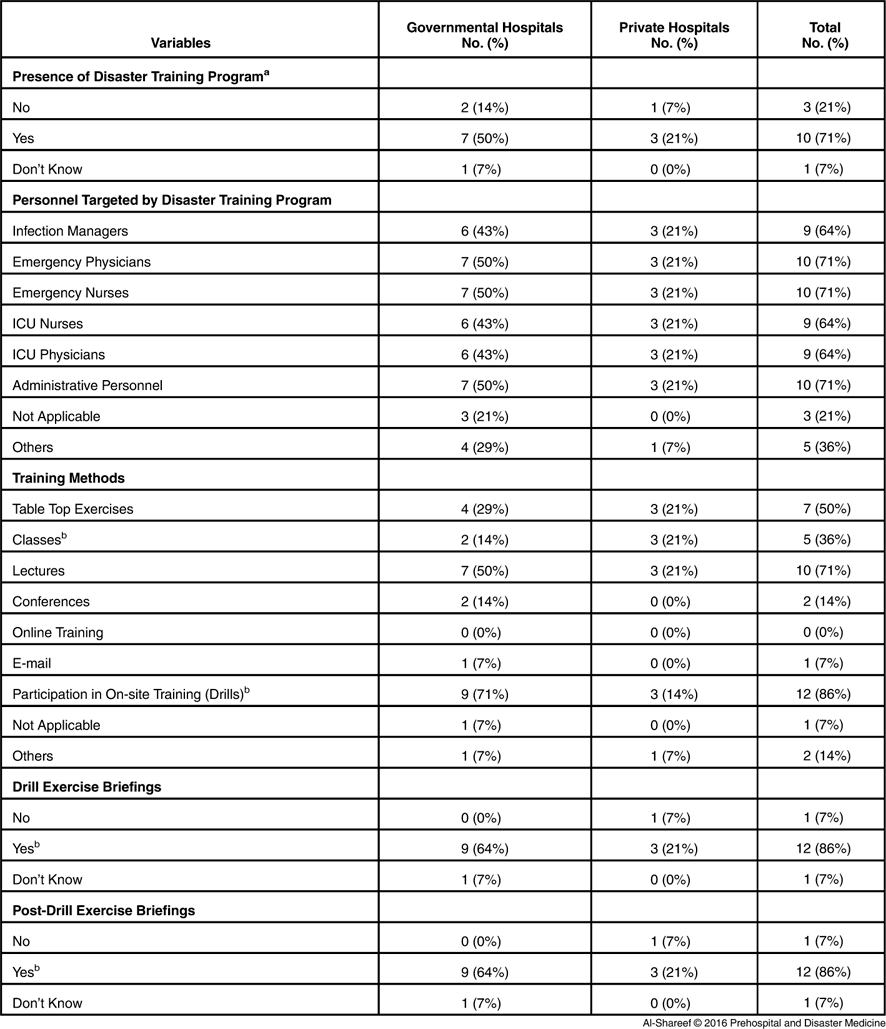
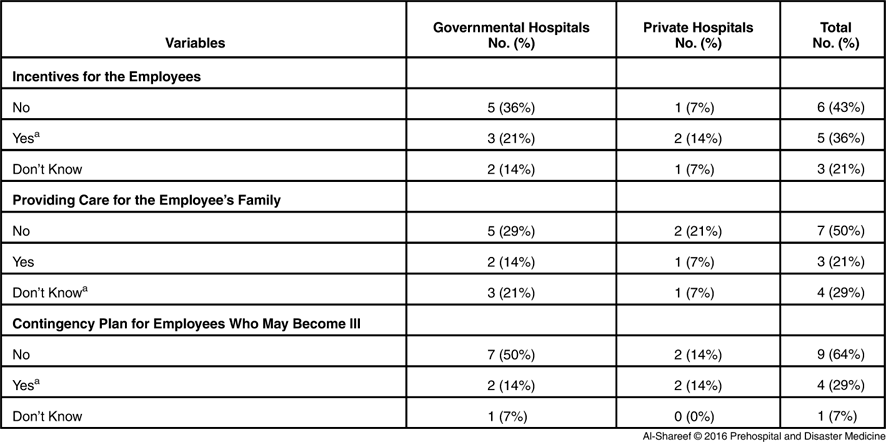
Of the 14 hospitals, 10 (71%) hospitals had a designated disaster-training program for health care workers. The methods of training provided by hospitals were variable (Table 7). Targeted groups for training were health care workers in critical areas, which included: infection control managers, emergency physicians, emergency nurses, ICU nurses, ICU physicians, and administrative personnel (administrative officers such as duty managers, medical directors, and chief executive directors). Twelve hospitals (86%) had a plan to conduct exercise briefings before drills; also, 12 (86%) hospitals conducted post-exercise debriefing. Five hospitals (36%) provided overtime payment as an incentive for employees who participated in the work during disasters (Table 8). Only four (29%) hospitals had a contingency plan for employees who become ill at work during a disaster.
Discussion
The TJC mandates that all accredited hospitals must have a written disaster plan and carry out drills frequently; more than one-half of the hospitals studied showed compliance with such requirements.Reference Hick, Hanfling and Cantrill 11 Nevertheless, there was a hospital without a written disaster plan. There is no validated tool for assessing hospitals disaster preparedness. 12 In the digital age, not every institution will produce soft copies of plans, but these should be readily available on intranets, the hospital or departmental web sites, and specifically, in emergency preparedness response areas.
Kanji et al compared three different tools for assessing disaster preparedness, including structured surveys, drill observations, and video analysis.Reference Kaji and Lewis 13 Kanji concluded that results from each method indicated that each is useful in assessing aspects of preparedness, but “no single method adequately characterizes overall hospital preparedness.” Tools such as tabletop exercises in isolation may not be sufficient preparation. Rather, full-scale regional exercises should be used to involve all of the players in a hands-on, mock event that also tests equipment like decontamination units and PPE. Good planning and appropriate implementation of response plans alone may not be enough to respond successfully to a large-scale disaster, such as a prolonged weather-related emergency, indicating an ongoing need for frequent drills followed by re-evaluation and improvement.Reference Kaji, Langford and Lewis 14 Although most of the hospitals in Makkah had disaster plans, they should be subject to frequent testing, rehearsal, and revision, as required.
Overall, the majority of hospitals that participated in the study demonstrated the presence of some kind of special preparations for disasters in their plans. Nine (64%) of these hospitals do review their plans within a 5-year time frame, which keeps the plans somewhat current. All responding governmental hospitals conduct disaster drills to test their plans and to train personnel: four hospitals (29%) conduct drills once a year; four hospitals (29%) conduct them twice a year; and five hospitals (36%) conduct drills more than twice a year. Overall, nine of the government hospitals meet the requirement to drill at least twice per year with the majority of these drilling more frequently than twice per year. While the question was not asked specifically, it was inferred that drills were in-house and there were no co-operative drills between hospitals which would further enhance resiliency of the region. This demonstrates the compliance of governmental hospitals, which represent the majority of health care facilities in Makkah, with practicing drills as a method of preparation.
Throughout the study, private hospitals have showed comparable answers for the questionnaire to those of the governmental hospitals. This comparable response may be explained by the presence of one supervisory section of MoH for both private and governmental hospitals (The Emergency and Medical Services Section of Makkah region). The study showed that, in the region studied, there is no Level I Trauma Center; this should be addressed by decision makers. One potential option is to take the two biggest hospitals and work on upgrading their capacities and trauma care levels.
The plans should be as comprehensive as possible to cover all hazards and susceptible populations. One study from China of 400 hospitals in four regions indicated that hospital disaster plans were missing fundamental elements of hospital preparedness, and comprehensive measures identified for improving their plans required implementation. The study also highlighted that 85.2% of responding hospitals had a documented Emergency Operations Plan.Reference Brevard, Weintraub and Aiken 15 Another study of Canadian hospitals showed a deficit in hospital disaster plans for CBRNE events.Reference Li, Huang and Zhang 16 Hospitals disaster preparedness plans should include sufficient details to manage scenarios with a high probability of occurrence as identified in HVA, in particular, infectious disease outbreaks.Reference Kollek 17
Although HVA is a significant tool for disaster planning, a study from the Arabian Gulf showed the presence of gaps and limitations in applying it for public hospitals in Abu Dhabi.Reference Rebmann, Carrico and English 18 Similarly, a major defect in the utilization of HVA in hospitals planning was discovered in this study. This should be rectified as a matter of urgency with targeted training towards identifying hazards and how to conduct HVAs. The HICS is one standardized system for operation during disasters.Reference Fares, Femino and Sayah 19 This may call into question the mechanism by which those hospitals will function from an emergency management perspective during a disaster. Lack of a well-defined, organized system may lead to major problems managing disasters. With the frequent outbreaks of infectious diseases in the region, it has become essential to have an appropriate triage and management protocol for index cases.
Hospitals preparedness planning should not overlook the special needs of pediatric, obstetric, and geriatric populations.Reference Djalali, Castren, Hosseinijenab, Khatib, Ohlen and Kurland 20 - Reference Haeri and Marcozzi 23 A US study from 2008 showed that less than one-half of hospitals could accommodate the needs for persons with disability during disasters.Reference Fernandez, Byard, Lin, Benson and Barbera 24 Those populations represent a considerable percentage of the Makkah region. It is strongly advised to further study the preparedness of Makkah hospitals to meet the special requirements of these vulnerable populations during disasters.
In the US, hospitals should have enough supplies to function independently during a disaster for at least 96 hours while awaiting external support.Reference Niska and Shimizu 25 In this study, one-third of hospitals didn’t demonstrate availability of such supplies in their plans. Although it is expected that all hospitals will have backup electricity generators, plans should document generators locations ensuring safety, hours of operation, fuel supply, and maintenance schedules. The availability of suitable decontamination areas for CBRNEs should be addressed clearly, preferably on a regional level. Retaining contaminated fluids is another consideration, as only one-third of the hospitals studied have a designated system for this.
This study revealed a major defect in having detailed written plans to increase surge capacity of Makkah hospitals during disasters. Surge capacity can be defined as the maximum ability to augment resources in order to handle unexpected large influx of patients.Reference Niska and Shimizu 25 Having a surge discharge plan, ability to transform nonclinical areas into admissions areas, and the ability to increase isolation and critical care beds should be fully expressed by hospitals plans. Although the risk of mass-causality incidents is high, a majority of hospitals do not have a clear protocol to manage remains of the deceased during disasters, which may cause a public health hazard. Hospitals’ regional disaster planners and public health officials should work together to resolve this.
Hospital staff are front line during disasters; however, their needs during disasters may be overlooked or underestimated at times. There should be a clear plan to take care of their well-being, including their families, emotional needs, and psychological needs during the response period and the recovery phase. Besides providing financial compensation for working extra hours, there are other measures hospitals can provide to their staff. Social workers can be assigned to connect staff with their families, nearby schools, or daycare centers and may coordinate care of staffs’ children during disasters. Psychiatric physicians also may support their colleagues. Considerations of staff needs during disasters should be given the required importance in plans.
Hospitals need to ascertain that their staff benefit from the essential amount of training to perform the required roles during disasters, including staff working in non-critical care areas. Hospital disaster drills, computer simulations, tabletop, and other exercises are designed to test a hospital’s disaster plan and to allow employees to become familiar with disaster operations. The possible types of disaster that may occur are varied; as a result, the hospital disaster response needs to be continually evaluated to cover all aspects of disaster response, including:
-
∙ The HICS;
-
∙ Communications (both internal and external);
-
∙ Clinical Care (including triage, patient care, patient flow, and patient tracking);
-
∙ Security;
-
∙ Materials and Resources;
-
∙ Decontamination;
-
∙ Continuity of Operations Procedures; and
-
∙ Return to Pre-Disaster Functioning.
Educational interventions should be developed to target individual hospitals. These interventions can be a part of establishing a comprehensive plan for all the hospitals in the whole region of Makkah. Future studies may seek to understand how personnel make decisions when faced with competing priorities, something commonly encountered in crisis leadership. Plans, policies, and organizational decisions should be based on the best evidence and resources available.
The researchers recommend testing each individual hospital plan for efficacy and evaluating the coordination between the hospitals and the emergency operation center. In the authors combined experiences, preparedness efforts would benefit from increased reporting because only by objective and complete analysis of disaster response systems can one expect to learn where weaknesses are and to improve upon them.
Future research should utilize interagency, multi-hospital drills implemented by the local health care system to determine the most efficient, integrated, and effective means of conducting them as a part of a regional disaster preparedness system. Educational interventions then should be developed to target individual hospitals.
To enhance hospital preparedness for responding to a disaster, the government, in particular the MoH, should increase investment in order to enhance fundamental preparedness elements, including training to create and sustain appropriate and complete disaster preparedness.
Limitations
There are some limitations to the study. First, a representative sample of responding hospitals was enrolled in order to cover a specific region. This resulted in a smaller sample size than anticipated. Second, because it was a cross-sectional study examining only data willingly divulged by the hospital representatives, there was difficulty in assessing the quality and efficacy of the disaster plans described. Although plans were reviewed during interviews, self-reported data still are subject to reporting bias, which makes the resulting information difficult to be objectively verified. Therefore, there might be an overestimate of positive responses, as respondents may have been concerned that investigators were conducting an official assessment for competency. Although some hospitals declined to participate in the study, those hospitals tended to be smaller in size. It is entirely possible that those hospitals unwilling to participate made that decision because of perceived or real deficiencies in their own preparedness capabilities. Therefore, this data could project an overly positive view of the disaster capabilities of the region.
This study did not independently examine the level of readiness achieved by conducting various types of disaster drills; its purpose was to preliminarily establish the actual implementation and frequency of drills. The efficacy of drills conducted was outside of the scope of this study.
Conclusion
Makkah has experienced multiple disaster incidents over the last decade. The present research suggests that Makkah hospitals may be inadequately prepared for potential future disasters. The lack of preparedness of these hospitals for disaster or public health emergencies represents a considerable threat to the health and safety of both residents and visitors to Makkah. This is a particular global health concern considering the millions of pilgrims who visit Makkah annually. This study demonstrated that there is significant room for improvement in most aspects of hospital Emergency Operations Plans, in particular: reviewing the institution’s plan and frequency of such reviews and increasing the frequency of multi-agency and multi-hospital drills. Preparedness for terrorism utilizing CBRNE and infectious diseases was found to be sub-optimal in this study and should be assessed further. Absence of HVA in disaster plans is a significant limitation, and targeted educational initiatives could be urgently required to assist disaster and emergency management personnel in utilizing such tools to identify and assist in mitigating, where possible, threats faced.
Supplementary Materials
To view supplementary material for this article, please visit https://doi.org/10.1017/S1049023X16001229