INTRODUCTION
Studies of the species composition of a community and the interactions among species are indispensable for understanding ecological processes. Furthermore, it is important to assess how these interactions define the structure, composition and dynamics of networks (Bascompte et al. Reference BASCOMPTE, JORDANO, MELIÁN and OLESEN2003). The intensity of links within networks along environmental gradients depends on the abundances of species and the abiotic influences on species interactions. These networks are characterized by patterns in which many species have few interactions with other species (specialists), or a small number of species interact with a large number of species within the network (generalists) (Bascompte et al. Reference BASCOMPTE, JORDANO and OLESEN2006, Jordano et al. Reference JORDANO, BASCOMPTE and OLESEN2003). The concept of a core/periphery network usually refers to a complex series of competitive and cooperative interactions between network nodes: core species present high abundances and connect the entire community while those in the periphery network are less abundant, more specialized and show scattered nodes that are connected and linked to the core (Csermely et al. Reference CSERMELY, LONDON, WU and UZZI2013). This core of generalist species allows specialists to remain in the network, generating co-evolutionary processes and allowing the network to function and be stable, efficient and resistant to disturbance (Bascompte et al. Reference BASCOMPTE, JORDANO, MELIÁN and OLESEN2003, Guimarães et al. Reference GUIMARÃES, JORDANO and THOMPSON2011).
In plant–pollinator mutualistic interactions, species that visit flowers and have been shown to be effective pollinators may exert selective pressure on the traits of the flowers (Boberg et al. Reference BOBERG, ALEXANDERSSON, JONSSON, MAAD, ÅGREN and NILSSON2014, Herrera Reference HERRERA1988). For example, some morphological traits of angiosperm plants, such as the flower structure and position or the chemical composition of the nectar, may be modified to be more attractive to pollinators, thus increasing their chances of pollination (Armbruster Reference ARMBRUSTER1992). The morphological traits of flowers evolve along with the morphological traits of effective animal pollinators (Bruneau Reference BRUNEAU1997), and these plants are considered to have a pollination syndrome that corresponds to specific pollinators (Bruneau Reference BRUNEAU1997, Faegri & van der Pijl Reference FAEGRI and VAN DER PIJL1979, Waser et al. Reference WASER, CHITTKA, PRICE, WILLIAMS and OLLERTON1996).
Hummingbirds are ecologically important pollinators, and they principally visit flowers with downward-facing, reddish, tubular corollas that lack scent and contain a lower concentration of amino acids than that of sucrose. These plants have an ornithophilous syndrome, specifically a hummingbird syndrome (Aizen Reference AIZEN2003, Cronk & Ojeda Reference CRONK and OJEDA2008), but hummingbirds sometimes visit plant species with characteristics that are associated with insects or bats, which are termed non-ornithophilous plants (Araujo & Sazima Reference ARAUJO and SAZIMA2003, Dalsgaard et al. Reference DALSGAARD, MARTÍN GONZÁLEZ, OLESEN, OLLERTON, TIMMERMANN, ANDERSEN and TOSSAS2009, Faegri & van der Pijl Reference FAEGRI and VAN DER PIJL1979).
At high altitudes, hummingbirds are better pollinators than insects because they are less affected by the high precipitation and low temperatures, so high altitudes are rich in ornithophilous flowers that are visited by hummingbirds (Aizen & Ezcurra Reference AIZEN and EZCURRA1998, Bleiweiss Reference BLEIWEISS1998, Cruden Reference CRUDEN1972). In contrast, hummingbirds use a greater number of plants pollinated by insects and bats at low altitudes (Araujo & Sazima Reference ARAUJO and SAZIMA2003), though hummingbirds visit both types of plant in similar proportions at middle altitudes (Dalsgaard et al. Reference DALSGAARD, MARTÍN GONZÁLEZ, OLESEN, OLLERTON, TIMMERMANN, ANDERSEN and TOSSAS2009, Maruyama et al. Reference MARUYAMA, OLIVEIRA, FERREIRA, DALSGAARD and OLIVEIRA2013).
Increased habitat loss and climate change modify the distribution patterns of plant species and their phenologies and thus the ecological processes that drive the interactions between plants and their pollinators. We posited the following hypotheses: (1) the number of hummingbird species exhibiting pollination syndrome specialization will increase with altitude and vary during dry seasons due to the greater variation in the availability of flowers at this time, and (2) plant–hummingbird interaction networks (central and peripheral species) will not vary in time and space.
METHODS
Study area
This study was carried out in El Triunfo Biosphere Reserve in the central region of the Sierra Madre mountain range in the Mexican state of Chiapas (15°09′10″–15°57′02″N, 92°34′04″–93°12′42″W). In this area, the vegetation predominantly consists of deciduous seasonal forest, secondary vegetation, pastures and coffee plantations at 300–1300 m asl, semi-evergreen seasonal forest and secondary vegetation at 1300–1600 m asl, and cloud forest at 1600–2500 m asl (Figure 1). The climate of the study region is warm subhumid to temperate-humid, and the annual precipitation ranges from 1000 mm to 4500 mm. Based on historical precipitation data from National Meteorological Service at smn.cna.gob.mx, there are three seasons: dry (January–May), rainy (June–October), and post-rainy (November–December, when rain is less frequent than during the rainy season). The average annual temperature ranges from 22°C at low altitudes to −3°C at high altitudes (information from National Meteorological Service at smn.cna.gob.mx).
Geographic locations of study sites by altitude and distribution of transects used in 2015 and 2016, El Triunfo Biosphere Reserve, Chiapas, Mexico.

Sampling of plant–hummingbird interactions
Fieldwork was carried out from February 2015 to March 2016 at three study sites of varying altitude: Paval (low: 300–1000 m asl), Cañada Honda (middle: > 1000–2000 m asl) and Campamento (high: > 2000–2500 m asl; Figure 1). All sites faced the Pacific Ocean and were located ≥ 800 m apart. At each site, three 2-km transects (n = 9) were established based on the available trails in the area, and each transect was sampled twice during each season (dry, rainy and post-rainy). To identify the areas to be sampled along the transects, we identified patches with high concentrations of flowers, and we observed these floral patches from 07h00 to 12h00 to identify the hummingbird species, number of individuals per species, number of legitimate visits (number of times in which a hummingbird species was recorded interacting with a plant, placed its bill into a flower) and number of plant species visited. Hummingbirds were identified using binoculars and a field guide (Howell & Webb Reference HOWELL and WEBB1995), and the taxonomy followed del Hoyo et al. (Reference DEL HOYO, COLLAR, CHRISTIE, ELLIOTT and FISHPOOL2014). All sites were sampled with the same effort, and the interactions were observed for a total of 247 h over the course of 71 d. The plants visited by hummingbirds were identified in the field with the assistance of a botanist, and photographs were taken for later identification using plant guidebooks and websites: http://www.tropicos.org and http://www.conabio.gob.mx/malezasdemexico/0claves/0claves-inicio.htm.
Ecological and statistical analysis
Quantitative matrices of plant–hummingbird interactions were generated, with rows representing hummingbird species, i, and columns representing plant species, j. Each cell contained a positive integer, yij, representing the total number of interactions observed (Blüthgen et al. Reference BLÜTHGEN, MENZEL and BLÜTHGEN2006). We evaluated whether the number of hummingbird visits to flowers varied with the plant pollination syndrome, altitude and season, and this analysis was conducted using generalized linear mixed models. To determine variations in the number of hummingbird visits to flowers, we used the variable of pollination syndrome (ornithophily vs. non-ornithophily) as a fixed effect and the variables of altitude and season as random effects. The hummingbird visit data showed over-dispersion of data; to correct this effect, a random factor (i.e. transect) was added to a second model (Stroup Reference STROUP2013). To determine the variation in the number of visits with altitude and season, these two variables were taken as random effects, and the syndromes were taken as fixed effects. Analyses were carried out using the program InfoStat.
Using the quantitative plant–hummingbird interaction matrices, the degree of community-level specialization (Blüthgen et al. Reference BLÜTHGEN, MENZEL and BLÜTHGEN2006) was analysed based on the altitude, season and pollination syndrome (ornithophily vs. non-ornithophily). Plant species were classified based on both flower morphology and colour (Cronk & Ojeda Reference CRONK and OJEDA2008, Maruyama et al. Reference MARUYAMA, OLIVEIRA, FERREIRA, DALSGAARD and OLIVEIRA2013) to determine the corresponding syndrome. The community-level complementary index of specialization (H2′) was calculated using the method and software proposed by Blüthgen et al. (Reference BLÜTHGEN, MENZEL and BLÜTHGEN2006), which is available at: http://rxc.sys-bio.net/. The H2′ index was calculated using Shannon's entropy, which is based on the deviation from the expected distribution of the probability of random interactions. The levels of specialization of the different communities were obtained using the standardized entropy on a scale of H2minimum to H2maximum, where 0 means that an interaction is characterized as extreme generalization, and 1 indicates that an interaction is characterized as extreme specialization. The H2′ values were tested against a null model with 10000 randomizations using Patefield's algorithm, which randomly redistributes the interactions in a network (Blüthgen et al. Reference BLÜTHGEN, MENZEL and BLÜTHGEN2006). The occurrence of extreme generalization in the network indicates high niche overlap and therefore species redundancy. This index is determined by the number of interactions that occur among the species involved as well as their level of richness (Blüthgen & Klein Reference BLÜTHGEN and KLEIN2011).
To identify the core and peripheral species in the plant–hummingbird network, we used the following equation: Gc = (ki−kmean)/σk, where ki = average number of links involving a plant or hummingbird species; kmean = average number of links involving all plant and hummingbird species in the network; and σk = standard deviation of the number of links between all plant and hummingbird species. Those species with Gc values > 1 had high numbers of interactions in the network within their trophic level; these species comprised the generalist core. Those species with Gc values < 1 had low numbers of interactions within their trophic level and formed the periphery of the networks (Dãttilo et al. Reference DÃTTILO, GUIMARÃES and IZZO2013). The core and periphery analyses were carried out using version 3.2.2 of the program R.
RESULTS
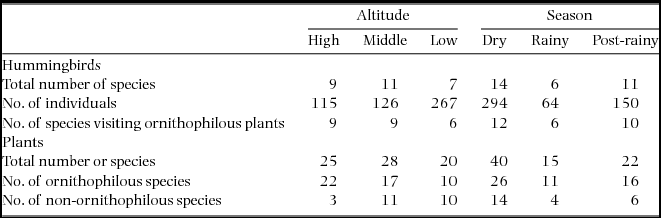
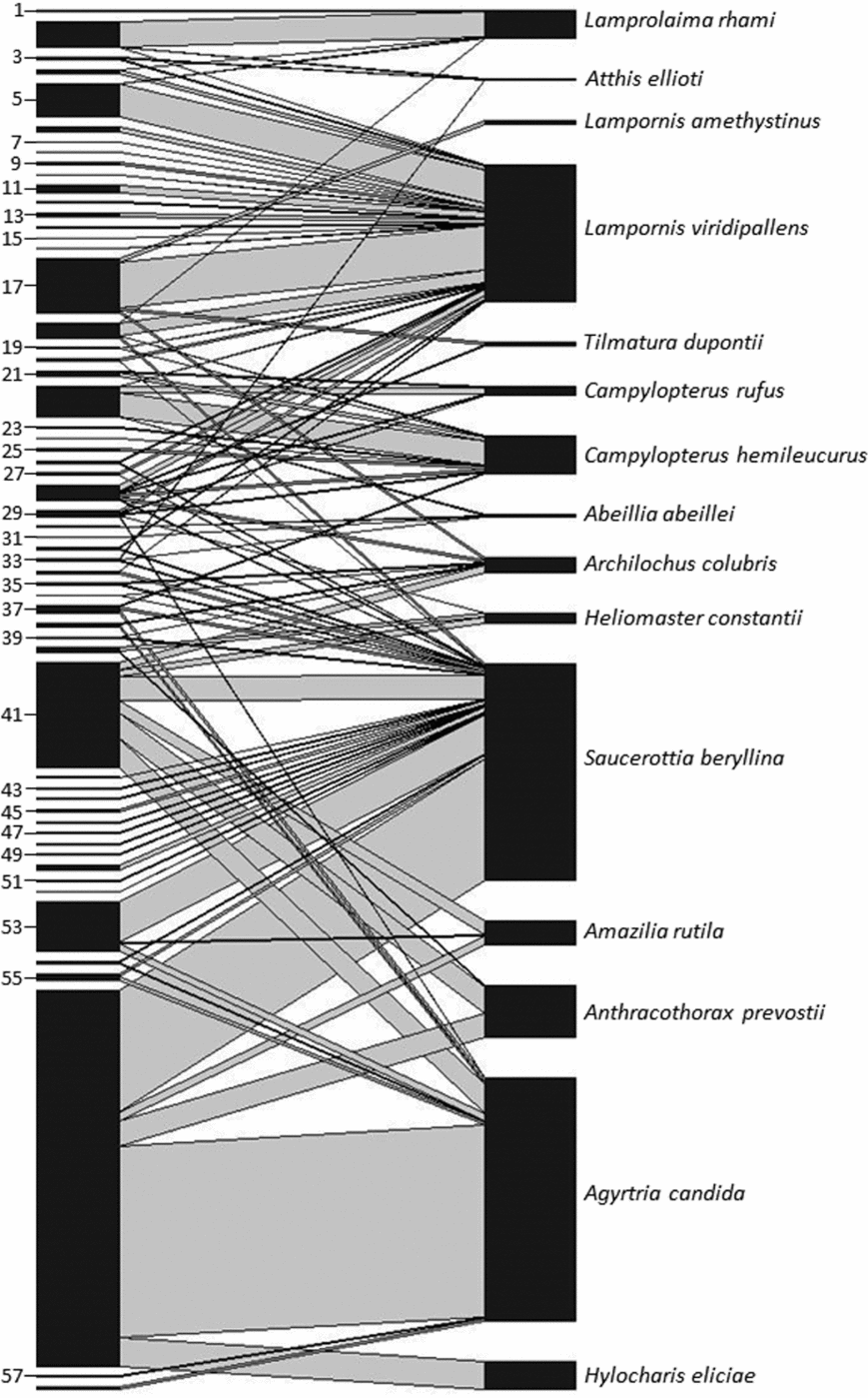
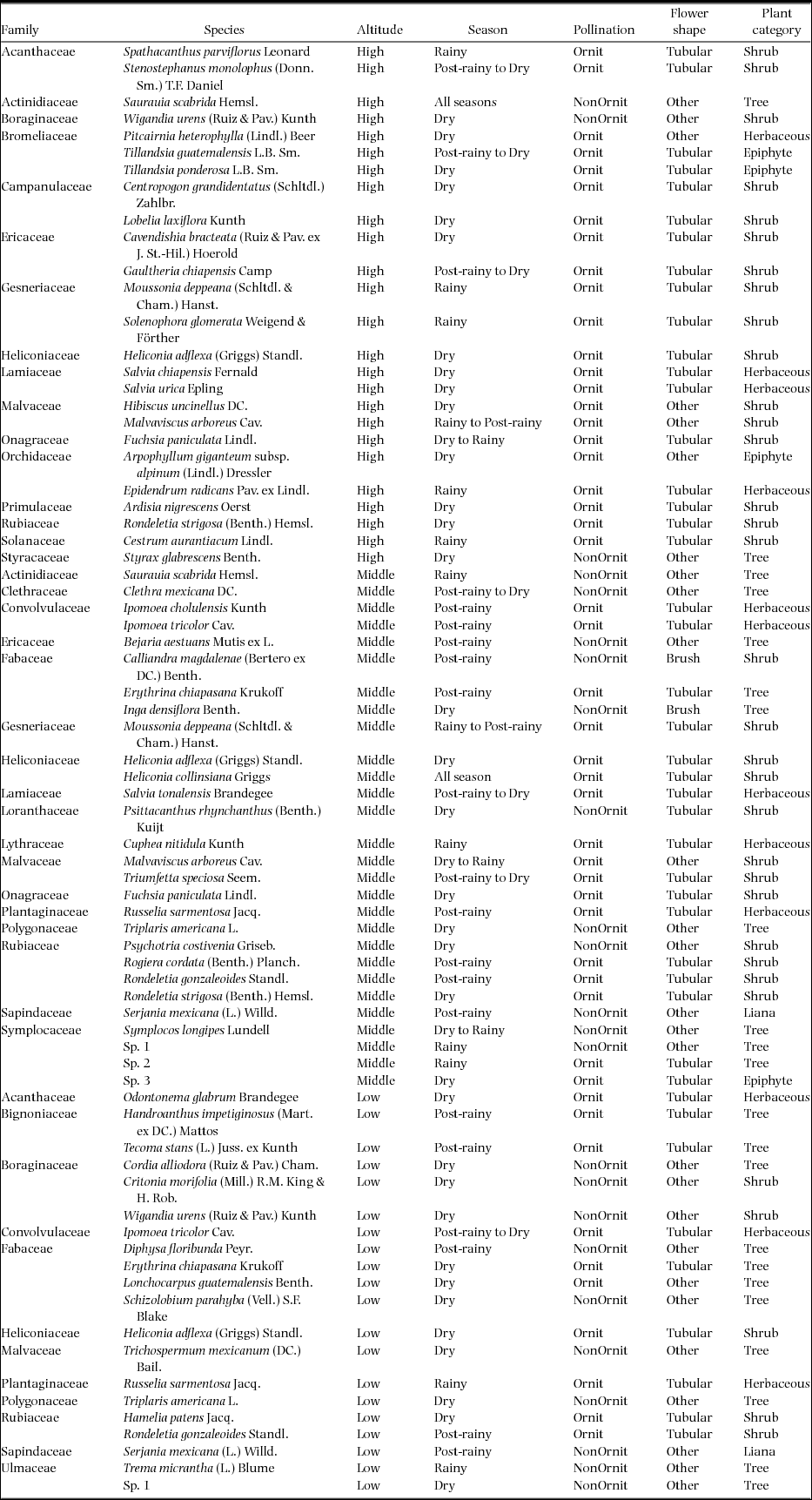
We recorded 508 individuals of 15 hummingbird species and 13 hummingbird genera interacting with plants. The greatest number of species (n = 11; 126 individuals) was recorded at middle altitudes, whereas the greatest abundance of individuals (n = 267) was recorded at low altitudes. The greatest number of hummingbird species and individuals (n = 14 and 249, respectively) were observed during the dry season (Table 1). We identified a total of 58 plant species belonging to 52 genera and 27 families (Figure 2), and of those visited by hummingbirds, 67.2% (n = 39) and 32.7% (n = 19) belonged to the ornithophilous and non-ornithophilous syndromes, respectively. Nevertheless, more hummingbird individuals visited non-ornithophilous than ornithophilous plant species (F1,126 = 127, P < 0.0001; averages: non-ornithophiles = 31.3 (number of visits per plant species) and ornithophiles = 22.6). The highest number of plant species visited by hummingbirds were in the Fabaceae (10.3%; non-ornithophiles = 4 and ornithophiles = 2) followed by the Rubiaceae (8.6%; non-ornithophiles = 1 and ornithophiles = 4), and the remaining plant families visited by hummingbirds ranged from one to four species. The distribution of several plant species was observed at more than one altitude (24% of the total) and during more than season (29%; Table 1; Appendix 1).
Number of hummingbird and plant species that interacted at three altitudes (low, middle and high) and in three seasons (dry, rainy and post-rainy) in El Triunfo Biosphere Reserve, Chiapas, Mexico.

Ecological network of plant–hummingbird interactions in El Triunfo Biosphere Reserve, Chiapas, Mexico. Grey lines represent interactions between or among species, and the thickness of the line indicates the number of times in which a hummingbird species was recorded interacting with a plant. Each number indicates a plant species, in consecutive order from 1 to 58. Plant species: 1: Cavendishia bracteata, 2: Gaultheria chiapensis, 3: Bejaria aestuans, 4: Tillandsia ponderosa, 5: Stenostephanus monolophus, 6: Centropogon grandidentatus, 7: Epidendrum radicans, 8: Rogiera cordata, 9: Ardisia nigrescens, 10: Pitcairnia heterophylla, 11: Cuphea nitidula, 12: Lobelia laxiflora, 13: Salvia chiapensis, 14: Salvia urica, 15: Arpophyllum giganteum, 16: Styrax glabrescens, 17: Fuchsia paniculata, 18: Saurauia scabrida, 19: Tillandsia guatemalensis, 20: Wigandia urens, 21: Heliconia collinsiana, 22: Malvaviscus arboreus, 23: Ipomoea cholulensis, 24: Hibiscus uncinellus, 25: Solenophora glomerata, 26: Rondeletia strigosa, 27: Spathacanthus parviflorus, 28: Triumfetta speciosa, 29: Heliconia adflexa, 30: Psychotria costivenia, 31: SP3, 32: Cestrum aurantiacum, 33: Clethra mexicana, 34: Moussonia deppeana, 35: Triplaris americana, 36: Calliandra magdalenae, 37: SP1, 38: Serjania mexicana, 39: Russelia sarmentosa, 40: Erythrina chiapasana, 41: Handroanthus impetiginosus, 42: Lonchocarpus guatemalensis, 43: Trichospermum mexicanum, 44: SP2, 45: Odontonema glabrum, 46: Trema micrantha, 47: Psittacanthus rhynchanthus, 48: Symplocos longipes, 49: Hamelia patens, 50: Rondeletia gonzaleoides, 51: Salvia tonalensis, 52: Tecoma stans, 53: Inga densiflora, 54: Diphysa floribunda, 55: Ipomoea tricolor, 56: Schizolobium parahyba, 57: Critonia morifolia, 58: Cordia alliodora.

Variation in the use of plants with flowers with altitude
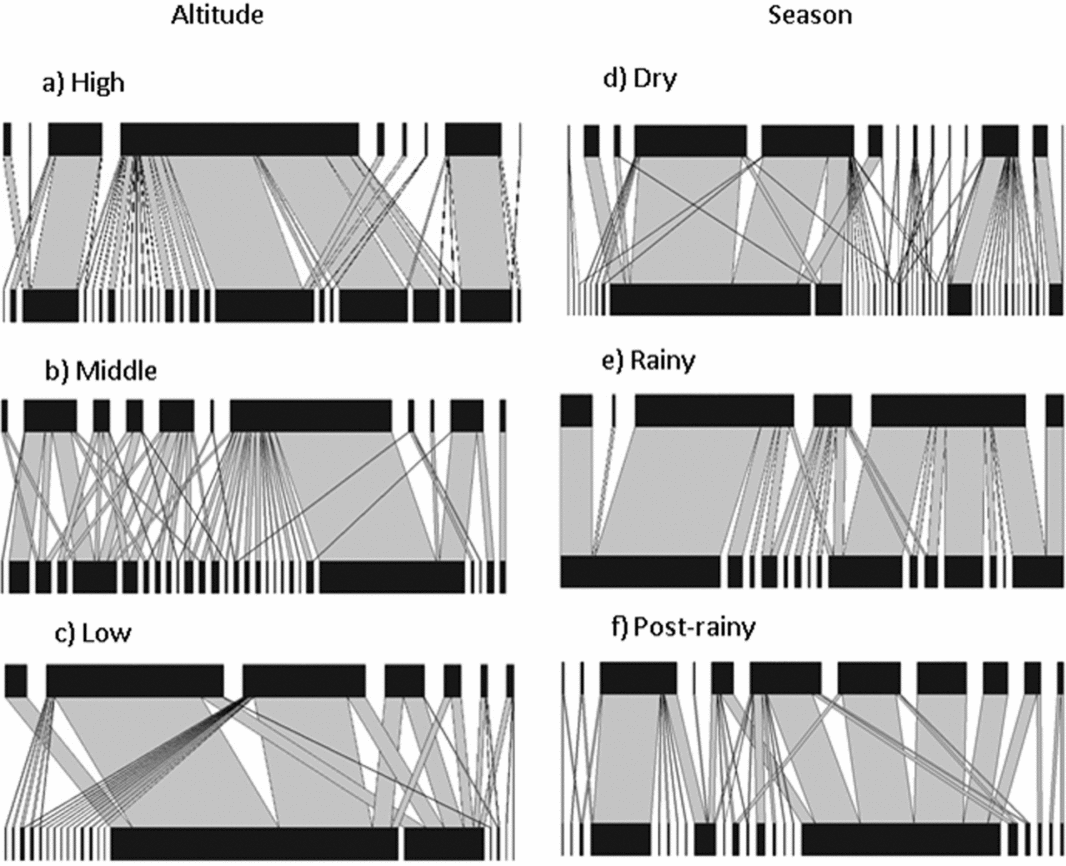
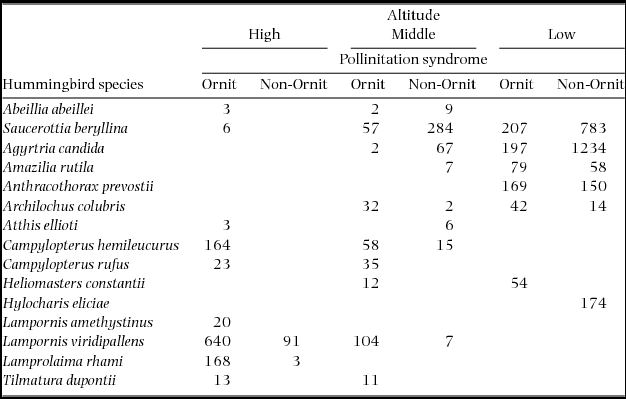
Hummingbirds visited the greatest number of plant species at the middle altitudes (n = 28), while the lowest number of plant species was visited in low altitudes (n = 20; Table 1; Figure 3a–c). Nevertheless, the highest number of hummingbird visits to plants was recorded at low altitudes (F2,126 = 6.5, P < 0.0001; average: high = 19.9 visits per plant individual, middle = 16.1, and low = 61.3). At middle altitudes, hummingbirds visited more ornithophilous species (n = 17, e.g. Triumfetta speciosa and Cuphea nitidula; Appendix 1) than non-ornithophilous species (n = 11, e.g. Inga densiflora), but the number of hummingbird visits to non-ornithophilous plants was higher at this altitude (F1,38 = 9.9, P = 0.003; Table 1). At low altitudes, the number of visits to plant species was the same for the two syndromes (n = 10 non-ornithophilous plants and n = 10 ornithophilous plants). However, non-ornithophilous plants received a greater number of visits (F1,36 = 781, P < 0.0001; Table 1). In contrast, hummingbirds visited a higher number of ornithophilous plants at high altitudes (n = 22, e.g. Fuchsia paniculata and Stenostephanus monolophus) than at the other altitudes, and more interactions involved ornithophilous than non-ornithophilous plants (F1,52 = 498, P < 0.0001; Table 1, Appendix 1).
Ecological networks of plant–hummingbird interactions by altitude and season in El Triunfo Biosphere Reserve, Chiapas, Mexico. Nodes in the upper section of each diagram represent hummingbird species, and those in the lower section represent plant species. Grey lines represent interactions between or among species, and the thickness of the line indicates the number of times in which a hummingbird species was recorded interacting with a plant.

Variation in the use of plants with flowers with season
Throughout the study period, hummingbirds visited more ornithophilous plant species (n = 54) than non-ornithophilous species (n = 25; Table 1). During the dry season, more plant species with flowers were available (n = 40), and hummingbirds visited 26 ornithophilous plant species (e.g. Heliconia adflexa) and 14 non-ornithophilous species (e.g. Inga densiflora). However, they visited non-ornithophilous species more times (F1,66 = 1008, P < 0.0001; Appendix 2). Compared with the dry-season baseline, the plant–hummingbird ecological interactions (number of plant species visited by hummingbirds) decreased by 35% and 52% during the rainy and post-rainy seasons, respectively (Figure 3d–f). Most of the plant species visited by hummingbirds were ornithophilous in both seasons (e.g. Fuchsia paniculata, Malvaviscus arboreus and Cuphea nitidula; rainy season: F1,24 = 104, P < 0.0001; post-rainy season: F1,36 = 448, P < 0.0001; Table 1).
From the post-rainy season to the dry season, non-ornithophilous tree species such as Handroanthus impetiginosus and Schizolobium parahyba flowered in great numbers, and they were visited by several hummingbird species. Six hummingbird species (83 individuals) and passeriform bird species (e.g. Cyanerpes cyaneus) visited Handroanthus impetiginosus (n = 2), and 151 individuals from five hummingbird species visited Schizolobium parahyba (n = 6).
Core and periphery species in the networks
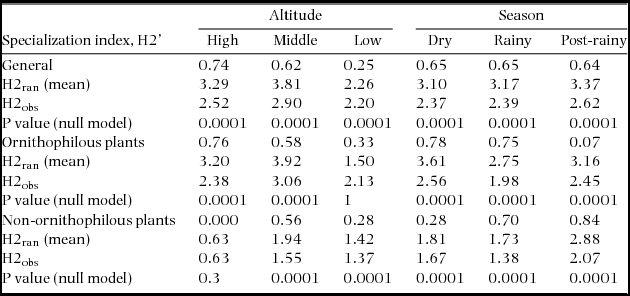
The hummingbirds distributed at high altitudes exhibited the highest level of specialization towards plants, regardless of their pollination syndrome (H2′ = 0.74; Table 2), but they also had the highest level of specialization towards ornithophilous plants (H2′ = 0.76). In contrast, the networks of plant–hummingbird interactions at low altitudes were generalist in their use of flowers of both non-ornithophilous (H2′ = 0.28) and ornithophilous plants (H2′= 0.33; Table 2). The level of specialization of hummingbirds in the plant-hummingbird interaction networks did not vary among seasons (H2′ = 0.6), and the levels of hummingbird specialization towards ornithophilous plants were similarly high during the dry and rainy seasons (H2′ = 0.78 and 0.75, respectively; Table 2).
Specialization and generalization values for the use of floral resources by hummingbirds along an altitude gradient ranging from 300 to 2500 m asl over three seasons in El Triunfo Biosphere Reserve, Chiapas, Mexico.

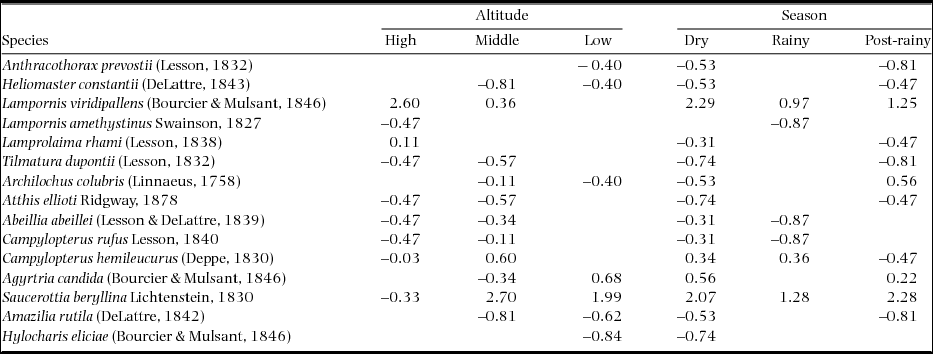
Of the 15 hummingbird species recorded in this study, only two, namely, the berylline hummingbird (Saucerottia beryllina; n = 138 individuals) and the green-throated mountain-gem (Lampornis viridipallens; n = 89 individuals), were considered to be core generalist species. Saucerottia beryllina was the core species in the assemblages at middle and low altitudes, while L. viridipallens was the core species at high altitudes. These two species were consistently generalist during the three seasons (Appendix 3). The core species S. beryllina was involved in more interactions at middle altitudes (Gc = 2.7) than at low altitudes (Gc = 2.0) during the entire study period, and this difference was most evident during the post-rainy season (Gc = 2.3). Lampornis viridipallens was the only core species at high altitudes (Gc = 2.6) during the dry (Gc = 2.9) and post-rainy seasons (Gc = 1.2). The peripheral species at high altitudes were violet sabrewing (Campylopterus hemileucurus; Gc = −0.03) and garnet-throated hummingbird (Lamprolaima rhami; Gc = 0.11, n = 11); those at middle altitudes were ruby-throated hummingbird (Archilochus colubris; Gc = −0.11) and rufous sabrewing (C. rufus; Gc = −0.11); and those at low altitudes were green-breasted mango (Anthracothorax prevostii), plain-capped starthroat (Heliomaster constantii), and ruby-throated hummingbird, each of which had a Gc value of −0.40 (Appendix 3).
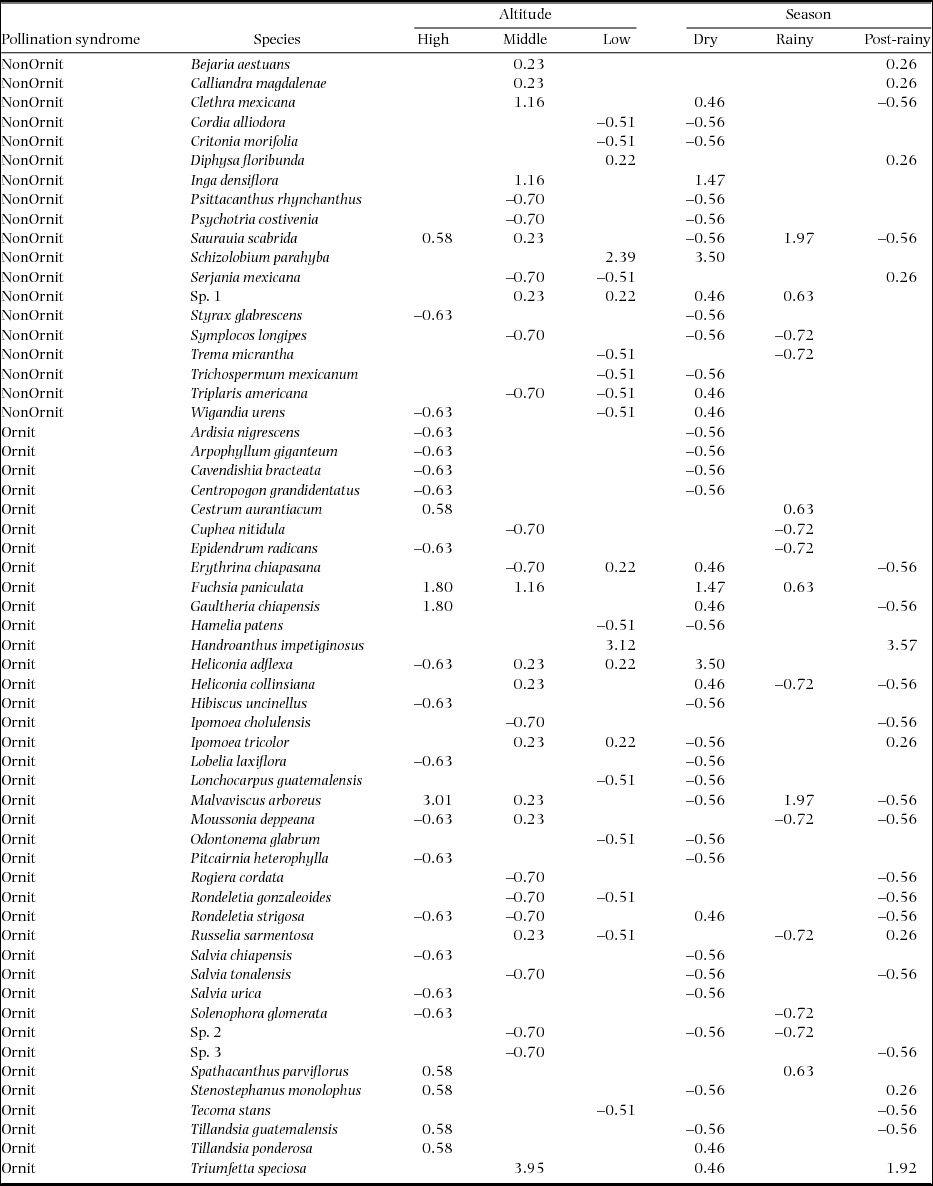
Eleven of the 58 recorded plant species (19.0%) were core generalist species, and all varied across altitudes and seasons. Fuchsia paniculata was the only species in the generalist core at both high altitudes (Gc = 1.8) and middle altitudes (Gc = 1.1). The plant species involved in the greatest number of interactions were Triumfetta speciosa (Gc = 4), Handroanthus impetiginosus (Gc = 3.6), Schizolobium parahyba (Gc = 3.5) and Malvaviscus arboreus (Gc = 3) (Appendix 4).
DISCUSSION
Our results show how three hummingbird assemblages are structured across different altitudes and seasons in El Triunfo based on their interactions with food resources (plants with flowers) with different pollination syndromes. The relative specialization of species also structures the network (core–peripheral species). We found greater specialization towards plants at high altitudes, where hummingbirds predominantly use ornithophilous flowers.
Previous studies have indicated that non-ornithophilous plants are an important component of plant–hummingbird interaction networks (Araujo & Sazima Reference ARAUJO and SAZIMA2003, Dalsgaard et al. Reference DALSGAARD, MARTÍN GONZÁLEZ, OLESEN, OLLERTON, TIMMERMANN, ANDERSEN and TOSSAS2009, Maruyama et al. Reference MARUYAMA, OLIVEIRA, FERREIRA, DALSGAARD and OLIVEIRA2013), and we found that the variables of altitude and season have important effects on the structures of these networks in El Triunfo Biosphere Reserve. Despite the greater number of ornithophilous plant species compared with non-ornithophilous plant species in the study area during all three seasons, hummingbirds visited non-ornithophilous plants more times than ornithophilous plants. This pattern may be due to variation in flower availability, variation in the amount and quality of nectar, and high competition for resources at each site, which create generalist or specialist effects in the use of resources (Arizmendi & Ornelas Reference ARIZMENDI and ORNELAS1990, Buzato Reference BUZATO2000, Herrera Reference HERRERA1988).
The highest numbers of ornithophilous plants used by the hummingbird species and individuals were recorded at high altitudes and during the dry season. Montane forests with high precipitation are characterized by plant species with downward-facing tubular flowers that avoid nectar dilution and are characteristic of ornithophilous syndrome (Aizen Reference AIZEN2003), and the morphological traits of hummingbirds in these habitats are adapted to the morphology of these flowers (Dalsgaard et al. Reference DALSGAARD, MARTÍN GONZÁLEZ, OLESEN, OLLERTON, TIMMERMANN, ANDERSEN and TOSSAS2009, Maglianesi et al. Reference MAGLIANESI, BLÜTHGEN, BÖHNING-GAESE and SCHLEUNING2014, Stiles Reference STILES2008). In contrast, at low altitudes in a tropical dry-forest ecosystem that is characterized by marked seasonality, non-ornithophilous plants were principally used by generalist hummingbird species during the dry season. This result has also been found in other plant–hummingbird interaction networks in which a reduction in the number of ornithophilous plant species obliges hummingbirds to visit plants with characteristics adapted to other pollinators, such as insects and bats (Araujo & Sazima Reference ARAUJO and SAZIMA2003, Arizmendi & Ornelas Reference ARIZMENDI and ORNELAS1990, Dalsgaard et al. Reference DALSGAARD, MARTÍN GONZÁLEZ, OLESEN, OLLERTON, TIMMERMANN, ANDERSEN and TOSSAS2009). However, non-ornithophilous plant species in Brazilian savannas have been documented to attract hummingbirds even when ornithophilous plants are at their flowering peak; hummingbirds visit plants with either syndrome at similar number of visits due to the high caloric contents of the nectar and abundance of flowers (Maruyama et al. Reference MARUYAMA, OLIVEIRA, FERREIRA, DALSGAARD and OLIVEIRA2013), indicating that hummingbirds behave in a generalist manner because they must obtain nectar regardless of the pollination syndrome of the plants (Maruyama et al. Reference MARUYAMA, OLIVEIRA, FERREIRA, DALSGAARD and OLIVEIRA2013). In contrast, plants seek to assure their pollination by modifying the form and chemical activity of their flowers as well as by varying the volume of nectar and sucrose produced to attract effective pollinators. Such adaptations in plants may occur over the course of a few days or longer periods of time, potentially leading to evolutionary changes in their pollinators and pollination syndrome (Kessler et al. Reference KESSLER, DIEZEL and BALDWIN2010, Waser et al. Reference WASER, CHITTKA, PRICE, WILLIAMS and OLLERTON1996).
Due to their abundant flowers, the tree species occurring throughout El Triunfo, such as Handroanthus impetiginosus (Bignoniaceae) and Schizolobium parahyba (Fabaceae), are important year-round for the overall community of nectivorous birds. During the period that such tree species flowered, seasonal migrant hummingbird species to Mexico, including Anthracothorax prevostii and Agyrtria candida, were detected in the study area in addition to the resident hummingbird species. Further studies of plant populations that analyse nectar composition and the abundances of the key ornithophilous and non-ornithophilous plant species may lead to a better understanding of the effects of variation in the selection of flowers by hummingbirds over space and time as well as the effects of such specialization towards certain flowers on the structures of plant–animal networks (Abrahamczyk & Kessler Reference ABRAHAMCZYK and KESSLER2010, Cotton Reference COTTON2007).
The specialization and generalization of plants and animals in mutualist networks are due to the life history traits of the species, their abundances, and their phenology and phylogeny as well as the past and current environmental conditions. All these factors are specific to each site and season and generate distinct patterns, as has been observed in several mutualistic ecological networks (Benadi et al. Reference BENADI, HOVESTADT, POETHKE and BLÜTHGEN2014, Junker et al. Reference JUNKER, BLÜTHGEN, BREHM, BINKENSTEIN, PAULUS, SCHAEFER and STANG2013, Martín González et al. Reference MARTÍN GONZÁLEZ, DALSGAARD, NOGUÉS-BRAVO, GRAHAM, SCHLEUNING, MARUYAMA, ABRAHAMCZYK, ALARCÓN, ARAUJO, ARAÚJO, AZEVEDO, BAQUERO, COTTON, INGVERSEN, KOHLER, LARA, GUEDES LAS-CASAS, MACHADO, MACHADO, MAGLIANESI, MCGUIRE, MOURA, OLIVEIRA, OLIVEIRA, ORNELAS, DA CRUZ RODRIGUES, ROSERO-LASPRILLA, RUI, SAZIMA, TIMMERMANN, VARASSIN, VIZENTIN-BUGONI, WANG, WATTS, RAHBEK and MARTINEZ2015, Vázquez et al. Reference VÁZQUEZ, BLÜTHGEN, CAGNOLO and CHACOFF2009). For example, networks of plant–hummingbird or plant–insect interactions show strong specialization and even co-evolution, especially in mountainous biomes, whereas generalized mutualistic networks predominate in lowlands, particularly those at high latitudes. Furthermore, in other zones with high species richness and high temperatures (tropical areas), plant–insect and plant–hummingbird networks have been shown to be highly specialized, and the degree of specialization has even been shown to be similar across latitudes and altitudes (Dalsgaard et al. Reference DALSGAARD, MAGÅRD, FJELDSÅ, MARTÍN GONZÁLEZ, RAHBEK, OLESEN, OLLERTON, ALARCÓN, ARAUJO, COTTON, LARA, MACHADO, SAZIMA, SAZIMA, TIMMERMANN, WATTS, SANDEL, SUTHERLAND and SVENNING2011, Olesen & Jordano Reference OLESEN and JORDANO2002, Maglianesi et al. Reference MAGLIANESI, BLÜTHGEN, BÖHNING-GAESE and SCHLEUNING2014). In our sampling sites, the plants and hummingbirds in the interaction networks at high and middle altitudes were more specialized, so our hypothesis of greater specialization with increasing altitude was supported. The specialization and generalization of flower use by hummingbirds are mechanisms that allow for the coexistence of species across the altitude gradient (Maglanesi et al. Reference MAGLIANESI, BLÜTHGEN, BÖHNING-GAESE and SCHLEUNING2015). The high specialization values obtained at high and middle altitudes may be due to the ecosystems at these altitudes supporting the highest species richness values for plants and hummingbirds (Table 1). A high level of species richness may generate greater niche availability, thereby promoting specialization (Dalsgaard et al. Reference DALSGAARD, MAGÅRD, FJELDSÅ, MARTÍN GONZÁLEZ, RAHBEK, OLESEN, OLLERTON, ALARCÓN, ARAUJO, COTTON, LARA, MACHADO, SAZIMA, SAZIMA, TIMMERMANN, WATTS, SANDEL, SUTHERLAND and SVENNING2011, Martín González et al. Reference MARTÍN GONZÁLEZ, DALSGAARD, NOGUÉS-BRAVO, GRAHAM, SCHLEUNING, MARUYAMA, ABRAHAMCZYK, ALARCÓN, ARAUJO, ARAÚJO, AZEVEDO, BAQUERO, COTTON, INGVERSEN, KOHLER, LARA, GUEDES LAS-CASAS, MACHADO, MACHADO, MAGLIANESI, MCGUIRE, MOURA, OLIVEIRA, OLIVEIRA, ORNELAS, DA CRUZ RODRIGUES, ROSERO-LASPRILLA, RUI, SAZIMA, TIMMERMANN, VARASSIN, VIZENTIN-BUGONI, WANG, WATTS, RAHBEK and MARTINEZ2015), but it may also increase intra- and interspecific competition, thereby reducing niche overlap (Junker et al. Reference JUNKER, BLÜTHGEN, BREHM, BINKENSTEIN, PAULUS, SCHAEFER and STANG2013, Olesen & Jordano Reference OLESEN and JORDANO2002).
Due to competition between species, hummingbirds play different roles in the structure of ecological networks over space and time; some behave in a territorial manner while other species are non-territorial (Arizmendi & Ornelas Reference ARIZMENDI and ORNELAS1990, Stiles Reference STILES2004). Individuals of S. beryllina aggressively guarded flowers from intraspecific and interspecific competition (e.g. A. candida). Alternately, other species, such as A. colubris, sought nectar along a route over which dispersed flowers were available (i.e. using the traplining feeding strategy). The territorial or non-territorial behaviours of these species may vary due to variation in the availability of flowers and the arrival of other species (Arizmendi & Ornelas Reference ARIZMENDI and ORNELAS1990).
Regardless of the season or pollination syndrome, plant–hummingbird interactions presented the same specialization value. In addition to the richness of plant species in mutualist networks, the abundance of flowers may be a very important factor determining the structure of interaction networks (Abrahamczyk & Kessler Reference ABRAHAMCZYK and KESSLER2010, Benadi et al. Reference BENADI, HOVESTADT, POETHKE and BLÜTHGEN2014). Likewise, hummingbird species may be specialists in a given season or altitude but demonstrate flexibility by choosing other resources when necessary (Bender et al. Reference BENDER, KISSLING, BÖHNING-GAESE, HENSEN, KÜHN, WIEGAND, DEHLING and SCHLEUNING2017). The lowest species richness of plants with flowers was recorded during the rainy season, but some plants, such as Fuchsia paniculata and Saurauia scabrida, provided abundant nectar and fruit sap as food for hummingbirds during this season. Considering the pollination syndrome of the plants involved in plant–hummingbird interactions, the level of specialization of the hummingbirds varied from one season to another. The phenological variation in plants and nectar availability strongly influence hummingbird visitation to plants. For instance, when there is high resource availability in the flowers of both syndromes, hummingbirds forage in a generalist manner (Elzinga et al. Reference ELZINGA, ATLAN, BIERE, GIGORD, WEIS and BERNASCONI2007, Lange et al. Reference LANGE, DÃTTILO and DEL-CLARO2013). Therefore, the generalist species with high abundances and territorial behaviours in the study area, such as Lampornis viridipallens (232 ind. km−2, Partida-Lara et al. Reference PARTIDA-LARA, ENRIQUEZ, VÁZQUEZ PÉREZ and PINEDA DIEZ DE BONILLA2018) and Saucerottia beryllina (118 ind. km−2, Partida-Lara et al. Reference PARTIDA-LARA, ENRIQUEZ, VÁZQUEZ PÉREZ and PINEDA DIEZ DE BONILLA2018), influence the plant–hummingbird network dynamic, limiting the access of other hummingbird species to resources. Studies of other networks of ecological interactions have shown that the structure of a mutualist network is partially determined by the abundance of individuals and the generalist behaviour of the species involved (DuPont et al. Reference DUPONT, HANSEN and OLESEN2003, Stang et al. Reference STANG, KLINKHAMER and VAN DER MEIJDEN2007, Vázquez et al. Reference VÁZQUEZ, MELIÁN, WILLIAMS, BLÜTHGEN, KRASNOV and POULIN2007). These generalist (core) species interact with a large number of species more times than do specialist (periphery) species, exerting a greater effect on the network and creating connections between many nodes and sub-groups in the network, sometimes generating co-evolutionary dynamics (Bascompte et al. Reference BASCOMPTE, JORDANO and OLESEN2006, Guimarães et al. Reference GUIMARÃES, JORDANO and THOMPSON2011, Jordano et al. Reference JORDANO, BASCOMPTE and OLESEN2003).
Our study provides empirical evidence regarding the few generalist or core species in these networks. Core species are better competitors than other species because of advantageous biological and ecological adaptations (Dãttilo et al. Reference DÃTTILO, GUIMARÃES and IZZO2013, Lange et al. Reference LANGE, DÃTTILO and DEL-CLARO2013), but those plant species comprising the generalist core vary over space and time as a result of variation in their phenological processes (Olesen et al. Reference OLESEN, STEFANESCU and TRAVESET2011). Such phenological changes in plants, as well as the availability of nectar, may cause the number of core hummingbird species to remain constant but cause their species composition to vary throughout the seasons and over the years (Rico-Gray et al. Reference RICO-GRAY, DÍAZ-CASTELAZO, RAMÍREZ-HERNÁNDEZ, GUIMARÃES and HOLLAND2012).
This study demonstrates the importance of non-ornithophilous plants to hummingbird assemblages in El Triunfo Biosphere Reserve. Hummingbird assemblages that specialize in the use of certain plants depend on environmental conditions, the availability and variety of food (or species richness), and the territorial or traplining behaviour of species across altitudes and seasons. The composition of the core and periphery networks in the hummingbird assemblage was constant across altitudes and seasons due to the high abundance and generalist behaviour of the species. In contrast, the core and peripheral networks in plant species varied based on changes in phenology over the course of the year. More research is needed to better understand the long-term mechanisms that influence species interactions and how communities are structured in fragmented ecosystems and under accelerated change.
ACKNOWLEDGEMENTS
We are grateful to all the volunteers for their assistance with fieldwork as well as the rural community of Tres de Mayo of the municipality of Mapastepec for supporting us in the field and allowing us to work on their land. We would also like to thank the CONANP park rangers and directors of El Triunfo Biosphere Reserve for their logistical support during the fieldwork. Jack Eitniear and Tomasz B. Falkowski provided suggestions that improved the English version of this manuscript, and we are grateful to a reviewer for comments that substantially improved this paper. This study was supported by ECOSUR through its financial resources and the PROCER 2014 project as well as the scholarship provided to the first author (CONACyT 378019).
Plant species visited by hummingbirds according to their pollination syndrome (Ornit: ornithophilous plants; NonOrnit: non-ornithophilous plants) at three altitudes: high (>2000–2500 m asl), middle (>1000–2000 m asl) and low (300–1000 m asl) in El Triunfo Biosphere Reserve, Chiapas, Mexico.

Number of times in which a hummingbird species was recorded interacting with a plant with different floral syndrome at three altitudes from February 2015 to March 2016 in El Triunfo Biosphere Reserve, Chiapas, Mexico. The pollination syndrome: Ornit = ornithophilous plants; NonOrnit =: non-ornithophilous plants).

Gc core-periphery values for the 15 hummingbird species found in El Triunfo Biosphere Reserve, Chiapas, Mexico.

Gc core-periphery values for the 58 plant species found in El Triunfo Biosphere Reserve, Chiapas, Mexico. Core and peripheral plant species in the networks of plant–hummingbird interactions were identified using the equation Gc = (ki−kaverage)/σk. Those species with Gc values > 1 make up the generalist core, and species with Gc values < 1 make up the periphery of the networks (Dãttilo et al. Reference DÃTTILO, GUIMARÃES and IZZO2013). The pollination syndrome is identified for each plant species (Ornit: ornithophilous plants; NonOrnit: non-ornithophilous plants).