




No CrossRef data available.
Article contents
Questing height of nymphs of the bush tick, Haemaphysalis longicornis, and its closely related species, H. mageshimaensis: correlation with body size of the host
Published online by Cambridge University Press: 06 May 2004
Abstract
The questing height (i.e. ambush height) of ticks on a plant plays an important role in host selection. To test the hypothesis that the questing height of ticks in a locality had adapted to the body size of the host in that locality, we examined the questing height of nymphs of the ticks, Haemaphysalis longicornis and H. mageshimaensis, at 7 locations in Japan. Sika deer, Cervus nippon, is the primary host of these ticks and there is considerable geographical variation in the body size of sika deer. Multiple regression analysis revealed that the questing height in the field was influenced by the height of the plants and by the body size of deer at a location. However, the questing height of ticks at some locations may have been constrained by the height of the plants and might not be the same as their intrinsic questing height. When ticks were placed in vertical glass tubes in the laboratory, the questing height of ticks from a locality was correlated with the mean body size of deer at that locality. Therefore, the prominent cue determining the questing height of H. longicornis and H. mageshimaensis seems to be the body size of the host deer.
Keywords
Information
- Type
- Research Article
- Information
- Copyright
- 2004 Cambridge University Press
INTRODUCTION
Adaptation of parasites to their local hosts is a common phenomenon, although it is not universal (Kaltz & Shykoff, 1998). In order to determine whether the differentiation of hosts and parasites observed in the field has resulted from a process of adaptation, it is useful to study the geographical pattern of adaptation. Foster & Endler (1999) stated that the typical method of inferring the adaptive value of a behaviour is to examine associations between character states within populations and the environmental factors to which the populations are exposed. In parasitology, only a few attempts have been made in determining the function of location in parasites (Rea & Irwin, 1994). The behavioural adaptation of parasites can be divided into two categories according to whether a particular adaptation is independent of the actual presence of the host or not (Combes et al. 1994). When a particular adaptation is dependent on the actual presence of a host, the localization of the host in the space (e.g. home range) should be critical to the parasite. Thus, location of a host and successful attachment to the host would influence the survival and reproduction of parasites.
Some ixodid ticks climb a plant from the ground where they had hatched or moulted, reach a certain height on a stem or leaf, and wait for contact with a host that passes by the plant. Questing height (i.e. ambush height) is a major factor in the selection of host animals. The western fence lizard, Sceloporus occidentalis, is the primary host of subadults of the western black-legged tick, Ixodes pacificus, and nymphs of the tick quest from the undersides of leaf litter or below the surface of the soil (Lane, Kleinjan & Schoeler, 1995). In contrast, the mean questing height of I. pacificus adults is 55 cm above ground level, which corresponds to the body size of their hosts which are deer and other medium-sized to large mammals (Loye & Lane, 1988).
It is known that there is geographical variation in the body size of sika deer (Ohtaishi, 1986). If the questing height of ticks is a type of local adaptation, the questing height of ticks in a particular locality would be associated with the body size of their primary host in that locality. In other words, there should be geographical variation in the questing height of ticks according to the body size of deer in each region. It has been demonstrated that kairomones released by antelope or deer play an important role in the decision of the questing site of ticks (Rechav et al. 1978; Carroll, Klun & Schmidtmann, 1995). Since there is geographical variation in the body size of sika deer, the height of the scent mark of deer may vary according to body size. In order to determine whether the questing height of ticks is constant or not, we examined the questing height of nymphs of Haemaphysalis longicornis and H. mageshimaensis at 7 different locations in Japan. Subsequently, nymphs from each of the 7 locations were brought to the laboratory, and we examined the chosen questing height of the nymphs under standardized laboratory conditions in the absence of environmental cues.
MATERIALS AND METHODS
Biology of Haemaphysalis longicornis and H. mageshimaensis
The bush tick, Haemaphysalis longicornis, is found in Japan, Korea, Russia, China, Australia, New Zealand, New Caledonia and Fiji (Hoogstraal et al. 1968). H. longicornis consist of races that are either bisexual or parthenogenetic, although some may be both (Oliver, Tanaka & Sawada, 1973). H. longicornis is a three-host tick and parasitizes medium- and large-sized mammals at each life-stage. Sika deer is the dominant host of H. longicornis out of the 9 species of medium- and large-sized mammals on Boso Peninsula (Tsunoda, unpublished data). Nymphs and adults of H. longicornis are found in vegetation from spring to summer, and most of the larvae occur in the summer (Namba, 1958; Kakuda, Shiraishi & Uchida, 1990).
H. mageshimaensis is also a three-host tick and is a member of the H. bispinosa subgroup that consists of davisi, luzonensis, longicornis, mageshimaensis, and yeni (Saito & Hoogstraal, 1973). H. mageshimaensis has been recorded on Mageshima Island which is located approximately 30 km south of Kyushu Island of Japan, in tropical southeastern China, in Taitung Hsien of southeastern Taiwan and on the islands near the Taitung coast, and its hosts are medium- and large-sized mammals (Hoogstraal & Santana, 1974).
Localities and methods
Figure 1 shows a map of the 7 localities in which we collected samples of H. longicornis and H. mageshimaensis nymphs. The field study was conducted in 6 of the locations from April (Mageshima Island, southernmost location) to June (Nakanoshima Island, northernmost location) of 1999 and in the Tanzawa Mountains in March 2000. For each tick found on plants that were examined, we recorded the plant species, and the height of the plant and questing height as measured with a ruler. The ticks were collected directly by hand and brought to the laboratory to identify the species and stage. In addition to capture by hand, ticks were collected by the flagging method (Sonenshine, 1993), in which unfed ticks were sampled by a large sheet of fabric attached to a long handle, for use in the laboratory experiment. The ticks were reared under controlled conditions of 25 °C and a photo-period of 14 h light[ratio ]10 h dark in the laboratory. Preliminary research showed that H. mageshimaensis ticks were collected only on Mageshima Island and H. longicornis ticks occurred in other localities. H. longicornis males were collected only on Boso Peninsula.

Fig. 1. Map of the localities where populations of Haemaphysalis longicornis and H. mageshimaensis were sampled with the 3-month (April–June) average temperature and precipitation in 1995–1999, and HFL. HFL indicates the average hind foot length of fully-grown male deer. Nakanoshima Island is one of four islands in Lake Toya, Hokkaido Island. (1) Kaji (2001); (2) Takatsuki (1998); (3) Takatsuki, Minami & Ohnishi (1992); (4) Koganezawa, Inui & Kitahara (1986); (5) Ochiai & Asada (1995); (6) Hayama et al. (1994); (7) Tatsuzawa, unpublished data. The sample size in which the HFL had been measured is shown in parentheses; the data of (2) and (3) were calculated from the figures reported by Takatsuki (1998) and Takatsuki, Minami & Ohnishi (1992).
In order to examine the effect of climatic factors on the questing height of H. longicornis and H. mageshimaensis nymphs during their active periods, the average temperature and precipitation over the 3-month period of April–June in 1995–1999 (Amedas climatic data supplied by the Japan Meteorological Agency) at each location were used as the climatic indices, because the questing behaviour of some ticks is affected by meteorological factors (Lees, 1948; Loye & Lane, 1988). As to the body size of deer, we used the hind foot length, i.e. the length from the most distal point of the hoof to the most proximal point of the calcaneus, as the index since it varies less than other morphological characteristics with the season (Mitchell, McCowan & Nicholson, 1976) or after death. Data on the hind foot length of fully grown males over 3 years of age were used because other male ungulates have been found to harbour more ticks than females and the prevalence of moderate-to-severe tick infestation is higher on adults than on limbs in ungulates (Gallivan et al. 1995; Mooring, McKenzie & Hart, 1996). We used measurements on deer that had been live-captured on Nakanoshima Island (Kaji, 2001) and Kinkazan Island (Takatsuki, Minami & Ohnishi, 1992), deer that had been culled in Mt. Goyo (Takatsuki, 1998) and Boso Peninsula (Ochiai & Asada, 1995), deer that had been rescued in Mt. Tanzawa (Hayama et al. 1994), and deer that had died naturally in Ashio Mts. (Koganezawa, Inui & Kitahara, 1986) and Mageshima Island (Tatsuzawa, unpublished data).
Laboratory experiment
In order to measure the questing height of each nymph in the laboratory and to avoid any effect of the observer's breath on the nymph's behaviour, each nymph was placed in a glass tube (inner diameter 7 mm, height 180 cm) (McMahon & Guerin, 2002). A wad of cotton was plugged at each end of the tube to prevent the escape of the tick. The cotton of the lower vent was soaked in water to keep moisture inside the tube because H. longicornis are vulnerable to desiccation (Fujimoto, 1988; Yano, Shiraishi & Uchida, 1988). A third wad of cotton was placed 3 cm above the lower vent to prevent the tick from becoming trapped in the soaked cotton. A preliminary experiment showed that there was a gradient of relative humidity (RH) from 100% RH over the lower cotton to the same RH as the RH in the room under the upper cotton. One nymph was placed in each tube to prevent intraspecific interaction since H. longicornis usually form clusters (Namba, 1958). The tubes were placed in a vertical position. The questing height of the tick was observed once in the morning during the consecutive 3 days. The experiments were carried out at 25 °C under a 14 h light[ratio ]10 h dark photo-period within 4 months after sampling of ticks.
Statistical analysis
We examined the relationship between the questing height of 6 H. longicornis and 1 H. mageshimaensis populations and 4 physical variables: average temperature over the 3-month period of April–June, precipitation over the 3-month period of April–June, height of plants and hind foot length of deer. To test the significance of a correlation coefficient, we performed Spearman rank-order correlation. Furthermore, the Kruskal–Wallis test was used to compare the questing height of ticks between localities. In order to predict the questing height of ticks, a test of the best predictors of the questing height was conducted by stepwise multiple regression analysis using questing height as the dependent variable and environmental factors as independent variables. Only variables from models that fulfilled regression assumptions were entered (p-to-enter=0·25; p-to-remove=0·10). Analyses were performed using the JMP statistical package (2001; SAS Institute, Cary, NC).
RESULTS
Table 1 shows the plant species, the mean height of the plants, the number of ticks, and the average questing height of ticks at the 7 localities. As there were very few ticks except on eulalia, Miscanthus sinensis, in a preliminary study at Kinkazan, only eulalia plants were investigated there. H. longicornis or H. mageshimaensis was found on at least 3 species of plants in each of the other 6 localities. ANOVA analysis showed that there was a significant difference in the height of the plants at the 7 localities (F6,479=15·82, P<0·001). The height of the plants at Mt. Goyo, Kinkazan Island and Boso Peninsula were significantly higher than that at the other 4 localities (Tukey–Kramer's HSD test: P<0·05). The height of the plants at Nakanoshima and Tanzawa Mts. were significantly lower than that at Ashio Mts. and Mageshima Island (Tukey–Kramer's HSD test: P<0·05). The questing height of nymphs in the field significantly differed among the 7 localities (Kruskal–Wallis test: P<0·001).

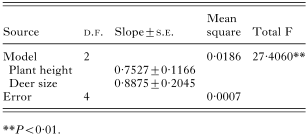
Using bivariate correlation analysis, preliminary data analysis of the tick populations at the 7 localities revealed a significant positive correlation between the plant height at a locality and the questing height in the field of ticks at that locality (Spearman rank order test: N=7, rs=0·79, P<0·05) (Fig. 2). Other variables (average temperature, three-month precipitation, hind foot length) were not significantly correlated with questing height. Multiple regression analysis revealed that the best model explaining the questing height of nymphs in the field incorporated the height of the plants and hind foot length of deer in a locality (R2=0·93; Table 2). In the model, the questing height of ticks in the field tended to be higher as the height of the plants and hind foot length of deer increased.

Fig. 2. Scatterplot of plant height versus questing height of ticks in the field at the seven localities. Data are expressed as mean±S.E.
The questing height in the laboratory of nymphs that had been obtained from the 7 locations, is summarized in Table 3. Although the questing height in the laboratory tended to be lower than that in the field, there was a significant difference in the questing height of ticks obtained from the 7 localities (Kruskal–Wallis test: P<0·05). Bivariate correlation analysis of the 7 tick populations revealed a positive correlation between the hind foot length of deer in a locality and the questing height of ticks that had been obtained from that locality (Spearman rank order test: N=7, rs=0·93, P<0·01) (Fig. 3). The average temperature, three-month precipitation, and the height of plants at a collection site tended to be negatively correlated with the questing height of ticks that had been obtained at that site, although not significantly. Employing the maximum R2 improvement technique, the best single-variable model included hind foot length, which accounted for 68·21% (coefficient of determination: R2=0·6821) of the observed variability (F1,5=10·73, P<0·05). Therefore, the questing height of ticks in the laboratory as well as in the field covaried with the hind foot length of deer.

Fig. 3. Scatterplot of the hind foot length of fully grown male deer at a locality versus the intrinsic questing height of ticks in the tube that had been obtained at that locality. Data are expressed as mean±S.E. Data points with an asterisk showed no S.E. (or S.D.) for the hind foot length in the respective references.

DISCUSSION
The data from our field study showed that (1) the questing height of H. longicornis nymphs in the field showed geographical variation; (2) the questing height of ticks in the field in a locality was significantly associated with both the height of the plants and the body size of deer in that locality; and (3) plant height was the most influential factor on the questing height of ticks in the field by bivariate correlation analysis. This suggests that questing height might be constrained by the height of the plants in some locations.
When sika deer were introduced into a new region where there was an excellent food supply and no natural predators, the number of sika deer increased dramatically to a high density and then it decreased to a low density (Kaji, Koizumi & Ohtaishi, 1988). The size of dwarf bamboo, an important forage plant for sika deer, has decreased as a result of long-term grazing (Takatsuki, 1980). In Boso Peninsula, negative effects of deer grazing on vegetation (e.g. the maximum plant height and coverage) were seen in the areas where deer density was high (Tsunoda, unpublished data). Under the laboratory conditions in which ticks could climb higher than the height of the plants at the collection site, the questing height chosen by the ticks was closely correlated with the hind foot length of deer, but not with the height of the plants at their home locality. It has been demonstrated that grazing of deer has indirect effects on many invertebrates (Stewart, 2001). Therefore, it is reasonable to assume that ticks in these localities cannot reach their intrinsic questing height.
Regarding the bush tick, H. longicornis, Tsunoda & Mori (2000) showed that the questing height of nymphs was at a certain height irrespective of the plant species and height of the plant, suggesting that the questing height of this species allowed the tick easily to attach to its primary host, sika deer Cervus nippon. The fact that tick nymphs respond to deer kairomones (Carroll et al. 1995) further supports the suggestion that the questing height of ticks in the field is related to the body size of deer in that locality. Our results in the field support this hypothesis. Furthermore, the laboratory experiment showed that the questing height of ticks from a locality covaried with the body size of deer in that locality. It may be presumed that the questing height of ticks is under the control of not only external (environmental) factors such as the host scent, but also intrinsic (genetic) factors that had adapted to the body height of the host in that locality.
Our experiments showed that the questing height in the laboratory tended to be lower than the questing height in the field. Vegetational effects on relative humidity occur from the level of a leaf to that of a community (Pianka, 1978). The leaves and stems of plants seem to be a less dry habitat for ticks than the glass tube, because unfed ticks have a thickness within 1 mm and the relative humidity in vegetation is modified by plants. It seems reasonable to assume that in the laboratory experiment, individual ticks that were weak to the stress of water deficiency were attracted to the lower wad soaked with water, although there was no significant correlation between the questing height in the laboratory and the level of precipitation in the locality from which the ticks had been obtained.
Interspecific variation in host-finding behaviour is seen in ticks and trematodes. Different species of cercariae show different responses to light or gravity and, as a result, migrate up or down in the water to match the spatial distribution of their target hosts (Combes et al. 1994). Besides H. mageshimaensis on Mageshima Island, bisexual H. longicornis populations occur on Boso Peninsula and parthenogenetic H. longicornis populations are present in other localities (Kitaoka, 1961). The results of our study clearly show that there is geographical variation in the questing height of bisexual and parthenogenetic populations of H. longicornis and the population of H. mageshimaensis. Thus, our data showed that there was intraspecific variation, as well as interspecific variation, in the host-finding behaviour of ticks.
In conclusion, our results clearly show that there is geographical variation in the questing height of nymphs of H. longicornis and H. mageshimaensis. The questing height in the field is most likely determined by the body size of the deer in that locality, and the height of the plants in that locality may restrict expression of the intrinsic questing height of ticks.
We would like to thank T. Ito, S. Takatsuki, M. Minami, and N. Ohnishi for their support in the field research, and T. Kozai for assistance in measuring the relative humidity in the glass tube. We wish to thank K. Ochiai for providing valuable advice for this research, and H. Amano and Y. Yasui for reading our draft and giving us useful comments. We also thank K. Kaji and M. Koganezawa, M. Hayashi and T. Ishii for providing reference data on deer, and the Miho Dam Management Office of Kanagawa Prefecture for providing local climatic data. We followed the ABS/ASAB guidelines for the ethical treatment of animals.
References
REFERENCES
CARROLL, J. F.,
KLUN, J. A. &
SCHMIDTMANN, E. T.
(1995).
Evidence for kairomonal influence on selection of host-ambushing sites by adult Ixodes scapularis (Acari: Ixodidae).
Journal of Medical Entomology 32, 119–125.CrossRefGoogle Scholar
COMBES, C.,
FOURNIER, A.,
MONÉ, H. &
THÉRON, A.
(1994).
Behaviours in trematode cercariae that enhance parasite transmission: patterns and processes.
Parasitology 109 (Suppl.), S3–S13.CrossRefGoogle Scholar
FOSTER, S. A. &
ENDLER, J. A.
(1999).
Geographic Variation in Behavior.
Oxford University Press,
New York/Oxford.
FUJIMOTO, K.
(1988).
Ecological studies on ixodid ticks. 5. The effect of humidity on the oviposition and development of Haemaphysalis longicornis and H. flava (Acarina: Ixodidae).
Japanese Journal of Sanitary Zoology 39, 27–33.Google Scholar
GALLIVAN, G. J.,
CULVERWELL, J.,
GIRDWOOD, R. &
SURGEONER, G. A.
(1995).
Ixodid ticks of impala (Aepyceros melampus) in Swaziland: effect of age class, sex, body condition and management.
South African Journal of Zoology 30, 178–186.CrossRefGoogle Scholar
HAYAMA, S.,
FURUBAYASHI, K.,
MITANI, N. &
YAMANE, M.
(1994).
Regression of bamboo grass in the Tanzawa Mountains and the status of sika deer.
WWF Japan Science Report 2, 21–47. (In Japanese with English summary.)Google Scholar
HOOGSTRAAL, H.,
ROBERTS, H. S.,
KOHLS, G. M. &
TIPTON, V. J.
(1968).
Review of Haemaphysalis (Kaiseriana) longicornis Neumann (resurrected) of Australia, New Zealand, New Caledonia, Fiji, Japan, Korea, and northeastern China and USSR, and its parthenogenetic and bisexual populations (Ixodoidea, Ixodidae).
Journal of Parasitolgy 54, 1197–1213.CrossRefGoogle Scholar
HOOGSTRAAL, H. &
SANTANA, F. J.
(1974).
Haemaphysalis (Kaiseriana) mageshimaensis (Ixodoidea: Ixodidae): human and wild and domestic mammal hosts, and distribution in Japan, Taiwan, and China.
Journal of Parasitology 60, 866–869.CrossRefGoogle Scholar
JAPAN METEOROLOGICAL AGENCY (2000).
Climatic Atlas of Japan.
Tokyo,
The Japan Meteorological Agency.
KALTZ, O. &
SHYKOFF, J. A.
(1998).
Local adaptation in host–parasite systems.
Heredity 81, 361–370.CrossRefGoogle Scholar
KAKUDA, H.,
SHIRAISHI, S. &
UCHIDA, T.
(1990).
Seasonal fluctuations of populations and effects of temperatures on development and growth in the tick, Haemaphysalis flava.
Journal of the Faculty of Agriculture, Kyushu University 35, 17–26.Google Scholar
KAJI, K.
(2001).
Population dynamics and population characteristics of sika deer on Nakanoshima Island, Lake Toya. 1In
Researches on Conservation and Management of Ezo sika deer in Hokkaido, 1996–2000(ed. Hokkaido Government), pp. 9–17. Hokkaido Government, Sapporo. (in Japanese.)
We arbitrarily applied English titles to these references.
KAJI, K.,
KOIZUMI, T. &
OHTAISHI, N.
(1988).
Effects of resource limitation on the physical and reproductive condition of Sika deer on Nakanoshima Island, Hokkaido.
Acta Theriologica 33, 187–208.CrossRefGoogle Scholar
KITAOKA, S.
(1961).
Physiological and ecological studies on some ticks. VII. Parthenogenetic and bisexual races of Haemaphysalis bispinosa in Japan and experimental crossing between them.
The National Institute of Animal Health Quaterly 1, 142–149.Google Scholar
KOGANEZAWA, M.,
INUI, T. &
KITAHARA, M.
(1986).
Body weight and external carcass measurements of sika deer (Cervus nippon Temminck) in Nikko-Ashio Mountains, Tochigi Prefecture, Japan.
Memoirs of Tochigi Prefectural Museum 4, 29–53. (In Japanese with English summary.)Google Scholar
LANE, R. S.,
KLEINJAN, J. E. &
SCHOELER, G. B.
(1995).
Diel activity of nymphal Dermacentor occidentalis and Ixodes pacificus (Acari: Ixodidae) in relation to meteorological factors and host activity periods.
Journal of Medical Entomology 32, 290–299.CrossRefGoogle Scholar
LEES, A. D.
(1948).
The sensory physiology of the sheep tick, Ixodes ricinus L.
The Journal of Experimental Biology 25, 145–207.Google Scholar
LOYE, J. E. &
LANE, R. S.
(1988).
Questing behavior of Ixodes pacificus (Acari: Ixodidae) in relation to meteorological and seasonal factors.
Journal of Medical Entomology 25, 391–398.CrossRefGoogle Scholar
McMAHON, C. &
GUERIN, P. M.
(2002).
Attraction of the tropical bont tick, Amblyomma variegatum, to human breath and to the breath components acetone, NO and CO2.
Naturwissenschaften 89, 311–315.Google Scholar
MITCHELL, B.,
McCOWAN, D. &
NICHOLSON, I. A.
(1976).
Annual cycles of body weight and condition in Scottish Red deer, Cervus elaphus.
Journal of Zoology 180, 107–127.CrossRefGoogle Scholar
MOORING, M. S.,
McKENZIE, A. A. &
HART, B. L.
(1996).
Role of sex and breeding status in grooming and total tick load of impala.
Behavioral Ecology and Sociobiology 39, 259–266.CrossRefGoogle Scholar
NAMBA, N.
(1958).
Ecological studies on Haemaphysalis bispinosa, a harmful tick in the pasture of northern Japan.
Research Bulletin of the Hokkaido National Agricultural Experiment Station 50, 1–99. (In Japanese with English summary.)Google Scholar
OCHIAI, K. &
ASADA, M.
(1995).
Growth in the body size of sika deer (Cervus nippon) on the Boso Peninsula, central Japan.
Journal of the Natural History Museum and Institute, Chiba 3, 223–232. (In Japanese with English summary.)Google Scholar
OHTAISHI, N.
(1986).
Preliminary memorandum of classification, distribution and geographic variation on Sika deer.
Mammal Science 53, 13–17. (In Japanese.)Google Scholar
OLIVER Jr., J. H.,
TANAKA, K. &
SAWADA, M.
(1973).
Cytogenetics of ticks (Acari: Ixodoidea). 12. Chromosome and hybridization studies of bisexual and parthenogenetic Haemaphysalis longicornis races from Japan and Korea.
Chromosoma 42, 269–288.Google Scholar
PIANKA, E. R.
(1978).
Evolutionary Ecology,
2nd Edn.
Harper and Row,
New York.
REA, J. G. &
IRWIN, S. W.
(1994).
The ecology of host-finding behavior and parasite transmission: past and future perspectives.
Parasitology 109 (Suppl.),
S31–S39.Google Scholar
RECHAV, Y.,
NORVAL, R. A. I.,
TANNOCK, J. &
COLBORNE, J.
(1978).
Attraction of the tick Ixodes neitzi to twigs marked by the klipspringer antelope.
Nature, London 275, 310–311.CrossRefGoogle Scholar
SAITO, Y. & HOOGSTRAAL, H.
(1973).
Haemaphysalis (Kaiseriana) mageshimaensis sp.n. (Ixodoidea: Ixodidae), a Japanese deer parasite with bisexual and parthenogenetic reproduction.
Journal of Parasitology 59, 569–578.Google Scholar
SONENSHINE, D. E.
(1993).
Biology of Ticks, vol. 2. Oxford University Press, Oxford/New York.
STEWART, A. J. A.
(2001).
The impact of deer on lowland woodland invertebrates: a review of the evidence and priorities for future research.
Forestry 74, 259–270.CrossRefGoogle Scholar
TAKATSUKI, S.
(1980).
The effects of sika deer (Cervus nippon) on the growth of Pleioblastus chino.
Japanese Journal of Ecology 30, 1–8.Google Scholar
1TAKATSUKI, S.
(1998).
Individual analysis of sika deer. In
Research Reports on Sika Deer on Mt. Goyo, Northern Honshu (ed. Takatsuki, S.
), pp. 31–39.
Iwate Government,
Morioka. (In Japanese.)
1TAKATSUKI, S.,
MINAMI, M. &
OHNISHI, N.
(1992).
External measurement of sika deer on Kinkazan Island. In
Research Reports on Live Capturing of Sika Deer on Kinkazan Island, Northern Japan
(ed. Takatsuki, S.), pp. 16–24.
Faculty of Science, Tohoku University, Sendai. (In Japanese.)
TSUNODA, T. &
MORI, K.
(2000).
No distributional association between the tick Haemaphysalis longicornis (Acari: Ixodidae) and plant surface area.
Ecological Research 15, 357–359.CrossRefGoogle Scholar
YANO, Y.,
SHIRAISHI, S. &
UCHIDA, T. A.
(1988).
Effects of humidity on development and growth in the tick, Haemaphysalis longicornis.
Journal of the Faculty of Agriculture, Kyushu University 32, 141–146.Google Scholar
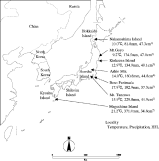
Fig. 1. Map of the localities where populations of Haemaphysalis longicornis and H. mageshimaensis were sampled with the 3-month (April–June) average temperature and precipitation in 1995–1999, and HFL. HFL indicates the average hind foot length of fully-grown male deer. Nakanoshima Island is one of four islands in Lake Toya, Hokkaido Island. (1) Kaji (2001); (2) Takatsuki (1998); (3) Takatsuki, Minami & Ohnishi (1992); (4) Koganezawa, Inui & Kitahara (1986); (5) Ochiai & Asada (1995); (6) Hayama et al. (1994); (7) Tatsuzawa, unpublished data. The sample size in which the HFL had been measured is shown in parentheses; the data of (2) and (3) were calculated from the figures reported by Takatsuki (1998) and Takatsuki, Minami & Ohnishi (1992).
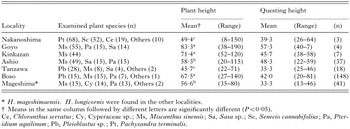
Table 1. Surveyed plant species and their average height, and questing height of Haemaphysalis longicornis and H. mageshimaensis at seven localities
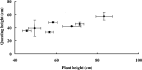
Fig. 2. Scatterplot of plant height versus questing height of ticks in the field at the seven localities. Data are expressed as mean±S.E.
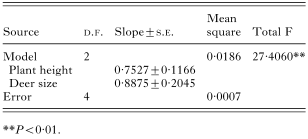
Table 2. The whole model table (P<0·05) compared with the model that omits all regressor effects except the intercepts to predict the questing height of ticks in the field
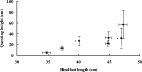
Fig. 3. Scatterplot of the hind foot length of fully grown male deer at a locality versus the intrinsic questing height of ticks in the tube that had been obtained at that locality. Data are expressed as mean±S.E. Data points with an asterisk showed no S.E. (or S.D.) for the hind foot length in the respective references.
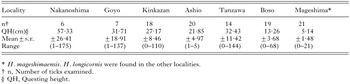
Table 3. Questing height of Haemaphysalis longicornis and H. mageshimaensis collected at seven localities in the laboratory on the third day after the experiment
 You have
Access
- 21
- Cited by