The family environment during adolescence is important for the development of health and well-being. Considerable research efforts have uncovered the critical influences of early life experiences in families on trajectories of psychopathology and physiological profiles (e.g., biological risk; Cicchetti & Rogosch, Reference Cicchetti and Rogosch2012; McLaughlin, Reference McLaughlin2016; McLaughlin, Sheridan, Alves, & Mendes, Reference McLaughlin, Sheridan, Alves and Mendes2014). Fewer studies have examined how qualities of the family environment, ranging from perceptions of parental and family support to normative daily experiences with family, are associated with indicators of physiological stress processes in adolescence. LatinoFootnote 1 youth and families tend to place strong emphasis on the family (e.g., familism values; Sabogal, Marin, Otero-Sabogal, Marin, & Perez-Stable, Reference Sabogal, Marin, Otero-Sabogal, Marin and Perez-Stable1987) and engage in frequent family assistance and supportive behaviors (Suárez-Orozco & Suárez-Orozco, Reference Suárez-Orozco and Suárez-Orozco1995; Telzer & Fuligni, Reference Telzer and Fuligni2009a). Further, the cultural values of family unity and support have been shown to generally promote positive outcomes for Latino youth (Fuligni, Tseng, & Lam, Reference Fuligni, Tseng and Lam1999; Suárez-Orozco & Suárez-Orozco, Reference Suárez-Orozco and Suárez-Orozco1995). However, youth who feel responsible for helping their families may be called upon to frequently provide assistance (e.g., sibling care or translating for family members), and these behaviors have been associated with more maladaptive immunological profiles and greater risk for internalizing and substance use for some Latino youth (e.g., Fuligni et al., Reference Fuligni, Telzer, Bower, Irwin, Kiang and Cole2009; Telzer, Gonzales, & Fuligni, Reference Telzer, Gonzales and Fuligni2014).
Building on emerging theoretical and empirical evidence emphasizing the importance of understanding culture–biology interplay (Causadias, Reference Causadias2013; Causadias, Telzer, & Lee, Reference Causadias, Telzer and Lee2017), we proposed to examine cultural family factors as either promotive factors or indicators of risk. Cultural promotive factors are those that directly influence positive well-being in youth, regardless of exposure to adversity, while cultural risk factors include individual- or context-level processes that increase the odds of poor outcomes (Causadias, Reference Causadias2013). Little research has examined how varying promotive factors and potential risks in the family environment simultaneously are associated with typical physiological stress regulation. Scholars have called for more research on how culturally shaped family experiences become embedded within developing adolescents (Fuligni & Telzer, Reference Fuligni and Telzer2013).
One potential mediator of associations between culturally based family experiences and subsequent adolescent outcomes is hypothalamic–pituitary–adrenal (HPA) axis activity, given research demonstrating family and early life influences on HPA function (e.g., Cicchetti & Rogosch, Reference Cicchetti and Rogosch2012; Miller, Chen, & Zhou, Reference Miller, Chen and Zhou2007; Repetti, Taylor, & Seeman, Reference Repetti, Taylor and Seeman2002) as well as studies showing the prospective prediction of subsequent psychopathology and physical health from indicators of HPA axis reactivity and diurnal patterns (e.g., Adam et al., Reference Adam, Vrshek-Schallhorn, Kendall, Mineka, Zinbarg and Craske2014, Reference Adam, Quinn, Tavernier, McQuillan, Dahlke and Gilbert2017; Kumari, Shipley, Stafford, & Kivimaki, Reference Kumari, Shipley, Stafford and Kivimaki2011; Vrshek-Schallhorn et al., Reference Vrshek-Schallhorn, Doane, Mineka, Zinbarg, Craske and Adam2013). The HPA axis is one of the body's primary stress response systems and is particularly activated by socially evaluative stressors that involve a lack of control (Dickerson & Kemeny, Reference Dickerson and Kemeny2004). In short, through a cascade of hormone events beginning in the hypothalamus, activation of the HPA axis results in the release of cortisol into the bloodstream. Beyond reactivity, cortisol is released throughout the day in a typical diurnal pattern characterized by relatively high levels at waking, a dramatic increase approximately 30 min after waking (cortisol awakening response; 50%–156%, Clow, Thorn, Evans, & Hucklebridge, Reference Clow, Thorn, Evans and Hucklebridge2004; Stalder et al., Reference Stalder, Kirschbaum, Kudielka, Adam, Pruessner, Wüst and Clow2016), then a general decrease across the day with lowest levels in the late evening hours (Adam & Kumari, Reference Adam and Kumari2009). The indices commonly used to characterize this diurnal pattern include waking or bedtime levels, the cortisol awakening response, the diurnal slope (linear rate of decline in cortisol levels from waking to bedtime), and the diurnal area under the curve with respect to ground (Pruessner, Kirschbaum, Meinlschmid, & Hellhammer, Reference Pruessner, Kirschbaum, Meinlschmid and Hellhammer2003). Among Latino adults, indicators of HPA axis activity (e.g., cortisol awakening response) have mediated associations between various cultural stressors and physical health (García, Wilborn, & Mangold, Reference Garcia, Wilborn and Mangold2017).
In the current study, we took the first step toward understanding whether Latinos’ family-related promotive cultural values (e.g., familism values) and potential family-based cultural risks (e.g., family assistance behaviors) were associated with typical functioning of the HPA axis in adolescence. This endeavor is especially critical in Latino populations as they are the fastest growing and youngest ethnic minority group in the United States (US Census Bureau, 2015). Further, Latinos are at greater risk than other ethnic groups for the development of internalizing symptoms and risk-taking behaviors in adolescence (e.g., Centers for Disease Control and Prevention, 2016; Johnston, O'Malley, Bachman, & Schulenberg, Reference Johnston, O'Malley, Bachman and Schulenberg2012; Roberts, Roberts, & Chen, Reference Roberts, Roberts and Chen1997). Understanding such associations during adolescence is particularly important given increasing demands across academic, peer, and family domains (Burnett, Sebastian, Kadosh, & Blakemore, Reference Burnett, Sebastian, Kadosh and Blakemore2011; Padilla, McHale, Rovine, Updegraff, & Umaña-Taylor, Reference Padilla, McHale, Rovine, Updegraff and Umaña-Taylor2016) and evidence that both psychosocial and physiological stress reactivity increase during this developmental period (Dahl & Gunnar, Reference Dahl and Gunnar2009; Gunnar, Wewerka, Frenn, Long, & Griggs, Reference Gunnar, Wewerka, Frenn, Long and Griggs2009; Stroud et al., Reference Stroud, Foster, Papandonatos, Handwerger, Granger, Kivlighan and Niaura2009). Further, older adolescents take a more active role in their own cultural development as they mature cognitively and socially (Bernal, Knight, Garza, Ocampo, & Cota, Reference Bernal, Knight, Garza, Ocampo and Cota1990), which can result in more complex processes of cultural adaptation as they gain autonomy to explore the world outside their home and choose how to spend their time (Knight, Jacobson, Gonzales, Roosa, & Saenz, Reference Knight, Jacobson, Gonzales, Roosa, Saenz, Dalla, DeFrain, Johnson and Abbott2009). Finally, both theoretical and empirical evidence suggests the basis for adult health and well-being may start during adolescence, more broadly (Del Giudice, Ellis, & Shirtcliff, Reference Del Giudice, Ellis and Shirtcliff2011; Ellis, Oldehinkel, & Nederhof, Reference Ellis, Oldehinkel and Nederhof2017; Viner et al., Reference Viner, Ozer, Denny, Marmot, Resnick, Fatusi and Currie2012). Thus, the present study examined the role of the family in the everyday lives of Latino adolescents by investigating value-based perceptions of the family and family support as potential cultural promotive factors, as well as daily proximal family processes (e.g., family assistance behaviors) as cultural risk behaviors in relation to daily diurnal patterns of the HPA axis.
Risk and Resilience of Cultural Neurobiology
This study was informed by recent movements to examine culture and biology interplay across development (Causadias, Reference Causadias2013; Causadias et al., Reference Causadias, Telzer and Lee2017), which include studies that examine cultural effects on biological systems. We were specifically guided by the cultural neurobiology framework (Doane, Sladek, & Adam, Reference Doane, Sladek, Adam, Causadias, Telzer and Gonzalez2018), which encompasses moment-to-moment, day-to-day, year-to-year, or ontological transactions among cultural processes and central and peripheral aspects of neurobiology. For example, some research has shown that culture and biology interact from moment to moment or day to day as individuals react emotionally and physiologically to their everyday environments (e.g., Sladek & Doane, Reference Sladek and Doane2015; Smart Richman, Pek, Pascoe, & Bauer, Reference Smart Richman, Pek, Pascoe and Bauer2010).
There has also been strong movement among researchers who study ethnic minority youth and families to take a positive, strengths-based approach to understanding both risk and resilience processes (Fuller & García Coll, Reference Fuller and Garcia Coll2010; Gonzales, Germán, & Fabrett, Reference Gonzales, Germán, Fabrett, Chang and Downey2012; Neblett, Rivas-Drake, & Umaña-Taylor, Reference Neblett, Rivas-Drake and Umaña-Taylor2012). Rather than examining adaptive and promotive factors that encourage positive development, much research on Latino health and stress has focused either on ethnic comparative models that accentuate health disparities or solely on cultural experiences or contexts that confer risk (e.g., discrimination or acculturative stress; Gallo, Penedo, Espinosa de los Monteros, & Arguelles, Reference Gallo, Penedo, Espinosa de los Monteros and Arguelles2009). Researchers have also called for an understanding of culture in daily life and examining culture within the microsystem of an ecological model to better understand the transactional nature of cultural pathways, including daily proximal developmental processes (Vélez-Agosto, Soto-Crespo, Vizcarrondo-Oppenheimer, Vega-Molina, & García Coll, Reference Vélez-Agosto, Soto-Crespo, Vizcarrondo-Oppenheimer, Vega-Molina and Garcia Coll2017). Scholars have argued that cultural traditions and values are transmitted through the practices, communications, and relationships of daily life, so we must measure and acknowledge such proximal daily processes in the study of culture (Markus & Kitayama, Reference Markus and Kitayama2010; Rogoff, Reference Rogoff2003; Weisner, García Coll, & Chatman-Nelson, Reference Weisner, García Coll, Chatman-Nelson, Kreider, Lopez, Weiss and Chatman-Nelson2010). As such, this study aimed to understand the influences of culture from this framework by examining not only cultural values, perceptions, and behaviors but also day-to-day cultural experiences identified as meaningful particularly for Latino youth.
Given the Latino cultural emphasis on the role of the family and the interdependence of individuals within a family, we focused on understanding promotive resources like familism values and parental support as well as identified risk processes (e.g., family assistance behaviors) for Latino youth. While familism encompasses family values and relationships distinguished by closeness, support, and positive interactions (Campos, Ullman, Aguilera, & Dunkel Schetter, Reference Campos, Ullman, Aguilera and Dunkel Schetter2014; Sabogal et al., Reference Sabogal, Marin, Otero-Sabogal, Marin and Perez-Stable1987), family assistance behaviors are daily activities that support family life, including running errands for the family, sibling care, cooking, and housework (Telzer & Fuligni, Reference Telzer and Fuligni2009a). Scholars have argued for the need to incorporate culturally linked family and close relationship processes into the study of health (Campos & Kim, Reference Campos and Kim2017). Following Fuligni and Telzer's (Reference Fuligni and Telzer2013) emphasis on understanding the neurobiological correlates of helping the family, and Campos and Kim's (Reference Campos and Kim2017) model to understand how culture influences relationship-health processes, we examined the role of the family in the everyday lives of Latino adolescents through an investigation of daily proximal family processes (e.g., family assistance behaviors) as well as value-based cognitions and perceptions of the family and family support in relation to daily diurnal patterns of HPA axis function.
Familism Values and Latino Adolescent Development
Familism values are characterized by three primary components: family support (i.e., desirability to maintain close relationships), family obligations (i.e., the importance of instrumental caregiving), and family as referent (i.e., defining the self in terms of community or family; Knight et al., Reference Knight, Gonzales, Saenz, Bonds, Germán, Deardorff and Updegraff2010; Sabogal et al., Reference Sabogal, Marin, Otero-Sabogal, Marin and Perez-Stable1987). While most research has focused on understanding how familism values can confer protection for Latino youth in the face of risk (e.g., cultural protection or stress-buffering; Stein et al., Reference Stein, Cupito, Mendez, Prandoni, Huq and Westerberg2014), such values have also been directly associated with well-being and better physical health (e.g., promotive factors; Corona, Campos, & Chen, Reference Corona, Campos and Chen2017). For example, Schwartz et al. (Reference Schwartz, Weisskirch, Hurley, Zamboanga, Park, Kim and Greene2010) found that prioritizing the family was highly correlated with self-esteem, life satisfaction, and overall well-being in a diverse sample of college students. Researchers have argued that familism values promote health and well-being by emphasizing the benefits of family support and relationships (Campos et al., Reference Campos, Ullman, Aguilera and Dunkel Schetter2014; Gonzales, Jensen, Montaño, & Wynne, Reference Gonzales, Jensen, Montaño, Wynne, Caldera and Lindsey2015).
Accumulating research evidence has also demonstrated that higher familism values promote well-being for Mexican-origin adolescents, demonstrated by associations with lower levels of risk-taking behaviors (Wheeler et al., Reference Wheeler, Zeiders, Updegraff, Umaña-Taylor, Rodríguez de Jesús and Perez-Brena2017), externalizing symptoms (Kapke, Grace, Gerdes, & Lawton, Reference Kapke, Grace, Gerdes and Lawton2017), and internalizing symptoms and disorders (e.g., Corona, Rodríguez, et al., Reference Corona, Rodríguez, Mcdonald, Velazquez, Rodríguez and Fuentes2017; Kline, Killoren, & Alfaro, Reference Kline, Killoren and Alfaro2016; Zeiders et al., Reference Zeiders, Updegraff, Umaña-Taylor, Wheeler, Perez-Brena and Rodríguez2013; for meta-analysis across all age groups see Valdivieso-More, Peet, Garnier-Villarreal, Salazar-Villanea, & Johnson, Reference Valdivieso-Mora, Peet, Garnier-Villarreal, Salazar-Villanea and Johnson2016). Beyond indices of socioemotional and mental health, emerging research has also identified that familism values may promote better physical health and use of physician care in samples of Latino adolescents and young adults (Corona, Campos, et al., Reference Corona, Campos and Chen2017; Updegraff et al., Reference Updegraff, Sally, Kuo, McHale, Umaña-Taylor and Wheeler2017). However, very little research has examined the potential pathways through which familism values may be associated with both physical and mental health, particularly during adolescence. Recent empirical evidence suggests that the HPA axis may be one mediating pathway between experiences of stress and subsequent psychopathology (e.g., Schuler et al., Reference Schuler, Ruggero, Goldstein, Perlman, Klein and Kotov2017; Stroud, Chen, Doane, & Granger, Reference Stroud, Chen, Doane and Granger2018). As such, we hypothesize that familism values may promote better well-being through its promotion of adaptive physiological stress profiles. In addition, to our knowledge, no studies have examined direct pathways between familism values, as a cultural promotive factor, and HPA axis daily functioning. However, one recent study identified that another cultural promotive factor, greater ethnic identity affirmation, was associated with steeper diurnal cortisol slopes in a community sample of Mexican American adolescents (Zeiders, Causadias, & White Reference Zeiders, Causadias and White2018). Given this finding, we hypothesize that familism values may act in a similar culturally promotive way and be associated with healthier diurnal cortisol profiles across the day.
Social Support and Latino Adolescent Well-Being
Familism values have been linked to indices of close and supportive relationship behavior (e.g., Calderón-Tena, Knight, & Carlo, Reference Calderón-Tena, Knight and Carlo2011; Taylor, Larsen-Rife, Conger, & Widaman, Reference Taylor, Larsen-Rife, Conger and Widaman2012; Updegraff, McHale, Whiteman, Thayer, & Delgado, Reference Updegraff, McHale, Whiteman, Thayer and Delgado2005). Further, Campos et al. (Reference Campos, Ullman, Aguilera and Dunkel Schetter2014) found that familism values work through perceived social support and closeness when promoting better adjustment and well-being. The benefits of familism values and social support may also extend to HPA axis activity. A large accumulation of research suggests that general social support and high-quality parenting are associated with more adaptive HPA daily activity and regulation in both lab-based and naturalistic settings in childhood and young adulthood (see Gunnar & Donzella, Reference Gunnar and Donzella2002, for review; Doane & Zeiders, Reference Doane and Zeiders2014; Hostinar, Johnson, & Gunnar, Reference Hostinar, Johnson and Gunnar2015; Shirtcliff, Skinner, Obasi, & Haggerty, Reference Shirtcliff, Skinner, Obasi and Haggerty2017). However, results from a recent meta-analysis suggest that the enduring influences of parental warmth on single time point measures of HPA axis functioning (i.e., morning levels or afternoon levels) are only present for some groups (e.g., maltreated children), and for some indicators of cortisol activity (i.e., morning levels; Hackman, O'Brien, & Zalewski, Reference Hackman, O'Brien and Zalewskiin press).
Most research, however, has focused on how parenting and social support help children, adolescents, and young adults regulate stress (i.e., social buffering of stress; Hostinar et al., Reference Hostinar, Johnson and Gunnar2015) rather than direct relations between perceptions of parental support and typical HPA axis diurnal patterns. For example, several studies of diverse adolescents and young adults have found support for a stress-buffering hypothesis, whereby parental support buffers the effects of salient stressors (e.g., depressive symptoms or discrimination) on physiological stress outcomes (e.g., Brody et al., Reference Brody, Lei, Chae, Yu, Kogan and Beach2014; Guan et al., Reference Guan, Bower, Almeida, Cole, Dahl, Irwin and Fuligni2016). However, recent research that examined direct associations in adolescence and young adulthood identified that attachment, bonding, and adolescent-reported positive parenting were associated with higher waking cortisol and steeper diurnal cortisol slopes 6 years later in a sample of African American and European American young adults, with stronger associations for European American young adults (Shirtcliff et al., Reference Shirtcliff, Skinner, Obasi and Haggerty2017). Adolescents who perceive their family to be supportive may have healthier diurnal cortisol patterns due to greater self-regulation, prosocial behavior (e.g., Oberle, Reference Oberle2018), and positive social interactions (e.g., Stetler & Miller, Reference Stetler and Miller2005). Given that adolescence is hypothesized to be a second “sensitive period” for adult health and development (Del Giudice et al., Reference Del Giudice, Ellis and Shirtcliff2011; Ellis et al., Reference Ellis, Oldehinkel and Nederhof2017; Viner et al., Reference Viner, Ozer, Denny, Marmot, Resnick, Fatusi and Currie2012), recent arguments based on allostasis (McEwen, Reference McEwen1998) suggest that higher quality parenting during adolescence may influence the set points for physiological stress processes, similar to those experienced in infancy and early childhood (Shirtcliff et al., Reference Shirtcliff, Skinner, Obasi and Haggerty2017; Steinberg, Reference Steinberg2000). However, research findings are scant and inconsistent regarding the promotive role of parental support in the prediction of physiological stress activity during adolescence, and no studies, to our knowledge, have examined whether parental support predicts HPA axis activity in the daily lives of Latino adolescents.
Daily Family Assistance Behaviors in the Lives of Latino Adolescents
Recent research on the role of the family for Latino adolescents has moved toward understanding daily or proximal cultural processes reflecting calls in the literature for more examinations of cultural behaviors in addition to, or in conjunction with, studies of cultural cognitions (Causadias, Reference Causadias2013). For example, family obligation values may translate into actual behaviors, such as the daily family responsibilities and activities of Latino youth that promote family well-being. These family assistance behaviors, which reflect the instrumental needs of the family, have considerable implications for adolescent psychological well-being including risk for internalizing symptoms (Telzer, Tsai, Gonzales, & Fuligni, Reference Telzer, Tsai, Gonzales and Fuligni2015) and substance use (Telzer et al., Reference Telzer, Gonzales and Fuligni2014). Further, Mexican-origin and other Latino adolescents spend significantly more time assisting family (e.g., sibling care, housework or errands, and directly assisting parents) than Asian or European American adolescents (Telzer & Fuligni, Reference Telzer and Fuligni2009a, Reference Telzer and Fuligni2009b). Research with Latino adolescents suggests that the psychological correlates (e.g., internalizing or substance use) of family assistance behaviors often vary with the temporal needs of the family or other contextual factors, such as maternal stress and parent–child conflict (Telzer et al., Reference Telzer, Tsai, Gonzales and Fuligni2015; Tsai, Telzer, Gonzales, & Fuligni, Reference Tsai, Telzer, Gonzales and Fuligni2013).
Fuligni and Telzer (Reference Fuligni and Telzer2013) have argued for the importance of understanding the neurobiological consequences of family obligation values and family assistance behaviors. Adolescents who found that their family assistance was a positive indicator of role fulfillment had greater neural activation of reward areas of the brain during a task when they chose family over the self (Telzer, Masten, Berkman, Lieberman, & Fuligni, Reference Telzer, Masten, Berkman, Lieberman and Fuligni2010), suggesting the importance of understanding both culturally based family behaviors (e.g., assistance) and culturally based values (e.g., familism values) simultaneously. Other research has identified that family assistance behaviors were associated with higher levels of immune markers (reflecting greater inflammation), including sIL-6r and C-reactive protein (Fuligni et al., Reference Fuligni, Telzer, Bower, Irwin, Kiang and Cole2009); however, this association was attenuated among youth with high levels of family obligation values, thus highlighting the protective role of traditional family-based cultural values. Such studies highlight the potential for multiple levels of interaction between culture and physiological stress processing and the importance of measuring culture broadly (e.g., values) in conjunction with daily cultural behaviors.
In the only study to our knowledge that has examined daily family assistance behaviors and HPA axis activity, Chiang et al. (Reference Chiang, Tsai, Park, Bower, Almeida, Dahl and Fuligni2016) investigated associations among diary-reported family demands and conflict and diurnal cortisol parameters in a diverse sample of adolescents from European, Latino, and Asian backgrounds. They found that greater family demands over a 2-week period were associated with generally lower diurnal cortisol output and cortisol awakening responses, but only among youth with low sleep quality. This provides initial evidence that adolescents’ average or typical degree of assisting the family may be associated with overall lower cortisol output and a blunted cortisol awakening response. However, the study did not explore whether associations between family demands and indices of diurnal cortisol activity varied more specifically from day to day. Given recent evidence that the greatest variance in diurnal cortisol estimates come from state or daily contributions in samples of children and adolescents (e.g., cortisol awakening response: 70%–82%; diurnal slope: 50%–81%; Doane, Chen, Sladek, Van Lenten, & Granger, Reference Doane, Chen, Sladek, Van Lenten and Granger2015; Ross, Murphy, Adam, Chen, & Miller, Reference Ross, Murphy, Adam, Chen and Miller2014), it is possible that significant within-person or day-to-day processes exist. Following other research examining links between specific daily experiences and diurnal cortisol patterns in adolescents (e.g., Hanson & Chen, Reference Hanson and Chen2010; McHale et al., Reference McHale, Blocklin, Walter, Davis, Almeida and Klein2012), we hypothesized that diurnal cortisol patterns may be different following days spent assisting family (compared to days not assisting family), reflecting distinct, proximal cultural processes.
The Present Study
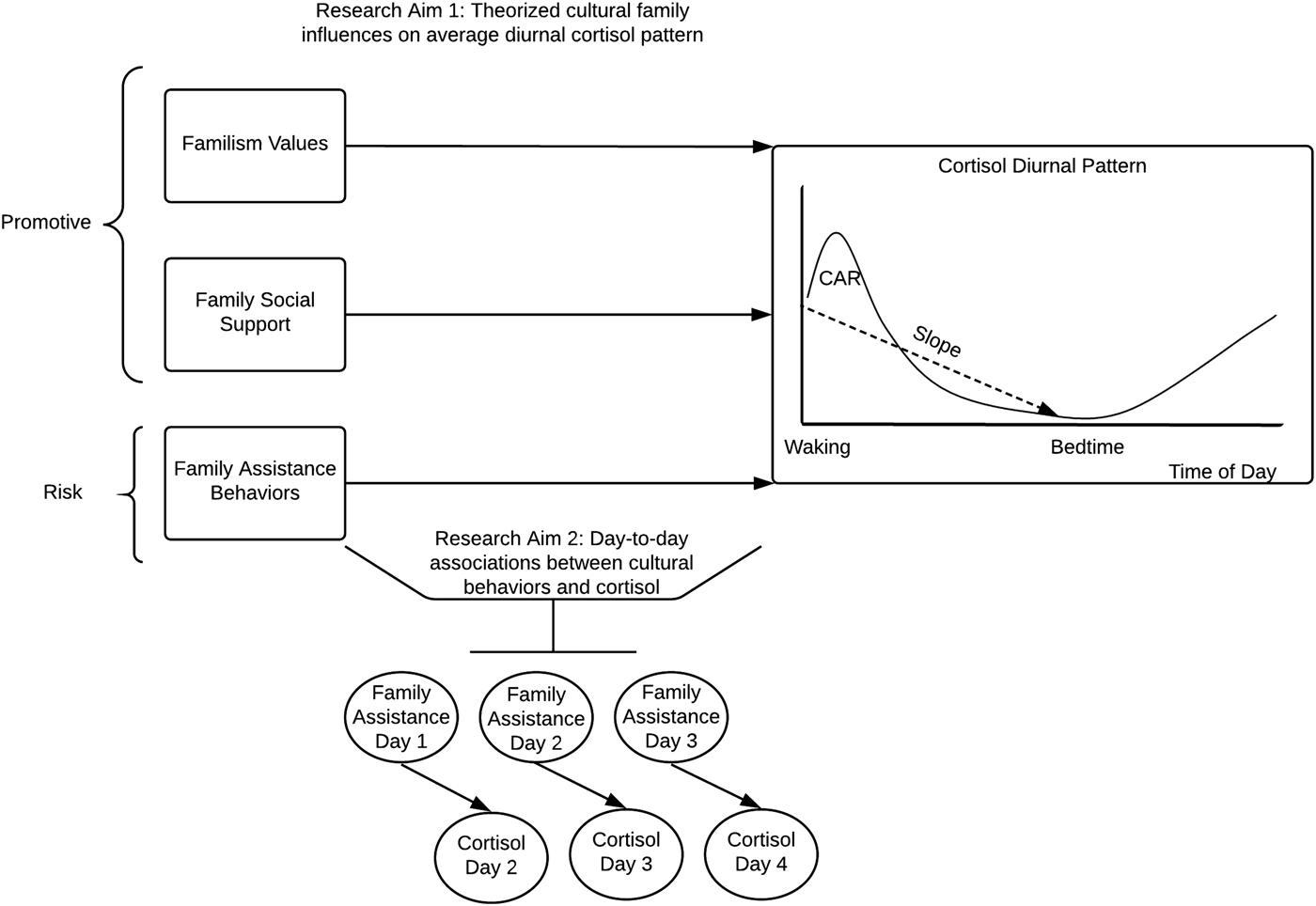
The goal of the present study was to understand how both cultural cognitions and behaviors, including family values, support, and daily life assistance, were associated with Latino adolescents’ typical physiological stress patterns (see Figure 1). Specifically, the first aim of our study was to understand the potentially promotive role of familism values and perceptions of family support in the prediction of daily cortisol activity for Latino adolescents in their senior year of high school who were anticipating college attendance. We assessed whether individual differences in familism values and perceived parental social support were associated with average differences in waking levels, the cortisol awakening response, and the diurnal slope. For the first aim, we hypothesized that higher levels of familism values and greater perceived parental support would be associated with more adaptive diurnal cortisol patterns, including higher waking levels and a steeper diurnal cortisol slope. However, research has found that promotive factors have been associated with both a greater and a smaller cortisol awakening response (e.g., Boggero, Hostinar, Haak, Murphy, & Segerstrom, Reference Boggero, Hostinar, Haak, Murphy and Segerstrom2017; Sladek & Doane, Reference Sladek and Doane2015); therefore, we did not generate directional hypotheses regarding the associations between familism values or perceived parental support and the cortisol awakening response.
Theoretical representation of study research aims illustrating potential cultural promotive and risk influences on diurnal cortisol patterns in the daily lives of Latino adolescents.

The second aim of our study was to explore whether there were day-to-day associations between family assistance behaviors, a potential cultural risk factor, and diurnal cortisol patterns. We examined whether assisting family during the day (compared to days of not assisting family) was associated with differences in multiple components of the diurnal cortisol pattern the next day. Following research that has demonstrated how daily experiences can predict alterations in cortisol and mood the next day (Adam, Hawkley, Kudielka, & Cacioppo, Reference Adam2006; Santiago, Brewer, et al., Reference Santiago, Brewer, Fuller, Torres, Papadakis and Ros2016), our second hypothesis was that cortisol would be lower upon waking, the size of the cortisol awakening response would be smaller, and the diurnal cortisol slope would be flatter (i.e., less negative) following days when adolescents assisted family.
Further, given recent evidence that greater family assistance behaviors were associated with patterns of diurnal cortisol activity for particularly vulnerable youth (e.g., Chiang et al., Reference Chiang, Tsai, Park, Bower, Almeida, Dahl and Fuligni2016), our third aim was to examine whether overall levels of family assistance behaviors across a week of daily diary assessments were associated with indicators of diurnal cortisol activity, on average. For our third aim, we hypothesized that greater levels of overall family assistance would be associated with a smaller cortisol awakening response and flatter diurnal cortisol slope.
Finally, in exploratory analyses, we tested whether differing levels of familism values, perceived parental support, or average family assistance moderated daily associations of family assistance behaviors with next-day diurnal cortisol patterns. Given that these analyses were exploratory, we did not make specific directional predictions.
Method
Participants
Participants were 209 Hispanic/Latino(a) adolescents (M age = 18.10, SD = 0.41; 64.4% female) recruited during the spring of their senior year in high school prior to enrolling at a large university in the southwestern United States as part of an ongoing multimethod longitudinal study of Latino students transitioning to college. Participants were recruited through university orientation sessions, e-mail correspondence, text messages, and phone calls (in English and in Spanish), university and community partnerships, and word of mouth. Bilingual staff was available to answer questions from potential participants or their caregivers. Inclusion criteria required that participants gained acceptance to the university and paid an initial financial deposit or selected to defer payment, were seniors in high school, identified as Hispanic/Latino(a), and lived within 60 miles of the university during their senior year in high school. Two hundred thirty-nine adolescents consented to the study and 209 (87.4%) participated in study procedures (5.9% were ineligible based on inclusion criteria, and 6.7% did not respond to scheduling requests after consent). Participants came from 91 different high schools from the surrounding metropolitan area. All adolescents participated during the spring of their senior year of high school (64.5%) or during the summer prior to college entrance (34.5%).
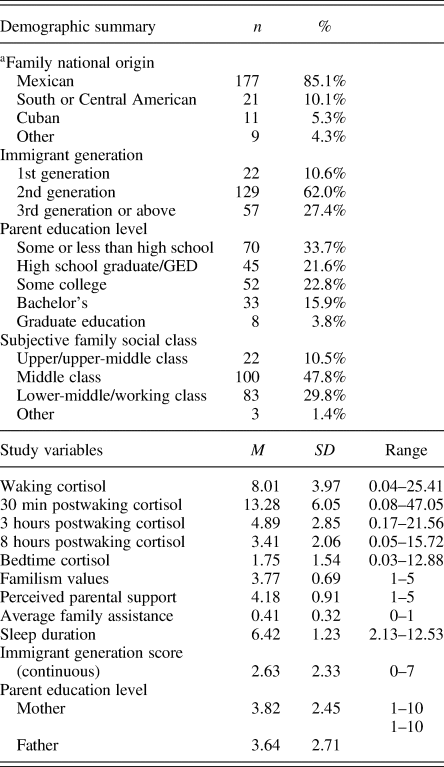
While all participants broadly identified as Hispanic or Latino, most participants specifically identified as being of Mexican (85.1%) or South or Central American (10.1%) descent, and 18.2% identified as biethnic (e.g., Latino(a) and European American; see Table 1). Participants showed a broad range of generational status: 10.6% were first-generation immigrants (born outside the United States), 62.0% were second generation (born in the United States, at least one parent born outside the United States), and 27.4% were third generation or greater (both parents born in the United States; Table 1). Adolescents also reported varying subjective social status (e.g., middle class or working class) and socioeconomic backgrounds as indicated by their parents’ education levels; more than half the sample reported their parents attained a high school degree or less (see Table 1).
Summary of demographic information and study variable descriptive statistics

Note: N = 208. One participant did not provide demographic information. 1st generation, born outside the United States. 2nd generation, born in United States, at least one parent born outside United States. 3rd generation, both parents born in United States. Immigrant generation score: 0 = participant, both parents, and both sets of grandparents born outside United States to 7 = participant, parents, and both sets of grandparents born in United States. Averages of raw cortisol values in nmol/L. Parent education level: 1 = less than high school to 10 = doctorate or advanced degree.
aCould select more than one.
Procedure
The university institutional review board approved all procedures. Depending on participants’ preference, study personnel visited participants’ homes or hosted participants in a university lab to deliver study materials, gather survey responses, and provide instructions regarding saliva sampling and diary reporting procedures. Participants and parents (for participants under the age of 18) provided written consent at the beginning of these visits. Participants also completed a one-time questionnaire, including measures of global familism values and perceived parental support, overall emotional health, and questions about school, family, and friends.
During the following week, participants wore a wrist-based accelerometer (actigraph watch) and completed 4–5 diary entries per day for 7 days (M = 26.57, SD = 4.35). They also provided saliva samples via passive drool for 3 typical weekdays (generally Monday–Wednesday): immediately upon waking (M time = 7:17 a.m.; SD = 1.70 hr), 30 min after waking (M time = 7:50 a.m.; SD = 1.70 hr), twice during the day (approximately 3 hr and 8 hr from the waking sample, designed to avoid mealtimes; M time = 12:21 p.m.; SD = 1.85 hr; and 5:00 p.m.; SD = 1.68 hr) and at bedtime (M time = 11:26 p.m.; SD = 1.45 hr). Participants received daily text message reminders to improve adherence to the study protocol and were encouraged to contact study personnel with any questions throughout the week. At the end of the study week, study personnel returned to participants’ homes to collect completed materials and compensate each participant up to $110 for all study components.
Overall, participants were asked to complete 15 saliva samples (M = 14.56, SD = 1.61; 3,018 total samples) and 29 total diary reports throughout the week (M = 26.57, SD = 4.35). The diary reports on sampling days were designed to correspond with saliva samples (e.g., 15 corresponding reports; M = 13.97; SD = 2.24; 2,877 total corresponding diaries). Participants were instructed not to eat, drink, or brush their teeth an hour prior to saliva sampling. In addition to recording the date and time of each saliva sample, participants retrieved straws used for passive drool from a MEMS 6™ (Aardex) track cap compliance device, which objectively recorded sample time upon opening the track cap. Participants were also instructed to press a button on the actigraph watch each time they completed a saliva sample or diary entry, which served as secondary indicators of bedtimes, wake times, and diary completion. Finally, immediately after providing each saliva sample participants completed brief diary entries using web-based smartphones (or paper-and-pencil if Internet access was not available), which included questions about stressors and behaviors experienced in the last hour or across the day (e.g., family assistance behaviors). Participants also reported recent eating, exercise, caffeine use, nicotine use, medication use, sleep, and pain, which are necessary to examine as potential covariates in cortisol analyses.
Participant report of time on vials, track cap device times, actigraph watch-recorded times, and daily diary times were used to determine compliance with saliva sampling procedures. Noncompliance with saliva sampling procedures has been shown to influence cortisol estimates in prior studies, particularly waking values and the cortisol awakening response (Kudielka, Broderick, & Kirschbaum, Reference Kudielka, Broderick and Kirschbaum2003; Stalder et al., Reference Stalder, Kirschbaum, Kudielka, Adam, Pruessner, Wüst and Clow2016); thus, track cap, actigraph, and self-report data were carefully inspected to determine “compliant” versus “noncompliant” saliva samples (DeSantis, Adam, Mendelsohn, & Doane, Reference DeSantis, Adam, Mendelsohn and Doane2010; Doane & Zeiders, Reference Doane and Zeiders2014). Waking samples were considered compliant if track cap-detected times were within 15 min of participants’ actigraph-detected wake times (79.5% of waking samples). Second samples were considered compliant if track cap-detected times were within 23 to 37 min after track cap-detected times for waking samples (67.4% of second samples). These compliance rates include the more stringent criteria that actigraph or track cap data must be available for samples to be considered compliant (i.e., noncompliance assumed if missing compliance information). Rather than allowing participants’ problems adhering to the protocol to bias estimates of morning cortisol (and the subsequent diurnal rhythm; see Stalder et al., Reference Stalder, Kirschbaum, Kudielka, Adam, Pruessner, Wüst and Clow2016, for recent expert consensus), cortisol values from noncompliant samples were treated as missing data in analyses (10.9% of all samples).
Measures
Salivary cortisol
Participants were instructed to store completed saliva samples in their refrigerator until materials were picked up and returned to the lab (typically 4 days later), where they were stored at –80 °C. After study completion, saliva samples were placed on dry ice and sent via courier across 3 days to Biochemisches Labor at the University of Trier in Germany for assay, which is accordant with recommendations for handling and transporting salivary biomarkers (Granger et al., Reference Granger, Fortunato, Beltzer, Virag, Bright and Out2012). Saliva samples were assayed in duplicate for salivary cortisol using a solid phase time-resolved fluorescence immunoassay with fluorometric endpoint detection (DELFIA; Dressendörfer, Kirschbaum, Rohde, Stahl, & Strasburger, Reference Dressendörfer, Kirschbaum, Rohde, Stahl and Strasburger1992). Besides 9 samples for which only a single assay was possible, the average concentration from both assays was used as the measure of cortisol in nanomoles per liter. Intra-assay coefficient of variation ranged from 4.0% to 6.7%, and the interassay coefficient of variation ranged from 7.1% to 9.0%. Two participants did not provide any saliva samples, and 1 used corticosteroid medication during sampling that led to extreme outlier cortisol values, leaving 206 participants in the analytic sample. After these exclusions, 7 outlier cortisol values were winsorized at 50 nmol/L, following standard practice (Nicolson, Reference Nicolson, Luecken and Gallo2008). Two cortisol samples were treated as missing in analyses because the participant used corticosteroid medication at saliva sampling time (per diary reports), and 1 cortisol sample was excluded because the participant provided the sample prior to actigraphy-detected wake time (e.g., in the middle of the night). Raw cortisol values were transformed using the natural log function to account for positive skew of the cortisol distribution (skew = 2.08 before transforming, –0.70 after transforming).
Familism values
Participants responded to 16 items from the Mexican American Cultural Values Scale (Knight et al., Reference Knight, Gonzales, Saenz, Bonds, Germán, Deardorff and Updegraff2010) designed to assess familism values. We used the familism-support (6 items), familism-obligation (5 items), and familism-referent (5 items) subscales. Participants responded on a Likert-type scale ranging from 1 (not at all) to 5 (completely). Example items include “It is always important to be united as a family” (familism-support), “Older kids should take care of and be role models for their younger brothers and sisters” (familism-obligation), and “It is important to work hard and do one's best because this work reflects on the family” (familism-referent). A total familism values score was created by taking the mean of all items across the three subscales, with higher scores indicating greater levels of familism values (Cronbach's α from current sample = 0.91). The Mexican American Cultural Values Scale has demonstrated adequate construct validity among Mexican-origin adolescents and parents (Knight et al., Reference Knight, Gonzales, Saenz, Bonds, Germán, Deardorff and Updegraff2010), and has also been used with other Latino groups who share a cultural heritage (Corona, Rodríguez, et al., Reference Corona, Rodríguez, Mcdonald, Velazquez, Rodríguez and Fuentes2017).
Perceived parental emotional support
Participants completed the four-item parental emotional support scale from the Parent Behavior Measure (Bush, Peterson, Cobas, & Supple, Reference Bush, Peterson, Cobas and Supple2002) to assess the extent to which adolescents’ perceived their parents as accepting, warm, and nurturing. Example items include “My parent(s) have made me feel that they would be there for me if I needed them” and “My parent(s) seem to approve of me and the things that I do.” Participants responded to the items using a five-point Likert scale ranging from 1 (strongly disagree) to 5 (strongly agree). The mean of four items was used as the measure of perceived parental support, with higher scores indicating greater parental emotional support (Cronbach's α from current sample = 0.86).
Family assistance behaviors
In each bedtime daily diary report, participants were asked to indicate whether they had engaged in any of the following three activities during the day: took care of a sibling/family member, ran an errand for a family member, and translated/interpreted for a family member. This list of activities was selected from previous studies that examined daily family assistance behaviors among Latino adolescents (e.g., Telzer & Fuligni, Reference Telzer and Fuligni2009b). A dichotomous family assistance variable was created for each day, which indicated whether participants engaged in at least one family assistance behavior on a given day or not (0 = no assistance behaviors, 1 = one or more assistance behaviors). For between-person analyses, an average family assistance indicator was created by determining the percentage of days during the study week (e.g., seven daily bedtime diary reports) in which each participant reported engaging in at least one family assistance behavior (0 = no days of the week, 1 = every day of the week).
Covariates
We explored several other variables as covariates based on previous research demonstrating associations with primary study variables (Adam & Kumari, Reference Adam and Kumari2009). Potential momentary covariates included whether participants ate, consumed caffeine, used nicotine, experienced pain, engaged in exercise, drank alcohol, slept, and used medication in the hour prior to sampling (for all covariates, 0 = no, 1 = yes). Participants also reported the most stressful event or situation that occurred in the hour prior to completing each diary entry and were asked to rate how stressful these events were on a scale of 0 (no stress at all) to 10 (extreme stress), with higher scores indicating greater momentary stress. At the day level, we used sleep duration (via actigraphy, in hours) as a covariate. Between-person covariates included sex (1 = male), immigrant generation score (from 0 = participant, both parents, and both sets of grandparents born outside United States to 7 = participant, parents, and both sets of grandparents born in United States; Umaña-Taylor, Alfaro, Bámaca, & Guimond, Reference Umaña-Taylor, Alfaro, Bámaca and Guimond2009), whether participants completed the study protocol during the summer (1 = summer participation; n = 74), parent education (mean of mother's and father's highest education level), general corticosteroid or psychotropic medication use (1 = medication use; n = 36), and oral contraceptive use (1 = oral contraceptive use; n = 15; 0 = not using, and all males).
Analytic plan
We first reviewed descriptive statistics and zero-order correlations for all study variables. To address momentary (Level 1), daily (Level 2), and between-person (Level 3) variation in cortisol, we fit three-level growth models in Mplus version 7.4 (Muthén & Muthén, Reference Muthén and Muthén1998–2012) using maximum likelihood estimation with robust standard errors. Estimating statistical power for multilevel models is a complex endeavor (Scherbaum & Ferreter, Reference Scherbaum and Ferreter2009). Simulation multilevel modeling studies have indicated that only sample sizes of 50 or less at the highest (cluster) level typically lead to biased estimates of standard errors; sample sizes >50 (as in the present study) typically result in unbiased and accurate estimates of the regression coefficients (fixed effects), variance components (random effects), and standard errors (Maas & Hox, Reference Maas and Hox2005).
We modeled the diurnal cortisol pattern at Level 1 by including a sample-, day-, and person-specific growth parameter indicating how long after waking each saliva sample was provided (0 = wake time; representing the diurnal cortisol slope), this parameter squared to account for any curvilinear trend (time since waking 2), and a dummy variable to partial out the expected deviation in cortisol that corresponds with the second saliva sample provided 30 min after waking (1 = second sample, 0 = not second sample; representing the size of the cortisol awakening response). At Level 1 we also included sample-specific covariates (e.g., recent exercise, caffeine use, and perceived stress level). Sample-specific covariates were retained in final models only if they showed significant associations with cortisol. This modeling approach accounts for within-person and within-day associations among cortisol levels, has a relatively high tolerance for missing data, and allows for modeling multiple cortisol indices (waking levels, cortisol awakening response, and diurnal slope) simultaneously and independently (i.e., partial estimates unique to each parameter when several are included in the same model; see Adam, Reference Adam2006; Hruschka, Kohrt, & Worthman, Reference Hruschka, Kohrt and Worthman2005). By estimating unique associations of each growth parameter with cortisol (e.g., size of cortisol awakening response irrespective of waking-to-bedtime slope and waking-to-bedtime slope irrespective of cortisol awakening response), the model accounts for evidence that the cortisol awakening response tends to be unrelated to other aspects of the diurnal pattern (Schmidt-Reinwald et al., Reference Schmidt-Reinwald, Pruessner, Hellhammer, Federenko, Rohleder, Schürmeyer and Kirschbaum1999).
To test our first aim, we included familism values and perceived parental support as person-specific (Level 3) predictors of average differences in the intercept (cortisol levels at waking), time since waking (diurnal cortisol slope), time since waking2, and the second sample dummy code (cortisol awakening response). We also included person-specific covariates (e.g., sex and immigrant generation) at Level 3 and a day-specific covariate for sleep duration (in hours) detected by actigraph watches at Level 2. To test our second aim, we then included whether participants assisted family during the day prior to saliva sampling as a Level 2 predictor of day-to-day differences in each component of the diurnal cortisol pattern (e.g., waking levels, slope, and cortisol awakening response). This predictor was systematically lagged, so, for example, family assistance of Monday was matched with cortisol values of Tuesday. We also included participants’ weekly average of family assistance behaviors as a Level 3 predictor of average differences in the same components of the diurnal cortisol pattern. Finally, we tested whether these day-to-day associations varied significantly across individuals using likelihood ratio chi-square difference (nested model) tests (Snijders & Bosker, Reference Snijders and Bosker2012). In exploratory fashion, we tested whether average family assistance behaviors, familism values, and perceived parental support moderated day-to-day associations of family assistance with diurnal cortisol the next day (i.e., cross-level interactions).
Aside from growth parameters already described, continuous Level 1 and Level 2 predictors were centered within-person (i.e., an individual's average of available scores subtracted from each momentary or daily score), and Level 3 predictors were grand-mean centered (i.e., the average for the entire sample subtracted from each individual's score; Enders & Tofighi, Reference Enders and Tofighi2007). For our first aim, Level 3 coefficients can be interpreted as estimated average differences in cortisol associated with a 1-unit increase in individual characteristics relative to the sample average (e.g., adolescents with greater perceived parental support than their peers). For our second aim, the Level 2 coefficient of primary interest can be interpreted as the estimated difference in next-day cortisol associated with assisting family during the day, compared to days of not assisting family.
Results
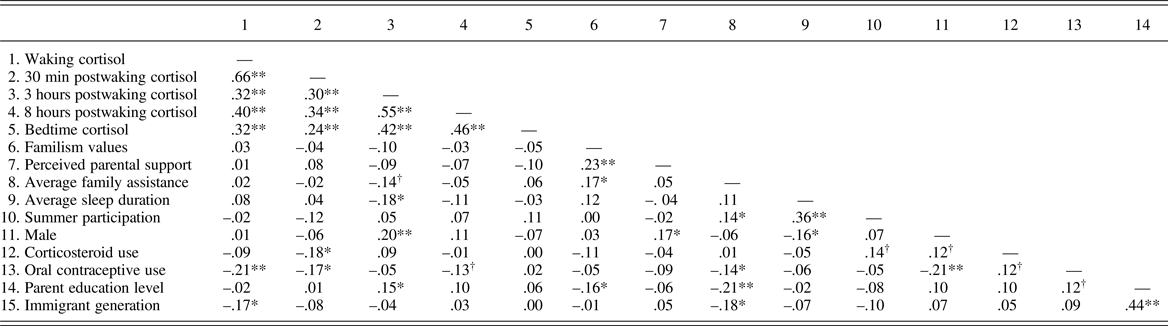
Table 1 presents descriptive statistics. In terms of family assistance behaviors, 29.1% of participants interpreted/translated for parents, 56.8% took care of siblings/family members, and 63.1% ran a family errand at least once during a typical week; 82.0% helped family in at least one of these ways throughout the week. On average, participants assisted family in at least one way 41.7% of days during the week (i.e., almost 3 out of 7 days). About one in three participants (34.0%) assisted family for half or more of the week, and 11.2% assisted family in some way every day of the week. Table 2 presents bivariate correlations among averages of repeated measures and person-level study variables.
Bivariate correlations

Note: N = 206. Averages of raw cortisol values (nmol/L) presented for descriptive purposes. Summer participation: 0 = participated while in school; 1 = participated in summer. Male: 0 = female; 1 = male. Corticosteroid medication use: 0 = no; 1 = yes. Oral contraceptive use: 0 = no; 1 = yes. Parent education level is the average of mother's and father's education. †p < .10. *p < .05. **p < .01.
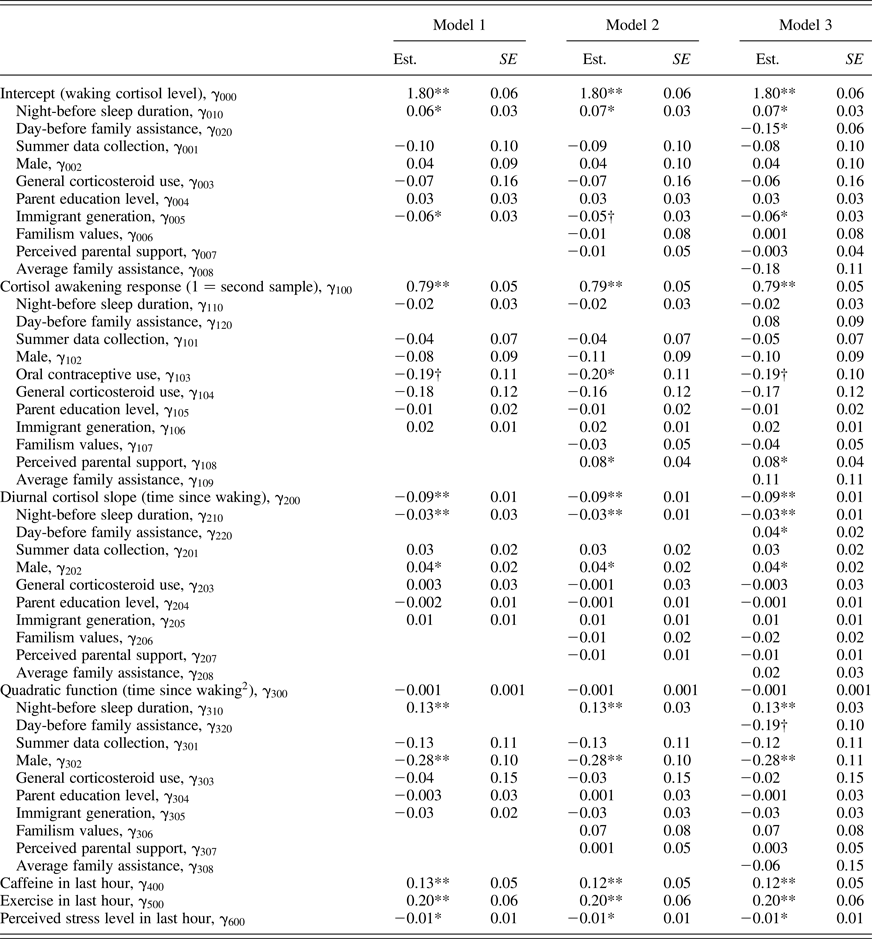
A linear growth model with a dummy code to represent the cortisol awakening response fit the data significantly better than an unconditional model with no predictors, χ2 (9) = 2,428.774, p < .001. Adding a quadratic term fit the data significantly better than the linear model, χ2 (6) = 86.122, p < .001. Growth modeling revealed the expected average diurnal cortisol pattern with relatively high cortisol levels at waking (6.05 nmol/L), an approximate 120.3% increase 30 min after waking (cortisol awakening response),Footnote 2 and an approximate 8.6% decline in cortisol per hour estimated at waking, accounting for participants’ protocol noncompliance and adjusting for covariates (Table 3, Model 1). Despite this average pattern, approximately 88.4% of the variance in cortisol was attributable to within-person variance (i.e., sample-to-sample and day-to-day differences; intraclass correlation = .116). Several covariates were significantly associated with different components of the diurnal pattern. For example, immigrant generation score was associated with lower waking levels of cortisol.
Fixed effects estimates from three-level growth models of diurnal cortisol

Note: N = 2,992 samples nested within 206 individuals. Cortisol values (nmol/L) transformed using the natural log function. Besides growth parameters, continuous Level 1 and Level 2 predictors centered within person; continuous Level 3 predictors grand-mean centered. †p < .10. *p < .05. **p < .01.
Aim 1: Familism values, perceived parental support, and diurnal cortisol
Familism values and perceived parental support were next tested as between-person predictors of average differences in the diurnal cortisol pattern, accounting for covariates (Table 3, Model 2). Familism values were not significantly associated with average differences in any aspect of the diurnal cortisol rhythm, ps > .38. Greater perceived parental support was significantly associated with an 8.3% greater cortisol awakening response, on average, p = .03, but not with other aspects of the diurnal pattern, ps > .65. We also fit models with familism values and perceived parental support entered separately, without adjusting for the other; the results of these alternative models closely mirrored those of Model 2 with both predictors entered simultaneously.
Aim 2: Family assistance behaviors and diurnal cortisol
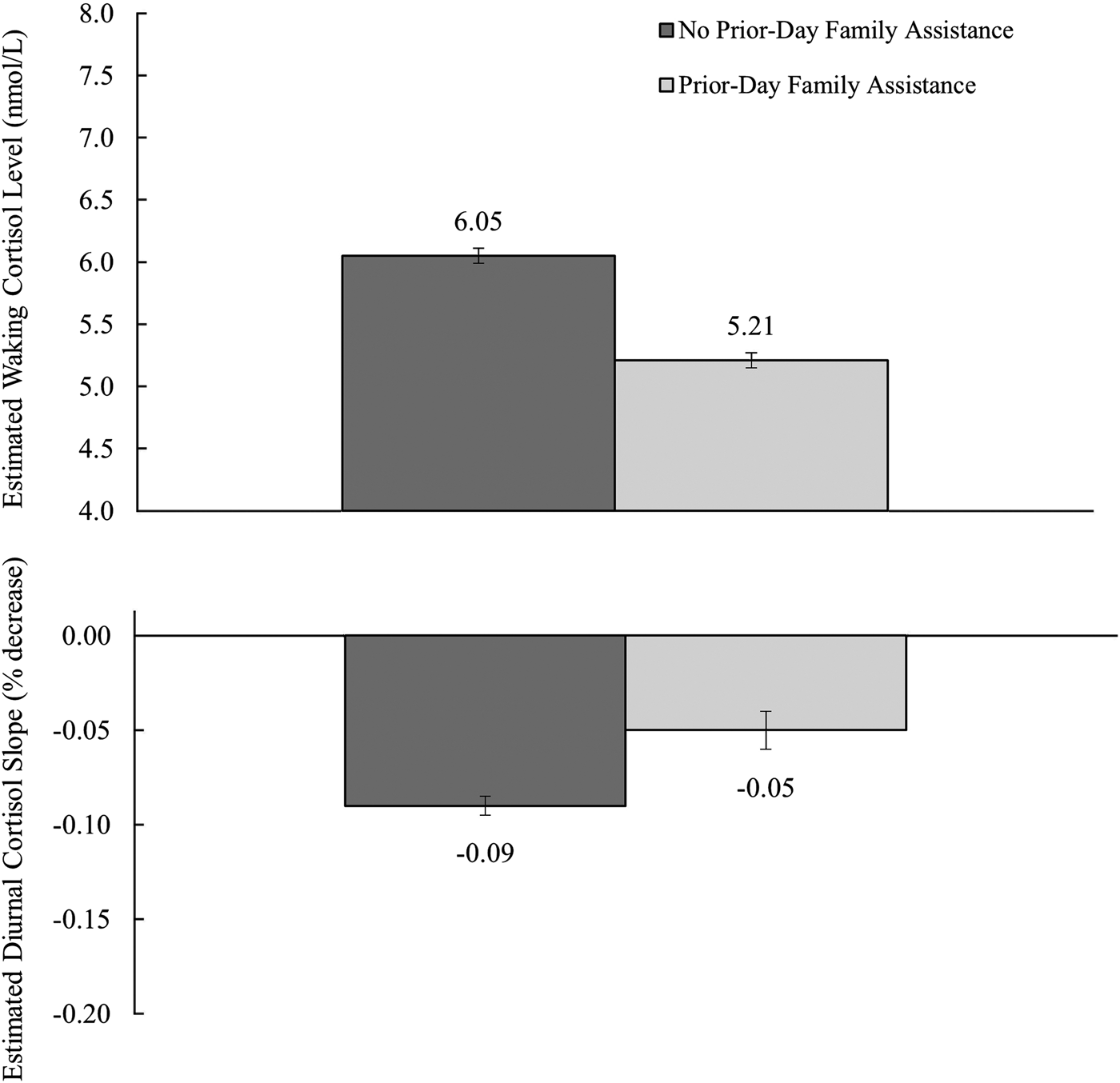
Next, day-to-day and individual differences in family assistance were simultaneously added to Model 2 in order to consider how family assistance might account for different sources of variance in the diurnal cortisol pattern (Table 2, Model 3). Adjusting for covariates, assisting family during the day (relative to other days of not assisting family) was significantly associated with 13.9% lower waking cortisol levels, p = .01, the following day. In addition, assisting family during the day was associated with approximately 4.1% flatter diurnal cortisol slopes per hour, p = .04, the following day (see Figure 2). There were no associations between assisting the family one day and differences in the next-day cortisol awakening response, p = .37, or the quadratic change component, p = .07. The between-person predictor of average weekly family assistance was not significantly associated with average differences in waking cortisol, p = .10, cortisol awakening response, p = .31, diurnal slope, p = .40, or quadratic change, p = .71. We also fit an alternative model with only average weekly family assistance (i.e., removing daily family assistance), while still adjusting for covariates. Average weekly family assistance was not significantly associated with lower levels of waking cortisol, γ008 = –0.19, p = .09, or the cortisol awakening response, diurnal slope, and quadratic change, ps > .27.
Estimates from Model 3 used to represent day-lagged within-person differences in waking cortisol (model intercept; nmol/L) and diurnal cortisol slope (time since waking; % decrease) by prior-day family assistance. Less negative diurnal declines in cortisol reflect flatter (less adaptive) slopes. ps < .05.

Based on nested model tests, the extent to which daily family assistance predicted various components of the diurnal cortisol pattern the next day did not vary significantly across individuals, ps > .67. In an exploratory manner, we included familism values, perceived parental support, and average weekly family assistance as predictors of the day-to-day associations. As expected, given the lack of between-person variability in slopes, we found that none were significant moderators of such associations, ps > .05.
Discussion
Accumulating research has demonstrated the integral role of the family in Latino youth development, with previous research demonstrating close links between family cultural values, close supportive relationships, and daily family activities with Latino youth adjustment and well-being (Berkel et al., Reference Berkel, Knight, Zeiders, Tein, Roosa, Gonzales and Saenz2010; Gonzales et al., Reference Gonzales, Germán, Fabrett, Chang and Downey2012; Guan & Fuligni, Reference Guan and Fuligni2016; Zeiders, Updegraff, Umaña-Taylor, McHale, & Padilla, Reference Zeiders, Updegraff, Umaña-Taylor, McHale and Padilla2015). Yet, few studies have adopted a cultural neurobiological approach to understanding how qualities of the family, ranging from everyday family assistance behaviors to cultural values, are associated with physiological stress processes and subsequent health. We found that greater perceptions of parental emotional support were associated with a more adaptive indicator of daily cortisol patterns, specifically a greater cortisol awakening response, but that familism values were not associated with typical diurnal cortisol patterns. Our results also illustrated that assisting family during the day predicted lower waking cortisol levels and flatter diurnal slopes the next day, which have been associated with poor physical and mental health concurrently and prospectively in adolescence and adulthood across diverse samples (see Adam et al., Reference Adam, Quinn, Tavernier, McQuillan, Dahlke and Gilbert2017, for meta-analysis). Our study of cultural values and daily behaviors contributes to a strengths-based cultural approach and aids in better understanding the interconnections between family processes and daily physiological functioning of Latino adolescents.
Following important research on the role of parental social support for regulating HPA axis activity in children and adolescence (e.g., Gunnar & Donzella, Reference Gunnar and Donzella2002, for review of early development; Hostinar, Sullivan, & Gunnar, Reference Hostinar, Sullivan and Gunnar2014; Seltzer, Ziegler, & Pollak, Reference Seltzer, Ziegler and Pollak2010; Shirtcliff et al., Reference Shirtcliff, Skinner, Obasi and Haggerty2017), we found that perceptions of parental support were associated with daily physiological stress functioning in our sample of Latino adolescents. Specifically, we found that greater perceptions of parental support were associated with a greater average cortisol awakening response. Many scholars have argued that a greater cortisol awakening response helps one effectively cope with anticipated stressors of the day (e.g., Adam et al., Reference Adam, Hawkley, Kudielka and Cacioppo2006). In support of this “boost” hypothesis, empirical research has found that adolescents had greater cortisol awakening responses on days when they spent more time in school (McHale et al., Reference McHale, Blocklin, Walter, Davis, Almeida and Klein2012), suggesting that the cortisol awakening response may reflect the extent to which adolescents are preparing for and engaging with their social environment. While research findings related to an enhanced or reduced cortisol awakening response and positive psychosocial factors have varied across studies (Boggero et al., Reference Boggero, Hostinar, Haak, Murphy and Segerstrom2017; Chida & Steptoe, Reference Chida and Steptoe2009), the direction of our findings is consistent with other studies examining positive and supportive interpersonal relationships and diurnal patterns of cortisol. For example, greater social connections during the day were associated with a greater cortisol awakening response the next day in a sample of college students (Sladek & Doane, Reference Sladek and Doane2015), and more positive social interactions in the morning were associated with a greater cortisol awakening response among healthy adult women (Stetler & Miller, Reference Stetler and Miller2005). The cortisol awakening response also corresponds with other important circadian processes, including sleep, which are coordinated by the suprachiasmatic nucleus (Clow, Hucklebride, Stalder, Evans, & Thorn, Reference Clow, Hucklebridge, Stalder, Evans and Thorn2010). Thus, it is possible that associations between perceptions of social support and the cortisol awakening response may be mediated by other physiological mechanisms, including sleep quality and quantity (Sladek & Doane, Reference Sladek and Doane2015; Van Lenten & Doane, Reference Van Lenten and Doane2016). Although beyond the scope of this study, future research should test the daily proximal pathways between global or daily perceptions of parental or other sources of social support, sleep, and diurnal cortisol patterns.
Contrary to our hypotheses, there was not a significant association between greater perceptions of parental support and steeper diurnal cortisol slopes, another indicator of healthy diurnal cortisol patterns. This is in contrast to recent longitudinal findings indicating that attachment, bonding, and positive parenting in adolescence were associated with higher waking levels and steeper cortisol slopes 6 years later for European Americans (Shirtcliff et al., Reference Shirtcliff, Skinner, Obasi and Haggerty2017). However, when examining attachment and bonding specifically, these associations were not statistically significant for African Americans in this prior study, highlighting that the influence of family factors on daily HPA axis activity may vary by race/ethnicity or qualities of the social context in important ways. Evidence from a recent meta-analysis suggest that there may be key individual and contextual moderators (e.g., socioeconomic status and perceptions of stress) of associations between high-quality parenting and cortisol levels and reactivity (Hackman et al., in press). As such, future research should test key cultural moderators of the promotive influence of perceived parental support on varying indicators of the diurnal cortisol pattern. It is possible that the promotive influence of parental support on the diurnal slope may only be present for youth who live in low-risk social contexts. Finally, the diurnal slope measurement reflects experiences from across an entire day, rather than just the morning like the cortisol awakening response. As such, perceptions of family support may be more closely linked with cortisol outcomes in the morning when those social relationships are present, rather than when adolescents are engaged in other social environments, including school or work (McHale et al., Reference McHale, Blocklin, Walter, Davis, Almeida and Klein2012; McHale, Updegraff, Kim, & Cansler, Reference McHale, Updegraff, Kim and Cansler2009).
Alternatively, it is possible that our method of recruitment (e.g., all students were accepted into college) reduced the likelihood of detecting attenuated or blunted diurnal cortisol patterns that would reflect more chronic exposure to potential stressors, including low levels of perceived parental support that have been hypothesized to characterize at-risk families and unhealthy physiological profiles (e.g., Repetti et al., Reference Repetti, Taylor and Seeman2002). However, most studies that have explored such associations have been conducted in laboratory settings and with indicators of cortisol reactivity rather than typical diurnal patterns (e.g., Spies, Margolin, Susman, & Gordis, Reference Spies, Margolin, Susman and Gordis2011). Further, most adolescents in our sample reported relatively high levels of perceived parental support. Future studies with Latino adolescents might consider sampling from communities with more diverse experiences of family support to understand whether greater parental support promotes resilience in the face of adverse experiences, or conversely, whether lower parental support serves as a form of chronic stress.
Our study was the first, to our knowledge, to examine whether a key cultural value for Latino adolescents and families, familism, was associated with indicators of the cortisol diurnal pattern. We hypothesized that physiological stress pathways, as indexed by cortisol, might be a potential intermediary between familism and subsequent outcomes, and therefore tested the direct associations of familism values with diurnal cortisol patterns. However, we did not identify any associations between familism values and indicators of the diurnal cortisol rhythm in this study. Familism values are thought to contribute to adaptive outcomes in a variety of ways, such as by increasing the amount of social support available from family members and promoting high-quality relationships (Campos et al., Reference Campos, Ullman, Aguilera and Dunkel Schetter2014; Gonzales et al., Reference Gonzales, Jensen, Montaño, Wynne, Caldera and Lindsey2015). As such, these mediators may be the more proximal predictors of daily physiological regulation rather than adolescents’ broader endorsement of valuing the family. Our results indicate that perceptions of parental support were associated with a greater average cortisol awakening response. Latino adolescents who feel that emotional support is available from their parents may be better equipped to cope with stressors throughout the day, thus leading to more adaptive diurnal patterns of cortisol (Santiago, Torres, Brewer, Fuller, & Lennon, Reference Santiago, Torres, Brewer, Fuller and Lennon2016). Given that interdependence among Latino families has also been linked with greater parental monitoring (Romero & Ruiz, Reference Romero and Ruiz2007), parental warmth (Gonzales et al., Reference Gonzales, Coxe, Roosa, White, Knight, Zeiders and Saenz2011), and youth's sustained academic achievement (Ong, Phinney, & Dennis, Reference Ong, Phinney and Dennis2006), these could also be important mediators connecting familism values with daily stress physiology. Alternatively, some research suggests that familism values are only associated with well-being for high-risk adolescents or those lacking support in other interpersonal domains (e.g., school; Cupito, Stein, Gonzalez, & Supple, Reference Cupito, Stein, Gonzalez and Supple2016), as opposed to our relatively low-risk sample. Such findings illustrate that familism values may serve as more of a protective cultural factor (e.g., moderator), as opposed to a promotive influence in the lives of Latino youth.
Future longitudinal research is needed to understand the unfolding time course and nature of interactions between cultural values, behaviors, and biological patterns (e.g., Doane et al., Reference Doane, Sladek, Adam, Causadias, Telzer and Gonzalez2018). For example, it is possible that the development of strong familism values in early adolescence may promote both high-quality parent–child relationships and well-regulated stress responsive biological systems in later adolescence. Promising new work linking greater ethnic identity affirmation with steeper diurnal cortisol slopes in a community sample of Latino adolescents (Zeiders et al., Reference Zeiders, Causadias and White2018) suggests that capitalizing on a strengths-based approach to understanding such associations will be key to exploring potential reciprocal associations between culture and biology across development.
While much research has identified links between culturally relevant stressors, ranging from acculturative stress to perceived discrimination, and HPA axis activity in adolescence and young adulthood (e.g., Adam et al., Reference Adam, Heissel, Zeiders, Richeson, Ross, Ehrlich and Eccles2015; Chiang et al., Reference Chiang, Tsai, Park, Bower, Almeida, Dahl and Fuligni2016; Kwak et al., Reference Kwak, Taylor, Anaya, Feng, Evich and Jones2017), few scholars have taken a cultural approach to understanding how family assistance behaviors may be associated with physiological stress activity from day to day, as well as more generally across days. Such examinations are key to understanding developmental adaptation and the chronicity of culture–biology interactions and interplay. Consistent with our hypotheses, we found that assisting family during the day was associated with lower waking cortisol levels and a flatter cortisol slope the next day (e.g., less change in levels between waking and bedtime), compared to days not spent assisting family. This altered rhythm generally reflects a less adaptive pattern. For example, flatter cortisol slopes have been associated with poor mental and physical health (Adam et al., Reference Adam, Quinn, Tavernier, McQuillan, Dahlke and Gilbert2017), including depression in adolescence (Doane et al., Reference Doane, Mineka, Zinbarg, Craske, Griffith and Adam2013), and morbidity and mortality in adults (Kumari et al., Reference Kumari, Shipley, Stafford and Kivimaki2011).
Specifically, our results support the attenuation hypothesis (Susman, Reference Susman2006), whereby stressful experiences may downregulate the physiological stress system over time to protect individuals from the burdensome costs of allostatic load. Most evidence for this hypothesis stems from work on early life or severe stress, rather than day-to-day stress processes. However, on a daily basis, our findings suggest that Latino adolescents may experience downregulation of their physiological stress processes following more stress than usual the day before. If such patterns are repeated over time, these short-term attenuations may take a toll on adolescents’ well-being. For example, among adolescent girls, attenuated cortisol responses to stress have been associated with accelerated pubertal development (Saxbe, Negriff, Susman, & Trickett, Reference Saxbe, Negriff, Susman and Trickett2015), and a blunted cortisol awakening response and total diurnal output interacted with stressful events to predict future depressive symptoms (Schuler et al., Reference Schuler, Ruggero, Goldstein, Perlman, Klein and Kotov2017). While associations between family assistance behaviors and psychosocial and immune outcomes have been explored in studies of Latino youth and families (e.g., Chiang et al., Reference Chiang, Tsai, Park, Bower, Almeida, Dahl and Fuligni2016; Fuligni et al., Reference Fuligni, Telzer, Bower, Irwin, Kiang and Cole2009; Telzer et al., Reference Telzer, Tsai, Gonzales and Fuligni2015), our study is the first to identify the temporal ordering of such processes from day to day, as opposed to weekly averages, with intensive assessments of stress-sensitive physiological markers.
In contrast to Chiang et al.’s (Reference Chiang, Tsai, Park, Bower, Almeida, Dahl and Fuligni2016) work showing that, for particularly vulnerable subgroups, average family assistance behaviors were associated with an attenuated cortisol awakening response, we did not find significant associations between average family assistance behaviors and indicators of the diurnal pattern of cortisol. Our day-to-day findings, along with those from Chiang et al. (Reference Chiang, Tsai, Park, Bower, Almeida, Dahl and Fuligni2016) regarding average levels of daily assistance behavior, indicate that morning levels of cortisol, including waking levels and the cortisol awakening response, may be important biomarkers of chronic family stressors or need for family assistance for adolescents, in particular.
Our study reflects Fuligni and Telzer's (Reference Fuligni and Telzer2013) call to understand how daily family behaviors “get under the skin,” as well as important differences in how cultural values and behaviors are associated with physiological stress processes (Causadias, Reference Causadias2013). We found that daily cultural behaviors were associated with components of the diurnal cortisol pattern when examining within-person patterns over time, but overall assistance behaviors and broader cultural values were not significantly associated with average patterns. Such findings suggest that researchers need to consider culture–biology time scales carefully when designing their research questions and move toward understanding potential interactions among cultural behaviors and cognitions (Doane et al., Reference Doane, Sladek, Adam, Causadias, Telzer and Gonzalez2018). Specifically, many scholars have also suggested that family assistance behaviors must be understood within the context of the family and family values. For example, high levels of role fulfillment or higher levels of family obligation mitigated associations between family stress or family assistance behaviors and poor health and adjustment (Fuligni et al., Reference Fuligni, Telzer, Bower, Irwin, Kiang and Cole2009; Telzer et al., Reference Telzer, Gonzales and Fuligni2014). In exploratory analyses, we did not find that perceptions of parental support, familism values, or average levels of family assistance behavior moderated day-to-day associations between family assistance behaviors and diurnal cortisol outcomes. Previous studies have only examined between-person associations over the course of years rather than intensive assessment of day-to-day relations between family assistance behaviors and physiological outcomes. Given that our participants were all living in their home of origin during this assessment, future work with the current sample will seek to understand whether changing social contexts (i.e., transitioning into the college context and moving out of the family home) are associated with more or less adaptive associations between family assistance behaviors and physiological stress profiles over time.
An important strength of our study was our short-term longitudinal daily process design. However, although this approach provided a snapshot into Latino adolescents’ lives, it does not allow us to fully understand the chronicity of family assistance behaviors or the stability of parental emotional support across months, years, or developmental transitions. Furthermore, our design did not permit an exploration of potential bidirectional associations between physiological stress profiles and perceptions of family-related values and support (e.g., Marceau, Dorn, & Susman, Reference Marceau, Dorn and Susman2012). Future studies should use sequential short burst design strategies to understand how changes in cultural values, support, or daily behaviors may be associated with daily physiological stress patterns and regulation. Another direction for future research is an exploration of culturally relevant stressors in the daily lives of Latino adolescents and their associations with patterns of cortisol. Given previous research on the role of discrimination experiences and acculturative stressors on physiological stress patterns (e.g., Adam et al., Reference Adam, Heissel, Zeiders, Richeson, Ross, Ehrlich and Eccles2015; Zeiders, Doane, & Roosa, Reference Zeiders, Doane and Roosa2012), future research should examine whether cultural values or behaviors might interact or moderate the influences of such daily stressors. For example, results of a recent meta-analysis demonstrated that racial discrimination was not significantly associated with diurnal cortisol slopes (Korous, Causadias, & Casper, Reference Korous, Causadias and Casper2017). However, these authors were only able to include six studies that included cortisol slopes as outcomes and noted that one possible explanation for the lack of association is that variability in cultural values and behaviors may buffer against discrimination-related alterations in HPA activity.
An additional limitation is that our sample consisted of adolescents who were preparing to attend a 4-year university within 60 miles of their home neighborhoods. As such, our findings may not generalize to other adolescents who live outside of the southwestern United States or those who plan on attending a higher education institution further from home, attending community college, or forgoing higher education immediately after high school. However, our sample was quite heterogeneous in terms of both socioeconomic status and perceived social class. In addition, our sample comprised adolescents from 91 different high schools in the surrounding metropolitan area. A final limitation is that we relied solely on adolescents’ own reports of their family-level processes and do not have reports from parents or other family members. Given research demonstrating significant concordance of physiological stress processes among family members (e.g., Papp, Pendry, & Adam, Reference Papp, Pendry and Adam2009; Saxbe et al., Reference Saxbe, Margolin, Spies Shapiro, Ramos, Rodriguez and Iturralde2014), future studies should measure multiple members of the family system to understand how daily interactions such as support behaviors or assistance may be associated with physiological patterns in individuals and dyads (e.g., parent–adolescent). Although the present study was strengthened by the use of multiple methods (e.g., questionnaire, daily diary, and daily salivary collection), self-reports of perceived parental support and familism values may have shared common-method variance; future research could extend the present approach by recruiting multiple reporters within the family system.
In conclusion, this study was the first to our knowledge to take a cultural neurobiological approach to understanding the role of family cultural values, perceptions of parental support, and daily family assistance behaviors in predicting typical physiological stress processes in the daily lives of Latino adolescents. Our findings suggest that adolescent perceptions of parenting, including emotional support, may promote more adaptive physiological daily patterns, while daily family assistance behaviors led to attenuated cortisol profiles the next day. Our daily process approach allowed us to understand variability in family assistance and associations with cortisol diurnal patterns from day to day, as well as, on average, across days. Our results highlight the dynamic associations and multiple time courses between such daily experiences and physiological stress processes for Latino adolescents. Further, by utilizing a cultural strengths-based approach to understanding Latino adolescent development, we have extended research using ethnic-homogenous designs to illustrate an important cultural promotive factor that was associated with typical physiological activity in daily life and potential pathways to positive health outcomes in adulthood.