Introduction
Who were Ireland's most important painters? What were they like? How did they work? What inspired and motivated them to create art? The answers to many of these questions are captured in the stories of art in Ireland documented in the Irish art archive and library at the National Gallery of Ireland's ESB Centre for the Study of Irish Art (ESB CSIA). One of the world's most important and valuable Irish art research collections, it comprises a substantial body of archival material, a wide-ranging library and a large collection of ephemera relating to over 2,500 individual artists and more than 1,000 arts organisations. Formed over the course of the Gallery's 160-year history, the collection reflects its fine art collection and the institution's significant and ongoing role in preserving Ireland's visual cultural heritage. It documents and represents aspects of the life and work of many of the people and organisations that have contributed to the development of Irish art and its history. This includes celebrated artists such as Frederic William Burton, Paul Henry, Daniel Maclise, William Orpen, Walter Osborne, Sarah Purser, Mary Swanzy, and Jack B. Yeats, to name only a few, as well as the many arts organisations, galleries, historians and critics associated with the production, exhibition and interpretation of art in Ireland. Irreplaceable and inimitable on both a national and international level, it provides the Gallery with a unique opportunity to establish a leading role in supporting research and learning in the Irish visual arts.
In 2017 the National Gallery of Ireland was awarded funding from the Department of Culture, Heritage and the Gaeltacht (DCHG) for the development of an online resource, focusing on the Irish art research collections. Entitled Source – Uncovering Stories of Art in Ireland, this multi-annual project aims to catalogue and digitise the collections in the ESB CSIA and ensure that these valuable collections relating to Ireland's artistic history and memory are preserved and can be easily accessed by researchers. It is anticipated that Source, which is a pilot project, will embed digital workflows and practices in the processing of the Gallery's research collections. It will establish a digitization unit with the appropriate equipment and software, and address needs in terms of system development and discovery. Ultimately, with this support the Gallery hopes to establish an online and technical framework for the discovery of content held in all the Gallery's art archives and bibliographic collections, establishing a structure and processes that will be available for future digitisation projects, and ensuring a worthwhile and useful legacy for the project and the funding provided by the DCHG. Now as we enter the final year of the project it is a useful point to pause and share the aims of Source as well as some of the challenges and the positive developments that have emerged in the project to date.
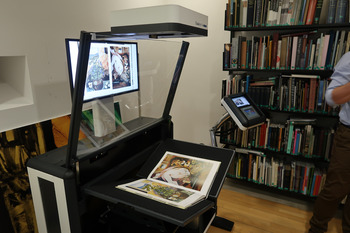
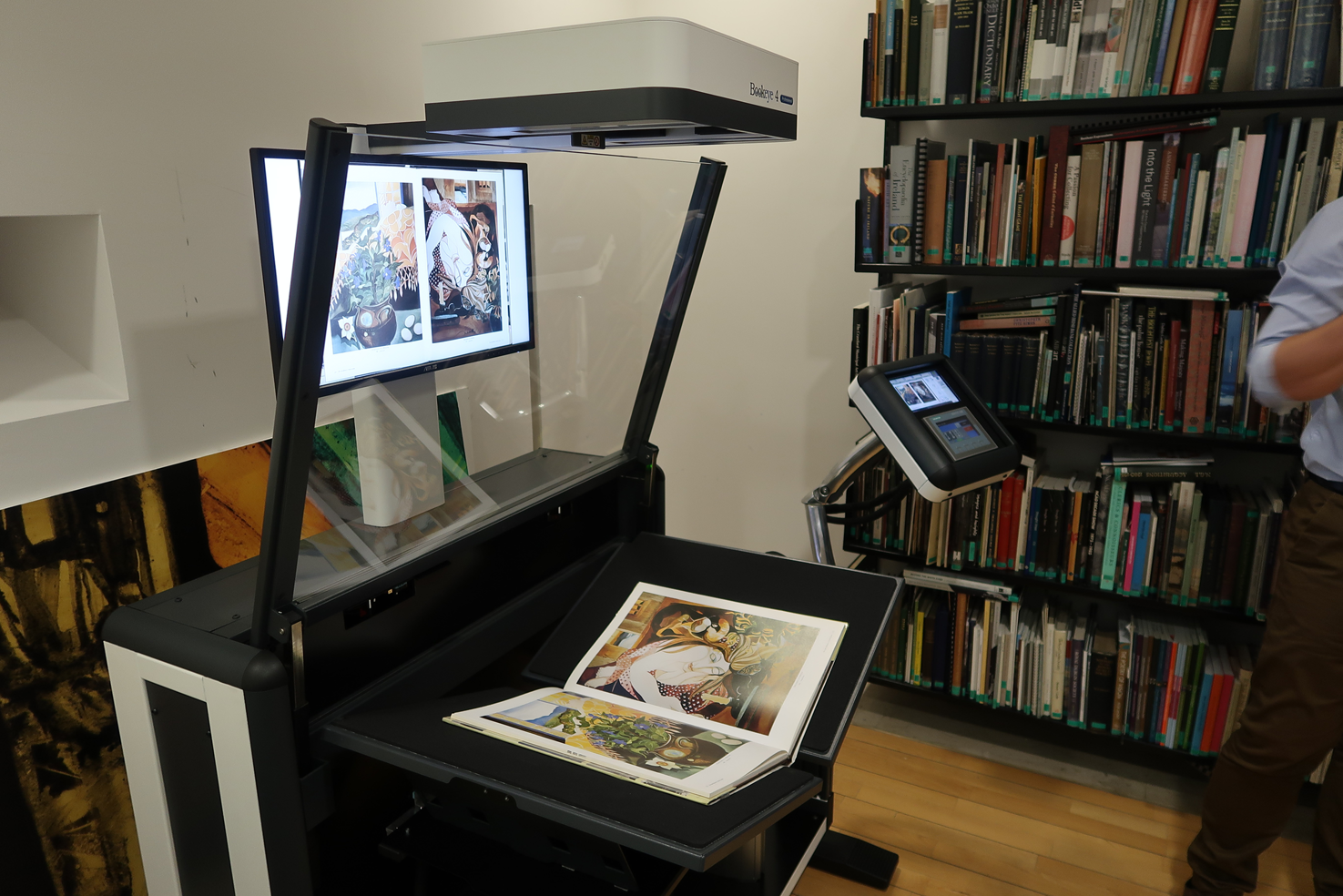
Bookeye 4 V1A-C35 and associated software was purchased for the project.
Background
The National Gallery of Ireland (NGI) is the country's premier art institution. It houses the nation's collection of fine art, amounting to over 16,000 works representing all the major European schools of art. It was established in 1854 by an Act of parliament and opened to the public in 1864. The library and archive collections developed in tandem with the art collection and today number some 100,000 volumes in addition to a large collection of archives. The collections are held in the NGI Art Library, the Institutional Archive, the ESB Centre for the Study of Irish Art, the Yeats Archive and the Sir Denis Mahon Library and Archive. Collectively these cover national and international art from the middle ages onwards and consist of monographs, catalogue raisonnés, exhibition and collection catalogues, pamphlets, ephemera, journals, auction catalogues, rare and antiquarian publications and a suite of e-resources. The archives include a wide variety of material relating to the visual arts, including letters, scrape-books, sketchbooks, audio, video, objects, furniture, artworks, and photographs. This world-class art research collection is unrivalled in Ireland.
The core objectives of the library and archives department in the National Gallery of Ireland are to care for, manage and give access to the collection and in doing this provide research support and engagement opportunities to a variety of stakeholders. The collection plays an invaluable role supporting the work of the Gallery and scholarship in art generally and is regularly consulted by artists, students, scholars and academics, museum professionals, art dealers, collectors and members of the public. In addition, the collection regularly features in the Gallery's learning, exhibition and engagement programmes on-site, off-site and online.
It has long been recognized that this rich collection with many unique and rare items holds much material that would benefit from digitization in order to be more accessible to researchers; extend the collections potential audiences; and capitalize and enhance the research value of the holdings. Currently, the collections are managed on two distinct management systems: SIRSI/Dynix for the bibliographic collections and CALM Archive Management System for archives and special collections. Historically a lack of staffing resources and investment in technical developments resulted in slow progress cataloguing collections and developing digital collections. Over the years some private and public funding was made available for various digitization projects, but frustratingly no sustainable or long-term dedicated fund for cataloguing or digitizing the national collections was created. Limited additional staffing to cover the extra workload that digitization entails and the absence of a national digital policy has also hampered progress in this area for all the Irish National Cultural Institutions. Fortunately, there has been a change in the landscape in more recent years. The benefits of digitizing the national collections were highlighted through the Decade of Centenaries programme, a National Programme commemorating key events in Irish history between 1913 and 1923. Events in 2016 marked 100 years since the Easter Rising and material relating to this historic event was made available online for the first time, underlining the importance of digitising culturally and historically significant collections. These successful digitization projects gained much public attention and interest and as a result of this, in 2017 the Department of Culture, Heritage and the Gaeltacht announced a new Cultural Digitization Scheme of one million euros to further support cultural bodies digitise their rich and varied collections for the benefit of the public. The Gallery was awarded €300,000 for the library and archive project Source – Uncovering stories of art in Ireland, the most funding ever allocated to a digital project in the Gallery.
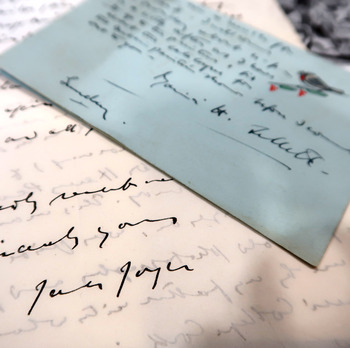
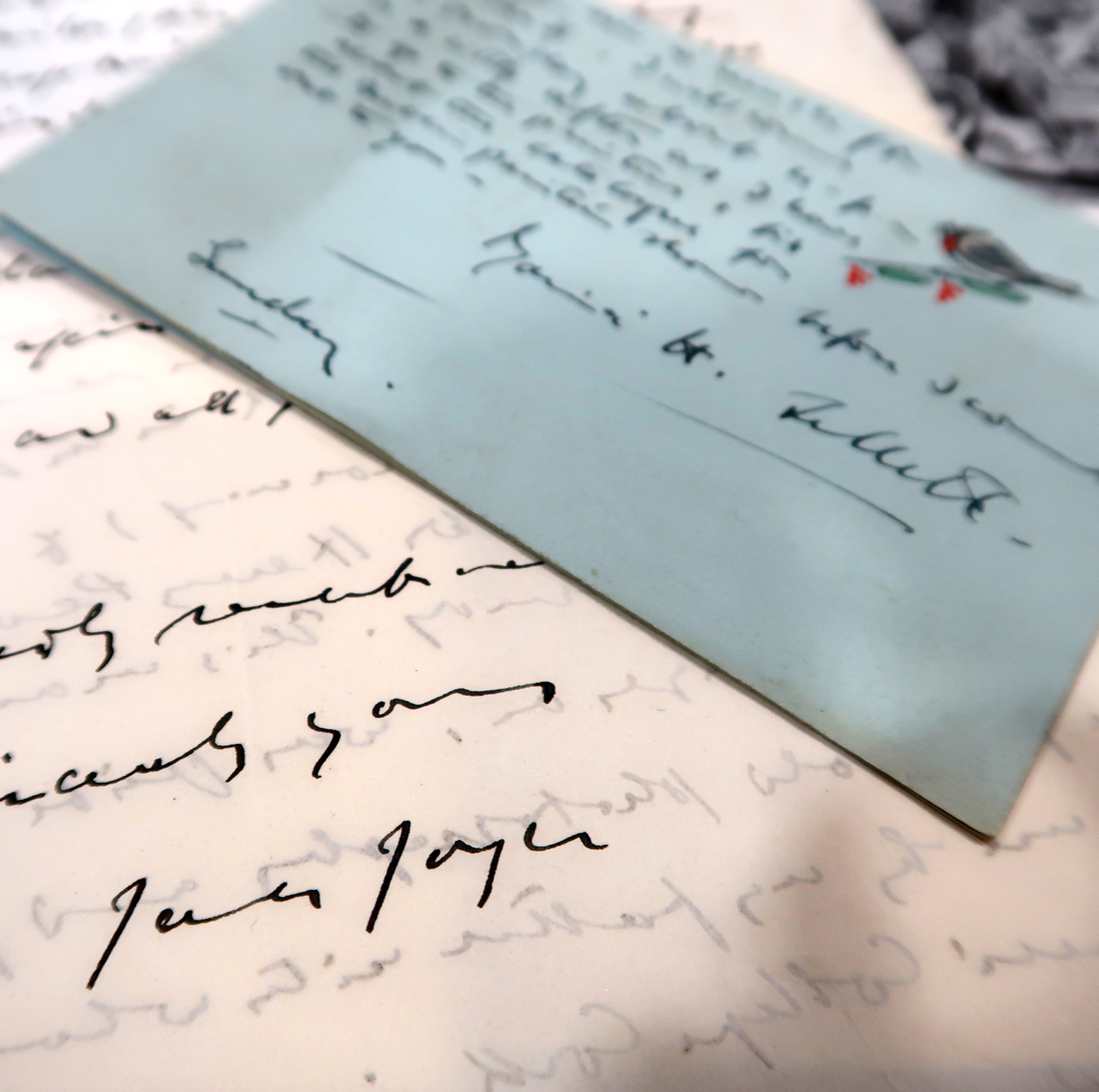
Material relating to artist Mainie Jellet and writer, James Joyce, are being digitised as part of the project
Aims and ambitions
As already noted, this pilot scheme aims to catalogue and digitise selected collections from the ESB CSIA. This dedicated online resource for Irish art research collections will provide access to information on collections to item level, in many cases, and allow cross searching of the archival and bibliographic collections. The online resource will also have a curated element where collections and individual items will be brought together under specific themes or narratives. Collections will be catalogued using current professional standards (ISAD (G), MARC, etc.), on existing systems. Subject indexes and thesauri will be improved and streamlined to allow for links to be made between systems and related collections supporting further and deeper engagement. The resource will be a valuable tool for presenting Ireland's visual legacy to Ireland's diaspora and an international audience with data which can be easily shared with relevant national and international cultural digital repositories and libraries, such as Europeana, artdiscovery.net, etc.
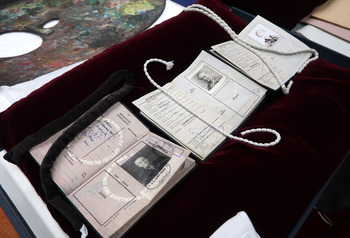
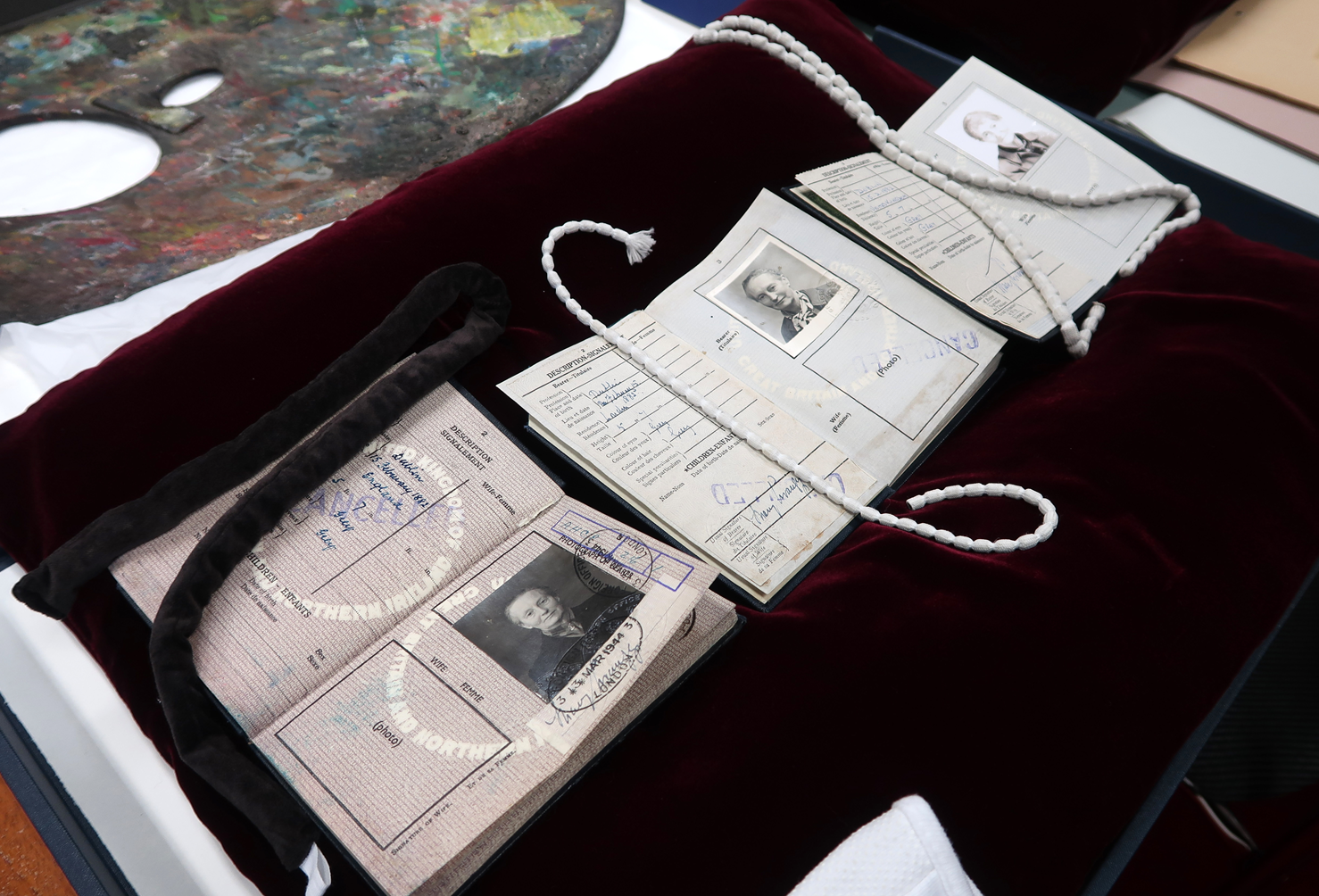
Passports from the Mary Swanzy archive collection will be digitised as part of this project
Preservation and conservation issues are being addressed on an on-going basis as part of the project. In addition, the creation of digital surrogates will allow that physical items benefit from a reduction in handling. In terms of digital preservation, while the funding in this instance is not enough for the development of a digital repository, it is hoped that the work conducted through this project will kickstart the development of a safe and secure digital repository protecting this data for generations to come.
Importantly, this resource will support advocacy, outreach and increase learning and research opportunities in the Irish visual arts. It will present new opportunities for researchers and visitors to learn and connect with art and to further explore Irish artworks and artists. It has the potential to be a new source of inspiration for the next generation of artists and will support art education and increase research opportunities into Irish art. The resource will provide material for primary and secondary students through to undergraduate and doctoral level research. Its development presents greater opportunities for collaboration and developing links with artists, academia and sister institutions nationally and worldwide. It will benefit the creative industries: fashion, craft, graphic design, advertising, architecture, TV and film, digital media, theatre, costume, documentary makers, drama, set design, publishing, journalism and media. – all users of the collections already – but through this resource the collections will become much more easily accessible.
A project such as this also has broader benefits for the Gallery. This project has supported the advancement of collection management, care and the research services generally. Source and the material made available through it will complement and enhance the Gallery's Irish exhibition and education programmes and the permanent display of Irish art. Its development will support and advance the scholarly, educational and cultural enrichment missions of the Gallery. The library and archives collections are the (often hidden) ‘engine’ of the institution supporting the development of all projects from inception through to delivery. The cataloguing and digitisation of collections is required to support the work carried out by the institution's staff. It also aims to be a support for the arts and culture sector generally and a resource that all Ireland's Galleries, Museums, art centres and heritage sites can turn to. A digital collections resource highlighting Irish art has the potential to attract funding in terms of research grants, sponsors and private support for Gallery projects and attract partners for research, education and exhibition collaborations. This resource will also enhance the Gallery's ability to attract gifts and donations building on the strong foundation already established in this area.
Progress to date
When embarking on a project of this nature there are many elements requiring consideration before digitization of collections can begin. Over the past two years the project team have addressed a variety of complex issues and questions. Many aspects of library and archive functions and workflow infrastructure have been reviewed and updated, including cataloguing and digitization policies and procedures, and metadata development. Technical developments required new hardware and software solutions. Multi-system developments and data migration have been a necessary part of the project and staff training and upskilling is being addressed on an ongoing basis.
At an early stage specific collections were earmarked for inclusion in the resource. Preservation issues and IP and copyright concerns were important criteria requiring consideration for each archive collection selected. The collections selected and prioritized for inclusion consist of material relating to Irish women artists, the period around the Decade of Commemorations (1913–1923), particularly World War One, and a body of information relating to a number of 19th and 20th century Irish artists. Over 80 collections are now catalogued as a result of work conducted so far, significantly reducing backlogs in the Irish art archive.
Research and consultation have been an essential ongoing part of this cataloguing and digitisation project. 2018 was largely taken up meeting and speaking with colleagues in sister institutions, reviewing systems in use, technical infrastructures, workflows, digitisation suites and equipment. We are particularly grateful for the support and generosity of many colleagues whose experiences were very helpful in developing the project plan and team. The Source project team incorporates a mix of skills and expertise including archive and library professionals and Irish art specialists. There are currently three full time archivists working on the collections and project leads in the areas of collection cataloguing, systems development and advocacy and engagement are in place.
Having reviewed a number of digitisation units in Ireland and the UK, it was decided to convert a small reading room into a cataloguing and digitisation space. Cataloguing and processing of collections is now conducted here and selected material can then be digitised. Cameras and scanners were purchased and upgraded, and a Bookeye 4 V1A-C35 and associated software was procured for the project. This state-of-the-art scanner, the first to be acquired in Ireland, is capable of scanning A1+ formats at 600 dpi scanner resolution and accommodating both flat documents, as well as large, fragile bound documents, using a protective V cradle. This scanner connects easily to the CALM Archive management system and allows for templates to be set up making it possible to have interns and volunteers supporting the digitisation of collections.
Much of the work so far in the project has been taken up with systems development and establishing a digitisation workflow. The Archive Management System was upgraded in 2019. A serious challenge for the project was dealing with legacy data, saved across the Gallery network in different folders amounting to over 170GB of data. Extensis Portfolio, an internal digital asset management system was implemented to ease the management of and provision of access to this data. This simple, cost effective, off-the shelf solution provides a single source for all our historic images, videos, audio files and documents with relevant metadata, and will continue to be added to on an ongoing basis. Portfolio has made it much easier to find, access and share the digital assets amongst the project team.
As well as reducing cataloguing backlogs and supporting technical developments other positives have arisen over the past two years as a direct result of Source. The project has given the library and archives department leverage within the Gallery to secure developments sought for some time. For example, a dedicated paper conservator is now available to deal with conservation needs of the collections which previously had not been possible. As a result of this the management of conservation issues prior to the digitisation process has now been worked into the overall workflow for collections.
Storage challenges have also been reviewed. The library and archive stores have been full to capacity for a number of years. The archive collections will increase in size as processing takes place, therefore extra storage space had to be identified. A review of storage options has prompted the development of a plan to upgrade and maximise current stores to accommodate the newly processed collections.
Outreach and advocacy are important elements of the project and will become even more important this year. A dedicated exhibition space within the main Gallery for library and archive collections supports the project allowing collections that feature on the digital resource to be presented and displayed.
In terms of advocacy, an unexpected outcome is how this project has increased awareness about the collection and the role of the library and archive within the Gallery itself. The Finance, Buildings, Conservation, Exhibitions and IT departments are all providing support to the project and as a result now have a greater insight into the work of library and archive staff.
Conclusion
In this penultimate year of Source, the project team are excited to build on the foundations that have been put in place to date. Our primary objectives this year are to finalise the technical infrastructure that will support the digital collections, develop the curated content and the design and implement the discovery layer. Crucially we will continue to process, catalogue and digitise collections, increasing and enhancing the data available relating to the Irish art research collections. User engagement, promotion, learning and outreach activities will be planned in detail and are a priority from this point of the project. In 2021 we look forward to launching Source and making the important collections of the ESB Centre for the Study of Irish Art and the stories they document relating to Ireland's artistic heritage available to the nation and beyond.