Congenital heart disease (CHD) is a common and complex lifelong illness effecting 1 per 100 live births.Reference Hoffman1 Children with CHD are a heterogenous population that require condition-specific medical management. Parents of children with CHD are faced with many challenges, including understanding the complexity of their child’s medical and surgical condition, various medications, diagnostic tests and treatments, and how to best manage their child’s recovery and lifelong healthcare needs at home.Reference Staveski, Parveen, Madathil, Kools and Frank2, Reference Staveski, Parveen, Madathil, Kools and Frank3 Parental understanding is further complicated by the presence of low-literacy skills, hurried and/or ineffectual parent teaching, parental stress about their child’s condition and home care needs, as well as a variety of potential sociocultural influences.Reference Staveski, Parveen, Madathil, Kools and Frank3, Reference Smith, Cheater and Bekker4
The consequences of parents with CHD children being ill prepared for lifelong home care requirements, especially at time of hospital discharge, are significant.Reference Staveski, Parveen, Madathil, Kools and Frank2, Reference Staveski, Parveen, Madathil, Kools and Frank3 They include failure to thrive and growth retardation, inappropriate avoidance or participation in activities of daily living, development of vulnerable child syndrome, medication errors, hospital readmission, and death.Reference Tucker, Sullivan, Eichler, Williams, Amato, Reuter-Rice and Bolick5, Reference Staveski, Zhelva and Paul6 It has previously been described that current parent home care educational materials are inadequate.Reference Daily, Fitzgerald and Downing7 Especially given the presence of different perspectives between the medical team and parents regarding what parents most need to know in order to optimise care for children with CHD.Reference Daily, Fitzgerald and Downing7
There is a paucity of literature related to home care education interventions specific for parents with CHD children. Previous efforts to address home care education gaps include the addition of a discharge educator, single-ventricle home-monitoring programmes, and the Parent Education Discharge Instruction programme.Reference Tucker, Sullivan, Eichler, Williams, Amato, Reuter-Rice and Bolick5, Reference Vigna, Balakas, Strurer and Ercole8, Reference Hehir and Ghanayem9 The Parent Education Discharge Instruction programme was developed and piloted in Southern India to teach nurses how to effectively provide home care information to parents using diverse parent handouts in order to improve post-cardiac surgery outcomes for children in resource-constrained environments.Reference Tucker, Sullivan, Eichler, Williams, Amato, Reuter-Rice and Bolick5
Our study team hypothesised that a home care intervention co-created by parents and clinicians would improve education by the medical team and parent understanding of care instructions. The aims of this study were two-fold: examination of the strengths and opportunities for improvement of current home care education practices to inform development of the Home Care for Heart Health intervention, and development of a web-based intervention for parents and clinicians with complimentary print materials that could provide the right education at the right time to foster a safer transition from hospital to home.
Materials and methods: design thinking as a research modality
In an effort to address the needs of parents after their child’s cardiac surgery, an inter-professional study team was formed, including parents, clinicians from Cincinnati Children’s Hospital Medical Center and its Heart Institute, as well as a PhD Design Researcher, two Master of Design candidates in User Experience Design, and two Industrial Designers from the non-profit organisation Live Well Collaborative. We used the Integrated New Product Development process model to develop our Home Care for Heart Health intervention. Our study received Institutional Review Board approval from Cincinnati Children’s Hospital Medical Center.
Ultimately, the team developed the Home Care for Heart Health intervention beginning at the family’s first introduction into our care continuum and continuing throughout subsequent inpatient care and outpatient follow-up. The intervention was designed to include web-based clinician education and diverse parent education opportunities, such as teach-back approach to education, educational materials with pictograms, icons, and colour coding for parents of any literacy level, family-friendly clinical pathways, and a parent mobile website. Home Care for Heart Health materials were actualised by using design thinking methodologies, which emphasise problem-solving from a people-focused perspective.Reference Dreyfuss10
Integrated new product development process
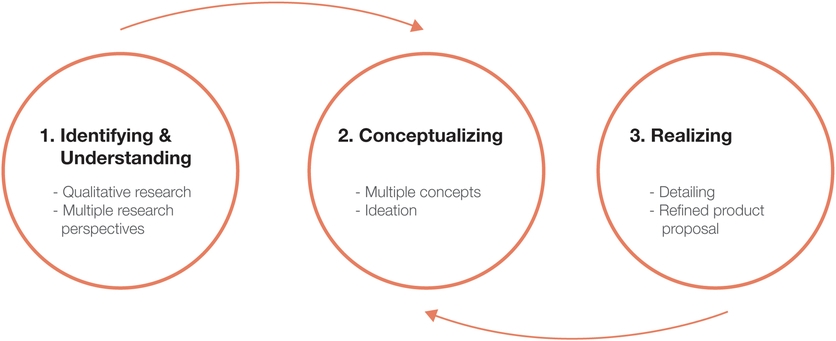
Our inter-professional team of clinicians, parents, and designers used the Integrated New Product Development design thinking process to generate a structured home care education intervention for parents of children with CHD and their healthcare team. The Integrated New Product Development process is defined as “a way of thinking that combines three key elements: 1) a horizontal and interdisciplinary structure; 2) a commitment to maintain a focus on what customers and other stakeholder’s value; and 3) a system that begins with an emphasis on qualitative methods of discovery and development and evolves toward quantitative methods of refinement and manufacture and/or distribution”Reference Cagan and Vogel11 (Fig 1).
Integrated new product development design thinking process.
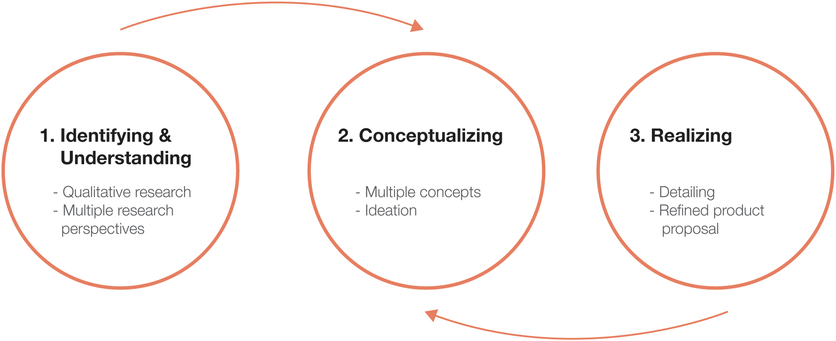
The Integrated New Product Development process is broken down into three distinct research phases. The first phase focuses on identifying and understanding the problem. The second phase shifts into conceptualising solutions to the problem, based on stakeholder feedback. The final phase focuses on the realisation of the intervention. The intervention is then ready for future testing and validation (which is beyond the scope of this paper).
Phase 1: identifying and understanding
The goal of the first phase was to understand the current opportunities for improvement of parent home care education and provide parents and clinicians the opportunity to co-create an intervention that suited both group’s needs and facilitated optimal parental understanding of important content for safe transition from hospital to home. This first phase was accomplished through focus groups conducted by Live Well Collaborative researchers versed in qualitative research and design thinking methods. To maximise the generalisability of our learning, parent groups included the following: low- and average-literacy, technology savvy, and those with a range of low-to-high information needs, all of whom had a child that previously underwent cardiac surgery. The clinician group included nurses, advanced practice nurses, and physicians.
Strengths and opportunities
Parents identified several strengths within the education they had received to date. In particular, they found value in diagrams, posters, and handouts that showed their child’s cardiac lesion and that could be used for as a reference, and in an app that explained cardiac lesions. Parents expressed several opportunities for improvement of the home care education, including how to provide daily care for their child in the hospital and at home, who to talk to about a specific clinical issue(s) and when to call, communication of financial information, what to expect during the hospital and home pre-operative and post-operative phases of care, nasogastric tube care and feeding, medication administration, wound care, safety concerns, and how to monitor for “red flags” indicating clinical decline. The parents identified a need to create a resource with all of the information they would need in one place, similar to a quick reference guide, which could be customised specifically for their child’s cardiac lesion.
Clinicians identified strengths of the current education process included face-to-face teaching and demonstrations, current handouts for reference, and videos available in the hospital room. They also suggested that an interactive web-based platform for the home care educational materials would be useful for families, particularly once they are discharged from the hospital. Additionally, they recognised that some parents would not have access to or feel comfortable with a web-based format. Clinicians suggested a pocket guide as a reference for all of the basic information that would apply to families with a child undergoing any cardiac surgery, especially one that would allow for storage of customised handouts or other print-based information.
Development of the intervention
During focus group sessions, Live Well Collaborative researchers used interactive methods such as brainstorming, card sorting exercises to clarify best ways forward, and journey mapping to understand how each stakeholder is involved in home care education throughout the care continuum. The study team then worked to learn preferred teaching–learning methods. Parents identified mobile applications, face-to-face questions, presentations, websites, and e-mail as the best forms for receiving education. Clinicians identified similar teaching–learning methods, including web-based applications, face-to-face questions, handouts, and websites. In addition, clinicians suggested online groups as an additional form for parent education. Parents identified that they wanted the educational information to be categorised in three ways: chronologically based on their journey through the cardiac surgery experience; inpatient and outpatient information; and critical baseline information applicable throughout the care delivery process. As a result of this feedback, the final version of the Home Care for Heart Health intervention included clinician education videos, a quick reference guide, family-friendly pathways, and a mobile website.
Phase 2: conceptualising
Throughout the conceptualisation phase, rough visual prototypes were developed for clinician and parent focus group testing. To accommodate variable parent literacy levels, descriptive pictograms were developed, tested, and refined by the focus groups to reflect pertinent information and visual cues.
There were a total of 44 sessions led by the Live Well Collaborative. Weekly sessions included the principal investigator (SS) over two semesters (24 sessions). Group sessions to further refine the Home Care for Heart Health intervention included six sessions with the study team (typical 4 study staff and 5 Live Well Collaborative personnel), six sessions with clinicians (3–4 nurses and 1–2 physicians), and six sessions/phone calls with the parents (1–2 low-literacy and 3–4 high-literacy parents) over the two academic semesters. The sessions ranged from 2 to 4 hours. The work was performed in an iterative manner with the Home Care for Heart Health written intervention requiring 16 revisions based on stakeholder feedback and web-based materials requiring 10 revisions. Once the content was finalised, it was reviewed to ensure it was written at the 4th grade level (SH) and taken to our Heart Institute Family Advisory Council for approval.
An additional inter-professional team developed web-based education using the PowToon© platform for dissemination of the Home Care for Heart Health tool to the remainder of the inter-professional team. This team met three times during the development process and another three times with the remainder of our study team. The focus of this education was on content, theme, style, audience, and total duration. Simultaneously, an additional web-based PowToon learning module was developed which included videos of bedside nursing demonstrating the correct and incorrect approaches to the methods of teach-back parent home care education. Final renditions of all aspects of the intervention were tested at clinician and parent focus groups to ensure the needs of each stakeholder were met.
Phase 3: realising
At the final phase of the Integrated New Product Development process, the intervention had been refined to the point of being testable and implementable. Final finishing touches (e.g. soft touch coating on the front and back covers of the quick reference guide) were added to create a unique and personalised experience for parents. Clinician education was vetted within the study team and clinician focus group prior to implementation.
Implementation of the intervention was accomplished through engagement of key stakeholders from the inter-professional teams who participate in the care of cardiac surgery patients across all clinical units (Outpatient clinic, Cardiac Intensive Care Unit, Cardiac Acute Care Unit, and the cardiothoracic surgical team). This intentional and all-inclusive approach was meant to mirror the need for education across the entire care continuum. Specific Home Care for Heart Health training was spread using established continuing medical and professional educational channels; however, each participating unit was encouraged to develop a plan to supplement the Home Care for Heart Health education with unit-specific education, as well as developing Home Care for Heart Health unit champions. The study team and unit leaders meet every 2 weeks for 3 months to ensure spread of and adherence to the intervention then monthly thereafter for 6 months.
Each Heart Institute bedside nurse was assigned the teach-back PowToon video to view. This was mandatory education. After completing the web-based training, each bedside nurse was observed one-on-one with an education consultant either in real time or through a simulated scenario. The nurses were required to fill out a self-reflection tool and the education consultant filled out an observation tool. At that time, they were also given real-time feedback provided by the educator. We developed a group of Home Care for Heart Health nursing champions to assist with sustainability. Each Home Care for Heart Health champion was required to complete at least two observations.
We incorporated the teach-back method because it is an effective tool to ensure patient understanding and comprehension and it has been endorsed by the Agency for Healthcare Research and Quality as a resource to promote health literacy.12 The teach-back method assesses comprehension of home care education through a series of steps that ask families to state in their own words what they need to know or do. This method identifies gaps in parent understanding of recently provided education and gives clinicians an opportunity to re-explain content or re-demonstrate home care skills
Results
The Home Care for Heart Health intervention
Home Care for Heart Health quick reference guide (print copy)
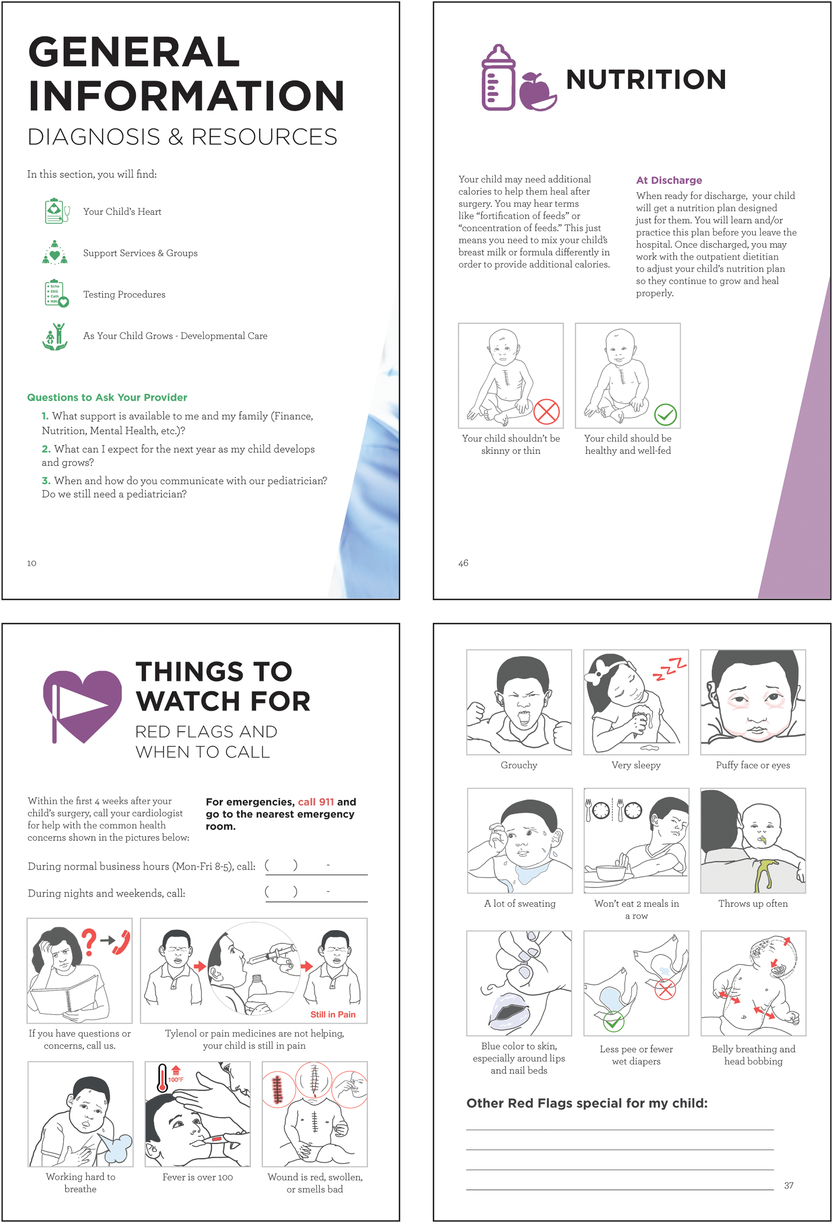
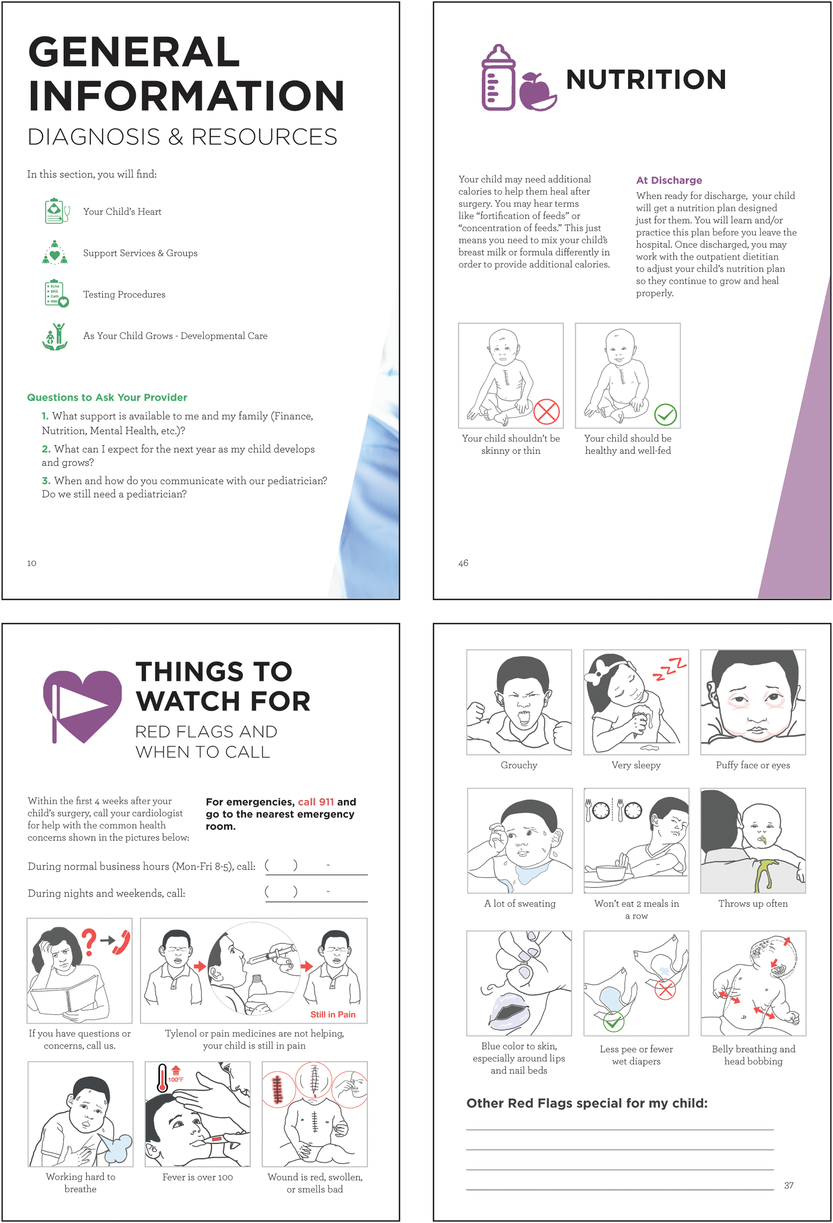
The Home Care for Heart Health quick reference guide provides access to consolidated and easy to digest information. The guide is structured into three themes:
The “General Information” section includes information on the child’s specific diagnosis, connection to support services and groups, what to expect with diagnostic testing and procedures, and considerations as the child matures.
The “Your Child’s Surgery” section includes preparing for surgery, getting to know the child’s Care Team, what to expect in the Cardiac Intensive Care Unit, facts on nutrition and medicine in the hospital, and what to expect as the child transitions to the Acute Care Cardiology Unit.
The “Caring for Your Child at Home” section includes things to watch for at home (“red flags”), how to care for the surgical incision, chest precautions, medication administration, nutrition, home care supplies and therapy, tips on how to stay healthy at home, how to care for the child if the child is a neonate or infant, and resources on how the parents can take care of themselves and the rest of their family.
Each section is colour coded with specific icons for easy navigation. In addition, there are specific questions to serve as prompts for parents to ask their healthcare team to help initiate dialogue with clinicians. All content was written at a 4th grade level. Text was supplemented by pictograms, icons, and consistent colour schema whenever possible (Fig 2).
Home Care for Heart Health quick reference guide.
Home Care for Heart Health App
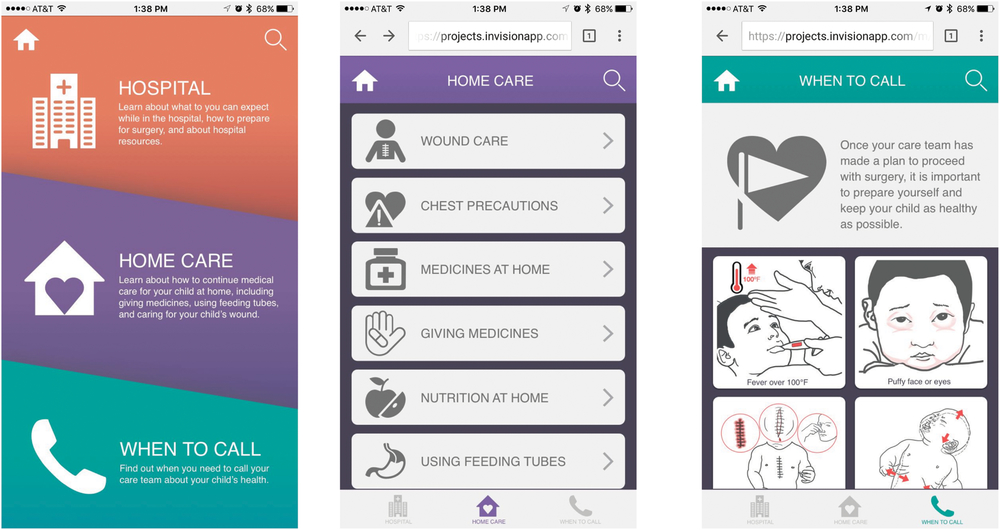
The Home Care for Heart Health App is structured similarly to the quick reference guide. During the iterative development process of our intervention, families and clinicians identified key elements for the app: information architecture that provided information in a similar manner to the reference guide; ease of navigation; and familiar visual aesthetic to other commonly used apps, such as Facebook, Twitter, or Instagram. Our app has similar visual language as the reference guide (e.g., colour scheme, iconography, and pictograms) and uses the same diction to create continuity and flow between the reference guide and the app with the goal of reducing parent uncertainty (Fig 3).
Home Care for Heart Health App screens.

Family friendly pathways
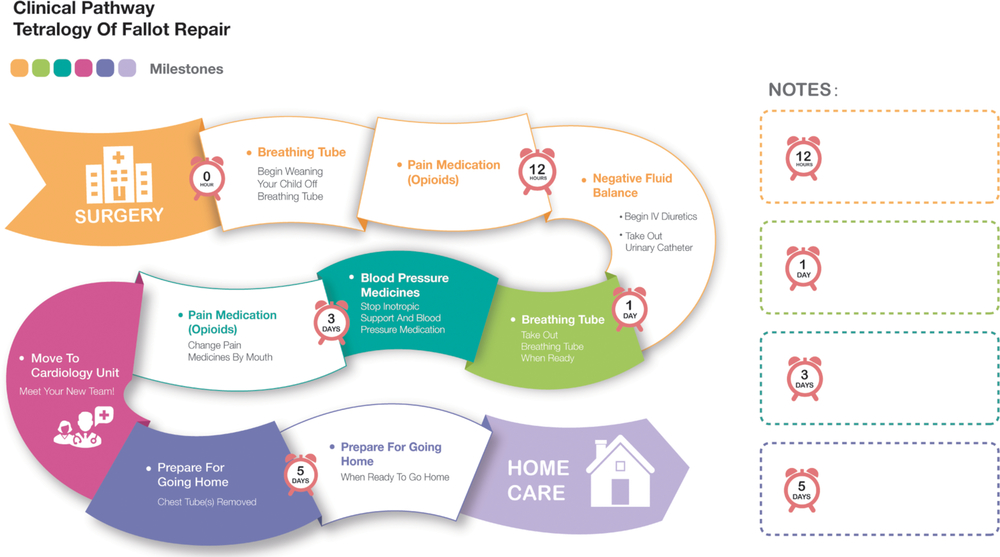
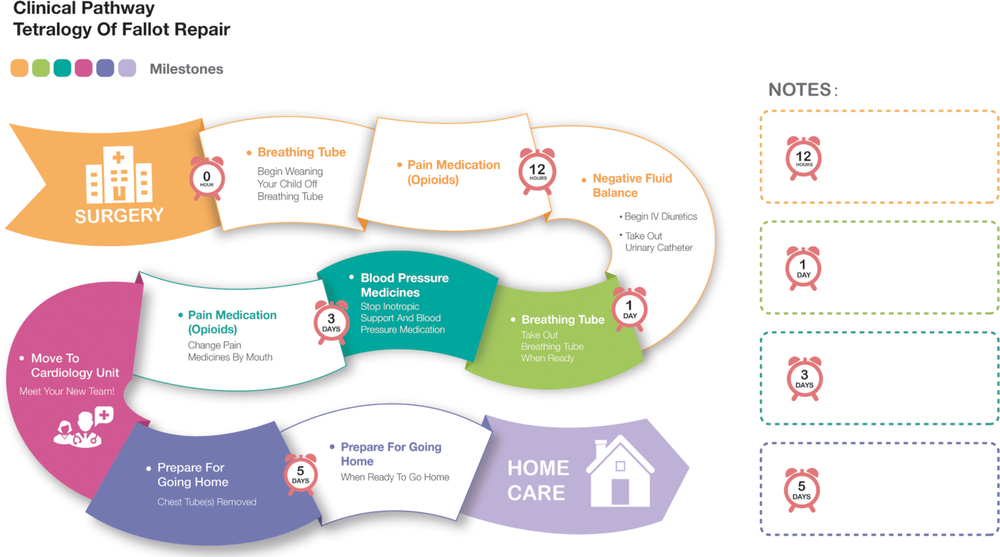
Pathways are clinical tools used for managing quality healthcare through standardised care processes. Pathways promote organised and efficient evidence-based clinical practice. We chose to re-imagine our cardiac surgical pathways into family-friendly versions to help educate parents about the child’s medical and surgical journey. Our final pathway design visually emulates a game-like feel, which is approachable for all families. The design creates a clear and understandable journey for families to use as a roadmap during the hospitalisation (Fig 4).
Home Care for Heart Health clinical pathway: tetralogy of Fallot repair.
Clinician education
Clinician education consisted of a PowToon animated educational video. 13 This video provided a high-level overview of Home Care for Heart Health by outlining key concepts and materials. The PowToon video highlighted relevant home care education materials for each clinical unit. For example, in our Cardiac Intensive Care Unit, we focused on medication education and information to ease the transfer to the acute care cardiology unit. In addition, we provided clinicians with detailed explanations for the prompted questions from the quick reference guide. Finally, the video included instructions on how to engage families with the intervention and how to use teach-back methodology to improve parental understanding of complex content and adherence with home care instructions.Reference Berkman, Sheridan and Donahue 14
Discussion
The creation of the Home Care for Heart Health intervention represents innovation in several domains. First, we demonstrated an evidenced-based, stakeholder-designed, clinician and parent home care education intervention that can be created using design thinking and implemented to scale at a paediatric hospital. This implementation was facilitated through the use of novel web-based educational technologies and the teach-back methodology. Furthermore, this intervention development represents the ability to extend a home care intervention from low- and middle-income countries to a research-rich western clinical practice.Reference Tucker, Sullivan, Eichler, Williams, Amato, Reuter-Rice and Bolick 5
Despite efforts to minimise limitations, the authors would like to acknowledge the following. While great effort was made to incorporate parents of all backgrounds and socio-economic experience, we were limited in our ability to benefit from frequent and consistent input by parents of low-literacy and minority background. Additionally, while we made every effort to incorporate all stakeholder feedback, some could not be included in the Home Care for Heart Health tool because of a lack of funding to support its creation as part of the web-based tool or the inability to develop a format brief enough to include in the print materials. Lastly, while the methods employed to develop the Home Care for Heart Health tool are based on previously successful interventions, we cannot speak to the success of Home Care for Heart Health at this time. The utility and success of the Home Care for Heart Health will be further explored in subsequent studies.
We believed bringing together inter-professional clinicians and parents to co-create a clinician–parent home care education intervention was a natural progression in an effort to foster safe transitions through our care continuum and recovery. Our intervention builds upon the Parent Education Discharge Instruction programme piloted and tested by Staveski et al in Southern India to teach nurses how to effectively provide home care information to parents in order to improve post-cardiac surgery outcomes for children in resource-constrained environments.Reference Tucker, Sullivan, Eichler, Williams, Amato, Reuter-Rice and Bolick 5
Conclusion
Using an inter-professional approach, our team of clinicians, parents, and design experts were able to co-create a clinician–parent home care education intervention with broad application and lifelong relevance to the CHD community. This intervention is currently being tested in a rigorous fashion to determine its impact on parent perception of readiness for hospital discharge, parental uncertainty, family management at home, and comfort with home care instructions, as well as clinical measures such as hospital length of stay and readmission.
Practice implications
Our intervention has the potential to be used as a model for other home care education interventions for parents of children with chronic illnesses.
Acknowledgements
The authors acknowledge the support of Craig Vogel, Jim Heubi, Linda Dunseath, Jamie Maier, Hannah Eber, Jiakang Qi, and Jiani Zhu at Cincinnati Children’s Hospital Medical Center, where Dr. Staveski performed this work.
Financial Support
This work is supported via the Design Thinking Award through the Center for Clinical and Translational Science and Training, Children’s Heart Association of Cincinnati. The Center for Clinical and Translational Science and Training at the University of Cincinnati is funded by the National Institutes of Health Clinical and Translational Science Award Program, grant 5UL1TR001425-04. The Clinical and Translational Science Award programme is led by the National Institutes of Health’s National Center for Advancing Translational Sciences. The content of this website is solely the responsibility of the Center for Clinical and Translational Science and Training and does not necessarily represent the official views of the National Institute of Health.
Conflicts of Interest
None.