






1 Introduction
The Barth–Schneider theorem [Reference Barth and Schneider1] states that whenever
 $A,B$
are countable dense subsets of
 $\mathbb {R}$
, there is an entire function f which restricts to an order-isomorphism of A onto B. This generalizes Cantor’s theorem which gives an order-isomorphism of A onto B which then extends uniquely to an order-isomorphism of
 $\mathbb {R}$
onto itself. P. M. Gauthier noted (private communication) that if A and B are countable dense subsets of the unit circle
 $T\subseteq \mathbb {C}$
, then there is a diffeomorphism
 $T\to T$
mapping A onto B and asked whether this diffeomorphism can be taken to be analytic.
It is a standard exercise (cf. [Reference Rudin4, Exercise 4, p. 264 and Exercise 25, p. 295]) that the entire functions that map the unit circle T into itself are the functions
 $f(z) = az^n$
,
 $|a|=1$
,
 $n=0,1,2,\dots $
. These map T bijectively onto itself only when they are rotations, i.e., when
 $n=1$
. Thus they give a bijection satisfying
 $f(A)=B$
only when B is the image of A under a rotation.
We will prove a version (Theorem 3.6) of the Barth–Schneider theorem for sets A, B which are invariant under a translation
 ${\sigma }(x)=x+t$
and use it to show (Theorem 4.1) that if A and B are countable dense subsets of
 $T\setminus \{1\}$
, where
 $T\subseteq \mathbb {C}$
is the unit circle
 $|z|=1$
, then there is an analytic function
 $h\colon \mathbb {C}\setminus \{0\}\to \mathbb {C}$
that restricts to an order isomorphism of the arc
 $T\setminus \{1\}$
onto itself
 $T\setminus \{1\}$
and satisfies
 $h(A)=B$
and
 $h'(z)\not =0$
when
 $z\in T$
. The proof uses a version (Theorem 3.3 and Corollary 3.5) of Theorem 3.2 of [Reference Burke2], adapted to produce functions which commute with a translation. In this paper, we fix a positive real number t, and the translation
 ${\sigma }$
given by
 ${\sigma }(z)=z+t$
. Note that
 $f{\sigma }=f$
says that f is periodic with period t, where
 $f{\sigma }$
denotes the composition
 $f\circ {\sigma }$
.
2 Preliminary results
In this section, we prove two technical facts needed in the next section. The first is an analog of a result of Walsh (cf. [Reference Deutsch3, Corollaries 1.2 and 1.3]). This is likely known, but we have not found it in the literature except for
 $k=0$
, so we give a proof. The second is adapting Proposition 2.1 of [Reference Burke2] to our present context.
Theorem 2.1 Let k be a nonnegative integer,
 ${\sigma }(z)=z+t$
. If
 $f\colon \mathbb {R}\to \mathbb {R}$
is a
 $C^k$
function which satisfies
 $f{\sigma }=f$
, and
 $F\subseteq \mathbb {R}$
is finite, then there is an entire function g such that
-
(a)
 $g(\mathbb {R})\subseteq \mathbb {R}$
and
$g{\sigma }=g$
-
(b)
$|D^ig(x)-D^if(x)|<{\varepsilon }$
,
$x\in \mathbb {R}$
,
$i=0,\dots ,k$
-
(c)
$D^ig(x)=D^if(x)$
for
$x\in F$
,
$i=0,\dots ,k$








Proof If we can arrange (a) and (b), then it follows that we can also arrange (c) by Theorem 0 of [Reference Deutsch3] applied to the space
 $X_k=\{f\in C^k(\mathbb {R}):f{\sigma }=f\}$
with the norm
 $\|f\|=\sum _{i=0}^k\|D^if\|_\infty $
. (Cf. [Reference Deutsch3, Example (1), p. 1183, and Corollary 1.3]) So we need only arrange (a) and (b).
It is standard that in
 $X_0$
the functions
 $g(2\pi z/t)$
, where g is a trigonometric polynomial with real coefficients, are dense (e.g., see [Reference Deutsch3, Example (2), p. 1183] or [Reference Sohrab5, Remark 9.4.24 (2)]).
For the general case, we proceed by induction on k. When
 $k>0$
, fix
 $f\in X_k$
and apply the induction hypothesis to
 $Df$
to get an entire function
 $g_1$
satisfying
 $g_1(\mathbb {R})\subseteq \mathbb {R}$
,
 $g_1{\sigma }=g_1$
and
 $|D^{i-1}g_1(x)-D^if(x)|<\delta =\min ({\varepsilon }/2,{\varepsilon }/(2t))$
for
 $x\in \mathbb {R}$
and
 $i=1,\dots ,k$
. Define an entire function g by
 $$ \begin{align*} g(z) = f(0)+\int_{0}^z g_1(s)\,ds - cz,\quad z\in\mathbb{C}, \end{align*} $$
where
 $c=(1/t)\int _0^t g_1(s)\,ds$
is the average value of
 $g_1$
over
 $[0,t]$
. Since
 $\int _0^tDf = 0$
by periodicity, we have
 $$ \begin{align*} |c| = \Bigl|\frac1t\int_0^t (g_1(s)-Df(s))\,ds\Bigr| \leq \delta. \end{align*} $$
To verify that
 $g{\sigma }=g$
, it suffices to check that
 $g(x+t)=g(x)$
when x is real, and that follows by the following calculation.
 $$ \begin{align*} g(x+t) = f(0)+\int_{0}^{x+t} g_1(s)\,ds - c(x+t) = g(x) + \int_{x}^{x+t} g_1(s)\,ds - ct = g(x). \end{align*} $$
For
 $x\in [0,t]$
, we also have
 $$ \begin{align*} |g(x)-f(x)| & = \Bigl|\int_{0}^x (g_1(s)-Df(s))\,ds - cx\Bigr| \\ & \leq \int_{0}^x |g_1(s)-Df(s)|\,ds + |c|x \\ & \leq t\delta + t\delta = 2t\delta < {\varepsilon}, \end{align*} $$
and so, by periodicity,
 $|g(x)-f(x)| <{\varepsilon }$
for all
 $x\in \mathbb {R}$
. This takes care of the bound on
 $|D^ig(x)-D^if(x)|$
,
 $x\in \mathbb {R}$
, when
 $i=0$
. When
 $i=1$
we have
 $$ \begin{align*} |Dg(x)-Df(x)| = |g_1(x)-c-Df(x)| \leq |g_1(x)-Df(x)|+|c| \leq 2\delta<{\varepsilon}, \end{align*} $$
and when
 $2\leq i\leq k$
,
 $|D^ig(x)-D^if(x)|=|D^{i-1}g_1(x)-D^if(x)|<\delta <{\varepsilon }$
. ▪
Lemma 2.2 Let
 ${\varepsilon }>0$
. Let k be a nonnegative integer and let
 $F\subseteq [0,t]$
be a finite set such that
 $\{0,t\}\subseteq F$
or
 $\{0,t\}\cap F=\emptyset $
. For each
 $p\in F$
and
 $i=0,\dots k$
, let
 $k_{p,i}\in \{-1,0,1\}$
with
 $k_{0,i}=k_{t,i}$
if
 $0\in F$
. Then there is an entire function
 $f\colon \mathbb {C}\to \mathbb {C}$
such that
 $f{\sigma }=f$
,
 $f(\mathbb {R})\subseteq \mathbb {R}$
and for
 $i=0,\dots ,k$
and
 $x\in \mathbb {R}$
, we have
 $|(D^i f)(x)| < {\varepsilon }$
and for
 $p\in F$
,
 $(D^i f)(p)$
is
 $<0$
,
 $=0$
,
 $>0$
when
 $k_{p,i}=-1,0,1$
, respectively.
Proof For
 $r>0$
and
 $p\in \mathbb {R}$
, write
 $I_r(p)=(p-r,p+r)$
. For each
 $p\in F$
, choose
 $0<r_p<1$
, so that the intervals
 $I_{r_p}(p)$
are contained in
 $(0,t)$
when
 $0<p<t$
,
 $I_{r_t}(t) = I_{r_0}(0) + t$
if
 $0\in F$
, and the intervals
 $I_{r_p}(p)$
for
 $p\in F$
and have closures which are disjoint from each other. For each
 $p\in F$
, choose a
 $C^\infty $
bump function
 $\varphi _p$
with support equal to the closure of
 $I_{r_p}(p)$
, so that
 $0\leq \varphi _p\leq 1$
,
 $\varphi _p(p)=1$
,
 $\varphi _p$
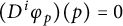
has a flat point at p (i.e.,
 $(D^i \varphi _p)(p)=0$
for all nonzero i), taking
 $\varphi _t(x)=\varphi _0(x-t)$
if
 $0\in F$
. Let
 $\theta _p$
be a
 $C^\infty $
function whose derivatives at p follow the requisite pattern, with
 $\theta _t(x)=\theta _0(x-t)$
if
 $0\in F$
, for example, take
 $\theta _p(x)=\sum _{i=0}^kk_{p,i}(x-p)^i$
. For suitably chosen positive constants
 $\lambda _p$
, we set
 $g(x) = \sum _{p\in F}\lambda _p\theta _p(x)\varphi _p(x)$
,
 $0\leq x\leq t$
, and extend g by periodicity to all of
 $\mathbb {R}$
so that
 $g{\sigma }=g$
. This function g is
 $C^\infty $
and its derivatives have the requisite pattern at the points
 $p\in F$
since for
 $i=0,\dots ,k$
we have
 $(D^i g)(p) = \lambda _p(D^i (\varphi _p\theta _p))(p) = \lambda _p D^{i}\theta _p(p)$
. Choose the constants
 $\lambda _p$
,
 $p\in F$
, small enough so that for each
 $i=0,\dots ,k$
,
 $$ \begin{align*} \lambda_p\|D^i(\varphi_p\theta_p)\|_\infty<{\varepsilon}/2. \end{align*} $$
Then g is a
 $C^\infty $
function which satisfies the conclusion in the place of f and with
 ${\varepsilon }$
replaced by
 ${\varepsilon }/2$
. Get the desired entire function f by applying Theorem 2.1 to g with
 ${\varepsilon }/2$
in the place of
 ${\varepsilon }$
. ▪
3 Barth–Schneider for periodic functions
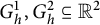
Definition 3.1 A fiber-preserving local homeomorphism of
 $\mathbb {R}^{2}\cong \mathbb {R}\times \mathbb {R}$
is a homeomorphism
 $h\colon G^1_h\to G^2_h$
between two open sets
 $G^1_h,G^2_h\subseteq \mathbb {R}^{2}$
such that h has the form
 $h(x,y)=(x,h^*(x,y))$
for some continuous map
 $h^*\colon G^1_h\to \mathbb {R}$
. We write
 $k_h$
for the inverse of h.
We can identify a fiber-preserving homeomorphism h with the family
 $\{(h^*)_x\}$
of vertical sections of
 $h^*$
, given by
 $(h^*)_x(y)=h^*(x,y)$
. These are homeomorphisms
 $(h^*)_x\colon (G^1_h)^{\,}_x\to (G^2_h)^{\,}_x$
, where
 $(G^1_h)^{\,}_x$
,
 $(G^2_h)^{\,}_x$
are the vertical sections at x of
 $G^1_h$
,
 $G^2_h$
.

It is separate continuity rather than joint continuity that we require for these fiber-preserving maps. In our context, however, this is not a weaker property as the following proposition shows.
Proposition 3.1 Let X be any topological space,
 $G\subseteq X\times \mathbb {R}$
an open set, and let
 $h\colon G\to X\times \mathbb {R}$
. Assume that for each
 $x\in X$
,
 $h(G_x)\subseteq \{x\}\times \mathbb {R}$
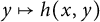
, h is one-to-one and h is separately continuous, i.e., the functions
 $x\mapsto h(x,y)$
,
 $y\mapsto h(x,y)$
are continuous on their domains. Then h is continuous.
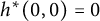
Taking
 $h(x,y)=(x,h^*(x,y))$
on
 $\mathbb {R}\times \mathbb {R}$
with
 $h^*(x,y)=xy/(x^2+y^2)$
when
 $(x,y)\not =(0,0)$
,
 $h^*(0,0)=0$
, shows that the assumption that h is one-to-one cannot be omitted.
Proof Write
 $h(x,y)=(x,h^*(x,y))$
. The continuity of h is equivalent to that of
 $h^*$
. Also note that because h is one-to-one, so is
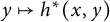 $y\mapsto h^*(x,y)$
for each fixed x. Let
 $a\in X$
,
 $b,c\in \mathbb {R}$
with
 $(a,b)\in G$
and
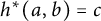 $h^*(a,b)=c$
. Fix an open neighborhood U of a and an open interval V containing b such that
 $U\times V\subseteq G$
. Choose an open interval W with
 $c\in W$
. Since
 $y\mapsto h^*(a,y)$
is continuous, there is a
 $\delta>0$
such that
 $|y-b|\leq \delta $
implies
 $y\in V$
and
 $h^*(a,y)\in W$
. The two functions
 $x\mapsto h^*(x,b\pm \delta )$
are continuous at a and hence there is an open neighborhood
 $U'\subseteq U$
of a such that
 $x\in U'$
implies
 $h^*(x,b\pm \delta )\in W$
. For
 $x\in U'$
,
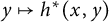 $y\mapsto h^*(x,y)$
is a continuous one-to-one function on the interval
 $[b-\delta ,b+\delta ]$
, so that the image of this interval is an interval with endpoints
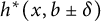 $h^*(x,b\pm \delta )$
, and hence is contained in W. Thus,
 $h^*(U'\times (b-\delta ,b+\delta ))\subseteq W$
and therefore
 $h^*$
is continuous at
 $(a,b)$
. ▪
Remark 3.2 The inverse
 $k_h$
of a fiber-preserving local homeomorphism h is also a fiber-preserving local homeomorphism and is related to h by the fact that
 $(x,y)\in G^1_h$
and
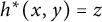 $h^*(x,y)=z$
if and only if
 $(x,z)\in G^2_h$
and
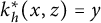 $k^*_h(x,z)=y$
. As pointed out in the proof of Proposition 3.1, the vertical sections of
 $h^*$
are one-to-one since h is one-to-one. The main examples for our purposes are
 $h=\operatorname {id}_{\mathbb {R}^2}$
, the identity map on
 $\mathbb {R}^{2}$
(for which
 $(h^*)_x(y)=y$
is the identity map for each
 $x\in \mathbb {R}$
), and for a given a continuous map
 $g\colon \mathbb {R}\to \mathbb {R}$
,
 $h^*(x,y)=g(x)+y$
. Both of these have
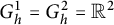 $G^1_h=G^2_h=\mathbb {R}^{2}$
.
We shall prove our main results using the following version of Theorem 3.2 of [Reference Burke2]. The proof is similar to that of the original version, but we repeat the argument with the necessary changes in order to be clear.
Theorem 3.3 Let
 $E_i\subseteq [0,t]$
,
 $i=0,\dots ,k$
, be countable sets with
 $\{0,t\}\subseteq E_i$
or
 $E_i\cap \{0,t\}=\emptyset $
. Let
 $F\subseteq [0,t]$
be a finite set disjoint from
 $\bigcup _{i=0}^k E_i$
with
 $\{0,t\}\subseteq F$
or
 $F\cap \{0,t\}=\emptyset $
. For each
 $p\in E_i$
, let
 $A_{p,i}\subseteq \mathbb {R}$
be a countable dense set, with
 $A_{0,i}=A_{t,i}$
if
 $\{0,t\}\subseteq A$
. Let
 ${\varepsilon }>0$
. Let
 $\mathscr {H}$
be a countable family of fiber-preserving local homeomorphisms of
 $\mathbb {R}^2$
. There exists an entire function
 $f\colon \mathbb {C}\to \mathbb {C}$
such that
 $f(\mathbb {R})\subseteq \mathbb {R}$
,
 $f{\sigma }=f$
and for all
 $x\in \mathbb {R}$
and
 $i=0,\dots ,k$
,
-
(a)
$|(D^{i}f)(x)|<{\varepsilon }$
, and if
$x\in F$
then
$D^if(x)=0$
. -
(b) for each
$p\in E_i$
,
$(D^i f)(p)\in A_{p,i}$
. -
(c) for every
$q\in \mathbb {R}$
,
$h\in \mathscr {H}$
and every open interval
$U\subseteq \mathbb {R}\setminus F$
, if for some
$$ \begin{align*} (x,(D^i f)(x))\in G^1_h\quad \text{and}\quad q = h^*(x,(D^i f)(x)) \end{align*} $$
$x\in U\cap \operatorname {cl} Y_{h,q,i}$
, where
$Y_{h,q,i} = \{p\in E_i:$
for some
$q'\in A_{p,i}$
,
$(p,q')\in G^1_h$
and
$q=h^*(p,q')\}$
, then
$q = h^*(p,(D^i f)(p))$
for some
$p\in U\cap E_i$
.













Remark 3.4 (i) For the hypothesis in (c) to be nonvacuous, there must be a point
 $x\in U\cap \operatorname {cl} E_i\subseteq U\cap [0,t]$
, so only intervals which intersect
 $[0,t]$
are relevant.
(ii) It is sometimes useful to reword clause (c) in an equivalent form. The criterion for
 $p\in Y_{h,q,i}$
is that
 $p\in E_i$
and
 $q\in (h^*)_p(A_{p,i})$
. Clause (c) says equivalently that for
 $x\in [0,t]\setminus F$
, if
 $q=(h^*)_x((D^i f)(x))$
and arbitrarily close to x there are points
 $p\in E_i$
such that
 $q\in (h^*)_p(A_{p,i})$
, then arbitrarily close to x there are points
 $p\in E_i$
such that
 $q=(h^*)_p((D^i f)(p))$
.
(iii) If we require
 $\operatorname {id}_{\mathbb {R}^2}\in \mathscr {H}$
then this ensures that either f is constant or for
 $x\in [0,t]\setminus F$
,
 $i=0,\dots ,k$
, if
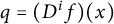 $q=(D^i f)(x)$
and arbitrarily close to x there are points
 $p\in E_i$
such that
 $q\in A_{p,i}$
, then
 $x\in E_i$
. To see why, apply the reworded clause (c) in (ii) with h being the identity map to get that if
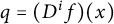 $q=(D^i f)(x)$
and arbitrarily close to x there are points
 $p\in E_i$
such that
 $q\in A_{p,i}$
, then arbitrarily close to x there are points
 $p\in E_i$
such that
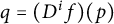 $q=(D^i f)(p)$
. If x itself does not belong to
 $E_i$
, then since
 $D^if$
is entire,
 $D^if$
is constant with value q and hence f is a polynomial. Since f is periodic, it then follows that f is constant.
Proof We may assume that
 $\bigcup _{i=0}^k E_i\not =\emptyset $
(otherwise take
 $f=0$
) and that
 ${\varepsilon }\leq 1$
. Let
 $\mathscr {B}=\{U_r:r=1,2,\dots \}$
be a one-to-one enumeration of a base of bounded open intervals for
 $\mathbb {R}\setminus F$
. For each r, write
 $U_r=\bigcup _{n=1}^\infty U_{r,n}$
, the union of an increasing sequence of concentric intervals so that
 $\operatorname {cl} U_{r,n}\subseteq U_{r,n+1}$
. Let
 $\{(i_n,s_n):n=1,2,\dots \}$
list all pairs
 $(i,s)$
consisting of an
 $i=0,\dots ,k$
and a point
 $s\in E_i$
. Let
 $Q=\{h^*(p,q'):h\in \mathscr {H},\, p\in E_i,\, q'\in A_{p,i},\, (p,q')\in G^1_h,\, i=0,\dots ,k\}$
. List the quadruples
 $(h,j,q,V)$
consisting of an
 $h\in \mathscr {H}$
, a
 $j=0,\dots ,k$
and elements
 $q\in Q$
,
 $V\in \mathscr {B}$
as
 $\{(h_m,j_m,q_m,V_m):m=1,2,\dots \}$
with each quadruple listed infinitely many times. As with the
 $U_r$
above, we write
 $V_m=\bigcup _{n=1}^\infty V_{m,n}$
where if
 $V_m=U_r$
then
 $V_{m,n}=U_{r,n}$
. We will write
 $G^1_m$
,
 $G^2_m$
,
 $k_m$
for
 $G^1_{h_m}$
,
 $G^2_{h_m}$
,
 $k_{h_m}$
, respectively.
We will build the required function as
 $f=\sum _{n=1}^\infty \lambda _n u_n$
, where for each
 $n\in {\mathbb N}$
,
 $\lambda _n\in \mathbb {R}$
satisfies
 $|\lambda _n|\leq 1$
and
 $u_n\colon \mathbb {C}\to \mathbb {C}$
is an entire function such that
 $u_n(\mathbb {R})\subseteq \mathbb {R}$
. We recursively define the following.
-
(i)
$\lambda _n$
and
$u_n$
. -
(ii) An increasing sequence of finite sets
$\emptyset =K_0\subseteq K_1\subseteq \dots $
of pairs
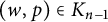
$(w,p)$
consisting of a
$w=0,\dots ,k$
and a point
$p\in E_w$
. -
(iii) A decreasing sequence of positive numbers
$1=\delta _0>\delta _1>\dots $
.







We will arrange that the following properties hold for
 $n=1,2,\dots $
. In this list,
 $f_n$
denotes the sum
 $\sum _{k=1}^n \lambda _k u_k$
, and
 $f_0=0$
.
-
(1)
$u_n{\sigma }=u_n$
and
$|(D^{i}u_n)(x)| < 2^{-n-1}\delta _{n-1}{\varepsilon }$
for
$x\in \mathbb {R}$
,
$i=0,\dots ,k$
. -
(2)
$(D^{w}u_n)(p) = 0$
for
$(w,p)\in K_{n-1}$
. -
(3)
$(D^{i}u_n)(x) = 0$
whenever
$x\in F$
,
$i=0,\dots ,k$
. -
(4)
$|u_n(z)| < 2^{-n}$
, for
$|z|\leq n$
. -
(5) For each
$(w,p)\in K_n$
,
$(D^w f_n)(p)\in A_{p,w}$
. -
(6) If n is odd then
$K_n = K_{n-1}\cup \{(i_\ell ,s_\ell )\}$
for the least
$\ell $
such that
$(i_\ell ,s_\ell )\not \in K_{n-1}$
. We have
$(D^{i_\ell }u_n)(s_\ell ) \not = 0$
. -
(7) If
$n=2m$
is even, we have the following. Suppose that
$$ \begin{align*} (x,(D^{j_m}f_{n-1})(x))\in G^1_{m}\ \text{and}\ (x,q_m)\in G^2_{m}\ \text{whenever}\ x\in V_m. \end{align*} $$
-
(a) If
$q_m=h^*_m(x,(D^{j_m}f_{n-1})(x))$
for some
$x\in V_m\cap \operatorname {cl} Y_{h_m,q_m,j_m}$
then for some
$p\in V_m\cap Y_{h_m,q_m,j_m}$
,
$h^*_m(p,(D^{j_m}f_{n})(p))=q_m$
and
$K_n = K_{n-1}\cup \{(j_m,p)\}$
. -
(b) If
$q_m\not =h^*_m(x,(D^{j_m}f_{n-1})(x))$
for all
$x\in V_m\cap \operatorname {cl} Y_{h_m,q_m,j_m}$
then
$u_n=0$
,
$K_n = K_{n-1}$
and
$\delta _n<\inf \{|k^*_m(x,q_m) - (D^{j_m}f_{n-1})(x)|:x\in V_{m,n}\cap \operatorname {cl} Y_{h_m,q_m,j_m}\}$
.
-




























We now explain how to carry out the construction at odd stages and at even stages.
First suppose n is odd. This stage includes the initial step
 $n=1$
. Set
 $K_n = K_{n-1}\cup \{(i_\ell ,s_\ell )\}$
for the least
 $\ell $
such that
 $(i_\ell ,s_\ell )\not \in K_{n-1}$
. Apply Lemma 2.2 to get an entire function
 $u_n\colon \mathbb {C}\to \mathbb {C}$
satisfying (1), (2), (3), and (6). Arrange (4) by replacing
 $u_n$
by a smaller positive multiple of itself if necessary. Since
 $(D^{i_\ell }u_n)(s_\ell )\not =0$
by (6), and
 $A_{s_\ell ,i_\ell }$
is dense in
 $\mathbb {R}$
, we may choose
 $\lambda _n$
so that
 $0<\lambda _n<1$
and
 $(D^{i_\ell }f_n)(s_\ell ) = (D^{i_\ell }f_{n-1})(s_\ell ) + \lambda _n (D^{i_\ell }u_n)(s_\ell )\in A_{s_\ell ,i_\ell }$
. This gives (5) because if
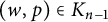 $(w,p)\in K_{n-1}$
then
 $(D^w u_n)(p)=0$
by (2), so
 $(D^w f_n)(p) = (D^w f_{n-1})(p)$
which by (5) for
 $n-1$
belongs to
 $A_{p,w}$
. For
 $\delta _n$
, choose any positive number satisfying
 $\delta _n<\delta _{n-1}$
.
Now suppose that
 $n=2m$
is even. If the assumption of (7) fails, take
 $u_n=0$
,
 $\lambda _n=0$
,
 $K_n=K_{n-1}$
, and let
 $\delta _n$
be any number such that
 $0<\delta _n<\delta _{n-1}$
. Clearly (1)–(7) hold. Now suppose that the assumption is satisfied, i.e.,
 $(x,(D^{j_m}f_{n-1})(x))\in G^1_{m}$
and
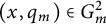 $(x,q_m)\in G^2_{m}$
whenever
 $x\in V_m$
.
Case 1.
 $q_m\not = h^*_m(x,(D^{j_m}f_{n-1})(x))$
for all
 $x\in V_m\cap \operatorname {cl} Y_{h_m,q_m,j_m} $
.
Let
 $u_n=0$
,
 $\lambda _n=0$
,
 $K_n=K_{n-1}$
. Clearly (1)– (5) hold. For (7), choose any positive number
 $\delta _n<\delta _{n-1}$
so that
 $\delta _n<\inf \{|k^*_m(x,q_m) - (D^{j_m}f_{n-1})(x)|:x\in V_{m,n}\cap \operatorname {cl} Y_{h_m,q_m,j_m}\}$
where the right-hand side is positive because
 $\operatorname {cl}(V_{m,n})\cap \operatorname {cl} (Y_{h_m,q_m,j_m})$
is compact and contained in
 $V_m\cap \operatorname {cl} Y_{h_m,q_m,j_m}$
.
Case 2.
 $h^*_m(p,(D^{j_m}f_{n-1})(p))=q_m$
for some
 $p\in V_m\cap Y_{h_m,q_m,j_m}$
.
By definition,
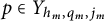 $p\in Y_{h_m,q_m,j_m}$
means that
 $p\in E_{j_m}$
and there is a (unique)
 $q'\in A_{p,j_m}$
such that
 $(p,q')\in G^1_m$
and
 $q_m=h^*_m(p,q')$
. Since the vertical sections of
 $h^*_m$
are one-to-one, we must have
 $(D^{j_m}f_{n-1})(p)=q'$
and hence
 $(D^{j_m}f_{n-1})(p)\in A_{p,j_m}$
. Let
 $u_n=0$
,
 $\lambda _n=0$
,
 $K_n=K_{n-1}\cup \{(j_m,p)\}$
. Clearly (1)–(5) and (7) hold. For
 $\delta _n$
, choose any positive number satisfying
 $\delta _n<\delta _{n-1}$
.
Case 3.
 $h^*_m(x,(D^{j_m}f_{n-1})(x))\not =q_m$
for all
 $x\in V_m\cap Y_{h_m,q_m,j_m}$
, but
 $$ \begin{align*} h^*_m(p,(D^{j_m}f_{n-1})(p))=q_m \end{align*} $$
for some
 $p\in V_m\cap \operatorname {cl} Y_{h_m,q_m,j_m}$
.
The assumptions give
 $h^*_m(p,(D^{j_m}f_{n-1})(p)) = q_m$
and
 $p\not \in V_m\cap Y_{h_m,q_m,j_m}$
, and since
 $p\in V_m$
this gives
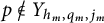 $p\not \in Y_{h_m,q_m,j_m}$
. It follows from (5) that
 $(j_m,p)\not \in K_{n-1}$
because if
 $(j_m,p)\in K_{n-1}$
then
 $p\in E_{j_m}$
and by (5) we have
 $$ \begin{align*} (D^{j_m}f_{n-1})(p)\in A_{p,j_m}, \end{align*} $$
which together with
 $h^*_m(p,(D^{j_m}f_{n-1})(p))=q_m$
gives
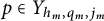 $p\in Y_{h_m,q_m,j_m}$
, contradiction. Apply Lemma 2.2 to get an entire function
 $u_n\colon \mathbb {C}\to \mathbb {C}$
satisfying (1), (2), (3) and
 $(D^{j_m} u_n)(p)>0$
. Arrange (4) by replacing
 $u_n$
by a smaller positive multiple of itself if necessary. The function
 $x\mapsto (k^*_m(x,q_m) - (D^{j_m}f_{n-1})(x))/(D^{j_m}u_n)(x)$
is continuous at p with value
 $0$
there, and
 $p\in V_m\cap \operatorname {cl} Y_{h_m,q_m,j_m}$
, so we can pick an element
 $p'$
of
 $V_m\cap Y_{h_m,q_m,j_m}$
so close to p that the number
 $$ \begin{align*} \lambda_n = \frac{k^*_m(p',q_m) - (D^{j_m}f_{n-1})(p')}{(D^{j_m}u_n)(p')} \end{align*} $$
satisfies
 $|\lambda _n|<1$
. With this value of
 $\lambda _n$
, we have
 $k^*_m(p',q_m)=(D^{j_m}f_n)(p')$
and therefore
 $$ \begin{align*} h^*_m(p',(D^{j_m}f_{n})(p')) = q_m, \end{align*} $$
and hence (7) holds if we take
 $K_n=K_{n-1}\cup \{(j_m,p')\}$
. Note that (5) is satisfied. For
 $\delta _n$
, choose any positive number satisfying
 $\delta _n<\delta _{n-1}$
.
This completes the construction. Property (4) ensures that the formula
 $f = \sum _{n=1}^\infty \lambda _nu_n$
defines an entire function and that
 $$ \begin{align*} (D^{i}f)(z) = \sum_{n=1}^\infty \lambda_n(D^{i}u_n)(z) \end{align*} $$
for all
 $i=0,\dots ,k$
and
 $z\in \mathbb {C}$
. Clearly
 $f(\mathbb {R})\subseteq \mathbb {R}$
and by (1), we have
 $f{\sigma }=\sum _{n=1}^\infty \lambda _nu_n{\sigma }=f$
. We now verify (a)–(c).
(a) When
 $i=0,\dots ,k$
,
 $x\in \mathbb {R}$
, we have using (1) that
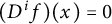
 $|(D^{i}f)(x)| \leq \sum _{i=1}^\infty |(D^{i}u_i)(x)| < \sum _{i=1}^\infty 2^{-i-1}{\varepsilon } = {\varepsilon }$
and, using (3), when
 $x\in F$
we have
 $(D^{i}f)(x) = 0$
.
(b) When
 $p\in E_i$
,
 $i=0,\dots ,k$
, (6) ensures that
 $(i,p)\in K_n$
if n is sufficiently large. Then (5) gives
 $(D^{i}f_n)(p) \in A_{p,i}$
. From (2), we get that
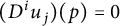 $(D^{i}u_j)(p)=0$
,
 $j\geq n+1$
, and hence
 $(D^{i}f)(p) = (D^{i}f_n)(p) \in A_{p,i}$
.
(c) Suppose
 $i=0,\dots ,k$
,
 $q\in \mathbb {R}$
,
 $U\subseteq \mathbb {R}\setminus F$
is an open interval, and we have
 $(p,(D^i f)(p))\in G^1_h$
, and
 $q = h^*(p,(D^i f)(p))$
for some
 $p\in U\cap \operatorname {cl} Y_{h,q,i}$
. We wish to show that
 $q = h^*(\bar {p},(D^i f)(y))$
for some
 $y\in U\cap E_i$
. We may assume that
 $U\in \mathscr {B}$
and for some open intervals
 $W_1,W_2\subseteq \mathbb {R}$
, for all
 $x\in U$
,
-
•
$(D^i f)(x)\in W_1\subseteq \operatorname {cl} W_1\subseteq W_2$
, and
$U\times W_2\subseteq G^1_h$
and -
•
$(x,q)\in G^2_h$
.

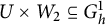

Since
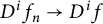 $D^i f_n\to D^i f$
uniformly on compact sets, for large enough n we have for
 $x\in U$
that
 $(D^i f_n)(x)\in W_2$
and hence
 $(x,(D^i f_n)(x))\in G^1_h$
. By assumption,
 $p\in \operatorname {cl} Y_{h,q,i}$
, so
 $Y_{h,q,i}\not =\emptyset $
and hence
 $q\in Q$
. Fix r such that
 $U=U_r$
. Choose an even
 $n=2m$
with
 $(h_m,j_m,q_m,V_m)=(h,i,q,U_r)$
, n large enough so that
 $p\in U_{r,n}=V_{m,n}$
and
 $(x,(D^i f_{n-1})(x))\in G^1_h$
for all
 $x\in U$
.
Claim.
 $q = h^*(x,(D^i f_{n-1})(x))$
for some
 $x\in U\cap \operatorname {cl} Y_{h,q,i}$
.
If not, then by (7),
 $\delta _n<\inf \{|k^*_m(x,q_m) - (D^{j_m}f_{n-1})(x)|:x\in V_{m,n}\cap \operatorname {cl} Y_{h_m,q_m,j_m}\}$
and
 $u_n=0$
, so that
 $f_n=f_{n-1}$
. We have that for
 $j>n$
,
 $|(D^{i}u_j)(p)| < 2^{-j-1}\delta _{n}$
. This gives
 $$ \begin{align*} |(D^i f)(p) - (D^i f_{n-1})(p)|\leq \sum_{j=n}^{\infty} 2^{-j-1}\delta_{n} < \delta_{n} < |k^*_m(p,q) - (D^{i}f_{n-1})(p)|. \end{align*} $$
This contradicts
 $h^*(p,(D^i f)(p))=q$
(which is equivalent to
 $k^*_h(p,q)=(D^i f)(p)$
). This completes the proof of the claim.
The claim says that
 $q_m=h^*_m(x,(D^{j_m}f_{n-1})(x))$
for some
 $x\in V_m\cap \operatorname {cl} Y_{h_m,q_m,j_m}$
, so by (7), for some
 $y\in V_m\cap Y_{h_m,q_m,j_m}$
,
 $h^*_m(y,(D^{j_m}f_{n})(y))=q_m$
and
 $K_n = K_{n-1}\cup \{(j_m,y)\}$
. But then by (2),
 $(D^{j_m}u_k)(y) = 0$
if
 $k>n$
, so
 $h^*_m(y,(D^{j_m}f)(y)) = h^*_m(y,(D^{j_m}f_{n})(y))=q_m$
. ▪
The next corollary incorporates into the theorem the ability to approximate a given function g such that either
 $g{\sigma }=g$
or
 $g{\sigma }={\sigma } g$
. These two types of functions are related by the fact that for a function g, if we write
 $g=g_1+\operatorname {id}$
, i.e.,
 $g(x)=g_1(x)+x$
, then
 ${\sigma } g=g{\sigma }$
if and only if
 $g_1{\sigma }=g_1$
. Also note that if either
 $g{\sigma }=g$
or
 $g{\sigma }={\sigma } g$
then
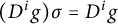 $(D^ig){\sigma }=D^ig$
for
 $i>0$
when the derivatives exist.
Corollary 3.5 (A) Let
 $g\in C^k(\mathbb {R})$
satisfy
 $g{\sigma }=g$
. Let
 $E_i\subseteq [0,t]$
,
 $i=0,\dots ,k$
, be countable sets with
 $\{0,t\}\subseteq E_i$
or
 $E_i\cap \{0,t\}=\emptyset $
. Let
 $F\subseteq [0,t]$
be a finite set disjoint from
 $\bigcup _{i=0}^k E_i$
with
 $\{0,t\}\subseteq F$
or
 $F\cap \{0,t\}=\emptyset $
. For each
 $p\in E_i$
, let
 $A_{p,i}\subseteq \mathbb {R}$
be a countable dense set, with
 $A_{0,i}=A_{t,i}$
if
 $\{0,t\}\subseteq E_i$
. Let
 ${\varepsilon }>0$
. Let
 $\mathscr {H}$
be a countable family of fiber-preserving local homeomorphisms of
 $\mathbb {R}^2$
. There exists an entire function
 $f\colon \mathbb {C}\to \mathbb {C}$
such that
 $f(\mathbb {R})\subseteq \mathbb {R}$
,
 $f{\sigma }=f$
and for all
 $x\in \mathbb {R}$
and
 $i=0,\dots ,k$
,
-
(a)
$|(D^{i}f)(x)-(D^{i}g)(x)|<{\varepsilon }$
, and if
$x\in F$
then
$D^if(x)=D^ig(x)$
. -
(b) for each
$p\in E_i$
,
$(D^i f)(p)\in A_{p,i}$
. -
(c) for every
$q\in \mathbb {R}$
,
$h\in \mathscr {H}$
and every open interval
$U\subseteq \mathbb {R}\setminus F$
, if for some
$$ \begin{align*} (x,(D^i f)(x))\in G^1_h\ \text{and}\ q = h^*(x,(D^i f)(x)) \end{align*} $$
$x\in U\cap \operatorname {cl} Y_{h,q,i}$
, where
$Y_{h,q,i} = \{p\in E_i:$
for some
$q'\in A_{p,i}$
,
$(p,q')\in G^1_h$
and
$q=h^*(p,q')\}$
, then
$q = h^*(p,(D^i f)(p))$
for some
$p\in U\cap E_i$
.














(B) The same statement is true with
 $g{\sigma }=g$
,
 $f{\sigma }=f$
replaced by
 $g{\sigma }={\sigma } g$
,
 $f{\sigma }={\sigma } f$
, respectively, and the condition
 $A_{t,i}=A_{0,i} ($
when
 $\{0,t\}\subseteq E_i)$
replaced by
 $A_{t,i}=A_{0,i}$
when
 $i\not =0$
,
 $A_{t,0}=A_{0,0}+t$
.
Proof (A) Using Theorem 2.1, we can approximate g by an entire function
 $g_0$
so that
 $g_0(\mathbb {R})\subseteq \mathbb {R}$
,
 $g_0{\sigma }=g_0$
, and for
 $x\in \mathbb {R}$
,
 $i=0,\dots ,k$
,
 $|D^ig_0(x)-D^ig(x)|<{\varepsilon }/2$
and if
 $x\in F$
then
 $D^ig_0(x)=D^ig(x)$
. If we approximate
 $g_0$
as in Corollary 3.5, replacing
 ${\varepsilon }$
by
 ${\varepsilon }/2$
, we get the desired function f. Hence, we may assume that g is entire.
For
 $p\in E_i$
, define
 $B_{p,i}=A_{p,i}-(D^i g)(p)$
. Writing
 $\xi _i$
for the fiber-preserving homeomorphism of
 $\mathbb {R}^{2}$
given by
 $\xi _i(x,y)=(x,y+(D^i g)(x))$
, take
 $\mathscr {H}_i=\{h\circ \xi _i:h\in \mathscr {H}\}$
and apply Theorem 3.3 with
 $A_{p,i}$
replaced by
 $B_{p,i}$
and
 $\mathscr {H}$
replaced by
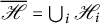 $\overline {\mathscr {H}}=\bigcup _i\mathscr {H}_i$
. (Here,
 $h\circ \xi _i\colon \xi _i^{-1}(G^1_h)\to G^2_h$
.) If
 $f_1$
is the resulting entire function, the function
 $f=g+f_1$
is as desired. We have
 $f{\sigma }=g{\sigma }+f_1{\sigma }=g+f_1=f$
. Clauses (a) and (b) are immediate from the corresponding clauses of Theorem 3.3 and the definition of
 $B_{p,i}$
.
For (c), fix an
 $i=0,\dots ,k$
,
 $q\in \mathbb {R}$
,
 $h\in \mathscr {H}$
, an open interval
 $U\subseteq \mathbb {R}\setminus F$
, and assume that
 $(x,(D^i f)(x))\in G^1_h$
and
 $q = h^*(x,(D^i f)(x))$
for some
 $x\in U\cap \operatorname {cl} Y_{h,q,i}$
. Then
 $\xi _i(x,(D^i f_1)(x))\in G^1_h$
, so
 $(x,(D^i f_1)(x))\in \xi _i^{-1}(G^1_h)$
, and
 $q = (h^*\circ \xi _i)(x,(D^i f_1)(x))$
.
Claim.
 $Y_{h,q,i}\subseteq Y_{h\circ \xi _i,q,i}$
where the set
 $Y_{h\circ \xi _i,q,i}$
is defined using the
 $B_{p,i}$
instead of the
 $A_{p,i}$
.
Let
 $p\in Y_{h,q,i}$
. Then
 $p\in E_i$
and for some
 $q'\in A_{p,i}$
,
 $(p,q')\in G^1_h$
and
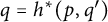 $q=h^*(p,q')$
. We then have
 $q'-(D^i g)(p)\in B_{p,i}$
,
 $(p,q'-(D^i g)(p)) = \xi _i^{-1}(p,q')\in \xi _i^{-1}(G^1_h)$
and
 $q=(h^*\circ \xi _i)(p,q'-(D^i g)(p)) = (h\circ \xi _i)^*(p,q'-(D^i g)(p))$
. Thus,
 $p\in Y_{h\circ \xi _i,q,i}$
, which proves the claim.
By the claim,
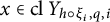 $x\in \operatorname {cl} Y_{h\circ \xi _i,q,i}$
and hence by (c) of Theorem 3.3,
 $q = (h\circ \xi _i)^*(p,(D^i f_1)(p)) = (h^*\circ \xi _i)(p,(D^i f_1)(p))$
for some
 $p\in U\cap E_i$
. Then
 $h^*(p,(D^i f)(p)) = (h^*\circ \xi _i)(p,(D^i f_1)(p))=q$
.
(B) This part follows from (A) by an argument similar to that used for (A). Given
 $g\in C^k(\mathbb {R})$
satisfying
 $g{\sigma }={\sigma } g$
, write
 $g=g_1+\operatorname {id}$
. As pointed out above, we have
 $g_1{\sigma }=g_1$
. For
 $p\in E_i$
, define
 $B_{p,i}=A_{p,i}-(D^i \operatorname {id})(p)$
. (So
 $B_{p,0}=A_{p,0}-p$
,
 $B_{p,1}=A_{p,1}-1$
,
 $B_{p,i}=A_{p,i} (i>1)$
.) Writing
 $\xi _i$
for the fiber-preserving homeomorphism of
 $\mathbb {R}^{2}$
given by
 $\xi _i(x,y)=(x,y+(D^i \operatorname {id})(x))$
, take
 $\mathscr {H}_i=\{h\circ \xi _i:h\in \mathscr {H}\}$
and apply part (A) to
 $g_1$
with
 $A_{p,i}$
replaced by
 $B_{p,i}$
and
 $\mathscr {H}$
replaced by
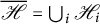 $\overline {\mathscr {H}}=\bigcup _i\mathscr {H}_i$
. (Here,
 $h\circ \xi _i\colon \xi _i^{-1}(G^1_h)\to G^2_h$
.) If
 $f_1$
is the resulting entire function, the function
 $f=\operatorname {id}+f_1$
is as desired. Since
 $f_1$
satisfies
 $f_1{\sigma }=f_1$
, it follows that f satisfies
 $f{\sigma }={\sigma } f$
. Clauses (a) and (b) of part (B) are immediate from the corresponding clauses of part (A) and the definition of
 $B_{p,i}$
. For (c), as in part (A), fix an
 $i=0,\dots ,k$
,
 $q\in \mathbb {R}$
,
 $h\in \mathscr {H}$
, an open interval
 $U\subseteq \mathbb {R}\setminus F$
, and assume that
 $(x,(D^i f)(x))\in G^1_h$
and
 $q = h^*(x,(D^i f)(x))$
for some
 $x\in U\cap \operatorname {cl} Y_{h,q,i}$
. Then
 $\xi _i(x,(D^i f_1)(x))\in G^1_h$
, so
 $(x,(D^i f_1)(x))\in \xi _i^{-1}(G^1_h)$
, and
 $q = (h^*\circ \xi _i)(x,(D^i f_1)(x))$
. As in the proof of (A), we get
 $Y_{h,q,i}\subseteq Y_{h\circ \xi _i,q,i}$
where the set
 $Y_{h\circ \xi _i,q,i}$
is defined using the
 $B_{p,i}$
instead of the
 $A_{p,i}$
. (In the proof of the claim in part (A), replace the four g’s by
 $\operatorname {id}$
.) Then finish exactly as in part (A), reading “by (c) of part (A)” instead of “by (c) of Theorem 3.3.” ▪
Theorem 3.6 Let
 $(A^i_n,B^i_n)$
,
 $i=0,\dots ,k$
,
 $n\in {\mathbb N}$
, be pairs of countable dense subsets of
 $\mathbb {R}$
invariant under
 ${\sigma }$
such that for each fixed i, the
 $A^i_n$
are pairwise disjoint. Assume also that the
 $B^0_n$
are pairwise disjoint. Let
 $F\subseteq \mathbb {R}$
be a finite set disjoint from each
 $A^i_n$
. Fix
 ${\varepsilon }>0$
. Then for each
 $g\in C^k(\mathbb {R})$
with
 $k\geq 1$
such that
 $g{\sigma }={\sigma } g$
,
 $Dg>0$
, and
 $g(F)\cap B^0_n=\emptyset $
for all
 $n\in {\mathbb N}$
, there is an entire function f such that for
 $i=0,\dots ,k$
,
 $n\in {\mathbb N}$
, and
 $x\in \mathbb {R}$
,
-
(a)
$f(\mathbb {R})\subseteq \mathbb {R}$
,
$f{\sigma }={\sigma } f$
,
$Df(x)>0$
-
(b)
$|(D^{i}f)(x)-(D^{i}g)(x)|<{\varepsilon }$
, and if
$x\in F$
then
$D^if(x)=D^ig(x)$
-
(c)
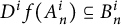
$D^if(A^i_n)\subseteq B^i_n$
,
$f(A^0_n)=B^0_n$






Proof For
 $i=0,\dots ,k$
, let
 $E_i=[0,t]\cap \bigcup _{n=1}^\infty A^i_n$
. For pairs
 $(p,i)$
with
 $p\in E_i$
, for some unique n we have
 $p\in A^i_n$
. Define
 $A_{p,i}=B^i_n$
. If
 $0,t\in E_i$
, then for some n we have
 $0,t\in A^i_n$
. Then
 $A_{0,i}=A_{t,i}=B^i_n$
and therefore also
 ${\sigma }(A_{0,i})=A_{t,i}$
by invariance of
 $B^i_n$
. The orbit of each point has at most two points in
 $[0,t]$
, so
 $F_1=[0,t]\cap \bigcup _{\ell \in {\mathbb Z}}{\sigma }^\ell (F)$
is finite. We have
 $E_i\cap F_1=\emptyset $
for each i, because
 $E_i\cap F_1 \subseteq (\bigcup _{n=1}^\infty A^i_n)\cap (\bigcup _{\ell =1}^\infty {\sigma }^\ell (F))$
and for all
 $n,\ell $
,
 $A^i_n\cap {\sigma }^\ell (F) = {\sigma }^{\ell }(A^i_n\cap F) = \emptyset $
. Similarly,
 $g(F_1)\cap B^0_n =\emptyset $
because
 $g({\sigma }^\ell (F))\cap B^0_n = {\sigma }^{\ell }(g(F)\cap B^0_n) = \emptyset $
for all
 $n,\ell $
. Take
 ${\varepsilon }'=\min ({\varepsilon },\inf \{Dg(x):x\in \mathbb {R}\})$
which is positive by periodicity of
 $Dg$
and since
 $Dg>0$
. Corollary 3.5 (B) with
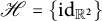 $\mathscr {H}=\{\operatorname {id}_{\mathbb {R}^2}\}$
gives
 $f $
such that
 $f (\mathbb {R})\subseteq \mathbb {R}$
,
 $f {\sigma }={\sigma } f $
and for all
 $x\in \mathbb {R}$
and
 $i=0,\dots ,k$
,
-
(i)
$|(D^{i}f )(x)-(D^{i}g )(x)|<{\varepsilon }'$
, and if
$x\in F_1$
then
$D^if (x)=D^ig (x)$
. -
(ii) for each
$p\in E_i$
,
$(D^i f )(p)\in A_{p,i}$
. -
(iii) for any
$q\in \mathbb {R}$
, if
$q = f(x)$
for some
$x\in \operatorname {cl} \{p\in E_0: q\in A_{p,0}\}$
,
$x\notin F_1$
, then
$q = f(p)$
for some
$p\in E_0$
. (Since f is injective, necessarily
$x=p$
.)







From (i) we get (b). From (i) we also get for
 $x\in \mathbb {R}$
,
 $|Df(x)-Dg(x)| <{\varepsilon }'\leq Dg(x)$
, so
 $Df(x)>0$
giving (a). For (c), fix
 $i=0,\dots ,k$
,
 $n\in {\mathbb N}$
. We want to show that
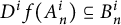 $D^if(A^i_n)\subseteq B^i_n$
, and when
 $i=0$
,
 $f(A^0_n)=B^0_n$
. For
 $p\in A^i_n$
we have for some
 $\ell $
that
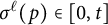 ${\sigma }^\ell (p)\in [0,t]$
. When
 $i=0$
, we get, using (ii),
 $f (p) = {\sigma }^{-\ell }f ({\sigma }^\ell (p))\in {\sigma }^{-\ell }A_{{\sigma }^\ell (p),0} = B^0_n$
. When
 $i>0$
, we get similarly
 $D^if (p) = D^if ({\sigma }^\ell (p)) \in A_{{\sigma }^\ell (p),i} = B^i_n$
.
There remains to show that
 $B^0_n\subseteq f(A^0_n)$
. Let
 $q\in B^0_n$
. Since
 $f(t)=f(0)+t$
, for some
 $\ell $
,
 ${\sigma }^\ell (q)\in [f(0),f(t)]$
and therefore, for some
 $x\in [0,t]$
,
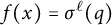 $f(x)={\sigma }^\ell (q)$
. We have
 $x\notin F_1$
because otherwise
 $g(x)=f(x)={\sigma }^\ell (q)\in B^0_n$
, contradicting the fact that
 $g(F_1)\cap B^0_n = \emptyset $
. Since
 $A^0_n$
is dense, arbitrarily close to x there are
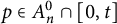 $p\in A^0_n\cap [0,t]$
and these satisfy
 ${\sigma }^\ell (q)\in B^0_n = A_{p,0}$
, so by (iii), there is a
 $p\in E_0$
such that
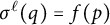 ${\sigma }^\ell (q) = f(p)$
and therefore
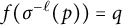 $f({\sigma }^{-\ell }(p))=q$
. This gives
 $q\in f(A^0_n)$
as long as
 $p\in A^0_n$
. Let m be such that
 $p\in A^0_m$
. Then
 ${\sigma }^\ell (q)=f (p)\in f (A^0_m)\subseteq B^0_m$
. Since
 $B^0_m$
and
 $B^0_n$
are disjoint, it follows that
 $m=n$
. ▪
4 Order-isomorphisms of the arc
$\boldsymbol{T\setminus \{1\}}$

Applying Theorem 3.6 we can transfer the Barth–Schneider theorem for the real line to the following analog for the arc
 $T\setminus \{1\}$
.
Theorem 4.1 Let
 $(A_n,B_n)$
,
 $n\in {\mathbb N}$
, be countable dense subsets of
 $T\setminus \{1\}$
. Assume that
 $A_n\cap A_m=\emptyset $
and
 $B_n\cap B_m=\emptyset $
when
 $n\not =m$
. Let
 $g\colon T\to T$
satisfy
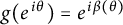 $g(e^{i\theta })=e^{i\beta (\theta )}$
,
 $0\leq \theta \leq 2\pi $
, where
 $\beta \colon [0,2\pi ]\to [0,2\pi ]$
is a
 $C^1$
bijection such that
 $D\beta>0$
and
 $D\beta (0)=D\beta (2\pi )$
. Let
 $F\subseteq T\setminus \{1\}$
be a finite set so that F is disjoint from each
 $A_n$
and
 $g(F)$
is disjoint from each
 $B_n$
. Then there is an analytic function
 $h\colon \mathbb {C}\setminus \{0\}\to \mathbb {C}$
that restricts to an order-preserving bijection of the arc
 $T\setminus \{1\}$
onto itself and satisfies the following.
-
(a)
$|h(z)-g(z)|<{\varepsilon }$
for
$z\in T$
and
$h(z)=g(z)$
for
$z\in F$
. -
(b)
$h(A_n)=B_n (n\in {\mathbb N})$
. -
(c)
$Dh(z)\not =0$
when
$z\in T$
.






Remark 4.2 (i) It will be apparent from the proof that we can require that
 $h(e^{i\theta })=e^{i\alpha (\theta )}$
where
 $\alpha \colon [0,2\pi ]\to [0,2\pi ]$
is a bijection which is the restriction of an entire function, and
 $D\alpha (\theta )>0$
and
 $|D\alpha (\theta )-D\beta (\theta )|<{\varepsilon }$
for
 $\theta \in [0,2\pi ]$
.
(ii) We take the ordering on the arc
 $T\setminus \{1\}$
to be counterclockwise. We could replace “order-preserving” by “order-reversing.” In this context,
 $D\beta>0$
should be replaced by
 $D\beta <0$
. To get the desired conclusion, define
 $\bar {A}_n = \{\bar {z}:z\in A_n\}$
,
 $\bar {F}= \{\bar {z}:z\in F\}$
. Then define
 $\tilde {\beta }(\theta ) = \beta (2\pi -\theta )$
,
 $\tilde {g}(z)=g(1/z)=e^{i\tilde {\beta }(\theta )}$
. Note that
 $\bar {F}\cap \bar {A}_n = \overline {F\cap A}_n = \emptyset $
and
 $\tilde {g}(\bar {F})\cap B_n = g(F)\cap B_n=\emptyset $
. From Theorem 4.1, get
 $\tilde {h}$
satisfying (a)–(c) with respect to
 $\tilde {g}$
,
 $\bar {F}$
, and the pairs
 $(\bar {A}_n,B_n)$
. Then
 $h(z)=\tilde {h}(1/z)$
gives the desired order-reversing bijection of the arc
 $T\setminus \{1\}$
.
(iii) The order-preserving bijection from the arc
 $T\setminus \{1\}$
to itself can be replaced by an order-preserving bijection
 $T\setminus \{p\}\to T\setminus \{q\}$
(where
 $p\in T\setminus A_n$
,
 $q\in T\setminus B_n$
) by considering the rotated sets
 $\bar {p}A_n$
and
 $\bar {q}B_n$
.
Proof Define
 $F'=\{0\}\cup \{\theta \in (0,2\pi ):e^{i\theta }\in F\}$
, and define
 $$ \begin{align*} A^{\prime}_n = \{\theta\in\mathbb{R}:e^{i\theta}\in A_n\}, \ \ \ B^{\prime}_n = \{\theta\in\mathbb{R}:e^{i\theta}\in B_n\}. \end{align*} $$
The assumption on
 $\beta $
ensures that it extends to a
 $C^1$
function on
 $\mathbb {R}$
satisfying
 ${\sigma }\beta =\beta {\sigma }$
. The sets
 $A^{\prime }_n$
,
 $B^{\prime }_n$
are countable, dense, and invariant under translation by
 $t=2\pi $
. The
 $A^{\prime }_n$
are pairwise disjoint, as are the
 $B^{\prime }_n$
, and the conditions
 $F\cap A_n=\emptyset $
,
 $g(F)\cap B_n=\emptyset $
,
 $1\notin A_n,B_n$
imply the conditions
 $F'\cap A^{\prime }_n=\emptyset $
,
 $\beta (F')\cap B^{\prime }_n=\emptyset $
. Choose
 $\delta>0$
so that
 $D\beta (\theta )>\delta $
,
 $\theta \in \mathbb {R}$
, and
 $|\theta _1-\theta _2|<\delta $
implies
 $|e^{i\theta _1} - e^{i\theta _2}|<{\varepsilon }$
. Apply Theorem 3.6 to get an entire function
 $\alpha $
such that such that
 $\alpha (\mathbb {R})\subseteq \mathbb {R}$
,
 $\alpha {\sigma }={\sigma } \alpha $
, and
-
(i)
$|\alpha (\theta )-\beta (\theta )|<\delta $
for
$\theta \in \mathbb {R}$
and
$\alpha (\theta )=\beta (\theta )$
for
$\theta \in F'$
. -
(ii)
$|D\alpha (\theta )-D\beta (\theta )|<\delta $
for
$\theta \in \mathbb {R}$
. -
(iii)
$\alpha (A^{\prime }_n)=B^{\prime }_n (n\in {\mathbb N})$
. -
(iv)
$D\alpha>0$
.


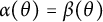





(Note that (iv) follows from (ii) and the choice of
 $\delta $
.) From (i) we get
 $\alpha (0)=\beta (0)=0$
. For the function
 $\gamma (z)=\alpha (z)-z$
we have
 $\gamma (z+2\pi )=\gamma (z)$
,
 $\alpha (z)=z+\gamma (z)$
. Consider the branches of
 $\log $
 $$ \begin{align*} \begin{array}{r@{\ }c@{\ }lc} \operatorname{Log} z & = & \ln |z| + i \operatorname{Arg} z & (-\pi < \operatorname{Arg} z < \pi), \\ \log z & = & \ln |z| + i \arg z & (0 < \arg z < 2\pi). \end{array} \end{align*} $$
We have
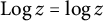 $\operatorname {Log} z = \log z$
when
 $\operatorname {Im} z> 0$
and
 $\log z = \operatorname {Log} z + 2\pi i$
when
 $\operatorname {Im} z < 0$
. By the periodicity of
 $\gamma $
we have
 $$ \begin{align} \gamma(-i\log z) = \gamma(-i\operatorname{Log} z)\quad (\operatorname{Im} z\not=0). \end{align} $$
Define
 $$ \begin{align*} h(z)=e^{i\alpha(-i\log z)} \end{align*} $$
for
 $z\not =0$
not a positive real number. We have
 $$ \begin{align*} h(z)=e^{i\alpha(-i\log z)}=e^{i(-i\log z)}e^{i\gamma(-i\log z)} = ze^{i\gamma(-i\log z)}. \end{align*} $$
Similarly, if we set
 $H(z)=e^{i\alpha (-i\operatorname {Log} z)}$
when
 $z\not =0$
is not a negative real number, we get
 $H(z) = ze^{i\gamma (-i\operatorname {Log} z)}$
, and by (4.1),
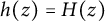 $h(z)=H(z)$
for
 $\operatorname {Im} z\not =0$
. Thus, h extends to an analytic function defined on
 $\mathbb {C}\setminus \{0\}$
by setting
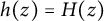 $h(z)=H(z)$
when z is a positive real number.
When
 $z=e^{i\theta }$
,
 $0<\theta <2\pi $
, we have
 $-i\log z = \theta $
, so
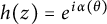 $h(z)=e^{i\alpha (\theta )}$
. As
 $\theta $
runs over
 $(0,2\pi )$
from
 $0$
to
 $2\pi $
,
 $\alpha (\theta )$
does the same since
 $\alpha (0)=0$
and
 $\alpha (2\pi ) = \alpha (0)+2\pi =2\pi $
, so
 $h(z)=h(e^{i\theta })=e^{i\alpha (\theta )}$
runs over the arc
 $T\setminus \{1\}$
counterclockwise from
 $1$
to
 $1$
. From (i) and the choice of
 $\delta $
we get
 $$ \begin{align*} |h(z)-g(z)| = |h(e^{i\theta})-g(e^{i\theta})| = |e^{i\alpha(\theta)} - e^{i\beta(\theta)}|<{\varepsilon} \end{align*} $$
and this implies the first part of (a). If
 $\theta \in F'$
then
 $h(e^{i\theta }) = e^{i\alpha (\theta )} = e^{i\beta (\theta )} = g(e^{i\theta })$
and this implies the second part of (a).
Also, for
 $0<\theta <2\pi $
and
 $n\in {\mathbb N}$
,
 $$ \begin{align*} e^{i\theta}\in A_n \Leftrightarrow \theta\in A^{\prime}_n\Leftrightarrow \alpha(\theta)\in B^{\prime}_n \Leftrightarrow e^{i \alpha(\theta)}\in B_n, \end{align*} $$
so that for
 $z\in T\setminus \{1\}$
, we have
 $z\in A_n$
if and only if
 $h(z)\in B_n$
. Hence h restricts to an order-isomorphism of
 $T\setminus \{1\}$
mapping
 $A_n$
onto
 $B_n$
.
There remains to verify that
 $Dh(z)\not =0$
when
 $|z|=1$
. When
 $|z|=1$
,
 $z\not =1$
, we have
 $$ \begin{align*} Dh(z)=\frac{d}{dz}e^{i\alpha(-i\log z)} = e^{i\alpha(-i\log z)} \cdot i\cdot D\alpha(-i\log z)\cdot \frac{-i}{z}, \end{align*} $$
which is nonzero since
 $-i\log z$
is real when
 $|z|=1$
and
 $D\alpha (\theta )\not =0$
for
 $\theta \in \mathbb {R}$
. Writing
 $\operatorname {Log}$
instead of
 $\log $
we have the analogous computation when
 $|z|=1$
,
 $z\not =-1$
. ▪
Acknowledgment
The author thanks P. M. Gauthier for suggesting the problem and for helpful correspondence. The author also thanks the referee for a very careful reading of the paper and helpful suggestions for improving it.


