Introduction
Prostate cancer (PC) is the most prominent cancer among males; by 2022 it might encompass 27% of total cancer cases in men (Ref. Reference Siegel1). PC is the second leading cause of cancer deaths in men globally (Ref. Reference Heidenreich2). Worldwide, nearly 1.41 million new cases of PC were reported in 2020 (Ref. Reference Ellinger3). The risk associated with the onslaught of PC is noted and is affected by its demographic components. The evidence indicates that overtreatment of indolent tumours and under-treatment of patients with high-risk tumours of PC lead to additional encumbrance and impede the quality of life (Ref. Reference Silberstein4). By ameliorating the rate of diagnosis and clinical management of PC, we could improve patient outcomes and reduce the burden on clinicians as well as the financial burdens on the healthcare system. To accomplish this, specific and sensitive diagnosis is required as it plays a pivotal role in onset, progression, treatment and post-treatment monitoring.
Early-stage PC is generally asymptomatic (Ref. Reference Rawla5). The symptoms of locally progressive PC or metastatic disease comprise unspecific lower urinary tract symptoms that could be because of benign prostatic hyperplasia (BPH). According to the Federal Drug Administration (FDA), conventional screening tools include digital rectal examination and serum prostate-specific antigen (PSA) levels (Ref. Reference Karantanos6). Since PSA has a low specificity and high false-positive rate, further evaluation by biopsy or by imaging technologies becomes necessary (Ref. Reference Pesapane7). Hence, auxiliary tools such as trans-rectal ultrasound-guided biopsy followed by a histopathology-based Gleason score (GS) approach have been the gold standard clinical practice for evaluating PC and its grades (Ref. Reference Harvey8) to date.
Contemporary innovations, however, extend much better outcomes in contrast to the conventional GS approach (Refs Reference Welty9–Reference Di Donato11). Radiological tactics, magnetic resonance imaging (MRI) and multi-parametric-MRI-based biopsy have been proposed as the diagnostic tool for PC. After evaluating the PSA levels, GC score and clinical tumour-lymphnode-metastasis (TNM) staging patients are classified into one of the three clinical risk groups: low, intermediate or high-risk. However, because of the inherent limitations of high inter-observer inconsistency (Ref. Reference Rodriguez-Urrego12) and the pitfall of missing the more advanced or aggressive areas of the tumour, these approaches need extremely conscientious, close monitoring and reassessment of non-aggressive low-GS PC.
The widely accepted threshold value for PSA is 4.0 ng/ml (Ref. Reference Taichman13). The PSA levels (between 4 and 10 ng/ml) and GS (between 6 and 10) patients are considered moderate to high risk and, depending upon observation, are classified into different categories. Their treatment is executed according to the tumour's behaviour and progression. Subsequently, under psychosomatic anguish and observed clinical findings, clinicians and patients with mutual consent select for the most convincing yet intensive therapy; most of the time, this leads to widespread overtreatment.
That intensive procedure comprises initial surgery or various forms of radiation therapy that may negatively affect the quality of life (Refs Reference Cuzick14, Reference Prensner15). Studies have gleaned that surgery or radiation intent with curative purposes have relapsed and shown escalating PSA levels by 50% (Ref. Reference Ganzer16). The least invasive approach – androgen deprivation therapy (ADT) – has revealed that most tumours respond well to different ADT forms; thus, for metastatic disease, the standard care roadmap recommends anti-hormonal therapy. But most PC cases show recurrence after 18 months and progress later to castration-resistant prostate cancer (CRPC) (Ref. Reference Vassilikos17).
Despite intense research and clinical treatment efforts all of these findings indicate that the medical benefits for PC have not been upheld for a long time (Ref. Reference Karantanos6). Therefore, to better combat PC, novel biomarkers are indispensable to enhance the diagnosis, treatment strategy and its management. Advancements in various omic's technologies have revealed important biomarkers for PC. Metabolomics is the systematic analysis of low-molecular-weight metabolites assessment in biological samples to appraise the disease condition and progression. It provides insights into the underlying pathophysiology and has become a crucial tool in clinical research (Ref. Reference Tomita18). The metabolomics attribute of minimal biological sample and least derivatisation, early-stage disease identification and downstream measurement of perturbed pathways of clinical conditions highlight its utility for clinical diagnostics. The greatest challenges to performing clinical metabolomics are the selection of a precise analytical technique the intricacy of biological sample to be appraised, and the objectives of the study. Two methodologies are mainly employed to identify the metabolites in a biological sample: nuclear magnetic resonance (NMR) spectroscopy or mass spectrometry (MS). NMR spectroscopy (frequently 1H NMR), and MS (predominantly liquid chromatography [LC-MS] and gas chromatography [GC-MS]) are the two most imperative analytical techniques applied in metabolomics-intended research (Ref. Reference Gupta19).
The clinical utility of blood increases manifold to uncover metabolic programming in any pathophysiological condition because it carries all biomolecules that are being secreted, excreted or discarded by diverse tissues of the organs. This fact is utilised in most of today's clinical research, and tests are based on the analysis of blood (Ref. Reference Psychogios20). Blood derivatives – plasma and serum – are both extensively used matrices in clinical metabolomics studies. However, over the last decade, most of the studies have been executed to detect serum metabolomics biomarkers for PC, and several articles and review have been published. This paper focused on the role of different serum metabolomics-based biomarkers of PC for diagnosis, prognosis and prediction. We have classified the biomarkers in aforementioned categories in order to better understand the relationship of these biomarkers with their clinical significance.
Methods
This review adheres to the PRISMA (Preferred Reporting Items for Systematic Reviews and Meta-Analyses) guidelines and is presented in accordance with the PRISMA statement.
Search strategy
The present systematic search was conducted on PubMed for all publications with relation to PC metabolomics reported from January 2004 to October 2021, using the following combinations of MeSH terms: human prostate cancer (tiab) intervention with (metabolite OR metabolomic OR metabolomics) intervention with (marker OR biomarker) intervention with (serum or plasma). Initially, titles and abstracts of all the identified studies were screened with PC metabolomics. Later in the more refined research regarding human PC, metabolomics article titles and full text articles were selected that were further stringently evaluated for human PC metabolomics using blood as the sample for PC identification, progression or prediction by different metabolomics spectroscopic plethora as an analytical tool.
Selection criteria
Only full-text significant articles in English based on titles and abstracts were reviewed. The inclusion criteria included: human PC serum/plasma metabolite biomarkers for identification, progression or reoccurrence and their clinical utility using metabolomics analytical platforms. Reviews and studies conducted on animal models or on cell model systems were excluded.
Data extraction
The studies were mined for PC metabolite biomarkers by the following criteria: type of sample, age of participant, sample size, analytical platform used in the study, outcome, potential biomarker candidate, validation, statistical analysis, year of publication, name of the first author and any significant or additional comments about the study.
Results
A total of 74 articles were recognised in the literature search (Fig. 1). The full text was obtained for 66 articles after screening and exclusion on the basis of titles and abstracts. In a more refined search circumscribed by serum or plasma metabolomics of PC via spectroscopic analytical techniques, 27 studies were finally included in this systematic review and are summarised in chronological order (Table 1).
PRISMA-based cascade of the literature search.

NMR and LC-MS-based metabolomics findings with diagnostic, prognostic and predicative approaches of PC

(↑) indicates up-regulation; (↓) indicates down-regulation.
The first study that met the criteria of this review was an Austrian study conducted by Osl et al. using a novel algorithm, associative voting (AV), to reveal the PC signature candidates from complex metabolic data sets. Control and PC serum samples were examined using flow injection analysis-MS/MS and LC-MS/MS. The authors narrated that the AV method recognised subsets of metabolites to discriminate cancer versus control better than information gain and ReliefF. The topmost metabolites to segregate PC and controls included serotonin, aspartate and ornithine along with two lysophosphatidylcholines (C16:0 and C18:0). However, the same set of metabolites showed a low score to categorise GS 6 versus GS 8–10; hence, the study could not reveal a signature candidate to differentiate low- and high-grade PC (Ref. Reference Osl21).
Stabler et al. conducted targeted and non-targeted NMR, GC-MS and LC-MS studies to identify prognostic biomarkers that may predict biochemical recurrence (BCR) after radical prostatectomy was implemented on serum samples of PC patients without BCR for at least 5 years after prostatectomy, and on serum samples obtained from pre-surgical patients with BCR within 2 years. The outcomes showed that sarcosine, dimethylglycine (DMG), methionine, homocysteine, cystathionine, cysteine, methylmalonic acid and methyl citrate were potent biomarkers. The Wilcoxon rank-sum statistics test found that homocysteine, cystathionine and cysteine were significantly different (P < 0.001) between the two groups and were the top predictors for recurrence in multiple logistic regression models. The study claimed that each of these metabolites was able to distinguish recurrent from recurrence-free patients in Kaplan–Meier curves, and suggested cysteine as the most selective and potential biomarker (Ref. Reference Stabler22).
By the random forest ensemble classification method, Fan et al. accessed NMR-derived serum metabolic perturbation between BPH and PC. The NMR results showed that lipid (CH2CH2Co, C = CCH2C = C), lysine, acetoacetate, glutamate, cysteine, tyrosine and formate were altered between BPH and PC. Out of these, glutamate and formate were found to be significantly augmented (P < 0.05) in the PC compared with BPH (Ref. Reference Fan23).
Using ultra-performance liquid chromatography coupled with high-resolution mass spectrometry and tandem mass spectrometry (UPLC-MS and MS/MS) combined with machine learning, Zang et al. tried to develop a metabolite-based in vitro diagnostic multivariate index assay to forecast the presence or absence of PC (Ref. Reference Zang24). A set consisting of 40 metabolic spectral features was found to be able to segregate PC from control with 92.1% sensitivity, 94.3% specificity and 93.0% accuracy. Using utmost rigorous approach revealed, out of 40, 28 panels of metabolites were able distinguish PC with 89.7% sensitivity, 90.7% specificity and 90.2% accuracy. In higher throughput analysis to meet the cost efficacy, a panel of 13 metabolites was able to segregate PC with 88.3% sensitivity, 80.3% specificity and 85.0% accuracy from control (Ref. Reference Zang24).
Only a few studies have been executed to determine the treatment response of PC using blood biomarkers. In one such type of study, Huang et al. evaluated 18 newly diagnosed untreated PC, 18 control and 36 PC patients who received ADT at the time of CRPC diagnosis by LC-MS (Ref. Reference Huang25). Tandem MS revealed that deoxycholic acid (DCA) and glycochenodeoxycholate, omega-3 fatty acid (docosapentaenoic acid), tryptophan, omega-6 fatty acid (arachidonic acid), nucleotide deoxycytidine triphosphate and pyridinoline were probable biomarkers for predicting response to ADT. The serum levels of these metabolites were perturbed in PC compared with controls and was reverted (close to the levels observed for the control group) for the patients who responded to ADT. These results support the finding that metabolites are important markers for early response to endocrine therapy (Ref. Reference Huang25).
In the JANUS study, 317 000 serum samples of Norwegian men participating in either health screening surveys or blood donation were analysed using LC-MS and GC-MS for targeted analysis of distinct metabolites. Vogel et al. examined the connotation of sarcosine and metabolites along the choline oxidation pathway; from betaine down to serine; and risk of occurrence of PC. PC and control samples were explored for quintiles of ambient betaine, DMG, sarcosine, glycine and serine. The outcomes revealed that betaine, DMG and serine do not show significant association with PC; the men with high serum sarcosine (P = 0.03) or glycine (P = 0.07) levels had less risk for PC only if folate concentration was above 13.7 nmol/l (Ref. Reference De Vogel26).
The alpha-tocopherol and beta-carotene (ATBC) study was a cancer prevention trial that enrolled men aged 50–69 years and who smoked at least five cigarettes per day. The subjects were assigned to one of the four intervention groups to examine whether vitamin supplementation with ATBC either alone or in combination would inhibit cancers compared with placebo. Mondul et al. conducted an LC-MS/GC-MS-derived serum metabolomics study to determine the risk of PC up to 20 years prior to diagnosis. In the first prospective ATBC study, fasting serum from 74 PC cases that developed PC up to 23 years after blood collection and 74 controls without PC diagnosis were selected. The authors revealed that circulating 1-stearoylglycerol (1-SG) was inversely associated with the risk of PC; that is, men with higher serum 1-SG were less likely to develop PC. The other two metabolites, glycerol and alpha-ketoglutarate, were also studied, but their statistical significance was not much evidenced (Ref. Reference Mondul27). In their second ATBC cohort study using the same analytical platform, yet another 200 confirmed PC cases and 200 matched controls; the previous study findings between PC and 1-SG could not be reproduced (Ref. Reference Mondul28). However, several other biomolecules were detected at disparity levels between the PC and control samples. They observed an inverse relationship between energy and lipid metabolites and aggressive cancer. Furthermore, alpha-ketoglutarate, citrate, inositol-1-phosphate and several glycerophospholipids and fatty acids showed a contrary relation with aggressive PC. Among these, inositol-1-phosphate showed the strongest significance (P < 0.002). Trimethylamine N-oxide, a downstream product of liver metabolite trimethylamine (P < 0.021), and thyroxine (P < 0.039) metabolite signals were perceived for aggressive versus non-aggressive prostate malignancies; the constituents of ribonucleic acid pyrimidine-nucleoside 2′-deoxyuridine and adenosine 5′-monophosphate were found to be diminished in aggressive PC (Ref. Reference Mondul28).
One other group of peers executed a study for the appraisal of PC biomarkers by intact serum samples comprising a low grade of PC (LGPC), a high grade of PC (HGPC) and healthy control (HC) using proton NMR spectroscopy with PCA and Orthogonal Projections to Latent Structures Discriminant Analysis (OPLS-DA) statistical analysis (Ref. Reference Kumar29). Their study unveiled four biomarkers (alanine, pyruvate, glycine and sarcosine) that were able to differentiate 90.2% of PC cases, with sensitivity, specificity and Receiver Operating Characteristic (ROC): 84.4%, 92.9% and 0.966 respectively, compared with HC. Moreover, three biomarkers (alanine, pyruvate and glycine) were able to differentiate 92.9% of LGPC from HGPC, with sensitivity (92.5%), specificity (93.3%) and ROC (0.978). Thus, the study established a model for PC appraisal and disease stratification using intact serum-based NMR-derived metabolomics (Ref. Reference Kumar29).
Giskeødegård et al. executed a study with PC and controls to reveal the metabolic alterations in blood using NMR and MS tactics. In a limited sample size, the study revealed large altered metabolites (n = 28), fatty acids (n = 34) and lipoprotein-related variables (n = 105) in an NMR-derived metabolic profile of serum. The MS analysis of plasma revealed 142 metabolites for the same. The OPLS-DA score of NMR and MS data exhibited that the set of 14 and 12 metabolites, respectively, had the potential to lead cataloguing of PC and control. Among these 26 discriminative metabolites, the decanoylcarnitine (C10:0), tetradecenoylcarnitine (C14:1), octanoylcarnitine (C8), sulphur compound dimethylsulphone, phenylalanine and lysine had high potential for classification with increased values. Phosphatidylcholine diacyl C34:4 and lipid2 were augmented in BPH and also added substantially to split BPH and PC (Ref. Reference Giskeodegard30).
Ankerst et al. designed a case–control study with PC and control subjects to evaluate sarcosine levels in serum using HPLC–electron ionisation mass spectrometry (EIMS) and explored the relation with the GS scores. The outcome displayed overlapping sarcosine levels between PC and control but no correlation was observed with high or low PSA value. Sarcosine was not found to be efficient alone to predict GS and PC risk in the subjects (Ref. Reference Ankerst31).
Huang et al. piloted serum metabolomics study to assess the risk of PC in prostate, lung, colorectal and ovarian (PLCO) cancer screening trial using ultrahigh-performance LC-GC/MS (Ref. Reference Huang32). The amino acids pyroglutamine, phenylpyruvate and N-acetylcitrulline, as well as the peptide gamma-glutamylphenylalanine spawned robust signals, being contrarily associated with overall PC and acylcarnitine metabolite stearoylcarnitine exhibited a reverse relation. Branched and medium-chain fatty acid metabolites, tocopherol metabolites, showed an inverse association with overall PC risk, as were primary bile acid and steroid hormone metabolites. Out of the five best metabolites observed in the ATBC cohort, only three lipids were reproduced with the same results: 1-palmitoyl-2-linoleoyl-GPC (16:1/18:2) (P = 0.0096) and tauro-beta-muricholate (P = 0.033), and the nucleotide 20-deoxyuridine (P = 0.019) (Ref. Reference Huang32).
Kumar et al. executed a study comprising PC, BPH and HC cohorts and applied an innovative filtered serum approach with NMR spectroscopy to reveal the profound signature variables of PC in clinical metabolomics. The advantage of using filtered samples was the removal of high molecular weight proteins, lipids and lipoproteins to get more sieved low molecular weight metabolites. Linear multivariate discriminant function analysis (DFA) revealed that glycine, sarcosine, alanine, creatine, xanthine and hypoxanthine were able to differentiate abnormal prostate (BPH + PC) from HC. On the other hand, a panel of biomarkers (alanine, sarcosine, creatinine, glycine and citrate) was found to be capable of discriminating PC from BPH. An applied model exhibited better accuracy than the clinical laboratory method and suggested that the NMR-based model may be used as a surrogate PC detection modality (Ref. Reference Kumar33).
Huang et al. carried out an analysis to assess whether serum metabolites unveiled qualitative distinctions among the men diagnosed with ≥T2 stage of PC (Ref. Reference Huang34). The study outcome showed that the strongest signal was N-acetyl-3-methylhistidine in T2 stage. Other than this, 3-methylhistidine and 2′-deoxyuridine were also increased with T2 cancers compared with controls. The T3 stage exhibited a sharp signal of glycerophospholipid oleoyl-linoleoyl-GPI and four other lipid metabolites displayed the converse relation: oleoyllinoleoyl-glycerophosphoinositol (GPI), palmitoyl-linoleoyl-GPI, cholate and inositol 1-phosphate. Thirty metabolites were detected to be correlated with T4 stage. These metabolites included secondary bile acid, lipid, sterol/steroid lipid, sex steroid metabolites, caffeine-related xanthine metabolites and Krebs cycle metabolites. The histamine metabolite 4-imidazoleacetate, taurodeoxycholate, glycodeoxycholate, deoxycholate and tauroursodeoxycholate were clearly elevated and associated with T3 and T4 stages of PC. Moreover, the reduced levels of glycerophospholipids, stearoyl-arachidonoyl-glycerophospho-ethanolamine (GPE), stearoyl-linoleoyl-GPE and augmented levels of euricoyl sphingomyelin were observed in T2 and T3 stages but not in the T4 stage (Ref. Reference Huang34).
Schmidt et al. executed a multi-centre European cohort study to investigate a probable link between diet-influenced metabolite concentrations in plasma measured by MS and cancer risk (Ref. Reference Schmidt35). The study gathered an inverse relation of citrulline with an overall risk of PC diagnosis within the first 5 years of follow-up. Twelve different glycerophospholipids were found to be inversely associated with advanced stage (TNM stage T3, T4 and/or N1-3 and/or M1) PC. The six other metabolites (acylcarnitine C18:1, trans-4-hydroxyproline, three glycerophospholipids and sphingolipid SM [OH]) were found to be statistically related to the risk of aggressive PC. Moreover, high concentrations of acylcarnitine C3, amino acids methionine and trans-4-hydroxyproline, biogenic amine ADMA, hexose and sphingolipid SM (OH) and the lower concentrations of glycerophospholipid were observed to be associated with death because of PC. The authors highlighted citrulline as a subclinical marker of PC (Ref. Reference Schmidt35).
Andras et al. executed a study with serum obtained from suspected PC patients who underwent prostate biopsy to differentiate the metabolic profile between BPH and PC using high-performance liquid chromatography coupled with electrospray ionisation quadrupole time-of-flight mass spectrometry (HPLC-ESI-QTOF MS). The outcome revealed decanoylcarnitine, homocysteine-inosine, hydroxymelatonin, lipoic acid, lysophosphatidylcholine 18:2 and methyladenosine were differential metabolites and exhibited an Area Under the ROC curve (AUC) 0.779 (P < 0.001), with 74% sensitivity and 76% specificity to distinguish PC from BPH (Ref. Reference Andras36).
Derezinski et al. used LC-ESI-MS/MS and serum samples to evaluate amino acids between PC and HC (Ref. Reference Derezinski37). Out of 32, only 18 metabolites were found to be statistically significant. Among these 18, four metabolites (sarcosine, 3-methylhistidine, β-alanine and aspartic acid) showed considerably higher levels in PC; 14 others were significantly lower in PC compared with HC. The multivariate PLS-DA revealed that methionine; sarcosine, 3-methylhistidine, serine and proline were the most significant metabolites to discriminant PC and HC. However, no significant differences were observed in amino acid profiles between patients representing different GS (Ref. Reference Derezinski37).
Khan et al. executed an LC-MS-based serum metabolic profiling study comprising PC (PSA level >4 and PSA Level <4) and HC subjects to investigate profound potential metabolites between these cohorts. Stringent statistical analysis revealed no significant discrepancy between two PSA level-based PC groups; however, the PC serum metabolome was substantially different from the HC cohorts. Mummichog, in combination with the KEGG and MetaboAnalyst, found tryptophan metabolism to be the most significantly up-regulated pathway along with kynurenine pathway, carnitine shuttle, aspartate and asparagine metabolism. l-Tryptophan, kynurenine, anthranilate, isophenoxazine, glutaryl-CoA, (S)-3-hydroxybutanoyl-CoA and acetoacetyl-CoA were augmented, whereas indoxyl, indolelactate and indole-3-ethanol were diminished in PC compared with HC (Ref. Reference Khan38).
Huang et al. executed a serum-based metabolomics study to evaluate the link between compromised metabolism and the lethality of PC through pathway analysis. Rigorous statistical analysis including Cox models, Fisher's method and bootstrap PCA disclosed that 44 potent steroid hormones were associated with PC survival. Following survival plot by the Kaplan–Meier method revealed that serum N-oleoyl taurine was most importantly involved in PC-specific mortality. Besides these 4-androsten-3beta, 17beta-diol disulphate; pregnenolone sulphate (pregn steroid monosulphate); 5alpha-androstan-3beta, 5alpha-androstan-3alpha, 17alpha-diol monosulphate and pregnen-diol disulphate were additional top steroids that were allied with PC survival. This was the first study to investigate serum sex steroid metabolites in the androgen pathway in PC cases. It has also been reported that men in the uppermost tertile of prediagnostic serum N-oleoyl taurine diagnosed with PC were thrice more presumptive to die of their disease compared with cases with lower levels (Ref. Reference Huang39).
Zheng et al. analysed the metabolic alteration in BPH and different stages of PC (early PC [EPC], advanced PC [APC], metastatic PC [MPC] and castration-resistant PC [CRPC]) using 1H NMR spectroscopy-based metabolomics (Ref. Reference Zheng40). Based on the PCA and PLS-DA approach, citrate and glutamate were the two most important metabolites showing contrasting patterns. The citrate level was found to have gone down as the PC advanced in both tissue and serum samples, whereas the glutamate level had gone up in advanced stages of PC compared with BPH. Reduced trends in creatine and creatinine were observed in both tissue and serum samples on comparing BPH with CRPC. Trimethylamine was shown to be significantly higher in EPC compared with APC. Uridine also displayed augmented levels from BPH to MPC. The amino acids histidine, leucine, valine and lysine, and acetate were several other important metabolites and showed a diminished concentration from BPH to APC. The above-mentioned results were presented with the small sample size (Ref. Reference Zheng40).
Schmidt et al. executed a prospective study to evaluate metabolite profiling and PC risk. A total of 119 metabolites were quantified at the initial stage: 8 acylcarnitines, 21 amino acids, 5 biogenic amines, 72 different types of phosphatidylcholines, hexose and 12 sphingomyelins. A Treelet transform statistical approach combined with PCA trait divulged sets of interrelated metabolites allied with PC. The higher concentrations of either phosphatidylcholines or hydroxysphingomyelins, acylcarnitines C18:1 and C18:2, glutamate, ornithine and taurine, or lysophosphatidylcholines had the lower risk of PC progression. The study also stated that men with high lysophosphatidylcholines may have lower risk of dying because of PC (Ref. Reference Schmidt41).
Kiebish et al. performed a retrospective study to identify PC prognostic biomarkers. Serum from PC patients who underwent Radical Prostatectomy (RP) without neo-adjuvant therapy for treatment was used to investigate the discriminating biomarkers to predict BCR. Meticulous methodology to execute multistep serum analysis including MS, shotgun lipidomic, HRMS/MS signalling lipidomics, targeted hydrophilic interactive LC-MS (HIILC-MS/MS), reverse phase HRLC-MS, volatile metabolite analysis using GC-TOF-MS were employed to cascade into interrogative biology platform, Bayesian network inference modules and statistical models to extract the prognostic risk of BCR of PC. Tenascin C (TNC) and apolipoprotein A1V (Apo-A1V) proteins, 1-methyladenosine (1-MA) and phospholipid namely phosphatidic acid (PA) 18:0-22:0, showed aggregated predictive performance AUC = 0.78 in segregating subjects with and without BCR event. The combination of observed metabolites, T stage and GS further enhanced the sensitivity to AUC = 0.89 for BCR. The authors concluded that the reported four metabolites with T stage and GS complement efficiently presented prognostic markers and may help to monitor the probable influence of primary treatment versus surveillance on PC (Ref. Reference Kiebish42).
In another study, Cebrián et al. carried out NMR-based metabolomics of serum samples of PC patients classified according to their GS into low-GS (GS <7) and high-GS PC (GS ≥ 7) groups. In the search for important prognostic biomarkers, the study gleaned 36 metabolic pathways that were dysregulated in low and high grades of PC. Multivariate statistical analyses revealed that glucose, glycine, 1-methylnicotinamide, energy metabolism and nucleotide synthesis pathways were altered (Ref. Reference Cebrian43).
Penny et al. aimed to build a prediction model by applying cutting-edge AI/machine learning methods for tissue and serum metabolic profiling of PC using Dana-Farber/Harvard Cancer Center SPORE Prostate Cancer Cohort with GS 6 versus ≥7 (Ref. Reference Penny44). A total of 135 metabolites and one sugar metabolism pathway were found to be differently articulated. Six metabolites including citrate, spermine and α-ketoglutarate were found to be significantly discriminating in tumour versus normal tissue. The total 119 common metabolites were evaluated to predict the correlation of metabolites across tissue and serum. Out of these, only two metabolites – pyroglutamine and 1,5-anhydroglucitol – had shown Pearson's correlations of 0.73 and 0.72, respectively. The study further stated that no metabolites were steadily related to the GS in serum. Despite the assets of the AutoML method, the study was unable to develop a strong prediction model for GSs in serum (Ref. Reference Penny44).
In a recent study, Xu et al. performed GC-MS and LC-MS-based metabolomics on PC, HC (negative prostate biopsy) and HC for validation of metabolomics readouts. Various statistical analyses revealed that five metabolites [dMePE (18:0/18:2), PC (16:0/20:2), PS (15:0/18:2), SM (d16:0/24:1), carnitine (C14:0)] were significantly altered in PC compared with controls. The metabolic panel (MET) calculations for these metabolites displayed higher diagnostic ability than PSA in discriminating PC from controls [AUC (MET versus PSA): 0.823 ± 0.046 versus 0.712 ± 0.057, P < 0.001]. The validation cohort also exhibited AUC = 0.0823 for the MET panel in differentiating PC from HC. Not only this, but the study also reported that the MET panel was much more efficient than PSA in segregating PC from negative prostate biopsies (Ref. Reference Xu45).
In order to appraise PC biomarkers and to establish their correlative evidence, filtered serum-based NMR metabolomics was executed by Kumar et al. (Ref. Reference Kumar46). Kumar's study was the first to show the knock-in and knock-out effects of PC. The study comprised of cohorts: HC, pre-radical prostatectomy PC patients (knock-in PC) and 15 and 30 days post-radical prostatectomy (knock-out PC). Multiple rigorous statistical analyses including an artificial neural network (ANN) were executed. Glutamate, glycine and citrate were concluded as hallmarks of PC. This study evidenced a proof of concept, with a trajectory of biomarkers panel, in the pathophysiological milieu of PC (Ref. Reference Kumar46).
Very recently, Bei et al. used LC-MS/MS-based non-targeted metabolomics to characterise serum metabolic profiling comprising BPH and PC with PSA levels between 4–10 ng/ml. The observations revealed that glycerophospholipid and glycerolipid pathways were augmented in PC. Stringent statistical analysis showed that the following 18 lipid or lipid-related metabolites were able to differentiate PC from BPH efficiently and had AUC >0.80: 4-oxoretinol, anandamide, palmitic acid, glycerol 1-hexadecanoate, dl-dihydrosphingosine, 2-methoxy-6Z-hexadecenoic acid, 3-oxo-nonadecanoic acid, 2-hydroxy-nonadecanoic acid, N-palmitoyl glycine, 2-palmitoylglycerol, hexadecenal, d-erythro-sphingosine C-15, N-methyl arachidonoyl amine, 9-octadecenal, hexadecyl acetyl glycerol, 1-(9Zpentadecenoyl)-2-eicosanoyl-glycero-3-phosphate, 3Z,6Z,9Z-octadecatriene and glycidyl stearate (Ref. Reference Xu47).
Summary
Among these 27 blood-derived metabolomics studies, one was embedded in the JANUS cohort (Ref. Reference De Vogel26); two studies were nested within ATBC cancer prevention study (Refs Reference Mondul27, Reference Mondul28). A distinct study was part of PLCO cancer screening trial (Ref. Reference Huang32). Two more different studies were incorporated within the European Prospective Investigation into Cancer and Nutrition (EPIC) (Refs Reference Schmidt35, Reference Schmidt41).
Briefly, out of the 27 studies, six were targeted to explore particular metabolites; the remaining 21 studies were non-targeted. In these selected studies; 13 studies focused on the diagnostic metabolites for PC; one nested the diagnostic and prognostic features of some metabolites. A total of six studies paved the path for the predicative metabolites and four focused on the prognosis revelation of certain biomarkers. Last, only two studies focused on risk assessment and one on the therapeutic predication efficacy of metabolites.
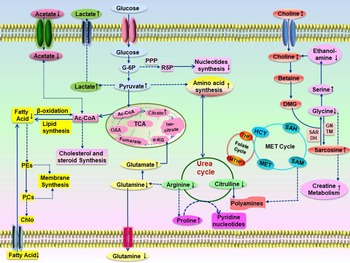
Abundant metabolites are floating in the blood and have the potency to be candidate biomarkers alone or in combination for PC. Reported metabolites have been investigated for their efficacy and accuracy by different analytical platforms and are listed in Table 1. These metabolites provide a detailed understanding of the pathophysiology of PC. Past and ongoing research has shown that various metabolic pathways are convoluted in PC onco-pathophysiology. Divergent groups of researchers have shown the association of lipid metabolism with PC (Refs Reference Fan23, Reference Zang24, Reference Mondul28, Reference Giskeodegard30, Reference Huang34, Reference Schmidt41, Reference Xu47). Glycero-phospholipids (GPL) are important constituents of cell membrane and have been observed with the aggressiveness of PC, which is coherent with contemporary acquaintance of GPL augmentation with oncogenesis and tumour progression compared with normal tissue and is linked with cell metabolic changes related to biosynthetic pathways, signalling involving Tricarboxylic Acid (TCA) also (Refs Reference Nomura48–Reference Huang52). The major phospholipid component of eukaryotic membranes – phosphatidylcholine (PCho) and choline (Cho) – both exhibit aberrant levels in PC. Different consortiums of research (Refs Reference Osl21, Reference Giskeodegard30, Reference Schmidt35) have identified PCho and Cho to be related to malignant transformation, invasion and metastasis of PC (Ref. Reference Mori53). Different investigators (Refs Reference Giskeodegard30, Reference Huang32, Reference Schmidt35, Reference Andras36, Reference Khan38, Reference Xu45) have observed that different biomolecules of the carnitine family play a significant role in PC. Carnitine is an essential ‘shuttle-molecule to assist fatty acid acyl moieties inflow into the mitochondrial matrix’ for the β-oxidation pathway (Ref. Reference Console54). A number of studies from different peers (Refs Reference Osl21–Reference De Vogel26, Reference Kumar29, Reference Kumar33, Reference Schmidt35, Reference Derezinski37–Reference Zheng40) have published several amino acids’ augmentation in PC. Glycine, glutamine, serine, proline, alanine, arginine, leucine, isoleucine, methionine and tryptophan have been acknowledged for their role in PC metabolism. Amino acid pools serve as potent fuel for onco-development as well as act as an anaplerotic source for various biochemical pathways via different bio-physiological routes comprising lipogenesis, protein synthesis, purine and pyrimidine biosynthesis (Refs Reference Mondul27, Reference Mondul28, Reference Huang32, Reference Schmidt35, Reference Cebrian43), kynurenine pathway (Ref. Reference Khan38), Tetrahydrofolate (THF) and folate metabolism and zinc metabolism. Briefly, the contributory metabolic pathways and their important intermediate metabolites involved in PC are summarised in Figure 2.
Typical contributory metabolic pathways and their intermediate metabolites involved in metabolism of PC. Up-regulated and down-regulated metabolites are depicted with (↑) and (↓), respectively.

One other non-proteinogenic amino acid, sarcosine, an intermediate product in the biochemical cycle of glycine has been found in the studies conducted by different study groups as a potent biomarker for PC (Refs Reference Huang25, Reference Mondul28, Reference Giskeodegard30, Reference Andras36). Few research studies have emphasised the bile acids' perturbation in PC (Refs Reference Zang24, Reference Mondul28) as well. Besides this, some studies have identified exclusive biomolecules, such as 1-steroylglycerol (Ref. Reference Mondul27), TNC, Apo-AIV (Ref. Reference Kiebish42) and serotonin (Ref. Reference Osl21) for PC progression.
So far, the metabolic flexibility, diversity and its association with PC and direct comparison of metabolites alone with PSA is still in early phase. To conceptualise the most specific and sensitive metabolic marker for PC high-dimensional dataset required a stringent mull over to diminish the multivariate differences of analytical, statistical approaches and other confounding factors.
Discussion of the present and future prospective
The scientific community has exerted mammoth efforts to determine the consequential biomarkers for PC diagnosis and identification using metabolomics as an analytical platform. Dozens of research studies have been published using different biological matrices boosting commonly used PSA testing and phenotyping metabolites variation in tumour biology and treatment response.
During the past two decades, extensive efforts have been made to overcome the biological and technical challenges, to translate all the potentialities of metabolomics as a promising tool in PC diagnosis and take it to the clinic for better healthcare. The metabolic profile is influenced by genetic, epigenetic, lifestyle and individual physiological factors; hence, the concept of using a panel of biomarkers or multivariate biomarkers will be an asset for PC diagnosis. The multivariate biomarker sets provide more insights regarding metabolic alterations happening in PC development and progression (Ref. Reference Tripathi55). A panel of biomarkers would equip a more established PC metabolomic signature compared with single metabolite capricious changes and would diminish the possibility of erroneous results (Ref. Reference Marchand56). The 15 diagnostic studies, four prognostic, eight predicative studies and one risk assessment study garnered potent metabolites that alter in and during PC.
Moreover, some studies advocated that the metabolic variables can be used for detection of PC in parallel to clinical PSA measures. Serum methionine metabolites are suggested to measure as a risk factor for PC progression as the PSA level (Ref. Reference Stabler22). A combination of seven metabolites (DCA, GCDC, DPA, tryptophan, arachidonic acid, deoxycytidine triphosphate and pyridinoline) was found to be on a par with clinical PSA levels (Ref. Reference Huang25). Glycine, pyruvate and sarcosine levels were well correlated with PSA measurements (Ref. Reference Kumar29) and in another study, pyruvate, citrate, glycine and sarcosine levels were well associated with PSA level (Ref. Reference Kumar33) suggested that these measures can easily be applied to PC detection. Two independent studies suggested that a panel of six metabolites (Ref. Reference Andras36) and a panel of five metabolites (Ref. Reference Xu45) was cumulatively exhibited a similar outcome compared with PSA. Very recently, another study advocated that glutamate, citrate and glycine levels were found to be not only able to identify PC, but also post-surgery monitoring for recovery of patients (Ref. Reference Kumar46).
Starting from the use of a single analytical platform via untargeted metabolomics studies to identify and discover novel metabolites, metabolomics has progressed to targeted metabolomics approaches that employ a combination of analytical platforms enabled by advancements in analytical and data processing systems for metabolites identification and quantification. Integrated approaches combining metabolomics observations and data analysis via multivariate methods would be ideal tools to extract the most relevant information on dynamic pathological conditions and the relationship between variables. This will also help to minimise variance in the outcome. The convergence of the mentioned studies in this review features that amino acid, lipid, choline and carnitine pathways are very much indulged in the PC physiology and plays a cardinal role together with other metabolic pathways. The percentage of independent perturbed identified metabolic pathways in the gleaned literature published in the past two decades (Fig. 3) reveals that amino acids and TCA cycle intermediates are most prominent metabolites playing a significant role not only in the progression, but also for the detection of PC. Few studies have witnessed sarcosine (Refs Reference Stabler22, Reference Sreekumar57–Reference Li59) as a promising chemical phenotype of PC; however, several other groups could not reproduce it (Refs Reference Mondul27, Reference Mondul28, Reference Thysell60, Reference Cernei61). These discrepancies can be depleted by using stringent statistical approaches, considering confounding factors and sample size.
Percentage of potential metabolites reported in various studies published in the last two decades.

Most of the research studies are investigational and have limited sample size. Sample size is a major concern because the numeral of identified metabolites in each investigation is stereotypically more than 1000 metabolites. Bio-diverse cohorts from different parts of the world might display variable outcomes. Hence an adequate sample size reduces the chance of standard error and increases the power of outcome to a significant level. The collaboration of a skilled specialist having good scientific knowledge in the art and practice of medical statistics may further accredit the findings. The role of sample size and multicentric studies combined with statistical strategy is pivotal in data mining and processing to maximise the reproducibility, reliability and robustness (RRR) of the results in clinical references.
The other greatest constraint for RRR in biomarker discovery via metabolomics is the finding that many studies have lacked the necessary step of validation. The majority of reported biomarkers were difficult to replicate using a clinically independent validation set and the reason is still uncertain. Hence, the best tactic for metabolomics should include validation of the findings with an independent sample set using rigorous statistical methods and by evaluating the clinical performance of candidate biomarkers using AUC, sensitivity, specificity and accuracy as an obligatory step.
Briefly the number of metabolites and pathways are repeatedly described by different research groups across various sample sizes, and cohorts are very encouraging to discover the chief set of metabolites for PC diagnosis, progression and recurrence. Identification of small, yet important, signals among metabolic pool sample variation, data replication, integration into large-scale metabolomics is a considerable challenge in clinical metabolomics. Further sample size, various pre- and post-analytical methods, inter-laboratory reproducibility, preclude consistent, universal metabolomics biomarkers for PC. Thus, multicentric studies including large sample size, matched control and outcome validation via multivariate statistical model may benefit clinical PC metabolomics to establish the most significant putative PC biomarker. To better interpret PC metabolomics and intensify diagnostic power expanding the study population increased data mining and processing together with validation becomes obligatory.
Article highlights
(1) The existing indexes for PC biomarkers are not eminently specific, sensitive, non-invasive, rapid and robust.
(2) To meet this goal serum became the preferred bio-fluid for investigation.
(3) The current review narrated existing PC serum metabolomics biomarkers exploration and advancement during the last two decades.
(4) Expert opinion towards future workflow for precise and meticulous PC diagnosis and relevant key issues to be converse are emphasised.
Author contributions
N. B. and A. G. searched data for this review article. N. B. and A. G. wrote the manuscript, made figures and tables. M. K. and S. N. S. edited the manuscript and suggested clinical part of the manuscript. All authors made substantial contributions to discussions of content and reviewed and edited the manuscript before submission.
Financial support
Financial support was provided by the Indian Council of Medical Research (5/3/8/35/2020-ITR), New Delhi, India.
Conflict of interest
The authors have no relevant affiliations or financial involvement with any organisation or entity with a financial interest in or financial conflict with the subject matter or materials discussed in the manuscript. This includes employment, consultancies, honoraria, stock owner ship or options, expert testimony, grants or patents received or pending, or royalties.