


Introduction
Although various psychosocial treatment protocols have been developed and supported empirically for specific disorders, these protocols require in-depth clinician training over the course of many months or years as well as multiple specialized resources (e.g. books, manuals, or written protocols and supplementary materials). Moreover, mental health patients often present with multiple psychological and physical comorbidities, but these discrete treatment protocols are not typically designed to target more than one emotional disorder. The high levels of comorbidity in emotional disorders (e.g. Grant et al., Reference Grant, Chou, Goldstein, Huang, Stinson, Saha and Ruan2008; Zanarini et al., Reference Zanarini, Frankenburg, Dubo, Sickel, Trikha, Levin and Reynolds1998; Zimmerman and Mattia, Reference Zimmerman and Mattia1999) as well as neurobiological similarities amongst these disorders suggest that individual diagnoses represent inconsequential variations of an emotional dysregulation syndrome, conceptualized as trait neuroticism (e.g. Barlow et al., Reference Barlow, Sauer-Zavala, Carl, Bullis and Ellard2014; Brown, Reference Brown2007). The Unified Protocol for the Transdiagnostic Treatment of Emotional Disorders (UP; Barlow et al., Reference Barlow, Farchione, Fairholme, Ellard, Boisseau, Allen and Ehrenreich-May2011) is a succinct set of cognitive behavioural interventions designed to address a range of disorders, transdiagnostically, in which emotional dysregulation is the underlying component (Barlow et al., Reference Barlow, Allen and Choate2004). The UP may be well suited to address this underlying phenomenon across common comorbid conditions (Barlow et al., Reference Barlow, Allen and Choate2004; Barlow et al., Reference Barlow, Sauer-Zavala, Carl, Bullis and Ellard2014; Thompson-Hollands et al., Reference Thompson-Hollands, Sauer-Zavala and Barlow2014).
Individuals with borderline personality disorder (BPD) may particularly benefit from the UP (Lopez et al., Reference Lopez, Stoddard, Noorollah, Zerbi, Payne, Hitchcock and Ray2014). Psychiatric patients with BPD more commonly have comorbid emotional disorders compared with non-BPD patients (Zimmerman and Mattia, Reference Zimmerman and Mattia1999). In studies reviewed by Grant et al. (Reference Grant, Chou, Goldstein, Huang, Stinson, Saha and Ruan2008), 59.6% of individuals with BPD have also concurrently met diagnostic criteria for any current anxiety disorder, and 19.3% met criteria for concurrent major depressive disorder (MDD). These numbers increase substantially when taking into account lifetime comorbidity. Zanarini et al. (Reference Zanarini, Frankenburg, Dubo, Sickel, Trikha, Levin and Reynolds1998) found that 88.4% of individuals with BPD had been given a diagnosis of any anxiety diagnosis at some point in their life, and 82.8% had received a diagnosis of MDD.
The UP has shown efficacy in treating co-occurring emotional disorders (Boswell et al., Reference Boswell, Anderson and Barlow2014; Bullis et al., Reference Bullis, Fortune, Farchione and Barlow2014; Ellard et al., Reference Ellard, Fairholme, Boisseau, Farchione and Barlow2010; Ellard et al., Reference Ellard, Deckersbach, Sylvia, Nierenberg and Barlow2012; Farchione et al., Reference Farchione, Fairholme, Ellard, Boisseau, Thompson-Hollands, Carl and Barlow2012) as well as specific BPD symptomology (Lopez et al., Reference Lopez, Stoddard, Noorollah, Zerbi, Payne, Hitchcock and Ray2014, Sauer-Zavala et al., Reference Sauer-Zavala, Bentley and Wilner2015). However, the literature investigating the UP’s efficacy on depression and anxiety symptomology in individuals with BPD is limited. A recent clinical replication series found significant improvements in depression and anxiety symptoms in a small sample (n = 5) of BPD cases in addition to similar improvements in core BPD symptoms (Sauer-Zavala et al., Reference Sauer-Zavala, Bentley and Wilner2015). This pilot study was limited in scope, administering few measures in a simple pre-post design. Thus, additional research is needed to more comprehensively investigate the impact of the UP on emotional disorder symptoms in individuals with BPD.
The aim of the present clinical series was to evaluate changes in symptoms of depression, stress and anxiety in a larger sample of individuals with BPD who completed the UP, using a single case experimental design (specifically, multiple baseline across individuals; Barlow et al., Reference Barlow, Nock and Herson2009) and multiple psychometrically sound clinical measures. It was hypothesized that participants would demonstrate stability in scores on measures of depression, stress and anxiety over the course of the baseline period of the study, followed by improvements throughout treatment and at post-treatment. It was also hypothesized that participants would no longer meet diagnostic criteria for anxiety or depression at post-treatment, and that all post-treatment gains would be maintained at 1-month follow-up.
Method
The present study expands on data collected for a larger study (Lopez et al., Reference Lopez, Stoddard, Noorollah, Zerbi, Payne, Hitchcock and Ray2014), which focused on changes in BPD symptoms (rather than the present focus on depression, stress and anxiety) following administration of the UP. In that study, three of the eight participants who completed treatment achieved a reliable pre- to post-treatment reduction in symptoms on the global scale of the Borderline Symptom List (BSL; Bohus et al., Reference Bohus, Limberger, Frank, Sender, Gratwohl and Stieglitz2001), and at post-treatment five participants no longer met diagnostic criteria for BPD. At the 1-month follow-up, six participants no longer met criteria for BPD.
Participants
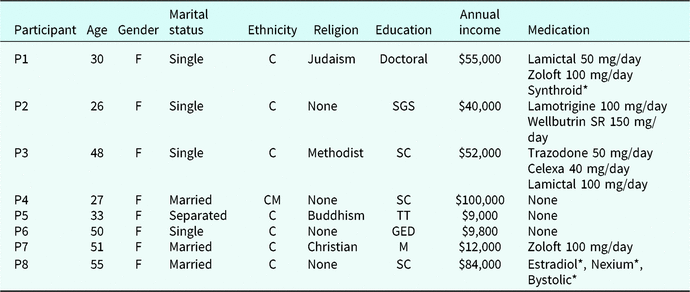
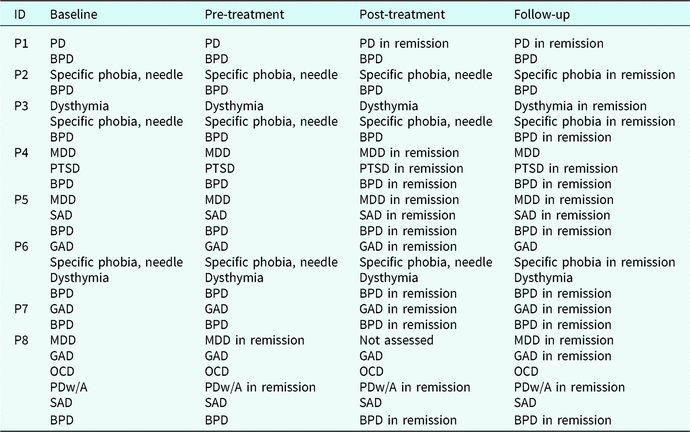
Among the eight women who completed treatment in the present study, ages ranged from 26 to 55 years (mean = 40 years). Additional details about each participant, including active medications, are provided in Table 1 and the single case descriptions and data section, below. All participants met diagnostic criteria for BPD and at least one anxiety or depressive diagnosis according to the criteria of DSM-IV (American Psychiatric Association, 2000; see Table 2).
Participant characteristics

C, Caucasian; CM, Caucasian and Mexican; F, female; GED, general equivalency degree; CG, college graduate; SC, some college; SGS, some graduate school; M, Master’s degree; TT, technical training beyond high school.
* Dose unknown.
Diagnoses for each participant across four time points

BPD, borderline personality disorder; GAD, generalized anxiety disorder; MDD, major depressive disorder; PTSD, post-traumatic stress disorder; OCD, obsessive compulsive disorder; PD, panic disorder; PDw/A, panic disorder with agoraphobia; SAD, social anxiety disorder.
Procedure
The Alliant International University Institutional Review Board approved all study procedures. Eligibility criteria for the study included being at least 18 years of age; meeting diagnostic criteria for BPD; not meeting criteria for current substance dependence, bipolar disorder or psychotic disorder; not imminently suicidal; agreement to not change medications or to take as-needed benzodiazepines, and agreement to not engage in additional psychological treatment during the duration of the study.
Five of the eight participants were recruited from the Dialectical Behavior Therapy (DBT) Center of San Diego, and contacted because they expressed an interest in participating in research. Local psychologists referred two additional participants, and one participant self-referred. Participants were assigned to 2-, 4- or 6-week baselines (as specified below) to establish the stability of clinical symptoms prior to beginning treatment. Baseline periods were pre-determined prior to recruitment to provide multiple baseline periods for analysis. The first three participants were assigned 6-week baselines, the next three were assigned 4-week baselines, and the last participants recruited were assigned 2-week baselines.
Treatment
The UP is a transdiagnostic, cognitive behavioural treatment programme that consists of four core modules: (1) increasing emotion awareness (2) increasing cognitive flexibility (3) countering emotional avoidance, and (4) emotion and situational exposure. For a detailed account of each treatment module, the reader is referred to Barlow et al. (Reference Barlow, Farchione, Fairholme, Ellard, Boisseau, Allen and Ehrenreich-May2011). Participants received a full course of the UP, which consisted of 14–16 treatment sessions. All participants received individual treatment sessions, which were conducted by the first author. All sessions were audio recorded for later ratings of adherence and competence. An independent evaluator rated 20% of the audio recordings. The independent evaluator was a post-doctoral clinical psychologist who had advanced training in cognitive behavioural therapies. The developers of the UP provided the packet used to rate adherence and competency. Adherence was rated ‘yes’ or ‘no’ based on the presence or absence of treatment concepts, and reflected whether or not the therapist completed the goals of each session. Items were then calculated to determine an adherence percentage. Competence was rated on a 6-point Likert scale ranging from 0 (did not do) to 5 (done excellently), and ratings reflected how effectively the treatment concepts were covered. Overall, the independent ratings were 81% for adherence and 85% for quality, indicating that the therapist was adherent and competent in the administration of the UP.
Instruments
As described in the previous report (Lopez et al., Reference Lopez, Stoddard, Noorollah, Zerbi, Payne, Hitchcock and Ray2014), diagnostic measures were administered across four time points (i.e. pre-baseline, pre-treatment, post-treatment and follow-up), and measures of depression, anxiety and stress were administered on a weekly basis during baseline and throughout treatment. The first author administered the Structured Clinical Interview for DSM Disorders-I (SCID-I) and Structured Clinical Interview for DSM Disorders-II (SCID-II) at baseline and pre-treatment, and two trained independent assessors conducted the post-treatment and 1-month follow-up assessments. Participants completed a brief weekly battery prior to each therapy session, with the exception of the termination session, in which case the battery was completed after the session. The weekly battery included two measures of depressive symptoms, one measure of stress, and two measures of anxiety symptoms.
Assessment instruments included:
The Structured Clinical Interview for DSM-IV Disorders-I (SCID-I-CV; First et al., Reference First, Spitzer, Gibbon and Williams1996)
The SCID-I is a semi-structured interview used to diagnose Axis I disorders according to the DSM-IV criteria. The SCID-I is known as the gold standard psychiatric diagnostic interview, and has demonstrated fair to excellent reliability, with kappa scores ranging from .61 to .83 (Lobbestael et al., Reference Lobbestael, Leurgans and Arntz2010; Zanarini et al., Reference Zanarini, Skodol, Bender, Dolan, Sanislow, Schaefer and Gunderson2000). Compared with unstructured interviews, the SCID-I has demonstrated better specificity, as evidenced by a correlation increase from r ~.5 to r ~.8 (Basco et al., Reference Basco, Bostic, Davies, Rush, Witte, Hendrickse and Barnett2000).
The Structured Clinical Interview for DSM-IV Disorders-II (SCID-II; First et al., Reference First, Gibbon, Spitzer, Williams and Benjamin1997)
The SCID-II is a semi-structured interview used to assess the presence of personality disorders according to DSM-IV criteria. It has kappa scores ranging from .65 to .98 (Lobbestael et al., Reference Lobbestael, Leurgans and Arntz2010; Maffei et al., Reference Maffei, Fossati, Agostoni, Barraco, Bagnato, Deborah and Petrachi1997). Validity coefficients have ranged from .45 to .95 (Skodol et al., Reference Skodol, Rosnick, Kellman and Oldham1988).
Depression Anxiety Stress Scales (DASS; Lovibond and Lovibond, Reference Lovibond and Lovibond1995)
The DASS is a 42-item self-report measure used to assess symptoms of depression, anxiety and stress. Items are rated based on the past week on a scale of 0 (did not apply to me at all) to 3 (applied to me very much, or most of the time). Example items include ‘I felt sad and depressed’, ‘I felt scared without any good reason’, and ‘I tended to over-react to situations’. The DASS has demonstrated sound psychometric properties on all three scales, with alpha coefficients of .96 for depression, .89 for anxiety, and .93 for stress (Brown et al., Reference Brown, Chorpita, Korotitsch and Barlow1997). Adequate convergent and discriminant validity has been demonstrated for all three scales, with coefficients ranging from .70 to .77 (Crawford and Henry, Reference Crawford and Henry2003). Scores on each of the scales can range from 0 to 42, with higher scores reflecting increased severity of symptoms.
Overall Anxiety Severity and Impairment Scale (OASIS; Norman et al., Reference Norman, Cissell, Means-Christensen and Stein2006)
The OASIS assesses severity of anxiety with five items addressing the past 7 days. Each item is measured on a Likert-type scale ranging from 0 (no anxiety in the past week) to 4 (constant anxiety; felt anxious all of the time and never really relaxed). Preliminary psychometric data have indicated the OASIS is a valid and reliable measure as demonstrated by a convergent correlation of .58 with the Brief Symptom Inventory-18 (BSI-18; Derogatis, Reference Derogatis2001) and strong test–retest reliability (Campbell-Sills et al., Reference Campbell-Sills, Norman, Craske, Sullivan, Lang, Chavira and Stein2009; Norman et al., Reference Norman, Cissell, Means-Christensen and Stein2006).
Overall Depression Severity and Impairment Scale (ODSIS; Norman et al., Reference Norman, Cissell, Means-Christensen and Stein2006)
The ODSIS, adapted directly from the OASIS, assesses severity of depression with five items addressing the past 7 days. Preliminary data have indicated that the ODSIS is valid and reliable as demonstrated by convergent validity of .71 with the depression scale of the DASS, and an internal consistently coefficient of .94 (Bentley et al., Reference Bentley, Gallagher, Carl and Barlow2014). Test–retest reliability has yet to be evaluated.
Analytic plan
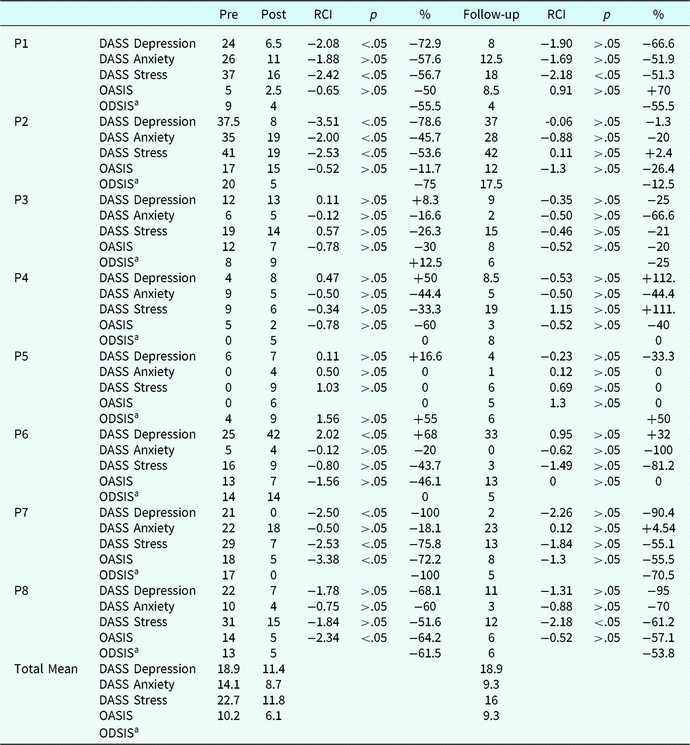
This study utilizes a multiple baseline across individuals single case experimental design. Data were collected continuously, starting with a baseline assessment period, and treatment was introduced at different points in time for different participants (Kazdin, Reference Kazdin2003). For this idiographic design, traditional nomothetic statistical approaches do not apply. Data were instead analysed using the reliable change index (RCI: Jacobson and Truax, Reference Jacobson and Truax1991), visual inspection and percentage change calculations. For the latter calculations, magnitude of change was divided into tertiles (thirds) and interpreted as follows: 0 to 33.3% was considered small, 33.4 to 66.7% was considered moderate, and 66.8 to 100% was considered large. Percentage change values are presented in Table 3. Negative values reflect improvement, and positive values reflect a worsening of symptoms. One of the criticisms of nomothetical analyses is that reporting averages may ‘wash out’ any clinically significant individual scores or changes. Although we have addressed that issue with our single case experimental design, we report averages for an overall summary to augment the idiographic data and Fig. 1. Because reliability coefficients were not available to calculate reliable change for the ODSIS, analyses for this measure relied upon visual inspection and percentage change calculations only.
Scores and changes at three time points

DASS, Depression Anxiety Stress Scale (Brown, Chorpita, Korotitsch and Barlow, 1997); OASIS, Overall Anxiety Severity and Impairment Scale (Norman et al., Reference Norman, Cissell, Means-Christensen and Stein2006); ODSIS, Overall Depression Severity and Impairment Scale (Norman et al., Reference Norman, Cissell, Means-Christensen and Stein2006). Magnitude of change was interpreted as follows: 0 to 33.3% was considered small, 33.4 to 66.7% was considered moderate, and 66.8 to 100% was considered large.
a Because reliability coefficients were not available to calculate reliable change for the ODSIS, analyses for this measure relied upon visual inspection and percentage change calculations only.
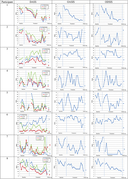
Graphs for the Depression Anxiety Stress Scale (DASS), Overall Anxiety Severity and Impairment Scale (OASIS), and Overall Depression Severity and Impairment Scale (ODSIS). The follow-up data were collected 1 month after the final treatment session; all other data were collected at 1-week intervals.

Results
Single case descriptions and data
See Table 2 for diagnoses met at baseline, pre-treatment, post-treatment and follow-up assessment points, and see Fig. 1 for DASS, OASIS and ODSIS data. Note that there were no changes between baseline and pre-treatment diagnoses, with the exception of Participant 8 (described below). This shows the reliability of these diagnoses in the absence of treatment. Note that treatment lasted 14–16 weeks, and that exposures to situations (which are designed to elicit temporary increases in distress, followed by habituation to the situation) were conducted in the latter phase of treatment. The follow-up data are from 1-month post-treatment; all other data were obtained weekly.
We briefly characterize each participant, including diagnoses and baseline length, followed by scores on the three self-report measures and a description of diagnostic changes (if any). Only one of the study participants had a prescription to take a benzodiazepine as needed. However, she reported she had never taken the medication and had no issue agreeing not to take the medication for the duration of the study. No other participants reported taking a benzodiazepine as needed.
Participant 1
Participant 1 (P1) was a 30-year-old, never-married female diagnosed with BPD and panic disorder. She was assigned to a 2-week baseline.
Her scores on all three scales of the DASS (i.e. depression, anxiety, stress) were erratic during the baseline phase and gradually and linearly decreased during the initial 8 weeks of treatment. Increases in scores were demonstrated at week 9, when exposure therapy was initiated. Data for the next 2 weeks were missing due to administrative error. Post-treatment and follow-up scores on all three DASS scales fell well below pre-treatment scores, demonstrating changes of moderate to large magnitude. P1’s score on the depression scale of the DASS reflected a large and clinically significant improvement. On the anxiety scale of the DASS, reliable change was not achieved, although percentage change was moderate. On the stress scale, a reliable reduction was achieved and mirrored by the moderate percentage change.
On the OASIS, P1’s scores at the start of treatment were well above baseline, and gradually and linearly decreased throughout the course of treatment. Her post-treatment score did not demonstrate a reliable reduction. The follow-up score demonstrated a slight worsening of anxiety compared with baseline.
P1’s scores on the ODSIS peaked at the start of treatment, and were erratic throughout treatment. However, compared with pre-treatment, a decrease of moderate magnitude was demonstrated at post-treatment, and this improvement was maintained at follow-up.
At post-treatment and follow-up alike, she continued to meet criteria for BPD but no longer met criteria for panic disorder.
Participant 2
Participant 2 (P2) was a 26-year-old, never-married female. At the initial evaluation, she was diagnosed with BPD and specific phobia (needle). P2 was assigned to a 2-week baseline.
P2’s scores on the anxiety, depression and stress scales of the DASS were relatively stable during the baseline phase. Her scores on the depression and stress scales gradually and linearly decreased in the first 11 weeks of treatment, then sharply increased at session 12 (although it remained below baseline). All post-treatment scores fell well below baseline. However, her follow-up scores on the stress and depression scales returned to baseline. On the anxiety scale, her follow-up score was increased over post-treatment, yet remained improved compared with baseline. A reliable reduction was achieved on the depression scale of the DASS, which is consistent with the percentage change of large magnitude. On the anxiety and stress scales of the DASS, reliable reductions were achieved, and were consistent with improvements of moderate magnitude reflected by percentage change.
P2’s baseline scores on the OASIS were erratic and peaked prior to implementation of treatment. Her scores remained unstable throughout treatment. A decrease in anxiety was demonstrated at week 13, at which point she was engaged in emotion exposures. At post-treatment, her score sharply increased yet remained slightly below pre-treatment. A clinically significant reduction was not achieved on the OASIS. At follow-up, her score was below pre-treatment and post-treatment scores.
On the ODSIS, her scores gradually and linearly increased during baseline. Although her scores on the ODSIS varied week to week, all treatment scores remained below pre-treatment. A decrease of large magnitude was demonstrated at post-treatment, although her score returned to near baseline at follow-up.
P2 continued to meet criteria for BPD and specific phobia through post-treatment. At follow-up, the specific phobia was in remission, although she still met criteria for BPD.
Participant 3
Participant 3 (P3) was a 48-year-old, never-married female. At the initial evaluation, she met criteria for BPD, dysthymia and needle phobia. P3 was assigned to a 2-week baseline. P3’s scores on the DASS depression scale were stable during the baseline phase and in the normal to mild range for depression. Her scores increased at pre-treatment, and during mid-treatment, her scores indicated severe depression. Her pre- to post-treatment score remained essentially unchanged. Although P3’s follow-up score on the depression scale was slightly improved over pre-treatment, it remained increased over baseline. P3 did not achieve a reliable reduction on the anxiety or stress scale of the DASS. On the stress scale of the DASS, P3’s score increased each week during baseline, reflecting an increase in stress prior to introduction of the treatment. Scores varied from week to week and ranged from mild to extremely severe. Her post-treatment score on the stress scale did not reflect a reliable reduction, and at follow-up her score returned to near baseline.
On the OASIS, her post-treatment did not reflect a reliable change, and post-treatment and follow-up scores reflected no improvement over baseline.
On the ODSIS, P3’s post-treatment score showed no change from baseline.
At post-treatment, P3 continued to meet criteria for BPD, dysthymia and needle phobia; however, she did not meet criteria for any of these at the 1-month follow-up.
Participant 4
Participant 4 (P4) was a 27-year-old, married female. At the initial evaluation, she met criteria for BPD, MDD and PTSD. P4 was assigned to a 4-week baseline.
P4’s scores on the DASS depression scale decreased prior to implementation of treatment and reflected week-to-week variability throughout treatment. Her post-treatment score reflected a worsening of depression over pre-treatment, which remained essentially unchanged at follow-up. Her scores on the anxiety and stress scales of the DASS were unstable throughout treatment and at post-treatment did not reflect reliable reductions.
On the OASIS, her baseline scores varied and reflected a decrease in anxiety prior to introduction to the treatment. There was substantial week-to-week variability throughout treatment, and a reliable reduction was not achieved at post-treatment. Her follow-up score remained essentially unchanged.
Her post-treatment score on the ODSIS reflected a worsening of depression over pre-treatment, which continued to worsen at follow-up.
At post-treatment, all diagnoses had remitted; however, at follow-up she again met criteria for MDD.
Participant 5
Participant 5 (P5) was a 33-year-old female. At the initial evaluation, she met criteria for BPD, MDD and social anxiety disorder (SAD). P5 was assigned to a 4-week baseline.
Data for the first administration of the DASS were missing due to administrative error. Subsequent baseline scores were unstable and reflected a sharp decrease in symptoms prior to the introduction of treatment. Pre-treatment scores on the DASS anxiety and stress scales, and on the OASIS, demonstrated a floor effect, thus no improvement was reflected at post-treatment or follow-up. Post-treatment scores all three DASS scales and on the OASIS were not significant.
On the ODSIS, her scores reflected a decrease during the baseline phase, while post-treatment and follow-up scores reflected an increase in depression over pre-treatment.
At pre-treatment, P5 continued to meet criteria for BPD, MDD and SAD. However, at post-treatment and follow-up, all diagnoses were in remission.
Participant 6
Participant 6 (P6) was a 50-year-old, never-married female. At the initial evaluation, she was diagnosed with BPD, generalized anxiety disorder (GAD), dysthymia and specific phobia (needle). P6 was assigned to a 6-week baseline.
P6’s baseline scores on the depression scale of the DASS were unstable. She also had unstable scores during treatment, reflecting an overall increase in depression. Her score peaked at post-treatment, demonstrating a large increase over pre-treatment and extremely severe depression (Lovibond and Lovibond, Reference Lovibond and Lovibond1995). Her post-treatment score on the depression scale of the DASS reflected a reliable increase in depression, and her follow-up score continued to fall within the range of extremely severe depression. P6’s baseline scores on the anxiety scale of the DASS were relatively stable and fell within the normal range. Pre- to post-treatment scores reflected a small change in magnitude and were not significant. On the stress scale of the DASS, P6’s scores were erratic during baseline and throughout treatment. Pre- to post-treatment scores were not significant. Her follow-up score decreased by a few points but did not reflect a reliable change.
P6’s post-treatment score on the OASIS did not reflect a reliable reduction in anxiety. The instability of baseline scores made it difficult to evaluate the effectiveness of treatment.
On the ODSIS, P6’s baseline scores varied week to week. Her pre- and post-treatment scores were identical, reflecting no change. Her follow-up score fell drastically, and reflected improvement over all prior scores.
At post-treatment, P6 did not meet criteria for GAD or BPD, but continued to meet criteria for a specific phobia (needle) and dysthymia. At follow-up, she met criteria for GAD and dysthymia, but not for specific phobia or BPD.
Participant 7
Participant 7 (P7) was a 51-year-old female. She was diagnosed with BPD and GAD at the initial evaluation. P7 was assigned to a 6-week baseline.
Similar outcomes were demonstrated on the depression, anxiety and stress scales of the DASS. Baseline scores were erratic and revealed decreases in depression, anxiety and stress prior to the start of treatment. Her scores unsteadily decreased throughout the course of treatment and at post-treatment. On the depression and stress scales alike, pre- to post-treatment reliable reductions were achieved, and large improvements were reflected. On the DASS anxiety scale, reliable change was not achieved. At follow-up, scores on all three scales started to increase. Her follow-up scores on the depression and stress scales did not reflect reliable change compared with pre-treatment.
On the OASIS, her scores decreased during the first few weeks of baseline, and then started to increase before treatment. Her pre- to post-treatment score on the OASIS reflected a reliable reduction, and percentage change reflected a large improvement. At follow-up, her score remained well below pre-treatment but was not significant.
On the ODSIS, baseline scores were erratic and her pre-treatment score was elevated over all previous scores. Overall, her ODSIS scores reflected a decrease in severity and impairment during the first 11 weeks of treatment, followed by increased impairment during weeks 12 to 14. At post-treatment, her score on the ODSIS reflected a large improvement over pre-treatment. Her follow-up score started to increase, yet remained improved over pre-treatment.
At post-treatment and follow-up alike, P7 no longer met criteria for GAD or BPD.
Participant 8
Participant 8 (P8) was a 55-year-old, married female. At the initial evaluation, she met criteria for BPD, MDD, GAD, obsessive compulsive disorder, panic disorder with agoraphobia, and SAD.
P8 was assigned to a 6-week baseline. On the depression scale of the DASS, her scores were unstable and overall reflected a reduction in depression during the baseline phase. Her scores continued to decline throughout treatment; however, a reliable reduction was not achieved at post-treatment. A small increase occurred at follow-up. On the anxiety scale of the DASS, P8’s scores decreased in the first half of treatment and started to increase in the second half, at which point P8 was engaging in emotion exposures. Pre- to post-treatment reliable change was not achieved on the DASS anxiety scale, and her follow-up score remained essentially unchanged from baseline. On the stress scale of the DASS, P8’s scores were unstable yet remained identical at baseline and pre-treatment. Her score on the stress scale did not demonstrate a reliable reduction.
On the OASIS, P8’s score decreased slightly from baseline to pre-treatment, and during the initial 12 weeks of treatment her scores reflected a gradual reduction in anxiety. Her score returned to baseline in the 2 weeks prior to the final session. At post-treatment, however, a reliable reduction was achieved and her score reflected a moderate improvement over pre-treatment. Her follow-up score remained essentially unchanged from post-treatment.
On the ODSIS, her initial baseline scores decreased initially but then started to increase prior to the implementation of treatment. Throughout treatment, her scores on the ODSIS gradually decreased, and at post-treatment she demonstrated a moderate improvement. At follow-up, her score remained improved over pre-treatment.
At post-treatment, P8 continued to meet criteria for GAD and OCD, but not for PD with agoraphobia or BPD. At follow-up, all diagnoses were in remission with the exception of OCD. MDD was unintentionally not assessed at post-treatment, but was in remission at pre-treatment and follow-up.
Discussion
In the present study, the efficacy of the UP protocol on anxiety, stress and depression in individuals with BPD was evaluated. Depression and anxiety were measured on three dependent measures (i.e. DASS, OASIS, ODSIS). Scores on the depression measures reflected inconsistent outcomes. Three participants (P1, P2 and P7) reflected reliable pre- to post-treatment improvements in symptoms on the depression scale of the DASS, whereas scores for the other five participants either remained stagnant or increased. At follow-up, some participants informally reported that although they continued to experience depression, they learned how to better manage depressive symptoms. One participant, P2, demonstrated reliable reduction on the anxiety scale of the DASS, and three participants (P1, P2 and P7) showed reliable reduction on the DASS stress scale. One participant, P5, reflected a worsening of symptoms on the anxiety and stress scales on the DASS, and on the OASIS. Her pre-treatment scores were 0, which reflected an absence of anxiety and stress. This improvement at pre-treatment may have occurred because she had a treatment plan and felt hopeful. Hope has been identified as a factor that positively influences treatment outcome, regardless of theoretical orientation or type of therapy applied (Frank, Reference Frank1968). On this point, it is possible that those who experienced decreased avoidance prior to the implementation of treatment would have continued to improve on their own, without treatment. It is possible that the increases at post-treatment reflected greater emotional awareness – perhaps P5 was allowing herself to experience her emotions as opposed to avoiding. Nonetheless, it could be that her anxiety truly worsened during treatment. On the OASIS, two participants (P7 and P8) demonstrated a reliable pre-to-post treatment reduction, which was maintained at follow-up.
The ambiguous results related to symptoms of depression and anxiety may be due to the population (women with BPD), an insufficient ‘dose’ of treatment (i.e. more sessions were needed to address all symptoms), or a mismatch of the treatment for some women in the study. Although a number of studies have supported transdiagnostic psychotherapies for anxiety and depression, some studies found that, like ours, results were mixed. Note that in the following three studies, participants were not assessed for personality disorders, and were included only if they had a principal diagnosis of an anxiety disorder. In a randomized controlled trial of the UP (Farchione et al., Reference Farchione, Fairholme, Ellard, Boisseau, Thompson-Hollands, Carl and Barlow2012), more individuals in the treatment condition achieved subclinical status on their comorbid depressive disorder, compared with those in the wait-list control condition. However, the difference between groups was not statistically significant. In a study that evaluated the effect of the UP across anxiety disorders and depression, post-treatment assessment results for depression did not reach significance (Ellard et al., Reference Ellard, Fairholme, Boisseau, Farchione and Barlow2010). However, 64% of participants with co-occurring anxiety and mood disorders achieved responder status (i.e. 30% or greater change on at least two measures) and met high end-state functioning (i.e. no longer met criteria for their principal diagnosis and scored within the normal range on at least one assessment measure). In a study that examined the impact of a transdiagnostic cognitive behavioural group treatment (similar to UP) for anxiety on major depression and dysthymia (Norton et al., Reference Norton, Hayes and Hope2004), three of four participants with a depressive diagnosis experienced improvements in depression severity, whereas the fourth participant reported increased depression severity while in treatment. These outcomes, as well as the preliminary data from the present study, suggest that depression may be an area in need of additional emphasis in the UP. Treatment concepts in the UP Client Workbook are described most often using examples specific to anxiety disorders. Perhaps the inclusion of more examples that relate specifically to depression could lead to more robust outcomes.
Strengths
The study has several strengths. Diagnoses were determined (at multiple points) from gold standard interviews for mood disorders, anxiety disorders and BPD. Measures of symptom severity were administered frequently throughout the baseline and treatment phases of the study. Additionally, follow-up data were collected 1 month after the post-treatment evaluation. This allowed for single case analyses and a visual presentation of data that showed trajectories of change. The use of the reliable change index lends confidence to the study results. Additionally, an independent rater not otherwise involved in the study evaluated treatment adherence and competence. Finally, the study utilized a relatively new but promising intervention for addressing multiple disorders within individuals, which is commonly observed in clinical practice.
Limitations
Among the limitations of the study, generalizability was limited by several factors. Nearly all participants were Caucasian women, and exclusion criteria (i.e. individuals with current substance dependence, current bipolar disorder, or current psychotic disorder were ineligible for study participation) suggest that the results may not apply to individuals with these additional problems. Second, baseline scores were often unstable and at times reflected improvements prior to the introduction of the intervention, which made it difficult to establish the effect of the intervention on outcome variables (Kazdin, Reference Kazdin2003). Third, the OASIS and ODSIS are relatively new measures and have limited psychometric data. Given these limitations and the preliminary nature of the present study, results should be interpreted cautiously.
Conclusions
In recent years, a growing body of literature in support of transdiagnostic treatment approaches has emerged (e.g. Barlow et al., Reference Barlow, Allen and Choate2004; Erickson, Reference Erickson2003; Erickson et al., Reference Erickson, Janeck and Tallman2007; Mansell et al., Reference Mansell, Harvey, Watkins and Shafran2009; Norton et al., Reference Norton, Hayes and Hope2004). These approaches address barriers to treatment for individuals with comorbid psychiatric disorders. As an alternative to viewing and treating comorbid emotional disorders as discrete and unrelated, the transdiagnostic framework allows for emotional disorders to be conceptualized and treated based on common underlying features. To our knowledge, only one other study (Sauer-Zavala et al., Reference Sauer-Zavala, Bentley and Wilner2015) has evaluated the efficacy of the UP, one transdiagnostic approach, on anxiety and depression in individuals with comorbid BPD. The value of such an approach is that it could address underlying issues, such as emotional dysregulation, more efficiently than treating each of the comorbidities separately. This can save time in terms of clinician training and reduce the time and costs of treatment.
The impact of the UP on depressive and anxiety symptoms was mixed. Some of the participants showed a clear improvement in anxiety and depressive symptoms, while others showed no reliable change. Individuals with BPD may benefit from this transdiagnostic approach, reflected by reductions in BPD symptoms (Lopez et al., Reference Lopez, Stoddard, Noorollah, Zerbi, Payne, Hitchcock and Ray2014). However, reducing anxiety and depressive symptoms may be more stubborn for some women with BPD. The mechanisms of change in the UP may work differently in this population, and studies such as this one can be informative. Of course, randomized controlled studies can complement this single case design clinical series to test the benefits of the UP for samples of individuals with BPD or related personality disorders. Moreover, process variables, such as repeated measures of homework completion (indicating the degree of exposure to the situations and the information addressed in treatment) and cognitive changes may suggest ways in which the treatment can be even stronger for this population.
In single case experimental designs, multiple baselines are often used to show stability of symptoms prior to an intervention. One of the remarkable findings from this study was that baseline scores were commonly erratic in the absence of interventions. This should perhaps not be surprising, given that instability of emotional responses is one of the hallmarks of BPD. Likewise, some participants demonstrated improvements by post-treatment but a relative worsening by follow-up. This disruption in the therapeutic relationship from termination may also impact the relationship instability that is common in individuals with BPD. Taken together, these results suggest that future research should utilize longer baseline periods and longer treatment periods to ensure greater stability of clinical data and a sufficient dose of the intervention.
Acknowledgements
We thank Dr Milton Brown and the DBT Center of San Diego for assistance with recruitment of participants.
Conflicts of interest
Michelle Lopez, Steven Thorp, Matthew Dekker, Andrew Noorollah, Giovanna Zerbi, Laura Payne, Emily Meier and Jill Stoddard have no conflicts of interest with respect to this publication.
Ethical statements
The authors have abided by the Ethical Principles of Psychologists and Code of Conduct as set out by the APA, and ethical approval for the original study was obtained by the IRB at Alliant International University, San Diego, USA (approval no. 1903).
Financial support
This research received no specific grant from any funding agency, commercial or not-for-profit sectors.
Key practice points
(1) We evaluated the efficacy of the Unified Protocol for Transdiagnostic Treatment of Emotional Disorders (UP) on anxiety, stress and depression in individuals with primary borderline personality disorder.
(2) Severity of symptoms of anxiety and depression were assessed on a weekly basis, and at 1-month follow-up.
(3) Women diagnosed with primary borderline personality disorder and mood and/or anxiety disorder(s) may benefit from additional sessions of the UP.



Comments
No Comments have been published for this article.