Introduction
Due to their severe toxicity, aflatoxins are the subject of many studies in the field of medical science, toxicology, agronomy, soil science, veterinary medicine, and many others. Aflatoxin poisoning in human beings occurs through the food chain. Though fungus-producing aflatoxins are ubiquitous in nature, outbreaks of toxicity have been recorded more in developing countries (Jolly et al., Reference Jolly, Jiang, Ellis, Awuah, Nnedu, Phillips, Wang, Afriyie-Gyawu, Tang, Person, Williams and Jolly2006; Williams et al., Reference Williams, Phillips, Jolly, Stiles, Jolly and Aggarwal2004). This is due mainly to obligatory consumption of aflatoxin- contaminated foods, especially corn, due to limited facilities for mycotoxin control and a lack of knowledge and awareness among the rural public (Probst et al., Reference Probst, Njapau and Cotty2007). Aspergillus flavus, the main causal agent for aflatoxin production, can contaminate important agricultural and commercial foods around the world (Hacibekiroǧlu & Kolak, Reference Hacibekiroğlu and Kolak2013; Magrine et al., Reference Magrine, Ferrari, Souza, Minamihara, Kemmelmeier, Bando and Machinski2011; Prelle et al., Reference Prelle, Spadaro, Garibaldi and Gullino2012; Rodrigues & Naehrer, Reference Rodrigues and Naehrer2012; Schwartzbord & Brown, Reference Schwartzbord and Brown2015). In some cases, AfB1, the most toxic form of aflatoxin, exceeded the regulatory level of 20 ppb determined by the US Food and Drug Administration (FDA). Despite taking many preventive measures to eradicate aflatoxins, their occurrence seems to be inevitable.
In the United States, large quantities of corn are used for biofuel production. Directing aflatoxin-contaminated corn to biofuel production is thought to be economical and rational. However, the enrichment of biological toxins in the dried distillers grain (DDG), which is used widely as animal feed, has raised concerns about public health and safety. Removal of or inactivation of the mycotoxins during biofuel production is essential, therefore.
Smectites have long been used in detoxification of aflatoxin because of their great ability and affinity to bind the toxin irreversibly (Deng et al., Reference Deng, Berrientos-Velázquez, Billes and Dixon2010). Smectites were also proved to be safe in human and animal gastrointestinal (GI) tracts if they were consumed (Diaz et al., Reference Diaz, Hagler, Blackwelder, Eve, Hopkins, Anderson, Jones and Whitlow2004; Kubena et al., Reference Kubena, Harvey, Bailey, Buckley and Rottinghaus1998; Mitchell et al., Reference Mitchell, Xue, Lin, Marroquin-Cardona, Brown, Elmore, Tang, Romoser, Gelderblom, Wang and Phillips2014; Phillips, Reference Phillips1999; Quisenberry, Reference Quisenberry1968; Wang et al., Reference Wang, Luo, Billam, Wang, Guan, Tang, Goldston, Afriyie-Gyawu, Lovett, Griswold, Brattin, Taylor, Huebner and Phillips2005; Womack et al., Reference Womack, Brown and Sparks2014).
Smectites showed high aflatoxin B1 (AfB1) adsorption capacity in ethanol and glucose solutions (Alam et al., Reference Alam, Deng and Dixon2015), the two major soluble components in corn fermentation solution (CFS). However, AfB1 adsorption was surprisingly poor in real CFS collected from a local ethanol plant (Alam & Deng, Reference Alam and Deng2017). Previous findings suggested that proteins in CFS blocked most of the adsorption sites of smectites, probably because of their large molecular sizes and proton generating characteristics at the low pH of CFS. To inhibit the access of proteins into the interlayer of smectites and, consequently, to achieve greater AfB1 adsorption from CFS, modification of the smectites with small organic compounds might be an effective pathway.
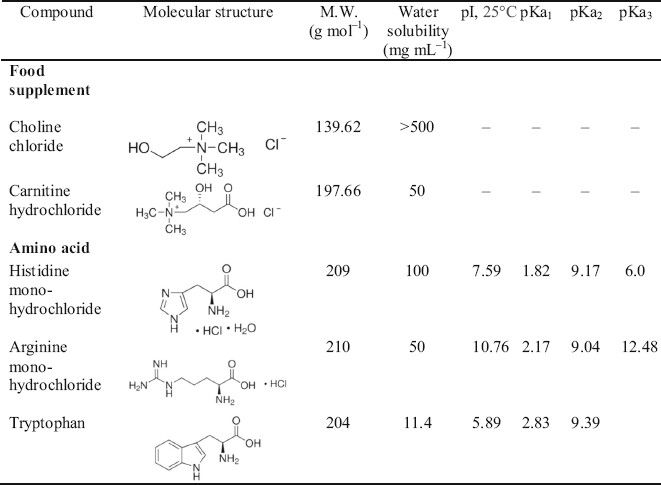
The purpose of the present study was to test the effectiveness of five small organic and nutritive compounds (choline, carnitine, arginine, histidine, and tryptophan) in modifying the surfaces of the smectite (Table 1) to enhance AfB1 adsorption in the CFS. These organic compounds were selected for clay modification not only because of their smaller sizes which allow them to fit into the smectite (these compounds are smaller than the AfB1, with molecular weights ranging from 139 to 210 g mol–1; Table 1), but also because of their non-toxic characteristics. They are food ingredients and essential nutrients required for proper physiological development in humans and animals. The choline and carnitine cations are essential dietary supplements. Arginine, histidine, and tryptophan are basic amino acids. In the biofuel industry, incorporating conventional surfactant-modified smectite into the raw corn or CFS would yield the undesirable result of its accumulation in the DDG; commercially prepared organo-clays might contain cationic surfactants that are generally considered toxic. For example, smectite modified with small organic compounds, e.g. phenyltrimethylammonium (PTMA) (136 g mol–1) adsorbs effectively aflatoxins in the presence of soluble proteins (Jaynes & Zartman, Reference Jaynes and Zartman2011); because of the toxicity of PTMA, the FDA prohibits its use in food or feed.
Some properties of the organic nutrient compounds used to modify smectite
 |
pI is the isoelectric point of amino acid (pH at which the amino acid has neutral charge). pKa1 = α-carboxyl group, pKa2 = α-ammonium ion, and pKa3 = side chain group
The reason for modifying the smectite by means of organic nutrients was to establish a confined interlayer space that would be a preferred adsorption environment for AfB1 but not for large protein molecules (Fig. 1). The smectite modification, inhibition of protein adsorption, and enhanced aflatoxin adsorption may be explained by the following hypothesized mechanisms:
(1) Intercalation of organic compounds and changes in surface hydrophobicity of smectites
The adsorption of cationic choline and carnitine on clays occurs primarily through cation exchange. Both organic cations and the neutral aflatoxins could be adsorbed in the interlayer of smectite (Fig. 1). Amino acids (arginine, histidine, tryptophan) have a variable electrostatic charge depending on the pH of the solution and their isoelectric point (pI) values (Table 1). Positively charged amino acids could be adsorbed by smectite via cation exchange and the zwitterion forms of the amino acid could be adsorbed through ion-dipole interaction or water bridging. Intercalation of organic compounds expand the clays to various degrees depending on the size and polarity of the organic compounds. If the adsorption of the proposed small organic compounds is more or less irreversible, they may induce a suitable interlayer environment for the adsorption of certain toxins, but not for the larger biological compounds such as proteins (Fig. 1).
Schematic model of an organo-smectite complex for AfB1 adsorption with limited access for large protein molecules

The non-polar surface domains of the smectite interlayers (hydrophobic sites) are believed to be the sites for aflatoxin adsorption (Deng et al., Reference Deng, Berrientos-Velázquez, Billes and Dixon2010). The organic cations would replace the inorganic cations, reduce or expel interlayer water, and thereby increase the hydrophobicity of the smectite surface, making it favorable for aflatoxin adsorption. The zwitterion amino acids are supposed to interact similarly with the non-polar surfaces of the smectite. This is the reason why the basic amino acids were selected to form the organo-smectites.
(2) Blocking or limiting interlayer access by protein molecules but not by AfB1 in smectite
Modifying smectites with small compounds would not fill the interlayer space of smectite completely but would define a constrained interlayer basal spacing that would be large enough for access by aflatoxin molecules but not for protein (Fig. 1). Blocking the protein adsorption sites might, indirectly, favor aflatoxin adsorption. Therefore, the size of a modifier and its stability in the interlayer could play an important role for aflatoxin selectivity. The structural functional groups on the modifier compounds might also play a role. Details of the technical role of the organic compounds for hydrophobicity of clays, protein inhibition, and enhanced aflatoxin adsorption have yet to be fully evaluated (Barrientos-Velazquez & Deng, Reference Barrientos-Velazquez and Deng2020; Jaynes et al., Reference Jaynes, Zartman and Hudnall2007).
The current study aimed to evaluate the efficiency of a smectite, modified with five organic nutrients, at reducing interference by protein in AfB1 adsorption in corn fermentation solutions. Three specific objectives were: (1) to confirm intercalation of organic nutrients into smectite; (2) to examine AfB1 adsorption by the organo-smectites and the competition of protein in aqueous solutions; and (3) to determine the efficiencies of organo-smectites for enhancing AfB1 adsorption in real corn formation solution.
Materials and Methods
Smectite Background Information
The <2 μm fraction of a calcium-smectite mineral (Ca-3MS) was extracted from a bentonite mined in Mississippi, USA. This bentonite was a certified NovasilTM 16 and supplied by the Office of the Texas State Chemist (OTSC). The smectite was saturated with Ca2+ and dispersed in deionized (DI) water to make a stock Ca-3MS dispersion. The clay had a cation exchange capacity (CEC) of 94.0 cmol(+) kg–1. This clay (Ca-3MS) was selected because of its high AfB1 adsorption capacity (Q max = 0.54 mol kg–1) in aqueous solution (Alam et al., Reference Alam, Deng and Dixon2015).
Preparation of CFS, AfB1, Pepsin, and Organic Nutrient Solutions
The corn fermentation solution (CFS) was collected from a local ethanol plant in Texas (Alam & Deng, Reference Alam and Deng2017). All other chemicals required for analyses were purchased from Sigma Aldrich chemical company (St. Louis, MO, USA). A vial of 50 mg of AfB1 powder from A. flavus (CAS No. 1162-65-8) was dissolved in 50 mL of HPLC-grade acetonitrile to make a 1000 mg L–1 stock solution. The AfB1 batch adsorption procedures were described by Alam et al. (Reference Alam, Deng and Dixon2015). The five organic nutrients for smectite modification were high-purity (≥98%). They were choline chloride (CC), carnitine (Car), arginine (Arg), histidine (His), and tryptophan (Trp). A stock solution of 1000 mg L–1 of each of the five nutrient compounds was prepared. A 1000 mg L–1 stock solution of protein using pepsin (obtained from porcine gastric mucosa, CAS No. 9001-75-6) was also prepared. Pepsin was completely dissolved in DI water.
Preparation of Organo-Smectites
The organo-smectites were prepared by exchanging the calcium-smectite with organic nutrient compounds with two different loading treatments. (1) Light loading – approximately 100 mg of smectite from the stock Ca-3MS dispersion was taken in each of five 50 mL Nalgene Falcon® plastic tubes to be saturated with five compounds individually. A known amount from each nutrient stock solution was added to the respective clay dispersion so that the total quantity of organic compounds was twice the CEC of Ca-3MS. Tubes were shaken at 200 rpm on a reciprocal shaker for 2–3 h for cation exchange reaction and then centrifuged for 15 min. Clear supernatants were discarded. Clay residues were washed with DI water twice to remove excess compounds that were not bound to the clay. Finally, ~5 mL of water was added to the clay complexes and the resulting organo-smectite dispersions were labeled and kept refrigerated at 4°C. The light-loading organo-smectites were coded as CC-3MS0, Car-3MS0, Arg-3MS0, His-3MS0, and Trp-3MS0. (2) Heavy loading – for this loading treatment, a similar procedure was followed except that smectites were saturated by organic nutrient compounds at a magnitude of 3 times the CEC of the clay. Furthermore, treatment was repeated once more. The heavy-loading organo-smectites were denoted as CC-3MS, Car-3MS, Arg-3MS, His-3MS, and Trp-3MS.
Major Instrumentation
The XRD analyses were conducted on a Bruker D8 ADVANCE X-ray diffractometer (Bruker AXS GmbH, Karlsruhe, Germany) using CuKα radiation operated at 40 kV and 40 mA (Fashina & Deng, Reference Fashina and Deng2021). The IR spectra were recorded on a Spectrum 100 Fourier-transform infrared (FTIR) spectrometer (Perkin-Elmer, Waltham, MA, USA) in transmission mode with 32 scans and a resolution of 2 cm−1 for each spectrum. A Beckman Coulter DU800 UV/Vis spectrophotometer (Beckman Coulter, Brea, CA, USA) was used for quantification of AfB1 in all adsorption experiments.
Sample Preparation for XRD and FTIR Analyses
Interactions of clay with organic compounds, AfB1, and protein molecules in CFS were investigated by XRD and FTIR analyses. Only 1 mg of clay from each stock organo-smectite suspension was transferred to a 50 mL centrifuge tube containing 35 mL of required solution (e.g. CFS, CFS spiked with AfB1, or pure aqueous AfB1 solution). The clay-dispersion tubes were shaken for 24 h, and then centrifuged at 3500x g for 57 min. Treatment was repeated by replacing supernatant with an additional 30 mL of respective solution. The clay complexes were washed twice with DI water and dispersed in ~0.5 mL of DI water. The Ca-3MS was also given the same treatment. For XRD analyses, samples were recorded at room temperature (~23°C). To verify the intercalation of the organic nutrient in the smectite, the samples as modified above were heated at 200 or 300°C in a furnace for 1 h, then immediately cooled under desiccation, and recorded for XRD. For FTIR, samples were analyzed as films on ZnS discs obtained by air drying a droplet of the clay dispersions onto the disc. The IR spectra were recorded at room humidity (~25%) and 0% humidity (by purging nitrogen gas).
Single-Point and Batch Adsorption of AfB1
The procedure for isothermal batch adsorption of AfB1 was described previously (Alam & Deng, Reference Alam and Deng2017; Barrientos-Velázquez et al., Reference Barrientos-Velázquez, Arteaga, Dixon and Deng2016a, Reference Barrientos-Velázquez, Marroquin Cardona, Liu, Phillips and Dengb; Dixon et al., Reference Dixon, Kannewischer, Tenorio Arvide and Barrientos Velazquez2008). As a quick check of the efficiency of the organo-smectite at removing AfB1 in the presence of proteins, single-point adsorption of 4 mg L–1 AfB1 in pepsin solutions was performed. A series of 0, 10, 50, and 100 mg L–1 pepsin solutions was prepared, and 4 mg L–1 of AfB1 was spiked into each tube containing pepsin solution. Three replicates were used for each solution. The pepsin showed no UV-Vis absorbance at 365 nm (wavelength for AfB1 absorption) and, therefore, did not interfere with the aflatoxin quantification by UV-Vis (Barrientos-Velázquez et al., Reference Barrientos-Velázquez, Arteaga, Dixon and Deng2016a, Reference Barrientos-Velázquez, Marroquin Cardona, Liu, Phillips and Dengb).
The batch AfB1 adsorption isotherms of the organo-smectites in CFS were conducted according to Alam et al. (Reference Alam, Deng and Dixon2015). The maximum adsorption capacity, Q max, was calculated by using exponential Langmuir (ELM) and modified Langmuir (QKLM) equations.
Exponential Langmuir equation:

Modified Langmuir equation with q-dependent affinity (QKLM):

where q is the amount of aflatoxin adsorbed on the clay; Q max is the maximum adsorption capacity; C is the equilibrium concentration of aflatoxin in solution; K is the Langmuir equilibrium constant, which reflects the affinity of the clay surface for AfB1; n is an exponential parameter meaning that n types of adsorption sites are present either on or in the smectite; and b is an energy-dependent affinity parameter.
Statistical Analyses
One way Analysis of Variance (ANOVA) was conducted on the data to reveal significant differences among the smectite complexes for AfB1 sorption. Microsoft Excel 2007 and program JMP Pro 12 were used for the statistical analyses.
Results
Formation of Organo-Smectite Complexes with Organic Nutrients
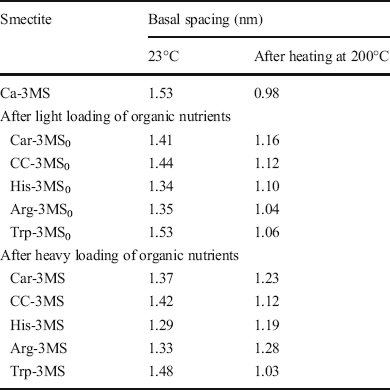
XRD data showed that the interlayer spacing of Ca-3MS was 1.53 nm at room temperature. After the light loading treatment, the d 001 value of most of the organo-smectites decreased to 1.34–1.44 nm except for Trp-smectite (Table 2). The decreased interlayer space of most organo-smectites at room temperature indicated that interlayer water was removed from the smectites. After heating at 200°C, Ca-3MS, Arg-3MS, and Try-3MS collapsed to ~1.0 nm but Car-3MS, CC-3MS, and His-3MS remained expanded, up to ~1.16 nm (Table 2, Fig. S1). With the heavy-loading treatments of the organic nutrients, the organo-smectites had nearly the same basal spacings as the respective light-loading complexes at room temperature, but most of them had a basal spacing of between 1.12 and 1.3 nm after heating at 200°C, except the Trp-3MS, which collapsed to 1.0 nm. The basal spacing values observed from the XRD analysis suggested that the organic nutrients other than tryptophan could intercalate the smectite. They might be able to serve as anchors to confine the basal spacing of smectite to <1.3 nm as hypothesized in Fig. 1. With the heavy-loading treatment, more intercalation of the organic nutrients was expected, but the treatment caused little or no further expansion in Car-3MS (d 001 = 1.23 nm) or CC-3MS (d 001 = 1.12 nm) after 200°C heating, which suggested that occupation by the cationic organics was faster than by the amino acids.
Intercalation of the organic nutrient compounds into the Ca-smectite as revealed by XRD

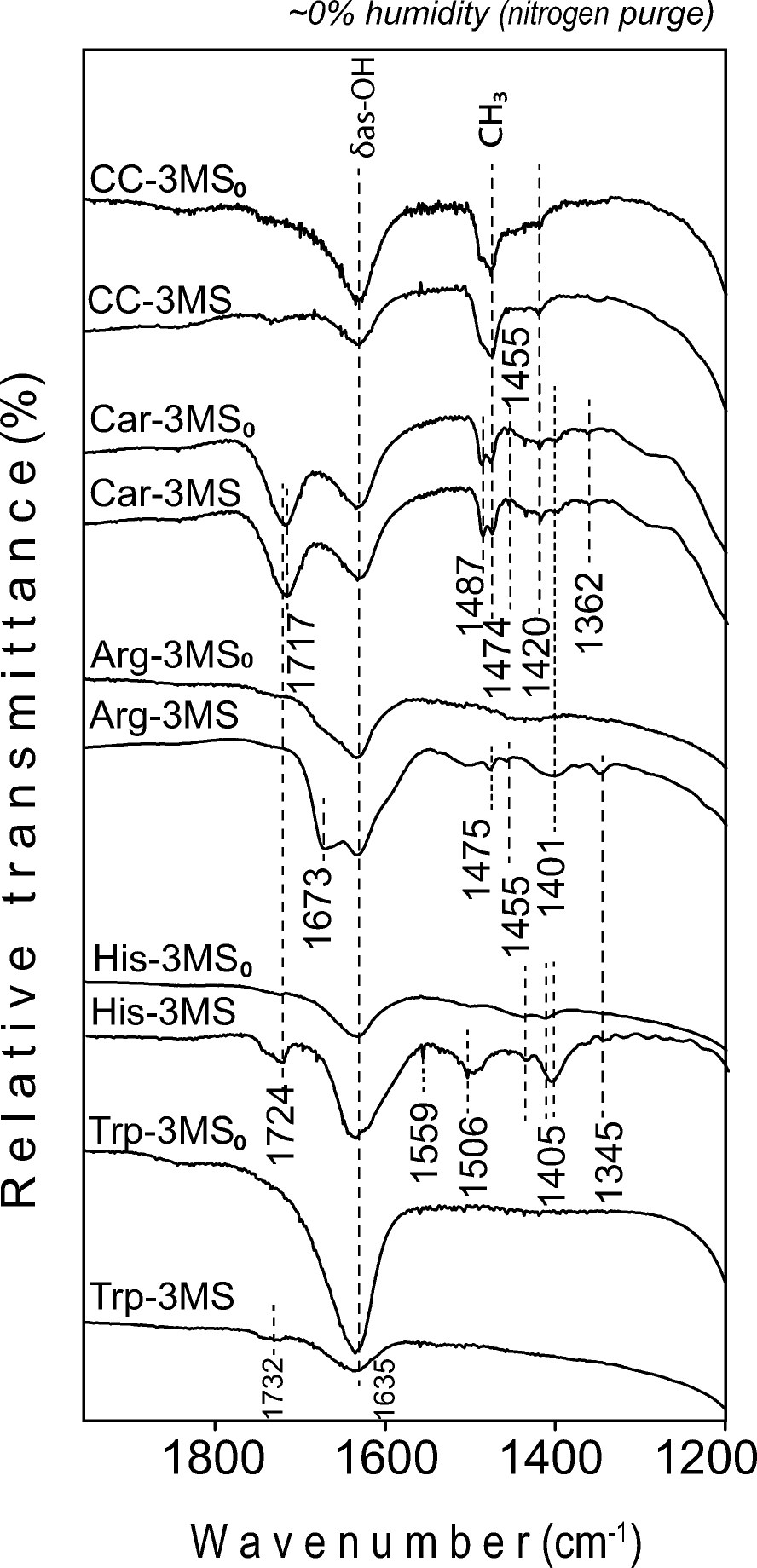
The IR bands in the range 1800–1200 cm–1 confirmed that calcium-smectite was well intercalated with choline and carnitine even after light loading (Fig. 2). The strong bands for intercalation of choline and carnitine were evolved at 1474 cm–1 due to -CH3 bending vibrations. Another vibration band appeared at 1420 cm–1. Carnitine saturation generated a few more bands, at 1717, 1487, 1455, 1401, and 1362 cm–1. Remarkably, IR bands of the amino acids appeared in the spectra of His-3MS (1724, 1506, 1405, 1345 cm–1) and Arg-3MS (1673, 1635, 1475, 1455, 1401, 1345 cm–1) but not in Try-SMS (Fig. 2), indicating that little or no tryptophan was anchored in the interlayer of the smectite. The consistent XRD and FTIR results suggested that cationic nutrients choline and carnitine and the amino acids histidine and arginine did intercalate in the smectite but tryptophan did not.
FTIR revealed intercalation of organic compounds in the smectite

Based on the XRD and FTIR results, only heavily loaded organo-smectites were used in the later adsorption experiments, and Trp-3MS was not tested further due to little or no loading of this amino acid on the smectite.
Interlayer Access by AfB1 in Organo-smectites in Aqueous Solutions Free of Protein
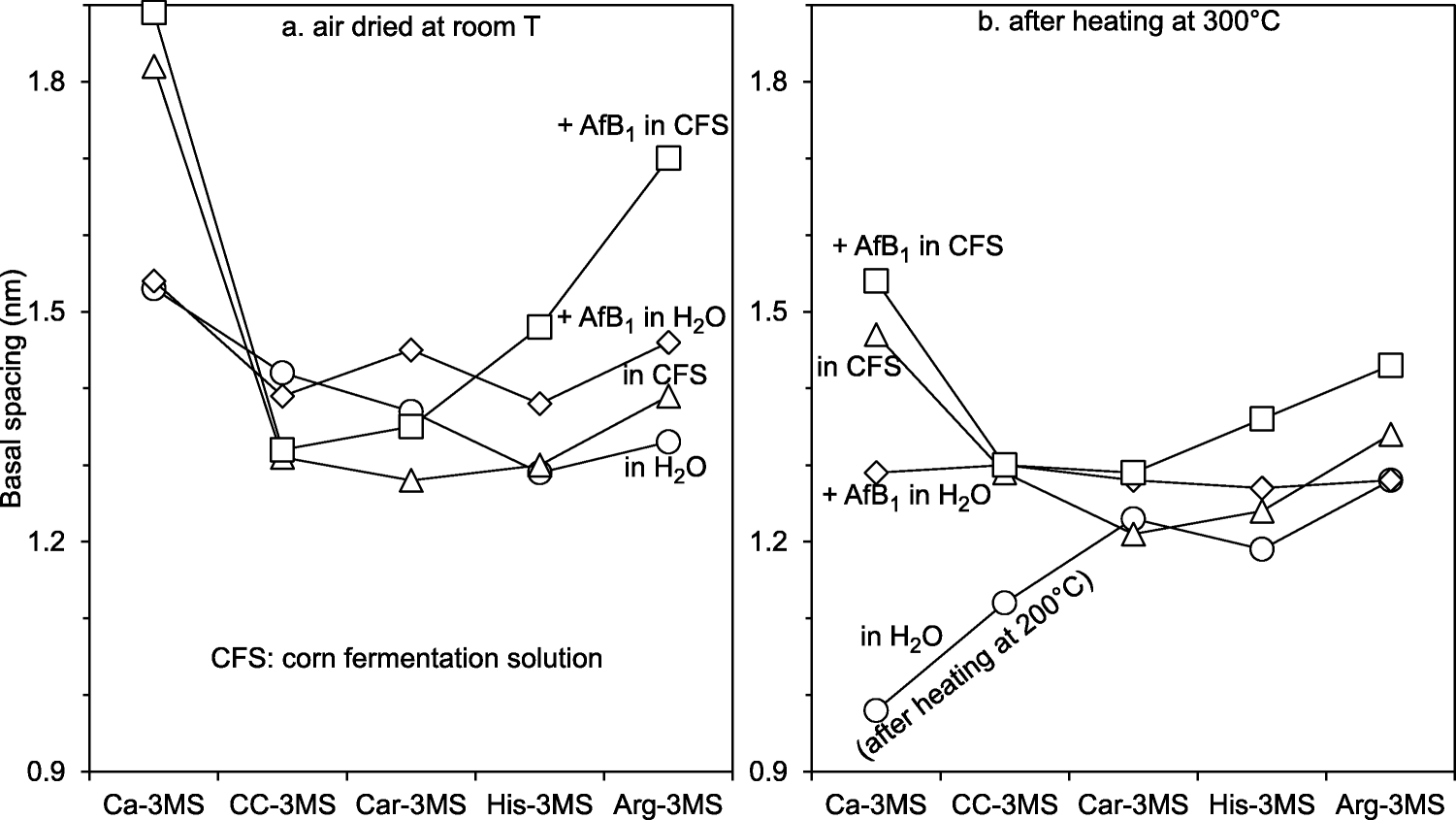
After adsorbing AfB1, the basal spacings of Ca-3MS remained at 1.54 nm while those of the organo-smectites varied from 1.39 to 1.46 nm at room temperature (Fig. 3a, Fig. S1), which were greater than the basal spacings before adsorbing AfB1. After heating at 300°C, the basal spacing of all the unmodified and modified smectites had very similar values of ~1.3 nm (Fig. 3b, Fig. S1), whereas a fully collapsed smectite would have a basal spacing of 0.98 nm (Table 2, Fig. S1). The greater basal spacing implied either AfB1 or the modifying organic nutrients, or both, remained in the interlayer of the smectites. After the heating treatments, only Arg-3MS had the same basal spacing of 1.28 nm after and before AfB1 adsorption. The basal spacings of the AfB1-adsorbed smectite and the other three organo-smectites after heating were greater than those of smectite or organo-smectites themselves. The basal spacing differences at room temperature and after heating suggested that AfB1 could access the interlayer environment of smectite both before and after the modification with the organic nutrients.
Basal d 001 values (nm) of the smectite and organo-smectites as revealed by XRD. a and b indicate samples that were air dried at room temperature and at elevated temperature, respectively, before analysis by XRD

Reducing Interlayer Access by Protein in Organo-Smectite in CFS
Adsorption of protein molecules from CFS resulted in the great expansion of the basal spacing of Ca-3MS to d 001 = 1.82 nm when air dried at room temperature; the organo-clays expanded to a limited value of just 1.39 nm (Fig. 3a, Fig. S1). The reduced basal spacing of the organo-smectite indicated that interlayer protein access was remarkably reduced or inhibited in the four organo-smectites. Heating the protein-adsorbed Ca-3MS sample removed the water adsorbed in the interlayer but only collapsed the layers to1.47 nm instead of the expected ~1.0 nm, which confirmed that the protein from CFS was adsorbed in the interlayer. The Car-3MS expanded least (d 001 = 1.21 nm) of all the clays, reflecting little protein fixation (Fig. 3b, Fig. S1).
Interlayer Access of Proteins and AfB1 when Coexisting in CFS
When AfB1 was present in CFS and the smectite or the organo-smectites reacted with the solution, the basal spacing of Ca-3MS was still expanded to 1.8 nm (Fig. 3a, Fig. S1), which implied that a strong intercalation of protein occurred. The CC-3MS retained its basal spacing of 1.3 nm, suggesting that it could limit or inhibit the intercalation of the proteins. The other three organo-smectites, Car-3MS, His-3MS, and Arg-3MS, had greater basal spacings compared to when they reacted with the CFS free of AfB1. The differences between when AfB1 was present and not increased with the order above, which may indicate a reducing efficiency in blocking protein from accessing the interlayer of the smectite. As the smectites reacted in the complex solution containing corn proteins, amino acids, AfB1, etc., determining how much of the interlayer was occupied by the toxin or the proteins was difficult. A competition may develop between AfB1 and protein molecules to gain access to the smectite. Both before and after heating, the d 001 values of organo-smectites were smaller (at room temperature, it ranged from 1.32 to 1.70 nm; at high temperature it ranged from 1.29 to 1.43 nm) than that of Ca-3MS (at room temperature it was 1.89 nm; at high temperature it was 1.54 nm). This suggested that protein adsorption was restricted by the organo-smectites. Adsorption isotherm experiments were thus required to conclude this part.
IR Evidence of Interlayer Access by Protein and AfB1 in Organo-Smectites
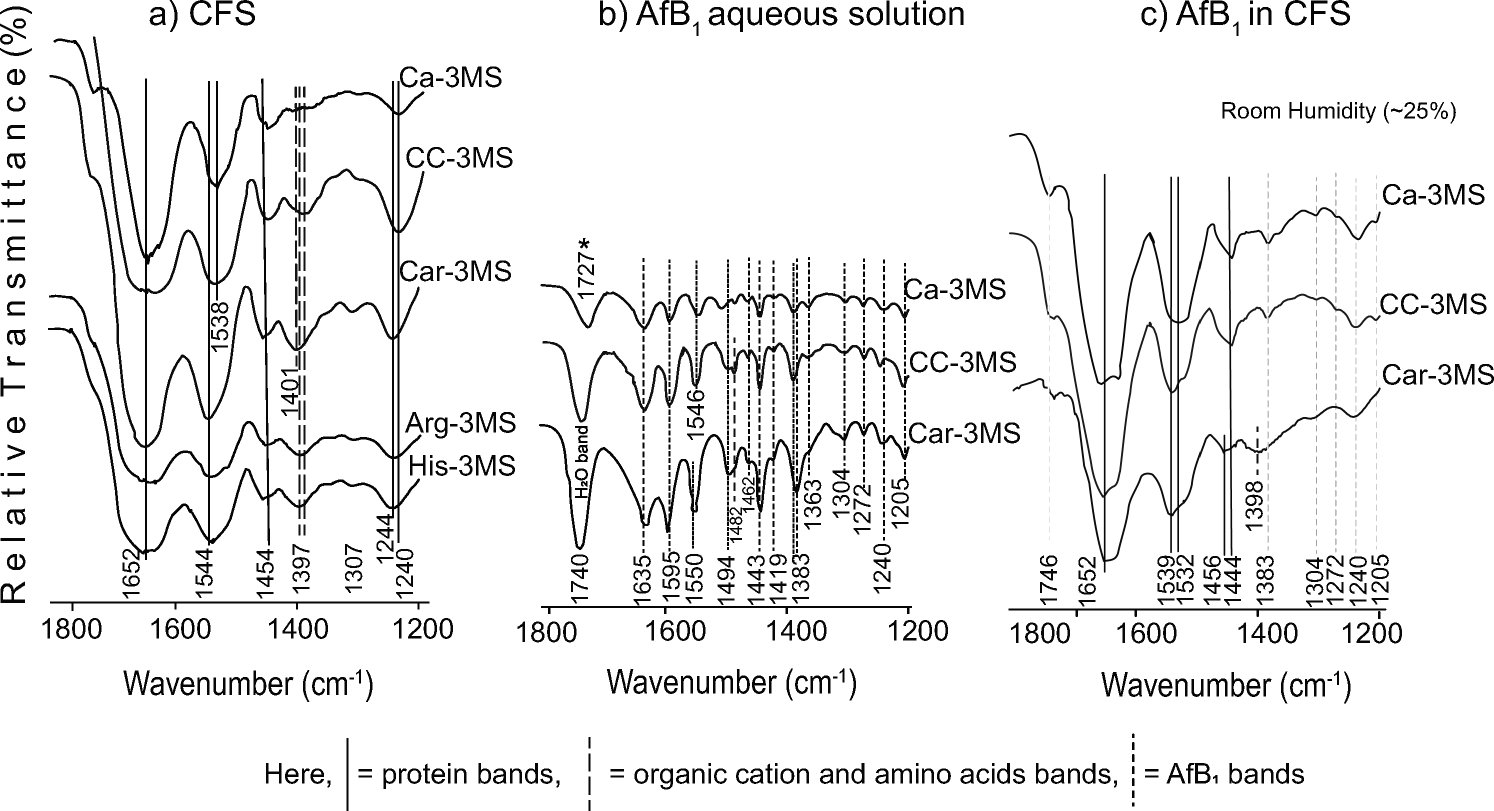
Major IR bands from protein–clay interaction (~1652, 1544, 1538, and 1454 cm–1) were present in the spectra of organo-smectites after reacting in CFS with or without aflatoxins (Fig. 4a, c). However, the intensity of the amide band at 1652 cm–1 became weaker in the organo-smectites. This might suggest less protein intercalation. The IR bands for organic cation intercalation became weaker or disappeared in all the spectra in contrast to previous FTIR findings (Fig. 2). This was probably because of overshadowing by the strong protein bands, or the loss of organic cations or amino acids due to repeated and long-time washing of the clay-complexes with various solutions.
FTIR spectra of smectite complexes after reacting a in CFS, b in AfB1 aqueous solution, and c in AfB1 in CFS. *Indicates sample recorded at ~0% humidity

The appearance of the characteristic IR bands of AfB1 in organo-smectites (Fig. 4b) confirmed that the organo-smectites were capable of adsorbing aflatoxin from simple aqueous solution. Minor changes in a band's position from 1727 to 1740 cm–1 was due to humidity treatment variation. When reacted in the CFS, the AfB1 bands were visible in the calcium and organo-smectites but were much weaker (Fig. 4c) even in the CC-3MS and Car-3MS, which showed the greatest AfB1 adsorption as shown below.
AfB1 Adsorption from Simple Aqueous Solutions Containing Proteins
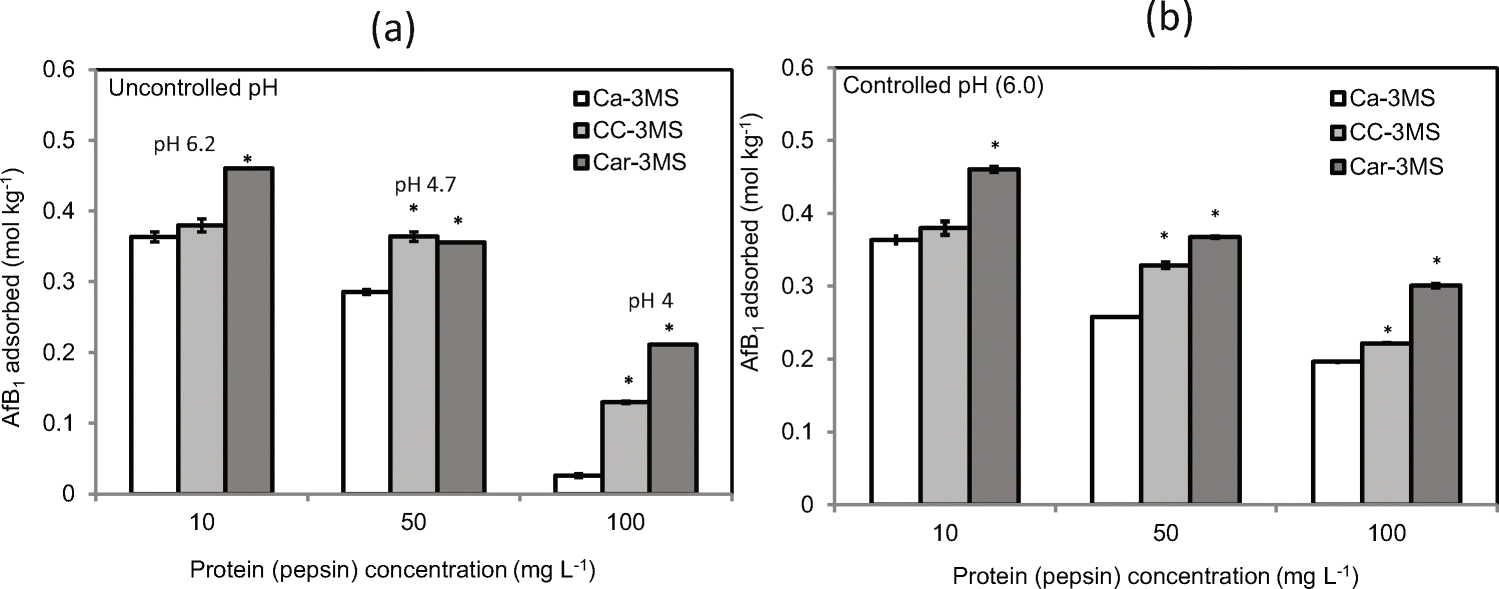
As the XRD and FTIR data indicated that choline and carnitine appeared to be the best in confining the interlayer spacings, quick evaluations of the capability of organo-smectites to remove AfB1 in the presence of protein in simple aqueous solution were performed only on the CC-3MS and Car-3MS. Single-point AfB1 adsorption from pepsin (protein) solution revealed that AfB1 adsorption by choline- and carnitine-modified smectites increased significantly (p ≤ 0.05) compared to the adsorption by Ca-3MS (Fig. 5). This trial suggested that these two organo-smectites at least were capable of adsorbing AfB1 in the presence of protein. This trial also revealed that the pH of the reacting solution had a remarkable effect on aflatoxin adsorption by smectites (Fig. 5a) as indicated earlier (Barrientos-Velázquez et al., Reference Barrientos-Velázquez, Arteaga, Dixon and Deng2016a, Reference Barrientos-Velázquez, Marroquin Cardona, Liu, Phillips and Dengb). This could be because of pH effects on the charge of the protein, which could vary its ability to compete for adsorption sites.
Single-point AfB1 adsorption in pepsin solution. Adsorption by organo-smectites was significantly (p ≤ 0.05) greater than by Ca-smectite

AfB1 Adsorption by Organo-Smectites from CFS Solution
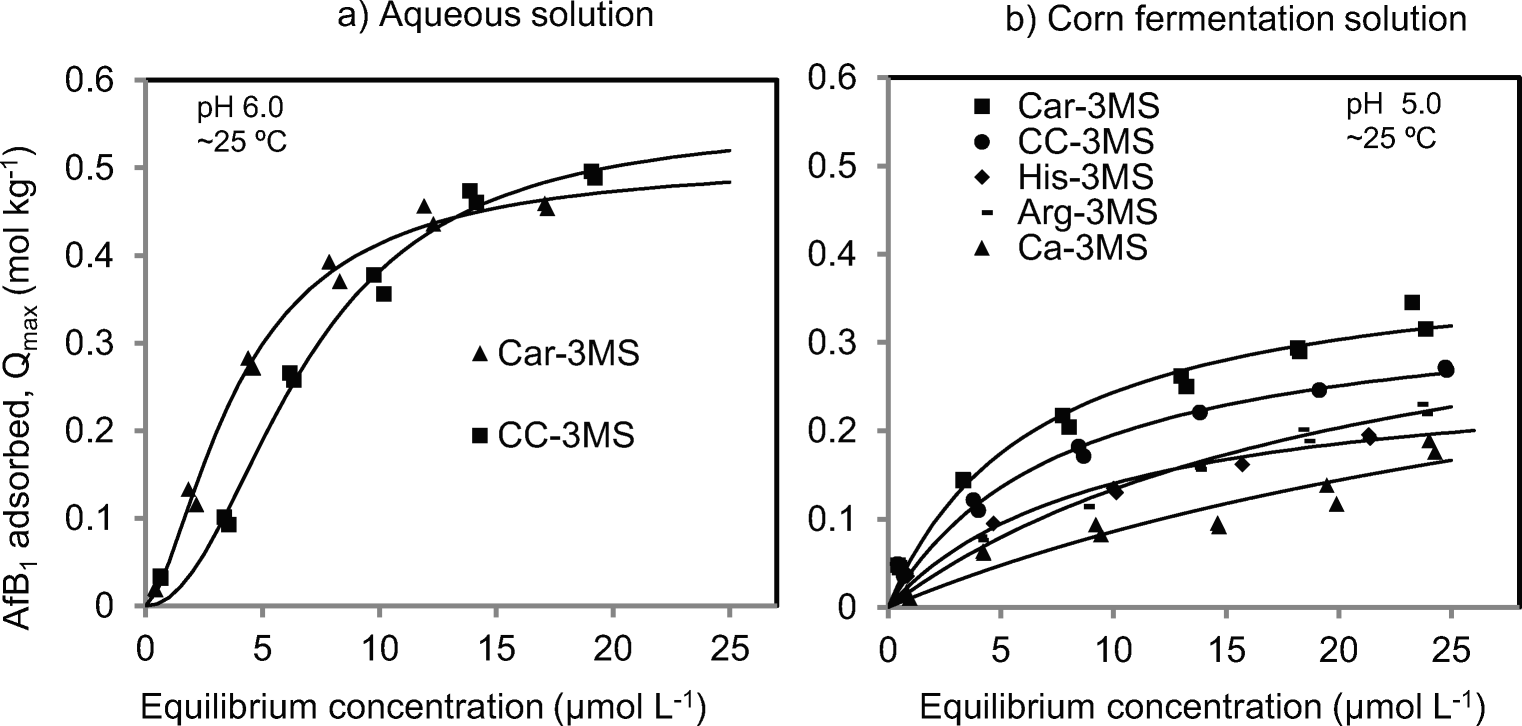
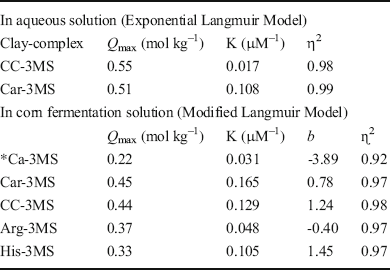
In simple aqueous solution, AfB1 adsorption capacities of the CC-3MS and Car-3MS (Fig. 6a) were very close to the adsorption of Ca-3MS (isotherm not shown). Q max was recorded as ~0.55 mol kg–1 for CC-3MS and ~0.51 mol kg–1 for Car-3MS (Table 3). In the corn fermentation solution, the four organo-smectites showed much greater AfB1 adsorption capacities (0.33–0.45 mol kg–1) compared with Ca-3MS (Fig. 6b). For example, before modification, Ca-3MS adsorbed ~0.22 mol kg–1 (Alam & Deng, Reference Alam and Deng2017) but after modification, adsorption increased up to ~0.45 mol kg–1 (Car-3MS). The adsorption isotherms suggested that efficiencies of organo-smectites in removing AfB1 in the corn fermentation solution followed the order of carnitine-3MS > choline-3MS > arginine-3MS > histidine-3MS, though the adsorption affinity (K) is smaller for arginine than for histidine (Table 3). This trend appeared to be correlated with the stability of these organic modifiers in the interlayer of the smectite. The basal spacings of these organo-smectites in the CFS (Fig. 3) suggested that the interlayer adsorption of the protein in the four organo-smectites had the opposite trend. Though the AfB1 adsorption from CFS by organo-smectites increased, the maximal adsorption values were, however, smaller than those from aqueous solution, which suggested that competition from compounds other than proteins was present in the fermentation solution.
Langmuir batch adsorption isotherms of AfB1 by the smectites in a simple aqueous solution and b corn fermentation solution

AfB1 adsorption isotherm fit parameters of the smectite complexes

*Data from Alam and Deng (Reference Alam and Deng2017)
Discussion
The XRD and FTIR investigations revealed that four organic nutrients, carnitine, choline, arginine, and histidine, could intercalate the smectite to varying degrees to form organo-smectite complexes with the desired ability to constrain the interlayer space as illustrated in Fig. 1. Comparatively reduced basal spacing of organo-smectites at room temperature suggested that organic nutrient compounds in the interlayer of smectites expelled some water molecules. This could be explained by the small organic cations acting as pillars to hold the interlayer open and decreased the water contents. The exact mechanism is still unknown and further investigation is required. An earlier study showed a decline in water adsorption by clays treated with some compounds consisting of large organic cations (Grim et al., Reference Grim, Allaway and Cuthbert1947). Greater expansion of organo-clays indicated greater accumulation of the respective compounds in the interlayer. The d 001 value of >1.0 nm after heating smectites at 200°C confirmed the existence of the compounds in the interlayer. Heating beyond 200°C resulted in the degradation of some organic compounds except of the vitamin B1 (Barrientos-Velazquez & Deng, Reference Barrientos-Velazquez and Deng2020).
Even after light loading of carnitine and choline, good intercalation in calcium-smectite was noticed. The easy and rapid saturation of smectites by the organic cations compared to the amino acids could be explained by the strong electrostatic attraction between the cationic organics and the layer charge. The smectite did not expand any more upon intense treatment with choline, which suggested that smectite was saturated with that cation after the light loading. Carnitine, in contrast, expanded the smectite more than choline, which could be attributed to its molecular size (~198 g mol–1). However, less histidine and arginine were intercalated in the light loading treatments. Upon heavy loading treatment, more arginine than histidine intercalated in the interlayer of smectite, probably due to a greater portion of positive charges (pI: 10.76 for arginine vs. 7.59 for histidine) at the same pH. Tryptophan intercalation was not observed in the XRD or FTIR data. The very weak bonding of this aromatic compound to smectite was most probably due to the absence of sufficient positive charges (pI: 5.89). A study showed tryptophan molecules with a kinetic diameter of 0.6 nm showed easy access into the interlayer of montmorillonite (Titus et al., Reference Titus, Kalkar and Gaikar2003). Again, tryptophan had showed no effects on aflatoxin adsorption by a sodium smectite in the gastrointestinal tract of birds, suggesting reversible weak bonding to the smectites (Magnoli et al., Reference Magnoli, Copia, Monge, Magnoli, Dalcero and Chiacchiera2014).
Previous studies revealed that glucose and ethanol (components in CFS) had minimal effects on AfB1 adsorption by smectites (Alam et al., Reference Alam, Deng and Dixon2015). Studies further demonstrated that large protein molecules in CFS strongly intercalated in the smectite structure. Protein adsorption on smectites appeared to be nearly irreversible as indicated by the vast expansion of clay complexes after reacting in CFS, even after repeated washing with water (Alam & Deng, Reference Alam and Deng2017). In the current study, organo-clays limited protein adsorption. The XRD results demonstrated that after adsorbing both protein and AfB1, the Arg-3MS expanded more than all other complexes, and the His-3MS expanded more than CC-3MS or Car-3MS (Fig. 3). The expansion was probably correlated to protein adsorption in the organo-smectites. The adsorption isotherms and the XRD data suggested that modifying the smectite with amino acids was less effective at removing aflatoxins than those modified with the cationic choline or carnitine. This was attributed to weak bonding of amino acids to the clays and thus removal by repeated washing or by competition from the protein molecules. In contrast, the relatively strong bonding and longtime assembly of organic cations in the smectite created a desirable interlayer environment for inhibiting protein adsorption and facilitating aflatoxin adsorption. Study showed that montmorillonite treated individually with choline and carnitine adsorbed more AfB1 from aqueous corn flour than the untreated clay (Jaynes & Zartman, Reference Jaynes and Zartman2011). The specific interlayer microenvironment created by the functional groups of organic cations and amino acids was considered to be important in controlling the aflatoxin adsorption capacity of organo-smectites. In another study, a Wyoming bentonite modified with natural organic cations, especially carnitine, enhanced adsorption of the herbicide simazine from aqueous solution (Cruz-Guzman et al., Reference Cruz-Guzman, Celis, Hermosin and Cornejo2004).
In the past, researchers have used sucessfully various organically modified clays to increase adsorption of a variety of organic contaminants, and to emphasize the importance of clay minerals for environmental remediation (Afzali et al., Reference Afzali, Mostafavi and Mirzaei2010; Boyd et al., Reference Boyd, Mortland and Chiou1988; Deng et al., Reference Deng, Dixon and White2003; Guimarães et al., Reference Guimarães, Ciminelli and Vasconcelos2007; Jaynes & Boyd, Reference Jaynes and Boyd1990; Lee et al., Reference Lee, Kim, Chung and Jeong2004; Lo et al., Reference Lo, Mak and Lee1997; Meier et al., Reference Meier, Nueesch and Madsen2001; Tombácz et al., Reference Tombácz, Szekeres, Baranyi and Michéli1998). Most of the modifying materials used previously were hazardous chemicals. Modification of low-charge montmorillonite with a small hydrophobic organic cation, PTMA (phenyltrimethylammonium), retained more AfB1 from aqueous corn flour than untreated montmorillonite, though PTMA was not suggested for use in animal feeds because of its toxicity (Jaynes & Zartman, Reference Jaynes and Zartman2011). The organic nutritive compouds used in the present study, however, may be incorporated safely in food and feed because of their non-toxic and non-hazardous characteristics.
As part of the research to develop a strategy to enhance mycotoxin adsorption, the findings of the current study suggest that use of carnitine-, choline-, histidine-, and arginine-modified smectites limited protein intercalation and indirectly improved AfB1 adsorption, because less competition would occur between AfB1 and protein molecules in the interlayers. However, the presence of the protein IR bands at 1652, 1544, and 1454 cm–1 in the modified smectites even after repeated washing reflected a strong affinity of the protein molecules for the smectites.
The literature suggested that IR band at 1240 cm–1 appeared due to the presence of DNA and RNA (Barth, Reference Barth2007). In the current study, the band 1240 cm–1 might be an indication of the presence of these or other biological component in CFS.
Though the AfB1 adsorption increased by organo-smectites from CFS, their adsorption capacities were somehow below the maximal adsorption from aqueous solution. This also suggested that some protein substances were able to access the smectites after the modification. Enhanced AfB1 adsorption by choline- and carnitine-modified smectites in simple pepsin solution (no other materials to interfere with adsorption) confirmed their greater effectiveness as aflatoxin binders in the presence of proteins. The overall study suggested that using organo-smectites instead of inorganic calcium-smectite enhanced considerably the AfB1 adsorption by restricting access to the clay interlayer by proteins from CFS.
Conclusions
Modification of a calcium smectite by small nutritive organic compounds improved significantly the adsorption of AfB1 from pepsin and corn fermentation solution. The organo-smectites prohibited protein fixation to a large extent but facilitated aflatoxin adsorption. However, a complete blocking of protein intercalation was not achieved by these modified smectites. The main mechanism for improved AfB1 adsorption was an increase in the number of hydrophobic sites and restricted access to interlayer sites by protein. The carnitine and choline cations were more effective modifiers than amino acids. The carnitine-smectite showed significantly greater AfB1 adsorption than others in the corn fermentation solution. The current study might be a reference for future research required to remove toxins including aflatoxins in the presence of obstructive compounds like proteins in the biofuel industry.
Supplementary Information
The online version contains supplementary material available at https://doi.org/10.1007/s42860-022-00179-4.
Acknowledgments
Finance for this research was mainly covered by Aflatoxin Mitigation Center of Excellence (AMCOE) (Grant 406893). Student research grants from The Clay Minerals Society (CMS) partially supported the researchers who carried out the project.
Authors' Contributions
Dr. Sabrina Sharmeen Alam, the first author of this manuscript, carried out this research in the department of Soil and Crop Sciences of the Texas A&M University, College Station, USA as a significant part of her Ph.D dissertation. In addition, she made a significant contribution to the data analysis and writing of the present manuscript. Dr. Y. Deng was Dr. Alam's adviser and he made a significant contribution to the production of the manuscript in terms of conceptualizing, editing, and advising.
Funding
Finance for this research was mainly covered by the Aflatoxin Mitigation Center of Excellence (AMCOE) (Grant 406893). Student research grants from The Clay Minerals Society (CMS) helped the researchers to carry out the project.
Data Availability
All data were generated after research work done in Dr. Deng’s Clay Mineralogy Lab at TAMU. Information in Table 1 was taken from the literature.
Declaration
Ethics Approval and Consent to Participate
Not applicable.
Consent for Publication
The authors have consents for publishing this manuscript in Clays and Clay Minerals.
Competing Interests
The authors declare that there are no conflicts of interest.